
Checking In On Baseball’s Lowest Scoring Offenses
A high-octane offense doesn’t guarantee overall success, but it certainly helps. In 2014, the Angels (98 wins, 773 runs), Tigers (90 wins, 757 runs), and A’s (88 wins, 729 runs) all reached the postseason thanks in part to their top five offenses. The bottom five teams, meanwhile, all missed the playoffs.
Let’s take a look at those bottom five teams and see what they’ve done to improve their offensive production so far this offseason. Team name links go to a summary of the teams’ moves on MLBTR’s Transaction Tracker and 2014 run totals are in parentheses. For reference, the average MLB team scored 659 runs last year.
- Padres (535) – Nobody has been more aggressive this offseason than the Padres, who finished dead last in runs scored in 2014. The Padres have placed no better than 24th in runs scored since 2011 and you have to go back all the way to 2007 to find a season in which they didn’t place in the bottom third of the league. That’s likely to change now, however, thanks to A.J. Preller’s complete overhaul of the outfield. Matt Kemp, Justin Upton, and Wil Myers all come to San Diego with a history of producing at the plate and they have every intention of beating the odds at the pitcher-friendly Petco Park. And, despite his recent struggles, the Padres are hoping that they can get third baseman Will Middlebrooks to perform closer to his 2012 effort.
- Braves (573) – The Braves surprised many when they shipped right fielder Jason Heyward to the Cardinals for right-hander Shelby Miller. Then, the Braves replaced the defensive-minded Heyward with another defense-first outfielder in Nick Markakis. In recent seasons, Markakis has profiled as a high-OBP, low-power bat and odds are that he probably won’t magically rediscover his pop from years ago. Soon after, the Justin Upton trade took away a bat that produced a .270/.342/.491 slash line with 29 homers in 2014. Atlanta made it clear this offseason that they’ll bank on improvement from within to fix their offensive woes, though it remains to be seen if that will be a sound strategy. A 180° from B.J. Upton would certainly help the cause, but Joel Sherman of the New York Post reports that he’ll be on a short leash. Atlanta, he says, will consider moving to a platoon of Zoilo Almonte and Todd Cunningham if Upton continues to flounder.
- Reds (595) – The Reds didn’t do much to bolster their offense until a New Year’s Eve deal with the Phillies brought in Marlon Byrd. The 37-year-old has refused to let Father Time slow him down. After surprising everyone in 2013 with a 291/.336/.511 slash line between the Mets and Pirates in 2013, Byrd turned in a solid .264/.312/.445 with 25 homers for Philadelphia in 2014. Byrd satisfied their need for an outfielder to go alongside Jay Bruce and Billy Hamilton and he won’t break the bank thanks to the $4MM that the Phillies sent over in the deal.
- Rays (612) – Parting with a young, power-hitting right fielder (Myers) may seem an odd way to bolster a lineup, but Tampa is obviously high on the player it acquired to replace him. It remains to be seen whether Steven Souza can translate his tools to the MLB game, but his eye-opening .350/.432/.590 output at Triple-A last year provides evidence in the affirmative. The club also added a bat-first middle infielder in Asdrubal Cabrera, although it remains to be seen whether his signing constitutes a prelude to a trade involving the even more productive Ben Zobrist.
- Cubs (614) – Chicago’s big signing, Jon Lester, was designed to keep opposition runs off the board. The same could be said, to an extent, about the team’s addition of backstops Miguel Montero and David Ross. But each member of that new catching pairing has put up big offensive numbers in the not-so-distant past. Beyond that, the organization will hope for continued progress from its young, high-upside core of position players while excitement builds over the expected mid-season deployment of power-hitting third base prospect Kris Bryant, who will finish his seasoning at Triple-A to start the year.
The Market For Ben Zobrist
Earlier today, the Rays reportedly struck a one-year deal with Asdrubal Cabrera, prompting immediate speculation that the versatile Ben Zobrist could be on the move before the offseason is over. Given the fact that Zobrist’s defense ranges from adequate to exceptional at second base, shortstop and the outfield corners, he could help virtually any team in the game. In this afternoon’s MLBTR Chat, I noted that Zobrist could plausibly draw from interest from nearly half the teams in the league, as the one year and $7.5MM remaining on his contract is something that any club can absorb.
Here’s a very speculative division-by-division look at teams that could make a play for Zobrist.
AL West
- Angels: The Angels dealt Howie Kendrick to the Dodgers in a one-for-one trade that netted them top young lefty Andrew Heaney, and they now project to have Grant Green or Josh Rutledge starting at second base. Zobrist’s contract wouldn’t push them over the luxury tax threshold, though they lack impact prospects to entice the Rays.
- Rangers: The Rangers have yet to add a bat that can handle left field, and an acquisition of Zobrist would solve that need (either with Zobrist playing left or Shin-Soo Choo shifting to that position, and Zobrist manning right field). The Rangers have a bounty of young infielders to offer.
- Athletics: The A’s currently project to have Marcus Semien and Eric Sogard up the middle, and Zobrist could take one of the middle infield spots, with Semien handling the other. He’s the type of versatile piece that has come to be commonly associated with the A’s, although Oakland has admittedly looked like a rebuilding club for much of the offseason (the Billy Butler signing notwithstanding).
- Mariners: Seattle will have Robinson Cano at second, Dustin Ackley in left and a platoon of Justin Ruggiano and Seth Smith in right field. However, shortstop right now looks to be a battle between Brad Miller and Chris Taylor, and a year of Zobrist would likely be an upgrade over either. Seattle has young pitching and hitters that could appeal to Tampa.
- Astros: As a rebuilding club that most don’t expect to contend, Houston’s a stretch to be connected to a one-year upgrade like Zobrist. Still, they could deploy him in left field or shift Jed Lowrie to the hot corner. Of course, part of the selling point for Lowrie in Houston was that he’d be playing shortstop.
AL Central
- White Sox: The most aggressive club in the Central this offseason, the ChiSox could deploy Zobrist at second base. They’ve already added Jeff Samardzija, David Robertson, Adam LaRoche and Zach Duke this winter, and Zobrist would fit GM Rick Hahn’s recently stated goals of getting more athletic and improving his team’s defense.
- Tigers: The Tigers aren’t a great fit, but they traded Eugenio Suarez to the Reds in the Alfredo Simon deal, and Jose Iglesias‘ health isn’t certain. They’re a stretch, but they’re in clear win-now mode with a closing window for contention as the team’s core continues to age.
- Royals: The Royals were interested in Cabrera before he signed with the Rays and are said to want to move Omar Infante‘s remaining salary. If they can pull off that deal, a second significant trade with the Rays for GM Dayton Moore would make a good deal of sense.
AL East
- Yankees: The Yankees are gearing up for a Spring Training battle between Rob Refsnyder, Jose Pirela and others to see who will man second base, but Zobrist could step into that spot and give the team better all-around contributions.
- Blue Jays: Toronto is reportedly focusing on its closer position at the moment, but Zobrist would fill another need — a bat to plug in at second base. Toronto managed to acquire both Josh Donaldson and Michael Saunders without parting with any of its top-ranked prospects, so they’d still have plenty of appealing assets for the Rays.
- Orioles: The O’s have yet to replace either Nick Markakis or Nelson Cruz, and second baseman Jonathan Schoop struggled greatly at the plate as a rookie in 2014. Zobrist could help in a variety of ways as Baltimore looks to keep up with the much-improved Blue Jays and Red Sox.
NL West
- Padres: I’d be remiss not to mention the hyper-aggressive Padres as a possible destination for a trade target. The Friars have plenty of outfielders, but they’re looking at Alexi Amarista or Clint Barmes as a starting shortstop right now. Zobrist would be yet another upgrade to a completely revamped Padres lineup, and the Friars still have a number of top prospects, as they didn’t part with the likes of Austin Hedges, Matt Wisler and Hunter Renfroe in their other trades.
- Giants: The Giants have been frequently linked to Zobrist, with Peter Gammons even writing recently that many GMs feel Zobrist will end up in San Francisco. The reigning World Champs could deploy Zobrist in left field and use him as insurance if Joe Panik can’t repeat last year’s production.
NL Central
- Cubs: The Cubs need to add another outfield bat, and Zobrist could fill that role while serving as an insurance policy to Javier Baez at second base. With one year remaining, he wouldn’t block any of Chicago’s vaunted young prospects, and he could help push them toward the postseason.
- Reds: Cincinnati is also in need of a left fielder and has had trade talks regarding Marlon Byrd in addition to free agent interest in Nori Aoki and Michael Morse, among others. The Reds have traded away Mat Latos and Alfredo Simon, so it’s possible that they’re no longer interested in one-year upgrades.
NL East
- Mets: The Mets have remained patient in their search for a shortstop, and as ESPN New York’s Adam Rubin writes, that patience will look like a shrewd decision if the team is able to acquire Zobrist to man shortstop in 2015. Zobrist would deepen New York’s lineup and give them a chance at contention with a healthy Matt Harvey in a division that has seen the rival Braves shift to a minor rebuild.
- Nationals: With Ryan Zimmerman now shifting to first base and Anthony Rendon presumably manning third base, the Nationals project to have the struggling Danny Espinosa as their Opening Day second baseman. The Nationals are considered the division favorites, but deepening their roster would better position them for a potential postseason run.
In terms of what Zobrist should fetch in a trade, it seems reasonable to expect either a Major League ready player and perhaps a prospect in addition, or a package of three to four prospects headlined by at least one particularly well-regarded name. Fangraphs’ Jeff Sullivan took an excellent look at this scenario earlier today, noting that Jason Heyward‘s trade to St. Louis represents a fairly sound comparable, despite differences in age and the Braves’ inclusion of Jordan Walden.
It should also be noted, of course, that clubs not listed here could make a run at Zobrist if a different move or injury opens a need. Likewise, a rebuilding club that doesn’t appear to be a fit could have interest in Zobrist simply because they want a chance to extend him or feel they can trade him midseason for more than they’d give up to initially acquire him. A team with an established second baseman may just decide that Zobrist is an upgrade and pursue him with the intention of then shopping their incumbent at the position.
The Rays don’t need to trade Zobrist now; they could move Yunel Escobar instead or simply keep Zobrist and bounce him around the diamond in a role not dissimilar to the one the Pirates assigned to Josh Harrison for much of the 2014 campaign. They could also deal another outfielder and return Zobrist to right field.
However, Zobrist has long been an attractive trade chip, and the addition of a player who could be viewed as redundant with Cabrera also on the roster figures to further motivate rival GMs to reach out to the Rays as Zobrist heads into a contract season.
Extension Candidate: Jason Heyward
New Cardinals outfielder Jason Heyward only has one season remaining before free agency, and St. Louis likely has the financial flexibility to sign him long term. It’s not surprising, then, that there’s been some discussion in the St. Louis media about the possibility that the Cardinals would extend him. For the right price, Heyward (who’s already set to make $8.3MM in 2015) would be an exceptionally strong extension candidate.
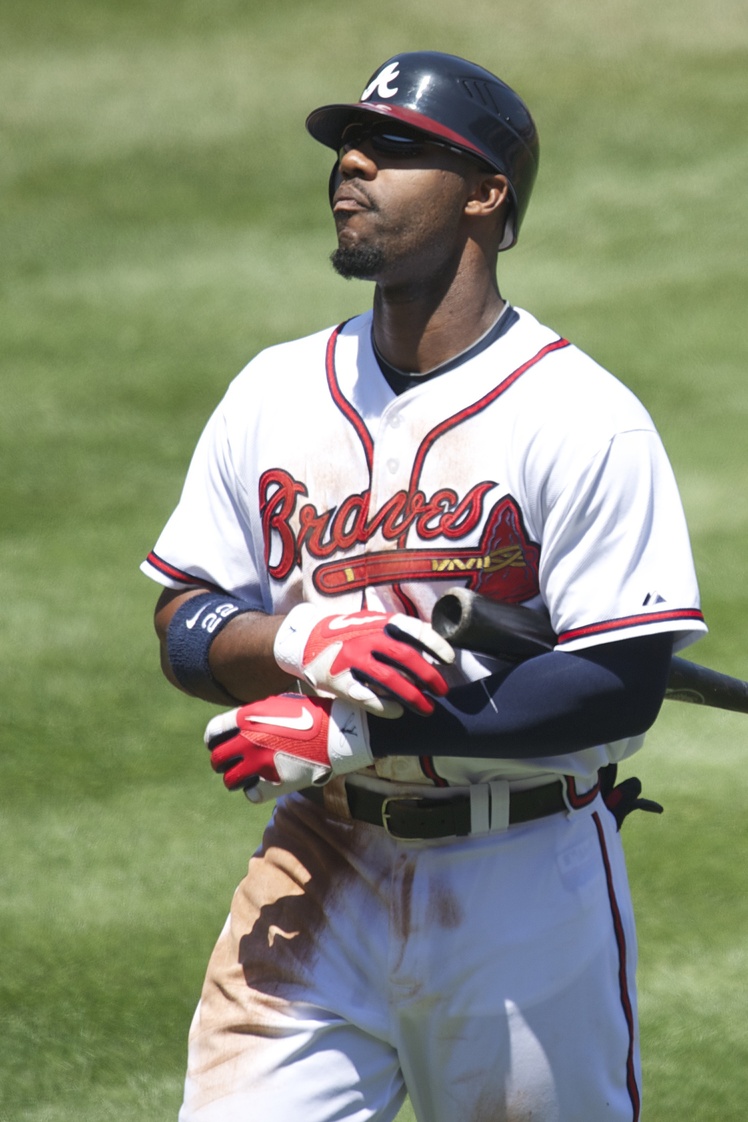 Heyward won’t turn 26 until next August, and he has an excellent all-around game that includes plus defense to go with good on-base ability, reasonable power and above-average baserunning. He might also be able to retain his value as his defense declines, too — his control over the strike zone and toolsy profile suggest he might still have headroom as a hitter.
Of course, the same factors that make Heyward a good extension candidate would also make the Casey Close client a very attractive free agent. The fact that free agency is so near makes an extension a different proposition than it was when MLBTR’s Tim Dierkes examined Heyward’s candidacy early in the 2013 season.
Perhaps the best precedents for an extension for a top position player with between five and six years of service time are those of Matt Kemp (eight years, $160MM) and Adrian Gonzalez (seven years, $154MM). Heyward isn’t, or isn’t yet, the offensive player that Kemp or Gonzalez were — Kemp was coming off a .324/.399/.586 season at the time of his extension, while Gonzalez had just hit .298/.393/.511 in pitcher-friendly San Diego. But average salaries have skyrocketed throughout the game since those contracts were signed in 2011 (the average MLB salary jumped 12 percent just last year), and we should expect extensions to keep pace.
Also, Heyward is two years younger than Kemp was and more than three years younger than Gonzalez at the times of their contracts, a significant matter when the contract would begin with the player heading into his age-25 season (or age-26, depending on how one wants to look at it) rather than his age-27 season (Kemp) or age-29 season (Gonzalez). And Heyward is a far better defensive player than either Kemp or Gonzalez, with a UZR of 24.1 last season and of at least 12 for three seasons straight. Historically, that’s not an attribute that figures to get Heyward paid like huge power numbers would, but it makes it that less likely that his next contract will be a bust — Heyward’s on-base ability and excellent defense significantly limit his downside.
Jacoby Ellsbury‘s seven-year, $153MM deal with the Yankees, signed as a free agent after the 2013 season, provides a recent precedent for a contract for a star-caliber, left-handed outfielder with defensive value. Again, though, Heyward is far younger than Ellsbury, an enormous point in his favor.
Given Heyward’s youth, it isn’t hard to see an extension heading toward at least eight years rather than seven — a nine-year extension would only go through his age-33 season, and even a deal of ten years or more doesn’t seem ridiculous. Heyward isn’t likely to reach the same stratospheric heights as Giancarlo Stanton ($325MM) or Miguel Cabrera ($248MM), but those head-spinning deals should help keep the market trending upward, and it isn’t hard to see Heyward clearing $200MM, as Fangraphs’ Dave Cameron proposed last month. Heyward could also seek an opt-out clause, like Stanton, and like fellow Close clients Zack Greinke, Clayton Kershaw and Masahiro Tanaka.
Or maybe the idea that Heyward is a $200MM player after a .271/.351/.384 season simply won’t add up, regardless of his youth and defense. But perhaps, from Heyward’s perspective, not matching the Stanton or Cabrera deals doesn’t mean he can’t come out ahead in the end. Heyward is so young that he could play his way through a nine-figure extension and still be young enough to land another.
Seen from that angle, a shorter deal, perhaps modeled on Mike Trout‘s six-year, $144MM contract, might make sense. Heyward isn’t as young or as good as Trout, but he might be able to land only a similar total over six years because Trout’s contract began with three pre-free-agency seasons and Heyward’s would only begin with one. That way, Heyward could hit free agency heading into his age-31 season, at which point he would still be young enough to hit it big. A nine-year deal, say, would be much more lucrative, but would probably leave him too old to net another huge contract after it’s over.
That route is probably unlikely, however. Heyward is only one year from free agency and has little reason to give the Cardinals a discount, and he was not particularly motivated to sign an extension with the Braves. That might suggest Heyward could either sign a huge deal for eight-plus years, or hope for a big season, test the free agent market and perhaps wind up with a contract that’s even longer. When you’re as young and as good as Heyward, there are few bad choices.
Photo courtesy of USA Today Sports Images.
International Profile: Jung-ho Kang
The Pirates won the bidding for Korean shortstop Jung-ho Kang last week for a little over $5MM and now are in the midst of a 30-day exclusive negotiating window. Kang is an unusual case due to his excellent numbers, the extremely hitter-friendly environment in which he produced those numbers, and the lack of precedent for a position player coming from the Korean Baseball Organization to the big leagues.
Pros/Strengths
Kang was the best overall player in the KBO this season, hitting a ridiculous .356/.459/.739 while manning shortstop for Nexen. That marked a leap forward from his previous season, but at 27, he would likely be able to maintain a very high level of performance if he remained in Korea. Kang finished second in the KBO in homers and third in the league in doubles. He also finished eighth in walks. Even in an extremely offense-heavy league, Kang stood out — his 1.198 OPS was easily better than that of his Nexen teammate Byung-ho Park, who finished second in that category at 1.119.
An international scouting director told MLBTR’s Tim Dierkes this fall, perhaps unsurprisingly, that he feels Kang has above-average raw power. The scouting director added that Kang was an intelligent player with good instincts, suggesting he should be able to make the most of his tools. Ryan Sadowski of Global Sporting Integration told Jeff Todd on the latest edition of the MLBTR Podcast that Kang could hit 20 home runs per season in the Majors.
While it’s unclear whether Kang can stick in the middle infield (more on that below), he played shortstop, indicating that he has at least some positional value. If he were to play middle infield in the big leagues while hitting for even a fraction of the power he demonstrated in Korea, he would be a useful player indeed.
Cons/Weaknesses
So why didn’t Kang attract a bid significantly above $5MM? First, it’s difficult to put his offensive numbers in context. KBO teams averaged 5.62 runs per game in 2014, and Nexen averaged 6.57, compared to 4.18 in the AL and 3.95 in the NL. The KBO contains a number of marginal former MLB players, such as Eric Thames, Felix Pie and Jorge Cantu, who have posted what appear on the surface to be star-caliber offensive numbers, strongly suggesting that the league isn’t even at the level of Triple-A baseball in the US. Dan Szymborski, who created the ZiPS projection system, tweets that the KBO plays as a hitter-friendly Double-A league, and C.J. Nitkowski of FOX Sports notes that he himself was a Game 1 starter in Korea at age 36, near the end of a career spent bouncing around Triple-A, the big leagues, and Japan. It’s possible Kang’s power won’t be enough in the big-leagues, especially in PNC Park, which suppresses homers and is particularly tough on right-handed batters. Sadowski says that Kang is a “mistake hitter,” comparing him to a No. 7 hitter in the big leagues (although Sadowski still seems to feel Kang is a likely MLB regular overall).
The international scouting director to whom Dierkes spoke said that Kang does not possess plus tools, noting that his raw power is not likely to translate well to the Majors. The director compared Kang to Japanese shortstop Hiroyuki Nakajima, who signed a two-year deal with the Athletics prior to the 2013 season but never reached the big leagues. Kang is the better player, the scouting director said, but the two players are similar.
There are also questions about whether Kang can stick at shortstop. He wins praise for his arm and hands, but he isn’t fast and has a relatively thick build, so perhaps third base might make more sense for him. He’ll also have to transition from playing on turf in Korea and will need to work on charging in on grounders, as Sadowski noted.
Context
Kang is an extremely difficult player to evaluate because he’s the first Korean position player to transition from a league that plays very differently from the Majors, or even from NPB in Japan, which has had a relatively large number of players make the leap to the US. Hyun-jin Ryu was the first KBO player to be posted, and Kang, if he signs, will be the first Korean position player to arrive via the posting system.
There have been Korean position players in the big leagues, of course, like Shin-Soo Choo, but Choo signed with the Mariners at 18 and honed his craft in the U.S. minor leagues, not in the KBO. There’s also Ryu, who did play in the KBO, but Ryu is an unusual player who dominated the KBO while playing a completely different position, so his MLB success might not suggest that Kang can follow a similar path. The very different posting fees for each — $25.7MM for Ryu, a bit over $5MM for Kang — suggest teams don’t believe Kang is the talent Ryu was.
Still, Kang’s dominant offensive numbers, positional value and relative youth look awfully tempting. While there’s reason to question Kang’s power numbers in the KBO, there’s also surely something to be said for the fact that he was the best player in the league this year. If he can stick in the middle infield (or maybe even if he can provide solid defense at third base), it’s possible to see him providing enough offensive value to be an asset.
Likely Contract
Kang reportedly would like a deal for $5MM-$6MM per season, perhaps for up to four years. The Pirates have until late January to negotiate with him, and their $5MM would be returned if they’re unable to reach a deal.
Likely Role
The Pirates already appear fairly set in their infield, with Pedro Alvarez and Corey Hart at first base, Neil Walker at second, Jordy Mercer at shortstop and Josh Harrison at third. Still, it’s easy to see how the Pirates might be able to find at-bats for Kang if he proves he deserves them, and as Jeff Sullivan of Fangraphs noted, Kang would certainly improve the Pirates’ depth. Alvarez and Hart are both coming off poor seasons, and Alvarez is playing a new position. Walker is two years from free agency and has had nagging injuries. Mercer just posted 2.0 fWAR in a good age-27 season, but he’s never been a star. And while Harrison’s playing time looks secure after a spectacular 2014 season, the Pirates could move the former super-utility player elsewhere on the diamond if they needed to clear space for Kang at third.
The Pirates haven’t even signed Kang yet and thus haven’t revealed their plans for him, but assuming he signs, they could have him begin in Triple-A, or he could start the season on the big-league bench, filling in around the infield. That the Pirates won the bidding for Kang came as a surprise, not only because they aren’t usually top bidders for big-name players from Asia, but because Kang’s potential role in Pittsburgh wasn’t immediately obvious. If he turns out to be able to help, though, they can clearly find space for him.
Top Ten Remaining Free Agents
As we finish the year, here are the top 10 remaining free agents (per the rankings of MLBTR’s Tim Dierkes). MLBTR’s Charlie Wilmoth provided an update two weeks ago, but six players already signed or will play in Japan. New notes have emerged on most of the others. Last-minute shoppers still have a choice of a couple top pitchers and a variety of veterans.
1. Max Scherzer — The 30-year-old has yet to see his market pick up, but that’s par for the course with Scott Boras. Scherzer is said to be seeking over $200MM. During the last couple weeks, we learned three teams are distancing themselves from Scherzer – the Yankees, Cardinals, and Giants. Of course, such statements could be posturing, especially when large sums of money are involved. MLBTR readers predict a return to Detroit, with the Yankees a close second.
3. James Shields — The Giants are said to be deciding between spending on Shields or a left fielder. All indications point to San Francisco as the top candidate to land the righty, who turns 33 today. The Red Sox, who have also been tied to Shields, could be out, based on GM Ben Cherington’s comments.
20. Colby Rasmus — Rasmus’ market may be heating up as the free agent outfielder cupboard grows bare. The Twins aren’t in on Rasmus, but the Orioles are one possibility. The Cubs also showed interest earlier last week. Teams may have difficulty gauging Rasmus’ value. Early in his career, he had a falling-out with the Cardinals, and last season the Blue Jays demoted him to a reserve role.
22. Asdrubal Cabrera — With the dearth of free agent middle infielders, Cabrera should remain popular until he signs. After trading Jimmy Rollins, the Phillies may be one of the only teams looking at him as a shortstop. Meanwhile, the Giants are probably out, given the acquisition of Casey McGehee. The Twins, A’s, and Mets are also saying they’re uninterested.
36. Francisco Rodriguez – The rumors thus far for the Boras client can be best described as “crickets.” The White Sox were tied to him shortly before they signed David Robertson. MLBTR’s Jeff Todd wrote a free agent profile on Rodriguez, ultimately concluding that a two-year, $14MM deal was a good estimate. Few teams need closers, and Rodriguez is probably best suited to a pitchers park. He’s been homer-prone since joining the Brewers in 2012. MLBTR readers selected Rodriguez as the most desirable reliever of the remaining closers.
37. Rafael Soriano – Like Rodriguez, Soriano has yet to be tied to any teams. Jeff profiled Soriano and concluded that a two-year, $12MM deal could be within reach. However, his late-season collapse for the Nationals probably complicates his market. With the deep supply of excellent relievers, the demand for proven, mid-market closers may be down.
38. Ryan Vogelsong –Teams are quickly scooping up mid-priced pitching. However, steady, low-ceiling veterans like Vogelsong have yet to draw much public interest. The last week saw a bevy of injury-prone, higher-upside pitchers like Brett Anderson, Kris Medlen, and Gavin Floyd sign substantive contracts. As teams look to shore up the backs of their rotations, Vogelsong should draw more rumors. The Giants are out, and the Twins showed interest prior to signing Ervin Santana.
39. Aaron Harang – After a nice rebound season that included a 3.57 ERA over 204 1/3 innings, Harang, 37 next season, has drawn mild interest from the Rockies. The slightly fly ball prone righty is seemingly a poor fit for Colorado’s high-octane park. The Braves are keeping tabs on his market, and they remain open to re-signing him. MLBTR’s Zach Links predicted a two-year, $14MM payday.
40. Nori Aoki – The leadoff hitter consistently posts a solid average and on base percentage, but he swatted just one home run for the Royals last season. Aoki, 33 in January, was an option to re-sign in Kansas City before they inked Alex Rios. The Orioles reportedly have “lukewarm” interest in Aoki, while the Reds have also been tied to the left-handed outfielder. Charlie predicted a two-year, $16MM contract for Aoki.
42. Stephen Drew – Earlier this month, we learned Drew is drawing broad interest despite a painful 2014 campaign. Drew, 32 next season, hit just .162/.237/.299 in 300 plate appearances after signing mid-season. With shortstop so thin league-wide, some team will take a chance on him recapturing his .256/.322/.425 career numbers. The Mets are the most closely tied to Drew, although plenty of teams could use a low-risk middle infielder. Charlie pegged him for a one-year, $7MM deal to rebuild value.
MLBTR Originals
A look back at the original reporting and analysis found on MLBTR this past week as we wind down 2014:
- Jake Peavy told Zach Links he had received interest from other teams before agreeing to return to the Giants. “Not being Jon Lester, I wasn’t flying around everywhere nor did I want to get my door beat in but…we had six or seven teams wanting to make offers.“
- Sergio Romo explained to Zach why he turned down opportunities to close and three-year contract offers to re-sign with the Giants. “Being a closer, that title doesn’t really matter to me…that third year would have meant a lot to me, but you’ve got to go to a place where you’re happy and excited to go to work every day. The Giants gave me an opportunity to be somebody. I enjoy going to work and I’m really glad that I was wanted back.”
- Phil Hughes downplayed to Zach the importance of his new contract extension allowing him to still hit free agency while in his prime. “That’s the benefit of coming into the league at the age of 20, I put some service time behind me so even after this contract, I’ll be 32, 33, but that’s something for another day. I haven’t even begun to think about my next deal, this is five years away and I have a lot of things I want to accomplish. After that, we’ll see where we’re at.“
- MLBTR contributor Matt Swartz examined the arbitration cases of David Price and a trio of right-handers: Lance Lynn, Chris Tillman, and Alex Cobb.
- Charlie Wilmoth broke down free agent spending to date by division.
- Mark Polishuk listed the managers and GMs entering the final year of their contract.
- Steve Adams was the first to report the minor league deal right-hander Anthony Carter signed with the Cubs is a split contract calling for a MLB salary of $575K.
- Zach asked MLBTR readers where Max Scherzer will sign. Nearly 43% of you believe the top ranked free agent on MLBTR’s 2014-15 Top Free Agents list will either re-sign with the Tigers or become a Yankee.
- Brad Johnson asked MLBTR readers to name the best remaining free agent position player. More than one-third of you chose infielder Asdrubal Cabrera.
- Jeff Todd asked MLBTR readers to select the most surprising free agent contract of the offseason. You were fairly split between the deals given to Russell Martin, Brandon McCarthy, Billy Butler, and Hanley Ramirez.
- Steve presented a Free Agent Faceoff between closers Francisco Rodriguez, Rafael Soriano, and Casey Janssen. Over 39% of you prefer K-Rod.
- Zach gathered the best the baseball corner of the web had to offer in Baseball Blogs Weigh In.
- Steve hosted the weekly live chat.
Arbitration Breakdown: Lance Lynn, Chris Tillman, Alex Cobb
Over the next few weeks, I will be discussing some of the higher profile upcoming arbitration cases. I will rely partly on my arbitration model developed exclusively for MLB Trade Rumors, but will also break out some interesting comparables and determine where the model might be wrong.
Way back in 2006, Dontrelle Willis set a record for first-time eligible starting pitchers by earning a $4.35MM salary. Arbitration records rarely last eight years, but Willis’ record has. This year, however, three pitchers emerged as possible contenders to top this record. There have been a number of pitchers who looked destined to break this record before. Notably, Tim Lincecum and Clayton Kershaw had cases that were far stronger than Willis. But each signed a multi-year deal, which does not count towards arbitration records. As a result, there have been a number of pitchers who have crept closely up to Willis’ record but failed to top it. Had Lincecum or Kershaw signed a one-year deal to avoid arbitration, it is likely that other pitchers would have ended up earning more than the $4.35MM that Willis earned in 2006.
This type of situation is one that can break a model of arbitration salaries. My model sees Lance Lynn earning $5.5MM, Chris Tillman earning $5.4MM, and Alex Cobb earning $4.5MM. Of course, “The Kimbrel Rule” would cap Lynn and Tillman at $5.35MM, letting them only eclipse the previous record by $1MM. But these are all sort of path-dependent. Only Lynn looks likely to break the arbitration record on his own, but if he does that it is likely to affect what Tillman and Cobb earn. The effect that records have for a given service class and role can make the model look bad in that respect. There have been nine different pitchers in the last five years who have gotten within $50K of Willis’ record, but in each case something led the players to earn just less than him.
The lower run-scoring environment in the league in recent years has certainly helped Lynn, Tillman, and Cobb put together better cases than some of the other nine guys. Last year, Lynn had a 2.74 ERA while Cobb allowed 2.87 earned per nine. The only two starting pitchers in recent years to reach their first year of arbitration eligibility with ERAs under 3.00 have actually been Lincecum and Kershaw. Stephen Strasburg had an ERA of 3.00 exactly and earned $3.97MM last year, but he struggled with run support and only had an 8-9 record. Travis Wood and Mike Minor earned $3.90MM and $3.85MM last year with low ERAs of 3.11 and 3.21, but their records were 9-12 and 13-9. Lance Lynn had a 15-10 record, which should help him put together a better case than any of them. Cobb only mustered a 10-9 record despite his 2.87 ERA. Tillman went 13-6 with a 3.34 ERA, so his ERA is more in line with these other pitchers, but he had a better record than many of them. Tillman also has a lot of innings under his belt for a first-time eligible pitcher. He not only threw 207.1 innings in 2014, but logged 473 innings in his pre-platform years, which is basically as many as any of the nine pitchers who earned within that $3.85-4.35MM range that I mentioned earlier.
David Price actually matched Willis’ record with a 12-13 record in 2011 and a 3.49 ERA in 224.1 innings, so he might be that person that would be considered if any of these pitchers try to set a new high mark. Lance Lynn seems the most likely to do so, and his case actually compares pretty favorably to Price’s. Lynn had a better record and ERA (15-10, 2.74) than Price (12-13, 3.49) in his platform year. Although Price threw 224.1 innings, Lynn did throw 203.2. Lynn also had a 34-18 record with a 3.82 ERA in 412.1 innings in his pre-platform seasons, while Price had a 29-13 record with a 3.31 ERA in 351 innings. Lynn’s case also is pretty good compared to the next highest case in recent years. In 2010, Jered Weaver went 16-8 with a 3.75 ERA in 211 innings, after having a 35-19 record with a 3.71 ERA in 460.2 innings in his pre-platform years. Lynn’s pre-platform numbers are very similar to Weaver’s but his platform year ERA is a run better. Putting Lynn’s case up against Price and Weaver makes it look likely that he could set the record.
That being said, I doubt that Lynn will crush the record and end up with the $5.5MM the model projects without applying the Kimbrel Rule, or even the $5.35MM that he would earn once the Kimbrel Rule was applied. But it does seem likely that he will find himself earning north of $4.35MM.
If Lynn established the record, then he may be used as a comparable for Tillman and/or Cobb. But I suspect that they will still not be able to top $4.35MM despite what the model says. Cobb’s 10-9 record will hurt him, although his 2.87 ERA is obviously outstanding. Price’s numbers look better when you consider the fact that he threw 58 more innings than Cobb in his platform year and won two more games. He also had 80 more pre-platform innings and four more pre-platform wins with a similar pre-platform ERA. I suspect Price will be seen as a ceiling for Cobb unless his ERA matters more than I suspect. I could see Doug Fister’s 2013 case, which earned him $4.00MM, serving as a floor for Cobb though. Fister also struggled with run support and only went 10-10, so he had the same number of wins as Cobb. Fister only had 161.2 innings, too, which is almost equal to Cobb’s 161.1. But Fister had a 3.45 ERA, which is more than half a run higher than Cobb. Fister also had only a 20-31 record pre-platform with a 3.49 ERA in 448.1 innings, while Cobb had a 25-14 record and a 3.39 ERA in 332.1 pre-platform innings. Obviously Fister has the edge in pre-platform innings, but I suspect the superior ERA will make Cobb’s case look better. I think somewhere between $4-4.35MM is likely for Cobb, falling somewhat short of his $4.5MM projection but still in the same ballpark.
Chris Tillman’s projection looks less likely to be close. Tillman went 13-6 with a 3.34 ERA in 207.1 innings last year and 32-25 with a 4.28 ERA in 473 pre-platform innings. His case actually looks a lot like Price—he has one more win with an ERA 0.15 lower in his platform season, but with 17 fewer innings. He also won 29 games pre-platform, shy of Price’s 32, but had a 4.28 ERA. Price’s ERA was nearly a run better at 3.31. At the same time, Tillman had 473 pre-platform innings to Price’s 351. So depending on whether pre-platform ERA or pre-platform innings are more important, Tillman could beat Price or fall short of him. Mike Minor from last year might serve as a solid comparable for Tillman too. He won 13 games like Tillman did, with a 3.21 ERA and 204.2 innings. However, he had only 19 pre-platform wins in 302.2 pre-platform innings and an ERA even higher than Tillman at 4.37. So Minor would actually be more of a floor at $3.85MM. I suspect Tillman will probably match Price, but if not I doubt that he will fall below Minor’s numbers.
Overall, I think the model is going to be high on all three of these pitchers. They will probably move together, so if one of them ends up hitting the model, then the others are more likely to do so as well, but if they fall short, they will probably do so together. I think that Tillman and Cobb are probably not going to top the $4.35MM record, although I suspect Lynn will. If any of them do—and without signing multi-year deals—then they may make it easier for future starters to do so as well.
Free Agent Faceoff: K-Rod vs. Soriano vs. Janssen
Among the remaining free agents on the open market, only three held down a ninth-inning job for a significant portion of the season: Francisco Rodriguez, Rafael Soriano and Casey Janssen. The trio is similar in that each has a history of pitching in the ninth inning, each is in his mid-30s and each succeeds despite lacking an overpowering heater. Let’s take a bit of a closer look at each.
Rodriguez’s relative youth may surprise some; he’ll turn 33 in January. It may feel like he should be in his upper 30s, but that comes with the territory when you cut your teeth as a 20-year-old in the midst of a World Series run. K-Rod’s ERA has been 3.04 or lower in four of the past five seasons (a 4.38 in 2012 being the lone exception), and it has, in fact, been 3.04 or better in all but two of his 13 big league seasons. fWAR was down on K-Rod quite a bit this season, as his FIP of 4.50 was rather pedestrian. However, that number doesn’t account for his eye-popping 23.3 percent homer-to-flyball ratio. Rodriguez’s career mark in that field is 9.9 percent, and even if he’s more homer-prone now (and the past three seasons suggest he might be), it can be reasonably expected for his HR/FB to drop by as much as 10 percentage points. xFIP normalizes HR/FB when projecting a 2.91 ERA for Rodriguez, and even if the true talent level is something a bit higher, Rodriguez would have value. He’s the youngest of the three relievers in question and also had the best ground-ball rate (43.9 percent) in 2014.
Soriano is the elder statesman of this group at the age of 35. He, too, has just one ERA blemish under his belt over the past five seasons — a 4.12 mark in an injury-shortened season with the 2011 Yankees. Over the past three seasons he has a 2.84 ERA with 8.2 K/9 and 2.8 BB/9. Soriano throws the hardest of this bunch (91.5 mph average fastball in 2014) and was having far and away the best season of the group as of mid-August. Soriano’s ERA was under 2.00 entering play on Aug. 15, but he limped to the finish line, allowing 12 runs in 14 2/3 innings over his final 16 games. While that offers cause for concern, some clubs may just write it off as poor luck (he did have a .367 BABIP in that stretch).
Janssen, who turned 33 in September, was in the midst of a characteristically strong season when he caught a violent case of food poisoning. He reportedly lost eight pounds within a day’s time and was never fully recovered, which was a contributing factor to his 6.46 second-half ERA. Even when Janssen was healthy, his K/9 rate was down this season, however, and he does throw the slowest of this trio. However, Janssen has also shown the best command of this group in recent seasons, and he’s missed plenty of bats in previous years. Plus, his recent trials have come in the AL East, whereas Soriano and Rodriguez have both worked in the National League in recent years.
All three of these relievers could help a bullpen, but it doesn’t seem that all three will end up with a closer’s job. Clearly, this post is just a mere glimpse into each reliever’s profile, so feel free to do a bit more of your own research before answering…
Which reliever would you rather sign?
-
Francisco Rodriguez 39% (5,943)
-
Rafael Soriano 34% (5,110)
-
Casey Janssen 27% (4,159)
Total votes: 15,212
Managers And GMs On Expiring Contracts
Contract length isn’t necessarily a guarantee of job security. Over the years, we’ve seen countless examples of teams who have made surprising management changes in the wake of an unexpected losing season (such as the Braves firing ex-general manager Frank Wren) or simply due to new candidates coming onto the market (such as the Cubs firing Rick Renteria when Joe Maddon became available). Similarly, some managers and GMs aren’t troubled by being a so-called “lame duck” entering their last year under contract. Some have unofficial handshake deals to continue on in their roles as long as they wish, or some actually prefer a one-year deal — i.e. former Tigers skipper Jim Leyland — if they aren’t sure how much longer they want to remain in baseball.
For other executives and bench bosses, however, an expiring contract can indicate that they’re under significant pressure to get results in their last year under contract. Here’s a list of managers and GMs who are believed to be entering the last year of their contracts in 2015. (I say “believed to be” since some clubs keep front office contract terms private, so there could be a few more GMs who are also entering their last guaranteed season, or perhaps some of the names on this list have already been quietly signed to extensions.) As always, a big tip of the cap to Cot’s Baseball Contracts for many of these details.
- Blue Jays: John Gibbons’ rolling contract will guarantee his 2015 team option on New Year’s Day, and also add another club option to his deal that covers the 2016 season. The relationship between Gibbons and GM Alex Anthopoulos is known to be a firm one, though with the Jays so clearly set on contending in 2015, a disappointing record could lead to some questions about Gibbons’ future with the team.
- Braves: Atlanta’s late-season collapse cost Wren his job, though manager Fredi Gonzalez retained his spot in the team’s dugout. This is an interesting situation to monitor given how the Braves’ trades of Justin Upton and Jason Heyward indicate that they’re at least partially rebuilding, though the additions of Shelby Miller and Nick Markakis hint that they intend to stay competitive. All indications are that the Braves plan to contend when they move into their new ballpark in 2017, so if the team will look to somewhat tread water until then, Gonzalez could be safe.
- Brewers: Doug Melvin has been Milwaukee’s general manager since September 2002, taking over a struggling franchise and helming them to two postseason appearances (in 2008 and 2011) during his tenure. Since that most recent playoff berth, the Brewers have posted two winning seasons sandwiched around a poor 2013 season for an overall 239-247 record. The club’s payroll cracked the $100MM threshold last year and projects to do the same in 2015, so the Crew will be expected to rebound from last season’s second-half struggles. Another middling record won’t cut it in the increasingly-competitive NL Central, so it’s possible Melvin could be on the hot seat if the Brewers aren’t in contention. That said, given Melvin’s history with the team, I’d guess he’ll receive a two- or three-year extension to give him a bit more time to get things on track.
- Mets: Terry Collins’ role in his first four seasons as the Mets’ manager has been to act as a teacher and mentor to the club’s young players as the Amazins have been rebuilding. All signs point to 2015, however, as the season when the Mets are looking to again become a factor in the playoff race. If the Mets get off to a slow start, it wouldn’t be a surprise to see Collins fired in favor of a manager who can theoretically help the team take that next step.
- Nationals: Matt Williams is technically entering his walk year, though the Nats hold team options on the manager’s services for 2016 and 2017. Barring a total collapse in Washington next year, Williams isn’t going anywhere.
- Padres: Bud Black is the rare manager who has lasted in his position through both an ownership change and four different general managers. Though Black has only posted two winning records in his eight seasons as San Diego’s manager, he is still regarded by many as one of the game’s better skippers, and it’s indeed hard to fault Black given the Padres’ front office instability and sub-par rosters during his tenure. 2015 will be a different story, as new GM A.J. Preller has made several major acquisitions to help revamp the Padres’ lineup. Black has said he’s not worried about not having an extension in place, and while he probably has reason to feel secure given how long he’s lasted in San Diego already, another losing season could convince the new-look Padres to make a change on the bench.
- Phillies: The Jimmy Rollins trade indicates that the Phillies are finally embarking on a much-needed rebuild, and it appears that GM Ruben Amaro Jr. will be the one to oversee it as he enters the last year of his contract. You’d think the Phils would’ve already made a change if they wanted a new face to usher in this new era for the team, though it’s worth noting that the Phillies’ upper management situation is also in flux as general owner David Montgomery is on leave while undergoing cancer treatments. (Former GM Pat Gillick is filling in for Montgomery in the interim.) It could be that Amaro’s future in Philadelphia won’t be addressed until his contract is actually up, or when Montgomery has recovered enough to resume his duties.
- Royals: Ned Yost could hardly have made a better argument for a new deal by leading Kansas City to within a game of a World Series title. Royals GM Dayton Moore hinted that Yost’s contract would be addressed later in the offseason, so it’s probably just a matter of time before Yost is extended beyond 2015.
- Tigers: Dave Dombrowski is entering the last year of his contract as Detroit’s general manager, president and CEO. Given his track record with the Tigers, it’s safe to assume that Dombrowski is one of those “has the job for as long as he wants” executives and he’ll get an extension sooner rather than later.
The original version of this post incorrectly indicated that Marlins president of baseball operations Michael Hill and GM Dan Jennings were heading into the final years of their contracts. In fact, both are already under contract through 2018. Hat tip to MLB.com’s Joe Frisaro.
Jake Peavy On His New Two-Year Deal With Giants
The Giants have some uncertainty in their rotation behind top starters Madison Bumgarner and Tim Hudson, but they shored things up by bringing back Jake Peavy on a two-year, $24MM deal. The pact became official yesterday and on a conference call with reporters yesterday evening, Peavy talked about his decision to stay put in San Francisco. Like Sergio Romo yesterday, Peavy had nothing but praise for the Giants organization and its close-knit locker room.
The veteran says that he had lots of interesting opportunities elsewhere, but ultimately it was an easy choice to return to the Giants.
“Not being Jon Lester, I wasn’t flying around everywhere nor did I want to get my door beat in but…we had six or seven teams wanting to make offers,” Peavy said when I asked him about interest from other clubs around baseball. “Once the market starts to go, it starts to go, and guys start to go to teams fast and teams want to get players fast.”
The veteran, 34 in May, intimated that he spurned more lucrative offers from other teams to remain in orange and black.
“I had some really nice offers but I wasn’t chasing the most money. There were opportunities for that, but I didn’t take those and I feel blessed. I wanted to be in a situation where A. I can win – [manager Bruce Bochy] and [Giants vice president Bobby Evans] will tell you this, it does nothing but re-energize you and it makes you want to win even more than you previously did.”
“I feel like I can be a really good major league player and I wouldn’t show up if I didn’t think I could go out and replicate what I did in August and September there and I wanted to get a fair deal – what I thought was very fair deal – and I think for both sides we gave a bit to make that happen and that’s about as good as I can answer.”
Peavy’s desire to return to the Giants has been clear for some time but he “waited for the dust to settle” rather than rushing into a deal. He was never skeptical about whether he could work out a new pact with the Giants but, rather, he wanted to see how the market played about before signing anywhere. As he alluded to, that was the smart move for free agent starters on the second-tier or below. With Lester and others off the board, things became much clearer for Peavy and other veteran starters looking for their landing spot.
At the age of 34, this was Peavy’s first go-round through free agency and it wasn’t a process that he terribly enjoyed. In the end, though, things appear to have worked out just fine. Peavy is back with the Giants – and back with Bochy – on a two-year pact. And, thanks to his full no-trade clause, he knows that he’ll be able to take off his coat and stay a while.