
AL West Notes: A’s, Ragans, Taveras
The Athletics could deploy a six-man rotation this year, with general manager David Forst discussing the situation with Matt Kawahara of the San Francisco Chronicle. “We’ve mapped it out a lot of different ways,” Forst said. “Things that look like a six-man (rotation) or an occasional bullpen day or an occasional spot starter. There are a lot of ways to do it. I just don’t think we’ll know what they are until we get really into the season.”
At least one factor that is pushing the club in this direction is Shintaro Fujinami, who will be making the transition from Japan’s Nippon Professional Baseball to the majors. Pitchers in the NPB generally take the ball once per week, as opposed to the five-day schedule typically implemented in North America. Fujinami has also been occasionally deployed as a reliever in recent years, meaning his typical workload has been less than that of a typical MLB starter. The club also has many younger pitchers that could run into limitations throughout the season, depending on how things play out.
However the A’s decide to distribute their innings, it won’t be written in stone. “It will not be well-defined,” Forst said. “Whatever it is, we will not say Opening Night, ‘Here’s our six-man rotation, it’s staying like this.’ It will be flexible.”
Some other notes from the American League West division…
- Lefty Cole Ragans is impressing in Rangers camp, with Evan Grant of The Dallas Morning News relaying manager Bruce Bochy’s comments on the southpaw. “He’s just been a joy to watch,” Bochy said, adding that Ragans is “getting talked about a lot” in internal meetings. The lefty has shown increased stuff this spring, including hitting 99 mph with his fastball. “I didn’t go hunting velo this offseason,” Ragans said. “It wasn’t my goal to throw 100. I just wanted to feel good. I wanted to do what I could do.” Ragans had a strong year in the minors last year, posting a 3.04 ERA in 94 2/3 innings between Double-A and Triple-A. He also made his MLB debut with a 4.95 ERA over nine starts. The club overhauled their rotation this winter by adding Jacob deGrom, Nathan Eovaldi, Andrew Heaney and Jake Odorizzi to incumbents Martín Pérez and Jon Gray. Those moves bumped Ragans down the depth chart, but some of those guys are dealing with minor injuries, which could potentially increase Ragans’ chances of getting an opportunity. He could also perhaps get a big league job in the bullpen, with Bochy suggesting it’s good to stay open-minded about make such pivots.
- Sticking with the Rangers, the club announced that outfielder Leody Taveras was scratched from today’s game due to left side tightness. To this point, it’s unclear how serious his ailment is, but Taveras is a noteworthy member of the club given the state of their roster. Though the rotation and infield appear strong on paper, the outfield has more uncertainty to it. Taveras has appeared in the past three seasons, hitting at a below-average level but impressing with the glove. In 174 games in center field, he’s posted 10 Defensive Runs Saved and 11 Outs Above Average. He’s set to be the top option up the middle for the club, flanked by Adolis García and Robbie Grossman in the corners. If Taveras needs to miss any time, García could move from right field to center. But wherever Garcia lines up, it would mean someone will get bumped up from a bench job into a regular role. The club’s outfield depth consists of players like Bubba Thompson, Josh Smith, Ezequiel Duran, Brad Miller and others. All of those guys come with question marks, so the club will likely be hoping that Taveras is fine after some rest and can return to regular action.
The Athletics’ Outfield Dilemma
In late January, I took a look at some of the Athletics’ options in what’s a generally crowded mix of rotation possibilities. Calling it a true logjam or crunch might overstate things a bit, as those monikers are typically more appropriate when there are more established players than there are spots to go around. For the A’s, it was more a matter how they can divide up the innings among a wide variety of unproven names.
Similar questions persist in the outfield, where Oakland has one lock for playing time and otherwise a carousel of names who could rotate through the remaining spots. Ramon Laureano is a fixture in the outfield and will continue to be through much of the season’s first half, at least (health-permitting). Laureano can play all three spots but has been better in right field than in center recently. He’s coming off a disappointing .211/.287/.376 batting line in 2022, but from 2018-21 he slashed .263/.335/.465 while playing quality defense.
Were it not for injuries and an 80-game PED suspension derailing Laureano’s trajectory, he might already have been traded by now. The A’s have gutted the rest of the roster while embarking on their latest rebuild, but Laureano is one of the few remaining veterans. Trading him this offseason would’ve been selling low, but it’d only take a couple months of productive ball to restore some of the 2018-21 shine. With a good showing in April, May and June, expect Laureano to be among the more talked-about trade candidates on the summer market.
Because of that, he should be penciled in for full-time at-bats in the outfield. It seems likely that’ll come more in the corners than in center, but whatever form it takes, Laureano’s going to be out there every day.
As far as the rest of the outfield is concerned, things are far murkier. Let’s take a look at who’ll be vying for playing time…
On the 40-man roster
Cristian Pache, 24, RHH, no minor league options remaining
Pache’s lack of minor league options and lack of production in either Triple-A or the Majors make him the most confounding player of this group. He’s still just 24 years old, is considered to be an elite defender, and as recently as the 2020-21 offseason was considered to be among the 20 best prospects in all of baseball. Pache’s bat simply hasn’t developed, however, evidenced by a disastrous .156/.205/.254 batting line in 332 MLB plate appearances and an ugly .248/.298/.389 showing in Triple-A last season. Pache posted five Defensive Runs Saved and eight Outs Above Average in only 646 innings last year. He’s one of the best defensive players in the game but currently one of its worst hitters. The A’s can’t send him down without exposing him to waivers, and the glove alone would probably get Pache claimed. At the same time, it’s hard to keep trotting him out there with such an anemic batting line. Giving up on Pache as an everyday player and relegating him to a bench role is also unpalatable, though, given his youth and the fact that he was one of the key pieces in the trade that sent Matt Olson to the Braves. The A’s have to hope Pache can somehow develop his offensive approach at the big league level, and if he can’t, he could eventually force them into a tough decision. A big spring could also position him as a trade candidate; manager Mark Kotsay candidly admitted last month that Pache could be “showcasing himself for 29 other teams.”
Esteury Ruiz, 24, RHH, two minor league options remaining
The Pache dilemma is exacerbated by the fact that the A’s acquired another potential center fielder in this offseason’s Sean Murphy trade. The 24-year-old Ruiz stole a whopping 86 bases in 2022 and is considered among the fastest players in the sport. Like Pache, he has the potential for plus range in center, though scouting reports are far more bullish on Pache’s instincts and overall defensive prowess. There are some similar red flags with Ruiz’s game, though his minor league numbers are a sight to behold. He hit .332/.447/.526 in 541 plate appearances between Double-A and Triple-A last season, but Ruiz also posted bottom-of-the-scale exit velocity and hard contact numbers. His lack of hard contact can be somewhat erased by what’ll surely be plenty of infield hits, but there are questions about how impactful his bat and glove can be at the game’s top level. He’s ready for a look right now, but playing time will depend on how the A’s view Pache and, quite likely, their other offseason outfield acquisition. Speaking of which…
JJ Bleday, 25, LHH, three minor league options remaining
Acquired in a straight-up swap for reliever A.J. Puk, Bleday is a former No. 4 overall draft pick whose prospect star has dimmed in recent years as he’s struggled throughout the minors. The Marlins have spent several years in search of an everyday center fielder and still don’t have one, yet they were content to trade Bleday for a controllable bullpen piece. Scouting reports on Bleday peg him as more of a left fielder, and clearly the Marlins agree, or else they wouldn’t have moved on. Bleday has above-average raw power, but he strikes out and pops up too often in trying to get to it in a game setting. He’s a career .225/.337/.409 hitter in the minors, and his strikeout rate has risen at every level, topping out at 27% in Triple-A last year and 28.2% in his 238-plate appearance MLB debut. Bleday took 605 PAs between Triple-A and the Majors last season and, in addition to 166 strikeouts, he popped up a staggering 33 times. That’s an automatic out in nearly one-third of his plate appearances. The A’s can offer some new coaching perspective, so perhaps they can unlock something in Bleday that the Marlins couldn’t, but so far the results on Bleday haven’t come close to aligning with his draft status.
Seth Brown, 30, LHH, two minor league options remaining
Because Brown has spent so much time at first base and in right field (688 innings apiece), it may be a surprise to many that he’s also logged 141 innings in center. He’s not a great option there, but Brown can handle the spot in a pinch and can cycle through all three outfield spots, first base and designated hitter. He’ll have free-agent signee Jesus Aguilar and Oakland’s Rule 5 pick Ryan Noda (more on him in a bit) competing for time at those positions, however, so Brown could see a fair bit of outfield work. The 30-year-old Brown smashed 25 home runs last year and stands as one of the team’s primary power threats. Virtually all of his MLB production has come against righties, which leads to some easy platoon maneuverings. Brown will be arbitration-eligible next winter, and if he continues bashing righties in the first half, he’ll join Laureano on the trade market.
Tony Kemp, 31, LHH, cannot be optioned without his consent (five-plus years of service time)
One of the team’s elder statesmen at just 31 years of age, Kemp is another likely summer trade candidate. He’s spent more time at second base than in left field over the past few seasons, but he’s played both with a fair degree of regularity. Oakland’s signing of Aledmys Diaz could cut into his time at second base, though. Kemp, like Brown, is a better hitter against righties, though the split isn’t as glaring in his case. He should be out there regularly to begin the season, but the presence of Diaz and looming prospect Zack Gelof feels like it’ll eventually lead to a trade, so long as Kemp is playing reasonably well.
Aledmys Diaz, 32, RHH, cannot be optioned
The A’s needed to spend some money this offseason, and luring free-agent bats to a last-place club in a cavernous home park can’t be easy. They paid up on a pair of multi-year deals for versatile infield/outfield veterans Diaz and Jace Peterson (the former of whom seems ticketed for regular work at third base). Diaz can act as a left-handed complement to Kemp at second base, mix in at all four infield slots and will probably also see occasional time in left field and at designated hitter. He’s making more than $7MM this season, which is a sizable sum by Oakland’s standards, so expect him to play fairly regularly.
Ryan Noda, 26, LHH, cannot be optioned (Rule 5 Draft pick)
Noda will need to earn his way onto the roster, but he’s a first base/corner outfield slugger who was blocked in Los Angeles by names like Freddie Freeman, Mookie Betts and J.D. Martinez. With the A’s, there are no such roadblocks to playing time, and he’ll get the chance to prove his career .894 OPS in the minors, including a .259/.396/.474 showing in Triple-A Oklahoma City last year can carry over to the big league level, to some extent. Noda, 27 later this month, has nearly twice as much first base time as he does corner outfield time in his pro career, but the A’s grabbed him for his bat, and he’ll get chances against righties so long as he earns a spot this spring.
Conner Capel, 25, LHH, two minor league options remaining
Capel posted a respectable .264/.364/.422 slash in Triple-A between the Cardinals and the A’s (who claimed him off waivers from St. Louis) in 2022. A 40-plate appearance cup of coffee in Oakland resulted in an eye-popping .371/.425/.600 slash late in the season, though a .423 average on balls in play in that tiny sample had plenty to do with it. Capel’s minor league track record is more solid than standout, but he’s on the 40-man roster and will try to hit his way into an Opening Day roster spot, even if he doesn’t share the recent production and/or prospect pedigree of some of his competitors.
Cal Stevenson, 26, LHH, two minor league options remaining
A thrice-traded former 10th-round pick, Stevenson turned heads with a .322/.413/.529 output in Triple-A last year — his first season in the A’s organization. That came on the heels of his inclusion in the trade sending Christian Bethancourt from Oakland to Tampa Bay, and Stevenson’s overall Triple-A output clocked in at .284/.389/.413 in 307 plate appearances. Stevenson walks at a high clip and has strong bat-to-ball skills, but he’s not a premium defender and has never topped nine home runs in a full season.
Brent Rooker, 28, RHH, one minor league option remaining
The former No. 35 overall pick (Minnesota, 2017), Rooker came to the A’s by way of a waiver claim. Oakland is his fourth team in the past calendar year, as clubs continue to be intrigued by his raw power and minor league production even as injuries and MLB struggles have undercut his appeal. Rooker is a first baseman/left fielder who has a career .274/.387/.590 slash and 62 dingers in 906 Triple-A plate appearances, but he’s mustered tepid .200/.289/.379 line in 270 big league plate appearances. It’s big-time right-handed pop, but Rooker needs to cut back on the 31.9% strikeout rate he’s shown in the Majors.
—
Given the slate of options already on the 40-man roster, it’s not a huge surprise that the A’s didn’t add a ton of minor league outfield depth over the winter. Cody Thomas was retained after they passed him through waivers following a DFA, and he’s in camp as a non-roster invitee. Thomas carved up Triple-A pitching in 2021 but missed nearly all of 2022 on the injured list. If he can get back to that ’21 form (.289/.363/.665), he could get another look in 2023. Meanwhile, old friend Greg Deichmann is back in the organization on his own minor league deal after scuffling in his lone full season with the Cubs (who acquired him in the 2021 trade that sent Andrew Chafin from Chicago to Oakland).
Looking just at the names on the 40-man roster, there are clearly far more bodies than at-bats to go around. The A’s are somewhat handcuffed by Pache’s lack of options, so he seems likely to make the roster and occupy at least a part-time role. Both Ruiz and Bleday are clearly viewed as potential outfield regulars by the Athletics’ front office, though neither is a necessary lock to break camp on the active roster (even if they’ll surely be given every opportunity to do so). The A’s are the perfect club to carry someone like Noda — a polished upper-minors hitter who can’t be optioned given his Rule 5 status — but they’ll need to also get Kemp and Brown sufficient at-bats (particularly if the goal is ultimately to trade one or both this summer).
Each of Capel, Stevenson and Rooker could factor into plans as well, though that trio ostensibly feels more like upper-minors depth or perhaps part-time options off the bench. On many clubs, playing time with this type of saturated outfield mix would boil down to a meritocracy, but the rebuilding A’s can and likely will be more patient with out-of-options players, Rule 5 selections and hopeful summer trade chips.
It’s a fluid situation, one without clear answers. An ideal situation would see Laureano, Brown and Kemp play well enough to be traded for decent returns, while Pache takes enough of a step forward to hold down center field as Ruiz and Bleday emerge as viable options on either side of him (all while Noda hits enough to seize the first base job). Things rarely work out so smoothly for any club, however. The A’s badly need some of their newly acquired outfield talent to pan out, though, as last offseason’s slate of trades did little to improve the long-term outlook. How they allot playing time on the path to reaching that end goal will be one of the key stories to monitor for A’s fans this year.
Read The Transcript Of Today’s Chat Hosted By Former MLB Pitcher Josh Lindblom
Righty Josh Lindblom was drafted in the third round by the Astros back in 2005. Instead of signing, he went to the University of Tennessee, and then after a year transferred to Purdue. Lindblom was able to boost his draft stock during his time there, becoming the Boilermakers’ closer, and was chosen in the second round by the Dodgers in 2008.
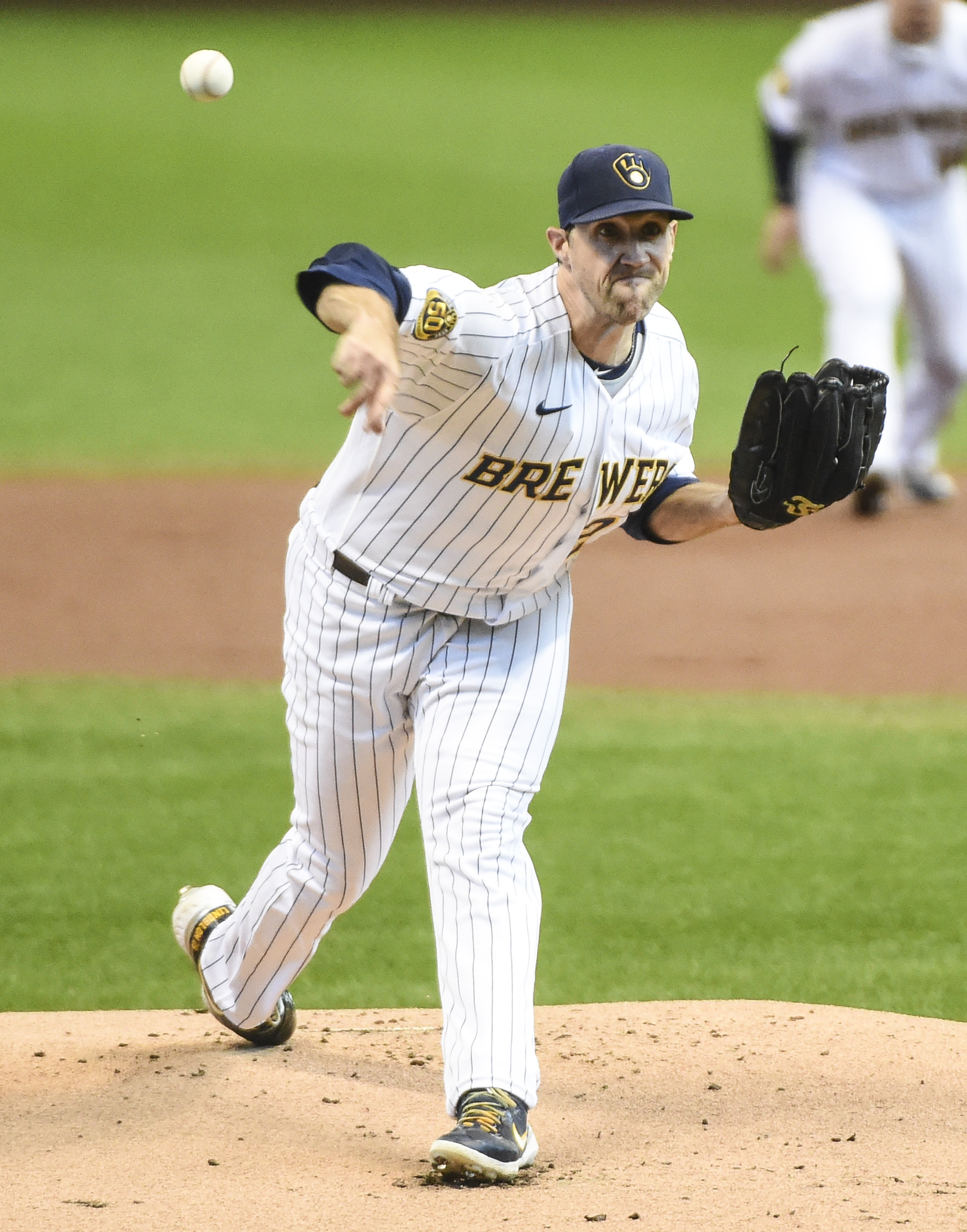
Lindblom was quickly considered one of the Dodgers’ top prospects, and seemed on the fast track to the Majors. He nearly made the team out of camp in spring training ’09, and saw phrases like “future closer” tossed around by Baseball America.
Lindblom reached the Majors in June of 2011 and ended up making 27 relief appearances with a 2.73 ERA that year for the Dodgers. At the 2012 trade deadline, Lindblom was in the middle of a solid season when the Dodgers traded him and others to the Phillies for Shane Victorino. After the season, the Phillies shipped Lindblom to the Rangers in a deal for Michael Young.
With the Rangers, Lindblom moved back to a starting role and made his first big league start against the A’s. However, in December 2013, Lindblom was traded again, this time to the A’s. He spent most of 2014 at Triple-A without much success, and was designated for assignment after the season. The Pirates claimed him off waivers, but soon after he was released to sign with the Lotte Giants of the Korea Baseball Organization.
Lindblom made 62 starts from 2015-16 in KBO, and then signed a minor league deal to return to the Pirates after the ’16 season. He made four big league relief outings for the ’17 Pirates, marking a gap of more than three years between appearances in the Majors.
Having been cut by the Pirates in the summer of 2017, Lindblom returned to KBO to join the Doosan Bears for the 2018-19 seasons. This time around he dominated, pitching to a 2.68 ERA over 363 1/3 innings. He won the top KBO pitching award in both of those seasons. With KBO success, excellent spin rates, and a new approach to pitching, Lindblom was a hot commodity in free agency that winter, nabbing the #42 spot on MLBTR’s top 50 free agents list. He landed a three-year, $9.125MM contract with the Brewers.
Lindblom’s Brewers debut happened to be the shortened COVID season, though he was still able to make ten starts for the club. He began the following season in Milwaukee’s bullpen, but wound up spending 2021 and ’22 at Triple-A. In January of this year, Josh announced his retirement. He thanked those who helped him throughout his career, noting, “Most of us don’t get to choose when we finish.” Lindblom tallied 209 innings in the Majors with six different teams, striking out 200 batters. He was particularly tough on Paul Goldschmidt, punching him out six times in 12 plate appearances.
You can follow Josh on Twitter @JoshLindblom52. Recently, Josh joined the Brewers’ player development staff.
I reached out to Josh to see if he’d be up for chatting with MLBTR readers, and he spent an hour fielding questions on his fondest MLB memories, the differences between MLB and the KBO, the experience of making the transition between those two leagues, and his new role with the Brewers’ player development staff. Click here to read a transcript of today’s chat.
Offseason In Review Chat: Oakland Athletics
MLBTR will be hosting team-specific chats in conjunction with each entry of our Offseason In Review series. Earlier today, we released the Athletics entry in the series. Click here to read a transcript of today’s A’s-centric chat.
Offseason In Review: Oakland Athletics
In conjunction with the A’s offseason review, we’ll be hosting an A’s-focused chat later this afternoon at 2pm CT. You can submit a question in advance, and check back to participate at 2:00.
The A’s began the offseason with a changing of the guard in baseball operations, as longtime executive vice president of baseball ops Billy Beane shifted into an advisory role and turned autonomy over to general manager David Forst. The A’s probably spent more in free agency than some expected — a low bar to clear — but they continued to trade away established talent with an eye toward the future. Whether that future will be in Oakland, Las Vegas or another city remains an open question; the team’s current stadium lease expires after the 2024 season and there’s been no agreement with the city of Oakland on a site for a new stadium.
Major League Signings
- Aledmys Diaz, INF: Two years, $14.5MM
- Jace Peterson, INF: Two years, $9.5MM
- Trevor May, RHP: One year, $7MM
- Shintaro Fujinami, RHP: One year, $3.25MM
- Jesus Aguilar, 1B: One year, $3MM
- Drew Rucinski, RHP: One year, $3MM
- Total spend: $40.25MM
Option Decisions
- None
Trades and Claims
- Traded C Sean Murphy to the Braves and RHP Joel Payamps to the Brewers in a three-team deal netting LHP Kyle Muller, RHP Freddy Tarnok, RHP Royber Salinas and C Manny Pina from Atlanta, as well as OF Esteury Ruiz from Milwaukee
- Traded LHP Cole Irvin and RHP Kyle Virbitsky to the Orioles in exchange for INF Darell Hernaiz
- Traded LHP A.J. Puk to the Marlins in exchange for OF JJ Bleday
- Acquired RHP Chad Smith from the Rockies in exchange for RHP Jeff Criswell
- Claimed OF Brent Rooker off waivers from the Royals
- Claimed INF Yonny Hernandez off waivers from the D-backs
- Traded INF Yonny Hernandez to the Dodgers in exchange for cash
- Selected 1B/OF Ryan Noda from the Dodgers in the 2022 Rule 5 Draft
Notable Minor League Signings
- Drew Steckenrider, Greg Deichmann, Tyler Wade, Pablo Reyes, Deolis Guerra, Austin Pruitt, Jake Fishman, Yohel Pozo, Joe Wieland
Extensions
- None
Notable Losses
- Sean Murphy, Cole Irvin, A.J. Puk, Joel Payamps, Stephen Vogt (retired), Chad Pinder
Heading into the offseason, the A’s were in a virtually unprecedented spot: zero dollars in guaranteed salary on the 2023 payroll, a small arbitration class (that featured a few trade/non-tender candidates) and very little in the way of established big leaguers on the roster. It was a blank slate that both lent itself to some degree of creativity and also spoke to the dire situation in Oakland, where the initial stages of a fire sale designed to scale back payroll and build up the farm had only succeeded in the former of those two goals.
The possibility of a Sean Murphy trade loomed large over the Athletics’ offseason and dominated A’s-related headlines throughout the winter. It’s easy enough to see why. Murphy has cemented himself as one of the game’s top defenders behind the plate, and he jumped from a roughly average showing with the bat in 2021 to a well above-average year in 2022 (with a particularly strong finish to the season). Add in that he entered the offseason as a first-time arbitration-eligible player with three remaining years of club control, and there simply weren’t many teams where Murphy didn’t make sense as a target.
Despite that, Murphy arguably landed on one of those very clubs that didn’t appear to be a logical suitor. Though the Cardinals, D-backs, Giants, Astros, Cubs, Guardians, White Sox, Twins and Rays were among the teams to inquire on Murphy’s services, it was the Braves — who already had three catchers on the roster — who wound up orchestrating a three-team trade to bring Murphy to Atlanta.
Oakland’s return in the Murphy trade has generally been panned; the Braves were not only a surprise trade partner for Murphy due to their own catching surplus (Travis d’Arnaud, William Contreras, Manny Pina) but also because their prior series of trades and prospect graduations had thinned out a once-vaunted farm system. Atlanta was willing to part with Contreras, who broke out with a .278/.354/.506 batting line over 97 games in 2022 and had five remaining seasons of club control, largely because Murphy is viewed as a vastly superior defender. Rather than accept Contreras as a headliner, though, the A’s flipped him to Milwaukee (along with reliever Joel Payamps) in order to acquire center field prospect Esteury Ruiz, whom the Brewers had acquired from the Padres a few months prior in the Josh Hader blockbuster.
The Murphy return is generally viewed as a quantity-over-quality collection of players. Ruiz brings elite speed — he stole a ridiculous 86 bases in 103 tries in 2022 — but doesn’t have much ability for making hard contact. Muller has solid Triple-A numbers but hasn’t had much success in limited big league time yet and is considered more of a potential fourth starter than a higher-end pitching prospect. The other arms in the deal — Freddy Tarnok and Royber Salinas — have had success in the minors but also come with a fair bit of bullpen risk. It wouldn’t necessarily be a surprise to see any of the three pitchers enjoy a run in the A’s rotation, nor is it out of the question that Ruiz’s blazing speed and baserunning acumen make him a table-setting type of outfielder for the foreseeable future.
Still, the general expectation when trading a player of Murphy’s caliber — particularly three years of control over such a player — is more certainty and more ceiling. The Athletics have had success with bulk returns that don’t necessarily feature high-end prospects in the past (e.g. acquiring Marcus Semien, Chris Bassitt and Josh Phegley in exchange for a year of Jeff Samardzija), in part because they seem to habitually buck the industry consensus when it comes to prospect evaluation. Part of that is surely recognizing that the unique dimensions of their home park tend to allow back-end starters (Cole Irvin, for example) to find success even if they’re not prototypical, highly touted pitching prospects.
Speaking of Irvin, he joined Murphy amid the latest offseason exodus in Oakland. Traded to the Orioles alongside minor league righty Kyle Virbitsky, he brought infield prospect Darell Hernaiz to the A’s. Irvin wasn’t a clear-cut trade candidate, as he had four years of team control remaining and wasn’t even eligible for arbitration yet, but the A’s surely feel good about acquiring him in exchange for cash in 2021 and flipping him for a prospect of some note just two years later. Keith Law pegs Hernaiz No. 6 among A’s prospects over at The Athletic, calling him a potential regular at second base or a super-utility option who can bounce around the infield. Either would be a nice outcome for an Oakland system that was light on infield depth.
It should be noted, too, that Irvin is a pitch-to-contact starter who’s thrived with the A’s partly due to the spacious confines of the Coliseum. He has pronounced home/road splits and has been quite susceptible to the long ball when pitching away from Oakland. He also finished out the 2022 season in a prolonged slump, and there was certainly risk that with a poor start to his 2023 season or an injury, the trade value he possessed might’ve quickly dried up.
The third notable A’s trade of the offseason shipped lefty A.J. Puk to the Marlins in exchange for minor league outfielder JJ Bleday. It was a “challenge” trade to some extent — a direct swap of the 2016 No. 6 overall pick (Puk) for the 2019 No. 4 overall selection (Bleday).
In this instance, the A’s gave up the player with big league success in order to acquire the younger, more recent draftee, but it was another somewhat curious swap for Oakland. The 6’7″ Puk rattled off 66 1/3 innings of 3.12 ERA ball in 2022, fanning a well above-average 27% of his opponents against a solid 8.2% walk rate and 43.4% ground-ball rate. Five of the 23 runs surrendered by Puk came in one nightmare outing against the White Sox, and his ERA outside that disastrous showing was an even sharper 2.47. Puk may not ever pan out as a starter — he’s already had shoulder surgery and Tommy John surgery since being drafted, and that injury history surely factored in Oakland’s decision to trade him — but he at least looks the part of a potential high-end reliever.
Bleday, meanwhile, is a career .225/.337/.409 hitter across three minor league levels with strikeout rates that have risen as he’s ascended the organizational ladder. He’s punched out in 27% of his Triple-A plate appearances and fanned at a 28.2% clip in 238 big league plate appearances last year, finishing with a .167/.277/.309 output in his debut effort. Bleday walks at a high clip but doesn’t make much contact and hasn’t shown more than above-average power to this point.
The Marlins have spent two offseasons looking for a center fielder and, despite coming up empty, felt comfortable trading Bleday, who has spent more time in center field than in the corners to this point in his career. The A’s are making a big bet on Bleday. We know the type of packages a southpaw like Puk could command at the trade deadline if he’s healthy and in the midst of a big season. One of these two teams is quite wrong about Bleday, and for the A’s to reverse their trend of underwhelming trade returns over the past calendar year, it’s paramount that they got this one right.
The rest of Oakland’s offseason featured a handful of sensible free-agent additions. Aledmys Diaz and Jace Peterson give the A’s some affordable infield flexibility — veterans who can hold down a starting position but handle multiple spots if a younger farmhand usurps their spot in the lineup. Peterson’s OBP-and-defense skill set at the hot corner, in particular, feels like a vintage Oakland play. Neither veteran’s signing garnered significant attention, but they’re solid hands who could easily hold some trade appeal — particularly Peterson, given his lower salary.
The Athletics also tapped into the KBO and NPB markets, signing righties Drew Rucinski and Shintaro Fujinami to cheap one-year contracts in hopes of catching lightning in a bottle. At 34, Rucinski is an older MLB reclamation project but has been nothing short of sensational in South Korea (732 2/3 innings, 3.06 ERA, 21.5% strikeout rate, 6.3% walk rate, 66% ground-ball rate). The younger Fujinami is a 28-year-old flamethrower who was once a high school rival of Shohei Ohtani (and a similarly touted prospect). He was dominant as a starter early in his NPB career but has battled command woes in recent years as his stock has dropped. For a one-year commitment at this price point, there’s little to dislike about the A’s taking a chance and hoping to unlock something in the 6’6″ right-hander.
One-year deals with Trevor May and Jesus Aguilar give the A’s a potential late-game bullpen option and a cheap roll of the dice on a power bat who’ll hope to turn things around in a change of scenery. May limped through an injury-plagued 2022 season but from 2016-21 had a solid 3.71 ERA with a massive 32.2% strikeout rate. Home runs have been an issue, but his new home park will help with that. Aguilar, meanwhile, is no stranger to pitcher-friendly parks, having swatted 22 homers in just 130 games with the Marlins as recently as 2021. Last year’s .235/.281/.379 slash was an eyesore, but dating back to 2017 he’s a .257/.326/.456 hitter with 109 round-trippers.
While many of the Athletics’ free-agent additions were sensible in a vacuum, they also underscore the manner in which the 2021-22 offseason’s slate of trades has come up short thus far. None of the pitching prospects the A’s acquired in trades of Matt Olson, Matt Chapman, Chris Bassitt and Sean Manaea has solidified a spot on the roster yet, despite several arms receiving opportunities to do just that. Left-hander Zach Logue, acquired in the Chapman deal, was designated for assignment and lost to the Tigers on waivers less than a year after being acquired.
In the lineup, both center fielder Cristian Pache and third baseman Kevin Smith struggled enormously. Pache is now out of minor league options after batting just .166/.218/.241 in 260 plate appearances with Oakland last year. He’ll have to try to refine his offensive skill set at the big league level, but with Ruiz and Bleday now joining veteran Ramon Laureano, it’s not entirely clear that Pache will be given an everyday role, which only further complicates his development.
Broadly speaking, that’s a microcosm of the entire 2023 season for the A’s. It’ll be one of large-scale auditions for young players as Oakland hopes to piece together the makings of a core that unfortunately did not begin to take form in 2022. The only somewhat established starter in the rotation is righty Paul Blackburn, who had an out-of-the-blue, All-Star first half in 2022 before a torn tendon in his hand tanked his numbers in the second half. Others vying for spots will include Rucinski, Fujinami, Muller, Tarnok, Ken Waldichuk, Adrian Martinez, JP Sears and James Kaprielian.
In addition to Pache, Bleday and Ruiz in the outfield, the A’s will hope some combination of catcher Shea Langeliers (acquired in the Olson trade) and top prospect Zack Gelof (drafted 60th overall in 2021) can emerge as mainstays on the roster. Shortstop Nick Allen, a light hitter but high-end defender, will get another crack at shortstop, and the aforementioned Smith will likely get a big league mulligan at some point somewhere in the infield as well.
As the summer approaches, more A’s veterans will surface in trade talks. Expect each of Blackburn, Pina, Laureano, second baseman/outfielder Tony Kemp, first baseman/outfielder Seth Brown to surface in trade chatter this summer along with this offseason’s veteran signees — particularly those who inked one-year deals.
It’s a tough time for A’s fans, with no viable path to contention and — despite the gutting of a core that helped produce a 316-230 record from 2018-21 — one of the worst-ranked farm systems in the game. There will be plenty of opportunity for young players, and some of the veteran additions will help, but year two of the team’s rebuild feels a lot more like year one than it should.
How would you grade the Athletics’ offseason? (Link to poll)
How would you grade the Athletics' offseason?
-
F 34% (1,065)
-
D 32% (1,000)
-
C 23% (736)
-
B 8% (244)
-
A 3% (102)
Total votes: 3,147
AL West Notes: Brown, Whitley, Astros, Pache
It was reported yesterday that the Astros would start the season without Lance McCullers Jr. in the rotation, since he’s out with an injury to his throwing arm. The club will still have a strong front four in Framber Valdez, Cristian Javier, Luis Garcia and José Urquidy, and it was assumed by most observers that Hunter Brown would now step into the fifth slot.
“It’s consensus in the organization that Hunter Brown has a chance to be big-time for us,” general manager Dana Brown told Chandler Rome of the Houston Chronicle. “I think he knows it and feels it. When I saw him throw, I was like, ‘This guy has electric stuff.’ The ball is coming out really good. There’s a comfort with Brown that, hey, Brown could take a step and really log some innings this year.”
The general manager didn’t go so far as to crown the young pitcher as winning the job, but it seems like he’s the frontrunner at the moment. That’s fairly logical given the strong season he had last year. He tossed 106 innings in Triple-A, both starting and in multi-inning relief stints, with a 2.55 ERA, 31.5% strikeout rate, 10.6% walk rate and 54.2% ground ball rate. He was also able to make his major league debut, posting a 0.89 ERA in 20 1/3 innings over seven appearances.
Other options on the 40-man include Brandon Bielak, J.P. France and Forrest Whitley. “We’re hoping Whitley takes a jump this year,” Dana Brown said. “It’s time for Whitley.” Whitley, 25, was once one of the most highly-regarded young players in the game, with Baseball America ranking him the #5 prospect in the league in 2019. Unfortunately, he still hasn’t made his major league debut due to various factors, the most prominent being injuries such as 2021 Tommy John surgery. He was able to return to health last year and toss 40 innings in the minors but with a 6.52 ERA in that time. He’ll look to get back on track this season to the form he showed in 2018 when he posted a 3.76 ERA in Double-A at the age of 20. He still has an option remaining and can be kept in the minors until he proves himself ready.
Of course, the Astros could always add a player from outside the organization, but it doesn’t seem like anything is imminent. “I’m not in the panic mode, but I also will keep my eyes open because I’m always looking for depth,” Dana Brown said.
Other notes from the American League West…
- Sticking with the Astros and their rotation depth, Rome asked manager Dusty Baker about the situation today. “You got to ask the powers that be,” Baker said. “I got the power, but not the authority. That was always a consideration for me … we didn’t have a general manager in place in order to make that move.” That last comment is a reference to the fact that the club surprisingly parted ways with now-former general manager James Click in November and operated with that job vacant until Brown was hired in late January. It’s not true that the empty position prevented the club from making any moves whatsoever, as owner Jim Crane took an active role in baseball operations alongside some assistant general managers. Between Click’s dismissal and Brown’s hiring, the club signed José Abreu, re-signed Rafael Montero and Michael Brantley, in addition to various minor league deals and waiver claims. Still, it’s possible that the front office was a bit short-handed while transitioning to a period without Click and assistant GM Scott Powers. It’s not too late to add pitching depth, as the club could still make a trade or reach out to free agents like Chris Archer, Dylan Bundy or Aníbal Sánchez.
- The Athletics will have a tough choice to make at the end of spring since outfielder Cristian Pache is out of options and can’t be sent to the minors without first being exposed to waivers. The prospect hype on him was strong enough that he got to #7 on BA’s top 100 in 2021, though his bat hasn’t developed to match his strong defense. Traded to Oakland in the Matt Olson deal about a year ago, he hit a paltry .166/.218/.241 last season. His 35 wRC+ indicates he was 65% below league average, the lowest such mark in the majors last year among those with at least 250 plate appearances. “For Pache, he’s in a difficult situation,” manager Mark Kotsay tells Matt Kawahara of the San Francisco Chronicle. “Not only is he competing for a roster spot here, but he’s going to showcase himself for 29 other teams. So it’s an important spring for Pache, no question, from an individual standpoint, for his career going forward.” The club has collected many outfielders in its recent deals and currently has a mix that includes Seth Brown, Ramón Laureano, Esteury Ruiz, JJ Bleday, Conner Capel, Brent Rooker, Cal Stevenson and others. Many of those players can be optioned to the minors but Kawahara suggests that Pache’s lack of options might not be enough to get him a roster spot.
AL West Notes: Maldonado, deGrom, Bleday
Martin Maldonado played through a sports hernia and a broken hand for the latter part of the 2022 season, toughing it out to remain on the field and help the Astros win a championship. As a result, Maldonado admitted that he “felt a little sad” that the Astros looked at Willson Contreras and other available catchers this offseason. “We just won the World Series and I felt like I sacrificed my whole body playing through injuries for the team….But I understand the business,” Maldonado told The Houston Chronicle’s Chandler Rome and other reporters. “I know as an owner, as a front office, they’re going to try to always get the best position players available and help the team get better. Willson was the best free-agent catcher out there.”
Maldonado has rarely hit much over his 12 MLB seasons, but he is beloved within the Astros clubhouse for his defense and ability to work with pitchers. A new addition doesn’t appear to be coming for now, leaving Maldonado atop Houston’s depth chart and youngsters Korey Lee and Yainer Diaz competing for the backup catching job. Maldonado’s health situation certainly spurred the Astros’ acquisition of Christian Vazquez at the trade deadline, but if Houston has any lingering feelings that an upgrade is necessary behind the plate, they’re certainly still a team to watch on the trade market throughout the season.
More from around the AL West…
- Given Jacob deGrom‘s injury history, a seemingly minor four-day shutdown due to side pain was cause for concern amongst Rangers fans, but the newly-signed ace is now “feeling really good,” as Texas GM Chris Young told Evan Grant of the Dallas Morning News and other reporters. “He’s made a lot of improvement….And he was throwing before he got here, so I think he will catch back up quickly. He was sort of ahead of schedule to where he’s been in the past.” DeGrom is expected to throw off a mound on Monday or Tuesday, and is slated to play catch and take part in fielding drills in the interim.
- Last weekend’s trade that sent JJ Bleday from the Marlins to the Athletics was “a blindside” to the outfielder, Bleday told reporters (including Matt Kawahara of the San Francisco Chronicle). But, Bleday is now ready for his “exciting opportunity” in Oakland, and how he is planning to establish himself as a big leaguer after an underwhelming rookie season. Bleday hit only .167/.277/.309 over his first 238 plate appearances in the Show, and said “the jump from Triple-A to the big leagues was definitely bigger than I anticipated. There were some things in the big leagues I was doing mechanically that I probably shouldn’t have been. You’re really unaware of it but you have no time to work on that stuff because you’re playing every single day….It’s a relentless league.” After an offseason of prep, Bleday is now looking to keep his hands high at the plate and put an emphasis on hitting fastballs. It wasn’t long ago that Bleday was a consensus top-50 prospect, so a breakout might come in his new environment if Bleday can adjust to MLB fastballs and continue his ability to draw walks.
Dodgers Hire Tyson Ross For Special Assistant Role
The Dodgers have hired Tyson Ross for a special assistant position, The Athletic’s Fabian Ardaya reports (Twitter link). Ross will be involved in the team’s player development and player performance departments. The hiring seemingly indicates that Ross has ended his playing career after 10 Major League seasons.
A second-round pick for the Athletics in 2008, Ross began his career with three seasons for his hometown team before he was traded to the Padres during the 2012-13 offseason. The right-hander reached another level with his new club, posting strong numbers as a member of San Diego’s rotation and receiving an All-Star nod in 2014.
Unfortunately for Ross, injuries limited his effectiveness after this promising run. He pitched in only a single game in 2016 due to shoulder problems and eventually a surgery for thoracic outlet syndrome. After two injury-marred seasons, it seemed like Ross was regaining some of his old effectiveness during a solid 2018 year with the Padres and Cardinals, but after signing with the Tigers in December 2018, his time in Detroit was limited to only seven starts due to elbow problems.
Ross’ five innings of work in the Tigers’ 6-0 loss to the Twins on May 10, 2019 ended up being his final Major League appearance. He signed a minor league deal with the Giants prior to the 2020 season but he chose to opt out of the pandemic-shortened season, and another minors deal with the Rangers in the 2020-21 offseason didn’t lead to any game time even in the minors before he was released that May.
Ross turns 36 in April, and he is hanging up his cleats after 203 MLB games (142 of them starts) and 904 2/3 innings. During his time with the A’s, Padres, Rangers, Cardinals, and Tigers, Ross had a 4.04 ERA, relying on a grounder-heavy arsenal rather than blow-away strikeout numbers. Ross had a 53.5% grounder rate to go along with a 21.2% strikeout rate and 10.1% walk rate.
As he embarks on this new role with the Dodgers, Ross now finds himself opposite his younger brother Joe on both sides of the heated Los Angeles/San Francisco rivalry. Joe (who is recovering from Tommy John surgery) signed a minors deal with the Giants last month.
We at MLB Trade Rumors congratulate Tyson on a fine career, and we wish him the best as he moves into his post-playing endeavors in the game.
A’s, Greg Deichmann Agree To Minor League Contract
The Athletics have signed corner outfielder Greg Deichmann to a minor league deal, according to his transactions log at MLB.com. He returns to the organization that initially drafted him in the second round back in 2017.
A left-handed hitter, Deichmann played four seasons in the Oakland minor league system. He worked his way to Triple-A Las Vegas by 2021, hitting .300/.433/.452 over 60 games there. As the trade deadline approached, the A’s dealt Deichmann alongside another minor leaguer to the Cubs for Andrew Chafin. Oakland remained firmly in playoff contention that summer, while the Cubs had fallen out of the mix in July and moved a number of players off the MLB roster.
That afforded Deichmann a chance for his initial big league action a couple weeks after the trade. The Cubs promoted him for his MLB debut in early August. He made it into only 14 games, collecting four hits in 30 at-bats. Deichmann spent the remainder of the season on optional assignment to their top affiliate in Iowa. He couldn’t replicate the solid numbers he’d posted during the Triple-A season’s first half, hitting .227/.298/.403 in 34 games.
The LSU product held his spot on Chicago’s 40-man roster last offseason but was designated for assignment shortly after Opening Day. He went unclaimed on waivers and spent the bulk of last year in Iowa after being outrighted. Deichmann limped to a .214/.271/.335 showing over 78 games there. He hit just seven homers while striking out at a huge 32.3% clip. The Cubs released him in August.
It was a season to forget, but Deichmann’s still just 27 years old and has drawn praise for his power potential at times. He’ll return to an environment in which he’s had prior success. He’s likely to open the upcoming season back in Las Vegas, adding upper level outfield depth to the organization. Deichmann owns a .239/.329/.410 line over parts of five minor league seasons.
Eric Thames Announces Retirement
Veteran first baseman and outfielder Eric Thames took to Instagram yesterday to announce his retirement. “The day has finally come,” he says in the post. “In the year of our lord, twenty, twenty-three…HE GONE! I’ve been so blessed over these last 14 years to call baseball my job. The friendships that will last a lifetime, the memories that I’ll never shut up about (and those that I’m sworn to secrecy to take to my grave ).”
This announcement officially ends one of the more unique baseball careers, as Thames has spent the past few decades crisscrossing the globe. His professional baseball life began when the Blue Jays drafted him in 2008 out of Pepperdine University. He made his major league debut with the Jays in 2011 and performed well, hitting 12 home runs in 95 games. His batting line on the year was .262/.313/.456 for a wRC+ of 107, indicating he was 7% better than the league average hitter.
Things didn’t go as well the following year, as Thames hit .243/.288/.365 for the Jays and was optioned to the minors for a time. He was then traded to the Mariners in July for Steve Delabar, getting into 40 games with Seattle after that deal. In 2013, the Mariners kept Thames in the minors and eventually designated him for assignment. He was traded to the Orioles and then went to the Astros on a waiver claim, though neither team called him up to the big leagues.
Thames signed with the NC Dinos of the Korea Baseball Organization for 2014, which transformed his career. After years of being on roster bubbles in North America, he emerged as a star in Korea. He hit 37 home runs for the Dinos that year and followed that up by hitting 47 and 40 in the next two seasons. His 2015 season stands out as being exceptionally impressive, as he also stole 40 bases and walked in 17.3% of his trips to the plate. His .381/.497/.790 batting line amounted to a 216 wRC+. He was crowned as the Most Valuable Player in the league that year.
After that strong three-year stretch with the Dinos, Thames returned to Major League Baseball, signing a three-year, $16MM deal with the Brewers. He was able to transfer a decent amount of his success from Korea to North America, as he hit 31 homers in 2017 while walking in 13.6% of his trips to the plate. His .247/.359/.518 batting line led to a 125 wRC+. Thumb surgery kept him out of action for a while in the following year, but he was still able to add another 16 home runs in 96 games, then hit another 25 in 2019. His three-year stretch in Milwaukee resulted in 72 long balls and a .241/.343/.504 batting line for a 118 wRC+. That last year saw the Brewers qualify for the Wild Card game against the Nationals. Thames went 2-4 in that game, including hitting a solo home run off Max Scherzer. But the Brewers ultimately lost 4-3 to the Nats, who would go on to win the World Series later that year, and that now goes down as the only MLB playoff game in which Thames played.
Despite that solid stretch, the Brewers surprisingly turned down a $7.5MM option on Thames for 2020 and went for the $1MM buyout instead. The Nationals scooped him up on a $4MM guarantee but he struggled in the pandemic-shortened season, hitting .203/.300/.317 with just three homers in 41 games. He signed with the Yomiuri Giants of Japan’s Nippon Professional Baseball for 2021 but suffered a ruptured Achilles tendon after just one game with the club. He tried another return to the majors in 2022 by signing a minor league deal with the A’s, but struck out in 38% of his plate appearances in Triple-A and got released after 22 games.
In the end, it makes for quite a journey, with Thames having played for baseball teams all over the world. His major league career resulted in 96 home runs, 18 stolen bases, 451 hits, 286 runs scored and 235 driven in. But he’ll perhaps be best remembered by some fans for that magical three-year run in the KBO wherein he hit 124 home runs, stole 64 bases, scored 343 runs and drove in 382.
We at MLB Trade Rumors congratulate Thames on a fascinating and distinctive career, and wish him the best in his future endeavors.