
Offseason In Review: Pittsburgh Pirates
The Pirates traded their best player (again) and appeared more intent on cutting payroll than giving the appearance of trying.
Guaranteed Contracts
- Jarrod Dyson, OF: One year, $2MM
- Guillermo Heredia: One year, $1MM
- Luke Maile, C: One year, $900K
- JT Riddle, SS/OF: One year, $850K
- Total Spend: $4.75MM
Option Decisions
- Exercised $11.5MM club option over OF Starling Marte
- Exercised $9MM club option over RHP Chris Archer
Trades and Claims
- Traded OF Starling Marte to the Diamondbacks in exchange for minor league SS Liover Peguero and minor league RHP Brennan Malone
- Traded RHP Dario Agrazal to the Tigers in exchange for cash
- Traded RHP Parker Markel to the Angels in exchange for cash
- Claimed LHP Sam Howard off waivers from Rockies
Notable Minor League Signings
- Derek Holland, Robbie Erlin, John Ryan Murphy, Andrew Susac, Charlie Tilson, Socrates Brito, Tom Koehler (since retired), Jake Elmore, Hector Noesi, Phillip Evans
Notable Losses
- Starling Marte, Melky Cabrera, Elias Diaz (non-tendered), Francisco Liriano, Dario Agrazal, Parker Markel, Steven Baron, Corban Joseph
The Pirates offseason kicked off in bizarre fashion, with former manager Clint Hurdle telling The Athletic’s Stephen J. Nesbitt that he’d received assurances that he’d be retained into 2020 — only to be fired days later. General manager Neal Huntington headed up the search for a new skipper … until owner Bob Nutting canned Huntington nearly a month into that effort. A month after the regular season ended, the Pirates had no manager or general manager and weren’t close to making a hire for either vacancy. They were represented by interim GM Kevan Graves at the annual General Managers Meetings and, shortly after that event’s conclusion, hired former Red Sox GM Ben Cherington to replace Huntington. Another 10 days later, Pittsburgh hired Twins bench coach Derek Shelton as their new manager.
By the time the Pirates had both their GM and manager in place, the likes of Yasmani Grandal, Travis d’Arnaud, Chris Martin, Will Smith and Kyle Gibson had each already signed as free agents. The Brewers had traded Chase Anderson to the Blue Jays and orchestrated an interesting four-player swap with the Padres. But getting a late start to the offseason ultimately didn’t impact the Bucs much, because as the winter wore on, it became clear that the team wasn’t planning on making any notable additions.
Rather, the largest move the Pirates made this winter was shipping their best player, Starling Marte, to the Diamondbacks in a trade that trimmed payroll and added some high-upside but very young talent to the farm ranks. Liover Peguero and Brennan Malone didn’t shoot to the top of the club’s prospect rankings but are both ranked inside the Pirates’ top 10 farmhands by FanGraphs, Baseball America, MLB.com and The Athletic.
Some fans felt that the Pirates didn’t get enough in return, but the market for Marte was a bit quieter than anticipated. The Phillies never appeared to get seriously involved — perhaps due to sitting narrowly south of the luxury tax threshold. The Indians had interest but were clearly more interested in cutting payroll than adding MLB talent themselves. The Padres were tied to Marte but more focused on Mookie Betts. Ultimately, the Bucs got a pair of quality prospects that wouldn’t have been guaranteed had they held Marte in hopes of extracting a greater return this summer.
Immediately after trading Marte, Cherington made clear that he hoped to bring in a serviceable replacement (of course, at a lower cost than Marte’s $11.5MM salary). The market for center fielders was thin to begin the winter and largely picked over by that point, but Pittsburgh wound up adding a trio of center-field-capable options at minimal costs. Jarrod Dyson ($2MM), Guillermo Heredia ($1MM) and JT Riddle ($850K) were all signed to one-year, Major League deals. Heredia projects as the club’s fourth outfielder and can be controlled via arbitration through the 2022 season if the organization sees fit. Riddle should be a backup infielder/outfielder and is controllable through 2023.
Dyson is a straight one-year pickup — a blistering runner with high-end glovework and, frankly, a pretty tidy bargain for the Pirates at a $2MM price point. He’s a nice value addition, but it’s worth noting that in going with Dyson, the Bucs apparently deemed even Kevin Pillar‘s $4.25MM price tag with the Red Sox to be too expensive. It’s not as if Pillar spurned the Pirates to sign with a surefire contender, so either the front office believes Dyson to be a better asset — a defensible take but not a decisive fact by any means — or ownership simply didn’t want to spend the extra dollars to bring in the younger Pillar.
Luke Maile is the only other player who inked a big league deal with the Bucs this winter, although he still has minor league options remaining and, as such, inked a split contract. He’s the presumptive backup to 30-year-old Jacob Stallings, who’ll be getting his first opportunity as a starting catcher in 2020. Light-hitting framing savant John Ryan Murphy was brought in on a minor league deal as a depth piece, but the catching corps in Pittsburgh is a collectively underwhelming unit, to put things mildly.
It’s a different story around the infield, for the most part. Josh Bell will look to shake off a second-half slump and build on a generally strong 2019 campaign, while Adam Frazier has settled in as a quality, underrated second baseman. Kevin Newman showed off plenty of upside in a strong rookie effort last year, and the Bucs have reportedly initiated talks on an extension with one of the game’s top third base prospects (and top overall prospects): Ke’Bryan Hayes. If Hayes agrees to a deal, he’d likely open the year in the Majors … whenever, exactly, Opening Day actually happens. In the outfield, sophomore Bryan Reynolds and longtime Bucco Gregory Polanco will flank the newly signed Dyson.
Turning to the pitching staff, the Pirates have had their fair share of misfortune recently. Jameson Taillon had Tommy John surgery last summer, and righty Chad Kuhl is still working back from his own Tommy John procedure at the end of the 2018 season. Lefty Steven Brault has been slowed by shoulder woes this spring. Closer Felipe Vazquez, of course, is out of the picture entirely after being arrested on a series of abhorrent statutory sexual assault charges.
The Pirates did little to bolster their waning pitching depth this winter, however, bringing Derek Holland, Robbie Erlin and Hector Noesi aboard on minor league deals but eschewing any big league additions. Holland appears the likely fifth starter behind Chris Archer, Joe Musgrove, Trevor Williams and Mitch Keller.
Perhaps even more glaringly, Pittsburgh opted not to add a single reliever to the big league staff — with the possible exception of claiming lefty Sam Howard from the Rockies. Keone Kela should close down games in 2020, but he’s the only reliever with any real track record in the Pirates’ relief corps. There’s enough flotsam on the 40-man roster that the Pirates could’ve added some veteran arms or at least speculated on the waiver wire. Instead, they’ll rely on the same group of relievers that ranked 23rd in the Majors in ERA, 22nd in FIP and 20th in xFIP as a collective bunch in 2019 — and that was with Vazquez dominating for the first several months.
Not including Vazquez’s salary — he’ll be on the restricted list — the Pirates are set to open the season with under $54MM in payroll on the books. It’s an astonishingly low number in today’s game — one so small that no one should be surprised to see yet another grievance brought forth against the organization by the MLBPA. The collective bargaining agreement has rules in place about the manner in which a team must allocate its revenue-sharing funds, and it’s easy to understand why the union has questions about the Pirates’ claims that their use of said resources is compliant.
Cherington declined to use the word “rebuild” this offseason, instead claiming that the Pirates are merely “building.” Semantics aside, the Pirates’ roster is extraordinarily porous, and the front office effectively did nothing to stop the ship from taking on water. Pittsburgh didn’t even select a player in December’s Rule 5 Draft. If the Pirates weren’t even going to feign an attempt at improving, it’s surprising that they didn’t aggressively shop the likes of Kela, Bell, Frazier, Musgrove and basically anyone else who’s controlled for three or fewer seasons.
2020 Season Outlook
If the manner in which owner Bob Nutting bumbled through the first month of the offseason — allowing a GM to conduct a hunt for a manager before firing that GM and starting over a month into the process — didn’t illustrate the organization’s lack of a plan, the end result of their winter should spell it out. This roster isn’t any better than the one that lost 93 games in 2019. It’s very arguably worse. And yet the Pirates only made one future-oriented trade, did next to nothing to add short-term free agents who could emerge as trade chips, sat out the Rule 5 Draft and engaged in virtually no activity on the waiver wire.
Players like Reynolds, Newman and Hayes at least give fans some exciting young talent to watch, but this is a weak roster that the club barely tried to improve. It’ll be an upset if the Pirates don’t finish in last place, and fans can expect to see some combination of Archer, Mugrove, Kela, Frazier and Bell circulating the rumor mill this summer.
Cherington deserves some benefit of the doubt, given a track record of quality player development in Boston and Toronto. Perhaps the plan was to use 2020 as a year of pure evaluation for what was already in house, but it sure seems like the Pirates passed on countless opportunities to pursue upside deals, further stock the farm or at least give the fans some reason to care. It’s going to be a long year in Pittsburgh.
How would you grade the Pirates’ offseason? (Link to poll for Trade Rumors mobile app users)
How would you grade the Pirates' offseason?
-
F 53% (2,264)
-
D 31% (1,320)
-
C 11% (484)
-
B 3% (119)
-
A 2% (82)
Total votes: 4,269
10 NL Central Hitters Looking For Bounce-Back Years
Our series focusing on notable players looking for bounce-back seasons in 2020 rolls on with the National League Central. We’ll start with 10 of the division’s hitters who hope to return to form this year…
Joey Votto, 1B, Reds:
Votto is one of the greatest hitters who has ever lived, so it was rather surprising – even at the age of 35 – to see him turn in such pedestrian numbers in 2019. He ended up with what was essentially a league-average line of .261/.357/.411 with 15 home runs in 608 plate appearances, mustering just 0.7 fWAR during that span. Compared to 2018, the ever-patient Votto saw his walk rate fall by almost 5 percent, his out-of-zone swing rate jump by nearly 5 percent and his strikeout rate climb by 4 percent. Regarding his performance last year, Votto admitted in February (via Mark Sheldon of MLB.com): “It’s the worst season I’ve had in my career, pretty clearly. I don’t think it’s close. Everything went the wrong way.” Now, the six-time All-Star and former MVP is “motivated” to turn things around as part of what could be the Reds’ first contending team in several years.
Lorenzo Cain, CF, Brewers:
Cain joined Votto in logging uncharacteristically mediocre numbers last season. But Cain, a 5.7-fWAR player as recently as 2018, was clearly hampered by a right thumb injury. That issue played a part in limiting the 33-year-old to 1.5 fWAR and a .260/.325/.372 line across 623 trips to the plate. From 2018-19, his walk rate fell by 3.5 percent, his wRC+ plummeted by 41 points (124 to 83) and he stole 12 fewer bases (30 to 18).
Justin Smoak, 1B, Brewers:
One of the Brewers’ offseason free-agent pickups, Smoak is coming off a year in which he matched Votto in wRC+. That’s normally a good thing, but at 101, that wasn’t the case last season. In his final campaign with the Blue Jays, the switch-hitting Smoak only put together a .208/.342/.406 line in his 500 PA. But his hard-hit rate increased by almost 9 percent, according to FanGraphs, and Statcast was a fan of his work. Notably, the 33-year-old’s expected weighted on-base average (.366) far outpaced his real wOBA (.323).
Jedd Gyorko, INF, Brewers:
Another of Milwaukee’s offseason signings, Gyorko is on the heels of a brutal and injury-wrecked 2019 spent with the Cardinals and Dodgers. He accounted for minus-0.7 fWAR in just 101 PA, thanks in large part to an unsightly .174/.248/.250 line. Before that, Gyorko totaled three straight seasons of above-average offensive production. For an affordable $2MM, Milwaukee’s hoping a healthy version of the 31-year-old will return to his 2016-18 days.
Paul Goldschmidt, 1B, Cardinals:
There was nothing wrong with Goldschmidt’s output in 2019, per se; it just didn’t match up to the brilliance we’ve come to expect from him. A middling start to the six-time All-Star’s first season as a Cardinal tamped down his overall numbers, helping limit him to a .260/.346/.476 showing and 2.9 fWAR (though he did hit 34 home runs). Remember, Goldschmidt entered the year as a lifetime .297/.398/.532 hitter with six consecutive seasons of between 4.0 and 7.2 fWAR.
Matt Carpenter, 3B, Cardinals:
Carpenter, like Goldschmidt, was a star in the several seasons preceding 2019. But last year went awry for Carpenter, who – for the first time in his career – failed to record even average offensive production. The 34-year-old finished the season as a .226/.334/.392 hitter in 492 PA, notching a career-worst 1.2 fWAR in the process. Compared to 2018, Carpenter’s walk and strikeout rates went in the wrong direction by about 3 percent apiece, his ISO plummeted by a stunning 100 points, and his hard-hit percentage fell by eight points.
Yadier Molina, C, Cardinals:
The Cardinals are currently working to extend the 37-year-old Molina, one of the best players in franchise history, though the potential Hall of Famer wasn’t his usual self in 2019. He produced his lowest fWAR (1.2) since 2006 and batted a powerless .270/.312/.399 in 452 PA. On the other side, Molina’s caught-stealing rate went down by a few points to 27 percent (still a bit better than average), and his pitch-framing output also dropped.
Harrison Bader, CF, Cardinals:
With this many Cardinals on the list, it’s a wonder they took the division last season. Anyhow, Bader was a major contributor to the team in 2018 – his first full season – but couldn’t come close to replicating that performance in ’19. His fWAR was cut in half by 50 percent (3.6 to 1.8), largely because of a disappointing .205/.314/.366 line over 406 trips to the plate. A 4 percent increase in strikeout rate was among the culprits. To Bader’s credit, though, he did slash his soft-contact rate and continue to thrive in the outfield, where he tallied 14 Defensive Runs Saved and a 12.9 Ultimate Zone Rating.
Gregory Polanco, OF, Pirates:
It would be fair to give Polanco a mulligan for his poor year, as he underwent left shoulder surgery in September 2018 and dealt with problems in that area throughout last season. He only appeared in 42 games and amassed 167 PA, batting .242/.301/.425.
Daniel Descalso, INF, Cubs:
The typically light-hitting Descalso was so effective as a Diamondback in 2018 that it convinced the Cubs to give him a two-year, $5MM contract heading into last season. That decision has not paid off at all so far. The 33-year-old Descalso’s initial season in Chicago couldn’t have gone much worse, as he batted .173/.241/.250 over 194 PA and accounted for minus-0.8 fWAR. Among 411 hitters who racked up at least 150 PA, Descalso ranked seventh worst in wRC+ (42) and 14th from the bottom in ISO (.077). If you’re skeptical that he’ll turn back into a decent contributor this year, you’re not alone, but there’s really nowhere to go but up.
Pirates Have Initiated Extension Talks With Four Players
The Pirates have launched exploratory talks with at least four players about possible long-term deals, Ken Rosenthal of The Athletic reports on Twitter. Jon Heyman of MLB Network had previously reported that the club intended to explore deals of this kind with some young talent.
Among the targets are outfielder Bryan Reynolds, middle infielder Kevin Newman, and starter Joe Musgrove — all relatively youthful, quality MLB players. The Bucs have also approached top prospect Ke’Bryan Hayes, per the report.
As we discussed when the initial news arose, this is hardly surprising in the full context. The Bucs, like many lower-budget organizations, have long relied upon early-career extensions to achieve value. And there are indications that there’s a broader push to lock up relatively inexperienced players around the game, though we’ve yet to see an onrush of dealmaking.
There are some interesting elements here, though. Hayes is an especially intriguing target since he has yet to appear in the big leagues. That’s no longer a barrier to an extension, as we’ve seen several such accords, but it’s also not exactly commonplace.
Most recently, Luis Robert lined up on a $50MM deal — a record-setting number for a pre-MLB player. But he has risen to the ranks of the the most elite prospects in the game. And he had already secured a huge bonus ($26MM) when he signed as an amateur. Suffice to say, Robert had ample leverage.
Hayes is generally regarded as one of the fifty or so best prospects in the game, so he’s not to Robert’s level of future expectations. Perhaps a better comparable is Scott Kingery, who was promised $24MM in his agreement with the Phillies two years back. It’s arguable the market has moved north since that time, so Hayes would be justified in viewing that as a starting point.
Also of note: the lack of talks — so far as is known publicly — between the Pirates and star first baseman Josh Bell. The Bucs already agreed to a $4.8MM arbitration salary with the 27-year-old, who is coming off of a breakout 2019 season. Bell would surely cost a far sight more than any of the players listed above.
NL Central Notes: Pirates, Lorenzen, Chatwood
The Pirates were “behind the times” in their approach to developing pitchers under the previous front-office/coaching regime, right-hander Tyler Glasnow opines in a fascinating interview with Jason Mackey of the Pittsburgh Post-Gazette. Glasnow details the manner in which the Pirates emphasized pitching down and inside even as the rest of the league evolved to attacking the top of the strike zone with four-seamers and ramping up the usage of breaking balls. The right-hander calls the Pirates’ approach “a good strategy for [2013-15]” but an outdated one in the current era of data-driven approaches to pitching and game-planning. Glasnow explains how he began working at the top of the strike zone on his own toward the end of his time as a Pirate — he was never approached by the club about doing so — and that was the first thing the Rays encouraged him to do following the trade. The interview is rife with interesting (and, if you’re a Pirates fan, frustrating) quotes from Glasnow and is well worth a full look regardless of which team you follow.
Taking a look elsewhere in the division…
- The “two-way player” criteria established by Major League Baseball within this winter’s slate of rule changes puts National League clubs at a disadvantage, writes Ken Rosenthal of The Athletic (subscription required). The rules, which stipulate that a pitcher who wishes to gain two-way designation must start 20 games as a position player (with three plate appearances per start), appear to have been written with Shohei Ohtani in mind (and perhaps Brendan McKay) but don’t allow for someone like the Reds‘ Michael Lorenzen to easily attain that status. Lorenzen played 29 games in center last season, including six starts. In two of those instances, he played every inning of an extra-inning game in the outfield, and in another he came in to throw two innings of relief before returning to center. Lorenzen called the criteria “obnoxious” in chatting with Rosenthal, who notes that the Reds are among the teams that have approached the league about the issue. Over the past two seasons, Lorenzen has batted .241/.302/.468 with five home runs in 87 plate appearances. He logged 89 innings in center field last season after serving as a frequent pinch-hitter a year prior in 2018.
- Cubs skipper David Ross has at least considered utilizing righty Tyler Chatwood as a multi-inning reliever, he tells Gordon Wittenmyer of the Chicago Sun-Times. Ross still calls Chatwood the favorite for the fifth slot in the rotation, but he also points to Chatwood hitting 99 mph out of the bullpen and the fact that he pitched in every inning while functioning in various roles last season. Ross likens Chatwood to Kenta Maeda, suggesting that he could function as a starter for much of the season before shifting to a multi-inning relief option late in the year and potentially into the postseason. If Chatwood once again struggles as a starter early in the season, it seems likely the organization will shift him back into that role and look to alternative options in the rotation.
MLBPA Has Expanded Grievance Against Pirates
The Major League Baseball Players Association has now expanded its grievance proceeding against the Pittsburgh Pirates, Rob Biertempfel of The Athletic reports (subscription link). The union is in both cases challenging the team’s use of revenue-sharing funds.
As the MLBPA looks for ways to spur teams to spend, it has targeted the ever-stingy Bucs. An initial grievance proceeding included the Pittsburgh organization as well as the A’s, Rays, and Marlins.
It seems the initial action covered spending over the 2017-18 offseason, with the new one relating to the winter of 2018-19. Biertempfel spoke with union chief Tony Clark, who didn’t weigh in on this particular matter but did state that his organization remains concerned with “revenue-sharing recipients who remain in that perpetual rebuilding mode.”
The Pirates, of course, claim not to be rebuilding. Newly hired GM Ben Cherington has spoken instead of a “build.” Parsing the terminology won’t change the substance. After a winter in which the team traded Starling Marte and didn’t add back much salary, the Bucs are presently slated to open the season with approximately $57MM in player salaries on their books. That marks the club’s lowest Opening Day payroll since 2011 and fourth-straight year-over-year decline.
This grievance is obviously only one part of a broader union strategy to push back against some broader trends, but ir remains unclear precisely what remedy the MLBPA can hope to achieve through this mechanism. A team is required to spend revenue-sharing funds “in an effort to improve its performance on the field,” though the collective bargaining agreement contemplates quite a few things beyond MLB salaries as fitting that definition. At the time the first grievance was filed, then-Pirates president Frank Coonelly called it “patently baseless.”
As Biertempfel notes, there’s some interesting potential interaction here between this story and the recent reports of extension possibilities for the Pirates organization. Investing in existing players wouldn’t change the immediate mix of talent, so perhaps it wouldn’t speak directly to the union’s position. But it would go some way towards quelling the understandable angst emanating from the ranks of Pirates fans over the organization’s spending.
Pirates To “Explore” Extensions With Young Players
The Pirates expect to “explore multiyear deals” with certain of the team’s early-career MLB players, according to Jon Heyman of MLB Network (via Twitter). The likelihood of agreement isn’t clear.
Recent reporting indicated that teams around the league are pursuing quite a few deals of this kind. It’s not surprising to see the Bucs participating in that effort. Early-career extensions have long been a key part of the team’s strategy. And while the team is in flux from a competitive standpoint, all teams are interested in scenarios that increase the value of their existing control rights over players.
Heyman lists several potential candidates, though it’s not clear which have actually been targeted by the Pittsburgh organization. Outfielder Bryan Reynolds, middle infielder Kevin Newman, and starter Joe Musgrove are all tabbed as possibilities — just the trio you’d likely have thought of.
Reynolds hasn’t even cracked a full year of service, but is coming off of an extremely impressive 2019 debut that might’ve earned him a Rookie of the Year award in some seasons. Newman is still two full seasons away from arbitration. He also put up a strong effort last year, slashing .308/.353/.446 in his first full season in the bigs.
It’s a bit of a different situation for Musgrove, who is already into arbitration eligibility at 27 years of age. He’s slated to earn $2.8MM for the coming season, so he has already locked in significant earnings. Musgrove has been a solid rotation piece since coming over before the 2018 season, compiling 285 2/3 total innings of 4.28 ERA ball.
Steven Brault Shut Down With Shoulder Issue
The Pirates have shut left-hander Steven Brault down due to a strained muscle in his left shoulder, the team announced this morning. He’ll be reevaluated in two weeks’ time.
Brault, 27, pitched a career-high 113 1/3 innings at the Major League level in 2019 but struggled to a career-worst 5.16 ERA in that time. He averaged 8.0 strikeouts, 4.2 walks and 1.19 homers per nine innings pitched along the way.
Additional details on the injury weren’t provided, but it obviously casts doubt upon Brault’s readiness to begin the season. He’s worked both as a starter and as a reliever in the Majors and seemed likely to slot into the 2020 rotation prior to this morning’s announcement. The Bucs are thin on starting pitching options on the 40-man roster following injuries to Jameson Taillon (2019 Tommy John surgery), Chad Kuhl (2018 Tommy John surgery) and Clay Holmes (broken foot).
An absence for Brault could further open the door for non-roster southpaw Derek Holland to make the Opening Day rotation alongside Chris Archer, Joe Musgrove, Trevor Williams and Mitch Keller. The Pirates could also look to the handful of remaining free agents or pursue some alternative depth options later in camp as veterans opt out of minor league deals and as other players are exposed to waivers.
Tom Koehler Retires
Right-hander Tom Koehler, in camp with the Pirates as a non-roster invitee to Spring Training, announced his retirement from baseball on Instagram this morning. The 33-year-old Koehler says he’s looking forward to “starting [his] next chapter in the game,” whenever and whatever that may hold. For now, it seems as though he’ll take some time with his family.
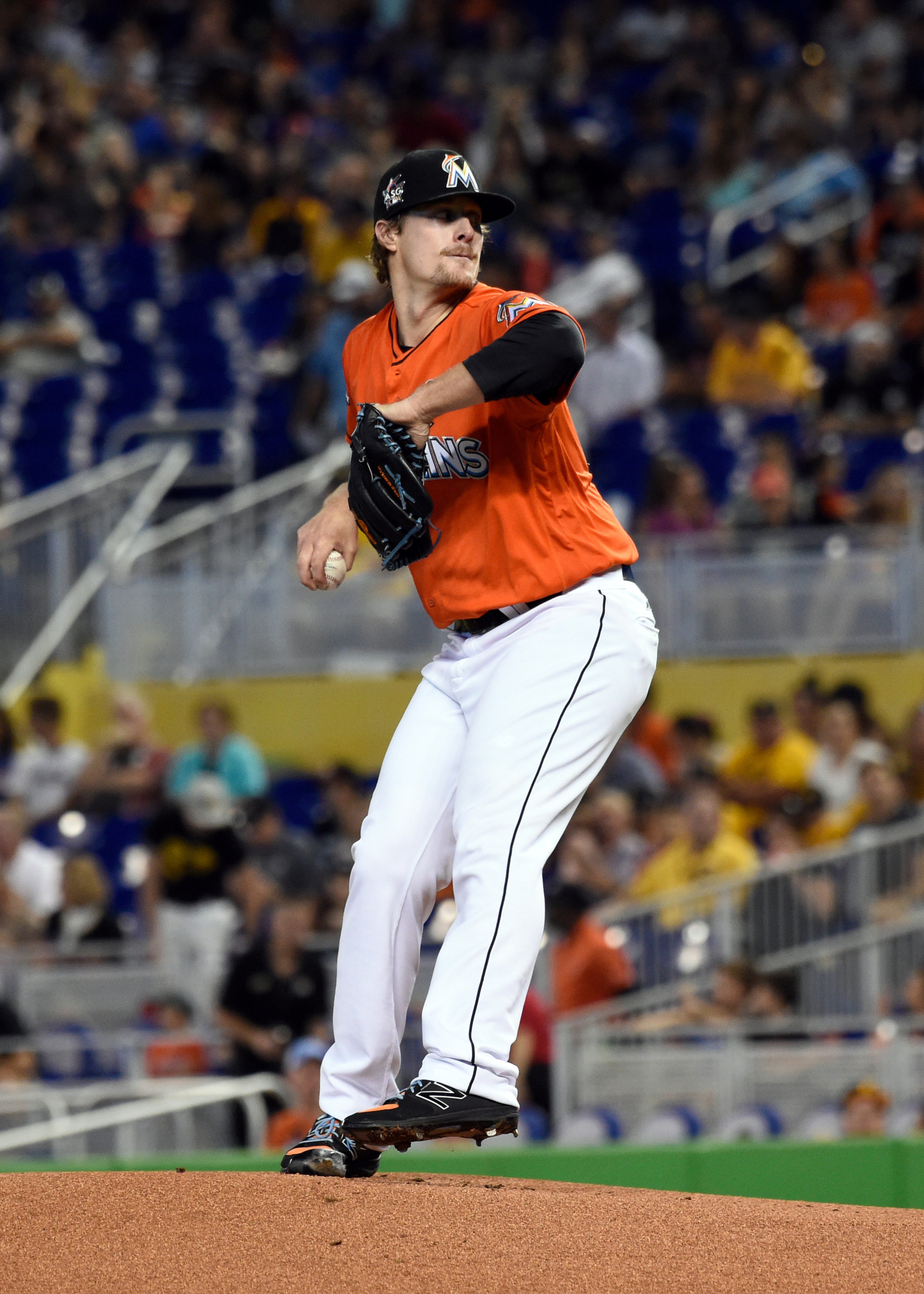
From 2013-16, Koehler was a solid and durable constant at the back of the Marlins’ rotation, averaging 30 starts per season while pitching to a 4.14 ERA with averages of 6.8 strikeouts, 3.7 walks and 1.0 home runs per nine innings pitched. He struggled early in the 2017 season and found himself traded to the Blue Jays, with whom he posted an intriguing 15-game relief stint (2.65 ERA, 18-to-6 K/BB ratio in 17 innings). That showing prompted the Dodgers to take a look at Koehler in the offseason with the hope that he could transform his career as a late-inning bullpen piece.
Instead, Koehler was beset by shoulder injuries in 2018. After spending more than half the season trying to rehab an anterior capsule strain and make his Dodgers debut, Koehler underwent surgery that ended his 2018 season. He never threw a pitch at the MLB level for the Dodgers. He signed with the Pirates both last offseason and earlier this winter but wasn’t able to get back onto the hill.
It’s a tough way to end a playing career, although as an 18th-round senior sign back in 2008, Koehler exceeded any and all expectations. The Stony Brook alum pitched in 161 Major League games, totaling 784 1/3 innings of 4.39 ERA ball along the way. Koehler’s 36-55 record is more an indictment on the sub-par Marlins rosters surrounding him for much of his career than on his own abilities on the mound. He was generally a serviceable option, twice leading the club in games started and once leading them in innings pitched. Koehler was never a household name but pitched into his arbitration years, helping him to secure more than $12MM in total salary. Best wishes to Koehler in whatever path he next pursues.
Pirates’ Clay Holmes Suffers Right Foot Fracture
Pirates right-hander Clay Holmes is set to begin the season on the injured list after suffering a fracture in his right foot on Saturday. The reliever was struck by a line drive in yesterday’s game, and manager Derek Shelton told The Athletic’s Rob Biertempfel (Twitter link) and other reporters that Holmes will be in a walking boot for the next four to six weeks. Considering the rehab time and how long it could take Holmes to ramp up after missing so much of Spring Training, it doesn’t seem likely that Holmes will suit up for the Pirates’ big league squad until mid-April at the earliest.
Over 50 innings out of Pittsburgh’s bullpen last season, Holmes posted a 5.58 ERA, 10.1 K/9, 60.3 % grounder rate, and 6.5 BB/9. Control has been Holmes’ biggest issue both in his brief Major League career (59 walks over his 76 1/3 frames with the Pirates) and even in the minors, as he posted pretty average walk rates at both the Double-A and Triple-A levels. On the plus side, Holmes misses a good number of bats and does an outstanding job at keeping the ball on the ground, with over a 60% grounder rate throughout his minor league career. 2019 was his first full season as a relief pitcher, so there could still be some untapped upside as Holmes completely adjusts to his new role.
Holmes was one of several arms competing for a job in Pittsburgh’s 2020 bullpen, and faced a bit more pressure considering he is out of minor league options. Going on the IL won’t impact his roster status, and it could even provide a clearer route to regaining a bullpen spot — if another reliever is struggling around the time Holmes is set to return, the Pirates will have a fairly easy decision.
Minor MLB Transactions: 3/1/20
- The Pirates have signed infielder Sherman Johnson to a minor-league contract with an invitation to MLB spring training (h/t to Andersen Pickard). The 29-year-old tallied 11 MLB plate appearances with the 2018 Angels but has otherwise spent his entire pro career in the minors. In parts of four Triple-A seasons, Johnson has compiled a .241/.347/.364 slash while mostly lining up at second and third base. The Florida State product entered pro ball as a 12th-round pick in 2012.