
Pitching Notes: Cardinals, Eovaldi, Rodón
Currently boasting a staff of Adam Wainwright, Miles Mikolas, Jack Flaherty, Jordan Montgomery, Steven Matz, and Dakota Hudson, the Cardinals were not predicted to be heavily involved in the free-agent starting pitcher market this offseason. Nevertheless, president of baseball operations John Mozeliak is aware that, “a year from now, we know we’re going to need starting pitching,” per Derrick Goold of the St. Louis Post-Dispatch. Mozeliak added that the team has recognized that they will have to replace or re-sign four starters after the 2023 season.
Wainwright, who re-signed with St. Louis on a one-year, $17.5MM deal with incentives, has already stated that the 2023 season will be his last. Additionally, Mikolas, Flaherty, and Montgomery will all be free agents at the conclusion of the 2023 season. Matz and Hudson are the only starters with a contract for the 2024 season, with Matz signed through the 2025 season and Hudson a free agent after 2024. Goold reports that the Cardinals “plan to explore contract extensions with at least two of the starters who are unsigned beyond 2023,” with Mikolas being the most likely candidate.
The Cardinals are currently projected to enter the 2023 season with a payroll of $171.9MM, per Cot’s Baseball Contracts. However, after the season, they are forecasted by Roster Resource to have only $94MM in commitments — giving them ample room to add to their team. Despite this financial freedom, Mozeliak notes that the Cardinals “have some young starters coming,” perhaps signaling a desire to avoid free agent starters in order to fit within the team’s budget.
Lefty Matthew Liberatore (the Cardinals’ No.4 Prospect) struggled in his Major League debut during the 2022 season, pitching to a 5.97 ERA in 34 2/3 innings with a 17.4 SO% and 11.2 BB%. He didn’t fare much better in his second season at Triple-A Memphis, pitching to a 5.17 ERA in 115 innings with a 23.5 SO% and 8.3 BB%. Nevertheless, Liberatore is only 23 years old and still has plenty of time to settle in at the Major League level. Additionally, Gordon Graceffo (Cardinals’ No.3 Prospect), Tink Hence (No.6), and Michael McGreevy (No.9) all are expected to make their debuts during the 2024 season, with Graceffo and McGreevy earning promotions to Double-A Springfield during the 2022 season, while Hence spent the entire season with Single-A Palm Beach.
More pitching-related items from around baseball….
- According to WEEI‘s Rob Bradford, the Red Sox do not view former All-Star Nathan Eovaldi as a top priority in their starting rotation search. Bradford adds that other teams are showing more interest in Eovaldi than the level currently displayed by Boston. The Mets were previously rumored to be in on Eovaldi, but their recent five-year, $75MM deal with Kodai Senga likely takes them out of the running for the soon-to-be 33-year-old. Eovaldi joined Boston during the 2018 season, with the righty helping them win the 2018 World Series. The Red Sox rewarded the starter with a four-year, $68MM contract that resulted in 407 2/3 innings of 4.15 ERA baseball, with a solid 24.4 SO% and strong 5.6 BB%. Despite being limited to 20 starts in 2022 due to low back inflammation and right shoulder inflammation, Eovaldi pitched to a 3.87 ERA in 109 1/3 innings with a 22.4 SO% and 4.4 BB%.
- In other St. Louis news, the Cardinals have reportedly entered the Carlos Rodon sweepstakes, per Jon Heyman of the New York Post. With Rodon seeking a seven-year deal and St. Louis having only two starters signed for the 2023 season, the Cards might look to join the bidding war for the two-time All-Star’s services. Rodon, 30, signed a two-year, $44MM deal with the Giants during the 2021 offseason, with an opt-out after the first year. Brushing aside injury concerns and making a career-high 31 starts, the southpaw pitched to a 2.88 ERA in 178 innings, with an absurd 33.4 SO% and strong 7.3 BB% before opting out of the contract at the end of the season. For his part, Mozeliak has remained coy, stating that while the team does “have some resources available,” but that he wouldn’t “believe many of the rumors you’re reading right now,” per Derrick Goold.
Quick Hits: Kiermaier, Dodgers, Red Sox, Marlins, Bellinger, Bell, Rays, Diaz, Reds
Kevin Kiermaier is off the market after agreeing to a deal with the Blue Jays earlier today, and the former Gold Glover was drawing interest elsewhere on the market. The Dodgers “were in the running down to the end” on Kiermaier, according to Jorge Castillo of the Los Angeles Times (Twitter link), as Kiermaier was presumably being eyed as the left-handed hitting, center field replacement for Cody Bellinger. Dodgers president of baseball operations Andrew Friedman is no stranger to Kiermaier, as Friedman was the Rays’ general manager when Kiermaier began his career in Tampa Bay.
Red Sox chief baseball officer Chaim Bloom is also a former member of Tampa’s front office, but Kiermaier and the Sox had only “periphery discussions” about a possible contract, MassLive.com’s Chris Cotillo tweets. Adding Kiermaier would’ve helped the Sox address their needs in the outfield, but the newly-signed Masataka Yoshida is Boston’s biggest swing in the outfield market to date. For now, the first-choice Red Sox starting outfield looks like Yoshida in left field, Enrique Hernandez in center, and Alex Verdugo in right.
More from around baseball…
- Speaking of past pursuits, Bellinger and Josh Bell were among the players “targeted” by the Marlins, according to Jordan McPherson of the Miami Herald. Both free agents are now off the market, after Bellinger signed with the Cubs and Bell joined the Guardians. Bellinger would’ve been a natural fit for the Marlins’ longstanding need in center field, and would’ve at least provided strong defense, even if it remains to be seen if his bat can return to anything close to his past MVP levels of production. Bell has provided solid (if not always consistent) offense over the last two seasons, and the Marlins naturally have a lot of familiarity with Bell from his days with the Nationals. Miami already parted ways with Lewin Diaz and Garrett Cooper has been a trade candidate in the past, so it would seem like first base could be a target position for the Marlins as they look to add some much-needed pop to their lineup.
- Though the Rays are also looking to add offense and particularly a left-handed hitting first base option, Bell “wasn’t high on their list,” Marc Topkin of the Tampa Bay Times writes. It’s a moot point anyway with Bell now in Cleveland, and the Rays can continue their search for a bat at just about any position. “Outside of maybe a shortstop, there probably aren’t too many other areas where we’d say, ‘No, we don’t have any interest in that’….We’re fortunate, because we have enough moving pieces and versatility with our players that there’s a lot of different players we could bring in and make it work,” Rays GM Peter Bendix told Topkin and other reporters.
- “Teams have checked” in with the Reds about Alexis Diaz, Bobby Nightengale of the Cincinnati Enquirer writes. No trade seems close or particularly likely, given how the rookie right-hander looks more like a building block than a trade chip. In his first MLB season, Diaz finished fifth in NL Rookie of the Year voting after posting a 1.84 ERA over 63 2/3 innings out of the Reds’ bullpen. Apart from a very high 12.9% walk rate, Diaz’s Statcast metrics were otherwise excellent, and he could be on his way to joining older brother Edwin as a star closer. Interestingly, the Mets explored a trade for the younger Diaz before the trade deadline, but while Cincinnati is in a rebuild phase, Nightengale figures it “would take an absolute haul to even pique the Reds’ interest” in a Diaz swap.
Chaim Bloom Discusses Xander Bogaerts, Rafael Devers, Extensions
Xander Bogaerts signed with the Padres on the final day of the Winter Meetings, agreeing to a huge 11-year, $280MM deal. Despite speculation that the Red Sox were coming closer to re-signing the shortstop, “that was definitely not what our impression was throughout the day and even the day before,” Sox chief baseball officer Chaim Bloom told MassLive.com’s Chris Cotillo.
The signing officially ended Bogaerts’ time with the Red Sox, a tenure that began when Bogaerts was an international signing in August 2009 and lasted through 10 Major League seasons, two World Series championship teams, and four All-Star appearances for the shortstop. Bogaerts signed a six-year, $120MM contract extension with the Sox prior to the 2019 season, but chose to exercise his opt-out clause after the first three years of the extension, thus paving the way for his departure from Boston and his new home in San Diego.
Last spring, the Red Sox both signed Trevor Story to a long-term free agent deal and offered Bogaerts only a one-year extension (worth $30MM) on his contract, which were both widely interpreted as signs that the Sox weren’t counting on Bogaerts remaining beyond the date of his opt-out. Bloom publicly said several times that the Red Sox did indeed want to retain Bogaerts, and reiterated that stance even in the aftermath of the shortstop’s deal with the Padres.
“We wouldn’t have said that if we didn’t mean it,” Bloom said. “I think it became clear to us as things went on that this [Bogaerts’ price tag] was going to go to a point that we just weren’t, irrespective of how we prioritize things, it just wasn’t something that we should do. It’s hard because of how much we love him. But it’s just the reality of the situation.”
In fairness to the Red Sox, nobody expected Bogaerts to receive anything near a $280MM contract, and it is understandable why the organization didn’t want to reach that far. That said, reports suggested the Red Sox offered Bogaerts six years and around $160MM, which didn’t match the seven-year, $189MM deal MLBTR projected Bogaerts would land on the open market. In addition, the Sox have obviously had exclusive negotiating rights with Bogaerts for years, and could’ve more aggressively pursued an extension at any point before Bogaerts reached free agency.
Bogaerts joins Mookie Betts and Jon Lester as homegrown Red Sox stars who left the team (Bogaerts in free agency, Betts and Lester in trades) after extension talks didn’t materialize into a longer-term deal. Of course, as Bloom noted, Bogaerts did already ink one extension with the team, putting him “at a different place in his career.” The Sox have signed relatively few extensions in recent years and only three extensions since Bloom took over the front office following the 2019 season. Bloom told Cotillo that the team may change how it approaches extension candidates, perhaps with more of a focus on extending players to contracts before they reach salary arbitration.
“Anytime you have a situation where you have a homegrown player who wants to be here and we want him here and it doesn’t happen, I think those are fair questions to ask and those are questions we certainly need to ask ourselves,” Bloom said. “We haven’t, as an organization, always found a way to come together in those situations. I think it’s something to think about and assess.”
Rafael Devers presents the next big question for the Red Sox in this regard, as the star third baseman is set to reach free agency following the 2023 season. In a separate piece, a source close to Devers told Cotillo that “Bogaerts’ decision would not make it more likely that Devers would want to leave Boston,” as much as Devers would be “disappointed” at no longer playing with his longtime friend.
Bloom reiterated his team’s interest in keeping Devers, saying that “Raffy, for sure, is somebody we want to build around.”
“I’ve said it, and I know we haven’t demonstrated this to the degree that we’ve hoped to, but we believe in building around homegrown talent. You want to do it in the right way,” Bloom said. “It’s certainly something we want to do as often as we can….[Devers] has been somebody that we love and want right at the center of everything we hope to accomplish, obviously in 2023 but more importantly, in the years beyond, because those are the years he’s not under our control. We’re hoping to change that.”
Diamondbacks Reportedly Showing Interest In Shintaro Fujinami
The Diamondbacks have shown interest in Japanese pitcher Shintaro Fujinami, according to a report from Nikkan Sports (Japanese-language link). The report also lists the Giants and Red Sox as other teams in the mix but suggests Arizona is emerging as one of the favorites to work out a deal with the right-hander.
Fujinami was made available to major league clubs via the posting system on December 1. That opened a 45-day window for MLB teams to negotiate a contract with the 28-year-old. If Fujinami doesn’t sign with an MLB team by January 15, he’d remain a member of Nippon Professional Baseball’s Hanshin Tigers in 2023. Reports of MLB interest and perhaps an early frontrunner just over a week after the posting window opens would seem to bode well for his chances of making the jump to the majors.
One of the more interesting wild cards in this year’s pitching market, Fujinami has already played parts of 10 seasons at Japan’s top level. A highly-regarded amateur talent a decade ago, he made his NPB debut at age 18 in 2013. Fujinami started with an excellent 2.75 ERA over 137 2/3 innings as a rookie, seemingly positioning him as a core piece of the Tigers future. By 2015, he’d posted a 2.40 ERA with 221 strikeouts through 199 innings in his age-21 season. Fujinami also performed well in 2016 but saw his production start to drop off by the ’17 campaign.
Increasingly, the 6’6″ righty battled control problems. That erratic strike-throwing led the Tigers to shuttle him back-and-forth between NPB and their minor league affiliate frequently through 2019. He spent the majority of his time at Japan’s top level in 2020-21 but posted respective ERA’s of 4.01 and 5.21. Fujinami again split his 2022 campaign between NPB and the minors, only throwing 66 2/3 innings at the highest level.
To his credit, he found more success in that relatively limited look than he has in a while. Fujinami managed a 3.38 ERA through 16 appearances. He struck out a strong 23.6% of opponents and importantly only doled out free passes to 7.6% of batters faced. Fujinami’s only a season removed from an untenable 16.8% walk rate in 2021, but he at least flashed more consistent strike-throwing ability this year. He’s long had an arsenal that intrigues scouts, with a fastball that usually sits in the mid-90’s and has topped triple-digits in the past.
The erratic strike-throwing track record could point towards Fujinami being a better fit for the bullpen, but he has an extensive workload as a starter in Japan. Each of the Diamondbacks, Giants and Red Sox could stand to use additional arms in both the rotation and relief unit, making Fujinami an interesting upside possibility for any of that group.
If he does sign with a major league team, the club would owe a fee to the Tigers under the MLB – NPB posting agreement. That’s tied to the size of the contract itself, with the MLB team owing the NPB club 20% of the contract’s first $25MM, 17.5% of the next $25MM and 15% of any dollars thereafter. It’d be a major surprise if an MLB deal for Fujinami topped $25MM, so the posting fee is likely to end up at 20% of the contract value.
Padres Sign Xander Bogaerts To 11-Year Deal
December 9: The Padres have officially announced the deal. Chris Cotillo of MassLive provides the full contract breakdown. Bogaerts will make a $5MM signing bonus followed by 11 straight seasons with a $25MM salary.
December 8: The Padres closed out the Winter Meetings with a stunner, reportedly agreeing to an 11-year, $280MM contract with Xander Bogaerts. The deal does not contain any options or opt-out provisions, although it does include a full no-trade clause. Bogaerts is represented by the Boras Corporation.
Bogaerts had spent his whole career in Boston, originally joining the organization as an amateur signee from Aruba back in 2009. He quickly developed into one of the sport’s top prospects and was in the majors by August 2013, a few months before his 21st birthday. Bogaerts claimed two Silver Slugger awards within his first four MLB seasons, but his .283/.339/.409 career slash line through 2017 was roughly league average. He took a major step forward in 2018, reaching another level in his age-25 campaign.
He hit .288/.360/.522 with 23 home runs over 136 games that season, helping lead Boston to 108 wins and a World Series title. Bogaerts sustained that new level of excellence, as he’s been a well above-average offensive performer in each of the four years since then. Going back to the start of the 2018 campaign, the righty-hitting infielder owns a .300/.373/.507 line that checks in 34 percentage points above league average by measure of wRC+.
On the heels of that breakout season, the Red Sox inked Bogaerts to a long-term deal. Boston guaranteed him $120MM between 2020-25, allowing him to opt out with half that money remaining after 2022. Bogaerts played well enough to earn MVP votes in each of the four seasons since signing that extension, making it a no-brainer he’d take his opt-out opportunity unless he and the Red Sox could preemptively agree upon a new deal.

Extension talks this spring didn’t come close, as Boston reportedly offered to tack on one additional season at $30MM. Turning that down was an easy call for Bogaerts’ camp, and he solidified his opt-out decision with another excellent year. Through 631 plate appearances, he hit .307/.377/.456. Bogaerts’ 15 home runs marked his lowest full-season total since 2017, but he finished tenth in the majors (minimum 500 plate appearances) in on-base percentage.
A career-best .362 batting average on balls in play propped up those rate stats, and it’s unlikely he’ll manage to sustain quite so lofty a mark in future seasons. He owns a career .336 BABIP, though, so there’s plenty of room to remain a strong hitter even if his batting average comes down slightly. He’s walked at an average or better clip in each of the past five years, and he’s kept his strikeout rate remarkably consistent around 18% six seasons running.
Bogaerts makes contact, draws walks and typically threatens or tops 20 homers per season. He’s one of the more well-rounded offensive players in the game, and he’ll step right into an already loaded San Diego lineup. Bogaerts joins Manny Machado, Juan Soto and Fernando Tatis Jr. in the middle of a lineup that should be incredibly difficult for opposing pitchers to navigate. That quintet has 11 combined Silver Slugger awards, and they’ll bring an incredible collection of weapons from both sides of the dish.
Where to pencil everyone in on the diamond is a decision the front office and manager Bob Melvin will work out over the coming months. San Diego’s middle infield was already strong. Tatis, two years removed from inking a $341MM extension to serve as the franchise shortstop, will return from his performance-enhancing drug suspension within the first month of next season. Ha-Seong Kim is a Gold Glove caliber shortstop who had a solid .251/.325/.383 line in his second big league campaign. Jake Cronenworth is an above-average defender at second base and owns a .257/.339/.443 mark through his first three seasons.
At least for the moment, Bogaerts seems likely to step in at shortstop. Scott Boras categorically rejected the possibility of Bogaerts moving off the position earlier this offseason. Perhaps the strength of the Padres’ offer changed that thinking, but it’s also possible the Friars rearrange their infield to accommodate his wishes. San Diego had already been considering the idea of moving Tatis to the outfield after his lost season in deference to Kim. Pushing Tatis into left or center field now seems especially likely. Bogaerts could step in at shortstop, with Kim moving to second base and Cronenworth taking over an uncertain first base position.
Bogaerts’ glove has been the subject of immense attention throughout the free agent process. The 6’2″, 218-pounder has a larger build than many shortstops, and he’s drawn some criticism for lacking prototypical range. Public defensive metrics roundly panned his glove throughout his career, with Defensive Runs Saved pegging him below par every year from 2014-21. Concerns about his long-term defensive outlook seemingly played into Boston’s low extension offer this past spring, but Bogaerts posted the strongest defensive metrics of his career in 2022.
In 1249 2/3 innings this past season, he rated as five runs above average by DRS and four runs better than par, according to Statcast. Concerns about his lateral quickness into his mid-30’s figure to persist, but his strong 2022 campaign at least reduced any urgency to move him off shortstop immediately.
The Padres clearly aren’t much concerned about Bogaerts’ long-term defensive fit. Owner Peter Seidler and president of baseball operations A.J. Preller have been hellbent on adding another star regardless of position. They reportedly made offers well north of $300MM for both Trea Turner and Aaron Judge, but both players declined and signed elsewhere. Those failed pursuits of Turner and Judge made the Padres a fascinating wild card this offseason, and while reports initially suggested they were unlikely to dip back into the shortstop market, they pivoted and made a run at Bogaerts.
An 11-year term will take him through his age-40 campaign. That matches the term Turner received from Philadelphia, but Bogaerts was generally expected to command a lesser deal in light of his long-term defensive concerns. Turner’s $300MM guarantee does beat the one received by Bogaerts, but the $20MM gap was closer than most had envisioned.
The deal shatters MLBTR’s pre-offseason prediction of $189MM over seven seasons. It’s the second-largest free agent deal in franchise history — trailing only Machado’s ten-year, $300MM pact. The $280MM guarantee is the seventh-largest for a free agent in MLB history, with Judge and Turner topping it thus far among this offseason’s free agents.
The cost for the Padres goes well beyond the terms of the offer itself. The specific financial breakdown hasn’t yet been reported, but the contract comes with a $25.45MM average annual value. That’s the relevant consideration for luxury tax purposes, and it sends the Padres well into tax territory. Roster Resource projects the Friars for a tax number around $254MM at present. That’s $21MM north of the $233MM base threshold, and $1MM above the second tier of penalization.
San Diego has paid the luxury tax in each of the last two seasons, and it looks all but certain they’ll do so again. They’re taxed at a 50% rate for every dollar spent between $233MM and $253MM, coming out to $10MM in fees. They’ll be charged 62% on any overages between $253MM and $273MM, and they’d face heightened penalties thereafter. As things currently stand, the Bogaerts deal sets them up for a tax bill around $10.6MM. Further additions or subtractions will alter that number, but it’s virtually certain they’ll be into competitive balance tax territory yet again.
It’s worth noting that at $27.27MM and $25.45MM respectively, both Turner and Bogaerts accepted lower average annual values than expected while also reaching an 11-year term that had only happened once before in free agency when Bryce Harper signed for 13 years. With infielders Corey Seager, Nolan Arenado, Francisco Lindor, and Anthony Rendon receiving AAVs ranging from $32.5-35MM dating back to 2019, it may be surprising that Turner and Bogaerts fell well below that range. It’s all about that CBT – the Phillies and Padres reduce their luxury tax hits and tax bills for taking on the players’ late-30s seasons, which project to have little value.
Bogaerts rejected a qualifying offer from the Red Sox, meaning the Padres will also have to surrender draft choices to add him. As a team that paid the luxury tax in 2022, they’re subject to the highest penalties. San Diego will be stripped of its second and fifth-highest selections in next year’s amateur draft, and they’ll forfeit $1MM in international signing bonus space.
While the Padres load up for another run at the powerhouse Dodgers in the NL West, the Red Sox will have to move on from a homegrown star who’s played a key role with the franchise for nearly a decade. It’s an abrupt about-face for the organization. While it had long looked as if Bogaerts would depart given the lack of progress on an extension in Spring Training, reports Wednesday morning suggested their talks with his camp were gaining momentum.
It seemed as if he might remain in Boston for the entirety of his prime, but the Padres’ offer wound up handily surpassing Boston’s. Pete Abraham and Alex Speier of the Boston Globe report the Red Sox had offered a six-year term worth around $160MM. That was more in line with general pre-offseason expectations and contained a slightly higher annual salary than the deal Boagerts received, but San Diego’s willingness to tack on an extra half-decade in guaranteed money made the gap enormous. Somehow, the $137.375MM the Red Sox spent on Masataka Yoshida and Kenley Jansen earlier Wednesday almost seems quaint in comparison to the Bogaerts contract.
The Red Sox will receive compensation for Bogaerts’ departure, but it’s at the lowest tier since Boston also paid the competitive balance tax in 2022. They’ll receive a pick after the fourth round in next year’s draft. That’s of small consolation, and the far greater concern is how the club will move forward. Boston signed Trevor Story to a $140MM guarantee last offseason, giving themselves some cover at shortstop. Should they prefer to keep Story at second base, they could check in with the two remaining top free agent shortstops, Carlos Correa and Dansby Swanson. Regardless, Boston is certainly not done after chief baseball office Chaim Bloom said Monday he hopes to add “seven, eight, nine” players to the team this offseason. Starting pitcher and the catcher position are two items remaining on the shopping list even if shortstop is handled in-house.
Correa and Swanson are sitting pretty with Turner and Bogaerts having exceeded expectations in terms of total dollars. While the Boras Corporation representing both Bogaerts and Correa could be viewed as a conflict of interest, the agency managed to get Bogaerts signed with a team that hadn’t been expected to sign a shortstop at the outset of the offseason.
It’s a deal of massive proportions, one that could drastically shake up both leagues. After a couple attempts came up empty, the Padres landed their desired superstar. The Red Sox’s optimism of a few hours ago was dashed by a determined organization that now spends like a big-market behemoth. Bogaerts lands one of the largest contracts in MLB history, setting the stage for a fascinating bidding war for the two star shortstops who remain unsigned.
Jon Heyman of the New York Post was first to report Bogaerts and the Padres had agreed to an 11-year, $280MM contract. Jon Morosi of MLB.com reported the deal did not come with any opt-out provisions and included a full no-trade clause.
Image courtesy of USA Today Sports.
Carlos Rodón Seeking Seven-Year Deal
The Yankees are one of many teams known to be interested in lefty Carlos Rodón, but Jon Heyman of The New York Post reports that they would prefer to limit him to a four- or five-year deal. That might be a problem, since Susan Slusser of the San Francisco Chronicle reports that Rodón is looking for at least seven years. Reporter Marino Pepén says the Red Sox are interested, though the extent of interest isn’t clear.
Just a few days ago, it had been reported that Rodón was seeking a six-year deal, but there may be good reasons why he’s upped his ask. The free-agent market has been broadly aggressive, with many of the top free agents going well beyond expectations in terms of contract length.
In recent offseasons, teams have generally cut off guarantees to position players in their age-37 seasons, but Aaron Judge got a nine-year deal taking him through age-39. Trea Turner and Xander Bogaerts each landed 11-year deals that run into their 40s. Brandon Nimmo will be paid through age 38 with the Mets. Pitchers, meanwhile, have struggled to land guarantees beyond their age-36 season (with older veterans like Max Scherzer and Justin Verlander standing as exceptions for obvious reasons), but Jacob deGrom signed through age 39 in Texas. The length of all those deals is generally rooted in lowering the luxury-tax hit, though, and Rodon’s ostensibly new goal of seven-plus years could be a matter of falling in line with that broader market trend.
DeGrom and Rodón are somewhat analogous, though not the exact same. Both are extremely talented pitchers with some injury concerns in recent years. DeGrom is arguably the best pitcher alive when healthy but missed over an entire year from mid-2021 to mid-2022 due to forearm and scapula injuries.
Rodón is much younger, as he will turn 30 years old tomorrow. Injuries limited him to just over 40 combined innings in 2019 and 2020 and the concern was high enough that the White Sox actually non-tendered him after that. There were enough red flags that he had to settle for a one-year, $3MM deal to return to the Sox. He’s been on a straight upward trajectory since.
Rodón tossed 132 2/3 innings in 2021 with a 2.37 ERA and excellent 34.6% strikeout rate. He seemed to run out of gas down the stretch, leaving some lingering health concerns as he returned to free agency. He didn’t get a qualifying offer and had to “settle” for a two-year, $44MM deal with the Giants, though one that gave him a chance to opt-out after the first campaign. He pushed further away from the injury worries by making 31 starts and logging 178 frames with a 2.88 ERA and 33.4% strikeout rate. He made the easy decision to opt out and also reject a qualifying offer from the Giants.
The fact that Rodón is now reasonably seeking a seven-year deal is nothing short of remarkable, given where he was just two years ago. It’s also not surprising that he’s looking to strike while the iron is hot, given the ups and downs he’s had in his career. Still, contracts of this length for free agent pitchers are quite rare. Gerrit Cole got nine years but with a much stronger record of health than Rodón. Prior to that deal, he had made at least 19 starts for seven straight seasons and at least 32 in the previous three. Kenta Maeda got eight years when coming over from Japan, but that was a unique situation. Maeda was going into his age-28 season but had some health concerns, leading the Dodgers to give him a modest $25MM guarantee spread out over eight years but with $10MM in incentives available each year that Maeda could trigger by staying healthy.
There are a handful of aces that have gotten to seven years, including Max Scherzer, David Price, Stephen Strasburg, CC Sabathia and Masahiro Tanaka, the latter of whom was only 25 at the time and is hardly a similar situation. Strasburg had dealt with some injuries but was coming off a World Series MVP performance that pushed his bidding up. The others in that group, similar to Cole, had fairly solid records of health and durability. As great as Rodón has been for the past two seasons, any seven-year deal would generally be rarefied air for a pitcher.
Now, with this offseason’s trend of utilizing longer contracts to tamp down AAV (and, thusly, luxury-tax penalties), it seems more plausible than before that Rodón might indeed command seven-plus years. Initial reports indicated that he was seeking six years with a $30MM+ annual salary. If Rodón and agent Scott Boras are fixated more on the contract’s total than on its length, then spreading that, say, $175-200MM goal out over a period of seven, eight or even nine years would greatly reduce the potential luxury penalties for whichever team signs him. That’s more a concern if he signs with a major-market club that regularly finds itself in luxury peril (e.g. Yankees, Red Sox) than if he were to sign with one of his reported suitors that has never held much of an appetite for the luxury tax (e.g. Twins, Orioles).
The Yankees are clearly willing to spend, as they just gave Judge a record-breaking $360MM guarantee. How much they want to continue spending, however, is an open question. Roster Resource currently pegs the club’s payroll for next season at $250MM with a competitive balance tax figure of $266MM. That already places them beyond last year’s Opening Day payroll of $246MM, per Cot’s Baseball Contracts, and beyond the second tier of luxury tax penalization. The tiers begin at $233MM next year and go up in $20MM increments to $293MM. Adding $25-30MM for Rodón would push them near or above that top penalty threshold.
The club doesn’t strictly need an elite starter like Rodón, but he would certainly be an upgrade for any rotation in the game. The Yanks currently have Cole, Luis Severino, Nestor Cortes and Frankie Montas for four spots with solid options for the last spot including Domingo Germán and Clarke Schmidt. That’s a solid group, but Montas and Severino both have some recent injuries that make them question marks going into next season, so there would be plenty of sense in adding another arm and pushing some guys down the depth chart. The question will be whether the Yanks would prefer paying the price for an ace like Rodón as opposed to turning to mid-rotation options like Chris Bassitt or Sean Manaea.
If Rodón indeed is open to seven or more years in order to obtain the contract total he’s eyeing, that would be an interesting situation for the Yankees to ponder. They already have expensive contracts for Cole and Judge on the books for the next six and nine years, respectively. Giancarlo Stanton has five years left with a $25MM club option for 2028 with a $10MM buyout. Adding a lengthy deal for Rodón would likely mean their 2028 payroll would already be well beyond $100MM.
The Red Sox, on the other hand, have plenty of space before thinking about the tax. Roster Resource currently has their payroll at $172MM and their CBT figure at $192MM. That leaves them about $40MM away from the lowest threshold, meaning they could add Rodón with room to spare. There would be plenty of sense in adding to their rotation given all the question marks they have there. Nick Pivetta is probably the only solid member of their group right now, as Chris Sale and James Paxton have hardly pitched in the past three years. Brayan Bello and Garrett Whitlock are penciled into two spots, though they are young and only have 20 MLB starts between them. They also have other areas worth addressing on the roster, such as catcher and figuring out how to deal with the departure of Bogaerts from their infield. Long-term, they have Story and Masataka Yoshida locked in for the next five seasons but nothing guaranteed for 2028.
Red Sox To Sign Chris Martin To Two-Year Deal
December 8: Robert Murray of FanSided provides the specific contract breakdown. Martin will make $6MM in 2023 and $7.5MM in 2024, in addition to a $4MM signing bonus.
December 2: The Red Sox and reliever Chris Martin are in agreement on a two-year deal, according to Jeff Passan of ESPN. The deal is pending a physical and will be worth $17.5MM.
Martin, 37 in June, has had one of the more unique baseball trajectories. As detailed in this 2019 piece from Tim Tucker of the Atlanta Journal-Constitution, Martin had shoulder surgery in 2006 that he thought was the end of his career. Years later, he was working for Lowe’s and UPS and discovered during a game of catch with friends that his shoulder didn’t bother him anymore.
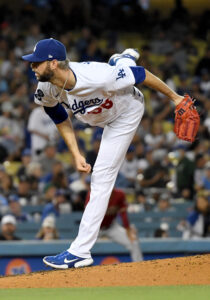
He got back onto the mound and worked his way to the big leagues, pitching a couple of seasons in 2014 and 2015 before heading to Japan for 2016 and 2017. He returned to the majors for 2018 and has spent the past five seasons as an effective middle reliever with perhaps the best control in the league. Martin has walked just 2.8% of batters faced in that time, the best such rate of any pitcher with at least 200 innings pitched.
This year was no exception. He began the year by signing a one-year deal with the Cubs for $2.5MM plus incentives. Through 31 1/3 innings in Chicago, his ERA was an unimpressive 4.31 but with much stronger peripherals. His 30.1% strikeout rate, 3% walk rate and 52.3% ground ball rate were all much better than league average. However, his ERA was being inflated by a .393 batting average on balls in play and by 20.8% of his fly balls allowed leaving the yard.
The Dodgers believed some regression was due and sent Zach McKinstry to the Cubs in order to install Martin in their bullpen down the stretch. The results were utterly dominant, as Martin pitched to a 1.46 ERA, striking out 37% of batters faced while walking just 1.1%. He also added another two innings of postseason work without issuing a walk.
Based on that strong season, MLBTR predicted he could secure a two-year, $14MM deal, but Martin has nudged past that by a few million. The relief market has been quite strong so far this winter, with Martin and Rafael Montero both beating their predictions by healthy margins.
The bullpen was a weak spot for Boston in 2022, as their relievers posted a collective ERA of 4.59, 26th in the majors. They also lost one of their effective members to free agency in Matt Strahm. They’ve since made moves to try and bolster the relief corps by singing Joely Rodriguez and now Martin. Assuming the money is evenly distributed in two instalments of $8.75MM, Roster Resource has their 2023 payroll currently at $142MM with a competitive balance tax calculation of $161MM.
Twins Among Teams With Interest In Dansby Swanson
The Twins recently chatted with Dansby Swanson via video conference, reports Aaron Gleeman of the Athletic. They’re one of a handful of teams in discussion with the longtime Brave, who’s one of the three top shortstops remaining in free agency.
Minnesota is one of a handful of teams that has been involved in the market. Mark Bowman of MLB.com reports the Cubs, Cardinals and Red Sox have joined the Twins in showing significant interest this offseason (Twitter link). The incumbent Braves have also publicly maintained they’d like to keep Swanson.
There’s still a fair bit of uncertainty in Swanson’s market, as he’s not the primary target of either Minnesota or Boston. The Twins continue to prioritize Carlos Correa, although there’s also a chance they’re outbid by a bigger spender. The Dodgers are reportedly uninterested in Correa, but the Giants loom as a major threat after missing out on Aaron Judge. San Francisco still has plenty of spending capacity after Judge declined their offer in the $360MM range, and Correa has been reported as their favorite of the top-tier shortstops available. The Twins have been linked to both Bogaerts and now Swanson as potential fallback options in the event they lose the bidding for Correa.
Swanson’s surely a secondary option for the Red Sox as well. Boston chief baseball officer Chaim Bloom has called Bogaerts their top priority on a number of occasions, and reports this morning suggested there was growing momentum in talks between the Sox and their longtime shortstop. So long as no deal is in place, the Red Sox are a viable fit for Swanson. If they do retain Bogaerts, he’d pair with Trevor Story in the middle infield and almost certainly rule out a Swanson pickup.
It looks unlikely the Cardinals will remain in the top of the shortstop market moving forward. St. Louis agreed to terms with top free agent backstop Willson Contreras this morning. That obviously doesn’t present a positional logjam for Swanson, but it adds a reported five-year, $87.5MM contract to the books. Derrick Goold of the St. Louis Post-Dispatch suggested earlier this week the Cards were unlikely to pursue the top shortstops unless they acquired their catcher more affordably via trade. A significant free agent deal for Contreras seems likely to leave the Cards to rely on Tommy Edman and some combination of Brendan Donovan and Nolan Gorman up the middle.
The Cubs are a stronger fit for Swanson. They’re not attempting to retain an in-house free agent shortstop as Minnesota and Boston are. Chicago has Nico Hoerner as a franchise building block, but he’s already expressed a willingness to kick over to second base to accommodate a big-ticket acquisition. The Cubs have already met with each of Correa, Bogaerts and Swanson and could make sense for any of that trio. Yet with the strong interest Correa and Bogaerts are seemingly drawing from other clubs, Ken Rosenthal of the Athletic wrote this afternoon the Cubs view Swanson as a more realistic target.
Swanson’s going to command a significant deal in his own right, of course. He won the NL Gold Glove award at shortstop in 2022, and he’s coming off arguably the best offensive season of his career. The 28-year-old (29 in February) hit .277/.329/.447 with 25 home runs while suiting up in all 162 games. He made the no-brainer decision to decline a qualifying offer, meaning any signing team would have to forfeit a draft choice to bring him in. MLBTR predicted Swanson to land a seven-year, $154MM deal at the opening of the offseason.
2022 Rule 5 Draft Results
The 2022 Rule 5 draft will begin at 4pm Central time today at the Winter Meetings in San Diego. This will be the first time since 2019 that the meetings will be held in person, as the 2020 edition was virtual because of the pandemic and the 2021 draft was cancelled entirely due to the lockout.
As a refresher, the Rule 5 draft is a way for players potentially talented enough for the big leagues but blocked by their current clubs to find opportunities elsewhere. Any players that were 18 and under at the time of their original signing and were signed in 2018 or earlier, and any players 19 or older and signed in 2019 or earlier, who are not on a club’s 40-man roster are eligible to be selected in the Rule 5 draft.
The clubs will draft in reverse order of the 2022 standings, with no club obligated to make a selection when it’s their turn. If they do make a pick, they will have to pay $100K to the team they select from. The selected players must stay on the active roster (or injured list) for the entire 2023 season or else be placed on waivers. If they clear waivers, they must be offered back to their original team. They cannot be optioned to the minors. The most recent edition in 2020 saw some notable names move around, such as Akil Baddoo going from the Twins to the Tigers while Garrett Whitlock went from the Yankees to the Red Sox.
This post will be updated with the results as they come in…
First Round
1. Nationals: RHP Thad Ward (Red Sox) (hat tip to Jonathan Mayo of MLB.com)
2. A’s: 1B Ryan Noda (Dodgers)
3. Pirates: LHP Jose Hernandez (Dodgers)
4. Reds: OF Blake Sabol (Pirates); Reds later traded Sabol to Giants for cash or a player to be named later
5. Royals: pass
6. Tigers: RHP Mason Englert (Rangers)
7. Rangers: pass
8. Rockies: RHP Kevin Kelly (Guardians); Rockies later traded Kelly to Rays for cash considerations
9. Marlins: RHP Nic Enright (Guardians)
10. Angels: pass
11. D-backs: pass
12. Cubs: pass
13. Twins: pass
14. Red Sox: pass
15. White Sox: RHP Nick Avila (Giants)
16. Giants: pass
17. Orioles: RHP Andrew Politi (Red Sox)
18. Brewers: RHP Gus Varland (Dodgers)
19. Rays: pass
20. Phillies: RHP Noah Song (Red Sox)
21. Padres: LHP Jose Lopez (Rays)
22. Mariners: RHP Chris Clarke (Cubs)
23. Guardians: pass
24. Blue Jays: pass
25. Cardinals:RHP Wilking Rodriguez (Yankees)
26. Yankees: pass
27. Mets: RHP Zach Greene (Yankees)
27. Braves: pass
29. Astros: pass
30. Dodgers: pass
Second Round
- All teams passed
The minor league phase of the Rule 5 draft also occurred this afternoon. Those players will not go onto the selecting teams’ 40-man roster. A few former major leaguers changed uniforms. They include Hector Perez from Baltimore to the Rays, Josh Palacios from the Nationals to the Pirates, Jared Oliva from the Pirates to the Angels, Nick Burdi from the Padres to the Cubs, Peter Solomon from the Pirates to the D-Backs and Jonathan Arauz from the Orioles to the Mets.
Seth Lugo Drawing Widespread Interest
DECEMBER 7: The Angels, Nationals and Dodgers are also in the market, reports Ken Rosenthal of the Athletic.
DECEMBER 6, 8:01pm: The Red Sox are also expressing interest in Lugo, reports Chris Cotillo of MassLive (on Twitter).
DECEMBER 6, 6:39pm: Right-hander Seth Lugo has been drawing interest as a starting pitcher and Jon Heyman of The New York Post reports that working as a starter is Lugo’s preference as well, with the Padres one of several teams interested in him.
It’s been a while since Lugo has been tried out in a rotation role for more than a brief stretch. His career high for starts in a big league season is 18, which came back in 2017. Since that time, he’s been primarily working out of the bullpen, serving as an effective reliever for the Mets.
In 278 career games, only 38 of them have been starts, but Lugo has a career 3.48 ERA, 24.8% strikeout rate, 6.7% walk rate and 44.1% ground ball rate. He’s fared much better out of the ‘pen, as his ERA is 2.91 there while 4.35 as a starter, with more strikeouts as a reliever to match.
Despite that split, as mentioned, it’s been quite some time since Lugo’s been given an extended stretch in the rotation. That means most of those stats came from Lugo’s first two years in the big leagues, when he made 26 of those 38 career starts. It’s possible he’s capable of producing better results now that he has more experience. He also has a larger pitch mix than the average reliever, something that could help him move through a lineup a few times. Last year, he had four pitches that he threw at least 13.7% of the time, with his curveball leading the way at 33.5%, followed by his four-seamer at 29.3%, his sinker at 21.9% and his slider at 13.7%. He also has a changeup that he mixed in 1.6% of the time, though it’s been 7.1% for his career.
For the Padres, they lost a couple members of their rotation to free agency in Mike Clevinger and Sean Manaea, while also trading MacKenzie Gore to the Nationals. Nick Martinez opted out of his contract but was quickly re-signed and seems to have a chance of retaking a rotation spot himself, after getting bumped to the bullpen. They currently have Joe Musgrove, Yu Darvish and Blake Snell in the front three spots. It would be surprising to see them go into the season with the last two spots in their rotation dedicated to unproven options like Martinez and Lugo, especially when they just reportedly offered Trea Turner $342MM. But it’s possible they could also add a fourth starter and have those Martinez and Lugo battle for the fifth spot with one of them going to the bullpen if everyone is healthy. Though Lugo reportedly prefers to start, it’s unknown how he would value a non-guaranteed starting role on a contender like the Padres against a clearer path to starting on a less-competitive team.
San Diego’s payroll limits are an ongoing question. As mentioned, they just made a massive offer to Turner, but some reporting indicates they were willing to make an exception for him and won’t necessarily dedicate those resources to other players. As of right now, Roster Resource calculates their competitive balance tax figure at $230MM, just barely under the lowest CBT threshold of $233MM. With the club still seeking to upgrade in the rotation and elsewhere, going over the line seems inevitable. Lugo isn’t likely to break the bank as a back-end rotation candidate but every dollar over the line will count. Since the Padres are set to be a third-time payor, they will be subject to a 50% tax on all spending over the line and even higher penalties if they go over by $20MM or more.