
Quick Hits: Keller, Straily, Lotte Giants, Neris, Red Sox
Brad Keller posted a 2.47 ERA, 2.06 K/BB rate, 5.76 K/9, and 52.8% grounder rate over 54 2/3 innings this season, as the 25-year-old continues to establish himself as a front-of-the-rotation option for the Royals. Keller was aided this season by an improved slider that essentially looked more like his fastball and moved like a curveball, as the right-hander told Fangraphs’ David Laurila. The first step was remaking a slider delivery that initially left Keller unable to “see the plate because my front arm was covering the catcher….I was constantly pulling off on everything, yanking my front side. I needed to clean that up and keep my shoulders more square.”
Working on advice from Royals pitching coach Cal Eldred during the league shutdown, Keller fixed his delivery and turned his slider into a prominent part of his arsenal. 38.2% of his pitches were sliders in 2020, well up from a 31.2% usage in 2019 and a 26.2% usage in 2018. As per Fangraphs’ pitch value and slider runs above average (wSL) metrics, Keller had the third-most effective slider of any pitcher in baseball, behind only Dinelson Lamet and Zach Plesac.
More from around baseball as the Dodgers sit a game away from a championship…
- Dan Straily‘s first season in Korea was a success, and the right-hander tells Jeeho Yoo of Yonhap News that he has yet to make a decision about a potential second season with the KBO League’s Lotte Giants. Before anything, Straily wants to return to the United States to see his family for the first time in nine months, as COVID-19 travel restrictions kept him in South Korea. “I want to be with my wife when the decision starts coming up and my agent starts talking to the team about this,” Straily said. After inking a one-year, $1MM contract with the Lotte Giants last winter, Straily posted a 2.50 ERA with 205 strikeouts over 194 2/3 innings, becoming arguably the league’s top pitcher and a popular figure with fans. It was a solid rebound season after a tough 2019 for Straily that saw him allow 22 homers over only 47 2/3 innings with the Orioles, resulting in a 9.82 ERA.
- The Phillies hold a $7MM club option on Hector Neris for 2021, which the team could see as an acceptable price tag for a reliever who has been generally solid over parts of seven MLB seasons. However, in an offseason where the Phillies are dealing with revenue losses and trying to get under the luxury tax threshold, NBC Sports Philadelphia’s Corey Seidman sees Neris as a possible extension candidate. Seidman floats the possibility of a two-year contract worth $9MM-$10MM, which seems like a good number from the Phils’ perspective, though it remains to be seen if Neris or his agents would accept such an offer. The team has some leverage in the sense that Neris probably wouldn’t like to test the very uncertain 2020-21 free agent market, yet Neris might also have confidence that the Phillies wouldn’t actually decline his option since the Phils are in such dire need of bullpen help.
- Chaim Bloom’s first year in charge of the Red Sox front office was a tumultuous one, and the Boston Globe’s Alex Speier looked beyond the unprecedented events (the pandemic’s effect on the season and the Mookie Betts trade) to examine patterns about how Bloom will shepherd the team going forward. The Sox mostly targeted controllable players, and the sheer volume of transactions was also different, as the 2020 club had the most roster turnover of any Red Sox team of the past decade. “It goes back to being more open-minded and willing to be more aggressive with the bottom end of our 40-man roster,” assistant GM Eddie Romero said. “The 40-man roster became more of a living document. It was a daily conversation. It required daily upkeep.”
Brett Phillips, The Rays’ Thrice-Traded Hero
Despite the new August 31 date and all the uncertainty about how player movement would be impacted by the circumstances of the pandemic-shortened season, the lead-up to the 2020 trade deadline went more or less the same as deadlines past. Some big names switched uniforms, non-contenders looked to dump salary and add prospects, and just about as always, one unheralded trade ended up paying big dividends in October.
On August 27, the Rays made a move to shore up their bench depth by acquiring Brett Phillips from the Royals in exchange for infield prospect Lucius Fox. It was one of several seemingly minor swaps Tampa Bay made prior to the August 31 deadline, and while the Rays were already coasting towards a postseason spot by that point, the argument could have been made that a bigger move was necessary to boost their chances at a championship.
Little did we know, the Phillips trade was that move. Phillips’ ninth-inning RBI single last night started a wild, game-deciding sequence and an 8-7 comeback victory for Tampa in Game 4 of the World Series. After entering the game as a pinch-runner in the previous inning, Phillips’ first plate appearance since October 7 resulted in his entry into instant legend status in Rays history.
Not bad for a player who was primarily seen as a defensive and pinch-running specialist at the time of his acquisition. In fact, it’s not bad for a 26-year-old player playing for his fourth different organization, which is perhaps why Phillips was such an unlikely candidate to deliver the Rays’ biggest hit.
Originally a sixth-round pick for the Astros in the 2012 draft, Phillips began to turn heads after a very impressive 2014 season at the A-ball and high-A levels. He continued to produce into 2015, and while this breakout might have made him into a building block for the rebuilding Astros if it had happened a bit earlier in Phillips’ career, by 2015 the Astros were looking to win. As such, Houston made a major trade deadline swap with the Brewers that sent Phillips, Josh Hader, Domingo Santana, and Adrian Houser to Milwaukee in exchange for Carlos Gomez, Mike Fiers, and $287,500 in international bonus pool money.
The Astros went on to reach the postseason that year, falling to the Royals in the ALDS, yet the aftershocks of this trade continue to reverberate around baseball. Gomez ended up being something of a disappointment for Houston that year, though Fiers went on to become a solid member of the Astros’ rotation through their 2017 World Series-winning season and then…well, you know the rest. On Milwaukee’s end of the deal, Hader developed into one of the game’s best relief aces, Hauser has emerged as an intriguing starter, and Santana delivered some solid production over 351 games for the Brew Crew before he was traded to the Mariners in the 2018-19 offseason.
The one weak link of the Brewers’ trade return, however, was Phillips. There was no doubt that Phillips had MLB-caliber speed and glovework, except after a promising .799 OPS over 98 plate appearances in 2017, he struggled badly the next season and found himself on the move again.
This time, Phillips was headed to Kansas City (along with right-hander Jorge Lopez) in another deadline deal, as Milwaukee picked up Mike Moustakas for the pennant race. The Moose was a key part of a Brewers team that came within a game of the 2018 NL pennant, and the Brew Crew reached the playoffs again in 2019 thanks in large part to Moustakas’ All-Star season. For Phillips, he found himself on another rebuilding team with another opportunity at a fresh start, yet he again couldn’t capitalize — Phillips hit .178/.256/.308 over 236 PA spanning three seasons with the Royals.
As a player who relied on doubles and triples rather than homers, Phillips wasn’t quite a “three true outcomes” player in the minors, though he used a keen batting eye to counter-act his strikeouts and generate a career .274/.362/.478 slash line over 3174 PA. The problem is, Major League pitchers have feasted on those holes in Phillips’ swing, as he has struck out 133 times in his 383 plate appearances at the big league level.
Phillips’ trade history is indicative of his declining prospect stock, as he went from a headline piece of a blockbuster deal to last August’s swap that didn’t generate many headlines. Not many headlines, that is, until last night. While Phillips’ first two trades carried so much import for other teams and players involved, it wasn’t until his third time changing uniforms that Phillips himself now stands as the most important part of a trade. Phillips is still only 26, and given the Rays’ penchant for finding hidden gems, perhaps last night’s heroics will only raise the curtain on a big second act of Phillips’ Major League career.
Gold Glove Nominees Announced
The 2020 Rawlings Glove Glove Award finalists have been released, with the Cubs netting the most nominations with seven. The Mets, Nationals, Phillies, Brewers, Rays, and Red Sox were shut out.
The awards for defensive prowess will be handed out based on defensive metrics alone this year, since managers and coaches weren’t able to see players outside their regional bubble. Moving to a metrics-based system, even for a year, certainly make for interesting television, especially since these awards can make an impact on arbitration cases. Considering the uncertainty of a 60-game season, awards could carry greater weight than usual in those proceedings, thought that’s just speculation. Without further ado, here are this year’s nominees:
AL Pitcher
- Griffin Canning (LAA)
- Kenta Maeda (MIN)
- Zach Plesac (CLE)
NL Pitcher
- Max Fried (ATL)
- Kyle Hendricks (CHC)
- Alec Mills (CHC)
AL Catcher
- Yasmani Grandal (CHW)
- James McCann (CHW)
- Roberto Perez (CLE)
NL Catcher
- Tucker Barnhart (CIN)
- Willson Contreras (CHC)
- Jacob Stallings (PIT)
AL First Base
- Yuli Gurriel (HOU)
- Matt Olson (OAK)
- Evan White (SEA)
NL First Base
- Brandon Belt (SF)
- Paul Goldschmidt (STL)
- Anthony Rizzo (CHC)
AL Second Base
- Cesar Hernandez (CLE)
- Danny Mendick (CHW)
- Jonathan Schoop (DET)
- Nicky Lopez (KC)
NL Second Base
- Adam Frazier (PIT)
- Nico Hoerner (CHC)
- Kolten Wong (STL)
AL Third Base
- Isiah Kiner-Falefa (TEX)
- Yoan Moncada (CHW)
- Gio Urshela (NYY)
NL Third Base
- Brian Anderson (MIA)
- Nolan Arenado (COL)
- Manny Machado (SD)
AL Shortstop
- Carlos Correa (HOU)
- J.P. Crawford (SEA)
- Niko Goodrum (DET)
NL Shortstop
- Javier Baez (CHC)
- Miguel Rojas (MIA)
- Dansby Swanson (ATL)
AL Left Field
- Alex Gordon (KC)
- Lourdes Gurriel Jr. (TOR)
- Kyle Tucker (HOU)
NL Left Field
- Shogo Akiyama (CIN)
- David Peralta (ARI)
- Tyler O’Neill (STL)
AL Centerfield
- Byron Buxton (MIN)
- Ramon Laureano (OAK)
- Luis Robert (CHW)
NL Centerfield
- Ronald Acuna Jr. (ATL)
- Cody Bellinger (LAD)
- Trent Grisham (SD)
AL Right Field
- Clint Frazier (NYY)
- Joey Gallo (TEX)
- Anthony Santander (BAL)
NL Right Field
- Mookie Betts (LAD)
- Charlie Blackmon (COL)
- Jason Heyward (CHC)
Nicky Lopez of the Royals was originally left off the list, but he is in fact a nominee at second base, one of four nominations at the keystone in the American League. It’s the only position with four nominations.
There are a few other interesting things of note. Perennial candidates like Andrelton Simmons and Matt Chapman did not make the list this year due to shortened seasons, nor did last season’s Outs Above Average leader Victor Robles. Both Gurriel brothers earned nominations this year, with the younger Lourdes (LF) joining perennial candidate Yuli (1B).
There are also a couple of largely part-time players that made the cut, like Hoerner of the Cubs and Mendick for the White Sox. Neither was the everyday second baseman, but they did reach the inning minimum of 265 total defensive innings. They qualified at second because that’s where they played the most innings. Mendick, for example, registered just 226 innings at second, but with 27 innings at third and 15 at shortstop, he ended the year with 268 total defensive innings played.
Catchers required a minimum of 29 games, which is how we got a pair of White Sox catchers making the top-3. Pitchers had to throw a minimum of 50 innings.
The winners will be selected using the SABR Defensive Index and announced on November 3rd, per sabr.org.
Offseason Outlook: Kansas City Royals
The 2020 season was the third straight year in which the Royals finished in fourth of fifth place, but the club did begin to see some of the fruits of its rebuilding efforts break into the big leagues. They’ll head into the winter looking to supplement their lineup and plug some holes in the bullpen.
Guaranteed Contracts
- Danny Duffy, LHP: $15.5MM through 2021
- Salvador Perez, C: $13MM through 2021
- Whit Merrifield, 2B/OF: $10.25MM through 2022 (includes $750K buyout of 2023 club option)
Arbitration-Eligible Players (salary projections via MLBTR contributor Matt Swartz)
- Franchy Cordero – $900K / $1.0MM / $900K
- Hunter Dozier – $1.9MM / $2.9MM / $1.9MM
- Maikel Franco – $4.5MM / $8.0MM / $5.0MM
- Jesse Hahn – $1.1MM / $1.7MM / $1.0MM
- Jakob Junis – $1.5MM / $1.7MM / $1.5MM
- Brad Keller – $2.4MM / $4.3MM / $2.4MM
- Kevin McCarthy – $700K / $800K / $700K
- Adalberto Mondesi – $2.1MM / $3.8MM / $2.1MM
- Mike Montgomery – $3.1MM / $3.1MM / $3.1MM
- Jorge Soler – $7.4MM / $9.2MM / $8.0MM
- Glenn Sparkman – $600K / $600K / $600K
- Non-tender candidates: Montgomery, Sparkman
Option Decisions
- None
Free Agents
The Royals’ record didn’t really reflect it, but the club still had some high points in 2020. Top pitching prospects Brady Singer and Kris Bubic, viewed as potential building blocks in the rotation, both made their big league debuts and held their own. Ups and downs were obviously to be expected given that Singer had just 16 Double-A starts under his belt and Bubic made the jump straight from Class-A Advanced, but the bottom-line results were plenty respectable. Singer tossed 64 1/3 frames with a 4.06 ERA and near-identical marks in FIP (4.08) and xFIP (4.05). Bubic was hit hard early but finished well, ultimately completing his rookie season with 50 frames and a 4.32 ERA (4.75 FIP, 4.48 xFIP).
There were positives in the bullpen, too, where minor league rolls of the dice on both Trevor Rosenthal and Greg Holland proved to be savvy. Moore spun Rosenthal into a prospect package headlined by an MLB-ready outfielder, Edward Olivares, while Holland anchored the bullpen and helped to ease some younger arms like Josh Staumont into higher-leverage spots. Moore has said he’ll look into re-signing both, but each right-hander should have a chance at garnering multi-year offers this winter, with Rosenthal in particular standing out as one of the most sought-after relief options on the market. Both are probably out of the Royals’ price range at this point.
The bullpen will still be a priority for Moore and his lieutenants this winter, but the primary focus could be on augmenting the lineup. Moore was candid in addressing his team’s offense following the season, proclaiming a need to improve his team’s on-base percentage and expressing a desire to upgrade at least two spots in the lineup. Whit Merrifield’s versatility will allow the Royals to explore a broad range of possibilities, but looking up and down the lineup, it’s rather clear where they could look.
Six spots in next year’s lineup appear largely set. Franchise cornerstone Salvador Perez will be back at catcher, and the Royals’ infield corners are set with Hunter Dozier at first and a revitalized Maikel Franco at third base. Adalberto Mondesi will man shortstop. Jorge Soler will serve as the DH. Merrifield can play either second or anywhere in the outfield, but recent usage seems to suggest the club prefers the latter. The Royals haven’t gotten much of a look at trade acquisitions Olivares and Franchy Cordero in the outfield, so bringing in two new outfield faces seems unlikely.
The outfield should be an easy spot to add one veteran, however, with affordable OBP-driven veterans like Brett Gardner, Matt Joyce and Robbie Grossman all likely to be available this winter. (Gardner does have a club option with the Yankees.) If Moore wants to buy low on another former top prospect, as he did with Franco, he could see whether Jurickson Profar‘s September hot streak as the Padres’ left fielder proves sustainable.
If there’s a second spot in the lineup, it seems second base is likely. Moore was quick to praise Nicky Lopez‘s glovework and overall upside, but there’s little overlooking that the former second-round pick has logged an awful .228/.279/.307 slash in just shy of 600 big league plate appearances. Said Moore in regard to his middle-infield duo (via Lynn Worthy of the Kansas City Star):
We love the combination of Mondesi and Lopez, especially defensively. I think we all recognize that there’s a lot of range, talent, athleticism, creativity, with those two. They’re able to make plays. I think that’s really important. We also all understand from watching our team play and from knowing baseball, you’ve got to have production from those spots. You can’t have a period of time when you’re not getting production out of shortstop and second base. You can live with one or the other struggling offensively, but not both.
Moore went on to state that the Royals are “prepared to give [Lopez] more time,” although that certainly doesn’t have to be in the Majors right away. There are varying ways to read into the comments — MLBTR’s Tim Dierkes sees it as a vote of confidence in Lopez for 2021 — but at the very least Moore left open the door for Lopez to return to Triple-A and iron out the kinks while a veteran provides more competitive at-bats.
The market is flush with veteran infielders and will be all the more so after the non-tender deadline. Players like Cesar Hernandez and Tommy La Stella would give the club the short-term OBP boost it seeks while Lopez works to bring his bat up to speed. If Kolten Wong‘s 2021 option is bought out by the Cardinals, his combination of elite defense, speed and low strikeout rate is a skill set the Royals have prioritized often in recent years.
Clearly, none of the names listed are going to transform what was a light-hitting lineup into a powerhouse, but for a still-rebuilding club that ranked 26th in the Majors in OBP (.309), 25th in walk rate (7.8 percent) and 24th in total runs (248), adding some lower-cost options to boost the unit’s competitiveness is a sensible approach. Some tinkering with the bench is always possible, and a shortstop-capable infielder would prove particularly prudent if there is indeed some minor league time in Lopez’s future, as he’s also the primary backup for Mondesi at short.
The rest of the club’s lifting seems likely to be done on the pitching side of things, although as is usually the case, there’s little reason to expect the Royals will make a major splash. That’s in part due to their typically middle-to-lower tier payroll but also due to the stock of enticing arms that is bubbling up to the Majors.
Kansas City’s rebuild has been rooted in stockpiling interesting young pitching, and there’s more on the horizon beyond the aforementioned Singer and Bubic. Top prospects Daniel Lynch and Jackson Kowar also figure to make their MLB debuts in 2021. The quartet of Singer, Bubic, Lynch and Kowar probably won’t all pan out as quality big league starters — such is the nature of pitching prospects — but they’ll be given every opportunity to do so. That foursome should make plenty of starts in 2020, and the Royals have veterans like Danny Duffy, Brad Keller and the somewhat less-established Jakob Junis to help rounds things out. Perhaps they’ll still bring in a recognizable name on a low-cost or even minor league deal to stash some depth in Triple-A, but 2021 should be spent prioritizing opportunities for that promising young group. Each of Singer, Bubic, Lynch and Kowar landed on at least one Top 100 list of note heading into the 2020 campaign, after all.
That leaves the bullpen as the likely area of focus on the pitching side of things. As previously alluded to, Rosenthal, Holland and shared agent Scott Boras will likely be targeting multi-year arrangements in free agency this winter. Ian Kennedy’s ill-fated five-year deal is at last off the team’s books, but his departure creates another vacancy in Mike Matheny’s bullpen.
The Royals have some interesting arms in the ‘pen, headlined by fireballing strikeout machine Josh Staumont and breakout former first-rounder Kyle Zimmer. Veteran Jesse Hahn, meanwhile, turned in perhaps the most quietly dominant season of any reliever in MLB this year: one run on four hits and eight walks with 19 strikeouts in 17 1/3 frames. Righty Scott Barlow posted big K/BB numbers, while rookie Tyler Zuber showed the ability to miss bats but needs to further refine his control before cementing himself in the group. Kevin McCarthy has been solid in the past, and Jake Newberry gave some cause for optimism in 2020.
While the organization has some intriguing arms in house, there’s room to add some low-cost supplements. If the Royals want to try to replicate this year’s Rosenthal/Holland jackpot, old friend Wade Davis is on the market in search of a place to rebound. A lefty could also be a sensible target for K.C., as they’re presently lacking much certainty in that regard. The relief market figures to be more volatile than ever this winter, though, with a few dozen new additions expected to join the fray by way of non-tender. That should present the Royals with ample opportunities for bargain hunting, and their lack of a defined closer could allow them to dangle save opportunities to a reliever of particular interest.
Turning away from free agency and looking to the trade market, the Royals have some options on whom they could listen — but a move isn’t as likely as fans of other clubs would expect or hope. Whit Merrifield’s name has been bandied about the rumor mill for years, but Moore has repeatedly gone on the record to quell such talk. It’s only natural to speculate on the trade of a quality player in his early 30s who has a team-friendly contract with a rebuilding club. However, the Royals operate differently in that regard than most of today’s teams. Expect to see rumblings of interest in Merrifield, of course, but an actual trade coming together feels unlikely.
Kansas City also has three players set to reach the open market next winter who’ll be points of focus over the winter. Salvador Perez likely becomes the de facto face of the franchise now that Alex Gordon has retired. With little catching help on the horizon in the farm, it wouldn’t be a surprise to see the Royals look to extend him next spring — revenue losses or not. There were suggestions last winter that the Royals had interest in hammering out a long-term deal with 2019 home run king Jorge Soler, though it’s not clear how or whether that lost revenue and an injury-hindered season for Soler have impacted that goal.
In the rotation, stalwart Danny Duffy is coming up on the final season of the five-year, $65MM extension he took in lieu of his first bite at the free-agent apple. He’ll turn 32 in December and is coming off a lackluster 4.95 ERA and 4.75 FIP in 56 1/3 frames, but he’s been a stable member of the staff there since moving to the rotation full-time in 2016. At $15MM next season, Duffy probably won’t command significant trade interest off a down year, and as noted in discussing Merrifield, the Royals tend to value continuity.
It’s certainly possible that the Royals will look to acquire some additional controllable options as they did when picking up Cordero and Olivares in separate deals with the Padres over the past several months. With Perez, Soler and Franco all entering their final season of club control and no set option yet at second base, there are myriad possibilities on which to speculate.
The American League Central is more competitive than at any point in recent years thanks to the emergent White Sox and continued strong showings from Minnesota and Cleveland. It’s tough to envision everything coming together for the Royals to jump right back into contention next year, but by the time 2021 rolls around they could have some major contracts off the books, a core of young rotation pieces that have all gotten their feet wet in the Majors and two more of the game’s elite prospects, infielder Bobby Witt Jr. and left-hander Asa Lacy, looming in the upper minors. A quiet offseason seems likely, but things are still beginning to look up in Kansas City.
Moore: Royals Need To Improve OBP, Supplement Bullpen
The 2020 season was another rough one for the Royals, although K.C. fans got their first looks at potential long-term rotation pieces like Brady Singer and Kris Bubic. Both were inconsistent but showed signs of their potential (Singer, particularly), and the club has more arms on the horizon. Top prospects Daniel Lynch and Jackson Kowar probably aren’t too far behind Singer and Bubic. For a club that finished 12th in ERA and 18th in FIP this season, it’s encouraging to have many promising young arms on the way.
As such, it’s not particularly surprising that general manager Dayton Moore focused more on a need to augment his lineup than his pitching staff during an end-of-season chat with reporters (link via Jeffrey Flanagan of MLB.com). The trade of Trevor Rosenthal and potential departure of Greg Holland creates a need to “supplement” the bullpen, per the GM, but Moore spoke more directly of a need to upgrade multiple spots in the batting order.
“We definitely need more on-base guys,” Moore said. “We need more quality [at-bats] from probably two other spots in that lineup.”
Indeed, the Royals’ .309 OBP tied them with the Mariners for the fifth-worst mark in all of baseball. Only the Tigers, Rangers and Pirates posted lesser on-base numbers.
Moore sounded pleased with this past winter’s addition of Maikel Franco, noting that the former Phillies top prospect helped to lengthen the lineup. Franco played in all 60 games of the season and posted a .278/.321/.457 slash that handily topped the composite .240/.300/.438 output from Royals third basemen in 2019. The 28-year-old, who is controlled through 2021 via arbitration, continued proving difficult for opposing pitchers to strike out (15.6 percent) and was six percent better than a league-average hitter by measure of wRC+.
Franco doesn’t necessarily fit the “on-base” mold that Moore referenced in this week’s comments, however. He’s walked in 6.8 percent of his career plate appearances, below the league average, and carries just a career .304 OBP. He was a valuable member of this year’s Royals club and certainly earned a spot on next year’s roster, but forthcoming additions might be a different mold of player.
So, where might the Royals look to upgrade? Moore and his staff have the benefit of some versatility in the lineup. Whit Merrifield continues to produce no matter which position he’s playing, and he can slot in at second base or any of the three outfield spots. Hunter Dozier looks like a potential long-term option at first base, but he can also handle right field. Both players’ ability to handle multiple spots should allow the Royals to pursue a broader array of targets.
We know Salvador Perez, signed through next season, will be back behind the dish after a brilliant rebound campaign in 2020. Adalberto Mondesi‘s glove, wheels and still-tantalizing overall upside will keep him at shortstop, but he’s posted a sub-.300 OBP over the past three seasons. Jorge Soler will return as DH and bring his light-tower power and career 11 percent walk rate to that role. Alex Gordon, who had a .299 OBP in his final season, is calling it a career after 14 years in the Majors.
Perez, Dozier, Merrifield, Mondesi, Franco and Soler will likely occupy six of the Royals’ lineup spots in most of next year’s games, health permitting. That leaves the club open to pursue outfield upgrades at any of the three spots, an improvement over Nicky Lopez at second base (.228/.279/.307 in 594 career plate appearances) or perhaps a first baseman if Dozier is pushed back the outfield. The Royals probably won’t be fishing at the top of the free-agent market, but there are high-OBP names in the middle tiers of free agency at potential positions of need. Tommy La Stella, Cesar Hernandez, Robbie Grossman and Matt Joyce are among the options to have posted quality on-base marks in recent years. The trade market and an expected slew of non-tenders will only add further options for the Royals (and others) to explore.
The Royals won’t completely overhaul the outfield mix, as Moore spoke of a desire to see more from Franchy Cordero — a player he says he’s pursued in trades for three years. The Royals also picked up Edward Olivares in a second deal with the Padres, giving them another player to take evaluate in 2021. Still, it doesn’t sound as though we should be a surprised to see the club add a veteran outfielder and second baseman this winter as they continue a slow march back to competitiveness.
AL Notes: Eloy, Royals, Tigers, Rangers, Rowdy
White Sox left fielder Eloy Jimenez suffered a mid-foot sprain on Thursday, and the club doesn’t expect to have him for its season-ending series against the Cubs, manager Rick Renteria told Scott Merkin of MLB.com and other reporters. It’s unknown whether an early playoff return is in jeopardy for Jimenez, who has helped the White Sox to a 34-23 record and a postseason berth with his stellar offensive output. The 23-year-old’s regular season concluded with a .296/.332/.559 line and 14 home runs in 226 trips to the plate.
- The Royals have placed reliever Greg Holland and outfielder Jorge Soler on the 10-day injured list with oblique strains, per a team announcement. They reinstated reliever Ian Kennedy from the IL and recalled first baseman/outfielder Ryan McBroom in corresponding transactions. The season’s now officially over for Holland, who enjoyed a major bounce-back year in his return to KC after signing a minor league deal in the offseason, as well as Soler. A 48-home run hitter a season ago, Soler totaled eight in 173 plate appearances this year and finished with a .228/.326/.443 line. He’ll be eligible for arbitration for the final time during the offseason.
- Tigers third baseman Jeimer Candelario is done for the year, as the club announced that it has placed him on the 10-day IL with a low back strain. Candelario, whom the Tigers acquired from the Cubs in 2017, made notable strides in 2020. The switch-hitting 26-year-old significantly upped his hard-contact rate en route to a .297/.369/.503 mark and seven homers in 206 PA. He leads all Tigers in fWAR with 1.6.
- The Rangers will be looking for starters in the offseason, especially if they trade Lance Lynn, but it doesn’t appear reliever Jonathan Hernandez will fill any voids in their rotation in 2021. Hernandez informed the Rangers that he’d rather stay in the bullpen next year than transition to a starting role, TR Sullivan of MLB.com tweets. The rookie Hernandez has been one of the main bright spots this season for Texas, with which the 24-year-old has posted a 2.51 ERA/2.49 FIP and registered 9.42 K/9 against 1.57 BB/9 across 28 2/3 innings. Hernandez has averaged almost 98 mph on his fastball along the way.
- The Blue Jays don’t expect first baseman/designated hitter Rowdy Tellez to be ready for the wild-card playoff round, GM Ross Atkins told Ben Nicholson-Smith of Sportsnet and other reporters. Tellez has been on the IL with a right knee strain since Sept. 9. He put up a career-best .283/.346/.540 line with eight homers in 127 plate appearances before then.
Greg Holland Dealing With Oblique Injury
Royals closer Greg Holland was shut down after warming up last night due to an oblique injury, tweets Jeffrey Flanagan of MLB.com. That issue could seemingly render him unavailable for the remainder of the season.
Regardless of whether Holland gets into one of Kansas City’s final three games, it’s hard to paint his 2020 season as anything other than a resounding success. The 34-year-old pitched 28 1/3 frames out of manager Mike Matheny’s bullpen and plowed through opposing lineups with a 1.91 ERA, a 2.51 FIP, 9.9 K/9, 2.2 BB/9, just one home run allowed and a career-best 51.4 percent ground-ball rate.
Holland ramped up his slider usage to a career-high 50.7 percent this year, and his 93.3 mph average fastball was his best since 2017. The final stretch of games in 2020 proved particularly impressive, as Holland rattled off 13 1/3 shutout innings with just six hits and one walk while racking up 18 strikeouts. Certainly, ending on an injury — even a non-arm injury — isn’t an ideal way to finish out the season, but for a former star who returned to his original organization on a make-good minor league pact, the season could scarcely have gone much better.
This winter isn’t expected to be particularly kind to mid-tier free agents, but Holland should easily find himself a guaranteed deal this time around and could conceivably field multi-year offers. The Royals held onto him at the trade deadline and will surely have interest in re-signing the veteran, although they have some in-house options to step into the ninth inning should he find a more enticing deal elsewhere. Josh Staumont and Kyle Zimmer have both taken substantial steps forward in 2020, while fellow righty Scott Barlow‘s secondary metrics look much more impressive than his pedestrian 4.45 ERA. Flanagan wrote earlier this week that if the Royals can’t lure Holland or Trevor Rosenthal, whom they traded to San Diego last month, back to the organization in the offseason, they’ll likely explore similar additions of bargain veterans with some upside.
Alex Gordon To Retire At Season’s End
Royals icon Alex Gordon is set to announce his retirement after a 14-year career at the Major League level, reports Jeffrey Flanagan of MLB.com (via Twitter). The club has confirmed Gordon’s retirement. He’ll play out the remainder of the current season before formally calling it a career.
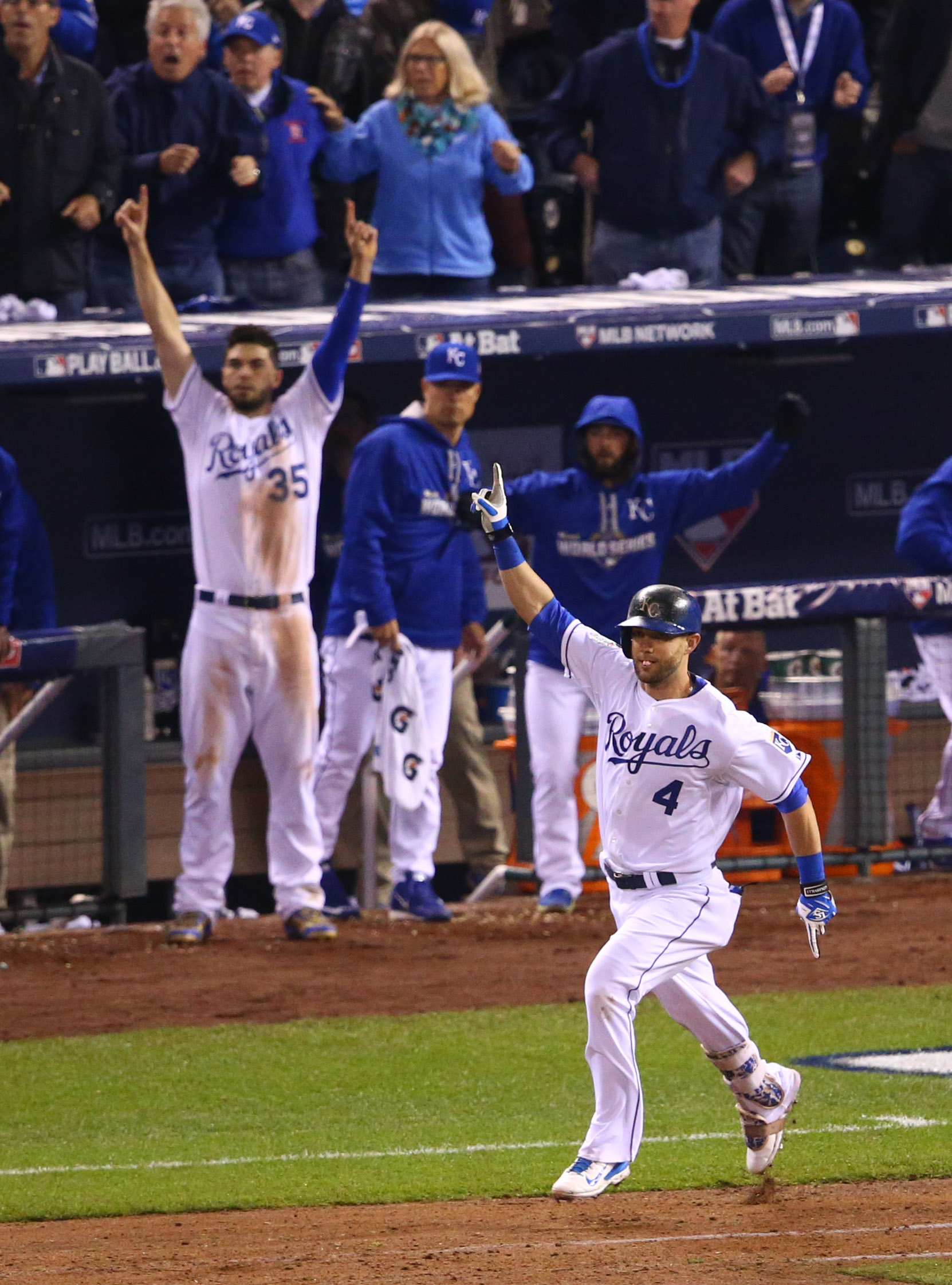
Now 36 years old, Gordon was the No. 2 overall pick by the Royals back in 2005. He spent his entire professional career in the organization, helping to stoke a baseball renaissance in Kansas City as the Royals appeared in back-to-back World Series, including their 2015 victory.
Long before Gordon was the face of the franchise, however, he was perhaps the poster child for not giving up on a top prospect after early struggles. Gordon spent just one full season in the minors before arriving in the big leagues with outlandishly high expectations in 2007. He put together a pair of solid but unspectacular seasons as the Royals’ third baseman in 2007-08 before a pair of injury-ruined campaigns in 2009-10 caused many to write the once-promising talent off at just 26 years of age. Struggles at third base had prompted the Royals to move Gordon to left field, and his .222/.319/.365 slash line in those two seasons certainly didn’t look like the savior for which Royals fans had pined after more than a decade of mediocrity.
That feels like an eternity ago, and it’s entirely due to Gordon’s remarkable mid-20s turnaround. Healthy in 2011, Gordon erupted with a .303/.376/.502 batting line, strong baserunning skills and elite left-field defense that netted him the first of an eventual seven Gold Glove Awards. From 2011-15, Gordon batted .281/.359/.450 while making three All-Star Games and totaling 26.4 wins above replacement. His breakout made him the foundational bedrock upon which the team’s young core could be built up.
Fellow homegrown talents such as Eric Hosmer, Mike Moustakas, Salvador Perez, Danny Duffy and Greg Holland joined trade acquisitions Lorenzo Cain, Alcides Escobar, James Shields and Wade Davis (among others) in fueling a brief but brilliant peak for GM Dayton Moore’s club. After a near-miss versus the 2014 Giants, the 2015 Royals ended a three-decade World Series drought. While Gordon’s overall postseason numbers — .222/.333/.398 — don’t stand out as dominant, the Royals may not have had a trophy to celebrate without his one-out, game-tying home run against Jeurys Familia in the bottom of the ninth of 2015’s Game 1 (video link).
Gordon’s breakout and the team’s revenue boost from consecutive World Series showings gave now-former owner David Glass the financial comfort to offer the three-time All-Star a franchise-record contract valued at four years and $72MM. That arrangement spanned the 2016-19 seasons, and while Gordon mulled retirement this time last year, he ultimately opted to return for one final go-around.
Certainly, Gordon wasn’t planning on doing so in the absence of the fans who hold him so dear in their hearts, but one can certainly imagine ample future opportunities for the K.C. faithful to express their gratitude. Teammate Whit Merrifield has already suggested that it’s “time to build the statue” on Instagram, and it seems there’s a good chance that Gordon will be the last Royal to ever don No. 4.
With four games yet to play, we can’t be sure of the exact totals Gordon will carry into retirement, but his overall body of work is strong. In 7237 plate appearances, all with the Royals, he’s a .257/.338/.411 hitter with 190 home runs, 113 stolen bases, 357 doubles, 26 triples, 867 runs scored and 749 runs batted in. Since he became a full-time outfielder in 2011, Gordon has the fourth-most Defensive Runs Saved of any Major League player, regardless of position, with 112.
All told, Gordon’s career has been worth 35 wins above replacement, per Baseball-Reference, although his value to the organization’s fans and the teammates who’ve followed his lead over the course of his career transcend that number. Gordon earned more than $117MM in his 14 MLB seasons and, along the way, cemented himself as a legend within the franchise’s lore — one who’ll be celebrated in Kansas City alongside greats like George Brett and Frank White for decades to come.
Royals Option Jakob Junis, Place Matt Harvey On Injured List
The Royals announced Wednesday that they’ve optioned right-hander Jakob Junis to their alternate training site and placed Matt Harvey on the injured list due to a lat strain. Righty Scott Blewett and infielder Erick Mejia are up from the alternate site in place of Junis and Harvey.
For Junis, who turns 28 today, this move represents the latest step in a downward trajectory over the past two seasons. He looked to have emerged as a serviceable innings eater for Kansas City in 2017-18, when he tossed 275 1/3 innings over 46 starts, averaging 8.0 strikeouts, 2.2 walks and 1.54 homers per nine innings along the way.
However, Junis was rocked for a 5.24 ERA last season, and the 2020 campaign has been nightmarish. He has yet to complete five innings in any of his six starts this year, and he’s surrendered at least two runs in each of those outings. Overall, he’s sitting on a 6.94 ERA and a similarly grisly 6.76 FIP. He’s falling behind hitters more regularly (57 percent first-pitch strike rate compared to 62.7 in 2018) and has already served up seven long balls on the year.
Junis will need to stay down at the alternate site for 10 days unless he’s recalled in place of someone who is going on the injured list, so it’s quite possible that this move effectively ends his 2020 season. He’s already crossed the three-year threshold in terms of Major League service time this year, meaning he’ll be eligible for arbitration this winter. Given his 5.44 ERA and 5.05 FIP over his past 37 MLB starts and 198 2/3 innings, Junis isn’t a lock to be tendered a contract this winter.
Harvey, too, seems likely to be done for the year in the wake of this injury. While there’s no official word on the severity of the strain, a lat strain typically isn’t something from which a pitcher returns in the minimum 10-day allotment. The former Mets ace had hoped this latest comeback attempt would prove more fruitful than previous efforts, but Harvey turned in his worst numbers to date at the MLB level. He managed just 11 2/3 innings between four starts and three relief outings, yielding 15 runs on 27 hits and five walks with 10 strikeouts along the way. Harvey served up six dingers in that stretch.
If there’s a small silver lining, Harvey’s 94.5 mph average fastball was up from recent years, but it’s still shy of the 96-97 mph he averaged at his brief but dominant peak. Unfortunately for Harvey, injuries have decimated what looked to be one of the most promising young arms in the game earlier last decade. The former No. 7 overall pick logged a brilliant 2.53 ERA and 2.65 FIP through his first 427 Major League innings — plus another 26 2/3 frames of 3.02 ERA ball in the playoffs — but he’s undergone both Tommy John and thoracic outlet surgery. Few pitchers have had successful returns from a TOS procedure, and battling back from both of those major operations is an even more daunting task.
Royals Outright Matt Reynolds
Infielder Matt Reynolds, whom the Royals designated for assignment over the weekend, cleared waivers and was outrighted to Triple-A Omaha, per a team announcement. That he was outrighted to Triple-A and not to the alternate training site is an important distinction, as it indicates that he’s been removed from the team’s player pool, thus rendering him ineligible to return to the Royals in 2020.
The 29-year-old Reynolds appeared in three games with the Royals this season after signing a minor league pact over the winter. The former Mets and Nationals infielder was hitless in 11 trips to the plate in his first taste of big league action since the 2018 season in Washington.
Reynolds, a career .212/.282/.323 hitter, has never seen more than 130 plate appearances in a Major League season but carries a solid track record at the Triple-A level, where he’s batted .286/.361/.441 in parts of six seasons (2038 plate appearances). That includes a .295/.401/.521 showing last year. The 2012 second-rounder has appeared at every position on the diamond other than catcher, even pitching two minor league innings, over the course of his professional career. His outright by the Royals likely puts an end to his 2020 season, but his Triple-A track record and defensive versatility should create opportunities for him to sign a minor league deal with a new club in need of infield depth this offseason.