
Free Agent Profile: Yu Darvish
Yu Darvish hits the open market as both the top free agent pitcher available and, in MLBTR’s view, the top free agent of the entire 2017-18 class.
Strengths/Pros
After seven years of stardom in Japan, Darvish came to North American baseball with great fanfare in the 2011-12 offseason, and he has since lived up to the hype. In 832 1/3 Major League innings, Darvish has a 3.42 ERA, 11.04 K/9, 3.33 K/BB rate, and 19 fWAR, firmly establishing himself as a front-of-the-rotation arm.
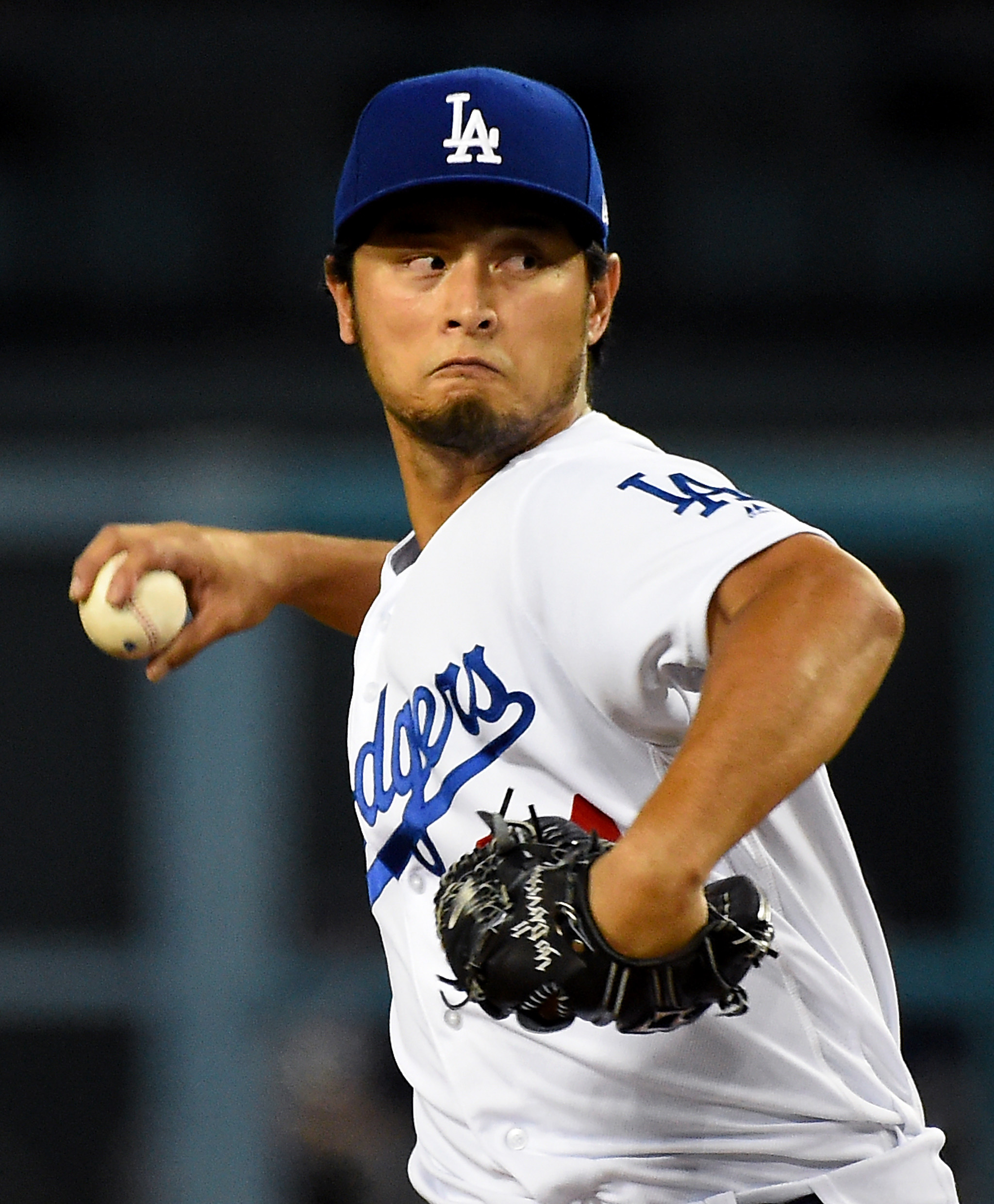 Tommy John surgery sidelined Darvish for all of 2015 and limited him to 100 1/3 innings in 2016, though he looked healthy in a full season of work last year plus an extended postseason run with the Dodgers. Darvish tossed a combined 201 1/3 innings between the regular season and playoffs, the second-highest total of his MLB career. Beyond just the workload, Darvish also set a new career best by averaging 94.2 mph on his fastball.
It’s worth noting that Darvish’s numbers with the Rangers prior to his deadline trade to L.A. were somewhat below his usual standard, thanks in part to a career-high 1.3 HR/9. While those home run issues continued after Darvish went from Texas to Los Angeles, he took quite well to pitching in the NL, posting better strikeout and walk rates as a Dodger than he did in 137 IP with the Rangers before the deal. His cumulative 10.08 K/9 for the season was the lowest of his career, though Darvish balanced that minor dip in punchouts with a 2.8 BB/9, continuing his trend of exhibiting better control throughout his big league career.
Since Darvish was dealt during the season, he wasn’t eligible for a qualifying offer, and thus a team doesn’t have to give up any draft picks or international bonus money in order to sign him. This gives Darvish a slight edge over his top competition in free agency, as Jake Arrieta, Lance Lynn, and Alex Cobb all have QO compensation attached to their services.
Weaknesses/Cons
Beyond the obvious red flag of the Tommy John surgery, Darvish has made five other trips to the disabled list during his MLB career, ranging from minor neck and back stiffness to rather lengthier DL stints for elbow and shoulder issues. Though Darvish just turned 31 last August, he has 2127 2/3 regular-season innings on his arm between both Japan and North America, not to mention extensive postseason work. While he hasn’t really exhibited any signs of slowing down, it’s easy to see how a team could be worried about committing nine figures to Darvish into his mid-30’s.
The spike in home runs allowed isn’t completely out of the blue (Darvish had a 14.4% homer rate in 2013), and clearly he was far from the only pitcher who ran into trouble with the long ball during a record-setting season for homers. Darvish’s 33.1% hard-hit ball rate was also a career-high, however, and his curveball was a below-average pitch in 2017 after previously being one of the most devastating weapons in his seven-pitch arsenal.
No discussion of Darvish is complete with mentioning his awful World Series performance, though that could just be chalked up to the Astros having his number. Darvish was very effective in his two starts earlier in the playoffs, and given the small-sample size factor of all postseason numbers, it’s hard to imagine any team wouldn’t be eager to give Darvish the ball this October.
Personal
Darvish has been dealing with the media spotlight since he was a teenager, rising from a highly-touted high school prospect into instant stardom with the Hokkaido Nippon-Ham Fighters. His move to Major League Baseball drew intense interest from several teams, with the Rangers making the high bid (under the old posting system) of $51.7MM just for the rights to talk terms with Darvish, eventually signing him to a six-year, $56MM deal.
Market
While Darvish has drawn significant interest from at least six teams, there haven’t been too many rumblings about Darvish or other top free agent hurlers given that the Shohei Ohtani chase has so dominated the offseason pitching market. Now that Ohtani has agreed to join the Angels, you can expect a least a few of the finalists in the Ohtani sweepstakes to turn their attention to Darvish, even though the veteran pitcher comes at a vastly higher price. Interest should be robust.
The Cubs have already made one notable rotation signing in Tyler Chatwood, though adding Darvish would further bolster an already-strong rotation. The Dodgers are also deep in pitching options, though they could explore a reunion with Darvish to guard against further rotation injuries. A return to the Rangers doesn’t seem very likely, while San Diego, San Francisco or Seattle are also longer shots based on costs, though the Mariners seem to be taking such an aggressive approach to this offseason that they can’t be totally ruled out.
Let’s not overlook the Angels themselves as possible candidates, as there has been some light speculation that Darvish and Ohtani could aim to be on the same team; the two are friends and Darvish is one of Ohtani’s idols. Anaheim has some payroll room even after extending Justin Upton, and with Darvish added to the promising but injury-riddled rotation, the Halos could even look to trade one of their excess starters in their attempts to add second base help.
The Twins and Cardinals have been linked to Darvish this winter, though St. Louis has already made one notable rotation addition and could be more focused on adding a big bat. Minnesota is something of a surprise suitor for Darvish on paper, though the club has enough open payroll space in future seasons that signing Darvish is actually feasible. (The Brewers are also a possible fit for the same reason.) The Orioles and Phillies badly need arms but the former won’t meet Darvish’s price and the Phillies may be a year away from augmenting their rebuild with big-ticket free agents. The Astros may prefer to earmark future money on extending their core players, though they make some sense for Darvish if they wanted to safeguard their rotation against Dallas Keuchel possibly leaving for free agency after 2018.
Expected Contract
MLBTR projected Darvish to land a six-year, $160MM contract this winter, which would work out to the fifth-highest average annual value given to any pitcher in baseball history. It’s a big investment given Darvish’s age and the miles already on his arm, though it also looks to be market value for such an ace-level hurler that reaches free agency.
Photo courtesy of USA Today Sports Images
Free Agent Profile: Mike Moustakas
The Moose is loose on the free agent market, as Mike Moustakas looks to convert his big power year into a pricey multi-year contract.
Strengths/Pros
After playing in only 27 games in 2016 due to a torn right ACL, Moustakas rebounded to earn AL Comeback Player Of The Year honors after batting .272/.314/.521 with 38 homers over 598 plate appearances. He outhomered every full-time third baseman in baseball last season, and only seven players overall hit more than Moustakas’ 38 dingers. Between this performance, his breakout 2015 campaign, and even his abbreviated 2016 numbers, Moustakas has been a solidly above-average hitter over his last 1325 PA, creating 18% more (hypothetical) runs than the average hitter since the start of the 2015 season.
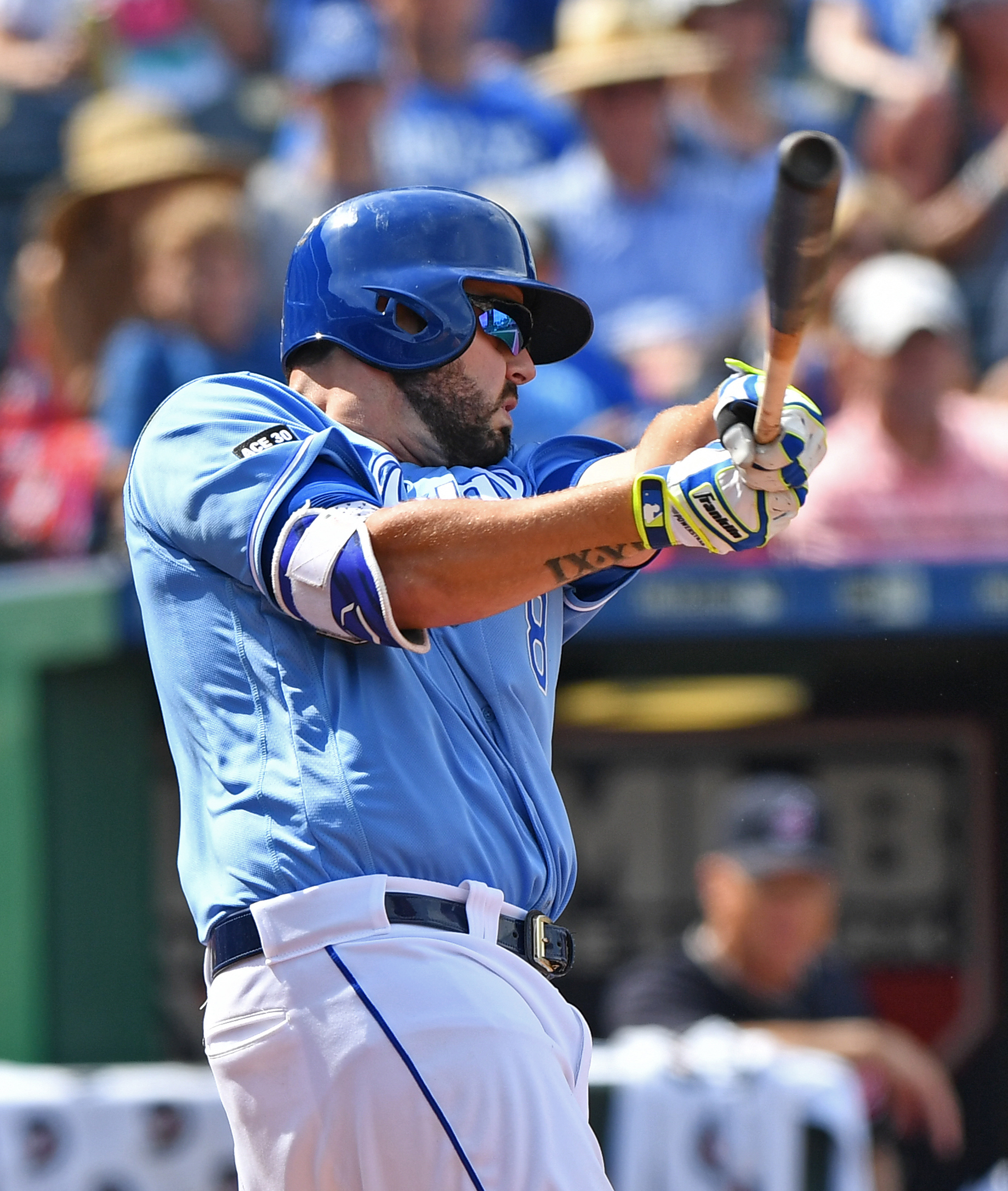 Moustakas’ 38 homers set a new Royals single-season record, breaking the surprisingly long-lasting old mark of 36 set by Steve Balboni back in 1985. Needless to say, Kauffman Stadium isn’t friendly to home run hitters, making Moustakas’ feat all the more impressive. Since much of his damage came away from Kansas City last year (.284/.326/.582 with 24 homers in 310 away-game plate appearances), it could be argued that Moustakas would be even more dangerous playing his home games in a less-spacious ballpark.
Prior to 2017, Moustakas had been a solid defender at third base, with the UZR/150 metric providing more consistently positive reviews about his glovework than the Defensive Runs Saved metric.
Moustakas just turned 29 in September, making him younger than most of the other top free agent batters. Going by the last few seasons, he’s reaching the open market right in the midst of his hitting prime, making him a safer bet for a long-term deal than older players who may have more overt question marks about possible decline.
Weaknesses/Cons
Moustakas’ 55.6% swing rate was topped by only six qualified hitters last season, and Moustakas’ free-swinging ways resulted in both a career-low 5.7% walk rate and his highest strikeout rate (15.7%) since 2013. To be fair, that strikeout rate is actually more than respectable given how often Moustakas was swinging away, though it doesn’t seem sustainable given his only-okay career contact rates. While Moustakas was a good hitter in both 2015 and 2017, these are also his only two full seasons of above-average production, so any weak points (like an inflated swing rate) tend to stand out as red flags.
With just a .305 career OBP and a track record as a subpar baserunner, Moustakas is reliant on his power to prop up his offensive value. That’s not a bad skill to have in the recent era of big homer totals and a seemingly livelier baseball, though it does make Moustakas potentially susceptible to a drop in production should MLB explore a re-design of the balls.
As mentioned earlier, Moustakas had been a good defender for much of his career, though he was below-average in both DRS (minus-8) and UZR/150 (-3.6) in 2017. This is certainly a worry for teams wondering if Moustakas might not be the same after his ACL surgery, though it also isn’t uncommon for players to simply need some time to shake off the rust in the wake of such injuries. It’s worth noting that the Royals used Moustakas as a designated hitter in 17 games last season in an effort to keep him fresh.
Because Moustakas rejected the Royals’ qualifying offer, a new team would have to give up at least one draft pick and potentially some international bonus pool money in order to sign the third baseman. (You can find a full overview of the new QO signing rules here.)
Personal
Moustakas was born in Los Angeles and played his high school ball at local Chatsworth HS before the Royals selected him with the second overall pick of the 2007 draft. A highly-regarded prospect throughout his minor league career, Moustakas was a key member of the homegrown core of talent that came up together though Kansas City’s farm system and helped deliver the Royals a World Series title in 2015.
After over a decade with the franchise, Moustakas has naturally created strong bonds with the organization and within the Kansas City community, and is well-regarded as a teammate and clubhouse leader. Moustakas and wife Stephanie married in 2014 and they welcomed their first daughter in August 2016.
Market
MLBTR’s Connor Byrne recently made the argument that Todd Frazier, not Moustakas, may be the best third baseman on the market this winter, though since Moustakas is over two and a half years younger, he stands out as the more logical choice for a team looking for a long-term answer at the hot corner.
Moustakas’ relative youth might also make him attractive to a team that may not be planning to contend in 2018, but wants to lock down third base in preparation for a run in 2019 and beyond. Teams like the Phillies or Braves could fit this description if they respectively decide against going with Maikel Franco or waiting for prospect Austin Riley, though both teams seem like longshot candidates for Moustakas’ services. You can similarly squint and see how Moustakas could fit with the Red Sox, Indians, or Mets, though the latter two teams probably won’t have the payroll room and Boston likely wants to give Rafael Devers a longer look at third base before considering him as a first baseman.
The Giants and Cardinals are both currently tied up pursuing Giancarlo Stanton, though both teams could certainly use Moustakas’ power, with San Francisco in particular having a glaring hole at third base. A surprise team like the Orioles (if Manny Machado is moved to shortstop) or Twins (if Miguel Sano can’t handle regular third base duties after leg surgery) could also emerge. The Angels are currently focused on second basemen and plan to use Luis Valbuena in a third base platoon, so a return to his hometown doesn’t seem likely for Moustakas — unless the Halos miss out on Shohei Ohtani and thus change their DH/first base plans.
A return to Kansas City also can’t be entirely ruled out, as the Royals have some interest in re-signing at least one of Moustakas or Eric Hosmer. Conversely, the Royals also seem on the brink of a rebuild, so they could be better served in letting that duo (and Lorenzo Cain) leave in free agency and then collecting the draft picks due to them since Moustakas, Hosmer, and Cain all rejected qualifying offers.
Expected Contract
MLBTR ranked Moustakas sixth on our list of the offseason’s Top 50 Free Agents, with a predicted contract of five years and $85MM. That still seems like a reasonable prediction, even if the Stanton/Ohtani chases have been holding up the market for big-ticket free agents and an increased number of front offices are willing to play the waiting game. Moustakas is represented by Scott Boras, who is no stranger himself to keeping his clients available until an acceptably large contract can be found. Moustakas looks to be one of the prime beneficiaries once the Stanton and Ohtani markets are resolved, particularly given this winter’s thin third base market.
Photo courtesy of USA Today Sports Images
MLBTR’s 2017-18 Offseason Outlook Series
The MLB Trade Rumors writing staff has completed our annual winter previews for all 30 teams. Given the unusually quiet nature of this offseason so far, every team still has much to address on their winter to-do lists even though we’re already in December. Click the links for a full analysis of what your favorite team has in store before Opening Day…
AL East
AL Central
AL West
NL East
NL Central
NL West
Free Agent Profile: Zack Cozart
Zack Cozart‘s huge 2017 season would seem like the perfect platform year as he enters free agency, though the veteran shortstop faces a complicated market and some inevitable questions about whether he can duplicate his breakout year.
Strengths/Pros
Defense has long been Cozart’s calling card. Since debuting in 2011, he ranks seventh in UZR/150 (+10.6) and 14th in Defensive Runs Saved (56) among all players in baseball with at least 6000 innings played. Among just shortstops in that same timeframe, Cozart is behind only the incomparable Andrelton Simmons in both categories and also behind Brandon Crawford in DRS. Cozart would provide a massive boost to any club looking to improve its run prevention.
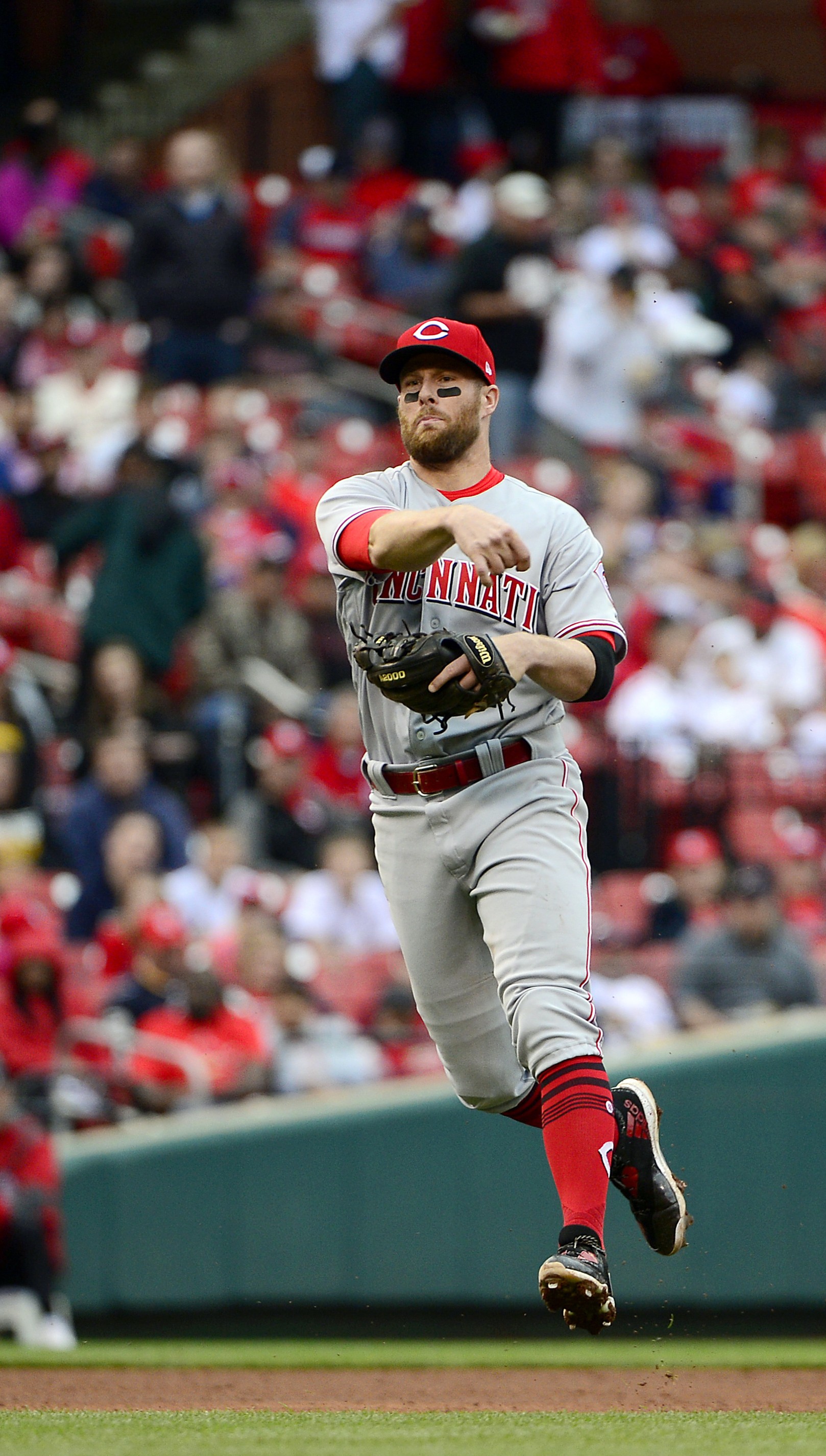
Heading into last season, however, Cozart still hadn’t been able to move beyond his reputation as a glove-only player. He posted roughly average run-production numbers in 2015-16, though injuries and a major second-half fade in 2016 left doubts as to whether he could truly put it together at the plate. Those questions were answered in rather stunning fashion, as Cozart emerged as not just a solid bat, but one of baseball’s best overall hitters in 2017.
The numbers are startling — a .297/.385/.548 slash line over 507 PA, 24 homers, 80 runs scored, and almost as many walks (62) as strikeouts (78). Cozart’s 141 OPS+ was topped by just 15 players in the entire league, with an overall 5.0 fWAR surpassed by only 16 players. In fact, Cozart also has the highest 2017 fWAR total of the entire 2017-18 free agent class, counting both hitters and pitchers.
Cozart was no creation of the hitter-friendly Great American Ballpark, as he hit well both at home (.958 OPS) and on the road (.900 OPS). He also displayed a nice balance against all pitchers, crushing lefties to the tune of a 1.059 OPS while also hitting right-handed pitching hard (.896 OPS).
While he set new career bests in virtually every offensive category, most of Cozart’s advanced metrics are not too far removed from his normal career rates. His homer rate did spike, and his swinging-strike and overall swing rates both dropped significantly from his career norms. This increased plate discipline bodes well for Cozart’s ability to continue an above-average level of hitting, even if he may not again reach the peak of his 2017 production.
Weaknesses/Cons
While he still outperformed many hitters who received well more than 507 plate appearances, Cozart was again hampered by injuries, as quad injuries to both legs limited him to just 122 games. Between the quad problems, a torn knee ligament in 2015 and continued knee issues in 2016, Cozart has played in just 296 of the Reds’ 486 games over the last three seasons. This lack of durability and the fact that Cozart just turned 32 last August will give some teams pause before considering him for a pricey multi-year contract.
It’s worth noting that last season was one of Cozart’s lesser defensive years, as he delivered “only” a +6.2 UZR/150 and +2 DRS. Obviously these are still fine numbers, though it could hint that the years of leg problems are beginning to impact Cozart’s glovework. It certainly seems like the injuries could be hurting Cozart on the basepaths, given that Fangraphs’ BsR metric has indicated subpar baserunning totals in each of the two seasons since his knee surgery.
While Cozart would hardly be the first player to blossom later in his career, his continuing to be a top-15 hitter in 2018 would be even more of a surprise than his 2017 breakout. As per Statcast, Cozart’s expected weighted on-base average (.332) was well below his actual .399 wOBA thanks to his middling launch angle and exit velocity numbers — that 0.067 gap between the two categories was the second-largest of any player in baseball with at least 200 at-bats in 2017.
In fairness, Cozart has specifically tailored his swing and plate approach to account for his general lack of hard contact, and to focus on a level swing rather than aiming to put the ball in the air. This makes him an interesting outlier among modern hitters, though his power surge may have less to do with swing changes than it does (as Fangraphs’ Dave Cameron recently observed) with the livelier baseballs reportedly used in MLB play over the last two years. If Cameron’s argument is correct, Cozart’s home run numbers could be in particular danger of regression if there are further alterations in how the balls are produced.
Cozart said back in April that he’d actually been feeling more comfortable hitting over two years ago due to increased aggressiveness at the plate, so between that and a minor swing tweak from last Spring Training, above-average production could be a new normal for Cozart. Still, his 2017 numbers were so far beyond his career averages that some amount of regression seems inevitable.
Personal
A native of Memphis, Tennessee, Cozart was a second-round pick for the Reds in the 2007 draft after three years of college ball at the University of Mississippi. His collegiate success earned him a spot on the United States’ gold medal-winning team in the 2006 World University Championship.
As one of the few long-term veterans on the rebuilding Reds, Cozart earned the nickname of “Coach” for his leadership role within the young clubhouse. Cozart was named as the Reds’ recipient of the 2016 Heart & Hustle Award by the MLB Players Alumni Association.
On a lighter note, the Cozart family welcomed a new pet into the fold this past summer, thanks to Joey Votto‘s promise to buy his teammate a donkey if Cozart made the NL All-Star roster.
Market
While Cozart is far and away the top free agent shortstop available this winter, his biggest issue could be that the shortstop market itself isn’t very large. Most contenders or would-be contenders already have a shortstop in place, and several of the teams with a hole at the position (such as the Marlins or Padres) are in a rebuilding phase.
This would seem to at least create the possibility that Cozart remains in Cincinnati. The two sides shared some interest in working out a contract extension last summer, and while it would be somewhat unusual to see Cozart become a long-term piece for the club after two years of trade rumors, the Reds may have changed course after seeing him emerge as a hitter. The Reds could decide to go with Cozart and Scooter Gennett (another breakout player in 2017) in the middle infield, leaving Jose Peraza and Dilson Herrera for backup or utility roles, or the team could shop one of those young and controllable talents for some much-needed pitching help.
Looking at other possible suitors, there are a lot of “maybe, if…” situations that could see a team make a play for Cozart. The Orioles or Royals could be fits if they aren’t respectively sold on Tim Beckham or Raul Mondesi Jr. as everyday shortstops (and if Kansas City doesn’t enter a rebuild itself). The Pirates or Rays would need to carve out payroll space, or the Cardinals could get into the mix if they sold high on Paul DeJong in another trade.
Perhaps the easier path to locating Cozart’s next team is to look for openings at second or third base. This could require a change of heart from Cozart, as he reportedly “feels strongly” about sticking at his usual position, though he might have no choice but to become more flexible given the lack of shortstop vacancies. Cozart’s reps at Excel Sports Management could pitch their client both as a regular starter at one position, or as an everyday contributor that could get 600 PA while receiving a couple of starts per week at shortstop, second and third. The Angels have already considered Cozart as a second baseman, and a position switch could also get teams like the Mets, Giants, Blue Jays, or Braves interested.
One plus for Cozart’s market is that the Reds declined to issue him a qualifying offer, so another team can sign him without having to surrender any draft pick compensation.
Expected Contract
MLBTR predicts Cozart will find a three-year, $42MM deal this winter, though this could be a pretty fluid projection depending on whether or not Cozart is open to a position change. While Cozart’s age could be an obstacle in finding a fourth guaranteed year, you’d think multiple teams would love to find space for a player coming off a five-win season somewhere around the infield, maybe even to the point of making room at shortstop.
Photo courtesy of USA Today Sports Images
8 Potentially Undervalued Free Agents
Every notable name that was a free agent when the market opened three weeks ago remains on the board in what has been the most painstakingly slow offseason in recent memory. There are numerous theories as to what’s holding up the top end of the free-agent market, but at some point, even with the top names lingering on the board, the lower tiers of free agency should begin moving.
While the entrants on this list haven’t grabbed many headlines early in free agency, each is coming off a quietly strong season and has a shot at landing a multi-year deal or, at worst, providing surplus value on a one-year pact. Black Friday and Cyber Monday have mercifully come and gone, but here’s a look at some perhaps undervalued and underappreciated players available in free agency:
- Yusmeiro Petit, RHP: Petit has had to settle for a one-year contract and a minor league deal over the past two offseasons, but his 2017 performance should generate much more robust interest. The 33-year-old led MLB relievers in innings this past year while pitching to a pristine 2.76 ERA with 10.0 K/9 against 1.8 BB/9. He’s worked as a swingman, a starter and a high-leverage arm in late innings and somewhat anonymously set a big league record for most consecutive batters retired while pitching with the Giants. Petit lacks the blistering velocity that many of his late-inning peers boast, but he’s posted a 3.59 ERA and 3.40 FIP in 399 innings dating back to 2012.
- Joe Smith, RHP: Smith was one of the best one-year signings in baseball this past season, though his strong work with both the Blue Jays and Indians flew largely under the radar. Like Petit, Smith lacks premium velocity but nonetheless posted elite K/BB numbers. In 54 innings, the sidearmer posted an impressive 11.7 K/9 against 1.8 BB/9 en route to a 3.33 ERA. Many would be surprised to note that Smith has only posted an ERA north of 3.60 once (3.83 in 2010) and boasts a 2.97 ERA over an 11-year career. His 37.8 percent chase rate and 11.4 percent swinging-strike rate in 2017 were far and away the best marks of his career. Smith will turn 34 next spring and doesn’t even average 90 on his fastball, but he continually posts effective numbers.
- Matt Albers, RHP: Another mid-30s reliever? Another mid-30s reliever. Albers struggled through a disastrous 2016 season but rebounded with a 1.62 ERA in 61 1/3 frames for the Nationals this past season — his second sub-2.00 ERA in three years. The righty averaged 9.3 K/9 against 2.5 BB/9 with a 51 percent grounder rate in 2017, serving as the Nationals’ most reliable reliever over the course of the year. Albers will be 35 in January, but his velocity and swinging-strike rates sat at their best levels since 2013 in what proved to be a terrific rebound season.
- Brian Duensing, LHP: Duensing will turn 35 in February and doesn’t have a lengthy track record, but he enjoyed his best full season as a reliever with the Cubs in ’17, tossing 62 1/3 innings with 8.8 K/9, 2.6 BB/9 and a 48.6 percent ground-ball rate en route to a 2.74 ERA. Pitch values from Baseball Info Solutions pegged his sinker/two-seamer and his changeup as his two best offerings, and they were two of his least-used pitches. If he can sustain their effectiveness over a greater usage rate, Duensing could enjoy similar success in 2018.
- Austin Jackson, OF: He’s not the star he once was, but Jackson will turn just 31 in February and somewhat quietly rebounded with an excellent season for the Indians in a part-time role. In 318 trips to the plate, Jackson slashed .318/.387/.482 with seven homers, 19 doubles and three triples. Jackson’s production was buoyed by a .385 BABIP that he surely won’t repeat, but he’s always handled lefties well (with the exception of 2016) and made significant K/BB gains against southpaws this past season. Jackson may have fallen into the part-time mold sooner in his career than he hoped, but a fourth outfielder that can play all three spots and mash lefties still carries value, as Chris Young and Rajai Davis can attest.
- Cameron Maybin, OF: Maybin is somewhat similar to Jackson in that he’s a right-handed-hitting fourth outfield option that can play all three spots, but he doesn’t come with Jackson’s track record against lefties, so he doesn’t fit as nicely into a platoon. Maybin’s baserunning, however, remains elite — as evidenced by the 33 steals he tallied in 2017 despite collecting just 450 PAs. He’s also improved his walk rate in three straight seasons (11.3 percent in ’17) and should still be capable of above-average glovework in the outfield corners while also handling some time in center field.
- Chris Iannetta, C: Big seasons from Alex Avila and Welington Castillo generated far more notice than Iannetta’s under-the-radar campaign in Arizona. He’ll turn 35 in April but still put together a very strong .254/.354/.511 slash with 17 homers and 19 doubles in just 316 PAs. Iannetta’s 24 percent caught-stealing rate wasn’t great but was in line with his career mark (25 percent), and he posted very strong framing marks for the second time in the past three seasons. Avila, Castillo and Jonathan Lucroy get the most attention on the market, but a club looking for a quality backup to help guide a young staff or mentor a young starting catcher could get a bargain if Iannetta can come anywhere close to his ’17 output.
- Adam Lind, 1B: Lind hammered righties at a .303/.364/.534 clip in 269 plate appearances last season, but age (34), a longstanding struggle against left-handed pitching and the flooded market for platoon first basemen should suppress his earning power despite solid on-field value in the right role. He should earn a raise from last year’s $1.5MM base salary with the Nats, but Lind could still be had as a nice bargain for a team with a right-handed platoon option. He did fake it in left field for nearly 200 innings last season as well, but most clubs will likely view him as a first-base/DH only candidate.
Offseason Outlook: Los Angeles Dodgers
MLBTR is publishing Offseason Outlooks for all 30 teams. Click here for the other entries in this series.
Following a World Series loss to the Houston Astros, the Dodgers will enter the 2018 season with the majority of their core intact. The NL West division competition won’t figure to get any easier, however, and the organization’s payroll obligations already exceed the luxury tax threshold, which will make it more complicated to patch holes through free agency. The good news is that they enter the winter with wealth in another area … their deep farm system.
Guaranteed Contracts
- Clayton Kershaw: $98MM through 2020 (can opt out of contract following the 2018 season)
- Kenley Jansen: $66MM through 2021
- Justin Turner: $48MM through 2020
- Rich Hill: $34MM through 2019
- Adrian Gonzalez: $21.5MM through 2018
- Kenta Maeda: $18MM through 2023
- Scott Kazmir: $16MM through 2018
- Brandon McCarthy: $10MM through 2018
- Logan Forsythe: $8.5MM through 2018
- Yasiel Puig: $7.5MM through 2018 (under club control through 2019; eligible for arbitration following the 2018 season)
- Hyun-Jin Ryu: $7MM through 2018
Arbitration-Eligible Players (projections via MLBTR contributor Matt Swartz)
- Yasmani Grandal (5.115) – $7.7MM
- Luis Avilan (4.146) – $2.3MM
- Alex Wood (4.123) – $6.4MM
- Tony Cingrani (4.088) – $2.2MM
- Josh Fields (3.162) – $2.2MM
- Pedro Baez (3.059) – $1.5MM
- Enrique Hernandez (3.054) – $1.3MM
- Joc Pederson (3.022) – $2.0MM
- Yimi Garcia (3.004) – $700K
Other Financial Obligations
- $24.5MM to Yaisel Sierra through 2021
- $14MM to Hector Olivera through 2020
- $6.5MM to Erisbel Arruebarrena in 2018
- $5.5MM to Matt Kemp through 2019
- $2MM to Dian Toscano through 2019
Free Agents
- 2B Chase Utley, OF Andre Ethier, OF Curtis Granderson, OF Franklin Gutierrez, SP Yu Darvish, RP Brandon Morrow, RP Tony Watson
[Los Angeles Dodgers Depth Chart | Los Angeles Dodgers Payroll Outlook]
At the kickoff of last year’s offseason, reports surfaced that the Dodgers were under pressure from MLB to cut payroll, though CEO Stan Kasten insisted that it wasn’t a mandate. While there hasn’t been word of any similar pressure this winter, Los Angeles already has over $207MM in guaranteed commitments for 2018 before so much as even inquiring on any free agents. Forty million of those dollars are owed to a combination of Adrian Gonzalez, Scott Kazmir and a group of players who are no longer on the roster. While it’s probably not safe to expect the Dodgers to be stingy, it wouldn’t be at all surprising to see them shy away from long-term, high-risk contracts, especially with some notable extension candidates making up the core of the MLB roster and another wave of talent budding in the upper minors.
That minor-league system includes six players in MLB Pipeline’s top 100, four of whom are either at the Double-A or Triple-A level. Their top two prospects, Walker Buehler and Alex Verdugo, could help at the major league level early in 2018. With that kind of farm system, it’s possible we could see the Dodgers swing a major trade. I already noted that they’d be an ideal fit in a hypothetical Marcell Ozuna trade with the Miami Marlins, and indeed it seems like they’re in play for Giancarlo Stanton to an extent as well (though certainly his contract is larger than anything it would take to sign any of this year’s free agents). On paper, it seems like Verdugo in particular would make the most sense as a trade chip, depending upon how the club views a deep set of outfielders, though it remains to be seen whether the Dodgers have any real interest in dealing him.
Speaking of Stanton, the Dodgers appear to be one of the best fits for his services. Not only are they one of the few teams with both the prospects and financial muscle to lure the NL MVP from Miami, but they may have an added advantage considering Stanton is an L.A. native. In fact, recent reports indicate that he’d approve a trade to the Dodgers; if he truly wants to land there, and the team is at least willing to offer enough to force the Marlins’ hand, then this could be a match. But it’s not presently clear just how much interest the Dodgers have and whether Stanton would push hard to go to one specific team.
The possibility of adding a big bat ties into a complicated picture on the position-player side. It seems probable that Gonzalez will take at least some of the time at first base to open the season, so as things stand currently, the Dodgers would enter 2018 with some combination of Chris Taylor, Cody Bellinger, Yasiel Puig and Joc Pederson in the outfield, with Enrique Hernandez likely to fill a backup role and Andrew Toles as a sort of dark horse for playing time. Of course, Gonzalez faded badly in an injury-riddled 2017 season, ending with a shockingly poor .242/.287/.355 slash line in just 252 plate appearances last year. If he can’t rebound to some semblance of his former self, the Dodgers might ultimately opt to cut him loose (and eat his enormous salary) in order to move Bellinger back to first. This concern could lead to L.A. signing a platoon partner for Gonzalez at first, or adding a cheap right-handed outfield option to their roster. From my point of view, however, it doesn’t make much sense for the Dodgers to mess around with the middle- and lower-tier options at those positions. Their roster is already crowded with many players of that type, so it might not be worth sacrificing a roster spot to add another part-time bat to the mix.
Logan Forsythe is currently listed at the top of the second base depth chart for the Dodgers, and it would be perfectly reasonable to open the season with him at the keystone. Justin Turner and Corey Seager are obvious locks for their positions, so it’s hard to imagine the Dodgers making any real changes to their infield. They could, however, explore some veteran backup options. It wouldn’t be a complete shock to see them re-sign Chase Utley. The Dodgers could probably use a lefty-hitting infielder, and the 39-year-old veteran fits the bill. Other options to hit from the left side include switch-hitters Erick Aybar and Jose Reyes, but the trade market could well hold more promising possibilities.
The back end of Dodgers’ rotation for the past couple of seasons has been a patchwork quilt of oft-injured hurlers who provide solid value when healthy. But the front end is absolutely dynamite; legend Clayton Kershaw will once again be the team’s opening day starter, while Rich Hill and Alex Wood are locks for the number two and three spots. Beyond that, things get a little murkier. Kenta Maeda was a lights-out relief pitcher in the playoffs, and although he’ll probably open the season in the Dodgers’ rotation, they could also opt to use him once again as a relief ace. Buehler will contribute in some capacity this season, but I’d put my money on the Dodgers sending him to Triple-A to open 2018. Julio Urias will probably return from injury at some point as well, though that will be much later in the year and he’ll be nursed back to health with quite a lot of caution. Beyond that, whether they sign a free agent pitcher or employ a wait-and-see approach with their brittle rotation depth seems like a coin flip.
If they do sign a free agent pitcher, a reunion with Yu Darvish seems plausible. Despite an implosion during the playoffs, Darvish was solid for the Dodgers overall and comes with an extensive track record of success. Beyond him, they could be in on Jake Arrieta, or attempt to trade for Chris Archer of the Rays or Michael Fulmer of the Tigers. With the kind of rotation depth the Dodgers have, it makes more sense for them to look at large upgrades rather than risky players like Andrew Cashner or Tyler Chatwood.
The Dodgers bullpen is largely in good shape. Tony Watson and Brandon Morrow are set to depart as free agents, but the dominant Kenley Jansen remains under contract as the team’s closer. Luis Avilan, Tony Cingrani, Pedro Baez, Ross Stripling and Josh Fields will all be back as well. Their rotation depth could bleed over into their bullpen, meaning one of Brandon McCarthy, Hyun-jin Ryu or Maeda could pitch in relief to start the season. With all this in mind, it seems as though the bullpen doesn’t need much help. It wouldn’t make much sense, then, to spend big money on Greg Holland or Wade Davis, but they’ll probably explore options from the next tier. A reunion with Morrow would make plenty of sense, and beyond him there are names like Bryan Shaw, Juan Nicasio and Mike Minor that could hold appeal.
What stands out most about the Dodgers organization is its depth of resources and the multitude of ways in which it could combine them. The team could acquire a big name trade target by moving assets at the minor league level or in the majors (Pederson or Yasmani Grandal come to mind), or it could throw a wad of cash at a free agent. The Dodgers will probably make a push for Shohei Ohtani, and landing the two-way star would mean yet more possibilities for corresponding roster tweaks. At the end of the day, it seems likely that they’ll make at least one significant acquisition, and probably more than that. Under Andrew Friedman and Farhan Zaidi, the Dodgers have sought to build without simply relying on bringing in expensive veterans from outside the organization on long-term commitments. But after coming up just shy in the 2017 World Series following five-straight NL West titles, the desire to finally win it all could provide significant motivation to cash in financial and prospect capital and put a super team on the field.
What route Dodgers end up taking this winter is anybody’s guess. But we can safely presume that they won’t have a quiet offseason. They have loads of options and they’ll be exploring all of them. I expect the name “Dodgers” to pop up often in trade and free agent rumors, and I expect them to be at the epicenter when the dominoes start to fall.
2017 Non-Tender Candidates
There are more than 200 players that are eligible for salary arbitration this offseason, and the deadline to tender each of these players a contract for the 2017 season is Friday at 8pm ET. That shouldn’t be confused with actually signing the player at a given rate for the 2018 season; Friday’s deadline is merely the deadline to inform arbitration-eligible players that they will or won’t receive a contract. The two parties will have another roughly two months to work out salaries before arbitration hearings (if necessary) kick off in February.
As we do each year at MLBTR, we’re providing a list of players whose teams could potentially elect not to tender them a contract, thus sending them into the free-agent pool earlier than expected. It should be emphasized that we’re not indicating that each of these players is likely to be non-tendered (though that’s certainly the case with some of them). Typically, we list any player for which we can envision a 10-20 percent chance of a non-tender.
It should be noted that many of the borderline non-tender candidates below will be traded this week rather than simply cut loose. Other borderline candidates may be presented with an offer that is notably lower than their projections and could accept the “take it or leave it” ultimatum rather than being non-tendered.
I’ve broken the list down by division and included each candidate’s projected salary from MLBTR contributor Matt Swartz in parentheses as a point of reference. For a full list of each team’s arb-eligible players, you can check out Matt’s team-by-team arbitration projections.
American League West
- Angels: Blake Wood ($2.2MM), C.J. Cron ($2.8MM)
- Astros: Evan Gattis ($6.6MM), Mike Fiers ($5.7MM)
- Athletics: Chris Hatcher ($2.2MM), Josh Phegley ($1.1MM)
- Mariners: Drew Smyly ($6.85MM), Andrew Romine ($1.9MM)
- Rangers: A.J. Griffin ($3.0MM), Nick Martinez ($2.0MM)
American League Central
- Indians: Abraham Almonte ($1.1MM)
- Royals: Mike Morin ($700K)
- Tigers: Bruce Rondon ($1.2MM), Alex Wilson ($2.1MM)
- Twins: None
- White Sox: Al Alburquerque ($1.1MM), Zach Putnam ($1.4MM), Jake Petricka ($1.1MM), Danny Farquhar ($1.5MM)
American League East
- Blue Jays: Tom Koehler ($6.0MM), Ryan Goins ($1.8MM)
- Orioles: None
- Rays: Adeiny Hechavarria ($5.0MM), Jesus Sucre ($1.3MM), Brad Miller ($4.4MM)
- Red Sox: Brock Holt ($2.0MM), Sandy Leon ($2.1MM)
- Yankees: Austin Romine ($1.2MM)
National League West
- Diamondbacks: T.J. McFarland ($1.0MM), Chris Herrmann ($1.4MM), J.J. Hoover ($1.6MM)
- Dodgers: None
- Giants: None
- Rockies: Zac Rosscup ($600K)
- Padres: None
National League Central
- Brewers: Jeremy Jeffress ($2.6MM), Stephen Vogt ($3.9MM), Hernan Perez ($2.2MM)
- Cardinals: None
- Cubs: Hector Rondon ($6.2MM), Justin Grimm ($2.4MM)
- Pirates: Jordy Mercer ($6.5MM)
- Reds: None
National League East
- Braves: Danny Santana ($1.1MM), Matt Adams ($4.6MM), Jace Peterson ($1.1MM)
- Marlins: None
- Mets: None
- Nationals: None
- Phillies: None
MLBTR Originals
Here’s the MLBTR writing team’s original content from the past week…
- The “Looking For A Match” series was in full gear this week, as MLBTR writers outlined the trade markets for several notable players. Jeff Todd looked at the possible suitors for the Tigers‘ Ian Kinsler, Mark Polishuk explored which teams could make a play for Jose Abreu, Kyle Downing examined another big White Sox trade chip in Avisail Garcia, and Connor Byrne broke down the best fits to acquire Raisel Iglesias from the Reds.
- Eric Hosmer is the latest player featured in our Free Agent Profile series, with Connor accessing the pros and cons for teams interested in the longtime Royals first baseman.
- Now that the off-the-field drama seems to finally be concluded in Atlanta, Jeff discusses the challenges GM Alex Anthopoulos faces with his new team in the Braves‘ Offseason Outlook entry.
- It’s a Free Agent Faceoff! Steve Adams compared Alex Cobb and Lance Lynn, the consensus top two “second tier” starters (behind Yu Darvish and Jake Arrieta) in this year’s offseason pitching market. In the poll attached to Steve’s comparison piece, over 58% of MLBTR readers preferred to sign Cobb over Lynn.
- In other polls from the past week, 19.59% of readers predicted Cobb would be the first of the players within the top ten of MLBTR’s Top 50 Free Agents list to sign a contract this offseason. Another Rays-related survey asked whether or not Tampa Bay would trade Chris Archer this offseason, with the “no” side winning by a slight 51.54% majority.
Looking For A Match In A Raisel Iglesias Trade
The Reds’ short- and long-term plans for their rotation hit a snag in 2016 when promising starter Raisel Iglesias shifted to the bullpen after encountering shoulder problems. Now, with Iglesias having morphed into one of the game’s most valuable late-game assets over the past two seasons, it’s clear that something positive came from the right-hander’s role change.
Since he became a member of Cincinnati’s relief corps, Iglesias has combined for 126 innings of 2.29 ERA pitching, with 10.43 K/9 against 3.29 BB/9. Any team would sign up for that type of production, including the Reds themselves, who seem inclined to retain Iglesias entering his age-28 season. But with the Reds amid a rebuild and not looking like near-term contenders, there’s an argument to be made that they should sell Iglesias this winter.
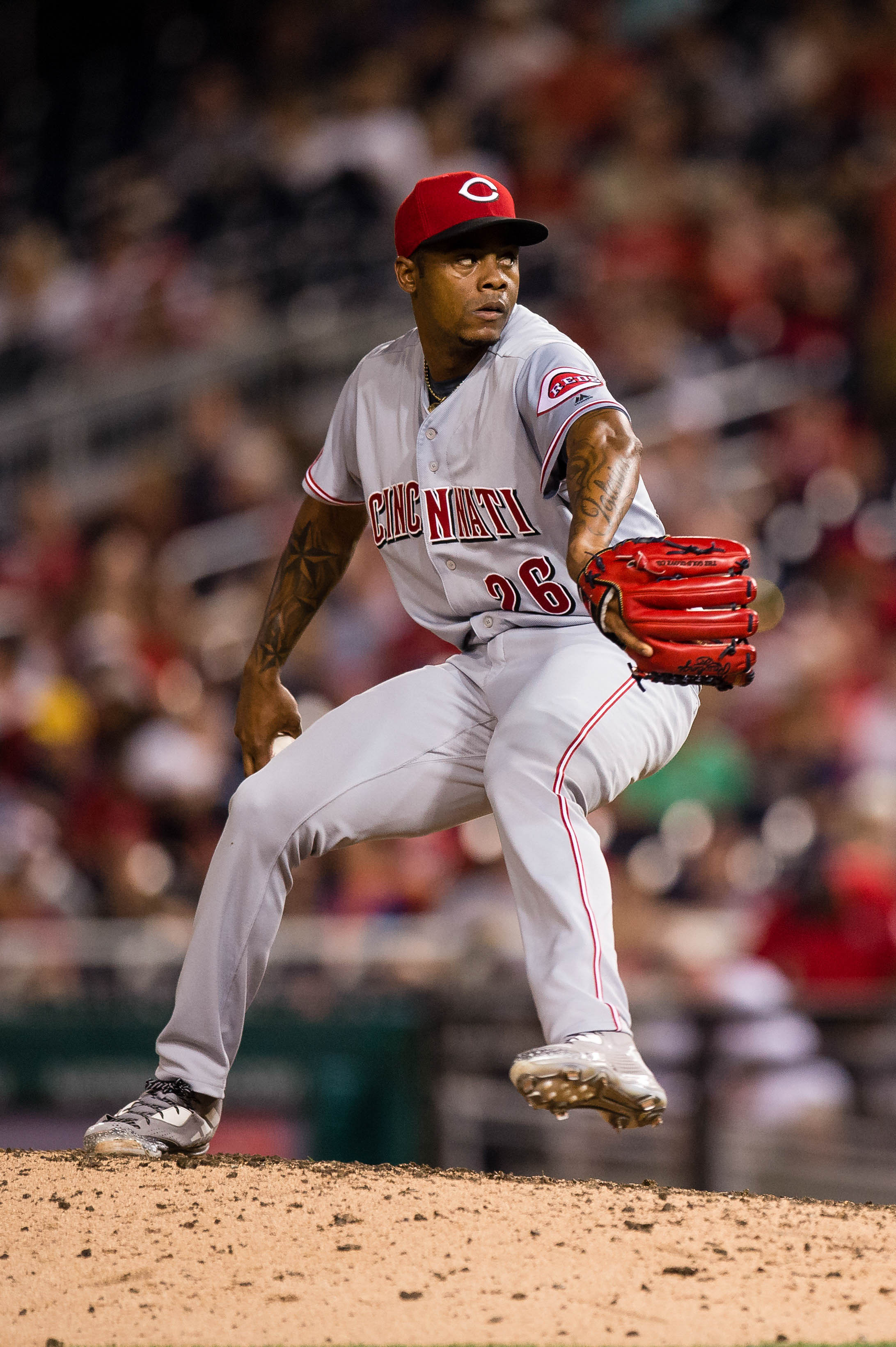
Iglesias has already drawn reported interest from the Twins, who will need to bolster their thin bullpen if they’re going to build on the unexpected success they experienced in 2017. Iglesias would be a fit for a Minnesota club seeking more strikeouts from its pitching staff, but with a farm system that lacks impact talent (per Baseball America), he may be out of its reach.
The Twins are one of a multitude of teams that could inquire about Iglesias (or maybe already have). Indeed, general manager Dick Williams estimated earlier this month that two-thirds of the league would have interest in Iglesias without the Reds even having to shop his services. That seems like a reasonable guess on Williams’ part, given both Iglesias’ superb pitching and his affordability.
Thanks to the seven-year, $27MM contract he signed as a Cuban defector in 2014, Iglesias is under control through the 2020-21 offseason. He’s guaranteed a relatively meager $14.5MM in salaries over the next three years ($4.5MM in 2018, $5MM in both ’19 and ’20), though he could opt into arbitration in each of those offseasons if he believes he’d rake in more money that way. That’s unlikely to happen in 2018, with MLBTR contributor Matt Swartz projecting a $2.8MM arbitration award for Iglesias should he choose that route. Regardless, Iglesias’ contract only adds to his appeal, and it’s a big part of the reason why he’d command a significant haul in a trade.
Teams with good systems that are either in contention or close to it stand out as the best fits for Iglesias in a hypothetical trade, which would seem to rule out rebuilding clubs such as the Tigers, Padres, Marlins, Athletics and White Sox. None of the Blue Jays, Rays, Orioles, Yankees, Red Sox, Royals, Mariners, Angels, Rangers, Indians, Mets, Cubs, Pirates, Diamondbacks or Giants look like ideal fits, either, for various reasons.
Toronto and Tampa Bay have two of the top 10 farms in the league, according to BA, though neither team appears to be in position to strip itself of major young talent to acquire a reliever. The Yankees and Indians seem to possess more than enough quality relievers, meanwhile, and the rest of the aforementioned clubs probably don’t have the youth on hand to put together a suitable package for Iglesias. That leaves us with seven of the Reds’ National League counterparts — the Braves, Phillies, Nationals, Cardinals, Brewers, Rockies and Dodgers — and the World Series champion Astros.
An earnest Iglesias pursuit could be a tad aggressive for either Atlanta or Philadelphia, a pair of clubs that have resided at the bottom of the standings in recent years. Both teams seem to be pushing toward contention, however, and there’s no shortage of capable prospects on hand in either case (even though the Braves just lost a dozen youngsters thanks to ex-GM John Coppolella’s transgressions).
The Nationals figure to rule the NL East for the third straight year in 2018, but they’re not loaded in the bullpen after Ryan Madson and Sean Doolittle. Next season might be the last in D.C. for Bryce Harper, which could lead to some bold, go-for-broke moves from general manager Mike Rizzo this winter. Landing Iglesias would qualify, though it would mean further thinning out a top-heavy system.
The Cardinals look poised to serve as one of the league’s most active teams in the next few months, and the need for relief help is apparent with Trevor Rosenthal out of the organization and Seung-hwan Oh and Juan Nicasio having hit free agency. The division-rival Brewers had the world-class game-ending tandem of Corey Knebel and Josh Hader in 2017, but the latter could shift to the rotation in the near future. Even if he doesn’t, there’s room for another inexpensive, top-notch reliever in Milwaukee, a low-payroll club with the prospects to assemble an Iglesias package.
As for the two NL West clubs, the Rockies and Dodgers, it’s clear there’s a greater need for Iglesias in Colorado. The Rockies surprisingly earned a playoff berth in 2017, in part because of relievers Greg Holland, Jake McGee and Pat Neshek. All three of those hurlers are now free agents, however, so Colorado is going to have to focus on its bullpen this offseason. Enter Iglesias, then? Notably, he’s rather reliant on a slider, a pitch the Rockies’ relievers threw more than 28 other bullpens last season and one that’s capable of surviving in the high altitude at Coors Field.
The pennant-winning Dodgers have arguably the game’s preeminent closer in Kenley Jansen, but their second-best reliever from last season, Brandon Morrow, is currently on the open market. That leaves room for an Iglesias pickup if they’re willing to part with the prospects, as he’s superior to late-inning holdovers such as Pedro Baez, Josh Fields, Luis Avilan and ex-Reds teammate Tony Cingrani.
The Astros managed to knock off the Dodgers in a Fall Classic that lived up its name, though the slump Houston’s bullpen endured nearly foiled its plans. Still, Iglesias would be more of a luxury than a must-have for the Astros, who look to be in fine shape with Ken Giles (playoff struggles notwithstanding), Chris Devenski, Will Harris and Joe Musgrove in the fold. But GM Jeff Luhnow tried to meaningfully improve the Astros’ bullpen over the summer, when he nearly swung a deal for the Orioles’ Zach Britton, and that was before Giles’ disastrous postseason run. With that in mind, perhaps Luhnow will dip into his high-end farm system this offseason to reel in a premier reliever like Iglesias, who would join a bullpen that led the majors in slider usage in 2017.
While the Reds may choose to go forward with Iglesias, it’s inarguable that they have an eminently valuable trade chip on their hands. As someone who saved 28 of 30 opportunities and recorded more than three outs in 17 of 63 appearances last season, Iglesias is the type of flexible late-game weapon who’d be worth more to a playoff-caliber team than a non-contender. With Cincinnati falling into the latter category, Iglesias just might himself in another uniform in 2018.
Photo courtesy of USA Today Sports Images.
Free Agent Profile: Eric Hosmer
At some point in the near future, the major league offseason is going to stop moving at the speed of Albert Pujols and become a compelling parade of transactions. When that happens, there’s a team that’s going to commit a lot of money to free agent first baseman Eric Hosmer, who turned in a well-timed career year in 2017. But the 28-year-old Hosmer’s major league tenure has also come with some unspectacular seasons, leading to plenty of wariness about what he’ll provide on a big-money deal. With the up-and-down Hosmer having racked up a litany of supporters and detractors since debuting with the Royals in 2011, the pact he secures in the coming weeks is sure to polarize.
Strengths/Pros
As mentioned, last season was one to remember for Hosmer, who slashed a personal-best .318/.385/.498 in 671 plate appearances, totaled exactly 25 home runs for the second straight year and posted career-high walk (9.8 percent) and isolated slugging (.179) marks. Only 24 players bettered Hosmer’s wRC+ (135), which placed him among the likes of Cody Bellinger (138), Justin Upton (137) and Anthony Rizzo (133). Hosmer’s hard-to-strike out ways contributed to his success, as he posted a K rate of just 15.5 percent that was right in line with his quality lifetime rate of 16.3. He also logged a swinging-strike rate below 10 percent (9.3) for the sixth time in seven seasons.
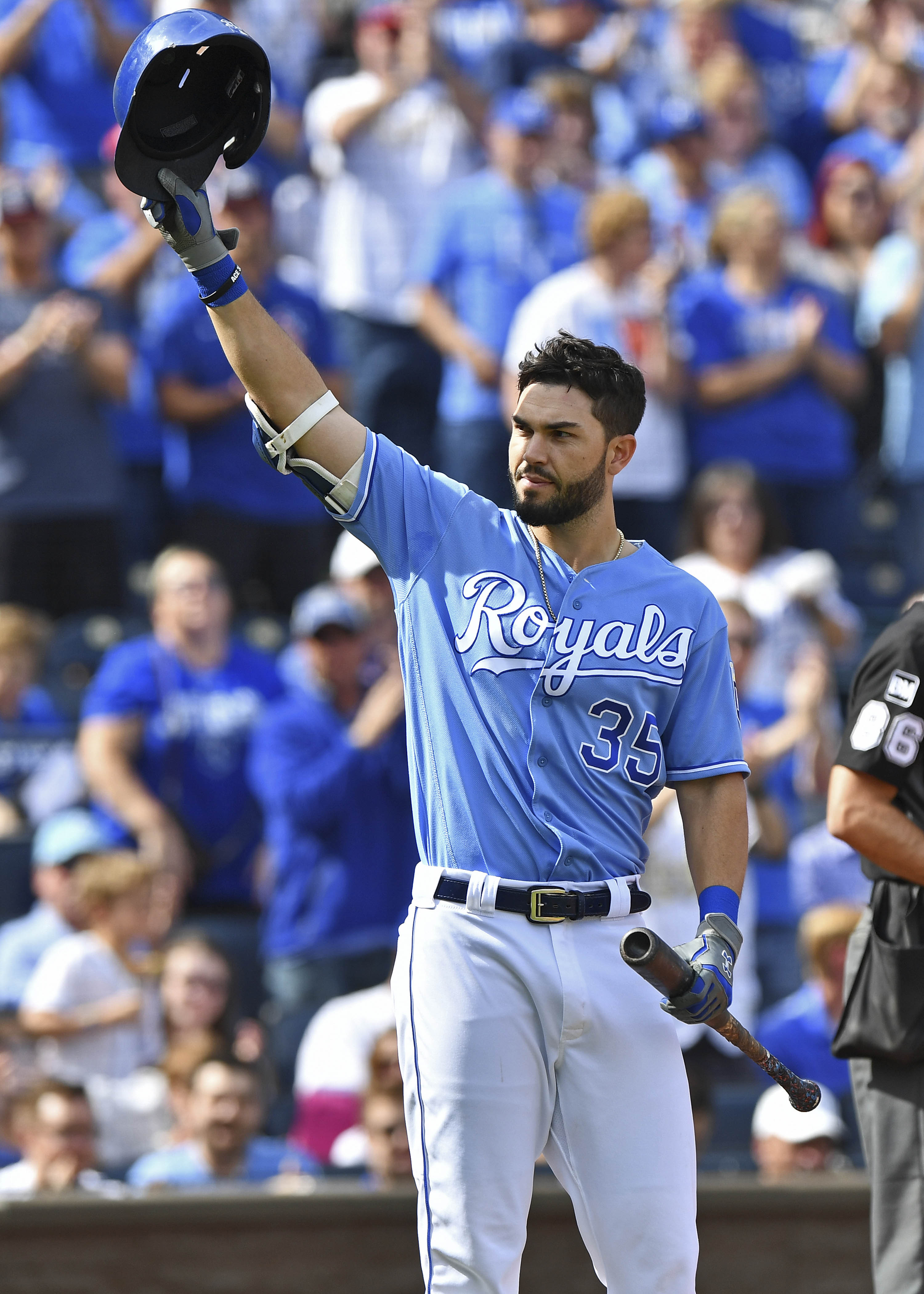
The most recent campaign wasn’t exactly an outlier for Hosmer, who was similarly effective in 2013 and during the Royals’ World Series-winning 2015 campaign. Hosmer accumulated between 3.2 and 4.1 fWAR in all three of those seasons, and that type of output over the next several years would make him well worth a significant payday. At his zenith, Hosmer has been a high-end offensive producer who makes an above-average amount of contact, a skill that’s all the more valuable in today’s strikeout-heavy game.
Not to be overlooked, durability has been a staple of Hosmer’s career. He was one of five players who didn’t miss a game in 2017, and with the exception of his abbreviated rookie year and a 131-game showing in 2014, he has appeared in at least 152 contests in every season.
Weaknesses/Cons
Hosmer’s famed agent, Scott Boras, is trying to sell his client as a $200MM-caliber player who has been ‘‘Playoffville Federal Express.” And yet, he’s only a two-time playoff participant – one who has batted a so-so .276/.333/.398 in 138 postseason PAs. Now, it’s not Hosmer’s fault the Royals haven’t been consistently good, nor is his playoff production worth judging him over. The point is that Boras is likely to have trouble getting anyone to buy that Hosmer is the ultimate winner whose intangibles are worth just as much as his regular-season numbers.
And while Hosmer has been terrific in three full seasons, he has also turned in three clunkers. In those years – 2012, ’14 and ’16 – he was a league-average or worse hitter who notched fWARs ranging from zero to minus-1.7. The left-hander’s offensive inconsistency has come thanks in part to struggles versus southpaws, against whom he has batted .265/.310/.382, and a groundball-heavy batted-ball profile.
Hosmer has finished with one of the majors’ 25 highest grounder rates in all of his seasons, including top five in each of the previous two years, and has typically sat toward the bottom of the launch angle leaderboard, as FanGraphs’ Travis Sawchik wrote earlier this month. The method hardly led to disaster in 2017, evidenced by Hosmer’s production, but a .351 batting average on balls in play had something to do with his excellence. Hosmer’s career BABIP entering the season was .310 – which is about what you’d expect from someone who’s not a burner (nor is he slow, granted) – and his lifetime wRC+ prior to last year’s outburst was an underwhelming 107.
Hosmer was also heavily reliant on BABIP fortune in his other two best seasons, while his production cratered in the years when the number was closer to the league-average mark. The bottom line is that Hosmer neither walks enough nor hits for enough power to make him ultra-valuable when he’s not registering a high average. Both his lifetime walk rate (8.2 percent) and ISO (.155) are mediocre.
The fWAR metric also factors in defense, which is yet another divisive aspect of Hosmer’s game. He’s got plenty of defensive hardware, having won four Gold Gloves (including in 2017), but fielding metrics haven’t always looked kindly on his work. Overall, Hosmer has combined for minus-21 Defensive Runs Saved and a minus-29 Ultimate Zone Rating. Still, it’s unclear how much those numbers will weigh on teams that are interested in signing Hosmer, who’s mostly known for his offense.
Personal
As he told Tim Kurkjian of ESPN in March, the Florida-born Hosmer attributes much of his success to his parents – a father, Mike, who was a longtime firefighter and a mother, Ileana, who escaped Fidel Castro-led Cuba as a 9-year-old and became a nurse. With their support, Hosmer developed into a star prospect whom the Royals selected third overall in the 2008 draft. To secure Hosmer, the Royals handed him a $6MM signing bonus. He has since earned nearly $31MM as a major leaguer, per Baseball-Reference.
Off the field, Hosmer has been very active in the Kansas City community, including with Big Brothers Big Sisters and the Greater Kansas City Firefighters Local 42 Community Assistance organization. He’s a two-time nominee for the Roberto Clemente Award, which is given yearly to the major leaguer who best combines community involvement with sportsmanship and contributions to his team.
Market
Unfortunately for Hosmer, he’s not the only free agent first baseman coming off a nice 2017. Carlos Santana (who has a more consistent track record than Hosmer), Logan Morrison, Yonder Alonso and Lucas Duda are also available in the wake of impressive seasons, while Jose Abreu will emerge as a sought-after target if the White Sox shop him. The amount of decent options available, not to mention the draft pick compensation attached to Hosmer, won’t positively affect his market. It also doesn’t help that the Mariners just acquired Ryon Healy, which seemingly took them out of the running for a first base upgrade, and the Yankees appear content with Greg Bird manning the position. But Boras has shown time and again that he’s capable of wizardry when it comes to selling his clients, and he’ll try to effectively pitch Hosmer to teams like the Red Sox, Cardinals, Angels and Rockies. If no one from that group ends up as Hosmer’s next employer, he could remain with the Royals, who haven’t given up on re-signing the franchise icon, or join a dark horse. The Padres would fall under the “dark horse” category, and they have discussed a Hosmer pursuit.
Expected contract
Last winter was not an ideal one for free agent first basemen – the high-profile duo of Edwin Encarnacion and Mark Trumbo settled for lesser contracts than expected, as did lower-tier types (Chris Carter and Mike Napoli, to name a couple). A repeat of that would mean a disappointing offseason for Hosmer, though he still has youth and Boras on his side. The general feeling, then, is that he’ll reel in a nine-figure contract in the coming months. MLBTR, which projects a six-year, $132MM guarantee, is on the bandwagon.
Photo courtesy of USA Today Sports Images.