
Looking For A Match In An Avisail Garcia Trade
Earlier this week, Mark Polishuk examined the potential trade market for Jose Abreu. Another White Sox player who’s likely to receive calls this offseason is right fielder Avisail Garcia, who is coming off a 4.2 fWAR season and is signed through 2019.
Prior to 2017, Fangraphs rated Garcia below replacement level for his career. But last offseason, the Venezuelan native shed some weight and got off to a hot start in April. He continued to crush the ball throughout the first half en route to his first All-Star selection. Although Garcia had a rough July, he finished the season strong, resulting in a .330/.380/.506 batting line. That performance was good for a 137 wRC+, which tied Justin Upton for the 22nd-best mark in all of baseball.
During a season’s end press conference, White Sox GM Rick Hahn admitted that the team is unlikely to win any time soon. “Even under the most optimistic projections of our ability to contend, certainly ’18 and ’19 don’t include the bulk of the time when we anticipate having a window open to us,” Hahn told reporters. This would make Garcia a prime candidate to move for young talent, especially coming off a career year.
The process of putting an approximate trade value on Garcia, however, is incredibly complicated. Unlike teammate Abreu, the outfielder doesn’t have a long track record of success, and it’s not certain he’ll be able to muster something resembling his 2017 production in future years.
One could point to a change in batted ball profile as an indicator that this past year’s success is sustainable. Garcia improved his hard contact and medium contact rates by small margins over his 2016 figures, in addition to increasing his fly ball rate by four percentage points. The most dramatic change was probably his pull rate; Garcia pulled the ball 25% more often this past season than he did the year before. All told, he ranked 53rd in baseball in hard contact rate (35.3%), and 36th in average exit velocity (90.1 MPH).
Of course, those improvements don’t entirely justify an 83-point jump in batting average on balls in play. His .392 BABIP led all of baseball by a large margin, topping second-place Charlie Blackmon‘s figure by a 21-point margin. That number is likely to regress significantly, which makes it tough to buy Garcia a legitimate .300 hitter.
That being said, Garcia’s contract will certainly have some surplus value in the eyes of rival teams. He may not have the reputation necessary to bring back a truly elite minor-leaguer, but it’s not hard to imagine some team forking over a top-100 or even top-50 prospect in hopes that Garcia can be a 3-win player for them for each of the next two seasons. When looking at potential suitors, it’s probably best to examine those teams for whom he would provide an obvious upgrade even if he were to regress a bit.
The Blue Jays have the resources to swing a deal and a need in the outfield, but might prefer to find another left-handed option. It also might not make much sense to trade for Garcia when Anthony Alford will probably debut at some point in 2017.
The Rays could use a righty-hitting outfielder, and they have a number of prospects in a more appropriate range to headline a deal for Garcia. Making such a trade would be a more realistic alternative to spending money on a right-handed outfielder in free agency, as Tampa Bay obviously isn’t known for their ability to spend.
Although their outfield is fairly crowded already, the Indians saw right-handed-hitting Austin Jackson reach free agency this offseason. With questions surrounding the health of Brandon Guyer, the Tribe would probably be well-served to add another righty option to their outfield group. They won’t be inclined to give up Francisco Mejia or Triston McKenzie, but they do have a number of intriguing upside youngsters; they might be able to lure Garcia away from their division rivals with some combination of those players.
The Rockies seem like a really good match on paper; they’re in need of an outfielder who bats from the right side, and have prospects they could afford to give up if they believed in the new version of Garcia.
The Diamondbacks seem like the best match to me. They have a J.D. Martinez-sized hole to fill in the outfield, and they’re ready to push for contention again in 2018. With Pavin Smith and Jon Duplantier at least a full year away from contributing, Arizona could opt to trade one of them as a cheaper alternative to the nine-figure contract Martinez would require in order to return. Because he’s such a defensive liability, Martinez actually finished 2017 with a lower fWAR than Garcia, who played roughly average defense for Chicago. That’s obviously not to say that Garcia should be the more coveted player, but he’s definitely got his pros as an alternative.
Other options that make some level of sense include the Giants and Rangers. But the conundrum here is that it’s hard to predict exactly how teams will value Garcia, including the White Sox themselves. It’s not often that career sub-replacement outfielders suddenly become All-Stars, so it will be interesting to track rumors surrounding Avi this offseason and see what develops.
Offseason Outlook: Atlanta Braves
MLBTR is publishing Offseason Outlooks for all 30 teams. Click here for the other entries in this series.
After a disappointing season ended in front office calamity, the Braves will attempt to take the next step in their rebuilding process under new baseball leadership.
Guaranteed Contracts
- Freddie Freeman, 1B: $86MM through 2021
- Matt Kemp, OF: $36MM through 2019 (Dodgers, via Padres, paying $7MM of Kemp’s remaining obligations)
- Ender Inciarte, OF: $28.525MM through 2022 (including buyout on 2022 club option)
- Julio Teheran, SP: $20MM through 2019 (including buyout on 2020 club option)
- Nick Markakis, OF: $10.5MM through 2018
- Jim Johnson, RP: $4.5MM through 2018
- Tyler Flowers, C: $4MM through 2018 (exercised club option)
- Kurt Suzuki, C: $3.5MM through 2018
- Rex Brothers, RP: split contract of unknown value
Arbitration-Eligible Players (projections via MLBTR contributor Matt Swartz)
- Matt Adams (5.033) – $4.6MM
- Arodys Vizcaino (4.168) – $3.7MM
- Danny Santana (3.111) – $1.1MM
- Sam Freeman (3.066) – $1.2MM
- Jace Peterson (3.003) – $1.1MM
- Daniel Winkler (3.000) – $800K
- Mike Foltynewicz (2.163) – $2.7MM
- Non-tender candidates: Adams, Santana, Peterson
Free Agents
- R.A. Dickey (declined club option), Jason Motte
[Atlanta Braves Depth Chart | Atlanta Braves Payroll Outlook]
John Hart and John Coppolella provided a wild ride for the Braves’ faithful, engineering a variety of bold moves and stocking the organization with young talent. But rules violations led to the departures of both, along with league discipline that stripped the Braves of some of their most interesting younger prospects and constrained the organization’s ability to add new international talent in the coming seasons.
Former Blue Jays GM and Dodgers executive Alex Anthopoulos was brought in as an experienced hand who can get the organization back on track. But that doesn’t mean we should anticipate a quiet offseason. Though the new top baseball decisionmaker has suggested he’s not looking for a general shake-up, he swung quite a few blockbusters in Toronto and will surely have his own ideas about the roster he’s inheriting.
What remains unclear is just how aggressive the organization will be in seeking to put a winner on the field in 2018. The club enters the offseason with just over $90MM in likely commitments, including anticipated arbitration payouts. Depending upon how high payroll will rise, there could be some room for relatively significant additions. Alternatively, the club might seek to condense some of its upper-level young talent in an effort to land quality, controllable assets to the MLB roster. Entering the second year at SunTrust Park on the heels of the rules scandal, it’s possible to imagine some effort to push into contention. On the other hand, the hit to the team’s future interests may counsel in favor of some caution.
In his first acts in office, Anthopoulos took some low-cost opportunities to shore up the team’s bullpen — a notable area of need. But the pitchers he grabbed from his former organization — Grant Dayton and Josh Ravin — are just the kind of risky maneuvers we might have seen from his predecessors. The former will miss most or all of 2018 while rehabbing from Tommy John surgery while the latter has never held down a steady MLB job. But both have big-time swing-and-miss upside.
Lining up a strong and reliable relief corps, though, may well require more. There’s talent on hand, to be sure. Pitchers such as Arodys Vizcaino, Jose Ramirez, A.J. Minter, Mauricio Cabrera, Daniel Winkler, Luke Jackson, Rex Brothers, Jacob Lindgren, and Jesse Biddle have had some MLB success and/or shown impressive arsenals, not unlike Dayton and Ravin. But none of these pitchers has yet strung together multiple, successful MLB campaigns and several come with health concerns. Veterans Jim Johnson and Sam Freeman are in the picture, too, but there’s room here for further tinkering.
It’s not an altogether different picture in the rotation, which no longer includes three veteran arms — R.A. Dickey, Bartolo Colon, and Jaime Garcia — that opened with the club last year. Julio Teheran and Mike Foltynewicz are the two senior members of the staff at present; both will be looking to improve after producing middling results in 2017. They could be joined by a trio young lefties who are fresh off of their MLB debuts. Sean Newcomb still needs to hone his command to reach his ceiling, but turned in 100 solid frames. Luiz Gohara showed off his talent in five starts, posting 9.5 K/9 against 2.5 BB/9 after mostly dominating in his first taste of the upper minors in an eventful campaign. And Max Fried also got a brief run in the bigs, though his overall effort on the year suggests some further seasoning may be in order.
Otherwise, the Braves have some back-end right-handed arms available in Lucas Sims, Aaron Blair, and Matt Wisler, all of whom have struggled in their early MLB time. More exciting arms — Mike Soroka and Kolby Allard — aren’t far off after turning in strong years at Double-A, but don’t currently hold 40-man roster spots.
With that wide array of options, the Braves could actually focus on paring back some excess depth over the offseason and into the camp, though there’s also some flexibility since all of those candidates can also still be optioned. Competing the open spots between this lengthy list of young pitchers is a reasonable approach. Some may also conceivably turn into bullpen candidates instead.
At the same time, the Braves will need to strongly consider pursuing upgrades if they truly hope to put a legitimate contender on the field for the coming season. There’s some merit to considering a solid veteran type to hold down some innings at the back of the rotation, though the team passed up on a chance to retain Dickey for the purpose (though he may have been headed for retirement anyway) and it is also arguable that a more significant addition would be warranted. It’s possible to imagine the Braves dabbling in the upper levels of the free agent market, perhaps going after a hurler such as Alex Cobb or finally landing the unicorn (top-end controllable starter) that the prior administration seemingly pursued for years. There’s a long slate of possibilities at a lower price point, of course, and the Braves might also conceivably take some lower-priced risks, with righty Chris Tillman representing the most intriguing bounceback arm available to the high bidder.
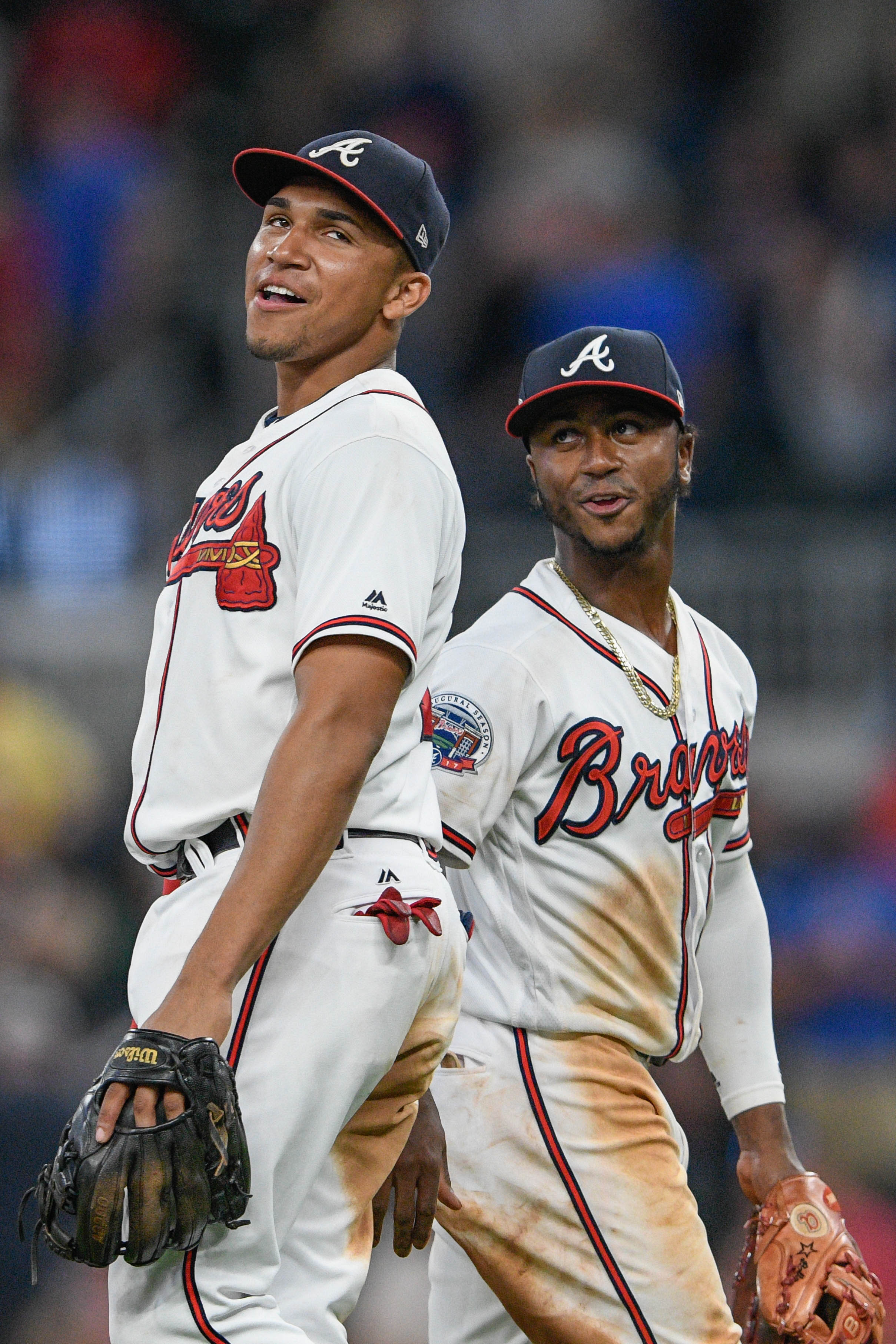
There’s less to be done on the position-player side, though that shouldn’t be read as a suggestion that there isn’t any room for improvement. In addition to top star Freddie Freeman at first, the club is set up the middle with Ender Inciarte in center; Dansby Swanson, Ozzie Albies, and Johan Camargo in the middle infield; and Tyler Flowers and Kurt Suzuki behind the plate. That’s far from the best group of core position player talent in baseball, particularly given that the young infielders still are not yet fully established and the catchers are only short-term assets, but it gives the organization a base to work from this winter.
The top priority, in all likelihood, will be improving at third base. Adonis Garcia has had stretches of competence, but he’s a 32-year-old player with a .267/.300/.414 slash through 944 MLB plate appearances. Former top pick Rio Ruiz may ultimately deserve a longer look, but he hit just .193/.283/.307 in his 173 trips to the plate at the game’s highest level last year and has not exactly dominated the opposition over two full seasons at Triple-A. Around this time last year, Coppolella gave some reason to believe Travis Demeritte might be the future at the hot corner, but he took a step back in 2017 and was not protected from the Rule 5 draft. (Dustin Peterson was also left open to being claimed in the draft.) The current prospect of note is Austin Riley, who knocked around Double-A pitching after a tepid run at the High-A level. But he’s still just twenty years of age and is far from a sure thing.
While the Braves could conceivably allow Camargo to play at third while utilizing Jace Peterson as a utility infielder, that would be an awfully risky way of constructing the infield for an organization that intends to improve its on-field product. Camargo turned heads last year, but benefited from a .364 BABIP and walked at only a 4.7% clip. Swanson struggled badly after an impressive MLB debut in 2016. That also serves as a reminder not to forget that Albies is still just twenty years old and may yet have his own growing pains to experience. The better bet would be to bring in a veteran to shore things up at the hot corner for at least a season or two. MLBTR guessed that the Braves could land top free agent Mike Moustakas, who lacks an obvious landing spot, but that was and remains a speculative connection. The Braves could look at other established players on shorter-term deals, potentially including free agents ranging from Todd Frazier to Yunel Escobar or potential trade targets that could include Yangervis Solarte and Nick Castellanos. At this point, frankly, it’s hard to guess what kind of direction the pursuit might take odds are, though, that there’ll be a healthy dose of opportunism guiding the effort.
The corner outfield is another area of some intrigue (though others could open based upon other moves). Atlanta could rely again upon veterans Matt Kemp and Nick Markakis while supplementing them with a reserve or two, possibly including Lane Adams, who showed well in his first real MLB time in 2017. But the organization would probably rather upgrade over those two — neither of whom profiles as a viable everyday player at this stage of their careers — and begin preparing for a future with younger options. Shedding some salary would be preferable, too. Markakis would make for a useful platoon or reserve outfielder for a contender, though he could also remain an appealing piece in Atlanta, while Kemp could fit on an American League team in search of pop. But dealing either will mean keeping some salary, particularly for the latter.
There are some similarities between the corner outfield and the third-base situations, with one major difference. Unlike at the hot corner, there is a clear heir apparent on hand to step into an outfield spot. Top prospect Ronald Acuna is likely ready for a big league test after blowing through the minors in 2017, though the team will in all probability at least start him in the minors to capture an additional season of club control. While pursuing other pieces in the corner outfield could still make sense, particularly if a truly appealing opportunity presents itself, one spot will undoubtedly be reserved for Acuna — who could be an everyday presence for the majority of 2018 and years beyond.
That leaves one interesting, unaddressed piece of the Braves’ offseason puzzle: Matt Adams. The first baseman was a sensation upon arriving in a midseason swap, but cooled down the stretch and also missed time with injury. The Braves dabbled with positional changes to accommodate his bat in the lineup — trying Freeman at third and Adams in left — but those seem likely to be left in the rearview mirror. Now, Adams looks to be an ill-fitting piece for a team whose best player is a young, left-handed-hitting first baseman. While it’s conceivable that he’d draw interest in trade, the 29-year-old is best limited to facing right-handed pitching and occupying first base or DH. Defensively limited, good-but-not-great hitters aren’t in short supply these days, so it’s not likely that the Atlanta organization will reap a big return — and it’s possible the team will simply non-tender Adams instead.
Ultimately, despite the loss of some notable prospect capital, Anthopoulos will have quite a few pieces and a bit of payroll flexibility to work with. The wild cards here are upper management’s views on the contention timeline and the new front office’s feelings about the club’s young talent. There’s a conceivable world where the Braves end up largely maintaining their current roster for the 2018 season, with a few tweaks on the margins. There’s another where Atlanta engages in quite a bit more swapping and acquiring of assets, reflecting both Anthopoulos’s preferences and perhaps also a determination that it’s time to move toward competition. And there’s a wide gray area in between, with plenty of stopping points along the way. What was always going to be a fascinating offseason to watch is all the more interesting after the curveball that kicked it off.
Photo courtesy of USA Today Sports Images.
Looking For A Match In A Jose Abreu Trade
With the White Sox continuing their rebuild, it only makes sense that the team is open to the idea of trading slugger Jose Abreu. The first baseman is projected by MLBTR to earn a hefty $17.9MM in arbitration this winter, and he’ll have another big price tag due next winter when he makes his third and final trip through the arb process before hitting free agency.
Even at the cost of roughly $37MM over the next two seasons, however, it can certainly be argued that Abreu is well worth the money. He batted .304/.354/.552 with 33 homers over 675 plate appearances last season, with a 138 wRC+ that ranked 19th among all qualified hitters. While Abreu has done nothing but mash since coming to MLB in 2014, his career low strikeout and swinging-strike totals from last year and his career-best 40.5% hard-hit ball rate indicate that he may be becoming even more polished at the plate as he approaches his age-31 season. Between his big bat, his passable defensive numbers at first base and his well-respected clubhouse presence, Abreu would be an upgrade to any lineup in baseball.
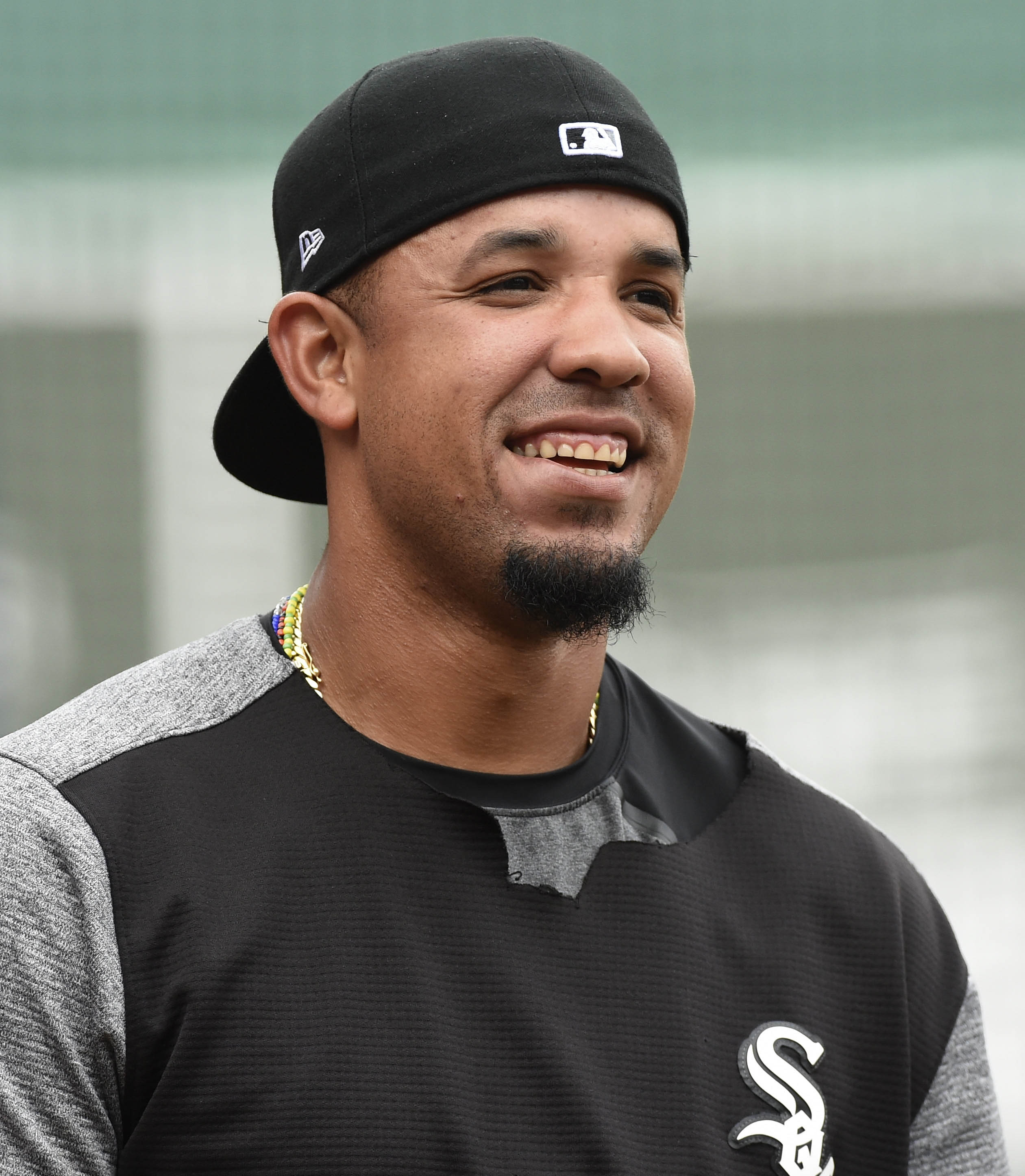 With this resume in mind, Abreu represents an interesting alternative within a very crowded first base market on both the free agent and trade front this winter. A team might prefer Abreu’s two years of control to splurging on a longer-term and more expensive commitment to Eric Hosmer or Carlos Santana, while Abreu is a clear step up production-wise from second-tier first base free agents like Logan Morrison or Yonder Alonso. Abreu also comes at just a fraction of the cost of Giancarlo Stanton for suitors that aren’t willing to meet the Marlins’ high (and maybe unrealistic) asking price of both prospects and salary absorption.
What the crowded market does mean, however, is that it may be some weeks or even months before Abreu’s fate is determined. Teams may not look for second-choice players until Stanton or Shohei Ohtani (who could be at least a part-time DH for an AL team) have their new teams established. White Sox GM Rick Hahn has shown that he is only willing to move his top assets (like Chris Sale, Adam Eaton, or Jose Quintana) for the highest of trade returns, and in Quintana’s case, Hahn was willing to wait until the season had begun to pull the trigger on a deal. It could be that the Sox hang onto Abreu until midseason when the first base market is less loaded.
Chicago will also be shopping Avisail Garcia this winter, who is four years younger and considerably less expensive than Abreu, but has the same amount of team control and has a much less-established track record of big league success. It isn’t out of the question that the Sox look to move both players in one blockbuster, though for now, let’s just focus on potential suitors for Abreu himself…
Angels: A left-handed bat would be a better fit for the righty-heavy Angels lineup, though the team would hardly complain about adding a hitter of Abreu’s caliber. Both corner infield spots are areas of need for the Halos, and Abreu’s addition would shift Luis Valbuena over to third base and turn C.J. Cron into a trade or even a non-tender candidate. It isn’t clear, however, if the Angels’ thin farm system has enough interesting names to get Chicago’s attention.
Astros: Adding Abreu to this already-stacked lineup would just about be unfair, but it looks like Evan Gattis is Houston’s answer for the DH spot next season now that Carlos Beltran has retired. The World Series champions probably won’t be in the mix for Abreu, though it’s worth noting that the White Sox are quite familiar with the Astros’ farm system, after acquiring Tyler Clippard last summer and extensively discussing Quintana before the southpaw was eventually dealt to the Cubs. Houston was also one of the teams interested in Abreu when he first came from Cuba to the big leagues.
Brewers: A bit of an outside-the-box contender for Abreu since Eric Thames is already at first base, plus Thames is owed only $12MM through 2019 (which includes a $1MM buyout of a $7.5MM club option for 2020). Thames is actually a couple of months older than Abreu, however, and isn’t as nearly as proven a hitter; even in Thames’ breakout 2017 campaign, he was very hot-and-cold in terms of production thanks to a big strikeout rate. Milwaukee is reportedly open to spending on pitching this winter, so you wonder if a team that is prepared to make a big move wouldn’t also be open to an offensive upgrade. Thames could be shipped to the White Sox as part of the Abreu trade package, giving the Sox another trade chip for the deadline.
Cardinals: Known to be looking for a difference-making bat this winter, the Cards have been exploring numerous free agent and trade options, most notably being cited as one of Stanton’s top suitors. A trade indeed seems like the best course of action given the Cards’ surplus of infielders and (particularly) outfielders on the roster, so St. Louis seems like a logical partner for the White Sox. The Cardinals have enough depth to pay a premium for Abreu and then still potentially have enough players or especially payroll space to swing another big move for an outfielder or for pitching.
Indians: Abreu would make a fine replacement at first base if Santana leaves in free agency, and Abreu’s short-term contract fits into the Tribe’s contention window. The two division rivals may not be keen on supplying the other with either a top slugger or good prospects, however — Cleveland and Chicago have only worked out one trade with each other since 1994.
Mets: Injuries, platoon candidates, and unproven prospects have left the Mets’ roster with enough uncertainty that they’ve been linked to such varied targets as Santana, Lorenzo Cain, and Ian Kinsler. Abreu would be a bigger add than Kinsler and would cost less money than Santana or Cain, though it remains to be seen if the Mets would have enough prospects to entice the White Sox. Dominic Smith seems like a likely candidate to be offered in an Abreu trade package, though the Sox aren’t likely to be too enamored by a player who may have fallen out of favor with the Mets.
Padres: You may wonder why they’re on this list given the presence of Wil Myers, but San Diego has reportedly given some consideration to moving Myers to the corner outfield and pursuing Hosmer. Given that the Padres are themselves rebuilding and Hosmer would be seen as a long-term building block for when the team is competitive again, Abreu’s two years of control likely makes the Friars an extreme long shot as trade partners for the White Sox.
Phillies: Another far-fetched trade candidate on paper, though since Philadelphia has been checking in on Carlos Santana, the Phils probably can’t be entirely ruled out as contenders for Abreu. The Phillies have also been widely seen as planning to spend big in the 2018-19 free agent market, so if the team lands a superstar or two from that class, they could be planning to contend by 2019, so Abreu’s short-term control could be a fit (with Rhys Hoskins perhaps able to move back to first base for the 2020 season).
Rangers: Another team that was in on Abreu back in 2013, Texas is a bit of a tricky fit now. Abreu’s addition would result in Joey Gallo and Nomar Mazara becoming the regular corner outfielders, Shin-Soo Choo becoming the regular DH and top prospect Willie Calhoun fighting to find at-bats. That is, unless, the Rangers made the bold move of offering Calhoun or even Mazara to Chicago as the headliner of an Abreu trade package. Pitching is the more pressing need for the Rangers this offseason but if they can’t add enough big arms, they could do the opposite route and just try to load up on offense.
Red Sox: Abreu would instantly solve Boston’s power outage from last season and his short contract means that the Sox would still have an opening for Sam Travis or Rafael Devers at first in the relatively near future. Dave Dombrowski already swung one blockbuster with Hahn last winter for Sale, and it wouldn’t be a shock if the two sides again collaborated. Jackie Bradley Jr. might be a person of interest in such a deal, as Chicago was interested in Bradley during past trade talks.
Rockies: As noted by Jeff Todd in his recent Offseason Outlook piece on Colorado’s winter plans, Abreu has been on the Rockies’ radar in the past and would be a very solid fit for a team that has a big hole at first base. Abreu’s presence would move Ian Desmond into a corner outfield spot (maybe a better fit for Desmond anyway) and thus potentially block Raimel Tapia in the outfield and Ryan McMahon at first base. Either youngster could conceivably go to the White Sox as part of an Abreu deal, however.
Royals: This scenario would only take place if Hosmer left but K.C. re-signed one of its other big free agents (Cain and Mike Moustakas). If all three left, the Royals are likely to embark on a rebuild rather than make a splashy trade for Abreu.
Twins: Miguel Sano will reportedly be ready by early January after undergoing leg surgery in early November, though given the nature of the procedure (Sano is having a titanium rod inserted in his left leg), one has to wonder if Sano will spend more time at DH than at third base next season. If this is the case, Minnesota isn’t a fit for Abreu since Joe Mauer is still locked in at first base. If Sano is healthy enough to stay at the hot corner, the Twins could look into an Abreu trade, though they’re another team that has been more focused on pitching for their offseason shopping.
Photo courtesy of USA Today Sports Images
Poll: Who Will Be The First Top-10 Free Agent To Sign?
There hasn’t been much action on the free agent front as we approach the end of November, and we’re still a couple of weeks away from the epicenter of offseason activity known as the Winter Meetings. Still, it isn’t uncommon for one big signing to trigger a plethora of other moves, so now it may just be a question of figuring out which major 2017-18 free agent will set off the offseason’s business by being the first to land a new contract.
Looking at MLBTR’s list of the top 50 free agents, of course, one very big name has already decided on his 2018 team — Masahiro Tanaka, the #5 free agent on the list, decided not to opt out of his deal with the Yankees. (Justin Upton also reached his new five-year agreement with the Angels before our list was published, otherwise he would’ve certainly had a high placement.) With Tanaka off the board, the top ten players on MLBTR’s list are, from 1-10: Yu Darvish, J.D. Martinez, Eric Hosmer, Jake Arrieta, Mike Moustakas, Lorenzo Cain, Wade Davis, Lance Lynn, Greg Holland, and Alex Cobb.
Beyond how each player personally chooses to approach the market, there are several other big-picture factors that will impact how quickly any of these free agents may find another contract. Shohei Ohtani‘s free agency and the Giancarlo Stanton trade talks could hold both the pitching and hitting markets at bay until either situation is resolved. Eight of the ten players (all except Darvish and Martinez) have draft pick compensation tied to their services via the qualifying offer. Martinez, Hosmer, Arrieta, Moustakas, and Holland are all represented by Scott Boras, who is known for waiting deep into the offseason for finding a suitable contract for his clients.
There’s still a lot of uncertainty in this offseason’s market…but hey, that just makes predicting all the more fun! Who do you think will be the first of the top 10 free agents to ink a new deal? (Poll link for App users)
Which Of These Free Agents Will Be The First To Sign?
-
Alex Cobb 20% (3,789)
-
J.D. Martinez 16% (3,000)
-
Lorenzo Cain 10% (2,009)
-
Jake Arrieta 9% (1,793)
-
Yu Darvish 9% (1,708)
-
Eric Hosmer 9% (1,706)
-
Wade Davis 8% (1,604)
-
Lance Lynn 8% (1,563)
-
Mike Moustakas 6% (1,140)
-
Greg Holland 5% (1,033)
Total votes: 19,345
Free Agent Faceoff: Lance Lynn Vs. Alex Cobb
When it comes to the starting pitching market this offseason, Lance Lynn and Alex Cobb will hold some of the widest appeal of any names on the market. Both right-handers would be an upgrade to virtually any rotation in the Majors, and both figure to be more affordable to interested parties than top-of-the-market names like Yu Darvish and Jake Arrieta. Each enjoyed a solid 2017 campaign in his first full season back from Tommy John surgery, though neither has fully regained the form he showed prior to that operation. Both players rejected one-year, $17.4MM qualifying offers, so both will require draft-pick forfeiture to sign.
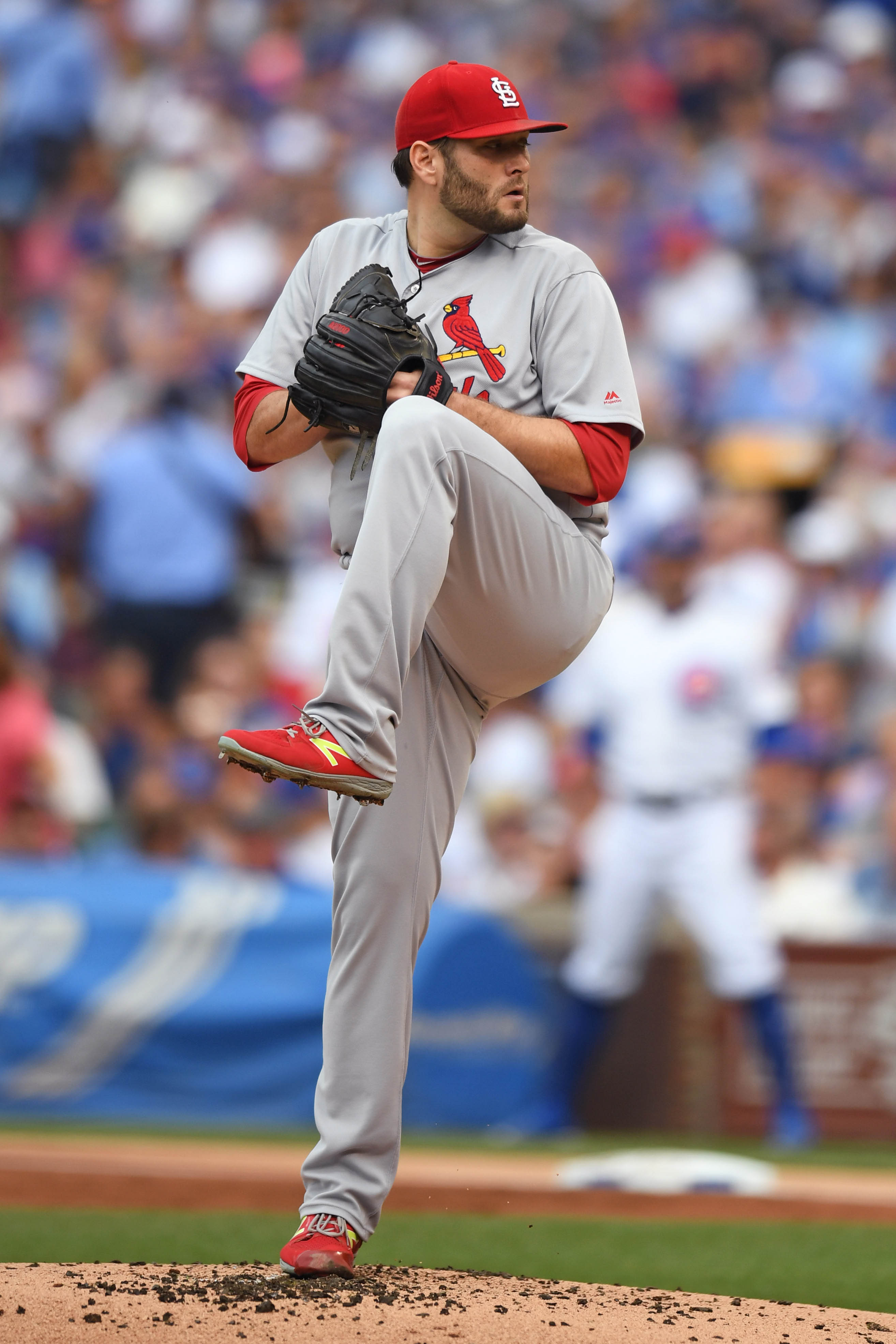
Lynn, 31 next May, is the older of the two but has also been more durable throughout his career. While he missed all of 2016 due to Tommy John surgery, he’s averaged 31.8 starts and 189 innings per season across his past five healthy campaigns — dating back to the 2012 season. The 3.43 ERA that Lynn turned in this past season bears a striking resemblance to the 3.39 mark he’s compiled in 943 innings from 2012-17.
Looking beyond Lynn’s ERA, though, there were plenty more red flags in 2017 than he had in his peak seasons. Lynn’s velocity, strikeout rate and walk rate are all worse than the marks he posted in his best seasons, and a huge spike in his homer-to-flyball rate (14.2 percent) led to a career-worst 1.30 HR/9 mark. Of course, home runs were up leaguewide, with many believing an altered composition of the baseball being a primary factor in that trend. Lynn’s secondary numbers are far less encouraging than his ERA, but he did take the ball 33 times and log 186 1/3 innings — largely reestablishing himself as a reliable source of innings.
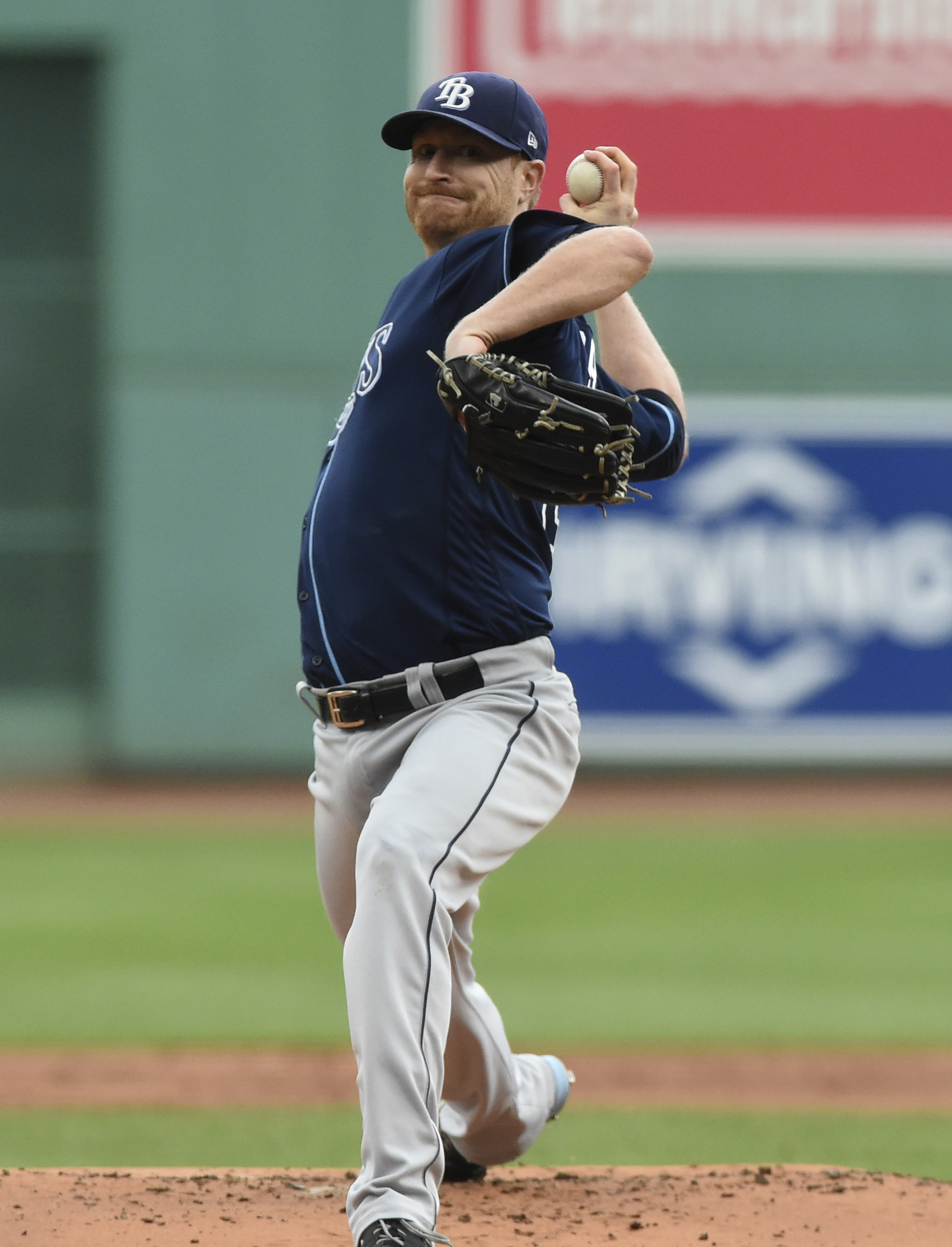
Cobb, on the other hand, will pitch the 2018 season at the age of 30. Unlike Lynn, durability has never been a strong point in his favor and could, in fact, be the single largest red flag attached to his free agency. Cobb tossed 179 1/3 innings in 2017, and that marked a career-high. We’ve never seen a free-agent starter without a 180-inning season under his belt score a four-year commitment on the open market, but there’s a belief that Cobb could set a new precedent in that regard.
In those 179 1/3 innings, Cobb turned in a 3.66 ERA but did so with a pedestrian K/9 mark of 6.4, albeit against a strong 2.2 BB/9 mark and with an above-average 47.8 percent ground-ball rate. Interested teams will no doubt be heartened by the fact that Cobb’s K/BB numbers overwhelmingly trended in the right direction down the stretch, as he posted a 38-to-8 K/BB ratio with a 2.82 ERA and a 3.01 xFIP in his final 38 1/3 innings. That bears a strong resemblance to Cobb’s peak, when he turned in a 2.82 ERA with 8.2 K/9 against 2.7 BB/9 in 309 2/3 frames. Of course, that performance also came way back in 2013-14, and until his final seven starts of the season, he hadn’t approximated that form post-surgery.
The markets for Cobb and Lynn seem almost certain to overlap, as they’ll be widely regarded as the Nos. 3 and 4 starting pitchers on the open market (excluding Shohei Ohtani, whose unique market can’t exactly be compared to that of standard Major League free agents). Teams will weigh Lynn’s considerably greater track record of durability against Cobb’s strong finish and superior performance leading up to Tommy John surgery. Either of the two could slot comfortably into the middle of most big league rotations or, at worst, serve as a strong fourth or fifth starter in a more premium rotation.
Obviously, this is a high-level look and there are many other considerations to factor into the decision. That said, let’s see where MLBTR readers stand on the issue (link to poll for MLBTR app users)…
Which free-agent starter would you rather sign?
-
Alex Cobb 58% (5,301)
-
Lance Lynn 42% (3,794)
Total votes: 9,095
Photos courtesy of USA Today Sports Images.
Looking For A Match In An Ian Kinsler Trade
The offseason is off to a sluggish start, due perhaps to the ongoing trade talks involving Marlins star Giancarlo Stanton and the as-yet unresolved posting situation of Shohei Ohtani. Resolution on both matters may well come before long. In the meantime, we’re left to wonder which dominoes might be first to be knocked over thereafter — or, perhaps, whether some other transactions could jumpstart the action.
One player who we have consistently labeled a clear trade candidate is Ian Kinsler of the Tigers. He’s a quality veteran with one year left on his contract who’s currently employed by an organization that’s clearly rebuilding. And Detroit’s top baseball executive, Al Avila, has hardly made a secret of the club’s interest in taking offers.
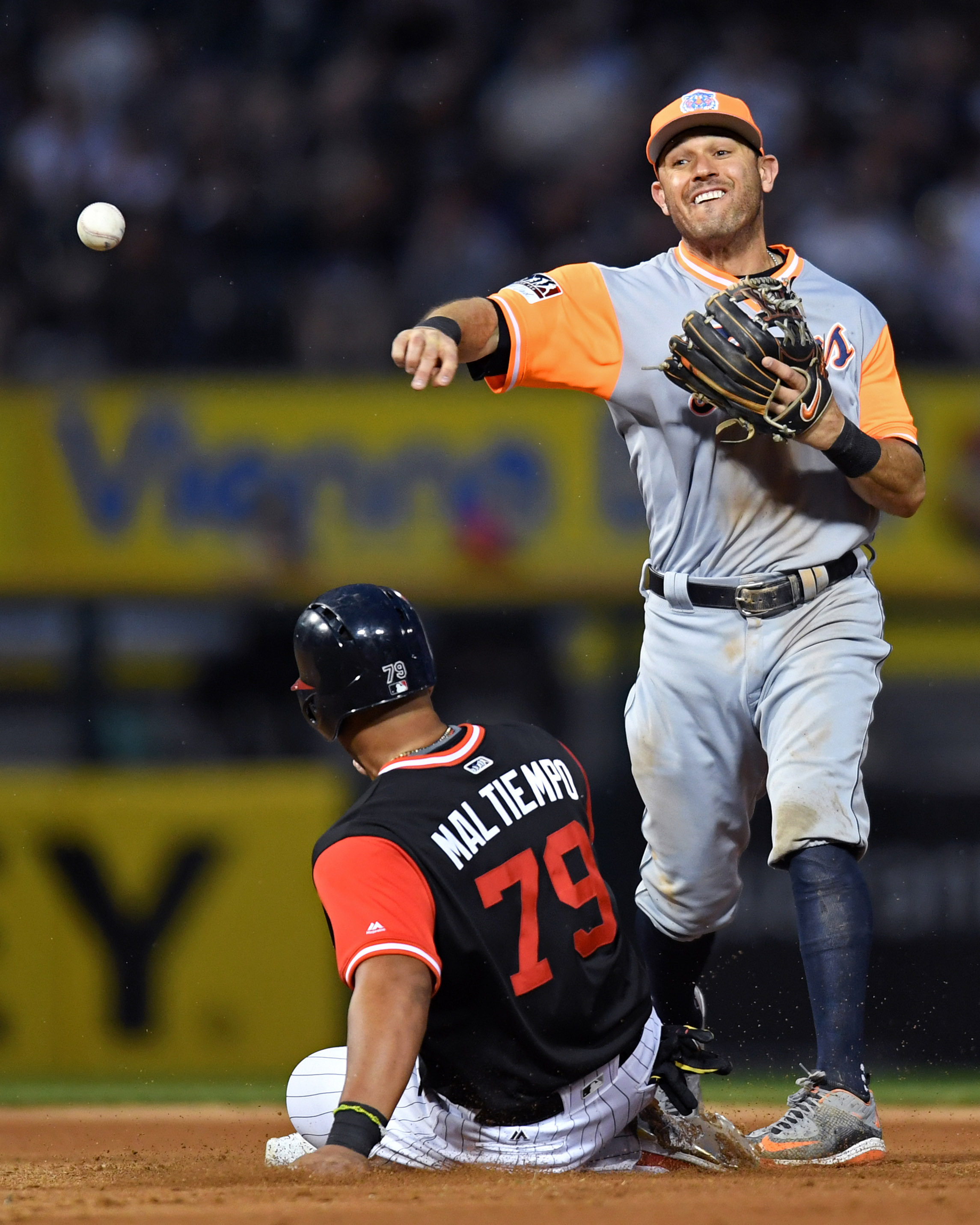
With that in mind, it’s worth analyzing his market. Let’s start by sketching the asset under question. Kinsler is set to earn a manageable $11MM salary this year before reaching the open market. Though he’s 35 years of age and hit just .236/.313/.412 last year, Kinsler made plenty of hard contact and was likely somewhat unfortunate to carry a .244 batting average on balls in play. He also produced at a much loftier .288/.348/.484 clip the season prior and has a history of solidly above-average offensive work. Perhaps even more importantly, Kinsler has long rated as a superior defender and has been exceptionally durable, reaching 600 plate appearances every year since 2011.
There are other players available at second base, which will have an impact. On the trade side, Dee Gordon of the Marlins is much younger and comes at a similar annual cost over a three-year term, while the Phillies could be willing to deal the youthful and inexpensive Cesar Hernandez. Neil Walker is the top available free agent, with Howie Kendrick and Brandon Phillips among the other potential alternatives. Still, no other player carries quite the profile of Kinsler, whose reliability and palatable contract hold obvious appeal.
There are a few other considerations that could enter the picture. Per MLB.com’s Jon Morosi, via Twitter, at least some organizations have considered acquiring Kinsler with the intention of utilizing him at third base. That’s a bit of a surprise, given that Kinsler is about as entrenched as any player at his usual position and has no more than nominal experience at third as a professional. Even if he can handle the hot corner, the added uncertainty would seem to reduce some of the very features that make Kinsler such an appealing target in the first place. It also may tie into his limited no-trade rights, which allow him to block deals to ten teams (though we don’t know which for the current season). While we don’t know for certain just what considerations will drive Kinsler’s views, it stands to reason that he’d be open to moving to a contending team at this stage.
With all that out of the way … where might Kinsler represent a match?
Angels — The Halos are already rumored to be looking at Kinsler, among other options. The organization has a clear need at second, possesses the payroll space and the competitive desire for this sort of player, and recently dealt for Justin Upton from Detroit. As fits go, this is about as clean as it gets. Of course, every other second baseman or team with one to trade will also be engaged with L.A. GM Billy Eppler, and he’ll likely shop around for value.
Blue Jays — While the Jays are in need up the middle, it’s not obvious from the outside that Kinser would really make the most sense. On the one hand, if Kinsler is willing to move around a bit, he’d look to be a solid match for the club’s stated desire in a utility player that might see near-regular action. On the other, he may or may not embrace that sort of role — which would be of particular relevance if the Jays are on Kinsler’s no-trade list. Indeed, Kinsler has reportedly nixed a move to Toronto previousy. It’s conceivable that the Jays could get creative, perhaps using Devon Travis as the utility-oriented player and installing Kinsler full-time at second, but that’s entering the realm of messy speculation.
Braves — Atanta is one of the organizations that could in theory view Kinsler as an option at third. He’d represent a solid veteran presence, plug a need (if he and the team are comfortable with making that position change), and avoid clogging the future balance sheet or blocking prospect Austin Riley in the future. At the same time, new GM Alex Anthopoulos is just settling in and it’s not yet entirely clear how he’ll proceed this winter. File the Braves under “not inconceivable but not outwardly likely.”
Brewers — There was some rumored interest from Milwaukee in Kinsler at the trade deadline and the Brewers haven’t yet firmed things up at second. There are options on hand, as the club struck a new contract with Eric Sogard and still has Jonathan Villar. And Milwaukee might like the idea of pursuing Neil Walker, who was the player ultimately added over the summer. Generally, though, acquiring Kinsler might allow the Brewers to boost their chances at competition without a huge outlay or long-term commitment, so they seem to be one of the more promising fits.
Giants — Third base is open; as above, then, this is a speculative fit in that regard. San Francisco has reportedly also at least engaged in some thought of trade permutations that might involve current second bagger Joe Panik, though at present it hardly seems likely that he’ll end up moving. Particularly if the team ends up breaking the bank to add Giancarlo Stanton or otherwise makes significant moves toward a rebound, Kinsler could make for a good value that wouldn’t compound the team’s concerns about adding aging veterans on lengthy contracts.
Mets — We’ve seen the Mets connected to Kinsler and the team is definitely weighing its options at second, so this makes immediate sense on paper. New York is believed to be working with some payroll restraints, though, so other moves could foreclose Kinsler as a plausible option. On the other hand, the team may like the idea of gaining a boost without adding too much salary, so it’s also imaginable that it would pursue Kinsler and then try to find cheaper upgrades in its other areas of need. (There are quite a few options in the first base/corner outfield market that the team is also exploring.)
Royals — Whit Merrifield established himself at second, but perhaps he or Kinsler could be options at third. The Royals will be walking a fine line this winter, weighing the risks of a big payroll with the desire to sustain competitiveness and perhaps bring back one or two of its own star free agents. It’s not impossible to imagine Kinsler fitting in if the team manages to land Eric Hosmer and wants to install a solid veteran without tacking onto the future balance sheets, though it’s an awfully tight fit at first glance.
That really represents the field of the most likely suitors, as things stand. Roster changes can always shake things up, of course, and organizations such as the Yankees and Cardinals could in theory end up seeing Kinsler as an option at second or third if they first line up corresponding moves involving existing players. (At least some chatter has suggested those teams are considering infield moves, though it’s exceedingly speculative at present.) Somewhat similarly, the Dodgers reputedly had interest in Kinsler in the past, but they picked up their option over Logan Forsythe and it’s tough to imagine both fitting sensibly on that roster. There’s a match in terms of potential need for some other clubs — the Pirates, Diamondbacks, and Rays, for example — but the payroll limitations at play in those situations make it difficult to imagine without several intervening developments first coming to pass.
All told, then, the clearest matches on paper exist with three organizations. The Angels, Brewers, and Mets could all simply install Kinsler as an everyday option at second without significantly altering other aspects of their roster construction. But other transactions could create new fits, and it’s also far too soon to rule out other clubs getting a bit creative.
Photo courtesy of USA Today Sports Images.
Poll: Will The Rays Trade Chris Archer?
Even though Rays general manager Erik Neander suggested last week that the team plans to keep its top trade chip, Chris Archer, the right-hander still figures to frequent the rumor mill this offseason. On Saturday, for instance, Marc Topkin of the Tampa Bay Times reported that the Rays may well listen to offers on their priciest veterans, including Archer, this winter. The 29-year-old Archer certainly isn’t expensive – he’s controllable through 2021 at just $33.75MM – but removing his team-friendly contract would nonetheless help the Rays in their quest to cut payroll. Plus, with Boston and New York looking primed to serve as major American League East obstacles in the coming years, it could behoove the Rays to embark on a rebuild in the wake of four straight sub-.500 seasons and try to return to relevance down the road.
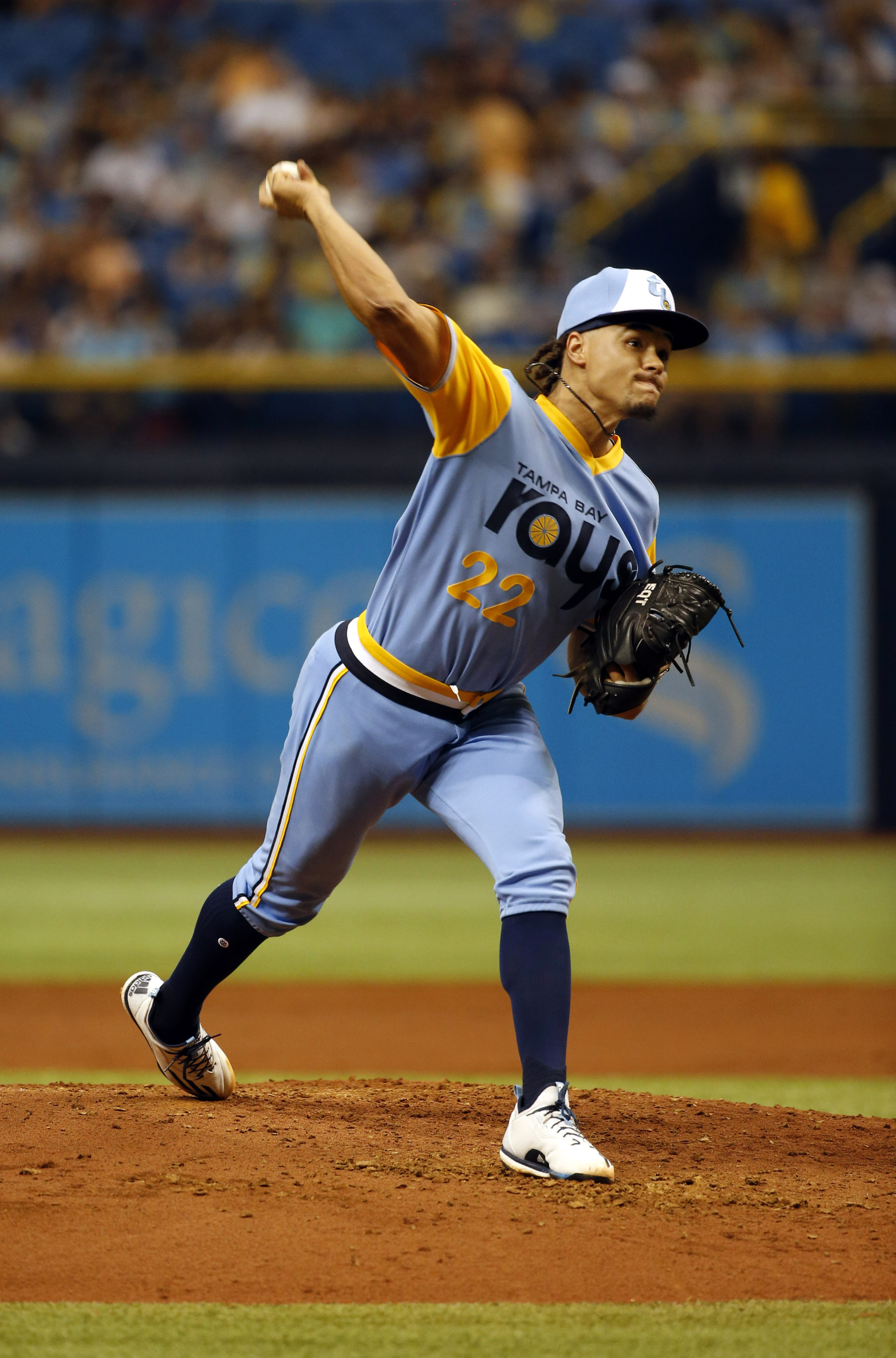
Trading Archer would be a near-term white flag from Tampa Bay, but it would go a long way toward helping the club further beef up its already deep farm system. The hard-throwing workhorse’s presence on the trade market would undoubtedly spark a bidding war, given both his ultra-affordable contract and front-line track record. Since debuting in 2012, Archer has pitched to a 3.63 ERA/3.46 FIP and notched 9.72 K/9 against 2.94 BB/9. He’s now coming off his third straight 200-inning season, one that saw him overshadow a merely decent ERA (4.07) with career-best marks in K/9 (11.15), BB/9 (2.69) and swinging-strike rate (13.4 percent).
Every team would love to add such an appealing starter, but some aren’t close enough to contention to justify seriously pursuing a trade for him, while others probably don’t have good enough farm systems to come out on top in an Archer sweepstakes. Of last season’s playoff teams, the Twins, Cubs (one of Archer’s ex-organizations) and Rockies stand out as clubs that would benefit the most from acquiring Archer, but it wouldn’t be a surprise to see any of the Astros, Dodgers (led by former Rays GM Andrew Friedman, who traded for Archer in Tampa Bay), Nationals or Yankees attempt to land him. Meanwhile, none of the Brewers, Cardinals, Braves or Phillies qualified for the postseason in 2017, but all of those clubs have above-average systems and are seemingly on the upswing. Those factors, not to mention issues in each of their rotations, would make Archer a reasonable target.
Any talk of an offseason Archer trade will go down as much ado about nothing if the Rays don’t opt for a major rebuild, but as Topkin suggested, it’s at least under consideration. Should the Rays take that extreme route, Archer would shake up a pitching market that includes a couple top-tier free agent starters (Yu Darvish and Jake Arrieta), with another potentially on the way in Japanese star Shohei Ohtani. For teams that can’t or don’t want to dish out nine-figure contracts to Darvish or Arrieta, and for those that miss out on the highly coveted Ohtani, Archer would make for an enticing alternative via trade.
(Poll link for App users)
Will the Rays trade Chris Archer this offseason?
-
No 51% (5,314)
-
Yes 49% (5,076)
Total votes: 10,390
Photo courtesy of USA Today Sports Images.
MLBTR Originals
Recapping MLBTR’s original content from the past week:
- Japanese superstar Shohei Ohtani will only be able to sign a minor league deal this offseason if he comes to the majors, though he could conceivably ink a more lucrative extension early in his MLB tenure. Tim Dierkes examined that possibility in depth.
- Tim also looked ahead to next year’s class of free agent starters, which could include Clayton Kershaw, and concluded that teams in need of rotation help shouldn’t wait until then to make upgrades. If Kershaw will remain with the Dodgers, it would leave a fairly unexciting group of available starters, so pitching-needy teams would be better served to strike now.
- Padres closer Brad Hand figures to draw widespread interest if the team shops him in the coming months. With that in mind, Kyle Downing sought an ideal match for Hand in a potential deal.
- The latest editions of this year’s Offseason Outlook series focused on the Nationals, Diamondbacks, Yankees, Royals and Padres.
- This winter’s Free Agent Profile series (links: 1, 2) kicked off with looks at the pros, cons and markets for center fielder Lorenzo Cain and utilityman Eduardo Nunez.
Free Agent Profile: Lorenzo Cain
Fresh off yet another strong season, longtime Royals center fielder Lorenzo Cain ranks as one of the best free agents available in this year’s class.
Pros/Strengths
Since making his major league debut with the Brewers in 2010, Cain has often mixed average or better production at the plate with top-notch defense and quality baserunning, making him one of the game’s most valuable players at his position. Cain held his own in those three facets in 2017 and surpassed the 4.0 fWAR mark for the third time in the past four seasons. Dating back to 2014, his breakout offensive campaign, only 19 position players have logged a higher fWAR than Cain’s 17.9, which puts him in company with the likes of Freddie Freeman (18.1), Ian Kinsler (17.4) and Andrew McCutchen (16.8).
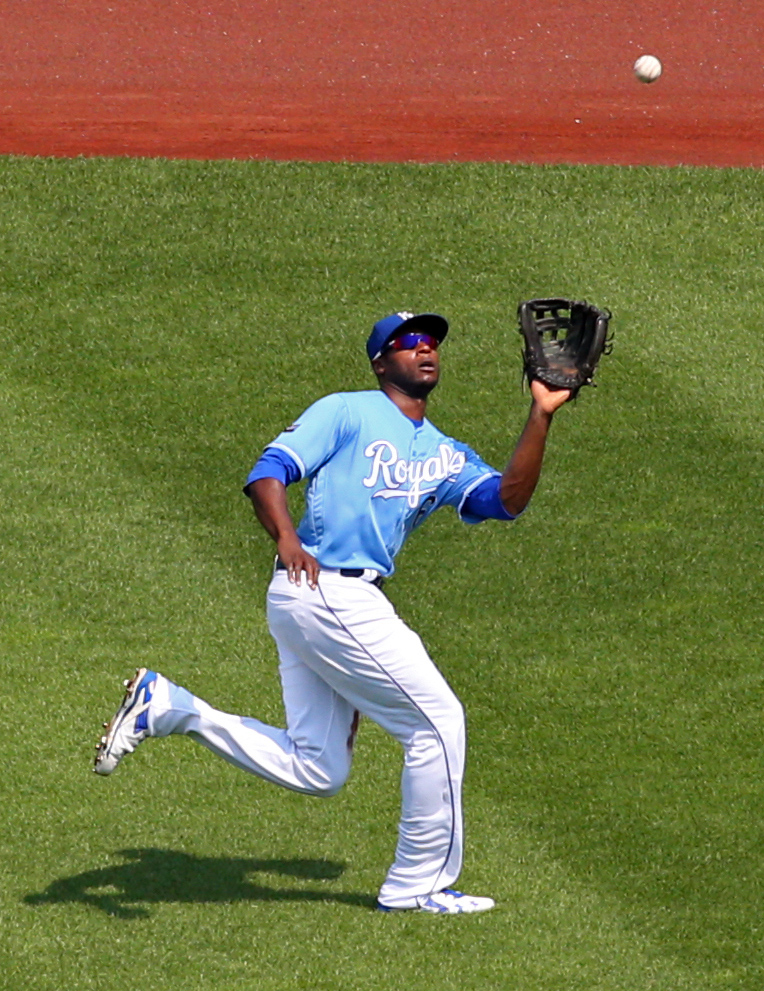
Defense is perhaps Cain’s greatest strength, evidenced by his lifetime DRS (73) and UZR (53.8) in center. According to those metrics, Cain wasn’t elite in 2017, though he still ranked in the top nine in the league among center fielders in both categories. He placed an even more impressive fifth among all outfielders in Statcast’s Outs Above Average metric.
On the offensive side, the righty-swinging Cain has been useful against pitchers of either handedness throughout his career. While his .303/.360/.474 line against southpaws easily trumps his .285/.335/.400 output versus righties, the latter has still been good enough for league-average production, per FanGraphs’ wRC+ metric. All told, he has slashed a respectable .290/.342/.421 in 3,051 trips, including a .300/.363/.440 line across a personal-best 645 PAs in 2017. Cain managed to cut his K rate from 19.4 percent in 2016 to a meager 15.5 percent this past season, and has gone down on strikes just 18.6 percent of the time in his career.
Cain’s speed has certainly contributed to his solid offensive numbers, helping him run a lifetime .344 batting average on balls in play (including a .340 mark in 2017) and an infield hit rate of 9.9 percent (league average has hovered in the 6.5 percent range since his MLB debut). Unsurprisingly, the fleet-of-foot Cain finished toward the top of MLB last season in Statcast’s Sprint Speed metric (16th out of 451 qualifiers). Thanks primarily to his wheels, Cain stole 26 of 28 bases in 2017, ranking fifth in the majors in SB percentage (92.9) along the way. Successful base stealing has been the norm for Cain, who has swiped 127 of 152 bags (83.6 percent) during his career.
Weaknesses/Cons
If you’re looking for red flags here, age and injury questions jump to the fore immediately. Cain will turn 32 next April, which will make a long-term deal for him all the more risky, and although he played 155 games last year, he hasn’t been that durable. Cain spent time on the disabled list in 2012, ’13, ’14 and ’16, and last season was the only one to date in which he appeared in more than 140 games.
With Cain’s legs being so integral to his game, it’s certainly fair to wonder just how well he’ll age both offensively and defensively. Speed peaks early, after all, and that’s all the more concerning for a 30-something hitter who brings minimal power and middling patience to the table. Cain did hit 15 home runs in 2017, but his .140 ISO (.131 lifetime) fell well below the .171 league average.
Background
Cain, a Valdosta, Ga., native, became a professional when the Brewers chose him in the 17th round of the 2004 draft. He ultimately racked up just 158 PAs with Milwaukee before the team traded him, Jake Odorizzi, Alcides Escobar and Jeremy Jeffress to the Royals for Zack Greinke and Yuniesky Betancourt in a December 2010 blockbuster. During his time in the majors, Cain, a client of All Bases Covered Sports Management, has earned approximately $21.76MM, per Baseball-Reference.com.
Off the field, Cain has been involved with the Variety Children’s Charity of Greater Kansas City. He and his wife, Jenny, have two sons.
Market
Unfortunately for Cain, most of the teams that received bottom-of-the-barrel production from their center fielders in 2017 don’t look like fits for a player who’s on the wrong side of 30. Nevertheless, it appears Cain will price himself out of KC, which will net a compensatory pick after the first round of next year’s draft if he signs with another club for a guaranteed $50MM-plus or a selection after Comp Round B if he gets less. The Giants, Mets and Blue Jays are reportedly eyeing him, while the Mariners and Rangers have also come up as potential matches. Of those teams, the Giants and Mariners need a center fielder the most. The Mets, Blue Jays and Rangers have experienced CFers on hand in Juan Lagares, Kevin Pillar and Delino DeShields, respectively, though Cain is a better all-around player than each of those three.
Expected Contract
MLBTR forecasts a four-year, $70MM payday for Cain, who could push for a pact that rivals the half-decade-long, $82.5MM deal fellow center fielder Dexter Fowler signed with the Cardinals last winter. The fact that Cain’s a year older than Fowler will make a fifth year difficult to obtain, though.
Photo courtesy of USA Today Sports Images.
Looking for a Match in a Brad Hand Trade
After entertaining offers from a handful of teams leading up to the 2017 non-waiver trade deadline, the San Diego Padres opted not to trade reliever Brad Hand. But discussions are sure to heat up once again heading into the hot stove season. While the elite lefty is no sure bet to be dealt, the Friars look like a long shot to contend in a tough NL West division and could be well-served to exchange Hand for a package of young talent.
Hand followed a breakout 2016 campaign with an equally phenomenal 2017 season. Among major-league relievers this past year, he finished 14th in ERA (2.16), 11th in xFIP (2.90), 21st in K/9 (11.80), 6th in innings pitched (79 1/3), and 4th in Win Probability Added (3.89). The former second-round pick accrued 21 saves despite not taking over the closer role until late July, and was valued at 1.7 fWAR.
Every team in the major leagues would look better on paper by adding Hand to their bullpen. Relievers of his caliber are difficult to come by, let alone left-handers. He wouldn’t even be a rental; Hand is controllable through 2019 via arbitration. MLBTR projects him to be awarded just a $3.8MM salary in 2018, making him an incredibly payroll-friendly alternative to some of the big name free-agent relievers.
Not every team can afford Hand in terms of prospects, however, which is how we can begin to eliminate some teams from the mix. When the Indians acquired lefty Andrew Miller from the Yankees at the 2016 trade deadline, they forked over four minor leaguers, including top prospects Clint Frazier and Justus Sheffield. While nobody would argue that Miller is the superior (and more established) relief pitcher, the two come with similar amounts of team control, while Miller’s contract guaranteed him $9MM per season.
If the asking price for Hand is anything close to the return the Yankees got for Miller, then we can firmly remove the Cubs, Diamondbacks, Angels, Giants, Mariners and Orioles from the picture. Teams like the White Sox, A’s, Phillies and Reds are probably too far away from serious contention to consider a run at Hand. But beyond that, there would still appear to be a vast pool of potential suitors, leaving the Padres firmly in the driver’s seat.
On paper, there are a few matches that make loads of sense. The Astros have a powerful roster that lacks only the presence of a dominant left-handed bullpen arm, and they certainly have the prospect depth to swing a trade. Likewise, the Dodgers would certainly benefit from another elite reliever to back Kenley Jansen, and their farm may be better than that of the Astros. The Brewers have a strong rotation that would benefit from another elite reliever who could help shorten games.
My favorite potential match is the Cardinals. St. Louis has so many outfield prospects that it’ll be hard to roster them all when the Rule 5 Draft comes around, while the Padres would probably love to add some upside young talent at that position. Meanwhile, the Cards are in definite need of a closer. I expect the two teams will at least discuss the possibility of a Hand trade.
Some other teams in dire need of bullpen help include the Twins, Rays, Rockies and Braves, though those teams might have other issues to address before thinning out their farm systems for a relief pitcher.
Whether a trade materializes or not, it’s fair to expect Hand’s name will pop up in trade rumors a fair number of times this offseason. It would surely be exciting to see how a contender might utilize him in the playoffs.