
Looking for a Match in a J.T. Realmuto Trade
A new ownership group in Miami (headlined by Derek Jeter) has kicked off a fire sale. Dee Gordon is now a Mariner, Giancarlo Stanton a Yankee, and Marcell Ozuna a Cardinal, and there’s no telling whether the Marlins are done yet.
In the wake of this significant shift in direction for the organization, catcher J.T. Realmuto has reportedly requested a trade out of the city. While the team has stated that they have no intention to trade him (via Bob Nightengale of USA Today Sports), the club had similar things to say about Ozuna early this offseason before shipping him to St. Louis for a package of prospects. On that note, there’s reason to at least explore his trade value and market.
Unlike Stanton or Gordon, Realmuto has significant surplus value on his contract. He’s been worth a combined 9 WAR across the past three seasons due to his excellent defense, above-average bat and good baserunning skills. He’s projected to make just a $4.2MM salary in his first trip through the arbitration process, and comes with two additional years of team control beyond the 2018 season. The former third-round pick out of Oklahoma’s Carl Albert High School is just entering his prime; he’ll begin the 2018 season having turned just 27 years old.
Realmuto, then, doesn’t help the Marlins’ with their loudly-stated goal to shed salary. However, by taking Stanton, Gordon and Ozuna off the books, they seem to have already reduced their payroll significantly. They don’t seem to have any intention of competing for an NL East pennant this year, and it’s looking more and more like Realmuto won’t be around for the next winning Marlins club. After all, teams like the Astros, Cubs and Nationals all took longer than three years to go from teardown to contention.
So with a realistic time frame to contend in mind, it’s difficult to believe the Marlins wouldn’t move Realmuto for the right offer. The question, then, is a matter of what kind of package would tempt them enough to move their backstop. Above-average major leaguers with three arbitration years remaining typically cost a small fortune; one need not look any further than the Braves’ recent trades of Andrelton Simmons and Craig Kimbrel for evidence. It would likely take at least one “blue-chip” prospect to even get the Marlins to pick up the phone, and probably another prospect within or near the top 100 to ultimately get a deal done.
A trade partner, then, would need to have a strong farm system along with a significant need at the catcher position. That club wouldn’t necessarily need to stand out as a contender this season, but Realmuto would fit best on a team with a fairly obvious multi-year window in the near future.
The Nationals jump off the page as the most obvious trade partner for the Marlins in a hypothetical Realmuto trade. They have a great farm system, including outfielder Juan Soto, who doesn’t have an obvious path to the majors. The Nationals’ outfield is crowded, and superprospect Victor Robles is ahead of him in the pecking order. Thanks in part to a terrible season from Matt Wieters, Nats catchers ranked dead last in the majors with -1.1 fWAR. Washington would definitely benefit from the sizable upgrade Realmuto would provide them at the catcher position; in theory the team would have won about five more games last year if they’d had him instead of Wieters.
Beyond that, the Rockies and Diamondbacks are fairly good fits. Both clubs ranked in the bottom ten in WAR value from the catcher position in 2017, and neither has any promising backstops in their farm system. Additionally, both teams are obvious contenders in 2018. Either team could feasibly deal from its prospect depth in order to add Realmuto to their lineup.
The Padres may be ready to give up on Austin Hedges at this point, and while the team probably won’t win next season, they could feasibly be contenders before Realmuto hits free agency. The Twins could make a play if they’re not content with mediocre offensive production from Jason Castro. If the Brewers aren’t buying last year’s breakout from 30-year-old Manny Pina, they’d have plenty of prospect depth to get a deal done.
Although there’s no rush to trade him at the moment, there are a host of teams that would probably be willing to fork over enormous value for a catcher who ranked third in the majors in fWAR this past season. The Marlins would be wise to keep their ears open if they’re approached teams who are interested in, or desperate for, an elite backstop.
Poll: Who Will Sign Eric Hosmer?
The current Major League Baseball offseason has been an unusual one for multiple reasons, including the lack of movement atop the free agent market. Nearly two months after free agency opened, most of the elite members of this winter’s class remain on the board. That includes longtime Royals first baseman Eric Hosmer, whose trip to the market has been especially odd. Surprisingly, there’s no indication any contenders are pursuing him with any gusto.
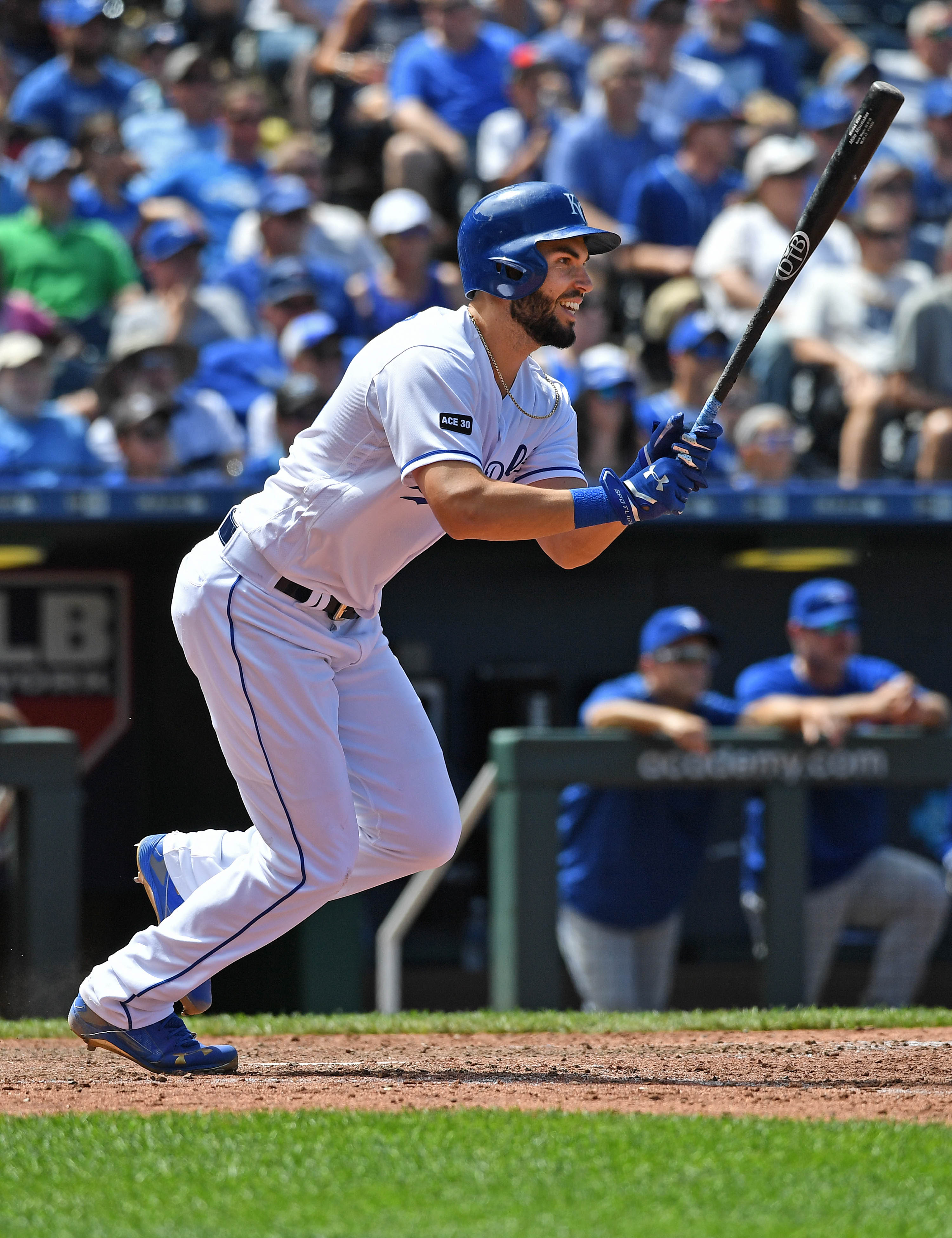
To this point, two clubs that don’t stand much chance to win in 2018 have shown the most interest in Hosmer. On one hand, it’s not exactly shocking that the Royals have tried to retain Hosmer, who’s one of the most popular players in franchise history and a key reason for their 2015 World Series title. It’s peculiar, though, that they’re trying to keep him while looking to cut payroll and rebuild.
Even with a career year from Hosmer in 2017 and important contributions from the likes of Mike Moustakas, Lorenzo Cain and Mike Minor – all of whom are now out of the organization – the Royals only won 80 games. So, odds are this isn’t a team that’s going to succeed in the near term even if it convinces the 28-year-old Hosmer to re-sign.
Similarly, the Padres aren’t going to pose a threat in 2018 – especially in a division with three of last season’s five NL playoff qualifiers – yet they’ve gone even harder after Hosmer than the Royals. The Padres met with Hosmer earlier this month, and a week later, they reportedly emerged as the favorites to sign him. But no agreement has come to fruition in the week and a half since then, perhaps owing to a difference of opinion within the San Diego organization.
Some Padres bigwigs would be on board with making Hosmer the first nine-figure player in franchise history with the hope that the well-regarded leader would serve as a culture-changing force; others have reservations about whether now is the right time for the Padres to splurge on a free agent. It’s easy to sympathize with the latter camp, given that the Padres are coming off their 11th straight non-playoff campaign and figure to need at least a couple more years to make a return to the postseason. By the time San Diego turns back into a contender (if it does anytime soon), Hosmer’s best years may be in the rearview mirror.
In addition to signing an enormous deal, an ideal scenario for Hosmer would likely include joining a team that’s in position to win now. But clear fits among contenders are difficult to find. The Cardinals have been linked to Hosmer, though they could continue with Matt Carpenter at first or roll with Jose Martinez and Luke Voit. With those options in the fold, they’ve been more focused on landing a high-profile third baseman than a first baseman in recent weeks. The Red Sox were a popular pick to reel in Hosmer earlier this offseason, but they seemingly took themselves out of the running this week with the surprise re-signing of fellow first baseman Mitch Moreland. And most other playoff hopefuls – including the Astros, Indians, Yankees, Twins, Angels, Mariners, Nationals, Cubs, Brewers, Dodgers, Diamondbacks, Rockies and Mets – either don’t need first base help or aren’t in position to spend big on it.
With highly skilled agent Scott Boras as his representative, one can’t rule out an unexpected team making a major play for Hosmer (Boras could probably talk the Heat Miser into buying a parka, after all). As of now, though, it seems Boras is facing long odds of finding a contender to take on Hosmer. Consequently, Hosmer may have to choose between staying in Kansas City or heading to San Diego.
(Poll link for app users)
Who will sign Eric Hosmer?
-
Other 40% (7,888)
-
Royals 34% (6,748)
-
Padres 26% (5,206)
Total votes: 19,842
Photo courtesy of USA Today Sports Images.
Free Agent Profile: Logan Morrison
After six seasons of largely pedestrian play at the major league level, Logan Morrison enjoyed a huge power breakout in 2017. As he enters the free agent market, he’ll hope teams are willing to believe his newfound success at the plate is sustainable.
Pros/Strengths
Prior to this past season, few would have believed a prediction that “LoMo” would hit as many home runs as a healthy Edwin Encarnacion. Fast forward to October, and those two sat tied for fifth among the American League’s home run leaders (along with Justin Smoak and Mike Moustakas). The Rays first baseman also finished fifth in ISO in the AL.
Morrison’s power breakout came during a season in which he made adjustments to his swing, helping him hit more balls in the air. “Valuing… launch angle and all that stuff — has helped me out a lot,” he said to Fangraphs’ David Laurila back in August. Whatever adjustments Morrison made, they worked like a charm. His fly ball rate skyrocketed from 34.7% to 46.2%; that amounts to a whopping 33% increase in fly balls over last season.
Combined with a slight increase in hard contact, Morrison’s ground ball/fly ball profile quickly went from being one of his biggest weaknesses to his clear biggest strength as a hitter. His HR/FB ratio climbed to 22.5%, up from just 15.2% the year prior. The result was a whopping 38 homers; 15 more than his previous career high back in 2011.
Morrison became more selective this past season, too. His previous career-high walk rate was 10.3%, but the first baseman blew past that total to reach 13.5% this season. And although he has a bit of a platoon split in the power department, LoMo actually walks about as often against lefties as he does against righties. All told, his OBP at season’s end was a respectable .353.
Cons/Weaknesses
Morrison’s most significant weakness is his contact ability. The lefty-hitter whiffs in nearly a quarter of his plate appearances (24.8%), giving him the 20th-highest strikeout rate among 144 qualified hitters. While he doesn’t often swing at bad pitches, he swings and misses a lot; Morrison’s 73.7% contact rate ranks in the bottom 20th percentile in MLB. The above figures are both downgrades from recent seasons, and clearly demonstrate the double-edged sword of his newfound “swing hard in case you hit it” approach.
LoMo’s suitors can’t count on him for much in the way of defense, either. Fangraphs has rated him as being well below average in every season of his major league career. It’s worth noting, however, that UZR/150 and DRS both pegged him as an ever-so-slightly above average first baseman in 2017 after years of being down on his work, so perhaps there’s not much to worry about.
But above any of that, it would be irresponsible not to consider the risk that Morrison might fail to replicate his 2017 success. Based on his change in approach at the plate it’s certainly possible he’ll sustain this level of production, some might even say probable. Still, it can’t be overlooked that he’s played below replacement level in three of his eight major league seasons, despite the pedigree he carried as a prospect. In fact, his previous career high in fWAR was only 1.1, which isn’t even a league-average performance. There’s always a chance that what looks like a breakout season could end up simply being an outlier, and if Morrison is paid for his 2017 power output, regression to his previous self would make his contract look terrible in retrospect.
Background
Justis Logan Morrison was born in Kansas City, Missouri. His father served in the coast guard, so Morrison traveled a lot during his younger years. He attended Northshore High School in Slidell, Louisiana, and was selected by the then-Florida Marlins after his senior year in 2005. Though he decided to attend community college, he ultimately ended up signing with the Marlins prior to the 2006 draft.
Over the next four years, Morrison climbed steadily throughout the minor leagues. He ranked 20th on Baseball America’s top prospects list prior to the 2010 season; a year in which he ultimately made his major league debut and hit .283/.390/.477. On December 11th, 2013 he was traded to the Mariners in exchange for reliever Carter Capps. Morrison remained in Seattle until November 5th, 2015 when the Rays acquired him in a three-for-three swap.
Market
First basemen haven’t exactly been flying off the shelves this winter, but Morrison got a bit of bad news recently when the Red Sox re-signed Mitch Moreland to a two-year, $13MM deal. Boston reportedly met with Morrison’s representatives earlier this offseason; the organization had one of the strongest needs at first base among MLB teams (and one of baseball’s largest budgets as a means to fill it).
On the other hand, the Phillies’ three-year, $60MM agreement with Carlos Santana may actually be good news for Morrison’s market. Philadelphia was never seen as a strong candidate to sign the former Rays slugger, or really a first baseman in general; Rhys Hoskins seemed likely to open the season at first for the club, who will now be pushed to the outfield. Before he signed the offseason’s largest contract thus far, Santana was drawing strong interest from at least ten different teams within the past month, and those teams may now turn their attention to Morrison. He’s the best first baseman left on the shelves who doesn’t come with a nine-figure price tag.
The first base market is still crowded. Eric Hosmer, MLBTR’s third-ranked free agent, remains on the board as the most attractive option at the position. Yonder Alonso comes with a somewhat similar offensive profile, and could compete for attention from Morrison’s potential suitors. Lucas Duda, Mark Reynolds and Adam Lind are still hanging around in the bargain bin. Jose Abreu of the White Sox could still be traded, too.
Morrison has been connected to the Angels, who have already made a flurry of moves this offseason to improve their shot at a 2018 AL West pennant. It makes sense to think they could continue to explore signing him. The Rockies and Indians are both firmly in the market for a first baseman, while the Mariners, Astros and a reunion with the Rays all make some level of sense.
Expected Contract
The situation for Morrison doesn’t look much better or worse than it did at the outset of this offseason. The elimination of the Red Sox as a potential suitor hurts, but the average annual value of the contract given to Santana could work in LoMo’s favor during contract negotiations. All told, I think MLBTR’s original prediction of $36MM over a three-year term holds up well to this point.
How Have MLBTR’s Top 50 Free Agents Fared Thus Far?
With the Winter Meetings wrapped up and holiday season in full swing, we’re left looking at an unprecedentedly slow free agent market. The ongoing logjam, in spite of resolution for the Giancarlo Stanton and Shohei Ohtani situations, lends credence to the theory that there are structural forces at play that may be shifting the typical signing calendar.
Some have wondered whether this state of affairs represents a major threat to players’ earnings. Most top free agents have yet to find a match and there’s a big-market luxury tax limbo line forming in the center of the dance floor, after all.
Of course, there are still some conceivably one-off factors that may be influencing things. If nothing else, all industry players are to some extent still waiting to see how a new CBA will impact strategy. A broad youth movement in the game may be a background feature here. The trade market may still be sorting itself out, due in part to the fact that there are only a few pure selling clubs — some with big trade pieces are also weighing other significant additions, while other conceivable rebuilders seem not to be interested in a tear-down.
Still, it’s remarkable how full the free agent cupboard is with just a dozen days left in the 2017 calendar. Just 17 of MLBTR’s top 50 free agents have locked up deals to this point (by MLBTR ranking, with predicted contract value in parentheses):
- 12. Carlos Santana, Phillies, 3/$60MM (3/$45MM)
- 13. Zack Cozart, Angels, 3/$38MM (3/$42MM)
- 18. Mike Minor, Rangers, 3/$28MM (4/$28MM)
- 19. Brandon Morrow, Cubs, 2/$21MM (3/$24MM)
- 21. CC Sabathia, Yankees, 1/$10MM (2/$24MM)
- 24. Juan Nicasio, Mariners, 2/$17MM (3/$21MM)
- 25. Bryan Shaw, Rockies, 3/$27MM (3/$21MM)
- 29. Tyler Chatwood, Cubs, 3/$38MM (3/$20MM)
- 30. Jake McGee, Rockies, 3/$27MM (3/$18MM)
- 34. Welington Castillo, White Sox, 2/$15MM (2/$14MM)
- 36. Anthony Swarzak, Mets, 2/$14MM (2/$14MM)
- 37. Steve Cishek, Cubs, 2/$13MM (2/$14MM)
- 38. Brandon Kintzler, Nationals, 2/$10MM (2/$14MM)
- 41. Tommy Hunter, Phillies, 2/$18MM (2/$12MM)
- 43. Pat Neshek, Phillies, 2/$16.25MM (2/$12MM)
- 49. Michael Pineda, Twins, 2/$10MM (2/$6MM)
- 50. Miles Mikolas, Cardinals, 2/$15.5MM (2/$10MM)
Of course, some other players have also signed fairly significant contracts:
- Honorable Mentions – Joe Smith (2/$15MM), Mitch Moreland (2/$13MM), Fernando Rodney (1/$4.5MM)
- Others – Luke Gregerson (2/$11MM), Yusmeiro Petit (2/$10MM), Drew Smyly (2/$10MM), Hector Rondon (2/$8.5MM) Mike Fiers (1/$6MM), Fister (1/$4MM), Chris Iannetta (2/$8.5MM)
The top ten players on MLBTR’s board remain unsigned (not including Masahiro Tanaka, who did not opt out). Only three position players from the list are under contract. None of the top starters have put pen to paper. Meanwhile, teams have gone wild for setup arms — which arguably suggests some trepidation at more significant spending. The top three relievers (Wade Davis, Greg Holland, and Addison Reed) are still available, but otherwise many of the top bullpen pieces are under contract.
At the same time, though, there are some indications that we could still see things shake out in a relatively typical way, even if the process and timing are different. The clear run on relievers shows that teams can still act quickly and dole out large contracts when the dominoes start to fall at a given position. Those players that have signed to date have performed well; among the top fifty, they’ve secured contracts collectively guaranteeing about 11% more than MLBTR had predicted as a group. While the Dodgers and Yankees won’t drive top-end spending this year, the opportunities presented by top free agents will surely still prove tantalizing to other organizations.
Who holds the cards with about two months until camps open? That’ll be sorted out in an unusual time frame and will still be impacted by uncertainty in the trade market. Most broadly, the full narrative of the 2017-18 offseason has yet to declare itself, but that’s also a fact that’s notable in and of itself.
MLBTR Originals
Here’s the roundup of original content from the MLB Trade Rumors writing staff over the last two weeks…
- It’s already been a notable winter for major trades, and Jeff Todd lists the offseason’s top 60 possible trade candidates that could still be in new uniforms coming Opening Day.
- Arguably the biggest name on that top-60 list is Orioles third baseman (or shortstop?) Manny Machado, who has been the subject of heavy trade speculation over the last week. Steve Adams examined the market for potential Machado trade partners, evaluating all 29 teams on the likelihood that Machado will be wearing their uniform come Opening Day.
- Live from the Winter Meetings, Steve Adams attended Giancarlo Stanton‘s introductory press conference as a Yankee, which included Stanton’s discussions of talks with the Giants and Cardinals over waiving his no-trade protection, his excitement at joining the Yankees, and his displeasure at the constant management controversy and lack of on-field success that marked his time with the Marlins.
- MLBTR’s Free Agent Profiles series examines the winter’s top names on the open market, outlining their strengths and weaknesses while trying to identify teams that could be interested in a signing. Recent entries include Carlos Santana (by Kyle Downing), Yu Darvish and Mike Moustakas (both by Mark Polishuk). Since Kyle’s piece, of course, Santana was already taken off the board by a surprising suitor — the Phillies reached agreement with the veteran slugger on a three-year, $60MM deal.
- The Angels have been the talk off the offseason, keeping Justin Upton out of the free agent market via an extension, and then adding Shohei Ohtani, Zack Cozart, Ian Kinsler to the roster. Still, with several question marks remaining, Connor Byrne asked the MLBTR readership if they felt the Halos had enough for a return to the postseason in 2018. (At the time of this posting, 61.64% of those polled felt the Angels will indeed make the playoffs.)
How Good Are The Angels?
The Angels have employed the world’s best baseball player, center fielder Mike Trout, since 2011, yet the team has never come close to fully capitalizing on his presence. The Halos endured their third straight non-playoff season in 2017, during which a thumb injury helped limit Trout to a career-low 114 games, and finished below .500 (80-82) for the second year in a row. With Trout on their roster, the Angels have gone to the postseason just once – in 2014 – and the Royals swept them from the American League Division Series that year. So, through no real fault of his own, Trout has never even won a playoff game in the majors.
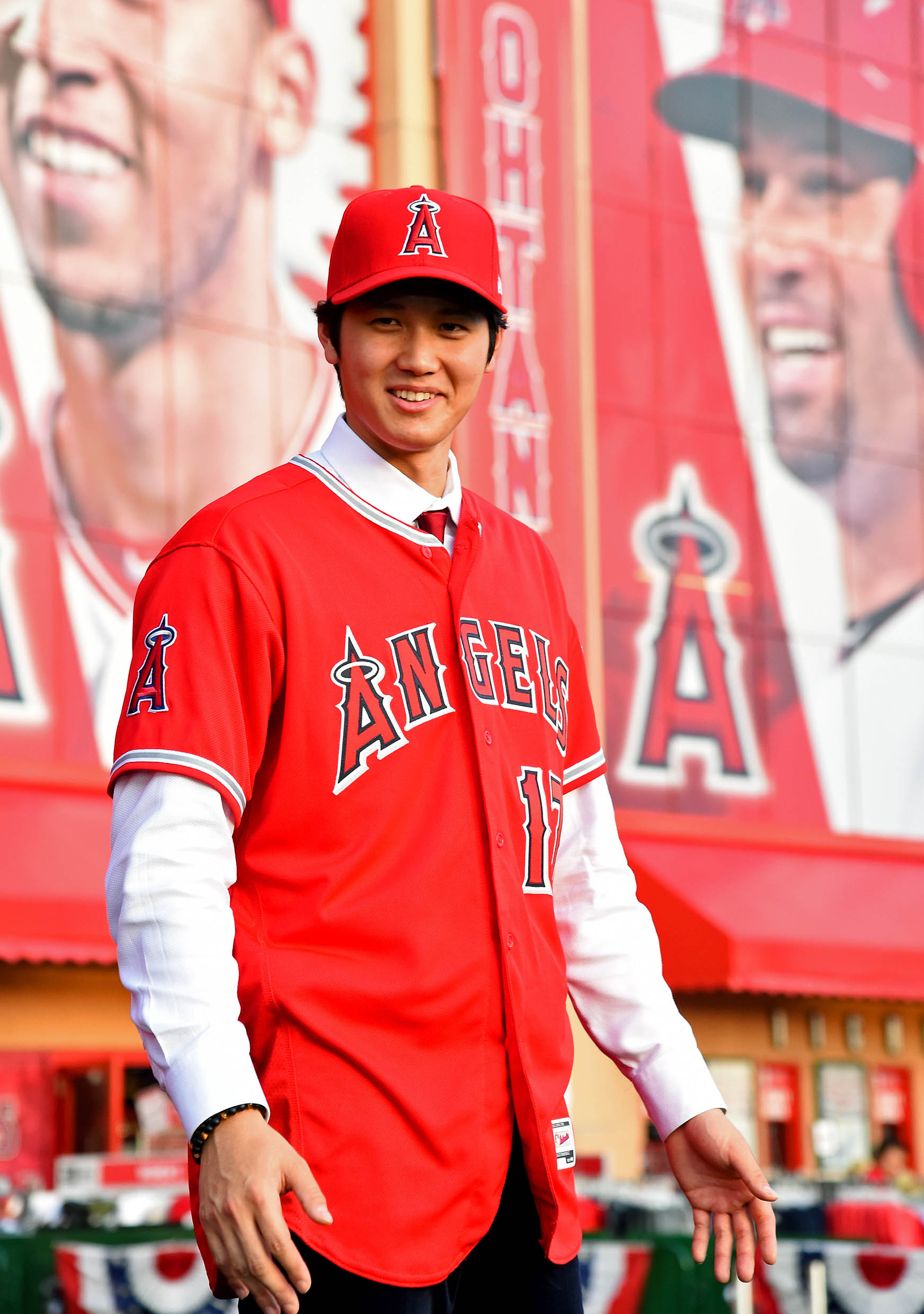
With Trout set to enter the third-last year of his contract in 2018, general manager Billy Eppler has spent this offseason making one impressive move after another to ensure the Angels finally give real support to the two-time AL MVP. Not only was Eppler able to reel in the offseason’s top free agent, ballyhooed Japanese phenom Shohei Ohtani, but he also kept big-hitting left fielder Justin Upton from leaving via the open market and improved the team’s infield substantially with the pickups of second baseman Ian Kinsler (acquired from the Tigers) and third baseman Zack Cozart (signed to a three-year, $38MM deal).
The Angels’ inability to find solutions at either the keystone or the hot corner helped lead to their downfall last season, when their second basemen finished with the majors’ third-worst fWAR (minus-0.3) and their third basemen posted the league’s 10th-worst mark (2.0). Kinsler and Cozart combined for 7.4 fWAR in 2017, meanwhile, and the latter was particularly strong during an unexpected offensive breakout (.297/.385/.548 in 507 plate appearances). Even if that proves to be a mirage and Cozart regresses to being the roughly league-average hitter he was from 2015-16, both that and the ex-Reds shortstop’s top-quality defense would still make him a welcome addition in Anaheim.
Now, with Trout, Upton, Kinsler, Cozart, shortstop Andrelton Simmons, catcher Martin Maldonado and right fielder Kole Calhoun, the Angels have an enviable core group of position players (though Calhoun’s the only lefty-swinger of the bunch). Of course, they may yet have another impressive bat in Ohtani, who thrived as a lefty slugger in Japan and will get an opportunity to factor in as a designated hitter with the Angels. Another benefit of Ohtani’s presence is that it should make it easier for the team to limit the at-bats of future Hall of Famer Albert Pujols, who seemed to finally hit the wall during his age-37 campaign in 2017.
While it’s anyone’s guess whether Ohtani’s offensive excellence will transfer from Japan to North America, he at least figures to be a front-line starting pitcher if healthy. That’s not a given, unfortunately, as the hard-throwing right-hander is currently dealing with a sprained UCL in his throwing elbow. Every team that courted Ohtani during his famous foray into free agency seemingly knew about the issue at the time, however, and there’s hope it won’t prove to be a major injury.
Barring a disastrous turn of events, Ohtani and fellow righty Garrett Richards – who barely pitched over the previous two years while contending with injuries of his own – should form an outstanding one-two punch. There are injury- and performance-related questions peppered throughout the rest of what could be a six-man starting staff, though, with no one from the quintet of Matt Shoemaker, Parker Bridwell, Tyler Skaggs, Andrew Heaney and Nick Tropeano inspiring a ton of confidence.
Beyond that, a bullpen that was an upper-echelon group last season lost arguably its premier reliever, workhorse Yusmeiro Petit, who joined the AL West rival Athletics in free agency. With apologies to up-and-down veteran Jim Johnson, whom the Angels acquired from the Braves last month, they haven’t done anything to adequately replace Petit. Consequently, their current relief corps consists of several question marks aside from Blake Parker, who was tremendous last season.
Eppler’s heavy lifting for the offseason is probably over, but he could still address certain areas – namely the pitching staff – in an effort to bolster the Angels’ playoff chances in 2018. At the same time, other AL GMs will surely make moves in the coming months that help shape the postseason race next year. But for now, the Angels join the division-rival/reigning world champion Astros, Indians, Yankees and Red Sox as the class of the AL, according to FanGraphs, which regards the new-look Halos as an 86-win team. Based on that projection, the Angels would finish three games ahead of sixth-place Toronto, earn the AL’s second wild-card spot and snap their three-year playoff drought. We’re still a few months from seeing these Angels play a meaningful game, but are you on the bandwagon right now?
(Poll link for App users)
Do you expect the Angels to make the playoffs in 2018?
-
Yes 66% (12,374)
-
No 34% (6,516)
Total votes: 18,890
Photo courtesy of USA Today Sports Images.
Top 60 Remaining Offseason Trade Candidates
With Giancarlo Stanton joining the Yankees, the offseason’s most prominent trade piece is officially off the board. Other significant players have swapped jerseys recently, including former Stanton teammates Dee Gordon and Marcell Ozuna as well as veteran second baseman Ian Kinsler, among others.
That said, there are still quite a few significant players left that seem to be plausible or even likely trade pieces. Unlike our trade deadline version of this post, we’re not going to attempt a ranking — though, generally, I’ve attempted to list players in order of my subjective assessment of their trade likelihood and value. The primary focus here is to give a sense of the most notable names that appear to be in play at this stage.
Starting Pitchers
- Chris Archer, Rays: His favorable contract, compelling peripherals, and youth make Archer the top arm on the market — if he’s truly made available.
- Michael Fulmer, Tigers: Detroit is said to be listening, and several organizations are circling, but the question remains whether the club will truly be willing to let a top-end, controllable starter go for anything shy of an astronomical price.
- Danny Duffy, Royals: While a recent DUI and elbow surgery introduce some questions, Duffy is still just shy of 29 years of age and has shown enough the past two years to make his contract ($60MM remaining over four years) a notable bargain.
- Gerrit Cole, Pirates: While not in top form in 2017, he did throw 200 frames and teams still see a front-line arsenal and history of success. There are some hints that the Bucs are ready to make a deal, but it’s not clear yet whether that’ll come to pass.
- Jake Odorizzi, Rays: Much like Drew Smyly last year, Odorizzi is coming off of a season where he wasn’t at his best and is owed a decent sum (a projected $6.5MM arb tab) with an extra year of control to go. It seems reasonably likely that he’ll be moved and that there will be strong interest.
- Zack Greinke & Patrick Corbin, Diamondbacks: Arizona needs to free up payroll space if it is to make other moves, and both of these hurlers have come up in recent days. Greinke’s huge remaining commitment is a major barrier to any deal; Corbin, meanwhile, should have solid value as a one-year rental but also wouldn’t free up nearly as much cash.
- Dan Straily, Marlins: While he continued to pile up solid innings, Straily also doesn’t seem to be the type of pitcher that teams will go wild to acquire. For the budget-conscious Fish, holding him will have appeal.
- Danny Salazar, Indians: Many other organizations would love to take a chance on this talented hurler, though it’s fair to wonder whether Cleveland would rather just keep the upside in-house.
- Ian Kennedy & Jason Hammel, Royals: The contracts still outstanding to these two hurlers are both under water, but if Kansas City decides to hit “go” on a rebuild, some of the obligations could be moved elsewhere.
- Julio Teheran, Braves: Coming off of a down year, it seems less than likely that Teheran will be moved, and we haven’t heard any suggestion that’ll come to pass. Then again, has anyone asked new GM Alex Anthopoulos whether there’s a body part he’d stake on keeping Teheran?
- Matt Harvey, SP, Mets: The idea that the Mets might look to move Harvey was a short-lived Winter Meetings side story, but it’s conceivable it could occur. But Harvey’s value is at an all-time low.
Relievers
- Brad Hand, LH Reliever, Padres: Anyone hear any juicy Brad Hand rumors? Yeah, me neither. But we haven’t seen action at the very top of the relief market yet, and Hand is now established as an elite pen arm, so I suspect we haven’t heard the last of him for the offseason.
- Alex Colome, RH Reliever, Rays: The Tampa Bay closer has received the most attention on the trade market, but a deal hasn’t yet been completed. That could reflect the fact that the Rays are still a bit uncertain in their direction, or it may indicate that some teams with interest still want to explore other options.
- Kelvin Herrera, RH Reliever, Royals: It’s always hard to give up your favorites, but the Royals parted with Wade Davis last year and have much greater cause to move Herrera now — though his value is down after a less-than-excellent 2017.
- Zach Britton, LH Reliever & Brad Brach, RH Reliever, Orioles: Attention has shifted to another, even more important possible trade candidate. But the O’s still have two really good relief assets to market.
- Raisel Iglesias, RH Reliever, Reds: There’s no indication that Iglesias is going to be available for anything approaching his market value, but you never know if a team will end up offering up something the Reds can’t turn down.
- Brad Ziegler, RH Reliever, Marlins: The wily veteran is probably slated to earn a bit more than he’d receive on the open market after a down season, but he’s still an appealing roster target so Miami can anticipate finding some payroll savings here.
- Joakim Soria, RH Reliever, Royals: Speaking of trimming payroll, finding a taker for some of Soria’s remaining $10MM guarantee (that includes a 2019 buyout) is surely near the top of the Royals’ to-do list.
- Shane Greene & Alex Wilson, RH Relievers, Tigers: The rebuilding Detroit organization is willing to consider anything, but also won’t just give way affordable players such as these.
- Kyle Barraclough, RH Reliever, Marlins: That reasoning likely holds for the Marlins, too; they could hand over closing duties to the powerful but volatile Barraclough.
- Arodys Vizcaino, RH Reliever, Braves: With two years of control remaining, Vizcaino is coming off of a promising 2017 campaign. But if the organization wants to compete — or, at least, project an intention to do so — then it’d be tough to deal away such a prominent part of the bullpen.
- Darren O’Day, RH Reliever, Orioles: Sure, he’s 35 and hasn’t been as spectacular in the pat two seasons as he was in the four prior. But given the way the market has treated relievers this winter, two years at a $18MM commitment isn’t an unapproachable price tag for a high-quality relief arm.
- Junichi Tazawa, RH Reliever, Marlins: The Fish gave Tazawa a $12MM guarantee in hopes his results would catch up to his K/BB rates, but the opposite occurred in 2017. Miami will need to eat most of the $7MM remaining to make a deal.
- Dellin Betances, RH Reliever, Yankees: It seems clear that the Bronx Bombers have set their sights on some top-end pitching after finagling the acquisition of Stanton. The rights to the high-powered Betances, who struggled with command down the stretch, could help fill other needs and open some added payroll space.
Outfielders
- Christian Yelich, OF, Marlins: With his two outfield mates already gone, Yelich is now in the spotlight. While Miami is sending out signs that it may not deal the controllable, high-quality performer, that feels mostly like posturing.
- Andrew McCutchen, OF, Pirates: With some hints the Bucs may feel that 2018 just isn’t their year, perhaps we ought to expect a move involving McCutchen. His $14.75MM salary is a good price for a quality player, though it’s nothing like the bargain rate for an MVP the club no doubt expected it would be when the contract was signed.
- Billy Hamilton, OF, Reds: There has been plenty of smoke coming from Hamilton — not just from him tearing around the bases, but from the trade signal fires being sent up around the game. It seems the Reds have gone fairly far down the line on moving the speed-and-defense specialist, though there seem to be scenarios where he stays, too.
- Randal Grichuk, OF, Cardinals: With a 40-man roster loaded up with righty outfield bats, it seems that additional players will likely need to follow Stephen Piscotty out the door. Since the Cards now have settled their primary outfield mix, with eyes on some other improvements, Grichuk feels likeliest of the remaining players to be shipped out.
- Avisail Garcia, OF, White Sox: There has been some word of interest, but more of the exploratory variety. Odds are the ChiSox will hang onto Garcia and see whether he can sustain his 2017 outbreak before deciding upon next steps. It’s also possible the team could make a run at extending him this spring.
- Domingo Santana & Keon Broxton, OF, Brewers: After a highly promising 2017 season for both player and team, you might expect that Santana would not be on the market. And perhaps, realistically, he isn’t. But the Milwaukee organization is blessed with an impressive slate of outfield talent, and it makes sense to consider moving even Santana if it could mean a drastic improvement in the rotation. The likelier outcome, perhaps, is a deal involving Broxton, who is looking over his shoulder at a group of talented center field options.
- Adam Duvall, OF, Reds: There’s been some chatter here, but nothing yet that would suggest the Reds are preparing to deal away a player that has hit the ball out of the park thirty times in each of the past two seasons — but also has a sub-.300 MLB on-base percentage.
- Jacoby Ellsbury, OF, Yankees: A no-trade clause and large contract make Ellsbury a difficult piece to move, but he doesn’t seem to fit very well on a roster that includes Aaron Hicks and Brett Gardner along with corner sluggers Stanton and Aaron Judge. The Yanks would love to move some salary, but doing so will be tough — unless, perhaps, they are willing to hold onto the bulk of the remaining commitment and find a contending team that Ellsbury wouldn’t mind playing for.
- Shin-Soo Choo, OF/DH, Rangers: As the Rangers look for ways to improve their rotation, taking on a big contract while moving some of the dollars owed to Choo seems to have emerged as something of a possibility. It’ll be a tall order to get rid of much of the $62MM Choo still has coming his way, though, after he again hovered around league average at the plate in 2017.
- Yasmany Tomas, OF, Diamondbacks: Likewise, the D-Backs would surely love to get some of these dollars off of their books. But Tomas struggled early before losing the rest of his season to injury, so it seems unlikely that a trade will come to pass.
- Jackie Bradley Jr., OF, Red Sox: There are conflicting signs here, but it seems there’s at least some plausibility to the idea that Boston could move Bradley if it finds cause to put a big slugger in the outfield. On talent, he’d be much higher up this list, as Bradley has a significant defensive and baserunning floor along with a history of some high-quality output at the plate. But the odds still seem to weigh against a deal at this stage.
- Kyle Schwarber, OF/?, Cubs: On the one hand, it just makes good sense for Schwarber to be playing in the American League. On the other, the Cubs front office may not be able to part with him — at least, not for what the market would likely bear at this point. While everyone knows the upside, Schwarber wasn’t good in 2017 and the market is flooded with defensively limited power bats.
Infielders
- Manny Machado, 3B, Orioles: While reporting now suggests the O’s are likely to deal their best player, this is one we’ll need to see to believe. The key difficulty here is that Baltimore still wants to compete in 2018 while also improving in the future. Threading the needle on a trade wont be easy.
- Jose Abreu, 1B, White Sox: On paper, Abreu is a pretty likely trade piece. But indications are the South Siders have a high asking price. And the rebuiding team’s present strategy is a bit difficult to discern at the moment given its reported interest in renting Machado.
- Yasmani Grandal, C, Dodgers: There have been some suggestions that Grandal can be had, as he has seemingly been bypassed as the number one option by Austin Barnes. But the Dodgers don’t need to deal him and talks seemingly haven’t really heated up.
- Evan Longoria, 3B, Rays: The veteran had a tepid season at the plate and is still owed a big chunk of change, but he has been durable and mostly productive for quite some time now, so there will be interest. The seriousness of the Rays’ dabbling in trade considerations remains unclear.
- Cesar Hernandez, 2B, Phillies: The departure of Freddy Galvis leaves Hernandez with more breathing room. It’s still possible he’s shipped out if the right opportunity arises, but the Phils will surely also be mindful of rushing to part with a valuable and controllable player when the younger options still have some learning and growing left to do.
- Jed Lowrie, 2B, Athletics: Oakland has sent conflicting signals on the veteran, but the latest word is he’s on the block again. There should be solid interest if that’s the case.
- Josh Harrison, INF, Pirates: There should be quite some interest in Harrison, a versatile player who’d add many dimensions in just one roster spot. It helps that the last two years of his contract (2019 and 20) come via option, leaving an escape clause if he can’t sustain his return to league-average offensive output.
- Jason Kipnis, 2B, Indians: Chatter on the 30-year-old has gathered some team despite the fact he’s owed $30.5MM over the next two years (including a 2020 buyout). He’s coming off of an injury-plagued, sub-standard 2017 season, but Kipnis has mostly been a quality MLB regular.
- Jose Iglesias, SS, Tigers: With Galvis being dealt to the Padres, the avenues for an Iglesias deal seem less clear. Perhaps there are still some possibilities, but it feels increasingly likely he’ll remain with Detroit to open the season.
- Starlin Castro, INF, Marlins: The just-acquired Castro is no more bolted to the deck than is any other player, though the team could hang onto the relatively marketable player while also hoping he’d be an even better chip at the trade deadline. Teammate Derek Dietrich could also be considered.
- Jurickson Profar, INF, Rangers: The Profar saga has continued to twist and turn over the offseason, as the once-forgotten man now could be back in the team’s plans. We’ll just sit back and see how this situation turns out.
- Yangervis Solarte & Chase Headley, INF, Padres: Taking on Headley’s salary was not about adding the veteran infielder. The Pads will be looking to move either or both of these players; despite a desire to begin winning before long (despite an overarching focus on the future), there’s just no real reason for both of these solid but unspectacular veterans to be on the same roster.
- Martin Prado, 3B, Marlins: It stands to reason that some organization would take on some money to get the respected Prado. But Miami will have to decide whether to take what it can get now or roll the dice that he’ll turn in a big first half in 2018.
- Nicholas Castellanos, 3B/OF, Tigers: Despite somewhat surprising extension talks, it still seems possible that Castellanos could be parted with. He has been a quality hitter in the past two seasons, but defensive question marks weigh down his trade value.
- Javier Baez (INF), Addison Russell (INF) & Ian Happ (INF/OF), Cubs: Coming into the winter, it seemed one of these three would likely be moved for pitching. Now? It’s really not clear.
- J.T. Realmuto, C, Marlins: How deep will the cuts go? There’s an argument to be made that any and all trade assets should be marketed, and Realmuto would be an excellent one. He’s an established, affordable, and controllable young regular catcher — one of baseball’s rarest birds — and it is hard to see Miami truly being competitive during his three remaining arb seasons.
- Josh Donaldson, 3B, Blue Jays: While Donaldson is in theory in a similar spot to Machado, the rumor flow has been in quite the opposite direction. It seems unlikely that Toronto will move him.
Trading Manny Machado
Entering the offseason, it was often suggested that the Orioles should listen to offers on Manny Machado with one year remaining until he reaches the open market, but most reports suggested that the O’s hoped to take one more shot at contending in 2018 before Machado, Zach Britton, Adam Jones and Brad Brach reach free agency. To that end, GM Dan Duquette spoke openly about his hope of adding as many as three starters to round out the rotation behind Dylan Bundy and Kevin Gausman in an effort to remain competitive.
Over the past week, reports have tilted in the other direction, as suggestions that the O’s would listen on Machado have now evolved to the point where The Athletic’s Ken Rosenthal reported that Baltimore is shopping Machado and asking interested parties to make offers on the three-time All-Star. Baltimore is eyeing a pair of controllable young starters in talks for Machado, per Rosenthal. It’s a steep ask for a one-year rental of a player projected by MLBTR to earn $17.3MM in his final offseason of arbitration eligibility — even if Machado has been among the game’s truly elite talents over the past five seasons.
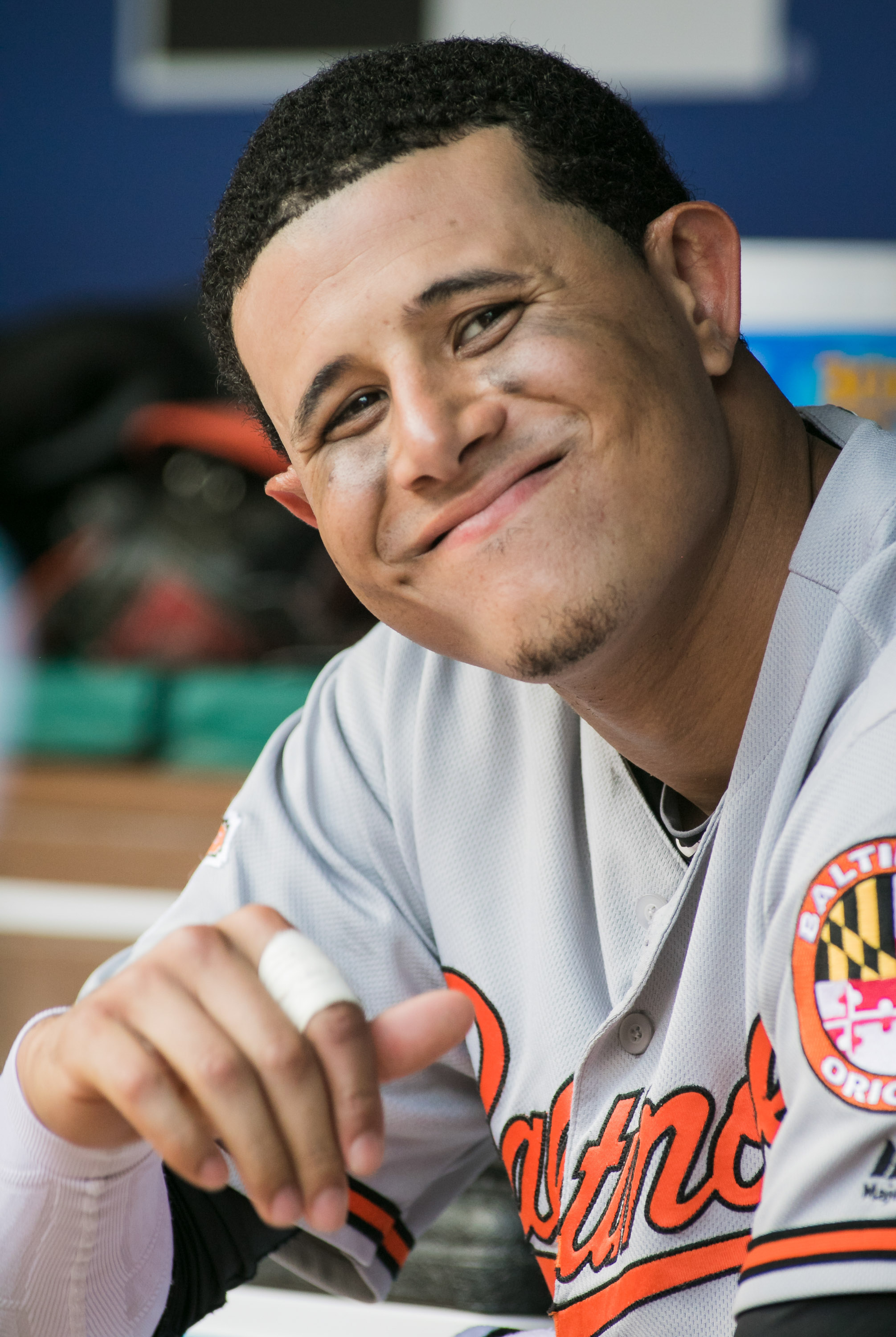
Baltimore’s preferences aside, it’s probably fair to assume that a trade package for Machado doesn’t expressly need to be built around two starters. Teams can offer any combination of Major League position players and prospects with some upper-level pitching as they attempt to pique Baltimore’s interest, and if the Orioles are truly open to the idea of moving Machado, it’s doubtful that they’d turn down a strong offer simply because the best player involved happened to be a position player.
It’s also worth noting that while many have suggested that a theoretical Machado trade could come with a “window” to negotiate an extension with his reps at MVP Sports, that scenario is uncommon. Nor, for that matter, should it be considered especially likely that Machado is particularly amenable to an extension with a new organization when he’s less than 12 months removed from hitting the open market as a 26-year-old free agent with a legitimate chance at a record-setting extension.
The Best Fit
From my vantage point, the Cardinals represent the best fit in terms of need and available prospects. The Cards are flush with young pitching, boasting names ranging from Alex Reyes to Luke Weaver to Jack Flaherty to Sandy Alcantara. They’ve also got a sizable crop of upper-level outfielders — another potential area of need for an Orioles with Adam Jones set to hit free agency next winter and no established presence in right field (with no disrespect to Austin Hays, who could well cement himself there in 2018).
The Cards may be reluctant to part with someone of Reyes’ upside or a pitcher like Weaver who shined so brightly down the stretch, but they have plenty of pieces to entice the Orioles. And, they could easily accommodate Machado’s desire to play shortstop by moving Paul DeJong to third base and/or dealing from the infield surplus that a Machado acquisition would create. For a team that just missed out on adding Giancarlo Stanton, acquiring Machado would be a strong fallback option, even if he comes as a short-term rental.
Plausible Landing Spots
Rosenthal noted in his report that Orioles owner Peter Angelos didn’t want to move Machado to the division-rival Yankees, but they have the farm system to make a Godfather offer and a newly vacated hole in their infield with today’s trade of Chase Headley to the Padres. Were it not for the reported reluctance on Angelos’ behalf, they’d merit mention alongside the Cards as one of the clearest fits for Machado.
It’s abundantly clear that the Angels have their sights set on returning to prominence in the AL West sooner rather than later. While they can’t offer Marte time at shortstop with Andrelton Simmons in tow, adding Machado would give the Halos one of the best defensive shortstop/third base combos of this generation. The Angels have an improving but still-not-elite farm, but they have some arms on the big league roster that could at least intrigue the Orioles. Andrew Heaney is coming back from Tommy John surgery but has four years of remaining control. Tyler Skaggs has had his own injury issues but has three years of control.
Weird Dark Horse Suggestions
The Rockies’ roster is stacked with controllable arms on the cusp of the big league roster and the team could view a Machado acquisition as a means of elevating them to the next level while they still have Nolan Arenado in the organization. Adding Machado at shortstop would likely push Trevor Story into a utility role, but having a versatile piece with that type of power would only seem to be a boon for the Rox.
The O’s and Nationals are hardly on the best of terms thanks to their ongoing MASN dispute, and in fact, the two teams have never brokered a trade since the Nats moved to D.C. However, Washington is committed to an aggressive bid at contending in their final guaranteed year of team control over Bryce Harper. The Nats are largely set in the outfield, but they could still shift Trea Turner back to center field and bump Michael Taylor to a fourth outfielder for one year in order to add a player of Machado’s caliber.
No Clear Need
It’s borderline insane to suggest that any team “doesn’t need” Machado; a player of his caliber would improve virtually any team, and he could be deployed at either third base or shortstop next season, so there’d be a variety of ways for him to slot into a new team’s lineup.
Still, teams such as the Cubs, Dodgers, Astros, Indians and Mariners lack a pressing need on the left side of the infield and/or already have long-term commitments already in place there. (Cleveland may also have some financial trepidation.) Any team could reasonably look at a Machado rental as a unique opportunity to acquire one of the game’s elite talents, but there’d be enough moving parts involved in talks with any of these teams to make each of them seem unlikely.
Long Shots That Merit Mention
The Giants are another club that missed out on Stanton and have an obvious spot at which they can work Machado into the infield. The hot corner was a black hole in San Francisco last year, as Giants third basemen combined to post a putrid .216/.268/.300 batting line on the season as a whole. Much as the Giants might love the notion of installing Machado at third base though, their best offer could almost certainly topped by an interested party with a better system.
Machado is an upgrade over Jorge Polanco at short for the Twins, who could push Polanco to third base and Miguel Sano to DH. But, the Twins are in dire need of arms themselves. It’d be a surprise to see them part with near-MLB ready arms in a trade to rent Machado for one year. The Brewers are in a similar spot in the sense that while Machado would upgrade over Orlando Arcia, adding pitching is a priority in Milwaukee. Taking a one-year shot on Machado for either Midwest club seems unlikely.
The Mets have plenty of uncertainty in their infield as David Wright and T.J. Rivera both try to return from injuries and Amed Rosario looks to establish himself as a big leaguer. But, New York’s pitching staff was in shambles last season due to injuries, and the depth they once had in the upper levels of the minors has thinned out. It’s tough to see them depleting their supply for a short-term add.
Up in Boston, the Red Sox are known to be looking to add some power to the lineup, but they’re currently penciling Rafael Devers and Xander Bogaerts in at third and short. Outside of moving Devers across the diamond to first base or a trade of Bogaerts (which some have speculated about but has yet to emerge as a serious possibility), it’s tough to envision that fit. Elsewhere in the AL East, the Blue Jays have their own superstar third baseman in Josh Donaldson with Troy Tulowitzki and Aledmys Diaz in the mix at shortstop.
Everth Cabrera and Khalil Greene are the only two Padres shortstops to post seasons of 3+ fWAR in the past two decades. San Diego has a glaring need at shortstop and a stacked farm system, but it’s still tough to see A.J. Preller depleting the farm he’s built up for a one-year addition of Machado in a year the team has little hope of contending.
Oakland has a steady shortstop in the form of Marcus Semien and will struggle to contend in a stacked AL West division as they wait on their young core to further cement itself in the Majors. The A’s have made some surprise veteran additions in the past and made a serious push for Edwin Encarnacion last offseason, but they’re a substantial reach in this regard.
The Phillies and Braves, too, figure to be oft-mentioned candidates to make a play for Machado. Philadelphia has widely been considered to be a likely pursuer of Machado in free agency, and new Braves GM Alex Anthopoulos has a vacancy at third base and a reputation for making big splashes. But neither team was competitive in 2017, neither seems likely to push past the Nationals atop the division and both would be changing course somewhat from rebuilds by flipping long-term talent for short-term gain.
Out of the Picture
Teams that are just embarking on lengthy rebuilds and/or face significant payroll restrictions can more or less be ruled out entirely. The Tigers, Royals, Marlins, Rays and Pirates don’t seem possible by almost any stretch of the imagination. (And, clearly, there’s been some imagination stretching in some of the above-portrayed scenarios.) The Reds and White Sox are further along in the rebuilding process than Detroit, Kansas City or Miami, but neither club makes sense as an ultimate landing spot. The Diamondbacks have a weak farm with several infield options on the left side already, and they’re up against a rather substantial payroll crunch that could make Machado’s $17MM+ salary difficult to stomach.
Photo courtesy of USA Today Sports Images.
Giancarlo Stanton Discusses Trade To Yankees
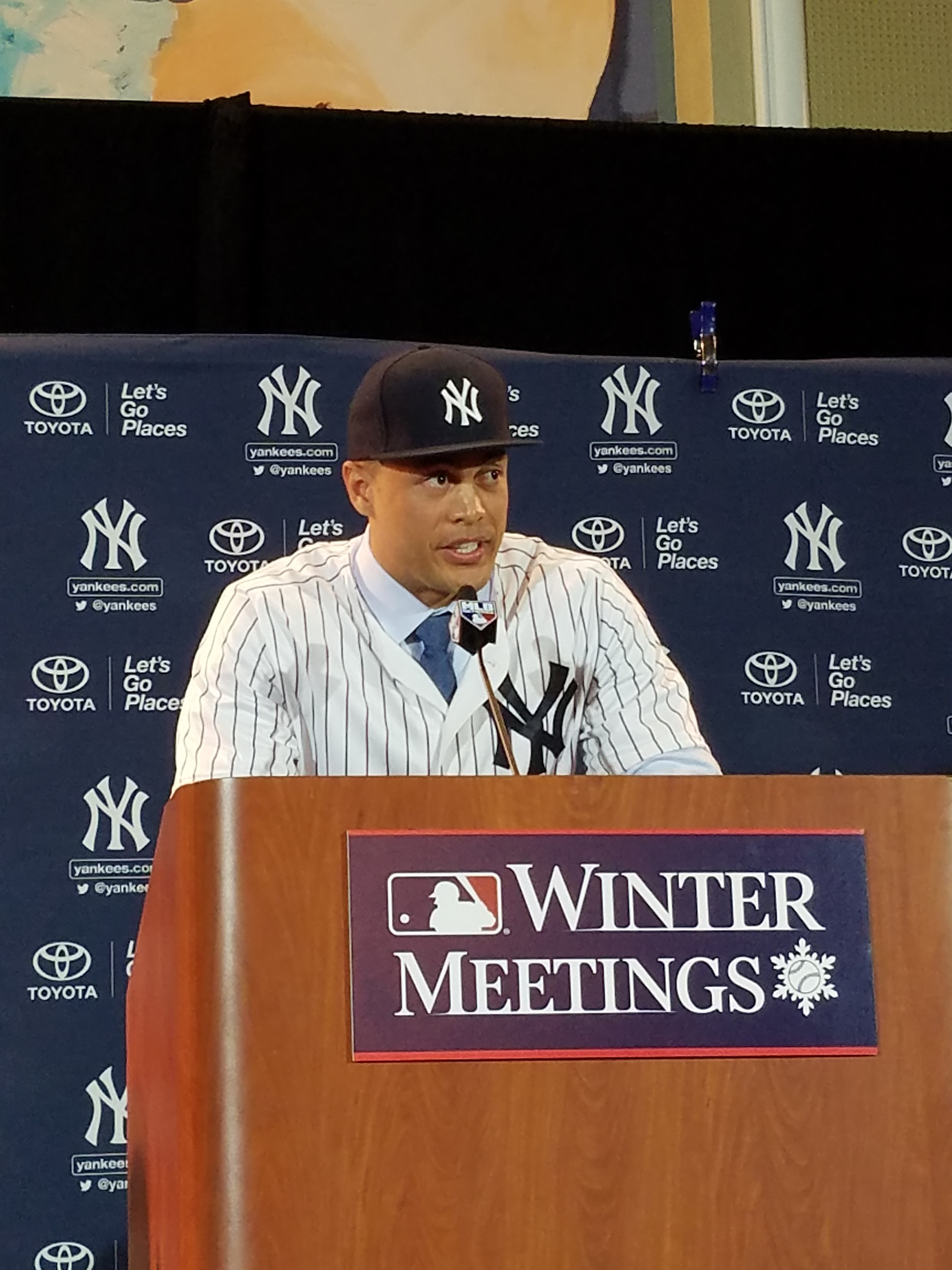
After a prolonged saga in which the Giants and the Cardinals were the primary trade suitors for Giancarlo Stanton, the reigning NL MVP spurned both clubs in order to approve a trade to the Yankees that seemingly came together in a matter of days. The Yankees introduced Stanton at a press conference at the Winter Meetings in Orlando, Fla. on Monday, and the slugger spoke about his decision to approve a trade out of Miami as well as the process of ultimately green-lighting a deal to New York.
“When I signed up in Miami, I wanted things to work out,” Stanton began in his address of the media. “I had a good vision there. But, sometimes things just spiral out of place, and you have to find a new home. I’m very excited to be here and I’m looking forward to stepping up and being with this winning environment and winning culture.”
Stanton’s comments regarding the Marlins mirror those that he made on Instagram earlier today. “…I’ve always tried to be as professional as possible during the unprofessional, circus times there!” he wrote amid a thank you/farewell message to Marlins fans, the city and the organization.
Indeed, the Miami organization has long drawn flak from the media and throughout the industry under the leadership of former owner Jeffrey Loria and president David Samson. From the team’s 2012 fire sale just one year after moving into a publicly funded stadium to a near-constant managerial shuffle as well as the seemingly interminable saga of Loria’s sale of the team, Stanton withstood a roller coaster ride like few other players experience in their careers.
“You guys in the media, you’ve seen what’s gone on down there,” said Stanton, who played for seven different managers in his eight seasons in Miami (including a season in which former GM Dan Jennings bizarrely shifted from the front office to the dugout). “What I mainly meant was just no structure — no stamp of, ‘This is how things are going to be.’ It’s a different direction every Spring Training. Something new every spring. A different manager every spring or middle of the season. That’s mainly what I meant.”
In the Yankees, it seems, Stanton sees a largely different scenario: a young team with a freshly appointed manager that has clear designs on winning over a sustained period of time.
“Just watching them from afar, seeing their young dynamic group, the way they flow together on the field,” Stanton said when asked why the Yankees appealed to him. “They never give up, never quit. The atmosphere, the storied franchise — there’s not much you could say of why you wouldn’t want to be there. They were for sure on the list of where I wanted to be.”
Stanton also noted that the team’s young core can “strike from everywhere,” calling them “well-balanced” and “hungry.” That’s not to say that he didn’t hold former teammates such as Christian Yelich, Marcell Ozuna, J.T. Realmuto, Dee Gordon and others in similarly high regard. Stanton made clear that he felt the basis of a contender was there in Miami, but his vision for the team’s future did not align with that of new owners Derek Jeter and Bruce Sherman.
“We had a meeting, yes,” Stanton said when asked if he sat down with Jeter. “We spoke about the direction of the team. I wanted us to go forward and have an advance with the pitching staff. I thought our lineup was legit, and we needed help with our pitchers and we needed to add — not subtract. Derek, the way they wanted to go was to subtract, so I let that be known that I didn’t want to be part of another rebuild or another losing season. That’s almost a guaranteed losing season, taking away what I thought was a great lineup.”
At that point, Stanton said he provided the Marlins with a list of teams prior to the beginning of trade negotiations. Though the Cardinals and Giants weren’t on that list, those two teams have long been reported to have the most interest in Stanton, and the Marlins went ahead in negotiating potential deals to send Stanton there, pending his approval.
Stanton noted that he was open to hearing what the Giants and Cardinals had to say, and he was complimentary of the executives with whom he met as well as the history of each organization and its culture. Ultimately, however, he simply stated that a trade to either San Francisco or St. Louis “just wasn’t the fit for me.” Stanton unsurprisingly declined to delve into his exact motivation for vetoing trades to both clubs, though he did shed some light on his reasons for meeting with two teams that weren’t on his list of approved trade destinations.
“I really just wanted to learn what another organization is like,” said Stanton. “All I’ve ever experienced is the Marlins and basically one way of going about things, so I wanted to see how other organizations went about their business and how the city would appeal to me.”
“I’ve always watched them from afar,” Stanton said of the Cardinals when asked specifically about his talks with St. Louis. “We share the same Spring Training, so I’ve noticed how they go about their business. It’s winning first, culture, the fans and everything — it’s a great organization. We did have a good meeting, but I wanted to see my options [with] the teams that I initially chose.”
That, Stanton emphasized, was a list that always included the Yankees. The Dodgers, too, were on the list, though Stanton stated he wasn’t sure how aggressive Los Angeles ever was in its attempts to acquire him.
As for what’s to come, he acknowledged an excitement to play with a player that he feels is similar to himself in Aaron Judge. The exact nature of the outfield alignment remains to be seen, and Stanton said there’s been no talk of how they’ll all line up defensively, but he’s willing to play anywhere. His focus isn’t on where he’s playing in the field but the ultimate outcome of his team’s efforts.
“It’s what I’ve always wanted,” Stanton replied upon being asked about playing in a major market with definitive postseason expectations. “It’s what I’ve dreamed of. You always want to be in competitive games where they mean something and your performance means something to the team and the city. It’s going to be a fun challenge, and I’m looking forward to it.”
As for the Marlins, they did not have a contingent on hand to discuss the franchise-altering move. In fact, Jeter did not even travel to Orlando for the Winter Meetings, though he did speak to reporters by phone today. Clark Spencer of the Miami Herald and Tim Healey of the Sun Sentinel rounded up the key bits of information (all links that follow are to their Twitter feeds).
Jeter gave some details on the process, saying that the Yankees were the only team really involved beyond the Cardinals and Giants. He stressed the financial flexibility that comes with shedding Stanton’s salary and emphasized that Stanton told the Fish that he “wanted to continue his career elsewhere” after learning of the team’s plans. The new Marlins CEO emphasized that he understands why some fans are disappointed, though he also stressed that he thinks building a sustainable winner in the long run will reward the patience the organization is asking for. Jeter also rejected any inkling that his connections to the Yankees had anything to do with the move.
Free Agent Profile: Carlos Santana
Following his seventh-straight season of providing the Indians with at least 2 wins above replacement, Carlos Santana is a free agent. He’ll be looking to get paid for his consistency, batting eye and improved defense at first base.
Pros/Strengths
Santana’s signature strength is his fantastic eye at the plate. Since the beginning of the 2011 season (his first full season at the MLB level), no player in the American League has drawn more free passes. His 698 walks during that span lead second-place Jose Bautista by 44 and third-place Mike Trout by 118, while trailing only Joey Votto in all of baseball. Santana also carries elite contact ability: during the 2017 season, his 7.1% swinging strike rate ranked top 30 in the majors, while his 21.4% chase rate was within MLB’s top ten. Thanks to this skill set, Santana was one of just four players in baseball with a walk rate above 13% and a strikeout rate below 15% this past year. The others were Joey Votto, Anthony Rendon and Anthony Rizzo. There are dozens more statistics just like this one, but the point remains the same: Santana is one of the most patient players on the planet.
He can do more than simply take walks, though. Santana’s power is also well above average. He’s socked 168 bombs since the start of 2011; that puts him in baseball’s top 25 during that time period. In his seven full major league seasons, Santana has never hit fewer than 18 homers, and he’s hit as many as 34. While his career .445 slugging percentage and .196 ISO don’t leap off the page, those figures are certainly nothing to scoff at. In fact, that ISO is tied for the 51st-highest mark out of the 203 players who’ve accumulated at least 2,000 plate appearances since Santana’s career began. Make no mistake: Santana is a threat to hit the ball out of the park at any time.
In addition to his offensive skill set, Santana may well be one of the best defensive first basemen in the game. UZR/150 has always been bullish on his work, rating him as being between 4.6 and 5.3 runs above average per 150 games in each of the past three seasons. However, DRS hasn’t painted a pretty picture of his work in the past. In 2017, however, Santana graded out to 10 Defensive Runs Saved; nine full runs better than his previous career high at first.
Cons/Weaknesses
Although the longtime Cleveland Indian doesn’t have many glaring weaknesses, his true achilles heel lies in his batted ball profile. Although Santana is a switch-hitter, is tendency to pull the ball more than half the time makes him incredibly easy for opposing infields to shift against. Santana’s pull percentage has been greater than 50% in all but one season of his career; the remaining season was 2012, during which his pull rate was 48.1%. All told, Santana’s career pull rate is a whopping 52.9%. Since Santana came into the league, only Mark Teixiera and Chris Young have higher pull rates among hitters with at least 2000 plate appearances. Furthermore, Santana’s batting average on ground balls hit to the pull side of the infield has never been higher than .145 in any season of his career. Santana’s lack of offensive versatility has led to prolonged slumps throughout his career. Opposing teams can greatly improve their pitching performance against him by following a simple formula: pitch him inside, generate ground balls and deploy an extreme pull shift.
Other than his pull penchant, however, Santana doesn’t really have much in the way of weaknesses. One small criticism of his hitting ability is that he’s performed poorly against knuckle curveballs; Santana’s career weighted runs created against that particular pitch is -2.36, which ranks 222nd of 268 players during the course of his major league career. However, the pitch is so rare that it’s hard to imagine that will affect his value on the free agent market.
One could say that while Santana is an above average hitter, he’s merely average among first basemen. While his consistency is impressive, it’s not like he’s been consistently a stud. During his tenure as a first base/DH type, Santana has never ranked higher than ninth in fWAR among first basemen. In essence, he’s a great hitter, but not a spectacular hitter relative to his position on the field.
Background
The Los Angeles Dodgers originally signed Santana out of the Dominican Republic back in 2006. In 2008, the Indians acquired him in the Casey Blake trade.
Though he plays first base now, Santana’s major-league debut was as a catcher, a position he played in the majority of games until 2014. After a brief experiment at third base that year, Santana became a full-time first baseman/designated hitter and hasn’t been behind the plate for a single inning during the past three seasons. He’s never worn a major league uniform for any team but the Indians, but officially became a free agent when he rejected Cleveland’s qualifying offer earlier this winter.
Market
The fact that he’s limited to first base will take many NL teams out of the running for Santana, shortening his list of suitors. The crowded free agent first base market this year could further drive down his value; if that occurs, though, Dave Cameron of Fangraphs sees potential for Santana to rate as a notable bargain. The Indians have already made him a contract offer, while the Padres and Rangers have also shown interest. Some other potential suitors include the Red Sox, A’s and Rockies.
Contract
Though MLBTR initially predicted that Santana would sign a three-year, $45MM contract with the Indians, the two sides weren’t able to work out a deal before Santana rejected their qualifying offer. The initial market for him seems fairly strong, and with his relative youth so many teams already in the mix, the original prediction now appears to be on the low side. Though the presence of Eric Hosmer and Logan Morrison on the market could limit his earning power, I’m guessing Santana will get a four-year deal worth no less than $60MM.