
MLBTR Originals
Recapping MLBTR’s original content from the past week:
- Before first baseman/designated hitter Edwin Encarnacion agreed to join the Indians, Jeff Todd asked readers to predict where he would sign. The plurality of voters accurately predicted Cleveland would be Encarnacion’s destination.
- A transaction-filled December was winding down at the time, so I polled readers on which move looks like the most questionable decision of the month. The MLBTR audience doesn’t seem too bullish on the Nationals’ choice to trade a significant prospect haul to the White Sox for outfielder Adam Eaton.
- Two NL East center fielders, the Phillies’ Odubel Herrera and the Braves’ Ender Inciarte, signed extensions earlier this month. With that in mind, Jeff compared their deals and wondered which team got the superior value. According to the majority of voters, the Braves did better.
- Given that the Reds haven’t signed a major league free agent this offseason, Steve Adams and Jeff detailed 10 available players – all relievers – who are logical fits to end up in Cincinnati.
- After Encarnacion and right-hander Ivan Nova exited the open market, I updated the top 10 free agents left on the board. The list is based on the Top 50 that Tim Dierkes assembled entering the winter. Slugger Mark Trumbo is likely poised to sign the richest contract of the remaining free agent class.
- Mark Polishuk highlighted 10 teams that will soon have decisions to make on managers and/or front office bosses who are entering contract years.
- Cubs ace-caliber right-hander Jake Arrieta is going into a contract year, so Jeff looked at what it might cost the World Series champions to extend him this offseason. Most voters don’t expect a deal to come together.
- Unlike Arrieta, Cardinals righty Carlos Martinez is a few years from free agency. Nevertheless, Jeff tried to nail down how much it might cost St. Louis to extend the first-time arbitration-eligible 25-year-old.
- Steve listed seven possible landing spots for free agent catcher Matt Wieters, whom voters expect to sign with the Braves.
- Speaking of catchers, Steve pondered whether Sandy Leon, Blake Swihart or Christian Vazquez stands the best chance to serve as the Red Sox’s long-term answer behind the plate.
- Many free agents are fresh off less-than-stellar years, though Jeff made cases for 20 players – 10 hitters and pitchers apiece – who could be in line for bounce-back 2017 campaigns.
- While it seems Ian Desmond will man first base for the Rockies next season, that isn’t necessarily etched in stone. Thus, Jeff delved into several other possibilities – including Trumbo.
- The top two unsigned left-handed relievers are Jerry Blevins and Boone Logan, leading Jeff to contemplate which is the more appealing option.
- Capping off a busy week for Jeff, he detailed each NL West team’s three biggest remaining needs as Spring Training inches closer. Mark did the same with the AL East, while I handled the NL East.
3 Remaining Needs: National League East
To set the stage for the remainder of the offseason, we’ll take a look at the most pressing remaining needs of every team in baseball over the coming week or so, division by division. (Hat tip to MLBTR commenter mike156 for the idea.) We often discuss things through the lens of an organization’s trajectory; thus, a rebuilding team might “need” to move some salary, while a contender might “need” an expensive starter. But with camp in sight, every club is making final calls on who’ll compete for big league jobs in the season to come (while also pursuing broader opportunities), so the focus here is on specific positions on the MLB roster. Fortunately, the task of roster analysis is made much easier by the MLB depth charts available at RosterResource.com. Each team listed below is linked to its respective depth chart, so you can take a look for yourself.
In the first two editions of this series, Jeff Todd broke down the NL West and Mark Polishuk examined the AL East. Now a look at where the NL East’s five teams stand as the calendar flips:
- Bullpen: With Mark Melancon gone, the Nationals are currently projected to rely on Shawn Kelley (11 career saves) as their closer. Based on his output the past couple seasons, Kelley is worthy of the role, but there are durability concerns with the soon-to-be 33-year-old. Kelley has never thrown more than the 58 frames he tossed last season; more alarmingly, he’s a two-time Tommy John surgery recipient who, per a study done by MLBTR contributor Bradley Woodrum, comes with an elevated risk to eventually need another procedure. Even without Kelley’s injury history, acquiring relief help is in order. Washington got a combined 242 2/3 innings last season from Melancon, Yusmeiro Petit, Felipe Rivero, Matt Belisle, Jonathan Papelbon, Reynaldo Lopez and Marc Rzepczynski. Not a single one of them is a member of the organization anymore. Therefore, it would make sense to add at least one more veteran to the likes of Kelley, Blake Treinen, Sammy Solis and Oliver Perez. The club already tried to re-sign Melancon and reel in Kenley Jansen, but those attempts failed. Even with those two off the board, free agency is hardly bereft of options. In the event Washington decides to stick with in-house choices, it has a couple intriguing youngsters in Koda Glover and Trevor Gott.
- Infield Depth: The Nationals’ infield depth took a hit with the loss of Danny Espinosa, and current free agent Stephen Drew could also be in another uniform next season. Either re-upping Drew, which is a possibility, or signing another veteran would give the team more proven insurance than Wilmer Difo (77 career plate appearances) behind second baseman Daniel Murphy, shortstop Trea Turner and third baseman Anthony Rendon. Murphy is capable of playing first base if Ryan Zimmerman endures another poor year or suffers an injury in 2017, but that would leave the team wanting at the keystone.
- Rotation Depth: In trading Lopez and Lucas Giolito to the White Sox for outfielder Adam Eaton, the Nats subtracted some of their starting pitching depth. That’s somewhat concerning given that starters Stephen Strasburg and Joe Ross are coming off injury-plagued years, which perhaps increases the need to add rotation insurance behind those two, Max Scherzer, Tanner Roark and Gio Gonzalez. A.J. Cole and Austin Voth might suffice thereafter, but there’s very little of intrigue beyond them (Double-A prospect Erick Fedde could crack the major leagues sometime next season, granted). The Nationals had an established veteran starter in camp last year in Bronson Arroyo, who ended up missing 2016 because of injuries, and could look for a similar depth option prior to next season.
- Outfield: There are only two corner outfield spots, yet the Mets arguably have four starting-caliber players on hand in Yoenis Cespedes, Curtis Granderson, Michael Conforto and Jay Bruce. Cespedes isn’t going anywhere, obviously, and Conforto’s place on the roster appears secure. The writing is on the wall, then, for either Granderson or Bruce (very likely the latter) to exit the organization via trade by next season. The Mets have been reluctant to deal Bruce without getting anything useful in return, but they might have to settle for dumping his salary in order to clear their corner outfield logjam and free up spending room. In doing so, New York would still face uncertainty in center field. Juan Lagares has fallen off since a strong 2014 showing that led the Mets to sign him to a four-year extension with $23MM in guarantees. Cespedes and Granderson also have experience in center, but neither is an ideal fit there. The Pirates’ Andrew McCutchen has come up as a trade possibility, but he was a defensive nightmare last season and the Mets aren’t actively looking to acquire him (or any other center fielder), anyway.
- Right-Handed Reliever: The Mets are going to lose closer Jeurys Familia to at least a month-long suspension, which will leave the team with Addison Reed and Hansel Robles as its go-to choices to preserve late leads. Mindful of that, general manager Sandy Alderson has checked in on the likes of Wade Davis (before the Royals traded him to the Cubs), Brad Brach (Orioles) and Alex Colome (Rays) on the trade front this winter, but nothing has materialized. White Sox closer David Robertson represents another possible acquisition, though he’d be a costly pickup. There are still appealing names on the open market, where Greg Holland, Joe Blanton, Sergio Romo, Santiago Casilla, Neftali Feliz and 2016 Met Fernando Salas are among those without contracts.
- Left-Handed Reliever: New York has three lefty relievers on its projected 25-man roster in Josh Edgin, Josh Smoker and Sean Gilmartin, but none had encouraging 2016 campaigns (in fairness to Edgin, he was on the rebound from 2015 Tommy John surgery and finished the year well). Jerry Blevins was terrific last season, but he’s now a free agent and, along with Boone Logan, one of the top two southpaw setup men left in free agency. The Mets have shown interest in each this offseason, but payroll limitations have prevented them from signing either (presumably, they’ve also stood in the way of securing right-handed help).
- Starting Pitcher: Forced to forge ahead without the late, great Jose Fernandez, the Marlins have made a couple unexciting additions to their rotation this winter with the signings of Edinson Volquez and Jeff Locke. They now have a full starting five on paper with those two joining Wei-Yin Chen, Adam Conley and Tom Koehler, but it’s not the most confidence-inspiring group. With that in mind, Miami is still in the market for a starter, though it’s seemingly limiting itself to low-cost depth types. Luckily for the Marlins, there are plenty of those left in free agency.
- First Base: As long as they’re facing a right-handed pitcher, the Marlins are in fine shape at first base with Justin Bour. But, in an admittedly small sample size of 110 major league plate appearances, the lefty-swinging Bour has struggled mightily against southpaw hurlers (.223/.273/.291, no home runs). Thus, it would behoove the Fish to find a better platoon partner for Bour than the penciled-in Miguel Rojas – although a righty, he has posted a woeful .184/.225/.272 line versus lefties in 122 PAs. Any of Dae-ho Lee, Mark Reynolds, Trevor Plouffe, Adam Rosales or 2016 Marlin Chris Johnson could be realistic targets via free agency. Miami hasn’t closed the door on re-signing Johnson, who – despite a subpar 2016 – has historically held his own against lefties.
- Left-Handed Reliever: It’s not a must for the Marlins to find a southpaw reliever, as their most prominent righty options – A.J. Ramos, Brad Ziegler, David Phelps, Kyle Barraclough and Junichi Tazawa – are capable of getting all hitters out. Nevertheless, it would be nice for the club to have more than one left-handed reliever on its 40-man roster. As of now, only Hunter Cervenka is in the fold, though same-sided batters hit a paltry .198/.306/.318 against the then-rookie last season. Signing a free agent like Javier Lopez could make sense; even though the longtime Giant’s coming off a season to forget, he has a lengthy track record of success preventing runs and would like to remain close to his Georgia home.
- Third Base: Their interest in Brian Dozier notwithstanding, the Braves appear to have a respectable offensive platoon lined up at second base with Jace Peterson and Sean Rodriguez. On the other side of the diamond, finding a complement to right-handed-hitting third baseman Adonis Garcia would be beneficial. Garcia has hit an underwhelming .262/.293/.407 in 152 trips to the plate against righties, while reserve Chase d’Arnaud (also a righty) hasn’t done any better (.218/.278/.278 in 279 PAs). Free agent Luis Valbuena is a potential fit, but he’s an upgrade over Garcia in general and would warrant an everyday role. Otherwise, the aforementioned Stephen Drew – a left-handed hitter and Georgia native – could be a reasonable free agent target to pair with Garcia.
- Bullpen: As it stands, the Braves’ sole 30-something reliever is closer Jim Johnson, with Arodys Vizcaino and Ian Krol serving as only semi-established options. While it’s quite possible the Braves are comfortable with a mostly young bullpen that will also include Mauricio Cabrera and Jose Ramirez, among others, signing one of the many available veterans on a short-term deal would have a chance to pay dividends over the long haul. For example, the Braves could take a similar approach to last year’s Padres, who bought low on Fernando Rodney, got a few good months out of him and flipped him for a prospect prior to the trade deadline. That’s assuming the Braves aren’t contenders next year, of course.
- Catcher: With Tyler Flowers and Anthony Recker in the equation, this arguably isn’t a pressing short-term need for a rebuilding club, but free agent backstop Matt Wieters is nonetheless on Atlanta’s radar. It’s debatable how much of an upgrade (if at all) the ex-Georgia Tech star would be over Flowers, though. Wieters, unlike Flowers, is not a well-regarded pitch framer, and the longtime Oriole is coming off one of his worst offensive seasons. If Atlanta doesn’t land the switch-hitting Wieters, it’ll likely be content to roll with Flowers and Recker next season.
- Corner Outfield: The Phillies’ most proven corner outfield bat belongs to Howie Kendrick, who has played 1,100 games at second base compared to just 114 in left field and is coming off a below-average offensive year. While the rebuilding club could simply utilize Kendrick and younger players like Roman Quinn, Aaron Altherr and Tyler Goeddel (the latter two were dreadful in 2016) next season, dipping into free agency for another outfielder remains a possibility. If general manager Matt Klentak does sign anyone, odds are it’ll be a left-handed hitter. Of the previously mentioned four, only the switch-hitting Quinn is capable of batting from the left side.
- Bullpen: Klentak has revealed he’s looking for more relief help, though he has already been busy on that front throughout the offseason. Philadelphia has acquired three stopgaps in Joaquin Benoit, Pat Neshek and Sean Burnett (on a minor league deal), but its projected major league bullpen could stand to make improvements beyond Benoit, Neshek, Hector Neris and Jeanmar Gomez.
- Left-Handed Starter: The Phillies’ starting five at the moment features nothing but right-handers, and Adam Morgan is their only Triple-A starter who’s a southpaw. Perhaps it would be logical to sign a swingman like Travis Wood, who could initially work out of the bullpen (joining fellow lefty Joely Rodriguez) and then potentially factor into the rotation if someone suffers an injury or underperforms.
3 Remaining Needs: American League East
To set the stage for the remainder of the offseason, we’ll take a look at the most pressing remaining needs of every team in baseball over the coming week or so, division by division. (Hat tip to MLBTR commenter mike156 for the idea.) We often discuss things through the lens of an organization’s trajectory; thus, a rebuilding team might “need” to move some salary, while a contender might “need” an expensive starter. But with camp in sight, every club is making final calls on who’ll compete for big league jobs in the season to come (while also pursuing broader opportunities), so the focus here is on specific positions on the MLB roster. Fortunately, the task of roster analysis is made much easier by the MLB depth charts available at RosterResource.com. Each team listed below is linked to its respective depth chart, so you can take a look for yourself.
Jeff Todd kicked off the series with a look at the NL West, and now we’ll move across the continent and across leagues to the AL East, starting with the division champion Red Sox and moving in order of last year’s standings. Here are three needs (of varying importance) for each team in the division:
- Third Base: Boston is hoping that a healthy and in-shape Pablo Sandoval can get back to his old Giants form, though that’s no small risk given Sandoval’s disastrous 2015-16 seasons. With Travis Shaw off to Milwaukee, the Sox are left with Brock Holt and Josh Rutledge as the primary third base backup options on the MLB roster. The Red Sox didn’t hesitate to bench Sandoval after he struggled in Spring Training last year, so if he has another rough spring, the Sox could start looking for a reliable everyday option at the hot corner.
- Bench Depth: While the Red Sox have several backup options on the 25-man roster or high minors, WEEI.com’s Rob Bradford recently pointed out that the team is rather lacking in proven depth pieces, and might not be able to handle an injury to one or two regulars. Adding the likes of an Adam Rosales or Trevor Plouffe (names cited as Bradford as players of interest for the Sox) would help in this regard.
- Left-Handed Reliever: The club’s decision to tender a contract to Fernando Abad was something of a surprise, given how poorly Abad fared after joining the Red Sox last summer. Robbie Ross is the primary lefty in Boston’s bullpen and while it appears the Sox feel Abad will get back on track, it wouldn’t hurt to find another southpaw. Admittedly, this is a pretty borderline “need” on what is a pretty stacked Boston roster — the Sox could potentially find another lefty reliever internally in the form of Roenis Elias, Brian Johnson, Henry Owens or perhaps even one of Eduardo Rodriguez or Drew Pomeranz (if Steven Wright reclaims a rotation spot).
- Corner Outfield: With Jose Bautista and Michael Saunders both in free agency, the Jays are left with Melvin Upton Jr., Ezequiel Carrera, new acquisition Steve Pearce and Dalton Pompey as the candidates for both left and right field. You could argue that this counts as two needs, though the Blue Jays can juggle their internal options at one corner spot and focus on acquiring an everyday outfielder to handle the other position.
- Left-Handed Reliever: Southpaw bullpen depth has been a long-standing need for the Jays, who were short on lefties even before Brett Cecil signed with the Cardinals. The team has been linked to several left-handed relievers in free agency, though given the big contracts scored by Cecil and other lefties this winter, landing one of those notable arms won’t be cheap. Toronto has added left-handers T.J. House, Brett Oberholtzer and Jeff Beliveau to minor league deals this winter, though a more proven southpaw reliever would certainly be preferred.
- Right-Handed Reliever: No reason to stop at just southpaws, as the Jays’ relief corps is pretty thin behind Roberto Osuna, Jason Grilli and Joe Biagini, and it could get thinner if the Jays explore stretching Biagini out as rotation depth. The Jays are looking to duplicate their success with Biagini in another Rule 5 draft pick (Glenn Sparkman) and have a few new faces added in the minors to join their in-house bullpen options. As with the lefties, however, adding an experienced, reliable arm would go a long way to solidifying the bullpen.
- Right Field: With a Hyun Soo Kim/Joey Rickard platoon planned for left field, the Orioles have considered several free agents and trade targets for the right field slot. This doesn’t necessarily have to be an everyday option, as the O’s could form another platoon out of a new addition and one of Christian Walker, Aneury Tavarez, Adam Walker or Dariel Alvarez. With rookie Trey Mancini in line for a significant amount of DH at-bats, however, the Orioles may hesitate at allotting quite so much playing time to inexperienced youngsters.
- Designated Hitter: While the O’s are high on Mancini, it makes sense to add a veteran who can at least serve as a platoon partner should Mancini not be ready for prime time. Baltimore has been linked to free agents like Chris Carter or Pedro Alvarez for DH duties, though ideally, Mancini’s DH partner would also be able to handle playing a corner outfield role, so two needs could be addressed at once.
- Left-Handed Hitter: If the Orioles do add another bat, some left-handed pop would be preferable to add balance. Kim and Chris Davis are the only left-handed hitters projected to get regular playing time in the current Baltimore lineup.
- Starting Rotation: Masahiro Tanaka, Michael Pineda and C.C. Sabathia aren’t the most rock-solid top three in the world, though they’re locked in atop the Yankees rotation. That leaves Luis Severino, Chad Green, Luis Cessa, Bryan Mitchell and perhaps Adam Warren battling for those last two spots. There isn’t a lot of experience in that group, and GM Brian Cashman has downplayed the idea of acquiring another starter (though the Yankees have also been linked to Jose Quintana in some trade rumors). As much as the Yankees want to see what they have in their young arms, it wouldn’t be a surprise to see them add a low-cost, innings-eating veteran to compete for a rotation job in Spring Training.
- Left-Handed Reliever: Aroldis Chapman will close and Tommy Layne is a classic LOOGY, so since Joe Girardi likes to have as many bullpen options as possible, that leaves room for another southpaw. Chasen Shreve, Richard Bleier and Dietrich Enns are options on the 40-man roster, though since the Yankees have been connected to veterans like Boone Logan or Jerry Blevins on the rumor mill, they could be looking for more experience.
- First Base: As in the rotation, the Yankees are committed to young players at first, with Greg Bird penciled in as the starter and Tyler Austin getting some action against lefties (veteran Matt Holliday could also fill in, in a pinch). While Bird is reportedly recovering well from February 2016 surgery to repair a torn labrum, you have to consider a position a bit of a question mark when the first choice is a player returning from missing an entire season. It’s very unlikely the Yankees will make a move to address first base before Opening Day, though it could be an area to watch as the season develops if Bird, Austin or Holliday have injury or performance-related setbacks.
- Starting Rotation: While the Rays already have plenty of starters, what they really “need” is to decide if they’re going to be dealing one of them. Rumors have been flying all winter about teams looking to acquire one of Tampa’s starters, with Drew Smyly or Alex Cobb perhaps more likely to be on the move due to the Rays’ reportedly enormous asking price for Chris Archer or Jake Odorizzi. What the Rays get in return for one of their arms (if any are dealt) will go a long way towards filling one or both of the remaining needs on this list.
- Right-Handed Hitter: Left fielder Corey Dickerson and first baseman Brad Miller are both left-handed bats who struggle against southpaws, so the Rays would be aided by adding a player who can handle one (or both) positions and add some thump from the right side of the plate.
- Designated Hitter: This would also be a natural spot for a right-handed bat, as switch-hitter Nick Franklin was only effective against righty pitching last season in part-time action. A regular DH isn’t necessary since the Rays would like to keep this position open for lineup flexibility — Wilson Ramos will likely require some DH time in the wake of knee surgery, while neither Dickerson or Miller have much defensive value — but the promise of DH at-bats could help the Rays entice a veteran hitter who might be otherwise unenthusiastic about playing on Tropicana Field’s artificial surface.
Extension Candidate: Carlos Martinez
We know that the Cardinals are interested in exploring an extension with righty Carlos Martinez, though there’s no news of progress (or even earnest engagement) to this point. But new contracts are often sorted out during the spring, and the sides will need to discuss money one way or another since Martinez is entering his first season of arbitration eligibility.
Only 100 days past his 25th birthday, Martinez is young enough to believe he has plenty of good years ahead of him. He’s also among the game’s hardest-throwing starters. Though his average fastball velocity took a slight step back in 2015, it bounced back to a robust 96.5 mph in his most recent campaign. And the results have followed, as Martinez posted a combined 3.02 ERA over the last two seasons. That combination of age, the liveliness of his arm, and results make the Octagon client an appealing candidate for an investment for a St. Louis club that has faced a few questions in its still-talented rotation of late.
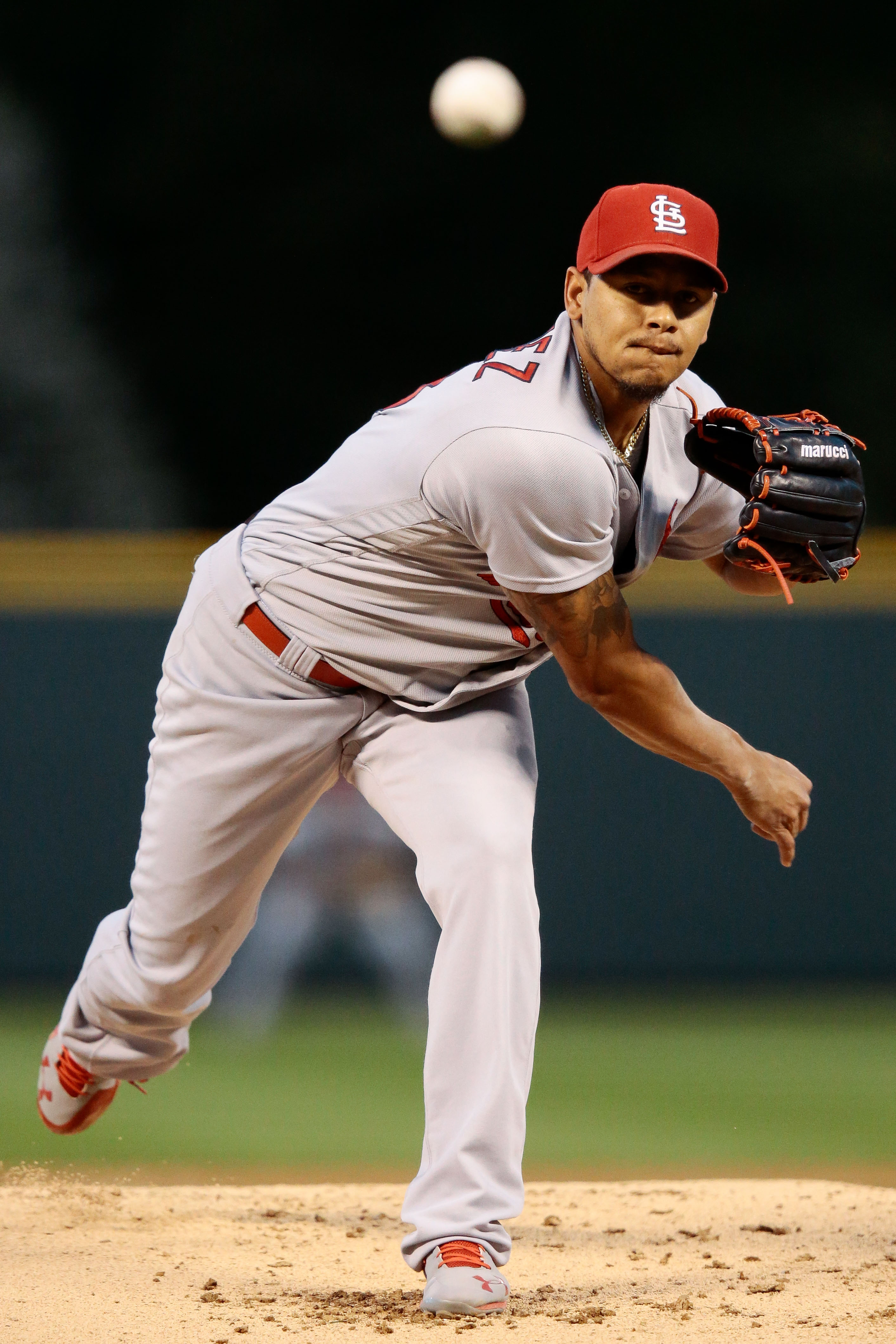
Of course, the arbitration process provides an important starting point for weighing Martinez’s value. MLBTR and contributor Matt Swartz project him to earn $5.3MM in his first season of eligibility, a rather lofty sum for a first-year-eligible starting pitcher. (Dallas Keuchel set a new record last year with a $7.25MM deal, blowing away the long-standing $4.35MM record held by Dontrelle Willis and David Price.) If Martinez continues his current trajectory, he could follow Price in landing some truly significant arb salaries, though unlike the talented lefty, he won’t be able to build off of a Super Two campaign.
For Martinez to max out his earning capacity, though, he’ll need to extend his outings. He topped 180 innings for the first time in 2016, ending up with 195 1/3 frames on the ledger. Durability will be a key consideration for the Cards. Though there haven’t been any significant health concerns to date, Martinez’s combination of youth and propensity for relying on hard pitches gave him a somewhat elevated Tommy John risk profile in the study completed earlier this year by MLBTR contributor Bradley Woodrum (see here for an explanation; here for individual player results).
All told, there’s plenty of reason for confidence in Martinez’s outlook. Increased confidence and usage rates in his changeup — the only one of his four pitches that didn’t score as a top-level offering in 2016 — has allowed him to make strides against lefties, who battered him in 2014. Though he still surrendered a .256/.342/.387 batting line to opposing southpaws in 2016, that’s enough to make him a high-quality starter when combined with his dominating work against right-handed batters (who hit just .204/.270/.269).
Though he lost over one strikeout per nine as against his prior season’s results in 2016, and his swinging-strike rate dwindled a bit to 9.4%, Martinez posted a career-best 56.4% groundball rate. He also worked in the zone more than he had in the preceding two years, though his walk rate has remained relatively consistent. Martinez continues to be tough to take deep — he has allowed 0.6 dingers per nine for his career — and has given up hard contact on less than three of ten balls put in play against him in every one of his seasons in the majors.
So, assuming that St. Louis is prepared to do what’s reasonably necessary to make a deal, what kind of contract might we be looking at? It has been quite some time since we saw a reasonably comparable pitcher in the 3+ service class strike a long-term deal. Johnny Cueto got $27MM over four guaranteed seasons while giving up one option year, but that was way back in 2011, and his platform wasn’t as impressive. Before that, Ervin Santana earned $30MM in a similarly situated deal.
Those numbers seem well shy of what Martinez can command in a market where top-end starters have earned increasingly significant sums. Indeed, the Cards recently reached an arb-only deal with fellow righty Lance Lynn, who took a similarly compelling case into his first year of arbitration eligibility ($5.5MM projection), that priced his arb years at $22MM. For Martinez to give up any free-agent seasons, particularly by way of option, St. Louis will need to up the ante.
Expanding the search a bit, there are some other contracts worth considering. Corey Kluber landed $38.5MM over five years, with two options attached, on the cusp of his age-29 season. He was coming off of a Cy Young campaign, and would have qualified for Super Two status after the season in which he signed his deal (which came in early April of 2015). The contract valued Kluber’s bought-out free-agent years at $13MM and between $13MM and $17MM (depending upon escalators). Before that, Chris Sale took down a $32.5MM guarantee on an identical structure. Sale was just 23 years old at the time, and already pitching like an ace; his contract could well represent the tail end of an old model rather than a truly relevant mark going forward. Looking at 4+ service deals, and excepting ace-level performers (Justin Verlander and Felix Hernandez), Matt Harrison owns the high bar in recent contracts at five years and $55MM (plus an option). He was 27 years of age at the time that deal was struck.
In Martinez’s case, a five-year arrangement (including the 2017 season) would put him under contract for two would-be free-agent years and take him through at least his age-29 campaign, with options perhaps extending the Cards’ control into his early thirties. Taking Lynn’s $22MM and adding another $25MM or so to cover two free agent years — with Martinez’s age roughly balancing off Kluber’s advantage in quality in pricing those seasons — would put the total guaranteed value to roughly the midpoint between Kluber’s and Harrison’s contract. Arguing for a guarantee that reaches or exceeds Kluber’s could represent a sticking point in and of itself. On the other hand, the Cards have perhaps been more willing to spend big in extensions than have the budget-minded Indians, while Kluber’s meteoric rise at a relatively advanced age made him a unique case. Plus, Martinez can reasonably argue that his age-28 and 29 seasons can be expected to earn him much greater sums than even the numbers just noted; relatively youthful free-agent starters such as Jordan Zimmermann have commanded over $20MM annually.
That’s all just a spitball range, of course, and it’s certainly plausible to imagine any number of creative scenarios, including escalators, opt-outs, and options that could play a significant role in determining the final value. Regardless, it’s somewhat uncharted territory; the sides figure to have plenty to talk about over the coming months.
Photo courtesy of USA Today Sports Images.
3 Remaining Needs: National League West
With the new year on its way, we’re actually just six weeks or so away from the opening of Spring Training. But there’s plenty of work yet to do on the transactional side. A variety of interesting and useful free agents remain unsigned, and there are certainly some trade scenarios left to explore. Many teams have addressed needs; some, perhaps, have all but completed their offseason work. But there’s always room for improvement, and a few organizations still have significant holes to fill.
To set the stage for the remainder of the offseason, we’ll take a look at the most pressing remaining needs of every team in baseball over the coming week or so, division by division. (Hat tip to MLBTR commenter mike156 for the idea.) We often discuss things through the lens of an organization’s trajectory; thus, a rebuilding team might “need” to move some salary, while a contender might “need” an expensive starter. But with camp in sight, every club is making final calls on who’ll compete for big league jobs in the season to come (while also pursuing broader opportunities), so the focus here is on specific positions on the MLB roster. Fortunately, the task of roster analysis is made much easier by the MLB depth charts available at RosterResource.com. Each team listed below is linked to its respective depth chart, so you can take a look for yourself.
First up: the National League West. We’ll start with the reigning division champs and go in order of how these teams lined up last year. I identified three needs for each team in this particular division, though they certainly vary in importance, and future iterations could have longer or shorter lists:
- Second Base: Andrew Friedman and co. aren’t afraid to get creative, and don’t feel compelled to add big names. But the projected second base mix — which might include Enrique Hernandez, Chris Taylor, Austin Barnes, Micah Johnson, and Charlie Culberson — doesn’t appear to hold all that much promise. Los Angeles is rumored to be pursuing a solution, with particularly intense discussion surrounding Brian Dozier of the Twins, so the expectation remains that an outside addition will be made.
- Left Field: The in-house options are certainly more robust in the corner outfield, but that remains an area that the Dodgers could look to improve — particularly, if the team can find a true difference-maker (all the better if he hits from the right side). If Yasiel Puig remains as a semi-regular option in right, that would leave the other corner spot open to a variety of platoon scenarios, potentially involving Trayce Thompson, Scott Van Slyke, Darin Ruf, or even Hernandez or Culberson from the right side, and Andre Ethier and Andrew Toles from the left. Options? Sure, plenty. But adding an established piece to handle the bulk of the load might not only boost the lineup, but also permit L.A. to carry another of its much-loved flex players.
- Right-Handed Reliever: This isn’t a pressing need, exactly, but we’ve heard plenty of chatter about possible righty pen pieces — Joe Blanton, especially. Pedro Baez and Chris Hatcher currently rate as the top two right-handed set-up options in front of closer Kenley Jansen, so adding to that group makes quite a bit of sense.
- Third Base: San Francisco gave up a fairly significant piece to obtain Eduardo Nunez at the trade deadline last year, while shipping Matt Duffy in the trade that brought back Matt Moore. That reshuffling left Nunez as the presumptive man at the hot corner, with postseason hero Conor Gillaspie providing a platoon mate. But it’s certainly fair to argue that the organization could reap significant rewards by adding a bigger bat to play third, bumping Nunez into a super-utility role in which he could provide plenty of value.
- Left Field: Like the Dodgers, the Giants certainly have internal possibilities to fill the void in left. If a third baseman is ultimately added, that might free Nunez to spend some time there, too. (Then again … just read this.) As things stand, the position will likely be manned by a combination of unproven (albeit fairly well-regarded) players: Jarrett Parker and Mac Williamson. And Gorkys Hernandez remains available as a reserve, too, though he’ll likely supplement Denard Span in center. There are a few familiar names on hand as minor-league free agents, but in the aggregate, there’s a lot of uncertainty.
- Right-Handed Reliever: The Giants’ pen has a lot of quality arms, despite the struggles in the ninth inning in 2016, and adding Mark Melancon as the closer largely closes the books in terms of needs there. But it never hurts to build depth and create competition, and the Giants could conceivably push pitchers such as Cory Gearrin and George Kontos by adding one or two alternatives.
- First Base: While Ian Desmond is apparently penciled in at first base, it still seems to make all the sense in the world to add another player there while utilizing Desmond in the outfield. Read here for more on that situation.
- Right-Handed Reliever: While the Rox are fairly heavily invested in a variety of relievers, the pen remains questionable. That’s most apparent in the team’s lack of right-handed setup options in front of presumptive closer Adam Ottavino. Currently, Jason Motte and Chad Qualls are the only two righties who seem clearly in line for such a role, with players like Jordan Lyles, Carlos Estevez, and Miguel Castro among the other options. Given the team’s investment in Desmond, excellent position-player core, and relatively promising crop of starters, now may be the time to spend a little extra to complete the bullpen.
- Starting Pitcher: “You can never have too much pitching.” Corollary: especially if you are the Rockies. Colorado likely feels comfortable with at least four of its rotation spots, but bringing in some depth and generating camp competition seems like a worthwhile course given the history of attrition in Coors Field. Investing a bit to fill some innings while reducing pressure on the team’s younger arms could go a long way towards making the Rockies a contender — and even enhancing their mid-term outlook.
- Left-Handed Reliever: The top two southpaw options in the Arizona pen, presently, are Andrew Chafin and Steve Hathaway. While the former has a fair bit of MLB experience, he was hit hard in the majors last year. And while the latter earned his way to the bigs with a solid minor-league season, and did log 9.2 K/9 over his 14 2/3 MLB frames, he also coughed up eight earned runs in that brief debut. Bottom line: depth, at a minimum, would be desirable. The D-Backs have already shown a willingness to draw a player by offering a role, when they signed Fernando Rodney to step in as the closer, and that approach may pay dividends here as well (even if it means waiting to see what players shake loose during camp).
- Right-Handed Reliever: While the need isn’t quite as pronounced, perhaps, the right-handed side of the relief corps could also stand to be buttressed. Randall Delgado is a reliable provider of innings, but hasn’t consistently delivered results. Jake Barrett, Enrique Burgos, Silvino Bracho, and Evan Marshall are each intriguing to varying degrees, but still come with uncertainty. With plenty of veteran righties still out there, it’s a fairly easy call to keep pursuing depth.
- Bench Bat: Much of the position-player side of the roster is accounted for, but the D-Backs could stand to add some pop — or, perhaps, just a useful all-around player who can play multiple roles — to their bench. Yasmany Tomas (defense) and David Peralta (health) come with big questions; other 40-man pieces such as Jeremy Hazelbaker, Ketel Marte, and Socrates Brito have yet to prove they’re capable major leaguers; and additional potential options on hand (lefties Oswaldo Arcia and Zach Borenstein) are equally uncertain. It’s not a pressing need, perhaps, but with a market still loaded with power bats, an interesting opportunity could present itself.
- Starting Pitcher: True, the Friars already signed Jhoulys Chacin and Clayton Richard. But those two hurlers are arguably their current top starters, which isn’t optimal. There’s a reason, after all, that they were available on such modest contracts. While Luis Perdomo showed quite a bit of promise last year as a Rule 5 pick, it’s perhaps preferable to at least create a situation where he doesn’t have to work at the major league level. And the other potential rotation pieces on the 40-man — Christian Friedrich, Paul Clemens, Cesar Vargas, Zach Lee, and Walker Lockett — are hardly proven commodities. San Diego has been tied to a variety of veteran free agents, including Jake Peavy and Jered Weaver, and could also look into the trade market if an opportunity arises.
- Shortstop: Luis Sardinas may still be deserving of a shot, but he hasn’t done anything to date to show he’s capable of being an everyday option at short. The other options are wanting, too: while prospect Carlos Asuaje hit well last year at Triple-A, he hasn’t played short since 2014; Jose Rondon reached the majors at just 22 years of age, but didn’t exactly master the upper minors with the bat; 21-year-old Javier Guerra struggled last year at High-A; Jose Pirela was non-tendered and re-signed to a minor-league deal after a poor showing in 2016; and Rule 5 selection Allen Cordoba is as speculative as they come, given that he hasn’t played above the Rookie ball level.
- Closer: It isn’t strictly necessary for the Pads to add a closer, as they could utilize Brandon Maurer in that role and could welcome Carter Capps back to action at some point in 2016. But there’s little reason not to explore a market that includes several former 9th-inning men who might like a crack at another stint. Pursuing that route in 2016 with Rodney paid dividends when he was flipped over the summer, and the cost of a signing could be recouped by avoiding larger arbitration raises to existing players.
Free Agent Faceoff: Boone Logan vs. Jerry Blevins
It has been a good year to be a left-handed reliever on the free-agent market — even if your name isn’t Aroldis Chapman and you don’t work routinely in the triple digits with your fastball. Brett Cecil and the Cardinals kicked things off with a four-year, $30.5MM pact that even includes no-trade protection. Power southpaw Mike Dunn scored three years and $19MM from the Rockies. And even true LOOGY Marc Rzepczynski scored $11MM over two seasons in his contract with the Mariners.
Those big deals suggest that there was plenty of competition in the market, which perhaps bodes well for the best remaining southpaw arms. Two, in particular stand out: Boone Logan, who played most recently with the Rockies, and Jerry Blevins, formerly of the Mets. You could throw Travis Wood into this mix, too, but he may have a somewhat different (if perhaps overlapping) market, since he’s capable of working as a starter. J.P. Howell has also been a quality reliever in recent years, but the soft-tossing southpaw declined last year in run prevention, velocity, and swinging-strike rate, so we’ll leave him out of the mix for this particular look at the relief market.
Focusing on Logan and Blevins, a variety of organizations could still be willing to cough up significant guarantees. In the A.L. East, the Orioles are deeper in the right-handed department (other than closer Zach Britton); the Yankees’ top southpaw after Chapman, Tommy Layne, isn’t exactly a late-inning monster; the Blue Jays are thin with Cecil departing (they project to feature Aaron Loup); and even the Red Sox could conceivably enter the picture (though they may feel set with Robbie Ross and Fernando Abad). The West, too, has conceivable suitors: the Astros entered the winter looking for a southpaw to pair with Tony Sipp, the Angels’ top southpaw is the solid but somewhat unexciting Jose Alvarez, and the A’s have made surprising pen investments in the past and would carry Daniel Coulombe as their LOOGY if Sean Doolittle is utilized as a closer (or is traded).
Over in the National League, the N.L. East-rival Nationals and Mets could both stand to add late-inning lefties, and the Marlins could as well. Miami has already spent heavily on its pen, and seemingly feels it’s complete, but doesn’t have a high-end lefty after losing Dunn. And the Cubs could stand to buttress their mix after adding swingman Brian Duensing on a modest contract — assuming, at least, that Mike Montgomery isn’t bumped from the rotation by some trade.
Apart from the fairly robust remaining need, there’s every reason to believe that both Logan (32) and Blevins (33) have set themselves up for nice contracts. Indeed, they turned in rather similar, rather productive seasons in 2016. Logan finally converted his steadily excellent swinging-strike rate into results, as he posted a 3.69 ERA (while spending half his time at Coors Field) on the back of 11.1 K/9 and 3.9 BB/9 along with a 49.5% groundball rate. And Blevins allowed just 2.79 earned per nine. He also posted 11.1 K/9 while allowing 3.2 free passes per nine innings and generating grounders on 45.8% of the balls put in play against him.
Logan worked with an average 93.0 mph fastball but utilized his slider on over half of his deliveries to the plate. That mix enabled him post a personal-best 16.4% swinging-strike rate, which tied him with Andrew Miller for the third-highest mark among southpaws who threw at least thirty innings (trailing only Chapman and Britton).
Though he’s less of a power pitcher, and doesn’t get quite as many swings and misses, Blevins’ actually squeezed out a few more strikeouts than did Logan in their most recent seasons. Blevins continued to rely heavily on a cut fastball, his usage of which jumped when he went to the Mets in 2015, and that may have helped him limit the damage when pitching without the platoon advantage.
Indeed, Blevins holds the advantage over Logan when facing right-handed hitters. Though his strikeout, walk, and home run numbers weren’t nearly as good as when he did have the platoon advantage, Blevins limited righties to a .172/.266/.345 batting line last year. And he has generally been at least serviceable against them over his career. Logan, on the other hand, shows much more pronounced splits. Opposing righties have posted a big .288/.376/.478 slash against him in 847 total opportunities across his 11 MLB campaigns.
Looking at the bigger picture, neither pitcher really stands out. Logan missed some time in 2014 after undergoing surgery for bone chips following the 2013 season, but has generally been reasonably healthy. And Blevins did miss much of 2015 after consecutive forearm fractures, though both were freak instances. Each pitcher has had up years and down years, but their overall arcs aren’t altogether dissimilar. Over their careers, some metrics prefer one to the other (Blevins’s 3.58 FIP tops Logan’s 4.03 mark; Logan’s 3.78 xFIP is better than Blevins’s 3.92 rate).
So, it seems like a close call. If you were looking to add a useful southpaw arm to your bullpen, which of these two free agents would you prefer?
Which Free-Agent Lefty Do You Prefer?
-
Jerry Blevins 53% (2,949)
-
Boone Logan 47% (2,639)
Total votes: 5,588
Poll: Boston’s Catcher Of The Future
Red Sox catcher Blake Swihart “has been told there will be no more experimenting with other positions” in 2017, writes WEEI’s Rob Bradford. His outfield experiment is seemingly over, meaning he’ll return to his original position of catcher and remain there exclusively for the foreseeable future.
Swihart, 25 in April, has long rated as one of the game’s best all-around prospects. However, questions surrounding his defensive prowess (and the presence of many other catchers on the Boston roster) led the Sox to try Swihart in left field last year. However, the experiment proved to be an ill-fated one, as Swihart suffered a severe ankle injury shortly into his first exposure to outfield work and wound up undergoing season-ending surgery to repair the matter.
That injury made the 2016 campaign an abbreviated and disappointing one for Swihart, who finished the year with a lackluster .258/.365/.355 batting line in just 79 Major League plate appearances to go along with a .243/.344/.311 slash in 122 PAs with Triple-A Pawtucket. Despite those offensive struggles and some apparent questions about his defensive capabilities, though, the Red Sox don’t appear to have soured on Swihart. On the contrary, Nick Piecoro of the Arizona Republic reported again this week that the Diamondbacks inquired with Boston on both Swihart and Christian Vazquez and found president of baseball operations Dave Dombrowski reluctant to deal either young backstop. That leaves the Red Sox with three catching options in 2017 and well beyond, creating for a somewhat uncertain outlook.
As Bradford writes, Sandy Leon will be given the first crack at regular playing time in 2017 as he looks to show that his 2016 breakout is sustainable. Leon finished the season with a sensational .310/.369/.476 batting line in 283 plate appearances, but his bat wilted in the season’s final month. In addition to that, Leon’s .392 average on balls in play appears entirely unsustainable, especially for a player that has such limited speed. Leon batted an incredible .366 on grounders putting him on par with burners like Billy Hamilton and Trea Turner. Meanwhile, the league as a whole batted just .239 on grounders, and one can reasonably expect a player with Leon’s lack of speed to check in below the mean over a larger sample of at-bats.
Nonetheless, Leon thwarted a stellar 41 percent of attempted stolen bases last season, and while he rated as a somewhat below-average pitch framer, per Baseball Prospectus, he has a strong track record in that regard when looking at his minor league career as a whole. At the very least, he could be a sound defensive option that hits from both sides of the plate, and he’s controllable through 2020. Certainly, there’s value in Leon, the question for Dombrowski & Co. is simply how much of his seemingly out-of-the-blue offensive gains in 2016 are sustainable.
Swihart figures to battle with Vazquez to see who will back up Leon to open the season, but if Leon sputters then either of the two promising young understudies could eventually find himself in a more prominent role with the Sox in 2017. Swihart does have a minor league option remaining, so he can be sent down without being exposed to waivers if the Sox wish to get him some more work both behind and at the plate in the wake of his truncated 2016 campaign.
As recently as the 2014-15 offseason, Swihart rated as the game’s No. 17 overall prospect, per Baseball America, who praised him as a potential two-way force behind the dish. Swihart didn’t begin switch-hitting or catching until he was about halfway through high school, and BA’s scouting report noted that the lack of lifetime experience in both regards always created the potential for some growing pains as he got to the upper levels of the minors and into the Major Leagues. “There’s a chance that his aggressive tendencies will be exploited by advanced pitching, which could result in a challenging transition to the big leagues after a lengthy apprenticeship in Pawtucket in 2015,” BA wrote at the time. But Swihart’s overall package of tools and athleticism undoubtedly remain appealing to both the Red Sox and to other organizations. It’s understandable, then, that Dombrowski and his staff aren’t exactly keen on trading him at all, let alone when his value is at a low point.
Vazquez, meanwhile, never generated the same level of prospect fanfare that Swihart did. However, he’s long been touted as one of the best defensive catchers in all of Minor League Baseball, and his superlative glovework gives him a high floor. He’s thrown out 44 percent of attempted base thieves at the Major League level and a similarly impressive 38 percent caught-stealing rate over the life of his minor league career. Vazquez has drawn consistently excellent framing marks throughout his minor league career and is a .273/.339/.379 hitter in 109 Triple-A games. He missed the 2015 season due to Tommy John surgery, but the procedure didn’t seem to have an adverse affect on his throwing in 2016, as he caught 19 of 47 runners between the Majors and Triple-A (40.4 percent).
BA’s most recent scouting report on Vazquez cites “sneaky” pop that could yield an annual home-run total in the low double digits, and he did hit 18 homers at Class-A back in 2011, though that’s the lone pro season in which he’s demonstrated significant power, and it’s quite a ways in the rear-view mirror at this point. Still, given his defensive ceiling, Vazquez doesn’t need to be a star at the plate to be a starter in the Majors.
To somewhat crudely sum things up, Leon has had the most success in the Majors, while Swihart has the highest offensive ceiling of the bunch and Vazquez has the best defensive skill-set. The Red Sox will devote countless hours of evaluation to answering this question (and likely have already been doing so for the past year), but let’s see what MLBTR readership thinks on the matter (link to poll for Trade Rumors app users)…
Who represents the best long-term catching option for the Red Sox?
-
Blake Swihart 50% (6,188)
-
Christian Vazquez 35% (4,317)
-
Sandy Leon 15% (1,874)
Total votes: 12,379
10 Bounceback Hitter Candidates Still Available In Free Agency
Recently, we took a look at 10 still-available pitchers who could offer bounceback opportunities at appealing price tags. Today, we’ll do the same from the position-player side. We’re looking for players who have been limited by injury or suffered dips in performance, but whose age and track record suggest that a turnaround could deliver plenty of value to their new organizations. Here are some of the interesting hitters who remain on the open market as 2017 beckons:
Chris Iannetta, C: Now 33 years of age, Iannetta has turned in two straight marginal campaigns with the bat. But he hit .238/.357/.386 in over 1,000 plate appearances from 2012 through 2014, with 151 walks to go with 251 strikeouts. Iannetta still draws free passes at a hefty clip, but suffered from low BABIPs in each of the last two seasons (.225, .266). Though he’s making more soft contact than he did at his best, Iannetta turned in a 34.9% hard-contact rate and 22.4% line-drive rate last year, both of which were near his career-best marks. Though he rated as one of the game’s worst framers in 2016, he was one of the best in the season prior.
Adam Lind, 1B/DH: From the same age bracket as Iannetta, Lind maintained his power (.192 ISO, 20 home runs in 430 plate appearances) last year with the Mariners, but posted an anemic .286 OBP. There were two main culprits: a .259 BABIP and 6.0% walk rate that represented nearly a 50% drop from his personal best (11.5% in 2015). While it’s unlikely that the left-handed slugger will again post such strong walk tallies, he ought to be able to rebound somewhat in that regard. And it’s reasonable, perhaps, to anticipate a bounceback in the BABIP department; Lind continued to make about as much hard contact as he did during his productive preceding seasons and maintained a fairly typical mix of grounders, liners, and flies.
Logan Morrison, 1B/DH: As with Lind, Morrison represents a particularly intriguing target since the market was so saturated with defensively limited slugger types. The 29-year-old has never been a consistent producer, and seemed headed for an early end to his time with the Rays after an abysmal start to the 2016 season. But he rebounded beyond any expectations over his final 303 plate appearances, slashing .275/.350/.498 and driving 14 home runs in that half-season of work. While hitting to the pull side more than ever before in 2016 (an even 50%), Morrison made hard contact at a personal best rate of 34.2% and left the yard on 15.2% of his flyballs, the second-best mark of his career. His final numbers could look even better had he not ended up requiring wrist surgery in September. The injury risk may harm Morrison’s stock further, but it also increases the potential payoff.
Billy Butler, DH: There isn’t much to love about Butler’s last three seasons, as he has been about a league-average overall hitter — well shy of what you’d hope for from a right-handed hitter who’s limited to DH duties. But he did show quite well in his brief stint at the end of 2016 with the Yankees and remains rather difficult to strike out (career 14.8% walk rate). Plus, Butler produced a strong 28.9% line-drive rate in 2016 while cutting back on an infield fly rate that had soared to 9.4% in 2015, perhaps suggesting he could turn back into a reasonably productive hitter — particularly given that he’s still just 30 years of age.
Trevor Plouffe, 3B: There’s no denying that Plouffe was banged up in 2016, as he was shelved at various times by intercostal and oblique strains as well as a broken rib. He finished strong, posting a .277/.345/.465 slash over his last 113 trips to the plate, and carried a slightly above-average .248/.312/.426 batting line while swatting 74 long balls over his prior four seasons. While there isn’t much reason to expect that Plouffe will be a top-quality regular, he has every chance of returning to being a useful player: he’s just thirty years old and rated as an average-or-better third baseman in 2014-15.
Luis Valbuena, 3B: The role of injuries is even more straightforward in Valbuena’s case, as he was humming along nicely (.260/.357/.459 with 13 home runs over 342 plate appearances) before he was cut down with a hamstring injury. Unlike Plouffe, he hits from the left side, enhancing his function. While the 31-year-old is not well-regarded with the glove, Valbuena can still play third base and has spent time in the middle infield as well (along with a brief foray into the corner outfield).
Chris Coghlan, INF/OF: A left-handed hitter with some defensive versatility, Coghlan has provided the Cubs with over 1,000 plate appearances of .264/.351/.441 hitting and 26 home runs over the last three seasons. Of course, that output came on both sides of his ill-fated stint with the A’s, where he slashed an anemic .146/.215/.272 to start the 2016 campaign. The 31-year-old Coghlan typically receives good marks in the corner outfield, saw spot duty in center earlier in his career, and is at least serviceable enough at second and third to have been utilized at both spots in recent years.
Desmond Jennings, OF: While things didn’t end well in Tampa Bay, Jennings is still just 30 years of age and isn’t far removed from being a solid, everyday player. He has plenty of experience in center field and has generally drawn strong reviews for his work in the corner outfield. Jennings has been beset by injuries over the last two years, and has been inconsistent at the plate even when healthy. But he managed a .150 ISO last year, even as his on-base numbers were doomed by a .243 BABIP, and could again be a solid asset if he can return to his career plate-discipline marks. Last year’s 9.3% walk rate matched his career numbers, though he jumped to a 25.8% strikeout rate in 2016 while posting a 12.0% swinging-strike rate that was about 50% higher than he had ever carried previously.
Austin Jackson, OF: 2016 was supposed to provide a bounceback opportunity for AJax, who’ll soon turn 30, but a knee injury ended his year after just 203 largely uninspiring plate appearances with the White Sox. Jackson’s power has fallen off a cliff, and he wasn’t running as much even before the injury, but perhaps a lengthy respite can get the still-youthful player back in physical form. He was nearly a league-average hitter with solid glovework in center as recently as 2015, so perhaps his forgettable stint in Chicago is more a blip than the start of a full-scale falloff.
Colby Rasmus, OF: Rasmus played well enough in 2015 to earn a qualifying offer after the season. His return to the Astros wasn’t nearly as productive, as he scuffled to a .206/.286/.355 batting line. But Rasmus was playing with a cyst in his ear, which was ultimately removed via surgery, and also underwent hip and core muscle procedures after the season, so perhaps injuries played a major role in his poor campaign. He also wasn’t helped by a .257 BABIP. Rasmus is still just 30 years of age and produced a strong .238/.314/.475 batting line with 25 dingers in 2015. There are other sources of potential value here, too: Rasmus has typically graded quite well on the bases, though he doesn’t attempt many steals, and metrics were quite pleased with his glovework in both the corner outfield and center in his most recent campaign.
10 Bounceback Pitcher Candidates Still Available In Free Agency
By this point, the free agent market has thinned considerably, especially at its upper reaches. But there remain plenty of interesting players still available.
Looking through the list of unsigned players, one finds a number of recently high-performing pitchers who can likely be had on relatively (or very) modest deals. Achieving truly adequate pitching depth remains one of the game’s elusive pursuits, so there’s always opportunity for arms.
Here are some of the most intriguing names still available, featuring five starters and five relievers:
Tyson Ross: It came as a surprise when the Padres elected to non-tender Ross rather than paying him a repeat of his $9.6MM arbitration salary in his final season of eligibility, but that move leaves the 29-year-old available for other teams to take a risk. While organizations may prefer to attempt to secure multiple years of control if they roll the dice on the health of his ailing shoulder, Ross will no doubt prefer a single-season commitment. He carried a 3.07 ERA over 516 2/3 innings from 2013-15, so the upside is evident, and it’s no surprise that most of the league has some degree of interest.
Brett Anderson: Soon to turn 29, Anderson did not show well in his brief return from back surgery last year. But he turned in 180 1/3 frames of 3.69 ERA ball in 2015, and has generally been rather good when healthy, so there could still be something left in the tank. While Anderson’s extensive injury history is a major deterrent, organizations could reasonably hope that he can at least provide some useful innings during whatever stretch he is able to contribute.
Doug Fister: Entering his age-33 season after two straight duds, it’s tough to view Fister in quite the same light that one could have a year ago, when he seemed like a solid bounceback bet. That being said, he isn’t far removed from being a quality mid-rotation starter, and was at least able to turn in 32 starts in a healthy 2016 season. Unlike the other pitchers on this list, there isn’t an immediate injury to blame for the diminished value, though perhaps that also means he comes with a greater expectation of near-term contribution. If Fister can restore some of his lost groundball luster, perhaps he’d again rate as a useful rotation piece.
Nathan Eovaldi: Teams won’t be able to expect anything out of Eovaldi in 2017, as he’s expected to miss the entire year after Tommy John surgery. But he hasn’t even turned 27 and did show a personal-best 97.0 mph average fastball and 9.3% swinging-strike rate in 2016, so he remains an intriguing candidate to receive a rehab-and-return contract.
Henderson Alvarez: The long-term health outlook is perhaps even cloudier in the case of Alvarez, who couldn’t make it back to the majors in 2016 from shoulder issues. But he, too, has yet to reach his 27th birthday and he was able to provide 187 innings of 2.65 ERA ball as recently as 2014. And Alvarez did make 11 minor-league appearances last year, so there’s at least some reason to hope that he can contribute in the season to come.
Greg Holland: An obvious candidate for this list, Holland is perhaps the most fascinating relief arm still left unsigned. Once one of the game’s most dominant pitchers, the 31-year-old figures to sign with expectations of a full 2017 campaign after finishing up his TJ rehab. Like Ross, Holland has drawn wide interest and ought to be able to generate a variety of interesting and relatively lucrative opportunities.
Luke Hochevar: Now far removed from an impressive 2013 season in which he successfully transitioned from struggling starter to late-inning pen arm, Hochevar will be attempting to return from thoracic outlet surgery (after missing 2014 due to a Tommy John procedure). There’s plenty of uncertainty in the outlook for the 33-year-old, but he did put up 9.6 K/9 against just 2.2 BB/9 while working to a 3.86 ERA over 37 1/3 innings in 2016, and could be expected to return early in 2017.
Drew Storen: Still just 29, Storen was an electric reliever as recently as 2015, when he posted 11.0 K/9 and 2.6 BB/9 across 55 innings while working to a 3.44 ERA that metrics viewed as somewhat unfortunate. Though he struggled last year and showed a worrying drop in his average fastball velocity (from 94.1 mph in the season prior to 92.3 mph in 2016), Storen still put up a 10.5% swinging-strike rate that landed right at his career average. He also closed out the year by yielding just three runs in his final 17 innings while posting a 15-to-2 K/BB ratio.
Aaron Barrett: After TJ surgery derailed his sophomore 2015 season, Barret’s return was cut short with an elbow fracture. On the other hand, Storen’s former pen mate in D.C. owns a 3.47 ERA with 10.8 K/9 and 3.47 BB/9 over his 70 career MLB frames, with a 13.1% lifetime swinging-strike rate driven by his 93 to 94 mph heater and wipeout slider. Whatever team takes a shot on his future can also pick up plenty of affordable future control over Barrett, who’ll soon turn 29.
Charlie Furbush: Rotator cuff surgery is never good news for a pitcher, and returning from that procedure presents a major hurdle for the 30-year-old. But quality southpaws are always in high demand, so there’s much to be gained in the event that he can get back on track. Over his last 175 1/3 MLB frames, compiled over 2012 through 2015, Furbush provided the Mariners with a 3.23 ERA and 10.3 K/9 versus 3.0 BB/9.
Extension Candidate: Jake Arrieta
The Cubs reportedly plan to discuss a new, long-term contract with star righty Jake Arrieta early in 2017. Prior talks failed to produce much apparent traction, but there’s new urgency if a deal is to be found. Arrieta, after all, will reach the open market after the season.
If nothing else, Chicago will need to sort out Arrieta’s final arbitration salary with agent Scott Boras. After a huge raise following his monster 2015 season, Arrieta took down $10.7MM last year. And though he wasn’t as good in 2016, there’s another hefty boost coming; MLBTR projects to earn a $16.8MM payday.
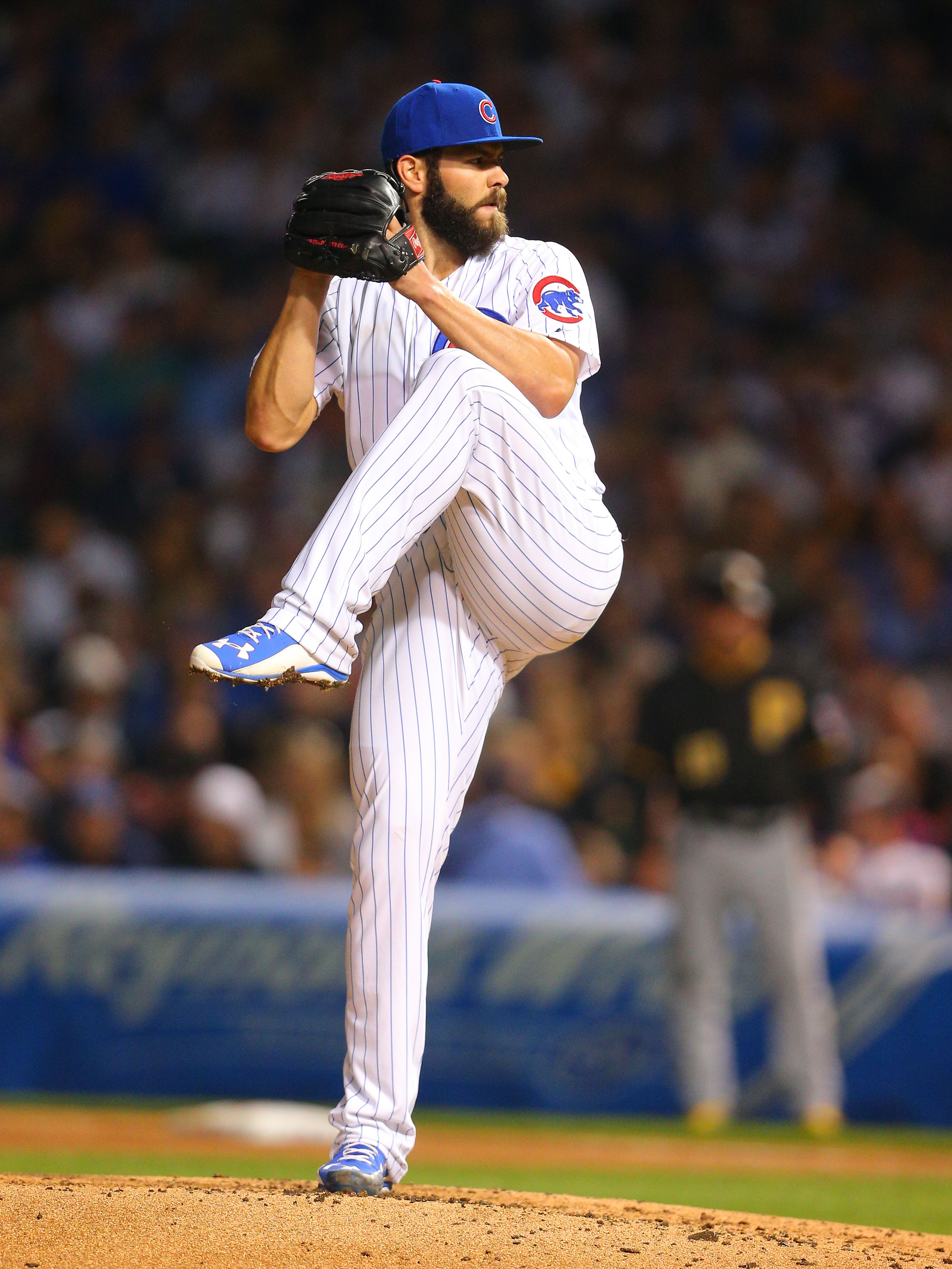
So, aside from nailing down that number, just what might the sides talk about when they sit down in the coming weeks? Expectations, perhaps, represent the most important ingredients in this particular extension scenario, because valuing Arrieta’s post-2017 seasons without the knowledge of his 2017 output is particularly difficult.
Arrieta’s story is well known, and need not be repeated in full here. Suffice to say, his career renaissance in Chicago has been spectacular and complete. Over 2014-15, the righty provided 358 2/3 innings of 2.08 ERA pitching over 58 starts. He was dominant, especially, in the latter of those two seasons, when he posted 9.3 K/9 against just 1.9 BB/9 and allowed a league-low 5.9 hits per nine while spinning four complete games. After filling up 229 innings and taking home the National League Cy Young award, a course was set for a huge free-agent contract.
The early portion of 2016 largely represented a continuation; though his walk rate was up, the results remained dominant. By early June, though, the earned runs began to catch up as Arrieta’s typically excellent suppression of walks and home runs began faltering. Ultimately, he fell just shy of 200 innings and ended the year with a 3.10 ERA to go with 8.7 K/9 and 3.5 BB/9. Beyond the jump in walk rate, Arrieta also paced the league with 16 wild pitches.
To be sure, all the signs weren’t concerning. Arrieta continued to induce grounders on about half of the balls put in play against him, didn’t show any worrying changes in velocity, mostly maintained his swinging-strike rate (10.5%, down from a personal best 11.1%), and continued to suppress BABIP in a consistent manner suggestive of skill, not merely good fortune. But hitters chased out of the zone slightly less frequently and made somewhat more hard contact in 2016, while also managing a few more home runs (16).
In the aggregate, Arrieta is still exceedingly difficult to square up and seems to be about as good a bet as anyone to deliver 200 or more innings from a health perspective. Even the less-dominant version is still a high-quality pitcher. Heck, he even managed to add real value with the bat last year (.262/.304/.415). And Arrieta showed up in the postseason — the World Series, especially, where he allowed just three earned runs on five hits over 11 1/3 innings in two starts.
Still, it’s hard to say that Arrieta’s current standing matches his status at this time last year. If Arrieta isn’t a true ace — which, at least, is in doubt — then the conversation is somewhat different. Valuing his future is more about projections and comps than it is a question of just how much a team can really spend on a single pitcher. And reaching agreement on an extension poses questions such as: Will the team will ascribe added value to the possibility of a return to full dominance? Will the player forego perhaps greater potential earnings to sell away the risk of another less-than-excellent (or worse) season?
If Arrieta isn’t a true ace, then pedestrian considerations such as age — he turns 31 in March of 2017, and will turn 32 before the start of the 2018 season — rise in importance. That means Arrieta will hit the market at nearly the same age (just a few months younger) as Zack Greinke did last winter. Greinke’s massive contract (six years, $206.5MM) isn’t exactly a bad sign for Arrieta, but it’s tough to see Chicago valuing the latter’s free-agent years as highly as the D-Backs did the former’s (over $34MM). That contract always seemed a reach, and came on the heels of Greinke’s historic 2015 season.
Perhaps a more reasonable current comp is pitching alongside Arrieta in the Cubs’ rotation. Jon Lester, who was a younger free agent than will be Arrieta, got $155MM over six years. But even that could be rich. Johnny Cueto, one of the game’s most accomplished hurlers, landed shy of Lester (six years, $130MM, albeit with an opt-out) heading into his age-30 season. His late-2015 scuffles — which weren’t, perhaps, all that dissimilar from Arrieta’s — seemed to put a real dent in his value.
The most direct comparables, of course, are drawn to players who sign extensions just before hitting the market. Stephen Strasburg got seven years and $175MM from the Nationals in the middle of the 2016 season. Before him, Homer Bailey took home $105MM over six seasons (including his arb year) from the Reds. Neither pitcher is a clean comp — Strasburg, due to age; Bailey, due to performance — but those deals are still illustrative. Strasburg’s signing, in particular, shows that an extension can’t be ruled out, even for a market-leading starter repped by Boras. Both contracts show the need for compromise as well as the inherent risk in a late-arb pitching extension. Injuries slowed both Strasburg and Bailey not long after their new deals were inked. In both of those cases, they wisely (in hindsight) sold away the chance at perhaps even greater earnings to lock in contracts with their existing organizations.
It is ultimately difficult to know whether there’s a realistic chance of the Cubs and Arrieta reaching a deal. The relative lack of upper-level, high-quality starting pitching prospects in the Chicago system suggests an ongoing need. And the Lester signing shows that the team will sign a long-term deal with a starter in the right circumstances. But it seems likely there’ll be some cap to the team’s willingness to add guaranteed years and boost the AAV in Arrieta’s case. Just where those lines will be drawn by both the team and its once (and future?) staff ace remain to be seen. Is Strasburg’s $25MM AAV a fair market point, perhaps over a shorter term? Does Cueto’s combination of a lower AAV and opt-out provide a guide? Or will Arrieta hold out for a chance to chase Greinke?
Just for kicks … let’s see how likely a deal is, in the estimation of MLBTR’s readers:
Will The Cubs Extend Jake Arrieta?
-
No 52% (5,835)
-
Yes 48% (5,483)
Total votes: 11,318
Photo courtesy of USA Today Sports Images.