
Affordable Center Field Options For The Tigers
The Tigers are still on the lookout for a center field stopgap, tweets Anthony Fenech of the Detroit Free Press, but their preference is to add a low-cost option and spend around $2MM to fill the vacancy. Fenech further notes that the Tigers have opportunities to trade for a center fielder that fits that mold, but adding an affordable veteran via free agency is seemingly the likelier course of action.
Detroit’s in-house candidates in center field include the likes of Tyler Collins and Anthony Gose, each of whom is out of minor league options and will need to break camp with the team or be exposed to waivers. JaCoby Jones represents a younger alternative that has drawn some praise from the organization, but the 24-year-old Jones hasn’t played much center field in the pros. He also hit just .243/.309/.356 in 324 plate appearances at Triple-A last year, so while the Tigers may view him as an option down the line, there’s certainly a case that he could use more development time.
The vast number of corner bats and relievers left on the market have generated more attention than the remaining center-field capable bats, but Detroit GM Al Avila should have plenty options to choose from if his hope is to add a cheap center fielder to handle the position on Opening Day. While some of these players figure to command more than $2MM, that’s not characterized as any sort of hard cap by Fenech, and the sheer number of available assets relative to the number of teams seeking this type of player may suppress salaries.
All that said, here’s a look at some of the available names that could yet fit the bill in Detroit (listed alphabetically, as this isn’t intended to be a ranking of any sort)…
- Peter Bourjos: Long considered one of the game’s premier defenders, Bourjos’ defensive ratings have taken a hit following offseason hip surgery following the 2014 campaign. He’s never recreated his brilliant 2011 season — .271/.327/.438 with 12 homers, 22 steals and elite glovework in center — but Bourjos fits the bill as a cost-efficient stopgap that could compete for the regular center field job in Spring Training and act as a fourth outfielder even if he loses out on the gig. Bourjos hit .251/.292/.389 in 383 plate appearances with the Phillies last year and enjoyed a torrid June before suffering a July shoulder injury.
- Michael Bourn: The 34-year-old isn’t the elite defender and baserunner that he once was, but he still contributed positive value on the bases in addition to a +4 DRS rating in 2016 (UZR had him a tick below average). Bourn .264/.314/.371 with six homers and 15 steals between the D-backs and Orioles last year, and he’d give the Tigers a left-handed bat to pair with a heavily right-leaning lineup. Then again, with Collins swinging from the left side, a righty bat may be actually be preferable for the Tigers based solely on matchup purposes.
- Coco Crisp: To be clear, Crisp has spent much more time in left field than in center over the past two seasons, and with good reason, as his once-excellent defensive ratings have taken a steep nosedive as Crisp has advanced into his upper 30s. The 37-year-old switch-hitter batted .231/.302/.397 between Oakland and Cleveland last season but still showed a blend of pop and speed, hitting 13 homers and swiping 10 bags.
- Austin Jackson: No player on the free-agent market is more familiar to the Tigers than Jackson, who starred in Detroit from 2010-14 before somewhat surprisingly being shipped to the Mariners in 2014’s three-team David Price trade. Jackson’s bat has been mostly anemic since that swap (.255/.302/.345), and he ended last season on the shelf after suffering a knee injury that required surgery. That may call into question how capable Jackson is of manning center field. But, Jackson won’t turn 30 years old until Feb. 1, and he made just $5MM with the White Sox last year. A reduced salary seems likely, and there’s a bit of upside here to go along with the obvious familiarity.
- Desmond Jennings: Even though he’s seven years younger than Crisp, Jennings comes with similar question marks surrounding his ability to handle center field. The 30-year-old once looked like a star in the making, but his career has been slowed in recent years by a cavalcade of knee and hamstring issues. Jennings had arthroscopic surgery on his knee in 2015 and has also had separate DL stints for a bruised knee and a knee contusion since going under the knife. He’s batted just .222/.295/.347 in 93 games/333 plate appearances in the past two seasons. Like Jackson, he’s still relatively young and is only a couple years removed from being a solid everyday contributor.
There are at least two other hypothetical options in Colby Rasmus and Angel Pagan, though neither spent much time in center in 2016 and it seems likely that they’ll command a good bit more than Fenech’s suggested price range (possibly, over a multi-year term). Detroit would likely need to jettison salary elsewhere in order to make a play for either outfielder.
Additionally, there are a number of veterans that figure to sign minor league deals and could potentially be options for the Tigers. (Although any of the above players could certainly need to settle for a minors pact as well, depending on how the market plays out.) Players like Will Venable, Sam Fuld, Craig Gentry and Drew Stubbs all have recent center field experience that could be of appeal to Detroit.
Top 50 Free Agent Spending By Division
A new year has begun, which means the meat of the Major League Baseball offseason is in the rear-view mirror. There are still some quality free agents on the board as we inch closer to spring training, but the league has likely handed out its biggest contracts of the winter. This free agent class was weak from the start, as evidenced by the fact that only one player – Mets outfielder Yoenis Cespedes (four years, $110MM) – has netted a nine-figure contract. No one else has even gotten to $90MM (reliever Aroldis Chapman came close, granted), and nor will they.
Now, using the Top 50 free agent rankings that MLBTR’s Tim Dierkes put together entering the offseason, we’ll take a look at how much each division has spent on the best available players this winter. As of now, only 18 of the top 50 are unsigned. The 32 who have agreed to contracts – including those who accepted the qualifying offer – have combined to secure upward of $1 billion in guarantees.
AL East
3. Aroldis Chapman ($86MM)
13. Wilson Ramos ($12.5MM)
22. Kendrys Morales ($33MM)
40. Matt Holliday ($13MM)
42. Steve Pearce ($12.5MM)
Total = $157MM
A year after the Yankees abstained from signing a single major league free agent, they’ve reclaimed their spot as the AL East’s biggest offseason spenders with the acquisitions of Chapman and Holliday. The Blue Jays have doled out the second-most money in the division thanks to the signings of Morales and Pearce; plus, they could still re-up 12th-ranked free agent Jose Bautista, with whom they’re maintaining dialogue. While the Orioles haven’t picked up anyone from the top 50, that could change if they re-sign the No. 1-rated player left on the market, Mark Trumbo. The luxury tax-minded Red Sox have avoided big splashes via free agency, though they’ve done plenty of work via the trade route. And the low-payroll Rays, having already lured Ramos, remain on the lookout for another bat.
AL Central
2. Edwin Encarnacion ($60MM)
29. Jason Castro ($24.5MM)
50. Derek Holland ($6MM)
Total = $90.5MM
Encarnacion is surprisingly on his way to the Indians, who will finalize his contract this week, on a deal with a far lower guarantee than most expected he’d receive coming into the offseason. The rebuilding Twins signed the division’s second-priciest free agent, catcher/pitch-framing whiz Jason Castro, and the fellow non-contending White Sox brought a reclamation project into the fold in Holland. The AL Central’s other teams, the Tigers and Royals, could compete for playoff spots next season, but they’re trying to tamp down payroll. Thus, it’s no shock that they’ve been inactive in free agency.
AL West
17. Josh Reddick ($52MM)
19. Carlos Gomez ($11.5MM)
28. Andrew Cashner ($10MM)
33. Carlos Beltran ($16MM)
43. Matt Joyce ($11MM)
46. Charlie Morton ($14MM)
Total = $114.5MM
The Texas-based Astros (Reddick, Beltran and Morton) and Rangers (Gomez and Cashner) have essentially monopolized free agent spending in the AL West this offseason. With Joyce in the fold, the A’s are the division’s only other team that has landed a top 50 free agent. The Mariners have a general manager, Jerry Dipoto, who has a penchant for making trades, so they’ve mostly gone that route to acquire talent this winter. The Angels, meanwhile, haven’t been quiet in free agency (Ben Revere, Jesse Chavez and Andrew Bailey) or on the trade market (Cameron Maybin and Danny Espinosa), but they also haven’t reeled in any big fish.
NL East
1. Yoenis Cespedes ($110MM)
7. Jeremy Hellickson ($17.2MM)
18. Neil Walker ($17.2MM)
27. Brad Ziegler ($16MM)
35. Sean Rodriguez ($11.5MM)
41. Bartolo Colon ($12.5MM)
47. Edinson Volquez ($22MM)
48. R.A. Dickey ($8MM)
Total = $214.4MM
While the Mets (Cespedes and Walker) have outspent everyone else in the NL East in free agency, the Braves lead the way with three top 50 additions (Rodriguez, Colon and Dickey). The Marlins have also inked multiple players (Ziegler and Volquez), but they originally had much loftier targets in mind in Chapman and Kenley Jansen. The reigning division champion Nationals haven’t signed any high-profile free agents yet (they did make a blockbuster trade, of course), but that could change if they go for one of the best relievers remaining on the market and/or catcher Matt Wieters. As is the case with the Nats, Atlanta’s in the mix for Wieters, who was MLBTR’s 16th-ranked free agent at the outset of the offseason. Hellickson – who, like Walker, eschewed free agency in favor of the qualifying offer – is the only Phillie on the list.
NL West
4. Justin Turner ($64MM)
5. Kenley Jansen ($80MM)
9. Ian Desmond ($70MM)
11. Mark Melancon ($62MM)
14. Rich Hill ($48MM)
Total = $324MM
Thanks largely to the ultra-rich Dodgers, who re-signed three of their own in Turner, Jansen and Hill, the NL West is easily the highest-spending division in the majors this offseason. The Rockies unexpectedly added Desmond for the division’s second-largest guarantee, and they could make more waves if their ongoing interest in Trumbo leads to a deal. After witnessing far too many second-half bullpen meltdowns last season, including in October, San Francisco unsurprisingly nabbed Melancon. Finally, given their respective states, the Diamondbacks and Padres have only been in the market for scrapheap pickups.
NL Central
6. Dexter Fowler ($82.5MM)
10. Ivan Nova ($26MM)
26. Brett Cecil ($30.5MM)
37. Jon Jay ($8MM)
45. Eric Thames ($16MM)
Total = $163MM
Aside from the Cardinals, who bolstered their roster with Fowler and Cecil, the NL Central has spent modestly this offseason. The reigning World Series champion Cubs lost Fowler, whom they’ll try to replace with a Jay/Albert Almora platoon, while the Pirates brought back Nova after the market didn’t develop to his liking. The Brewers’ only top 50 signing has been the 30-year-old Thames, a first baseman who played in Korea from 2014-16 and put up videogamelike numbers during that span. As for the rebuilding Reds, they’ve completely avoided free agency.
This is an updated version of a Charlie Wilmoth post that ran Dec. 21, 2014.
Free Agent Profile: Chris Carter
Although first baseman Chris Carter wasn’t scheduled to hit the open market entering the offseason, that changed when the Brewers designated the 30-year-old for assignment Nov. 29. Milwaukee then shopped Carter around the majors, but after the club was unable to find any trade partners willing to take his projected $8.1MM salary for 2017, it cut him loose Dec. 2. A month later, Carter remains among a group of powerful but flawed hitters still sitting without contracts.
Pros/Strengths
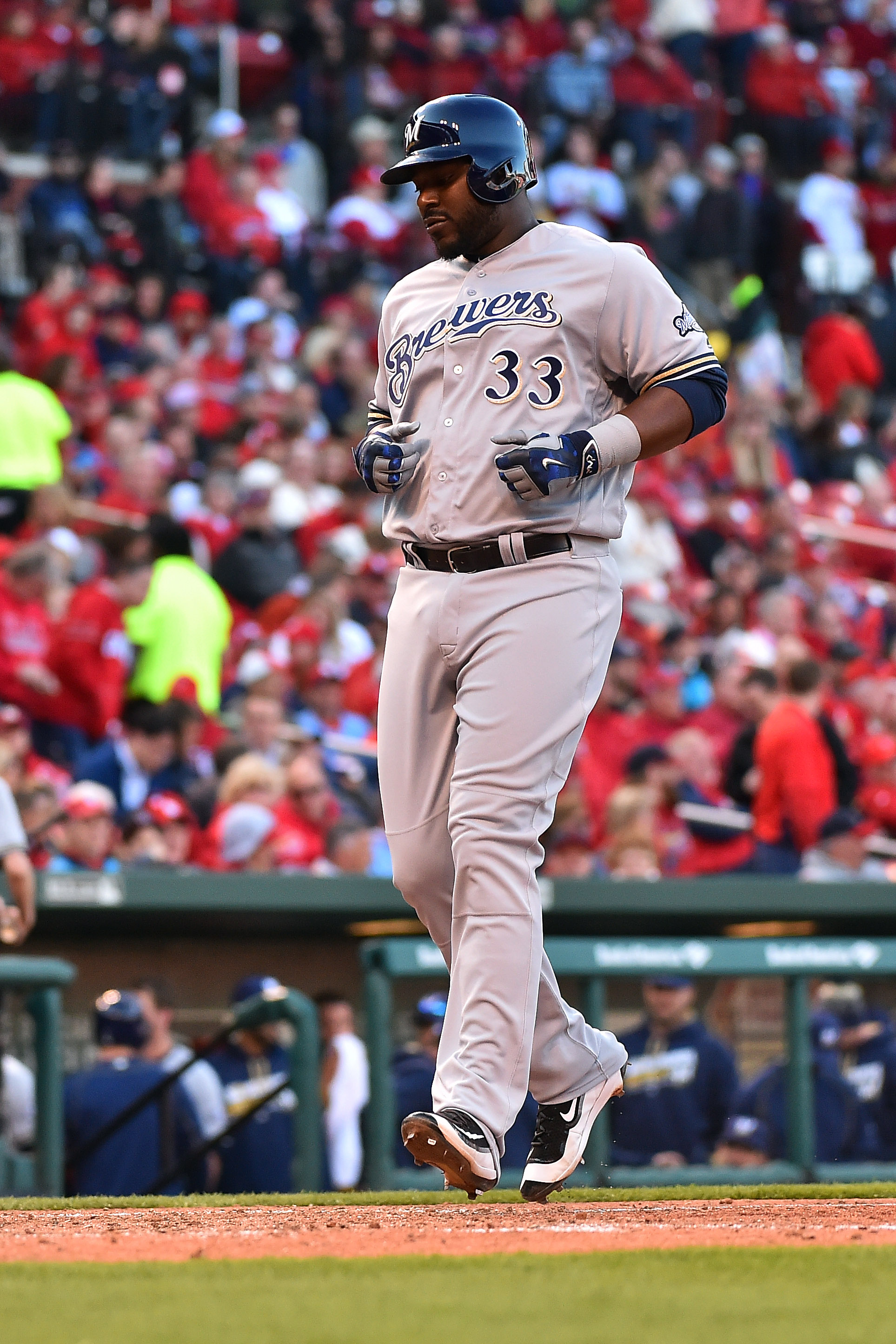
Few provide more thump than the right-handed Carter, who co-led the National League with 41 home runs last season, paced the NL in isolated power (.277) and finished eighth in the majors in barrels (56, per Statcast). Since 2013, Carter’s first full major league campaign, only five players (Chris Davis, Nelson Cruz, Edwin Encarnacion, the now-retired David Ortiz and Mike Trout) have combined for more homers than his 131, while just seven (the aforementioned names as well as Giancarlo Stanton and Khris Davis) have outdone his .251 ISO.
Carter also brings above-average patience, having registered double-digit walk rates in three of his four full seasons. He took a free pass 11.8 percent of the time in 2016, which was right in line with his career mark (11.6) and easily superior to the league mean (8.2). Further, if Carter’s on your roster, you can count on penciling him in nearly every day (he has racked up three 145-game seasons, including a career-high 160 last year) and he isn’t overly vulnerable against either right- or left-handed pitchers. While Carter has done better versus southpaws (.221/.337/.459 in 840 plate appearances), his production against righties (.217/.303/.466 in 1,805 PAs) has certainly been respectable.
Cons/Weaknesses
If you’re a fan of hitters who put the ball in play regularly, you’re probably not particularly bullish on Carter, who has posted strikeout percentages in the low-30s and contact rates in the mid-60s in each of his major league seasons. All told, Carter has recorded league worsts in strikeout and contact rates (33.2 and 64.9, respectively) since 2013, and he ended up last in those two categories in 2016. As a result, Carter is the owner of an ugly .218 career batting average, which has heavily detracted from the value of his power and patience combination and led to a subpar on-base percentage (.314).
Elsewhere, the lumbering Carter doesn’t offer positives either on the base paths or in the field. He was a bottom 20 baserunner last season in the estimation of FanGraphs’ UBR and BsR metrics, while both Defensive Runs Saved and Ultimate Zone Rating regarded him as one of the worst first basemen in the league.
Background
Carter is a Redwood City, Calif., native who grew up in Las Vegas, where he still resides during the offseason. When the White Sox selected Carter in the 15th round of the 2005 draft, he was a third base prospect. Carter has never lined up at the hot corner in the majors, though, and he wasn’t long for the ChiSox organization. They traded him to Arizona for outfielder Carlos Quentin in December 2007, and the Diamondbacks quickly flipped him (along with Carlos Gonzalez and Brett Anderson, among others) to the Athletics a week and a half later for right-hander Dan Haren. Carter remained with the A’s until February 2013, when they sent him and two others (catcher Max Stassi and righty Brad Peacock) to the Astros for infielder Jed Lowrie and reliever Fernando Rodriguez.
In his time with the A’s, Astros and Brewers, Carter – who’s a client of the Dave Stewart-run Sports Management Partners – has made $7.679MM, according to Baseball Reference.
Market
Carter is currently taking a backseat to fellow right-handed free agent sluggers in Mark Trumbo, Jose Bautista and Mike Napoli, though multiple teams have made inquiries, Stewart said a couple weeks ago. The Orioles, Rangers and Rays were reportedly interested in adding Carter as of last month, and all three still have holes at first base and/or designated hitter. Carter would be a fit with any of those clubs, then, while staying in the NL and joining the Rockies is also a possibility. Carter taking his prodigious power to Colorado’s Coors Field is fun to think about, but heading to the AL – where he’d be able to DH – might be the better move.
Expected Contract
It has been almost exactly one year since Carter inked a $2.5MM deal with the Brewers last Jan. 6. That came on the heels of a 24-homer season in which he failed to clear the Mendoza line with a .199 average in 460 trips to the plate. Thanks to his bounce-back 2016, Carter is more appealing now than he was last winter, though another one-year contract appears likely. Carter’s next deal should be richer than his previous one, but given that teams didn’t want him at his projected arbitration salary, he’ll hardly break the bank.
Photo courtesy of USA Today Sports Images.
Trade Candidate: Todd Frazier
There’s no denying that the White Sox are engaged in an aggressive rebuilding plan. After all, the organization has now traded away two of its best, established MLB assets in Chris Sale and Adam Eaton, and is said to be engaged in talks to do the same with Jose Quintana. If those affordable, controllable players can be had, then surely it stands to reason that more expensive, shorter-term assets are also on the table.
While players like David Robertson and Melky Cabrera make good sense as trade chips, perhaps no single player on the ChiSox roster carries a “trade me” sign quite as visible as that of third baseman Todd Frazier. Unlike Robertson, he’s entering the final year of contract control. And unlike Cabrera — who’s owed $15MM in the final year of his deal — Frazier is still projects to be useful in the field.
Frazier did take a big step back in the eyes of defensive metrics last year after consistently rating as a plus gloveman at third. And his .225/.302/.464 batting line represented his worst offensive output since a down 2013 season. But Frazier is young enough (31 in February) to think that he can regain his lost step at third, and perhaps its unwise to put too much stock in one year’s worth of defensive ratings given his strong track record. Also, he still swatted forty home runs in 2016 — rather an impressive total from a player capable of playing the hot corner — and boosted his walk rate to a career-high 9.6% (though his K rate also crept up). Frazier still runs well, too, as he swiped 15 bags in 2016.
Really, if you’re looking for a solid everyday player who could bounce back to being an All-Star-level performer, there aren’t many better bets than Frazier. His .236 BABIP makes him an obvious candidate for some positive regression, though it’s fair to note that he earned that mark to some extent by putting the ball in the air more than ever before (48.7%) and posting-career worst line-drive (15.7%) and soft contact (20.7%) rates. With Frazier showing greater selectivity than ever and maintaining his career swinging-strike rates, there’s hope that he can boost his OBP while retaining much of the power he has achieved by gunning for the long ball.
Even if he remains much the same hitter he was in 2016, Frazier would look to be a more defensively useful version of Mark Trumbo. Frazier will only require a single-season commitment, which is appealing. And he could also allow a new acquiring team to recoup a draft pick after the season, if he proves himself worthy of a qualifying offer.
Still, there’s probably a reason that it has mostly been crickets on the demand side for Frazier. In particular, there just isn’t that much demand for third basemen around the game. The Dodgers were rumored to have interest, but ended up bringing back top-available free agent Justin Turner. And the open market still includes at least two useful options at the hot corner in Luis Valbuena and Trevor Plouffe. Then, there’s the fact that MLBTR projects him to earn a hefty $13.5MM, which would make a dent on any team’s balance sheet.
Under the circumstances, the Sox could take Frazier into the year and hope he becomes a summer trade chip (or, perhaps, a QO candidate after the season). Holding onto him is hardly an unfathomable outcome if there’s truly no serious interest, particularly since there doesn’t appear to be a major salary-trimming imperative behind the team’s sell-off. Indeed, many of the teams discussed below seem rather unlikely to offer enough of a return to force the White Sox’ hand. But several organizations that might not give prospects and take on $13.5MM or so in salary right now may well end up having a need in the middle of the season.
It still makes eminent sense for the South Siders to explore all avenues for a trade this winter, but a deal probably isn’t as likely as it might seem at first glance. Let’s take a look at some hypothetical suitors (listed in alphabetical order):
[Team links to MLB Depth Charts]
Athletics — Sure, Oakland has Ryon Healy at third, and he’s more than entitled to a full-season run after his impressive debut. But he has never been viewed as much of a defensive player, and could simply be shifted over to first to make way for Frazier. The A’s have already shown a somewhat surprising amount of payroll availability in pursuing Edwin Encarnacion; adding Frazier could have nearly the same overall impact at a lesser cost (at least, in dollars) because of the defensive upgrade he’d bring.
Braves — While Atlanta seems amenable to going with Adonis Garcia at third, there’s little reason to expect much out of him. The organization can also plan to bump Sean Rodriguez to the hot corner if and when Ozzie Albies rises to the majors. And it’s fair to wonder at what point the Braves will stop taking on 2017 salary. Still, after expending some resources for near-term improvements, perhaps pursuing Frazier would be a finishing touch that could make Atlanta a plausible contender (with a few good breaks).
Cardinals — St. Louis was reportedly lingering around on both Turner and Encarnacion, suggesting that the club is intrigued at the prospect of boosting its infield productivity. Like those possibilities, adding Frazier would likely mean trading another player (Jhonny Peralta, Kolten Wong, or Jedd Gyorko) to create space. And it’s not clear whether the Cards would see enough upside in Frazier to go through with all that. Still, it’s a reasonably plausible landing spot.
Dodgers — Any continued interest depends upon whether the Dodgers would consider playing Turner at second base. He has seen less and less time there over the years, and didn’t make a single appearance at second in 2016, so there’s no particular reason to think that Los Angeles would move him to make way for Frazier. Adding a true second baseman still seems much more likely.
Giants — Eduardo Nunez remains the odds-on favorite to man third, in concert with Connor Gillaspie. But if San Francisco feels it’s better able to improve its offensive production with Frazier than by adding a corner outfielder, with Nunez turning back into a quality utilityman, then perhaps the Giants could make for an interesting fit.
Orioles — The O’s are said to be looking at sluggers, and may prefer one that plays the outfield, but there still could be a fit here. Frazier could spell Manny Machado at third and Chris Davis at first while lining up as the DH. If shortstop J.J. Hardy needs a rest, is hurt, or isn’t effective, then Machado could slide in for him and Frazier could return to full-time duty at the hot corner. It’s not a perfect fit, but Frazier could be a more appealing target for Baltimore than the remaining open-market options.
Rangers — Texas is in the market for a first baseman and/or DH, and might not hate the idea of adding someone who could fill in for Adrian Beltre at the hot corner at times. But there are plenty of hitters in free agency, and the Rangers have other infielders who could man third, so this doesn’t feel terribly likely as things stand.
Red Sox — Boston has given signals that its offseason is largely in the books, but a pivot can’t be ruled out. As things stand, the organization appears to be putting an awful lot of trust in Pablo Sandoval. There’s room for Frazier’s salary, perhaps, after dealing Clay Buchholz. He could split time between first and third (with Mitch Moreland), allowing Hanley Ramirez to be a full-time DH while increasing the Sox’ platoon opportunities.
Rockies — Somewhat like the Orioles, the Rockies could potentially have interest in Frazier to fill a different need. If Colorado trades an outfielder and moves Ian Desmond to the outfield, it would need a regular first baseman. While Frazier’s true utility is somewhat wasted there, that’s perhaps less true than it is in Desmond’s case.
Yankees — Chase Headley has underwhelmed with the bat, so perhaps Frazier could mix in with him and first baseman Greg Bird to inject some pop and increase the Yanks’ overall versatility. But New York still has other needs, and Frazier would represent a pretty significant cost to function in that kind of capacity. Unless Headley were to be dealt, the fit is something of a stretch.
Others — You could argue for the Pirates, especially if Jung Ho Kang is lost, though perhaps corresponding moves would be needed to make it even plausible that the Bucs would take on that much salary (particularly with David Freese and Josh Bell already on hand). The Indians might have made sense were it not for the acquisition of Edwin Encarnacion, but Frazier seems too costly and uncertain to justify relegating Jose Ramirez to corner outfield/utility duties. It’s hard to see the Rays coughing up the cash (and talent) needed to land Frazier, though he’d be a possible first base/DH candidate in Tampa Bay. The Marlins need a righty bat, but re-upped Martin Prado to play third and seem to like Justin Bour as at least a semi-regular at first; without a DH slot, there likely isn’t any kind of match there. Likewise, you could argue for the Mets to add Frazier (at least assuming they deal one or more outfielders); he could share time with Lucas Duda at first and otherwise play third, in theory, but this seems rather implausible unless/until New York trades one or more outfielders and the team has reason to believe that David Wright won’t be able to play in 2017. It’s at least somewhat more possible to imagine the Mariners or Blue Jays taking a look, but those also feel like iffy fits. Neither needs a third baseman or DH, and while they could stand to add Frazier’s pop at first, the presences of Dan Vogelbach and Justin Smoak reduce the utility of adding a fairly expensive piece like Frazier.
3 Remaining Needs: AL West
To set the stage for the remainder of the offseason, we’ll take a look at the most pressing remaining needs of every team in baseball over the coming week or so, division by division. (Hat tip to MLBTR commenter mike156 for the idea.) We often discuss things through the lens of an organization’s trajectory; thus, a rebuilding team might “need” to move some salary, while a contender might “need” an expensive starter. But with camp in sight, every club is making final calls on who’ll compete for big league jobs in the season to come (while also pursuing broader opportunities), so the focus here is on specific positions on the MLB roster. Fortunately, the task of roster analysis is made much easier by the MLB depth charts available at RosterResource.com. Each team listed below is linked to its respective depth chart, so you can take a look for yourself.
So far, we’ve checked in on the AL Central, NL West, NL East, AL East, and NL Central. To wrap things up, let’s stop in on the AL West:
- First Baseman/DH: The Rangers make obvious sense for a first base/DH addition after watching Mitch Moreland and Carlos Beltran depart via free agency. Texas can utilize Joey Gallo and/or Jurickson Profar in those roles, but neither has hit to expectations in the majors. The club has been tied frequently to Mike Napoli, but there are other options on the open market as well. Relatedly, the Rangers will need to decide what to do with both Gallo and Profar in the near term, as both appear to have uncertain futures in Texas.
- Starting Pitcher: Though the Rangers already slotted in Andrew Cashner after declining a club option over Derek Holland, the team also lost Colby Lewis from last year’s staff. He is among the veterans still available in free agency, presumably on short-term arrangements, and Texas could certainly stand to bolster the back of its rotation. At present. A.J. Griffin seems likely to take the fifth slot, though a few upper-level youngsters could also factor in. Texas would do well at least to enhance the overall depth here, at a minimum.
- Sorting out the bullpen: Texas has a variety of interesting arms available to take closing duties, with last year’s ninth-inning man Sam Dyson returning. But the club has been rumored to be dangling some of its righty arms in trade, and could conceivably deal from what is something of a surplus to improve elsewhere (or even just to bolster its prospect pool).
- Starter: Seattle’s first three rotation spots are set. Behind that group, though, the club is currently set to sort through Ariel Miranda, Nathan Karns, Chris Heston, Rob Whalen, Brad Mills, and Christian Bergman in camp. Adding another established arm isn’t perhaps an outright necessity, but it would go a long way to firming up the roster.
- First Base/Corner Outfield mix: Currently, the M’s project to utilize some sort of platoon involving youngster Dan Vogelbach (a lefty hitter) and Danny Valencia (a righty). But the latter could also factor into the outfield mix while also providing a reserve at third. Meanwhile, the corner outfield situation includes a whole variety of options, including lefty Seth Smith, who is said to be on the trade block. Adding a righty slugger from the still-stocked free-agent market while thinning the corner outfield herd could make good sense for Seattle.
- Utility Infielder: With Jean Segura locked in at shortstop and the durable Robinson Cano set to return at second, there’s not a huge need in the middle infield. But projected reserve Shawn O’Malley has never hit much in the upper minors or in his brief MLB time, so at least adding some camp competition would be worthwhile.
- Left-handed Reliever: Entering the winter, Houston was said to be looking for a southpaw to pair with Tony Sipp, who disappointed after returning via free agency last winter. Jerry Blevins, Boone Logan, J.P. Howell, and Travis Wood (who’d also represent some rotation depth) are among the open-market options. Houston could also continue exploring the trade market; the club is said to have checked in on Justin Wilson of the Tigers.
- Starter: Houston has a five-man rotation mix in place after already adding Charlie Morton early in the offseason, and possesses some quality young arms as well, but the team could certainly stand to improve its starting staff as a way of rounding out an aggressive winter. The club has been tied to pitchers such as Jose Quintana, Danny Duffy, and Yordano Ventura, while the free-agent market still includes Jason Hammel and a few bounceback options. Even if a larger strike doesn’t prove achievable, adding a minor-league free agent could make sense.
- Another bat? There are limits to the number of true needs for some organizations, and that’s particularly true of Houston, which has accounted for most of its roster holes and touts plenty of versatility on its roster. But the club has looked for ways to add yet more talent in a variety of ways, and reportedly stayed involved on Edwin Encarnacion right up to his eventual signing. It would rate as a surprise at this point, but the ‘Stros could conceivably add a power bat at first base (bumping Yulieski Gurriel into the corner outfield mix) or acquire a center fielder (shifting George Springer back to a corner spot) if an opportunity arises.
- Closer: While Los Angeles has options for the ninth inning — Huston Street could re-take the reins if he can return to form, Cam Bedrosian has the arm for the job, and Andrew Bailey is back after spending time as the closer late last year — that doesn’t mean the organization should rest on its laurels. Several experienced late-inning arms remain available in free agency, potentially creating a solid value opportunity and adding what could be an open camp competition for the closer’s job.
- Left-handed Reliever: Jose Alvarez has turned in two solid campaigns as a lefty setup man, but he’s hardly an overwhelming pitcher. Adding another lefty — some possible options are noted above — might provide a nice boost to the late-inning mix while allowing the club to use Alvarez for matchups earlier in a game.
- Rotation Depth: Signing Jesse Chavez likely rounds out the Halos’ staff, but that doesn’t mean there’s adequate depth. That’s especially true given the health questions surrounding Garrett Richards, Tyler Skaggs, and Matt Shoemaker. While pitchers like Alex Meyer, Nate Smith, Chris Jones and perhaps Manny Banuelos and John Lamb provide upper-level depth, it wouldn’t hurt to plug in a veteran on a minor-league deal (or perhaps even aim higher, if a good value can be found on a pitcher such as Hammel).
- Center Fielder: The A’s currently project to utilize some combination of Brett Eibner and Jake Smolinski up the middle, making for one of the least promising center-field situations in baseball. At a minimum, adding a veteran, left-handed hitter (such as Michael Bourn) would allow the team to set up a platoon. There are also some bounceback players on the open market (including Austin Jackson and Desmond Jennings), and the A’s could still pursue a more impactful asset via trade.
- First Base: It came as something of a surprise when Oakland reached agreement on an arb deal with Yonder Alonso, who had seemed a non-tender candidate. But the club has still looked to improve at first, most notably chasing Encarnacion, despite also possessing some other internal possibilities. Stephen Vogt is one, though he could serve as the DH and still appear at times behind the dish; Mark Canha is back as a righty bat; and Ryon Healy may profile as a first bagger if he can’t handle the hot corner defensively. With so many sluggers still floating around in free agency, Oakland could add some thump while deepening its overall roster. As an alternative, the A’s could add a third baseman (Luis Valbuena and Trevor Plouffe remain available) while bumping Healy into the first base/DH mix.
- Veteran Starter: While the A’s are said to be high on their rather expansive mix of young starters, the current staff is short on MLB experience outside of staff ace Sonny Gray, who will be looking to return to form in 2017. There’s not a need, strictly speaking, for innings, but Oakland has had success in the past with short-term starters, and a targeted strike could pay dividends — by improving the team’s near-term outlook, but also by adding depth to account for a hypothetical mid-season trade of Gray and reducing the need to press less-established arms into major-league service.
Exploring January Free Agent Signings
The month of January isn’t always a big month for free agent signings, but it can be at times. In 2016, in particular, a wide variety of high-profile free agents had yet to sign when the calendar flipped. As things stand entering 2017, players like Mark Trumbo, Jose Bautista, Jason Hammel, Matt Wieters, Michael Saunders, Mike Napoli, Greg Holland, Travis Wood, and Neftali Feliz all remain available despite entering the winter listed among the top 25 players on MLBTR’s annual ranking of the top 50 free agents. Other unsigned players include Brandon Moss, Luis Valbuena, Nick Hundley, Chase Utley, Rajai Davis, Angel Pagan, Adam Lind, Pedro Alvarez, Kurt Suzuki, and Colby Rasmus, along with a variety of relievers (e.g., Joe Blanton, Sergio Romo, Santiago Casilla, Fernando Salas, Boone Logan, Jerry Blevins, Drew Storen).
To see the difference between this year and previous winters, here’s a look at key January transactions from the last six offseasons, via MLBTR’s Transaction Tracker. As we’ll see, January frequently contains at least some drama, but the 2015-16 open-market period still seems like an outlier (which likely occurred due to the sheer volume of high-end talent that was available).
- 2016: There was a lot of meat left on the free-agent bone this time last year. Plenty of money ended up changing hands over the month of January, with Chris Davis landing seven years and $161MM from the Orioles while Justin Upton got six years and $132.75MM plus an opt-out from the Tigers. Big, multi-year deals were also awarded to Wei-Yin Chen ($80MM over five years with opt-out), Yoenis Cespedes ($75MM over three years with opt-out), Alex Gordon ($72MM over four years), and Ian Kennedy ($70MM over five years). Less significant, but still-substantial guarantees were struck by Denard Span ($31MM), Gerardo Parra ($27.5MM), Howie Kendrick ($20MM), Antonio Bastardo ($12MM), and Doug Fister ($7MM).
- 2015: The only significant free agent move in January was indeed a big one: the Nationals’ agreement with Max Scherzer to a seven-year, $210MM deal on the 19th. Beyond that, the largest deal was the Astros’ $8MM pact with Colby Rasmus. James Shields ($75MM) and Francisco Rodriguez ($13MM) were the only key free agents who signed in February.
- 2014: This was the other recent offseason with the most post-New Year’s activity. The Yankees signed Masahiro Tanaka to a $155MM contract in late January, and the Brewers got Matt Garza on a four-year, $50MM deal at around the same time. In addition, James Loney agreed to a three-year, $21MM pact with the Rays, who also signed Grant Balfour for two years and $12MM. A number of key free agent signings (Ubaldo Jimenez, Bronson Arroyo, A.J. Burnett, Fernando Rodney, Nelson Cruz) were delayed until February, while Ervin Santana (whose market, like that of Cruz, was depressed by the qualifying offer) did not sign until March. Two other qualifying offer free agents, Stephen Drew and Kendrys Morales, did not sign until after the season had begun.
- 2013: Nick Swisher and Edwin Jackson both signed right after New Year’s, each getting four-year deals in excess of $50MM. Later that month, Rafael Soriano and Adam LaRoche each got two-year deals in the $20MM-$30MM range. Two free agents with qualifying offers attached, Michael Bourn and Kyle Lohse, signed later.
- 2012: The Tigers signed Prince Fielder to a huge nine-year, $214MM contract in late January. The other key free agent deals that month were those of Coco Crisp and Hiroki Kuroda, both of them comparatively minimal in value. In early February, Jackson agreed to a one-year, $11MM deal with the Nationals.
- 2011: Soon after the new year, Adrian Beltre agreed to a five-year, $80MM deal with Texas. Later in the month, Soriano got three years and $35MM from the Yankees. The only significant February signing was Vladimir Guerrero‘s one-year, $8MM deal with the Orioles.
An obvious common denominator with many of these signings was that a number of key players were represented by Scott Boras, including Davis, Scherzer, Fielder, Beltre, Chen, Kennedy, Bourn, Jackson, Lohse, Span, Soriano, Rodriguez, Drew and Morales. As is widely known, Boras operates on his own timeline, and his clients’ frequent late signings reflect that. For this year, that’s worth keeping in mind for Wieters and Holland.
The other obvious common denominator is the qualifying offer, which had obvious effects on free agents like Ian Desmond, Kendrick, Bourn, Lohse, Santana, Cruz, Drew and Morales. Trumbo and Bautista are the only two remaining QO decliners on this year’s market, but it’s not hard to see how the draft compensation may continue to impact their markets.
This time around, negotiations over the new CBA may well have played a role in the timing at the top of the market. That likely slowed things down for Edwin Encarnacion, who is now one of several notable, veteran bats who have signed — helping to explain why so many lumbering sluggers still remain available. With three top-end closers and a variety of other relievers also chasing big money this winter, it’s perhaps not surprising to see a fair bit of bullpen help still floating around, too.
This post is adapted and updated from a post by Charlie Wilmoth that was originally published on January 2, 2016.
Free Agent Profile: Neftali Feliz
With a variety of top closers now off the market, teams hunting for relievers this January can choose from a number of somewhat less expensive targets. One of the best of those is righty Neftali Feliz, who’s available after a solid season with the Pirates.
Pros/Strengths
At just 28, Feliz is young and has a solid recent performance record, a rare combination of traits on the free agent market. Last season, Feliz significantly boosted his status after joining Pittsburgh’s pitching factory, posting a 3.52 ERA, 10.2 K/9 and 3.5 BB/9, all solid numbers worthy of late-inning work. He also threw harder than he had in years, with his 96.1 MPH average fastball velocity ranking as his best since 2011, the year before he moved into the Rangers’ rotation and then had an elbow injury that required Tommy John surgery. And that very high MPH figure might actually understate Feliz’s future potential to throw gas, since his velocity increased throughout last season, averaging closer to 98 MPH by year’s end.
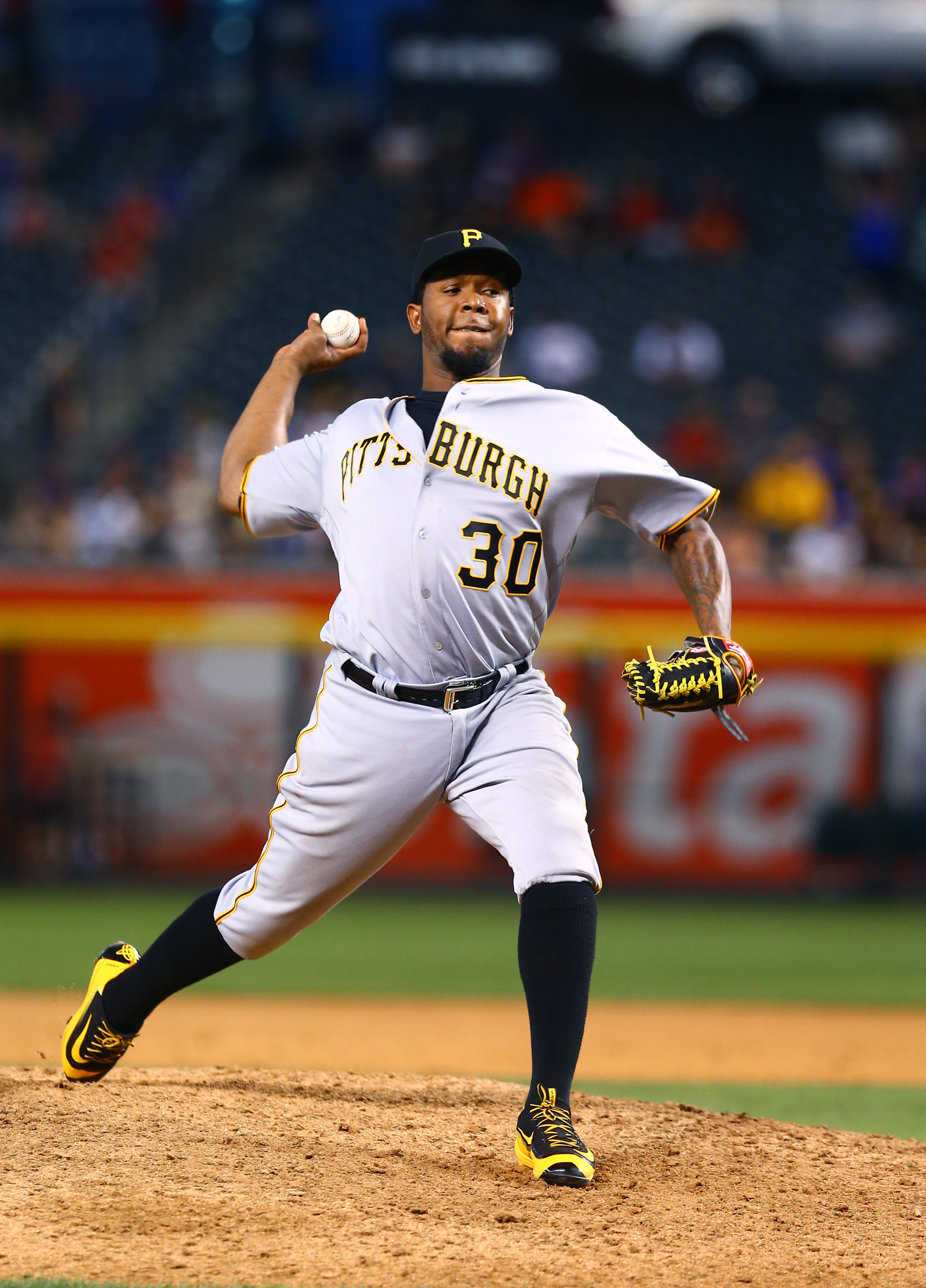 Also, while it’s been a long time since Feliz pitched a full season as a closer, he has 99 career saves and could conceivably be a closing option for a rebuilding team that has an opportunity available. The right situation could be a boon for both Feliz and for his new team. Feliz could later market himself as a closer and is certainly young enough and talented enough to get another multi-year deal after his next contract is over. And his new team could get a short-term option at closer and the opportunity to deal him before their contract with him expires.
Cons/Weaknesses
Feliz has a lengthy medical history that includes not only Tommy John surgery in 2012, but also arm soreness in 2014 and an abscess in his side in 2015. He also missed time late in the 2016 season to arm discomfort. He failed to reestablish his velocity for several years after Tommy John and had limited success in 2014 and 2015, resulting in his being designated for assignment by the Rangers and non-tendered by the Tigers.
Of course, it’s normal for a player to struggle somewhat as he attempts to return from Tommy John surgery. But even in 2016, when Feliz appeared to be fully healthy until September, there were a few speed bumps. Feliz allowed his fair share of fly balls, resulting in ten home runs allowed over 53 2/3 innings. That ten-homer total reflected a very high HR/FB% of 19.2%, and that’s likely to come down in 2017. But Feliz’s home run tendencies (probably partially a result of his heavy dependence on his four-seam fastball, as well as his unspectacular command) might mean he’s not a great fit in a homer-friendly ballpark — although, of course, he did just fine for several seasons in homer-happy Arlington.
Background
Feliz signed with the Braves out of Azua, Dominican Republic in 2005, then headed to the Rangers in 2007 in the Mark Teixeira deal. He won the AL Rookie of the Year award in 2010. His wife, Karina, gave birth to a daughter, Nerali, in 2010. His second child, Neftali Jr., was born in 2015.
Market
Feliz’s market has been somewhat quiet thus far, although that isn’t necessarily a surprise — through the first two weeks of December, the relief market revolved around elite closers like Aroldis Chapman, Mark Melancon and Kenley Jansen. It’s been less than three weeks since Jansen (the last of that group remaining on the market) came to terms, and the holiday season likely slowed activity during some of that time. It emerged last month that the Marlins viewed Feliz as something of a backup plan if they couldn’t land Jansen; they ultimately signed a very different type of reliever, Brad Ziegler, instead, but the way they saw Feliz might say something about the way he’s valued throughout the industry. A month ago, Feliz was also connected to the Nationals, a match that still makes a degree of sense. Any number of other teams could also enter the fray given the right price, since Feliz could conceivably be used in a variety of roles. The Pirates’ signing of Daniel Hudson, as well as the significant commitment Feliz might require, make a return to Pittsburgh unlikely.
Expected contract
MLBTR predicts Feliz’s status as one of the better setup men available this winter will help the BTI Sports client land a three-year, $18MM deal.
Photo courtesy of USA Today Sports Images.
3 Remaining Needs: NL Central
To set the stage for the remainder of the offseason, we’ll take a look at the most pressing remaining needs of every team in baseball over the coming week or so, division by division. (Hat tip to MLBTR commenter mike156 for the idea.) We often discuss things through the lens of an organization’s trajectory; thus, a rebuilding team might “need” to move some salary, while a contender might “need” an expensive starter. But with camp in sight, every club is making final calls on who’ll compete for big league jobs in the season to come (while also pursuing broader opportunities), so the focus here is on specific positions on the MLB roster. Fortunately, the task of roster analysis is made much easier by the MLB depth charts available at RosterResource.com. Each team listed below is linked to its respective depth chart, so you can take a look for yourself.
So far, we’ve checked in on the AL Central, NL West, NL East and AL East. Here’s the NL Central, a division featuring the World Series-winning Cubs:
- Negotiate with Jake Arrieta. The Cubs appear set to try to negotiate a deal with their star righty this month after the two sides swap arbitration figures. As MLBTR’s Jeff Todd noted this week, it’s hard to assess the Cubs’ chances of extending Arrieta, or what kind of money he should ultimately get after a good, but still disappointing, 2016 season. Negotiations between the Cubs and Arrieta’s agent, Scott Boras, will be an important story line in Wrigleyville over the next few weeks. And even if there’s no extension, expect to see at least a couple interesting Arrieta-related headlines — he’s projected to make $16.8MM through arbitration in 2017, so even arriving at a one-year salary will be a relatively high-stakes endeavor.
- Keep an eye out for starting pitching help. The Cubs’ roster is extraordinarily talented and deep, so much of what we’ve heard about the team since their swap of Jorge Soler for Wade Davis and their signing of Koji Uehara has pertained to potential role players. One name who’s repeatedly come up has been that of Tyson Ross, who (as MLBTR’s Steve Adams pointed out in a recent chat) would be an interesting fit with the Cubs in that the team’s depth would give him the luxury of taking his time returning from shoulder injury, then providing rotation help once fully healthy. In any case, the Cubs could still perhaps use a bit more starting pitching, although options like Rob Zastryzny, Aaron Brooks and Jake Buchanan do give them a variety of palatable spot starters.
- Consider adding a bit more left-handed relief. The Cubs have a heavily right-handed bullpen (with veteran Brian Duensing, waiver claim David Rollins, Rule 5 pick Caleb Smith and Jack Leathersich topping their current list of lefty relief options), so they could consider adding a lefty as a late-offseason move. They’ve been connected to Justin Wilson of the Tigers, and they could also make a move to bump lefty Mike Montgomery from the rotation back to the bullpen. Of course, the idea that lefty relief is a serious need for the Cubs is already nit-picking — they do already have a sufficient quantity of lefties, and their excellent group of righty relievers somewhat mitigates the need for southpaws, particularly since newcomer Uehara is very tough on lefty batters.
- Add pitching help. The Reds haven’t signed a single player to a big-league deal to this point in the offseason, which isn’t necessarily surprising — as a rebuilding club, they shouldn’t feel an urgent need to make short-term upgrades, and they might get better deals on helpful players later in the winter anyway. Last week, MLBTR’s Steve Adams and Jeff Todd looked at big-league free agent pitchers the Reds could pursue, focusing in large part on the Reds’ open closer role, which could provide an opportunity both for interested free agents (who might be able to establish or reestablish themselves as closers in Cincinnati) and for the team (which might be able to deal relievers they sign this winter at next year’s deadline).
- Find opportunities for young players. The Reds’ projected 25-man roster still includes a variety of veterans. The team hasn’t been able to strike deals this offseason, though, in part because those veterans either have no-trade protection or aren’t in high demand. For 2017, that leaves them in somewhat of an awkward position, particularly in their middle infield, where they have prospects Jose Peraza and Dilson Herrera ready for playing time and veterans Brandon Phillips and Zack Cozart blocking them. Phillips, of course, is one of those veterans with a no-trade clause. The Reds might not make any moves before the start of the season to deal with their middle-infield issue, but they’ll have to deal with it one way or another, perhaps by getting creative with various infielders’ playing time. Peraza could also occasionally play center field.
- Acquire more catching depth. The Reds have identified catching depth as an area of need — Devin Mesoraco has struggled to stay healthy in the past two seasons, and the team doesn’t have enough help behind Mesoraco and Tucker Barnhart. Rule 5 pick Stuart Turner is another possibility, but he has a limited offensive track record and has never played above Double-A.
- Add power. Assessing what the Brewers perceive their needs to be at this point is difficult, since they’ve been relatively quiet since the Winter Meetings and they don’t figure to contend in 2017. One area where they might have an opportunity, though, is in adding power to their lineup. First base is mostly open for them after they non-tendered Chris Carter, and their string of veteran trades leaves them with what should be plenty of money available to add a bat. The team did sign Eric Thames for a relatively substantial $16MM guarantee earlier in the offseason, and Thames currently tops their depth chart at first. Thames, though, can also play outfield, and the team’s relative uncertainty in the corners (where they have trade candidate Ryan Braun and the interesting but still unproven Domingo Santana) could clear space for Thames to move around. Meanwhile, the glut of power bats remaining on the free agent market (including Carter and many others) could give the Brewers an opportunity to add someone who could potentially contribute in 2017 and possibly fetch a prospect in a trade next summer.
- Continue evaluating Braun’s market. The Brewers and Dodgers reportedly discussed a deal last summer that would have sent Braun to Los Angeles for a package that included Yasiel Puig, but Braun’s market has been relatively quiet this winter. Now, the same market conditions mentioned in the previous bullet might have an impact on Braun’s market. There have also been whispers that Braun’s large contract and PED history might be problems as well. Regardless, with much of the Brewers’ previous core already having departed, there’s little reason for the Brewers not to investigate potential trades involving Braun.
- Create competition. The Brewers likely won’t be competitive in 2017, but they’ve already acquired a fair amount of interesting talent in their rebuild, and they have plenty of flexibility heading into the near future. With that in mind, they’ve added a number of marginal players this offseason, including catcher Jett Bandy, infielder Eric Sogard, and pitchers Tommy Milone, Ryan Webb and Andy Oliver. The moves that landed those players weren’t glamorous, but they’ll help give the Brewers depth they’ll need to get through 162 games, while also limiting the possibility of disaster should players further up the depth chart struggle.
- Consider continuing to add starting pitching. The Pirates made a big move to steady a wobbly rotation when they re-signed Ivan Nova late last month. Still, the team could use a bit more pitching help, as it currently figures to be heavily reliant on youngsters behind Gerrit Cole and Nova. The Pirates have been connected to White Sox star Jose Quintana, who certainly would be a big step forward. Beyond that, GM Neal Huntington has been outwardly noncommittal about the possibility of further additions, noting that he is open to bringing in more pitching but adding that “we like the group as is,” via Bill Brink of the Pittsburgh Post-Gazette.
- Balance the bullpen. With the recent addition of Daniel Hudson to a group that already included Tony Watson, Felipe Rivero, Juan Nicasio, Antonio Bastardo, A.J. Schugel, Jared Hughes and others, the Pirates have what appears to be a decent group of relievers. That group, however, is heavily left-handed, with Watson, Rivero, Bastardo, Wade LeBlanc and Rule 5 pick Tyler Webb all pitching from the left side. Watson’s name has come up in trade rumors this offseason, and either he or Bastardo look like reasonable candidates to be dealt, partially to get value from them but also partially to clear space for more right-handed relief help.
- Figure out whether Andrew McCutchen stays or goes. Following the collapse of trade negotiations with the Nationals, Huntington said the Pirates were likely to keep their star center fielder. Rumblings surrounding McCutchen have continued, albeit in more muted form, over the past several weeks, however. There’s also the question of what position he’ll play in 2017, as there have been various reports about the likelihood that the Pirates will move him to a corner after he posted poor defensive numbers in center in 2016.
- Figure out who’s on second. The latest Cardinals-related rumors have connected them to Twins second baseman Brian Dozier. While Dozier would undoubtedly help almost any team, though, most indications have been that the Cardinals’ interest in striking a deal with Minnesota isn’t particularly strong. Cardinals brass have also strongly praised Kolten Wong, who is signed through 2020 with an option for 2021 and who currently appears unlikely to be traded elsewhere.
- Consider extending Carlos Martinez. As of October, both Martinez and the Cardinals reportedly had interest in extension, and as Jeff noted last week, deal discussions could happen in the coming weeks as the two sides discuss Martinez’s pending arbitration case. The 25-year-old’s youth, blistering fastball and strong performances the last two seasons figure to make him a player well worth keeping, if the right deal can be found.
- Consider adding another outfielder. The Cardinals have a perfectly good starting outfield of Randal Grichuk, Dexter Fowler and Stephen Piscotty. But as Viva El Birdos’ Ben Markham recently pointed out, the team’s fourth outfielder, Tommy Pham, has struggled to stay healthy, and the team doesn’t have great depth beyond that. As Markham notes, Brandon Moss is probably the best outfielder available who could conceivably sign as a backup, and Moss is a lefty hitter who could complement righties Grichuk and Piscotty in the corners.
Poll: Free Agent Relievers
Before they inked mega-deals earlier this offseason, Aroldis Chapman, Kenley Jansen and Mark Melancon understandably dominated headlines as the unquestioned best relievers available in free agency. No one remaining on the market will land a contract even approaching theirs (Melancon’s on the low end at a whopping $62MM), but there are still several proven late-game commodities who haven’t signed yet.
Melancon is taking over as the Giants’ closer, a role previously held by a pair of current free agents in Santiago Casilla and Sergio Romo. The 36-year-old Casilla has saved 127 games, including 31 in 2016, but he racked up a major league-worst nine blown opportunities last season and, despite posting 10.09 K/9 against 2.95 BB/9, logged his highest ERA (3.57) since 2009. On the plus side, Casilla exceeded 50 innings for the seventh straight year (58), recorded a respectable ground-ball rate in line with his career average (47.6 percent compared to 48.7 percent) and didn’t experience a drop in velocity.
Romo, who will turn 34 in March, got better results than Casilla last year (2.64 ERA), but he only threw 30 2/3 innings and saw his velocity tumble to career lows. Despite that, Romo’s 14.9 percent swinging strike rate was in the upper echelon among relievers, as was his 13.9 percent infield fly mark (slightly better than Casilla’s 13.2). Romo also yielded the second-lowest exit velocity in the majors, per Statcast, to go with 9.68 K/9 against 2.05 BB/9. While Romo didn’t figure prominently into the ninth inning over the past couple seasons, he nonetheless has an accomplished end-of-game resume with 84 saves and 141 holds in his career.
No free agent has done a better job securing wins than longtime Royal Greg Holland, who has 145 saves (125 of which came from 2013-15). Holland was especially brilliant between 2011-14, a four-year period during which he combined for the majors’ fourth-best ERA (1.86) and the league’s sixth-ranked K/9 (12.57) across 256 1/3 frames. Holland then fell off in 2015 (3.83 ERA), a year in which his velocity declined and his BB/9 spiked to 5.24 (up from 3.52), thanks in part to a “significant” UCL tear. That injury led to October 2015 Tommy John surgery for Holland, who missed all of last season as a result. In spite of that, a hefty portion of the league has expressed interest in the 31-year-old this winter.
Like Casilla, Romo and Holland, Neftali Feliz brings vast ninth-inning experience (99 saves), though the ex-Rangers closer worked as a setup man with the Pirates last season. Along the way, Feliz accumulated 29 holds in 53 2/3 frames and registered a 3.52 ERA, 10.23 K/9 and 3.52 BB/9 to bounce back from a 2015 in which he finished with mediocre or worse numbers in those three categories (6.38 ERA, 7.31 K/9 and 3.38 BB/9). The 28-year-old did put up the second-lowest infield fly rate of his career last year (15.4), but it was still easily above the 9.9 percent league-average figure and went well with a personal-high swinging strike mark of 14.2 percent. Feliz also saw his velocity jump in 2016, which could further entice clubs searching for late-game help.
Contrary to the above four, Joe Blanton has never been a closer – the 36-year-old has mostly worked as a starter, in fact – but not many have been better out of the bullpen over the past couple seasons. Last year was Blanton’s first as a full-time reliever, and the then-Dodger finished sixth in innings (80) and compiled a 2.48 ERA, 9.00 K/9 and 2.93 BB/9. The slider-heavy Blanton also got swinging strikes a career-high 14.2 percent of the time (up from 13.0 in 2015), though both his 32.3 percent ground-ball rate and 5.3 percent infield pop-up mark stand out as concerns.
While these five aren’t in the Chapman-Jansen-Melancon class, all could serve as boons to their next teams’ bullpens. In your opinion, which member of the group is the most desirable target? Or, instead of this quintet, maybe there’s another free agent reliever you’d rather have.
(Poll link for Trade Rumors app users)
Who's The Best Reliever Left On the Open Market?
-
Greg Holland 54% (6,049)
-
Neftali Feliz 14% (1,547)
-
Joe Blanton 13% (1,452)
-
Sergio Romo 11% (1,189)
-
Santiago Casilla 5% (532)
-
Other 5% (510)
Total votes: 11,279
3 Remaining Needs: American League Central
To set the stage for the remainder of the offseason, we’ll take a look at the most pressing remaining needs of every team in baseball over the coming week or so, division by division. (Hat tip to MLBTR commenter mike156 for the idea.) We often discuss things through the lens of an organization’s trajectory; thus, a rebuilding team might “need” to move some salary, while a contender might “need” an expensive starter. But with camp in sight, every club is making final calls on who’ll compete for big league jobs in the season to come (while also pursuing broader opportunities), so the focus here is on specific positions on the MLB roster. Fortunately, the task of roster analysis is made much easier by the MLB depth charts available at RosterResource.com. Each team listed below is linked to its respective depth chart, so you can take a look for yourself.
So far, we’ve checked in on the NL West, NL East and AL East. Here’s the AL Central, a division which features the reigning league champions…
- Outfield Depth: The Indians are fine on paper with Michael Brantley, Tyler Naquin, Lonnie Chisenhall and Brandon Guyer representing their primary outfield options, but there’s uncertainty surrounding Brantley. The star-caliber performer from 2014-15 missed all but 11 games last season because of a shoulder injury, and while he and the team are optimistic about his status, “better safe than sorry” applies. With that in mind, the Indians have been connected to free agents like Rajai Davis, a member of the Tribe in 2016, and Michael Saunders. Davis would be the more realistic acquisition, but Cleveland’s payroll limitations are standing in the way of a deal. Whether it’s Davis or someone else, though, having another outfielder – one who’s more established than Abraham Almonte – would be nice.
- Left-Handed Reliever: Again, after winning the Edwin Encarnacion sweepstakes, the Indians might not have the financial freedom to do much else. Nevertheless, they have been in the market for a left-handed reliever, perhaps to take some pressure off Andrew Miller late in games. While Miller is arguably the best reliever in the sport, the Indians will have to monitor his workload to some degree next season after their liberal usage of him last year.
- Utility Infielder: As you can probably tell, the Indians aren’t exactly loaded with weaknesses; hence the “need” to add competition for a reserve infield spot. After a strong season at Triple-A Columbus, Erick Gonzalez is the front-runner to serve as a backup to the Indians’ high-caliber group of infield starters. Michael Martinez could push for a spot, but he has been a woeful hitter in his major league career (.197/.241/.266 in 578 plate appearances). Signing a cheap free agent to vie for a role might not be a bad idea, then.
- Cut Payroll: General manager Al Avila made it clear at the outset of the offseason that the Tigers, who exceeded the luxury tax threshold in 2016, need to scale back their spending. Trading on-the-block outfielder J.D. Martinez and his $11.75MM salary would help in that regard, but it would subtract a key piece from what should be a playoff-contending roster. It would be far more beneficial for Detroit’s chances in 2017 to somehow jettison at least one of Anibal Sanchez ($21MM, including a $5MM buyout in 2018) or Mike Pelfrey ($8MM). Teams have checked in on the two right-handers this offseason, but it’s unclear if serious talks have developed.
- Center Field: While the Tigers shed money earlier in the offseason in trading Cameron Maybin to the Angels, doing so left them devoid of even a somewhat proven center fielder. In the wake of Maybin’s exit, Avila said last month he’s seeking center field help “on every front,” as his top in-house choices for next season are Tyler Collins, JaCoby Jones and Anthony Gose. Free agency offers some veterans who shouldn’t cost much in ex-Tiger Austin Jackson, Peter Bourjos and Desmond Jennings, among others, though Avila acknowledged that acquiring a center fielder via trade is a possibility.
- Figure Out The Bullpen: This is mostly in reference to left-handed reliever Justin Wilson, who has drawn significant interest on the trade market this offseason. As is the case with Martinez, though, shipping Wilson out would damage Detroit’s chances of contending in 2017. Plus, Wilson isn’t even particularly expensive (MLBTR contributor Matt Swartz forecasts a $2.7MM arbitration award). The Tigers are also listening to offers for right-hander Shane Greene, but they’re better positioned to absorb losing him with righties like Francisco Rodriguez, Alex Wilson, Bruce Rondon and minor league destroyer Joe Jimenez in the fold. On the other hand, the only non-Justin Wilson southpaw reliever on their projected 25-man roster is Rule 5 pick Daniel Stumpf.
- Bullpen: Like Cleveland and Detroit, Kansas City is another AL Central team dealing with payroll constraints. The Royals aren’t eager to tear things down, though, which would be an easy route to take for a team with so many integral players entering contract years. One of those cogs, closer Wade Davis, is now gone. GM Dayton Moore sent him to the Cubs for a major league contributor – and one with high upside – in outfielder Jorge Soler, which saved the Royals $7MM. That was a sound move by the Royals, but they now have a gaping hole in their bullpen because of it. As a result, they’re searching for a late-game complement to Kelvin Herrera and Joakim Soria, with longtime Royals and now-free agents Greg Holland and Luke Hochevar on the radar.
- Starting Pitcher: Edinson Volquez and Dillon Gee combined for 314 1/3 innings last year – albeit not overly effective ones – and are now out of the organization. The Royals’ depth has taken a hit, then, and they’re on track to rely on Matt Strahm – who was brilliant in relief in 2016 – and 2015 Tommy John surgery recipient Jason Vargas to step into their starting five alongside Ian Kennedy, Danny Duffy and Yordano Ventura. That quintet has the potential to succeed, but the club should protect against injuries and/or underwhelming performances with an outside acquisition who’s an upgrade over the likes of Chris Young and Mike Minor. Jason Hammel is reportedly an option if his price comes down enough, but that seems like a long shot. If so, there are several other veteran starters on the open market who will come at lesser costs should the Royals look to bolster their rotation depth.
- Middle Infielder: With Whit Merrifield and 2016 third baseman Cheslor Cuthbert around, the Royals might be able to address this concern from within. That would be ideal for an organization whose other middle infielders scuffled last season. Shortstop Alcides Escobar (.261/.292/.350 in 682 PAs), second baseman Raul Mondesi (.185/.231/.281 in 149 PAs) and backup Christian Colon (.231/.294/.293 in 161 PAs) brought nothing to the table at the plate in 2016.
- Keep Dealing Veterans: GM Rick Hahn said last summer that the White Sox’s direction for 2017 would become obvious early in the offseason. True to his word, Hahn shipped out ace Chris Sale and outfielder Adam Eaton for a cavalcade of touted prospects at the Winter Meetings, thereby announcing that Chicago’s in a rebuild. Sale and Eaton probably aren’t going to be the last known commodities to leave the organization via trade in the coming months, either, as front-line starter Jose Quintana, third baseman Todd Frazier, first baseman Jose Abreu, closer David Robertson and outfielder Melky Cabrera are also available.
- Outfield: The likes of Avisail Garcia, Charlie Tilson and Jason Coats will compete for starting roles alongside Cabrera in left, while waiver claim Rymer Liriano (.220/.289/.266 in his 121-PA major league debut last season) is set to serve as depth. That’s an unspectacular collection of players, clearly, and even the 24-year-old Tilson – the youngest of the bunch – merely projects as a reserve or below-average regular, according to FanGraphs prospect guru Eric Longenhagen. Given the state of the franchise, the White Sox don’t need to make a splash with a big-time outfield pickup, but finding someone to supplement their current group via free agency would be sensible. Adding an inexpensive outfield bat this offseason might serve a purpose around next summer’s trade deadline, where the White Sox could flip that player for another prospect(s) if he shows well.
- Catcher: The White Sox aren’t exactly in great shape behind the plate with Omar Narvaez and Kevan Smith as their top options at the moment. The 24-year-old Narvaez has more upside than Smith, 28, though the former doesn’t have an overly promising track record as either a hitter or pitch framer. Free agency doesn’t offer much in the way of solutions, but the White Sox could benefit from Matt Wieters‘ decision. If he signs with the Braves, for instance, the Sox would be wise to at least inquire about their former backstop, Atlanta’s Tyler Flowers. On the other hand, the Nationals could shop one of their well-regarded veteran framers – Derek Norris or Jose Lobaton – if they sign Wieters. White Sox pitchers have lost a lot of strikes lately because of subpar framing, so finding a backstop capable of aiding young starters like Carlos Rodon, Lucas Giolito and Reynaldo Lopez would be logical.
- Decide Brian Dozier‘s Fate: The Twins’ star second baseman has been on the block throughout the offseason, and a resolution finally looks imminent. New Twins front office bosses Derek Falvey (chief baseball officer) and Thad Levine (general manager) have asked teams to submit their final offers for Dozier and will soon determine whether to trade him. Minnesota is arguably in a win-win position with Dozier, as it’ll either land a high-end prospect (or more) for him or retain one of the sport’s best second baseman for at least a bit longer. The Brewers were in a similar position last year with catcher Jonathan Lucroy, who didn’t go anywhere in the offseason despite myriad rumors. Milwaukee then shipped him to Texas during the summer for a prospect bounty. Dozier, like Lucroy last winter, has two years of team control left at a palatable price tag ($15MM combined).
- Starting Pitching: The Twins have asked teams for controllable starting pitching in their Dozier talks, and they might secure a potential long-term piece in Jose De Leon if a deal with the Dodgers materializes. Otherwise, the Twins have shown interest this offseason in low-cost veterans like Clayton Richard, who re-signed with the Padres, and Justin Masterson. The club has four veteran starters in Ervin Santana, Hector Santiago, Kyle Gibson and Phil Hughes, and acquiring a fifth could lead to all three of Jose Berrios, Tyler Duffey and Adalberto Mejia receiving further seasoning at the Triple-A level.
- Bullpen: Levine revealed a couple weeks ago that Minnesota is searching for experienced late-game arms, and there are a slew of those available in free agency. Even though the Twins aren’t contenders, offering a veteran a prominent eighth- or ninth-inning role could entice one to join the club. The rebuilding Twins could then shop that player as the season progresses if he fares nicely.