
MLBTR Originals
Here’s a look back at MLBTR’s original analysis and reporting over the past seven days:
- Chuck Wasserstrom engaged in an in-depth and informative interview with Tyrone Brooks, the recently named Senior Director of MLB’s Front Office and Field Staff Diversity Pipeline Program. Brooks is at the helm of an effort “to help increase the pool of minority and women candidates for baseball operations positions.” The Brooks-led program starts people off in internships and entry-level positions as they work to climb the ladder toward more prominent jobs. Brooks can relate, having started his career in baseball as an intern with the Braves 20 years ago before ultimately becoming the Pirates’ director of baseball operations in 2009. He left the Bucs after last season to fill his current role.
- In the first edition of this year’s Draft Prospect Q&A series, Chuck spoke with University of Louisville center fielder Corey Ray. Baseball America recently projected Ray to go sixth overall in June’s amateur draft. The Mariners chose Ray in the 33rd round of the 2013 draft, but he instead went to college at the insistence of his father. Ray touched on how his time at Louisville has been key for his development, his upbringing in Chicago, and which past and present major leaguers he’d like to emulate, among other subjects.
- On this week’s edition of the MLBTR podcast, Jason Mastrodonato of the Boston Herald joined host Jeff Todd to discuss several Red Sox topics. MLBTR’s Steve Adams also hopped on to talk about the early season struggles of the Braves and Twins. A new episode of the podcast is released every Thursday and can be accessed on iTunes, SoundCloud, and Stitcher.
- Steve examined the Padres’ offseason, during which time the club took a much more guarded approach toward spending than it did a year earlier. Their most notable transaction was shipping elite closer Craig Kimbrel to the Red Sox for a prospect haul.
- Jeff took a look back at a Mets offseason that featured several beneficial moves, including the re-signing of star outfielder Yoenis Cespedes, on the heels of last year’s National League pennant.
- Steve also reviewed the Rangers’ offseason. After winning the AL West last season, Texas had a modest winter in terms of spending. Its biggest addition was outfielder and erstwhile shortstop Ian Desmond, who unexpectedly remained on the free agent market until late February. Of course, the Rangers’ thrifty offseason was sandwiched between the acquisition of expensive lefty Cole Hamels last summer and the pricey extension given to third baseman Adrian Beltre earlier this week.
Offseason In Review: Texas Rangers
This is the latest entry in MLBTR’s Offseason In Review series. The full index of Offseason In Review posts can be found here.
The Rangers entered the offseason looking to supplement a club that made a surprise run to the AL West Division Championship after a huge splash on last summer’s trade market.
Major League Signings
- Ian Desmond, LF: One year, $8MM
- Colby Lewis, RHP: One year, $6MM
- Tony Barnette, RHP: Two years, $3.5MM (plus 2018 club option)
- Justin Ruggiano, 1B/OF: One year, $1.65MM (split contract)
- Total spend: $19.15MM
Notable Minor League Signings
- A.J. Griffin, Bobby Wilson, Michael McKenry, Cesar Ramos, Nick Tepesch, Pedro Ciriaco, Jeremy Guthrie (since released), Ike Davis, Drew Stubbs (since released)
Trades and Claims
- Acquired RHP Tom Wilhelmsen, OF James Jones (released and re-signed to minor league deal) and INF/OF Patrick Kivlehan from Mariners in exchange for OF Leonys Martin and RHP Anthony Bass
- Acquired RHP Myles Jaye from White Sox in exchange for LHP Will Lamb
- Acquired C Bryan Holaday from Tigers in exchange for RHP Myles Jaye and C Bobby Wilson
- Acquired INF Frandy De La Rosa from Cubs in exchange for RHP Spencer Patton
- Claimed 1B Andy Wilkins off waivers from Mariners (later lost Wilkins, via waivers, to Brewers)
Extensions
- None
Notable Losses
- Yovani Gallardo, Leonys Martin, Anthony Bass, Adam Rosales, Carlos Corporan, Mike Napoli, Will Venable, Drew Stubbs
Needs Addressed
General manager Jon Daniels and his staff began the Rangers’ offseason shopping last July with the blockbuster acquisition of Cole Hamels and, not to be forgotten, stellar lefty setup man Jake Diekman from the Phillies. While the Rangers parted with a significant amount of talent, the club had the minor league depth necessary to make a trade of that magnitude without depleting its still-robust pipeline of young talent. Also not to be overlooked is Texas’ July 31 addition of Sam Dyson. While the trade seemed minor enough at the time — catcher Tomas Telis went to Miami in return — Dyson has been nothing short of a revelation in the Rangers’ bullpen and, along with Diekman, further solidified what was already a strength.
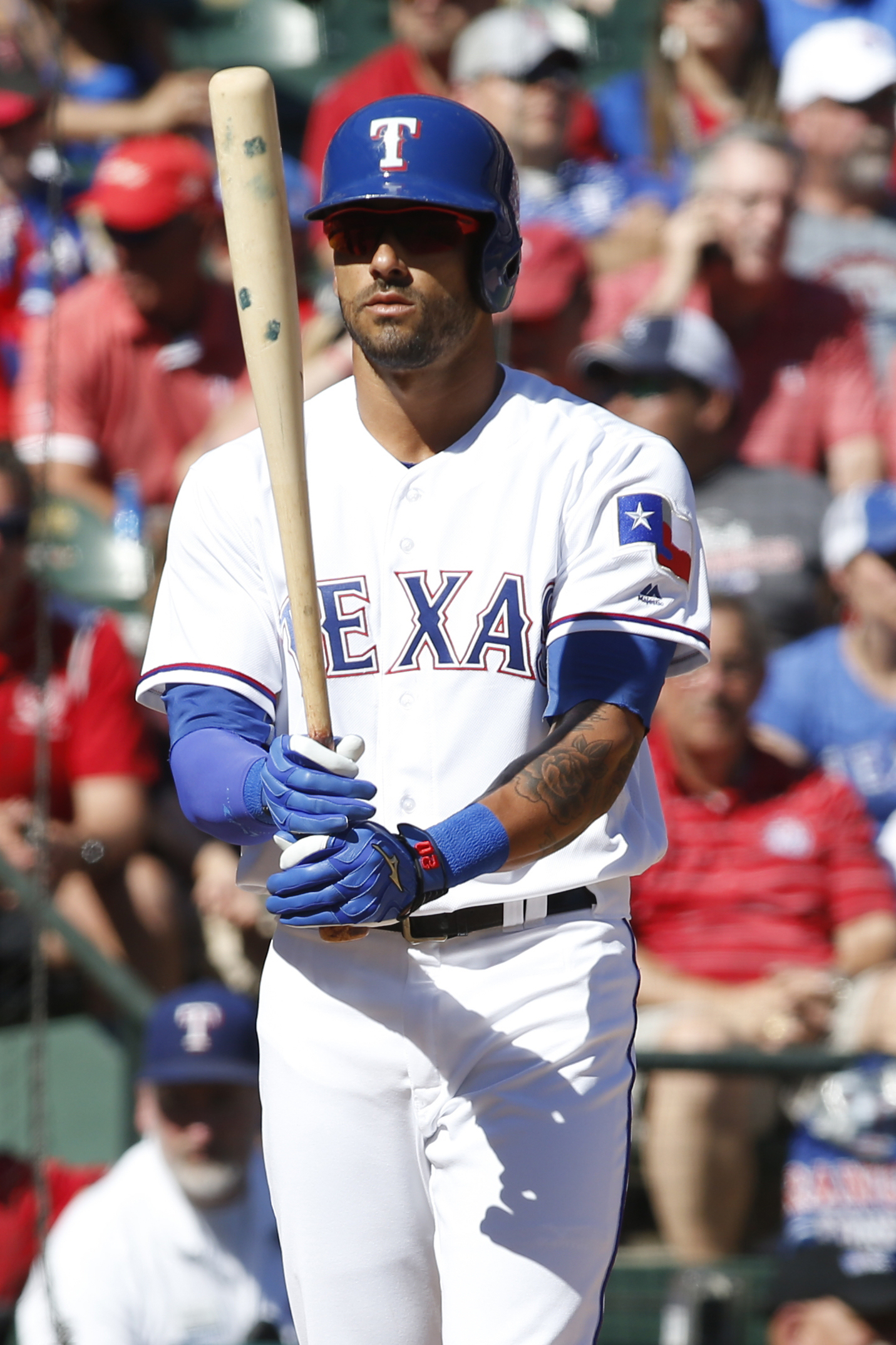
Though adding Diekman and Dyson to the late-inning duo of Shawn Tolleson and Keone Kela gave the Rangers a strong quartet, the offseason addition of Tom Wilhelmsen added another experienced arm to deepen that unit. The emergence of Delino DeShields Jr. had made Leonys Martin expendable in the eyes of the Rangers, and swapping him for Wilhelmsen saved the club a bit of cash while lengthening the ‘pen and allowing Daniels & Co. to pursue an upside play elsewhere in the bullpen. With the prices of setup men ranging from expensive to borderline ludicrous this winter, the Rangers made a $500K bid for Nippon Professional Baseball star closer Tony Barnette — a former D-backs prospect who blossomed into an elite relief arm in Japan. Though Barnette had never pitched so much as an inning in the Majors, the Rangers took a $3.5MM gamble on the 32-year-old after he posted a 1.29 ERA and saved 41 games in Japan last season. The total expenditure was a fraction of what established major league relievers received and is small enough that Texas can hit the eject button without virtually any harm being done to its payroll should Barnette prove overmatched by Major League hitters.
With Hamels in the fold alongside fellow lefties Derek Holland and Martin Perez, ace Yu Darvish on the mend from Tommy John surgery, and (realistically) a lack of financial leeway, Texas looked to stabilize the rotation rather than make another dramatic upgrade via a stacked class of free agents. The result was an affordable one-year deal to bring Colby Lewis back to Texas for his seventh consecutive year. Lewis isn’t teeming with upside, but he’s been a capable innings eater and familiar face that maintained some continuity in the clubhouse for the Rangers. If necessary, Lewis can be shifted to a swingman role at some point, depending on the rest of the rotation, but as the 2014 Rangers can attest, injuries to the pitching staff can come in bunches, so it’s possible that Lewis is again asked to make 30 or more starts.
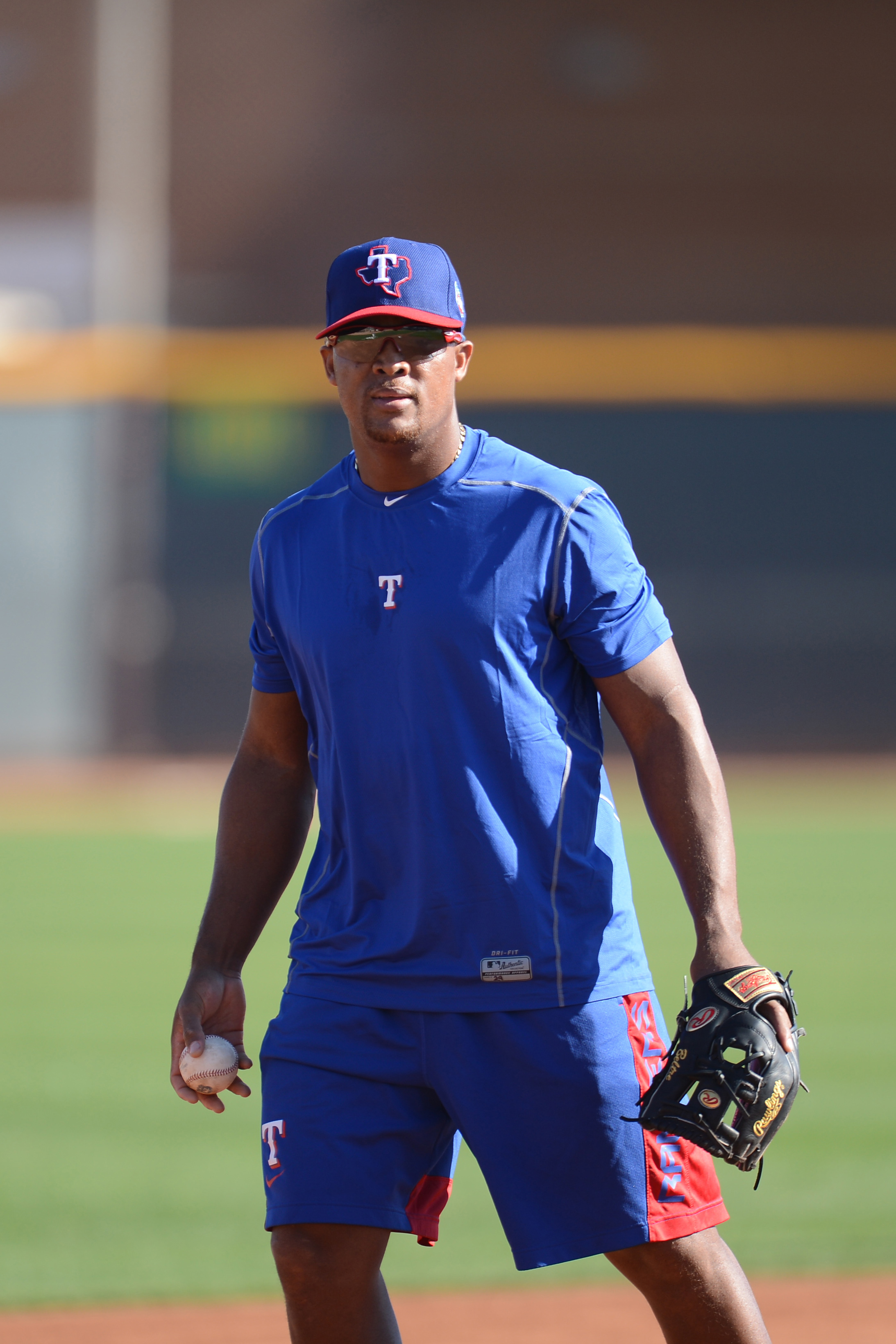
Texas looked to be largely done with its offseason spending after finishing up the Lewis contract, but the lingering presence of Ian Desmond on the free agent market was too tempting for the front office to pass up. Despite not having an infield spot for Desmond, the club added Desmond to slot in as the everyday left fielder, likely pushing the injured Josh Hamilton to a bench role upon his return.
Keep reading for more analysis after the break …
Offseason In Review: New York Mets
This is the latest entry in MLBTR’s Offseason In Review series. The full index of Offseason In Review posts can be found here.
The Mets continued to add pieces around a stellar young rotation before making a major splash to bring back last year’s trade deadline star.
Major League Signings
- OF Yoenis Cespedes: Three years, $75MM (opt-out after first year)
- INF Asdrubal Cabrera: Two years, $18.5MM
- RP Antonio Bastardo: Two years, $12MM
- SP Bartolo Colon: One year, $7.25MM
- OF Alejandro De Aza: One year, $5.75MM
- RP Jerry Blevins: One year, $4MM
- Total spend: $122.5MM
Notable Minor League Signings
Trades And Claims
- Acquired 2B Neil Walker from Pirates for SP Jon Niese
Extensions
- None
Notable Losses
- Tyler Clippard, Kelly Johnson, Eric O’Flaherty, Daniel Murphy, Niese, Bobby Parnell, Ruben Tejada, Juan Uribe
Needs Addressed
The Mets entered the offseason riding high after an NL East division title and run to the World Series. There weren’t a lot of major needs, but the club looked like it could stand to add a few pieces — like any other.
What resulted was, perhaps, more exciting than most reasonably expected out of the Sandy Alderson-led front office. After missing on an early-winter pursuit of Ben Zobrist, the Mets kept in touch with Yoenis Cespedes — who had an other-worldly run with the team after coming over at the deadline — even as they checked other boxes. With the massive offers that had been anticipated never quite coming to fruition, New York made a stunning late strike to bring back the star outfielder. We’ll take a closer look at that signing in the “deal of note” section below, but it’s worth noting that it may never even have been a possibility were it not for the fact that outfielder Michael Cuddyer surprisingly retired, taking most of his $12.5MM salary off of the books.
To that point, the Mets had methodically worked to bolster an impressive roster with some veteran additions. Prior to linking up with Cespedes, the club had added Alejandro De Aza on a fairly modest one-year deal, with expectations that he’d share time with Juan Lagares in center. Instead, he’s now a somewhat awkward fit — given the presence of two left-handed bats ahead of him in Curtis Granderson and breakout youngster Michael Conforto — and could end up being traded at some point if the Mets can find a taker or another roster need intervenes.
The biggest question as the postseason closed, though, was in the middle infield. Wilmer Flores and Ruben Tejada remained as options, but Daniel Murphy was vacating second after declining a qualifying offer. Both positions were addressed at the Winter Meetings, as the team gave two years to free agent Asdrubal Cabrera and swapped out lefty Jon Niese for Neil Walker.
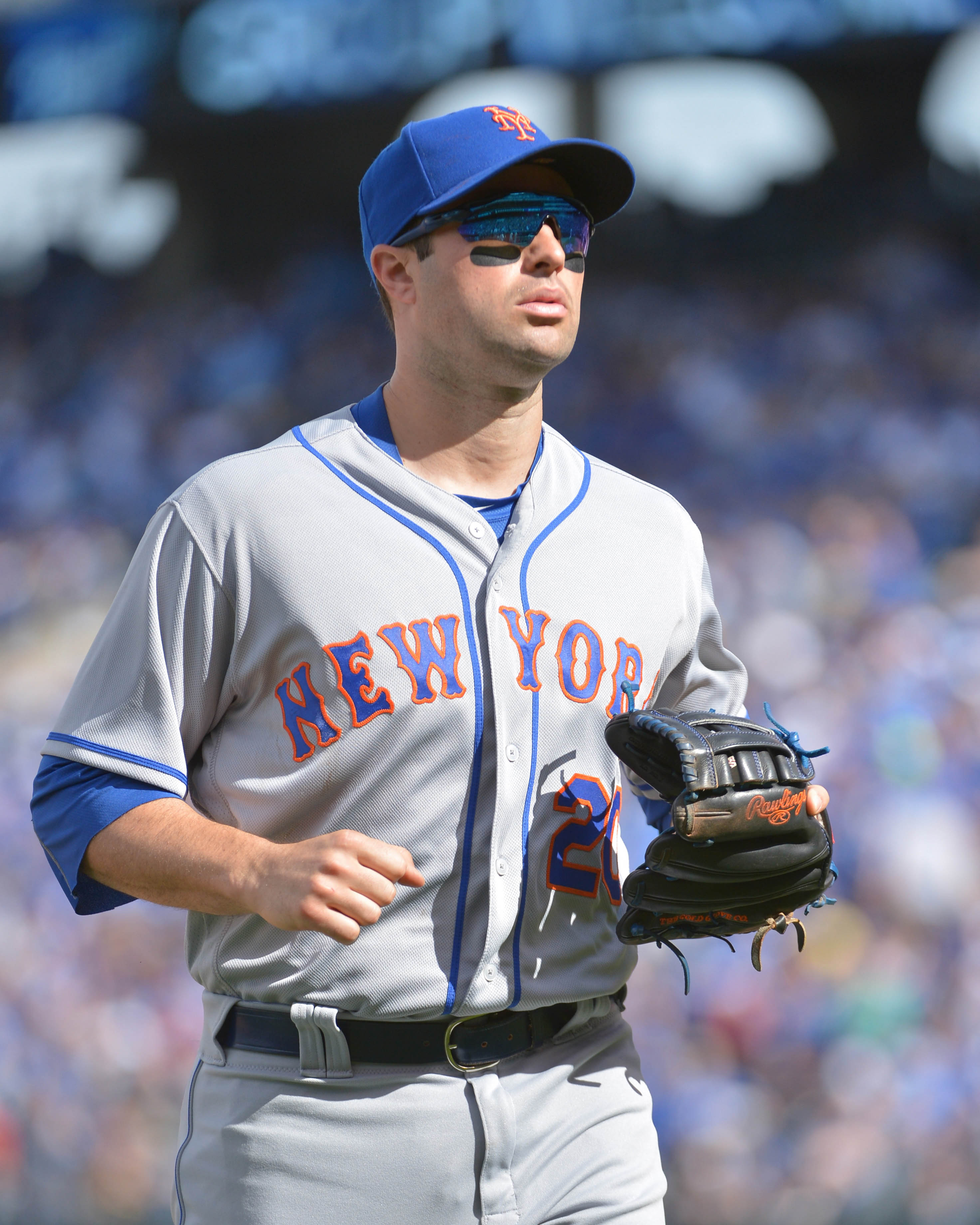
While Cabrera has had mixed results in recent years, he’s still young and provides a sturdy presence that will allow Flores to move around the infield. And Walker not only represents a capable replacement for Murphy, but didn’t require the team to part with any essential pieces. Though he’s struggled against lefties, Walker brings serviceable glovework and a consistently above-average bat, and could be spelled by the right-handed-hitting Flores as situations dictate. With several young options available in the upper minors if a need arises, those additions also allowed the Mets to cut Tejada loose late in camp to avoid fully guaranteeing his $3MM arb salary.
While it didn’t cost much payroll space to add Walker, as he’s owed just a shade more than Niese for 2016, the loss of the veteran southpaw did create a need in the rotation. Top arms Matt Harvey, Jacob deGrom, Noah Syndergaard, and Steven Matz form as good a front four as any in baseball, and will eventually be joined by another high-quality option in Zack Wheeler. But Wheeler is still working back from Tommy John surgery and isn’t expected until mid-season, so the Mets brought back ageless wonder Bartolo Colon to provide stability in the rotation. He may ultimately end up in the pen, but only if Wheeler and the others are all healthy and (as expected) effective.
The bullpen, too, needed supplementation, even after the Mets tendered Addison Reed on the heels of his solid late-2015 run. He’s a fairly pricey risk at $5.3MM, given his inconsistencies over the years, and you could argue the same of lefty Jerry Blevins, who’ll earn $4MM after missing most of 2015 with a pair of freak, non-pitching arm injuries. The Mets ended up adding an even more expensive southpaw in Antonio Bastardo, but were able to get him for two years when he had seemed a decent bet to land three. Minor league signee Jim Henderson also showed well in camp and earned an Opening Day roster spot to bolster the middle-relief ranks.
Beyond that, there wasn’t much work to be done, though the club did want to improve its catching depth behind promising youngsters Travis d’Arnaud and Kevin Plawecki. New York patiently waited for other rosters to shake out, and ultimately added glove-first veteran Rene Rivera after he was released by the Rays.
Read on for more analysis after the break …

Corey Ray (Louisville) Interview: Draft Prospect Q&A
MLBTR is re-launching its Draft Prospect Q&A series in order to give our readers a look at some of the top names on the board in this year’s draft. MLBTR will be chatting with some of the draft’s most well-regarded prospects as they prepare for the 2016 draft on June 9-11.
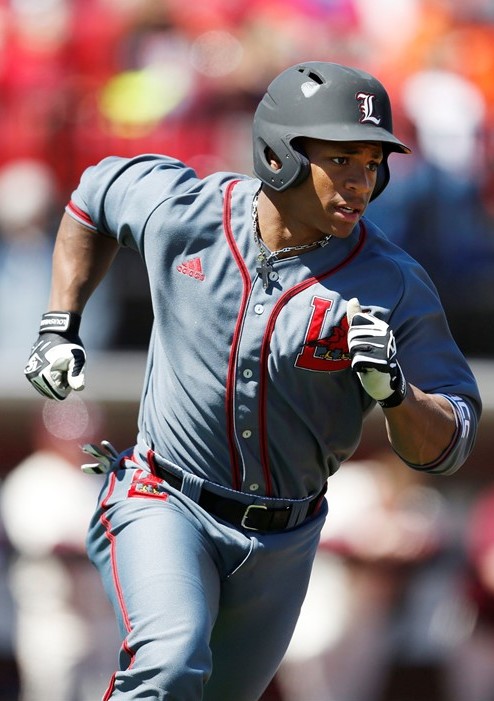
University of Louisville center fielder Corey Ray is rated among the top position players available in this year’s draft. In a recent mock draft, Baseball America has Ray going sixth overall.
At 6’0″, 200 pounds, Ray made a name for himself in 2015 with a strong sophomore season for Louisville, recording a .325/.389/.543 batting line with 11 homers and 34 stolen bases. Over the summer, the left-handed batter led the U.S. collegiate national team in extra-base hits (nine), OPS (.971) and steals (11). After Louisville’s weekend series against ACC rival Florida State, the 21-year-old is hitting .331/.396/.624 with 20 extra-base hits (including nine homers), 38 RBI and 28 steals as the Cardinals’ leadoff batter.
According to MLBPipeline.com’s Jonathan Mayo, Ray is “the epitome of the college performer. He just hits. He’s got some power. He’s performed well. If he continues to do that, he should be a guy who easily can go in the Top 10.” Keith Law and Eric Longengagen of ESPN.com rated Ray third among draft prospects yesterday, praising his blend of power and speed.
Ray arrived on the Louisville campus after a stellar prep career at Simeon Career Academy in Chicago. Over his own objections, he went the college route after being selected in the 33rd round of the 2013 draft. Ray was kind enough to take some time out of his busy schedule to talk with MLBTR this week.
Chuck Wasserstrom: I know the draft is a couple months away – and you’ve been through the draft process before – but is it hard not to think about the draft right now?
Corey Ray: “No, it’s not hard, because I’m in a college season. As a high Division 1 program, we have goals. And we want to accomplish those goals first and foremost. I put the team before myself.”
I like that answer. Let’s go back to 2013. You were selected by the Mariners in the 33rd round of the draft, but your dad (also named Corey Ray) put his foot down and said you were going to college. Can you talk about how those conversations went down?
“They were intense. As a baseball player and as an African-American from the south side of Chicago, you love playing sports. The idea that you get paid to do it is a dream come true. That dream was knocking on my door, and those were some pretty tough conversations with my father. He told me I wasn’t ready. All I was seeing was the dollar amount and not the big picture in the long term.”
How hard was it for you to say ‘No’ to the Mariners?
“Very hard … I think I may have teared up a little bit.”
You have said your dad was right. Can you tell me how the Louisville experience has changed you?
“I think it’s made me a baseball player. I came here and I had some talent, but I didn’t know how to play the game. I didn’t know what hard work was. Being here under Coach Mac (Dan McDonnell) has taught me what hard work was. The players I have played with here have taught me what hard work was – and they taught me the game as well. It has also made me a more mature person – being in college … being on my own … finding out what it takes to be successful at this level.”
Why did you choose Louisville?
“It was close to home, but not too close. My grandparents and my father can come and see me play when we have weekend series, but they can’t come up here every day. They can’t surprise me. I have enough distance between my parents and here that I feel like I’m on my own, but I see them enough not to get homesick.”
For people who haven’t seen you play, how would you describe Corey Ray as a baseball player?
“Versatile … can play all three outfield positions … can steal a base … can hit the ball in gap … if you make a mistake, can hit the ball over the fence. But I also can grind out at-bats and see pitches. Whatever that needs to be done, I can do it.”
You made the huge jump forward your sophomore year, and then had a big summer campaign. You’ve followed up on that with a strong junior season. What do you see as the turning point in your college career?
“I think the turning point for me was, at the end of my freshman season, just being able to play and being able to get reps. But I think one of the best things for me was going to the Cape Cod League after my freshman year. I wasn’t as successful as you’d like to be as a hitter, but the reps … I saw the best pitching that college baseball has to offer day in and day out. You learn what you can and cannot do on the baseball field. You learn the flaws and the advantages of your swing. I think I learned a lot about myself as a baseball player from just being unsuccessful in the Cape.”
But you also got to see a lot of quality players and use a wood bat, so you were learning how the pro game is played.
“You’re playing with some of the best players in college baseball and you’re playing against some of the best players in college baseball. So I tried to pick up some things that other players do that I didn’t do that could possibly help me with my game.”
The old speed or strength question … Do you see yourself as more a leadoff hitter or a middle of the lineup batter?
“Leadoff hitter… I love leadoff. I practically had to beg Coach Mac to lead me off this year. Just being that table setter … I think in the leadoff spot I can be more dangerous because when I’m on base and there aren’t any out, I can pick which pitches to steal and what situation I want to steal in.”
Being a leadoff hitter all the time now, have you taken a different approach to the plate? Your strikeout total (17 in more than 150 plate appearances this season) rivals your walk total (16).
“Definitely. Not just because I’m the leadoff hitter, but because I want to grow as a hitter. I think I’ve become more mature. I’m starting to learn what pitches I hit best and what pitches I can’t hit. And what pitches to swing at early in the count and which pitches not to. I also think that can be attributed to being more comfortable hitting with two strikes. Last year, I wasn’t as comfortable and I’d swing early in the count. I would get myself out sometimes, or with two strikes – I’d sometimes swing at anything thrown. Now, I’m able to work counts with two strikes and get a better pitch to hit.”
Defensively, if you’re given a choice, what position do you think you should play?
“Center field.”
Why center field?
“I think it’s the easiest of all three positions, but there’s more ground to cover. You’re the leader of the outfield. That’s the premier position to play. I think my speed and my jumps and my defensive ability profiles better in center field than the corners.”
But you’ll play anywhere they tell you.
“Yes sir. As long as I’m in the lineup.”
As a Chicago native, I have to ask you this question: Cubs fan or White Sox fan?
“I like them both. Growing up, I lived close to [U.S. Cellular Field] and went to a lot of White Sox games – and I like the White Sox. But before my senior year in high school, I was blessed with the opportunity to play in the (Under Armour) All-American Game at Wrigley Field. Just being in that clubhouse and playing on that field … the history from that ballpark, you can’t not like a team like the Chicago Cubs. It doesn’t hurt that they could win the World Series this year.”
What was it like being on a Major League field?
“I’ve been on a few different Major League fields before, but the two that stand out to me most are Fenway Park and Wrigley, just because of the history. They’re old, but they have that historic feel. You can just tell you’re in some place special.”
Speaking of Fenway, I know you’ve listed former Red Sox center fielder Jacoby Ellsbury as someone you model your game after. Are there other players that you look up to?
“Yes, Jacoby Ellsbury … definitely. Oregon State … two national championships … first round pick … Boston Red Sox. He’s made a lot of money in his career, and he’s done it in many ways. By stealing bases. By defending. He also hit third for the Yankees one year. He can hit the long ball. He’s very versatile. And then there’s Curtis Granderson. He’s from Chicago. I’ve talked to him a lot. He’s a mentor of mine. He’s a great guy. If I can have the career Curtis Granderson has had, I’d be pretty happy. I’ve also been watching a lot of videos on Tony Gwynn. One of the best hitters to ever play … the way that he did it was amazing.”
Your Louisville bio includes the phrase “the greatest influence on his career is his grandfather because of his support.” Tell me about your grandfather (Earnest, his paternal grandfather).
“Growing up, I can probably count on two hands the number of games my granddad missed. And that includes playing out of the state and all over the country. He’s the reason I started watching baseball more. I’ve always liked playing it, but I’ve learned a lot about baseball by just watching it. I remember times when I was younger when we’d just sit down and watch whole White Sox games on back-to-back days. I could always count on him to be in the stands if I had a baseball game, cheering me on, telling me to hit the ball. He made it known from an early age that, if you want to do this, you have to work hard to do it. It’s possible if you work hard enough.”
I’ve read stories about your dad getting you started in baseball at a young age.
“His co-worker started a baseball team, and they needed one extra player. My dad signed me up and they stuck me in center field. The rest is history. My dad always told me that whatever it is you want to do, you’ve got to work harder. You’re not only going against the people in your area in Chicago or even the Midwest, you’re going against everybody else in the country. He always told me that there’s someone out there trying to take your spot. And that guy’s working hard, so you have to work harder to keep up. He would tell me to go and run the hill. The ironic thing is he would never watch me. He said ‘if you’re working hard and you’re really doing what you’re supposed to do, it will really show on the field. So I don’t have to watch the process. I want to watch the result.’ ”
If you don’t mind, tell me a little bit about this legendary hill (a 40-foot-high hill at Robichaux Park in Chicago).
“There’s a hill that was basically behind my house that I would run on. I would run sprints up it and run sprints down it. Do some push-ups. And then run a 50-yard sprint. At the end, run up the hill and sprint down backwards. Some agility, some speed, some conditioning.”
Did you do it by yourself or with friends?
“I did it by myself. Sometimes I would take my puppy to run with me (laughing).”
There hasn’t been a city of Chicago product picked in the draft’s Top 10 since 1989. Do you think about that at all? Is that a goal for you?
“I think a goal for me is to play the game of baseball as long as I can and to give back to Chicago baseball as much as I can, whether that be as a Top 10 pick or being just a draft pick at all. To be able to get into professional baseball and hopefully to get into Major League Baseball and leave my mark on Chicago baseball – to be an ambassador for Chicago baseball.”
So if you are a high draft pick, will your dad be OK if you turn pro?
(Laughing) “Definitely. I don’t think he’s the decision maker this time.”
Does he know that?
“Yes. He knows.”
– – –
Chuck Wasserstrom spent 25 years in the Chicago Cubs’ front office – 16 in Media Relations and nine in Baseball Operations. Now a freelance writer, his behind-the-scenes stories of his time in a big league front office can be found on www.chuckblogerstrom.com.
Photo courtesy of University of Louisville Sports Information.
Offseason In Review: San Diego Padres
This is part of MLBTR’s series of posts breaking down the offseasons of every team in baseball. You can find all the others at this link.
After one of the most hyper-aggressive offseasons in recent history, the Padres pumped the brakes at the 2015 trade deadline and did so again with a more reserved winter.
Major League Signings
- Alexei Ramirez, SS: One year, $4MM (plus $4MM mutual option)
- Fernando Rodney, RHP: One year, $2MM (plus $2MM club option)
- Carlos Villanueva, RHP: One year, $1.5MM
- Buddy Baumann, LHP: One year, $520K
- Cesar Vargas, RHP: One year, salary unreported
- Total Spend: $8.02MM
Notable Minor League Signings
- Jeremy Guthrie, Brandon Morrow, Adam Rosales, Mike Olt, Matt Thornton, Casey Janssen, Christian Friedrich, Justin Sellers, Josh Satin, Erik Kratz, Philip Humber
Trades and Claims
- Acquired CF Manuel Margot, SS Javier Guerra, 2B Carlos Asuaje and LHP Logan Allen from Red Sox in exchange for RHP Craig Kimbrel
- Acquired RHP Enyel De Los Santos and IF Nelson Ward from Mariners in exchange for RHP Joaquin Benoit
- Acquired CF Jon Jay from the Cardinals in exchange for INF Jedd Gyorko and cash considerations ($7.5MM)
- Acquired LHP Drew Pomeranz, LHP Jose Torres and a PTBNL (Rule 5 pick Jabari Blash) from Athletics in exchange for 1B Yonder Alonso and LHP Marc Rzepczynski
- Acquired C Christian Bethancourt from Braves in exchange for RHP Casey Kelly and C Ricardo Rodriguez
- Acquired 2B Jose Pirela from Yankees in exchange for RHP Ronald Herrera
- Acquired LHP Trevor Seidenberger from Brewers in exchange for OF Rymer Liriano
- Acquired RHP Jean Cosme from Orioles in exchange for Odrisamer Despaigne
- Acquired RHP Dan Straily from Astros in exchange for C Erik Kratz (Straily was then claimed off waivers by Reds)
- Traded RHP Nick Vincent to Mariners in exchange for PTBNL
- Selected RHP Luis Perdomo from Cardinals in Rule 5 Draft
- Selected RHP Blake Smith from White Sox in Rule 5 Draft
Extensions
- None
Notable Losses
- Justin Upton, Ian Kennedy, Craig Kimbrel, Joaquin Benoit, Shawn Kelley, Jedd Gyorko, Yonder Alonso, Clint Barmes, Dale Thayer, Will Middlebrooks, Odrisamer Despaigne, Bud Norris, Marc Rzepczynski
Needs Addressed
Looking at the list of trades made by general manager A.J. Preller and his staff this winter, perhaps “reserved” wasn’t an optimal word selection for the introductory sentence to this review. The Padres were hardly dormant this offseason, but the club’s direction unequivocally changed: while the 2014-15 offseason was about acquiring Major League talent with an eye towards immediate improvement, the 2015-16 offseason instead focused on long-term value and short-term additions that didn’t compromise that long-term outlook.
Chief among those forward-looking moves was the decision to trade one of the game’s best closers, Craig Kimbrel, less than nine months after acquiring him. In terms of prospect capital, the Padres received more than they gave up in order to acquire Kimbrel in the first place, although part of the reason they were able to acquire Kimbrel at a lesser price in terms of young talent was their willingness to absorb Melvin Upton’s contract. The addition of Manuel Margot, Javier Guerra, Carlos Asuaje and Logan Allen was a huge boost to a floundering Padres farm system, but the club still rates among the worst overall minor league systems in baseball, per Baseball America and ESPN’s Keith Law. Be that as it may, the Kimbrel trade could reap Major League benefits in the very near term, as Margot is close enough to the big league level that he could be in center field for the Friars as soon as this summer. Asuaje, too, could emerge on the big league scene relatively quickly.
While many thought the trade of Kimbrel and the subsequent trade of Joaquin Benoit signaled that the Padres would embark on an offseason fire sale, the team didn’t move enticing veterans like Tyson Ross, Andrew Cashner or Derek Norris. Rather, the Padres dealt from the fringes of their Major League and 40-man rosters and, in doing so, were able to pare down the payroll a bit while simultaneously bringing in additional near-term pieces. The new regime clearly wasn’t as high on Jedd Gyorko as the former front office, and shedding his salary for a more substantial up-front cost (the final year of Jon Jay’s contract) created some roster flexibility down the line. Christian Bethancourt and Jose Pirela give the Friars a pair of young players that can step directly onto the roster.
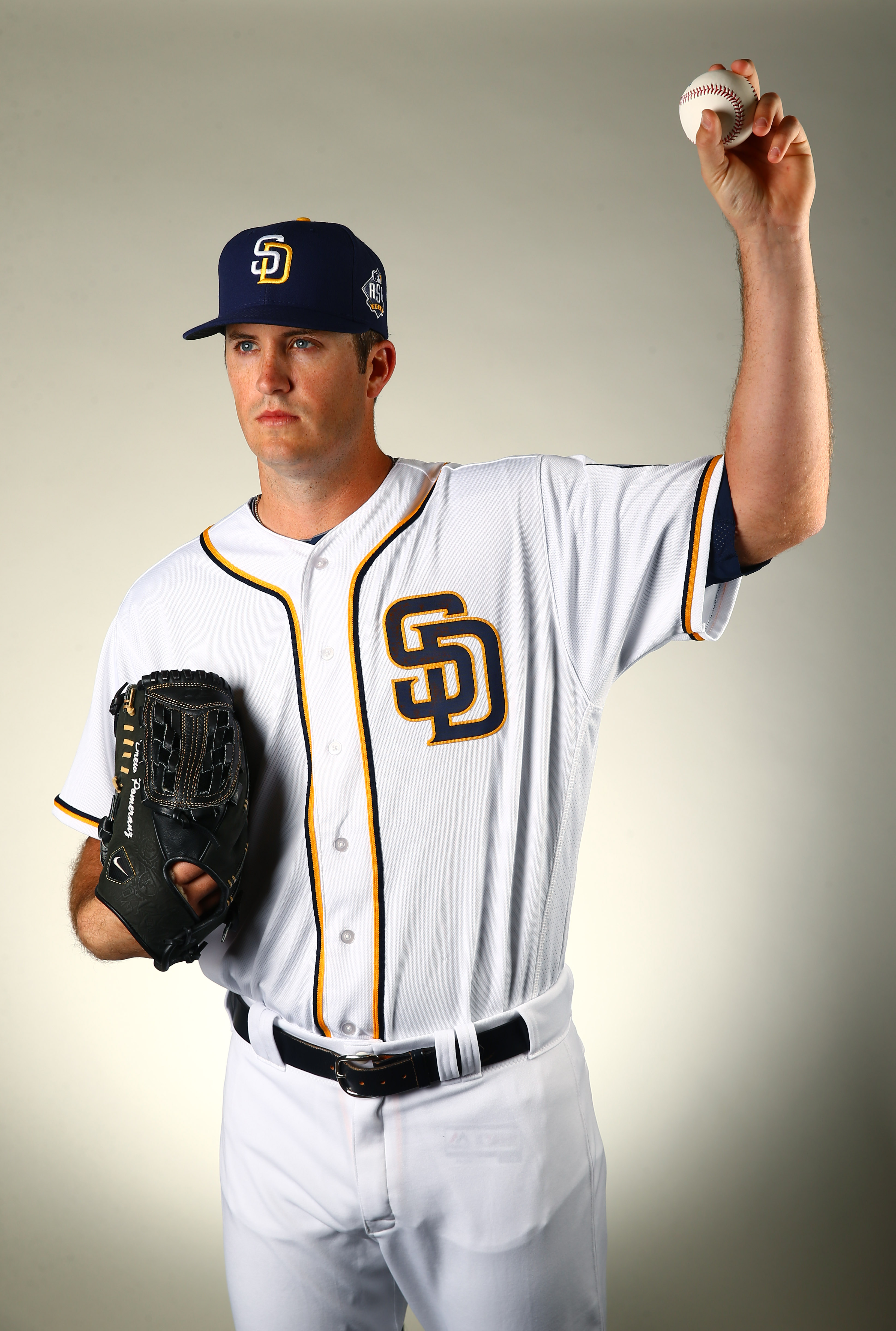
San Diego also moved a year of Marc Rzepczynski and two years of Yonder Alonso for three years of Drew Pomeranz and an intriguing Rule 5 pick in Jabari Blash (plus minor league lefty Jose Torres). From my vantage point, it was hard not to like the deal for the Padres, who gained more control over Pomeranz than they had over either Alonso or Rzepczynski. Pomeranz might not have lived up to his potential yet, but he posted solid numbers in both seasons he spent with the A’s and is nearly two years younger than Alonso, whose ceiling is pretty limited at this point.
In Rodney, Villanueva, Baumann and Vargas, the Padres made a series of low-cost bullpen signings to help replace some of the depth they surrendered in other trades, and while none of the group will replicate the production of Kimbrel, there’s reason enough to believe that Rodney or Villanueva could easily justify the modest salaries that each was guaranteed.
The Padres’ only other free-agent expenditure was a similarly small commitment to Alexei Ramirez, and he’ll serve as a short-term patch over a long-term problem. I’ll talk a bit more about the deal later in the review.
Keep reading for more analysis after the break …

Tyrone Brooks And MLB’s Diversity Pipeline Program
Tyrone Brooks has been preparing for his current job since joining a Major League front office more than 20 years ago. Brooks, who was named Senior Director of MLB’s Front Office and Field Staff Diversity Pipeline Program earlier this year, has long been known for the work he has done in trying to help people land careers in baseball. Back in 2009, he founded the Baseball Industry Network – a networking group designed to assist individuals working in and/or connected to the game. One of the goals of the network – which now has over 29,000 members – is to develop mentoring relationships between people in the sport and individuals attempting to enter the industry.
Brooks, 42, got his start in baseball by landing an internship with the Atlanta Braves. He didn’t come from a baseball pedigree – as he double-majored in accounting and marketing at the University of Maryland, where he also spent time as a photojournalist. He took the internship opportunity and parlayed it into a full-time position. His resume – with stops in Atlanta (1996-2006), Cleveland (2006- 2009) and Pittsburgh (2009- 2016) – shows slow steady progress through different departments and roles en route to leadership positions. In essence, Brooks was the first member of his own pipeline.
“With the Front Office and Field Staff Diversity Pipeline Program, the goal is to help increase the pool of minority and women candidates for baseball operations positions,” Brooks said. “The main thing is developing a pipeline both to the front office and for potential managers at the big league level. We’re starting from the bottom. We’re not looking to bring somebody in and try to make them assistant GMs for a club right away. We’re trying to bring new people in through internships and entry level jobs and create a path for that person. And as the person goes through the pipeline, that’s how we can help develop that person. Looking at it from a long-term perspective, that’s how we can make this game better … by giving individuals opportunities, and from there, helping develop them as they go through the process.
“We’re putting programs in place where we can help individuals make the next step from entry level to mid-manager to higher levels within an organization. It’s a continual process as you make your way through the pipeline. You need to have things in place that are going to help an individual grow and work their way toward the top of an organization.”
The type of path Brooks talks about directly mirrors his own course, beginning with the aforementioned Braves internship. Brooks got that position through that organization’s Career Initiative Trainee Program – a program developed by Braves executives Hank Aaron and Stan Kasten to help create opportunities for minorities and women in baseball. He spent just a couple months as an intern before a full-time position opened up – and he was hired as an administrative assistant in scouting and player development. Brooks bided his time and put in nine full years before being promoted into his first titled position – as the Braves’ Director of Baseball Operations.
“You can look at my own career as a little bit of a model for the program,” he said. “I came in as an intern out of college – that was my way in. I got my feet wet. I was very fortunate to get hired later that summer full-time. From there, I continued to grow and expand in the duties I was given. At that time, I wanted to learn how we evaluated talent. The Braves were a very scout-driven organization, so the opportunity to get exposed to that area was important. I just tried to balance as much as I could – both on the administrative side in order to do my job effectively and to grow on the evaluation side as well.
“I started in the office as an administrator … became an area scout … went back into the office … did more of the administrator stuff – contracts, arbitration … went back into the field as a pro scout (with the Indians) … then came back into the office with the Pirates and basically did the duties of an assistant GM day-to-day … and from there, Director of Player Personnel.”
In his new role at MLB, Brooks will play a part in the way baseball front offices are constructed moving forward. He was asked what it was like knowing that he was involved in changing future front office landscapes.
MLBTR Originals
Here’s a look back at MLBTR’s original analysis and reporting over the past seven days.
- On the latest edition of the MLBTR Podcast, host Jeff Todd spoke to the Arizona Republic’s Nick Piecoro about A.J. Pollock‘s injury, and to me about the Gregory Polanco extension.
- Jeff looked back at the Nationals’ offseason, which included the signing of Daniel Murphy and a trade for Ben Revere.
- Jeff also analyzed the Dodgers’ winter, in which the team spread its spending among a wide variety of players while allowing Zack Greinke to leave for Arizona.
- Mark Polishuk reviewed an Athletics offseason in which David Forst and Billy Beane acquired Khris Davis and Jed Lowrie while focusing their free-agent spending on pitchers. (MLBTR’s entire Offseason Outlook series — which now includes reviews of 25 teams’ winters — can be found here.)
- On Wednesday, Steve Adams’ chat topics included the meaning of Robinson Cano‘s fast start and the Astros’ usage of Ken Giles.
- On Thursday, Jeff chatted with MLBTR readers, discussing what new contracts for Jose Bautista and Adrian Beltre might look like.
Offseason In Review: Oakland Athletics
This is the latest entry in MLBTR’s Offseason In Review series. The full index of Offseason In Review posts can be found here.
The A’s significantly shook up their roster yet again in order to rebound from last year’s 94-loss disappointment.
Major League Signings
- Ryan Madson, RP: Three years, $22MM
- John Axford, RP: Two years, $10MM
- Rich Hill, SP: One year, $6MM
- Henderson Alvarez, SP: One year, $4.25MM
- Total spend: $42.25MM
Notable Minor League Signings
Trades And Claims
- Acquired OF Khris Davis from Brewers for C Jacob Nottingham and SP Bowdien Derby
- Acquired IF Jed Lowrie from Astros for RP Brendan McCurry
- Acquired SP Zack Erwin and RP J.B. Wendelken from White Sox for 2B/3B Brett Lawrie
- Acquired 1B Yonder Alonso and RP Marc Rzepczynski from Padres for SP Drew Pomeranz and OF Jabari Blash (eventually added to deal as player to be named later)
- Acquired RP Liam Hendriks from Blue Jays for SP/RP Jesse Chavez
- Acquired IF/OF Chris Coghlan from Cubs for SP Aaron Brooks
- Acquired RP Trey Cochran-Gill from Mariners for RP Evan Scribner
- Acquired cash considerations from Blue Jays for RP Arnold Leon
- Claimed OF Andrew Lambo off waivers from Pirates
- Claimed RP Andrew Triggs off waivers from Orioles
Extensions
- None
Notable Losses
- Dan Otero, Ike Davis, A.J. Griffin, Edward Mujica, Fernando Abad, Craig Gentry, Sean Nolin, Lawrie, Pomeranz, Chavez, Brooks, Scribner, Leon
Needs Addressed
In MLBTR’s Offseason Outlook piece about the Athletics last October, Charlie Wilmoth suggested the the A’s could explore “spending heavily on righty relievers in an attempt to improve by building a good bullpen around Sean Doolittle, Fernando Rodriguez and (Drew) Pomeranz,” with the logic that upgrading the bullpen would cost less payroll-wise both now and in future commitments.
Since the Billy Beane/David Forst front office are always one to consider an “off-the-grid possibility,” relief pitching was indeed a major focus of Oakland’s winter, specifically right-handers. The A’s spent $32MM (the bulk of their winter spending) on multi-year deals for Ryan Madson and John Axford, both of whom will serve as setup men for Doolittle.
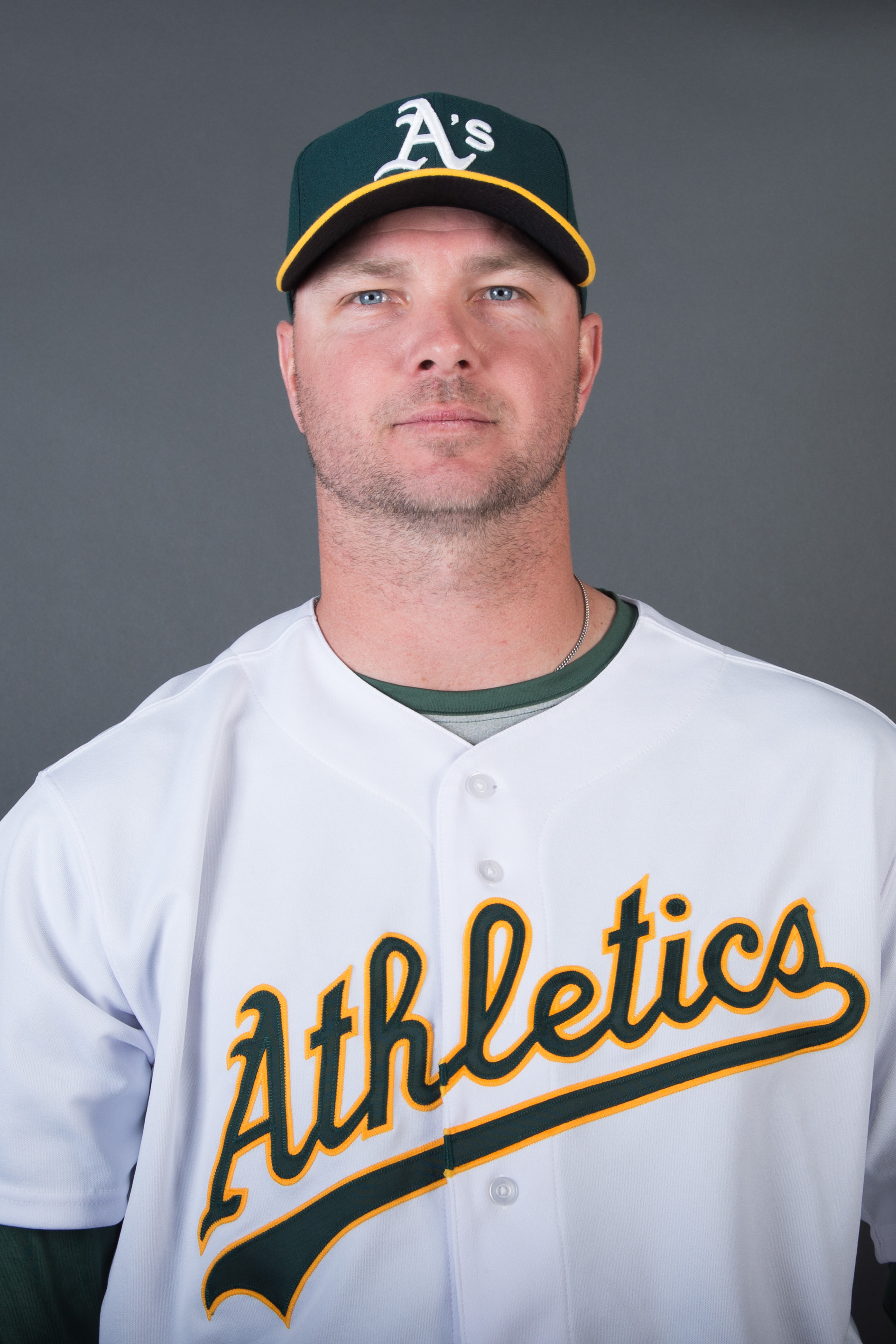 Madson’s re-emergence as a top reliever after missing three seasons to injury was a big factor in the Royals’ World Series championship, and the A’s will hope he can continue his good form as both a setup man and possible closer should Doolittle run into problems. Axford will go from one of baseball’s most hitter-friendly parks in Coors Field to one of its most pitcher-friendly in the Coliseum, though the hard-throwing Canadian didn’t have as many issues with homers last year (a modest 0.6 HR/9) as he did his career-long struggle to limit walks.
With Jesse Chavez becoming increasingly expensive in arbitration, the A’s dealt the veteran swingman to Toronto for Liam Hendriks, who will only become arb-eligible for the first time next winter. Hendriks was shifted into a full-time relief role last season and blossomed, posting a 2.92 ERA, 9.9 K/9 and 6.45 K/BB rate over 64 2/3 IP for the Blue Jays.
In addition to these three righties, the A’s also addressed the left-handed side of their bullpen ledger by acquiring Marc Rzepczynski as part of a multi-player trade with the Padres. “Scrabble” had a bizarre 2015 season that saw him post a 5.66 ERA over 35 innings due in large part to a freakishly high 25% home run rate, a .381 BABIP and a stunningly low 54% strand rate. ERA predictors had a much more favorable view (3.36 FIP, 2.75 xFIP, 2.49 SIERA) of the southpaw’s season, so if the A’s limit Rzepczynski into more of a traditional LOOGY role, he should be fine.
The Padres deal sent Pomeranz and Rule 5 draft pick Jabari Blash to San Diego with Yonder Alonso also coming back as part of the trade package to Oakland. Alonso will essentially fill Ike Davis’ role as a left-handed hitting first base complement, platooning with Mark Canha. Alonso is a strong defender and posted career highs in average, OBP and OPS over 402 plate appearances last season, including a .287/.364/.398 slash line against righties.
The Athletics will substitute a Lowrie for a Lawrie at second base this year, as they dealt Brett Lawrie to the White Sox and brought back veteran Jed Lowrie for his second stint in Oakland. Lowrie has a checkered injury history and he’s a pricey acquisition for the A’s (owed $15MM through the 2017 season), though he gives the club positional flexibility since he can also handle shortstop and third if Marcus Semien or Danny Valencia need some time.
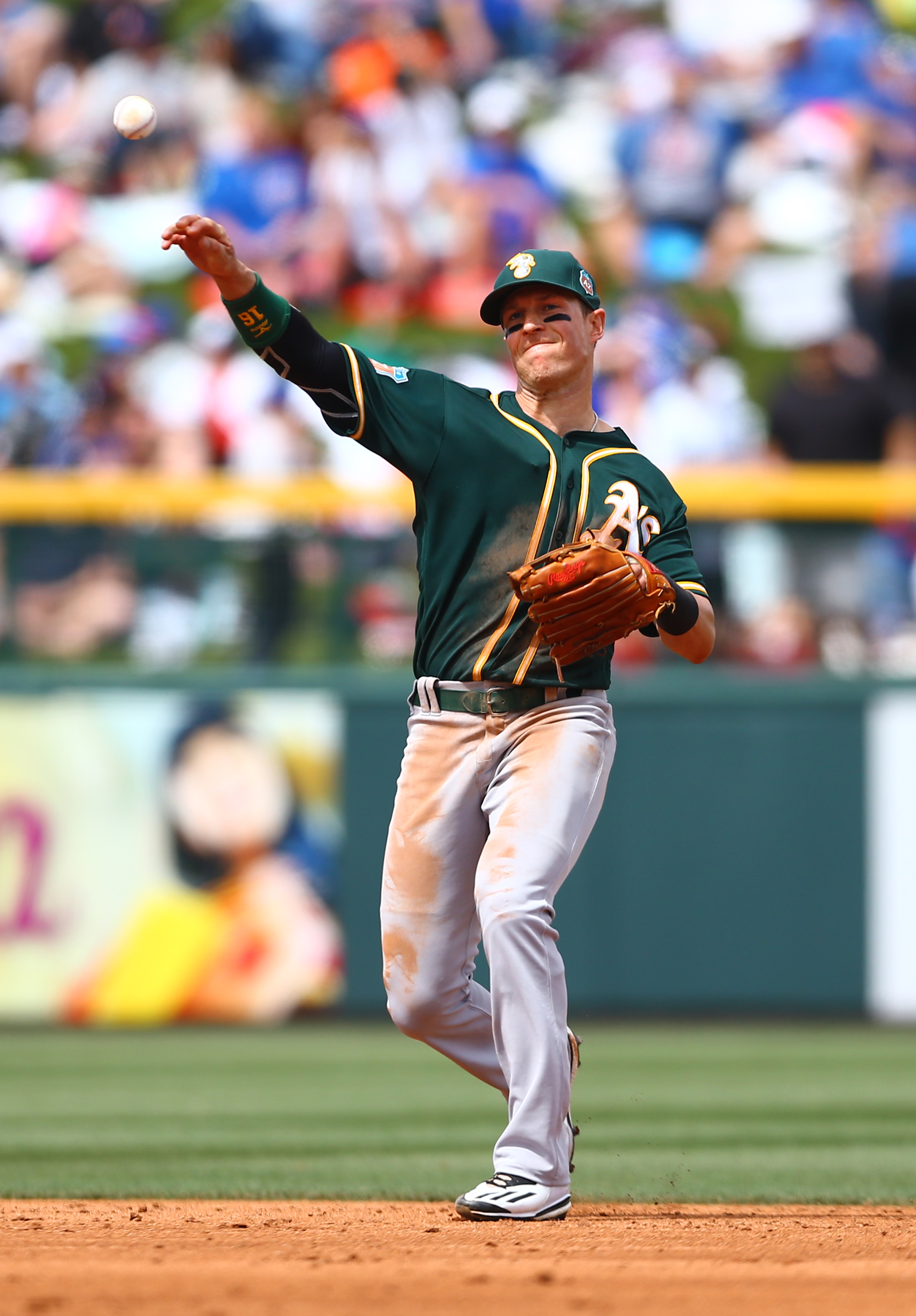 Speaking of versatility, the A’s picked up Chris Coghlan with the intent of turning the former Rookie of the Year into a super-utility man capable of playing all over the diamond rather than just his usual left field. Coghlan also gives the A’s a strong lefty bat who has an .831 OPS against righty pitching over his last two seasons with the Cubs.
As much as Oakland builds its roster around platooning and depth, the A’s are certainly hoping that Khris Davis can emerge as an everyday player in left given his already-apparent potential as a power bat. Davis has 60 homers over his first 1132 career PA and has posted pretty similar splits against righties and lefties, though the downsides are a lack of walks, a lot of strikeouts and below-average left field defense.
Finally, the A’s added two major rotation pieces in Rich Hill (who we’ll cover later) and Henderson Alvarez, though the latter isn’t expected until May as he’s still recovering from the shoulder surgery that sidelined him for most of 2015. If healthy, Alvarez’s grounder-heavy, low-strikeout approach would seemingly be a good fit at the Coliseum, and he’s still only 25 years old with two productive, 187-inning seasons under his belt.
Offseason In Review: Los Angeles Dodgers
This is the latest entry in MLBTR’s Offseason In Review series. The full index of Offseason In Review posts can be found here.
The Dodgers spread their cash rather than making a single splash, opting for roster and lineup flexibility over premium assets (at a premium cost).
Major League Signings
- SP Scott Kazmir: Three years, $48MM (opt-out after first year)
- SP/RP Yaisel Sierra: Six years, $30MM
- SP Kenta Maeda: Eight years, $25MM + $20MM posting fee
- 2B Howie Kendrick: Two years, $20MM
- SP Brett Anderson: One year, $15.8MM (accepted qualifying offer)
- OF Yusniel Diaz: $15.5MM bonus (minor league deal)
- 2B Chase Utley: One year, $7MM
- INF Omar Estevez: $6MM bonus (minor league deal)
- RP Joe Blanton: One year, $4MM
- SP Brandon Beachy: One year, $1.5MM
- RP Louis Coleman: One year, $750K
- Total spend: $193.55MM
Notable Minor League Signings
- Corey Brown, Daniel Corcino, Charlie Culberson, Alex Hassan, Elian Herrera, Brandon Hicks, Chin Hui-Tsao, Jordan Schafer, Donavan Tate, Matt West, Jamey Wright (since retired)
Trades And Claims
- Acquired SP Frankie Montas, INF Micah Johnson, OF Trayce Thompson from White Sox in exchange for INF/OF Jose Peraza, INF Brandon Dixon, OF Scott Schebler (all of whom went to Reds in three-team deal that sent Todd Frazier to White Sox)
- Acquired C Jack Murphy from Blue Jays in exchange for 2B Darwin Barney
- Acquired INF Erick Mejia from Mariners in exchange for SP/RP Joe Wieland
- Acquired RP Tyler Olson from Mariners in exchange for PTBNL/cash
- Acquired INF Rob Segedin and PTBNL/cash from Yankees in exchange for INF Ronald Torreyes, RP Tyler Olson
- Claimed RP Brooks Brown off waivers from Rockies
- Claimed OF Danny Fields off waivers from Brewers (later claimed by White Sox)
- Claimed RP Danny Reynolds off waivers from Angels (later claimed by Astros)
- Claimed RP Lisalverto Bonilla off waivers from Rangers (later non-tendered, re-signed)
Options Exercised
- RP J.P. Howell: $6.25MM player option
Extensions
- None
Notable Losses
- Bronson Arroyo, Zack Greinke (exercised opt-out), Chris Heisey, Jim Johnson, Juan Nicasio, Joel Peralta, Jimmy Rollins, Justin Ruggiano
Needs Addressed
Even while failing to make any single commitment of $50MM, the Dodgers ran up a $193.55MM tab in open-market expenditures (including some bonuses to Cuban amateurs). That bought the club 36 years of control spread over 11 players.
Ironically enough, the division-rival D-Backs got six years of former Dodgers’ sub-ace Zack Greinke for a guarantee that the union values at $193.85MM (after accounting for deferrals). Los Angeles pursued a reunion with Greinke after he made the easy decision to opt out of the final three years of his contract. Indeed, the club seemed all but certain to add him before Arizona swooped in with a dramatic offer that the Dodgers probably could have — but didn’t — meet or exceed. While many have criticized the organization’s decision not to chase the bidding, and there’s certainly some risk in forgoing the chance to retain Greinke, it’s not hard to see why the Dodgers felt uncomfortable making that level of investment in a pitcher who’ll turn 33 in October and whose otherworldly 2015 results (a league-leading 1.66 ERA and 0.844 WHIP) were backed by merely excellent peripherals.
The departure of the excellent-but-aging righty set the tone for the rest of the winter, as it left the organization with yet more rotation needs and plenty of financial flexibility. Brett Anderson had already surprised, somewhat, by taking the club’s qualifying offer. But he was one of several staff members who come with long-term injury questions, and he ultimately joined Hyun-jin Ryu and Brandon McCarthy in the rehab line. Anderson is questionable to return this year after back surgery, Ryu has recovered slower than hoped from his shoulder issues, while McCarthy won’t be expected back from TJ surgery before the middle of the year.

The Dodgers went on to pursue a veteran, mid-rotation arm in free agency. It seemed that Hisashi Iwakuma would fill that role after agreeing to terms, but his three-year deal was blown up after his physical. Los Angeles landed Scott Kazmir in his stead, promising three years and $48MM — just $3MM more than would’ve gone to Iwakuma — in a deal that also includes an opt-out after the first season. One-third of the cash is owed in the event that Kazmir departs. Interestingly, MLBTR contributor Matt Swartz values the opt-out at only $5MM, suggesting that’s the approximate amount that the team saved by giving him the opportunity to re-enter the market.
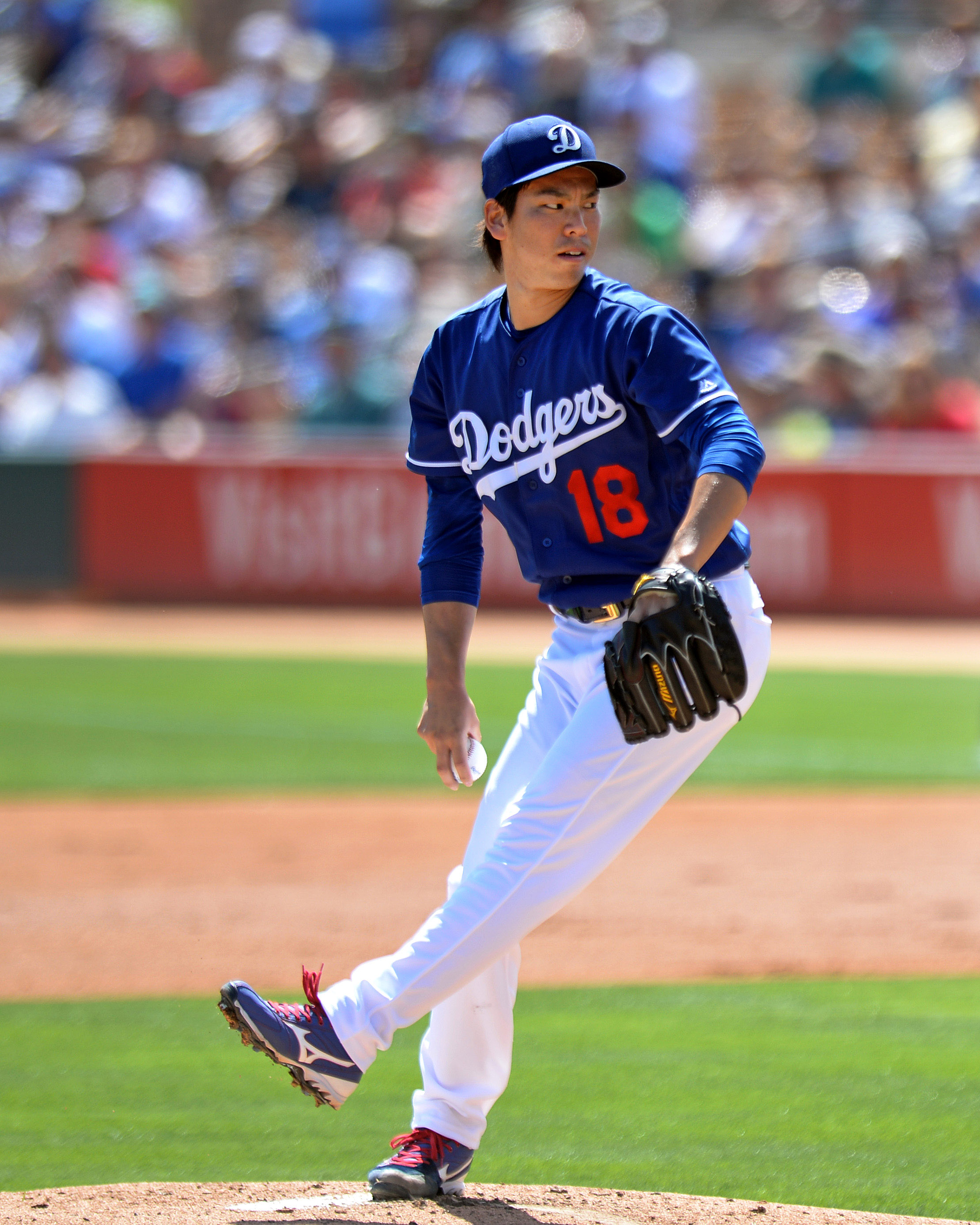
Of course, Kazmir, too, is a pitcher who has a rather checkered medical history, so the Dodgers weren’t done there. They gave a $20MM posting fee to land Japanese stalwart Kenta Maeda, ultimately agreeing to a unique deal after his physical, too, showed some signs of worry. He’ll only be promised $25MM over an eight-year term, but incentives tied to starts and innings could boost its value to over $90MM. Soon to turn 28, Maeda isn’t seen as possessing the same top-of-the-rotation stuff of prior cross-Pacific aces Yu Darvish and Masahiro Tanaka, but he could prove a nice value as a mid-rotation piece.
The Dodgers added yet another long-term, high-upside rotation piece in Frankie Montas, as the club parted with Jose Peraza on its end of the three-team swap that sent Todd Frazier from the Reds to the White Sox. That deal also landed Los Angeles a pair of future options in infielder Micah Johnson and Trayce Thompson, both of whom could impact the roster as soon as this year. Peraza remains an interesting talent, but the same could be said of all three players coming to the Dodgers, who received solid reviews for their side of that move. In addition to making that rare exchange of youngsters, the Dodgers continued to plunk down big money on the international amateur market, dedicating $51.5MM to a trio of Cuban ballplayers.
While president of baseball operations Andrew Friedman and GM Farhan Zaidi focused primarily on the rotation, they also saw work to do in the infield mix. Corey Seager is one of the game’s most exciting players, and figures to hold down shortstop for years to come, while Justin Turner has turned into a highly-productive third baseman and Enrique Hernandez provided a super-utility option. But with Peraza on his way out, the Dodgers brought back August addition Chase Utley on a one-year deal. And with Howie Kendrick languishing on the market after declining his qualifying offer, he was also re-signed. Those two veterans provide a substantial upgrade to the overall infield mix, and free Hernandez to spend more time in the outfield.
The pen lost several oft-used members from the 2015 squad, and looked like it could use some supplementation, even after J.P. Howell exercised his player option at a fairly appealing rate for the club. The Dodgers initially aimed quite high, lining up a deal for Aroldis Chapman that was ultimately scrapped after his domestic violence allegations arose. Instead, the club went after Joe Blanton, who improbably turned himself from an innings-eating rotation piece to a relief ace last year. Brandon Beachy could also provide depth in the pen or the rotation, and Louis Coleman provides another depth piece.
Managing all the moving pieces will be new skipper Dave Roberts, who somewhat surprisingly emerged to run the dugout after the Dodgers mutually agreed to part ways with Don Mattingly.
Read more analysis after the break …
Offseason In Review: Washington Nationals
This is the latest entry in MLBTR’s Offseason In Review series. The full index of Offseason In Review posts can be found here.
The Nationals missed on several major free-agent targets, but added multiple veteran pieces to a still-talented core.
Major League Signings
- 2B Daniel Murphy: Three years, $37.5MM
- RP Shawn Kelley: Three years, $15MM
- RP Oliver Perez: Two years, $7MM
- INF Stephen Drew: One year, $3MM
- RP Yusmeiro Petit: One year, $2MM
- Total spend: $64.5MM
Notable Minor League Signings
- Bronson Arroyo, Burke Badenhop, Matt Belisle, Sean Burnett, Chris Heisey, Reed Johnson, Aaron Laffey, Nick Masset, Brendan Ryan, Logan Schafer (since released), Scott Sizemore, Jhonatan Solano
Trades And Claims
- Acquired OF Ben Revere from Blue Jays for RP Drew Storen and $2.125MM
- Acquired RP Trevor Gott and SP/RP Michael Brady from Angels for INF Yunel Escobar and $1.5MM
Extensions
- None
Notable Losses
- Ian Desmond, Doug Fister, Casey Janssen, Nate McLouth, Denard Span, Craig Stammen, Matt Thornton, Dan Uggla, Jordan Zimmermann
Needs Addressed
The Nationals entered the winter with more roster questions than they’d faced in quite some time, and proceeded to answer them with a modest and methodical series of transactions. Along the way, though, Washington dabbled in some higher-priced assets.
The first order of business was to plug arms into a bullpen that was in need of multiple new options. With Casey Janssen (declined option), Craig Stammen (non-tender), and Matt Thornton (expired contract) moving off of the roster, and several injuries and performance issues limiting the in-house options, this represented the clearest roster hole for the club.
Thus, even while president and GM Mike Rizzo was trying to woo the heavily-pursued Ben Zobrist, he quietly added southpaw Oliver Perez and swingman Yusmeiro Petit to begin the process of rebuilding the pen. While the Nats missed on Zobrist, they still followed through on a deal to send out infielder Yunel Escobar to the Angels, thus adding an interesting young reliever in Trevor Gott. And when they lost out on ace setup man Darren O’Day — who returned to the Orioles when they promised a fourth season — Rizzo and co. went out and got the underrated Shawn Kelley, who received three years and $15MM in a deal that took some time to be finalized. Of course, the Nats were also collecting minor league free agents all along the way. The spring pen competition included not only incumbents such as Blake Treinen, but veteran bounceback candidates including sinkerballer Burke Badenhop, former Nats lefty Sean Burnett, and longtime big leaguers Nick Masset and Matt Belisle.
Those moves bolstered the relief corps, but failed to address the situations of the team’s two best relievers: Jonathan Papelbon, fresh off of a rather public altercation with star Bryce Harper just months after coming over from the rival Phillies, and Drew Storen, the twice-deposed closer who the Nats had drafted and developed. And the reliever additions left unaddressed — or exacerbated — other needs. Having parted with Escobar to get Gott, the Nats lacked a clear option at second. The two obvious options — Anthony Rendon and Danny Espinosa — were already set to move to the left side of the infield, which had already lost Ian Desmond to free agency. And Denard Span also hit the open market, leaving the relatively untested-but-toolsy Michael Taylor atop the depth chart in center.

Rizzo first inked Daniel Murphy, who signed for less than expected — and far less than some were unrealistically calling for after his torrid post-season run. A qualifying offer certainly reduced the tab in terms of dollars, but meant that the Nats had to cough up a pick. The long-time Mets stalwart isn’t much of a fielder at second, but brings the lineup a much-needed left-handed contact bat with some pop. He’ll join Rendon, first baseman Ryan Zimmerman, and catcher Wilson Ramos as regulars in the infield. Espinosa appears to have the reins at short, but he’ll be accompanied by veteran Stephen Drew and could eventually be displaced by top prospect Trea Turner.
The Nats then solved two open issues in one move, sending Storen to the Blue Jays to acquire two seasons of Ben Revere — who is a somewhat lesser and more extreme version of Span himself. Revere hits for little power and draws few walks, and his glove hasn’t always rated well in center, but he hits for a high average and is one of the game’s most electric baserunners.
Revere, Taylor, and Jayson Werth look to be set up for some kind of outfield rotation, with Bryce Harper sure to see near-full duty as he tries to repeat his MVP campaign from a year ago. That’s a sensible mix, which provides its share of flexibility and upside, but the team tried to do even more. Washington was among the teams that tried to get Jason Heyward before he joined Zobrist with the Cubs, and later lost out to the Mets in pursuit of Yoenis Cespedes (after already adding Revere).
The outfield-related moves and non-moves just mentioned combine to set the stage for some of the many questions still confronting the Nats in 2016 …
