
Mets Brass On Cano/Diaz Trade, Next Steps
The Mets held a fascinating press conference today to introduce recent acquisitions Robinson Cano and Edwin Diaz — players who the organization clearly sees as major pieces of the club’s next winning roster. MLB.com’s Anthony DiComo was among the reporters to cover the festivities; all links below are to his Twitter feed unless otherwise noted.
New Mets GM Brodie Van Wagenen offered soaring thoughts on the occasion of his first major move with the club. “I stated that this organization intended to be relentless and fearless in the pursuit of greatness,” he said. “This trade should be a signal to our fans that words alone will not define our franchise.”
Getting a deal done was spurred not only by the team’s own direct interest, but also by a desire to land Diaz before the Phillies could do so. COO Jeff Wilpon indicated the presence of the division rivals in the bidding helped drive the talks. The Phillies ultimately balked at including their best young pitching in a deal for Diaz, Ken Rosenthal of The Athletic reports (subscription link). Ultimately, they struck a separate deal for shortstop Jean Segura.
Van Wagenen explained further that an “all-consuming” push over the past ten days or so led to a deal. Though Mariners GM Jerry Dipoto had said he was “inclined to hold onto Diaz” and “told us no a number of times,” the Mets “kept staying on it, kept trying to be aggressive on it” and ultimately made a match after batting around numerous deal possibilities.
Unsurprisingly, the addition of an aging but still-excellent player in Cano and a top-shelf young closer in Diaz seem to portend yet more acquisitions. As Van Wagenen put it, the Mets “did not make this move to be our last move.” Wilpon went into further detail, offering up some internal perspective on the club’s status. The team’s own analytical staff see this move as taking the club from an 83 to 84 win team to one that is a true-talent, upper-eighties outfit. With “a couple more things,” he suggested, “maybe we can be 90-plus.”
As ever, payroll remains a factor. This deal is cash-neutral for the 2019 season, though it does add future dollars. And as ever, there’s an opportunity cost — in this case, long-term spending capacity and the loss of young talent. But the Mets evidently feel they can continue to boost their competitiveness.
Wilpon chatted about the Mets’ financials, explaining that the ongoing efforts to work out a settlement on the insurance coverage for David Wright will hopefully soon result in a deal. Even if the funds won’t come in a lump sum, “some of that will go back to payroll.” Meanwhile, though the coverage on outfielder Yoenis Cespedes is said to be a “little bit less” than the 75% coverage the Mets have on Wright’s salary, there could be some funds flowing back for his absence as well.
It’s still not clear how high the Mets will go in an Opening Day payroll. The club has yet to crack the $155MM barrier to start a season, though even that mark would seem to leave room to spend. Of course, there are still quite a few obvious needs on the roster — as we covered in breaking down the Mets’ offseason outlook. Most notably, the club has a variety of bullpen openings to account for and could still pursue upgrades in the outfield, behind the dish, and perhaps also in the infield mix.
One possibility that has popped up on the rumor mill in recent weeks is a trade involving starter Noah Syndergaard, presumably with intentions of adding multiple youthful assets who could join a still-developing core. The early explorations evidently have not shown promise of resulting in a deal, however, as the Mets now say they are strongly leaning against moving Thor. Per Van Wagenen, only under “very special circumstances” would he “even consider” trading a pitcher who, at his best, is among the top hurlers in all of baseball.
Needless to say, there’s tons to digest from this presser. Taken in conjunction with the trade itself, it sets up the Mets for a fascinating upcoming trip to Vegas for the Winter Meetings.
Mets Announce Acquisition Of Robinson Cano, Edwin Diaz
After several days of anticipation, the Mariners and Mets have made what will surely be one of the offseason’s biggest moves official: Seattle has traded second baseman Robinson Cano and closer Edwin Diaz to the Mets in exchange for outfielder Jay Bruce, right-hander Anthony Swarzak, right-hander Gerson Bautista and prospects Jarred Kelenic and Justin Dunn.
Beyond the contractual values changing hands, the Mariners are sending a reported $20MM to the Mets to help offset the remaining $120MM owed to Cano through 2023. That said, the blockbuster swap will still save the Mariners a reported total of roughly $64MM. With the $20MM sum spread in approximately even amounts during the remainder of Cano’s time under contract, per Ken Rosenthal of The Athletic (via Twitter), the move will leave the Mets’ 2019 payroll in more or less the same position it was beforehand.
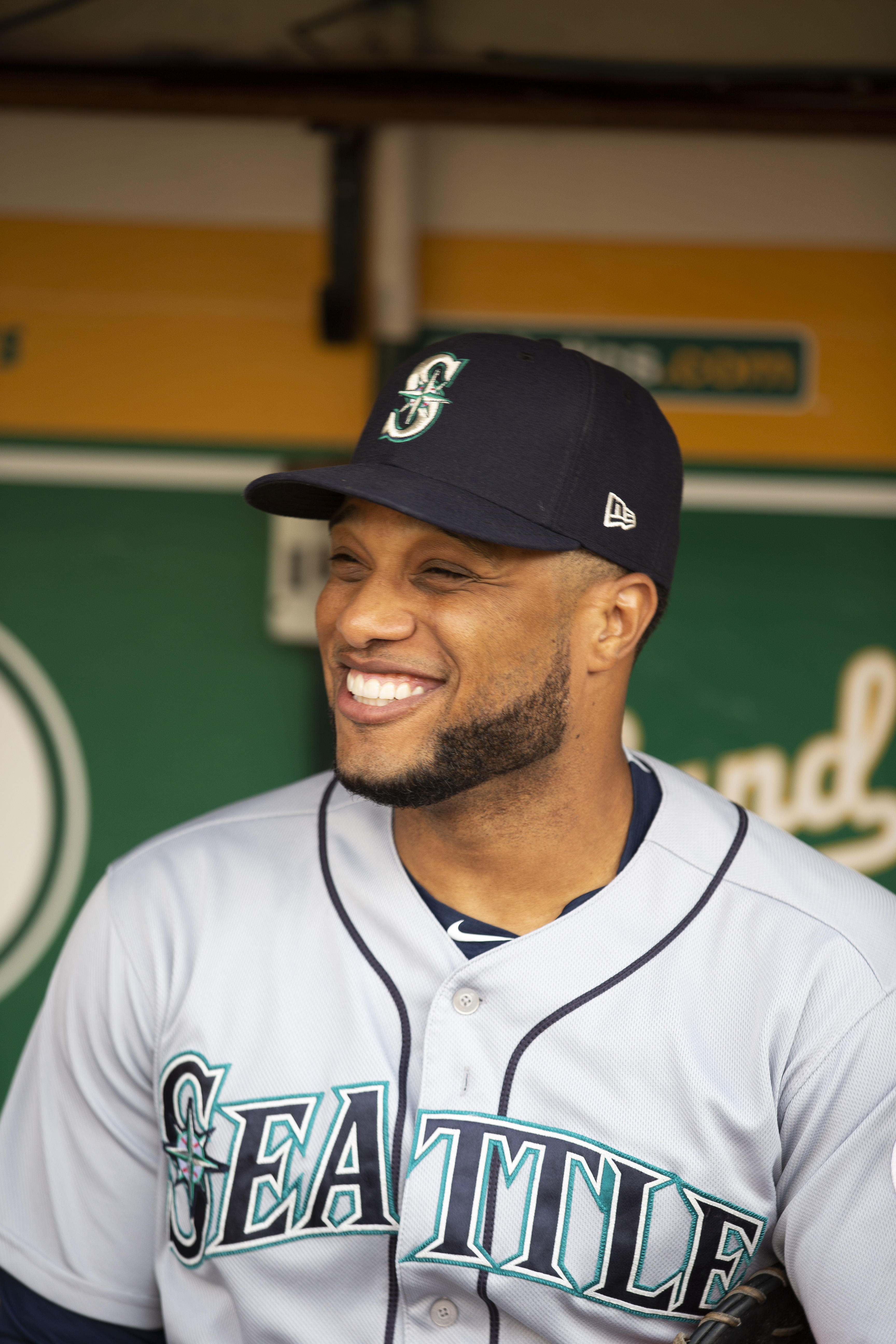
It’s a stunning move from multiple angles. Mariners general manager Jerry Dipoto denied reports early in the offseason that he was considering a tear-down of the Mariners’ roster but, in the month or so since making that comment, has now traded James Paxton, Mike Zunino, Alex Colome, Cano and Diaz — to say nothing of a Jean Segura trade to the Phillies that is reportedly nearing conclusion but has yet to be formally announced.
Meanwhile, the Mets, who’ve typically operated with a far tighter budget than one would anticipate for a club in that market, are taking on a huge amount of money in order acquire Cano and Diaz, and they still have ample work to do to address holes elsewhere on the roster. The deal is all the more fascinating when observing that newly hired Mets general manager Brodie Van Wagenen was formerly one of the game’s most prominent agents and that the largest contract he ever negotiated was none other than Cano’s 10-year, $240MM deal with Seattle.
Cano, who had to waive his no-trade clause to green-light this deal, will head back to the city where his big league career started and figures to supplant Jeff McNeil as the Mets’ primary second baseman. It’s a tough pill for McNeil to swallow after he hit .329/.381/.471 as a rookie, but he should still be in line for plenty of at-bats. The Mets could well give him a significant amount of work at third base, depending on the organizational plans for Todd Frazier, and McNeil has seen brief minor league work at shortstop, first base and in the outfield as well. At one point, the Mets were reportedly debating the possibility of sending McNeil to Seattle as what would’ve been a key part of this swap, and the fact that they were ultimately able to keep him is a critical factor when taking a step back and even attempting to evaluate the complex transaction.
It’s also important to emphasize that while Cano’s contract, like any 10-year free-agent deal or extension, was an obvious overpay at the time, he’s not an entirely sunk-cost acquisition. Though he served an 80-game suspension following a failed PED test last year, Cano hit .303/.374/.471 with 10 home runs through 348 plate appearances on the season as a whole. Some will point to the suspension in an effort to invalidate his output, but Cano was actually better at the plate upon returning from that ban; in 179 PAs down the stretch, he hit .317/.363/.497.
There’s also been plenty of talk about his defense, but the notion that he needs to move to first base because he’s no longer a quality defender at second base carries little weight. Since the 2012 season, Cano has received negative marks from Defensive Runs Saved and Ultimate Zone Rating just once (2015), and he tallied +4 DRS and a +2.8 UZR in 561 innings at the position this past season.
Of course, while Cano was still an extremely productive player when on the field in 2018, it’d be foolish to simply expect that he can continue playing at that pace in 2019 and beyond. The eight-time All-Star turned 36 in October, and he’s already outperforming the typical aging curve that one might expect for someone who is well into his mid-30s. While he may prove to be an anomalous exception in that regard, history suggests that Cano’s production will begin to deteriorate sooner rather than later. If the Mets were even able to receive two strong seasons out of Cano, they’d likely consider that a victory. There’s little doubt, though, that the final two to three seasons of Cano’s contract won’t be worth what they pay him — even with Seattle picking up a portion of the tab.
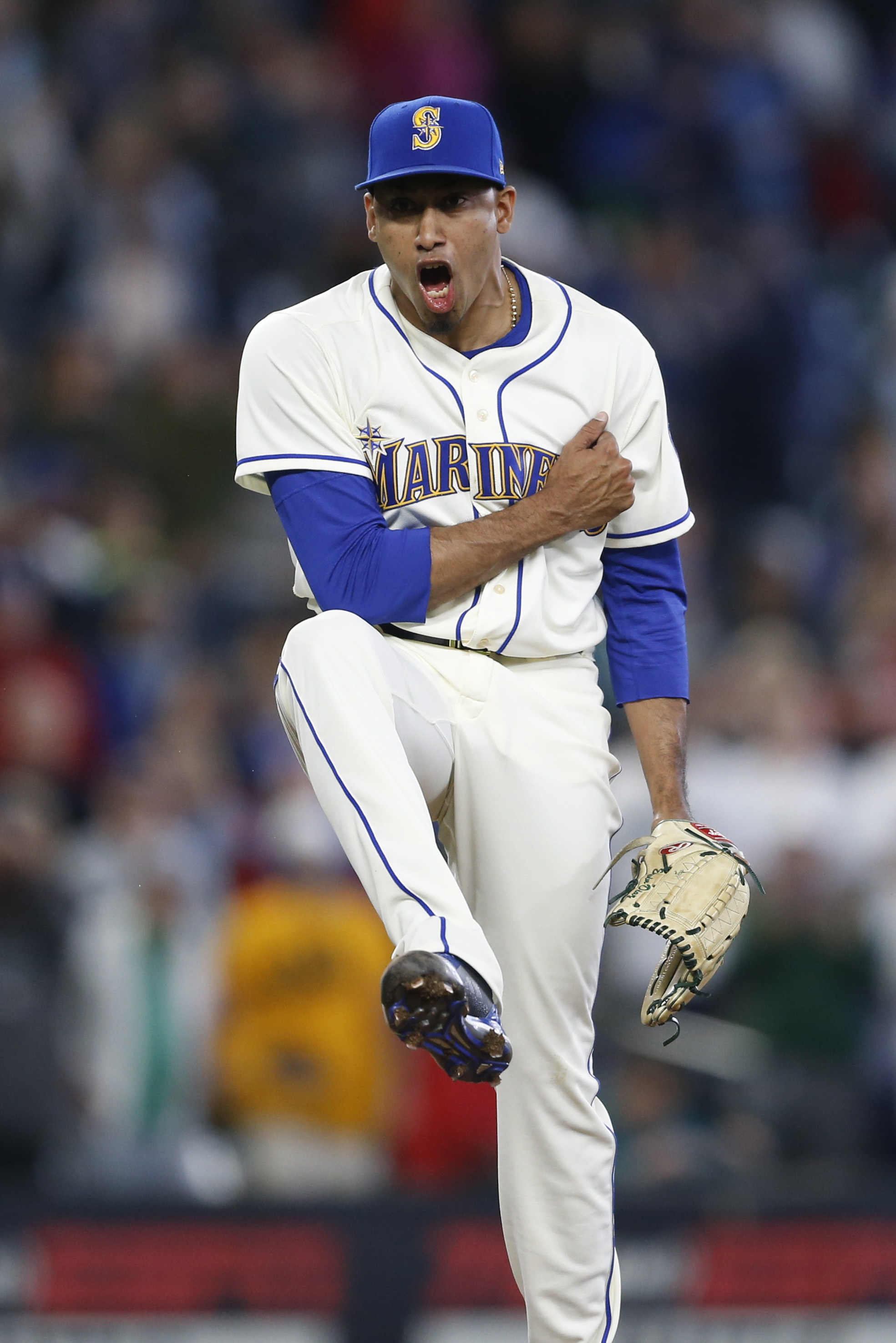
Really, though, the trade was less about the Mets hoping to catch lightning in a bottle with the final couple of productive seasons of Cano. For Van Wagenen and the New York front office, this trade was a means of effectively purchasing four below-market seasons of one of the game’s premier young relievers. The 24-year-old Diaz just put the finishing touches on a historically dominant season — 1.96 ERA, 15.2 K/9, 2.1 BB/9, 0.61 HR/9, 44.4 percent ground-ball rate, 57 saves — and missed arbitration eligibility by a matter of weeks. He’ll make less than $1MM in 2019 and can be controlled for a fraction of his open-market price through his three arbitration years.
However, Diaz won’t be the typical bargain that many associate with arbitration-eligible players. His enormous save and strikeout totals should push him into record-breaking territory among relievers, and it’s conceivable that he’ll be paid in the $8-9MM range for his first arbitration season in 2020 — assuming another productive campaign in 2019. Like most arbitration-eligible stars, he’ll still be highly valuable asset, but the real question of this trade is just how much surplus value comes with Diaz and how confidently one can project him to maintain his dominance. One could argue that the four years of Diaz being acquired by the Mets is worth anywhere from $60-80MM (if not a bit more), and considering he’ll be paid somewhere around half that sum, he’s an extremely appealing commodity.
The debatable question is whether that surplus value is great enough for the Mets to both part with prospects and take on some negative value at the back of Cano’s deal. Obviously, both Kelenic and Dunn are exponentially more affordable than they’d be in an open-market setting themselves, and the Mariners feel that long-term value, paired with the subtraction of a huge financial burden in the form of Cano, are worth surrendering one of the game’s better young arms. There’s no clearly correct answer in that subjective debate. In the end, the Mets feel the up-front value of Diaz’s electric repertoire and the remaining productivity Cano has to offer are the more valuable asset.
That, in fact, is perhaps the most important takeaway from the entire scenario. While much of the summer was spent wondering whether the disappointing and dysfunctional Mets would trade Jacob deGrom, Noah Syndergaard and others — thus embarking on a rebuild like the ones the Mariners have begun — the addition of Cano and Diaz at a premium price firmly suggests that Van Wagenen and the Mets’ staff are unabashedly in “win-now” mode. Trade rumblings surrounding Syndergaard persist, though it’s clear that if he’s to be moved in a trade, it would need to be a deal that netted immediate MLB help at another position of need. The Mets are in for a highly active winter, and the organization seems fully committed to keeping up with the emerging threats in Atlanta and Philadelphia, as well as the near-perennial postseason contenders in D.C.
The Mariners entered the offseason with a bloated payroll and an aging roster, but they did so on the heels of an 89-win campaign that saw them firmly in contention for a postseason spot for much of the season. Dipoto and his staff, though, were undoubtedly cognizant of the team’s glaring run differential (-34 at season’s end). Mariners decision-makers were surely aware that there was a fair bit of good fortune that contributed to their sterling record for much of the season. While that reality and a bloated payroll initially led to comments about “re-imagining” the roster in Seattle, the M’s have instead taken a more drastic approach.
It’s a credit to Dipoto and his staff, in some regards, that the team has managed to shed upwards of $100MM in salary obligations (including the projected arbitration payouts for Colome, Paxton and Zunino while also accounting for the contracts they’re reportedly taking back in today’s trades). And, while they’ve stripped away a number of fan favorites and productive veterans from the roster, they’ve also added a significant amount of MLB-ready talent that could soften the blow immediately.
Mallex Smith and Omar Narvaez will be regulars on the 2019 roster, while pitching prospects Justus Sheffield and Erik Swanson should both factor into the 2019 rotation at some point (possibly from Opening Day, in Sheffield’s case). Bautista, acquired in return for Cano and Diaz, will be given an opportunity to claim a bullpen spot. Bautista, 23, averaged 96.9 mph on his fastball in an exceptionally brief MLB debut this past season (4 1/3 innings) and has averaged better than 12 strikeouts per nine innings since the Mets acquired him from the Red Sox in 2017’s Addison Reed trade.
And that doesn’t yet factor in the addition of Bruce and Swarzak — two veterans who, while acquired more to offset Cano’s salary than anything, are only a year removed from productive big league seasons that resulted in multi-year guarantees in free agency. While it’s eminently possible, if not probable, that the Mariners will look to trade both, it’s also at least possible that either could simply suit up in Seattle this coming season and perhaps enjoy a rebound. Bruce could unseat Ben Gamel in left field, and the Mariners’ relief corps is rife with uncertainty at present, creating an easy path for Swarzak to work toward reestablishing himself.
Of course, for the Mariners, this trade is primarily about the opportunity to not only add a pair of recent first-round picks in Kelenic (2018) and Dunn (2016) but also simultaneously jettison half the remaining money owed to Cano (for his age-36 through age-40 seasons). That contract was signed under the Mariners’ previous front-office regime and was likely never something Dipoto’s group was excited about inheriting. And Kelenic and Dunn will add a pair of interesting young talents to a farm system that had previously been regarded as one of the weakest in the game — if not the absolute worst.
Just 19 years of age, Kelenic was selected with the sixth overall pick just under six months ago. At one point, the Wisconsin native was tabbed as a potential No. 1 overall pick, and he’s done nothing to dispel the notion that he was a worthy top 10 overall selection since signing. In his brief time with the Mets, Kelenic hit .286/.371/.468 with six homers, 10 doubles, six triples and 15 stolen bases (in 16 tries) across two minor league affiliates. Scouting reports agree that Kelenic has the potential to be average or better in center field, and he’s already ranked comfortably within the game’s Top 100 prospects by MLB.com and Fangraphs.
Dunn, who turned 23 in late September, tore through Class-A Advanced opposition in 45 2/3 innings this season, posting a 2.36 ERA with 10.1 K/9, 3.0 BB/9, 0.39 HR/9 and a 39.3 percent ground-ball rate. His ERA jumped to 4.22 in 89 2/3 innings of Double-A ball, but he averaged 10.5 strikeouts and 0.7 home runs per nine innings pitched at that more advanced level — all while seeing his ground-ball rate improve to 45.1 percent. Dunn did average 3.7 walks per nine innings in Double-A, so there’s some work to do on his control, but he’ll instantly become one of the Mariners’ more intriguing pitching prospects.
In the end, the Cano/Diaz blockbuster, while fascinating, is impossible to accurately judge at present. While everyone will surely formulate his or own opinion of the deal as presently constructed, there are too many trickle-down effects that will prove critical when looking back at the deal down the line. Can the Mariners further unload some of the money owed to Bruce and/or Swarzak? Will either rebound? Is Kelenic a star in the making or one of the countless drops in the bucket of “what could have been”? Will Mets ownership finally give its baseball ops staff the resources commensurate with the team’s market size, or will the addition of Cano’s contract prove prohibitive when pursuing additional win-now maneuvers? All of these will factor into the calculus of this trade when looking back on it six months, a year and five years from now. What’s immediately clear is that this is a legitimately franchise-altering transaction for both organizations — and it’s unlikely that either is anywhere near finished with its offseason roster shuffling.
SNY’s Andy Martino reported last week that the Mets were being “aggressive” on Cano. Yahoo’s Jeff Passan tweeted that there was “significant momentum” toward a trade that would send Cano and Diaz to the Mets (Twitter links). Ken Rosenthal of The Athletic reported that Kelenic and Dunn were being discussed and that an agreement between the two teams was close (Twitter links). Martino tweeted details on the package, reporting that Bruce, Swarzak, Kelenic and Dunn would be in the deal, and Bautista could be the fifth player. Joel Sherman of the New York Post confirmed Bautista’s inclusion. Passan added further clarity on the financial component of the trade (via Twitter), while MLB.com’s Jon Morosi tweeted that Cano had officially waived his no-trade clause. Fancred’s Jon Heyman tweeted the exact package, including the money changing hands.
Mariners, Mets Agree To Robinson Cano, Edwin Diaz Blockbuster
Dec. 3: The trade is official, tweets Passan. The two sides will make an announcement today, it seems.
Dec. 1, 8:49pm: Cano has indeed waived his no-trade clause, per Morosi. It’ll be Cano, Diaz and $20MM for Bruce, Swarzak, Kelenic, Dunn and Bautista, Heyman tweets. The trade will save the Mariners approximately $64MM, Johns notes on Twitter. It should become official “late Monday,” Sherman reports.
8:10pm: A deal is in place, pending physicals, Tenchy Rodriguez of ESPN Deportes Radio reports (Twitter link via Jon Morosi of MLB.com). The trade could be announced as early as Monday, Martino tweets.
3:38pm: The aforementioned “work” to be done on the deal, per Ken Rosenthal on Twitter, is tri-fold: The commissioner’s office must approve the amount of money exchanging hands in the deal, each player must pass his physical, and Robinson Cano must give official approval to waive his no-trade clause. Per Rosenthal, the trade should be announced “early next week.”
Nov. 30, 6:24pm: The Mariners are only expected to chip in something in the mid-$20MM range to cover Cano’s salary, per Passan (via Twitter). Seattle will still be absorbing the two significant contracts, of course, but it seems the New York org will be paying for about half of Cano’s contract (while also presumptively paying Diaz in arbitration).
Meanwhile, there’s still work to be done on the deal, which Joel Sherman of the New York Post tweets will not be concluded this evening.
8:15am: The Mets and Mariners aren’t expected to formally announce anything today, Heyman tweets. That said, Newsday’s David Lennon suggests that the parameters of the deal are largely believed to be in place, so the lack of a Friday announcement doesn’t indicate that there’s any kind of snag in the deal.
Nov. 29, 11:56pm: Bautista would indeed be the fifth piece going to Seattle in the deal, as currently constructed, Sherman tweets.
11:30pm: McNeil will not be included in the trade if it is ultimately completed, per Sherman. Instead, he tweets that the Mets will send Kelenic, Dunn, Bruce, Swarzak and another reliever to the Mariners. Notably, Sherman reports that medical info has still yet to be reviewed, and Cano has yet to waive his no-trade clause (though there’s no expectation that he’ll veto a trade that would send him back to New York City).
10:15pm: It seems that the two sides haven’t quite finalized the group of players who’d head to Seattle in the deal. Martino tweets that the Mets are still “hesitant” to include McNeil and are currently proposing right-hander Gerson Bautista in addition to Kelenic, Dunn, Bruce and Swarzak.
Obviously, that’d be a fairly substantial change to the deal’s perception; Bautista is a flamethrowing young righty with upside, but he’s yet to find success in the Majors or even the upper minors. McNeil, meanwhile, looked like a potential big league regular in his rookie season with the Mets this past season.
Puma had previously tweeted that McNeil wasn’t in the trade as of yesterday, though there’s “some thought that may have changed today,” so it seems as if the organization could be on the fence about whether to ultimately include the promising 26-year-old.
8:40pm: The trade is “expected to be completed by Friday,” tweets Passan. He further clarifies that it’s not yet clear how much money the Mariners would send to the Mets to help offset Cano’s remaining contract. Sending Bruce and Swarzak to Seattle would effectively leave the Mets on the hook for $86MM of Cano’s salary, and it seems fair to expect that Seattle would add some additional cash to help further offset the financial commitment to Cano.
Mike Puma of the New York Post tweets that things have advanced to the point where the Mets have begun to formally alert players to the fact that they’re in a deal that is on the verge of completion (albeit not yet 100 percent complete).
8:08pm: The offer on the table, at present, would see McNeil, Kelenic, Dunn, Bruce and Swarzak all head to Seattle in exchange for Cano and Diaz, tweets Martino. He cautions that the two sides have not yet reviewed medical information on the players involved, which always has the potential to throw a wrench into trade negotiations. Heyman tweets that a combination of those names is on the table.
7:11pm: A trade involving Diaz and Cano is close to being agreed upon, tweets Rosenthal.
6:33pm: Sherman tweets that the talks between the two sides are indeed intensifying, adding that the Mariners are now focused on the Mets rather than any other potential trade partners. Both Bruce and Swarzak could be included as a means of helping to offset Cano’s salary, and there are plenty of details to be sorted out, including medical reports and Cano’s no-trade clause.
5:40pm: Talks between the Mariners and Mets are reaching a “critical stage,” tweets Rosenthal. He notes that New York’s offer to Seattle includes some combination (but not all) of Kelenic, Dunn, McNeil, Bruce and Swarzak. That latter pair of names would seemingly be more about offsetting salary than anything else, while the first three are all well-regarded young players who’d provide the Mariners organization with a substantial amount of long-term value.
Meanwhile, MLB.com’s Greg Johns tweets that talks are indeed accelerating. A deal seems quite likely, per Johns, though the specific names involved are still being sorted out.
5:15pm: The Mariners are talking to multiple clubs about Cano, Diaz and shortstop Jean Segura, Rosenthal tweets. Those negotiations include myriad scenarios, including combinations of those three players as well as standalone deals for each. Similarly, Sherman adds that the Mets are operating with the belief that they’re one of many clubs in talks with the Mariners as they explore trades for combinations of those three as well as standalone swaps.
1:24pm: The teams have discussed scenarios involving both Cano and Diaz individually, as well as package arrangements, per Martino (via Twitter).
10:13am: “Significant momentum” has built toward a deal that would send high-dollar veteran second baseman Robinson Cano and top-shelf young closer Edwin Diaz from the Mariners to the Mets, according to Jeff Passan of Yahoo Sports (Twitter links). Cano has reportedly not yet been asked to waive his no-trade rights, though Passan adds that is not expected to represent a significant hurdle.
Joel Sherman of the New York Post characterizes things somewhat differently in his own series of tweets. His sources indicate that the “Mets do not currently feel like they are close to a deal,” though he also makes clear that the interest is serious. Notably, Sherman suggests that the New York organization still doesn’t have a firm sense of whether the M’s are committed to packaging Cano and Diaz at all. Indeed, indications are that the Seattle org is still engaged with other clubs.
Obviously, the full parameters of this potential swap have yet to be revealed in full. And it’s hardly a done deal. But some chatter about other pieces has emerged as well. Recent first-round draft picks Jarred Kelenic and Justin Dunn are “under discussion” along with other pre-MLB assets, per Ken Rosenthal of The Athletic (Twitter link). Youngster David Peterson is also in the conversation, Jon Heyman of Fancred tweets. It’s important to emphasize that there is no specific indication that any or all of these young players is involved in a specific, fully built out scenario that the two organizations are deciding upon. Rather, per Heyman, the sides are tossing around different deal structures, with the Mariners demanding prospect value if they’re to part with Diaz.
Particulars aside, it’s rather stunning to see that the concept — a deal packaging Cano’s $120MM in remaining salary with Diaz — has advanced to this stage. There are certainly shades of the 2015 Melvin Upton/Craig Kimbrel swap here, so there is a clear model to follow, but this new proposal involves somewhat more extreme contract rights. (Upton was owed nearly $75MM less at the time of that swap than Cano is now, for instance.)
Cano is already 36 years of age, and sat out half the 2018 campaign due to a suspension for use of a masking agent, so the five years left on his deal are hardly an appealing proposition. But he’s also still a high-quality major-leaguer. Diaz, meanwhile, is unquestionably the top relief asset that could be had on this winter’s market. Though the aforementioned Kimbrel is an immensely accomplished closer who’s presently available in free agency, Diaz handily outperformed him last year. More importantly, he has the clear edge in youth and cost.
Unquestionably, quite a bit more will be involved in any actual trade than the two players rumored to this point. The Mariners will in all likelihood hold on to some of Cano’s contract and/or absorb a Mets contract in return. And the New York club will surely send back some talent. Those details will determine the ultimate merits of the swap for each club.
We’ll have to wait to learn the details, if anything is actually concluded. But it seems clear even from these reports of intense interest that the Mets are not only chasing the elite young closer, but see an opportunity to capture a some value from Cano, whose contract new GM Brodie Van Wagenen negotiated in his prior life as an agent. The long-time star is clearly not in his prime, but he still hit quite a bit when he wasn’t on the restricted list last year. Presumably, he’d step in at his accustomed second base, a position he can still handle (albeit not at his once-elite levels).
Adding Cano at second would dislodge Jeff McNeil, who emerged last year with an outstanding debut showing. The Mets would still have other options to shift around their infield pieces. It could also be that McNeil would move in the trade. He has appeared in the conversation between the organizations, MLB.com’s Jonathan Mayo tweets. McNeil already 26 years of age and only just debuted in the majors in 2018, but was one of the most pleasant surprises league-wide in the just-completed campaign. He not only showed off his typically excellent plate discipline, but turned in a notable power surge (as against his prior minor-league track record) and then slashed a hefty .329/.381/.471 in 248 big league plate appearances.
The full potential ramifications, clearly, would depend upon as-yet-unknown specifics. That’s due in no small part to the still-unknown slate of prospects that could be involved and, even more importantly from a MLB roster perspective, the contracts that could head the other way. We’ve heard Jay Bruce‘s name thrown around quite a bit as a potential big contract to go to Seattle. Perhaps Juan Lagares would hold more appeal to the M’s, as a defensive stalwart who seems to fit the mold of player that Mariners GM Jerry Dipoto often targets, though he’s not owed as much. Todd Frazier, Jason Vargas, and Anthony Swarzak are among the other costly veteran pieces who could in theory be utilized to facilitate a swap.
For now, then, it doesn’t seem we know all that much more about the realistic possibilities than we have for the past week or so, as Cano/Diaz rumors have permeated the hot stove landscape. Even the level of seriousness of the Mets has been suggested, with SNY.tv’s Andy Martino calling the club an “aggressive” pursuer. Previously, though, it has hardly been evident that there was a realistic path to a trade that would lead to a match. The importance of these most recent developments is that, as Passan puts it, “there is an increasing expectation a trade will get finished.”
Quick Hits: Cano, Cashman, Realmuto, Tsutsugo, Joseph
Robinson Cano is expected to officially become a member of the Mets roster on Monday, with only physical examinations remaining to be completed for the seven players involved in the trade with the Mariners. Cano arrived in New York on Sunday night, and told the New York Post’s Joseph Staszewski that he is looking forward to joining his new team. “For me this season is motivating. It’s blessed always to wear a uniform, be able to play in the big leagues, to play sharp. Mets uniform, there is a lot of pride, a lot of good history and I’m ready to go,” Cano said. The deal could have been held up due to Cano’s no-trade clause, though he decided to waive his protection after speaking with Mets GM Brodie Van Wagenen….who, ironically, helped negotiate that same clause into Cano’s contract in his previous role as Cano’s agent.
Here’s more from around the baseball world…
- With the Mariners on the verge of both the Cano deal and another major trade, the James Paxton deal to the Yankees almost seems like old news at this point, though that trade took place just two weeks ago. Yankees GM Brian Cashman revisited his own blockbuster deal speaking to reporters (including George A. King III of the New York Post) and noted that talks about Paxton began after Seattle GM Jerry Dipoto “said he was willing to talk about everybody but three players,” though “one of them he just moved to the Mets.” It’s safe to assume that Cashman is referring to Edwin Diaz, who is on the verge of joining Cano on the Mets. While Dipoto has been open about dealing higher-priced veterans off the Mariners’ roster, he has said that it would take quite a bit more to obtain controllable assets like Diaz, Mitch Haniger, and Marco Gonzales, so one can infer that Haniger and Gonzales may be the other two players that were reportedly off-limits at the time of Dipoto’s talks with Cashman. Of course, since Diaz has now been shipped to Citi Field, it’s fair to wonder if Haniger and Gonzales could find themselves in different uniforms by Opening Day.
- Cashman also said that recent reports about the Yankees‘ interest in J.T. Realmuto were “false, completely false,” and that the team didn’t make an offer to the Marlins about the All-Star catcher. According to Fancred’s Jon Heyman, the Yankees were open to the idea of moving Gary Sanchez to Miami for Realmuto in something close to a one-for-one trade, though the Marlins wanted other significant pieces in addition to Sanchez.
- Yokohama BayStars slugger Yoshitomo Tsutsugo has told his club that he would like to make the move from Nippon Professional Baseball to MLB, according to a Japan Times report. The 27-year-old Tsutsugo has a career .287/.381/.531 slash line and 176 homers over 3443 plate appearances for the BayStars, with the bulk of that production coming over the last five seasons, including a 44-homer campaign in 2016 and 38 long balls in 2018. Tsustugo played for Japan’s team in the 2017 World Baseball Classic, and he was selected to participate in the recent MLB Japan All-Star Series, though he didn’t end up suiting for Japan in the exhibition series against a team of Major League notables. It isn’t yet clear if Tsutsugo could hit the North American market sooner rather than later, as he isn’t eligible for free agency until 2021 and would thus need Yokohama to agree to post him. “On the one hand (Tsutsugo) is an important player, but it’s also important to consider his feelings. I would like to think about what is optimal for the team,” BayStars president Shingo Okamura said. Tsutsugo recently renewed his contract for the next NPB season, and is set to earn roughly $3.5MM (or 400 million yen) for his services in 2019.
- “A handful of teams” have checked in with Caleb Joseph since the catcher was non-tendered by the Orioles, MASNsports.com’s Roch Kubatko reports. Joseph hit just .219/.254/.321 last season and has posted below-average hitting numbers over 1317 career PA in the majors, including an infamous zero-RBI performance over 141 PA in 2016. The 32-year-old now faces a lot of competition in the free agent catching market, as Kubatko notes.
Reaction & Analysis: The Robinson Cano/Edwin Diaz Trade
The blockbuster seven-player trade between the Mets and Mariners is on the verge of being finalized, and an official announcement could come as early as Monday. Since the initial news about this trade first began to break last Thursday, however, there has already been quite a bit of discussion from various pundits about what this major swap means for both franchises. Here’s the round-up of some of the many takes on the trade, which reportedly consists of Robinson Cano, Edwin Diaz, and $20MM in cash considerations going to the Mets, while the Mariners receive Jay Bruce, Anthony Swarzak, former first-round draft picks Jarred Kelenic and Justin Dunn, and righty pitching prospect Gerson Bautista.
- As noted by both The Athletic’s Tim Britton and ESPN.com’s Buster Olney (subscriptions required for both), the Mets paid a hefty price to upgrade themselves at second base and closer during an offseason when several other options at both positions were available in free agency at a lower cost. Olney suggests that New York could’ve kept Jeff McNeil at second base and signed a closer like David Robertson or Jeurys Familia, which would’ve kept Kelenic/Dunn/Bautista in the farm system and left more money for the Mets to spend on other needs. “Given the particulars of the trade and the market context, the core question for the Mets in this deal is this: Do they think the quality difference in 70 innings of Diaz vs. 70 innings of a Robertson or Jeurys Familia is worth taking on $60MM of Cano money and swapping two of their top 10 prospects,” Olney asks. More than one rival evaluator mentioned to Olney that while Diaz is controllable for four years, Diaz’s large save totals will give him a costly arbitration price tag right away when he first becomes arb-eligible next winter.
- The Mets also could’ve given up less prospect depth, Britton observes, by taking on more of Cano’s salary. Regardless, the trade is hard to properly evaluate until we see how “the money saved in this move gets reinvested in the major league roster,” as Britton puts it.
- More moves are definitely necessary for the Mets, ESPN.com’s Keith Law opines (subscription required), since Cano and Diaz alone won’t turn New York into a contender. That’s even assuming Cano and Diaz continue to produce as they did in 2018, which is no guarantee given Cano’s age and the general year-to-year volatility of many relievers, even arms as dominant as Diaz was last season. “This had to be Mets fans’ worst nightmare: The owners, who seemingly can’t stop meddling in baseball operations, would hire someone as GM who’d short-circuit the ongoing rebuilding of the farm system in pursuit of short-term wins,” Law writes. He also gives his take on the three youngsters heading to Seattle, and believes the Mariners are doing a good job of adding talent to a minor league pipeline that was very short on premium prospects.
- Brodie Van Wagenen came into the Mets’ GM job intent on building a contender for 2019, and his pursuit of this goal has drawn praise from USA Today’s Bob Nightengale, who contrasts Van Wagenen’s plans with the now-common occurrence of a new general manager immediately beginning a rebuild upon taking a job. The Cano trade is “the kind of bold, daring move that used to dominate the baseball landscape, before GMs were more worried about preserving their job security than taking risks….Imagine, a team actually spending money, taking a genuine risk, and trying to win a World Series without worrying about hoarding prospects,” Nightengale writes. In regards to Cano’s ability to stay productive into his late 30’s and early 40’s, Nightengale adds the interesting observation that a DH role could still be in his future, should the National League adopt a designated hitter in the next collective bargaining agreement (the current CBA ends after the 2021 season).
- The Athletic’s Jim Bowden (subscription required) grades the deal as a B for the Mariners and a C for the Mets, noting that Seattle looks to be the long-term winner if Kelenic and Dunn develop into quality big league regulars.
- This deal, and the trades of James Paxton and Mike Zunino earlier this offseason, netted eight new minor leaguers for the Mariners, or $78MM in asset value to Seattle’s farm system, Fangraphs’ Eric Longenhagen calculates (based on the prospect valuation system used by Fangraphs’ Craig Edwards). The M’s previously ranked at the bottom of these prospect value rankings, though their moves have now moved them to around the middle of the pack, with Longenhagen’s caveat that this rating could certainly fluctuate based on what the Mariners or other teams do in the rest of the offseason.
Market Chatter: Indians, Moose, Cano, Diaz, Thor, Pads
The Indians‘ rotation has come up in trade rumors over the past month, as Cleveland looks to manage a roster with multiple holes and a crowded payroll that is already at franchise-record levels. However, while Corey Kluber and Carlos Carrasco have been speculative candidates to be moved, USA Today’s Bob Nightengale tweets that teams who’ve spoken to the Indians get the sense that Cleveland is more amenable to trading right-hander Trevor Bauer. Kluber is controlled through 2021, while Carrasco is locked into a club-friendly deal through the 2020 season. Bauer, though, is arbitration-eligible for another two seasons. MLBTR contributor Matt Swartz projects him to earn $11.6MM in 2019 — a projection he explored at greater length earlier today. If the Indians are to move a starter, there’s some sense behind making it the one of their “big three” who has the shortest amount of team control and least cost certainty, though there’s still no indication that the team is aggressively shopping any of its starters. The ask on Bauer would figure to be huge — likely including pre-arbitration, MLB-ready help — given Bauer’s 2.21 ERA, 11.3 K/9, 2.9 BB/9, 0.46 HR/9 and 44.5 percent grounder rate in 175 1/3 innings in 2018.
Some more notes on the trade and free-agent markets…
- Mike Moustakas is “on the radar” for the Cardinals as they look for a corner infield bat, tweets Fancred’s Jon Heyman. While Cards didn’t show much in the way of interest last winter, the absence of draft-pick compensation being attached to Moustakas is an important distinction that has them at least exploring the possibility this time around. Meanwhile, USA Today’s Bob Nightengale tweets that the Cards “made a competitive bid” for Josh Donaldson before the 32-year-old signed a one-year, $23MM contract with the Braves. There were similar reports about the Cardinals’ efforts to sign Jason Heyward and David Price, and the Cardinals also came up shy in their pursuit of Giancarlo Stanton last year when the slugger wouldn’t waive his no-trade protection to approve a deal to St. Louis. Of course, Moustakas is not likely to generate the level of market interest that those players did.
- There has been quite a lot of chatter regarding Mariners infielder Robinson Cano since it emerged recently that the club would like to find a way to dump his contract, though it’s far from evident whether there’s a particularly realistic match to be found. MLB.com’s Mark Feinsand says that some feel the M’s will find a taker, though he later added that Cano hasn’t yet been approached by the team about waiving his no-trade rights or about giving a list of destinations as to which he’d be amenable. (Twitter links.) One key factor in the Cano situation is the notion of the Mariners dealing star closer Edwin Diaz as a means of offloading the money owed Cano. There is indeed some willingness to do so on the part of the Seattle organization, per Joel Sherman of the New York Post. But it seems clubs with interest in Diaz aren’t necessarily amenable to taking on enough of the $120MM still owed to Cano to make it work. Sherman lists the Mets, Yankees, Braves, Phillies, and Red Sox as teams angling for Diaz, not all of which have any inclination to pick up Cano. That’s not surprising, as it’s an awfully steep dollar amount, even though the long-time star second baseman does still have value himself on the ballfield. That said, Diaz arguably could command something approaching that whopping sum in a hypothetical open-market scenario. After all, he stands out against any other potentially available relievers this winter for his excellence, age, and control. That makes this general structure at least somewhat plausible, though it’ll surely be quite complicated to pull something off.
- It seems the Mets have quite a few balls in the air at the moment as new GM Brodie Van Wagenen searches for a significant deal that will help jumpstart the franchise. Jon Heyman of Fancred (Twitter link) and Mike Puma of the New York Post (via Twitter) each doused the flames of speculation involving the Mets as a possible match in a Cano swap. But that doesn’t mean the team didn’t explore the subject with the Mariners. SNY.tv’s Andy Martino suggested some possible scenarios involving Cano, though really the basic framework does not seem workable from the Seattle side. Martino says the clubs have batted around a concept in which Seattle would both pay about $50MM of Cano’s salary and take on more in return, such as through Jay Bruce‘s $26MM contract, while sending Diaz or Mitch Haniger to New York. Trouble is, the implication there is that the Mets could buy one of those excellent young players for less than $50MM, which doesn’t seem like sufficient salary relief for the Mariners to justify the loss of such core talent.
- Meanwhile, the biggest name seemingly in play on the Mets‘ side is Noah Syndergaard, the uber-talented but health-questionable young righty. The Padres have made clear they won’t part with top prospect Fernando Tatis Jr., per Martino, which dovetails with expectations. While the report indicates that the teams have also discussed San Diego backstop Austin Hedges, he certainly does not profile as a centerpiece in a deal for Syndergaard. Meanwhile, Ken Rosenthal of The Athletic (subscription links) suggests the Rockies could be an under-the-radar suitor for Syndergaard, who’d turn their rotation into a potentially outstanding unit. Though the offense is surely the priority in Colorado, that can be addressed through relatively low-cost investments; adding Thor, meanwhile, is surely an intriguing thought.
Olney’s Latest: Goldy, Yanks, Astros, Pollock, Brantley, Cutch, Mariners
It’s unclear whether the Diamondbacks will trade their franchise player, first baseman Paul Goldschmidt, though Buster Olney of ESPN (subscription required) hears from rival evaluators that they are “intent” on dealing the 31-year-old. While Goldschmidt has consistently been one of the majors’ best players during his career, it’s unlikely the Diamondbacks would receive a significant haul in exchange for his final year of team control, observes Olney, who notes that most contenders aren’t seeking a first baseman. But St. Louis and Houston continue to show a good amount of interest in Goldschmidt, per Olney, which jibes with a previous report from Ken Rosenthal of The Athletic. Olney adds that rival clubs believe the Astros have seemingly tried to move young right-hander J.B. Bukauskas, their eighth-ranked prospect at MLB.com, in trade talks. Similarly, the Yankees were “pushing” left-handed pitching prospect Justus Sheffield in Goldschmidt discussions, Olney reports. Sheffield’s no longer in the picture for New York, though, as it traded him to Seattle this week in a deal for lefty James Paxton.
- Back to Houston, which has been shopping near the top of the market for free-agent outfielders, according to Olney, who lists A.J. Pollock, Andrew McCutchen and Michael Brantley among their targets. Unless the Astros deem soon-to-be 22-year-old prospect Kyle Tucker ready for a full-time role, they have an opening in the outfield, where George Springer and Josh Reddick are their only obvious starters. Signing Pollock, a center fielder, would enable them to move Springer back to a corner after he spent the majority of 2017-18 in center. Pollock’s likely to rake in the biggest payday of the trio, though; further, given that Pollock comes with a qualifying offer attached, adding him would also cost the Astros their second-highest draft pick in 2019 and $500K in international pool space.
- The Mariners have been the most active team on the trade market this offseason, having already dealt Paxton and catcher Mike Zunino. With aggressive general manager Jerry Dipoto at the helm and the M’s desire to take a step back in 2019, more trades involving their veterans are likely on the way. However, it continues to look as though the Mariners will keep their two top players, outfielder Mitch Haniger and closer Edwin Diaz. It would take overwhelming offers for the Mariners to seriously consider moving either Haniger or Diaz, Olney tweets. Both stars are controllable for the next four years, including another pre-arbitration season apiece.
Quick Hits: Realmuto, Mariners, Myers, Kia Tigers
The Marlins have put a very high price on J.T. Realmuto in trade talks, which isn’t surprising given Realmuto’s status as arguably the best catcher in baseball. Since Realmuto may never be as valuable as he is now, ESPN.com’s Buster Olney (subscription required) argues that Miami needs to swing a deal this winter rather than risk the chance that Realmuto is injured or has a downturn in production in 2019. Some rival teams feel that Realmuto will still be a Marlin on Opening Day since the team is simply asking for too much in return, possibly due to a feeling that they didn’t get enough back in last winter’s trades of Christian Yelich, Marcell Ozuna, and Giancarlo Stanton. Olney observes that the Nationals already made a quick pivot to another catcher in Kurt Suzuki, which could be a sign that other teams engaged in the Realmuto talks might also explore alternatives unless Miami lowers its demands.
More from around the baseball world as we wrap up Thanksgiving…
- With the trades of Mike Zunino and James Paxton, the Mariners have indicated that they plan to “step back” in 2019, as GM Jerry Dipoto told the Seattle Times’ Ryan Divish and other reporters. Divish explores what this strategy could mean for the rest of the Mariners’ offseason plans, particularly since Dipoto indicated the desire for a pretty quick turnaround, with the M’s theoretically ready to contend again as early as 2020. This means that longer-term pieces like Mitch Haniger, Edwin Diaz, and Marco Gonzales are less likely to be traded, as Dipoto “would have to be blown away to move players like that,” the GM said, though “we are going to stay open-minded to anything with a general ‘never say never.’ “
- An alternative to this partial Mariners selloff is proposed by Buster Olney, who argues in another subscription-only piece that the M’s should go into a full-blown fire sale, a la the complete teardowns the Cubs and Astros underwent to rebuild their franchises into World Series winners. Under Olney’s plan, everyone on Seattle’s roster would be available — he suggests Haniger could be shopped to teams that miss out on Bryce Harper, while an elite closer like Diaz has limited value on a team that isn’t preparing to immediately contend.
- The Mariners and Padres discussed a trade scenario that would’ve seen Jean Segura and Mike Leake go to San Diego with Wil Myers coming back to Seattle, though Divish hears from sources that the negotiations took place over two weeks ago and don’t appear to be ongoing. From San Diego’s perspective, MLB.com’s AJ Cassavell looks at the pros and cons of trading Myers, who is the most experienced and productive (and expensive) member of the crowded Padres outfield.
- Former big leaguers Roger Bernadina and Pat Dean won’t be returning to the Korea Baseball Organization’s Kia Tigers next season, according to a Yonhap News report, as the Tigers are reportedly looking to get younger. Jeremy Hazelbaker and Jacob Turner were both recently signed by the Tigers to fill the international player roster slots formerly occupied by Bernadina and Dean. Last appearing in MLB in 2014, Bernadina has performed very well in two seasons in the KBO, so it would stand to reason that he would consider signing with another Korean team if he isn’t interested in exploring a return to North American baseball.
Trade/Free Agent Rumors: Segura, Diaz, Greinke, Happ
The Phillies are expected to be one of the offseason’s busiest teams, and thus it’s no surprise they’re heavily featured in this latest roundup of hot stove news from MLB.com’s Jon Paul Morosi. Some highlights…
- The Phillies have interest in Mariners shortstop Jean Segura and closer Edwin Diaz. We’ve already heard Segura’s name linked to the Padres and Yankees in rumors, and Philadelphia could also make sense as a landing spot given their lack of production from the shortstop position (a sub-replacement -1.8 bWAR in 2018). Trading for Segura also wouldn’t necessarily close the door on the possibility of signing Manny Machado, as the Phils could use Machado at third base. Then again, the four years and $58MM remaining on Segura’s contract makes him a cheaper alternative to Machado, though Segura also has some control over his future in the form of a full no-trade clause. It isn’t yet clear if the M’s would consider dealing Diaz since, with four years of control remaining over the star closer, the team would be theoretically reloaded and ready to contend while Diaz is still on the roster. The Braves are another team with interest in Diaz, Morosi reports.
- The Diamondbacks “are confident” they’ll be able to trade Zack Greinke without having to absorb any of the $95.5MM still owed on the right-hander’s contract over the next three seasons., a source tells Morosi. It’s a very short list of teams with the available payroll space and willingness to make such a big move, which is why Morosi feels the Phillies “are the most logical suitors.” While the Phillies are also checking into a plethora of other pitching options (including Patrick Corbin and J.A. Happ), Greinke would cost the team less than Corbin would in a long-term commitment. Acquiring Greinke would also come at a player cost, of course, though it’s possible Arizona would take only a relatively middling prospect return just for the sake of getting Greinke entirely off the books.
- Speaking of Happ, the veteran left-hander is generating a lot of buzz in free agency. In addition to the Phillies, the Angels, Astros, and Brewers are new teams who Morosi adds to the already-lengthy list of clubs (the Blue Jays, Reds, Twins, White Sox, and Yankees) who have previously been rumored to have some level of interest in Happ’s services. Of the newly-cited teams, Milwaukee and Houston offer Happ the best chance of competing for a World Series in 2019, while the Angels and Phillies are a few steps behind at this point of the offseason, though obviously L.A. and Philadelphia each have designs on significant roster upgrades this winter.
Dipoto Downplays Possibility Of Mariners’ Rebuild
7:33pm: Dipoto told MLB.com’s Greg Johns at the GM Meetings that this morning’s reports were “clearly over-dramatized,” adding that the Mariners are “just too talented” to completely tear down the roster. That said, Dipoto also conceded that the Mariners are “open-minded to different ways we can get better” and expressed a desire to “re-imagine” the team’s roster while “gather[ing] as much talent as we can.”
Generally speaking, it seems as though the Mariners will be open-minded to moving shorter-term assets — Paxton and Zunino both have only two years of control remaining — while also trying to gather some controllable talent in order to supplement the pieces of the roster that remain into 2019 and beyond. The GM also suggested that the Mariners won’t rule out a reunion with Nelson Cruz, whom he called a “super human being” and a “wildly productive” player. But the team also has other needs, specifically in center field, Dipoto noted.
The column is rife with quotes from Dipoto on the offseason direction and the agile approach the Mariners will take toward offseason roster maneuverings and is worth a look for Mariners fans and those hoping that various Mariners players become available in trades.
10:48am: Facing a difficult path to improving their roster sufficiently to compete in the AL West, the Mariners are said to be weighing at least a partial sell-off of veteran assets. Jeff Passan of Yahoo Sports tweets that the organization is “considering a full-fledged teardown,” while Ryan Divish of the Seattle Times characterizes the situation as one in which the club will pursue the somewhat less dramatic path of “culling the roster of a few players who could actually bring back some younger talent to the organization” while also maintaining a competitive assortment of MLB players.
Whatever the precise course, it’ll be a fine line to walk, and one that’ll require deft handling from Seattle GM Jerry Dipoto. It’s worth noting that both reports emphasize the variability remaining in the situation. The M’s won’t simply be auctioning players off, it seems. Rather, the club is going to be demanding value. And as Divish notes, there’s also a strong countervailing wind to the concept of a rebuild. The goal, as Dipoto has himself stated recently, is to make a legitimate challenge for a World Series as swiftly as possible. Accordingly, it’s at least possible that the organization will prioritize near-to-the-majors talent over far-away, high-upside prospects.
Regardless, it’s an interesting shift in the market just as it gets underway. No doubt, the allure of the trade market is factoring into the thinking for the Mariners’ front office. That seems to be an element of the Indians’ decision to consider offers on some key veteran pitchers. The market side of the reasoning here isn’t altogether different, though it’s quite a different competitive picture for the Cleveland organization, which still has a very clear path to the postseason. With few top-end starters and relievers available for the highest bidder, there certainly could be some opportunities to achieve value.
All indications of late had been that the Mariners would consider to push to contend. There’s real talent on the roster, to be sure, and the club did just win 89 games even after a late-2018 tailspin. Certainly, the organization’s slate of contract commitments represents that of a contending team, with large and lengthy commitments to several players. Those same factors, though, also can easily be interpreted as supporting a different approach. The 2018 club arguably outperformed its true talent level and still finished 14 games out of first place in the AL West. And a crowded payroll situation makes it hard to imagine ready solutions to some of the team’s ongoing areas of need.
So, what players could be on the move? The premium assets will certainly draw the most attention, though they’ll also be the hardest to pry loose. James Paxton, Edwin Diaz, Mitch Haniger, Jean Segura, and Marco Gonzales all come with ample excess value in their control rights. Surely, it would require the right deal to part with any of these players. Of them, Paxton seems the likeliest to move, if only because the others are all controlled for at least four move seasons while he has just two left to go. Indeed, Divish indicates it’s quite likely the power lefty will be shipped out. Diaz is a fascinating potential piece on the market, as he’d easily be the most valuable relief asset available. The 24-year-old just turned in an outstanding season and his trade value was boosted by the fact that he barely missed out on Super Two qualification, which would have greatly increased his overall arbitration earning power. Haniger is likely the team’s most valuable piece, though he might also be the hardest to part with. Moving Segura’s contract might offer a means of both dropping salary and adding younger talent in one fell swoop. There’s really not much reason for the Mariners to consider dealing Gonzales, who is amply affordable and controllable (and also just agreed to an unusual new contract).
Several other players will also surely be of keen interest on the market. Veteran reliever Alex Colome is not as good, or as cheap and controllable, as Diaz, but he’d be quite an interesting alternative to the open market options for clubs needing late-inning relief talent. Several other bullpen assets could hold appeal as well. Backstop Mike Zunino has his limitations as a player, but he’s a talented defender with huge power. It would be rather challenging for the club to move its most expensive veterans, though perhaps contract-swapping arrangements of some kind can be imagined. Plenty of rivals would like to have Robinson Cano, Kyle Seager, Dee Gordon, and Mike Leake on their rosters, after all, despite their suboptimal recent track records, though certainly the remaining financial obligations would need to be sorted out somehow.
The possibilities, truly, are endless, and will depend in no small part upon precisely what Dipoto and co. are looking to accomplish. It could well be a matter of seeing what’s possible on the market, rather than setting out specifically to prioritize the addition of new talent, say, as opposed to shaving payroll. Given Dipoto’s history of dealmaking, it wouldn’t be surprising to see quite a few moves to re-shape the roster in the coming months.