
Mariners Release Gaby Sanchez
The Mariners have announced that first baseman Gaby Sanchez has been released. The 32-year-old signed a minor league deal with the M’s in January.
Sanchez owns an impressive .291/.382/.481 line over 714 career plate appearances against left-handed pitching, which made him a possible platoon candidate alongside the lefty-swinging Adam Lind. The Mariners, however, signed another righty bat in Korean first baseman Dae-Ho Lee a few weeks after inking Sanchez. Between Lee and former top prospect Jesus Montero also competing for the right-handed platoon role, the writing was on the wall for Sanchez when he didn’t produce much in limited spring action.
Sanchez has a .254/.332/.413 slash line and 61 homers over 2271 career PA with the Marlins and Pirates from 2008-14, highlighted by an All-Star game appearance in 2011. He spent 2015 in Japan with the Rakuten Golden Eagles, posting a .720 OPS over 232 PA.
Dipoto On Mariners’ Offseason, Hitting, Zunino
At a luncheon on Thursday, Mariners GM Jerry Dipoto looked back at the Mariners’ offseason in a wide-ranging, and a transcript of his remarks has since been provided by Ryan Divish of the Seattle Times. I highly recommend you read the whole thing, but here are some of the highlights.
- The Mariners are “probably done making significant moves” this offseason, Dipoto says, after an offseason in which they’ve acquired Adam Lind, Nori Aoki, Wade Miley, Joaquin Benoit, Steve Cishek, Leonys Martin, Chris Iannetta and Nate Karns, among others, while also re-signing Hisashi Iwakuma.
- One theme for the Mariners this offseason seems to have been having hitters post higher on-base percentages. Dipoto mentions that he thinks the team as currently constituted is a good bet to post higher OBPs than it has in the recent past. The team also held a “hitting summit” earlier this month in which they had hitting coach Edgar Martinez work with hitters on controlling the strike zone. “Edgar Martinez was perhaps one of the greatest right-handed hitters I’ve ever watched and did a better job of controlling the strike zone than about anyone that you could imagine in the last 30 years, and one of the best of all time,” says Dipoto. “It was a very easy thing for him to teach.” Last year, the Mariners finished 11th in the AL with a .311 OBP. New additions Lind and Aoki, both of whom posted OBPs above .350 last year, should help with that total.
- Much of the Mariners’ Opening Day roster currently appears set, but Dipoto mentions that there will be competition in the bullpen and the back of the rotation, and also for a right-handed platoon partner for Lind. Gaby Sanchez, who recently joined the M’s on a minor league deal, will be one possibility there, along with Jesus Montero and Stefen Romero.
- If Iannetta is healthy and all goes well, he will be the Mariners’ starting catcher, Dipoto says. Ideally, they would prefer to have former top prospect Mike Zunino — who hit just .174/.230/.300 in an ugly 2015 season — start the season at Triple-A Tacoma. Dipoto notes that Zunino zoomed through the minor leagues after being drafted third overall in 2012. In total, he’s spent just 462 plate appearances there.
- Dipoto says the team imagines itself with a win total in the mid-80s next season, with the possibility that it could win more.
Mariners, Gaby Sanchez Agree To Minor League Deal
The Mariners and first baseman Gaby Sanchez are in agreement on a minor league contract, reports ESPN’s Jerry Crasnick (on Twitter). The Beverly Hills Sports Council client will receive an invitation to Major League Spring Training as well, SB Nation’s Chris Cotillo tweets.
Sanchez, 32, spent the 2015 season with the Rakuten Golden Eagles of Japan’s Nippon Professional Baseball, where he batted .226/.328/.392 in 232 plate appearances. The former Marlins/Pirates first baseman last appeared in the Majors in 2014, though he struggled at the plate with Pittsburgh that season. Overall, the right-handed hitting Sanchez is a career .254/.332/.413 hitter in 2271 big league plate appearances. He’ll likely compete for a spot as the right-handed half of a platoon at first base alongside Adam Lind, and his career .291/.382/.481 batting line against left-handed pitching suggests that he’s capable of filling that role if he beats out the competition in Spring Training. Jesus Montero is the favorite to land that spot right now.
Japan’s Rakuten Golden Eagles Sign Gaby Sanchez
The Tohoku Rakuten Golden Eagles of Japan’s Nippon Professional Baseball have announced a one-year deal with first baseman Gaby Sanchez, according to the Associated Press (via ESPN.com). Sanchez will earn approximately $2.5MM and can achieve more through incentives, per the report.
Sanchez, 31, swings from the right side of the plate. He has been with the Pirates since a mid-season deal back in 2012. Serving in a platoon capacity in Pittsburgh, Sanchez had a solid 2013 but took a step back last year with a .229/.293/.385 slash over 290 plate appearances while enjoying the platoon advantage in over half of his trips to bat.
That recent performance did not meet the expectations set earlier in Sanchez’s career with the Marlins, when he became a steady regular at the first base position. Sanchez hit .269/.346/.437 with 38 total home runs while playing every day in 2010-11 with the Fish. After an All-Star appearance in 2011, however, Sanchez struggled in the second half and never regained his footing in Miami.
The University of Miami product was designated and non-tendered by the Pirates back in December. With just over $5MM in career earnings at the big league level, and a likely lack of an opportunity to land a significant guarantee in the big leagues, it is easy to see the appeal in the contract that Sanchez accepted. And, of course, the path back from Japan to MLB has been taken by many players who have performed in the NPB.
Rays, Pirates Complete Sean Rodriguez Trade
DEC. 12: The Rays announced that they have acquired right-hander Buddy Borden from the Pirates to complete the trade (via Marc Topkin of the Tampa Bay Times).
The 22-year-old Borden was Pittsburgh’s seventh-round pick out of UNLV in 2013 and spent this past season in the Class-A South Atlantic League. There, he pitched to a 3.16 ERA with 8.6 K/9 and 3.4 BB/9 in 128 innings (26 starts, 27 appearances total). At the time of the draft, Baseball America (subscription required) praised his durable, athletic build and a 90-92 mph fastball that could touch 95. However, BA also noted that his secondary pitches were below average, which could point to relief work in the long-term.
DEC. 1: The Pirates announced that they have acquired infielder Sean Rodriguez from the Rays in exchange for a player to be named later and cash considerations. First baseman Gaby Sanchez has been designated for assignment to clear roster space.
Rodriguez was designated for assignment by the Rays last week. The 29-year-old, projected to earn $2MM via arbitration by MLBTR contributor Matt Swartz, posted a career-high 12 home runs in 2014 with a career-best .232 isolated power mark, but the rest of his stats took a tumble. Rodriguez batted .211/.258/.443 on the whole, walking at a career-low 3.9 percent clip while striking out in nearly 26 percent of his plate appearances.
Rodriguez is able to play all four infield positions as well the outfield corners, and he generally has posted plus defensive marks as an infielder. The Pirates are set to enter the season with Josh Harrison at third base, Jordy Mercer at shortstop, Neil Walker at second and Pedro Alvarez at first, and Rodriguez can back up all four of those positions at a reasonable price.
Sanchez, who turned 31 in September, struggled through one of the worst seasons of his career at the plate this past year, batting just .229/.293/.385 with seven homers. The right-handed hitting Sanchez is best served as a platoon bat, as evidenced by the 170-point differential between his career OPS marks versus lefties and righties. He did hit a respectable .256/.318/.429 against southpaws in 2014, so he’d make a good platoon partner for someone like Adam Lind in Milwaukee. However, with a projected arb salary of $2.7MM, interested teams may first hope that he can be claimed off waivers or even clears waivers rather than giving up a minor prospect in a trade.
2014-15 National League Non-Tenders
Major League clubs have until 11pm CT tonight to tender contracts to players for the 2015 season. We’ll run down the list of National League non-tenders here, and update it as reports come in. Remember that you can track all of the action using MLBTR’s Non-Tender tracker, and we offer a full list of non-tender candidates (in the estimation of MLBTR’s Tim Dierkes). Also important for reference is the set of arbitration salary projections from MLBTR and contributor Matt Swartz. Click here for an explanation of the process, and be sure to check out this piece featuring some interesting observations from Tim regarding non-tender considerations.
- The Rockies have non-tendered lefty Kraig Sitton, the team announced.
- The Pirates have non-tendered Gaby Sanchez and Chaz Roe, the club announced. Sanchez was in DFA limbo.
- The Cardinals will non-tender Daniel Descalso, Jon Morosi of FOX Sports tweets. That move seemed rather likely, as MLB.com’s Jenifer Langosch reported last night.
- Lefty Wesley Wright and catcher John Baker have been non-tendered by the Cubs, the team announced. Wright certainly qualifies as a surprise, as the 29-year-old was solid for the Cubs and was projected to earn just $2MM.
- The Reds have non-tendered righties Logan Ondrusek and Curtis Partch, MLB.com’s Mark Sheldon reports.
- Meanwhile, the Giants have tendered all arb-eligible players contracts, Alex Pavlovic of the Mercury News reports on Twitter.
- The Mets have announced that Eric Young Jr. has been non-tendered, ESPN.com’s Adam Rubin tweets.
- The Braves have dropped the biggest non-tender news of the day thus far, releasing Kris Medlen and Brandon Beachy to the open market. Otherwise, the only teams announcing to this point have decided to tender all of their players.
- There will are no non-tenders to report for the Diamondbacks, who have announced that they have tendered contracts to all eligible players (via MLB.com’s Steve Gilbert, on Twitter).
- The same holds true for the Marlins, per MLB.com’s Joe Frisaro (Twitter link).
- The Nationals have announced that they have tendered contracts to all ten eligible players, per Mark Zuckerman of CSNWashington.com (via Twitter). Washington had previously agreed to avoid arbitration with one other player from the packed class (Kevin Frandsen).
Non-Tender Candidates: Ike Davis & Gaby Sanchez
Teams have until December 2 at 11:59pm ET to decide which of their arbitration-eligible players they’ll tender contracts. By MLBTR’s reckoning, about 40 of those players are non-tender candidates, including two first basemen, Ike Davis and Gaby Sanchez, who platooned at the position for the Pirates in 2014.
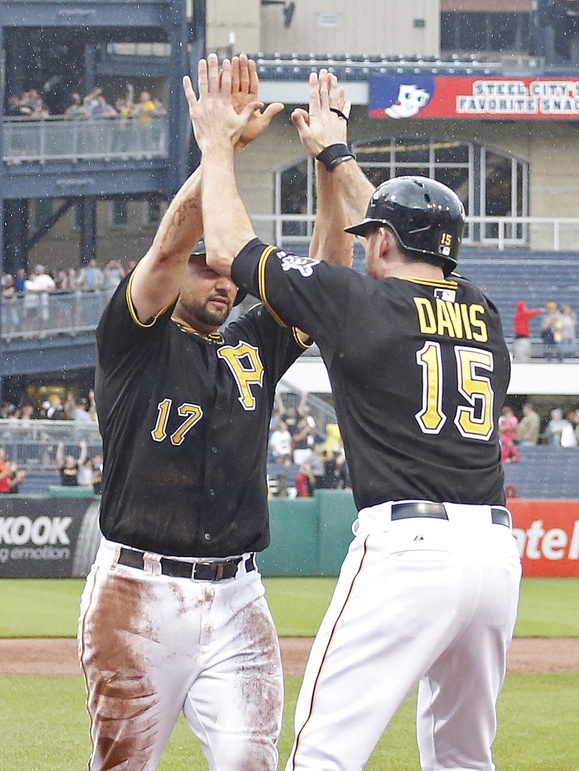 Davis is projected to make $4.4MM in 2015 after earning $3.5MM last season. Sanchez, meanwhile, is projected to make $2.7MM, a raise from $2.3MM. Those costs wouldn’t be exorbitant for any team, even the low-payroll Pirates, but after another somewhat disappointing season from Davis and an off year for Sanchez, it’s worth asking whether the Pirates’ money might best be spent elsewhere.
Perhaps just as important for Davis is the fact that Pedro Alvarez now appears to be a first baseman. The former No. 2 overall pick struggled with throws from third base in 2014, while utilityman Josh Harrison had an unexpectedly outstanding season and staked a claim on a starting job, which will likely end up being at third. GM Neal Huntington has said that Alvarez will likely get the bulk of the playing time at first base, and he called keeping Davis “probably a challenge.” Alvarez and Davis both bat left-handed, so they can’t share a position. Davis has been working out in the outfield this offseason, but there’s probably no space on the Pirates’ roster there, either, since the Pirates already have a top young lefty outfielder in Gregory Polanco and another reasonably strong one in Travis Snider.
It’s still possible that the Pirates could trade Davis, who could theoretically have a bit of value for a team in need of a lefty first base option. But Davis will be more expensive through arbitration than he was in 2014, when he had a .233/.343/.378 season that qualified as a modest disappointment. The trade that brought Davis to Pittsburgh early in the 2014 season didn’t cost the Pirates much (a minor league reliever in Zack Thornton and a young pitching prospect in Blake Taylor), and it’s unlikely the Bucs could get more than that if they traded Davis now. It’s also obvious that, unless they trade Alvarez, the Pirates don’t have space for Davis on their roster. So there’s little incentive for interested teams to do anything but wait until the deadline for the Pirates to cut him loose.
Sanchez is right-handed and has had a reputation as a strong hitter against lefties, so Alvarez’s move to first base doesn’t impact Sanchez the way it impacts Davis. Given Sanchez’s declining performance, however, the Pirates could decide to allocate resources elsewhere. Sanchez hit .229/.293/.385 last season. He was better against lefties, at .256/.318/.429, but perhaps not so well as to justify the expense and the roster spot, especially given that the NL Central is thin on left-handed pitching. Sanchez is a career .291/.382/.481 hitter against southpaws, but at 31, his 2014 performance might be closer to his expected level going forward.
Like Davis, Sanchez has little or no trade value. So the Pirates’ best option might be to non-tender him and save money to spend elsewhere. The Bucs could then look for a cheaper Triple-A slugger to platoon with Alvarez (who, like Davis, can certainly use a good platoon partner). They could also employ some more creative arrangement like having Tony Sanchez, who dabbled as a first baseman late last season at Triple-A Indianapolis, break camp as a righty first base option and third catcher. They could also attempt to bring Gaby Sanchez back for less than $2.7MM.
Davis, who is represented by Octagon, should still be able to land a big-league deal somewhere — his 10 homers last season weren’t anything to write home about, but .343 on-base percentages don’t grow on trees, and Davis is still just 27 (28 in March). The Marlins already have a lefty first baseman in Garrett Jones, but they reportedly like Davis and could have interest if he becomes a free agent. The Padres could also be a possibility, although it’s questionable whether they’ll see Davis as an upgrade over incumbent lefty first baseman Yonder Alonso.
Sanchez, who is represented by Beverly Hills Sports Council, would be a good fit (on a cheap Major League deal or minor league deal with an out clause) for a team looking for a partner for their lefty first baseman. St. Louis, where Matt Adams has a career .197/.227/.326 line against lefties, could be one possibility. A reunion with the Marlins, and with either Davis or Jones (who platooned with Sanchez in Pittsburgh in 2013) could make sense also.
Photo courtesy of USA Today Sports Images.
Latest On The First Base Trade Market
First basemen who “are available” to be traded include the Yankees’ Kelly Johnson, the Phillies’ John Mayberry Jr., the Nationals’ Tyler Moore and the Pirates’ Gaby Sanchez, sources tell Gerry Fraley of the Dallas Morning News. Johnson and Sanchez are new additions to the rumor mill, while Mayberry and Moore have both been recently cited as possible trade chips.
The quartet is cited in the context of Mitch Moreland‘s season-ending ankle surgery, leaving the Rangers dealing with yet another major injury. Despite losing a host of notable players to the DL, Texas is still just 2.5 games behind Seattle for the last AL wild card slot, and could still be looking to make additions down the stretch. Texas had previously had exploratory talks with the Nationals about Moore, though MLB.com’s Bill Ladson noted those talks weren’t serious.
Johnson has played 23 games at first for the Yankees this season, though he has spent the large majority of his career as a second baseman (plus some time at third and in left field). Despite Yangervis Solarte‘s emergence, the Yankees’ infield depth is still thin, so it would be somewhat surprising to see New York move a versatile player like Johnson elsewhere. Johnson is still owed roughly $1.845MM from the one-year, $3MM deal he signed with the Yankees last winter.
Sanchez was the subject of some trade rumors last year, though he remained with the Bucs as the right-handed hitting half of a first base platoon. While he has a solid .255/.303/.510 slash line with five homers in 109 PA this year, Sanchez has made almost twice as many plate appearances against righties as he has against lefties since the Pirates have faced an unusually large amount of right-handed starters; Pittsburgh hitters as a whole have made only 366 PA against lefties in 2014, by far the lowest in the majors. Sanchez has a career .903 OPS against southpaws against just a .700 OPS against righties, so he could certainly provide a contender with a useful part-time or bench bat.
Rangers first basemen have combined for -0.9 fWAR this season, and five other teams (the Twins, Astros, Indians, Royals and Mariners) have also received sub-replacement level production from their first basemen.
Players Avoiding Arbitration: Friday
We'll keep track of today's smaller deals to avoid arbitration in this post. Click here for background on the upcoming arbitration schedule and how MLBTR is covering it. You can also check in on our Arbitration Tracker and look at MLBTR contributor Matt Swartz's arbitration projections.
Today's noon CT deadline to exchange arb figures has passed, but negotiations to avoid an arbitration hearing can continue into February. The Braves are the only strict "file and trial" team that did not agree to terms with all of its arb-eligible players, meaning they could be headed for several hearings. The Nats and Indians have also shown a willingness to go to a trial and still have some players unsigned. On to today's contract agreements…
- After exchanging numbers, the Mets and pitcher Dillon Gee have agreed to settle at the midpoint of $3.625MM, tweets Adam Rubin of ESPNNewYork.com. Swartz projected Gee to earn $3.4MM.
- The Cubs have avoided arbitration with reliever Pedro Strop, president Theo Epstein told Mark Gonzales of the Chicago Tribune (Twitter link). He will earn $1.325MM next year, according to a tweet from Gordon Wittenmyer of the Chicago Sun-Times. It is not immediately apparent whether the deal was reached before the sides exchanged terms.
- The Angels have reached agreement on a $3.8MM deal with reliever Ernesto Frieri, reports Alden Gonzalez of MLB.com (on Twitter).
- Mike Minor has agreed to terms on a $3.85MM deal with the Braves to avoid arbitration, reports Mark Bowman of MLB.com (Twitter links). The deal came before figures were exchanged, Bowman notes.
- Chris Cotillo of MLB Daily Dish reports that the D-Backs and lefty Joe Thatcher have avoided arb with a one-year, $2.375MM deal (Twitter link).
- Nicholson-Smith tweets that the Angels and Fernando Salas reached an agreement to avoid arbitration. Salas is the first Halos player to avoid arb. Mike DiGiovanna of the L.A. Times tweets that Salas will earn $870K, which beats out his $700K projection.
- MLB.com's Jason Beck reports (via Twitter) that the Tigers and righty Al Alburquerque have reached agreement on a deal to avoid arb. The hard-throwing righty will earn $837.5K in 2014, tweets Beck.
- Sherman tweets that the Yankees and Ivan Nova avoided arbitration with a one-year, $3.3MM deal.
- The Pirates and Vin Mazzaro inked a one-year, $950K deal in lieu of an arbitration hearing, tweets Rob Biertempfel of the Pittsburgh Tribune.
- The Royals announced that they've avoided arbitration with infielder Emilio Bonifacio. Heyman tweets that Bonifacio will earn $3.5MM in 2014.
- Sherman reports that the Rays avoided arbitration with Jeremy Hellickson and Sean Rodriguez (Twitter link). Hellickson landed a $3.625MM payday with a $25K bonus if he hits 195 innings pitched. Rodriguez will get $1.475MM with a $25K bump for hitting 300 plate appearances.
- Roch Kubatko of MASNsports.com tweets that Brian Matusz avoided arb with the Orioles. Sherman adds that he'll earn $2.4MM in 2014.
- MLB.com's Brian McTaggart tweets that Jason Castro and the Astros have avoided arbitration. McTaggart adds in a second tweet that Jesus Guzman avoided arb as well. Heyman reports that Castro will be paid $2.45MM, while Sherman tweets that Guzman will make $1.3MM.
- The Indians tweeted that they've avoided arb with lefty Marc Rzepczynski, and MLB.com's Jordan Bastian tweets that he'll earn $1.375MM in 2014. Bastian adds that Scrabble will earn an additional $25K for appearing in 55 games and another $25K for 60 games.
- The Giants avoided arbitration with Yusmeiro Petit, according to MLBTR's Steve Adams (on Twitter). He'll earn $845K, according to Sportsnet's Ben Nicholson-Smith (via Twitter).
How Valuable Are Competitive Balance Draft Picks?
This year’s draft will be the first to feature competitive balance draft picks. These picks, which go to small-market and low-revenue teams, were awarded in a lottery last year. Some will take place after the first round, others after the second round. Unlike with regular draft picks, it’s possible for teams to trade competitive balance picks, which means that each team surely has decided how much these picks are worth.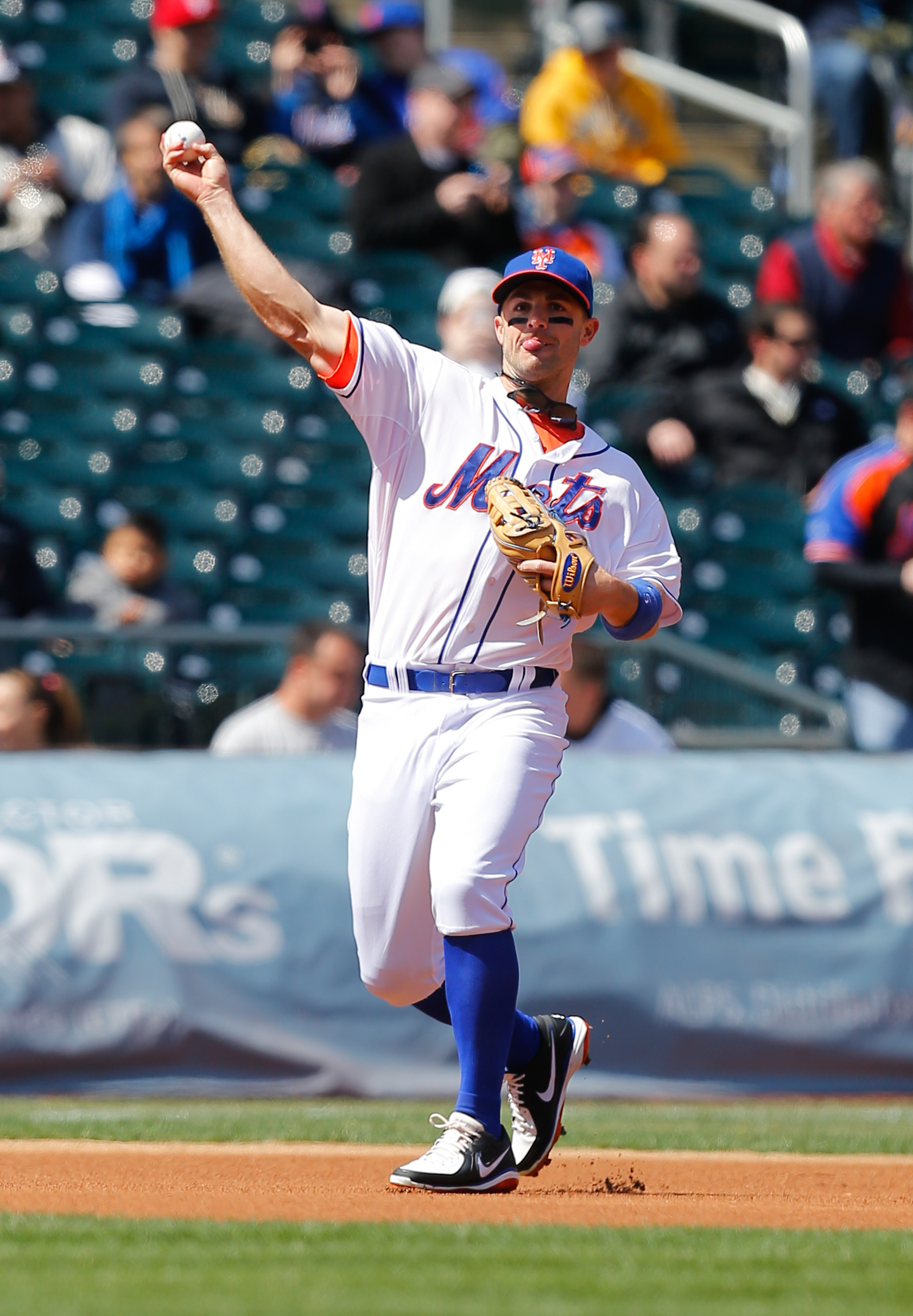
This is the full draft order. The competitive balance picks are as follows:
34. Royals
35. Marlins (from Pirates)
36. Diamondbacks
37. Orioles
38. Reds
39. Tigers (from Marlins)
69. Padres
70. Rockies
71. A’s
72. Brewers
73. Marlins (from Tigers)
A 2009 study by Baseball Analysts’ Sky Andrecheck suggested that the average value of the No. 30 overall pick was 3.6 WAR — basically, the equivalent of about two decent seasons for a role player. The value of the competititve balance picks from No. 34 to No. 39, then, would be slightly less. Placing a numerical value on these draft picks in the current draft environment is tricky, however, because so much about the draft has changed in the past two years. Unlike in years past, teams are reined in by bonus pool allotments, so they aren’t picking players for the same reasons they used to.
Teams can trade competitive balance picks, and two trades have already occurred, both of them involving the Marlins. The Pirates traded (what turned out to be) their No. 35 pick to Miami, along with outfielder Gorkys Hernandez, for first baseman Gaby Sanchez and minor-league pitcher Kyle Kaminska. The Marlins also traded their own competitive balance pick to the Tigers in the Anibal Sanchez deal, receiving the Tigers’ pick in return.
The Gaby Sanchez deal is a lot simpler, so let’s work from there. Hernandez and Kaminska weren’t key parts of the trade, so the deal boils down to Gaby Sanchez for the No. 35 overall pick. Pirates GM Neal Huntington recently explained the rationale behind the deal in an interview with David Todd on 970 ESPN in Pittsburgh (beginning at around 12:30).
“You see a David Wright, and you recognize, man, there’s a comp pick and there’s the risk, is we may have given up David Wright,” Huntington says. (Obviously, Wright wasn’t a competitive balance pick, but he was the No. 38 overall pick in the draft in 2001.)
“But … you recognize there’s about a 15% chance of getting an everyday big-leaguer in the 30-to-40 pick range,” says Huntington. “We felt like it was worth that 15% chance that we were going to get an everyday big-leaguer.
“You’ve also got a smaller chance to get an impact guy like David Wright, but you’ve got about a 60% miss rate at those picks, and in our minds, it’s going to be even [higher] now that the draft is much more scripted than it’s ever been.”
A look at recent draft history reveals Huntington’s analysis to be essentially correct. Let’s look at the 30-40 pick range from the 2001 through 2005 drafts. (Although Huntington mentioned the “30-to-40 pick range,” the No. 30 pick will typically be a traditional first-round pick, not a competitive-balance pick.)
2001: Noah Lowry (30), Jeff Mathis (33), Bronson Sardinha (34), J.D. Martin (35), John Rheinecker (37), David Wright (38)
2002: Dan Meyer (34), Jeremy Brown (35), Mark Teahen (39)
2003: Mitch Maier (30), Matt Murton (32), Omar Quintanilla (33), Luis Atilano (35), Jarrod Saltalamacchia (36), Adam Jones (37), James Houser (38), Tony Gwynn, Jr. (39), Jay Sborz (40)
2004: Eric Hurley (30), J.P. Howell (31), Zach Jackson (32), Matt Fox (35), Danny Putnam (36), Gio Gonzalez (38), Huston Street (40)
2005: Tyler Greene (30), Ryan Tucker (34), Cesar Ramos (35), Travis Buck (36), Trevor Bell (37)
This distribution of outcomes is fairly telling — in 55 picks, there’s one superstar (Wright), two very good players (Jones and Gonzalez), a good closer (Street), a decent regular (Saltalamacchia) and a smattering of role players. This was a better five-year period for picks 31 through 40 than the five-year periods before or after it, and still the chances of nabbing a meaningful player with one of those picks was, it appears, relatively small. For competitive balance picks after the second round, the chances of grabbing a good player are even smaller. (Well, at least theoretically. From 2001 through 2005, the list of quality players chosen between No. 66 and No. 75 includes Dan Haren, Kurt Suzuki, Jason Vargas, Wade Davis and Chase Headley. That’s not bad.)
Gaby Sanchez, who has produced 0.4 WAR for the Pirates this season, is more valuable than most players from the 31 through 40 range who made the majors, and obviously also more valuable than the ones who didn’t make the majors. He’s also cheap, making $1.75MM in his first year of arbitration eligibility. Notably, though, the Pirates quickly slotted him into the short end of a platoon role, meaning that they recognized him as a part-time player.
Is it worth it to give up a shot at the next David Wright for a part-time player? That depends on how great the shot is, and the position of the franchise making the trade. The Marlins were selling off their disappointing 2012 team at the time of the Sanchez deal, so it made sense for them to take a shot in the dark at finding the next David Wright. But the Pirates were trying to position themselves as a contender, so Sanchez had more value for them than a shot in the dark did.
Another consideration is the bonus pool allotment for competitive balance picks. Last year’s pool value for the No. 35 pick was $1.4MM; this year, that figure will be slightly higher. So the Marlins will have a little over $1.4MM extra to distribute to all its draft picks, assuming they sign whoever they take at No. 35, while the Pirates will forfeit the ability to spend that money. The Astros, for example, used a large bonus pool to their advantage in the later rounds last year, signing players like Lance McCullers Jr. for well over the bonus recommendation.
In the next few years, teams’ ability to trade competitive balance selections should allow us to begin to see how teams value draft picks. The competitive balance picks are late enough in the draft that they’re fairly low-percentage plays. They’re still valuable, however, so we should see rebuilding small-market and low-revenue teams try to acquire them — either one-for-one (or more or less one-for-one) for role players like Gaby Sanchez, or as part of packages in deals involving more premium talents.
Photo courtesy of USA Today Sports Images.