
Mets Notes: Syndergaard, deGrom, Baez
Noah Syndergaard could be back on the Mets’ Major League roster on Tuesday, per Tim Healey of Newsday Sports (via Twitter). Syndergaard made two rehab appearances, setting him up for a week in the Mets’ bullpen before the offseason. The 73-81 Mets have not much to play for in this final week of game action, but there may be a small victory in once more seeing Thor suit up in a Mets’ uni before he hits free agency this winter. Syndergaard has not pitched in the Majors since 2019.
In other Mets’ news…
- Jacob deGrom continues to work his way back to full health after a frustrating and somewhat obfuscating extended absence. The Mets’ ace went on the injured list for the second time 71 calendar days ago. It wasn’t clear at the time that he would be out long-term. He threw a bullpen session recently, which could put him on track to make one appearance this year, per Healey. Once a clear-cut Cy Young frontrunner, deGrom is likely to finish the year with a 1.08 ERA/1.23 FIP across 15 starts totaling 92 innings.
- Javier Baez would be very much open to returning to the Mets next year to continue playing alongside his countryman and close friend Francisco Lindor, writes Gordon Wittenmyer of NBC Sports Chicago. Baez has put up an exceptional .303/.377/.538 line since joining the Mets, adding up to an impressive 4.3 rWAR/3.6 fWAR total for the year. The polarizing star will be an unrestricted free agent without a qualifying offer attached, so while he enjoys playing alongside his pal in New York, it may come down to a question of price point. For the Mets the issue is allocation of resources, as they already has Jeff McNeil and Luis Guillorme under team control, as well as Robinson Cano coming back from suspension. As well as Baez has played, the Mets may have greater needs elsewhere.
Mets Activate Javier Baez
The Mets announced they’ve reinstated infielder Javier Báez from the injured list. He’s getting the start at shortstop, hitting third, this afternoon against the Dodgers. Reliever Geoff Hartlieb has been optioned to Triple-A Syracuse to open active roster space.
Báez spent the minimal amount of time on the shelf after landing on the IL on August 13 (backdated to August 12). The team’s outlook has changed considerably in that short amount of time, as the Mets have gone 1-8 since last Friday, falling seven games back of the red-hot Braves in the National League East. Báez has gotten off to a slow start to his Mets tenure, hitting .171/.216/.343 over 37 plate appearances since being acquired from the Cubs at the trade deadline.
Francisco Lindor is not being activated today, although manager Luis Rojas told reporters (including Anthony DiComo of MLB.com) he’s expected back early next week. Rojas indicated yesterday that Lindor could return from the oblique strain that has kept him out of action since mid-July as soon as this weekend.
NL Notes: Bryant, Cubs, Mets, Baez, Lindor, Longoria
The blockbuster trade between the Mets and Cubs on deadline day was almost even bigger, as The Athletic’s Ken Rosenthal writes that Kris Bryant was also part of talks between the two clubs. The actual trade saw Javier Baez and Trevor Williams go to New York in exchange for top prospect Pete Crow-Armstrong, but Rosenthal reports that the larger version of the swap would’ve also seen the Mets land Bryant and another player off of Chicago’s big league roster. In exchange, the Cubs would have received not only Crow-Armstrong, but also “a prospect they regarded even more highly and a major leaguer under multi-year club control.”
However, the Mets learned of Jacob deGrom‘s injury setback on deadline day, which likely made the team wary of making too big of an all-in move. Given how the Cubs were very busy in reshaping their team at the deadline, it’s possible the mystery player could have been any of the players instead dealt elsewhere (i.e. Craig Kimbrel, Jake Marisnick) or possibly someone who is still in a Cubs uniform today. It’s probably safe to guess that one of Francisco Alvarez, Brett Baty, Ronny Mauricio, Matthew Allan, or J.T. Ginn was the blue-chip Mets prospect in question, unless the Cubs were intrigued by someone outside of the upper tier of New York’s prospect rankings.
More from around the National League…
- The Mets could have a new middle infield as soon as tomorrow, as manager Luis Rojas told Newsday’s Tim Healey and other reporters that one or both of Baez and Francisco Lindor could be activated off the 10-day injured list. Sunday marks Baez’s first eligible day to return after being (retroactively) placed on the IL August 12 due to back spasms, while Lindor has been sidelined since July 17 due to a right oblique strain. The Mets have Monday off before beginning a series at home against the Giants on Tuesday, so it is possible the Mets could hold Lindor and/or Baez back to give them another two full recovery days before returning them to the active roster. Baez, at least, seems likely to return by Tuesday at the latest.
- Evan Longoria is day-to-day after being hit on one of his right fingers by a pitch in Wednesday’s game. The third baseman has missed the Giants‘ last two contests and manager Gabe Kapler told reporters (including Susan Slusser of The San Francisco Chronicle) that Longoria also wouldn’t play on Sunday. Combined with the Giants’ off-days on Monday and last Thursday, that would give Longoria at least five full days of recovery time. On the plus side, Kapler said that an MRI showed no signs of a fracture in Longoria’s finger. Longoria returned only a week ago from a 60-day injured list stint due to a sprained shoulder, and this finger injury serves as the latest interruption in a very strong comeback season (.289/.382/.526 in 199 PA) for the 35-year-old veteran.
MLBTR’s TC Zencka also contributed to this post
Mets Place Javier Baez On Injured List
The Mets announced they’ve placed infielder Javier Báez on the 10-day injured list, retroactive to August 12, with back spasms. Travis Blankenhorn has been recalled from Triple-A Syracuse to take his place on the active roster.
New York acquired Báez from the Cubs in the hope that he could hold down shortstop while Francisco Lindor recovered from a right oblique strain. Unfortunately, Báez has appeared in just ten games as a Met before landing on the IL himself. There’s no indication he’s facing an especially long-term absence, but any missed time is an unwelcome development for a team that sits half a game behind the Phillies in a tight NL East race.
It’s been a confounding season for Báez, who is ticketed for free agency at the end of the year. The 28-year-old has blasted 24 home runs over 398 plate appearances, posting a big .230 isolated power (slugging minus batting average). He’s continued to rate as a plus defensive shortstop and baserunner as well, again demonstrating his longstanding ability to impact the game in myriad ways.
The power output has come with a highly concerning approach, though. Báez has always been a free-swinger, but he’s chasing more often and making less contact than ever before. His 62.3% contact rate is the second-lowest (better only than Mike Zunino’s) among the 223 hitters with 250+ plate appearances this year. Báez’s 36.4% strikeout rate, meanwhile, is third-highest among that same group (trailing only Zunino and Bobby Dalbec). Overall, his .241/.285/.470 line split between Chicago and New York is exactly league average by measure of wRC+, although Báez has gotten to that production in anything but an average way.
Javier Baez Leaves Game Due To Left Hip Tightness
The Mets have now dropped seven of their last eight games following today’s 3-0 shutout loss to the Phillies, and the bad news continued beyond the box score for New York. Javier Baez left the game due to left hip tightness, as the shortstop had to be removed following a painful at-bat in the top of the fifth inning. After hitting a grounder, Baez remained in the batter’s box in obvious discomfort, and immediately left the field.
Baez is currently considered day-to-day with the injury, and manager Luis Rojas provided some hope in telling reporters (including The Athletic’s Tim Britton) that “we’re more optimistic now” postgame than at the time Baez left the game. Rojas initially feared an oblique injury, similar to the one that has sidelined Francisco Lindor and may have provided the impetus for the Mets to acquire Baez at the trade deadline in the first place.
While Baez has gotten off to a slow start with his new team, the last thing the reeling Mets need is to lose another player to the injured list. Jonathan Villar is the likeliest candidate to take over at shortstop should Baez need a day or two to get better, but if an IL stint is indeed required, the Mets are suddenly quite thin at shortstop since Lindor, Luis Guillorme, and Jose Peraza are all still recovering from injuries.
Cubs’ Hoyer Discusses Lack Of Extensions For Core Players
It’s been a surreal week for Cubs fans, watching the core of the 2016 World Series club head out the door at the trade deadline in exchange for a series of prospects. Kris Bryant, Anthony Rizzo and Javier Baez have been the faces of the Cubs for a half decade now, but they now find themselves with the Giants, Yankees and Mets, respectively. Also out the door are closer Craig Kimbrel, right-hander Ryan Tepera, lefty Andrew Chafin, outfielder Joc Pederson and outfielder Jake Marisnick.
Generally speaking, fans knew this was coming, but even after president of baseball operations Jed Hoyer made clear that the Cubs were shifting to a seller’s mindset, there were many who questioned just how far the sale would go. Bryant had long been viewed as a trade candidate after talks with him had failed to materialize in a deal multiple times in the past. Baez, however, had spoken more optimistically about reaching a deal in the past, as had Rizzo. Now, days after the deadline, Hoyer expressed frustration during a radio interview on ESPN 1000.
“I put my head on the pillow every night knowing that we put our best foot forward,” said Hoyer (Twitter thread via ESPN’s Jesse Rogers). “The extensions we offered these guys will hold up exceptionally well, historically they’ll hold up exceptionally well against the open market. I don’t know why guys didn’t want to sign. I don’t know why guys didn’t even want to counteroffer sometimes.”
Hoyer lamented that while many players publicly expressed interest in staying long-term, “when we sat down to do negotiations, that wasn’t how they acted.” Somewhat curiously, he pointed across town to the White Sox, noting that Lance Lynn “could’ve gotten more on the open market this winter but he said ‘I want to stay here.'” Of course, Lynn is a 34-year-old trade acquisition who isn’t at all in the same position as the core Cubs who were dealt last Friday, and the implication of blame residing with the now-former Cubs players lacks plenty of critical context.
Rizzo, for instance, would’ve been a free agent in the 2018-19 offseason had he not inked a seven-year, $41MM contract back in May 2013. That deal contained a pair of club options and ultimately wound up paying him $75MM over nine years. There’s a difference in taking the “I want to stay here” approach when you’re an inexperienced pre-arbitration player and a soon-to-be free agent, but Rizzo surely felt he’d already given the Cubs one major break and may have been less inclined to do so a second time. Hoyer was clear that his comments were more general and that not all applied to all three of this core trio, so perhaps the Lynn comparison wasn’t intended to strike a parallel with Rizzo — but it’s difficult to overlook that disconnect.
In Hoyer’s defense, we don’t know how many attempts were made to further extend that contract over the years, but Rizzo’s initial extension proved a to be an overwhelming bargain for the club. We do know that back in March, Hoyer proclaimed he was “very confident” that the Cubs would extend Rizzo. That optimism, which came after Rizzo had already turned down a reported five-year, $70MM offer, didn’t manifest in a deal.
Hoyer is probably correct in asserting that said offer will hold up well against open-market bids, barring a huge post-trade surge for Rizzo. That said, it’s also not hard to see why Rizzo would be nonplused with the offer, if the reported terms were indeed accurate. He was entering the final season of the previously mentioned bargain extension, and a year prior he’d seen the Cardinals lock up Paul Goldschmidt for nearly twice as much — a contract that would begin with Goldschmidt’s age-32 season. Next year is Rizzo’s age-32 season. There’s no ignoring that Rizzo was coming off a down season in 2020, but the gap in those offers is still rather sizable, to say the least.
Baez, meanwhile, spoke openly and often about his desire to remain with the Cubs long-term — just as they similarly expressed interest in keeping him. Talks between the two parties seemed to be ongoing for years, with his chances of striking an accord regularly framed as the most favorable of this core trio.
As with the Rizzo/Lynn bit, it’s important to remember that Hoyer was speaking generally rather than addressing all of his former core players. But his assertion that some players didn’t even bother to counter the team’s extension offers certainly seemed to catch the attention of Baez’s agent, Nick Chanock of Wasserman. Chanock tells ESPN’s Jesse Rogers that the Baez camp did indeed present the Cubs with a counterproposal not long before the Covid-19 pandemic shut the league down. Rogers goes on to write that the team didn’t rekindle those talks, nor did they make a final offer to Baez before trading him.
Reports from ESPN’s Buster Olney and MLB Network’s Jon Heyman earlier this summer suggested that the Cubs offered Baez anywhere from $160MM to $180MM, though the length of those deals isn’t clear. It’s also worth noting that at the time, Baez was a 27-year-old shortstop coming off consecutive six-WAR, All-Star seasons — one of which saw him finish runner-up in NL MVP voting. As with Rizzo, that numbers reported by Olney and Heyman will likely “hold up historically” against any open-market earnings for Baez this winter, but that’s only true in light of Baez’s 2020-21 decline at the plate.
Arguably the most notable bit of context in all this is the Cubs’ brazen manipulation of Bryant’s service time, wherein they called him up to the Majors in 2015 the first day he was assured of missing a full year of service that season. In doing so, they effectively pushed his free agency back a year. Bryant went on to win NL Rookie of the Year honors and NL MVP honors over the next two seasons while earning scarcely more than the league minimum.
The Cubs eventually won a service time grievance over Bryant after a league-appointed arbitrator ruled in the team’s favor. Bryant was not granted the extra year of service he sought. No one would expect any team executive to willingly bring such matters up in an interview of this nature, but that’s a clear piece of the puzzle being left untouched in Hoyer’s telling of the situation.
On the one hand, it’s refreshing to see a team’s president of baseball operations speak with candor rather than deliver the same tropes we hear time and again. On the other, it’s almost befuddling to state that it’d be “bad faith” to go into specifics regarding individual negotiations only to then cast blame on the entire group of players while painting with broad strokes. Nearly any GM or agent, when discussing contract negotiations, will break out some variation of the “it takes two to tango” cliche. Hoyer’s assertion that the Cubs “put our best foot forward and tried our hardest, but it was not reciprocated,” however, puts the onus squarely on the players.
Perhaps in some cases, that’s where the “fault” (for lack of a better term) should lie. Perhaps the team will have better luck this winter with catcher Willson Contreras, who said this weekend that even in spite of the sell-off, he hoped to remain with the Cubs and was “happy to talk” if the team “wants to rebuild around me.” But comments questioning the extent to which former teammates were committed to the team don’t seem the best way to set the table for negotiations with Contreras or any other player — and they’re unlikely to assuage a fanbase that has heard more about the luxury tax and revenue losses for the past few years than about any headway in retaining the core players who changed hands last week.
Jed Hoyer Discusses Cubs’ Deadline Moves
The Cubs were one of the busiest teams of deadline season, moving many of their veteran players in a series of trades that officially closed the curse-breaking era of Wrigleyville baseball. However, president of baseball operations Jed Hoyer feels the next window of contention will open sooner rather than later thanks to these deals, telling The Chicago Tribune’s Meghan Montemurro and other reporters that “we did everything we could today and over the last week to try to reset this organization and to try to make the best decisions possible.”
Citing the recent examples of the Phillies, Tigers, and Giants, Hoyer wanted to avoid a scenario that would’ve seen the Cubs perhaps wait too long to make that “reset,” as Hoyer said those other clubs “basically ran to the end of the cliff and they fell off and they had to rebuild.” While Hoyer said that the organization was “willing to go to that point if this was a winning team this year,” the team’s 11-game losing streak from June 25 to July 6 essentially ended the Cubs’ chances of competing in the NL Central, especially since the Brewers got hot and broke out to a big lead.
Rather than seeing impending free agents like Kris Bryant, Javier Baez, or Anthony Rizzo all potentially leave for nothing this winter, the decision was made to move them at the deadline. “We were able to, in my mind, speed that process up dramatically because we’re able to acquire a lot of young talent, some on the major-league team, some that’ll be in the minors,” Hoyer said.
Of course, there was no shortage of “real emotion” that went into trading some of the iconic Cubs figures of recent years, and Hoyer didn’t rule out pursuing reunions with any of these now-former stars in free agency this winter. As Montemurro notes, however, such re-signings are perhaps a little unlikely, given how the Cubs had extension talks with several of their top players dating back to 2020, yet couldn’t come to terms on a long-term deal.
There don’t appear to be any hard feelings on at least Baez’s side, as the newly-minted Mets infielder told Russell Dorsey of The Chicago Sun-Times that “I think the communication here has been really good between the players in the [Cubs’] front office. They talked to us straight up told us what the chances were. We understand the business side. It happens. Hopefully happens for the best for the organization.”
Catcher Willson Contreras (controlled through the 2022 season) is one of the few notable stars remaining on the roster, and it stands to reason that the Cubs might explore trading Contreras this winter, after discussing some potential deals with teams last offseason. For Contreras’ part, however, he would “love to stay here….This is the only team I’ve played for, and if they want to rebuild around me, I’m happy to talk.”
Mets Designate Anthony Banda, Outright Akeem Bostick
The Mets announced that left-hander Anthony Banda has been designated for assignment, while right-hander Akeem Bostick has been outrighted to Triple-A. (Bostick was DFA’ed yesterday as part of the Mets’ roster shuffles on deadline day.) The moves open up some 40-man roster space for the two particulars of yesterday’s big trade with the Cubs — Javier Baez joins New York’s active roster, while righty Trevor Williams was optioned to Triple-A.
The Giants dealt Banda to the Mets at the start of July, and Banda could potentially last only a month in his latest organization. Banda’s contract was selected by New York on July 19, and he posted a 7.36 ERA over five appearances and 7 1/3 innings with the team.
A Tommy John surgery and other injuries have hampered the career of Banda, who drew notice as a prospect during his time in the Brewers, Diamondbacks, and Rays farm system. That potential led Banda to be included as part of a pair of notable trades — exactly seven years ago today, the Brewers sent Banda and Mitch Haniger to the D’Backs for Gerardo Parra, and then he was moved to the Rays as part of a big three-team trade in February 2018. At the big league level, Banda has tossed only 58 2/3 innings since the start of the 2017 season, posting a 6.14 ERA.
Mets Acquire Javier Baez, Trevor Williams
The Mets and Cubs announced agreement on a deal sending star shortstop Javier Baez to Queens. He’ll be accompanied by right-hander Trevor Williams, with outfield prospect Pete Crow-Armstrong sent back to Chicago in return.
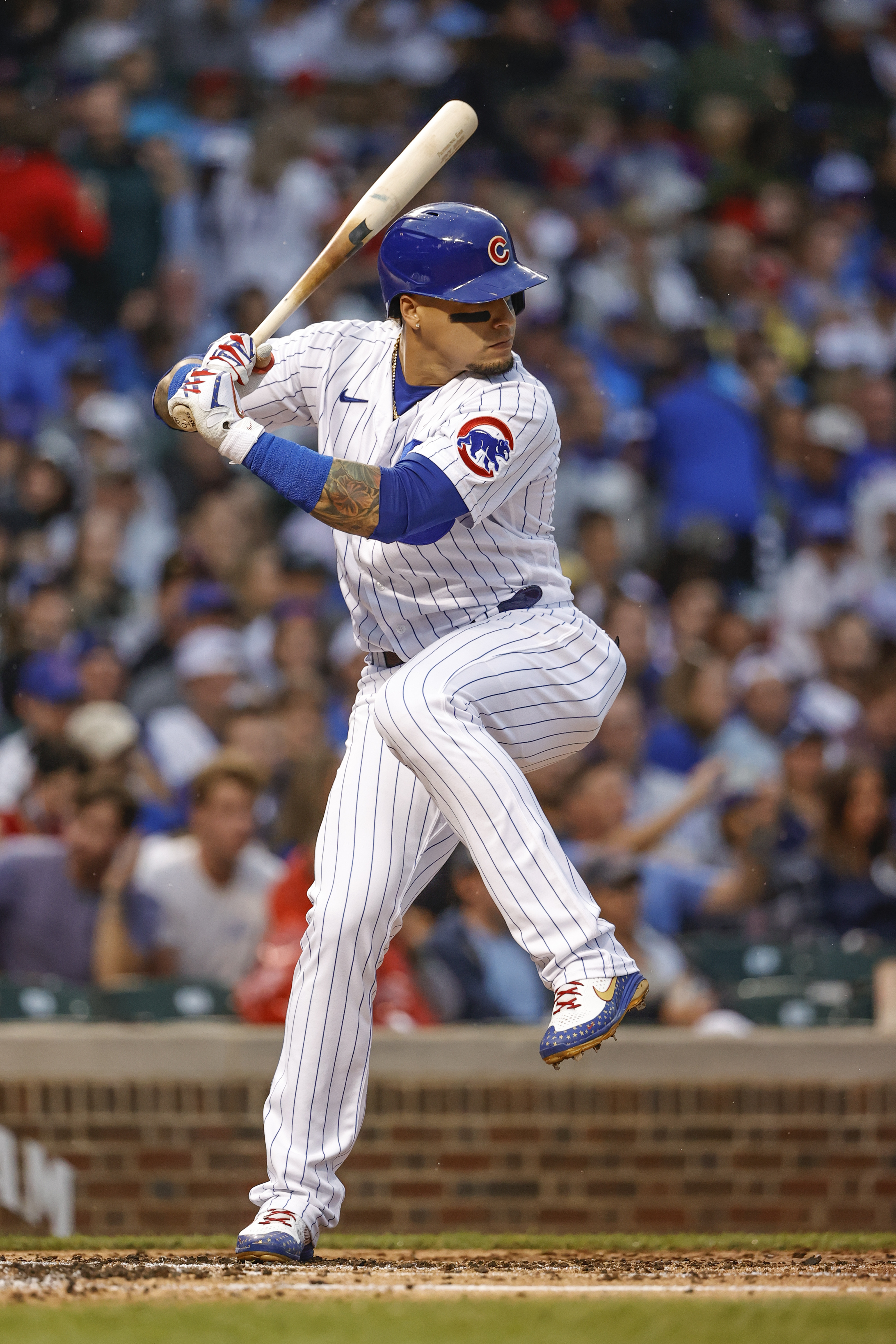
Between landing Francisco Lindor during the offseason and now trading for Baez, the Mets have obtained two of the sport’s best shortstops (who are also great friends with each other) within the span of a few months. Baez is a free agent after the season, so while this is quite possibly a short-term pickup meant to only help the Mets in 2021, it will nonetheless be a huge boost to New York’s chances of winning the NL East and making a run in October.
The trade ends a very memorable eight-season run for Baez in Wrigleyville, after he was selected with the ninth overall pick of the 2011 draft. Beginning his career as a free-swinging power bat, Baez’s propensity for striking out never really went away (his 131 whiffs leads the league this year), but he has hit .269/.307/.502 with 116 homers over 2310 PA since the start of the 2017 season. That includes a huge 2018 season that saw Baez finish second in NL MVP voting, while also winning a Silver Slugger Award.
As accomplished as Baez is at the plate, his defense has become his calling card. It took Baez until 2020 to capture his first Gold Glove, but his shortstop ability has been celebrated for years, even if he didn’t fully leave second (or even third) base duty until 2019. Since Lindor has played only as a shortstop at the MLB level, Baez is the likelier of the two to be moved around the diamond as the Mets’ needs develop.
Most of the Mets’ rumors were centered around the team’s search for third base help, though Lindor’s recent placement on the 10-day injured list seemed to expand the search to the shortstop position as well. Baez can handle short until Lindor is healthy, and could then slide over to play second base or potentially even third base, giving the Mets a clear and immediate upgrade to their infield defense. Jeff McNeil and J.D. Davis are the current first-choice options at second and third base, though either could be moved into the outfield, with McNeil being the more versatile of the two.
Williams will add depth to a Mets rotation that has been thinned by injuries, though once everyone is at full health, Williams is likely to be relegated to bullpen duty. The 29-year-old right-hander has a 5.06 ERA over 58 2/3 innings for the Cubs this season, and there isn’t much to like about his Statcast metrics. That said, Williams’ SIERA is a more palatable 4.18, and he has experienced some misfortune — a .343 BABIP, and a .358 wOBA that is far above his .320 xwOBA.
The Baez deal continues a Cubs fire sale that has already seen the likes of Kris Bryant, Anthony Rizzo, Craig Kimbrel, Ryan Tepera, and Joc Pederson all dealt. The Mets announced they’ve received an undisclosed amount of cash in the deal. Baez has roughly $3.96MM remaining on his $11.65MM salary for the 2021 season. The Mets still have some breathing room under the $210MM luxury tax threshold, as only the prorated portion of that $11.65MM counts against their tax number (and the Cubs might are also kicking in some money).
In exchange for Baez and Williams, the Cubs will receive a solid but not quite elite prospect in Crow-Armstrong, who wasn’t listed by either MLB Pipeline (fifth) or Baseball America (sixth) as one of New York’s top four prospects. Still, Crow-Armstrong was selected 19th overall just last summer, and he began his pro career with a 1.024 OPS over the very small sample size of 32 PA for the Mets’ A-ball affiliate before having to undergo shoulder surgery.
The 19-year-old Crow-Armstrong might already be just about MLB-ready on the defensive front, as he has an excellent throwing arm and speed that makes him a fit as a future center fielder. As Pipeline’s scouting report simply puts it, “the offensive game will be a work in progress,” as Crow-Armstrong has shown only power potential thus far rather than any real power. He does make a lot of contact, however, and his speed could be a difference-maker in helping him turn grounders into singles or singles into doubles.
Andy Martino of SNY reported the Mets’ acquisition of Baez. Jon Heyman of MLB Network reported that New York was also acquiring Williams, while Bob Nightengale of USA Today reported that Crow-Armstrong was headed back to Chicago in return. The Athletic’s Ken Rosenthal and Jayson Stark initially reported the two sides were making progress on a trade, with The New York Post’s Joel Sherman tweeting that a pitcher might also be involved as part of the negotiations.
Mets Eyeing Multiple Cubs Players, Trevor Story
The Mets and Cubs have discussed various permutations of deals including right-hander Zach Davies and one of Kris Bryant or Javier Baez, per MLB Network’s Jon Heyman (all Twitter links). SNY’s Andy Martino reports that the Mets are looking for pitching depth and a bat, with Bryant, Baez and Rockies shortstop Trevor Story among their targets. The Denver Post’s Patrick Saunders tweets that the Mets are “very” interested in Story, though Saunders has also suggested that if the Rockies trade Story, it’ll likely happen close to the actual deadline.
Reports connecting the Mets to Bryant, in particular, date back to the offseason. He’d give the Mets the right-handed bat they covet and a defensive upgrade over the reportedly available J.D. Davis at third base, in addition to providing a corner outfield option depending on injuries or pitching matchups. Baez, meanwhile, could step in for the currently injured Francisco Lindor until he’s able to return next month, then slide over to second base. That same scenario could apply to Story.
Of the three bats in question, Bryant is having far and away the best all-around season. The former Rookie of the Year and NL MVP is slashing .267/.358/.503 with 18 home runs. Bryant endured a miserable slump in June, collecting just nine hits in 88 plate appearances and going all month without a multi-hit game, but he’s bounced back in July with a hearty .290/.405/.516 showing. He’s earning $19.5MM in 2021 and comes with the highest price tag of this high-profile trio.
Baez, earning $11.65MM in his final year of club control, has shown the most power of the bunch but also the most concerning levels of plate discipline. He’s ripped 22 homers, but as his .248/.292/.484 slash shows, his on-base abilities (or lack thereof) are somewhat troublesome. Baez has walked at just a 4.2 percent clip this year, and while he’s always been a free swinger, his current 36.3 strikeout rate is the worst among all qualified hitters. That said, he and Lindor would form a dynamic defensive middle infield tandem.
The 28-year-old Story, like Baez and Bryant, is a free agent at season’s end. He’s having arguably the worst season of his career in 2021, hitting .240/.312/.429 (84 wRC+) with 13 home runs. Eight of those long balls have come since June 20. On the one hand, that’s encouraging. On the other, he’s batted .211 with a .270 OBP in that time. Story’s track record speaks for itself — he batted .292/.355/.554 with 83 home runs from 2018-20 — but he hasn’t really found much consistency in 2021. He’s earning $18.5MM this season.
As for Davies, he’d provide the Mets with a rental starter to help cover innings at the back of the rotation while their top starters mend. Jacob deGrom is currently on the injured list, while neither Noah Syndergaard nor Carlos Carrasco has thrown a pitch for the Mets so far in 2021. (Carrasco is expected to return this weekend.) The need for help at the back of the rotation has been exacerbated by injuries to David Peterson, Joey Lucchesi, Jordan Yamamoto and others.
Even among the Mets’ healthy starters, right-hander Taijuan Walker has begun to struggle, allowing 16 runs in his past 9 1/3 innings. The Mets already went out and acquired Rich Hill, but it seems they’re still understandably keen on stockpiling as much depth as possible for the final couple months of the season — and for a hopeful postseason bid.
The 28-year-old Davies has made 22 starts and pitched to a 4.39 ERA for the Cubs, but he’s averaged fewer than five innings per outing and carries some rather unsightly strikeout and walk rates. Davies’ 16.3 percent strikeout rate is third-lowest among qualified starters, while his 12.1 percent walk rate is the highest of any qualified starter in MLB. That 4.2 K-BB% differential is also last among qualified starters. Given that profile and the fact that he’s a pending free agent with an $8.625MM salary, Davies probably doesn’t carry too much standalone value.
It’s been a mostly quiet deadline season thus far for the Mets, who lead the NL East by three and a half games. The second-place Phillies, however, completed their second improbable walk-off comeback of the week yesterday to continue putting pressure on their rivals. Deesha Thosar of the New York Daily News tweeted last night that owner Steve Cohen is pushing his front office to be active and improve the club, so it seems fair to anticipate some fireworks coming from Queens today.