
Player Option/Opt-Out Update: April Edition
The increasing popularity of opt-outs/player options as a means to close the gap in free agent signings and extensions has changed the face of free agency entirely. Not long ago, opt-outs were perks reserved for the game’s truly elite stars — a benefit to help differentiate nine-figure offers and secure the game’s top stars.
In 2025, they’re downright commonplace. Opt-out laden short-term deals have become a common alternative to the more conventional one-year pillow contract that a player in search of a rebound campaign might pursue. They’ll also provide a soft landing for a veteran whose market didn’t materialize as expected, even coming off a productive season. Some teams simply use them as a means of sweetening the pot even when negotiating with mid- and lower-tier free agents. The Royals gave opt-outs/player options to both Chris Stratton and Hunter Renfroe two offseasons ago. The Reds did the same with Emilio Pagan and Nick Martinez. Tucker Barnhart, Trey Mancini and Ross Stripling are just a few of the other recent examples of solid but non-star veterans to land such clauses in their free agent contracts.
At their core, opt-out provisions aren’t particularly different from club options that have been widely accepted as commonplace for decades. Teams guarantee a certain number of dollars over a certain number of years, and if the player continues performing at a high enough level, they’ll exercise a club option that’s typically locked in at a below-market price. If not, the player will be bought out and sent back to free agency. Player options and opt-outs are merely the inverse; the player/agent negotiate a certain length and annual value but reserve the right to opt back into the market if the player continues to perform at a high level. It’s two sides of the same coin, one favoring the team and the other favoring the player.
There are 16 players around the league this year who’ll have the right to opt into free agency at season’s end, depending on their performance. (Conversely, there are 27 players with club options.) We’ll periodically take a look at this group over the course of the season, as their performances will have a major impact on the 2025-26 market. For more context, you can check out our full list of 2025-26 MLB free agents as well as the first installment of our recent 2025-26 MLB Free Agent Power Rankings, wherein we rank the top 10 free agents in terms of earning power. Darragh McDonald, Anthony Franco and I recently discussed the decision process behind those rankings in the latest episode of the MLB Trade Rumors Podcast.
Onto this year’s group!
Pete Alonso, 1B, Mets | One year, $24MM remaining
Alonso looked like a good bet to opt out from the moment he agreed to terms on his front-loaded two-year, $54MM contract. That he’s been one of the best hitters on the planet in the season’s first three weeks only improves that likelihood. The 30-year-old slugger is slashing a comical .365/.474/.730 with five homers, eight doubles and more walks (12) than strikeouts (10) through his first 78 turns at the plate. Alonso is chasing pitches off the plate at a career-low 19.1% rate and is sporting the best contact rate of his career at 82.8%. He’s doing all of that with career-best marks in average exit velocity (96.3 mph), barrel rate (24.1%) and hard-hit rate (61.1%). Alonso has been an absolute monster, and the fact that he can’t receive a qualifying offer — players can only receive one in their career, and he rejected one last November — is a cherry on top of his dominant output.
Cody Bellinger, OF/1B, Yankees | One year, $25MM remaining (Bellinger receives $5MM buyout if he opts out)
Bellinger posted All-Star numbers with the 2023 Cubs, signed back for three years with a pair of opt-outs and hit well in 2024 — just not to his 2023 standard. Traded to the Yankees this past offseason, many thought he was primed for a rebound because of the favorable dimensions at Yankee Stadium. It hasn’t played out that way. Through his first 62 plate appearances, Bellinger looks more like the lost version of himself from 2021-22 than the strong performer we saw in ’23-’24. He’s hitting .185/.242/.296 with what would be career-worst strikeout and swinging-strike rates of 29% and 15.2%, respectively. When he’s made contact, it’s been loud (90.8 mph average exit velocity, 53.5% hard-hit rate) — and there’s still plenty of time to turn things around. It’s not the start he or the Yankees hoped for, however.
Shane Bieber, RHP, Guardians | One year, $16MM remaining (Bieber receives $4MM buyout if he opts out)
Bieber has yet to pitch this season as he rehabs from last year’s Tommy John surgery. Cleveland has yet to place him on the 60-day injured list, which could offer some optimism regarding his timetable for a return, but he’s not on a minor league rehab assignment yet. At last check, he was targeting a return around the All-Star break.
Alex Bregman, 3B, Red Sox | Two years, $80MM remaining (Bregman can opt out again after 2026)
Bregman has started his Boston tenure on a tear, hitting .321/.365/.564 with four big flies in 85 plate appearances. He’s been 62% better than average, by measure of wRC+, but there are still some of the same red flags he displayed early in the 2024 season. During his peak, Bregman was one of the sport’s toughest strikeouts and showed outstanding plate discipline. From 2018-23, he walked in 13.8% of his plate appearances against a puny 12.3% strikeout rate. Bregman’s walk rate fell off a cliff last season, and it hasn’t recovered so far in 2024. He’s drawn only four free passes (4.7%). More concerning, he’s fanned 18 times, leading to what would be a career-worst 21.2% strikeout rate. Bregman’s chase rate is down, and he’s still making elite contact within the strike zone, but he’s making contact on a career-low 56.5% of his swings on balls off the plate. If he keeps hitting like this, it probably won’t matter, but it’s something to watch as the season continues.
Edwin Diaz, RHP, Mets | Two years, $37MM remaining (Diaz can opt out again after 2026)
Diaz had a nice return from a 2023 season lost to a knee injury in 2024, pitching to a 3.52 ERA with a 38.9% strikeout rate against a 9.3% walk rate. It wasn’t quite his usual level of dominance, but most relievers would happily take a 39% punchout rate in a “down” season. Things aren’t going as well in 2025. Diaz’s four-seamer is sitting at a career-low 96.4 mph, per Statcast. That’s down 1.1 mph from last year’s mark and 2.5 mph from his 99.1 mph peak in 2022. If he were still overpowering opponents, it wouldn’t matter much, but Diaz has been tagged for five runs on six hits and five walks in 6 2/3 frames. That’s a 16% walk rate, and he’s already tossed four wild pitches — more than he did in 53 2/3 innings a year ago. The caveat with everyone on this list is that we’re all of 11-12% through the season, but the early trendlines aren’t good for Diaz.
Jack Flaherty, RHP, Tigers | One year, $10MM remaining (increases to $20MM once Flaherty makes 15 starts)
Flaherty’s heater is down nearly a mile per hour, and his walk rate is up from 5.9% to 10.3% … but that’s in a span of 21 1/3 innings. He’s still getting strikeouts at a plus level (28.7%), and the bottom-line results are good: 2.53 ERA. Flaherty seems healthy, which will be a big factor for him — both in terms of boosting his stock ahead of a potential return to free agency and in boosting his 2026 salary if he winds up forgoing the opt-out opportunity. If he can deliver a third straight season of 27-plus starts and a second straight year with a plus strikeout rate and low-3.00s (or even mid-3.00s) ERA, the market will likely reward him with the long-term deal that eluded him this past winter. Flaherty doesn’t turn 30 until October. He’ll have a chance at a deal ranging from four to six years in length if he comes close to replicating his 2024 performance. One potential downside: he was traded last summer and thus ineligible to receive a qualifying offer. If the Tigers contend all season, as expected, they’ll be able to make Flaherty a QO if he opts out.
Lourdes Gurriel Jr., OF, D-backs | One year, $18MM remaining
Though he’s one of the most consistent hitters in the sport, Gurriel is out to a woeful start in 2025. His D-backs are red-hot, but their current win streak comes in spite of an anemic .145/.176/.304 start from their everyday left fielder. Gurriel has some of the best contact skills in MLB, fanning in only 17.3% of his plate appearances and making contact on just shy of 90% of his swings in the zone dating back to 2022. He’s punched out in what would be a career-low 13.5% of his plate appearances this year, but he’s staring down a .121 average on balls in play. He should be due for a course correction, but it’s worth noting that he’s hitting more fly-balls and fewer line-drives than ever, which is going to naturally suppress his BABIP a bit (although certainly not to this extent). Gurriel is owed $13MM in 2026 and has a $5MM buyout on a $14MM club option for 2027. He’d need to be confident he could top not just $18MM but probably that he’d top two years and $27MM; the hefty nature of that buyout makes him a net $9MM decision for the D-backs in 2027, which seems like a price they’ll be willing to pay.
Ha-Seong Kim, SS, Rays | One year, $16MM remaining
Kim is still finishing up the rehab from last October’s shoulder surgery. He’s expected back mid-to-late May, which would give him about four months to prove he’s back to form. A healthy Kim would’ve been a coveted free agent who could’ve commanded four or more years in free agency. A plus defender at three positions and a plus runner with enough power to pop 10 to 20 homers annually, Kim will be in high demand next offseason if the shoulder injury doesn’t prove a major drain on his offensive capabilities.
Seth Lugo, RHP, Royals | One year, $15MM remaining
Lugo’s rise from reliever to starter to Cy Young finalist has been remarkable. He’s gotten decent results in 2025, with a 3.86 ERA in his first 23 1/3 innings, but his strikeout and walk rates are nowhere near last year’s marks. After fanning 21.7% of his opponents against a pristine 5.7% mark last year, the 35-year-old Lugo currently sports respective rates of 17% and 9.6%. His velocity is below par (92.2 mph average fastball) but right in line with last year’s levels. A year and $15MM should be the floor for a healthy Lugo, even if he doesn’t repeat his brilliant 2024 season. That’s the same mark that older starters like Charlie Morton, Justin Verlander, Alex Cobb and Max Scherzer (well, $15.5MM) received this past offseason. The Royals could tag him with a qualifying offer if he opts out, which would give him a tougher call on a one-year deal that should be worth more than $21MM. That said, if Lugo comes anywhere close to last year’s results, he’d turn that down in pursuit of a multi-year deal.
A.J. Minter, LHP, Mets | One year, $11MM remaining
Minter’s 94.3 mph average fastball is a career-low, but it’s only narrowly shy of his 2024 mark (94.5 mph). It’s feasible that as he further distances himself from last year’s hip surgery, that number could tick up, too. He’s pitched 8 1/3 innings, allowed a pair of runs on five hits and a walk, and punched out a dozen hitters. That’s a whopping 38.7% strikeout rate. So far, Minter is missing more bats within the strike zone than ever before; opponents have an awful 73% contact rate on his pitches in the zone (compared to the 85% league average). Minter landed two years and $22MM with an opt-out when he was coming off hip surgery. He should be able to top a year and $11MM so long as he’s healthy and pitches to his typical levels. So far, so good.
Frankie Montas, RHP, Mets | One year, $17MM remaining
Montas has yet to pitch in 2025 after suffering a lat strain during spring training. He’s yet to begin a minor league rehab stint but, like Bieber, also has not been placed on the 60-day injured list yet. The size of the Mets’ commitment to Montas this winter registered as a bit of a surprise even when he was thought to be healthy. He’ll need a strong few months to walk away from $17MM guaranteed.
Tyler O’Neill, OF, Orioles | Two years, $33MM remaining
The biggest question with O’Neill is whether he can stay healthy enough to position himself for an opt-out. He’s mashing with a .265/.339/.490 slash and two homers through 56 plate appearances. (One of those big flies extended his ludicrous MLB record of six straight Opening Days with a long ball.) He’s also missed the past couple games due to neck discomfort. O’Neill has never played in more than 138 games in a season, and he’s only twice reached 100 games in a year. (He did play 50 of 60 games in the shortened 2020 season.) O’Neill’s 21.4% strikeout rate would be a career-low, but his actual contact rate and swinging-strike rate aren’t career-best marks. It’s hard to see him sustaining that career-low strikeout rate as a result, but O’Neill’s power is substantial enough that he can be a productive hitter even running strikeout rates approaching/exceeding 30%.
Joc Pederson, DH/OF, Rangers | One year, $18.5MM remaining (Rangers can counter opt-out by exercising 2027 club option for $18.5MM)
Signed to help the Rangers remedy their 2024 ineptitude against fastballs, Pederson has instead turned in a career-worst performance against heaters (and every other offering). It’s only 16 games, but Pederson has collected just one hit against fastballs in 2025 — a single. It’s an alarming development for a hitter who carries a lifetime .244 average and .521 slugging percentage against four-seamers. Pederson has compiled an unfathomable .060/.161/.080 slash in 57 plate appearances. He’s still making a fair bit of hard contact, but most of it is resulting in grounders. His 55.6% ground-ball rate and 2.8% (!) line-drive rates are career-worst marks. There’s no earthly way he can continue to struggle this much, but he’ll need quite the turnaround for that opt-out provision to come into play.
Wandy Peralta, LHP, Padres | Two years, $8.9MM remaining (Peralta can opt out again after 2026)
Peralta posted a career-worst 13.6% strikeout rate in year one of his four-year pact with San Diego in 2024. He passed on his first opt-out opportunity, and understandably so. It’s early, but the veteran lefty has more than doubled last year’s awful 8.3% swinging-strike rate, which now sits at 16.8% through 8 1/3 innings. Peralta is generating chases on an eye-popping 40% of his pitches off the plate, and his opponents’ 44.4% contact rate on those swings is the second-best mark of his career. He’s all but shelved his four-seamer, is barely using his slider, and is leaning hard into a sinker/changeup combo. He won’t sustain a 1.08 ERA, of course, but if he keeps piling up grounders and whiffs, he’ll have a good case to opt out, even at age 34.
Trevor Story, SS, Red Sox | Two years, $55MM remaining
It’s hard to believe we’re already in year four of Story’s six-year deal with Boston — in part because we simply haven’t seen him in a Red Sox uniform all that often. The former Rockies All-Star played in only one-third of the team’s games through the first three years of the contract. Injuries have decimated Story in recent years, and he produced a middling .232/.296/.397 line when healthy enough to play from 2022-24. He’s out to a much better start in 2025, playing in 20 games (already just six shy of last year’s total) and recording a .299/.325/.442 line with three homers. A 3.8% walk rate, 30% strikeout rate and .400 BABIP through 80 plate appearances don’t bode especially well, but to his credit, Story is torching the ball; he’s averaging 90.3 mph off the bat and has even better marks in barrel rate (11.3%) and hard-hit rate (54.7%). It’s hard to see him turning down the two years and $55MM after he’s been injured so much in Boston, but he’s enjoying a fine start to the year.
Robert Suarez, RHP, Padres | Two years, $16MM remaining
Suarez’s name popped up late in the offseason rumor mill, but he was always going to be a tough trade candidate because of this two-year player option. If he performed well, he’d opt out, and if he struggled and/or got hurt, the acquiring team would be saddled with two unwanted years. Such is the nature of trading anyone with a player option/opt-out. Suarez stayed put, and the Padres have to be thrilled. He’s 8-for-8 in save opportunities, hasn’t allowed a run in nine innings, and is boasting a 31.3% strikeout rate against a 6.3% walk rate. That strikeout rate is supported by a huge 16% swinging-strike rate. Suarez looks unhittable right now, just as he has in the past when at his best. There’s a lot of season left, and things can go south in a hurry for relievers in particular, but a player couldn’t ask for a better start to a platform season.
MLBTR Podcast: Winter Meetings Recap
The latest episode of the MLB Trade Rumors Podcast is now live on Spotify, Apple Podcasts, and wherever you get your podcasts! Make sure you subscribe as well! You can also use the player at this link to listen, if you don’t use Spotify or Apple for podcasts.
This week, host Darragh McDonald is joined by Tim Dierkes, Steve Adams and Anthony Franco of MLB Trade Rumors to discuss…
- The Mets signing Juan Soto (2:35)
- The Yankees to sign Max Fried (26:05)
- The Red Sox acquiring Garrett Crochet from the White Sox (36:10)
- The Giants signing Willy Adames (46:40)
- The Athletics signing Luis Severino (51:55)
- The Blue Jays acquiring Andrés Giménez from the Guardians who flip Spencer Horwitz to the Pirates for Luis Ortiz (1:01:25)
- The Orioles signing Tyler O’Neill and Gary Sánchez (1:14:00)
- The Tigers signing Alex Cobb (1:21:35)
- The Rangers re-signing Nathan Eovaldi and acquiring Jake Burger from the Marlins (1:25:20)
Check out our past episodes!
- Blake Snell, Dodger Fatigue, And The Simmering Hot Stove – listen here
- Yusei Kikuchi, The Aggressive Angels, And The Brady Singer/Jonathan India Trade – listen here
- The Rays’ Stadium Plans, Diamond Sports, And Some Offseason Rumors – listen here
The podcast intro and outro song “So Long” is provided courtesy of the band Showoff. Check out their Facebook page here!
Orioles Sign Tyler O’Neill
December 10: The Orioles officially announced O’Neill’s signing this afternoon.
December 7: The Orioles are in agreement with outfielder Tyler O’Neill on a three-year, $49.5MM deal according to Jon Heyman of the New York Post. Heyman adds that the Boras Corporation client’s contract comes with an opt-out opportunity following the 2025 season.
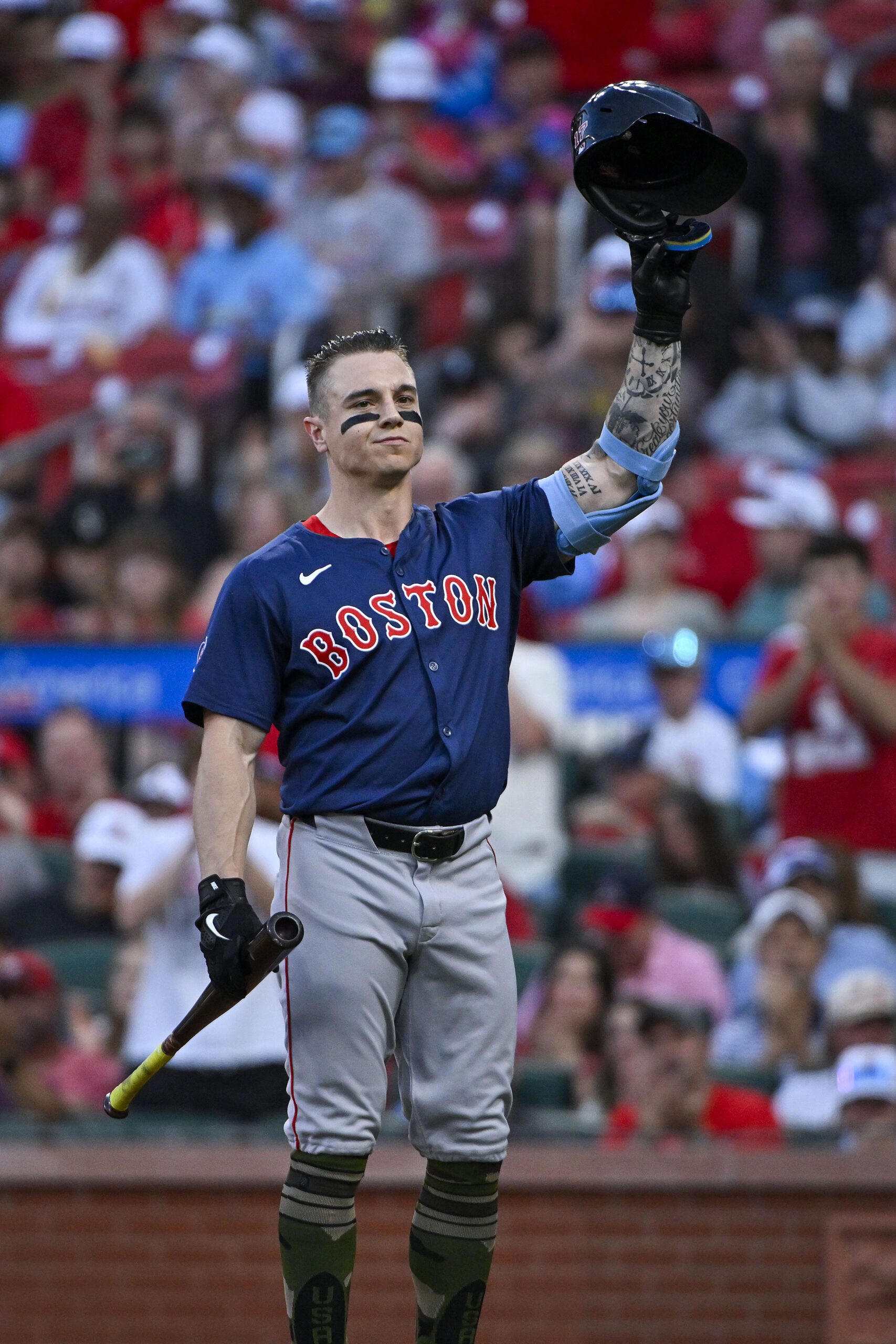
O’Neill, 30 in June, entered his walk year having just been shipped from the Cardinals to the Red Sox. While he had earned down-ballot MVP consideration with a fantastic 2021 season in St. Louis, back-to-back down seasons combined with a glut of viable outfield options left O’Neill as the odd man out with the club. He made the most of the situation and carved a regular role for himself in Boston this year, however.
While O’Neill struggled with his health between two trips to the injured list this past year, he performed at a high level when healthy enough to take the field. In 113 games for Boston, he slashed a strong .241/.336/.511 with a 131 wRC+. That production came with an unsightly 33.6% strikeout rate, though O’Neill made up for it somewhat with 31 homers and a 11.2% walk rate.
The outfielder is certainly not without warts. His high strikeout rate is at least somewhat concerning even when factoring in his power and high walk rate, and he also posted a massive platoon split last year. While he put up an incredible 215 wRC+ against left-handed pitching last year, same-handed pitchers held him to below average offense (91 wRC+) overall as he hit just .208/.290/.403 against them. O’Neill’s lengthy injury history is also something of a red flag that could hamper his value in the coming years. Even with those concerns, however, it’s easy to see O’Neill’s fit in Baltimore. The Orioles have a deep position player mix that can help to cover for O’Neill when he’s injured and perhaps even give him occasional days off against tough right-handed opponents.
Meanwhile, O’Neill’s phenomenal numbers against left-handed pitching could provide a massive boost to a heavily left-handed Orioles lineup. Orioles outfielders hit a decent .236/.302/.419 (106 wRC+) against left-handed pitching last year, but much of that production came from Anthony Santander‘s 132 wRC+ against southpaws. Santander is now a free agent, leaving the club with the lefty-swinging Colton Cowser, Cedric Mullins, Heston Kjerstad, and perhaps Ryan O’Hearn in their projected outfield mix. All four of those players are left-handed hitters, and Cowser’s 89 wRC+ against lefties last year was the highest mark among the quartet. By adding O’Neill to the mix, the Orioles should be able to help balance an outfield that projected to be well below average against southpaws in 2025.
Notably, they’ve also done so at a far more affordable price tag than they likely would’ve if they simply re-signed Santander. While MLBTR’s #9 free agent on our annual Top 50 MLB Free Agents list was predicted for a four-year, $80MM pact in free agency after slugging 44 homers for the Orioles this year, O’Neill ranked farther down the board at #19 with a projected deal of three years and $42MM. It’s a deal O’Neill managed to beat by a small amount in terms of total guarantee, and he managed to add additional value to his contract by affording himself the opportunity to opt out of the final two years of the deal next winter. If O’Neill manages to stay healthy and replicate his strong production from his time in Boston in 2025, it’s not hard to imagine him re-entering free agency in line for a much more lucrative deal next winter.
In the meantime, O’Neill will provide a veteran presence in a young and exciting Orioles lineup. Baltimore is known to be in the market for a catcher to back up Adley Rutschman at the position and push waiver wire addition Rene Pinto into a depth role, but O’Neill’s signing likely represents the heavy lifting in terms of the club’s offensive upgrades this winter. That doesn’t mean they’re done for the winter, however; the club has long been connected to the market for starting pitching as they look to either reunite with or replace ace hurler Corbin Burnes at the top of their rotation. Aside from that, the club figures to make bullpen additions who can help to replace hurlers Danny Coulombe and Jacob Webb, though the return of closer Felix Bautista from Tommy John surgery in the spring should provide a big boost to the relief corps already.
The club figures to still have resources available to make those additions even after adding O’Neill. RosterResource projects the Orioles for a $114MM payroll in 2025 with O’Neill in the fold. That would not only be a step above last year’s payroll but also the highest payroll the club has put forward since the 2018 season. Of course, the club’s new ownership group led by David Rubenstein has seemed far more open to spending in free agency that the Angelos family was in the final years of their ownership tenure, and the club has been candid about their increased payroll flexibility this winter. The club is likely further emboldened by just how clean their long-term books are: O’Neill’s contract is their first guaranteed money on the books for the 2026 season, with all other payroll commitments coming in the form of arbitration level or pre-arbitration level players.
AL East Notes: O’Neill, Grichuk, Holmes, Rays
At the end of last season, both Tyler O’Neill and Red Sox chief baseball officer Craig Breslow expressed interest in the possibility of O’Neill returning to Boston on a new contract. That possibility is now officially off the board after O’Neill signed a three-year, $49.5MM deal with the Orioles yesterday, and as per WEEI.com’s Rob Bradford (Bluesky link), the Sox “were not very aggressive” in their attempts to re-sign the outfielder. Boston’s pursuit of Juan Soto simply took precedence, the Boston Globe’s Alex Speier writes, as since the Red Sox are one of the teams still waiting on Soto to make his decision, the Sox didn’t make O’Neill any offers.
More from around the AL East…
- Speaking of the O’Neill signing, the move likely closes the door on the possibility of Randal Grichuk landing in Baltimore, as MLB.com’s Mark Feinsand (X link) writes that the Orioles had interest in Grichuk’s services. Grichuk would’ve been more of a clear-cut platoon player, but like O’Neill, is a right-handed bat who crushes left-handed pitching. This skillset was on full display with the Diamondbacks in 2024, when Grichuk hit .319/.386/.528 in 184 PA against southpaws. Grichuk turned down a $6MM mutual option for 2025 to enter free agency, and he figures to score a solid contract based on his lefty-mashing offense and his ability to at least passably play all three outfield positions.
- The Blue Jays had interest in Clay Holmes before Holmes signed with the Mets earlier this week, according to The Athletic’s Ken Rosenthal and Will Sammon. Toronto was looking at Holmes just as a reliever, which isn’t surprising given how fixing the bullpen is one of the Jays’ top offseason priorities. Holmes hasn’t started a game since his rookie year in 2018, but he’ll move back into a starting role with the Mets on his new three-year, $38MM contract.
- By a 4-3 vote on Thursday, the St. Petersburg city council approved a deal to issue bonds to help cover some of the city’s contribution to the Rays‘ new ballpark project. Colleen Wright of the Tampa Bay Times (separate links) looks at both Thursday’s decision and the next step in the process, which is a Pinellas County Commission meeting on December 17 to approve the bonds and $312.5MM in tourism taxes towards the ballpark project. It isn’t yet clear how the county commission will vote, and even in the event of a yes vote, the delays in these votes have already led the Rays to threaten to abandon the deal altogether and leave the Tampa/St. Pete area, as the team says it isn’t feasible for the ballpark’s opening to be put off until 2029. The initial plan saw the new ballpark set to be ready by Opening Day 2028, but Hurricane Milton’s destruction of the Tropicana Field roof has left the Rays in a temporary home of George M. Steinbrenner Field in Tampa in 2025, and uncertain about their location for at least the 2026-27 seasons.
Red Sox, Orioles, Dodgers Interested In Teoscar Hernández
Free agent Teoscar Hernández just won a World Series and is now drawing interest in the early days of the offseason. The Red Sox and Orioles are interested in the outfielder, reports Jon Morosi of MLB Network on X. The Dodgers and Hernández also have mutual interest in a reunion, per Russell Dorsey of Yahoo Sports.
Hernández, 32, was a free agent a year ago and received interest from the Red Sox at that time. Chris Cotillo of MassLive (X link) reported that the Sox offered him $28MM over a two-year deal, numbers that were later confirmed by the player himself when speaking to Rob Bradford of WEEI and the Baseball Isn’t Boring Podcast.
He turned down that offer and instead took a slightly smaller guarantee on a one-year pact with the Dodgers. That deal paid him $23.5MM with some deferrals, but perhaps most importantly, allowed him to return to free agency after hopefully having a bounceback year.
That bet on himself looks like it will pay off well. From 2020 to 2022, he slashed .283/.333/.519 for the Blue Jays, production that led to a 132 wRC+. His defense wasn’t great but he did steal 24 bases in that stretch and the offense was undeniable. He was traded to the Mariners prior to 2023 and had a down year at the plate, hitting .258/.305/.435 for a 106 wRC+. With that weak platform year, his free agent market was fairly tepid, including the aforementioned offer from Boston.
But his year with Los Angeles could hardly have gone much better, as he hit .272/.339/.501 for a 134 wRC+, right back to his previous form. His defensive metrics still weren’t great but he swiped another 12 bags. He got into 16 playoff games and hit .250/.352/.417 for a 119 wRC+. On MLBTR’s Top 50 Free Agents post, we predicted that he could secure a three-year, $60MM deal this time around.
Whether he can get that deal or not, the Sox would almost certainly have to increase their offer from a year ago. If they are willing to do so, his right-handed swing would fit well on a roster with plenty of left-handed bats. Rafael Devers, Triston Casas, Masataka Yoshida, Jarren Duran and Wilyer Abreu all hit from the left side, as do prospects Kyle Teel, Marcelo Mayer and Roman Anthony.
Last year, the Sox complemented their lefty outfielders by having Tyler O’Neill, who had a good season in a specific way. He was injured a few times, struck out a bunch and did most of his damage against lefties, but still had a strong season overall. He hit 31 home runs in 113 games for a .241/.336/.511 slash line and 131 wRC+, all that despite a 33.6% strikeout rate and a meager 91 wRC+ against righties.
Hernández should be ranked a bit above O’Neill as he has a slight edge in most of those areas. His 28.8% strikeout rate in 2024 was high but not as bad as O’Neill’s. He does have platoon splits, though not to the same extent as O’Neill. Hernández has a 140/113 wRC+ split in his career and was at 154/126 in 2024. He’s also far more durable, having played at least 125 games in each of the past six full seasons, whereas O’Neill has only hit that number once in his career.
Either could work as the needed righty for Boston. Hernández would arguably be better but would also likely cost more. O’Neill was predicted by MLBTR for a three-year deal just like Hernández but with a lesser guarantee of $42MM. However, Hernández received a qualifying offer from the Dodgers and is therefore tied to draft pick forfeiture, whereas O’Neill is not. Per Pete Abraham of the Boston Globe on X, the Sox remain engaged with O’Neill’s camp and could potentially bring him back.
Either should fit in the club’s budget. RosterResource projects the club for a payroll of $136MM right now, more than $50MM below where they were in 2024. They’re about $70MM below the competitive balance tax line. They have needs on the pitching staff but could certainly spend on an outfielder if they want.
For the Orioles, they are a logical fit for similar reasons. Their lineup features lefties Gunnar Henderson, Ryan O’Hearn, Cedric Mullins, Colton Cowser, Heston Kjerstad and Jackson Holliday. Prospects Samuel Basallo and Dylan Beavers are also lefty swingers. Their outfield just lost switch-hitting outfielder Anthony Santander to free agency, so Hernández could slot in as Santander’s replacement if the O’s don’t re-sign him.
Orioles general manager Mike Elias recently identified a right-handed hitting outfielder as an offseason target, per Jake Rill of MLB.com. The big question is how much spending capacity the club will have this winter. In the past six years, they haven’t given a free agent a multi-year deal, with Craig Kimbrel‘s $13MM guarantee on a one-year pact their largest expenditure.
For much of that time, they were rebuilding and then the club was up for sale. David Rubenstein took over ownership officially just as the 2024 season was getting started. It has been expected that the club will get a bit more aggressive and their trade deadline behavior gave some encouraging signs in that regard. They took on notable money to acquire Zach Eflin and Seranthony Domínguez, but it’s still unknown exactly how far they plan to go this winter.
“Whether it’s free-agent spending or it’s support for my staff or the baseball organization, I think we have everything that we need financially to make the optimal decisions for the long-term health of the franchise. And a lot of that’s going to be in my judgment,” Elias said this week. “But certainly, if we have something that we want to do and we need financial support for it, I’m exceedingly confident that that’s going to be there.”
Returning to the Dodgers is also easy to see, especially with the club planning to move Mookie Betts back to the infield next year. That means the projected outfield currently consists of Andy Pages, James Outman and utility guys like Tommy Edman and Chris Taylor. While the Dodgers could easily fit Hernández in there, they will probably first see how things play out with their reported interest in Juan Soto.
Red Sox Notes: Yoshida, O’Neill, Castiglione
Masataka Yoshida is set to undergo an MRI on his right shoulder, manager Alex Cora told reporters (including MassLive.com’s Chris Cotillo) after today’s game. Earlier today, Carlos Yamazaki of Tokyo Sports reported (via X) that Yoshida was considering having surgery, as Yoshida said he has been bothered by shoulder soreness for much of the season.
The 31-year-old Yoshida didn’t play in Boston’s season-ending 3-1 win over the Rays today, thus ending his second MLB season with a .280/.349/.415 slash line and 10 home runs over 421 plate appearances. That translates to a 115 wRC+ in 2024, and after he had relatively similar numbers in 580 PA in 2023, Yoshida now has a 112 wRC+ over his 248 games and 1001 trips to the plate as a big leaguer.
Between these solid numbers and the fact that he is one of the league’s toughest players to strike out, Yoshida’s first two Major League seasons have been quite respectable overall. However, more than “respectable” was expected when the Sox signed him to a five-year, $90MM deal during the 2022-23 offseason. Seen as an overpay of a contract from former Red Sox chief baseball officer Chaim Bloom, Yoshida seemed to answer his critics with some very strong numbers in 2023 before fading down the stretch.
His 2024 was limited in another sense, as Yoshida was almost exclusively a designated hitter. While Cora reiterated today that Yoshida’s usage was more due to Boston’s outfield surplus than due to concerns about Yoshida’s defense, the fact remains that Yoshida played in just one game as an outfielder this season. The left-handed hitting Yoshida was also largely used only against right-handed pitching, further limiting his playing time.
More will be known about Yoshida’s shoulder once the MRI is complete, but if surgery is necessary, that further complicates his status heading into 2025. With three years and $54MM remaining on his contract, Yoshida is a tough player to move in any trade talks, and his trade value will dip further if any health uncertainty is attached. Some room in Boston’s outfield could open up if Tyler O’Neill departs in free agency, but two star Red Sox outfield prospects (Roman Anthony, Kristian Campbell) are expected to be part of the big league roster at some point in 2025, further crowding the picture.
There’s also a chance O’Neill is re-signed, as he told WEEI.com’s Rob Bradford and other reporters that he spoke with chief baseball officer Craig Breslow today, and the two both expressed “mutual interest” in a reunion. Breslow also spoke publicly earlier this week about the club’s keenness in possibly bringing the Canadian slugger back for 2025 and beyond.
Injuries have continued to plague O’Neill, as he was limited to 113 games and 473 PA this season due to three relatively brief stints on the 10-day IL. The good news is that when O’Neill was able to play, he delivered to the tune of 31 homers and a .241/.336/.511 slash line, and a 131 wRC+. O’Neill had an elite barrel rate and excellent walk and hard-hit ball rates, even if he also posted one of the baseball’s worst strikeout rates (33.6%). The right-handed hitting O’Neill also had some drastic splits, as he had only a .693 OPS in 317 PA against righty pitching but a whopping 1.180 OPS in 156 PA against southpaws.
The splits are perhaps less of an issue for the Red Sox than other teams, as having a powerful right-handed bat is particularly helpful on a Sox roster that is overloaded with lefty swingers. That said, Boston’s future outfield prospects perhaps cloud the chances of O’Neill’s return, and his injury history does add an extra element of risk for the Sox or any team that signs him to a multi-year contract. It’s not out of the question that O’Neill could accept a one-year qualifying offer to take a $21MM-ish payday and stay in Boston in 2025, but there seems to be a greater chance that O’Neill would reject a QO and seek a heftier contract on the heels of his strong season.
Finally, today’s game marked the final broadcast for longtime radio broadcaster Joe Castiglione, who is retiring from regular announcing duty after 42 years of calling Red Sox games. He was recognized by the Hall of Fame as this year’s winner of the Ford Frick Award, and several Sox legends took part in a pregame ceremony today honoring Castiglione’s tenure as the voice of Red Sox Nation. We at MLB Trade Rumors congratulate Castiglione on his incredible career.
Craig Breslow Talks Red Sox’s Offseason
The Red Sox lost to the Blue Jays tonight, minutes after wins by the Royals and Tigers. That officially eliminated Boston from playoff contention and turns their attention completely to the offseason. Sox chief baseball officer Craig Breslow met with the Boston beat before the game. While he didn’t go into too many specifics, he offered a few hints about where the Sox could turn in the winter.
Breslow pointed to the rotation, bullpen and a desire to balance a lefty-heavy lineup among the areas of focus (link via Sean McAdam of MassLive). That not coincidentally overlaps with the Sox’s impending free agents. Nick Pivetta, Tyler O’Neill, Kenley Jansen, Chris Martin, Danny Jansen and Lucas Sims are all headed to the open market. That’s a pair of right-handed bats, one of their top starters, and multiple high-leverage relievers.
Asked about O’Neill specifically, Breslow said the Sox are “definitely interested in having some of those conversations” about a new deal (relayed by Alex Speier of the Boston Globe). Boston hit on a buy-low acquisition of the slugger from the Cardinals last offseason. O’Neill leads the team with 31 home runs and sports a .240/.335/.512 slash across 469 plate appearances. He had a trio of brief injured list stints but has been one of the Sox’s best hitters when healthy. O’Neill has been a particularly key piece of maintaining some amount of lineup balance. He has obliterated lefty pitching at a .313/.429/.750 clip in 156 trips to the plate. He’s tied with Aaron Judge for second in MLB (one behind Ketel Marte) with 16 home runs off southpaws.
O’Neill is eligible for a qualifying offer. There’s a good chance the 29-year-old left fielder would accept a one-year offer worth more than $21MM. That’d be a massive jump over this year’s $5.85MM arbitration salary. The Sox may prefer a three- or four-year deal that comes at a more manageable annual rate. O’Neill’s camp will probably look to top the respective $42MM guarantees secured by Lourdes Gurriel Jr. and Jorge Soler last winter.
Even if they retain O’Neill, that’d leave the Sox with the same lefty-leaning lineup they trotted out this year. They’ll need more contributors via some combination of free agency, trade and internal improvement. Vaughn Grissom is one of the higher-upside righty bats already on the roster. Grissom’s first season in Boston was underwhelming, as he battled injuries and struggled for most of the year. (Chris Sale, for whom the young infielder was traded, pitching his way to the NL Cy Young in Atlanta only adds to the disappointment.)
The Sox have split time at second base between Grissom and lefty-hitting Enmanuel Valdez with the season winding down. Breslow was noncommittal on whether the 23-year-old will enter next season as the favorite at second base. “I think he’s absolutely got the potential to do that,” the chief baseball officer said of Grissom being an everyday player (via Speier). “But ultimately it’s going to be the play on the field that dictates who our everyday second base is.”
Ha-Seong Kim, who’ll also draw attention as a shortstop, and Gleyber Torres headline the free agent class at second base. Jonathan India will probably be the subject of trade speculation yet again. It seems unlikely that the Sox would devote a ton of resources to the position. That’d impede Grissom and speedster David Hamilton next season. With top shortstop prospect Marcelo Mayer potentially on the radar for a 2025 debut, the keystone could be the long-term home for Trevor Story.
The pitching staff is a clearer area for free agent investment. Jansen and Martin have been two of Alex Cora’s top three leverage arms for the past couple seasons. Rule 5 pick Justin Slaten will be back in the late innings. Liam Hendriks should be healthy and could compete with Slaten for the closing job. The Sox will probably look for multiple additions to solidify the setup corps in front of that duo. A reunion with Martin wouldn’t be surprising.
A rotation built around Tanner Houck, Brayan Bello, Kutter Crawford and hopefully a healthy Lucas Giolito has promise. Richard Fitts has had decent results in his first four MLB starts. Pivetta has absorbed a lot of innings while flashing strikeout stuff over the past few years though. The Sox will need to replace that volume if he walks.
Corbin Burnes, Blake Snell, Max Fried and Jack Flaherty headline the free agent rotation class. Sean Manaea, Nick Martinez, Luis Severino and old friend Nathan Eovaldi (assuming he declines a $20MM player option with Texas) are among the middle-tier starters who’d more closely mirror last winter’s Giolito pickup.
Red Sox Place Tyler O’Neill On 10-Day IL, Activate Chris Martin
The Red Sox announced a series of roster moves this evening, headlined by the club placing outfielder Tyler O’Neill on the 10-day injured list due to a left leg infection. The move is retroactive to August 4. Replacing O’Neill on the active roster is infielder Enmanuel Valdez, who has been recalled to the big league roster, and the Red Sox also activated right-hander Chris Martin from the 15-day IL. Lefty Cam Booser was optioned to Triple-A to make room for Martin.
O’Neill, 29, was acquired from the Cardinals over the offseason and has enjoyed an excellent campaign during his first season in Boston. In 342 trips to the plate this season, the 29-year-old has slashed an excellent .268/.357/.544 (142 wRC+) with 16 doubles and 22 homers. While he’s striking out at a hefty 31.9% clip, he’s paired those strong power numbers with a solid 11.1% walk rate that has given him a more well-rounded profile than he flashed in his career-best 2021 campaign when he crushed 34 homers and posted a 143 wRC+ but walked at a clip of just 7.1%.
The slugger’s performance this year seems likely to line the pending free agent up for hefty raise in free agency this winter, although one red flag for O’Neill has been his frequent trips to the shelf. After suffering hamstring, back, foot, and shoulder injuries during his final two seasons with St. Louis, he’s now made three trips to the shelf with the Red Sox this year: once for a concussion in April, once due to knee inflammation in May, and now today’s most recent ailment that manager Alex Cora described to reporters (including Pete Abraham of The Boston Globe) as a worsening infection on his left leg that has caused swelling.
The silver lining in O’Neill’s repeated trips to the IL this year is that they’ve all been fairly short-lived, and Cora indicated that this one should be more of the same as he’s likely to be activated once eligible to return next week. In the meantime, the Red Sox figure to turn to some combination of Jarren Duran, Wilyer Abreu, Ceddanne Rafaela, and Rob Refsnyder in the outfield. With Rafaela frequenting the outfield in recent days, Valdez should help to shore up the club’s middle infield mix alongside David Hamilton, Nick Sogard, and Romy Gonzalez. The 25-year-old enjoyed a strong rookie season in 2023 but has taken a step back this year with a .226/.282/.402 slash line in 182 trips to the plate at the big league level.
As for Martin, the right-hander’s return to action is welcome news for a beleaguered Red Sox bullpen that has been second-worst in the majors since the start of July, ahead of only the White Sox. The 38-year-old veteran sports a solid 3.42 ERA with a matching 3.40 FIP in 26 1/3 innings of work this year and is coming off an even better season in 2023 where he dominated to the tune of an eye-popping 1.05 ERA in 55 appearances. Adding Martin to the late-inning mix to be the primary set-up man for closer Kenley Jansen should further shore up a bullpen that got reinforcements in the form of Lucas Sims and Luis Garcia prior to the trade deadline. He’ll take the roster spot of Booser, who heads to Triple-A to become the club’s top depth option with an excellent 2.77 ERA and 2.99 FIP in 39 innings of work this year.
While the bullpen will hopefully be revitalized by the return of Martin, Cora suggested to reporters today (including Abraham) that the Red Sox intend to skip right-hander Nick Pivetta‘s next start. While the veteran righty doesn’t appear to be injured, Cora indicated that he’s “not responding well” coming out of his last start and that the club had some concerns about a dip in his velocity. With a day off scheduled tomorrow, the Red Sox will be able to utilize the rest of their rotation on regular rest without needing to call up another arm to take the spot on Pivetta. The righty has a middling 4.44 ERA through 18 starts this year thanks primarily due to a trio of brutal outings his last three times out that have seen him surrender 13 runs (12 earned) in 14 innings of work while serving up six home runs.
Breslow: Red Sox Looking To Add Pitching, Right-Handed Bat
The Red Sox are six games out in the AL East and sit just one game back of the final Wild Card spot in the American League. They’ve been linked to a number of trade targets over the past week — James Paxton, Jameson Taillon and Luis Rengifo among them. That should be indicative of the team’s deadline approach, but chief baseball officer Craig Breslow removed any doubt and publicly stated that he’s “looking for ways to improve the club” in the final days before next Tuesday’s trade deadline (link via Alex Speier of the Boston Globe).
Specifically, Breslow cited a desire to add to an injury-depleted pitching staff and to find a right-handed bat to complement a lineup that leans left-handed. Asked about the possibility of both moving some current contributors who are free agents at season’s end (e.g. Tyler O’Neill, Kenley Jansen) and also looking to add elsewhere on the roster, Breslow said it’d be “irresponsible” if he didn’t at least listen to what teams had to offer, but he also heavily downplayed the possibility of trading a current contributor: “It’s hard to think about how moving those guys would make us better,” said Breslow.
Boston’s rotation was dealt a significant blow before the season even began, when offseason signee Lucas Giolito suffered a UCL tear during spring training and underwent an internal brace procedure that’ll keep him out of action until 2025. Righty Garrett Whitlock underwent the same procedure just two months later. Depth starter Chris Murphy had Tommy John surgery in April.
At the moment, the Sox are going with a rotation of Tanner Houck, Kutter Crawford, Nick Pivetta, Brayan Bello and Cooper Criswell. Houck has already set a new career-high in innings pitched with more than two months of the season to play out. Crawford is 10 innings shy of last year’s 129 1/3 frames. Criswell has been a nice under-the-radar find for the Sox, pitching to a 4.02 ERA in 65 innings. However, he’s cooled after a hot start. Even with the seven scoreless frames he tossed in his most recent start, Criswell has a 5.26 earned run average dating back to mid-May. Like Houck and Crawford, he’d sail past his career-high innings count if he remained in the rotation for the rest of the season.
Boston’s depth beyond that quintet isn’t great. Righty Josh Winckowski has pitched well in five starts, but he’s been valuable as a long reliever as well (highlighted by an excellent six-inning relief appearance in which he held the Jays to two runs and saved the rest of the ‘pen on a day when Bello was knocked out in the third inning). Veteran Chase Anderson is another long option in the bullpen but has a rough track record in recent seasons. He’s pitched to a 4.59 ERA in 2024 but has generally worked in low-leverage and mop-up situations. Veteran Brad Keller is on the 40-man roster in Triple-A, but the Sox used him in relief earlier this season and he was hit hard both in Boston and with the ChiSox. Non-40-man options include Naoyuki Uwasawa, prospect Richard Fitts and journeyman Jason Alexander.
Suffice it to say, the Sox could use both some bulk innings and some more depth. Breslow indicated that “in a perfect world,” he’d be able to acquire someone controlled/signed beyond the current season, though such options aren’t exactly plentiful. Boston’s reported interest in Paxton signals that they’re at least open to a short-term rental, while their talks with the Cubs about Taillon demonstrate a willingness to take on some salary of note. Taillon is signed through 2026 and earning $18MM per season along the way.
With regard to a right-handed bat, the need is arguably less acute but notable nonetheless. Red Sox hitters have posted a league-average .249/.325/.403 slash against left-handed pitching this season. That’s hardly a glaring flaw, but there’s room for improvement. That’s especially true when it comes to their contact abilities against lefties — or rather, their lack thereof. Sox hitters have fanned at an MLB-worst 28.8% clip against lefties, and no other team is particularly close. The Mariners have the second-worst mark at 26.2%, and the Rockies (25.2%) are the only other team north of 25%.
Between Rafael Devers, Jarren Duran and Wilyer Abreu, the Sox have a handful of key left-handed bats in the lineup. Devers and Duran have been fixtures regardless of opponent. Abreu is typically complemented by righty-swinging veteran Rob Refsnyder. Right-handed regulars in the lineup include catcher Connor Wong (who’s in the midst of a breakout year at the plate), versatile Ceddanne Rafaela and the aforementioned O’Neill.
Speculatively speaking, first or second base would be a sensible area to target a right-handed bat. Dominic Smith has held his own with a .232/.326/.371 slash in the absence of slugger Triston Casas (another lefty), but Casas isn’t especially close to returning. Boston’s Chris Sale-for-Vaughn Grissom swap has been disastrous thus far, with Sale returning to form in Atlanta while Grissom has hit .148/.207/.160 in 87 plate appearances during an injury-ruined first year in Boston. Sox second basemen have batted an MLB-worst .197/.253/.299 on the season.
Mark Canha, Gio Urshela, Amed Rosario and old friend Justin Turner are among the rental options who could help in one of those roles. More controllable names include Brent Rooker, Isaac Paredes and the aforementioned Rengifo (a switch-hitter).
The Red Sox drew plenty of criticism for a relatively quiet offseason that followed chairman Tom Werner’s regrettable “full throttle” comments earlier in the winter, but one notable result of that is a luxury-tax ledger that’s not all that close to the threshold. RosterResource projects about $218MM worth of luxury obligations for the Sox, meaning they’re a hefty $19MM shy of the first tier of luxury penalization. The Sox reset their tax bracket when they dipped under the threshold in 2023, but even if ownership is reluctant to exceed it again, their current number should allow Breslow and his staff flexibility when exploring trades in the next few days.
Red Sox Notes: Devers, O’Neill, Yoshida
Red Sox third baseman Rafael Devers exited the club’s loss to the White Sox earlier today due to left knee soreness, though manager Alex Cora told reporters (including Tom Caron of NESN) following the game that the club is hopeful that the issue isn’t more serious than that. Caron also relayed comments from Devers himself about the issue. The 27-year-old noted that he would not be in the lineup for tomorrow’s series finale against Chicago but that he hoped to be back in the lineup for the start of the club’s series against the Phillies in Boston on Tuesday.
The news is yet another blow to a club that has dealt with injury woes up and down the lineup all season. Devers has generally been the one consistent offensive presence that the Red Sox have been able to rely on this year. Only Ceddanne Rafaela and Jarren Duran have appeared in more games for Boston than Devers this season, and the star third baseman has dominated to the tune of a .286/.376/.563 slash line. That’s good for a 155 wRC+, the seventh highest figure in the AL and fourth among all MLB infielders.
While the Red Sox appear to be optimistic that they’ll only be without that production for a game or two, it’s worth noting that this isn’t the first time Devers’s knee has given him trouble this season. Cora told reporters (including those at the Associated Press) back in April that Devers had undergone an MRI on his left knee and was dealing with a bone bruise. The issue did not require a trip to the injured list but did force Devers to miss five games back in April, and if the injury proves to have worsened it wouldn’t be a shock to see Devers wind up on the IL now that it has flared up again.
With Devers now day-to-day, he finds himself in a similar position as outfielder Tyler O’Neill. O’Neill wasn’t in today’s lineup as he nurses an injured right knee that has caused him to play just three games since May 25. He was briefly placed on the 10-day injured list late last month but was activated early this week only to tweak his knee during yesterday’s loss to the White Sox. Fortunately, the AP notes that Cora told reporters today that the club hopes to avoid sending O’Neill back to the injured list due to the issue and, much like Devers, the hope is he can return to the club’s lineup on Tuesday against Philadelphia.
While O’Neill hasn’t been the offensive juggernaut that Devers has proven to be this season, he’s nonetheless been a key part of the Red Sox offense since arriving in a trade with the Cardinals over the winter. In 44 games with the club this year, the outfielder has slashed .250/.354/.500 with a 133 wRC+ and 11 homers in just 181 trips to the plate. That power production from the right side has been particularly valuable for the Red Sox as they’ve otherwise relied on lefty hitters such as Devers and Wilyer Abreu for their power production this season.
It’s unclear who would replace Devers in the lineup if he were to require a trip to the injured list, as injuries to Vaughn Grissom, Triston Casas, and Trevor Story have severely limited the club’s options around the infield. With David Hamilton handling shortstop duties and Jamie Westbrook splitting time alongside Enmanuel Valdez at the keystone, the club could be left to turn to Bobby Dalbec at the hot corner in the event of an injury to Devers, though they could also utilize Westbrook at third base and move catcher Connor Wong to second as they did to end the game this evening.
Figuring out how the club could handle the loss of O’Neill isn’t nearly as tricky, as the Worcester Red Sox announced this afternoon that outfielder and DH Masataka Yoshida has begun a rehab assignment with them. According to MLB.com’s Injury Tracker, the club hopes that Yoshida will be able to rejoin the Red Sox at some point during this coming week. In the event that O’Neill were to require a return to the injured list, Yoshida could seamlessly replace O’Neill in the club’s outfield/DH mix, taking back his role as the regular DH while Duran, Rafaela, and Rob Refsnyder handle the outfield.
Signed out of Japan to a five-year deal prior to the 2023 season, Yoshida has slashed .287/.339/.438 with a 109 wRC+ since his major league career began but appeared in just 24 games before being shelved due to a thumb sprain at the end of April. The 30-year-old seemed to be heating up in his final 48 trips to the plate before hitting the shelf as he slashed a solid .318/.375/.477 across 13 games. If he were to maintain a slash line in that range upon his return to action, that would surely provide the Red Sox with a major boost as they look to rebound from a skid that has left them with a 32-33 record and 1.5 games out of the final AL Wild Card spot.