
Heyman’s Latest: Blue Jays, Wieters, Gordon, Yost, Cespedes
Here’s the latest from CBS Sports’ Jon Heyman:
- Executives throughout the game hold new Blue Jays president Mark Shapiro in high regard, and they’re surprised that GM Alex Anthopoulos would have the fortitude to walk away from a five-year extension when there don’t seem to be any other similar jobs out there. They do note, however, that the deliberative Shapiro and the fast-thinking Anthopoulos seemed like they might not work together well. The course of their discussions following Shapiro’s hire might demonstrate why — Heyman writes that Shapiro felt like he was being appropriately supportive, while the overworked Anthopoulos might have needed a little more encouragement. With Anthopoulos gone, Shapiro will likely hire assistant GM Tony La Cava, who Shapiro once worked with in Cleveland, as interim GM. La Cava and Indians exec Ross Atkins could be candidates for the permanent position. Manager John Gibbons, meanwhile, will likely return next season.
- There’s a “decent chance” the Orioles will extend a qualifying offer to Matt Wieters. If they do, they’ll hope he doesn’t accept it, but they might think there’s a good chance he doesn’t, given that Scott Boras is his agent.
- The Royals would like to keep Alex Gordon and could offer him a four-year deal, although Gordon might be able to get five from another team. The Cubs, White Sox, Astros and Orioles are among the many teams that could be interested.
- The Royals appear likely to look for an outfielder and a pitcher this winter, although they know they don’t have a chance of re-signing Johnny Cueto. They could also extend the contract of manager Ned Yost after the season, and GM Dayton Moore’s contract could also be a priority. Both are signed through 2016.
- The Mets appear increasingly likely to allow Yoenis Cespedes to depart via free agency, Heyman writes. The Mets could then focus on spending their available funds on keeping their young pitchers.
Offseason Outlook: Chicago Cubs
The Cubs’ primary offseason goal is to add an impact starting pitcher. They will also address center field, consider trades for surplus position players, and explore an extension for Jake Arrieta.
Guaranteed Contracts
- Jon Lester, SP: $125MM through 2020; mutual option for 2021
- Starlin Castro, 2B/SS: $38MM through 2019; club option for 2020
- Anthony Rizzo, 1B: $32MM through 2019; club options for 2020 and 2021
- Miguel Montero, C: $28MM through 2017
- Jorge Soler, RF: $18MM through 2020; may opt into arbitration after 2017
- Jason Hammel, SP: $11MM through 2016; club option for 2017 that may become void based on ’16 performance
- David Ross, C: $2.25MM through 2016
Arbitration Eligible Players (service time in parentheses; projections by MLB Trade Rumors)
- Clayton Richard (5.154) – $1.1MM
- Chris Coghlan (5.148) – $3.9MM
- Jonathan Herrera (5.101) – $1.1MM
- Travis Wood (5.004) – $6.4MM
- Pedro Strop (4.156) – $4.7MM
- Jake Arrieta (4.145) – $10.6MM
- Taylor Teagarden (4.093) –
- Hector Rondon (3.000) – $3.6MM
- Justin Grimm (2.170) – $1.0MM
- Non-tender candidates: Herrera, Teagarden
Contract Options
- None
Free Agents
- Dexter Fowler, Trevor Cahill, Dan Haren, Tommy Hunter, Jason Motte, Fernando Rodney, Chris Denorfia, Austin Jackson
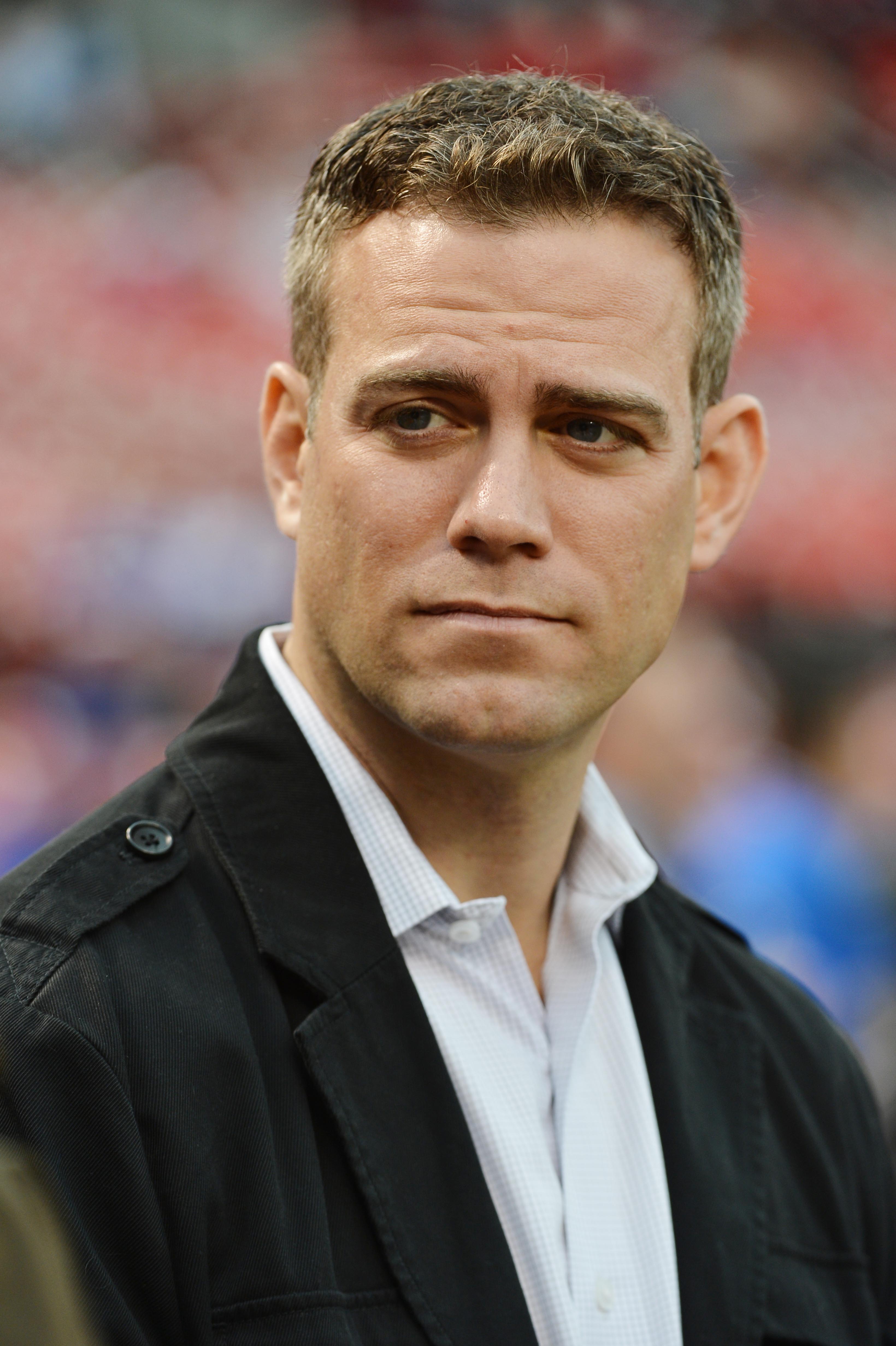 Expectations have been raised for the 2016 Cubs, after the club reached the NLCS for the first time in 12 years. The team’s position player core has the potential to be in place for at least five more years. Jorge Soler is under team control through 2020, while Anthony Rizzo, Kris Bryant, Addison Russell, Kyle Schwarber, and Javier Baez are under control through 2021. At 26 years old, Rizzo is the elder statesman of the group. Bryant, Russell, Schwarber, and Baez are years from arbitration, and Soler ($3MM) and Rizzo ($5MM) are also very cheap. Theo Epstein and company have assembled something special and have lined the players up for sustained success.
Bryant’s rookie season defense suggests he’ll remain mostly at third base next year, although manager Joe Maddon dabbled with him at each outfield position and may continue to do so. Rizzo is locked in at first base. The veteran tandem of Montero and Ross will return at catcher.
The Cubs have a middle infield surplus. Russell will remain the starting shortstop, so the question is what to do with Baez and Castro. Both players were acquired under the Jim Hendry front office, though Epstein’s group brokered the extension with Castro in the summer of 2012. Castro’s 2015 season was near replacement level, and he lost the starting shortstop job to Russell in August. Partially because of an injury to Soler that forced Chris Coghlan back to the outfield, Castro became the starting second baseman in September and had a blistering month. He continued in that role throughout the playoffs.
Castro won’t turn 26 until March, and he’s an enigma. He tallied 529 hits from age 20-22, joining Alex Rodriguez as the only middle infielders to accomplish that feat in baseball history. Since then he’s had replacement level seasons in 2013 and ’15, sandwiching a solid 2014. The Cubs prefer Russell and Baez over Castro as defensive shortstops, so it’s unclear whether another team would install Castro at short. He did show pretty well at second base late in the year.
If Castro became a free agent right now and demanded a four-year deal with a club option, I think he could get $38MM or a bit more. So perhaps the Cubs could move him without eating salary, though they wouldn’t get a player back with much surplus value. The Mets, Padres, White Sox, and Yankees could be potential trade partners for the Cubs, who would presumably look to add starting pitching. Most of those teams have pitching depth, and the Cubs could look to add to their bullpen as well.
Baez, who turns 23 in December and comes with six years of control, is also a trade candidate. He was able to cut his strikeout rate a bit in Triple-A this year, while dealing with the tragic passing of his sister as well as a broken finger. Baez’s star potential gives him much more trade value than Castro, and it would be risky for the Cubs to move him. The flip side of that is that making him available opens the door to controllable upper-tier arms like Carlos Carrasco and Tyson Ross, pitchers the Cubs pursued in July. All in all, Castro is more likely to be dealt than Baez this winter, yet there is a reasonable chance the club enters the season with both and delays the trade decision. Baez could serve as the team’s backup infielder to start the season.
Schwarber’s bat is well ahead of his glove. He joined the Cubs in mid-June and clubbed 21 home runs in 304 plate appearances, including his postseason onslaught. The plan remains the same for 2016: bring him along as a catcher when possible, while keeping his bat in the lineup as the left fielder. Trading Schwarber at this point in his career would be an extremely bold move that I don’t anticipate the Cubs making. Trading Chris Coghlan is a safer alternative. He and Schwarber both bat left-handed, so they can’t form a left field platoon. Coghlan remains affordable in his final year of team control, and he hit .264/.355/.476 against right-handed pitching this year. I’m reminded of Seth Smith, who was traded to the Padres for Luke Gregerson two years ago. The Angels, Astros, Giants, Orioles, Padres, Royals, and White Sox could be potential trade partners for Coghlan.
Though he’s cut from the same cloth as Baez, the Cubs could consider trading Soler for controllable pitching. Soler posted a replacement level rookie season, with poor defense and a 30% strikeout rate. His 112 total games played marked a pro career high. Still, Soler flashed All-Star potential in the playoffs. Like Baez, the safe move here is to retain Soler and see what he becomes.
With Schwarber and Soler penciled in at the outfield corners, center field is the Cubs’ clearest position of need. Coming off the healthiest season of his career, Dexter Fowler is due a qualifying offer and perhaps a four-year contract in the $60MM range. While the Cubs have the capacity to sign him, they may acknowledge that a four-year deal wouldn’t provide good value. If Denard Span does not receive a qualifying offer and the Cubs aren’t scared off by his September hip surgery, he could be a cheaper replacement on a shorter term. The Cubs have 2012 first-rounder Albert Almora working his way up the minor leagues, so a shorter-term investment makes sense. Bringing Austin Jackson back is an option, or the Cubs could look into a trade for the Yankees’ Brett Gardner. Epstein has named outfield defense as an area of improvement, which could mean exploring trades for players like Leonys Martin or Juan Lagares.
Despite some decisions to be made on the position player side, the Cubs’ offseason focus will be on their rotation. The group is currently fronted by Jake Arrieta and Jon Lester. After the season, Epstein spoke of his desire to add “impact pitching,” as well as big league depth. He seems open to the “necessary evil” of free agency, and this year’s class is stacked with David Price, Zack Greinke, Johnny Cueto, and Jordan Zimmermann. Jeff Samardzija could also be considered a potential impact arm. Then there’s John Lackey, who Epstein signed as Red Sox GM six years ago. Greinke, Zimmermann, Samardzija, and Lackey would likely require the Cubs to forfeit their first-round draft pick. The Cubs could make trade attempts for Carrasco, Ross, Jose Quintana, Sonny Gray, Matt Harvey, or Stephen Strasburg, though some of them will be off-limits and they come with varying amounts of team control. In the end, expect the Cubs to come away with someone they’re comfortable starting in the first three games of a playoff series.
Hammel and Hendricks can capably fill out the back of the Cubs’ rotation. Hendricks, 26 in December, won’t reach arbitration until after the 2017 season, and the Cubs could include him as part of a trade for a better pitcher like Ross. Epstein’s mention of depth is important, as the club avoided major injuries in 2015. They need to safeguard against possible injuries in 2016, especially with ace Jake Arrieta reaching 248 2/3 frames. That means starting the year with at least six capable options. Travis Wood could be stretched out if needed, but the Cubs should probably add two starters.
The Cubs assembled an interesting collection of relievers by the time the playoffs started, with a surprisingly heavy reliance on failed starters Wood, Trevor Cahill, and Clayton Richard along with Hector Rondon, Pedro Strop, and Justin Grimm. Wood’s past as a starter will drive his arbitration price up to more than you’d like to pay, but he posted a 2.95 ERA and 11.0 K/9 in regular season relief and should be retained. It’s unclear whether Cahill, 28 in March, will embrace a relief role as a free agent. He was very good in that role for 22 1/3 innings after joining the Cubs, and the team should find a way to bring him back.
Perhaps in the new year, the Cubs will explore an extension for Arrieta. A big factor is who they are able to acquire – if it’s David Price on a seven-year deal, the Cubs would seem unlikely to make Arrieta their third long-term $25MM+ pitcher. If it’s two years of Tyson Ross, maybe there’s room for a huge deal for Arrieta. We project Arrieta to make a big leap to a $10.6MM salary in arbitration for 2016, and then he’d be due another raise for 2017. Signing him now could allow the Cubs to temper those two arbitration salaries, but it would be a question of how many years the pitcher would need on top. Arrieta’s projected free agency begins with his age 32 season, and Scott Boras is his agent. Zack Greinke’s new deal will also begin with his age 32 season. Whatever Greinke gets for his free agent years, Boras will expect the same. That could be $150MM over five years, $160MM over six, or something else, but we should know by January. The Cubs have to ask the hard question of whether giving Arrieta ace money through age 36 or 37 is prudent, when they already control his age 30 and 31 seasons.
If the Cubs are already looking at $185MM or so over seven years to lock Arrieta up in January 2016, how much higher would the price be in January 2017? Can the Cubs wait this year out to see how Arrieta’s arm holds up after all the added innings, or will the window to extend him be mostly closed by that point? If a long-term deal can’t be reached, the Cubs could at least gain cost certainty by signing Arrieta to a two-year deal.
In 2015, Joe Maddon’s Cubs got close enough to taste their first World Series in 70 years before running into the Mets buzzsaw in the NLCS. The Cubs were playing with house money with a lot of fans this year, as many perceived this club to be a year early. Now, the team will hike ticket prices and add to the payroll to assemble a playoff-caliber rotation to complement their exciting young position players.
NL Central Notes: Schwarber, Park, Chapman
ESPN Chicago’s Jesse Rogers dispels the notion that the Cubs will (or even that they should) shop Kyle Schwarber this offseason due to his perceived defensive shortcomings. While Schwarber undeniably struggled in the outfield this postseason, Rogers notes that no one was clamoring for such a move in the regular season. Schwarber logged about 300 innings in the outfield during the regular season, and while his inexperience showed, he wasn’t egregiously bad over that sample of games, either. It’s hardly a representative sample, but Rogers notes that extrapolating Schwarber’s Defensive Runs Saved mark to a full season would leave him about 10 to 13 runs below average, and his bat is capable of making up the difference. He also points out that with his work ethic, Schwarber has plenty of time to improve at a position that’s still pretty new to him. I’d agree that the notion of trading Schwarber — which I’ve heard from many fans — is an overreaction, to say the least. Over the course of a full season between the outfield corners and behind the plate, I’d expect Schwarber’s bat to make him a plenty valuable player, even if he doesn’t develop into an everyday catcher or above-average outfield defender.
Elsewhere in the NL Central…
- Travis Sawchik of the Pittsburgh Tribune-Review examines whether or not the Pirates should be bidders for Korean first baseman Byung-ho Park. Sawchik spoke to former MLB scout Daniel Kim, who said that the posting fee for Park could be at least double the $5MM Pittsburgh bid to secure negotiation rights with Park’s former Nexen Heroes teammate, Jung Ho Kang. Sawchik writes that as many as 20 teams have scouted Park, with the Rangers having sent “top executives” to watch him. Sawchik also points out the presence of top prospect Josh Bell, who isn’t far from the Majors and projects as a power-hitting first baseman himself. While Bell could be a trade chip, the Pirates also need to address the starting rotation, so perhaps spending money on Park while an internal option is present isn’t the optimal use of their resources. The Pirates, like other MLB clubs, don’t have too long to decide, as Park will be posted next Monday with bids due by next Friday.
- The Pittsburgh Post-Gazette’s Bill Brink writes that the Pirates have at least cursory interest in Park, reminding that they applied for credentials to watch him earlier this season. However, he also notes that Kang’s success will probably boost the market’s valuation of Park, possibly pricing him out of the range of Pittsburgh, who also has $8MM committed to Mike Morse next year. Earlier today, Sawchik examined at length how Kang’s success could drive up the market for Park.
- While no one’s quite certain whether or not the Reds will trade Aroldis Chapman this winter, Jon Heyman of CBS Sports writes that the Diamondbacks, Blue Jays and Nationals would be at the forefront of trade talks for Cincinnati’s All-Star closer this offseason should they listen to offers. The D-Backs, of course, pursued Chapman aggressively prior to the July 31 non-waiver trade deadline, while the Nats could have a very different-looking bullpen next year. Drew Storen seems like an obvious trade candidate, and the Nationals will almost certainly shop Jonathan Papelbon this winter as well.
List Of 2016 Super Two Qualifiers
Presented below is the list of players who have qualified for Super Two status for arbitration purposes this year. (Service time in parentheses.) As MLBTR’s Tim Dierkes recently tweeted, the service time cutoff is 2.130. You can find arbitration salary projections for these players right here.
- Dan Jennings, White Sox (2.171)
- George Kontos, Giants (2.171)
- Justin Grimm, Cubs (2.170)
- Arodys Vizcaino, Braves (2.168)
- Avisail Garcia, White Sox (2.167)
- Jurickson Profar, Rangers (2.167)
- Jedd Gyorko, Padres (2.164)
- Juan Lagares, Mets (2.160)
- Didi Gregorius, Yankees (2.159)
- Erasmo Ramirez, Rays (2.158)
- Chris Archer, Rays (2.156)
- Nolan Arenado, Rockies (2.155)
- Will Smith, Brewers (2.155)
- Jean Machi, Red Sox (2.154)
- Seth Maness, Cardinals (2.154)
- Scott Van Slyke, Dodgers (2.151)
- David Lough, Orioles (2.149)
- Chris Hatcher, Dodgers (2.146)
- Evan Scribner, Athletics (2.142)
- Nick Tepesch, Rangers (2.136)
- Zach Putnam, White Sox (2.135)
- Chris Withrow, Braves (2.132)
- Kole Calhoun, Angels (2.130)
- Jeff Manship, Indians (2.130)
- Anthony Rendon, Nationals (2.130)
Click here to read more about how the Super Two concept works. Note that, as the link shows, the originally projected service time cutoff moved down as things played out over the course of the season. That brought some notable names into early arbitration qualification — namely, Calhoun and Rendon — which could have a big impact on their earning power in potential extension scenarios.
It’s also important to bear in mind that several of the players listed above have already agreed to long-term extensions: Gyorko, Lagares, and Archer. Notably, the size of the guarantee provided by Archer’s contract is dependent upon his Super Two status. By reaching it (as had been expected), he keeps a $25.5MM overall guarantee. That total would have been reduced to $20MM otherwise.
That contract structure reflects the importance of reaching Super Two status. Doing so not only bumps a player’s salary a year early, but sets a higher floor for future paydays.
White Sox Claim Jacob Turner From Cubs
The White Sox have claimed right-hander Jacob Turner off waivers from the Cubs, according to the club’s transactions page at MLB.com. Turner, 24, didn’t pitch in the Majors this season, spending most of the year on the 60-day disabled list due to a strained right flexor tendon and right shoulder inflammation.
Formerly one of the top prospects in the game — Baseball America ranked him within its Top 30 for three consecutive offseasons from 2010-12 — Turner’s career has been slowed dramatically by injuries. The Tigers selected him ninth overall in the 2009 draft, and he was the centerpiece of the trade that sent Anibal Sanchez and Omar Infante from Miami to Detroit.
Turner spent parts of three seasons with the Marlins and was mostly healthy there (he did miss time in 2014 with shoulder issues), but he wasn’t able to deliver on his considerable upside. Miami made the tough call to designate him for assignment in August of 2014, as he was out of options and couldn’t be sent to the minors without clearing waivers (which was never going to happen at that point). Miami placed Turner on revocable waivers, with the hope of working out a trade to a club with a high priority, and there was some surprise when the Rockies, who then had the No. 1 waiver priority, neglected to place a claim. The Cubs, who were second in line, promptly claimed him and worked out a trade, sending minor league right-handers Tyler Bremer and Jose Arias to Miami in return.
In hindsight, the series of transactions was largely inconsequential, as Turner was healthy enough to throw just 34 2/3 unsuccessful innings for the Cubs, though it made plenty of sense for the Cubs to roll the dice on a prospect with the type of upside Turner possessed.
The White Sox will now look to do the same, although because he’s out of options, they’ll have to either pass him through outright waivers — something the Cubs just failed at doing, hence the claim — or keep him on the 40-man roster all winter and Spring Training. Turner would have to break camp with the big league club next year or be exposed to outright waivers late in the spring.
This Date In Transactions History: Starlin Castro
It was on this day in 2006 that a 16-year-old from Monte Cristi, Dominican Republic signed an amateur contract with the Cubs. Over the last decade, Starlin Castro has gone from being a prized prospect and “face of the franchise” stardom all the way to perhaps being becoming a symbol of the team’s rebuilding years rather than a cornerstone of their future.
Castro quickly rose through Chicago’s minor league system and debuted in the majors in 2010. At first, it seemed like Castro was a natural, posting a .755 OPS over 125 games in his rookie year and then hitting .307/.341/.432 (with a league-leading 207 hits) over 715 plate appearances in 2011. Cubs president of baseball operations Theo Epstein and GM Jed Hoyer cleared the deck of several of the old regime’s players in their first year running the team, but they quickly locked up Castro, signing the shortstop to a seven-year, $60MM extension in August 2012.
While that extension has been widely debated in the last few years, at the time it was seen as a logical move for the Cubs. The deal gave them cost certainty over Castro, who was quickly going to become expensive due to an extra arbitration year as a Super Two player. The contract gave Chicago control over all four arb years, three free agent years and potentially a fourth, as per the $16MM club option ($1MM buyout) for the 2020 season. With Castro enjoying another strong year in 2012, many pundits figured the Cubs were saving themselves money by locking up a young player at a premium position through his 20’s when his best years were theoretically ahead of him.
That investment, however, looks shakier now given how Castro’s inconsistent play over the last three seasons. Castro enjoyed a strong 2014 campaign that saw him hit .292/.339/.438 with 14 homers in 569 PA, but that was sandwiched between two poor seasons. Castro put up virtual replacement player numbers in 2013 (0.1 fWAR) and then last year hit .265/.296/.375 in 578 PA, losing his starting shortstop job to Addison Russell to boot.
Rumors of a position switch or a trade had swirled around Castro essentially ever since the Cubs acquired Russell from the A’s in the summer of 2014. Suddenly, the Cubs had a new blue-chip shortstop prospect to replace their old one, not to mention a young slugger of a middle infield option in Javier Baez. There was great speculation that Castro could be moved to clear a big contract and make way for the future, and it’s possible that a trade could still happen this winter.
That said, Castro’s move to second base turned his season around. He hit .236/.271/.304 in 435 PA from April 5 to August 6, exclusively playing shortstop. His first game at the keystone came on August 7, and Castro proceeded to slash a whopping .353/.373/.588 over his final 143 PA. With Baez still struggling to avoid strikeouts and fully harness his power on the Major League level, the Cubs may well decide to just keep Castro at second next year to either see what they have (with both he or Baez, as well) or at least give Castro more of a showcase should they pursue a midseason trade.
It will probably take more than 143 good plate appearances to convince another team to give up anything of major value since Castro is still owed at least $38MM over the next four years. That said, Castro is still only 25 and has three All-Star appearances under his belt. There are lots of teams in need of help at either middle infield position who could be willing to overlook Castro’s lack of plate discipline and shaky glove, at the right price.
The Cubs already tried to “aggressively” trade him at last summer’s trade deadline, so it remains to be seen if Castro will remain through this new era of competitive Cubs baseball, or if Castro may one day appear in a future This Date In Transactions History that details his move out of the Windy City.
NL Central Notes: Brewers, Cherington, Schwarber
The Brewers have told other teams that they’re open to hearing offers for anyone on their roster, ESPN’s Buster Olney reports in his latest Insider-only column. As Olney notes, this could make Jonathan Lucroy a potential trade candidate this winter, though obviously, “only in the right deal.” Lucroy’s name was mentioned in several trade rumors last summer since Milwaukee fell out of the pennant race so soon, though the Crew reportedly had no interest in dealing the catcher. New GM David Stearns could have a different perspective, however. In his recent Brewers Offseason Outlook piece, MLBTR’s Charlie Wilmoth speculated about a possibly Lucroy trade, and also suggested that the club might wait for a midseason deal to allow Lucroy to rebuild some value after an injury-plagued and subpar 2015 campaign.
Here’s some more from the NL Central…
- Also from Olney’s post, he reports that the Pirates are in “informal discussions” with Ben Cherington about a possible front office job. Since stepping down as Boston’s general manager last summer, Cherington reportedly declined opportunities to interview for both the Mariners and Phillies GM jobs out of a desire to take some time away from the game. It’s fair to speculate that a position working under his friend Neal Huntington could be more attractive to Cherington than a return to the full-time grind of a GM position.
- Could the Cubs shop Kyle Schwarber this offseason? Grantland’s Ben Lindbergh explores the possibility, noting that the defensively-challenged Schwarber would be a good fit as an American League DH. The Rays and Indians are two clubs with a hole at DH and the young arms to offer the Cubs, who are openly looking to add pitching. While scouts are mixed at best about Schwarber’s ability to play catcher or left field over the long term, a trade may be unlikely given Schwarber’s already-impressive hitting potential. “He’s not attainable now,” one AL scout tells Lindbergh. “He still has a chance to hit .285 with 40 bombs. They’d be insane to trade that.” I tend to agree with the AL scout; Chicago would need a massive return to even consider moving Schwarber’s bat.
- Jason McLeod, Cubs senior VP of player development and amateur scouting, spoke to Fangraphs’ David Laurila about a couple of Cardinals players who were well-liked by the Cubs and Red Sox when McLeod was running the drafts for those clubs in 2012 and 2008, respectively. “A lot of the teams that passed up on Michael Wacha, us included, probably kicked themselves,” McLeod said. St. Louis took Wacha with the 19th overall pick of the first round, while the Cubs (picking sixth) instead chose Albert Almora, who is a well-regarded 21-year-old prospect but has yet to play beyond the Double-A level. For Boston in 2008, Lance Lynn was “a guy we liked quite a bit; he was high up on our board.” The Sox instead took Casey Kelly with the 30th overall pick, leaving Lynn to be drafted by the Cards 39th overall.
- Also from Laurila’s piece, he cites the Reds‘ trade of Mat Latos to the Marlins for Anthony DeSclafani (and minor league Chad Wallach) as perhaps “the best under-the-radar trade of last offseason.” DeSclafani posted a 4.05 ERA, 2.75 K/BB rate and 7.4 K/9 over 184 2/3 innings in his rookie season, and looks to have solidly earned himself a spot in Cincinnati rotation.
David Ross Plans To Return To Cubs In 2016
Catcher David Ross told Nick Cafardo of the Boston Globe that he will return to the Cubs next season rather than retire. Ross, who turns 39 in March, has one more year to go on his contract.
“It was a great ride,” Ross said of the Cubs’ postseason run. “It’s more sad we didn’t play well and [the Mets] played great. A lot of positives as I look back, but thought we had a legit chance at the World Series. I really wanted to get [Jon] Lester and [Jake] Arrieta another start.”
Ross has never been known for his bat, but he still had a rough season even by those depressed standards. The veteran slashed .176/.267/.252 across 182 plate appearances on the year. However, the Cubs likely value Ross more for his defensive skills, veteran leadership, and his ability to work with the team’s pitchers when called upon. If the Cubs do not trade or release Ross, he’ll likely return to the team to serve as Miguel Montero‘s understudy. Meanwhile, the Cubs are still unsure of their future plans for Kyle Schwarber, who could wind up in the outfield or behind the plate.
Ross inked a two-year, $5MM deal with Chicago in December of 2014. The signing, presumably, was made in part because of Ross’ history with Lester.
Cafardo On Murphy, Price, Davis, Cueto
In today’s column, Nick Cafardo of the Boston Globe spoke with eight major league officials about the players trending up and trending down as free agency approaches. It probably won’t surprise you to learn that the list of players trending in the right direction starts with Mets second baseman Daniel Murphy.
“Obviously, he’s not going to be as hot as he’s been in the postseason, but he plays positions where his power plays well,” an American League GM told Cafardo. “There are teams like the Dodgers and Yankees who need a second baseman. Others, like the Angels, need a third baseman, where he also plays. He’s going to be sought-after and get a five-year deal at around $75MM. Maybe more.”
Murphy, who can also play at first base, would also have appeal for the attractive to the Orioles, Astros, Padres, and Tigers, Cafardo writes.
Here’s more from today’s column..
- The feeling is that a seven-year, $210MM deal for David Price would be fair, Cafardo writes, though some are concerned that Price won’t live up to that kind of deal unless he goes somewhere that he’s comfortable. The incumbent Blue Jays could be that place, but the Dodgers, Cardinals, and Cubs are also listed as possibilities. Price, 30, pitched to a 2.45 ERA with 9.2 K/9 and 1.9 BB/9 in 32 regular season starts for the Tigers and Blue Jays this past season.
- The group of eight anonymous scouts, managers, and GMs polled by Cafardo would not want to give Orioles bopper Chris Davis more than a five-year deal. Of course, a team out there very well could. “In the heat of the negotiations and fearing someone else will get him, this will likely get beyond what everybody wants. Scott Boras is the agent, so we may be looking at seven years,” one scout remarked. Recently, MLBTR’s Tim Dierkes profiled the two-time home run king and estimated that he’ll be in line for a six-year, $144MM pact.
- Johnny Cueto had a rough second half after being traded to the Royals and one National League GM told Cafardo that a “few teams have scratched him off their list.” Still, that GM estimates that Cueto can net a Jon Lester-type $155MM deal. Recently, we learned that the Red Sox are mulling a serious push for Cueto. The Marlins also like Cueto, but financial constraints will probably hold them back in that pursuit.
- One GM told Cafardo that he wouldn’t give Royals outfielder Alex Gordon anything more than a three-year deal at $36MM-$38MM. In addition to KC, Cafardo recently listed the Indians, Orioles, Mets, Tigers, and possibly the Red Sox as potential fits.
- Nationals hurler Jordan Zimmermann didn’t have a great season, but he was listed by Cafardo as a player whose arrow is pointing upwards. One NL scout praised Zimmermann’s work ethic and toughness. At the end of the regular season, Zimmermann sounded like a player who knows that he’ll be changing teams.
- One AL GM envisions Blue Jays pitcher Marco Estrada attracting attention from “six or seven teams” who could offer up a “four- or five-year deal in the $12MM-$15MM [per year] range.” Last month, MLBTR’s Mark Polishuk checked in on Estrada’s free agent stock. The right-hander posted a 3.13 ERA with 6.5 K/9 and 2.7 BB/9 across 28 starts and six relief appearances in 2015.
- Cafardo’s panel indicated that Scott Kazmir could get a three-year deal this offseason, but at a reduced rate because of his struggles with the Astros down the stretch. The group of eight officials sees Kazmir getting $10-$12MM AAV over a three year period. The Tigers are among the clubs with interest in the veteran left-hander, though Kazmir has also expressed a desire to return to Houston.
- At least two teams have their top advisers and scouts looking at Rich Hill‘s last four starts with the Red Sox to see if his emergence in 2015 is for real. One AL scout who has done his homework on the left-hander praised the hurler for his confidence.
- Cafardo identified the Braves, Dodgers, Rays, Astros, and Mariners as teams that could have interest in Orioles catcher Matt Wieters. Of course, his market will be impacted by whether or not he receives a qualifying offer. The Rangers will be among the teams with interest, according to Jon Heyman of CBSSports.com, but only if he does come with a QO attached. In a recent MLBTR poll, 60% of readers said that the O’s should give Wieters a QO.
Quick Hits: Cespedes, Cubs, Allison
Mets GM Sandy Alderson traded for Yoenis Cespedes because he believed the club needed another hitter, writes Joel Sherman of the New York Post. Alderson originally focused on Brewers outfielder Carlos Gomez and Reds outfielder Jay Bruce because they came with additional club control. However, the Gomez deal was nixed after the Mets reviewed his physical, and the Reds pulled Bruce off the trade block on July 31. Alderson preferred Justin Upton of the Padres, but they refused to back down from demands for pitcher Michael Fulmer, shortstop Amed Rosario, and others. While Alderson still preferred a higher OBP hitter, Cespedes had the best acquisition cost. Per Alderson, if the Mets didn’t acquire a top bat, “people will point to the fact that we were not all in.”
- The Cubs will be a trendy pick to win the National League next season, writes Gordon Wittenmyer of the Chicago Sun Times. However, Theo Epstein and crew have a difficult road ahead of them. Within their own division, they’ll have to compete with the always successful Cardinals and recently excellent Pirates. The Mets formidable pitching staff will return next year, the Giants have a way of appearing every even year, and the Dodgers spend the most money in baseball. Unexpected opponents could also jump to the forefront. As Epstein admits, “We have to put ourselves in a position where we have a chance to be great. So we can win the division and not have to go through the coin flip of being in the wild-card game. I’m not saying you can always get there. Some things are beyond your control.” To be great, the club probably needs to add an ace. A veteran to help stabilize the young lineup could also be useful.
- The Mariners have promoted Tom Allison to head of both professional and amateur scouting, tweets John Manuel of Baseball America. Allison had previously served as Seattle’s head of pro scouting so the promotion is an expansion of duties. Per Manuel, Allison had a strong run as an amateur scout with the Diamondbacks from 2007 through 2010. He also worked with the Mets and Brewers in a scouting capacity from 1996 through 2006.