
Offseason In Review: Detroit Tigers
Another postseason appearance without a World Series victory made for a disappointing finish in the Motor City, and the Tigers will now be relying on a rotation and an outfield that look markedly different than last year’s units.
Major League Signings
- Victor Martinez, DH/1B/C: Four years, $68MM
- Joba Chamberlain, RHP: One year, $1MM
- Tom Gorzelanny, LHP: One year, $1MM
- Total Spend: $70MM
Trades and Claims
- Acquired OF Yoenis Cespedes, RHP Alex Wilson and LHP Gabe Speier from the Red Sox in exchange for RHP Rick Porcello
- Acquired OF Anthony Gose from the Blue Jays in exchange for 2B Devon Travis
- Acquired RHP Alfredo Simon from the Reds in exchange for SS Eugenio Suarez and RHP Jonathon Crawford
- Acquired RHP Shane Greene from the Yankees in a three-team deal that sent LHP Robbie Ray and SS/2B Domingo Leyba to the Diamondbacks
- Claimed RHP Josh Zeid off waivers from the Astros
Extensions
- None
Notable Minor League Deals
- Joel Hanrahan (since released), Xavier Avery, Rafael Dolis, Daniel Schlereth, Casper Wells, Alberto Cabrera, Ryan Perry, Mike Hessman
Notable Losses
- Max Scherzer, Rick Porcello, Torii Hunter, Phil Coke, Andy Dirks, Don Kelly, Robbie Ray, Eugenio Suarez
Needs Addressed
Knowing that a reunion with Max Scherzer was highly unlikely after the ace spurned a six-year, $144MM contract offer last year in Spring Training, the Tigers instead made fellow free agent Victor Martinez their top priority. V-Mart didn’t take long to be persuaded, though the price tag — a four-year, $68MM contract — makes that rather unsurprising. Though Martinez had interest from a number of other clubs coming off a monster season, the combination of a contract of that length at his age (36) and a familiar environment appealed enough to get a contract worked out at the GM Meetings. That decision looked perhaps questionable at the time, and naysayers had plenty of fuel for that opinion just a few months later, when Martinez underwent knee surgery to repair a torn meniscus. He’s expected to be ready for Opening Day, but knee surgery for a 36-year-old catcher-turned-DH is hardly the way team or player would have liked to kick off the new four-year pact.
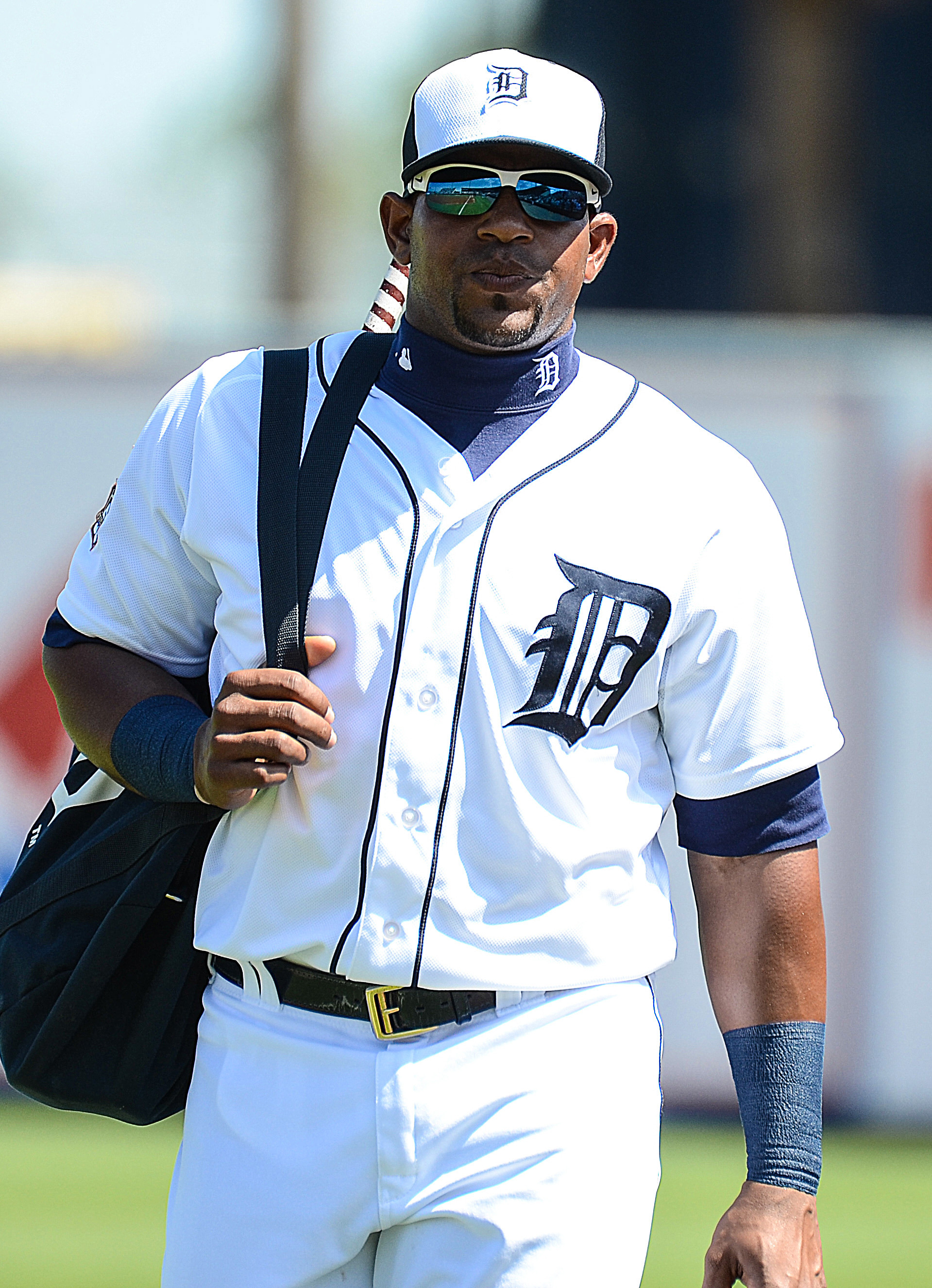
The Tigers entered the 2014 season with a rotation of Scherzer, Justin Verlander, Anibal Sanchez, Rick Porcello and Drew Smyly, but just two of that quintet remain in the Motor City. Scherzer is with the Nationals after inking a seven-year, $210MM deal, while Smyly was sent to Tampa in the David Price trade. Porcello’s departure came this offseason, as he was flipped to the Red Sox in a trade that netted Yoenis Cespedes and a pair of relatively fringy relief prospects. The move found a younger replacement for the departing Torii Hunter and ultimately saved the Tigers a couple million dollars, as Cespedes’ $10.5MM salary is a bit less steep than the $12.5MM Porcello received to avoid arbitration.
Replacing Porcello and Scherzer will be righties Shane Greene and Alfredo Simon. In Greene, the Tigers were able to flip Robbie Ray — acquired in the widely panned Doug Fister trade from the 2013-14 offseason — and a well-regarded but low-level infield prospect for a controllable, affordable rotation option. Greene is entering his age-26 season after a nice rookie campaign with the Yankees in which he posted a 3.78 ERA in 78 2/3 innings. He’ll need to prove himself capable of holding down that role in the long run, as Greene has little minor league track record of which to speak and ranked among Baseball America’s Top 30 Tigers prospects just once (No. 16 prior to the 2014 season).
The move to acquire Simon was particularly surprising, in my eyes, not because the Tigers targeted him but because of the steep price Detroit paid for one year of Simon, who is eligible for free agency next winter. Simon fills the fifth slot in the rotation but at the steep price of Eugenio Suarez — at least a serviceable utility infielder, if not something more — and a power-armed prospect, Jonathon Crawford, that could’ve served as a long-term option in Detroit’s perennially questionable bullpen somewhere down the line. (Crawford was their first-round selection in the 2013 draft.)
Having traded Austin Jackson to the Mariners in the three-team Price deal, the Tigers lacked an everyday option in center field, but they addressed that by picking up Anthony Gose in exchange for prospect Devon Travis. Travis was blocked long-term by Ian Kinsler anyhow and has drawn some questionable reviews from some evaluators (others do feel he can be a big league second baseman), so moving him to acquire a defensively-gifted platoon partner for Rajai Davis made some sense. Gose has never hit much in the Majors but he covers quite a bit of ground in center field (+2 DRS and +13.6 UZR/150 in 901 MLB innings) and can hold his own in platoon situations (.241/.316/.350 career vs. RHP).
Joba Chamberlain was re-signed late in the offseason, and the team will hope that his 2015 looks more like last season’s first half than second half. Newcomer Tom Gorzelanny represents the only other addition to the bullpen, although the $7MM option on July acquisition Joakim Soria was exercised as well.
Questions Remaining
Detroit’s bullpen seems to be the team’s biggest flaw every season, and it is again a significant question mark heading into 2015. Joe Nathan endured his worst season since becoming a closer (with the possible exception of 2011 — his first back from Tommy John surgery) and will return along with a $10MM price tag to prove that he still has something left in the tank. Joakim Soria, one of the best setup men available on last year’s summer trade market, was a tremendous letdown with the Tigers, though that was at least partially due to an oblique strain that limited him to 11 unsightly innings with the club.
However, despite a series of bullpen meltdowns that resulted in the team’s exit from the 2014 playoffs, the only real change was swapping Gorzelanny out for the departed Phil Coke (who signed with the Cubs earlier this month). The Tigers are counting on big things from flamethrowing Bruce Rondon in his return from Tommy John surgery, but if he struggles in his first year back — which is highly possible, especially considering the fact that he’s thrown just 28 2/3 Major League innings — the Tigers could be in for a long season full of bullpen-driven headaches.
The rotation, too, is anything but certain. While we know which five starters will comprise the group — Price, Verlander, Sanchez, Greene and Simon — the effectiveness of that group is far from a guarantee. Verlander struggled all season in 2014 after undergoing core muscle surgery. He told ESPN’s Jayson Stark this spring that the residual effect of that operation was pain in his shoulder from an inability to use his core properly, adding that he was well behind schedule to open the year. Greene, as noted above, has little Major League experience and lacks any form of minor league track record. And Simon, who was excellent for the Reds in the first half of 2014, wilted in the second half somewhat predictably. Simon’s first-half dominance in Cincinnati (2.70 ERA in 116 2/3 innings) was driven by a .232 average on balls in play and an 85.1 percent strand rate. He didn’t come close to sustaining either and saw his ERA spike to 4.52 in the second half. Simon entered the 2014 season with just 19 career starts and was somewhat surprisingly able to make 32 last year, but whether or not he can do it again remains to be seen. He also averaged just 5.8 K/9, and a move to the American League isn’t going to help in that regard.
Looking at the rest of the roster, both Miguel Cabrera and Alex Avila have some health question marks, while the world will be watching J.D. Martinez intently to see if he can sustain last season’s incredible breakout campaign. If he falters, Steven Moya could get a look this summer. Nick Castellanos was below average at the plate but historically bad from a defensive standpoint, at least per Defensive Runs Saved (-30), so it’s conceivable that third base will eventually be an issue as well. At shortstop, the team is banking on Jose Iglesias return to health after stress fractures in both shins cost him the entire 2014 season. His importance is even more crucial following the trade of Suarez to Cincinnati.
The largest question surrounding the team this spring, however, may have nothing to do with on-field production at all. Rather, all eyes will be on Price, as he’s said on multiple occasions that he is open to an extension with Detroit and expects the team to engage him in talks before he hits free agency. One would imagine that the Tigers may be comfortable offering Price something similar to the six-year, $144MM deal they offered Scherzer last year, but Price and agent Bo McKinnis undoubtedly took notice of the Scherzer contract and have to feel confident that they could at least secure a Jon Lester-like $155MM over six years.
Deal of Note
The acquisition of Cespedes was perhaps more interesting than it appeared on the surface. The Tigers and Red Sox essentially swapped comparably priced, above-average though not-quite-star players who have one year of team control remaining. However, Cespedes, unlike Porcello, is ineligible to receive a qualifying offer at season’s end, so the Tigers also parted with the ability to receive draft pick compensation.
Detroit did save about $2MM in the trade, which is probably in the neighborhood of the slot value the Sox would receive in a 2016 pick, should Porcello reject a qualifying offer and sign elsewhere. (And, one would presume that as a 27-year-old free agent, if he performs well enough to receive a QO, it’ll be a no-brainer to reject it.)
Overview
It’s become almost cliche to say that the Tigers are nearing the end of their window of contention, but that may very well be the case when looking at their long-term payroll. Detroit already has $101MM committed to Verlander, Cabrera, Martinez, Sanchez and Kinsler for the 2017 season, and the first three of that trio will earn a combined $76MM in 2018. On top of that, the team is considered to have one of league’s worst farm systems. Clearly, the Tigers are attempting to win now, perhaps knowing that their core will be more expensive than productive in the not-too-distant future.
The current group is considered by many a favorite in the AL Central, but there’s some very real uncertainty at the back of the rotation, in the bullpen and on the left side of the infield (to say nothing of health concerns for nearly all of the team’s top players).
Still, the star power and talent on this team is undeniable, and if Cabrera, Verlander and Martinez are healthy, it’s tough to envision them falling out of the race in the AL Central. However with Price, Simon and Cespedes among the players currently on pace to hit the open market next winter, it’ll be interesting to see how the team approaches future seasons, especially if the remnants of an already depleted farm system are stripped down even further for trades this summer. Of course, one World Series win would likely make it all worth it for the Tigers and their fans.
Photo courtesy of USA Today Sports Images.
Offseason In Review: Tampa Bay Rays
After watching Andrew Friedman and Joe Maddon depart, and then overhauling their roster this offseason, the Rays will rely on a strong young rotation to remain competitive in the AL East.
Major League Signings
- Asdrubal Cabrera, MI: One year, $7.5MM
- Ernesto Frieri, RP: One year, $800K
- Total spend: $8.3MM
Notable Minor League Signings
- Ronald Belisario, Corey Brown, Joey Butler, Alexi Casilla ($900K if he makes MLB roster), Jake Elmore, Juan Francisco ($2MM if he makes MLB roster), Jim Miller, Eugenio Velez, Jonny Venters, Bobby Wilson
Trades And Claims
- Acquired C/DH John Jaso, SS Daniel Robertson, OF Boog Powell and $1.5MM in cash from Athletics for 2B/SS Ben Zobrist and SS Yunel Escobar
- Acquired C Rene Rivera, OF Steven Souza, SP Burch Smith, SP Travis Ott and 1B Jake Bauers from Padres and Nationals as part of a three-team trade (Padres received OF Wil Myers, C Ryan Hanigan, RP Gerardo Reyes and RP Jose Castillo from Rays; Nationals received SP Joe Ross and SS Trea Turner from Padres)
- Acquired RP Kevin Jepsen from Angels for OF Matt Joyce
- Acquired SP Buddy Borden and cash considerations from Pirates for IF Sean Rodriguez
- Acquired SP Jose Dominguez and SP Greg Harris from Dodgers for RP Joel Peralta and RP Adam Liberatore
- Acquired OF Justin Williams and SS Andrew Velazquez to Diamondbacks for SP Jeremy Hellickson
- Acquired RP Mark Sappington from Angels for RP Cesar Ramos
Notable Losses
- Zobrist, Escobar, Myers, Hanigan, Joyce, Rodriguez, Peralta, Hellickson, Ramos, Jose Molina, Cole Figueroa, Oscar Hernandez (to Diamondbacks in Rule 5 Draft)
Needs Addressed
It was already going to be a transformative winter for the Rays with longtime team executive Matt Silverman taking over for Friedman as the team’s top baseball decision-maker, yet the club’s chain of command was further shaken up when Maddon exercised an out clause in his contract and left to manage the Cubs. (The Rays’ tampering charge against Chicago is still unsettled.) After a lengthy search for a new manager, Kevin Cash was hired to lead this new era of Rays history. Though Cash has only a couple of years as a scout and two years as the Indians’ bullpen coach on his post-playing resume, he was considered by many to be a top managerial prospect, and in fact was almost hired by the Rangers earlier in the offseason.
The 37-year-old Cash is currently the youngest manager/head coach in any of the four major sports, which perhaps exemplifies the Rays’ overall offseason youth movement. Tampa’s farm system was in need of rebuilding following several years of unproductive drafts, and thus almost all of the Rays’ moves this winter brought them back at least one pre-arbitration prospect in return. Of all that young talent, Daniel Robertson is probably the best long-term prospect, and he looks to be Tampa Bay’s shortstop of the future.
For 2015, however, the youngster best positioned to help the club immediately is Steven Souza. Ranked as the 37th-best prospect in the sport by Baseball America, Souza received just 26 plate appearances for the Nationals last season but is best known for his spectacular catch to clinch Jordan Zimmermann‘s no-hitter. Tampa Bay’s outfield mix includes Desmond Jennings playing mostly in left field, with Souza and Brandon Guyer (both right-handed hitters) sharing time with Kevin Kiermaier and David DeJesus (both left-handed hitters). Souza and Kiermaier will be given every opportunity to step up as everyday options.
The Rays overhauled their catching situation by releasing Jose Molina (eating his $2.75MM 2015 salary in the process) and trading Ryan Hanigan as part of their big three-team deal with the Padres and Nationals. The newly-acquired Rene Rivera figures to see much of the time behind the plate, and while the veteran is better known for his excellent pitch-framing than his bat, Rivera posted a .252/.319/.432 line over 329 PAs in San Diego last season.
John Jaso will notably not be an option at catcher due to his concussion history, as the Rays will instead use him mostly at DH with perhaps some time at first base or even in left. Jaso will essentially replace Matt Joyce‘s role in Tampa’s lineup — the left-handed power source in need of a platoon partner due to struggles against lefties.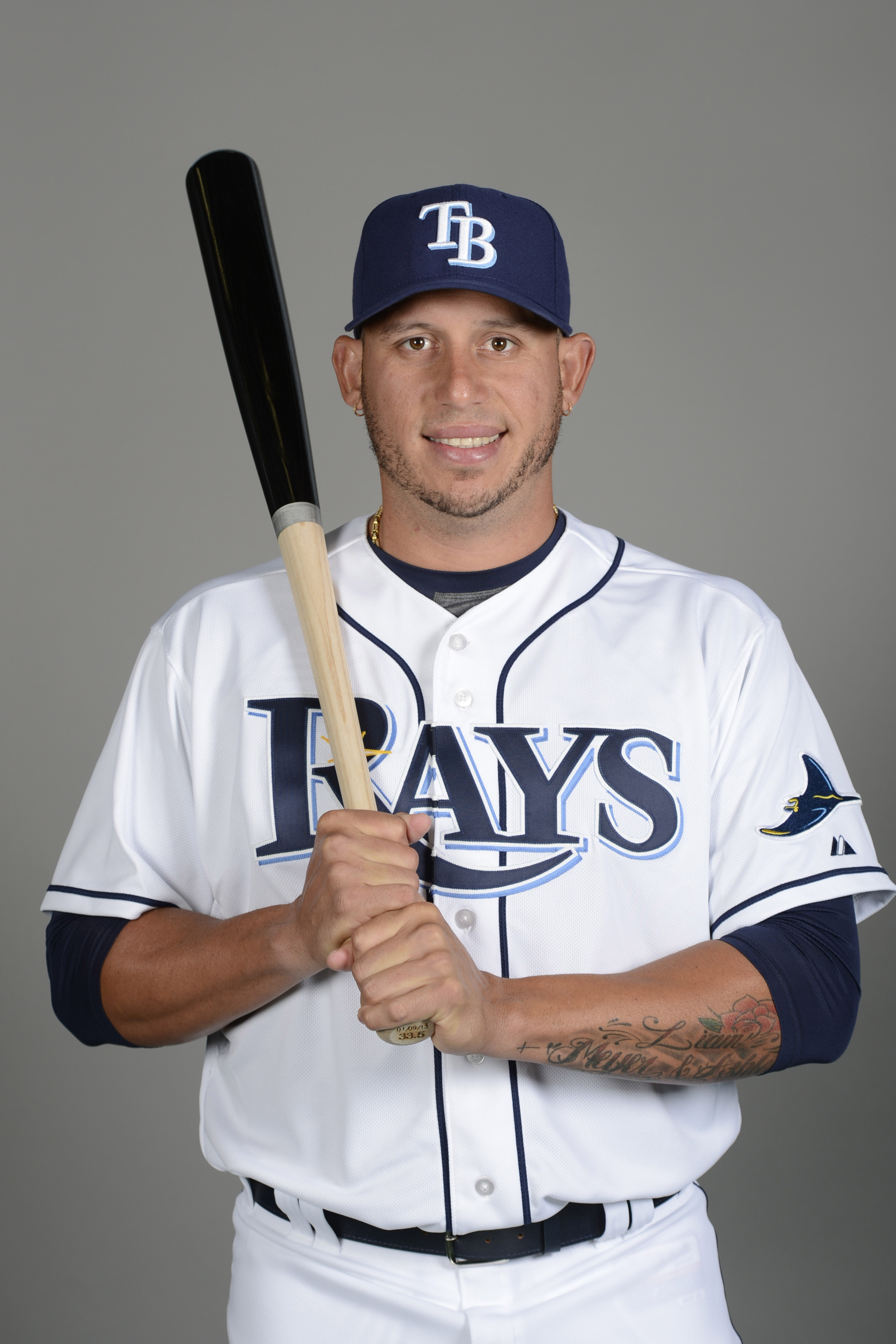
As usual, the Rays weren’t big players in free agency, with Asdrubal Cabrera‘s one-year, $7.5MM deal accounting for almost all of their free agent spending. He’ll add a veteran presence to the middle infield, though it remains to be seen where he’ll start. Going by his below-average career defensive metrics (-10.6 UZR/150 at shortstop, -2.5 UZR/150 at second base), Cabrera would be a better fit at the keystone. With Cabrera filling one MI spot, Nick Franklin and Logan Forsythe will battle for playing time at the other, with two post-hype prospects (Hak-Ju Lee and 2008 first overall pick Tim Beckham) and minor league signee Alexi Casilla also in the hunt for playing time.
Despite losing two very versatile options in Ben Zobrist and Sean Rodriguez, the Rays have retained much of their signature infield flexibility. Furthermore, with Cabrera only signed for one year, the team has left the door open for its younger infielders to establish themselves going into 2016.
Questions Remaining
Once the Rays underachieved over the first few months of the 2014 season, it was only a matter of time before they pared down last year’s team-record $76.87MM payroll. David Price, the biggest piece, was moved at last year’s trade deadline. The cost-cutting continued with Yunel Escobar (owed $13MM in 2015-16), Hanigan ($8MM in 2015-16), Zobrist ($7.5MM in 2015), and Joel Peralta ($2.5MM in 2015) all traded along with players like Rodriguez, Joyce, Jeremy Hellickson and Cesar Ramos who were becoming more expensive in arbitration. The Rays took a chance with an “unsustainable“ payroll in 2014 in order to take a shot at a World Series, and their big bet simply didn’t pay off.
Zobrist’s defensive versatility and still-potent bat made him a 5.7 fWAR player in 2014 — a total topped by only 11 other players in baseball. Given how 26 other teams outscored the Rays last season, losing Zobrist and Joyce’s lefty power will only make it harder for Tampa Bay to score runs. While Wil Myers had a major sophomore slump in the wake of his 2013 AL Rookie Of The Year campaign, trading him is a bold move. Clearly the Rays weren’t totally sold on Myers’ potential, yet given his high ceiling and Tampa’s need for young talent, Myers could eventually turn into a regret if he breaks out in San Diego.
Perhaps the bigger issue for the Rays is that in order to get into contention, they’ll need several players coming off tough seasons to get back on track. Evan Longoria tops the list, as despite playing in all 162 games and posting 23 homers and 83 runs, he contributed only a .253/.320/.404 slash line and a career-low 107 wRC+. Longoria already carries an outsized role with the Rays given his big contract and face-of-the-franchise status, and the team is now counting on him to an even greater extent to make up for the lineup’s lack of pop. If Longoria’s 2014 season was the first hint of a decline phase, his contract could quickly become an albatross for the low-revenue Rays.
Tampa Bay also needs rebound years from James Loney and Grant Balfour, both of whom disappointed after signing expensive multi-year contracts last winter. Loney produced only 0.9 fWAR over 651 PA, while Balfour struggled to a 4.91 ERA and 5.9 BB/9 and lost the closer’s job in June. Both players could also be midseason trade candidates if they return to form and the Rays are out of the race.
Deal Of Note
Of all the Rays’ trades this winter, the Joyce-for-Kevin Jepsen swap was the only one that saw Tampa receive only Major League talent back in return. Jepsen enjoyed the best season of his seven-year career in 2014, posting a 2.63 ERA, 10.4 K/9 and 3.26 K/BB rate over 65 bullpen innings for the Angels. The right-hander has been a solid relief option in two of the last three years (injuries hampered him in 2013) and at worst, he projects to be a good setup option for the Rays.
I say “at worst” since the back of the Tampa Bay bullpen is somewhat in flux right now, as Jake McGee is sidelined until late April due to elbow surgery. McGee will certainly figure to get first crack at the closer’s job when he’s healthy given his outstanding 2014 season, and until he’s back, Brad Boxberger is likely the top choice as interim closer. If McGee has a setback or Boxberger regresses a bit from his own excellent 2014 form (he allowed a .227 BABIP last year), then Jepsen figures to get the call ahead of Balfour, though Jepsen only has five career MLB saves. All in all, a solid reliever like Jepsen was a good return for the Rays in exchange for a somewhat limited player in Joyce, who brings little defensive value and struggles against southpaws.
Overview
Taken as a whole, Silverman’s very busy offseason almost breaks down as a series of one-for-one replacements. The Rays have a new veteran middle infielder (Cabrera for Escobar), a slugging lefty bat (Jaso for Joyce), a solid righty reliever (Jepsen for Peralta), a touted young outfielder (Souza for Myers) and a defensive ace at catcher (Rivera for Hanigan/Molina). The irreplaceable piece is Zobrist, of course, though if Franklin or Forsythe step up at second and Longoria and Loney get hitting again, that will help fill the void.
Another internal replacement should come in the form of Matt Moore, who is slated to return from Tommy John surgery in late June or early July. With Moore on the way back, the Rays felt comfortable in dealing Hellickson and using Nathan Karns, Burch Smith or Alex Colome as the fifth starter until Moore is healthy.
If Moore is able to rediscover his 2013 form, that will only help a Tampa rotation that could already be the best in the AL East. Alex Cobb, Chris Archer, Drew Smyly and Jake Odorizzi comprise the Rays’ top four, and given the limitations on offense, Tampa Bay will need this quartet to live up to their considerable potential to give them a fighting chance of getting back to the postseason.
A lot of things went wrong for the Rays in 2014, but despite their many changes, it wouldn’t be a total shock if they got back over the .500 mark. There are just so many questions up and down the roster about young players and possibly-declining veterans, however, that it seems 2015 may be more about rebuilding than the beginning of a new stretch of winning Rays baseball.
Photo courtesy of Tommy Gilligan/USA Today Sports Images
Out Of Options Players: AL West
The following 40-man roster players have less than five years service time and are out of minor league options. That means they must clear waivers before being sent to the minors, so the team would be at risk of losing them in attempting to do so. I’ve included players on multiyear deals. This list was compiled through MLBTR’s sources. Today, we’ll take a look at the AL West.
Astros: Chris Carter, Alex Presley, Luis Valbuena, Sam Deduno
Presley is vying for the Astros’ fourth outfielder job, competing with Robbie Grossman. Grossman is off to a hot start in four games this spring, but he has options. That and a $1MM contract make Presley the favorite, unless the Astros trade him.
Deduno is competing with Asher Wojciechowski, Roberto Hernandez, and Dan Straily for the Astros’ fifth starter job. He was knocked around on Friday, but none of the others have distinguished themselves. Deduno’s lack of options should help him make the team in some capacity, writes Evan Drellich of the Houston Chronicle. Drellich also noted that Brett Oberholtzer‘s lat strain is a factor.
Angels: Drew Butera, Johnny Giavotella, Cesar Ramos
Butera is expected to serve as the Angels’ backup catcher behind Chris Iannetta. Giavotella, acquired from the Royals in the offseason, is part of the Angels’ second base competition this spring. He’s battling with Josh Rutledge, Grant Green, and Taylor Featherston. According to MLB.com’s Alden Gonzalez last Friday, two or even three of these players will make the team.
Ramos’ spot in the team’s bullpen is secure.
Athletics: Fernando Abad, Jesse Chavez, Sam Fuld, Evan Scribner, Stephen Vogt
Chavez seems guaranteed a spot on the pitching staff, whether in the rotation or as the long man. Abad seems locked in as well. Scribner is in the mix for a bullpen spot, which will become a tighter squeeze if Chavez doesn’t make the rotation. Jeremy F. Koo of Athletics Nation had a strong A’s bullpen breakdown a week ago.
Mariners: Dustin Ackley, Erasmo Ramirez, Justin Ruggiano
Ackley will platoon in left field this year with Rickie Weeks, while Ruggiano is expected to pair up with Seth Smith in right field.
Ramirez is competing with Taijuan Walker, Roenis Elias, and Kevin Correia for the Mariners’ fifth starter job, and he’s not considered the favorite.
Rangers: None
Offseason In Review: Cleveland Indians
Cleveland entered the offseason with some buzz surrounding a pitching staff that looked dominant for much of the 2014 season and a glut of outfielders to which they added, rather than subtracted.
Major League Signings
- Gavin Floyd, RHP: One year, $4MM
Trades and Claims
- Acquired 1B/OF Brandon Moss from the Athletics in exchange for 2B Joe Wendle
- Acquired RHP Charles Brewer from the Diamondbacks in exchange for cash considerations
Extensions
- None
Notable Minor League Signings
- Bruce Chen, Anthony Swarzak, Jerry Sands, Michael Roth, Jeff Manship, Scott Downs, Adam Moore, Brett Hayes, Shaun Marcum, Tyler Cloyd (since released)
Notable Losses
- Jason Giambi (Retired)
Needs Addressed
It was clearly a quiet offseason for the Indians, and perhaps that shouldn’t be considered a significant surprise. As I noted in previewing the club’s offseason, while there was a bit of financial wiggle room in the 2015 payroll — which has primarily been allocated to Brandon Moss and Gavin Floyd — the 2016 payroll is already tight due to a growing crop of arbitration-eligible players. That group includes names such as Corey Kluber, Carlos Carrasco and Cody Allen — so the spending won’t be insignificant.
The moves they did make didn’t address obvious areas of need. Adding Moss will give the lineup some extra punch, but he’s likely going to play in right field, where the Indians already have David Murphy, Ryan Raburn and Nick Swisher as options. All three of those players disappointed in 2014, so it’s not surprising to see the team seek an upgrade, but Moss is a relatively expensive alternative, and the club has yet to move any of the three pre-existing options (more on that in a bit).
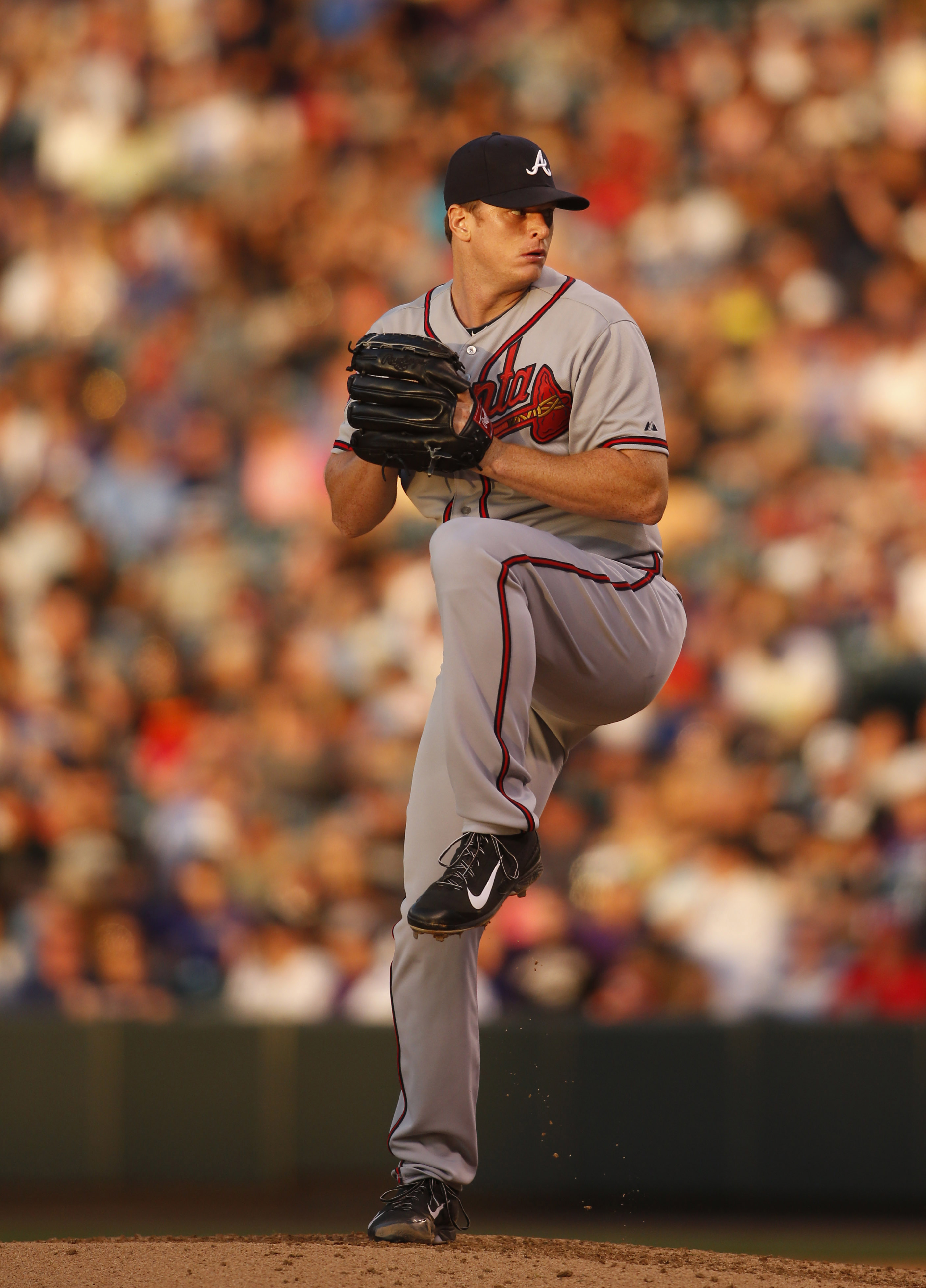
Floyd, too, represents a curious fit: Kluber was set to lead a staff that also featured Carrasco, Trevor Bauer and some combination of Danny Salazar, T.J. House, Josh Tomlin and Zach McAllister. A healthy Floyd, of course, would be a bargain at $4MM, but he’s coming off surgery to repair a broken olecranon bone in his elbow and barely pitched in the 2013 season due to Tommy John surgery. Indeed, questions about his health have already come up this spring. The additional depth is hardly a bad thing, but it’s at least somewhat puzzling that none of Cleveland’s limited resources went to finding a platoon partner for Lonnie Chisenhall or upgrading the bullpen.
Questions Remaining
The Indians will likely need to jettison one of their outfielders this spring, and Murphy has already voiced his opinion that he’d prefer a trade to seeing his role slashed to the point where he’d receive just a couple hundred at-bats. He’s still owed $6.5MM and hits left-handed, like Moss, eliminating the possibility of a platoon. Given the exorbitant price tag remaining on Swisher (two years, $30MM) and the fact that Raburn is right-handed (as well as cheaper and more versatile from a defensive standpoint), Murphy does seem the likeliest candidate to be playing elsewhere come Opening Day.
Shifting to the infield, Cleveland will again be giving Lonnie Chisenhall the chance to prove that he can be an everyday player in the big leagues. While Raburn and Mike Aviles present plausible platoon options, neither hit lefties well in 2014. Chisenhall did handle lefties pretty well in 2014, admittedly, though his .369 BABIP against southpaws isn’t likely to be repeated. He also comes with defensive question marks, as Defense Runs Saved pegged him at -14 runs in just 973 innings, while UZR/150 felt he’d cost a team 15 runs over the course of 150 games. Chisenhall notched just a .591 OPS in the second half, so Cleveland is counting on a bounceback of sorts.
While the rotation figures to be a strength, even if it’s not yet known which promising young arm will round out the starting five, the bullpen is decidedly shakier. Allen has emerged as a shutdown option in the ninth inning, and Bryan Shaw appears to be a perfectly serviceable setup man. Marc Rzepczynski is a weapon against lefties, and either Kyle Crockett or Nick Hagadone can join him as a second left-handed option for manager Terry Francona. However, whether or not Scott Atchison can repeat his strong season at age 39 is up for debate, and the occupants of the final two spots are to be determined. Perhaps some of the arms that miss out on the rotation spot could slot into the ‘pen, but the Indians may not be too keen on moving a younger arm that they feel can be a starter into the bullpen for a season. In my eyes, a veteran complement was more needed here than in the rotation.
Additionally, Cleveland will need some bounceback efforts from several regulars around the diamond. Swisher slashed just .208/.278/.311 last season, but the veteran had offseason surgery on both knees and has since said that the pain he experienced in 2014 made it difficult to walk when he would awake in the night. Michael Bourn, the team’s other expensive free agent expenditure from the 2012-13 offseason, hit only .257/.314/.360 and played in just 106 games. And Jason Kipnis, the team’s best player in 2013, slumped to a meager .240/.310/.330 batting line with only six home runs in the first year of his new six-year extension.
Perhaps the greatest question mark, however, will be the team’s defense. Cleveland ranked last in the Majors in both Ultimate Zone Rating and Defensive Runs Saved in 2014, and they ranked 25th in defensive efficiency. Shedding Asdrubal Cabrera for a combination of Jose Ramirez and Francisco Lindor will be a significant upgrade at shortstop, and if Bourn returns to form and plays a full, healthy season in center, the defensive value of the outfield should see a boost as well. Yan Gomes is among the game’s best and will reprise his role behind the plate.
Still, Chisenhall is not well-regarded at third base, and the team is likely to receive negative value in right field as well from a defensive standpoint. Michael Brantley, curiously in the eyes of some, grades out poorly in left. Carlos Santana will be better at first base than he was in an unsuccessful tryout at third base last year, but he’s still not exactly a gifted defender. Even the bench options — with the possible exception of Ramirez, should he become a reserve to make way for Lindor — appear to be fairly lackluster defenders. The pitching staff is talented enough to make up for some of those deficiencies, but converting balls in play into outs could be the Achilles heel of what looks to be a largely solid team.
Deal Of Note
Though there may not have been a significant need in the rotation, $4MM on Floyd (plus an additional $6MM worth of incentives) could work out to be a nice value play. Floyd worked to a 2.65 ERA in 54 1/3 innings with the Braves last year before fracturing his elbow, and he was a key member of the White Sox’ rotation from 2008-12, pitching to a 4.12 ERA (108 ERA+ given his homer-friendly home park there and the increased offense the game several years ago) and averaging 190 innings per season.
Floyd is a nice insurance policy for a team with a young rotation, and he’s the type of arm they could conceivably flip in July, even if they’re still in contention. We saw in 2014 an increase in contending teams trading pieces from their Major League roster, and Floyd gives them enough rotation depth to move him if he’s healthy and effective, which remain significant uncertainties.
Overview
The Indians won 85 games in 2014 based largely on a pitching staff that will return in its entirety. Kluber showed that his brilliant second half in 2013 and ace-like peripherals were no fluke and is now rightly regarded among the game’s best arms. Some feel that Carrasco, who posted a 1.72 ERA in the second half and had a 2.58 SIERA on the season as a whole could do the same in 2015. If Kluber, Allen, Carrasco and Gomes can sustain the progress they showed in their excellent 2014 seasons, that alone could be enough to keep the Indians in contention, assuming no significant declines elsewhere around the diamond. Rebounds from Kipnis, Swisher and Bourn could make the Indians among the AL’s most formidable teams.
GM Chris Antonetti and his staff admittedly did little this offseason, but the rationale may simply have been that they didn’t feel drastic upgrades were needed throughout the roster. This won’t be a pretty team to watch in the field, but it’ll be a fun team to watch on the mound, and they should hit enough to keep pace with the rest of the competition in what figures to be a closely contested American League Central Division.
Out Of Options Players: AL East
The following 40-man roster players have less than five years service time and are out of minor league options. That means they must clear waivers before being sent to the minors, so the team would be at risk of losing them in attempting to do so. I’ve included players on multiyear deals. This list was compiled through MLBTR’s sources. Today, we’ll take a look at the AL East.
Blue Jays: Scott Barnes, Brett Cecil, Josh Donaldson, Kyle Drabek, Liam Hendriks, Todd Redmond, Justin Smoak, Steve Tolleson, Danny Valencia
Cecil is in the mix for the Blue Jays’ closer job, but he’s battling shoulder inflammation and it’s not clear whether he’ll be ready for the start of the season. That could have a trickle-down effect and make one more bullpen spot available. Last Thursday before Cecil’s injury surfaced, Brendan Kennedy of the Toronto Star took a look at the team’s bullpen, calling Redmond a near-lock. Drabek, one of the big prizes of the 2009 Roy Halladay trade, is on the bubble. Hendriks and Barnes also could have an uphill battle for one of the seven bullpen spots.
Slugger Edwin Encarnacion will be a regular at first base and DH, with Smoak battling non-roster invitees Daric Barton and Dayan Viciedo for playing time at those positions. Smoak appears likely to make the team. Complicating matters is catcher Dioner Navarro, who would join the team’s bench if he’s not traded. Valencia, who can play both corner infield positions, has a spot on the team. Tolleson might stick as well, given his ability to play second base and the outfield.
Orioles: Brad Brach, Zach Britton, David Lough, Brian Matusz, Jimmy Paredes, Travis Snider, Chris Tillman
In February, Eduardo A. Encina of the Baltimore Sun wrote that Brach is likely to make the Orioles. The team does have a crowded bullpen situation, however.
Lough may earn a spot on the team, though that would mean the Orioles might break camp with six players capable of playing the outfield (Lough, Snider, Delmon Young, Alejandro De Aza, Adam Jones and Steve Pearce). Young will probably spend time at DH, though, and Pearce can help there and at first base. If any of that outfield mix goes, if could be Lough, whose defensive skills and solid work against righties would have appeal to other clubs. He can be controlled through 2019 and isn’t arb eligible until next offseason.
The Orioles added Everth Cabrera to potentially play second base, perhaps pushing Jonathan Schoop into competition with Ryan Flaherty for a utility infield job (both can be optioned to the minors). That leaves Paredes on the bubble, as it’s hard to see the Orioles optioning both Schoop and Flaherty just to keep him.
Rays: Chris Archer, Jeff Beliveau, Brad Boxberger, Alex Colome, Ernesto Frieri, Kevin Jepsen, Jake McGee, Rene Rivera, Brandon Guyer
McGee will open the season on the disabled list. Boxberger, Frieri, Jepsen, and Beliveau have spots in the bullpen. Colome is in the rotation mix, though he has yet to arrive at camp due to visa issues. If Drew Smyly has to open the season on DL, that would help Colome’s chances.
Rivera is the starting catcher, and Guyer seems to have a fourth outfielder role locked up. If that is indeed the case with Guyer, it could lead the team to shop David DeJesus at the end of Spring Training. The 35-year-old DeJesus is earning $5MM this season and has a $1MM buyout on a $5MM option for the 2016 campaign.
Red Sox: Anthony Varvaro, Daniel Nava
Varvaro seems likely to secure a spot in Boston’s bullpen. If all the Red Sox first basemen/outfielders are healthy at the beginning of the season, there might not be room for both Nava and Allen Craig. However, Rusney Castillo is currently battling an oblique strain. One would think that Nava, earning $1.85MM and controllable through 2017 via arbitration, would have some appeal to other clubs.
Yankees: Austin Romine, Esmil Rogers, Ivan Nova, David Carpenter
The Yankees seem to prefer John Ryan Murphy over Romine for their backup catcher job, which could set up Romine as a spring trade candidate. The former top prospect is still just 26, is not yet arb eligible and can be controlled through 2018.
Rogers is competing for the Yankees’ fifth starter job but could end up the team’s swing man, according to Brendan Kuty of NJ.com.
Nova is rehabbing from Tommy John surgery and could be ready around June. He’ll open the season on the 60-day disabled list, so there’s no worry of him losing his spot.
Steve Adams contributed to this post.
Shawn Camp Announces Retirement
Shawn Camp, who pitched 11 seasons in the Majors, announced his retirement today. Camp worked in the bullpens of the Royals, Rays, Blue Jays, Cubs, and Phillies, topping 70 innings in four different seasons. Camp pitched 541 career games in total, including an MLB-leading 80 for the Cubs in 2012.
“I would like to thank all the great organizations I had the privilege to play for during my career,” Camp said through a statement. “I also had the opportunity to play for some tremendous managers and coaches as well as play alongside some extraordinary teammates. I have been a part of professional baseball for the past 17 years and it’s in my blood. As such, I’ll be looking to pursue other opportunities within major league baseball in the future. Most importantly, as I transition to the next chapter, I will get to spend more time with my family who has supported me beyond belief over the past 17 years.”
Camp told me his ultimate goal is to be a pitching coach one day, but he’s open-minded to any opportunities that may come in. He also has interest in working with young players in the minor leagues.
Extension Candidate: Josh Donaldson
Over the last two seasons, Josh Donaldson has quietly been one of the best players in baseball, finishing third in fWAR among position players in the last two years, behind only Mike Trout and Andrew McCutchen. That doesn’t mean, however, that his new team, the Blue Jays, should rush to sign the MVP Sports Group client long-term.
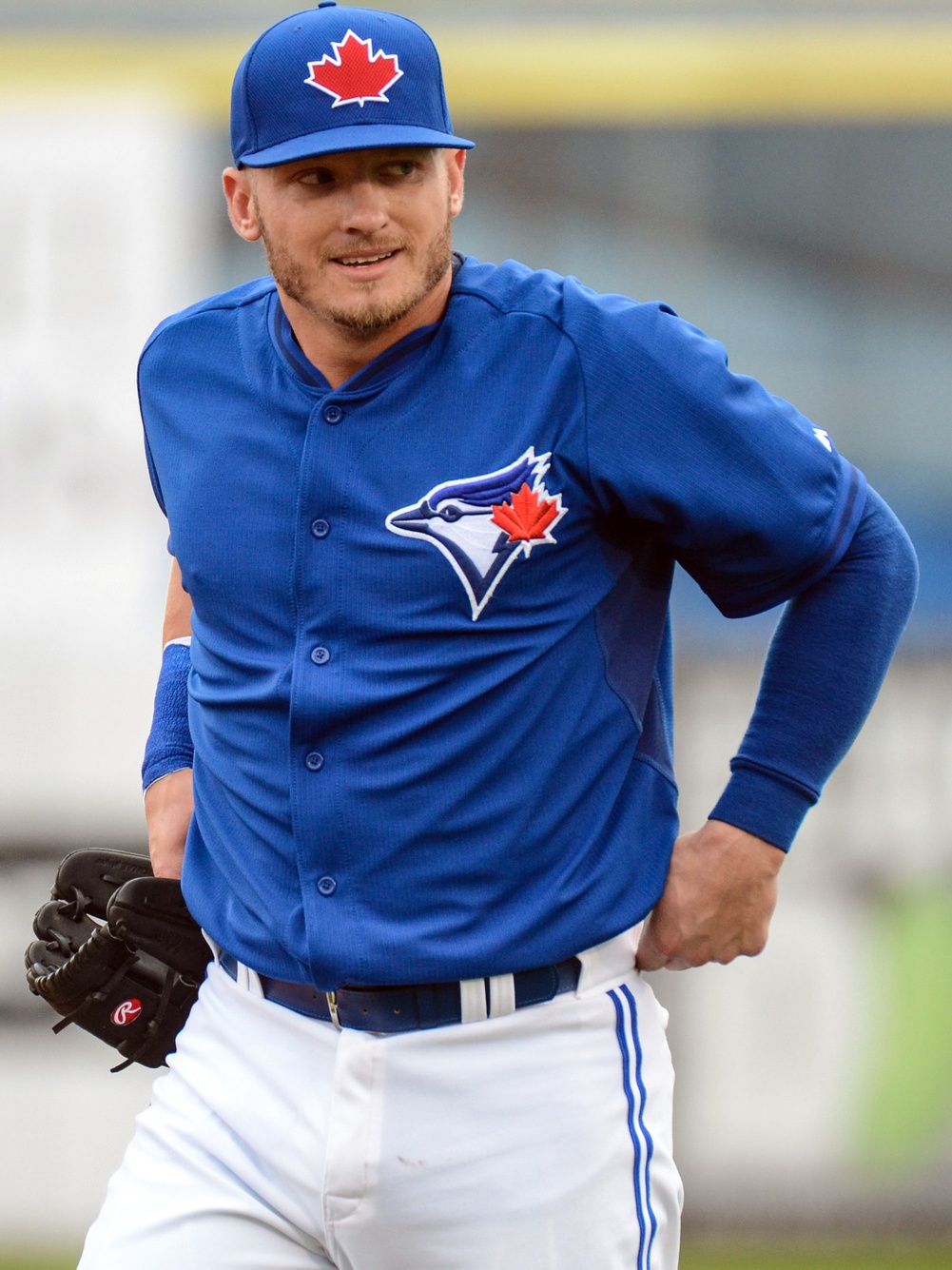 As a Super Two player, Donaldson’s salaries through 2018 will be determined by the arbitration process, and the Blue Jays’ victory over Donaldson in his first arbitration case this winter was a crucial one. Not only was there a significant gap between the number Donaldson camp proposed ($5.75MM) and the Blue Jays’ proposed figure ($4.3MM), but the arbitator’s decision in favor of the Blue Jays will affect not only Donaldson’s 2015 salary, but his salaries from 2016 through 2018 as well.
Donaldson’s statistical profile (offensive numbers that are very good but not obviously spectacular, combined with superb defense) likely made him somewhat underpaid this time through the arbitration process. That effect might wear off somewhat in coming seasons as he moves to a much more homer-friendly ballpark in Toronto than the one he had in Oakland — he hit .255/.342/.456 with 29 homers and 98 RBIs in 2014, and bumping those numbers up somewhat would help him as he enters arbitration for a second time. Still, Sportsnet.ca’s Ben Nicholson-Smith tweeted that a source estimated Donaldson’s arbitration loss this winter might cost him a full $6MM over the next three years. That guess might, if anything, be low.
On top of that, the Blue Jays already control Donaldson throughout what could well be the rest of his prime. Since he got off to a late start to his big-league career, he won’t be eligible for free agency until after his age-32 season. Any extension beyond that would only buy out seasons beginning with age 33. In other words, the Blue Jays have a very good situation with Donaldson, and they have little reason to press their luck with an extension unless it’s a very favorable one. Donaldson isn’t a 23-year-old superstar who figures to be in his prime in his first free agent seasons. He’s a 29-year-old superstar who’s very likely in his prime right now.
If the two sides were to begin discussing a deal, finding a close comparable for a Super Two player like Donaldson would be difficult. We can begin, however, with his likely arbitration salaries through 2018, which might total somewhere around $35MM-$40MM if he maintains impressive offensive totals. Donaldson’s camp could point to Kyle Seager‘s recent seven-year, $100MM extension as a possible model for a Donaldson deal, and that wouldn’t be entirely unreasonable, given that Seager’s deal began in what would have been his first year of arbitration salary, and with a salary of $4MM (although Seager, not being a Super Two player, was a year closer to free agency than Donaldson is). For the reasons mentioned above, though, that seems like a lot of risk for the Blue Jays to assume.
The Blue Jays, then, could hypothetically look at recent deals for Jason Kipnis and Matt Carpenter that each guaranteed about $52MM for six years. Both those deals occurred when the players had between two and three years of service time, but neither Kipnis nor Carpenter were Super Two players, so their arbitration years would likely have been less lucrative than Donaldson’s figure to be. That would likely mean that a Donaldson extension would either require a somewhat higher total, or give away fewer years of free agency.
Perhaps something along those lines could work, although it might be hard to find an equilibrium where the Jays felt like they were taking on an appropriate amount of risk and Donaldson’s camp felt like he was getting a large enough total to forgo free agency following the 2018 season, which might be his only attempt at a significant free-agent payday. Then there’s the fact that Donaldson and the Jays already went to an arbitration hearing — hearings can be tough for some players to take, and could make future extension talks difficult. As Braves assistant GM John Coppolella recently told MLBTR’s Steve Adams, “If you look at the history of players who have gone to arbitration hearings, for whatever reason, very few remain with the same team for the long term. I don’t think the hearings are contentious per se, but the process isn’t exactly friendly and heartwarming.”
If Donaldson and the Blue Jays were to have interest in an extension, then, it wouldn’t be impossible to negotiate one, but it would be tricky. And given Donaldson’s age and years of control remaining, the Jays shouldn’t have much urgency to negotiate a deal.
Photo courtesy of USA Today Sports Images.
MLBTR Originals
A look back at the original reporting and analysis found on MLBTR this past week:
- Host Jeff Todd welcomed lefty reliever Will Ohman to the MLB Trade Rumors Podcast. MLBTR’s Steve Adams also joined Jeff to discuss the latest developments surrounding the Dodgers’ Andre Ethier. A new edition of MLB Trade Rumors Podcast drops every Thursday and can be accessed on iTunes, SoundCloud, and Stitcher.
- MLBTR kicked off its Offseason In Review series with a recap of the Orioles (by Mark Polishuk), Pirates and Reds (both by Charlie Wilmoth).
- Jeff examined the 2014-15 free agent spending by team and found overall spending was down, but the annual average value (AAV) of the contracts increased.
- Seven teams spent between $60-70MM in free agency. Jeff asked MLBTR readers which club made the wisest investment and more than one-fifth of you lauded Jack Zduriencik and the Mariners.
- Steve detailed the changes to the 2015 draft pool by team.
- Jeff explored the trade candidacy of Cubs catcher Welington Castillo and identified several possible suitors.
- Steve listed the notable March contract extensions signed over the last two offseasons.
- Jeff looked at how pre-arbitration salaries work.
- Steve was the first to report the Rays agreed to a minor league deal, including an invitation to Spring Training, with right-hander Jim Miller.
- Steve hosted this week’s chat.
- Zach Links compiled the latest edition of Baseball Blogs Weigh In.
Offseason In Review: Cincinnati Reds
The Reds’ offseason was highlighted by two solid trades of starting pitchers who were about to approach free agency, but the team still could face tough times ahead as its core continues to age.
Major League Signings
- Burke Badenhop, RP: One year, $2.5MM ($1MM plus $1.5MM buyout on $2.5MM 2016 mutual option)
- Total spend: $2.5MM
Notable Minor League Signings
Trades And Claims
- Traded P Mat Latos to Marlins for P Anthony DeSclafani and C Chad Wallach
- Traded P Alfredo Simon to Tigers for SS Eugenio Suarez and P Jonathon Crawford
- Traded P Ben Lively to Phillies for OF Marlon Byrd
- Traded OF Chris Heisey to Dodgers for P Matt Magill
- Claimed P Keyvius Sampson from Padres
Extensions
- C Devin Mesoraco: four years, $28MM
- 3B Todd Frazier: two years, $12MM
Notable Losses
- Latos, Simon, Heisey, Ryan Ludwick, Jack Hannahan, Ramon Santiago, Logan Ondrusek
Needs Addressed
The Reds’ most pressing problem was the impending departure of much of their rotation next winter, and they addressed that issue by trading Mat Latos and Alfredo Simon, both of whom could join Johnny Cueto and Mike Leake on the free agent market after the season. With over $82MM already on the books for 2016 (much of that coming from long-running contracts for Joey Votto and Homer Bailey), the Reds were in a tough spot from which the Latos and Simon deals helped remove them. They also saved about $14MM for 2015, given the two pitchers’ salaries in their last years of arbitration.
The Latos deal, in particular, will help, in that the Reds got a young starting pitcher in Anthony DeSclafani who has six full years of control left and should be able to help right away, perhaps developing into a middle-of-the-rotation type. Along with Bailey, Tony Cingrani and top prospect Robert Stephenson, DeSclafani will help the Reds adjust to life without Latos and Simon, and, perhaps eventually, without Cueto and Leake as well. The Reds also got Chad Wallach, a young catcher with a good eye at the plate who will likely start the season at High-A.
Jonathon Crawford, the pitcher the Reds received in the Simon trade, is further from the Majors, and is a bit of a project — his statistics in Class A last year were nothing to write home about, and most observers haven’t thought much of his changeup. His development will depend upon how well he’s able to use his other pitches to complement his plus fastball. The Reds also added Eugenio Suarez, a capable defensive shortstop who hit reasonably well in the minors and held his own in the big leagues as a 22-year-old last season. If Suarez can continue to improve, he’ll likely eventually replace Zack Cozart, whose subpar hitting mostly canceled out his plus defense last year.
Overall, that’s a good haul for Latos and Simon, particularly given that DeSclafani and Suarez might be able to help right away. Latos and Simon both had just one year of control left, and neither of them are aces — both of them had better ERAs than peripherals last year, and Simon, in particular, is a good bet to take a step backward next season. Latos also missed time in 2014 due to knee and elbow injuries. Whether the Reds will be able to keep Cueto and Leake beyond 2015 is an open question, but those two were probably the best pair of starters from among the four facing free agency, and the Reds got good value for the lesser pair.
The Reds also shipped outfielder Chris Heisey to the Dodgers for 25-year-old righty Matt Magill. Magill walked 6.3 batters per nine innings at Triple-A last season and doesn’t throw particularly hard, so he’s unlikely to contribute much. Heisey doesn’t hit well, although he’s a strong enough defender to be an asset, and his departure leaves the Reds’ rather thin outfield vulnerable if anyone is injured.
To bolster their bullpen, the Reds added righty Burke Badenhop on a one-year deal. Badenhop is a soft-tosser whose strikeout rate has shrunk over the past three seasons and whose xFIP was a run and a half behind his ERA last year, but at $2.5MM, the Reds didn’t overpay for a reliever who can limit walks and get bunches of ground balls.
The Reds also signed two core players, Todd Frazier and Devin Mesoraco, to extensions. The Frazier contract was fairly routine — it’s a two-year pact that buys out only Frazier’s first two years of arbitration eligibility, tracking fairly closely to what his salaries would have been through the arbitration process in those two seasons. After it ends, the Reds will be able to take Frazier through arbitration once more. Frazier’s deal came in lieu of an extension to buy out free-agent seasons, but since Frazier is already 29, such a deal might not have been necessary anyway.
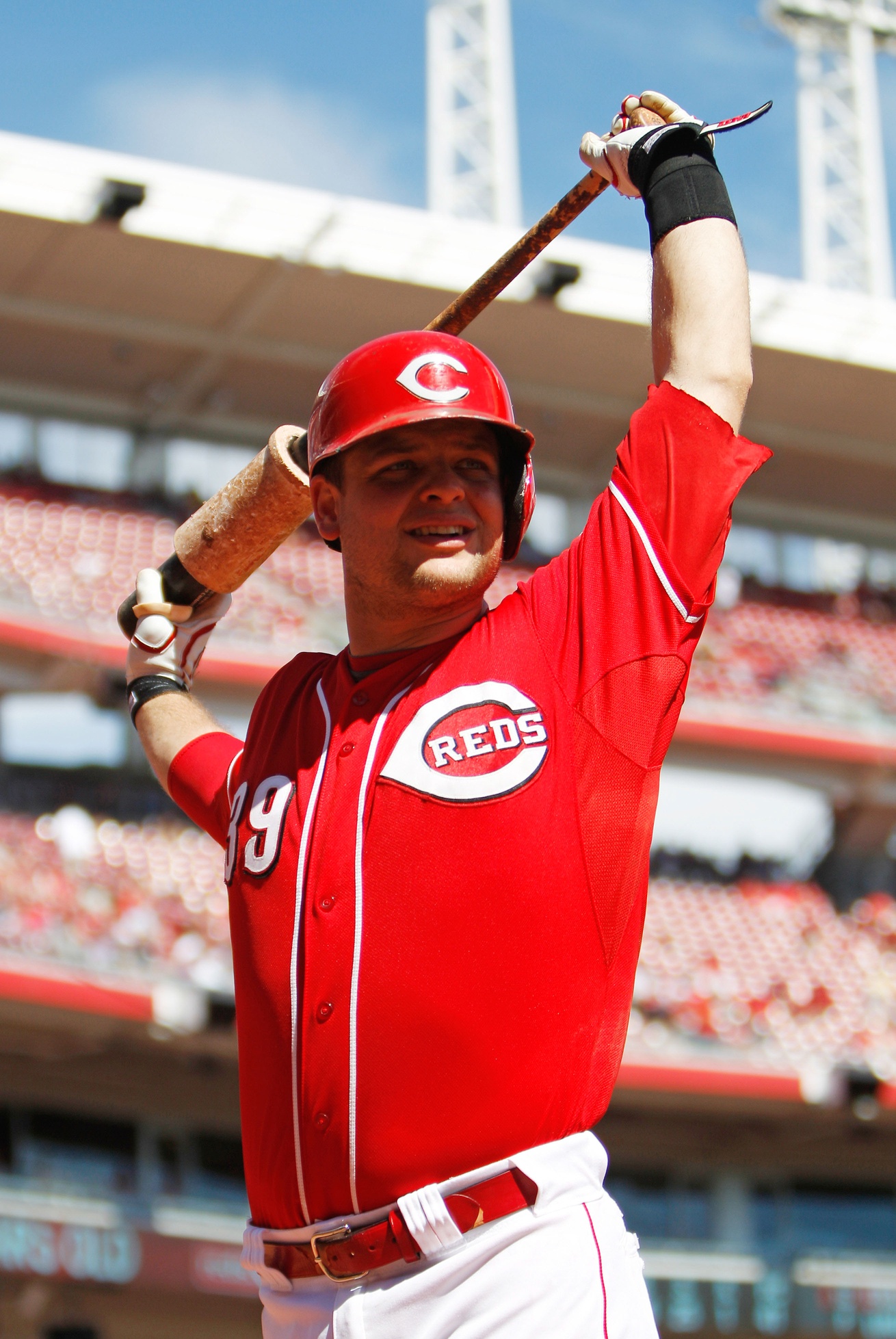 The Mesoraco deal is a more significant commitment. Like Frazier, Mesoraco was arbitration eligible for the first time. But Mesoraco’s contract buys out all three of his arbitration seasons, plus one year of free agency. Mesoraco and the Reds had already exchanged arbitration figures, and the midpoint of those two figures of $3.025MM would have given the two sides a rough guide to how much Mesoraco might have made through the arbitration process in 2015, 2016 and 2017.
The deal comes with risk for the Reds — Mesoraco has only had one excellent season, and by extending him, the team is gambling that his 2014 breakout is real, or mostly real. Mesoraco is also an injury risk, having missed time with hamstring problems in 2014. The Reds also didn’t get any club options. If Mesoraco keeps hitting, though, the deal will be a bargain — if we assume, somewhat conservatively, that Mesoraco would have made about $15MM in his arbitration seasons, the deal buys out Mesoraco’s age-30 season at $13MM, a good price for what might be a strong late-prime season for a quality catcher. And if Mesoraco can approximate his .273/.359/.534 2014 outburst in 2015 and 2016, he would have been able to get far more than $15MM total in his three arbitration seasons.
Questions Remaining
As a team in transition, the Reds have no shortage of questions. Many of their highest paid players (Joey Votto, Jay Bruce and Brandon Phillips among them) either had injury or performance issues or both in 2014. It will be difficult for the Reds to compete in 2015 if those players don’t stay healthy this time, since the team doesn’t have much depth, particularly now that Heisey is gone.
Key bench player Skip Schumaker is coming off a poor .235/.287/.308 season upon which he doesn’t figure to improve much. Backup catcher Brayan Pena was little better, at .253/.291/.353. The fact that Schumaker and Pena were already under contract for 2015 likely meant that the Reds weren’t going to spend much of the offseason hunting for position players who weren’t starters, but even a better crop of minor-league free agents would have helped. The team’s position player depth in the high minors is nothing to write home about, and its top hitting prospects are far from the Majors. Fangraphs’ depth chart currently lists nine Reds position players — their eight starters, plus Suarez — who project to be more than a tenth of a win above replacement in 2015. That’s a shame, because given the Reds’ veteran-heavy lineup, good backup plans could really have come in handy.
When Reds GM Walt Jocketty worked for the Cardinals, he frequently built benches full of light-hitting players like Aaron Miles, Roger Cedeno, Kerry Robinson and Miguel Cairo. But at least in St. Louis, Jocketty could lean hard on stars like Albert Pujols and Jim Edmonds year-in and year-out. Jocketty did the same with the 2014 Reds, depending on players like Votto and Phillips, and it didn’t work. As of this writing, Votto, who missed 100 games last season with a knee injury, still hasn’t appeared in Spring Training action, although he’s expected to do so Saturday. If the Reds are to be successful in 2015, they need him.
The Latos and Simon deals will help the Reds beyond this season, and probably aren’t even as detrimental for 2015 as they might initially appear, but they do leave the team’s rotation thinner than it had been before. Tony Cingrani will occupy one of the last two spots, and he’s excellent as a back-end option, although the Reds will hope he’s past the shoulder troubles that ended his 2014 season. (He’s currently pitching normally in Spring Training.) DeSclafani is the front-runner for the fifth spot. The Reds also aren’t sure whether Bailey will be ready for the beginning of the season after having forearm surgery last September, which could mean Paul Maholm or Jason Marquis gets starts in his absence.
Deal of Note
The Reds spent much of their offseason dealing veterans and reshaping their roster beyond 2015, but they went the opposite direction when they traded pitcher Ben Lively to the Phillies for outfielder Marlon Byrd. With the departure of Ryan Ludwick (who did little in two years in Cincinnati to prove he’s a starting outfielder going forward anyway), the Reds had a gaping hole in left field, and Byrd might be able to fill it capably, even at age 37. After a career year in 2013, his rate stats went backward in 2014, but he still hit 25 homers, a total he could match this season in a homer-happy ballpark like Cincinnati’s. If he stays healthy, the Reds will likely be happy to be on the hook for his $8MM 2016 team option, which will vest if he manages 550 plate appearances this season.
The quality of the trade, though, depends on Lively. The Reds know him better than anyone, and perhaps thought that his blend of reasonable stuff and deception wouldn’t be enough to succeed in the long term. Lively had an excellent first full pro season, though, and could be ready for the Majors by the end of this season or early next. He would have been a good arm for the Reds to have in their system as they prepare for life without many of their top starting pitchers. Perhaps the value of having a competitive 2015 team was worth the cost of losing Lively, but acquiring a relatively cheap free-agent outfielder, like Colby Rasmus, Nori Aoki or Michael Morse, might have made more sense.
Overview
Step back a bit, and the Reds still look like they could be very good. Cincinnati has a power-hitting catcher, a first baseman with a career .417 OBP, a star veteran second baseman, a third baseman who’s coming off a career year, and a center fielder (Billy Hamilton) who gives opposing catchers nightmares. They have one of the National League’s best starting pitchers in Cueto, and a terrifying closer (Aroldis Chapman) who joins Craig Kimbrel and Greg Holland among the best relievers of this decade so far. If everyone is healthy and performs at his career norms, that’s an excellent core.
A closer inspection, though, isn’t as kind. The Reds’ core is old enough and expensive enough that the team can’t necessarily fit many good complementary players into its budget. (That might not improve much in the coming years, either, with the $213MM remaining on Votto’s contract potentially causing the Reds huge headaches.) With a few obvious exceptions like Hamilton and Cingrani, the Reds’ farm system hasn’t developed the young players necessary to replace core pieces as they age. The team can’t necessarily count on Votto being healthy, and Phillips isn’t nearly as good as he once was. And Cueto is only under team control for one more year.
Perhaps a more aggressive route for the Reds this offseason would have been to trade Cueto and rebuild — one would think Cueto would have been able to land the Reds at least a couple top prospects, given his 2014 performance and ultra-cheap 2015 option ($10MM). The Phillies are having trouble getting the package they want for Cole Hamels, however, and James Shields lasted late into the winter on the free agent market. The Athletics’ return for Jeff Samardzija appears to have been relatively meager. Perhaps the Reds are gambling that they can get better value for Cueto at the deadline, or perhaps they’ll end up extending him (although it’s debatable whether a team in the Reds’ position should commit to what would presumably be a nine-figure contract that goes well into Cueto’s thirties).
In any case, the Reds appear to be in a holding pattern. This offseason’s Latos and Simon trades were steps toward a brighter future, but they were small ones, and the Byrd deal went in the opposite direction. There’s no rule stating that a team can only contend or only rebuild, and in fact many teams this offseason have pursued both goals at once. The Reds, though, don’t really seem to be doing either one. It wouldn’t be a miracle if they made the playoffs this year, but it would be a surprise, and as their core ages and departs, it’s unclear what’s on the horizon.
Photo courtesy of USA Today Sports Images.
2015 Draft Pool Changes By Team
Last week, Baseball America’s John Manuel reported an 8.77 percent increase among draft pool allotments from 2014. That change was highly significant, as the draft pools only rose by a combined 1.7 percent from 2013 to 2014. Thanks to the data provided by BA, we’re able to look and see which clubs will see the largest increase and largest decline from their 2014 pools.
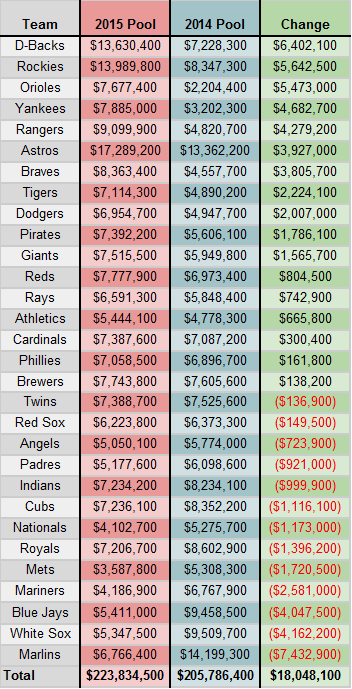
As you can see, the D-Backs, who selected 16th overall in 2014 but will have the No. 1 pick in this year’s draft, saw the largest increase, adding more than $6MM to their allotment by virtue of their improved draft status. Meanwhile, the Mets, who forfeited their top pick — one of the highest unprotected picks in this year’s draft — in order to sign Michael Cuddyer to a two-year contract, won’t select until No. 53 overall and, as such, have the lowest pool among teams in this year’s draft.
The Astros possess the largest pool of all, which shouldn’t be surprising, considering the fact that they have the No. 2 and No. 5 overall selections based on their failure to sign 2014 No. 1 pick Brady Aiken and their poor record this past season. Houston also acquired a Competitive Balance Round A pick (No. 37 overall) from the Marlins in last summer’s Jarred Cosart trade, which explains in large part why the Marlins’ own draft pool is the most shrunken in all of baseball. Miami dropped from the No. 2 overall slot to the No. 12 overall pick in this year’s draft as well, and they also had a supplemental third-round pick in 2014 for failing to sign 2013 third-rounder Ben DeLuzio, which they of course do not have in 2015. As such, their $7.4MM free-fall isn’t exactly surprising.
In addition to the previously mentioned Mets, other clubs that signed players who rejected qualifying offers all saw decreases in their bonus pools as well. The White Sox (David Robertson and Melky Cabrera) saw a decrease of $4.16MM, the Blue Jays (Russell Martin) dropped by $4MM, the Mariners (Nelson Cruz) fell by $2.58MM, the Nationals (Max Scherzer) lost $1.17MM and the Padres saw a $921K decrease after signing James Shields.
Toronto’s $4MM drop may seem steep since they did receive a comp pick in exchange for Cabrera signing with the White Sox, but the Blue Jays do not pick until 29th overall this season after selecting ninth and 11th in 2014. (Toronto had an extra first-round pick after not signing 2013 first-rounder Phil Bickford.)
Another team whose change is perhaps surprising at first is the Red Sox, who forfeited a pair of picks to sign both Pablo Sandoval and Hanley Ramirez but saw just a $150K decrease. However, it must also be noted that Boston leaped from 26th overall coming off a World Series to a protected pick — No. 7 overall — after their surprising fall to last place in the AL East. Likewise, the Twins signed Ervin Santana despite a qualifying offer and saw just a $137K drop. Minnesota’s top pick, too, was protected, so the Twins instead forfeited their second-round pick to land Santana. They also picked up a Competitive Balance Round B pick in this year’s Competitive Balance Lottery after not having a Comp Balance pick in 2014.
The only other players to reject qualifying offers last year were Victor Martinez and Francisco Liriano, both of whom re-signed with their previous teams anyhow. As for the rest of the teams to gain picks from qualifying offers, the Rockies ($5.6MM), Orioles ($5.5MM), Yankees ($4.7MM), Braves ($3.8MM), Tigers ($2.2MM), Dodgers ($2MM) and Giants ($1.6MM) each saw increases. The Royals, despite gaining a pick for the loss of Shields, still saw a $1.4MM dip, though that was due to dropping from 17th to 21st in the draft order and also missing out on a Comp Balance pick in this year’s lottery.