
Mets Re-Sign Drew Smith
February 13: The Smith signing is official, per Joe DeMayo of SNY. Righty Christian Scott, who is also recovering from Tommy John surgery, was transferred to the 60-day IL in a corresponding move. Smith was himself then transferred to the 60-day IL as the corresponding move when the Pete Alonso signing became official.
February 12: The Mets will extend their relationship with their longest-tenured pitcher, as they’ve reportedly agreed to a one-year deal with right-hander Drew Smith, which contains a club option for the 2026 season. Smith, who’s rehabbing from Tommy John/internal brace surgery performed last July, will be paid $1MM in 2025. His club option is valued at $2MM. The MVP Sports client can boost those totals by way of some yet-unclear incentives.
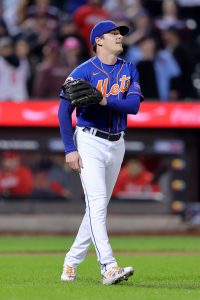
Smith, 31, has pitched parts of six big league seasons with the Mets. He’s been a fixture in their late-inning mix over the past four years, logging a combined 3.35 ERA, 26.2% strikeout rate and 10.2% walk rate in that time. Smith has worked plenty of high-leverage spots, recording 33 holds and five saves in 156 appearances while being credited with only four blown saves during that time.
The surgery for Smith was deflating in multiple aspects. It not only knocked him out of the team’s Grimace- and OMG-fueled postseason run, it also coincided with the run-up to his first trip into free agency. A healthy Smith would’ve been an easy candidate for a guaranteed multi-year deal at a decent annual rate. On top of that, it’s the second Tommy John procedure of his career. After a solid big league debut in 2018, he missed the 2019 campaign due to the same procedure.
Depending how long the rehab process takes this time around, Smith could at least potentially be a late-season and/or October option for the Mets. Should he make it back, he’d join a relief corps also featuring Edwin Diaz, A.J. Minter, Ryne Stanek, Reed Garrett and Jose Butto.
For now, once the deal is finalized, Smith will quickly be placed on the 60-day injured list. The Mets will technically need to open a spot for Smith before they can move him to the 60-day IL, but that can be accomplished by placing Christian Scott (also recovering from Tommy John surgery) on the 60-day IL. Smith could move to the 60-day himself once an additional spot is needed for another free agent signing, waiver claim, or the selection of a non-roster invitee to the 40-man roster later in camp.
With the Mets in the top tier of luxury penalization, the Smith reunion will actually cost them about $2.1MM overall (the $1MM salary plus a 110% tax). Those same taxes will apply to whatever incentives he unlocks this year (and next year, if the Mets are again in the top penalty tier in 2026). That’s a drop in the bucket for a club running a cash payroll north of $330MM and looking at roughly $110MM worth of taxes on top of that sum.
Mark Feinsand of MLB.com first reported the agreement and structure. Jon Heyman of the New York Post added details on the guaranteed money and option value.
Mets Re-Sign Pete Alonso
February 12: The Mets officially announced their deal with Alonso today.
February 5: The stalemate between Pete Alonso and the Mets is over. New York is reportedly in agreement on a two-year, $54MM deal with the star first baseman. Alonso, a client of the Boras Corporation, can opt out after the upcoming season. He receives a $10MM signing bonus and a $20MM salary for 2025. He’ll essentially have a $24MM player option for the ’26 campaign. The deal comes with a $27MM average annual value for luxury tax purposes. Alonso chose the two-year deal over a separate offer from the Mets that would have guaranteed $71MM over three seasons.
Alonso, who turned 30 in December, returns to Queens for a seventh season. He has been one of the faces of the franchise since his electrifying debut. Alonso led the majors with 53 home runs en route to a runaway Rookie of the Year win in 2019. That still stands as the all-time rookie home run record. He connected on 16 longballs in the shortened follow-up season and has topped 30 homers in each of the last four years.
That’s a testament not only to his massive power but to his exceptional availability. Alonso has played at least 152 games in each of his five full seasons. He appeared in all 162 contests last year. His only career injured list stint was a minimal stay in 2023 related to a bone bruise in his left wrist. Over the last six seasons, only Marcus Semien has played in more games. Semien and Freddie Freeman are the only hitters with more plate appearances.
On a rate basis, Alonso’s production has dropped in consecutive seasons. He carried a .261/.349/.535 batting line through his first four seasons. Alonso hit another 46 homers in 2023, though he did so with career-low marks in batting average (.217) and on-base percentage (.318). His average and OBP rebounded slightly last season, but his power ticked down. Alonso hit .240 with a .329 OBP and a career-low .459 slugging percentage across 695 plate appearances. His 34 homers and 88 runs batted in were each personal worsts over a full schedule.

It was a pedestrian year rather than a bad one. There’s clear value in a player who hits 34 home runs in a relative down season. Still, it was the second straight year in which Alonso’s offensive production was below his early-career level. He’s a .229/.324/.480 hitter since the start of the ’23 campaign. That checks in 21 percentage points better than league average, as measured by wRC+.
By that statistic, Alonso ranks ninth in overall offense among the 35 first basemen with at least 750 plate appearances over the past two seasons. He’s just behind Cody Bellinger and Josh Naylor and narrowly ahead of LaMonte Wade Jr., Luis Arraez and Christian Walker. Alonso’s durability and power gives him a higher offensive ceiling than the rest of that group. Nevertheless, his recent rate metrics have put him alongside those hitters and a clear step down from Freddie Freeman, Vladimir Guerrero Jr. and Bryce Harper at the top of the position.
Alonso’s on-field value lies in the bat and his durability. He doesn’t provide baserunning value. His defensive grades at first base are middling. Defensive Runs Saved put him at three runs below par last season and has given him a +2 mark for his career. Statcast had him six runs below average in 2024 and grades him at 18 runs under par overall. FanGraphs and Baseball Reference have both valued Alonso around 2-3 wins above replacement in each of the last two seasons.
Of course, Alonso’s value to the Mets extends beyond that production. He’s a homegrown star who is already third on the organization’s home run leaderboard. He is 16 homers shy of David Wright for second place and only needs 27 longballs to surpass Darryl Strawberry for the franchise record. He’ll almost certainly break that record, likely next season.
Alonso was also a key contributor during New York’s run to last year’s NL Championship Series. He saved the season in the Wild Card series with his three-run shot off Devin Williams in the ninth inning of Game 3. That was one of four longballs he hit in October. Alonso slashed .273/.431/.568 across 58 postseason plate appearances. Modern front offices are generally wary about putting much stock in small-sample playoff numbers, though, and Alonso’s unexceptional regular season worked against him in free agency.
The four-time All-Star hit the market envisioning a strong nine-figure deal. His camp presumably sought something in the range of the Matt Olson and Freeman contracts. Olson inked an eight-year, $168MM extension with the Braves; Freeman signed a six-year, $162MM guarantee with the Dodgers, though deferrals dropped the net present value closer to $148MM.
At one point, the Mets valued Alonso similarly. Joel Sherman of the New York Post has reported that Alonso declined a seven-year, $158MM extension offer in June 2023. That would have bought out his final arbitration season and six free agent years. Alonso made $20.5MM in his last arbitration year, so he’d need to beat $137.5MM over the next six seasons to come out ahead in that decision.
Circumstances have changed significantly since the Mets made that offer. Alonso has switched his representation to the Boras Corporation. The Mets moved on from then-GM Billy Eppler and installed David Stearns at the top of baseball operations. The Brewers rarely invested heavily in first basemen, even via arbitration, during Stearns’ tenure as Milwaukee’s general manager. He’s operating with a much different payroll ceiling under Steve Cohen’s ownership, but this generally hasn’t been his preferred player archetype.
While Stearns and Cohen maintained that they wanted Alonso back, they didn’t want to do so on a long-term deal. They made the obvious decision to put forth a qualifying offer, which the slugger easily rejected. It seems they held off on going beyond three years. As his free agency dragged, Alonso moved off his desire for a long-term deal in talks with the Mets. His camp reportedly pitched a three-year term with multiple opt-out chances. Financial specifics aren’t clear, but the Mets countered with a three-year proposal in the $68-70MM range in the middle of January. After Alonso declined, the Mets signaled they were willing to move on to contingencies.
Whether the Mets actually believed Alonso would walk or were merely signaling that as negotiating leverage, they must come away pleased with the result. The Mets reportedly had two different offers on the table: a three-year, $71MM proposal or the two-year deal which he ultimately accepted. Will Sammon of The Athletic reports that the three-year term also included an opt-out after the first season and would have broken down as a $27MM salary in year one followed by $22MM salaries if he didn’t opt out. Alonso preferred the extra $3MM in the first season, betting on himself to play well enough to take the out clause next winter.
The Mets keep the term short and retain Alonso on a deal that more closely resembles the two-year contracts signed by Rhys Hoskins ($34MM with Milwaukee) and Joc Pederson ($37MM with Texas) than the Olson or Freeman precedents. It’s an ideal cap to a dangerous lineup. The Mets won the Juan Soto bidding on the record-shattering $765MM deal as the Winter Meetings were getting underway. New York brought back Jesse Winker to serve as their designated hitter, at least against right-handed pitching. That’ll keep Mark Vientos at third base for another season. Francisco Lindor, Brandon Nimmo and Francisco Alvarez are key holdovers, with Jeff McNeil and one of Tyrone Taylor or Jose Siri rounding out the projected starting nine.
Keeping Vientos at third base blocks the clearest path to playing time for younger infielders Brett Baty, Luisangel Acuña and Ronny Mauricio. The latter two could push McNeil for reps at second base. They all have a minor league option remaining, so the Mets could keep all three at Triple-A Syracuse. They don’t need to make a trade — there’s a good chance Alonso will retest free agency next winter — but it’s possible the surplus makes them more willing to include an upper-level infielder in a package for a top-end starter. New York has built strong rotation depth but arguably needs to increase the rotation’s ceiling to pull ahead of the Phillies and Braves in what’ll be a tough NL East race.
The deal pushes the Mets’ projected payroll to roughly $331MM, according to the RosterResource calculations. The $27MM luxury tax hit brings them to $325MM in CBT obligations. That pushes them firmly beyond the $301MM threshold that marks the final tier of penalization. They’re taxed at a 90% clip for the approximate $3MM to push them to that threshold and at a 110% rate on spending beyond that point. The signing comes with approximately $29.1MM in taxes. They’ll pay around $59MM this season to keep Alonso. New York also relinquishes the right to the compensatory draft choice that they would have received had he signed elsewhere after declining the qualifying offer. That pick would have come after the fourth round.
Alonso secures a strong one-year salary with an eye towards a more lucrative free agent trip next winter. Players cannot receive a QO more than once in their career, so he’d hit the market without draft compensation if he opts out. He’d still come out ahead of that declined extension offer if he secures a deal worth more than $107.5MM over the ensuing five seasons. That’s by no means a guarantee, as he’ll be working against the aging curve, but it’s the kind of risk-reward play that a lot of free agents take if they don’t find their ideal long-term deal on their first free agent try.
Andy Martino of SNY first reported that the Mets were re-signing Alonso. Jeff Passan of ESPN had the two-year, $54MM guarantee and the $30MM in year one. Jon Heyman of the New York Post reported the signing bonus and that Alonso declined a three-year term, which USA Today’s Bob Nightengale reported had a $71MM guarantee. Image courtesy of Imagn.
MLBTR Podcast: Pete Alonso’s Deal, And Potential Landing Spots For Bregman and Arenado
The latest episode of the MLB Trade Rumors Podcast is now live on Spotify, Apple Podcasts, and wherever you get your podcasts! Make sure you subscribe as well! You can also use the player at this link to listen, if you don’t use Spotify or Apple for podcasts.
This week, host Darragh McDonald is joined by Anthony Franco of MLB Trade Rumors to discuss…
- Pete Alonso re-signing with the Mets (1:45)
- What’s next for the Blue Jays after not getting Alonso? (9:25)
- Will the Mets and Alonso going to reunite again in the future or will this be it? (12:55)
Plus, we answer your questions, including…
- What teams could still sign Alex Bregman? (17:50)
- Can the Cardinals trade Nolan Arenado to the Red Sox? (29:20)
- Do the Orioles need an ace? (37:55)
- What are the Marlins building right now? (39:30)
Check out our past episodes!
- Jack Flaherty Back To Detroit, Max Scherzer, And What’s Next For The Padres – listen here
- Ryan Pressly To The Cubs, Bregman’s Future, And Jurickson Profar – listen here
- Debating A Salary Cap, How To Improve Parity, More Dodgers Moves, And Anthony Santander – listen here
The podcast intro and outro song “So Long” is provided courtesy of the band Showoff. Check out their Facebook page here!
Mets Keeping Jose Butto In Relief
The Mets are keeping José Buttó in a multi-inning relief role, skipper Carlos Mendoza told reporters (including Newsday’s Tim Healey). Righty Tylor Megill will stay stretched out as a starter and compete for a rotation spot in camp.
Buttó opened last season in the rotation. He started seven games and managed decent results, working to a 3.08 ERA across 38 innings. Buttó’s command was worrisome, though, as he walked nearly 14% of opposing hitters. New York optioned him to Triple-A in the middle of May. He started eight games and turned in a 3.05 ERA before being recalled at the beginning of July.
Upon his return to the majors, Buttó worked exclusively in relief. He was a quality bullpen piece for the season’s final few months. Buttó allowed only two earned runs per nine with an excellent 29.7% strikeout percentage over 36 frames. His walk rate remained elevated at a 12.3% clip. It’s difficult to stick as a starter with that kind of command, so it’s not especially surprising that the Mets will keep Buttó in a 2-3 inning role.
New York is likely to run a six-man starting staff. Kodai Senga, Sean Manaea, David Peterson, Frankie Montas and bullpen conversion Clay Holmes will be in the Opening Day rotation if healthy. The sixth spot could involve a camp battle between Megill, Paul Blackburn and free agent signee Griffin Canning.
Megill started 15 of his 16 appearances a year ago, pitching to a 4.04 earned run average while fanning 27% of batters faced through 78 frames. Canning started 31 times for the Angels last season, struggling to a 5.19 ERA with a 17.6% strikeout rate. Blackburn, whom the Mets acquired from the A’s at last year’s deadline, had a 4.66 mark while striking out 18.7% of opponents over 14 starts. Blackburn underwent postseason surgery to address a spinal injury, but the Mets are hopeful that he’ll be ready by Opening Day.
Mendoza also provided some details on the team’s infield mix. Free agent pickup Nick Madrigal will get shortstop work this spring, relays Mike Puma of The New York Post. The former fourth overall pick has not played shortstop in his MLB career and only has six innings of minor league work there. He saw some action at shortstop in college, though he was mostly a second baseman in amateur ball as well.
The Mets have less of a need for a true backup shortstop than most teams do. Francisco Lindor rarely takes days off. They’d ideally have someone capable of playing the position available off the bench, though. If Ronny Mauricio opens the season on the injured list, Luisangel Acuña is their most experienced shortstop depth. The Mets would presumably rather have the 22-year-old (23 next month) playing every day at Triple-A Syracuse than spending most days on the major league bench.
New York has three players locked into the starting infield: Pete Alonso at first base, Lindor at shortstop, and Mark Vientos at the hot corner. Second base is arguably the biggest question in a deep lineup. While Acuña and Brett Baty should each get time there in camp, Mendoza indicated that Jeff McNeil has the leg up on the job going into Spring Training.
“There’s competition but Jeff is pretty much right there,” the manager said (link via Tim Britton and Will Sammon of The Athletic). McNeil rebounded from a terrible first half to hit .289/.376/.547 over 40 games in the second half. A broken wrist cut his regular season short. McNeil made it back for the NL Championship Series. He had a rough series, which is understandable for a player returning from a month-long absence from game speed, but the excellent second half and his broader track record should make it an easy call for the Mets to keep him in the lineup to start the year.
Dylan Covey Elects Free Agency
Right-hander Dylan Covey, who was outrighted off the Mets’ 40-man roster last week, has elected free agency, per his transaction log at MLB.com. The Mets never formally announced his decision, but Covey wasn’t included on the team’s list of the 67 players who’ll participate in major league camp this morning. (Infielder Luis De Los Santos, outrighted at the same time as Covey, was on the list.)
Covey, 33, signed a split big league deal with the Mets back in late October that would’ve paid him $850K in the majors or $350K in the minors, per the Associated Press. Since he has fewer than five years of MLB service, Covey would forfeit any guarantees on that deal (presumably just the minor league split) by rejecting the assignment and going back to the market.
Covey hasn’t pitched in the majors since 2023, when he logged a sharp 3.77 ERA over 43 innings between the Dodgers and Phillies. That year’s 15.7% strikeout rate was way shy of league-average, but Covey’s 8.9% walk rate was close to average and his 54.3% ground-ball rate was very strong. The right-hander had spent the 2021-22 seasons pitching in Taiwan for the Chinese Professional Baseball League’s Rakuten Monkeys, and he returned with a sinker that sat at 95.1 mph — an increase of 3.1 mph over the 92 he average in 2020.
The Phillies saw enough to keep Covey around in arbitration, tendering him a contract in arbitration and signing him to a one-year deal. A shoulder strain wiped out the bulk of his 2024 campaign, however. Covey didn’t pitch in the majors and logged only a combined 20 1/3 innings in the minors. His 2.66 ERA across multiple levels was strong, however, and Covey backed that up with a decent 22.6% strikeout rate and a mammoth 66.5% ground-ball rate (albeit against an ugly 10.7% walk rate).
Covey’s overall body of work in the big leagues isn’t great. He has a career 6.18 ERA in 307 1/3 MLB innings. That said, he pitched well in Taiwan (3.63 ERA in 198 1/3 innings), came back to North America throwing harder and has now had some degree of success in the big leagues and upper minors with a revamped pitch repertoire. He’s throwing far more sinkers and cutters since returning stateside and has scrapped his four-seamer and curveball entirely. Covey seems to rather clearly be a different pitcher in his early 30s than he was when he was getting hit hard with the White Sox and Red Sox in his 20s. He can provide another club with some depth in the rotation and/or in the bullpen as a long man.
The Mets Haven’t Done Enough With Their Rotation
In nearly every aspect, it's been a banner offseason for the Mets. They signed one of the most coveted free agents in MLB history to the largest contract in North American sports. They brought back a franchise cornerstone their preferred way: a short-term deal that doesn't run the risk of overcommitting long-term. They re-signed the lefty who carried their rotation in the season's second half in what looks like a potential late-blooming breakout. They grabbed one of the most underrated relievers not just in this year's class but throughout the sport in general. Juan Soto, Pete Alonso, Sean Manaea and A.J. Minter make for a terrific quartet of headline additions, with a broad-reaching swath of depth moves also on the books.
Keeping Manaea was an undeniable boon to Carlos Mendoza's rotation, even if it came at a generally steep cost. As shown in MLBTR's Contract Tracker, Manaea is one of just five starters in the past decade to secure a $25MM AAV over three or more years beginning in his age-33 season or later. Teams generally are loath to commit this type of money in a pitcher's mid-30s, but the left-hander's performance and the bull market for starting pitching early in the winter coalesced to land him (and 35-year-old Nathan Eovaldi) a rare contract for pitchers in this age bracket.
The rest of the Mets' moves in the rotation, however, have been lackluster. Mets president of baseball operations David Stearns came to Queens with a reputation of eschewing long-term deals from his time heading up the Brewers' baseball operations department. There was some question as to how much of that stemmed from Milwaukee's perennially bottom-third payroll and how much was a philosophical directive from Stearns himself. The two offseasons with Stearns at the helm for the Mets don't represent a large enough sample to say he simply won't go long-term for a pitcher under any circumstances, but signs point to the likelihood that his avoidance of large-scale pitching contracts in his Brewers days wasn't solely a product of owner Mark Attanasio's frugality.

Unlock Subscriber-Exclusive Articles Like This One With a Trade Rumors Front Office Subscription
- Access weekly subscriber-only articles by Tim Dierkes, Steve Adams, and Anthony Franco.
- Join exclusive weekly live chats with Anthony.
- Remove ads and support our writers.
- Access GM-caliber tools like our MLB Contract Tracker
Mets Outright Dylan Covey, Luis De Los Santos
The Mets sent righty Dylan Covey and infielder Luis De Los Santos outright to Triple-A Syracuse, the team announced. Both players were designated for assignment last week — Covey as the corresponding move for Ryne Stanek, De Los Santos when the Mets signed Nick Madrigal.
Both players were offseason additions, so neither has played a game for the Mets. Covey signed a one-year split contract the day after the conclusion of the World Series. That came with an $850K base salary in the majors and a $350K salary for whatever time he spends in the minors. The contract is designed to make it likely that the Mets can keep him as depth. Covey has been outrighted multiple times in his career, which gives him the right to decline the assignment in favor of free agency. However, he’d forfeit his $350K minor league guarantee to test the market, so he’ll presumably accept the assignment and get a non-roster invitation to Spring Training.
Covey has a 6.18 earned run average over 307 1/3 major league innings. The 33-year-old has started 46 of his 100 big league appearances. Covey has been a long reliever for the past two seasons. He worked to a 3.77 ERA through 43 frames between the Dodgers and Phillies in 2023. His 15.7% strikeout rate was well below average, but he kept the ball on the ground at a strong 54.3% clip. A shoulder strain cost him most of last season. Covey tossed 15 Triple-A frames in the Philadelphia system. He posted a 1.20 ERA behind a massive 71.4% grounder percentage.
De Los Santos was a waiver claim out of the Toronto organization. He had signed with the Jays out of the Dominican Republic in 2015. He played eight seasons in the minors and was called up for the first time after the trade deadline. De Los Santos appeared in 13 games late in the year, hitting .172 with a pair of doubles across 31 plate appearances.
The righty hitter appeared in 43 contests with Triple-A Buffalo last season. He hit .268/.376/.486 over 154 trips to the plate. That improved his career Triple-A batting line to .228/.343/.393 in parts of three seasons. De Los Santos has shown a decent eye (12.7% walk rate) with below-average contact rates at that level. Primarily a shortstop, he has a decent amount of experience at all four infield positions. This is his first outright, so he’ll remain with the Mets.
Players Who Could Move To The 60-Day IL Once Spring Training Begins
Most of the clubs in the league currently have a full 40-man roster, which means that just about every transaction requires a corresponding move these days. Some extra roster flexibility is on the way, however. The 60-day injured list goes away five days after the World Series but comes back when pitchers and catchers report to spring training.
Per R.J. Anderson of CBS Sports, most clubs have a report date of February 12th or 13th. The Cubs and Dodgers are a bit earlier than most, on the 9th and 11th, respectively. That’s due to the fact that those clubs are heading to Tokyo, with exhibition games in mid-March, followed by regular season games against each other on March 18th and 19th. All the other teams have Opening Day scheduled for March 27th.
It’s worth pointing out that the 60 days don’t start being counted until Opening Day. Although a team can transfer a player to the 60-day IL quite soon, they will likely only do so if they aren’t expecting the player back until end of May or later. A team also must have a full 40-man roster in order to move a player to the 60-day IL.
There are still plenty of free agents still out there, including big names like Alex Bregman and Pete Alonso, as well as Nick Pivetta, Andrew Heaney, David Robertson, Randal Grichuk, Kenley Jansen, Harrison Bader, Lance Lynn, Jose Quintana and many more. Perhaps the extra roster flexibility will spur some deals to come together in the next week or so. It could also increase the ability of some clubs to make waiver claims or small trades for players who have been designated for assignment.
Here are some players who are expected to miss some significant time and could find themselves transferred soon.
Angels: Robert Stephenson
Stephenson underwent a hybrid Tommy John surgery with internal brace in late April. Given the 14-plus months required to recovery from such a procedure, he’s not likely to be ready in the early parts of the 2025 season.
Astros: Cristian Javier, J.P. France, Bennett Sousa
Javier underwent Tommy John surgery in June and is targeting a return in the second half of 2025. France is recovering from shoulder surgery and hoping to return in July. Sousa’s timeline is less clear but he underwent surgery for thoracic outlet syndrome in April. Other possibilities include Luis Garcia and Lance McCullers Jr., who are expected to start the season on the IL but returning in April or May still seems possible.
Athletics: Luis Medina, Ken Waldichuk
Medina underwent Tommy John surgery in August and Waldichuk in May. Medina might miss the entire season while Waldichuk is likely to miss a few months at least.
Blue Jays: Angel Bastardo, Alek Manoah
The Jays grabbed Bastardo from the Red Sox in the Rule 5 draft in December, even though he had Tommy John surgery in June. Manoah also had Tommy John around that time and is hoping to be back by August.
Braves: Joe Jiménez
Jimenez had knee surgery in November with a timeline of eight to twelve months, so he might miss the entire season. Spencer Strider and Ronald Acuña Jr. are also possibilities, though those will be more borderline. Strider had internal brace surgery in April, so returning in May is somewhat possible. Acuña is recovering from a torn ACL last year and it’s possible he’ll miss the first month or so of the season. Given how important both of those players are, Atlanta probably won’t put them on the 60-day IL unless it’s 100% certain that they can’t come back in the first 60 days of the season.
Brewers: Robert Gasser
Gasser had Tommy John surgery in June and will be looking at a late 2025 return even in a best-case scenario.
Diamondbacks: Kyle Nelson
Nelson’s timeline is unclear, but he underwent surgery for thoracic outlet syndrome in May and missed the remainder of the 2024 season.
Dodgers: Gavin Stone, Brusdar Graterol, River Ryan, Kyle Hurt, Emmet Sheehan
Stone underwent shoulder surgery in October that will cause him to miss the entire year. Graterol also underwent shoulder surgery and isn’t expected back until the second half of 2025. Each of Ryan, Hurt and Sheehan required Tommy John surgery in 2024: Ryan in August, Hurt in July and Sheehan in May.
Guardians: Sam Hentges, David Fry, Shane Bieber, Trevor Stephan
Hentges required shoulder surgery in September, with an expected recovery timeline of 12 to 14 months. Fry underwent UCL surgery in November with a more fluid timeline. He won’t be able to throw at all in 2025 but could be cleared for designated hitter action six to eight months from that surgery. Bieber is perhaps a borderline case, as he underwent Tommy John surgery in April. Given his importance, the Guards may not transfer him to the 60-day IL until it’s assured that he won’t be back in the first 60 days of the season. Stephan underwent Tommy John surgery in March and perhaps has a chance to avoid the 60-day IL, depending on his progression.
Mariners: Matt Brash, Jackson Kowar
Brash underwent Tommy John surgery in May. Given the typical 14-month recovery timeline from that procedure, he would be looking at a midsummer return. However, it was reported in November that he’s ahead of schedule and could be back by the end of April. That’s an optimistic timeline but the Mariners will probably hold off moving him to the 60-day IL until the door is closed to an early return. Kowar underwent Tommy John in March, so an early return in 2025 is possible for him, depending on how his recovery is going.
Marlins: Braxton Garrett, Eury Pérez
Garrett just underwent UCL surgery last month and is going to miss the entire 2025 season. Pérez underwent Tommy John surgery in April of last year and will miss at least part of the beginning of the 2025 campaign.
Mets: Christian Scott
Scott required a Tommy John surgery and internal brace hybrid procedure in September and will likely miss the entire 2025 season.
Nationals: Josiah Gray, Mason Thompson
Gray required a Tommy John surgery and internal brace hybrid procedure in July, meaning he’ll miss most or perhaps all of the 2025 season. Thompson required Tommy John surgery in March, so he has a better chance to make an early-season return if his recovery is going well.
Orioles: Kyle Bradish, Tyler Wells
Bradish and Wells each required UCL surgery in June, so they’re both slated to miss the first half of the upcoming campaign.
Padres: Joe Musgrove
Musgrove had Tommy John surgery in October and will therefore miss the entire 2025 season. However, the Padres only have 36 guys on their 40-man roster at the moment, so they’ll need to fill those spots before moving Musgrove to the 60-day IL.
Pirates: Dauri Moreta
Moreta required UCL surgery in March, so an early-season return is possible if his rehab is going well, though he could end up on the 60-day if the club goes easy with his ramp-up or he suffers any kind of setback.
Rangers: Josh Sborz
Sborz underwent shoulder surgery in November and is expected to miss the first two to three months of the upcoming season.
Rays: Nate Lavender, Ha-Seong Kim
The Rays took Lavender from the Mets in the Rule 5 draft, even though he had Tommy John in May and will miss the start of the season. Kim’s status is more up in the air after he had shoulder surgery in October. Various reports have suggested he could return anywhere from April to July. The Rays made a sizable investment in Kim, their largest ever for a position player, so they probably won’t shelve him until they get more clarity on his status.
Red Sox: Patrick Sandoval, Garrett Whitlock, Chris Murphy
Sandoval had internal brace surgery in June of last year and should miss the first half of the season. Whitlock had the same surgery in May, so he could have a bit of a better chance to return in the first 60 days of the season. Murphy underwent a fully Tommy John surgery in April and will certainly miss the beginning of the upcoming season. Another possibility is Lucas Giolito, who had internal brace surgery in March, though he expects to be ready by Opening Day.
Reds: Julian Aguiar, Brandon Williamson
Aguiar underwent Tommy John surgery in October and Williamson in September, so both are likely slated to miss the entire 2025 season.
Tigers: Sawyer Gipson-Long
Gipson-Long underwent internal brace surgery in April. On top of that, he underwent left hip labral repair surgery in July, with the club hoping to address both issues at the same time. It seems likely that he’ll miss some of the early 2025 schedule, but his IL placement will depend on how he’s been progressing.
White Sox: Jesse Scholtens
Scholtens underwent Tommy John surgery in early March. Whether he goes on the 60-day IL or not will depend on how he’s progressed since then and when the White Sox expect him back.
Yankees: Jonathan Loáisiga
Loáisiga underwent internal brace surgery in April, so he could potentially be back on the mound early in the 2025 season. It was reported in December that the Yankees are expecting him to be in the bullpen by late April or early May, so he’ll only end up on the 60-day IL if he suffers a bit of a setback.
Poll: Who’s Winning The Offseason In The NL East?
The calendar has flipped to February and the start of Spring Training is just a matter of days away. While some notable free agents (including nine of MLBTR’s Top 50 MLB Free Agents for the 2024-25 offseason) remain unsigned, most clubs have already done the heavy lifting in terms of preparing their roster for the 2025 season. In the coming days, we’ll be taking a look around the league at which clubs have had the strongest offseason to this point. Today, that focus is on the NL East division. After sending three teams to the playoffs in 2024 while a fourth debuted a number of top prospects, there’s plenty of big expectations headed into 2025 all throughout the division. Which team has done the most to set themselves up for success this winter? Teams are listed in order of their 2024 record.
Philadelphia Phillies
The Phillies entered the offseason in need of some late-inning relief help after Jeff Hoffman and Carlos Estevez both hit free agency at the outset of the winter. The club signed right-hander Jordan Romano to a one-year deal after he was non-tendered by the Blue Jays in November, but the club’s other pitching additions have actually been focused on the starting rotation. The addition of versatile swing man Joe Ross creates some much-needed depth and fills the role Spencer Turnbull played on the 2024 club, but the club’s biggest move this winter was swinging a deal with the Marlins for Jesus Luzardo. Luzardo will fit right into the Phillies’ powerhouse rotation alongside while also lessening the club’s reliance on right-hander Taijuan Walker after a disastrous 2024 campaign.
Things have been very quiet for the club on the positional side of things, however, with the addition of outfielder Max Kepler as their regular left fielder being the only notable addition so far. Kepler should help bolster the club’s outfield depth and push Johan Rojas into a part-time role after a difficult 2024 campaign, but it’s still somewhat surprising to see the club make so few alterations to its lineup in spite of rumors earlier this winter that the club could look to move on from third baseman Alec Bohm or right fielder Nick Castellanos in order to more drastically reshape the lineup.
New York Mets
It’s undeniable that the Mets made the single most significant addition of anyone in the division this winter when they signed Juan Soto to a record-shattering $765MM deal just before the Winter Meetings began. Soto is a transformational player with an MVP-caliber ceiling, and even without other supplemental moves landing him is a feat for the organization to be proud of. With that being said, however, the club’s approach to the rest of its offseason since signing Soto has been surprisingly modest. They reunited with veteran southpaw Sean Manaea in free agency, but opted to replace Jose Quintana and Luis Severino in the rotation by bringing in Manaea’s longtime A’s teammate Frankie Montas as he searches for a bounceback and converting Clay Holmes into a starter after several years of success as a late-inning reliever in the Bronx.
Meanwhile, they made something of a splash in the bullpen by adding lefty set-up man A.J. Minter to the mix behind closer Edwin Diaz while also bolstering the club’s depth with deals for Justin Hagenman, Dylan Covey, and Griffin Canning. Additions to the lineup beyond Soto have been fairly muted as well. The club swung a trade to acquire Jose Siri from the Rays in a move that should help the club weather the loss of Harrison Bader in free agency, while adding Nick Madrigal and Jared Young to the mix has helped improve the club’s bench depth. Noticeably absent from the club’s spending spree this winter, however, is a reunion with fan favorite slugger Pete Alonso. That’s left New York with plenty of questions about the infield corners, where Mark Vientos figures to handle one position with internal youngsters like Brett Baty and Ronny Mauricio also in the conversation for playing time.
Atlanta Braves
Despite the club’s history of striking early on the free agent and trade markets, the early part of this winter was extremely quiet for the Braves outside of them moving the salary of slugger Jorge Soler to the Angels on the first day of the offseason. The club watched Max Fried and Charlie Morton depart in free agency from their rotation but have not yet done anything of note to address those departures, instead hoping the return of Spencer Strider from injury as well as depth options like Bryce Elder and Ian Anderson will be able to cover the lost innings. Where Atlanta has made a splash, however, is in the lineup. After losing Ronald Acuna Jr. for most of 2024 amid a season full of disappointing performances up and down the club’s lineup, the club added Jurickson Profar on a three-year deal. Profar supplants Jarred Kelenic as the club’s everyday left fielder, while depth additions Bryan De La Cruz and Carlos D. Rodriguez should help Kelenic cover right field until Acuna returns from injury.
Washington Nationals
The Nationals’ youth movement is in full swing with a number of top prospects having reached the majors, highlighted by an outfield that now includes both James Wood and Dylan Crews. They’ve made a number of short-term moves to supplement their young roster this winter, with the most impactful of those being the trade they worked out to bring in first baseman Nathaniel Lowe from the Rangers in exchange for southpaw Robert Garcia. Lowe will pair with free agent addition Josh Bell to handle first base and DH duties in D.C. while infield Amed Rosario was signed to shore up the club’s depth all around the diamond.
Turning to the pitching staff, the Nationals have reunited with Trevor Williams while adding both Michael Soroka and Shinnosuke Ogasawara to the rotation mix in order to support a group of young arms led by MacKenzie Gore. The club’s surplus of viable starting options should also help keep things steady in a bullpen that saw more subtractions and additions this winter. In addition to Garcia being shipped out in the Lowe trade, the Nats non-tendered longtime closer Kyle Finnegan back in November. More recently, the club added veteran right-hander Jorge Lopez on a one-year deal to fill Finnegan’s role as a veteran presence in the late innings.
Miami Marlins
As one of the few clubs in the majors committed to rebuilding at the moment, the Marlins’ offseason looks very different than the rest of the division. Infielder/outfielder Eric Wagaman is the club’s only major league free agent signing, and he has just 18 games of big league experience under his belt to this point. The club also added Matt Mervis to the first base mix alongside Jonah Bride in a swap with the Cubs for Vidal Brujan. Other moves to this point have been more focused on shipping out major league talent than bringing it in, with Jake Burger heading to the Rangers and Luzardo moving to the club’s division rivals in Philadelphia. Those deals have brought in a number of prospects, however: Miami’s farm system added Starlyn Caba and Emaarion Boyd in the Luzardo deal while Max Acosta, Brayan Mendoza, and Echedry Vargas all came over in the exchange for Burger.
__________________________________________________________
The additions of Soto, Luzardo, and Profar in New York, Philadelphia, and Atlanta respectively all figure to provide major impact, but all three top clubs in the East have been a bit more measured than expected, outside of those moves. Meanwhile, the Nationals have made a flurry of short-term deals and signings to augment their club but haven’t made the sort of high-impact addition many expected with veteran Patrick Corbin coming off the books this winter. Miami’s approach is different than the other five as a rebuilding club, with a weakened major league roster being the price the Marlins have paid to replenish their farm system. Of the five NL East clubs, which one has had the strongest offseason so far? Have your say in the poll below:
Which NL East Team Has Had The Best Offseason?
-
New York Mets 66% (4,726)
-
Philadelphia Phillies 14% (1,022)
-
Atlanta Braves 12% (883)
-
Washington Nationals 4% (282)
-
Miami Marlins 3% (218)
Total votes: 7,131
Dylan Cease Discusses Trade Rumors
For the second consecutive season, right-hander Dylan Cease is the most talked about player in trade rumors as the winter gives way to Spring Training. The then-White Sox hurler was shipped to the Padres in mid-March of last year, just before San Diego started their season in Seoul. It remains to be seen if the club will turn around and deal him during the spring themselves one year later, but AJ Cassavell of MLB.com notes that Cease made clear he isn’t bothered by the rumors swirling around him at yesterday’s FanFest event.
“You just focus on the task at hand,” Cease said, as relayed by Cassavell. “It’s just part of the business, really.”
Cease went on to note how much he loves San Diego and added that he would “definitely” like to stay in town. It certainly remains possible that he’ll be a Padre in 2025 even if it’s difficult to imagine him returning to San Diego upon hitting free agency this offseason. As Cassavell notes, however, a trade might be the most sensible path for the Padres as they navigate a budget crunch with multiple significant holes in their projected 2025 lineup. It wouldn’t be a shock to see Cease bring back the sort of significant return that could address multiple needs for the Padres while also getting his $13.75MM salary off the books to clear the way for further additions.
With that being said, getting the right deal for Cease may be easier said than done. The Cubs, Twins, and Mets are among the teams that have been connected to Cease in recent days, but there have been some indications from both Minnesota and New York that a trade could be difficult to work out. Dan Hayes of The Athletic reported earlier this weekend that the Padres are asking for “significant major-league value” in Cease talks, adding that rival executives believe the club is “emboldened” by the exceptional return they received from the Yankees in last winter’s Juan Soto deal. Meanwhile, Hayes reports that the Twins are unwilling to part with top prospects like Walker Jenkins, Emmanuel Rodriguez, and Luke Keaschall at this time and prefer to offer a package of big leaguers who can help address San Diego’s needs in the lineup and rotation.
That might sound like the teams match up well at first glance, but Hayes adds that the specifics of the return package figure to be a sitcking point. He suggests that the Padres are likely to ask for one of Joe Ryan or Bailey Ober as the centerpiece of a deal, which is an ask that it’s hard to imagine Minnesota agreeing to given that both are established, quality mid-rotation arms with three years of team control remaining. Hayes notes that the Twins would prefer to offer a package headlined by a young starter like Zebby Matthews or Simeon Woods Richardson that would also include Trevor Larnach and Willi Castro. Woods Richardson posted solid back-of-the-rotation production for the Twins in his rookie season last year, with a 4.17 ERA in 28 starts, while Matthews struggled in nine starts at the big league level but remains the club’s top pitching prospect and is generally believed to project as a #4 starter in the majors long-term.
The value discrepancy between players of Ryan and Ober’s caliber and the likes of Matthews and Woods Richardson is significant, and the sides would need to move significant off their current stances in order for a deal to come together. It appears to be a similar story with the Mets, as Will Sammon of The Athletic recently described Cease coming to Queens as “unlikely” due to the expected acquisition cost. Whether that’s due to a lack of willingness to part with a high-end package in order to land Cease or if the club simply lacks the pieces necessary to get a deal done is unclear, however, as Sammon goes on to mention the club’s failed pursuit of Garrett Crochet earlier this winter. The Mets were among a number of teams interested in Crochet, but he ultimately was dealt to the Red Sox because, as Sammon writes, Boston was able to offer “higher-quality prospects” than the Mets were.
Sammon goes on to suggests that the Mets could swing a deal if the Padres’ asking price comes down through the spring or revisit talks at the trade deadline, when Cease would be less valuable due to an acquiring club no longer being able to extend him the Qualifying Offer. Of course, a Cease trade may be far less likely by the time the summer rolls around. The Padres will have to fill their vacancies in the lineup one way or another before the season begins, and if they manage to do so without dealing Cease it’s difficult to imagine the club then shifting gears and shipping Cease out in the middle of a pennant race unless they’ve fallen out of contention.