
Brewers Trade Josh Hader To Padres
After years of rumors, the Brewers have finally traded All-Star closer Josh Hader, sending him to the Padres in a stunning deadline blockbuster. The two teams announced Monday that Hader is on his way to San Diego in exchange for the Padres’ own closer, Taylor Rogers, as well as righty Dinelson Lamet, pitching prospect Robert Gasser and outfield prospect Esteury Ruiz. In order to clear a 40-man roster spot, Milwaukee transferred reliever Miguel Sanchez from the 15-day to the 60-day injured list.
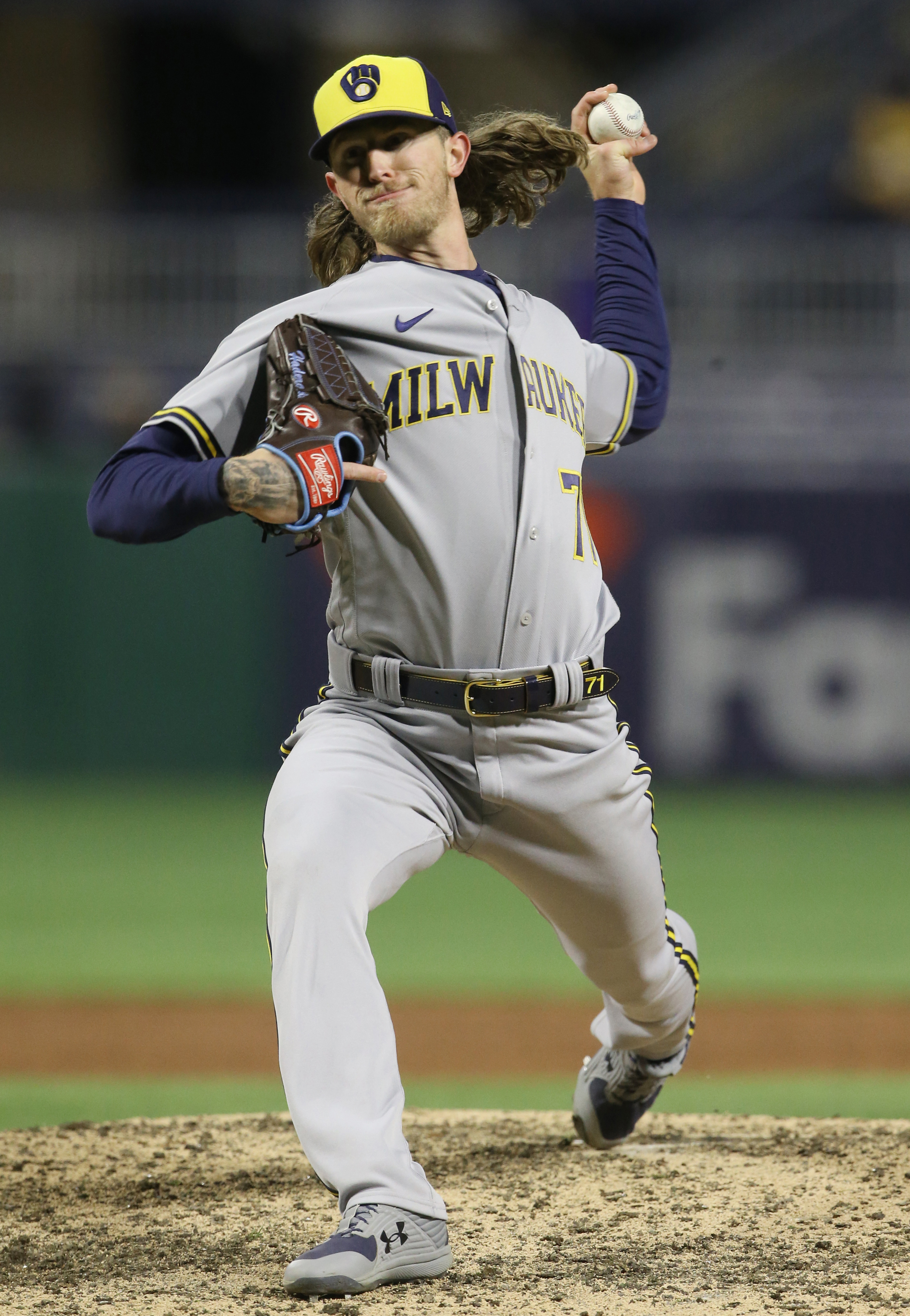
It’s a massive get for the Padres, and while it’s a genuine surprise to see Milwaukee move its closer while holding a three-game lead in the National League Central, the reasoning behind the trade is fairly straightforward. Hader’s $11MM salary figures to jump north of $15MM next season in his final year of club control, and a generally budget-conscious Brewers club may not be willing to dedicate $15-17MM to a single reliever when that represents such a notable portion of the overall payroll.
The Brewers, of course, could have held Hader into the winter and made him available at that point, but the allure of landing Hader for multiple postseason pushes undeniably allowed them to seek a higher price right now. To that end, they’re acquiring a closer of their own in Rogers, who — like Hader — has struggled of late but has an excellent track record spanning several seasons. Milwaukee also adds a high-octane arm in Lamet, albeit one that’s been plagued by injuries, and two of the Padres’ top ten prospects in Gasser and Ruiz, which breathes some much-needed life into a farm system that has generally not been considered among the sport’s strongest.
It’s the sort of trade we’re accustomed to seeing smaller-payroll clubs like the Rays and Guardians make with regularity: cash in a coveted player’s trade value when he has multiple seasons of club control and simultaneously backfill that spot on the roster with other big league help. It’s an immediate downgrade on the roster overall, but this type of simultaneous buy-and-sell tightrope act has been one of the keys to Tampa Bay, Cleveland and even Milwaukee itself remaining competitive despite rarely being able to spend top-of-the-market money.
“The players we are receiving in this trade help ensure that the future of the Milwaukee Brewers remains bright while not compromising our desire and expectation to win today,” Brewers president of baseball operations David Stearns said in a statement announcing the deal. “This mix of present Major League talent and high-level prospects furthers our aim to get as many bites of the apple as possible and, ultimately, to bring a World Series to Milwaukee. Trading good players on good teams is difficult, and that is certainly the case with Josh. We also recognize that to give our organization the best chance for sustained competitiveness, to avoid the extended down periods that so many organizations experience, we must make decisions that are not easy.”
Hader, 28, is sitting on a career-worst 4.24 ERA, though that mark was inflated by an uncharacteristic pair of consecutive meltdowns earlier this month, wherein he was tagged for a staggering nine earned runs in one-third of an inning. Outside that pair of disastrous outings, Hader has a 1.87 ERA in 33 2/3 innings. He didn’t even allow a run this season until June 7 and has punched out a massive 41.8% of his opponents against an 8.5% walk rate.
Dating back to Hader’s 2017 debut, no one in baseball has topped his enormous 44.1% strikeout rate — nor have they come especially close to doing so. (Craig Kimbrel is second at 40.6%.) Hader’s 2.48 ERA in that time is eighth-best among 309 qualified relievers, and no one has topped his 19.5% swinging-strike rate.
The name who trails Hader in that massive swinging-strike rate — now-former teammate Devin Williams — may have something to do with today’s trade as well. The Brewers surely wouldn’t have been as comfortable moving Hader were it not for Williams’ own breakthrough as one of the sport’s most dominant relief pitchers. Armed with a lethal changeup (nicknamed the “Airbender”), Williams ranks fourth in strikeout rate (39.9%), second in swinging-strike rate (18.6%) and second in ERA (1.94) among that same subset of qualified relievers just mentioned with regard to Hader.
There’s certainly an argument to be made that Milwaukee should have simply kept Hader and trotted out that dominant duo throughout the rest of the season and the forthcoming playoff run, but the blend of high-upside, immediate replacements (Rogers, Lamet) and the long-term value of adding a pair of well-regarded prospects to the system proved too alluring for Stearns, GM Matt Arnold and the rest of the Milwaukee staff.
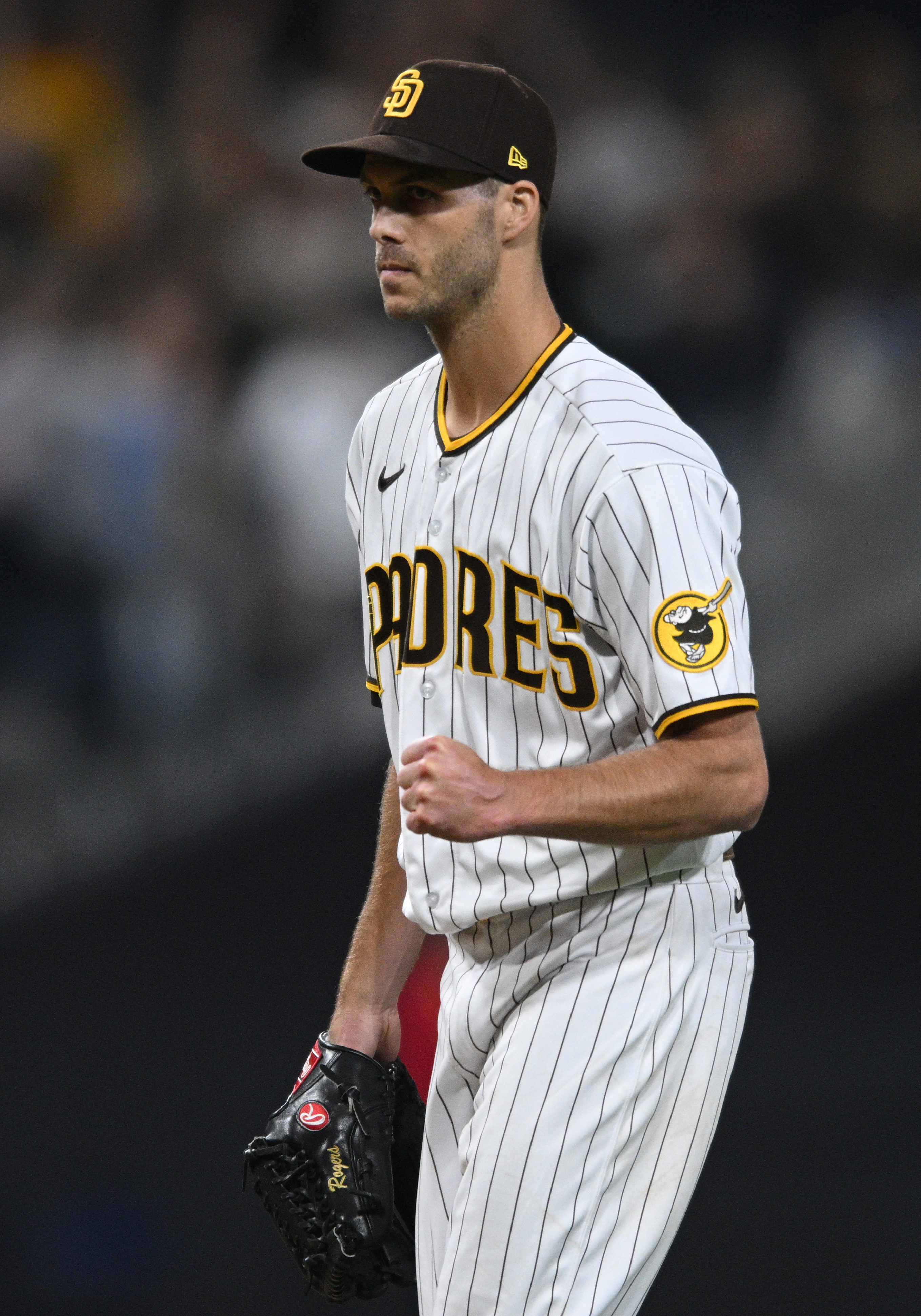
Turning to that collection of newly acquired talent, the Brewers will surely hope that Rogers can shake off the recent slump that has plagued him over the past two months. Rogers, from 2018-21 with the Twins, wasn’t far behind Hader on the list of the sport’s best left-handed relievers. He worked 197 2/3 frames during that time, pitching to a 2.91 ERA with a 31.2% strikeout rate, a 4.9% walk rate and 50 saves. A torn tendon in his pitching hand cut last season short for Rogers, however, and he was shipped from the Twins to San Diego on the eve of Opening Day this year.
Rogers took to his new environs brilliantly, pitching to a dominant 0.44 ERA with a 23-to-4 K/BB ratio through his first 20 1/3 innings. Since that time, however, he’s been clobbered for an 8.14 ERA in a nearly identical sample of 21 innings. Rogers still has an exceptional 25-to-5 K/BB ratio over that ugly stretch, however, and he’s only allowed one home run along the way. He’s been dogged by a sky-high .429 average on balls in play during this slump, but it’s still hard to overlook a stretch that has seen Rogers surrender runs in 13 of his past 22 appearances.
Still, Rogers’ track record is alluring, and perhaps the Brewers have their own idea about how to the lefty can get back on track. He’s a free agent at season’s end, making Rogers a pure rental — but he’s an ultra-affordable one, as the Twins covered all but $700K of his salary in that trade to the Padres.
Lamet, meanwhile, is another huge upside arm on whom the Brewers are buying low. The flamethrowing righty was a Cy Young candidate in the shortened 2020 season but went down with a biceps injury late that season and missed a significant portion of the 2021 campaign due to forearm strains.
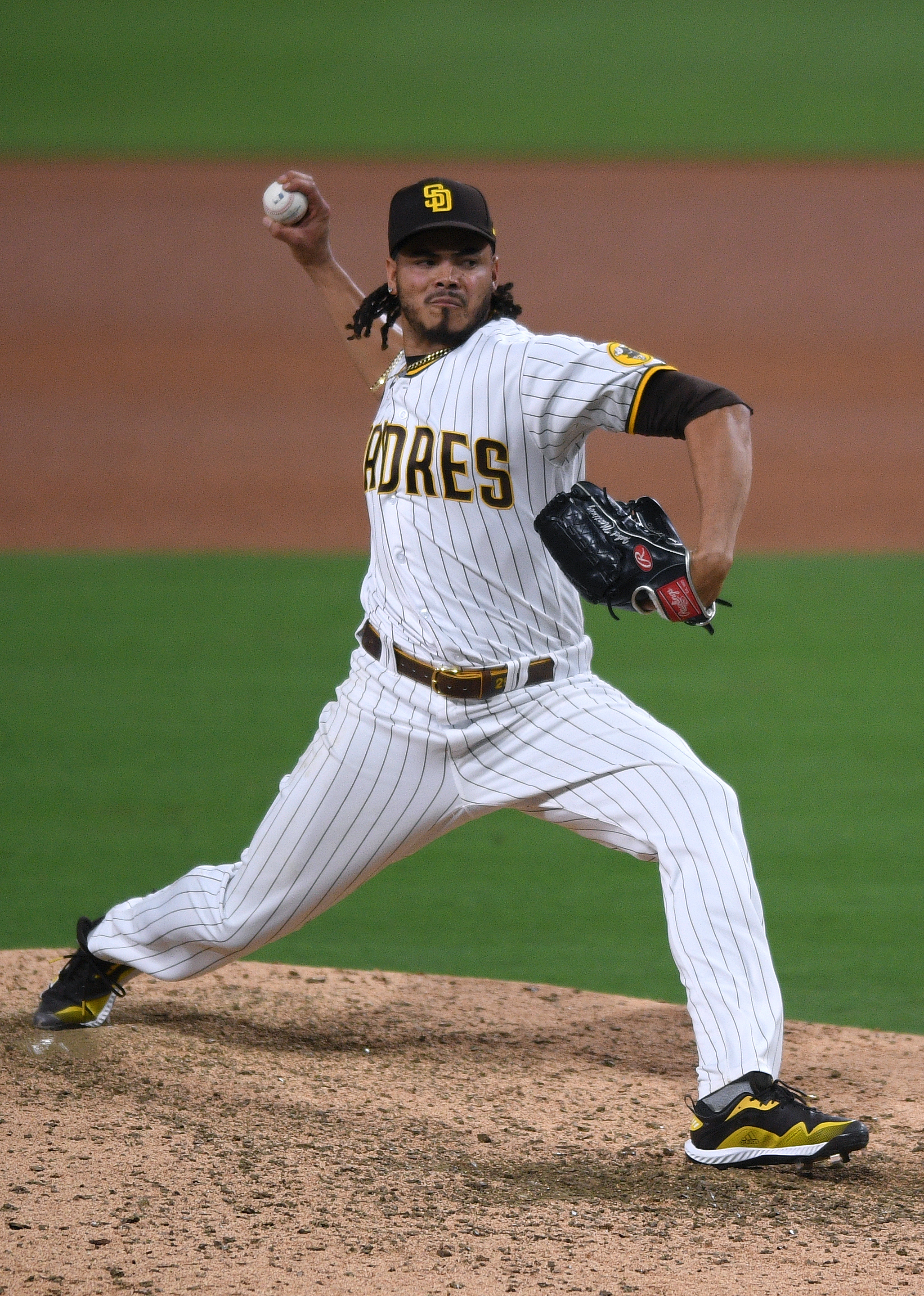
Lamet has yielded 13 earned runs in just 12 1/3 Major League innings this season, but he’s been dominant in Triple-A (0.77 ERA in 11 2/3 frames). His fastball, which averaged 97 mph in 2020, is down to an average of 95.3 mph this year. There are obviously plenty of red flags with Lamet, but if he can recapture anything resembling his 2020 form (2.09 ERA, 34.8% strikeout rate, 7.5% walk rate) while coming out of the Milwaukee bullpen, he’d be a formidable addition to the relief corps both this year and next, as he’s arbitration-eligible once more before free agency in the 2023-24 offseason.
Both Gasser and Ruiz were among the Padres’ top 10 prospects and will now also join the Brewers’ top 10. Gasser, 23, was the No. 71 overall pick in the 2021 draft and has held his own in the rotation with the Padres’ Class-A Advanced affiliate this season. In 90 1/3 innings, he’s notched a 4.18 ERA but a far more impressive 3.27 FIP, thanks largely to a gaudy 30.5% strikeout rate and a sharp 7.4% walk rate. Somewhat amusingly, Gasser doesn’t rely on velocity to find success but rather plus command and a plus breaking ball. Baseball America tabs his fastball in the 90-93 mph range and calls Gasser a high-probability fourth starter — one who could move quickly through the minors. He could be an option in the Milwaukee by late in the 2023 season and certainly by the 2024 campaign.
Ruiz, meanwhile, is an immediate option for the Brewers in center field. He’s already made his big league debut, and while he’s just 6-for-27 through his first few games, he obliterated Double-A pitching (.344/.474/.611 in 232 plate appearances) and Triple-A opposition so far in 2022 (.315/.457/.477 in 142 plate appearances). Ruiz, incredibly, has stolen 60 bases in just 77 minor league games this year and has already picked up the first of what should be quite a few big league steals as well. Add in average or better raw power, and it’s easy to see why Milwaukee was enamored of him — particularly given the team’s need in center field.
Ruiz isn’t a true center fielder and only moved to the outfield on a full-time basis last season after struggling as an infielder, but BA’s scouting report on him notes that he’s already making decent jumps and reads as he learns center field on the fly. Strikeouts were an issue for Ruiz earlier in his career, but he’s punched out at just a 17.4% clip in the minors so far this season and has reportedly made some changes to his approach and swing that have improved upon his bat-to-ball abilities.
Of course, it’s far from common to see a division-leading team part with one of the game’s best players at his position midway through the season, but the entire gambit for the Brewers is an upside play that could net them comparable production in 2022 and considerable long-term value thereafter.
For the Padres, it’s a pure short-term play with the goal of putting together a powerhouse postseason pitching staff. It’s also surely not the only move San Diego president of baseball operations A.J. Preller will make between now and tomorrow’s deadline. He managed to add Hader without having to surrender any of the organization’s very top-end prospects — e.g. Robert Hassell III, C.J. Abrams, Jackson Merrill, James Wood, Luis Campusano — all of whom could be used as firepower to bring in a sizable pitching or outfield upgrade (e.g. Frankie Montas, Juan Soto).
It bears mentioning that the acquisition of Hader likely puts the Padres over the luxury tax threshold, even with Lamet’s salary going back to Milwaukee. That only serves as a further portent for significant dealing from Preller & Co., though. In all likelihood, the Padres are just getting started, and we shouldn’t expect this to be the only move of note for the Brewers either.
Ken Rosenthal of The Athletic first reported that the Brewers were close to a trade of Hader. Jeff Passan of ESPN reported that Hader was going to the Padres in exchange for Rogers, Lamet, Gasser and Ruiz (Twitter links).
Angels Planning To Keep Shohei Ohtani, No Longer Listening To Offers
The Angels have listened to offers on reigning AL MVP Shohei Ohtani for the past several days, but Jon Heyman of the New York Post reports that they’re no longer doing so. The Yankees, Padres and White Sox were among the teams to submit trade offers for Ohtani, per the report, but Heyman writes that owner Arte Moreno ultimately proved “unwilling” to part with Ohtani.
The fact that Ohtani is staying put is hardly shocking. Even when reports emerged of that the Angels were listening to trade offers, it still seemed unlikely that a deal would come together. Given Ohtani’s unprecedented contributions to the team in recent years, it was always expected that a massive package would have to be put on the table in order for the Angels to pull the trigger on a deal. With the Angels mired in another miserable season that’s seen them fall well out of contention, it made sense to listen to offers on the superstar given that he’s now just over a year away from free agency. Despite those three clubs apparently putting together serious offers, it seems none of them were close to the understandably high asking price of the Angels.
The reigning AL MVP, Ohtani is putting together another historic season to add to his already impressive list of accolades. His power has fallen off slightly, as his 22 home runs on the year puts him on pace to fall short of last year’s 46. But apart from that, his .255/.352/.495 slash line this year isn’t too far from last year’s .257/.372/.592. His 135 wRC+ this year is seventeen points behind last year, but still 35% better than the league average hitter. On the pitching side of things, he’s actually improved relative to the previous season. He’s dropped his ERA from 3.18 to 2.81, increased his strikeout rate from 29.3% to 36.4% and lowered his walk rate from 8.3% to 5.8%.
Given that he’s producing excellent results on both sides of the ball and making a modest $5.5MM salary, it’s hard to fathom a team that wouldn’t be interested in making use of his services. The Yankees are known to be looking for rotation help, having checked in on some of the top available names like Frankie Montas and Luis Castillo, before the latter was traded to the Mariners. They’ve also checked in on offensive upgrades, recently acquiring Andrew Benintendi. Acquiring Ohtani would have crowded the DH mix a little, though the Yanks were surely willing to find a way to work with that situation for such a historic player.
The Padres already have a rotation surplus but have been considering trading away from it as a way to reduce their payroll commitments. It’s possible that they could have combined an Ohtani trade with a trade of Blake Snell or Mike Clevinger, in order to get Ohtani into the rotation and then also upgrade the lineup.
The White Sox have a solid five-man rotation right now but have been exploring the market for upgrades anyway, with Michael Kopech perhaps working his way towards some load management as the season goes on. He’s already thrown 88 1/3 innings this year after only throwing 69 1/3 frames over the three previous seasons combined.
Regardless of how much sense Ohtani would have made for those teams, it doesn’t appear as though the Angels came close to a deal that they gave serious consideration to. It’s perfectly logical for them to want to hang onto such an unprecedented talent, though this decision won’t provide any long-term clarity. The Angels are still 43-59 and destined to finish another season watching the postseason from home. That will leave 2023 as the club’s last chance to build a winning roster around Ohtani, unless they are able to work out an extension.
That latter course will surely be appealing to Angels’ fans but will come with complications for the front office. The latest reporting indicated that Ohtani and his camp were looking to surpass Max Scherzer‘s record for annual average value of a contract, $43.3MM. That number would be added to a payroll that already includes Mike Trout getting over $37MM per year through 2028 while Anthony Rendon getting paid similarly through 2026. That could leave the Halos paying around $120MM per season to just three players. That wouldn’t leave a lot of wiggle room for a team that’s never run an Opening Day payroll above $190MM. If an extension can’t be worked out, then perhaps Ohtani’s name will show up in trade rumors in more serious fashion one year from now.
Athletics Getting Closer To Frankie Montas Trade
12:20pm: The Twins believe the A’s are wrapping up a trade sending Montas to another club, tweets Dan Hayes of The Athletic. That would suggest they’re among the teams who’ve been informed they’re no longer in the running, as suggested by Heyman.
12:15pm: The Yankees are willing to include top shortstop prospect Oswald Peraza in a Montas deal, tweets SNY’s Andy Martino.
12:01pm: The Athletics have begun informing some teams that they’re no longer in the running for right-hander Frankie Montas, tweets Jon Heyman of the New York Post. The Yankees are among the clubs who are still in the bidding, he adds.
It’s not clear just yet which clubs have been ruled out, but Montas has drawn widespread interest, with the Cardinals, Padres, Blue Jays and Twins among those who have joined the Yankees in their pursuit of the righty.
Yankees Acquire Scott Effross From Cubs
For the second trade deadline in a row, the Yankees have bolstered their bullpen with an under-the-radar arm from the NL Central. The Yankees announced Monday that they’ve acquired right-hander Scott Effross from the Cubs in exchange for minor league right-hander Hayden Wesneski.
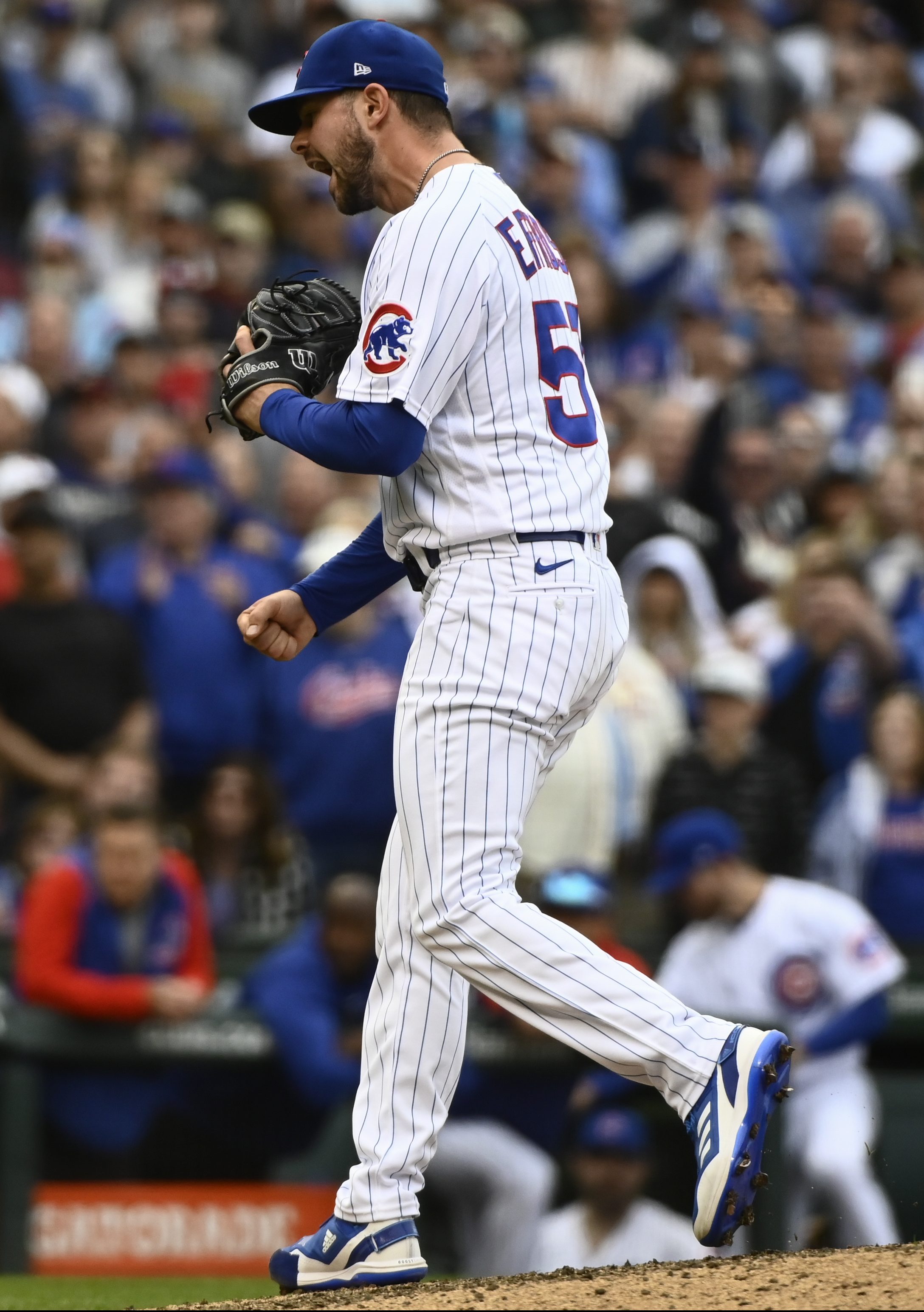
Effross, 28, isn’t a household name but has been outstanding since the Cubs promoted him for his Major League debut in 2021. The sidearming righty has tallied 58 2/3 innings as a big leaguer to date and posted a 2.91 ERA with a 28.8% strikeout rate, a 5.1% walk rate and a 46% ground-ball rate.
While Effross throws right-handed, he’s been far more effective against lefties than right-handers to this point in his big league career, which surely held appeal to the Yankees (and to other teams). That’s not to say that he’s ineffective against fellow righties — far from it — but Effross has held lefties to a putrid .160/.250/.253 batting line through 85 plate appearances. Right-handed hitters have had struggles of their own, hitting Effross at a solid .262 clip but posting a meager .287 OBP and just a .369 slugging percentage.
Because Effross is only in his second big league season and entered the year with less than one full year of Major League service time, he’s controllable for another five years beyond the current campaign. He’ll be arbitration-eligible following the 2024 campaign and won’t reach free agency until the 2027-28 offseason.
The acquisition of Effross is pivotal for a Yankees team that has seen its previously rock-solid bullpen begin to show cracks of late. In recent weeks, the Yankees have lost Michael King to a fractured elbow, seen Chad Green go down with a torn ligament that required Tommy John surgery, and watched former closer Aroldis Chapman struggle badly in his return from the injured list. Even Clay Holmes, the team’s breakout closer and All-Star, has scuffled over the past two weeks after a superhuman start to the 2022 season that catapulted him into the Yankees’ closer role. Effoss will help solidify the group both in 2022 and well beyond — provided he can sustain his own impressive emergence as a viable late-inning arm.
Wesneski, 24, was the Yankees’ sixth-round pick in 2019 and has emerged as one of the organization’s top pitching prospects, ranking fourth among Yankee farmhands at Baseball America. The 6’3″, 210-pound righty reached Triple-A late in the 2021 season and has spent the entire 2022 campaign there. Through 19 starts and 89 2/3 innings so far this season, he’ notched a 3.51 ERA with a 22.4% strikeout rate, a 7.5% walk rate and a 41.6% ground-ball rate.
Scouting reports on Wesneski credit him for mid-90s velocity on a pair of heaters — two-seam and four-seam — with the latter able to climb as high as 99 mph. He also works with a slider, changeup and cutter. Baseball America touts him as a potential fourth starter, one who’s not too far off from big league readiness. It’s the type of upper-level arm with decent probability to become a big league starter that the Cubs generally struggled to develop in the prior Theo Epstein/Jed Hoyer regime. MLB.com has already updated its ranking of the Cubs’ top prospects with Wesneski slotting in No. 8, right behind fellow pitching prospects Caleb Kilian and Jordan Wicks.
Jack Curry of the YES Network first reported (via Twitter) that Effross had been traded to the Yankees. Ken Rosenthal of The Athletic tweeted that Wesneski was going to Chicago in return.
Padres, Joe Musgrove Agree To Extension
The Padres and right-hander Joe Musgrove have finalized a five-year, $100MM extension, reports Jon Heyman of the New York Post (Twitter links). The deal — which pays even $20MM salaries each year between 2023-27 — contains a full no-trade clause for the next four seasons, as well as limited no-trade protection for 2027. Heyman reported last Friday the parties were close on a deal at those terms. Musgrove, a client of Full Circle Sports Management, had been set to hit free agency at the end of the year.
Musgrove and the Friars have spent months kicking extension terms around, with progress seemingly ratcheting up around the All-Star Break. Kevin Acee of the San Diego Union-Tribune reported over the Break there was a belief on both sides a deal could get done before the start of the season’s unofficial second half. That obviously didn’t come to pass, but that evidently didn’t deter or meaningfully set back talks.
The five-year, $100MM price point registers as a bit of a surprise, as the first-time All-Star quite likely could’ve topped those numbers by a fair amount on the open market. Musgrove, however, is a San Diego-area native who has been open about his desire to remain with his hometown club. It’s certainly understandable if the opportunity at a nine-figure payday to remain in a place he’s comfortable was something he decided not to pass up, particularly with the strong no-trade protection.
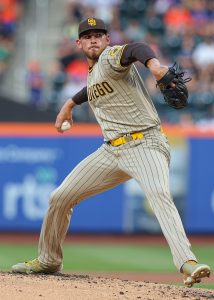
Musgrove’s contract nevertheless checks in below those landed by a couple of the top starters on last year’s market, Kevin Gausman and Robbie Ray. Gausman received a five-year, $110MM deal from the Blue Jays. Ray signed with the Mariners for five years and $115MM in a deal that also included an opt-out opportunity following the 2024 season. Aside from the record-setting three-year deal for Max Scherzer, the Gausman and Ray contracts represented the top commitments to free agent starters last offseason.
One could argue that Musgrove is a better long-term bet than either hurler. Like Ray, he’ll begin his new deal with his age-30 season; Gausman’s contract started at age 31. The San Diego righty carries a career-low 2.65 ERA through 115 1/3 innings this season, a bit below the respective 2.81 and 2.84 marks posted by Gausman and Ray last year. Both Gausman and Ray missed bats at a better clip than Musgrove has, but the latter has a slightly better walk rate than the 2021 free agents.
Musgrove’s platform season is shaping up to be similar to those of Gausman and Ray, and Musgrove may have a slightly better long-term track record. Ray had an awful year during the shortened 2020 campaign in which he posted a 6.62 ERA. He’d shown top-of-the-rotation flashes earlier in his career, but his control and home run rates fluctuated a fair amount. Gausman had a very strong shortened season, but he’d struggled during the previous full campaign. Musgrove has a sub-4.00 ERA in each of his past three years, with a cumulative 3.08 figure through 58 starts since the beginning of 2020.
In that context, the extension looks like a strong investment for the Friars. That’s particularly true given the Padres’ long-term rotation uncertainty. San Diego could lose both Sean Manaea and Mike Clevinger to free agency this winter. Blake Snell and Yu Darvish are only under contract for a season and a half, and Nick Martinez can opt out of his deal after any of the next three years. MacKenzie Gore is the only rotation building block who’s certain to be around two seasons from now, and the Friars can build a long-term starting staff around the young southpaw and Musgrove.
Musgrove’s contract comes with a matching $20MM luxury tax number, which will take effect beginning next season. The Friars exceeded the CBT threshold for the first time in franchise history last year, and they could well do so again in 2022. According to Jason Martinez of Roster Resource, San Diego’s 2023 payroll now sits around $130MM before accounting for arbitration salaries. The Padres luxury tax number is estimated north of $162MM, while next season’s base tax threshold checks in at $233MM.
Image courtesy of USA Today Sports.
Braves Acquire Ehire Adrianza, Designate Robinson Cano For Assignment
The Braves announced Monday that they’ve acquired infielder Ehire Adrianza from the Nationals in exchange for minor league outfielder Trey Harris. In a corresponding roster move, Robinson Cano has been designated for assignment.
It’s Adrianza’s second stint with the Braves, as he also filled a utility role for Atlanta just last season. The veteran switch-hitter slashed .247/.327/.401 in 209 plate appearances for the Braves and appeared at six positions last year. Thus far in 2022, however, he’s mustered only a .179/.255/.202 output in 94 trips to the plate.
That rough stretch at the plate notwithstanding, Adrianza has a track record of at least passable, if unexciting, production at the plate. From 2016-21, he turned in a combined .252/.318/.381 batting line over a much larger sample of 1169 plate appearances. He doesn’t have plus defensive grades at any position, but Adrianza also won’t be a liability anywhere in the infield. For the time being, he can help bridge the gap at second base while the team awaits Ozzie Albies‘ return from a broken foot. As of two weeks ago, Atlanta was targeting a mid- or late-August return for the two-time All-Star and Silver Slugger winner.
In return for Adrianza, who’ll be a free agent at season’s end, the Nats will pick up the 26-year-old Harris, who previously ranked in the middle tier of the Braves’ top 30 prospects but has fallen off with some rough showings in Double-A. Baseball America twice listed Harris in Atlanta’s top 30 (No. 21 in 2020 and No. 26 in 2021), and FanGraphs pegged him as the system’s No. 16 prospect in March 2021. Harris was a senior sign out of Mizzou in the 32nd round of the 2018 draft and hit well through the 2019 season, topping out with a .281/.318/.411 showing in that hitter-friendly setting during his 2019 debut there.
There was, of course, no minor league season in 2020, however, and Harris has struggled in his second and now third trips through the Double-A level. After batting .247/.317/.354 in 405 Double-A plate appearances last year, he’s at .238/.328/.323 so far in 2022 (220 plate appearances). That’s a far cry from his earlier career performance, which saw him hit .300 and OPS north of .800 in each of his first two professional seasons. Scouting reports on Harris peg him as a corner outfielder — likely left field — with some power to his pull side, but he obviously has a ways to go to rebuild some of his prospect stature.
As for Cano, this is now the third team to cut bait on him this season. He’s already been released by both the Mets and the Padres, and the former All-Star’s brief nine-game showing didn’t do much to inspire confidence in an eventual rebound. Cano went just 4-for-26 with three singles, a double, a walk and four strikeouts in his brief time with the team. He’s now hitting .150/.183/.190 through 104 Major League plate appearances in his return from a 162-game PED suspension last year. The Braves can technically trade Cano up until tomorrow’s deadline, but it’s very likely that they’ll instead just release him.
Latest On Juan Soto’s Trade Market
Juan Soto‘s presence on the trade market has, in many ways, held up activity in other areas. Teams like the Cardinals and Padres, generally viewed as two of Soto’s top suitors, are also involved in the market for starting pitching. But, both are surely wary of dealing prospects to acquire a starter (e.g. Oakland’s Frankie Montas) if those same players might eventually be used to pry Soto loose from Washington.
ESPN’s Jeff Passan takes a lengthy look at the logjam Soto has created, writing within that the Yankees are a “long shot at best” to make a play for Soto before the deadline and suggesting that the Rangers, for now, are not a prominent bidder. That meshes with recent reporting from the New York Post’s Jon Heyman, who wrote last night that there was “no traction” between the Yankees and Nationals regarding Soto, even though the Yankees reached out as recently as yesterday evening. Heyman adds that the Nationals aren’t as high on top prospect Anthony Volpe as the Yankees and many other clubs are, which is a complicating factor in talks.
The Padres and Cardinals are the most oft-suggested fits for Soto, and with good reason, as both are win-now clubs with deep farm systems who could offer the blend of top prospects and controllable big leaguers the Nationals seek. Passan suggests that the Dodgers are “lurking,” however, and Ken Rosenthal of The Athletic similarly wrote this morning that the Dodgers have maintained talks with the Nats and should not be ruled out as a potential landing spot. USA Today’s Bob Nightengale takes things a step further, tweeting that it’s actually the Dodgers — not the Cardinals or Padres — who have been making the most aggressive offers for Soto recently.
The Mariners, another regularly speculated fit for Soto, don’t appear likely to land him at this point. President of baseball operations Jerry Dipoto tells The Athletic’s Jim Bowden that while he checked in on Soto, he came away with the impression that there was not a realistic path to acquiring him (Twitter link). Presumably, that came prior to Seattle’s Friday acquisition of Luis Castillo — which cost the Mariners their top two prospects.
The Mets, too, have been speculatively listed as trade partners for the Nats. That’s due largely to the team’s huge payroll and aggressive past year under new owner Steve Cohen. However, Joel Sherman of the New York Post writes that the Mets believed “relatively quickly in the process” that there’d be such a large market for Soto that Washington wouldn’t have to consider trading him to a division rival. That certainly looks to be the case, although if the Nats do covet the Mets’ best prospects, there’s at least a slim chance of something coming together; both Sherman and SNY’s Andy Martino report that the Mets would only move their very best prospects if it were to acquire Soto or (an even longer shot) Shohei Ohtani. Both reports suggest catcher Francisco Alvarez is off limits unless it’s for one of Soto or Ohtani. Sherman adds third baseman Brett Baty to that list, and Martino suggests third baseman Mark Vientos is viewed similarly.
Regardless of whether Soto specifically changes hands, the market will erupt sometime between now and tomorrow’s 6pm ET deadline. The ticking clock is going to eventually drive teams into activity, and given the lack of movement thus far, we could be in for one of the most active and chaotic 24- to 30-hour spans of deadline dealing we’ve ever seen.
Diamondbacks Trade David Peralta To Rays
The Rays added some help to their injury-plagued outfield mix, announcing the acquisition of veteran David Peralta from the D-backs. Minor league catcher Christian Cerda is headed to the Diamondbacks in return.
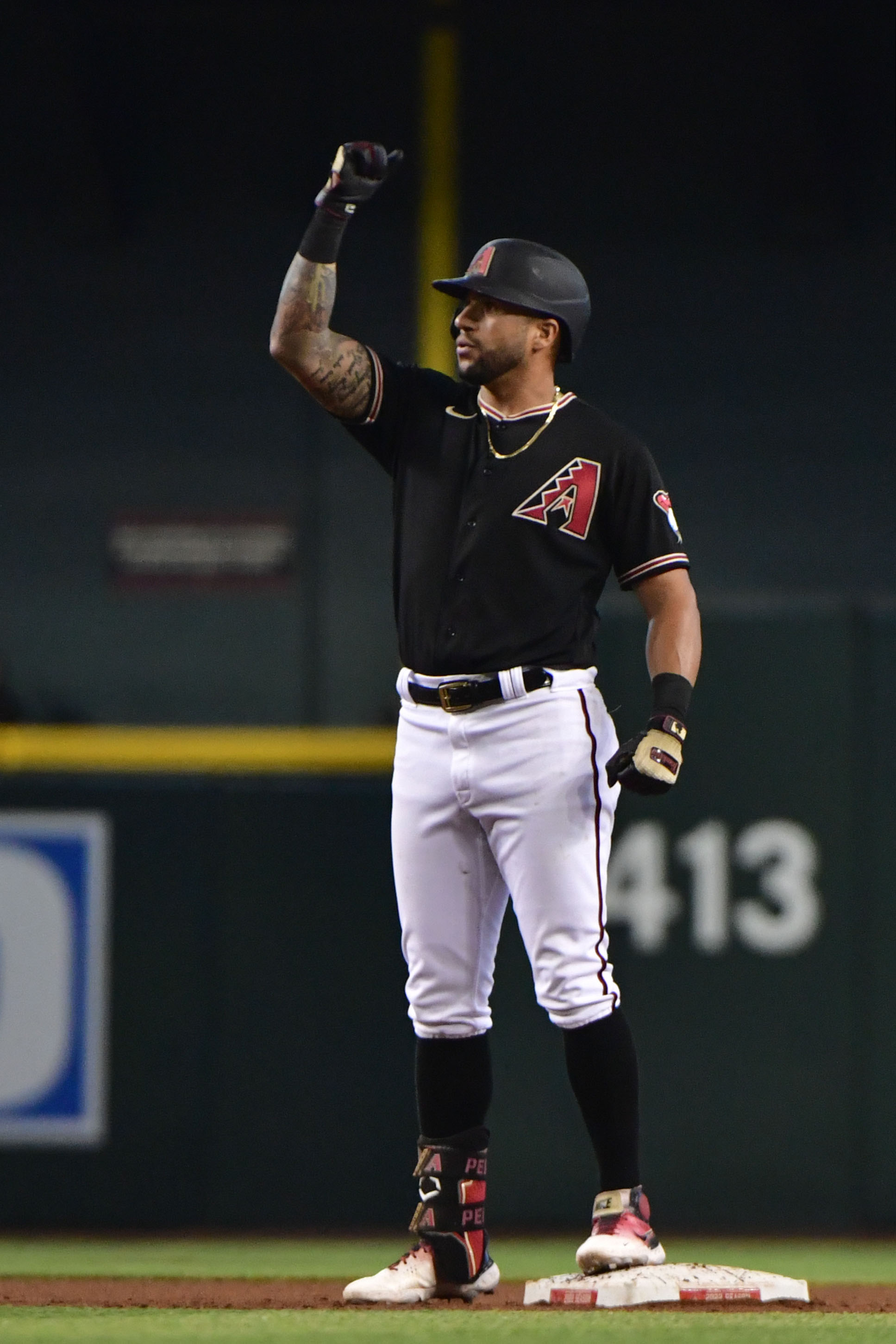
Peralta, 35 next month, has spent all nine seasons of his Major League career with the D-backs prior to this trade. The veteran lefty hitter has produced a solid .248/.316/.460 batting line this season (110 wRC+), connecting on a dozen homers, 19 doubles and two triples through 310 plate appearances. He’s striking out at a career-high 23.9% clip and drawing walks at a roughly average 8.7% rate that clocks in a percentage point higher than his career mark.
The D-backs signed Peralta to a three-year, $22MM extension in his final season before he would’ve reached free agency, and he’s playing out the final season of that contract now in 2022. Peralta is a pure rental for the Rays, then, but he’ll give them a much-needed outfield bat to plug into the lineup following injuries to Kevin Kiermaier, Manuel Margot and Harold Ramirez.
Peralta not only provides that crucial outfield reinforcement — he also provides the Rays with a noted boost against right-handed pitching. Tampa Bay has handled righties at only a league-average clip this season, but Peralta owns a .267/.325/.498 batting line against right-handers this year and a stout .295/.351/.492 output over the course of his career. He’s long been ineffective against left-handed pitching, however, and is batting just .114/.261/.200 against southpaws this year (albeit in a tiny sample of 35 plate appearances). As such, the Rays will surely shield him from left-handed opposition as much as possible.
While he’s not the slugger he was when he hit 30 homers in 2018 or the defender he was when he won a Gold Glove in 2019, Peralta is still a solid platoon bat with above-average defensive ratings in the corners. Arizona has used him primarily in left field this season, though the Rays may prefer him in right, given Randy Arozarena‘s presence in left. Peralta has a career mark of +7 Defensive Runs Saved in 1435 innings of right field (and has been a scratch defender there, per Outs Above Average). His work in left field is more highly regarded, but Peralta shouldn’t hurt the Rays in either corner slot and also hits well enough to spend time at DH against righties.
Heading to the Diamondbacks is the 19-year-old Cerda, whom the Rays signed as an international free agent back in 2019. Cerda was actually born in New York but moved to the Dominican Republic in his early teens and developed into a prospect of some note. He signed a $325K bonus with Tampa Bay that summer, drawing praise from Baseball America for his plus arm, agility and intriguing power potential.
Because there was no minor league season in 2020, Cerda is playing in just his second season of pro ball. He’s spent the season with the Rays’ Rookie-level Florida Complex League affiliate and posted an impressive .315/.464/.519 batting line through his first 69 trips to the plate. Cerda played in the Dominican Summer League last season and slashed .218/.366/.338 in 164 trips to the plate. He’s caught 30 of 79 runners who’ve attempted to steal against him at this point in his young career — an excellent 38% rate.
Robert Murray of FanSided first reported (via Twitter) that Peralta was headed to the Rays. ESPN’s Jeff Passan reported that Cerda was going back to Arizona in return.
Cubs, Dodgers Swap Chris Martin For Zach McKinstry
The Dodgers have made one of the first bullpen pickups of note prior to Tuesday’s trade deadline, announcing Saturday that they’ve acquired right-hander Chris Martin from the Cubs in exchange for infielder/outfielder Zach McKinstry.
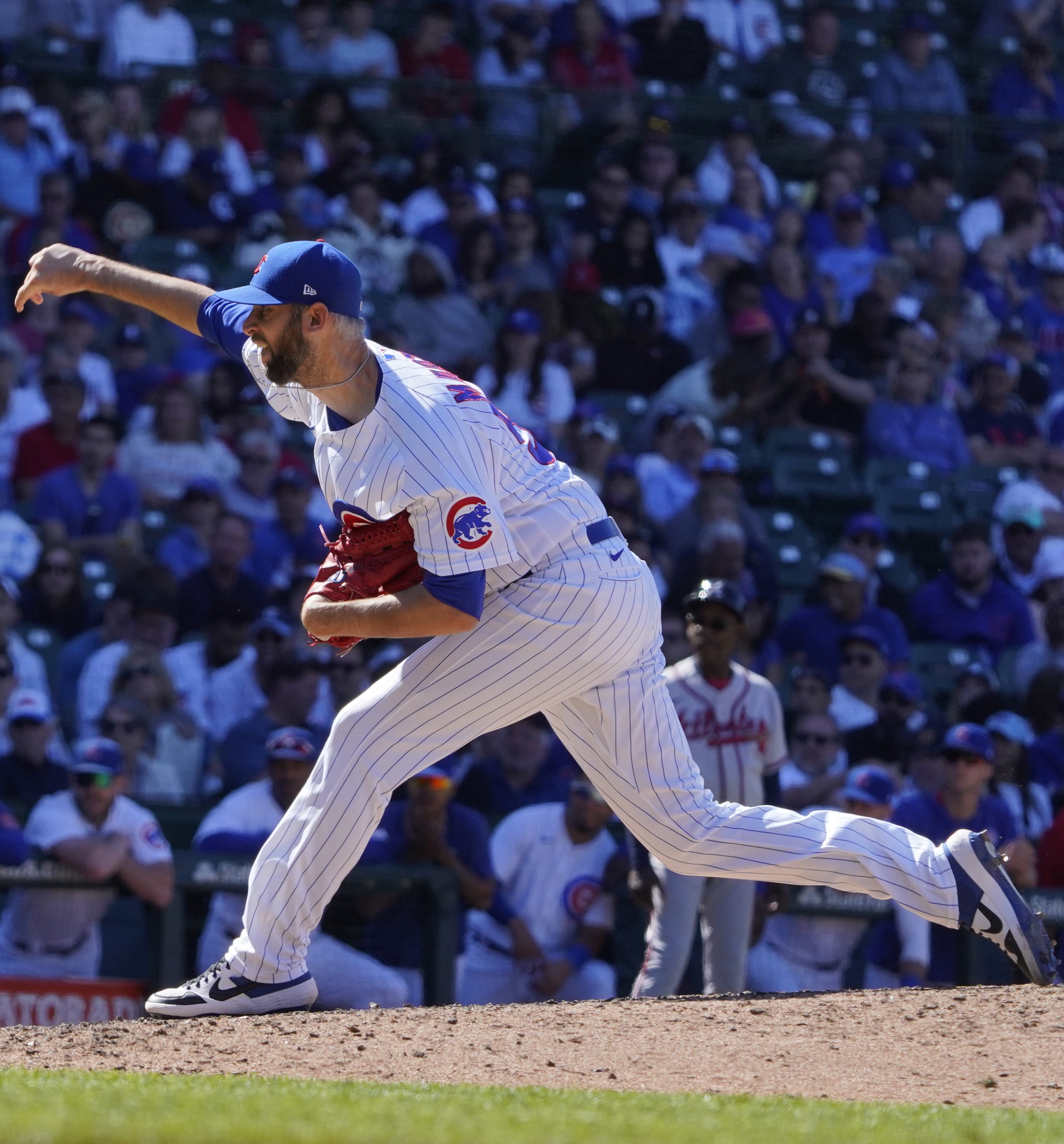
Martin, 36, is playing the 2022 season on a one-year, $2.5MM contract he signed as a free agent this winter. His deal comes with $750K worth of incentives, paid out in the form of a $100K bonus for reaching each of 40, 45, 50, 55 and 60 appearances, plus $125K for spending 40 and 90 days on the active roster.
Martin has already appeared in 34 games and logged 31 1/3 innings of 4.31 ERA ball this season, although fielding-independent metrics are far more bullish (3.02 FIP, 2.09 SIERA). Martin has been uncharacteristically homer-prone this year but has maintained his elite command of the strike zone. He’s punched out 30.1% of his opponents thus far and walked just four of the 133 batters he’s faced (3.1%). One of those free passes was of the intentional variety, it should be noted, and Martin has also yet to hit a batter this season.
The towering 6’8″ Martin is one of the more notable overseas success stories in recent years. After a nondescript run with the Rockies and Yankees in 2014-15, he signed with Japan’s Nippon-Ham Fighters and tore through NPB lineups over a brilliant two-year stint there. He signed with the Rangers for the 2018 campaign and, after a pedestrian first season back in MLB has solidified himself as a quality late-inning reliever. Over the past four seasons, Martin touts a 3.46 ERA with a 26.5% strikeout rate and an impeccable 3% walk rate. Among the 431 pitchers who’ve thrown at least 100 big league innings in that time, Martin’s walk rate is the second-lowest in the game (narrowly trailing former teammate Josh Tomlin‘s 2.9% mark).
Martin will give manager Dave Roberts some reinforcement in what’s been a generally strong but also very injury-plagued relief corps. Dodgers relievers rank sixth in the Majors with s 3.37 ERA, but they’ve lost Daniel Hudson for the season (torn ACL), aren’t clear when Blake Treinen (shoulder) will return, and also have each of Brusdar Graterol, Victor Gonzalez and Tommy Kahnle on the injured list at present.
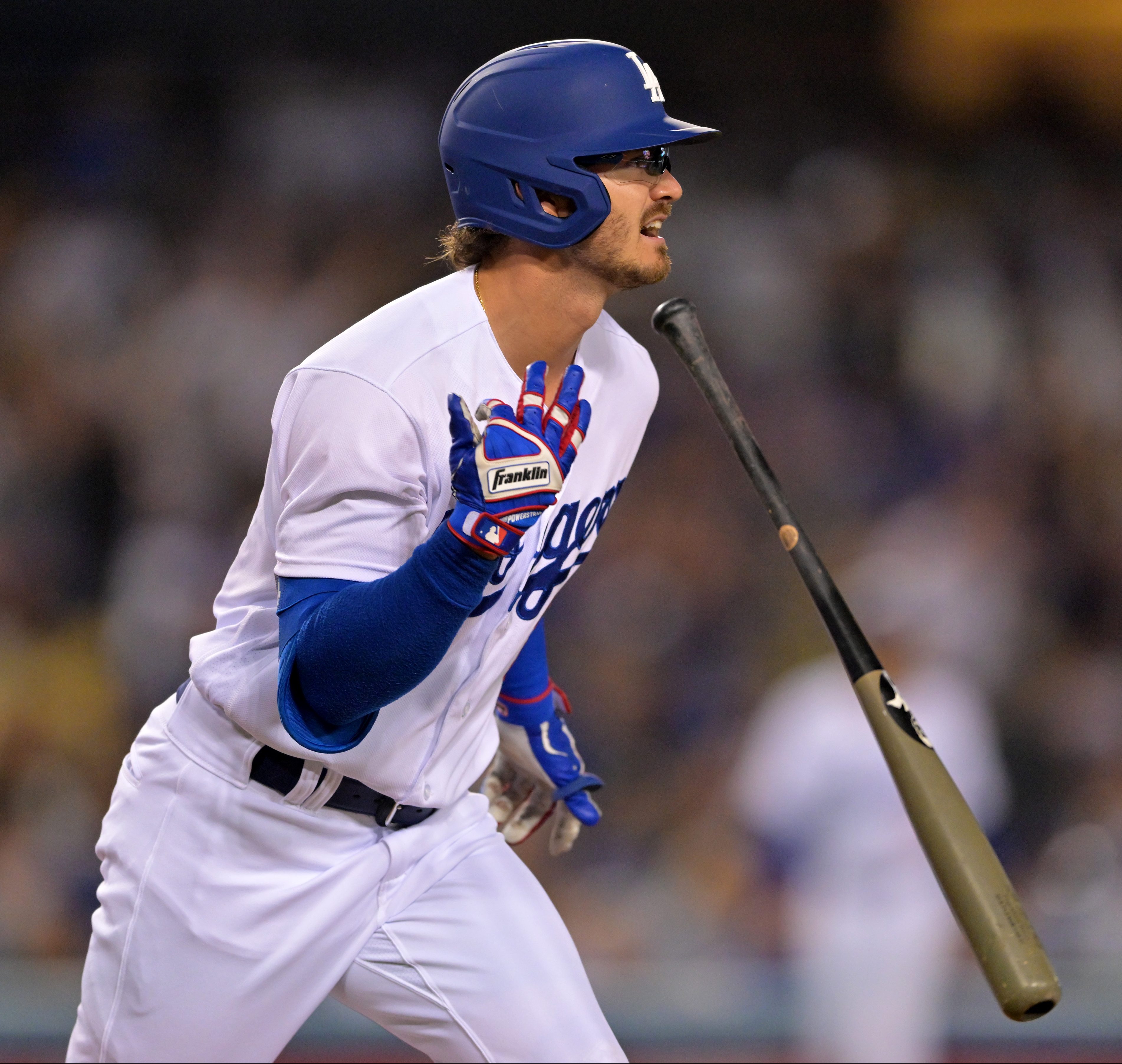
In return for their one-year investment in Martin, the Cubs will acquire as many as five additional seasons of control over the 27-year-old McKinstry, who made his debut with the 2020 Dodgers and has been an up-and-down utility option in L.A. since that time. A lefty hitter with experience at second base, third base, shortstop and all three outfield spots (albeit just 18 innings in center), McKinstry has posted just a .210/.266/.403 batting line in the big leagues. That’s come in a tiny sample of 193 plate appearances, however, and he’s been outstanding during his time at the Triple-A level.
McKinstry, a former 33rd-round pick, has logged 489 plate appearances with Triple-A Oklahoma City in parts of three seasons and put together a huge .323/.401/.550. The Pacific Coast League is a known hitters’ haven, but McKinstry has nonetheless been well above league-average on a rate basis and racked up an impressive 18 home runs, 25 doubles and nine triples there. He’s fanned in just 15.7% of his plate appearances and walked at a 10.8% clip as well.
While McKinstry likely profiles more as a utility player than a starter at the big league level, there’s at least a chance he could hit enough to be a regular at second base — his best defensive position. If not, he’ll give the Cubs someone to bounce around the diamond as a valuable role player for the foreseeable future. McKinstry will be out of minor league options next season, so he should receive ample opportunity sooner than later.
ESPN’s Buster Olney first reported that Martin had been traded to the Dodgers (Twitter link). Patrick Mooney of The Athletic first reported that McKinstry was headed to the Cubs in return (Twitter link).
Rockies, Daniel Bard Agree To Extension
1:05pm: Bard’s contract will guarantee him “about $19MM,” Feinsand tweets.
12:52pm: The Rockies and closer Daniel Bard are finalizing a contract extension, reports Mark Feinsand of MLB.com (Twitter link). Jon Heyman of the New York Post, meanwhile, reports that the Rockies have already reached an agreement on a two-year extension for Bard, a client of ISE Baseball (Twitter links).
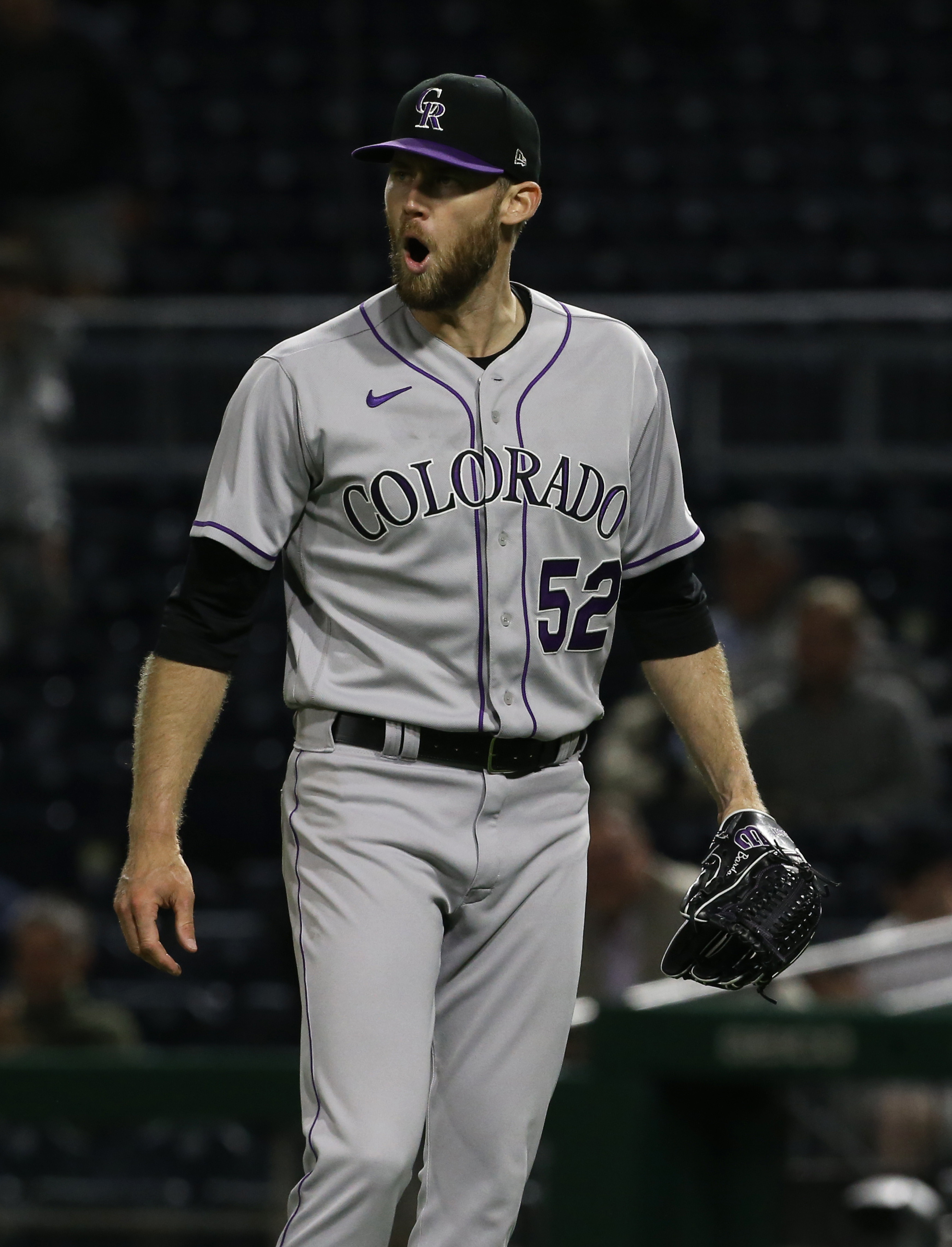
All indications throughout the summer have been that the Rockies aren’t interested in trading the 37-year-old Bard and rather hoped to keep him beyond the current season. It now appears they’ve succeeded in that goal.
On paper, Bard seemed like the optimal trade candidate: a 37-year-old reliever on an expiring contract and in the midst of a dominant season for a last-place team. The Rockies, however, march to the beat of their own drum perhaps more than any team in the sport and have made a habit of hanging onto conventional trade candidates, even if it means losing key players for nothing, as they did last summer when declining to trade Jon Gray and surprisingly choosing not to issue him a qualifying offer.
Rockies owner Dick Monfort has outwardly spoken about his belief that the team has the makings of a winning club, even if the on-field results have overwhelmingly suggested otherwise in recent seasons. General manager Bill Schmidt, who was elevated from scouting director to the GM’s chair last year after GM Jeff Bridich’s dismissal, plainly told Danielle Allentuck of the Denver Gazette earlier this month that he did not envision being a major seller at this year’s deadline because the organization believes in the talent on the roster. Manager Bud Black has echoed similar sentiments in recent days, rhetorically questioning why the team would trade a “Range Rover” (Bard) for a “Honda Accord” (a package of minor league prospects, presumably).
While it’s certainly fair to question the inherently risky decision to extend a 37-year-old reliever, it’s simultaneously easy to see how the Rockies have become enamored of Bard in the ninth inning. Merely making it back to the Majors after a seven-year absence would’ve been a feel-good story on its own, but Bard not only engineered one of the most improbable comebacks in recent memory — he’s quickly ascended to the ranks of the elite in MLB.
A late-season swoon sent Bard’s 2021 ERA soaring to 5.21 following the trade deadline, but he’s been an absolute powerhouse in Black’s bullpen this year, pitching to a 1.91 ERA with a 27.6% strikeout rate and a 53.8% ground-ball rate. Bard’s 12.2% walk rate is noticeably higher than the league-average mark of 9.1% among relievers, but his penchant for grounders and inducing generally weak contact (87.2 mph average exit velocity) has helped him to mitigate any damage that might arise from at-times spotty control. Bard is also averaging a blistering 98.1 mph on a sinker that can reach triple-digits and make hitters look downright foolish at times.
Relievers are volatile, as Bard himself has shown with his 2021 and 2022 results, so there’s plenty of risk that this deal turns out poorly for the Rockies. The current version of Bard, though, is about as good a reliever as you’ll find anywhere in the league — and the Rockies are clearly confident in his ability to sustain this output even as he approaches his 40th birthday.
From a payroll vantage point, Bard will add another notable salary to a 2023 roster that could well set a new franchise-record in payroll before the front office makes a single roster move. The Rox had $110MM on next year’s books already, and that was before factoring in Bard’s new extension and an $18MM player option that Charlie Blackmon seems likely to exercise. Colorado will also owe arbitration raises to each of Robert Stephenson, Garrett Hampson, Tyler Kinley, Peter Lambert, Austin Gomber and Brendan Rodgers. All of that should push the team right up against or somewhere beyond the current franchise-record mark of $145MM. Further additions this winter could send the Rockies into entirely new payroll territory.
The Rockies will take– and, based on social media reaction, already have taken — plenty of flak for their commitment to retaining a core of players that has generated only a .445 winning percentage dating back to the 2019 season. And while the team’s resistance to rebuilding and staunch belief that the makings of a contender are present can both fairly be questioned, it’s also somewhat refreshing to see a club continue to try to put together a winning club rather than lean into the type of arduous, multi-year rebuilds that have proliferated the sport in recent years. Even if this group never breaks through and emerges as a true postseason contender in future seasons, the Rockies are at least trying — and that’s more than several teams can say each season.