
Best Deadline Rental Returns In Recent History, #6: The Cubs’ Fire Sale
With the trade deadline now less than two months away, we at MLBTR are setting our sights backwards for a bit to highlight past trades of rental players to provide a loose guideline of what sort of returns fans can expect with their teams’ current rental players. With an arbitrary cutoff point of 2017-21, we’re counting down the top 10 returns that a team got when selling a rental player. We’ve already published some honorable mentions as well as entries No. 10, No. 9, No. 8 and No. 7. If you disagree with our rankings, let us know! It’s all part of the subjective fun! Onto No. 6…
The 2021 season marked a turning point in Cubs franchise history. Half a decade had elapsed since the team’s curse-breaking 2016 World Series run. The “dynasty” chatter that followed that seven-game victory over Cleveland never really manifested into reality. Chicago was a perennial contender, but that vaunted Cubs core never reached the World Series again and only won one game beyond the National League Division Series before the group was suddenly nearing the end of its time together.
Kris Bryant, Anthony Rizzo, Javier Baez, Willson Contreras, Kyle Schwarber, Jon Lester, Jake Arrieta and Kyle Hendricks was a sensational group of talent around which to build, but Hendricks was the only one of the bunch to put pen to paper on an extension. The group continued inching closer to free agency, and as Lester and Arrieta declined in their latter years in Chicago, some of the shine wore off. The Cubs were a good team, but year after year, the season ended with now-former president of baseball operations Theo Epstein making similar comments about how the “offense broke” or something else went wrong.
Following a 2020 season that saw the Cubs swept out of a three-game Wild Card series against the Marlins in the expanded playoff format, Epstein stepped down from his role as president and turned baseball autonomy over to Jed Hoyer. It was baptism by fire in every sense of the cliche, as Hoyer faced a series of unenviable decisions, beginning with Schwarber. Fresh off a .188/.308/.393 showing in 244 plate appearances in 2020, Schwarber was non-tendered rather than offered a raise heading into his final year of arbitration. Not four weeks later, Yu Darvish was traded to the Padres in a salary-motivated deal that has to date produced just one prospect of any note (Owen Caissie).
Decision time was only just beginning for Hoyer and his staff. The Cubs would need to determine how to proceed with the trio of Bryant, Rizzo and Baez, each of whom were slated to become free agents following the 2021 season. Prior extension talks had never resulted in a deal — though Baez was reportedly quite close to signing before baseball grinded to a halt with the Covid pandemic in 2020. Chicago made one final effort to extend Rizzo that spring, but he spurned their five-year, $70MM offer (and has since banked three years and $56MM in guaranteed money with the Yankees).
The Cubs could’ve traded any of the bunch that offseason, and Bryant’s name in particular echoed throughout the rumor mill as much as it ever had. Ultimately, all three stayed put, and thus the ensuing narratives that would dominate the 2021 Cubs season were set into motion. Would any of Bryant, Baez or Rizzo stay? Was the core finally breaking up? Was this the team’s last chance?
The lackluster offseason headlined by trading the prior season’s Cy Young runner-up should’ve answered that final question on its own, but the Cubs surprised plenty of onlookers by not only fielding a competitive team but vying for first place in the division for much of the first few months. As late into the season as June 24, the Cubs were eight games over .500 and in a first-place tie for the NL Central lead with the Brewers.
A subsequent 11-game losing streak — the first of two 11-game losing streaks for that year’s Cubs — removed all doubt, however. By July 8, the Cubs were below .500, and the surging Brewers had remained hot. They held a 9.5-game lead over the second-place Reds, with Chicago and St. Louis tied for third in the division. The fire sale was coming, and virtually everyone knew it.
Rizzo was the first to go. A July 29 deal sent him to the Yankees in exchange for 19-year-old outfielder Kevin Alcantara and 24-year-old righty Alexander Vizcaino. A day later, Baez was following Rizzo out of Wrigley. Traded alongside right-hander Trevor Williams, Baez went to the Mets in exchange for 19-year-old outfielder Pete Crow-Armstrong. For the next 24 hours, there were serious questions about whether a trade for Bryant would ultimately come together, but in a buzzer-beating deal, Bryant was shipped to the Giants in exchange for 21-year-old outfielder Alexander Canario and 24-year-old righty Caleb Kilian.
You can perhaps call the inclusion of Baez cheating a little bit for the purposes of this series, because Williams’ inclusion meant it wasn’t *technically* a rental. The Mets acquired two months of control over Baez and a year-plus of Williams in this swap. That extra year of control over Williams surely factored into the decision to part with Crow-Armstrong to an extent, but this was a trade about acquiring Baez first and foremost. Baez caught fire down the stretch for the Mets, too, posting a huge .299/.371/.515 slash in 186 plate appearances. The Mets still missed postseason, however, and the trade surely stings when looking at what’s become of the player they surrendered.
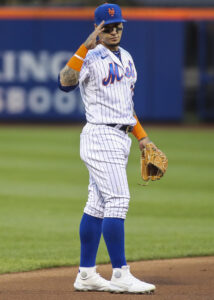
Fast forward less than two years, and “PCA” is regarded as one of the sport’s top outfield prospects. He’s ranked within the top-30 overall prospects in the sport on the most recent lists Baseball America, MLB.com, FanGraphs and Keith Law of The Athletic. ESPN’s Kiley McDaniel has the “low” ranking on Crow-Armstrong… at No. 39 in the game. Regarded as plus-plus defender in center field with plus speed, Crow-Armstrong has opened the season with a .278/.345/.513 showing in Double-A (131 wRC+). He’s knocked eight homers, seven doubles and three of triples while going 13-for-17 in steals.
Obviously, the Cubs haven’t yet gotten any big league value out of Crow-Armstrong, but it’s rare for a team to acquire a prospect in exchange for a rental and see him almost immediately ascend to the point that he’s regarded as one of the top 15 to 30 prospects in all of baseball. If the Cubs wanted to do so — they surely don’t, to be clear — they could use Crow-Armstrong as a headline piece to acquire just about any controllable veteran who hits the market this summer or next offseason. The likelier path for PCA is that he’ll be given every opportunity to become a franchise center fielder for a still-retooling Cubs club.
There’s no nitpicking with the other two swaps in this three-for-one entry. Rizzo and Bryant were shipped out as two-month mercenaries in exchange for a quartet of prospects, although Rizzo took to the Bronx quite nicely and is now locked in as a Yankee through the 2024 season. There was plenty for the Yankees to like, as Rizzo hit .249/.340/.428 (113 wRC+) down the stretch, swatting eight homers and seven postseason doubles before tacking on another dinger in that year’s Wild Card loss to the Red Sox. In parts of three seasons as a Yankee, Rizzo is a .245/.344/.468 hitter with 51 home runs.

I doubt the Yankees regret making this swap, but it’s worked out nicely for the Cubs as well. Alcantara, now 20 years old, isn’t as highly regarded as Crow-Armstrong, but he entered the season ranked No. 91 on Baseball America’s Top 100 prospect rankings. He’s dropped off that list after a slow start in High-A (.250/.281/.389), but he still sits at No. 75 at FanGraphs and is generally a very well regarded prospect.
It’s worth bearing in mind that those pedestrian High-A numbers have been posted against competition that is, on average, nearly two and a half years older than Alcantara. The towering 6’6″ toolbox is also just a season removed from a much heartier .273/.360/.451 showing in Class-A, where he was nearly two years younger than the league’s average player. He’s a ways off, but like Crow-Armstrong, Alcantara has significantly elevated his stock since that 2021 trade. If the Cubs were so inclined, he too could be a significant piece in any potential deadline trade for controllable big league help. That’s not likely to happen — granted, it’s a bit more plausible with Alcantara than with Crow-Armstrong — but Alcantara has become a reasonably high-profile prospect.
That’s not the case with the now-26-year-old Vizcaino, though the circumstances surrounding his departure from baseball remain unclear. The Cubs placed Vizcaino on the restricted list in 2022 after he failed to report to spring training. He spent the entire year on the restricted list. The Cubs non-tendered him last offseason, and he didn’t sign with another team. Details surrounding Vizcaino’s abrupt departure from the game are basically nonexistent. The obvious hope is that he’s happy and healthy wherever he’s at, but it’s a disappointing outcome for the Cubs.
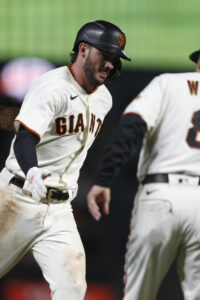
As for the third and final chapter of this deadline trio, Bryant proved an important pickup for the Giants. True, San Francisco would’ve made the postseason regardless, evidenced by their MLB-best 107 wins that season, but they edged out the division-rival Dodgers for that NL West crown by a margin of just one game. Bryant’s solid .262/.344/.444 slash may not have been in line with his peak form, but he contributed a meaningful presence in the Giants’ lineup down the stretch. They’d go on to fall to those same Dodgers in the National League Division Series, but not through any fault of Bryant’s. He delivered an 8-for-17 performance in the NLDS, adding a homer and a walk with only three strikeouts in 18 total trips to the plate.
Unlike with the other two trades, Cubs fans have at least gotten a look at one element of this return, although the now-26-year-old Kilian’s big league work to date hasn’t been pretty. The 6’4″ righty is still widely regarded as one of the organization’s best pitching prospects, but he’s been tagged for 20 earned runs in 14 2/3 innings through a pair of very limited auditions. He’s pitched 148 Triple-A innings as a starter over the past two seasons, logging a 4.32 ERA with a 24.2% strikeout rate against an 11.1% walk rate.
Command wasn’t an issue for him prior to reaching Triple-A, but he struggled with walks last year. It’s encouraging that he’s walked just 6.8% of his opponents over his past seven Triple-A starts, pitching to a 3.09 ERA along the way, but Kilian has also plunked six hitters in that time so he’s not out of the woods with his shaky location just yet. He’s in the mix to come up and make some starts this year still, and depending on how he fares, Kilian could be a candidate for a rotation spot either later this season or in 2024.
As for Canario, he finished second among all minor leaguers with 37 home runs in 2022 and hit .252/.343/.556 across High-A, Double-A and Triple-A. He added 23 steals (in 26 tries) and walked at an 11% clip, though his 27.5% strikeout rate was more concerning. Baseball America calls him a potential low-average slugger with plenty of walks, above-average speed and above-average defense in right field. He hasn’t yet gotten a chance to build on last year’s breakout, as he dislocated his shoulder while playing in the Dominican Winter League.
We’re just shy of two years removed from the Cubs’ deadline fire sale, and while it’s still early to grade the overall strength of their return, things are looking promising. To trade three rental players and come away with a pair of top-100 prospects — including one who’s widely ranked in the top 25 — as well as a near-MLB starting pitcher and a strikeout-prone but prodigious slugging outfielder with power, speed and defensive upside is objectively impressive.
On the one hand, it’s a testament to the caliber of the players the Cubs were trading, but not all trades of star players result in this type of return. The Orioles have still barely gotten anything from the Manny Machado trade nearly five years after its completion. The Rangers’ trade of Darvish to the Dodgers netted them one immediate top prospect, but two years after the deal that prospect (Willie Calhoun) was already looking like a questionable big leaguer.
The tail-end of the development phase for the prospects acquired here — particularly Crow-Armstrong — will define this series of trades. But four of the five prospects acquired in this slate of trades have enhanced their stock since joining the Cubs, who now have a handful of near-MLB-ready talent and/or trade chips to show for parting with a trio of popular veterans. The 2021 trade deadline was a dark few days for Cubs fans, but there’s a good chance it’ll wind up leading to some brighter times ahead.
Images courtesy of USA Today Sports.
Big Hype Prospects: Wood, Holliday, Williams, Rodriguez, Crow-Armstrong
The international signing market is well underway. We can think of these mostly 16-year-old boys as transplanted seeds. Some of them will grow big and strong over the next half-decade. Others will sprout then later wither during a drought or cold spell. Many won’t take to the new soil in which they’re planted. Perhaps the soil is too base or acidic. Or maybe a team thought they were buying one type of seed and actually got another. The wrong type of nurturing can ruin a plant. As outside observers, we can check back in a year or three once these youngsters have taken to their new soil.
Plant metaphor aside, we have a honking update from Baseball America to chew upon this week. They’ve released their initial 2023 Top 100 Prospects list. I’m pleased to point out that Big Hype Prospects has correctly anticipated several notable surges up the prospect ranks, most notably number one overall Gunnar Henderson, number three Jackson Chourio, and number five Andrew Painter. Today, I’ll focus on a few names who have shot up the ranks.
For those of you who have been frustrated by the lack of “Big Hype” in our offseason prospects coverage, this is the episode for you.
Five BHPs In The News
James Wood, 20, OF, WSH (A)
(R/A) 348 PA, 12 HR, 20 SB, .313/.420/.536
Wood drew attention as the principal return in the Juan Soto trade. While he was joined by several promising young players, Wood is now seen as the “big get” in the deal. One concern from professional evaluators is the lack of successes from the Nationals development pipeline. While they’ve had a few big stars over the years (i.e. Soto), they’ve also seen a number of top prospects vastly underperform expectations (i.e. Victor Robles and Carter Kieboom).
If we assume the club doesn’t find some way to spoil Wood, there’s considerable upside here. Wood is built like a young Oneil Cruz. He’s a lean, physical giant with above-average speed, light tower raw power, a surprising feel for contact, and natural plate discipline. Like many young players, his contact profile is still geared toward ground balls. He also has an all-fields approach which has helped with his BABIPs at the expense of home runs. These will be the areas of his game likeliest to differentiate between a core performer or superstar future. Wood ranks 11th on the new Top 100 list.
Jackson Holliday, 19, 2B/SS, BAL (A)
(R/A) 90 PA, 1 HR, 4 SB, .297/.489/.422
The first overall pick of the 2022 draft, Holliday checks in as the 15th prospect per Baseball America. In limited exposure, he demonstrated pristine plate discipline and only rarely whiffed. The Orioles have recently garnered a sterling reputation when it comes to developing middle infielders. Holliday is still built like a typical 19-year-old athlete. He’s expected to add weight in the coming years. Scouts believe he’ll grow into 60-grade power. “Grow” is the operative word. Holliday and the Orioles will want to be careful. Too much growth could lead to a future as a second baseman with average or worse speed. Too little growth could leave his bat lacking thump.
Gavin Williams, 23, SP, CLE (AA)
(A+/AA) 115 IP, 11.7 K/9, 3.1 BB/9, 1.96 ERA
Williams looks the part of a future ace, combining an effective upper-90s heater with a plus slider and curve. Like many power pitchers, his changeup flashes as usable but lags behind the other offerings enough that it’ll play fourth fiddle. A fly-ball pitcher with average command, Williams should be ready to contribute in Cleveland this season – health allowing. Williams is rated 20th by Baseball America. Between him and fast-rising Daniel Espino (19th-ranked), the Cleveland rotation could feature two lethal aces by the start of 2024.
Endy Rodriguez, 22, C, PIT (AAA)
(A+/AA/AAA) 531 PA, 25 HR, 2 SB, .323/.407/.590
Back in September, my sources were talking about bumping Rodriguez onto their Top 100 lists. I said the following:
Acquired in the Joe Musgrove trade, Rodriguez’s development advanced by leaps and bounds this season. He entered the year as a utility man with some catching experience. He now looks the part of either a premium catcher or second baseman. His hitting, which has always been discipline-forward, took a big step this season. Including all three levels he’s played, Rodriguez hit 24 home runs, 37 doubles, and three triples in 520 plate appearances. Not only is he hitting for power, he’s making excellent swing decisions and improving at every level. In a more widely applauded system, this performance could merit inclusion among the Top 25 prospects. As it stands, he’s quietly leaping onto Top 100 lists.
Rodriguez now ranks 23rd. Victory lap complete, Rodriguez is on the cusp of reaching the Majors. The Pirates have quietly given their roster a chance to “surprise contend.” One position they’ve done little to solve is catcher. They’re currently set to roll out a duo of defensive specialist Austin Hedges and perennial third-catcher Tyler Heineman.
Pete Crow-Armstrong, 20, OF, CHI (MLB)
(A/A+) 423 PA, 16 HR, 32 SB, .312/.376/.520
Crow-Armstrong is spoken of as a Kiermaierian defender, giving him one of the highest floors in the entire minor leagues. On this strength, Baseball America has ranked him 25th. Concerns about his hit tool have been alleviated following a successful 2022 campaign. It’s now believed he’ll settle in as an above-average hitter in addition to being the best defensive outfielder in the league. While that sounds like the profile of an easy Top 10 prospect, there are still enough ways for his bat to stumble to merit caution. The next hurdle for him is to see how his bat reacts to higher-quality breaking balls in the upper minors.
Five More
Kodai Senga, NYM (29): This column typically avoids international free agents. Technically, Senga is a prospect and ranks 16th. From the perspective of immediate contribution, only Henderson and Corbin Carroll are in the same stratosphere. Of course, Senga’s advanced age reduces his “value” as a prospect.
Evan Carter (20): Carter, another guy whose rise was anticipated by this column, is frequently comped to Brandon Nimmo. The left-handed hitter is carried by plate discipline and a feel for contact. His power isn’t a total zero, but it lags behind his other hitting traits. He might top out as a 20-homer threat, or he might not climb that far. Even so, he’s a high-probability future core performer. He’s ranked 26th. Teams value these sorts of players – just look at what Nimmo earned in free agency.
Brandon Pfaadt, ARI (24): There’s disagreement about which of the Diamondbacks young pitchers will turn out as the best performer. Baseball America has hitched its stakes to Pfaadt after his breakout 2022 campaign. He ranks 27th. We discussed him last week.
Marco Luciano, SFG (21): At one point, Luciano was trending toward top overall prospect status – much the way Chourio is now. Some of Luciano’s skills haven’t developed as expected, and his meteoric rise has stalled to a more gradual approach to the Majors. Luciano, 37th-ranked, still projects as a prodigious power hitter, one with flaws and a future move down the defensive spectrum.
Kevin Parada, NYM (21): At 50th on the list, Parada’s was the first name to catch me entirely by surprise. The 11th overall pick in the 2022 draft, Parada ranks where he does due to promising offensive traits and roughly average defense. Parada was taken with the compensation pick for not signing Kumar Rocker in 2021. Rocker, you might note, does not rank in the Top 100.
Big Hype Prospects: Alvarez, Baty, Crow-Armstrong, Langeliers, Bello
Julio Rodriguez is on the verge of a massive contract extension. Who will be the next prospect to ink a mega-deal? Today’s Big Hype Prospects won’t answer that question, but it’s possible we’ll discuss them all the same.
Five Big Hype Prospects
Francisco Alvarez, 20, C, NYM (AAA)
141 PA, 6 HR, .180/.340/.378
Despite the triumphant return of Jacob deGrom, the Mets divisional aspirations are endangered. Their once dominant lead over the Braves has dwindled to just two games. The club has received exactly 0.0 WAR from their catchers. Alvarez, whose combination of discipline and rare raw power can lead to some irresponsible comps (like former Met Mike Piazza), has held his own at Triple-A. The low batting average is the result of an unfortunate .209 BABIP. Low BABIPs in the minors can be symptomatic of a flaw. Sometimes, they’re just bad luck over a small sample. Alvarez had similar issues in High-A last season (.260 BABIP) so it’s possible his plodding speed and pull-heavy approach might yield an all-or-nothing slugger, especially early in his career. Defensive reviews are mixed and can sometimes leave a Gary Sanchez-like taste on the tongue. He has the capacity and work ethic to stick at the position, but maybe his bat is too potent to subject to the rigors of battery work?
Alvarez would certainly upgrade the Mets lineup over the likes of James McCann and Tomas Nido. However, they’re both talented defenders who have experience with the Mets pitching staff. If New York wants to experiment with Alvarez ahead of the postseason, now is the time to do it.
Brett Baty, 22, 3B, NYM (MLB)
35 PA, 1 HR, .161/.235/.258
Baty’s first exposure to Major League pitching hasn’t exactly gone according to plan. He had only 26 successful plate appearances at Triple-A before he was called upon. Much of his season was spent in Double-A where he hit .312/.406/.544 in 394 plate appearances. Baty is a disciplined hitter who makes hard, low-angle contact. With 91-mph average and 113-mph max exit velocities, he’s already demonstrated his power in just 24 batted ball events. His tendency to keep the ball on the ground could yield a contact profile something like a less-extreme Yandy Diaz. Whereas Diaz is nigh immune to strikeouts, Baty has a bit of swing-and-miss in his game.
Eduardo Escobar is nearing a return which could spell the end of the Baty experiment – at least for 2022. It’s also worth noting that his struggles have occurred over just nine games. He wouldn’t be the first player to need a couple beats before catching his stride.
Pete Crow-Armstrong, 20, OF, CHC (A+)
235 PA, 9 HR, 16 SB, .286/.332/.521
Known to many prospect-watchers by his initials “PCA,” Crow-Armstrong was acquired from the Mets as part of the Javier Baez trade in 2021. The Cubs instigated a mechanical change to his swing which has led to above average pull-side power this season. Including a thorough stomping of Low-A pitchers, PCA has 16 home runs and 29 stolen bases across 418 total plate appearances. He’s a gifted center fielder who was originally expected to fit in the Majors as a defensive savant. The addition of power to his profile could unlock a star-level ceiling. There remain issues with his bat including elevated strikeout and swinging strike rates. He’s young for his level and showed better plate discipline in the past. Consider him a volatile work-in-progress who now appears likely to have a role as a future regular.
Shea Langeliers, 24, C, OAK (MLB)
36 PA, 2 HR, .294/.306/.647
A key component of the Matt Olson trade, Langeliers has made an impactful debut. He’s already popped two home runs, four doubles, and a triple in just nine games. That’s par for the course with Langeliers. He has middling plate discipline, plus power, and a below average feel for contact. When he does connect, it tends to be loud. His best trait is defense where he’s expected to be a comfortably positive contributor. The presence of Sean Murphy is only a temporary impediment – it’s widely assumed the veteran Athletic will be traded over the winter.
Brayan Bello, 23, SP, BOS (MLB)
22 IP, 9.00 K/9, 4.91 BB/9, 7.36 ERA
Recently returned from the injured list, Bello had his best big league outing against the division rival Blue Jays. He tossed five innings of two-run ball while compiling seven strikeouts. Bello has a four-pitch repertoire led by a bowling ball 96.5-mph sinker. He also has a slightly harder fastball he can locate up in the zone. A slider and frequently-used changeup round out his pitch mix. In 18 minor league appearances he posted 12.10 K/9, 3.40 BB/9, and a 2.34 ERA. His carrying trait is an over-60 percent ground ball rate which, if maintained, would rank second among qualified starters between southpaw Framber Valdez (67.5%) and right-hander Logan Webb (58.4%). Like many sinker specialists making their debuts, Bello has struggled with free passes. He got away with iffy command in the minors because his stuff played even when thrown down the pike. He’s liable to need an adjustment period in the Majors.
Five More
Mark Vientos, NYM (22): A possible alternative to Baty and Escobar, Vientos is red hot for the month of August. He’s batting .403/.448/.661 with four home runs in 67 plate appearances. He draws negative reviews for his third base defense and is in the process of switching over to first base. The bat appears as if it should play in the Majors at either position, though he might be a tad ordinary at the cold corner. He’s just shy of a 30 percent strikeout rate for a second consecutive season in the upper-minors.
Grayson Rodriguez, BAL (22): Rodriguez has been sidelined for nearly three months with a lat strain. He is due to face hitters in a simulated game later this week. It’s possible he could make his debut in late-September.
Gunnar Henderson, BAL (21): Rumors abound of an impending callup for Henderson. Club officials are supposedly pondering the implications on his development. Henderson hasn’t exactly knocked down doors in August, batting .259/.364/.435 with 12.1 percent walk and 31.3 percent strikeout rates.
Robert Hassell III, WSH (21): One of the prizes acquired for Juan Soto, the Nationals aggressively promoted Hassell to Double-A where he’s hit .147/.237/.206 through his first eight games. Like Baty above, it’s not uncommon for young players to scuffle when first presented with a new challenge. And even Mike Trout has eight-game slumps. Strikeouts have been an issue for Hassell since joining the Nats org.
Curtis Mead, TB, (21): Recently recovered from a month-long injury to his elbow, Mead has five hits and two walks over 14 plate appearances. The right-handed slugger could make a useful platoonmate with David Peralta, especially once rosters expand in a few days. He’s Rule 5 eligible this winter so getting a jump on his service clock should be seen as acceptable – assuming the Rays can find a 40-man spot. He’s hitting .299/.391/.536 on the year, mostly at Double-A.
NL Central Notes: Hinds, Crow-Armstrong, Mathias
The Reds are moving power-hitting prospect Rece Hinds from third base to the outfield, The Cincinnati Enquirer’s Charlie Goldsmith writes. The club first considered a position change for Hinds earlier this spring — as detailed by MLB.com’s Mark Sheldon — and a more official decision has now been made, in an effort to help keep the 21-year-old healthy. Between the canceled 2020 minor league season and a pair of serious leg injuries in both 2019 and 2021, Hinds has barely played (57 games, 236 plate appearances) since the Reds selected him in the second round of the 2019 draft. Changing positions will theoretically help Hinds “concentrate on his legs, his agility and his leg health,” Reds VP of player development Shawn Pender said. “As big as he is, third base is not easy for a big man to play, no matter how athletic he is. Let’s put him someplace where that bursting stop and start isn’t impacting him.”
The 6’4, 215-pound Hinds is ranked amongst the Reds’ top ten prospects by both MLB Pipeline (7th) and Baseball America (8th). Both outlets’ scouting reports cited the possibility of Hinds eventually moving to the outfield, and between Hinds’ athleticism and a very strong throwing arm, the transition could be relatively smooth. Beyond his glovework, Hinds’ power and bat speed are his true calling cards, and he has hit a respectable .249/.326/.522 with 12 homers over those 236 PA, amidst all his injuries. Hinds played in A-ball last season, and it isn’t yet known if Cincinnati will start Hinds at Double-A, or perhaps at least start him back at A-ball just to get a few more games under his belt and some more seasoning at this new position.
More from around the NL Central…
- Injuries have also limited the brief career of Pete Crow-Armstrong, as shoulder surgery ended the outfielder’s first pro season after only six games. That health concern didn’t stop the Cubs from making Crow-Armstrong the key piece in the trade package they received from the Mets in the Javier Baez blockbuster last July, and MLB.com’s Jordan Bastian writes that Crow-Armstrong was cleared for regular activity in the Cubs’ minicamp. During his recovery time, Crow-Armstrong and Chicago minor league hitting coach Rachel Folden made some adjustments to his swing and approach, and the early results are promising. Crow-Armstrong “might have the biggest exit velocity jump of anyone we have in camp. He’s just way more physical,” Cubs director of hitting Justin Stone said.
- Mark Mathias is unfortunately no stranger to shoulder injuries, having twice undergone procedures for torn labrums. The latest surgery cost Mathias the entire 2021 season, but he is back at fully participating in the Brewers‘ minicamp with no apparent limitations. “It’s a miracle, man. I was thinking I wasn’t going to be able to recover from this one fully,” Mathias told MLB.com’s Adam McCalvy. “This is my second surgery on the throwing shoulder, and most of the time when guys have that, it’s career ending….I’m able to throw and it looks right, and I’m thankful.” Mathias has been able to work out at camp and consult with the Brewers training staff because Milwaukee outrighted him off its 40-man roster in November, and thus Mathias isn’t subject to the lockout. Mathias spent much of his career in Cleveland’s farm system before being acquired by the Brew Crew in November 2019, and he made his MLB debut by playing 16 games for the Brewers in 2020. With Milwaukee constantly on the lookout for versatile roster pieces, Mathias will have a chance to win himself a bench job whenever big league camps finally open.
Mets Acquire Javier Baez, Trevor Williams
The Mets and Cubs announced agreement on a deal sending star shortstop Javier Baez to Queens. He’ll be accompanied by right-hander Trevor Williams, with outfield prospect Pete Crow-Armstrong sent back to Chicago in return.
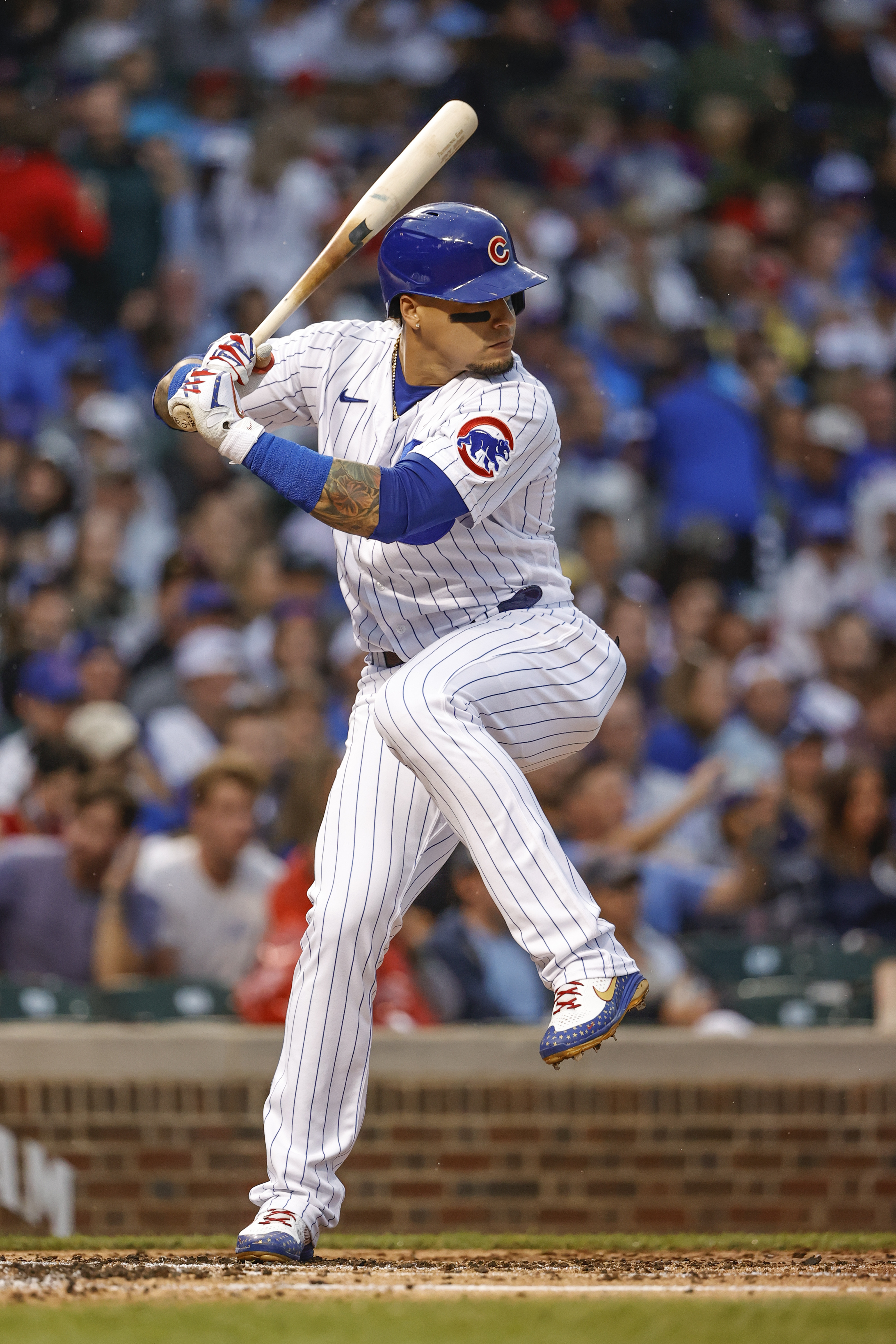
Between landing Francisco Lindor during the offseason and now trading for Baez, the Mets have obtained two of the sport’s best shortstops (who are also great friends with each other) within the span of a few months. Baez is a free agent after the season, so while this is quite possibly a short-term pickup meant to only help the Mets in 2021, it will nonetheless be a huge boost to New York’s chances of winning the NL East and making a run in October.
The trade ends a very memorable eight-season run for Baez in Wrigleyville, after he was selected with the ninth overall pick of the 2011 draft. Beginning his career as a free-swinging power bat, Baez’s propensity for striking out never really went away (his 131 whiffs leads the league this year), but he has hit .269/.307/.502 with 116 homers over 2310 PA since the start of the 2017 season. That includes a huge 2018 season that saw Baez finish second in NL MVP voting, while also winning a Silver Slugger Award.
As accomplished as Baez is at the plate, his defense has become his calling card. It took Baez until 2020 to capture his first Gold Glove, but his shortstop ability has been celebrated for years, even if he didn’t fully leave second (or even third) base duty until 2019. Since Lindor has played only as a shortstop at the MLB level, Baez is the likelier of the two to be moved around the diamond as the Mets’ needs develop.
Most of the Mets’ rumors were centered around the team’s search for third base help, though Lindor’s recent placement on the 10-day injured list seemed to expand the search to the shortstop position as well. Baez can handle short until Lindor is healthy, and could then slide over to play second base or potentially even third base, giving the Mets a clear and immediate upgrade to their infield defense. Jeff McNeil and J.D. Davis are the current first-choice options at second and third base, though either could be moved into the outfield, with McNeil being the more versatile of the two.
Williams will add depth to a Mets rotation that has been thinned by injuries, though once everyone is at full health, Williams is likely to be relegated to bullpen duty. The 29-year-old right-hander has a 5.06 ERA over 58 2/3 innings for the Cubs this season, and there isn’t much to like about his Statcast metrics. That said, Williams’ SIERA is a more palatable 4.18, and he has experienced some misfortune — a .343 BABIP, and a .358 wOBA that is far above his .320 xwOBA.
The Baez deal continues a Cubs fire sale that has already seen the likes of Kris Bryant, Anthony Rizzo, Craig Kimbrel, Ryan Tepera, and Joc Pederson all dealt. The Mets announced they’ve received an undisclosed amount of cash in the deal. Baez has roughly $3.96MM remaining on his $11.65MM salary for the 2021 season. The Mets still have some breathing room under the $210MM luxury tax threshold, as only the prorated portion of that $11.65MM counts against their tax number (and the Cubs might are also kicking in some money).
In exchange for Baez and Williams, the Cubs will receive a solid but not quite elite prospect in Crow-Armstrong, who wasn’t listed by either MLB Pipeline (fifth) or Baseball America (sixth) as one of New York’s top four prospects. Still, Crow-Armstrong was selected 19th overall just last summer, and he began his pro career with a 1.024 OPS over the very small sample size of 32 PA for the Mets’ A-ball affiliate before having to undergo shoulder surgery.
The 19-year-old Crow-Armstrong might already be just about MLB-ready on the defensive front, as he has an excellent throwing arm and speed that makes him a fit as a future center fielder. As Pipeline’s scouting report simply puts it, “the offensive game will be a work in progress,” as Crow-Armstrong has shown only power potential thus far rather than any real power. He does make a lot of contact, however, and his speed could be a difference-maker in helping him turn grounders into singles or singles into doubles.
Andy Martino of SNY reported the Mets’ acquisition of Baez. Jon Heyman of MLB Network reported that New York was also acquiring Williams, while Bob Nightengale of USA Today reported that Crow-Armstrong was headed back to Chicago in return. The Athletic’s Ken Rosenthal and Jayson Stark initially reported the two sides were making progress on a trade, with The New York Post’s Joel Sherman tweeting that a pitcher might also be involved as part of the negotiations.
Mets Prospect Pete Crow-Armstrong To Undergo Shoulder Surgery
The Mets’ injury woes continued this week, as the team announced Tuesday that top outfield prospect Pete Crow-Armstrong will undergo surgery on his right shoulder “for a GLAD lesion (glenoid labral articular disruption).” Crow-Armstrong, according to the Mets’ press release, underwent an MRI this week, which “revealed a tear of the labrum as well as injury to the articular cartilage of the shoulder.”
The 19-year-old Crow-Armstrong wouldn’t have been a viable option for the Mets’ banged-up outfield in 2021 anyway, but it’s nevertheless a notable setback to the 2020 first-round pick’s development. He appeared in six games of Class-A ball in 2021, going 10-for-24 with a pair of doubles to begin his professional career. That limited sample will now be the only experience he gets under his belt for the 2021 season. The Mets have yet to announce a formal timeline on his recovery, but a surgery of this nature surely won’t be something from which he can return in just a few months’ time.
Crow-Armstrong becomes the second high-profile Mets prospect now slated for major surgery, joining 2019 draftee Matt Allan, who is out for the year due to Tommy John surgery. Both players rank among the Mets’ top six farmhands on the organizational rankings at Baseball America, MLB.com and FanGraphs.
Mets Sign First-Rounder Pete Crow-Armstrong
The Mets have signed first-round pick Pete Crow-Armstrong, Jonathan Mayo of MLB.com tweets. He’ll earn the full slot value of his selection, No. 19, with a $3,359,000 bonus.
The 18-year-old Crow-Armstrong, an outfielder from Los Angeles, committed to Ohio State prior to the draft. He entered the proceedings as a top 25 prospect according to Keith Law of The Athletic (No. 10), Baseball America (No. 17), ESPN’s Kiley McDaniel (No. 18), MLB.com (No. 20) and FanGraphs (No. 25). Law, the biggest fan of Crow-Armstrong among the bunch, praised his all-around game, especially his defense in center field, writing, “The defensive and positional value give him a higher floor than most teenagers in the class have, and the possibility for a 60 bat with 50 power gives him a star ceiling.”
The Crow-Armstrong deal leaves the Mets with just one unsigned draft pick, second-rounder J.T. Ginn, whose selection (No. 52) comes with a recommended value of $1,403,000. The Mets still have about $2.6MM left in their draft pool, per Anthony DiComo of MLB.com, so it seems they’re in good position to sign Ginn.