
Adrian Beltre Seeks Three-Year Deal From Rangers
Rangers third baseman Adrian Beltre is looking for a three-year deal in extension talks with the club, Jon Heyman of MLB Network reports (Twitter links). He’s also hoping to out-earn Pablo Sandoval on an annual basis, per the report, which would suggest a deal with an average annual value in excess of $19MM. Presumably, that contract would kick in following the 2016 campaign, as Beltre is already guaranteed $18MM for the upcoming season.
As things stand, unsurprisingly, there’s said to be a “significant gap” between the sides. If nothing else, it seems that there’s quite a bit of negotiating left to do to find agreement. We have heard recently about mutual interest in a deal, however, as Jon Morosi of FOX Sports reported.
Beltre will soon turn 37 and dealt with a significant injury to his thumb last year. But he was still a productive hitter in 2015, with a .287/.334/.453 slash, and was arguably the game’s very best defensive third baseman. It also shouldn’t be forgotten that he was coming off of a five-year run in which he averaged a remarkable .316/.364/.535 batting line and 6.7 rWAR annually.
It’s obvious to see why Texas would have interest in keeping the veteran around, but there’s also good reason to think the organization will be cautious about promising him that kind of money through his age-40 season. In addition to age and injury risks, the Rangers have some promising options in their system, including former top prospect Jurickson Profar and power hitting youngster Joey Gallo.
Finding a middle ground could be a challenge, but still seems a plausible result. In his recent appearance on the MLBTR Podcast, Evan Grant of the Dallas Morning News opined that it could make sense to see a two-year contract in the range of Beltre’s current earnings — i.e., somewhere in the range of $16MM per year. However, Heyman hints that there’s a sense in Beltre’s camp that he outperformed his prior deal (which is undeniably true), and that could have an effect on his stance in future talks.
As Steve Adams of MLBTR posited in a recent MLBTR chat, it’s not surprising to see a three-year request out of the gates from Beltre. For one thing, Beltre’s reported position is only a starting point: it’s worth noting that, as Grant stated on the podcast, talks haven’t yet progressed much given the team’s other prerogatives. And advanced age doesn’t always preclude that length of contract in free agency. Carlos Beltran landed three years and $45MM from the Yankees for his age-37 through age-39 campaigns, and he wasn’t really even close to Beltre in terms of overall on-field value given his increasingly apparent defensive limitations in the corner outfield.
As things stand, Beltre is set to be one of the few premium players set to hit the open market next winter. He profiles as a future Hall-of-Famer and ranks fourth in total fWAR dating back to 2011, so he presents something of a unique player. Jose Bautista, who is about two years younger, is said to be seeking a $30MM (or greater) AAV over a five- or six-year term, and there’s certainly an argument to be made that Beltre represents a more appealing investment at his reported asking price.
Truth be told, there aren’t many straightforward comparables for a Beltre extension, in large part because it’s unusual to find players who have performed at such a high level — at a difficult defensive position, no less — at this stage of their careers. Entering his age-38 season with free agency beckoning, Red Sox designated hitter David Ortiz got another season and $16MM guaranteed from the Red Sox, with a vesting option and second option year at floating prices depending on the prior years’ plate appearances. At the end of a productive 2013 season, the slightly younger Chase Utley signed on for two more guaranteed years at $27MM with a series of vesting options (in an even more complicated deal with the Phillies). Utley, however, had a spottier recent track record due to a series of knee injuries that understandably gave the Phillies pause.
While those agreements fall shy of what Beltre is seeking, it’s fair to note that some huge extensions have promised premium salaries up to or through players’ age-40 campaigns. That was the case for players like Miguel Cabrera, Joey Votto, Albert Pujols, and Alex Rodriguez, though of course all of those deals also covered more youthful campaigns. But, in some sense, every time a monster contract pushes control towards or past a player’s 40th birthday, the hope is that the player profiles as well as Beltre does now when the end of the deal approaches.
In the end, those contracts don’t really tell us much about Beltre’s own late-career earning power, as the late-30s years that were guaranteed in each of those deals was the cost of locking up the remaining prime seasons of each of those stars. Few players have maintained this level of productivity into the late stages of their career with the prospect of another bite at free agency looming, so any contract he signs will ultimately be deemed as something of a precedent-setter for aging-but-elite players that still hold open-market aspirations.
Offseason In Review: Chicago White Sox
This is the third entry in the Offseason In Review series. You can also read our Reds and Rockies entries.
The White Sox addressed many different offseason needs without making big sacrifices to the team’s future.
Major League Signings
- Alex Avila, C: one year, $2.5MM
- Jacob Turner, P: one year, $1.5MM
- Dioner Navarro, C: one year, $4MM
- Matt Albers, RP: one year, $2.25MM. Includes $3MM club option for 2017 with a $250K buyout.
- Mat Latos, SP: one year, $3MM
- Austin Jackson, CF: one year, $5MM
- Total spend: $18.25MM
Notable Minor League Signings
- Jimmy Rollins, Travis Ishikawa, Kameron Loe, Steve Lombardozzi, Scott Hairston, Phillippe Aumont, Andy Parrino, Matt Purke, Hector Sanchez, Josh Wall, Maikel Cleto, Vinny Rottino
Trades And Claims
- Claimed P Jacob Turner off waivers from Cubs
- Acquired RP Tommy Kahnle from Rockies for SP Yency Almonte
- Acquired RP Will Lamb from Rangers for SP Myles Jaye
- Acquired 2B Brett Lawrie from Athletics for P Zack Erwin and RP Jeffrey Wendelken
- Acquired 3B Todd Frazier in three-team deal, giving up SP Frankie Montas, OF Trayce Thompson, and 2B Micah Johnson
- Claimed OF Jerry Sands off waivers from Indians
- Claimed OF Daniel Fields off waivers from Dodgers
Extensions
- Nate Jones, RP: three years, $8MM. Includes $4.65MM club option for 2019, $5.15MM club option for 2020, and $6MM mutual option for 2021, assuming Jones does not require right elbow surgery by end of 2018 season
Notable Losses
- Alexei Ramirez, Tyler Flowers, Gordon Beckham, Geovany Soto, Emilio Bonifacio, Jeff Samardzija, Hector Noesi, Yency Almonte, Myles Jaye, Zack Erwin, Jeffrey Wendelken, Frankie Montas, Trayce Thompson, Micah Johnson, Junior Guerra, Adrian Nieto
Needs Addressed
As explained in our October Offseason Outlook for the White Sox, the team had rampant needs this winter. Let’s begin by examining how GM Rick Hahn upgraded baseball’s worst collection of position players.
Given all the work the White Sox had to do around the diamond, I didn’t feel the team had to make a change at catcher. Hahn disagreed, and proceeded to sign Alex Avila, non-tender incumbent Tyler Flowers, and sign Dioner Navarro. Is the new Avila-Navarro tandem better than Flowers and Geovany Soto? White Sox catchers hit .230/.293/.376 last year, and Avila and Navarro should provide an offensive upgrade. It seems likely that Flowers and Soto are better at pitch framing, however. This change mostly looks like a wash. The Sox also have out of options catcher Rob Brantly on the 40-man; he could wind up with another team.
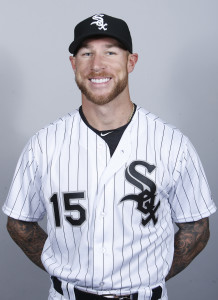 Alexei Ramirez served as Chicago’s starting shortstop for seven years. That era ended when the White Sox declined his club option. Tyler Saladino may still act as the bridge to top prospect Tim Anderson, but the White Sox smartly added veteran Jimmy Rollins on a minor league deal as insurance. The Sox acquired Brett Lawrie from Oakland to play second base, giving up a pair of arms ranked 18th and 23rd in their farm system by Baseball America. The price was relatively meager, but it also reflects Lawrie’s failure to live up to expectations thus far in his Major League career. The 26-year-old finally stayed healthy in 2015, but was barely above replacement level. If Lawrie is able to bounce back defensively and remain healthy, I think there’s a 2-3 win player in there. It was a reasonable gamble for Hahn, and Lawrie is under team control for 2017.
For the team’s third base vacancy, the White Sox landed the best available option in Todd Frazier. I was surprised the Hahn was able to acquire two years of Frazier for Montas, Thompson, and Johnson. Each of those young players has promise, of course, but the Sox didn’t have to surrender a blue-chip prospect or anyone they’d miss in 2016. Over the last two years, Frazier has been one of the five best third basemen in the game. He fits well with the team’s core of Chris Sale, Jose Quintana, Carlos Rodon, Jose Abreu, and Eaton.
I felt that the White Sox should acquire two starting outfielders, pushing Melky Cabrera to the DH spot and Adam LaRoche and Avisail Garcia potentially off the roster. The Sox showed December interest in Alex Gordon and Yoenis Cespedes, but they reportedly did not want to exceed a three-year deal. Cespedes ultimately did sign for three years, but at a hefty $25MM average annual value. The Sox reportedly had interest in Justin Upton and Dexter Fowler once the calendar turned to 2016, offering Fowler a two-year deal worth more than $17MM. In the end, Austin Jackson was signed just this week on an affordable one-year deal. The Jackson signing wasn’t an exciting way to address the team’s outfield, but it does protect against the possible effects of Adam Eaton’s offseason shoulder surgery. Eaton is not yet ready to play in the field, and has an injury history that suggests relying on him for 153 games again would be unwise. The team also weakened its outfield depth by including Trayce Thompson in the Todd Frazier deal, so Jackson was sorely needed. If Eaton, Adam LaRoche, Jose Abreu, Melky Cabrera, and Jackson are healthy at the same time, it seems that Avisail Garcia will lose the most playing time, and that makes the team better.
As expected, the Sox let Jeff Samardzija leave via free agency, collecting a draft pick in the process. In getting Mat Latos for just $3MM, Hahn signed the winter’s best pitching reclamation project at a small fraction of the projected cost. The 28-year-old Latos was brilliant from 2010-13, and with good health he could return to form under pitching coach Don Cooper.
The Sox will return a similar bullpen for 2016, having re-signed Albers. The bullpen will again by led by veterans David Robertson and Zach Duke, but will benefit from a full season from the newly-extended Nate Jones. Turner was claimed off waivers in October, non-tendered in December, and re-signed a few days later. Turner and Dan Jennings are out of minor league options, so they’ll either make the 25-man roster out of camp or be off the 40-man somehow. Maybe the White Sox were simply content with their bullpen, or maybe their hands were tied financially given the $16MM they’ll be paying Robertson and Duke this year.
Questions Remaining
The outfield/designated hitter situation is the biggest remaining question for the White Sox. The addition of Jackson is balanced by the loss of Thompson, so nothing was really done to address a group of players that provided very little value in 2015. Melky Cabrera, Adam LaRoche, and Avisail Garcia were each below replacement level last year, and the team still needs to give a lot of playing time to at least two of them. One more significant outfield addition would have gone a long way.
Latos helps the team’s rotation depth, but it’s difficult to guess how many good innings he’ll provide. The White Sox have John Danks, Erik Johnson, and Jacob Turner as starters five through seven, all of whom project for ERAs around 5.00. It’s unclear when top pitching prospect Carson Fulmer will be ready. Further down the depth chart it might be Chris Beck and Scott Carroll. Most teams aren’t thrilled about their eighth starter, but the Sox are thin after Sale, Quintana, and Rodon.
In general, a cautious yet active offseason will draw praise. However, the flip side to bargain shopping is that you get less reliable players. Yes, the White Sox addressed their middle infield situation, but Rollins and Lawrie were actually pretty bad in 2015. Ian Desmond would have been a safer bet than Rollins. Avila, Latos, and Lawrie can’t be replied upon to stay healthy; that’s part of the reason they came cheap.
Latos and Lawrie may have come cheap for another reason: both have had questions raised about their attitudes. The White Sox have a long history of success bringing in some of the game’s bad boys, a point referenced by Hahn when MLB.com’s Anthony Castrovince asked about Latos. Still, Robin Ventura’s clubhouse this year will be worth monitoring.
Deal Of Note
In early November, I pegged Austin Jackson for a one-year, $12MM deal. Maybe I was just wrong from the start, but signing him for less than half of that amount is an excellent deal for the team. Jackson hasn’t been an above average hitter since 2013, but he played a capable center field last year and could certainly be worth two wins again. That’s easily worth $5MM. Jackson will be in center field when he starts, pushing Adam Eaton to a corner spot and improving Chicago’s defense. As an added bonus, the signing kept Jackson away from the division-rival Indians, who still lack outfield depth. I don’t think the White Sox entered the offseason planning to wait until March for an outfield bargain, given their interest in other free agents and trade targets. Staying disciplined on free agents is risky in its own way as the supply dries up. If another team had signed Jackson this month, the White Sox outfield would be in a really bad place.
Overview
Rick Hahn must be applauded for his offseason, as he did so much without transferring a burden onto the team’s long-term future. It’s fair to say Hahn helped get the White Sox into this mess through some of last winter’s free agent spending, but he has positioned them to be within spitting distance of a playoff spot for 2016. With players like Lawrie, Rollins, Jackson, Cabrera, LaRoche, and Latos, you might think a lot of things need to go right for the White Sox to contend. I don’t think that’s true, however. Hahn’s veteran acquisitions raised the team’s floor considerably, and they shouldn’t have the dead roster spots they did last year. Hopefully, the White Sox will take an aggressive approach toward the trade deadline, as the team could well be one player away.
Now, it’s your turn to grade the team’s offseason (click here if you’re using our app):
How Would You Grade The White Sox Offseason?
-
B 54% (3,662)
-
C 21% (1,439)
-
A 17% (1,158)
-
D 5% (332)
-
F 3% (212)
Total votes: 6,803
AL Notes: Bautista, Desmond, Hultzen, Rondon
Star Blue Jays slugger Jose Bautista is looking for a contract that will keep him in Toronto into his forties at a $30MM+ AAV, says Jon Heyman of MLB Network (Twitter links), but the 35-year-old is perhaps more willing to negotiate than some of his prior comments would suggest. Previous reports of Bautista’s contract requests have reflected just that kind of asking price while sometimes portraying his stance as being more firm. Jays GM Ross Atkins made clear recently that talks have been amicable, and Heyman adds that Bautista does hope to continue on in Toronto, so it appears there is still some hope that the sides can come together on a new contract for the pending free agent.
Here’s more from the American League:
- Twins righty Ricky Nolasco believes he should remain in the club’s rotation, agent Matt Sosnick tells Darren Wolfson of 1500 ESPN (Twitter link). Referencing last year’s disappointing, injury-filled campaign, Sosnick suggests that his client “deserves to show the Twins what he looks like without trying to pitch through pain.” If Nolasco is pushed to the pen, says Sosnick, he’d approach the front office to “directly address his feelings of disappointment” and “ask the team about his other options.”
- The initial returns on Ian Desmond in left field appear to be positive for the Rangers, Ken Rosenthal of FOX Sports writes. He also notes that the Giants had some interest in Desmond earlier in the winter as a super-utility option that would primarily play in the corner outfield, while the Orioles were involved later.
- Mariners lefty Danny Hultzen has suffered a setback in his bid to get back on the bump in a relief role, Shannon Drayer of Seattle’s 710AM ESPN was among those to report on Twitter. He’ll seemingly rest a while as he deals with shoulder stiffness, which hopefully will clear up on its own. It has been a long and difficult road for the 26-year-old, who has dealt with a series of arm issues since he was chosen second overall in the 2011 draft.
- Tigers reliever Bruce Rondon touched 100 mph yesterday and continues to show good form in camp, as Aaron McMann of MLive.com reports. After a disappointing end to the 2015 season, in which he was asked to leave the organization due to his lack of effort, Rondon has drawn positive reviews so far this spring. “He’s been good,” said skipper Brad Ausmus. “He’s done his work, he’s taken his non-pitching fundamentals seriously. He’s put in the effort and he’s looked strong so far on the mound.”
Skip Schumaker To Retire
Utilityman Skip Schumaker has departed Padres camp and appears to be wrapping up his MLB career, manager Andy Green told reporters including Jeff Sanders of the San Diego Union-Tribune (Twitter link). Though he’s not referring to the decision as a formal retirement, the veteran made clear he is moving on from his playing days to spend more time with his family.
Schumaker, 36, signed a minor league deal with San Diego a month ago, and had made a strong impression in camp on the field staff and younger players in the organization. Earlier in the winter, the Reds declined an option to put him onto the open market.
Schumaker has spent parts of eleven seasons in the majors. Most recently, he logged two disappointing seasons in Cincinnati, putting up a meager .238/.297/.322 batting line over 539 turns at bat.
He’ll be remembered most for his time with the Cardinals, where he was a strong contributor for eight campaigns. Schumaker was a regular contributor over 2008 through 2012, and ultimately provided St. Louis with over 2,500 plate appearances with a .288/.345/.377 slash line while splitting his time between second base and the outfield. Schumaker also played for one season with the Dodgers.
With the move, the Padres seem positioned to infuse some additional youth onto the active roster, as players such as Jose Pirela and Jabari Blash now have a clearer path to cracking the club. The competition is also thinned for other potential utility/bench/platoon options in camp, including Alexi Amarista, Brett Wallace, Adam Rosales, Nick Noonan, Jemile Weeks, and Alex Dickerson.
MLBTR wishes Schumaker the best in his future pursuits.
NL East Notes: Harvey, Fernandez, Hernandez, Braves, Rivero
While the Mets have made clear they don’t have any ongoing extension talks with their starters, and there isn’t a ton of pressure given their extended existing control, Joel Sherman of the New York Post suggests that it may be worth at least exploring some chatter with Matt Harvey. Both the prized righty and his agent, Scott Boras, have suggested they’d be willing to engage in dialogue. Harvey, 26, is earning $4.33MM in his first of three seasons of arbitration eligibility. Sherman suggests that buying the remaining two arb years at about $29MM and adding three free agent seasons at $30MM a pop might be a fair valuation. While that seems to be a pretty fair suggestion for an outstanding 3+ starter, even in spite of his recent Tommy John surgery, from my perspective it’s somewhat difficult to imagine Harvey and Boras jumping at $119MM over five years. Such a deal would take Harvey though his age-32 season, meaning he’d hit the market at about the same stage as James Shields did last winter. It’s also far from clear that New York would be interested in such a scenario, of course, and Sherman makes very clear that any such concept is something of a longshot.
Here’s more from the NL East:
- Marlins ace Jose Fernandez, who is currently on track to hit the market with Harvey and a host of other premium players, is working on decreasing his reliance on his big fastball, Clark Spencer of the Miami Herald reports. The hope is that Fernandez will not only be able to improve — a scary proposition for opponents — but will reduce the load on his recently-repaired elbow. “We want to see him continue to pitch and continue to develop his weapons, where he’s not having to have the mentality that I’ve got to strike everybody out,” explained new manager Don Mattingly. “There’s nothing wrong with having guy hit a ground ball early in the count. … We think pitching that way keeps him healthy for a long time. It’s good for him. It’s good for us. It’s good for everybody.”
- Interestingly, the recent Tommy John research of MLBTR contributor Bradley Woodrum showed that the volume of what he classifies as “hard pitches” can have significant predictive power of future UCL replacements. Fernandez is the biggest name to land among the ten pitchers with the highest statistical TJ risk this year, per Woodrum’s research, which certainly suggests that thoughtful handling is warranted.
- Presumed Phillies closer David Hernandez is dealing with some “issues” with his right elbow, manager Pete Mackanin told reporters including Matt Breen of the Philadelphia Inquirer. The skipper himself didn’t seem entirely sure of what difficulties Hernandez was having. Meanwhile, the righty says he isn’t injured and is simply trying not to overburden himself having missed a lot of camp time in recent springs, as MLB.com’s Todd Zolecki tweets.
- In Braves camp, Cuban veteran Hector Olivera is still working to refine his hitting mechanics, as David O’Brien of the Atlanta Journal-Constitution reports, with the team seeing signs of improvement. The first impressions of youngster Ozzie Albies have been universally positive, O’Brien adds, who may be pushing up his big league timeline (although not all the way to Opening Day this year) with his performance. Meanwhile, Atlanta may seek to utilize Jace Peterson in more of a utility role this season, O’Brien adds.
- James Wagner of the Washington Post has an interesting feature on Nationals lefty Felipe Rivero, who came over as one of two minor leaguers to accompany Jose Lobaton in the deal that sent Nate Karns to the Rays. The fireballing southpaw has focused on strengthening his arm, and hopes that touching 100 mph last year will become a more common occurrence. While he says he “was thinking too much before” in a starter’s role, Rivero now feels settled in as a pen man. “Last season,” he said, “I’d imagine that, even if I was facing Barry Bonds, I’d get him out. Or when I threw against the league’s best batters, I didn’t think about the Mets or whoever. It’s me versus you. If I strike you out, I strike you out. If you make contact, you make contact. That’s it.” Wagner notes that Rivero could factor into the team’s future closer considerations, and the 24-year-old says he’d welcome such an opportunity.
Offseason In Review: Colorado Rockies
Last summer’s Troy Tulowitzki deal seemed to promise the launch of a rebuilding effort, but the Rockies didn’t act as a seller this winter.
Major League Signings
- Gerardo Parra, OF: Three years, $27.5MM
- Jason Motte, RHP: Two years, $10MM
- Chad Qualls, RHP: Two years, $6MM
- Mark Reynolds, 1B: One year, $2.6MM
- Total spend: $46.1MM
Trades and Claims
- Acquired LHP Jake McGee, RHP German Marquez from Rays in exchange for OF Corey Dickerson, 3B Kevin Padlo
- Acquired LHP Wander Cabrera from Cubs in exchange for LHP Rex Brothers
- Acquired RHP Yency Almonte from White Sox in exchange for RHP Tommy Kahnle
- Claimed IF/C Tony Wolters off waivers from Indians
Extensions
- Adam Ottavino, RHP: Three years, $10.4MM
- DJ LeMahieu, 2B: Two years, $7.8MM (arb-only)
Notable Minor League Signings
- Yohan Flande (re-signed), Brock Huntzinger, Ryan Raburn, Brian Schlitter, Jackson Williams, Rafael Ynoa (re-signed)
Notable Losses
- John Axford (non-tendered), Rafael Betancourt (retired), Brothers, Brooks Brown, Dickerson, Christian Friedrich, Kahnle, Kyle Kendrick, Michael McKenry, Justin Morneau (declined option), Wilin Rosario (non-tendered)
Needs Addressed
GM Jeff Bridich and his front office surely feel they’ve significantly upgraded the team’s bullpen with a series of veteran additions. Jason Motte and Chad Qualls — whose signings were announced in tandem — were added to bolster the back of the pen from the right side, while Jake McGee delivers premium K:BB rates from the left. They are the key new arms that will help to gobble up relief frames, hopefully in a more productive fashion than many of the outgoing arms. While last year’s overall unit was probably more below-average than terrible, Colorado bid adieu this winter to John Axford (55 2/3 innings in 2015), Christian Friedrich (58 1/3), Rafael Betancourt (39 1/3), Tommy Kahnle (33 1/3), Brooks Brown (33), and LaTroy Hawkins (22 1/3 before his summer trade and eventual retirement).
With righty Justin Miller and lefty Boone Logan also providing late-inning options, there’s certainly hope for improvement — though it doesn’t help that the club just lost Jairo Diaz, a fairly interesting power arm, to Tommy John surgery. The question, though, is whether the price was right. Spending $16MM in total for two years apiece of Motte and Qualls isn’t a huge investment, at least for most of the league, but both come with real questions (including age) and neither deal seems to represent a screaming value. The real eye-opener was McGee, who is a legitimately excellent reliever but who comes with some injury questions and required the sacrifice of four years of Corey Dickerson and his rather impressive bat.
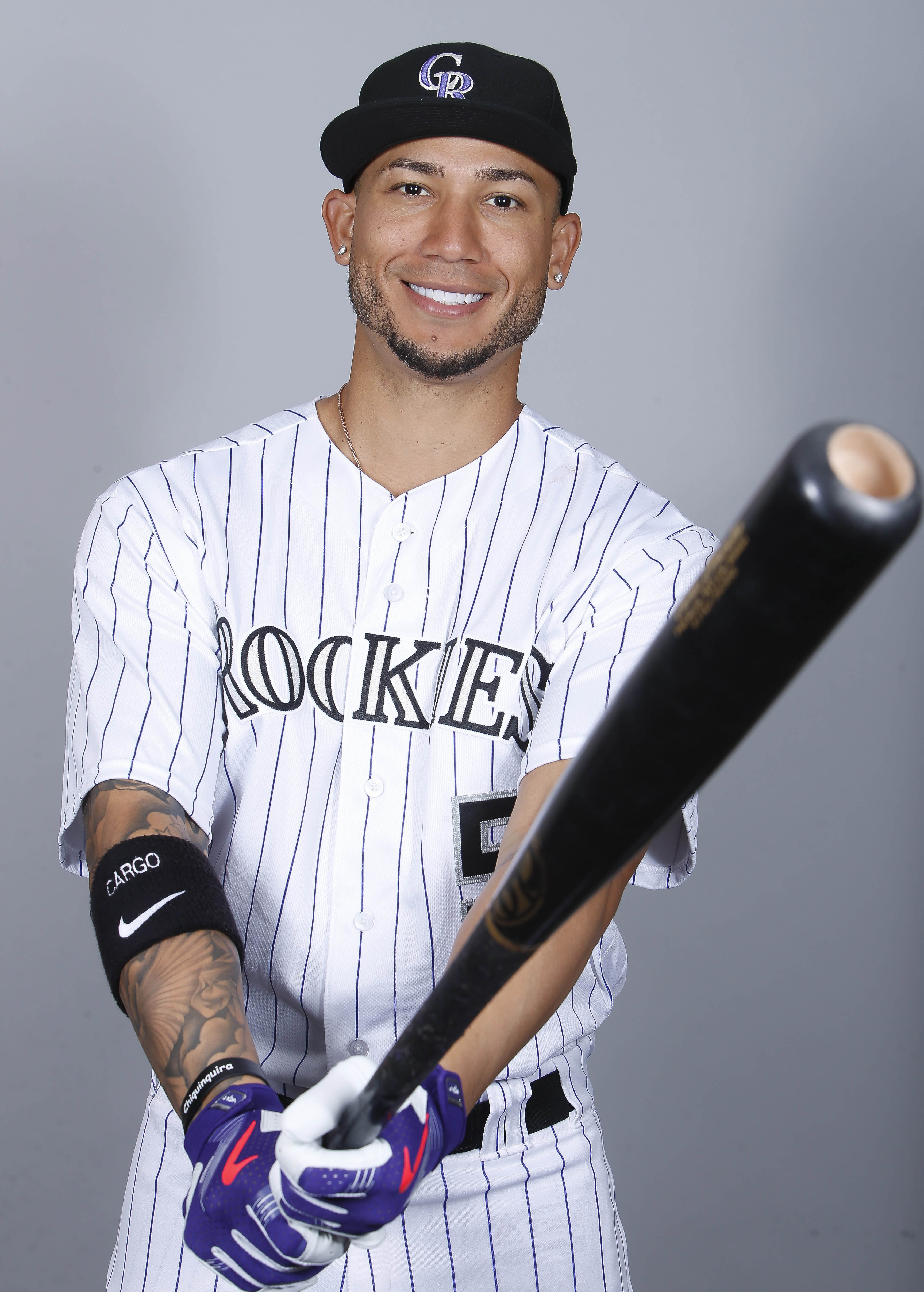 Of course, Dickerson was only shipped out after the Rox added Gerardo Parra. He unquestionably represents an upgrade defensively, though he doesn’t seem to possess near the offensive upside of the younger and cheaper player he’s replacing. The everyday outfield alignment — also including Carlos Gonzalez and Charlie Blackmon, either one of whom could also have been traded — is entirely left-handed, which obviously creates some questions. But Colorado tendered Brandon Barnes and added Ryan Raburn on a minors deal, so there will be some options against opposing southpaws.
The only other significant major league acquisition was slugger Mark Reynolds, whose power will be a sight to behold in Coors Field even if his on-base percentage isn’t. He’s a low-cost add who figures to split time with the southpaw-swinging Ben Paulsen at first while contributing some pop off of the bench. That pairing will step in for Justin Morneau, who missed much of last season and received a $750K buyout when the club declined its end of a $9MM mutual option.
Questions Remaining
The questions in Colorado always seem to begin with the rotation, and at first glance it’s hard to fathom that the organization did not add any MLB-level starters over the winter. After all, last year’s revolving-door staff threw less innings than any other and produced at a level rivaled only by the Phillies.
To be fair, though, the Rockies figure to welcome back several pitchers who missed all or most of 2015, and as I posited at the offseason’s outset, it never made much sense to plow money into marginal free agent hurlers to convince them to come to Coors. Injury rehabbers Jordan Lyles and Tyler Chatwood figure to slot directly into a rotation led by last year’s two best performers: veteran lefty Jorge De La Rosa and surprisingly productive righty Chad Bettis. There’s ample uncertainty not only within, but also behind that foursome, but there are plenty of options floating around. Certainly, Colorado will hope that at least one of its advanced younger arms — among them, Jon Gray, Eddie Butler, Jeff Hoffman, Tyler Anderson, and Tyler Matzek (if he can overcome his anxiety issues) — will make some real strides in 2016.
While the pen has been bolstered with the three aforementioned additions, that doesn’t mean it’s an unquestioned strength. There are plenty of arms in camp, but not many of the depth pieces have demonstrated MLB track records. Beyond the core five noted above, the most experienced pitchers on hand are righties Christian Bergman and Gonzalez Germen and southpaw Chris Rusin (who has mostly worked as a starter). Scott Oberg threw nearly sixty frames in the majors last year, though the results were not promising, and Miguel Castro — a big part of the Tulo deal — could force his way into the picture. Of course, the club will be looking forward to the return of quality righty Adam Ottavino, who signed a multi-year pact while rehabbing from a UCL replacement and could make his way back by the middle of the year.
The biggest single uncertainty in the Colorado organization, though, may be shortstop Jose Reyes, who is set to stand trial after being charged with assaulting his wife over the offseason. There’s a real prospect of jail time, if not also immigration consequences, not to mention the near-certainty of a significant suspension. (Yankees reliever Aroldis Chapman just took a thirty-game ban for an incident in which he was neither arrested nor charged.) Reyes has already been placed on administrative leave by commissioner Rob Manfred.
While the matter obviously carries far broader import than a typical player-contract issue, it has also created something of an odd situation from the team’s perspective. It’s an unquestioned loss on the field, as the 32-year-old had been a solid 3-WAR type of player in recent years before a tough 2015. Certainly, Reyes is much more established than potential replacements Cristhian Adames and Trevor Story, and if nothing else could in theory have generated some trade value. But from a broader perspective, it could well be that an extended absence will actually be a net positive for the Rockies. After all, he’s still owed $48MM — for the next two seasons and a buyout on his option — and the club will pocket any amount that he doesn’t earn due to his reprehensible alleged crimes.
Players like Adames and Story — and the above-mentioned Paulsen — are among the newer names that are likely to receive at least a look at some point in 2016. Behind the dish, relative newcomers like Dustin Garneau and Tom Murphy will fight for opportunities to back up (and, perhaps, eventually supplant) veteran Nick Hundley. But the real excitement on the young position player front — represented by outfielders David Dahl and Raimel Tapia, as well as third baseman Ryan McMahon — may be another year or so away.
Deal Of Note
Dealing away hitters for arms has long seemed an intriguing strategy for an organization that has had trouble not only in attracting free agent pitching, but in developing its own. (Indeed, Bridich discussed just that in his appearance on the MLBTR Podcast.) In that sense, then, the decision to sign Parra and ship out an incumbent option (Dickerson) for a pitcher (McGee) holds immediate interest.
Dickerson represents an intriguing but hardly flawless asset as a player. He’s a lightly-regarded fielder and was limited to just 65 games last season due to plantar fasciitis. There’s no question his value is lower than his batting line would suggest due to those considerations. That being said, the 26-year-old has done nothing but hit since cracking the bigs. Over 925 plate appearances, he owns a .299/.345/.534 slash with 39 home runs. While that obviously must be adjusted to account for Coors, it still works out to an excellent 125 OPS+ and 124 wRC+. The Rays will get four years of control over Dickerson, including one at the league minimum.
To be sure, the 29-year-old McGee is a top-tier reliever who has consistently turned in premium results. Since his first full season in 2012, he has provided 226 2/3 innings of 2.58 ERA pitching with an outstanding 11.4 K/9 against 2.3 BB/9. Like Dickerson, he has some limitations — most notably, the simple fact that he works from the pen rather than the rotation. McGee is controlled for just two more seasons — not at super-cheap rates (beginning with $4.8MM this year) — and carries a somewhat risky Tommy John profile given his time missed last year (and other factors).
Ultimately, perhaps, the main concern with the deal isn’t so much the overall value proposition as it is the side of the equation taken by the Rockies. McGee is one of the best pen southpaws in the game, but it’s unclear how many winnable games he’ll be handed by an underwhelming Colorado starting staff. And while he could certainly be flipped for even greater value than the Rox gave up to get him — assuming the team will be willing to entertain a mid-year sell-off — a half season at Coors Field probably isn’t an optimal platform for a trade.
All that being said, the decision on Dickerson can’t be understood in isolation. In a perfect world, a Colorado bat-for-arms scenario would probably involve sending out a few relatively expensive years of a hitter in exchange for a controllable starter. The 30-year-old Gonzalez (who is owed $37MM for two more seasons) represented a plausible centerpiece in such a swap, particularly after he finished with a huge second half. His uneven recent performance and concerning injury history make him a fairly risky asset for a club like the Rockies, despite his evident ability, and there seemed to be a decent bit of plausible demand.
But the club decided to hold onto CarGo rather than pursuing a strategy like that taken with regard to Tulowitzki. Of course, adding a strong young rotation piece for the veteran may or may not have been an achievable goal this winter, but in many respects his non-trade is an even more notable event than was the move to get McGee for Dickerson.
Overview
It’s certainly still possible that Gonzalez could change hands at the trade deadline, and he will be a closely-watched name if Colorado isn’t keeping up in the NL West come July. (The same holds true of McGee.) CarGo’s health will go a long way toward determining the club’s competitiveness as well as his trade value, of course, but the overall complexion of this offseason could change if there’s a future fallback plan in place.
The overall situation poses a difficult and ongoing balancing act for Bridich, who is trying to build for the future while maintaining some near-term competitiveness with a bottom-third payroll. It is ultimately difficult to criticize the Rockies too harshly for trying to put some pieces around players like Gonzalez and rising superstar Nolan Arenado, who along with solid regulars such as D.J. LeMahieu and Charlie Blackmon make for a nice core on the position-player side of the equation. Of course, the same rationale could have led the organization to hold onto Tulowitzki, who was instead cashed in for prospects and cost savings. And it’s fair to wonder if Colorado would have been better off taking bolder action this winter in one direction or the other after parting with its homegrown star.
At the end of the day, the bottom line seems the same as ever: unless and until the organization can entrench some quality starters at the major league level — whether or not a fully-committed rebuild is undertaken to make that possible — it may continue to confront the same kinds of hard-to-win dilemmas with regard to its best players.
With all of this said, we’ll open up critique of the club’s offseason to readers via poll (link to poll for mobile app users)…
How Would You Grade the Rockies' Offseason?
-
D 38% (1,291)
-
C 32% (1,089)
-
F 21% (714)
-
B 8% (254)
-
A 1% (34)
Total votes: 3,382
Offseason In Review: Cincinnati Reds
We’ll be reviewing the offseason moves of all thirty teams over the next several weeks. First up: the Cincinnati Reds.
After winning just 64 games in 2015, the Reds spent the winter continuing their rebuild, with what appear to be tepid results.
Major League Signings
- RP Blake Wood: one year, $600K
Notable Minor League Signings
- J.C. Ramirez, Carlos Triunfel, Ryan Mattheus (re-signed), Pedro Villarreal (re-signed), Jordan Pacheco, Jonathan Sanchez
Trades And Claims
- Acquired 3B Eric Jagielo, 2B Tony Renda, P Caleb Cotham and P Rookie Davis from Yankees for RP Aroldis Chapman
- Acquired 2B Jose Peraza, 2B/OF Brandon Dixon and OF Scott Schebler as part of a three-team trade for 3B Todd Frazier
- Selected P Chris O’Grady from Angels in the Rule 5 Draft
- Selected OF Jake Cave from Yankees in the Rule 5 Draft
Extensions
- None
Notable Losses
Needs Addressed
After an ugly 2015 campaign, the Reds faced the likelihood of another bleak year in the tough NL Central, so with a negligible chance of contending, they opted to continue trading veterans. They had already dealt Mat Latos and Alfredo Simon prior to the 2015 season and Johnny Cueto, Mike Leake and Marlon Byrd after they fell out of contention, so their efforts this winter hardly were new territory.
In filling out their 2016 team, then, the Reds mostly focused on acquiring ready or nearly-ready youngsters, as well as a handful of cheaper veterans. Of the players acquired in their two significant trades this winter, Jose Peraza, Scott Schebler and Caleb Cotham appear likely to contribute in 2016, with others potentially entering the picture near the end of the season.
The Reds also grabbed a variety of low-cost arms to fill out a bullpen that will be without star closer Aroldis Chapman and 2015 contributors Burke Badenhop and Manny Parra — they re-signed low-wattage arms Ryan Mattheus and Pedro Villarreal, and added Blake Wood on their only big-league deal of the offseason. Wood pitched the 2015 season in the Pirates’ Triple-A bullpen and hasn’t appeared in the Majors since April 2014, but he might be more interesting than his modest pedigree suggests. He’s a very hard thrower who took a step forward with his control last year, with a 3.8 BB/9 that was better than his career marks in that category in the Majors or Triple-A. In any case, with Chapman gone, the Reds will go forward with a weakened bullpen built around J.J. Hoover, Jumbo Diaz and Tony Cingrani.
Questions Remaining
There’s plenty for the Reds to sort out in their rotation. Homer Bailey (elbow) and John Lamb (back) won’t be ready to start the season, but manager Bryan Price still recently named nine potential rotation candidates — Anthony DeSclafani, Raisel Iglesias, Jon Moscot, Michael Lorenzen, Cody Reed, Robert Stephenson, Brandon Finnegan, Tim Melville and Jonathan Sanchez. DeSclafani and Iglesias appear very likely to win spots, but that still leaves three more. Of the remaining contenders, top prospect Stephenson is the most interesting, although he walked 27 batters in his first 55 2/3 innings at Triple-A last season, so there’s little reason for the Reds to rush him to the big leagues. The same goes for Reed, who pitched well at Double-A Pensacola after arriving in the Cueto trade last summer but hasn’t even appeared at Triple-A yet. Finnegan, a key to the Cueto trade, is perhaps a more realistic bet to win a spot (although he could also wind up in the bullpen).
Aside from Finnegan and Iglesias, who’s a strikeout pitcher who quietly had a strong rookie season in 2015 and could take a step forward this year, the Reds’ likely April rotation doesn’t look like anything special. (Perhaps one could include DeSclafani with Finnegan and Iglesias, since DeSclafani notched a remarkable 65 strikeouts and nine walks from the beginning of last August through the end of the season.) In fact, one could argue that the Reds should have added a starting pitcher on a one-year deal to fill a rotation spot for a few months and hopefully land a prospect at the deadline. But the Reds’ starting pitching could get downright interesting by the summer, with the returns of Bailey and Lamb and the potential promotions of Stephenson and/or Reed.
It is, unfortunately, harder to see similar upside among the Reds’ young position players (although it’s possible top prospect Jesse Winker could join the team’s outfield late in the season). The Reds’ offense will again be anchored by Joey Votto, one of the best in the game at controlling the strike zone. Votto, though, appears likely to take a step back after a monster 7.4 fWAR season in 2015, and the Reds are also subtracting Todd Frazier from a collection of position players that finished 20th in the Majors in fWAR last season.
Some of Frazier’s loss could be balanced by the return of catcher Devin Mesoraco, who missed most of last season. Brayan Pena and Tucker Barnhart were capable, but little more, in Mesoraco’s absence, and Mesoraco’s bat could be a big help. His ability to return to health and productivity behind the plate could be a key factor in the team’s contention timeline.
The problem is that the position players now slated to join the Reds’ once-mighty lineup — Schebler, Adam Duvall, Peraza — appear to have limited upside. Schebler had two very good years in the minors in 2013 and 2014 but had a pedestrian 2015 at Triple-A; he looks like he’ll have enough power to stick in the big leagues, but he might be a little stretched as a regular. Duvall could have 30-homer power, but with plenty of strikeouts and a low batting average, and he’s already 27. And Peraza possesses obvious tools but is very hard to get a read on — he has plenty of baserunning and defensive ability, but his complete lack of power figures to hold him back offensively.
These are, perhaps, glass-half-empty evaluations of these players, but it wasn’t long ago that the Reds had a fair number of valuable veterans, and so far, it appears they haven’t gotten much for them (with the possible exception of their return in the Cueto trade). They’ll now spend the next couple years giving tryouts to various players acquired in those underwhelming deals.
Some of that state of affairs isn’t really the club’s fault. Chapman’s domestic violence allegations reduced his trade value to pennies on the dollar, and the Reds also had offseason trades scuttled when Brandon Phillips refused to waive his no-trade rights and when medical issues derailed a deal that would have sent Jay Bruce to Toronto.
The real victim of Chapman’s alleged actions, of course, was his girlfriend. But looking at the matter from a team perspective, the situation had to have been frustrating for the Reds. They had previously had a deal in place that would have sent Chapman to the Dodgers for two top prospects. Reports indicated that neither of those were among the Dodgers’ best, but Peraza’s name repeatedly came up. Peraza, despite his flaws, is clearly a more interesting prospect than any of the four the Reds ultimately acquired for Chapman, and getting Peraza in the Chapman deal would have allowed the Reds to try to acquire other talent in return for Frazier. Instead, the Reds got Caleb Cotham, Rookie Davis, Eric Jagielo and Tony Renda in return for Chapman, getting only a ready-now reliever (Cotham), a mid-grade starting pitching prospect (Davis) and two somewhat fringy position players in return for perhaps the game’s most dominant closer. There are scenarios in which the deal turns out well for the Reds — maybe Davis will improve his command and blossom into a good starter, or maybe Jagielo’s above-average power will translate better than expected against advanced pitching. Overall, though, it looks like the Reds came up far short of what might have been expected heading to the offseason.
Deal Of Note
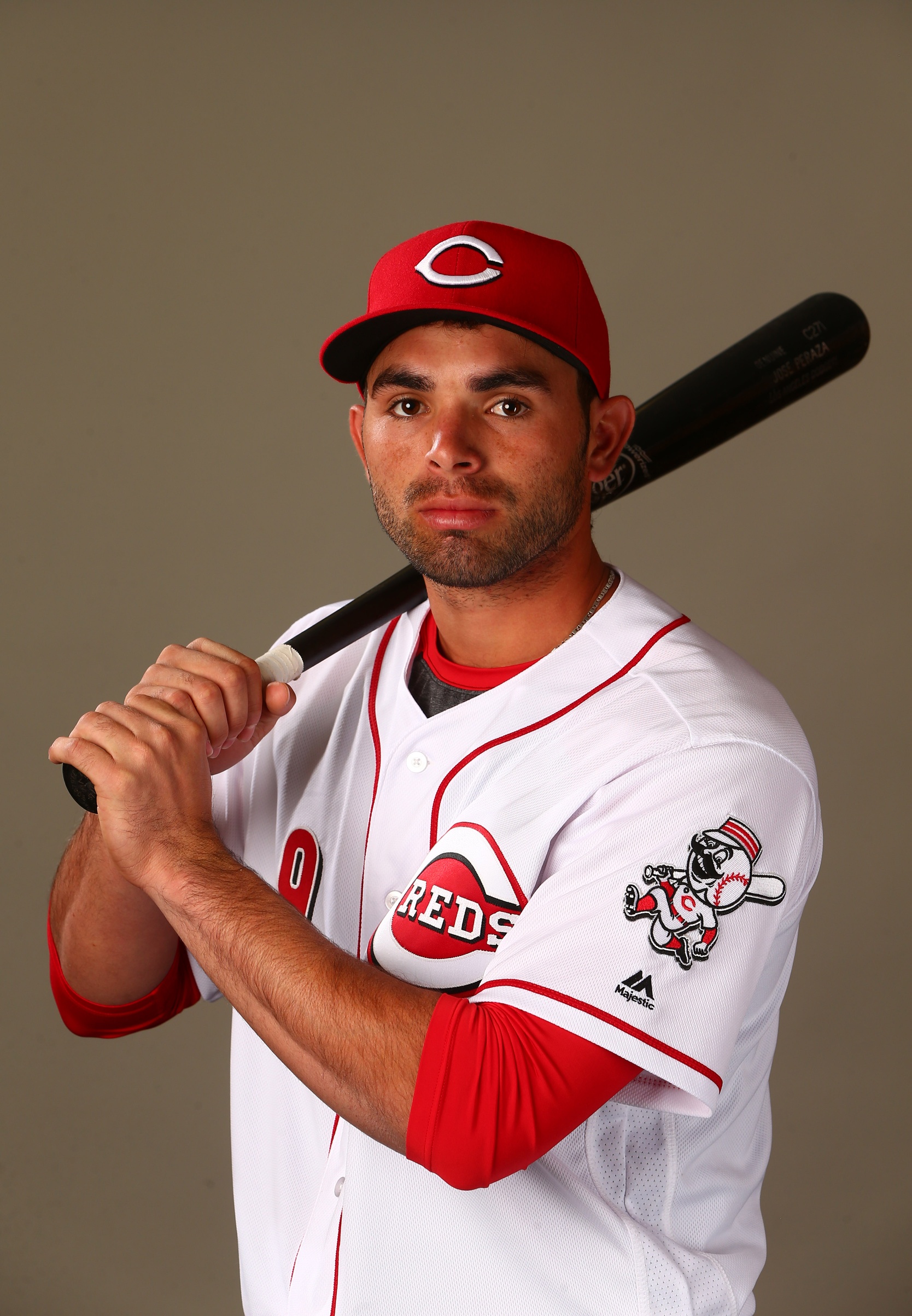 Perhaps the Reds’ most disappointing deal, though, was the three-team trade that sent Frazier to the White Sox. This time, there were no obstacles standing in the way of the Reds trading their star, and unlike Chapman (who will, even with his recent suspension, still be eligible for free agency after 2016), Frazier still has two years of control remaining. Given his plus power, strong defense and reasonable contract situation, there was no reason for the Reds not to get good value for Frazier. It appears, however, that they didn’t. Peraza (pictured) is certainly a strong prospect and could ultimately become a fixture at second base once Phillips departs, but he’s limited by his extreme lack of power and inability to draw walks. There is precedent for a player like Peraza having lots of success — perhaps he could become the next Dee Gordon. But that outcome, or anything close to it, may be optimistic.
It’s the other two players in the deal, though, who are the head-scratchers. Schebler’s future likely is in left field, but the evidence of whether he can hit enough to stick at that position is mixed. And Brandon Dixon’s inclusion in the trade was strange, since he’s been unimpressive at every minor-league stop other than a brief outburst at Class A+ Rancho Cucamonga early last season, and he turned 24 shortly after the deal. Strangely, the Dodgers, who essentially sent three of their own young players to Cincinnati in exchange for three more youngsters from the White Sox, appear to have done significantly better than the Reds did, getting a hard-throwing and advanced starting pitching prospect in Frankie Montas (although Montas is now set to miss the beginning of the season after having rib surgery), plus young second baseman Micah Johnson (who has better power and plate discipline than Peraza, though he doesn’t profile as well defensively) and outfielder Trayce Thompson (who has struggled to make headway in the high minors but had a good big-league debut last year and looks like a much better talent than Dixon). Time will tell whether the Reds got the right players, but the consensus seems to have been that their return was underwhelming, and that they might have done better by cutting out the Dodgers and dealing with the White Sox directly.
Overview
The Reds didn’t figure to contend in 2016, and they’ll spend it as rebuilding teams traditionally do — sorting through young talent, enjoying the rights to a plum draft pick (No. 2 overall), and setting their sights on the future. Given that they were built around an aging and increasingly expensive core, it’s hard to argue with that plan. What is debatable is whether they’re implementing it well, and as enthusiastically as they should. The returns from their trades so far are likely to produce some solid contributors, but perhaps not as much value as Reds fans might have hoped, given Chapman and Frazier’s obvious value on the field. The Reds have, to some degree, been victims of circumstance, and it’s not easy to get teams to give up top prospects these days. Still, they probably haven’t gotten enough.
Meanwhile, there will still be several key veterans left on the 2016 team. The Reds could hardly have been expected to trade Bailey while he was injured, and Phillips and Bruce, even if their deals had gone through, probably would not have returned significant talent anyway. But there’s been virtually no discussion of a trade involving Votto. In fact, prior to a brief update on Votto in late February, there hadn’t been an update at MLBTR in over four years regarding the possibility of a Votto trade.
If the Reds are rebuilding, perhaps a deal involving Votto shouldn’t be taken off of the table. Votto is now inarguably the face of their franchise, and he’s under team control through 2024, so they might be planning on him still contributing when they’re ready to compete again. Given that Votto is already 32, though, that seems like an overly ambitious plan. After Votto’s monster 2015, he ought to have considerable trade value, despite his huge contract. There’s also the possibility that the back end of that deal (which guarantees Votto $25MM per season through 2023, when he will be 39) could hamper the Reds’ ability to compete in the future.
Of course, it’s easy for an outsider to say that a rebuilding team should trade its superstar. The value Votto could bring to the 2016 Reds in terms of their marketability and watchability is much harder to quantify than his on-field value. But the Reds’ situation with regard to Votto is typical of the plight many rebuilding teams face. The quickest path forward seems to be to turn their backs on the past, but refusing to turn around can be painful.
What do MLBTR readers think of the club’s offseason? Weigh in on the poll below (link to poll for mobile app users)…
How Would You Grade the Reds' Offseason?
-
D 35% (1,117)
-
F 31% (994)
-
C 25% (790)
-
B 8% (241)
-
A 1% (40)
Total votes: 3,182
Central Notes: Arrieta, Cardinals, Gennett, Hunter, Venable
The Cubs needn’t be in a rush to extend ace Jake Arrieta, opines ESPN’s David Schoenfield. Arrieta’s camp is said to be seeking a seven-year deal, per Jon Heyman of MLB Network, while the pitcher himself mentioned hoping to remain in Chicago for six or seven seasons. Though Arrieta’s 2015 results stack up with any pitcher in the game, Schoenfield notes that the righty hasn’t first proven himself capable of delivering consecutive 200-inning, 30-start seasons — unlike other pitchers to command seven-year deals. Arrieta will hit free agency at the age of 32, which makes him older than a typical free agent. However, he’s also thrown fewer innings in the Majors and minors combined than his peers that have inked seven-year deals by a fairly wide margin. Schoenfield also points out that president Theo Epstein and GM Jed Hoyer seem to prefer to build around position players, as evidenced by their young core. Of course, the duo shelled out $155MM for Jon Lester just over a year ago, so it’s not as if the Cubs’ top decision-makers are entirely averse to long-term deals for pitchers.
Here’s more from the game’s Central divisions…
- Despite the fact that the Cardinals will be without Jhonny Peralta for what looks to be a span of two to three months, the team has yet to call other clubs on potentially available shortstops, reports ESPN’s Jayson Stark, as it awaits a final decision on Peralta’s recovery. One exec told Stark that he feels Braves shortstop Erick Aybar “has to be at the top of their list,” adding that “of the guys out there, he’s far and away the best player.” The Braves have shown a willingness to trade virtually anyone other than Freddie Freeman, so it would stand to reason that Aybar, a free agent at season’s end, could be had despite sitting atop Atlanta’s depth chart at shortstop. I took a look at a number of speculative shortstop options for the Redbirds shortly after Peralta’s injury.
- Brewers second baseman Scooter Gennett was shut down recently due to persistent pain in his right (throwing) shoulder, but an MRI performed today revealed nothing more than mild tendinitis, reports Tom Haudricourt of the Milwaukee Journal-Sentinel. Knowing that there’s no structural damage, the Brewers will ease Gennett back into action, starting with drills, per manager Craig Counsell. Counsell did note that Gennett would essentially be starting “from the beginning,” though he made no mention of the second baseman’s readiness for Opening Day being jeopardized.
- Indians right-hander Tommy Hunter may open the season on the disabled list due to lingering effects from offseason hernia surgery, but that issue is not what caused a two-year deal with Hunter and the Yankees to fall through, reports MLB.com’s Jordan Bastian (on Twitter). The Yankees reportedly had an agreement in the $11.5MM to $12MM range with Hunter disintegrate because of concerns over his physical, but the problem was not related to Hunter’s surgery nor his previous groin injuries, per Bastian. Whatever gave the Yankees pause didn’t curb the Indians’ interest, says Bastian, although considering the fact that the Yankees were initially going to offer a guarantee six times greater than the one Hunter received from Cleveland, it’s probably not surprising that they were a bit stingier with their medical evaluation.
- News of the Indians‘ signing of Will Venable to a minor league deal broke within hours of Abraham Almonte‘s 80-game suspension for a failed PED test, but president of baseball operations Chris Antonetti told Cliff Floyd and Casey Stern of MLB Network Radio on Sirius XM that his club had been in negotiations with Venable for awhile before they learned of Almonte’s suspension anyway (audio link). “Thankfully, at that point, in Almonte’s case, we had been engaged with a number of free agents, including Will Venable, and were able to bring that to conclusion, coincidentally about the same time, but that actually had been something we were working on for quite awhile,” said Antonetti.
Latest On Extension Talks Between Cubs, Jake Arrieta
MARCH 8, 7:46pm: USA Today’s Bob Nightengale reports that the Cubs and Arrieta had discussions early in the winter, but the team wasn’t interested in making an offer greater than five total years (Twitter link). It’s not 100 percent clear whether that means five years including the upcoming campaign or five years on top of Arrieta’s $10.7MM salary for the coming season, but if talks were early enough in the winter, they likely predated that arbitration agreement, so it seems reasonable to infer that the Cubs were interested in locking up the 2016-20 seasons (two arb years and three free-agent seasons). Arrieta, Nightengale adds, was seeking “at least” seven years, which lines up with Heyman’s initial report.
3:00pm: President of baseball operations Theo Epstein says that the team doesn’t feel any pressure to reach a deal in the near term, as Gordon Wittenmyer of the Chicago Sun-Times reports in a series of tweets (1; 2; 3; 4; 5; 6). He called the discussions thus far productive in “provid[ing] a foundation for something to get done down the road” and noted there’s “no hard deadline, but there are no active talks.”
10:14am: Arrieta confirmed to reporters that there have been talks. They “go back to last fall and winter,” sources tell Bruce Levine of 670thescore.com (via Twitter). The righty says that Chicago’s range of years didn’t line up with what he was looking for, as MLB.com’s Carrie Muskat reports (links to Twitter). “I want to stay here for six or seven years, and that’s it,” he said while emphasizing that he does hope to remain with the organization for the long haul.
Arrieta also suggested he’d “prefer to not have a lot of open dialogue about [an extension] during the season,” as Mark Gonzalez of the Chicago Tribune reports (video link). Talks haven’t been extensive, he said, in part because the front office “kind of know[s] the ballpark of where [a deal] needs to be.”
MARCH 7: The Cubs briefly explored a “mega extension” with ace righty Jake Arrieta, according to Jon Heyman of MLB Network (links to Twitter), but the sides wrapped up their discussions when it became apparent they would not see eye to eye on the length of a prospective new contract. The Scott Boras client was believed to be seeking a seven-year pact, per the report.
While that term of years was apparently a non-starter for Chicago, Heyman adds that the Cubs front office appears to be willing to re-open talks again in the future. Arrieta recently agreed to a $10.7MM deal to avoid arbitration for the coming season, and can be controlled for one additional campaign through the arb process before qualifying for free agency.
Arrieta turned 30 yesterday, so he doesn’t exactly have his youngest years left to sell. But he’s also turned into one of the game’s most dominant starters, as evidenced by his Cy Young award last year. Arrieta’s career revival in Chicago was already remarkable, but after that 2015 campaign he could be set up as a premium free agent after the 2017 season.
Last year, Arrieta spun 229 frames of 1.77 ERA pitching, racking up 9.3 K/9 against just 1.9 BB/9 with a 56.2% groundball rate. That remarkable run was good enough to edge out the Dodgers’ outstanding duo of Clayton Kershaw and Zack Greinke to take home honors as the National League’s best hurler. Though he wasn’t quite as effective in his later postseason outings, Arrieta also spun a complete game shutout to lead the Cubs to a wild card play-in victory.
As things stand, a hypothetical seven-year contract would take Arrieta through at least his age-36 season (assuming a deal would have covered the season to come). We’ve seen very few lengthy extensions of pitchers with at least four years of service time, with Cole Hamels (six years, $144MM) and Kershaw (seven years, $215MM) looking like the most reasonable comparables. Of course, both of those pitchers were both younger and had accumulated an additional year of service at the time they reached their deals.
More recent market developments would certainly also come into play. We’ve seen pitchers like Max Scherzer (seven years, $210MM), David Price (seven years, $217MM), and Greinke (six years, $206.5MM) top the $200MM threshold in recent seasons, and Arrieta will no doubt hope to land in a similar range if he can maintain anything close to his current level of performance. Greinke, in particular, represents a notable data point, as he’s slightly older now than Arrieta will be when he qualifies for free agency — showing that somewhat older arms can still land massive deals.
Of course, committing to that kind of deal at this point, with two years of control still remaining, is quite a different proposition for a club. If nothing else, Arrieta would surely be forced to give a discount for his arb years and distance from the open market.
AL East Notes: Sabathia, Heyward, Saunders, Bautista, Kopech, Panda
CC Sabathia‘s announcement that he would enter rehabilitation for alcohol abuse on the eve of the Yankees‘ Wild Card playoff game last October stunned fans and those throughout the industry, and now, the left-hander offers an honest account of the factors that led to his decision over at the Players’ Tribune. Sabathia explains the reasons that he first turned to alcohol and the way in which his addiction evolved in an extremely candid, personal chronicle of his battle with the disease. Sabathia details his time spent in rehab and thanks his family as well as friends in the game such as David Ortiz, Torii Hunter and David Price for their support throughout the process. The big lefty writes that he feels mentally stronger than he ever has heading into a season and offers a message of hope to those that are going through their own battles with addiction.
Some notes from the AL East…
- Prior to Jason Heyward‘s trade to the Cardinals last offseason, the Yankees and Braves discussed a blockbuster framework that would’ve sent Heyward, Andrelton Simmons, David Carpenter, Melvin Upton and Chris Johnson to New York in exchange for Luis Severino, Aaron Judge, Manny Banuelos, Gary Sanchez and Ian Clarkin, according to a report from Jon Heyman (links to Twitter). Per Heyman, New York ultimately wouldn’t pull the trigger on the deal. A later, much smaller trade would see Carpenter and lefty Chasen Shreve sent to the Yankees in exchange for Banuelos. Heyward, meanwhile, was dealt to the Cardinals in a trade that sent Shelby Miller to the Braves. Atlanta, of course, flipped Miller to the D-backs this winter in a potentially franchise-altering deal.
- Blue Jays GM Ross Atkins joined Buster Olney on today’s Baseball Tonight Podcast (audio link, with Atkins appearing at about the 29-minute mark) to discuss his background in baseball and a few Jays topics. Olney asked Atkins about the reported near-trade to acquire Jay Bruce which would’ve sent Michael Saunders to the Angels as part of a three-team deal. “[Saunders] has been unbelievable,” said Atkins when asked about the rumored swap. “With the rumors, spending time with him about that, he was as humble, as professional and as committed as possible to make sure that this will be the best trade that never happened.” Atkins went on to praise Saunders’ mobility and a pair of homers against inside fastballs — one from an opposing lefty. The inability to turn on inside pitches is often a concern with players coming off knee surgery, Atkins said, but Saunders to this point has shown no such ill effects.
- Olney also asked about reports of Jose Bautista‘s lofty asking price in extension talks with the Blue Jays. Atkins called Bautista “one of the smartest guys” he’s been around and said interactions with his right fielder have been nothing but positive. “My interactions with him, contrary to what people may think based on what’s been read, have been incredible,” Atkins said. “They’ve been amicable, they’ve been warm, they’ve been open, full of laughter and really, full of positivity. … I think, unfairly, some things have been portrayed that aren’t necessarily true. It’s unfortunate that there’s been somewhat of a negative light cast on his potential demands, and the focus has gone away from what a talented player he is and what a great person he is.”
- Red Sox prospect Michael Kopech, a right-hander that received a 50-game suspension during last year’s minor league season for use of the banned stimulant Oxilofrine, has run into some trouble once again, writes Rob Bradford of WEEI.com. Kopech suffered a fractured right hand in an altercation with a teammate, per Bradford. “It was stupid,” GM Mike Hazen told Bradford of Kopech’s incident. “He’s going to have to grow up, obviously, with the things that have happened so far. He’s got a long road to go to get to the big leagues. He obviously has a ton of potential. He’s got a long way to go. These types of things, you don’t want to put more barriers in front of you than playing professional baseball already presents you.” Kopech was selected with the 33rd overall pick of the 2014 draft as compensation for the Red Sox’ loss of Jacoby Ellsbury in free agency. When he was able to take the field last year, the 19-year-old logged a 2.63 ERA with 9.7 K/9 against 3.7 BB/9 in 65 innings (15 starts, one relief appearance).
- Pablo Sandoval has been working with Red Sox infield instructor Brian Butterfield to alter the positioning of his glove on certain plays as well as his general first-step quickness, manager John Farrell tells reporters, including Jason Mastrodonato of the Boston Herald. Mastrodonato notes that while Farrell has raved about the preparation of Hanley Ramirez, he’s been more cautious in his descriptions of Sandoval, telling the media today that there’s still “work to be done” in terms of his defense and finding his timing at the plate. Sandoval, per Mastrodonato, says he’s been focusing quite a bit on his first step and spent the entire offseason hitting right-handed in an effort to get his right-handed swing back to its peak levels. (Sandoval, for those who weren’t aware, abandoned switch-hitting about a third of the way through the 2015 season.)