
10 Low-Cost MLB Deals Paying Dividends
We’ve spent some time looking at one-year MLB deals recently, with separate posts checking in on the highest-paid position players, starters, and relievers. More often than not, the results have been underwhelming for those players. There’s still time for turnarounds, but we’re already one quarter of the way through the full duration of those contracts.
Scan a bit further down the list in terms of dollars promised, however, and you’ll find some more promising outcomes. Indeed, quite a few players earning relative peanuts on one-year MLB contracts are turning in downright excellent results. (Note: we’re talking about deals that were guaranteed at the time of signing, not minor-league contracts.)
Here are the ten most impressive, ordered from most to least expensive:
Avisail Garcia, Rays, $3.5MM: An under-the-radar aspect of the Rays strong opening to the season has been the bargain-basement score of Garcia, who has stung the ball early on. He’s humming along at a .283/.343/.507 clip with eight long balls and three steals through 166 plate appearances. Contact quality will probably always be king for Garcia, who isn’t especially strikeout prone but doesn’t walk much. What’s he doing differently? I’m not exactly sure, but he’s barreling the baseball far more (14.3%) than ever before and is underperforming against Statcast’s expectations (.360 wOBA vs. .385 xwOBA).
Jonathan Lucroy, Angels, $3.35MM: The venerable backstop had fallen on hard times over the past two seasons. It was most noticeable at the plate, where the long-productive hitter fell into a deep hole, but the former pitch-framing posterboy also stopped winning strikes for his pitchers. The bounceback has been a rare bright spot in Anaheim, as Lucroy is slashing .265/.326/.439 and once again earning strong marks for his receiving ability behind the dish.
Adam Jones, Diamondbacks, $3MM: The esteemed veteran was all but frozen out of the free agent market this winter until the D-Backs came along with a decent offer. Jones hasn’t exactly morphed into a star, but he’s providing strong offensive output in an everyday role. Through 202 plate appearances, he’s slashing .265/.323/.476 with nine dingers, which is a rather vintage performance at the dish. That sort of production played better back when Jones was capable of playing center, but it’s good value regardless for a player who’s also a plus in the clubhouse.
James McCann, White Sox, $2.5MM: Perhaps the biggest surprise on this list when you look only at the top-line numbers, the younger of the two catching McCanns has been utterly on fire to open the season. He’s slashing a heretofore unheard of .340/.381/.538 in 113 plate appearances. Yeah, yeah … it’s not full-time action. And the regression warning lights are flashing, with a .421 BABIP and -.061 x/wOBA imbalance. McCann is also not getting the ravest of reviews in the framing arena. Still, at this cost, there’s no cause whatsoever for complaint. Bonus: McCann is arb eligible this fall.
Jordan Lyles, Pirates, $2.05MM: Many Pirates fans rolled their eyes and scoffed at this signing, and not without reason. It’s nice to find great value, but was Lyles really a buy-low candidate or just a cheap fill-in piece for a team that should be spending more? He has been one of the most cost-efficient starters in baseball thus far, providing 45 2/3 frames of sub-2.00 ERA ball in eight starts. His peripherals (9.3 K/9, 3.2 BB/9, 43.0% GB%, 0.79 HR/9) don’t scream “ace,” but they do suggest he has been quite strong thus far. There’s good reason to think that Lyles has finally found himself after so many missed opportunities, with the Bucs benefiting.
Brian McCann, Braves, $2MM: The original behind-the-dish McCann hasn’t been flashy but has delivered everything the Braves hoped for when they brought him back to town. He’s producing right at the league average offensively through 92 plate appearances, grinding out tough at-bats by walking nearly as often as he’s striking out. The grizzled veteran is obviously valued as much or more for his ability to work with pitchers and nurture a youthful clubhouse as he is for his on-field contributions. It seems fair to say this is working out quite nicely thus far.
Neil Walker, Marlins, $2MM: If you look back at Walker’s career numbers, his rough 2018 season stands out as an outlier. Typically a steady producer at the plate, Walker looked like much the same hitter as ever but suffered from an unseasonably low .257 batting average on balls in play. This year, the BABIP gods have repaid him with a .363 mark, and his output has risen to a strong .290/.371/.427 level. Walker is helping hold down the fort for now in Miami but seems like a rather likely mid-season trade piece, as he ought to be able to help out a contending team as a multi-position infielder.
Blake Parker, Twins, $1.8MM: The Angels would take a do-over on their non-tender decision, as Parker has turned in 16 1/3 innings of 1.10 ERA ball for a bargain rate of pay. True, he’s carrying just 6.6 K/9 with 3.9 BB/9, but his strong 56.1% groundball rate is a nice base to work from. There’s really no reason to think that Parker will keep up the immaculate results, as he’s highly unlikely to carry a .195 BABIP and 96.2% strand rate all year long. Still, he has saved eight games for the streaking Twins and now seems to be a key part of the bullpen picture for a surefire postseason team. Parker is also eligible to be tendered a contract through arbitration one more time this fall.
Tim Beckham, Mariners, $1.75MM: It was a crafty move for M’s GM Jerry Dipoto to double down on the buy-low middle infielders. After acquiring J.P. Crawford, he grabbed a seat-warmer/bounceback piece in Beckham. That combination spread the bets and boosted the upside potential. It has been a hit so far, with Crawford hitting well at Triple-A and Beckham showing big thus far in the majors. Through 171 plate appearances, the former first overall pick owns a .259/.316/.506 slash with nine long balls. Regression may well be in store — Beckham is striking out at a 29.2% clip and hasn’t sustained prior breakouts — but it’s nice to have the production for the time being and he could still be flipped via trade or tendered for 2020.
Brett Anderson, Athletics, $1.5MM: You have to tip your cap to Anderson, who’s still pushing to get to the mound despite a lengthy run of injury woes. He has been able to stay active this year, turning in ten starts and 54 1/3 badly needed innings for the pitching-starved A’s, who brought him back on a late-breaking deal. Anderson isn’t exactly shoving, with a 4.14 ERA and just 4.6 K/9 against 3.3 BB/9 along with a sturdy 51.9% groundball rate, but thus far he’s tamping down the long balls and doing just enough to succeed. Not convinced of the value? Just take a look at the return other teams have received on higher-priced, one-year starters.
Ian Kennedy, The Reliever, Is Interesting
When the Royals moved Ian Kennedy to the bullpen, it seemed to mark a rock-bottom moment for the right-hander’s value. Kennedy was owed a total of $33MM from 2019-20 after a two-year stretch in which he logged a 5.06 ERA and 5.17 FIP. He was being taken out of a rebuilding team’s rotation in favor of Homer Bailey, another veteran whose underperforming contract was being paid off by another team.
Fast forward a couple of months, and not much has gone right with the Royals’ pitching staff, but the Kennedy bullpen experiment has been nothing short of excellent. While teams still won’t be interested in his contract, they may have interest in acquiring Kennedy if the Royals are willing to pay down some of the salary.
It’s only 19 2/3 innings, but Kennedy has a 3.20 ERA with a 23-to-2 K/BB ratio and a 47 percent ground-ball rate out of the bullpen. His average fastball has jumped from 91.9 mph to 93.4 mph now that he’s working in short stints. Perhaps there’s reason to be skeptical of the strikeout rate given a lack of swinging strikes, but Kennedy is also among the league leaders in weak contact induced. Opponents are averaging just 84.7 mph in terms of exit velocity against him, and Statcast pegs his .266 expected weighted on-base average (xwOBA) in the 86th percentile league-wide.
Kennedy has dropped his changeup entirely in favor of a four-seam/curveball/cutter arsenal that has proven to be more effective than his prior pitch mix. While his curve has never been a source of many whiffs, Kennedy is suddenly sporting a 17.7 percent swinging-strike rate on the pitch — up substantially from the roughly nine percent mark he posted in the three prior seasons. He’s altered his release point on his curve and picked up more movement than he’s seen in recent seasons, which has not only led to misses but also quite a few more ground-balls (55 percent). Kennedy’s curve hasn’t generated great results yet (both the homers hit against him this season have come on the pitch) but the .444 average on balls in play opponents have recorded against that offering figures to regress.
Prior to Opening Day, Kennedy would’ve been the type of arm one would expect to receive a minor league contract and a Spring Training invite in a free-agent setting, but he now looks more like a reliever who’d command a reasonably significant big league deal. If he can sustain this output or even improve upon it, he could even be the type of pitcher who’d command a two-year pact in a theoretical open market. He doesn’t have the track record for clubs to look at him as a David Robertson/Andrew Miller type that’d make $11-12MM per year, but we’ve seen quite a few two-year deals in the $4-7MM annual salary range in recent offseasons — even for pitchers who don’t have lengthy track records (e.g. Jesse Chavez, Brandon Kintzler, Anthony Swarzak).
It’s suddenly not crazy to think that in a couple months’ time, teams could view Kennedy as reliever worth paying $5-7MM per season. Some teams may already be starting to think that way. If the Royals were willing to pay down $10-11MM of next season’s $16.5MM salary (and the prorated equivalent of that sum for the remainder of the 2019 campaign), Kennedy could suddenly be movable. Being movable is different than having much in the way of positive trade value, but the very fact that it appears possible is a nice, somewhat unexpected development for Kansas City.
And if the Royals were willing to pay down even more of that sum, perhaps they could pry a decent return out of the whole deal. No team is going to give up anything of value just for the right to pay Kennedy at what could be the high end of his market value, no matter how well he throws between now and July 31. If the Royals pay him down to the point where he’s only owed a couple million dollars in 2019 and 2020, though, surplus value could be created.
There has already been a bit of chatter involving Kennedy, though there’s no indication of actual trade talks. Recent suggestions of some type of deal involving Dominic Smith don’t make any sense to me, even if Smith is blocked by Pete Alonso in New York. But if Kennedy can sustain his bullpen renaissance — and the numbers suggest that he can — then the Royals can score some salary relief and maybe even a mid-range prospect or two this summer. This outcome isn’t what they were anticipating when they signed Kennedy, but it’s about as good as they could’ve hoped for when they moved him to the ‘pen.
11 Readily Available Relievers For Teams Needing Bullpen Help
It’s true every season that clubs need bullpen help, but the desperation for quality relief help seems more palpable this season than in years past. Perhaps it’s because one of the best closers in baseball history is still sitting unsigned in late May, which only leads to more fan outcry for bullpen help and more of a spotlight to be placed on teams that are struggling in this regard.
I got more than a few questions about what’s out there in terms of readily available bullpen help in yesterday’s MLBTR chat. While the general answer can be snarkily summed up in brief fashion (“not much!“), it’s also true that the landscape of available arms is in a constant state of change as players opt out of deals, or are designated for assignment/released. So while we all know that Craig Kimbrel is available for the highest bidder, here’s a look at a handful of newly available arms that have hit the market in the past 10 days or so.
Free Agents (or soon-to-be free agents):
Luke Gregerson (released by Cardinals)
- Why he was cut loose: Hamstring and shoulder injuries limited Gregerson to just 18 1/3 innings dating back to Opening Day 2018, and he hasn’t been effective in that time. Gregerson posted a 7.36 ERA with a 14-to-7 K/BB ratio and 25 hits allowed (including a pair of homers) in parts of two seasons with the Cards, and his fastball/sinker combo dipped to 86.4 mph and 87.4 mph, respectively, in this year’s tiny sample.
- Why he could hold appeal: Prior to signing with the Cards, Gregerson was a bullpen workhorse. From 2009-17 he averaged 69 appearances and 67 innings per season, logging a collective 3.02 ERA with 9.1 K/9, 2.6 BB/9 and a 50.9 percent ground-ball rate. That grounder rate topped 60 percent in both 2015 and 2016, and he averaged better than 10 strikeouts per nine innings in 2016-17 with Houston.
Addison Reed (released by Twins)
- Why he was cut loose: Reed’s time with the Twins started well, but his velocity dipped early last summer and he landed on the shelf with triceps soreness and an elbow impingement. A sprained thumb in his non-pitching hand has kept him on the shelf all season to date, and he was reportedly throwing 88-89 mph in recent rehab outings. For context, his average heater in 2017 was 92.3 mph. Reed logged a 4.50 ERA in 56 innings last season, but his ERA over his final 30 games with Minnesota was 6.44. He allowed four homers and a total of eight runs in five Triple-A rehab innings this year.
- Why he could hold appeal: As with Gregerson, Reed’s appeal is all in his track record. He had a career 3.40 ERA with 9.5 K/9 and 2.6 BB/9 at the time he signed with the Twins, including a superb 2015-17 run in which he notched a 2.66 ERA with 218 strikeouts against just 34 unintentional walks in 209 2/3 innings. He won’t turn 30 until December, so unlike the other free agents listed here, he still has age on his side. One year ago, Reed had a 2.49 ERA and 27-to-7 K/BB ratio in 25 1/3 innings with the Twins.
- Why he was cut loose: Torres opted out of a minor league deal after a solid showing in Triple-A, hopeful of finding an easier path to the Majors than he faced in San Diego.
- Why he could hold appeal: Torres pitched to a 2.49 ERA with a 23-to-10 K/BB ratio and a 50.7 percent ground-ball rate with Triple-A El Paso to open the season. From 2012-17, he recorded a 3.73 ERA with 7.9 K/9 and 3.2 BB/9 in a total of 449 innings between the Rockies, Mets and Brewers. During that time, he averaged 75 innings per season. Torres is 36 and struggled in a brief 9 2/3 innings with the Nats last year, though he was very effective for their Triple-A team.
- Why he was cut loose: Venters’ 2018 comeback was a feelgood story, but he was rocked for nine runs on nine hits and eight walks in 4 2/3 innings with the Braves this season. Atlanta’s bullpen has been a revolving door this season, and keeping the struggling Venters aboard limited the club’s flexibility.
- Why he could hold appeal: Venters’ sinker still checked in at a healthy average of 93.6 mph in 2019, and he’s a year removed from holding left-handed opponents to a comically bad .133/.200/.200 batting line through 66 plate appearances. Even through this season’s struggles, his grounder rate checked in at 50 percent, and it was nearly 70 percent last year.
Dan Jennings (opted for free agency after being DFA’ed by Nationals)
- Why he was cut loose: Jennings struggled in Spring Training with the Angels and didn’t fare any better with the Nats. He walked seven batters (two intentional), hit another and threw a wild pitch in his 4 2/3 innings with Washington. As with the Braves and Mariners, the Nationals’ bullpen has been rife with turnover, and it seems that nearly every member of those clubs’ relief units is on a short leash.
- Why he could hold appeal: In parts of seven MLB seasons prior to 2019, Jennings never logged an ERA of 4.00 or higher, and he was solid with the Brewers in 2018 (3.22 ERA, 4.09 FIP, 6.3 K/9, 3.2 BB/9, 56.1 percent ground-ball rate). He’s not a prolific strikeout arm but has typically been a ground-ball machine who can hold his own against lefties and righties alike (2018 struggles against righties notwithstanding). His velocity held steady in 2019 as well.
DFA Limbo:
Ryan Garton (DFA by Mariners)
- Why he was cut loose: The Mariners have used 22 different relievers already in 2019. (Heck, four of them are listed in this section!) Garton’s selection to the big league roster, like many of the names being cycled through the Seattle ‘pen, seemed almost destined to be short. He allowed four runs in three innings and was designated when the Mariners signed Anthony Bass.
- Why he could hold appeal: Garton has pitched reasonably well in Triple-A over the past two seasons, though his FIP is roughly a full run higher than the 3.28 ERA. Still, Garton has fanned 71 hitters in 68 2/3 Triple-A frames in that time. He walked too many in 2018, but he has some experience, some Triple-A success and a minor league option remaining. There’s a solid chance Garton clears waivers, but less intriguing guys have been claimed in the past.
Neil Ramirez (DFA by Indians)
- Why he was cut loose: Surrendering five home runs and issuing nine walks in 16 1/3 innings isn’t a great way to hold onto a roster spot, and Ramirez is out of minor league options, which put the Indians in a particularly tough spot. He’s never enjoyed consistent success at the MLB level, but teams continue to be intrigued by his raw ability.
- Why he could hold appeal: The fact that six teams have given Ramirez a big league look as he’s struggled to a 5.70 ERA in 113 2/3 innings over the past four seasons speaks both to his potential upside and his frustrating level of inconsistency. Ramirez averages 95 mph on his heater and has turned in a 15 percent swinging-strike rate across the past two seasons. His fastball spin is elite, and his curveball spin isn’t far behind. If anyone could coax some consistency out of him, he’d be controlled through 2020.
Yefry Ramirez (DFA by Orioles)
- Why he was cut loose: Ramirez has been more of a starter than a reliever, but what the heck, let’s add him here anyway. The 25-year-old has an ERA north of 6.00 and 5.4 BB/9 over the past two seasons in the Majors, but it’s frankly still a bit surprising to see the Orioles cut him loose not 24 hours after their manager lamented a lack of rotation depth. The front office has apparently seen enough of Ramirez, though.
- Why he could hold appeal: Ramirez has a 3.40 ERA and a 96-to-31 K/BB ratio in 90 Triple-A innings. He averaged 93.2 mph on his fastball and has a 10.7 percent swinging-strike rate in addition to 73 punchouts in 75 2/3 innings working primarily as a starter in the Majors. It’d be interesting to see what Ramirez could do in shorter stints; in 19 career relief frames, opponents have batted .206/.320/.270 against him. His slider was an effective pitch for him in 2018 while his changeup has gotten good results in 2019. He’s 25 years old and has a minor league option remaining.
Zac Rosscup (DFA by Mariners)
- Why he was cut loose: Rosscup allowed 14 walks in 14 innings of work as the Mariners’ apparent plan to dramatically increase his slider usage — he ranks fifth among MLB pitchers in slider percentage (min. 10 IP) — didn’t pay off as hoped. He’s out of minor league options, so the Mariners had no way to send him down to try to rediscover last year’s solid control (3.2 BB/9).
- Why he could hold appeal: In his last 25 1/3 big league innings, Rosscup has racked up 40 strikeouts with an 18.3 percent swinging-strike rate and a 32.6 percent opponents’ chase rate. He falls behind hitters far too often. His slider hasn’t been as effective this season, but in 2018 he threw the pitch 101 times and generated 30 swinging strikes. He’s controllable through 2021.
Nick Rumbelow (DFA by Mariners)
- Why he was cut loose: Rumbelow has been injured more than he’s been healthy over the past few seasons, and while he’s recovered from 2015 Tommy John surgery and a 2018 neck injury now, the results weren’t there for him in Triple-A. He’s allowed 16 earned runs on 25 hits and 10 walks with 11 strikeouts in 15 2/3 innings.
- Why he could hold appeal: Rumbelow will sit 93-94 mph with his fastball and, prior to 2019, had experienced a good bit of success when healthy enough to take the ball in Triple-A. He carried a 2.95 ERA and a 131-to-34 K/BB ratio in 116 career Triple-A innings into the season.
Mike Wright (DFA by Mariners)
- Why he was cut loose: Wright has had ample big league time in each of the past four big league seasons but has an ERA north of 6.00 to show for it. The Mariners traded a struggling low-level infielder to acquire him, hoping they could help him tap into his potential, but Wright lasted only 11 innings (and 11 earned runs) before being designated for assignment. Like many DFA casualties, he’s out of minor league options.
- Why he could hold appeal: Both the Orioles and Mariners have seen fit to give Wright a shot at the MLB level, perhaps in part because he’s been a solid starter through nearly 400 innings (70 starts, one relief appearance) of Triple-A ball in his professional career.
It’s easy to be dismissive of the majority of the names on any list like this, but that was also the case when the likes of Kirby Yates and Brad Hand were cut loose a few years ago. Teams are constantly mining the scrap heap, and even the smallest pickup can prove to be consequential down the line.
12 Corner Outfield Trade Targets For The Indians
The Indians had a 94.6% chance of making the playoffs prior to the season, according to FanGraphs. The Twins looked like an 85-win team, the Indians projected at 97, and the other 60% of the division is rebuilding. The Twins, however, have flipped the script with a 32-16 start through Tuesday’s games. They hold a 6.5 game lead over Cleveland. But a Wild Card spot is a viable option for the Indians as well, and they still hold a 54.3% shot at the postseason.
The Indians have averaged just 3.96 runs per game, 12th in the AL and nestled between non-contenders. After the club designated Carlos Gonzalez for assignment today, Zack Meisel of The Athletic wrote, “The state of the Indians’ lineup suggests a player can be hitting cleanup one day and be unemployed the next.” Indeed, CarGo had started eight of the Indians’ last ten games, typically as the left fielder.
Gonzalez will be replaced internally for the foreseeable future, with 24-year-old rookie Oscar Mercado in line for an extended look. The speedy Mercado, a Cardinals second round draft pick out of high school as a shortstop in 2013, was quietly acquired at last year’s trade deadline. Mercado returned to the edge of the prospect radar after 2017, a season in which he blossomed playing center field every day and had his best offensive year. Even at that point, though, he profiled as an extra outfielder in the Majors. Mercado’s bat wasn’t terribly impressive at Triple-A in 2018, but he tweaked his swing in the offseason, raked in spring training, and hammered the ball in 30 games at Triple-A. He’s interesting enough to merit regular playing time for the next couple of months, and his right-handed bat could be just what the Indians need in left field. The Indians have veteran center fielder Leonys Martin likely to be pushed by former first rounder Bradley Zimmer in the near future, while Jordan Luplow has settled in as the team’s right fielder and has the minor league track record to stick.
We’ll know much more about this arrangement by mid-July, and it’s possible Mercado and/or Luplow won’t continue hitting at the Major League level. While the Indians have some other paths to improving their offense, this post will explore corner outfield trade targets they may consider if internal options struggle.
Current Left Fielders
- Domingo Santana, Mariners (controllable through 2021) – Santana has dropped off after a fast start, and the Mariners look less like a contender. Still, he was a nice find for the club and I don’t think they’ll be eager to move him.
- Alex Gordon, Royals (2019) – Given Gordon’s offensive renaissance, he would be a nifty veteran rental for Cleveland. However, he has 10-and-5 rights and made it clear he doesn’t want to leave Kansas City. Plus, Gordon is earning $20MM this year and would get a $4MM assignment bonus upon a trade.
- Clint Frazier, Yankees (2023) – Frazier, the Indians’ first-round pick in 2013, was a key piece along with Justus Sheffield in Cleveland’s 2016 deadline deal for Andrew Miller. Frazier has filled in admirably for the Yankees this year after their litany of injuries, but the club may not have much playing time for him once Aaron Judge and Giancarlo Stanton return. He could become trade bait for New York, and it would be fascinating if he were to return to the organization that drafted him. Still, the Yankees may be reluctant to help a possible playoff opponent, and they can always send Frazier to Triple-A if they truly cannot find at-bats for him.
- Adam Duvall, Braves (2021) – The Braves acquired Duvall from the Reds last summer and despite tendering him a contract in the offseason, did not put him on the Opening Day roster. Duvall showed the ability to serve as a low on-base, high power left fielder with the Reds from 2016-17, and it wouldn’t take much for the Indians to add him. The 30-year-old has mashed 15 home runs in 188 Triple-A plate appearances so far this year.
- Yasmany Tomas, Diamondbacks (2020) – The Diamondbacks signed Tomas out of Cuba in December 2014 to a six-year, $68.5MM deal. Though he smacked 31 home runs in his sophomore season, the D’Backs were never able to find a good home for him defensively. Tomas hasn’t seen Major League time since 2017, but he’s hit 14 home runs in 178 plate appearances at Triple-A this year. Jake Bauers has served as the Indians’ primary DH of late, but he could slide into left field if the team were to acquire a player like Tomas. The Diamondbacks would have to pick up the vast majority of Tomas’ contract to move him.
Current Right Fielders
- Yasiel Puig, Reds (2019) – Puig would be an excellent rental for the Indians, except for the fact that he hasn’t hit at all this year. He’s also earning $9.7MM. If Puig does return to form as an above average bat over the next few months, I could see him on the Indians’ radar.
- Nicholas Castellanos, Tigers (2019) – Castellanos has been about league average with the bat this year after a superb 130 wRC+ season in 2018. Like Puig, he’s headed for free agency after the season and is earning about $10MM. Castellanos isn’t much of a defender, but assuming the Tigers don’t have any hang-ups about trading a rental within the division, he’s a great fit for Cleveland.
- Adam Eaton, Nationals (2021) – Eaton is less than ideal as a left-handed hitter, but despite his slow start he could be a useful addition for the Indians.
- Mitch Haniger, Mariners (2022) – Haniger would be a major prize for a team like the Indians, and he bats right-handed to boot, but Mariners GM Jerry Dipoto would seek a king’s ransom if he even considers a trade. Seattle won’t be in any rush to move Haniger.
- Trey Mancini, Orioles (2022) – Mancini is one of very few bright spots on the Orioles this year, and trading the 27-year-old might not sit well with some fans, but it could be an avenue for Orioles executive vice president and general manager Mike Elias to bolster his prospect stash. Like Haniger, he’d be an attractive, controllable fit for the Indians.
- Jorge Soler, Royals (2021) – Soler has never managed to play a full season in the Majors, but he’s been healthy and has hit for power this year. I’m guessing the Royals are not eager to deal him currently.
- Tyler O’Neill, Cardinals (2024) – O’Neill is currently playing at Triple-A, though he’s been out since Saturday with an undisclosed injury. The 23-year-old has massive power from the right side and plus defense in the corners, though he’s struck out a ton in his 181 big league plate appearances. The Cardinals have already relegated a starting-caliber player to the bench in Harrison Bader, so O’Neill has an even tougher path to playing time. Longer-term, Marcell Ozuna is slated for free agency after the season and Jose Martinez could land elsewhere, so O’Neill may yet be part of the Cardinals’ future. He’s still a player about which the Indians could inquire.
It’s also worth considering that several teams that are contending now may not be contending in a few months. The Rangers, Diamondbacks, Pirates, Padres, and Athletics have some interesting corner outfield bats that might become considerations for the Indians. I also entertained the possibility of including the Cubs’ Ian Happ on this list, though the 24-year-old has struggled in 42 Triple-A games.
The Ten Most Expensive One-Year Free Agent Relievers
Many different types of free agents end up receiving relatively expensive, one-year deals. Some are looking for the right opportunity to earn a nice single-season paycheck while (hopefully) building up to a multi-year deal in the ensuing winter. Others settle for a solo campaign after trying and failing to find more. Some are younger players who have enough upside to draw a significant offer despite a rough platform campaign. Others are steady veterans that are being paid more for their floor than their ceiling. All such players necessarily receive only a limited commitment from their new teams; those that end up with non-contenders must be prepared for a mid-season scramble for new lodging in the event of a swap.
With about a quarter of the season in the books, we’re looking at how things are shaping up for the highest-paid rental free agents. We already performed this exercise for position players. and for starting pitchers. Now, we’ll take a look at the ten most expensive one-year relief pitchers:
Cody Allen, Angels, $8.5MM: Allen jumped right into the closer’s role for the Halos, but hasn’t bounced back as hoped. Instead, his struggles have deepened. Allen’s 4.80 ERA through 15 innings is actually rather deceptive. He is allowing a walk an inning along with 2.40 homers per nine. His average fastball velocity has fallen off by nearly two mph, with his swinging-strike rate dipping all the way down to 9.5%. Allen has turned in five-straight scoreless appearances, but has issued a free pass in every one of those outings.
Trevor Rosenthal, Nationals, $7MM: The issues are even deeper for Rosenthal, who is trying to find his way on the mound during an expansive rehab assignment. Despite showing ample arm strength, the occasionally wild reliever has completely lost the zone. In seven MLB appearances, Rosenthal recorded as many walks as outs (nine apiece), uncorked five wild pitches, and hit three batters. Needless to say, this investment has not turned out as hoped.
Greg Holland, Diamondbacks, $3.25MM: It has been a roller coaster ride in recent years for Holland, who reestablished himself late last year with the Nats but has still surprised with his strong early showing. Through 16 innings, he owns a 1.69 ERA with 12.4 K/9 and 5.6 BB/9 and has closed out eight games for the Snakes. There’s quite possibly some regression in store, with opposing hitters batting under .200 on balls in play, but Holland looks to be quite a nice value.
Brad Brach, Cubs, $3MM: Though he’s through 19 2/3 innings of 2.75 ERA pitching, there’s reason for concern with Brach’s opening to the year. He has not yet allowed a home run, which is both a feather in his cap and a sign of some good fortune. Worryingly, he has allowed 19 walks to go with his twenty strikeouts. He has also seen his swinging-strike rate drop to 10.1% and his chase rate drop to 25.7% — both well below his career mean. Brach isn’t having trouble putting the ball in the zone when he wants to, as he carries a 64.7% first-strike rate, but it seems opposing hitters may be seeing him better than they have in the past.
Jake Diekman, Royals, $2.75MM: Walks have always been a big part of Diekman’s game, so it’s not surprising to see him dishing them at over four per nine innings. But he’s also getting lots of strikeouts. To this point, Diekman carries a 24.4% K%-BB%, the best mark of his career, on a personal-high 15.4% swinging-strike rate. Ramped-up slider usage is paying dividends. Diekman carries a 3.15 ERA through twenty frames and is looking like a nice trade deadline chip.
Shawn Kelley, Rangers, $2.75MM: This signing is paying dividends, as the 35-year-old carries a 1.80 ERA in 15 frames. He has regained some lost velocity and issued just one walk on the year. That said, there are some areas of concern. Home runs remain a problem (1.80 per nine). Kelley is only generating swings and misses at about 2/3 of his former capacity. And the .189 BABIP-against and 100% strand rate he’s carrying are bound to rise.
Oliver Perez, Indians, $2.5MM: He isn’t getting any younger, but Perez has found new baseball life in Cleveland. He hasn’t been quite as excellent this year as he was in a bounceback 2018, but the 38-year-old has still maintained an excellent combination of 13.5 K/9 and 2.4 BB/9 to open the new year. He has actually raised his swinging-strike rate yet further to a lofty 16.7%. The club is using him judiciously, with short outings focused mostly on lefty batters, but is getting what it bargained for.
David Phelps, Blue Jays, $2.5MM: The Jays knew they’d have to nurse Phelps back to health before getting him on the field, as he underwent Tommy John surgery just before the start of the 2018 season. He has yet to launch a rehab assignment, and it has been a while since we’ve seen a meaningful update on his status, but there’s no indication that he won’t be ready to go at some point in the relatively near future. That’s just what the Toronto organization needs Phelps to do if it is to utilize him as a summer trade chip.
Sergio Romo, Marlins, $2.5MM: Another potential trade candidate with an asterisk, the veteran has struggled to begin the year for Miami. He’s carrying a 5.06 ERA in 16 innings, with 9.6 K/9 but also an uncharacteristic 5.6 BB/9 and 1.69 HR/9. Interestingly, the hurler who once leaned on his slider more than anyone has dropped its usage below 50% for the first time in a long time even as the rest of the game increasingly leans on that pitch. Romo has increasingly gone to a change-up. He’s getting lots of chases out of the zone (39.4%) and a solid volume of swinging strikes (13.7%) but has obviously produced less-than-inspiring overall results. Whether Romo can tune up his pitch mix and return to his longstanding effectiveness remains to be seen.
Adam Warren, Padres, $2.5MM: It made eminent sense for the Friars to nab Warren after spending big on Manny Machado, but he hasn’t been in great form early. True, his 3.54 ERA through 20 1/3 frames is just fine. But Warren is giving up way too many walks (4.9 per nine) and home runs (2.66 per nine). He’s getting by on unsustainable BABIP-against (.160) and strand rate (100%) figures.
The 10 Most Expensive One-Year Free Agent Starters
Many different types of free agents end up receiving relatively expensive, one-year deals. Some are looking for the right opportunity to earn a nice single-season paycheck while (hopefully) building up to a multi-year deal in the ensuing winter. Others settle for a solo campaign after trying and failing to find more. Some are younger players who have enough upside to draw a significant offer despite a rough platform campaign. Others are steady veterans that are being paid more for their floor than their ceiling. All such players necessarily receive only a limited commitment from their new teams; those that end up with non-contenders must be prepared for a mid-season scramble for new lodging in the event of a swap.
With about a quarter of the season in the books, we’re looking at how things are shaping up for the highest-paid rental free agents. We already performed this exercise for position players. Now, we’ll take a look at the ten most expensive one-year starters (and, later, relievers):
Matt Harvey, Angels, $11MM: The priciest arm on this list, Harvey hasn’t come through as the Halos hoped. He’s averaging just five frames per outing in nine starts and has limped to a 6.35 ERA. Though his velocity is fine, Harvey isn’t getting many swings and misses (9.7% swinging-strike rate) and has given up a lot of loud contact (40.6% hard contact vs. only a 9.8% soft contact rate). He’s likely performing better than his results, but Harvey is showing no signs of returning to anything approaching his former performance levels at thirty years of age.
Trevor Cahill, Angels, $9MM: I’ll be honest, I thought this deal would turn out well for the team. Cahill has been good when healthy and seemed to be an interesting risk. Unfortunately, he has managed only 44 innings of 6.95 ERA pitching over nine starts. Like several other struggling hurlers on this, he has been ravaged by the long ball, allowing nearly one every three innings.
CC Sabathia, Yankees, $8MM: An offseason heart procedure seemed ominous, but the outcomes have been sparkling since since Sabatahia returned to the hill. He’s now through 36 1/3 innings of sub-3.00 ERA pitching to open the year. Unfortunately, it may only be a matter of time before opposing hitters expose his act. Sabathia carries only 6.7 K/9 go with 3.7 BB/9 and has been torched for 2.23 home runs per regulation game. His FIP number is over twice his ERA.
Derek Holland, Giants, $7MM: Another hurler that settled for a single season despite having a case for multiple years, Holland ended up being knocked to the bullpen after seven starts. That move sparked a clubhouse flare-up reflective of the club’s rough opening stretch to the season. Holland has improved his strikeout rate but otherwise added walks and dingers, leading to an unsightly 7.17 ERA in 37 2/3 innings. While the Giants never expected world-beating results from Holland, the overall run of events is about the opposite of what they hoped for.
Tyson Ross, Tigers, $5.75MM: Elbow nerve issues have put Ross on the shelf. Perhaps they also help explain the rough start he had authored. Through 35 1/3 innings in seven starts, the veteran hurler carries a 6.11 ERA with 6.4 K/9 and 4.6 BB/9. While he has moved back toward his former strengths with a sturdy 51.3% groundball rate, he’s also permitting home runs at a 22.6% HR/FB clip.
Wade Miley, Astros, $4.5MM: Many were surprised to see the Houston organization settle for Miley, but it made sense to go with a short-term hurler of this sort with so much upper-level talent in the system. Plus, Miley had an odd but legitimately interesting 2018 showing. He hasn’t maintained quite the home run-suppression rates he did last year, but is still getting a good number of grounders and turning in quality results despite underwhelming K/BB numbers (15.9% K rate vs. 5.6% BB rate).
Marco Estrada, Athletics, $4MM: The Oakland org was well aware of Estrada’s back issues when it signed him. Unfortunately, the risk hasn’t paid off, as he has made only five starts and struggled through 23 2/3 innings. Worryingly, ERA estimators (including FIP, xFIP, and SIERA) take even dimmer views of Estrada’s showing to date than his 6.85 ERA suggests. He managed only an 11:8 K/BB ratio and 7.6% swinging-strike rate (his lowest since his brief 2008 debut) before hitting the IL.
Martin Perez, Twins, $3.5MM: This signing looks like the best one on the list to this point. It seems the Minnesota org had good reason to believe it could unlock something from Perez, who is throwing harder (at or above 95 mph with both fastballs) and exhibiting much more swing and miss (11.4% swinging-strike rate) than ever before. He has used a newfound cutter to devastating effect. Best of all for the Twins, the deal includes a club option for 2020.
Matt Shoemaker, Blue Jays, $3.5MM: It seemed that Shoemaker was authoring a nice bounceback tale in Toronto. Through five starts, he worked to a 1.57 ERA with 7.5 K/9, 2.8 BB/9, and a 51.4% groundball rate. There was some regression in store, to be sure, but generally it seemed as if he had finally turned the corner after some injury-riddled campaigns in Los Angeles. While arm health wasn’t an issue, a freak knee injury left the 32-year-old with a torn ACL and back on the IL for the remainder of the year.
Clay Buchholz, Blue Jays, $3MM: This one isn’t working out for the Jays either. After opening the year on the injured list, Buchholz made it through only five starts before he was diagnosed with a grade 2 shoulder strain. And he hasn’t been good when on the hill, either, with a 6.57 ERA in 24 2/3 frames.
Poll: Anthony Rendon’s Future
Nationals third baseman Anthony Rendon has been among the majors’ most valuable players since his first full season, 2014, having recorded the league’s eighth-highest fWAR (26.4). The 28-year-old is now enjoying another magnificent campaign, one that may end with career-best offensive numbers, as he has slashed .331/.416/.669 (181 wRC+) with eight home runs in 137 plate appearances. At 19-27, the Nationals haven’t been able to capitalize on Rendon’s excellence this season – nor have they even won a playoff series during his career – and time may be running out for the club to take advantage of his presence.
Rendon is one of the game’s premier impending free agents, a player who’s likely on a collision course with a nine-figure payday over the next few months, and is far from certain to remain in Washington. Rendon has expressed interest in continuing with the Nationals, who have made an effort to extend him, but the team hasn’t been able to close the gap with the Boras Corporation client thus far. With Rendon still not under contract beyond this season and the July 31 trade deadline inching closer, the Nationals may have to decide soon whether to keep the homegrown star or deal him.
If the Nationals rebound from their shaky start and emerge as contenders over the next two months, chances are they won’t consider moving an unsigned Rendon. Otherwise, should the Nats’ woes continue, general manager Mike Rizzo could think about parting with him. The executive was in a similar position last year with Bryce Harper, whom he elected not to give up during the summer even though Washington was treading water and the outfielder was approaching free agency. Rizzo spurned interest from the Astros, Indians and Dodgers (and perhaps other unreported teams), in part because he wanted to continue working toward a long-term deal with Harper. In the end, though, the Nationals neither prevented Harper from testing the market – where he secured the largest contract ever for a free agent (13 years, $330MM) – nor exiting D.C.
Harper joined the division-rival Phillies this past offseason and all the Nationals got for their trouble was a draft pick after the fourth round, given that they exceeded the luxury tax in 2018 and he rejected their qualifying offer. This time, if the Nationals retain Rendon through the season and he walks in free agency in lieu of accepting a QO, they’re likely to receive a more appealing pick (a selection after Competitive Balance Round B). While the Nationals are only $3MM-plus under the $206MM tax threshold, ownership does not want to surpass that mark this season.
Whether draft compensation for Rendon’s departure would be worth more than the package the Nats would acquire for him in a trade is something Rizzo will have to determine. But it’s possible Rendon would be to this season’s deadline what Manny Machado was to last year’s. Machado’s then-team, the Orioles, oversaw a bidding war for the impending free agent and wound up accepting an offer of five young players from the Dodgers. Ideally for the Nationals, they’ll do what the Orioles couldn’t and lock up their top position player in advance of the deadline. If not, though, Rizzo may have an important choice to make by then.
(Poll link for app users)
What should the Nationals do if they don't extend Rendon?
-
Trade him by the deadline if they're not in contention 80% (5,701)
-
Keep him through the season no matter what 20% (1,443)
Total votes: 7,144
The Dozen Most Expensive One-Year Free Agent Hitters
Many different types of free agents end up receiving relatively expensive, one-year deals. Some are looking for the right opportunity to earn a nice single-season paycheck while (hopefully) building up to a multi-year deal in the ensuing winter. Others settle for a solo campaign after trying and failing to find more. Some are younger players who have enough upside to draw a significant offer despite a rough platform campaign. Others are steady veterans that are being paid more for their floor than their ceiling. All such players necessarily receive only a limited commitment from their new teams; those that end up with non-contenders must be prepared for a mid-season scramble for new lodging in the event of a swap.
With about a quarter of the season in the books, let’s look at how things are shaping up for the dozen highest-paid rental free agent position players, each of whom earned over $5MM for his services in 2019.
Josh Donaldson, Braves, $23MM: It took a big salary to land the former MVP, but this situation is playing out as the Braves envisioned. Thus far, a healthy Donaldson (40 games played) has provided good value (127 wRC+, 1.1 fWAR) and typically fiery leadership. Austin Riley‘s ascent only sweetens the pot. He’ll be an option at third if Donaldson gets hurt and the Braves will get a good feel for whether he’s ready to take over full-time next year — with Donaldson potentially declining a qualifying offer and delivering some draft compensation on his way out the door.
Yasmani Grandal, Brewers, $18.25MM: The most surprising player to settle for a one-year pact was this veteran backstop, who has been a consistently stellar overall performer for some time. He reportedly turned down much longer, more lucrative overall deals that he felt would not have compensated him sufficiently for his single-season value. The Brewers managed to sneak in and get a very appealing contract that is paying off so far. Grandal continues to grade as a strong pitch framer while providing top-line offensive output for a catcher, with a .263/.358/.467 batting line through 162 plate appearances to begin the season.
Nelson Cruz, Twins, $14.3MM: Cruz isn’t exactly driving the bus in Minny, where a host of other players are performing at unexpectedly lofty levels, but the respected veteran is earning his keep. Though 144 plate appearances, Cruz carries a .270/.354/.508 slash with seven home runs. He just hit the injured list with a wrist injury, but the hope is it’ll be a brief respite.
Mike Moustakas, Brewers, $10MM: It’s hard to be a total bargain at this price, but the Milwaukee organization is getting everything it hoped for out of Moose. He’s hitting at a 126 wRC+ clip and held down the fort well enough at second base before shifting back to his native hot corner.
Brian Dozier, Nationals, $9MM: Though he’s walking in nearly a dozen of every hundred plate appearances, Dozier carries an anemic .187 batting average and hasn’t yet rediscovered his pop. There’s still time for a turnaround, but it’s not a promising start for the second bagger, who was not that long ago a star-level performer.
Jonathan Schoop, Twins, $7.5MM: The veteran second baseman has been a nice buy thus far for the Twins, putting up a strong 109 wRC+ after a rough 2018 season. There’ll likely always be some ups and downs for a player that draws so few walks, but Schoop has been a productive player when he has been at or above the .300 BABIP and .200 ISO lines. He’s doing that so far.
Steve Pearce, Red Sox, $6.25MM: Though his career has been filled with peaks and valleys, we’ve never seen anything like this from Pearce. Typically, he’s an excellent hitter when he’s able to stay on the field. Pearce opened the year on the IL with a calf injury but hasn’t been himself since returning. Through 69 plate appearances, he owns a not-so-nice .111/.176/.143 batting line without a single long ball.
Nick Markakis, Braves, $6MM: What is there to say at this point? It looked like a nice price when the Braves coaxed the veteran back, though it was questionable whether it really made sense to hand him everyday time in right field to open the season. Markakis has done more than keep the seat warm for younger options or mid-season acquisitions; he’s slashing .299/.393/.461. As was the case last year, there are some sustainability questions — different ones this time around. Markakis carries a robust 14.2% walk rate against only a 10.9% strikeout rate and is making tons of hard contact, but he’s also sporting a 2.54 GB/FB rate that is by gar the highest in his career.
Robinson Chirinos, Astros, $5.75MM: This one came as something of a surprise, as it had seemed the Houston organization would try for a big improvement behind the dish. Interestingly, the Rangers paid Chirinos $1MM rather than exercising a $4.5MM club option. The cross-Texas change has worked out well for Chirinos and the ‘Stros, as he’s off to a .268/.398/.546 start to the year with six home runs and an appealing combination of 19 walks and thirty strikeouts. Chirinos has shown power and plate discipline before, but never to quite this extent at the same time. He’s also trending up in the framing department after a being graded harshly in that area last year.
Billy Hamilton, Royals, $5.25MM: If the Royals were expecting something different in kind from what they’ve received from Hamilton, they probably shouldn’t have. He’s still miscast as a near-everyday option in the outfield, as his ongoing struggles with the bat (.224/.305/.284) confirm yet again. Hamilton is now carrying a sub-70 wRC+ for the third consecutive season. He’s also still providing value on the bases and contributing quality glovework, though metrics now view him more as very good than exceptional in those areas.
Jordy Mercer, Tigers, $5.25MM: Injuries have hampered the veteran shortstop early on and he’s not hitting when healthy. There was never much hope that he’d suddenly find a new gear with the bat at 32 years of age, but the Detroit club surely hoped for more than a .206/.275/.317 output. It’s quite a small sample, but both DRS and UZR see cause for concern also with Mercer’s glovework.
Freddy Galvis, Blue Jays, $5MM: To this point, the Blue Jays have gotten better value on their slightly lesser investment in the younger Galvis than the Tigers have in Mercer. That said, Galvis has fallen back to earth after a hot start and is currently sitting at approximately league-average overall offensive production. Toronto can’t be displeased, since the move was designed to fill in the gap for a single season.
Someone Should (Finally) Put Andrew Cashner In Their Bullpen
Back in 2017, Andrew Cashner posted a solid 3.40 ERA in 28 starts and parlayed that into a two-year, $16MM deal in Baltimore despite the fact that he ranked at the bottom of the league in terms of strikeout rate and swinging-strike rate in the season leading up to free agency. The contract almost seemed destined to be a misstep, and his 2018 campaign indeed looked regrettable. Cashner logged a 5.29 ERA with 5.8 K/9, 3.8 BB/9, a career-high 1.49 HR/9 and a career-low 40.4 percent ground-ball rate. His once blazing fastball checked in at a pedestrian average of 92.4 mph.
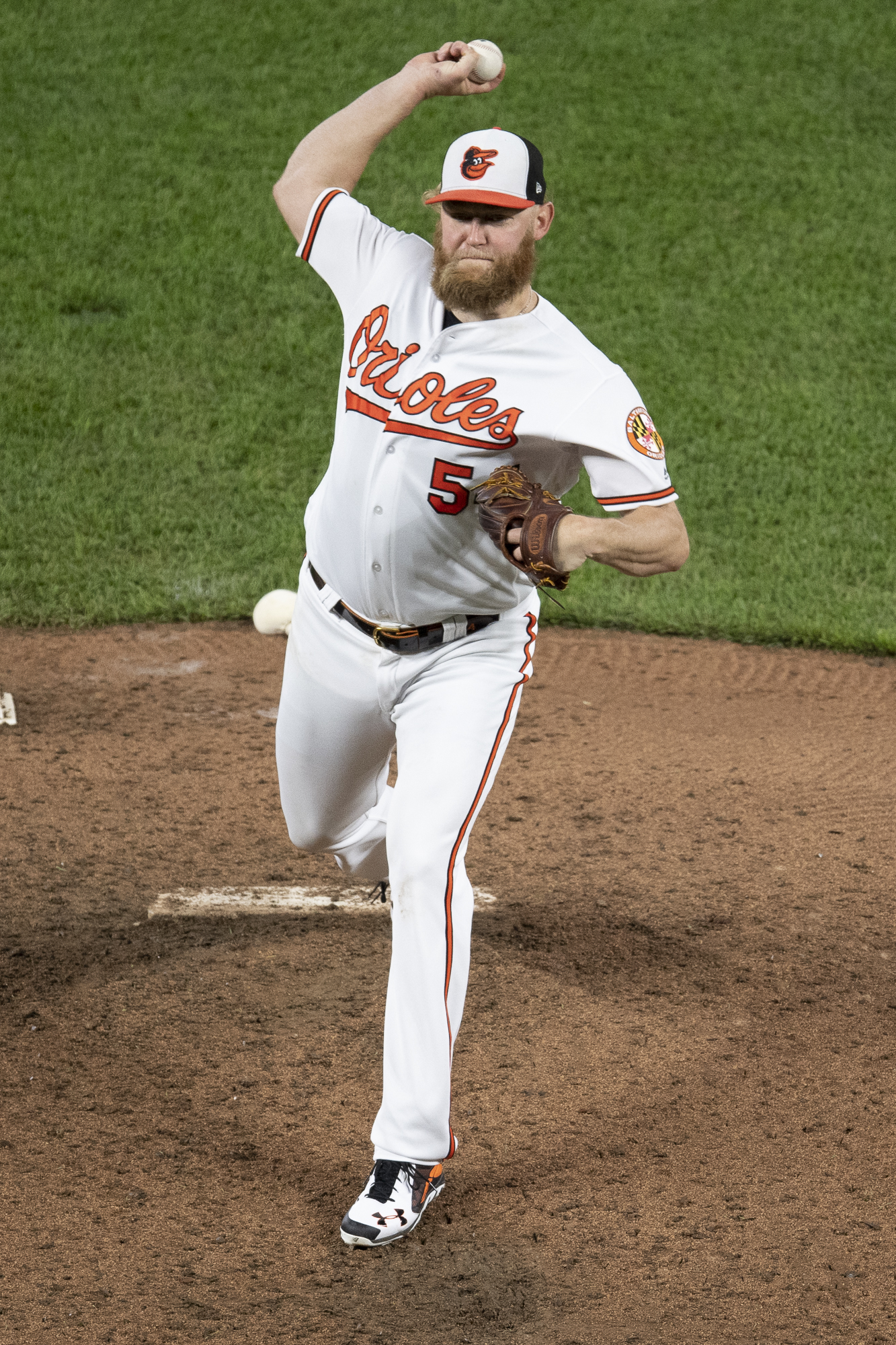
On the heels of that showing, the new Orioles front office, led by former Astros assistant GM Mike Elias, was understandably interested in clearing Cashner’s salary off its books. Cashner, after all, has a $10MM vesting option for the 2020 season that kicks in if he reaches 187 frames this year, and while that’d be a career-high for him, it’s not out of the realm of possibility. Given that context, it wasn’t much of a surprise when The Athletic’s Ken Rosenthal reported earlier this week (subscription required) that Baltimore was willing to eat virtually all of Cashner’s 2019 salary in Spring Training to facilitate a trade. Obviously, nothing came together.
The 2019 season is only a quarter through, but Cashner suddenly looks more like a passable fifth starter than he did a year ago. Through 48 1/3 innings, he’s averaged 7.5 K/9 against 3.4 BB/9 with a revitalized 51.7 percent grounder rate. His velocity is actually up to 93.5 mph on average, and Cashner’s 9.2 percent swinging-strike rate is the highest it’s been since way back in 2012. Cashner is throwing more four-seamers and more changeups, and he’s generally received more positive results. A contending club with a thin rotation could probably acquire Cashner for little more than a bit of salary relief and use him fifth starter. The upside in that scenario is minimal, however, and Cashner’s vesting option would be a deterrent for any interested team.
The more intriguing scenario would be for one of the many bullpen-needy teams — the Braves, Twins, Red Sox, Dodgers, Brewers or even the Cubs (his original club) — to acquire Cashner and drop him directly into the bullpen. This isn’t exactly a revolutionary concept. Putting Cashner in the bullpen has been a suggestion for years (hence this post’s title). But it’s also a fact that there are very few teams willing to sell at this point in the season, and the ones who are willing to do so would put a high price on most bullpen targets given the short supply of available arms in mid May. That’s unlikely to be the case with the Orioles and Cashner. Elias & Co. know full well that they’ll be summer sellers, and they’d be happy to shed whatever they can of the $5.89MM that remains on Cashner’s 2019 salary.
Beyond that is the fact that there’s some evidence to suggest that Cashner would thrive in shorter stints. Opponents are hitting just .212/.272/.347 against Cashner the first time through the order so far in 2019, and he’s struck out 24.7 percent of the hitters he’s faced the first time through as well. Cashner’s velocity will quite likely tick up even further in shorter stints, which could help him to improve on that ability to miss bats, but he’s already sporting a 3.50 xFIP when facing opponents for the first time in a game. That alone is worthy of intrigue, particularly given the minimal cost of acquisition. Putting Cashner in the ‘pen also mitigates any concern about his vesting option, and while he may prefer to work as a starter and have a chance to lock in that 2020 salary, he’d set himself up for a solid payday next winter if he can thrive in a multi-inning relief role.
This time of year, there are far more clubs looking for bullpen help than there are arms available. That’s not going to enhance Cashner’s trade value much — the O’s probably won’t get much beyond some salary relief — but the lack of available alternatives should still lead teams to explore the idea of finally converting him into a full-time reliever.
Prospect Promotions & Super Two Timing
Super Two status opens the door to an extra season of arbitration eligibility for certain younger players. Among players in the 2+ service class that spent at least 86 days in the prior season on an active MLB roster (or the injured list), the top 22% in terms of total service receive the Super Two designation. We won’t know the specific service level required until the class has been fully defined.
The ability to achieve that status is dictated primarily by early-career promotion decisions. It’s a factor for teams to consider as they manage their rosters. But it isn’t as strong of a motivator as the math that strongly disincentivizes teams from placing top young prospects on Opening Day rosters. (Kris Bryant recently labeled that a “loophole” that needs to be closed.) Super Two players are still controllable for the same duration as any others, thus preserving teams’ abilities to control the prime years of their best young talent and maintain timing-based bargaining leverage in long-term contract talks.
It’s tempting to think that Super Two status doesn’t matter all that much. True, some teams can largely afford to throw such considerations out the window, figuring that any future payroll impacts can be dealt with if and when they arise. It’s unlikely that the Red Sox worried too much about Super Two status when they decided to bring up Michael Chavis recently. If it turned out he wasn’t quite ready or needed for the duration of the season, he’d go back down anyway. And if he produced — as he has thus far — the long-term sacrifices would be well worth it even for just another month or two of immediate production.
For many teams, it’s tough to be cavalier when the stakes can be so significant. Since the arb system rewards players via raises once they are in the system, the ability to start with a big number and add to it three times vastly increases a player’s potential cumulative pre-free agency earning power. It’s not always obvious at the time the decision is being made, but don’t doubt for a second the degree of potential impact.
Consider Edwin Diaz, the stud closer who was traded over the offseason from the Mariners to the Mets. You may recall that money was a significant aspect of that deal (even moreso than your average MLB swap). Seattle was able to shed a big chunk of Robinson Cano‘s remaining salary and add some intriguing young talent by agreeing to part with Diaz. Beyond his abilities on the mound, why was it that Diaz was such a desirable asset? Since Diaz fell shy of arbitration, the Mets were able to renew his contract at just $607K. MLBTR’s arbitration projections would have valued things quite differently had Diaz made it through the door, predicting a whopping $7.5MM salary due to his rare combination of dominant innings and saves. Diaz should still be able to command a big first-year arb salary this fall, but he’ll have to stay healthy to do so and will be starting from scratch rather than building off that massive starting point. The M’s, meanwhile, are enjoying a significantly different payroll situation; had Diaz been a Super Two qualifier, the Mets would’ve had a completely different view of how much Cano salary they’d be amenable to absorbing.
It works the other way, of course. Nationals shortstop Trea Turner snuck in with 2.135 years of service and earned $3.725MM. Tigers southpaw Matt Boyd checked in with a 2.136 service clock and got $2.6MM. And Cubs reliever Carl Edwards Jr., who landed on the dot at 2.134, took home $1.5MM. Things can change quickly in baseball. Turner has been hurt early this year, so his extra arb year will help prop up his ability to earn this fall and beyond. Boyd has taken an ace turn early; if he’s able to sustain even this one monster big-league season, he could be able to secure life-long financial security as soon as this fall. As for Edwards, he was optioned down earlier this year, which demonstrates another of the perils that’s protected against by early arb qualification.
So, we’d love to know which young players will ultimately obtain that status. When is this year’s cutoff? Well, that’s a bit of a misnomer. There’s no way to know in advance how much service it will take. Even if you look at the other players being promoted, you can’t assume they’ll all remain in the majors. And others could still drop back into the 2+ service class if they’re demoted in the future.
Over the past decade, the Super Two cutoff level has ranged from a low of 2.122 to a high of 2.146. Last year’s 2.134 cutoff lands smack dab in the middle. Players that were promoted on or before May 7th of this year were in line to accrue 146 days of service this season, thus putting them on track to clear all the bars we’ve seen in recent campaigns. Players promoted today could accrue as many as 139 days of service this season. And a player can top out at 122 days if they make it onto the active roster on the last day of May. Generally, a June promotion point should be “safe” for teams that want to avoid eventual Super Two status (that is, for prospects that haven’t previously accumulated any time).
Of course, coming up doesn’t always mean staying up. Nationals infielder Carter Kieboom was optioned back after 11 days; Rays first bagger Nate Lowe logged ten. They could still return and boost those tallies. Or, the days could come into play for 2020 promotion considerations; that’s how Turner ended up with his tally. A fair number of other younger players are firmly on track for eventual Super Two status so long as they can stay up. Chavis, Vladimir Guerrero Jr., Griffin Canning, and Nick Senzel are all tracking to reach 150 or more days of service this year. With his promotion on Sunday, Astros righty Corbin Martin could max out at 141 days in 2019. Most recently, youngsters Nicky Lopez (link) and Oscar Mercado (link) were tapped for call-ups, though the precise dates aren’t yet clear.