
Free Agent Profile: David Robertson
Though he’s spent much of his career in the shadow of perhaps the greatest closer of all time, Mariano Rivera, Yankees right-hander David Robertson stepped onto the ninth-inning stage this season and excelled. The strong effort continued a four-year run of dominance that has positioned the former 17th-round pick quite well as he hits free agency for the first time.
Strengths/Pros
In today’s game, strikeouts are king for pitchers, and Robertson excels in that department. Though he’s not overpowering — he’s averaged 92 mph on his heater in his career — Robertson racks up strikeouts at a prolific rate in part because he releases the ball closer to home plate than most pitchers, causing his fastball to appear quicker (a trait which SI.com’s Tom Verducci examined in a 2011 article). He averaged 13.4 strikeouts per nine innings this season and has punched out 12.0 per nine in his carer, including 12.3 per nine over the past four seasons.
 Those four seasons are where Robertson truly began to establish himself as one of the game’s elite relievers. From 2011-14, Robertson owns a 2.20 ERA with a 354-to-95 K/BB ratio in 258 innings of work. His 46.7 percent ground-ball rate in that time has been slightly above-average, and he’s shaken the command problems that he showed early in his career. He walked nearly five batters per nine innings from 2008-11, but since that time he’s averaged just 2.8 BB/9.
A look at the rest of the closer market reveals quite a few older options, but Robertson will turn 30 next April, giving a signing team control of some prime-aged seasons. The next-youngest competition is Sergio Romo (32), who is coming off a down season in which he lost his hold on the ninth inning. In fact, a large number of Robertson’s competitors on the open market lost their jobs this year, but he can point to the fact that his grip remained iron-clad on the ninth inning this season.
Robertson has thrived in a big-market setting and in a hitter-friendly ballpark/division, so there’s little reason to worry about inserting him into any setting. While his time spent behind Rivera could be seen by some as a means of pointing out his lack of experience as a true closer, the argument can also be made that there’s no one better to have served as a tutor/mentor for Robertson throughout the first six seasons of his career.
Weaknesses/Cons
Were Robertson on a different team, a qualifying offer of $15MM+ might not even be a consideration. Few clubs are comfortable paying relievers so extravagantly in this market, but the Yankees can certainly afford to. ESPN’s Buster Olney has written (subscription required) that it’s a virtual lock for Robertson to receive a QO, and as such, a signing team will have to forfeit its top unprotected pick in order to secure Robertson’s services. It’s nearly certain that no other reliever will come with this distinction.
Some may be surprised to learn that Robertson comes with somewhat of a platoon split — particularly because that split is of the reverse variety. While Robertson has completely flummoxed left-handed batters throughout his career and particularly in the past four seasons (.173/.254/.236), right-handed hitters have batted .230/.305/.373 against him dating back to 2011. Granted, that’s still not a particularly impressive batting line, but it’s closer to league-average production than one might think based on his otherwise elite stats.
Robertson dealt with what appears to have been a mild groin injury earlier this season. He required a trip to the disabled list — just the second of his career — though he only required the minimum 15-day stay and appeared healthy following that episode.
Personal
Laid back and reserved in nature, Robertson enjoys hunting and fishing in his free time. He also takes a great amount of pride in doing charity work for the community — a trait that is evident in looking at his High Socks for Hope charity. Robertson, an Alabama native, founded the nonprofit organization with his wife, Erin, after tornadoes ravaged his hometown Tuscaloosa area back in 2011. The charity seeks to benefit those whose lives have been impacted by tornadoes, hurricanes and other natural disasters.
Since founding the charity, Robertson has pledged to donate $100 for each strikeout he records, and he also pledged $200 for every save that he recorded in 2014. He’s been recognized with awards from Habitat for Humanity and has also been nominated for the Branch Rickey Award for community service in each of the past four seasons.
Market
We’ve seen in the past that it typically behooves relievers to sign early in the offseason rather than to wait for the market to develop. The best hope for Robertson is for a team to make an aggressive push early in the offseason after deciding that he’s “their guy” and making a strong offer. This method worked for Joe Nathan and Joaquin Benoit with the Tigers, and we saw Jonathan Papelbon take a similar route when he signed in Philadelphia. On rare occasion, relievers that wait (i.e. Rafael Soriano) have been paid handsomely, but typically the market is strongest early on.
Not many teams are forking over major dollars to relief pitchers these days, but some clubs might be willing to make an exception for a pitcher that has been worth 8 fWAR and 9.3 rWAR dating back to 2011. The Yankees, who will likely make a QO, will of course be involved. However, they have a ready-made replacement candidate in the form of Dellin Betances and do have other areas that need attention.
The Dodgers can never be ruled out on big-name free agents, although Kenley Jansen is currently entrenched as their ninth-inning man. The Tigers yet again endured bullpen struggles, but after watching their big-money investment in Joe Nathan go south, would they decide that the best solution is to throw even more money at the ninth inning? The White Sox don’t have a firm solution in the ninth, and they’re set at a number of positions with affordable contracts, but GM Rick Hahn recently downplayed the idea of spending heavily on the ninth inning. The Angels figure to be set with Huston Street and a repeatedly stated desire to stay under baseball’s luxury tax threshold. The Rangers have deep pockets and a weakened bullpen as well. Another logical landing spot could be the Nationals, who are set at many positions around the diamond and already have a strong rotation.
Expected Contract
Robertson has been nothing short of dominant, and in spite of the QO that’s likely to be attached to his name, I imagine that the goal for his camp will be to top Papelbon’s four-year, $50MM guarantee.
Given the fact that Robertson is the best player at his position in a free agent market that is thin on bats and features a number of talented but risky starters, a team may view Robertson as more of a sure thing than the rest of the market. A club looking to spend to improve but unwilling to take on the risk of an injury-prone starter or overpay for one of the few reliable bats may instead prefer to allocate its funds to shortening the game via a dynamic bullpen addition. It’s that line of thinking that leads me to believe it is indeed possible for Robertson to top Papelbon’s deal.
Aiming to set a new precedent is bold, but if there’s been a free agent reliever in recent history who can stake a legitimate claim to being able to do so, it’s Robertson. Based on his combination of age, strikeouts, command, ground-balls and success in a major market and hitter-friendly division, I’m predicting a four-year, $52MM contract for Robertson when all is said and done.
Photo courtesy of USA Today Sports Images.
Offseason Outlook: Chicago Cubs
The Cubs enter the 2014-15 offseason with the highest expectations since Theo Epstein took over as club president in October 2011. Starting pitching should be the team’s main focus this winter.
Guaranteed Contracts
- Starlin Castro, SS: $44MM through 2019
- Anthony Rizzo, 1B: $37MM through 2019
- Edwin Jackson, SP: $22MM through 2016
- Jorge Soler, RF: $20MM through 2020 (may opt for arbitration once eligible)
- Ryan Sweeney, OF: $2MM through 2015
Arbitration Eligible Players (service time in parentheses; projections via Matt Swartz)
- John Baker, C (5.141): $1.1MM projected salary
- Wesley Wright, RP (5.105): $2MM
- James McDonald, SP (5.074): $1MM
- Chris Coghlan, LF (4.148): $1.4MM
- Luis Valbuena, 3B (4.148): $3.1MM
- Justin Ruggiano, RF (4.019): $2.5MM
- Travis Wood, SP (4.004): $5.5MM
- Pedro Strop, RP (3.156): $2.4MM
- Jake Arrieta, SP (3.145): $4.1MM
- Felix Doubront, SP (3.120): $1.3MM
- Welington Castillo, C (3.009): $2.1MM
- Non-tender candidates: Baker, McDonald, Wood
Contract Options
- Kyuji Fujikawa, RP: $5.5MM club option with a $500K buyout
- Tsuyoshi Wada, SP: $5MM club option (no buyout)
- Jacob Turner, SP: $1MM club option (no buyout)
Free Agents
For a last-place team that finished 16 games under .500, the 2014 Cubs had several positive developments. 25-year-old Anthony Rizzo emerged as one of the best first basemen in baseball. 24-year-old shortstop Starlin Castro bounced back to his 2011-12 form. 22-year-old right fielder Jorge Soler battled hamstring injuries but still tore through Double and Triple-A and saw his success carry over for a month in the Majors. On the pitching side, Jake Arrieta emerged as a potential ace with a 2.53 ERA in 25 starts and Hector Rondon had a successful run as the team’s closer. A lot of building blocks fell into place under new manager Rick Renteria.
In March, I questioned the Cubs’ choices of position players Rizzo and Kris Bryant over power arms Andrew Cashner and Jon Gray. The Rizzo and Bryant choices, plus this summer’s acquisition of Addison Russell and drafting of Kyle Schwarber, suggest president Theo Epstein and GM Jed Hoyer have implemented a strategy favoring the stability of position players to begin their rebuild. The plan has come up smelling like roses so far, as the team’s collection of young hitters is the envy of baseball.
Rizzo has first base locked down for the Cubs potentially through 2021, on what’s become one of the game’s most team-friendly contracts. Though Luis Valbuena did an admirable job at the hot corner in 2014, third base belongs to Baseball America Minor League Player of the Year Kris Bryant. If the Cubs wait a few weeks into April to select Bryant’s contract, they’ll control him through 2021 as well.
The Cubs’ middle infield logjam represents a good kind of problem. Castro, signed potentially through 2020, was one of the game’s ten best shortstops in 2014 despite missing most of the season’s final month. Powerful 21-year-old Javier Baez made his big league debut in August, playing second base and then switching to shortstop when Castro went down. Baez struggled at his new level, as many prospects do, but has the second base job entering 2015. Then there’s Addison Russell, the key piece in the deal that sent Jeff Samardzija and Jason Hammel to Oakland. The 20-year-old Russell raked at Double-A and is knocking on the door to the Majors himself.
Valbuena, 28, had his first full season as a regular, posting a solid .249/.341/.435 line while playing third base and a bit at second. If we pencil in Rizzo, Castro, and Bryant at their respective positions for 2015, only second base is available for three players ranging from good (Valbuena) to potential All-Star (Russell and Baez).
Trading Castro, Russell, or Baez this offseason could be jumping the gun, since Baez has yet to succeed at the big league level and Russell has yet to reach Triple-A. A safe plan would be to begin 2015 with a Castro-Baez middle infield, and if Baez hits and Russell is knocking down the door come July, the team can more seriously consider trades at that point or even move someone to the outfield. Trading Valbuena this winter could make sense, though he’d be a good backup plan at second base. The Cubs need a backup plan for Baez, who struck out in 41.5% of his plate appearances as a rookie. Among players with 200 or more plate appearances, that’s easily the worst strikeout rate in baseball history.
Valbuena was one of the ten best offensive third basemen in the game this year and is under control through 2016; a team like the Red Sox could have interest. He could also be marketed as a second baseman, especially since the free agent market is weak at that position.
Soler should have the right field job locked down heading into 2015, but last year’s 86 games marked a career high. We won’t know if Soler’s hamstrings can hold up for 130+ games in the Majors until he does it. Over in left field, former 2009 Rookie of the Year Chris Coghlan had a resurgent year and should have the job heading into next season. The 2014 Cubs used a host of center fielders, the most interesting of whom is 22-year-old Arismendy Alcantara. A very good prospect in his own right, Alcantara took his first reps at the position this year after previously working as an infielder. As with Baez, Alcantara should get first crack at the 2015 job despite rookie growing pains.
The Cubs’ outfield has enough uncertainty that keeping veterans Sweeney and Ruggiano around makes sense. The team would be justified entering Spring Training with their current outfield pieces, though I’d consider an offseason run at Colby Rasmus on a one-year deal. Rasmus would bring power and upside with no long-term risk, and Alcantara could get further acquainted with center field at Triple-A or be an oft-used super-utility player in the Majors. Another outfielder who could fit is Yasmany Tomas, if the Cubs see star potential in the Cuban free agent, consider him worth a potential $100MM contract, and don’t mind creating something of a long-term surplus in the outfield.
Behind the plate, 27-year-old Welington Castillo played acceptably but saw his batting average and walk rate decline from 2013. The Cubs don’t have to make a long-term decision on Castillo, who is entering arbitration for the first time. The team does have a potential star catcher in the pipeline in 2014 first-rounder Kyle Schwarber, but he needs to prove he can stick at the position. In the spirit of adding position player talent now and worrying about a potential surplus later, the Cubs could make a run at the best free agent catcher, Russell Martin. Signing Martin would signal the Cubs intend to take a leap forward into contention in 2015, though he could require upwards of $50MM as well as the forfeiture of the Cubs’ second-round draft pick.
Epstein whiffed on the biggest expenditure thus far in his Cubs tenure, Edwin Jackson. Jackson now has two years and $22MM left on his contract. According to a late August report from Bob Nightengale of USA Today, the Cubs and Braves engaged in talks in July to swap Jackson and B.J. Upton. That could be revisited, but it’s not the best match since Upton has more than twice as much money remaining on his contract. Other disappointing contracts with between $16-30MM remaining include Cameron Maybin, Chris Johnson, Aaron Hill, Allen Craig, Michael Bourn, Nick Swisher, and Carlos Beltran. While those players have been letdowns, their teams may not be as close to the breaking point as the Cubs seem to be with Jackson.
Regardless of Jackson, the Cubs will need to explore adding starting pitching from all angles. The 2014-15 free agent class is rife with options for all parts of a rotation. The Big Three are Max Scherzer, Jon Lester, and James Shields. Lester is the most obvious fit for the Cubs, as a player who joined the Red Sox around the same time Epstein did and was a big part of the executive’s success there. That he isn’t eligible for a qualifying offer is helpful, but Lester’s price tag will probably exceed $150MM. If they prefer the trade market, the Cubs could try to swing a deal for the Phillies’ Cole Hamels, who is owed $96MM through 2018.
One big name starter alone probably wouldn’t be enough to push the Cubs into contention. Arrieta looked like an ace this year, but his 176 2/3 pro innings marked a career-high, and he missed the season’s first month recovering from a shoulder injury. Kyle Hendricks posted a sparkling 2.46 ERA in 80 1/3 innings as a rookie, but his scouting report and lack of strikeouts suggest a back of the rotation starter. Though his ERA bounced around in his three years with the Cubs, Travis Wood profiles at the back end of a rotation as well and could be non-tendered or traded. The other immediate options are projects who once showed potential: Jacob Turner, Felix Doubront, and Dan Straily. If the Cubs want to keep Turner they’ll pick up his $1MM club option, as renewing him would cost at least 80% of his 2014 salary, which comes to more than $1.5MM.
The Cubs would do well to add one or two mid-tier starting pitchers even if they sign one of the Big Three. Wada could be in that mix after a successful 13-start run, though the Cubs would probably want him for less than his $5MM club option. The Cubs will likely set their sights higher and go for Kenta Maeda, Brandon McCarthy, Francisco Liriano, or Justin Masterson. Masterson comes with the Epstein connection plus other helpful factors such as the lack of a qualifying offer and a likely short-term deal. Epstein has succeeded in the free agent starting pitcher bargain bin over the years, finding Hammel, Wada, Scott Feldman, and Paul Maholm on the cheap.
The Cubs’ bullpen has talent. Rondon is the incumbent closer, while Justin Grimm, Neil Ramirez, and Pedro Strop also pitched well. The Cubs could cut Wesley Wright loose and pursue a better option from the left side, with Andrew Miller profiling as the top southpaw reliever on the free agent market. Right-hander Kyuji Fujikawa is likely to have his option bought out after missing most of his two-year term with the Cubs due to Tommy John surgery. The 2014 Cubs led the NL in relief innings, and the ten pitchers who tossed 14 or fewer innings apiece accounted for a 6.91 ERA. The nine hurlers who had 21 or more relief innings tallied a cumulative 3.04 mark. Better starting pitching could have a significant trickle-down effect on the bullpen in 2015.
Alfonso Soriano is finally off the books for the Cubs, who owe $25.5MM to five players under contract for 2015. They could spend another $17MM or so on arbitration eligible players, bringing total commitments to around $43MM. What is an appropriate payroll for the 2015 Cubs? It seems they could reasonably sit around the middle of the pack with a $110MM payroll, and they could also roll over unspent money from 2014. A $70MM war chest would be more than enough money to add the players necessary to compete next season.
In the longer-term, the Cubs should raise their payroll to be top five in baseball, befitting of their status as a major market team. Though their short-term television rights are an open question, the Cubs’ potential TV deal for all their games following the 2019 season will be what Epstein called a “paradigm shifter” for club revenue, according to Gordon Wittenmyer of the Chicago Sun-Times. Improvements to Wrigley Field, which are now underway, will “move the needle,” according to Epstein. The Cubs have begun their renovation project despite a pending lawsuit between rooftop owners and the city of Chicago regarding the team’s plans to erect signs that will affect the rooftop view.
Regular season winning percentages in the Theo Epstein/Jed Hoyer Cubs era have increased from .377 to .407 to .451. Though he could sign an extension, Epstein only has two years left on his contract. Aggressive acquisition of starting pitching this offseason should mark the end of his three-year rebuilding plan.
Offseason Outlook: Boston Red Sox
The Red Sox got an early start on their rebuilding for 2015, and their offseason efforts will focus on sorting through their outfield surplus and adding arms to both the rotation and the bullpen.
Guaranteed Contracts
- Dustin Pedroia, 2B: $96.5MM through 2021
- Rusney Castillo, OF: $67MM through 2020 (Castillo can opt out after 2019 season)
- Allen Craig, OF/1B: $25.5MM through 2017 ($13MM club option for 2018)
- David Ortiz, 1B: $16MM through 2015 (club/vesting options for 2016 and 2017 worth at least $10MM)
- Mike Napoli, 1B: $16MM through 2015
- Shane Victorino, OF: $13MM through 2015
- Clay Buchholz, RHP: $12MM through 2015 ($13MM club option for 2016; $13.5MM club option for 2017)
- Yoenis Cespedes, OF: $10.5MM through 2015
- Edward Mujica, RHP: $4.75MM through 2015
Arbitration Eligible Players (service time in parentheses; projections via Matt Swartz)
- Junichi Tazawa, RHP (4.086): $2MM
- Daniel Nava, OF/1B (3.044): $1.9MM
- Jonathan Herrera, 2B/3B (4.100): $1.4MM
- Non-tender candidates: Herrera
Contract Options
- Craig Breslow, LHP: $4MM club option with $100K buyout
Free Agents
Other Payroll Obligations
- $3.9MM to Dodgers, as part of nine-player trade in August 2012
With a sub-.500 record and virtually no hope of a late-season run, the Red Sox decided to become July deadline sellers. Most teams usually trade established players for prospects at the deadline, and the Sox didn’t shy away from this strategy themselves, adding young arms Edwin Escobar, Heath Hembree and Eduardo Rodriguez in separate deals for Jake Peavy and Andrew Miller, respectively. Boston’s biggest moves, however, saw the team pick up pieces who can help them in 2015 — Yoenis Cespedes came from Oakland in exchange for Jon Lester and Jonny Gomes, while the deal of John Lackey to St. Louis brought back Joe Kelly and Allen Craig. It was a nice return on two pending free agents (Lester and Peavy) and Lackey, who was contracted through 2015.
Kelly, who is controllable through the 2018 season, pitched decently in 10 starts after the trade and will join Clay Buchholz as the only locks for the 2015 rotation. The Sox will hope that at least one of their young starters (Rubby De La Rosa, Allen Webster, Brandon Workman or Anthony Ranaudo) can win a rotation spot and provide solid innings next year, though given how this quartet struggled last season, Boston isn’t counting on anything. Other prospects like Rodriguez, Henry Owens or Matt Barnes could be in the mix as well with a big Spring Training.
It remains to be seen if the Red Sox will pursue two new starters to fill the other two rotation spots, or if they’ll rely on internal options for one spot and then go for an ace. It seems likely the Sox will bid on Kenta Maeda if the Japanese right-hander is posted, so he could account for one slot. If the Red Sox look for a more proven ace, the biggest names on the free agent market are Max Scherzer, James Shields and ex-Boston playoff hero Lester; all will command big salaries, but team chairman Tom Werner recently said that the Sox are more than able to spend this offseason.
It still seems remarkable that Lester and the Sox couldn’t negotiate an extension, given that both sides were eager to work something out and Lester even indicated last January that he’d be open to taking a discount to remain in Boston. He didn’t quite mean a discount in the form of a four-year, $70MM contract akin to the initial offer made the Sox during offseason negotiations, and it seems talks never quite recovered from that below-market offer. It’s very possible that $70MM won’t even end up being half of what Lester receives in free agency.
While Lester could still re-sign with the Red Sox, it’s almost unheard of for a top-tier free agent to be dealt by his team at midseason and then rejoin them in the offseason. Second of all, Boston’s uneasiness about guaranteeing long-term deals to pitchers in their 30s informed their initial offer to Lester in the first place, so it would be odd to see them reverse course now that they’re competing against others for Lester’s services.
One possible alternative could be Shields, who will be 33 years old on Opening Day (two years older than Lester) but more of a fit for the Sox since he could be open to a four-year deal, whereas Lester would want a six- or seven-year commitment. The Red Sox have been scouting Shields already and seem like one of many teams who will be in the mix for “Big Game James.” With a top-ten (seventh overall) protected pick in the 2015 draft, Boston will be free to pursue qualifying offer free agents while still hanging onto their first-rounder. (They would still, of course, need to forfeit their second-round selection.)
There’s also the possibility that the Sox could trade for an ace and move some of their prospect depth. The Red Sox still have one of baseball’s most well-regarded farm systems, though the club will be a lot more careful about giving their prospects everyday roles in 2015. Boston went into last season counting on Xander Bogaerts, Jackie Bradley and Will Middlebrooks to step up as lineup regulars, and yet all three badly struggled at the plate, with Bradley and Middlebrooks losing their everyday jobs by season’s end.
Middlebrooks in particular could be on the outs given that he declined to play winter ball, leading to some “disappointment” within the organization according to team president Larry Lucchino. Whether Middlebrooks stays or goes, the Sox will be looking for a left-handed hitting third baseman (as Lucchino noted), and Brock Holt could be an internal fit, though he’s a middle infielder by trade. The team could afford to use the versatile Holt mostly at third (or in a platoon with Middlebrooks) as Mookie Betts could take over the utility role.
For external options, a top-tier free agent third baseman like Pablo Sandoval would be a huge upgrade, or the Sox could pursue a trade for someone like the Pirates’ Pedro Alvarez, as the Boston Herald’s John Tomase recently speculated. I’d also toss the Cubs’ Luis Valbuena into the mix as a trade candidate; Valbuena is coming off a quietly impressive season and has two years of control left, though he doesn’t have a long-term spot in Chicago thanks to all of the Cubs’ blue chip infield prospects.
Boston will be looking for left-handed bats in general, as improved lineup balance is a stated winter goal of GM Ben Cherington. David Ortiz is the only left-handed hitter in an everyday role for the projected 2015 lineup, as Mike Napoli, Dustin Pedroia, Bogaerts, Christian Vazquez and all the outfielders (save Bradley and switch-hitting Daniel Nava) swing from the right side. A new lefty bat could be slotted at third base, or in a platoon with Vazquez, or the Sox could explore trading two of their right-handed hitting outfielders for one left-handed hitting outfielder.
However it breaks down, the Sox certainly have to do something to finalize their outfield alignment. The only outfielder seemingly guaranteed of a starting job next season is the one with the least Major League experience; Rusney Castillo posted an impressive .928 OPS in 40 PA in September, and Boston certainly expects him to see regular work given his seven-year, $72.5MM contract. Castillo’s best position is center field, however, so now Betts could be blocked in both center field and by Pedroia at his natural position of second base. There’s also Bradley, who entered the year as one of the game’s top prospects and delivered Glove Glove-caliber defense in center, despite looking completely overmatched swinging the bat.
With Castillo, Betts and Bradley in center, Cespedes and Nava in left, and Craig and Shane Victorino in right, at least one move is sorely needed to clear some room. The other issue is that several of these players could be hard to trade since they’re coming off down years — Bradley, Nava and Craig all struggled while Victorino spent most of the season on the DL. While Cespedes seems to be a great fit for Fenway Park, he isn’t yet sure if he wants to sign an extension in Boston, which could make him a trade candidate to be moved for pitching.
This is just my speculation, but Cincinnati and Philadelphia stand out as teams that could be natural trade partners for the Red Sox this winter. The Reds have a hole in left field and seem destined to trade at least one of four starting pitchers entering their walk years. Johnny Cueto or Mat Latos would provide a nice front-of-the-rotation boost for the Sox, though it’ll take more than prospects to acquire either pitcher (especially Cueto) since the Reds plan to contend in 2015. Cincinnati could ask for an experienced, controllable youngster like Bogaerts or Betts in any negotiation, along with perhaps another MLB-ready piece like Nava (who has the on-base skills that the Reds are looking for — at least against right-handers) and/or a young pitcher.
The Phillies, meanwhile, would go in the opposite direction and ask for multiple top prospects in exchange for Cole Hamels as they attempt to rebuild their farm system. Boston has the financial resources to pay the $96MM owed to Hamels through 2018 and they’d only be committed to Hamels through his age-34 season. It might take both fully absorbing Hamels’ contract and giving up a heavy prospect load to convince the Phils to make a trade, however, so the Sox might prefer to just spend on a free agent ace and keep their minor leaguers.
The bullpen also stands out as an area of great uncertainty for the Red Sox, starting with Koji Uehara‘s free agency. Up until mid-August, Uehara was pitching so well that there was talk of extending him a qualifying offer (a one-year deal in the $15MM range), yet those discussions vanished after Uehara posted an 11.74 ERA over his final 7 2/3 IP of the season. This doesn’t suddenly mean Uehara is finished, of course, as some regression was probably inevitable given the otherworldly numbers he posted in 2013 and in the first three-quarters of the 2014 season. The Sox still have an interest in re-signing Uehara, and it’ll be intriguing to see how his market develops as teams weigh his late struggles and age against his pre-August superstar numbers.
As for the rest of the bullpen, it’s possible the young starters that don’t make the rotation could be used in relief roles, which would shorten Boston’s offseason shopping list. Manager John Farrell would like to see free agent Burke Badenhop return, while Craig Breslow‘s $4MM team option seems likely to be bought out given his struggles in 2014. Veterans Junichi Tazawa and Edward Mujica are still in the fold and rookie knuckleballer Steven Wright pitched well in limited action. I’d expect the Red Sox to add at least one more experienced relief arm to the mix. If Uehara departs, that experienced arm could well be a closer, either in a trade or as a free agent signing.
Miller has openly discussed how much he and his wife enjoyed their time in Boston, so it’s quite possible the Red Sox could look to bring back the southpaw. His terrific season is only raising his price tag, though, and Boston may not want to pay the rumored rate of three years/$21MM for a setup man, even as one as dominant as Miller. One potential solution could be for the Sox to sign Miller and then use him as a closer; while he’s never served as a ninth-inning man before, Miller has the classic high-strikeout rate and power arm that traditionally fits the closer mold.
The 2012-14 Red Sox became the first franchise to ever go from last place to a World Series championship to last again over a three-season stretch. It’s been quite a roller coaster stretch for Boston fans, though they can take heart in the fact that recent history has shown their team could be back in contention very quickly. Cherington and company have a lot of work to do this winter in sorting through both the young and veteran options on the roster, but with at least $50MM (hat tip to WEEI.com’s Alex Speier) in available payroll space to work with this offseason, the Sox are willing to spend to enable another quick rise up the AL East standings.
Free Agent Profile: Brandon McCarthy
After signing a two-year, $15.5MM contract prior to the 2013 season, Brandon McCarthy struggled with the Diamondbacks before experiencing a tremendous turnaround following a trade to the Yankees. He’ll hit the open market this season in a strong crop of free agent pitchers as he looks to cash in on his big second half.
Strengths/Pros
McCarthy’s past two seasons don’t look great on the whole, but there were plenty of indicators that his ERA with the D’Backs, particularly this year, was in part due to poor luck. He was racking up strikeouts at the highest rate of his career with an elite ground-ball rate and a 1.6 BB/9 mark prior to his trade — all signs that led the Yankees to acquire him in exchange for Vidal Nuno. The rest of the season was a 180-degree turn for McCarthy, whose 5.01 ERA with Arizona feels like a distant memory after he posted a 2.89 mark with the Yankees.
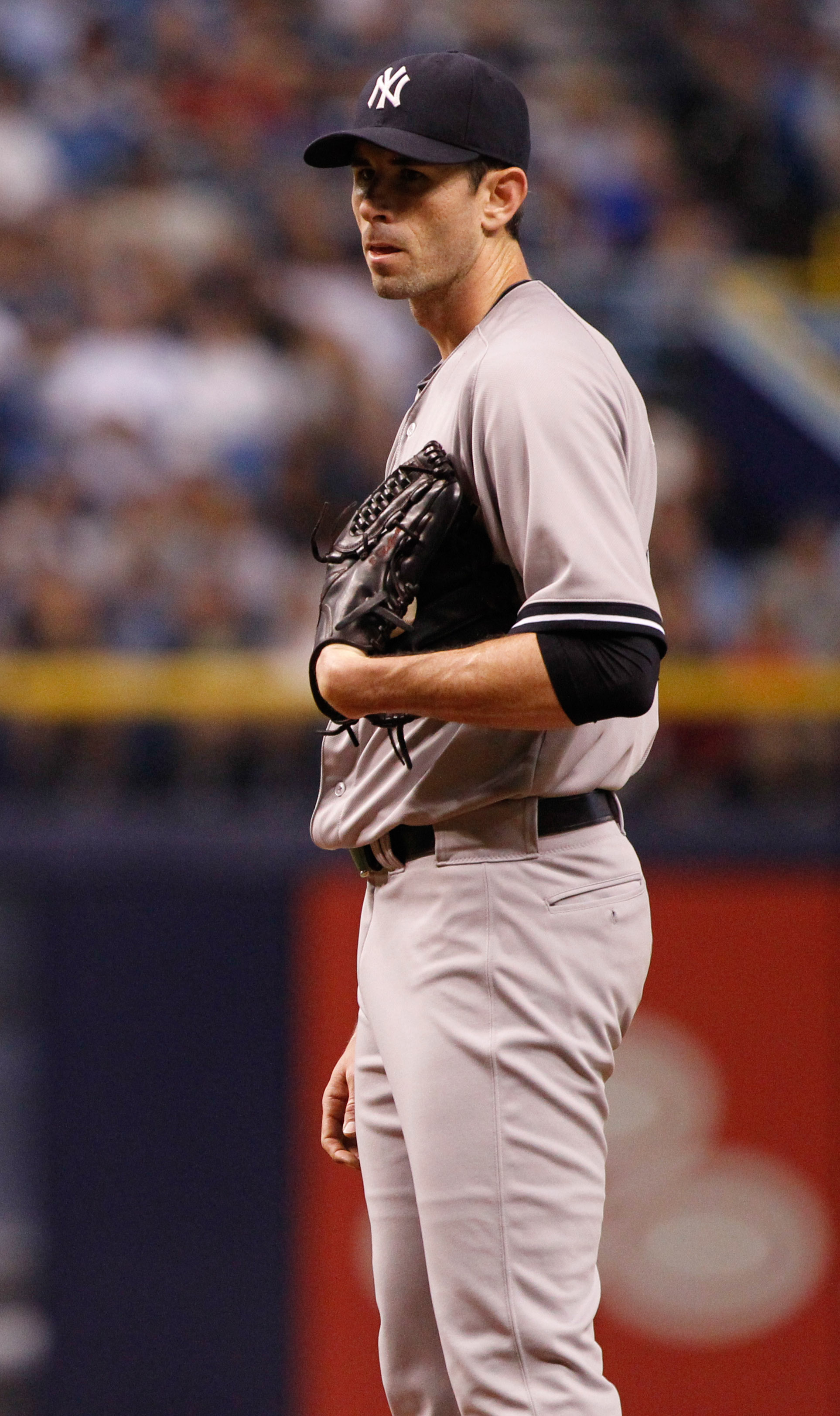
McCarthy finished this season with a 5.3 K/BB ratio — tops among free agent starters — and a 52.6 percent ground-ball rate, both indicators that future success could be on the horizon. This season also marked the healthiest year of his career, as he made a career-high 32 starts and totaled a career-high 200 innings. His diminished performance in Arizona takes some shine off his recent numbers, but over the past four years McCarthy has a cumulative 3.81 ERA with 6.5 K/9, 1.5 BB/9 and a 47.8 percent ground-ball rate. FIP (3.44), xFIP (3.43) and SIERA (3.60) all feel he’s been better than that ERA would indicate.
McCarthy posted the best peripherals of his career this season in part because his fastball averaged a career-high 92.9 mph. That led to the best swinging-strike rate he’s posted (8.8 percent on the season; 9.4 percent with the Yankees) since working as a reliever for the White Sox in 2006. Hitters have never chased out-of-zone pitches from McCarthy as often as they did in 2014, and they made less contact (82.3%) against him this season than they have since that 2006 campaign. That his greatest success came in on a contending team in a large market in the AL East will carry some weight with interested teams.
At 31 years of age, McCarthy isn’t necessarily a young free agent, but he’s younger than many of the pitchers in the second tier of this year’s market, including Jake Peavy, Ervin Santana and Jason Hammel. He’s also ineligible to receive a qualifying offer after being traded midseason, something that fellow 31-year-old free agent Francisco Liriano cannot say. A combination of relative youth, strong strikeout-to-walk numbers, increased velocity and no qualifying offer are strong points in his favor.
Weaknesses/Cons
Despite all of the things working in McCarthy’s favor, there’s simply no getting around the fact that he doesn’t have a track record of durability. While one of his most recent injuries — a terrifying head injury suffered in 2012 when struck by a line drive — was clearly a freak accident, McCarthy has had multiple stress fractures in his throwing shoulder in the past. He’s landed on the DL for a shoulder problem five times in his career (including once in 2013), and he also missed nearly the entire 2008 season with a forearm injury. McCarthy has only topped 170 innings twice — in 2011 and in 2014.
McCarthy’s agent, Ryan Ware of LSW Baseball, will also have to explain his client’s sub-par ERA with the D’Backs to interested parties this offseason. For as excellent as he was with the Yankees, McCarthy turned in 224 2/3 innings of 4.75 ERA ball with Arizona prior to his turnaround. Can 90 innings with New York erase concerns over that performance? Ware can point out that there was some poor luck involved, which is true, but McCarthy has a history of posting low strand rates in his career. His overall mark of 71 percent is slightly below average, but he’s turned in four seasons with a strand rate south of 69 percent as a starter — something that does lead to a discrepancy between ERA and FIP. He hasn’t been a strikeout pitcher in previous seasons either, though that may no longer be the case if he can maintain his newfound velocity.
Personal
McCarthy is seen as a student of the game and is considered one of the most intelligent minds in baseball. As noted by Eddie Matz of ESPN The Magazine last year, McCarthy home-schooled himself in sabermetric principles and used his findings to reinvent himself as a pitcher in 2009 — adjusting his pitch repertoire and changing his gameplan on the mound.
Matz writes that McCarthy is an avid reader and has an extensive vocabulary that he regularly drops into everyday conversation. He’s very active on Twitter — a trait that has endeared him to many fans — and is said to be known for a dry sense of humor.
Market
It’s not hard to envision half the teams in the league (or more) showing interest in McCarthy. The lack of draft pick forfeiture attached to his name and the fact that he will command lesser money than top arms Max Scherzer, James Shields and Jon Lester is undoubtedly attractive.
Contending teams in need of immediate rotation help and non-contending clubs alike will show interest. The Yankees could certainly use McCarthy back, and I wonder if his turnaround in the Bronx gives them a bit of an inside track in landing him this offseason. Other teams that could be in need of arms will include (but certainly aren’t limited to) the Red Sox, Cubs, Twins, Rockies, Giants, Marlins, Phillies, Pirates, Braves and Astros.
McCarthy has said he’d be open to returning to the Yankees, and he also noted that he’d be willing to sign early in the offseason if an offer to his liking came along. Oftentimes, signing early is a good move for free agents — particularly those that are below the top tier of the free agent class.
Expected Contract
Though his two-year platform heading into free agency is weaker than his previous two-year platform from an ERA standpoint, McCarthy’s entering free agency without the specter of a career-threatening head injury hanging over him as he did in the 2012-13 offseason. The market for pitching has only grown since that time, and as such, McCarthy should exceed his previous contract with ease.
Given his turnaround, strong peripherals and lack of a qualifying offer, I think a three-year deal is attainable for McCarthy. I’d expect that many teams will be comfortable pushing to three years in order to land him, and it’s possible that the first team that blinks and gives him a fourth year, even if it lowers the average annual value of the deal, will end up signing him. While I’m not ruling out the fourth-year scenario, I’m going to predict that McCarthy ends up on a three-year, $36MM contract.
Photo courtesy of USA Today Sports Images.
Free Agent Profile: Francisco Rodriguez
Francisco Rodriguez is a late-inning fixture, having recorded at least two and as many as 62 saves every season since 2003, though he has had a somewhat odd run of late on the transactional side.
After earning big arbitration and free agent dollars, the star closer made the somewhat surprising decision to accept arbitration from the Brewers after the 2011 season rather than taking free agency (under the old Type A/Type B system). But an off 2012 season — 72 innings of 4.38 ERA ball, with 9.0 K/9 vs. 3.9 BB/9 — forced Rodriguez into a minor league deal. He responded with a bounceback campaign in 2013, throwing 46 2/3 frames and compiling a 2.70 ERA with 10.4 K/9 against 2.7 BB/9. Nevertheless, perhaps hurt by the fact that he had less success down the stretch after being traded to the contending Orioles, Rodriguez again returned to Milwaukee on a make-good, one-year pact (this one promising him $3.25MM).
The market has seemingly gone from viewing Rodriguez as a premier reliever to treating him like a shell of his former self, an aging closer whose best days are long past. But that is not necessarily true, and K-Rod’s market may be due for some correction this time around.
Strengths/Pros
For one thing, Rodriguez is not nearly as old as his long MLB tenure might suggest. Entering his age-33 season in 2015, Rodriguez is more youthful than closers like Joe Nathan and Fernando Rodney, each of whom landed substantial two-year deals last offseason. And he is younger than some competitors on this year’s market, including Rafael Soriano, Casey Janssen, Jason Grilli, and Koji Uehara.
 While Rodriguez may not be “old” by the closer market’s standards, he still has a lot of mileage on his arm. On the other hand, much of the reason for that is his remarkable durability: he has averaged 69 innings pitched per season dating back to 2003. Aside from an infamous off-field injury back in 2010 (and a more comical cactus maiming this spring), Rodriguez has a lengthy track record of health.
One could point to the fact that Rodriguez no longer strikes out batters at an elite clip, and that is no doubt true. But while his strikeout rate is down from his glory days (in particular, against league average), K-Rod has continued to earn his moniker by averaging an even 10.0 K/9 over the last two years. Even better, he has married that with excellent control, answering the primary critique of his earlier-career quality as a pitcher. Put it all together, and Rodriguez has set a personal record for full-season K/BB ratio successively in each of the last two years. (If you prefer K%-BB%, Rodriguez landed at 20.5%, solidly above average and 32nd among all qualified relievers.) A friendly BABIP even enabled him to post a career-low WHIP (.985) this past season.
For what it’s worth, Rodriguez also proved that he can still handle the ninth inning. After jumping unexpectedly into the closer’s role early this year, he logged 44 saves — his largest tally since that 62-save campaign in 2008 — while blowing only five.
Weaknesses/Cons
Rodriguez, unsurprisingly, no longer brings his fastball quite like he did in his youth, and his average velocity now sits at around 91. But he has never averaged above 93 in a full season, and never relied on the kind of pure speed that makes this a major concern. Rodriguez still registers excellent pitch values for his change-up, which, as Nick Ashbourne of Beyond the Box Score noted earlier this year, he has increasingly relied upon in lieu of his curve.
Rodriguez was victimized by the long ball this year, surrendering a career-worst 1.85 HR/9 and rather unsightly 23.3% HR/FB. He also benefited from a high strand-rate (93%) and low BABIP (.216). To some extent those statistics balance out when viewed together, as regression in both directions could be expected.
Personal
A native of Venezuela, Rodriguez first signed with the Angels back in 1998. He was playing in the states by the time he was 17, and reached the big leagues at age 20. Since then, Rodriguez has earned a somewhat fiery reputation, perhaps befitting his late-inning role. But on occasion, his anger has seemingly gotten the better of him. Rodriguez has had a few on-the-field spats that generated headlines. And more worryingly, he has twice been charged for his role in domestic physical altercations. (He pled guilty in the first case, while charges were dropped in the latter.)
Market
Rodriguez faces a lot of competition from veteran, late-inning relievers. As I recently explored, however, he is perhaps the only one who is truly on the upswing as he enters the free agent market. That does not mean that Rodriguez is the cream of the crop, of course – if nothing else, David Robertson and Andrew Miller are much younger and have more dominant recent track records – but it is something of a feather in his cap against most of the rest of the market.
As things have shaken out, he looks to be roughly on the same tier as Uehara, Soriano, and Sergio Romo amongst the next group of arms. (Names like Janssen, Pat Neshek, and Luke Gregerson are, perhaps, one tier behind.) It is possible to craft arguments preferring one of those to the other, and teams and personal circumstances will surely dictate the results, but Rodriguez surely rates much higher than might have been expected at the outset of the season.
The closer market as a whole seems to be somewhat wanting on the demand side: few big-budget contenders are in need of a new ninth-inning man. And on the whole, the rise of young flamethrowers could make teams somewhat hesitant to commit big dollars to relievers. On the other hand, Rodriguez has previously been willing to work in a set-up role. And proven success and durability still carries plenty of currency; he has been a relative rock in both respects.
Though it would be foolhardy to handicap possible landing spots for a sub-elite reliever, suffice to say that plenty of clubs could use an arm like his – though Rodriguez’s combative reputation may lead some decision-makers to take a pass. It is worth noting, too, that Rodriguez’s personal affinity to Milwaukee is strong and well-documented. He turned down MLB offers to take a minor league deal with the team in 2012, waited for and then jumped on the Brewers’ offer last year, and now says that he hopes to return. Of course, whether Milwaukee will pursue him with any vigor — after adding Jonathan Broxton and his hefty salary at the trade deadline — remains to be seen. But if the bidding is close, it seems plausible that K-Rod could take a discount to stay with the Brewers.
Expected Contract
Achieving multiple years has not been a problem for relievers much older than Rodriguez. The overall trajectory of his play and, particularly, his excellent durability make Rodriguez a strong bet to land a two-year deal. A discount (in terms of years or dollars) to stay in Milwaukee remains a plausible outcome, but if he seeks a full market payday, I expect the Scott Boras client to match Rodney’s contract last year and land a two-year, $14MM deal.
MLBTR Originals
A look back at the original reporting and analysis found on MLBTR the last seven days:
- There were two installments in MLBTR’s recurring series Free Agent Profile this week.
- Tim Dierkes predicts a two-year, $26MM deal for Aramis Ramirez whether he remains in Milwaukee or if he hits the open market and is tendered a qualifying offer. If Ramirez becomes a free agent without draft pick compensation, Tim envisions the 36-year-old third baseman snagging $30MM over two years.
- Zach Links expects right-hander Justin Masterson to settle for a pillow contract to rebuild his value after a down 2014 and $12MM for that one year could make sense.
- The offseason began this past week for 22 of the 30 MLB teams and so did an offseason staple on MLBTR: Offseason Outlook. Steve Adams kicked off the series with his outlook on the Twins. Tim provided his analysis of the White Sox while Jeff Todd examined the Rockies.
- Tim was the first to learn the Super Two cutoff could be two years and 133 days (2.133) of service time. Players who achieve Super Two status earn an extra year of salary arbitration.
- Jeff updated the status of the nine players taken in this year’s Rule 5 draft.
- Tim was the first to report Emilio Bonifacio switched agents leaving Paul Kinzer for Gene Mato.
- Steve hosted the weekly live chat.
- Zach gathered the best the baseball corner of the web had to offer in Baseball Blogs Weigh In.
Free Agent Profile: Justin Masterson
In 2013, Justin Masterson turned in a career season for the Indians as he pitched to a 3.45 ERA with 9.1 K/9 and 3.5 BB/9, earning an All-Star Game nod and piquing the attention of baseball people everywhere. No one knew where he would wind up after the 2014 season, but everyone agreed that he was in line for a massive contract. Masterson might not get the same long-term haul he once envisioned thanks to a lackluster 2014, but he still figures to get paid this winter.
Strengths/Pros
Everything came together for Masterson in 2013. His power sinker was clicking, he was striking batters out at a career-high rate, and his 3.33 xFIP indicated that he was just flat out good, not lucky. With an aggressive approach on the mound and a 58.5 percent ground-ball rate, Masterson truly realized his potential with the Tribe.
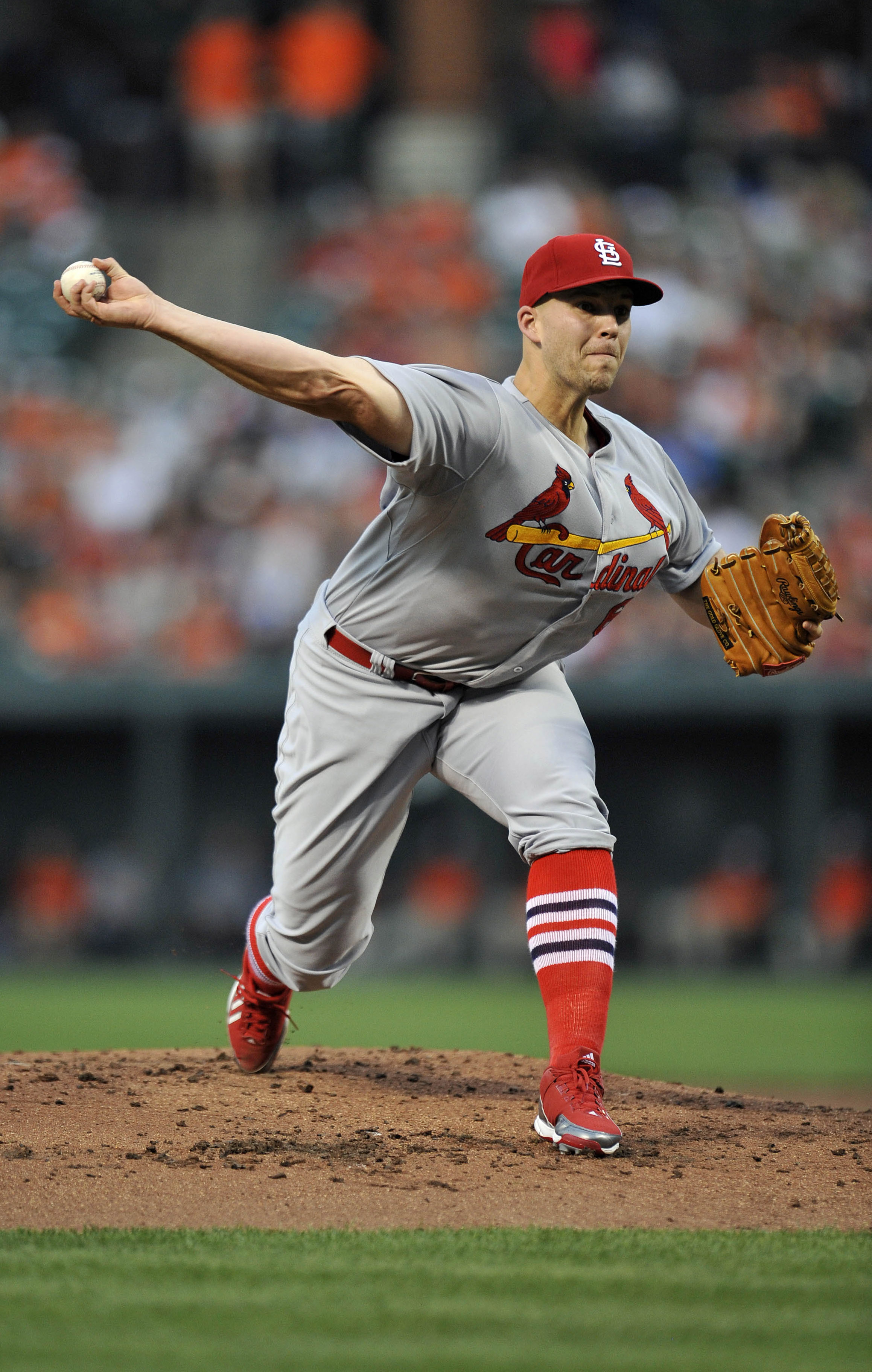
Of course, the main difference between the 2013 and 2014 versions of Masterson was health. Fortunately, he’s on the mend from his injuries and should be 100% on all fronts by the start of Spring Training. While others in his position – banged up in a contract year – might have chosen to rest up, Masterson mostly pitched through the pain. At 29, Masterson is younger than most of the quality pitchers available on the open market. And, thanks to the midseason trade that sent him to St. Louis, Masterson can’t be hit with the qualifying offer and won’t have draft pick compensation tied to him.
His 2014 numbers – a 5.88 ERA with 8.1 K/9 and 4.8 BB/9 – aren’t so hot, but the fact that he managed to make 25 starts and 3 relief appearances despite it all is pretty impressive. The righty logged four straight seasons of at least 180 innings for Cleveland and while his ERA yo-yoed – 4.70 in 2010, 3.21 in 2011, 4.93 in 2012, and 3.45 in 2013 – he was solid on the whole and his 11.7 fWAR in that stretch placed him among the top thirty starters in the game. Masterson also hasn’t had a ground ball percentage lower than 55.1% in the last five years and he’s been around 58% over the last two seasons.
GMs will ask their team doctors to do a thorough check on Masterson before putting pen to paper, but they probably won’t fret about the right-hander resting on his laurels and counting his money. It’s also worth mentioning that the 29-year-old’s xFIP (4.06) and SIERA (4.03) were far kinder to him this year than ERA and his 8.1 K/9 is actually stronger than the average of his previous four seasons. Given time to heal up and iron out the kinks in his delivery, Masterson could get back to his old self rather quickly.
Weaknesses/Cons
His troublesome right knee, which plagued him for a good chunk of the season, is partially to blame for the down year. That problem seems to be in the rear view mirror but shoulder impingement and a nagging left oblique injury have held him back and adversely altered his mechanics. He’s expected to fully recover from all of those injuries with some rest, but teams will certainly be wary and especially thorough in their examinations. Clubs will want to be sure that they’re more likely to get the 2010-2013 version of Masterson than the 2014 version.
During Masterson’s 2010-2013 run, his fastball had an average velocity of about 92.9 MPH. This season, Masterson threw his heater at a decidedly less warm 90.3 MPH. Faulty mechanics brought on by injury are believed to be culprit for the drop, but teams will still view the decreased velocity as a concern.
Masterson’s struggles landed him in the Cardinals’ bullpen to finish out the regular season and that’s obviously not how St. Louis saw things shaking out when they traded for him at the deadline. The hurler was viewed as a top-of-the-rotation piece just a year ago and he will wind up with relief appearances as the most recent work on his resume. Masterson actually did well in his grand total of 3 and 1/3 innings of bullpen work, but he’s obviously looking to join someone’s starting five next season.
Personal
Earlier this year, Justin and his wife Meryl welcomed twins to the world, a boy and a girl, making their three-year-old daughter a big sister. Justin, the son of a pastor, spends much of his downtime aiding in humanitarian causes both here and abroad with Meryl. This offseason, he’ll be heading to Uganda and Kenya on a mission trip to help with water projects and to build orphanages for needy children. The Mastersons founded a non-profit organization (the Fortress Foundation) in 2013 to help extremely impoverished people from all around the world. In Cleveland, they volunteered and donated to Laura’s Home, a local battered women’s shelter. It’s no surprise that the Indians made Justin a repeat nominee for the Roberto Clemente Award.
In the clubhouse, Masterson is known a supportive teammate and someone who is always willing to help out the younger pitchers. At 29, Masterson is still young, but he also has lots of valuable experience to draw from.
Market
If the medicals check out, a team could very well come away with one of the best pitching bargains of the winter. Back in January, when Masterson was coming off of his career year, Tim Dierkes pegged his extension value around $65-$85MM over a five year stretch. Like any free agent, the 6’6″ hurler has his question marks, but he could be a very solid value after an offseason of rest.
Last last month, Patrick Mooney of CSNChicago.com wondered aloud if Masterson could be a fit for the Cubs. His history with former Red Sox GM and current Cubs president Theo Epstein could lead to a union and, as Mooney notes, coach Chris Bosio has a track record for taking his pitchers to the next level. Speaking of the Red Sox, Nick Cafardo of the Boston Globe wrote back in August that Boston will have interest in Masterson in the offseason.
Outside of those old friends, teams in bigger parks with pitching needs like the Twins, Angels, Marlins, and Braves might be in the mix for Masterson.
Expected Contract
Because Masterson’s four consecutive strong years were followed by a spotty walk year, it’s hard to gauge what kind of contract he’ll net this winter. A one-year deal to reassert himself as a top starter could put him in line for a substantial long-term deal. At the same time, it’s not hard to envision a team coming to the table with a multi-year offer to Masterson’s liking.
If Masterson opts for a one-year deal in order to restore his value and go for a monster contract after the 2015 season, a one-year, $12MM contract could make sense.
Steve Adams contributed to this post. Photo courtesy of USA Today Sports Images.
Free Agent Profile: Aramis Ramirez
Aramis Ramirez had an up-and-down season for the Brewers, who must sort out his mutual option and weigh a potential qualifying offer. The 36-year-old can still be a force at the plate, and may be the best offensive third baseman available this winter.
Strengths/Pros
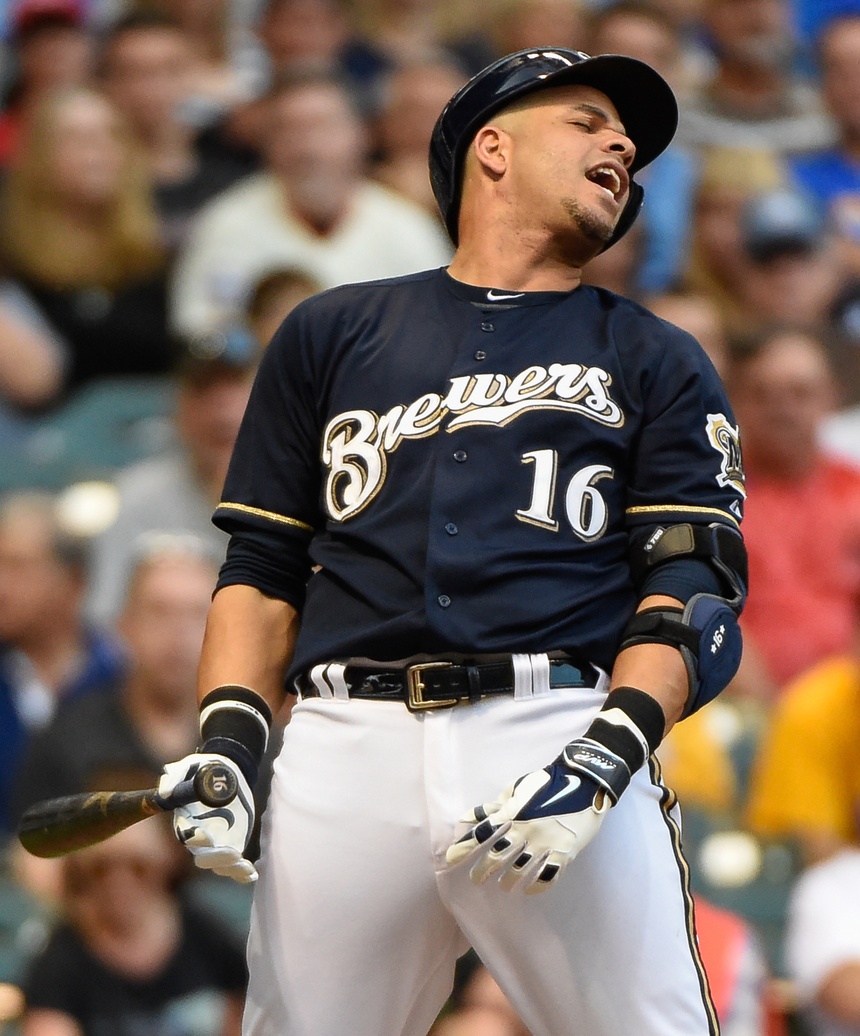 Ramirez has already had an illustrious 17-year-career. Among third basemen, he ranks ninth all-time in home runs, tenth all-time in doubles, and tenth in RBI. Though he’ll likely fall short of the Hall of Fame, Ramirez had a long run of being one of the top 5-10 third basemen in baseball since becoming a regular in 2001.
These days, his power may not be what it once was, but he still ranked 11th among all third basemen in isolated power, ahead of fellow free agent Pablo Sandoval. He’s always made excellent contact, resulting in a .285 career batting average that he matched in 2014. Overall, Ramirez still has a case as a top ten hitter at the hot corner, and he was basically Sandoval’s equal with the bat this year. Ramirez also made his third All-Star team, hitting .288/.336/.459 in the first half.
As MLBTR’s Steve Adams noted in August, Ramirez’s free agent competition at third base isn’t anything special (although it’s certainly no worse than the rest of the free agent hitting class, which is weak overall). If one continues to categorize Hanley Ramirez as a shortstop, Ramirez’s .757 OPS led free agent third basemen, with Sandoval checking in at .739 and Chase Headley at .700. Ramirez will not require nearly the commitment Sandoval will.
Weaknesses/Cons
Metrics suggest Ramirez’s defense was passable this year, though he has had some pretty rough seasons within the last five.
Ramirez will turn 37 next June, so he comes with typical durability question marks. He played 298 games from 2011-12 and a reasonable 133 this year despite a DL stint for a hamstring injury. That’s not bad, but Ramirez seems better suited for an American League team with some DH flexibility, especially if he seeks a multiyear deal.
Ramirez has had a consistent career, but his offense in 2014 was streaky. He posted an OPS over .960 in June and August, yet was under .600 in July and September. He wound up hitting only four home runs in 251 second half plate appearances. Ramirez’s walk rate was down to 4% this year, his worst since his partial 2000 campaign. Baserunning has consistently been a detriment throughout Ramirez’s career.
Personal
Ramirez is married with three children, and he resides with his family in the Dominican Republic in the offseason. The third baseman “lives and breathes for his kids,” a person close to him told MLBTR. When the kids are in school, Ramirez enjoys spending time on his farm in the Dominican.
Ramirez does not exhibit much overt emotion on the field, a trait that drew some criticism in Chicago, perhaps unfairly.
Market
Having spent his entire career in the NL Central, Ramirez has never served as a designated hitter more than five times in a season. He hasn’t played a position other than third base in his entire pro career, so the idea of working him in at first base could be a stretch. Certainly the Brewers would like to bring Ramirez back, as we’ll discuss below. Otherwise, the Diamondbacks, Nationals, Red Sox, Royals, Angels, Yankees, Padres, Giants, and Blue Jays could seek help at the hot corner this offseason. As a veteran who likely has plenty of money in the bank from past contracts, comfort could be a primary factor in Ramirez’s choice.
Expected Contract
Ramirez’s contract situation is complicated. He and the Brewers hold a $14MM mutual option for 2015. On the rare occasions in baseball that both sides of a mutual option have been exercised, it’s never been close to that kind of salary. While a September 17th report from Jon Heyman of CBS Sports said the Brewers intend to pick up their side of the option, Brewers GM Doug Melvin told MLB.com’s Adam McCalvy the topic hasn’t even been broached with the team’s owner or Ramirez’s agent, Paul Kinzer. Realistically, Melvin probably has some idea of what he wants to do, but option decisions aren’t due until after the World Series.
The Brewers do seem likely to pick up their side of the option — they’re faced with a $4MM buyout if they decline it, so the option is effectively only a $10MM decision. If the Brewers pick the option up, Ramirez then has the opportunity to decline and go to free agency, in which case he would not receive a buyout. $14MM is a reasonable salary if Ramirez only wants to play one more year, but he may prefer a longer term. Ramirez suggested in July he’d go for 2,500 career games, a goal of which he is 443 short. That suggests three or four more seasons, but in September, Ramirez was non-committal about what he’d do after 2015.
A two-year deal would be a nice compromise; perhaps Ramirez and the Brewers can work out something that pays around $25MM for that span. I imagine if Ramirez is thinking bigger than that, he’ll have to find it on the open market. One problem: the Brewers can reduce his leverage by making or telling him their intention to make a qualifying offer. I expect them to make that offer if they get to that point. Draft pick forfeiture would affect Ramirez’s market, but not as much as you might think. The players most burned by qualifying offers last winter were asking for big contracts from the outset of free agency. Ramirez might ask for just two years from the start, and I think he could find a team to give it to him even with the draft pick cost attached.
In the somewhat unlikely event that Ramirez hits the open market without a qualifying offer attached, it would help his chances of securing a three-year deal. Still, he’d probably have to sacrifice on average annual value to get a third year, perhaps accepting something like three years and $33MM.
Ultimately, I think Ramirez will sign a two-year, $26MM deal to stay with the Brewers. If he reaches the open market without a draft pick attached, I’ll go with two years and $30MM. If he receives a qualifying offer from the Brewers, I think he’ll turn it down. Even in that scenario, I think he can find the same two-year, $26MM deal on the open market.
Photo courtesy of USA Today Sports Images.
Offseason Outlook: Colorado Rockies
Another hot start raised expectations in 2014, but regression and injuries once again combined to doom the Rockies. Colorado seems intent on fielding a competitor, but it remains to be seen whether it will have the payroll flexibility needed get there.
Guaranteed Contracts
- Troy Tulowitzki, SS: $118MM through 2020 (including 2021 option buyout)
- Carlos Gonzalez, OF: $53MM through 2017
- Jorge De La Rosa, SP: $25MM through 2016
- Justin Morneau, 1B: $7.5MM through 2015 (including 2016 option buyout)
- Boone Logan, RP: $11.75MM through 2016
Arbitration Eligible Players
- Drew Stubbs, OF (5.047): $5.7MM projected salary
- Jhoulys Chacin, SP/RP (5.012): $4.9MM projected salary
- Rex Brothers, RP (3.117): $1.3MM projected salary
- Michael McKenry, C (3.097): $1.5MM projected salary
- Adam Ottavino, RP (3.087): $1MM projected salary
- Juan Nicasio, SP/RP (3.083): $2.4MM projected salary
- Jordan Lyles, SP (3.060): $2.5MM projected salary
- Tyler Chatwood, SP (3.039): $1MM projected salary
- Wilin Rosario, C (3.023): $3.6MM projected salary
- Non-tender candidates: Chacin
Contract Options
- Brett Anderson, SP: $12MM club option ($1.5MM buyout)
- LaTroy Hawkins, RP: $2.25MM club option ($250K buyout)
Free Agents
With the Rockies, it seems, the real issues reside not in the details of roster construction, but in the philosophical and strategic direction of the organization. Critiques of the decisionmaking structure – and, in particular, owner Dick Monfort and the two key front office executives Dan O’Dowd and Bill Geivett — have migrated from fans and former players to internal sources. Yet it still seems rather unlikely that the team will undergo any kind of front office shakeup, or that the organization’s general approach will change.
Barring a major shift in front office personnel or in operating style, it is not clear what the Rockies can do to change the outlook for next year in a significant way. As things stand, the team appears stuck in a difficult middle ground – albeit one that has not gotten in the way of reliably above-average attendance figures. What are the options going forward?
On the one hand, the club has shown an utter lack of inclination to trade away any of its veterans for future resources. Despite being well out of contention this year, and having a few potential candidates (some playing on expiring contracts), Colorado did not pull the trigger on any summer deals.
Indeed, to the contrary, Monfort was said to have pulled the plug on a deal that would have sent veteran starter Jorge De La Rosa to the Orioles in exchange for a quality prospect arm in Eduardo Rodriguez. Instead of dealing the 33-year-old De La Rosa, the Rockies later inked him to a two-year, $25MM extension. To be sure, it may have been difficult for the team to convince a better arm to pitch at Coors Field for that kind of scratch, and De La Rosa has an excellent track record at altitude. But adding the promising Rodriguez and instead pursuing one of the many mid-level free agent starters (including, perhaps, De La Rosa himself) would have made for a nice alternative.
Even with De La Rosa back, contention in 2015 – while not unimaginable — would be a surprise. Colorado has few glaring holes in the lineup, but the pitching staff is coming off of a season characterized by injury and ineffectiveness.
Then, there is the payroll to consider. Player salaries are expected to land in the mid-$90MM range again, about half of which is already slated to go to De La Rosa and stars Troy Tulowitzki and Carlos Gonzalez. The total guaranteed commitment lands at about $61MM, but that is before accounting for arbitration raises that could cost nearly $25MM and decisions on options the club holds over Brett Anderson and LaTroy Hawkins.
In short, the Rockies have little room for addition without first making some subtractions. But where to trim salary?
It has often been wondered whether and when the Rockies would consider dealing either of their two stars in an effort to reload. But season-ending surgeries for Tulo and CarGo make that difficult to imagine, and Monfort has sent signals that he has no such intention. Senior VP of Major League operations Bill Geivett recently shot down that idea as well: “If we’re going to win, they’re going to need to be part of it, too.”
Beyond those two cornerstones, there are any number of hypothetical possibilities to free up a little cash. Let’s take a closer look, in the context of the overall roster:
The Rockies lineup is largely in place, unless the team decides to explore some changes. Gonzalez will presumably occupy one corner outfield spot, while some combination of younger players – Corey Dickerson, Drew Stubbs, Charlie Blackmon, and Brandon Barnes, many of whom are coming off of breakout years – can be expected to combine to make up a solid unit. Colorado reportedly has some interest in bringing back Michael Cuddyer, but that appears to be quite a luxury.
Among the outfielders, only Stubbs presents the realistic possibility of a cost-saving trade given his $5.7MM projected hit. But he is the best center field option of that group, and may not bring much in return with just one year of not-inexpensive control remaining (not to mention the fact that his big numbers last year were driven by a .440 BABIP at Coors). But his combination of power, speed, and defense could make him a reasonably marketable asset.
In the infield, the diamond appears set at three spots: short (Tulowitzki), third (Nolan Arenado), and first (Justin Morneau). Trading the veteran Morneau could deliver some savings and bolster other needs, with first base being entrusted to Wilin Rosario or prospect Kyle Parker. But that would take away one of the team’s best bats from last year, and the club seemed disinterested in shopping him at last year’s trade deadline.
The Rockies are not without options at the other infield positions, but they offer the greatest possibility for movement. At the keystone, DJ LeMahieu is a reliable defender who just has not contributed much with the stick (career 76 OPS+). Josh Rutledge offers more promise at the plate, but defensive metrics have little regard for his glove. With free agent pickings looking slim, the Rockies might be best served by dealing away one of these still-young players while pursuing a left-handed-hitting utility option – the late-blooming Rafael Ynoa is an in-house possibility — to platoon with whoever remains.
Most interesting, perhaps, is the situation at catcher. Rosario has failed to impress the team behind the dish, and took a step back offensively in 2014. He appears to be a trade candidate, though Colorado would certainly not be selling at an opportune time. And while Michael McKenry was a nice surprise last year, he seems more likely headed for a backup or platoon role. If the Rockies are to make a run at a top free agent, Russell Martin looks like an excellent fit on paper, but he figures to draw strong interest elsewhere and may be out of Colorado’s comfort zone financially.
Ultimately, the possibilities noted above could be driven by whether a pitching acquisition requires cash or a trade chip. As things stand, improving upon the team’s uninspiring group of arms is surely the priority.
In the rotation, De La Rosa will likely be joined by two players who had relative breakout years in Jordan Lyles and Tyler Matzek. That trio contains enough questions of its own, but things get even less clear thereafter. Tyler Chatwood is shelved with his second Tommy John procedure, Jhoulys Chacin looks like a lottery ticket (shoulder problems) or non-tender candidate, and Juan Nicasio is said to be slated for the bullpen. Younger arms like Jon Gray, Eddie Butler, and (to a lesser extent) Christian Bergman and Tyler Anderson offer some hope in the relatively near future. But it would be optimistic to expect too much of that group in 2015. Otherwise, the team is left with questionable depth options like Yohan Flande.
So, what can the Rockies do to bolster that group? The option over Anderson is too risky to be considered seriously: $12.5MM for a full season of a healthy Anderson is an attractive enough proposition, but the lefty has not thrown even 50 frames in a MLB campaign since 2011.
Convincing Anderson to return for a lesser amount makes theoretical sense, but runs into a major practical concern: why would he choose to take a pillow contract to throw half his innings at Coors Field? This same problem, of course, could limit Colorado’s ability to take advantage of the rest of a deep market for mid-tier starters – including some, like Justin Masterson and Brandon McCarthy, who induce ground balls at a solid clip. Even if Colorado can clear enough salary next year to afford an arm of that nature, it would likely need to make a multi-year commitment that could hamstring the organization when it is more likely to be in a position to contend.
The trade route is an alternative to free agency. One could imagine the Rockies matching up with a team like the Mets on some kind of swap of an outfielder for an arm. Rosario probably has enough upside to be an important part of a deal for a useful pitcher. To be sure, adding a reliable hurler with an attractive contract situation would presumably require the sacrifice of some significant portion of the organization’s best prospect talent. But Geivett has said that the team wants to add “impact” even if that means getting an aging hurler.
Relief pitching was every bit as problematic for Colorado last year. Two lefties remain in place — the disappointing Boone Logan and the struggling Rex Brothers – leaving the team with the option either to fiddle with that area or simply hope for improvement. Hawkins is expected to occupy the ninth inning to start the year, which at least provides a ready answer to the question of who will close. Former closer Rafael Betancourt is said to be a possible re-acquisition. And the team has options for right-handed setup men and middle relievers, including Nicasio, Adam Ottavino (who pitched well in 2014), Rule 5 pickup Tommy Kahnle, and surprising 29-year-old rookie Brooks Brown. Improving the production from the pen, then, could be as straightforward or as complicated as the team prefers. With every dollar being watched, it might make the most sense to let the market shake out and pluck a few veterans who miss out on the deals they hoped for.
The difficulty for the Rockies is, in the end, not hard to assess: the team is in position to add a piece or two, but it is more than a piece or two away from being a reliable contender. Stretching future resources to add a player like Martin, or overpaying in AAV and/or years to convince a starter to pitch in Denver, increases the risk of a prolonged malaise. From a competitive perspective, it probably makes sense to craft a strategy of exchanging veterans for future talent. But, then, that was already clear this summer.
Offseason Outlook: Chicago White Sox
After a fourth place finish in the AL Central, the White Sox will supplement their bullpen, and perhaps add reinforcements at left field, designated hitter, catcher, and in the rotation.
Guaranteed Contracts
- Jose Abreu, 1B: $51MM through 2019
- John Danks, SP: $28.5MM through 2016
- Chris Sale, SP: $28.15MM through 2017
- Jose Quintana, SP: $25.65MM through 2018
- Alexei Ramirez, SS: $11MM through 2015
- Jeff Keppinger, IF: $4.5MM through 2015 (released in May 2014)
- Scott Downs, RP: $250K buyout (released in July 2014)
Arbitration Eligible Players (service time in parentheses; projections via Matt Swartz)
- Ronald Belisario, RP (4.151): $3.9MM projected salary
- Tyler Flowers, C (3.148): $2.1MM
- Dayan Viciedo, RF/LF (3.123): $4.4MM
- Hector Noesi, SP (3.006): $1.9MM
- Nate Jones, RP (3.000): $600K
- Javy Guerra*, RP (2.133, Super Two): $1.3MM
- Non-tender candidates: Belisario, Viciedo
Contract Options
- Felipe Paulino, SP: $4MM club option with a $250K buyout
Free Agents
- Matt Lindstrom, Paul Konerko (retiring)
It was another summer of trading away veterans for the White Sox, as GM Rick Hahn dealt Gordon Beckham, Alejandro De Aza, and Adam Dunn in a span of 11 days at the end of August. The exact return on Beckham won’t be determined until the offseason, but Hahn did acquire a solid pitching prospect for Dunn in Nolan Sanburn.
It was an ugly campaign, but the 2014 season did provide Chicago clarity at several key positions. Most importantly, 2013 signing Jose Abreu looks like a huge bargain after posting MVP-caliber numbers in his rookie MLB season. Also, center fielder Adam Eaton established himself with a quality year worth 2.8 wins above replacement.
While the player acquired alongside Eaton from Arizona, Matt Davidson, remained in Triple-A and took a step backward, the Sox still found a solid stopgap at the hot corner in 27-year-old Conor Gillaspie. Gillaspie fits on the strong side of a platoon, and could match up with Marcus Semien again.
Avisail Garcia is the incumbent in right field after missing much of 2014 due to a shoulder injury. Just 23, Garcia could take a leap forward in 2015. Tyler Flowers had a passable season as the starting catcher, but struck out a ton and could easily see his average back around the Mendoza line in 2015. The Sox could pony up for Russell Martin, but Hahn should be proactive in attempting to find a quality backstop via trade. The Yankees are probably the team with the most depth at the position, in terms of long-term catchers.
25-year-old Dayan Viciedo declined to a .231/.281/.405 line, and does not look like a long-term piece for Chicago. He could be non-tendered or traded. Should Hahn turn to the free agent market to fill left field, options include Melky Cabrera, Nelson Cruz, and Mike Morse. Nori Aoki, Michael Cuddyer, Torii Hunter, and Nick Markakis haven’t generally played the position, but could be considered. The Rays’ Matt Joyce could be a trade option, and the Dodgers’ outfield surplus remains unresolved. The most intriguing choice would be young Cuban corner outfielder Yasmany Tomas, with whom Abreu is familiar. The problem is that Abreu’s success reset the Cuban market such that Tomas’ price tag could be in the $100MM range. The White Sox have not been connected to Tomas in any notable way thus far.
The White Sox have finally gotten Adam Dunn off the books, and in August Bruce Levine of CBSChicago.com wrote that stealing Victor Martinez away from the Tigers tops Chicago’s offseason wish list. The Sox fell just short of signing Martinez four years ago, leading to their deal with Dunn. Martinez, who had a monster offensive 2014 season few saw coming, turns 36 in December and now spends the majority of his time as a designated hitter. Martinez would represent a fairly risky win-now signing for the Sox, but the switch-hitter would make a fantastic tandem with Abreu in 2015 as he did with Miguel Cabrera in Detroit. The Carlos Beltran deal should be Martinez’s floor, and the Sox would have to forfeit their second-round draft pick.
Trades for Alexei Ramirez could be entertained, though he still has value to the White Sox. He’s under contract for 2015 and has a club option for ’16, and could make a nice bridge to hopeful shortstop of the future Tim Anderson. Anderson, the team’s first-round pick in 2013, missed nearly two months with a broken wrist but still received a surprise promotion to Double-A. With Beckham gone, second base next figures to be a competition, with Micah Johnson, Marcus Semien, and Carlos Sanchez in the mix.
In the rotation, Chris Sale’s dominance continued and Jose Quintana had a quietly excellent campaign. John Danks ate innings at the back end, if nothing else. Hector Noesi, claimed off waivers from the Rangers in April, posted a 4.43 ERA in 27 starts for the Sox. The team is missing at least one more above average starting pitcher, and they could have it soon in 2014 first-round pick Carlos Rodon. Rodon finished the season at Triple-A and has a chance to break camp in 2015 in the big league rotation.
The Paulino experiment was a bust, though the Sox spent very little on him. To reduce the risk of dipping heavily into the team’s No. 6-8 starters, the Sox should at least add a project arm or two for depth.
The White Sox bullpen struggled in 2014, putting up a 4.28 ERA that was second-to-last in the American League. Jake Petricka and Zach Putnam filled the ninth inning void after the offseason trade of Addison Reed, injuries to Matt Lindstrom and Nate Jones, and ineffectiveness from Ronald Belisario (a likely non-tender candidate). Petricka, Putnam, and Daniel Webb were able to keep the ball on the ground, but failed to miss bats. Jones underwent Tommy John surgery in July, so he’s a non-factor for 2015 even if the Sox tender him a contract. The bullpen is a clear area of upgrade for Hahn, who told MLB.com’s Scott Merkin in September, “The overall goal of the bullpen is going to be to acquire multiple options, potentially from the right and left side … many of which could be end-game options for us.” Even if Chicago decides to pass on top free agent reliever David Robertson, the market offers a wide array of quality options.
Hahn used the word “aggressive” multiple times regarding the upcoming offseason, as reported by MLB.com’s Scott Merkin. An aggressive approach makes sense, with Abreu, Sale, and Quintana currently so affordable. The Sox have about $46MM in contract commitments for 2015, plus maybe another $6MM if they retain Flowers, Noesi, Jones, and Guerra. Hahn could have around $40MM to play with in 2015 salaries without raising payroll, enough to add multiple significant free agents.
Though 2014 didn’t go as planned, the Sox received star-caliber performances from Abreu, Sale, and Quintana and quality seasons from Eaton and Gillaspie. There seems to be much offseason work to do to vault this team into contention, with the wish list including a retooled bullpen, an effective bat or two, and added rotation depth.
Note: there is some question as to Javy Guerra’s official service time. MLB’s calculation of 2.133 would make him a likely Super Two player, but his contract being selected (at least publicly) on May 20th suggests 2.128, which would fall short.