
2023-24 MLB Free Agent Power Rankings: June Edition
We’re at the regular season’s halfway point, and the free-agent landscape has changed a fair bit since we last ran through our Power Rankings back in mid-April. Injuries, changes in performance — some for the better, some for the worse — and more have combined to provide more context as to what shape the top of the free agent market will take.
As a reminder, our Power Rankings are based primarily on perceived earning power. This is an exercise intended to provide a snapshot of where the top end of the free agent class is currently sitting. One player being ranked higher than another does not necessarily indicate we feel he’s the better player. Youth, health, qualifying offer status, market scarcity and myriad other factors all impact what a player can expect to earn in free agency.
Our power rankings are compiled collaboratively. MLBTR owner Tim Dierkes and writers Anthony Franco and Darragh McDonald all weighed in for this update. Players with opt-out clauses and player options are included, even if they’ve previously given indications they may forgo the opportunity to return to the market.
1. Shohei Ohtani, SP/DH, Angels: There are no surprises up top. Ohtani remains far and away the top name on this year’s list — so much so that he might even command double the No. 2 entrant on our list. That’s both a testament to his general excellence and an indictment on what is generally a weaker free agent class than is typical.
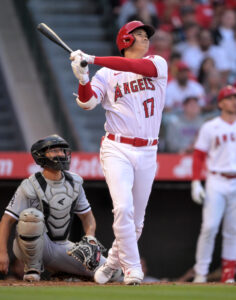
Ohtani, 29 in July, isn’t having quite as dominant a season on the mound as he did in 2022, but he’s still been quite good and is enjoying his best year to date with the bat. In 95 1/3 innings, the flamethrowing righty has pitched to a 3.02 ERA with a 33.2% strikeout rate and 10.2% walk rate. The latter is a marked uptick from the 6.7% he logged a year ago. Ohtani’s strikeout rate is only down about half a percentage point from its 2022 levels, but he’s seen more notable drops in swinging-strike rate (from 14.9% to 13.5%) and opponents’ chase rate (32.6% to 29.5%). This is also the most homer-prone he’s ever been on the mound; his 1.13 HR/9 is a career-high, and the 12 homers he’s allowed in 95 1/3 innings innings are already just two shy of last year’s total of 14 — which came over a span of 166 frames.
To some extent, that’s just nitpicking. Ohtani has still been excellent. His ERA ranks 15th among qualified starting pitchers, and only Atlanta’s Spencer Strider has a higher strikeout rate. He currently ranks sixth among qualified pitchers in K-BB% (23%), and fielding-independent metrics are generally supportive of his success (e.g. 3.40 SIERA, 3.35 xERA). Hitters simply haven’t been able to make good contact against Ohtani, outside that handful of home runs anyway. His 86 mph average opponents’ exit velocity is in the 93rd percentile of MLB pitchers. His 34.8% opponents’ hard-hit rate is in the 77th percentile. He’s induced grounders at a solid 44.4% clip. The uptick in walks is significant, but that’s only taken Ohtani from an ace-level performer to a slight step below that level.
And of course, when discussing Ohtani, the mound work is only half the equation. His work in the batter’s box this season has been nothing short of sensational. In 360 plate appearances, Ohtani is batting .309/.389/659. That’s 82% better than league-average production after weighting for home park, by measure of wRC+. Ohtani has already belted 28 home runs, and he’s added 15 doubles and five triples while swiping 11 bags (in 15 tries). This year’s 11.4% walk rate is right an exact match for his career mark (although shy of his 15.6% peak), and his 21.7% strikeout rate is the lowest of his career.
Ohtani has averaged an obscene 93.7 mph off the bat this year and ranks in the 95th percentile (or better) of MLB hitters in exit velocity, barrel rate, expected slugging percentage and expected wOBA. He’s a bona fide middle-of-the-order bat with the speed to swipe 25 to 30 bases and the power to clear 40 home runs.
When chatting about this update to our Power Rankings, Anthony Franco rhetorically asked me if I thought Ohtani the hitter and Ohtani the pitcher (if somehow separated) would both still individually rank ahead of the rest of this year’s class of free agents. We both agreed that they would. Fortunately, one team will get both this offseason — it just might cost more than half a billion dollars.
2. Yoshinobu Yamamoto, SP, Orix Buffaloes (Japan’s Nippon Professional Baseball): Many people have wondered what type of contract Ohtani might have originally commanded if he’d waited two years to jump to Major League Baseball. Because he opted to make the jump at 23 years of age, he was considered an “amateur” under MLB rules and thus limited to the confines of MLB’s international free agent system. Since he’s not also a world class hitter, Yamamoto won’t give us an exact answer to that now-unanswerable Ohtani hypothetical, but he’ll show us what a 25-year-old ace can command under true open-market pricing if and when the Buffaloes post him, as expected.

Yamamoto, 25 in August, is one of the best pitchers in NPB and perhaps one of the most talented arms on the planet. The right-hander made his NPB debut as an 18-year-old rookie in 2017, stepped into the Buffaloes’ rotation full-time in 2019, and has pitched to a sub-2.00 ERA in four of the past five seasons, including this year’s current mark of 1.98. The lone exception was 2020, when his ERA ballooned all the way to… ahem, 2.20. Yamamoto has a sub-2.00 ERA in his career, and that’s including the 5.32 mark he posted in that age-18 rookie season.
So far in 2023, Yamamoto has pitched 68 1/3 innings with a 1.98 ERA, a 27.8% strikeout rate and a superlative 4.1% walk rate. Just 11 of the 266 batters he’s faced have drawn a free pass. That’s a career-best mark for a pitcher who’s long had outstanding command but has continually whittled away at his walk rate over the years. In his NPB career, Yamamoto has walked just 6.1% of opponents against a 26.5% strikeout rate.
MLBTR contributor Dai Takegami Podziewski kicked off his latest NPB Players To Watch piece with a look at Yamamoto’s recent run of dominance: a stretch of three consecutive eight-inning starts with just one run allowed and a 29.8% strikeout rate and .092 opponents’ average along the way. World Baseball Classic fans may remember Yamamoto’s performance as well: in 7 1/3 innings he allowed just two runs on four hits and two walks with 12 strikeouts. Back in April, Dai described Yamamoto as the “undisputed ace of NPB,” noting that he’s won the Sawamura Award (NPB’s Cy Young equivalent) in each of the past two seasons. He also won the pitching triple crown (ERA, strikeouts, wins) in 2021-22 and has a chance to repeat the feat in 2023.
Like so many pitchers these days, Yamamoto boasts a mid- to upper-90s heater. Scouts credit him with a potentially plus-plus splitter and give favorable reviews of his curveball and general athleticism as well. Presumably, there’s some trepidation regarding a pitcher who’s listed at just 5’10” and 169 pounds, and whoever signs him will have to pay a posting/release fee to the Buffaloes. Those are about the only “red flags” in Yamamoto’s profile.
Yamamoto’s countryman, Kodai Senga, has had some inconsistent command but generally performed well since signing a five-year, $75MM deal with the Mets. In an offseason piece, Joel Sherman of the New York Post quoted an evaluator who graded Yamamoto a full grade better than Senga on the 20-80 scale. And, it bears emphasizing, Yamamoto is five years younger than Senga. We haven’t seen a pitcher with this type of pedigree make the jump from Japan without any spending restrictions since Masahiro Tanaka signed a seven-year, $155MM deal with the Yankees. Yamamoto is younger than Tanaka was, he’s arguably better, and the price of pitching has only gone up since that time. A contract in excess of $200MM doesn’t seem outlandish if he can remain healthy and productive.
3. Matt Chapman, 3B, Blue Jays: It’s been a tale of two seasons for Chapman, who was perhaps baseball’s best hitter in April and one of its worst in May. The slump has been longer than the hot streak at this point, although the aggregate .265/.343/.457 slash is still well above league average (23% better, by measure of wRC+). Paired with his characteristically excellent defense (7 Defensive Runs Saved and 4 Outs Above Average already), and Chapman’s still been an undeniably valuable player, even if the nature of his contributions for the Jays have been quite frontloaded in the schedule’s early portion.

That said, it’s still incumbent upon Chapman to turn things around at the plate sooner than later. The weight of that early, Herculean stretch will continually diminish, and the current version of the former All-Star simply isn’t that compelling. Early in the year, Chapman was regularly making blistering contact and had dramatically cut back on his strikeouts. In writing about his brilliant start to the season in early May, I pointed out that he’d begun to let the strikeouts creep back in and wondered whether that was a mere blip or the onset of some regression.
Unfortunately, the strikeout issues that have dogged Chapman in the aftermath of his 2020 hip surgery have resurfaced. Dating back to May 1, Chapman is hitting just .203/.279/.339 with an a 30.2% strikeout rate. He’s still walking at a respectable 8.8% rate, and his quality of contact is excellent. Chapman is averaging 92.4 mph off the bat and hitting the ball at 95 mph or better in 52.7% of his plate appearances even during this prolonged slump. After benefiting from a .449 BABIP early in the year, he’s seen that mark swing down to .269 in May and June.
In all likelihood, the “true” results are somewhere between the two extremes of Chapman’s 2023 season. He’s not the hitter he was in April, but he’s certainly better than he’s been in May and June. The question is whether Chapman can curb the strikeouts moving forward. His propensity for thunderous contact (when he makes it) should lead to some positive regression and once again begin to produce better results. But if he fans at a 30% clip from here on out, there may not be enough balls in play to help him prop his stat line back up. Furthermore, it’d mark the third time in four seasons he finished at or above a 30% strikeout rate, which doesn’t inspire much confidence over the course of a long-term deal.
Chapman still ranks prominently here because the overall numbers are still good, and because, frankly, the crop of position players this offseason is dreadful. In fact, he’s the only pure position player on this installment of our Power Rankings, which is unprecedented. If Chapman can sustain his quality of contact and scale back the strikeouts slightly, he could still find a seven- or eight-year deal heading into his age-31 season. His overall production right now is comparable to the output posted by Kris Bryant in advance of his foray into free agency (which resulted in a seven-year, $182MM contract), and Chapman has far more defensive value than Bryant.
4. Lucas Giolito, SP, White Sox: It’s been a tough start to the year for a number of top free agent pitchers, but Giolito has generally pitched well. His strikeout rate is down from its 33.7% peak, but he’s still fanning more than a quarter of his opponents with his typical brand of better-than-average command (7.5% walk rate). It’s too soon to tell is this is a trend, but it bears mentioning that Giolito has upped his slider usage recently and seen a notable increase in strikeouts. Over his past five starts, he’s thrown the slider at a 35.8% clip, as compared to his prior 28.4% usage rate. It’s not a massive increase, but Giolito had just three starts with a slider rate of 30% or more in his first 11 trips to the hill; since May 30, he’s been between 31.4% and 41.2% in each start. It does seem to mark a clear change in attack plan, and after fanning 23.9% of hitters through those 11 starts, he’s up to 29.4% over his past five.
Giolito’s 93.3 mph average fastball is actually up slightly from 2022’s average of 92.7 mph. Home runs remain an issue (1.36 HR/9), and he’s been a bit more homer-prone on the road than in his hitter-friendly home park this year. That’s not the norm, however; the right-hander has allowed more than 1.5 homers per nine innings in his career at home but is at a much more palatable 1.16 mark on the road.
Giolito’s current 3.41 ERA would mark the fourth time in five seasons that he finished with an ERA between 3.41 and 3.53. Last year’s 4.90 looks like a clear outlier that was largely fueled by a career-high .340 average on balls in play. (The White Sox, notably, were among the game’s worst defensive teams in 2022.)
As with all free agents, age is crucial. In Giolito’s case, it’ll work in his favor. He’s 28 years old as of this writing and will turn 29 in mid-July. Even a seven-year contract would “only” carry through his age-35 season. It’s also worth noting that he’s been a frequently speculated trade candidate, and if he’s flipped to another club, he’d be ineligible to receive a qualifying offer. That carries significance in free agency, too.
Giolito might not be an ace, but he’s a surefire playoff starter for any team in Major League Baseball. He’s the second-youngest of the starters on this list with big league experience and has been a workhorse since 2018, ranking 10th among all MLB pitchers with 855 innings pitched in that time. Kevin Gausman (five years, $110MM) and Robbie Ray (five years, $115MM) signed similar contracts that began in their age-30 seasons. Neither had a track record as long as Giolito, who’ll be a year younger in his first free agent season. A six- or even seven-year deal could be in play, depending on how he finishes.
5. Julio Urias, SP, Dodgers: Urias is among the hardest players to peg among this year’s group. On the one hand, he posted a combined 2.63 ERA over 495 1/3 innings from 2019-22 and is slated to hit the open market in advance of age-27 season — a borderline unprecedentedly young age for a top-end starter to become a free agent. On the other, the lefty has been on the injured list for more than a month owing to a hamstring strain. He didn’t pitch all that well before landing on 15-day IL either. In 55 1/3 innings, Urias worked to a pedestrian 4.39 ERA, thanks primarily to a stunning uptick in home runs allowed; after yielding 0.98 homers per nine frames from ’19-’22, he’s allowed an average of 2.28 homers per nine innings in 2023.
That said, the rest of Urias’ numbers look quite similar to his peak output. His 23.3% strikeout rate is down a bit from the 24.7% he posted in 2019-22, but his 4.8% walk rate is notably better than his already strong 6.3% mark. His fastball velocity is right in line with last year’s level (when Urias notched a 2.16 ERA in 175 innings), as is his 10.8% swinging-strike rate. His 34.1% opponents’ chase rate remains strong.
The primary problem isn’t even an uptick in fly-balls, but rather in the percentage of those fly-balls that leave the yard. Entering the 2022 season, just 9.1% of the fly-balls allowed by Urias had become home runs. This year, it’s a staggering 20.3%. Broadly speaking, homer-to-flyball rate is susceptible to short-term spikes and tends to even out over a larger sample, but the uptick in homers hasn’t been well-timed. That’s doubly true given that for all of Urias’ success, he’s neither the flamethrowing powerhouse nor elite misser of bats that modern front offices covet. He’s succeeded thanks to elite command and by regularly limiting hard contact. Urias’ strikeout rates are typically a bit above average, but he’s never placed higher than the 67th percentile of MLB pitchers in overall strikeout rate.
That’s not to say Urias isn’t a desirable arm or won’t be a highly coveted pitcher. Prior to his injury, the MLBTR team had discussed possible contracts in excess of $200MM for the lefty, based both on his age and recent excellence. That’s perhaps a bit harder to see now, even if the current issue is a leg injury rather than an arm problem. Urias has only twice made 30 starts in a season, and he also has one major shoulder surgery already on his record (a 2017 procedure to repair a capsule tear).
A third consecutive 30-start season would’ve helped set aside a perceived lack of durability, but he won’t get there in 2023, even though he’s expected to return from the injured list as soon as this weekend. That’s not because of any arm troubles to date, and it should be noted that part of the reason for his lack of innings was some extreme workload management post-surgery that looks to have been effective, based on Urias’ 2021-22 results. Still, he hasn’t often worked a full starter’s slate of games, he won’t do it in 2023, and he hasn’t generated his typical results when healthy — even if most of the skill-oriented numbers remain similar to prior levels.
Urias will also have a qualifying offer to contend with, which isn’t true of every pitcher on these rankings. He’s undeniably talented and the clear youngest of the bunch, but it’d be easier to predict a massive long-term deal if he returns and starts producing more like he did in that aforementioned four-year peak.
6. Aaron Nola, SP, Phillies: Speaking of top-tier starters who haven’t performed up to expectations, the 30-year-old Nola finds himself in a precarious position. MLB’s consummate workhorse since his 2015 debut, Nola has pitched the third-most innings of the 2024 pitchers who’ve taken a big league mound since 2016 — his first full season in the Majors. Only Gerrit Cole and Max Scherzer have topped Nola’s 1256 1/3 innings in that stretch.
For the majority of that time, Nola has operated on the periphery of ace-dom. He’s only a one-time All-Star and has never won a Cy Young, but the former No. 7 overall pick finished third place in 2017, seventh place in 2020 and fourth place just last year. During his 2017-22 peak, Nola notched a 3.48 ERA, 28.2% strikeout rate, 6.6% walk rate and 47.1% ground-ball rate. His 2022 season featured a terrific 29.1% strikeout rate and an elite 3.6% walk rate over the life of 205 innings — the second-most in all of baseball.
That version of Nola has been nowhere to be found in 2023. Through 105 2/3 innings, he’s posted a pedestrian 4.51 ERA with his lowest strikeout rate (23.9%) since his rookie season back in 2015. Nola’s 6.8% walk rate, while still a very strong mark, is his highest since 2020. He’s allowing more fly-balls than ever before, and unsurprisingly is allowing home runs at a career-worst rate (1.45 HR/9).
Fielding-independent metrics still believe Nola’s above-average strikeout rate, strong walk rate and ability to avoid hard contact ought to be translating to better results; his “expected” ERA is 3.53, per Statcast, while tools like FIP (4.28) and SIERA (4.00) agree he’s been short-changed a bit. Nola’s 65.1% strand rate, in particular, sits about eight percentage points below his career level and below the league average.
Heading into the season, a six- or seven-year deal seemed within reach for one of the game’s most durable and consistently above-average starting pitchers. He’s maintained the “durable” half of that equation, making 17 starts and averaging a hearty 6.22 innings per outing. The results haven’t been there, however, and Nola’s velocity is down about a half mile per hour on most of his pitches. It’s not the platform season he wanted, and even with the so-so results, he’ll surely still have a QO attached to him. There’s still an easy case for a long-term deal here, and a strong second half of the season would quiet a lot of these concerns. To this point, however, Nola has looked more like a mid-rotation starter than someone who’d be fronting a playoff staff.
7. Blake Snell, SP, Padres: Snell has been the best pitcher on the planet for the past month or so, generally erasing a terrible start to the season. This sort of Jekyll & Hyde performance is old hat for the former AL Cy Young winner, who closed out both the 2022 and 2021 seasons in dominant fashion, offsetting a wave of pedestrian starts in each instance. That endorsement of Snell’s past month isn’t even hyperbole; dating back to May 25, Snell has a comical 0.86 ERA with a 66-to-15 K/BB ratio in 42 innings. He’s fanned a massive 44.1% of his opponents against a better-than-average 8.1% walk rate.
Snell’s rollercoaster traits are nothing new, and they may scare some interested suitors in free agency. There’s no skirting the fact that he has a penchant for slow starts to the season, and when Snell is off his game, he can look lost. He doesn’t have pristine command in the first place, and walks become a particularly glaring issue when he’s in a rut. When he’s not as his best, Snell has a tendency to labor through short starts, which can tax a bullpen.
That said, here’s a look at Snell’s past 48 starts: 259 1/3 innings, 3.05 ERA, 33% strikeout rate, 10.1% walk rate, 0.90 HR/9, 36.9% ground-ball rate, .196 opponents’ average. The road he takes to get there may be infuriating at times, both for fans and his organization’s decision-makers, but Snell has clear top-of-the-rotation stuff. He’s currently riding a streak of four straight starts with double-digit strikeouts, during which he’s yielded just three runs.
The Padres can and very likely will make Snell a qualifying offer. He should reject while giving little, if any thought to the contrary. The qualifying offer and general inconsistency might hurt him, but there will also be teams who look at those factors as a possible avenue to signing a starter with genuine No. 1 talent at a cost that isn’t commensurate with those types of arms. Snell will pitch all of the 2024 season at age 31, and paired with his inconsistency, that might cap him at five years. But he should command $20MM per year over that five-year term, making a nine-figure deal within reach …. barring a second-half collapse that heightens concerns about the fluctuations in his performance.
8. Josh Hader, RP, Padres: Rumors of Hader’s demise as an elite closer last summer were greatly exaggerated, it seems. The four-time All-Star was struggling in the weeks leading up to his trade from Milwaukee to San Diego, and he didn’t help his cause when he allowed a dozen August runs following the swap. That slump was capped off by a six-run drubbing at the hands of a lowly Royals offense.
Since then, it’s been business as usual for Hader. The lefty quietly finished out the year with a 0.79 ERA in his final 11 1/3 innings. He was unscored upon from Sept. 7 through season’s end, and he went on to pitch another 5 1/3 shutout innings in the postseason, fanning 10 hitters in the process. Hader is now sitting on a sparkling 1.26 ERA. His 37.8% strikeout rate isn’t quite as high as his ridiculous 47.8% peak in 2019, but he still ranks among the league leaders in strikeout rate.
Since putting that six-run August meltdown against the Royals behind him, here’s Hader’s line (postseason included): 45 1/3 innings, 0.99 ERA, 38% strikeout rate, 9.8% walk rate, 29 saves.
Hader will be a year older in free agency than Edwin Diaz was when he set the relief pitcher record on a five-year, $102MM contract (which includes multiple opt-outs). That slight age gap will matter, but Hader has the longer and steadier track record of the two and could benefit from his handedness. So long as he keeps somewhere near this pace, he’ll take aim at making Diaz’s record short-lived.
9. Marcus Stroman, SP, Cubs: Stroman’s three-year, $71MM contract allows him to opt out of the final year this offseason. In doing so, he’d leave $21MM on the table, but there’s little doubt he’d be able to topple that mark in free agency. Stroman has already received a qualifying offer in his career, meaning he can’t receive a second one. He’s also the current MLB leader in bWAR (3.5) and third in the Majors in RA9-WAR (also 3.5). Through 102 innings, Stroman touts a 2.47 ERA and a 59.3% grounder rate that’s second only to Logan Webb among all qualified pitchers.
Good as Stroman’s results are, there’s some reason to be a bit skeptical on his earning power. He can surely outpace the $21MM he’d leave on the table by opting out, likely securing another multi-year deal in free agency. That said, Stroman’s profile hasn’t really changed since his last foray into the open market. He still has a below-average strikeout rate, and the lower-than-average walk rate he had last time around has crept up to about league average in 2023. He’s inducing more grounders than he has since 2018, but the primary reason for the drop in his ERA has been a career-low home run rate. Just 8.3% of the fly-balls allowed by Stroman have been homers — well shy of his 13.5% career mark.
Homer-to-flyball rate tends to stabilize over larger samples — Stroman was between 12.6% and 13.9% every year from 2018-22, for instance — so teams might essentially view him as the same pitcher he was in the 2021-22 offseason, just a couple years older. One factor working in Stroman’s favor is that the price of pitching has increased since then; Jameson Taillon, Taijuan Walker and Chris Bassitt all helped advance that market last offseason. Bassitt’s three-year, $63MM deal with the Blue Jays should be of particular note. He secured that contract despite being hit with a QO that Stroman won’t have to contend with, and did so heading into his age-34 season. Next year will be Stroman’s age-33 season. He should at least be able to secure a three-year deal at a larger AAV than Bassitt received. A four-year deal with an AAV north of $20MM is also possible.
10. Jordan Montgomery, SP, Cardinals: Montgomery had a pair of rough starts in the season’s first six weeks, allowing seven and six runs in that pair of outings and ballooning his ERA in the process. Things have largely evened out though, and Montgomery’s numbers look just as solid as they did when he was establishing himself as a mid-rotation hurler in the Bronx, Through 92 innings, he’s posted a 3.52 ERA with a 21.9% strikeout rate, 5.9% walk rate and 46.6% grounder rate that all line up neatly with his 2021-22 production.
Montgomery pitched just 31 1/3 big league innings in 2018-19 due to Tommy John surgery and struggled in the shortened 2020 campaign upon his return from that operation. Since Opening Day 2021, however, he carries a 3.66 ERA and matching secondary marks (3.61 FIP, 3.88 SIERA) in 421 innings. If the Cardinals don’t trade Montgomery, he’ll be a natural qualifying offer candidate. He’d very likely reject that one-year offer in search of a multi-year deal in free agency. Montgomery isn’t an ace, but the market rewarded both Taillon (four years, $68MM) and Walker (four years, $72MM) with four-year contracts last winter. Neither had a QO attached to him, but Montgomery, who’ll turn 31 in December, has a better recent track record than both pitchers as well.
Of course, if the Cardinals remain out of the postseason hunt in late July, Montgomery will be a sought-after trade candidate. A trade to another club would render him ineligible to receive a QO. Even if the Cardinals hang onto him and make him a QO, he’ll still reach free agency in search of a comparable or even larger deal than the ones signed by Taillon, Walker and Bassitt. As with Stroman, it’s worth noting that Bassitt was older in free agency than Montgomery will be (by a margin of three years in Montgomery’s case).
Honorable Mentions (listed alphabetically): Harrison Bader, Cody Bellinger, Jeimer Candelario, Sonny Gray, Teoscar Hernandez, Shota Imanaga, Joc Pederson, Eduardo Rodriguez (opt-out), Max Scherzer (player option), Jorge Soler (player option)
Hunter Greene Likely Out Into August
The Reds’ surge toward to the top of the NL Central has been one of the top storylines in Major League Baseball this month, and the fact that they’ve done so with negligible contribution from their starting rotation is a remarkable testament to the core group of position players in Cincinnati. Reds fans hoping for a swift return from right-hander Hunter Greene, placed on the injured list last week due to discomfort in his right hip, will have to hope others can pick up the slack on the starting staff for quite some time, however. General manager Nick Krall told the team’s beat last night that Greene is headed to Arizona for a strengthening program and will need to follow that with a throwing program of four to six weeks in length (link via Gordon Wittenmyer of the Cincinnati Enquirer). That makes a return sometime in August a best-case scenario.
Greene, 23, leads the Reds with 73 1/3 innings pitched and has been their most consistent starter throughout the 2023 season. He’s made strides over his 2022 rookie season, largely by scaling back the number of home runs he’s allowed (1.72 HR/9 in 2022, 1.10 in 2023). Greene’s 31.4% strikeout rate is right in line with last year’s excellent 30.9% mark, and while his 9.7% walk rate remains north of the league average, his punchouts have helped him to offset that below-average command. Of the 82 pitchers in MLB this year with at least 70 innings, only three — Spencer Strider, Shohei Ohtani, Kevin Gausman — have a higher strikeout rate than Greene. Only five — Strider, Shane McClanahan, Luis Castillo, Pablo Lopez and Blake Snell — have posted higher swinging-strike rate’s than Greene’s 14.3%.
Suffice it to say, a prolonged absence from Greene isn’t what an already dismal Reds’ rotation needed. Even with Greene’s solid production leading the group, Cincinnati starters rank 28th in the Majors with a 5.88 ERA, leading only the Rockies and A’s in that regard. The Reds’ rotation has MLB’s eighth-highest walk rate (8.8%) and has allowed home runs at the third-highest clip of any starting staff in the game (1.68 HR/9).
Greene and fellow sophomore starter and former top prospect Nick Lodolo, who’s dealing with a stress reaction in his tibia, will now be sidelined beyond the Aug. 1 trade deadline. That leaves Cincinnati with a patchwork rotation currently led by top prospect Andrew Abbott, who’s posted a pristine 1.21 ERA through his first five turns on a big league mound.
The rest of the group has struggled immensely this year. Righty Graham Ashcraft impressed early with a new cutter and improved movement on his slider, but he’s been torched for 47 runs in his past 33 innings. Veteran Luke Weaver has made 12 starts, allowing at least four runs in eight of them and at least three runs in ten of them; he’s averaging five innings per appearance and sitting on a 6.86 ERA. Prospects Brandon Williamson (5.82 ERA in 38 2/3 innings) and Levi Stoudt (nine runs in seven innings) have both debuted this year despite shaky numbers in the upper minors. Neither has found much success yet, though Stoudt’s sample is obviously quite limited.
Depth options like journeyman Ben Lively and righty Connor Overton are both on the injured list as well, the latter after undergoing Tommy John surgery. The Reds signed former Cubs righty Alec Mills to a minor league deal last month, and he’s already been selected to the big league roster despite pitching just 11 minor league innings on the season. The 31-year-old Mills pitched to a 5.66 ERA in 136 2/3 innings for Chicago in 2021-22.
Given the context of their current rotation, it’s hardly a surprise that Krall has already publicly acknowledged a desire to add pitching via the summer trade market. It’s similarly unsurprising, however, that Krall indicated within last night’s comments that the asking prices on the nascent trade market are beyond the team’s comfort zone. “Right now the conversations are in places that we are not – where we don’t want to go,” said Krall.
Trades of major significance this time of year are rare, though certainly not unprecedented. But, with the expansion of the playoff field to a dozen teams, there are very few clubs that are decidedly out of the playoff picture. Several of the teams who fit that bill — A’s, Rockies, Royals — are in their current predicament in large part due to a lack of starting pitching. Today’s brand of MLB front office tends to wait until closer to any and all deadlines — trade deadline, non-tender deadline, Rule 5 protection deadline — before making decisions, preferring to gather as much information as possible. Jumping the market this early would likely come at a steep cost — one that Krall and his group have thus far deemed prohibitive.
Steve Cohen Discusses Mets’ Front Office, Deadline Outlook
Steve Cohen conducted a press conference this afternoon, as promised. The Mets’ owner addressed the struggling franchise, which goes into play tonight carrying a 36-43 record that has them 8 1/2 back of the National League’s final playoff spot.
Cohen predictably expressed frustration with the team’s performance. However, he stressed he had no plans to remove general manager Billy Eppler or skipper Buck Showalter midseason (link via Andy McCullough of the Athletic).
“If you want to attract good people to this organization, the worst thing you can do is be impulsive, and win the headline for the day. You’re not going to attract the best talent. You’re not going to want to work with somebody who has a short fuse,” Cohen told reporters. “I know fans want something to happen. I get it. But sometimes you can’t do it, because you have long-term objectives.”
While there’s no sweeping leadership change in the near future, Cohen hinted at a noteworthy front office move further down the line. He indicated the club planned to hire a president of baseball operations at some point, though he declined to put a timetable on that process. The Mets have been without a team president since Sandy Alderson moved to an advisory capacity last offseason.
Initial expectations were that Alderson’s replacement would be focused on the business side while Eppler retained baseball operations autonomy. Cohen’s comments this afternoon suggest he’s likely to bring in a new baseball operations leader, pushing Eppler into the #2 role in the front office. Andy Martino of SNY writes that the Mets still also intend to hire a business-oriented team president. The president of baseball ops/GM hierarchy is relatively common around the game, though it’s rarer for a club to hire a president to take over the front office while retaining the same GM who previously led baseball operations. Martino suggests Eppler would be involved in the hiring process for the baseball operations president.
“My view is this is a very complex job and there’s a lot to do, and it’s a lot on one person,” Cohen said of the front office structure (relayed by Anthony DiComo of MLB.com). “That’s still out there. We’ll see. At some point, we will fill that position.” How that might affect Eppler’s future with the organization is undetermined. No new hire seems imminent, so the second-year GM will continue running the front office for the near future at least.
If that hiring process runs into next offseason, it’s sure to invite plenty of speculation about David Stearns’ future. The Mets reportedly showed interest in Stearns over the 2021-22 offseason prior to hiring Eppler. He was still serving as Brewers’ president of baseball operations at that time, though, and Milwaukee owner Mark Attanasio declined to grant the Mets permission for an interview.
Stearns remained Milwaukee’s front office leader through the end of last season. At that point, he stepped into an advisory role and ceded day-to-day autonomy to GM Matt Arnold. At the time, the 38-year-old spoke of a desire to “to (take) a deep breath, (spend) time with my family and (explore) some other interests” with fewer baseball operations responsibilities. He remains under contract with Milwaukee through the end of the 2023 season, so other teams would have to wait until the upcoming offseason to gauge his interest in new opportunities.
Whether the Manhattan native has any interest in jumping back to the top of a front office isn’t clear. For now, ties between the Mets and Stearns are simply speculative. Abbey Mastracco of the New York Daily News wrote again last week that some within the industry expect the Mets to renew their pursuit of Stearns next winter.
While the front office structure will be a pivotal decision for Cohen in the long term, the more immediate focus is on navigating the trade deadline. With a little over a month before August 1, he declined to commit to the club’s direction. However, Cohen did imply the team would have to cut into their deficit over the next four weeks for the front office to consider short-term help.
“If I’m in this position, I’m not adding,” Cohen said (via McCullough). “I think that would be pretty silly.” He didn’t sound anxious to tear the roster down, either, saying the team “would probably do very little” if they’re out of contention. David Robertson, Tommy Pham and Carlos Carrasco are the club’s notable impending free agents. Max Scherzer, Omar Narváez and Adam Ottavino all have opt-out clauses at year’s end. The team has options on Mark Canha and Brooks Raley, while Pete Alonso is arbitration-eligible for one more season.
Matthew Boyd Undergoes Tommy John Surgery
JUNE 28: Boyd underwent successful surgery in Dallas this morning, Stavenhagen tweets.
JUNE 27: The Tigers have informed reporters, including Cody Stavenhagen of The Athletic, that left-hander Matthew Boyd will require Tommy John surgery. The club also announced a slate of moves, with right-hander Matt Manning activated from the 60-day injured list and left-hander Anthony Misiewicz recalled from Triple-A Toledo. Boyd has been placed on the 60-day IL while right-hander Will Vest has been placed on the 15-day IL with a right lower leg strain.
The news comes as a very unfortunate development for both Boyd and the Tigers. The left-hander already missed a significant chunk of time in recent seasons as he required flexor tendon surgery in September of 2021 which forced him to miss roughly a full year. He returned in September of last year and was able to toss 13 1/3 innings down the stretch.
The Tigers took a chance on Boyd being able to return to form, signing him in the offseason to a one-year, $10MM deal. The club was coming off a nightmare 2022 season wherein they went 66-96 and lost pitchers like Casey Mize and Tarik Skubal to surgeries that would keep them out well into the 2023 season. They were undoubtedly hoping that Boyd could serve as a stabilizing force and perhaps turn into a trade candidate by midseason if they were again out of contention.
He made 15 starts with an elevated 5.45 ERA, though that was likely inflated by a 62% strand rate. Due to his 24.1% strikeout rate and 8.3% walk rate, his 4.36 FIP and 4.16 SIERA indicate he deserved better results. Given the pitching injuries around the league, plenty of clubs would have looked past the ERA and called up Detroit for trade talks but none of that will happen now. Boyd will miss the remainder of the 2023 season and much of the 2024 campaign as well.
On a personal level, it has to be incredibly frustrating for Boyd. From 2016 to 2019, he was a serviceable rotation member in Detroit, tossing 588 innings with a 4.67 ERA. But he then struggled in 2020 and has since endured three straight injury-shortened campaigns, with next year sure to be a fourth.
For the Tigers, this is the latest in a brutal succession of serious surgeries required for their starting staff. Each of Boyd, Mize, Skubal and Spencer Turnbull have required either Tommy John or flexor tendon surgery in the past few years. In addition to that, pitchers like Manning, Eduardo Rodriguez, Alex Faedo and Beau Brieske have dealt with other ailments that have pushed them to the injured list.
Manning is at least able to return today with Skubal and Rodriguez not too far behind him. That group will join a rotation mix that also consists of Michael Lorenzen, Joey Wentz and Reese Olson, though Lorenzen could find himself on the trade block this summer as he’s an impending free agent with a 3.97 ERA. The Tigers have a 34-43 record and would make sense as sellers, though they are only 4.5 games out in the weak American League Central. The mounting injuries will make it hard for them to stay in the race but the impending returns of some of those injured players could perhaps help them stay afloat.
Max Scherzer Reportedly Open To Waiving No-Trade Clause
The Mets have dropped seven of their last ten, leaving them at 35-43 heading into Tuesday’s game against Milwaukee. Coming off a 101-win season and boasting the highest player payroll in MLB history, they’re on the shortlist of the most disappointing teams in the league.
A little more than a month from the trade deadline, New York could wind up being one of the more fascinating clubs to follow. Ownership and the front office would surely prefer the club plays its way back into contention and puts them in position to add this summer, though that’s no small feat. Hopes of winning the NL East are gone, and the team sits 8 1/2 games out of the last Wild Card spot with six teams to surpass.
If the Mets pivot to selling off veteran pieces, opposing teams could at least ponder a run at Max Scherzer. The three-time Cy Young award winner is in the second season of a three-year, $130MM free agent deal. He’s making an MLB-record $43.333MM annually and can opt out and retest free agency at season’s end.
Scherzer’s deal contains a full no-trade clause, so the Mets couldn’t move him without his consent. Industry sources suggest to Anthony DiComo of MLB.com that Scherzer would be amenable to waiving the provision in the right circumstances — presumably one that’d see him shipped to a team with legitimate 2023 championship aspirations. Scherzer famously waived a no-trade clause in his deal with the Nationals at the 2021 deadline, enabling the stunner that landed him and Trea Turner in Dodger blue.
That’s not to say a trade is likely this time around. The no-trade clause is one of myriad roadblocks. The Mets aren’t going to pull the plug on the ’23 season until absolutely necessary; the roster still has a few weeks to take itself off the bubble. Even if the Mets were to consider moving veteran players, parting with Scherzer would represent a much bigger decision than relinquishing pure rentals like David Robertson and Tommy Pham.
While Scherzer could join Robertson and Pham on the open market, he’s by no means a lock to do so. He’d have to forfeit the largest single-year salary in MLB history. Scherzer isn’t performing at vintage level and will turn 39 next month, so there’s no assurance he’d do much better than $43.333MM on the open market. The eight-time All-Star might be able to top that guarantee but would probably have to spread it over a two-year deal with lesser yearly salaries.
Over 13 starts and 70 2/3 innings, he’s carrying a 3.95 ERA. His 26.2% strikeout rate is still quite good but a few points below typical levels. His velocity and swinging strike numbers aren’t far off his customary marks, though he’s allowing home runs at a career-high clip.
If the Mets feel Scherzer is unlikely to opt out, they could view dealing him this summer as too much of a blow to their 2024 chances even if they’re definitively out of this year’s mix. The record salaries, meanwhile, could be a problem for teams considering a run at him. It’s unlikely another franchise would absorb the approximate $14.2MM Scherzer will collect between August 1 and season’s end, to say nothing of the ’24 commitment they could assume if he doesn’t test free agency.
Of course, the Mets could shoulder much of Scherzer’s deal to facilitate a trade if they wanted to restock the farm system. Andy Martino of SNY reported last week that owner Steve Cohen was willing to leverage his spending capacity to bolster the prospect pipeline — either by taking on another team’s undesirable deal or covering contracts of players shipped out of Queens. New York put that into action by paying down Eduardo Escobar’s $9.5MM salary to the league minimum to facilitate his trade to the Angels.
Doing the same with Scherzer would be in a completely different stratosphere — both in terms of the money New York is retaining and the hit they’d deal to the MLB roster. There’s no indication it’s a consideration right now. That Scherzer may not be categorically opposed to changing uniforms at least leaves open the possibility of a second blockbuster in three years, but the no-trade clause is far from the only impediment.
Penn Murfee To Undergo Season-Ending UCL Surgery
The Mariners are dealing with a rash of significant pitching injuries, as relayed by Ryan Divish of The Seattle Times (Twitter links one, two and three). Right-hander Penn Murfee will undergo season-ending surgery on his ulnar collateral ligament. Meanwhile, pitching prospect Taylor Dollard will undergo season-ending labrum surgery. Additionally, lefty Marco Gonzales will be shut down for two weeks due to nerve issues in his elbow.
The news is a very unfortunate development for Murfee, who has been a strong presence in Seattle’s bullpen over the past two years. He debuted last season with a 2.99 ERA in 69 1/3 innings, striking out 27.9% of opponents against a 6.6% walk rate. This year, he’s struggled with control but nonetheless dropped his ERA to 1.29. He twice landed on the injured list due to elbow inflammation and will now have to go under the knife.
It’s not exactly clear exactly what kind of surgery Murfee will require, but he’s sure to face a significant absence either way. Full ulnar collateral ligament reconstruction, also known as Tommy John surgery, typical requires 14 to 18 months of recovery time. Even the internal brace alternative usually requires close to a year. That means that, in addition to missing the remainder of the 2023 season, Murfee will miss a chunk of the 2024 campaign as well.
Dollard, 24, is also set to miss the remainder of this year, though his timeline beyond that isn’t clear. He was selected by the Mariners in the fifth round of the 2020 draft and pitched in the lower levels of the club’s system in 2021. Last year, he posted a 2.25 ERA in Double-A, striking out 22.9% of opponents against a 5.4% walk rate. He figured to serve as rotation depth this year but made just three starts in Triple-A before landing on the injured list.
As for Gonzales, his timeline is still up in the air but he’s already been on the injured list for over three weeks and will now be shut down for two more. Even if he’s given a clean bill of health at that time, he’ll need to ramp back up after such a long layoff, which will push his theoretical return further down the line.
He posted a 5.22 ERA before landing on the IL but a 62.1% strand rate was likely pushing that up. His peripherals were roughly in line with his previous seasons and his 4.29 FIP suggests he may have deserved better results. The lefty may not be an ace but has a serviceable 4.02 ERA dating back to his 2018 breakout campaign.
The Mariners have some rotation challenges with Robbie Ray and Easton McGee both out for the year and Chris Flexen now designated for assignment. Bryce Miller has cooled off after a red hot start while Bryan Woo has a 5.09 ERA thus far. With Gonzales now unlikely to be available for a while, it could impact the club’s approach to the deadline. Their 38-39 record has them fourth in the American League West but just four games back of a Wild Card spot.
Mariners Designate Chris Flexen For Assignment
2:55pm: MLBTR’s Steve Adams reports that Flexen can reject an outright assignment while retaining his whole salary. Unless the Mariners work out a trade in the next week, he will almost certainly wind up on the open market.
2:10pm: The Mariners announced that right-hander Trevor Gott has been reinstated from the injured list with fellow righty Chris Flexen designated for assignment in a corresponding move.
Flexen losing his roster spot is totally unsurprising given his results this season but it’s a shocking turn of events compared to where things stood just a few months ago. After a successful stint in the KBO in 2020, Flexen returned to North America by signing a two-year deal with the Mariners, with an option for 2023 as well.
The guaranteed portion of that agreement went quite well, with Flexen tossing 317 1/3 innings over 2021 and 2022 with a 3.66 ERA. His 16.5% strikeout rate in that time wasn’t especially strong, but his 6.8% walk rate showed strong control. He also did a good job keeping the ball from going over the fence, as his 8.8% home run per fly ball rate was third-best in the league among pitchers with at least 300 innings pitcher. His pitcher-friendly ballpark may have had an impact but his 3.75 road ERA was only slightly higher than his 3.57 mark at T-Mobile Park.
The 2023 option on his contract could be vested at $8MM if Flexen tossed 300 innings over the first two years, which he did. With the M’s having five other rotation options in Luis Castillo, George Kirby, Robbie Ray, Logan Gilbert and Marco Gonzales, that led to Flexen getting interest in trade talks over the offseason.
The Mariners ultimately held onto Flexen for some extra rotation depth, which seemed like a wise move when Ray quickly landed on the injured list and eventually required Tommy John surgery. Unfortunately, Flexen couldn’t step up and take the open rotation spot, getting torched for a 10.38 ERA in four starts before getting bumped back to the bullpen.
His next five outings were scoreless but he’s allowed at least one earned run in his past seven appearances. Whatever skill or luck he previously deployed to prevent home runs has eluded him this year, as he’s already given up 11 long balls, leading to a 21.6% HR/FB rate that’s more than double his clip from the previous two campaigns. Overall, he has a 7.71 ERA on the year in 42 innings, which has bumped him off Seattle’s roster.
The Mariners will now have a week to trade Flexen or pass him through waivers. He garnered interest over the winter and some of those clubs could now circle back, especially with so many pitching injuries throughout the league, though Flexen’s poor results this season will obviously tamp down whatever trade value he previously had. With approximately $4.1MM still remaining on his contract, the M’s would surely have to swallow some or all of that in order to facilitate a deal.
As for the waiver route, that will be an interesting factor here. Normally, players with more than three years of service time can reject an outright assignment in favor of electing free agency, but they require five years of service to do so while retaining their salary. Assuming those normal rules apply and Flexen goes on to clear waivers, he obviously wouldn’t leave that money on the table and would therefore stick in the Mariners’ organization as depth. However, players coming from stints in other countries like Japan, Korea or Cuba often have language in their contracts that allows them to circumvent the normal service time rules. For instance, MLBTR confirmed this winter that Flexen would become a free agent after 2023 even though he would be well shy of six years’ of service time. Whether the M’s can potentially keep Flexen as depth or not will have an impact on how much they are willing to trade him.
Orioles To Promote Jordan Westburg
The Orioles are poised to promote top infield prospect Jordan Westburg prior to tomorrow’s game against the Reds, per ESPN’s Jeff Passan. Baltimore will need to make a 40-man roster move to accommodate Westburg in addition to clearing space for him on the active roster, though those moves have not yet been announced. Passan adds that Westburg will be in the starting lineup tomorrow for his major league debut.
Westburg was selected 30th overall by Baltimore in the first round of the 2020 draft. He immediately impressed with the bat in his first professional season, slashing .285/.389/.479 in 506 trips to the plate while climbing from Single-A all the way to Double-A over the course of the 2021 campaign. While those numbers were certainly impressive, his roughly league average 104 wRC+ in 30 Double-A games did leave questions as to whether he would be able to dominant in the upper levels of the minors the way he had in A-ball.
The youngster answered those questions in a big way with his performance in 2023. After showing improvement across 47 games at the Double-A level with a .247/.344/.473 slash line, Westburg went on to take another step forward with a strong showing in Triple-A during his age-23 season. In 91 games at the level last season, Westburg slashed an impressive .274/.361/.508 with the lowest strikeout rate of his career and 46 extra base hits, including 18 home runs.
After an excellent 2022 campaign, Westburg entered the 2023 campaign rated as roughly a top-75 prospect in the sport by each of MLB Pipeline, Baseball America, and Baseball Prospectus. He’s since delivered on that promise by posting the best numbers of his career across 67 games in a return to Triple-A. In 301 plate appearances this season, Westburg has slashed .295/.372/.567 with a wRC+ of 131, a strikeout rate of just 21.3%, and .404 wOBA.
Given those impressive numbers, it’s no wonder why the Orioles have made the decision to pull the trigger on Westburg’s promotion despite the club’s crowded infield picture. Gunnar Henderson, of course, is entrenched on the left side of the infield with appearances in 67 of the club’s 76 games this season. That leaves Westburg likely to mix in alongside the likes of Jorge Mateo, Ramon Urias, and Adam Frazier up the middle, though Frazier has also seen time in the outfield this season while Urias has occasionally stepped in at first base with Ryan Mountcastle on the injured list.
Of the aforementioned trio, only Urias has hit above league average this season with a wRC+ of 101. That being said, Mateo’s glove at shortstop ranks in the 89th percentile of qualified fielders per Statcast, meaning he’ll likely draw starts even as his bat has cooled off significantly after a hot start to the season. That leaves the likes of Frazier and Joey Ortiz most likely to lose out on playing time in favor of Westburg. Ortiz, in particular, stands out as a potential candidate to be optioned in favor of Westburg, as the 24-year-old youngster has gotten into just 15 games with the club this season, slashing .212/.206/.242 in 35 plate appearances.
Westburg’s promotion is the latest in a line of recent top prospect promotions that began with the debut of catcher Adley Rutschman last year. Since then, Henderson, Ortiz, and Grayson Rodriguez are among the youngster to make their debut for the Orioles, though Ortiz and Rodriguez have yet to establish themselves fully at the major league level. The youth movement in Baltimore has paid dividends, as the club has followed up a surprisingly competitive 2022 campaign with a 47-29 record that leaves them both in second place in an extremely competitive AL East division and in the driver’s seat of the AL Wild Card race.
Angels Acquire Mike Moustakas
The Angels acquired infielder Mike Moustakas tonight, sending minor league righty Connor Van Scoyoc to the Rockies. The deal, which is now official, was first reported by Robert Murray of Fansided. The Halos designated infielder Kevin Padlo for assignment to open a spot for Moustakas, reports MLB.com’s Rhett Bollinger.
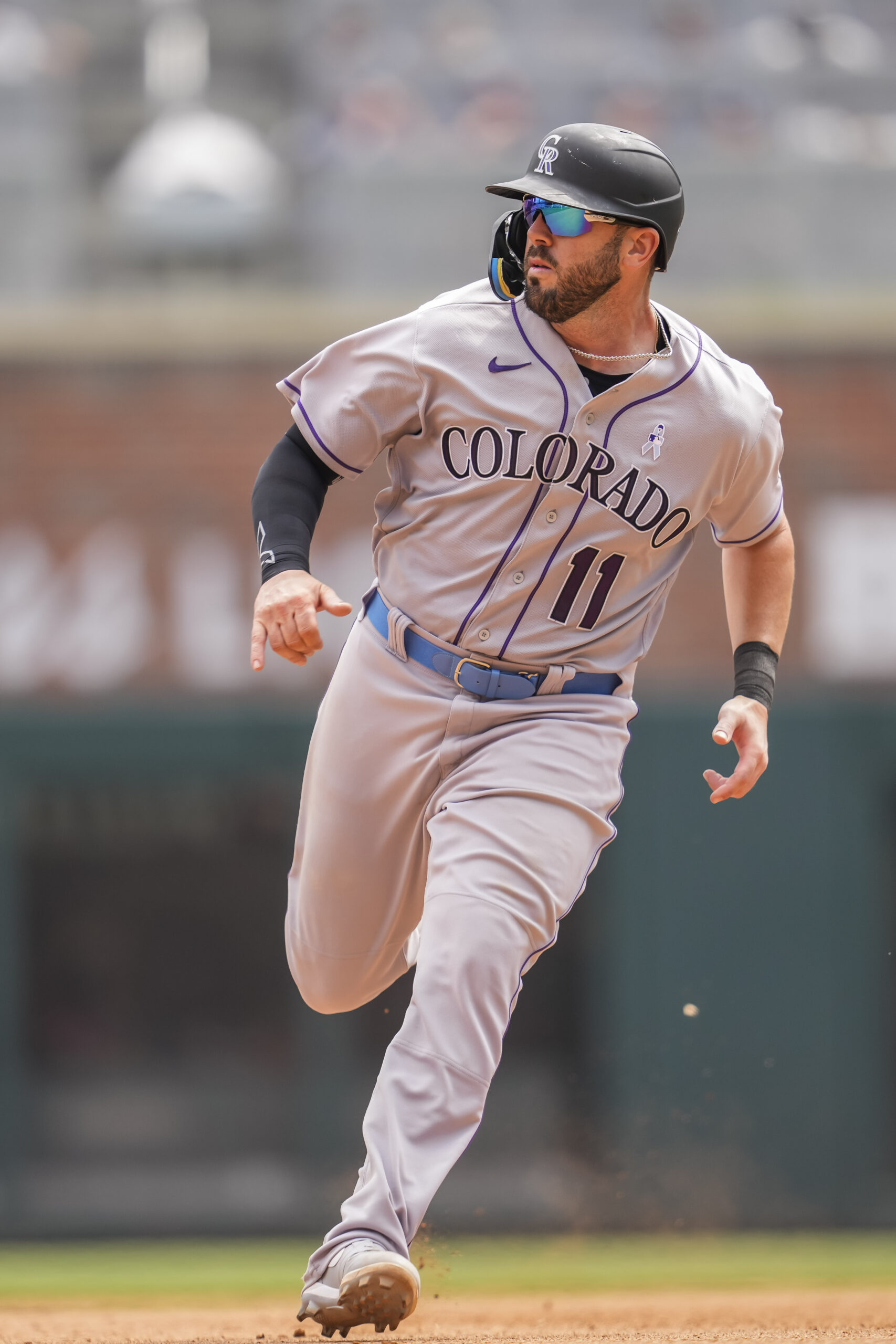
Moustakas, 34, was released by the Reds in January, with the club eating $22MM in the process. He hooked on with the Rockies on a minor league deal in March and cracked the Opening Day roster with a strong spring. With the Rockies, Moustakas was used as a backup at the infield corners behind C.J. Cron and Ryan McMahon. Cron has been on the IL with a back injury since mid-May, but Elehuris Montero has been drawing a good number of starts at first base in his stead.
After a pair of injury-wracked seasons, the left-handed-hitting Moustakas bounced back to a degree in his 136 plate appearances with Colorado this year by posting a 101 wRC+. Moustakas effectively got to walk over to the visitors’ clubhouse tonight, after the Angels set various franchise records with a 25-1 drubbing of the Rockies at Coors Field.
Moustakas didn’t get to play in that one, but he’ll move from the NL’s worst team to a Halos club that is tied for the third AL wild-card spot with the Blue Jays. The Angels are looking to make the playoffs for the first time since 2014. With the Moustakas acquisition tonight, they’ve added a three-time All-Star, 2015 World Champion, and 13-year MLB veteran. Moose hit 35 home runs in 2019, the fifth time he’d hit at least 20 in a season.
Moustakas’ initial two bouts with free agency were disappointments. The first time through in 2017-18, he turned down a $17.4MM qualifying offer from the Royals only to return in March on a one-year, $6.5MM deal. The next time, he lingered on the market until February before re-signing with the Brewers for $10MM. Moustakas was able to use his 2019 All-Star season as a springboard to a surprising four-year, $64MM deal with the Reds. Unfortunately, Moustakas played in only 140 games for the Reds from 2021-22 due heel injuries, a right biceps strain, calf strains, and stints on the COVID-IL.
Moustakas spent some time at second base in 2019-20, but since then he’s been utilized at the infield corners and designated hitter. The Angels have used a cast of players at first this year, with over 100 innings apiece going to Brandon Drury, Jared Walsh, Gio Urshela, and Jake Lamb. Lamb was optioned to Triple-A in May, and Walsh followed him on Saturday. Urshela recently suffered a season-ending fractured pelvis.
Angels third baseman Anthony Rendon went on the IL last Monday with a bruised wrist. Luis Rengifo had been getting the nod at the hot corner, until the Angels picked up switch-hitter Eduardo Escobar as something of an Urshela replacement in a trade with the Mets on Friday. Escobar, the Mets’ starting third baseman last year, could complement Moustakas at first and dabble at second base once Rendon returns. Escobar has hit lefties quite well in recent seasons, with a 131 wRC+ in 398 plate appearances against them since 2021. Moustakas hit righties to the tune of a 115 wRC+ from 2015-20, and may need to do so again to maintain his roster spot.
As for the Rockies, Moustakas could perhaps be the first domino to fall in advance of the August 1st trade deadline. GM Bill Schmidt didn’t give much away in his comments on the topic on the Rockies broadcast about a week ago, but the team’s potential free agents include Charlie Blackmon, Randal Grichuk, Jurickson Profar, C.J. Cron, Pierce Johnson, Brent Suter, and Brad Hand.
In Van Scoyoc, the Rockies picked up a 23-year-old righty who’s served as a starting pitcher for the High-A Tri-City Dust Devils this year. He was an 11th round pick by the Angels out of an Iowa high school back in 2018. Van Scoyoc has posted a 2.76 ERA in 62 innings at that level on the strength of a 51.2% groundball rate. Oddly enough, Van Scoyoc also switched clubhouses to join his new team, notes Doug Taylor on Twitter.
The 26-year-old Padlo had signed a minor league deal with the Angels back in December, earning a Major League look by hitting .273/.396/.555 at Triple-A. The Angels selected his contract on Monday and gave him eight plate appearances, but now he’s lost a 40-man spot once again. Padlo, a corner infielder, has also seen MLB time with the Rays, Mariners, Giants, and Pirates.
Angels Acquire Eduardo Escobar
The Mets and Angels pulled off an unexpected swap Friday night. New York dealt veteran infielder Eduardo Escobar and cash considerations to the Halos for pitching prospects Coleman Crow and Landon Marceaux. New York is reportedly paying Escobar’s salary down to the $720K league minimum.
Escobar, 34, spent a year and a half in Queens. The amiable infielder signed a two-year, $20MM free agent contract over the 2021-22 offseason. He worked as New York’s primary third baseman last year, starting 125 games and tallying 542 plate appearances. He put together a decent .240/.295/.430 showing, compensating for the mediocre on-base mark by connecting on 20 home runs.
That kind of production is par for the course. Escobar doesn’t draw many walks, which generally keeps his on-base percentage around or below the league average. He’s a solid power bat, though, reaching the 20-homer mark in every full season between 2017-22. A 35-homer season with the Diamondbacks in 2019 looks to have been inflated by that year’s very lively ball, but Escobar has a decent amount of pop in his bat.

He hasn’t shown that in 2023, largely thanks to an early-season slump. Escobar opened the year as New York’s third baseman but hit only .125/.173/.229 through April 16. At that point, New York recalled top prospect Brett Baty and installed him at the hot corner. That pushed Escobar into a depth role for which he’s arguably overqualified.
To his credit, Escobar has played well in sporadic playing time since being pushed to the bench. He has a .323/.373/.548 batting line in 67 plate appearances since Baty was promoted. His overall season line still checks in below-average (.236/.286/.409) thanks to the brutal first few weeks, but Escobar has contributed when given opportunities of late.
Nevertheless, there wasn’t a clear path for him to get back into the starting lineup. The 23-year-old Baty is viewed as a potential cornerstone offensive player. He has struggled after a torrid first few weeks but continued to get regular playing time. Baty has taken four of the last six starts at the hot corner, all of which have come against right-handed pitching. Jeff McNeil is entrenched at second base, closing off Escobar’s other main path to playing time.
There are no such roadblocks in Anaheim. The Angels have been hit with a trio of infield injuries in rapid succession over the past week. Shortstop Zach Neto strained his oblique. Corner infielder Gio Urshela suffered a fractured pelvis that is likely to end his season. Anthony Rendon sustained a left wrist contusion on a hit-by-pitch.
All of a sudden, the Halos were pressing Andrew Velazquez, Luis Rengifo and some combination of Jared Walsh and Michael Stefanic into regular playing time around Brandon Drury. That’s a suboptimal group for a club battling for a playoff spot.
Escobar isn’t likely to take playing time from Velazquez at shortstop. While he had experience there early in his career, he hasn’t played the position with any regularity since 2018. He’ll be an option at the other infield spots, particularly third and second base. Public metrics like Defensive Runs Saved and Statcast’s Outs Above Average have pegged him as a below-average defender in recent years, but he can bounce around the dirt as a bat-first utility option.
He’s most directly a replacement for the right-handed hitting Urshela. Escobar switch hits but has been quite a bit more effective from the right side of the dish. Over the past five seasons, he carries a .278/.317/.514 line against left-handed pitching while hitting .237/.300/.431 versus righty arms. Since displacing him at third base, the Mets have deployed him primarily against southpaws — a huge factor in his much improved production.
With Escobar having a diminished role in Queens and the Halos suddenly hunting for infield help, there’s a decent amount of appeal for everyone involved. It’s rare to see a trade of this kind of consequence occur in June, but it’s understandable the Angels wanted to jump the market. Their infield need is most pressing while Rendon is out of action. The Halos don’t have much margin for error in a jumbled American League playoff picture. Los Angeles entered play tonight half a game behind the Yankees for the last AL Wild Card spot and six games back of the Rangers in the AL West.
The Mets entered the season with divisional aspirations after winning 101 games last year. New York has played disappointing ball thus far, carrying a 34-40 record into play Friday night. Now 14 games back of the Braves in the NL East, they’re all but out of the division mix. They’re still within shouting distance of a Wild Card spot, seven games behind the Dodgers.
New York isn’t yet conceding the 2023 campaign. General manager Billy Eppler told Tim Healey of Newsday that trading Escobar had “no correlation” with the rest of the club’s deadline plans. Rather, the team jumped on an opportunity to cash in a player who had been pushed out of the lineup for a pair of minor league pitchers.
Crow ranked 17th on Baseball America’s midseason update of the Angels’ farm system and checked in eighth on Eric Longenhagen’s recent list at FanGraphs. An overslot signee out of high school in the 28th round of the 2019 draft, Crow draws praise for his athleticism and a quality slider.
The Georgia native is regarded as a potential back-of-the-rotation starter or multi-inning reliever. He’ll be eligible for the Rule 5 draft if not added to the 40-man roster by November, so he’d profile as near-term pitching depth if healthy. He has been on the injured list since the end of April but started his season with a 1.88 ERA and excellent 31:6 strikeout-to-walk ratio in 24 innings at Double-A.
Marceaux, a 2021 third-round pick out of LSU, ranked 20th in the Halos’ system at BA. While he typically works in the low 90s with his fastball, he’s credited with plus control of a four-pitch mix. He has spent his age-23 season in Double-A, working to a 4.88 ERA through 59 innings. The right-hander has a below-average 17.1% strikeout rate but has kept his walks to a tidy 7.2% clip. He won’t be Rule 5 eligible until after the 2024 campaign and seems to profile as a depth starter.
To entice the Halos to part with those arms, the Mets paid down virtually all of Escobar’s $9.5MM salary. They’re paying an accompanying 110% tax on that money. Andy Martino of SNY reported this afternoon that New York was open to spending to improve their farm system, either by taking on another team’s undesirable contract while getting back minor league talent or paying down some of their own deals. They’ve put that into action with today’s swap.
Escobar’s contract contains a $9MM club option for next season with a $500K buyout. It seems likely the Halos will opt for the buyout, although there’s at least some flexibility to keep him around if he goes on a second-half tear. The far bigger concern is plugging in an immediate stopgap veteran to help them weather their injury issues.
Doing so at no financial cost keeps their luxury tax number around $238MM, as estimated by Roster Resource — a few million north of the $233MM base threshold. They’ll surely be willing to get more aggressive as the deadline approaches if they’re still in the thick of the playoff race. Supporting the back of the rotation and/or adding middle infield help could be future goals for GM Perry Minasian and his staff.
Andy Martino of SNY first reported the Mets were paying Escobar’s salary down to league minimum.
Image courtesy of USA Today Sports.