
Offseason Outlook: Seattle Mariners
MLBTR is publishing Offseason Outlooks for all 30 teams. Click here to read the other entries in this series.
The 2017 season was the 16th in a row that ended after Game 162 for the Mariners, who finished 78-84 to extend their major league-worst playoff drought. A series of injuries to integral performers contributed to Seattle’s woes this year, though, leaving general manager Jerry Dipoto and CEO John Stanton optimistic that a healthier Mariners club could make a postseason push in 2018. But first, Dipoto will spend the next few months working to build a better roster than the one he constructed heading into the 2017 campaign.
Guaranteed Contracts
- Robinson Cano, 2B: $144MM through 2023
- Kyle Seager, 3B: $74.5MM through 2021
- Jean Segura, SS: $67MM through 2023
- Felix Hernandez, SP: $54.7MM through 2019
- Mike Leake, SP: $36MM through 2021
- Nelson Cruz, DH: $14MM through 2018
- Marc Rzepczynski, RP: $5.5MM through 2018
Contract Options
- Yovani Gallardo, SP: $13MM club option or $2MM buyout
- Hisashi Iwakuma, SP: $10MM club option or $1MM buyout
Arbitration-Eligible Players (service time in parentheses; projections via MLBTR contributor Matt Swartz)
- David Phelps (5.156) – $5.8MM
- Drew Smyly (5.154) – $6.85MM
- Erasmo Ramirez (4.158) – $4.7MM
- Nick Vincent (4.067) – $2.7MM
- Mike Zunino (3.161) – $3.2MM
- James Paxton (3.151) – $5.6MM
- Shae Simmons (3.111) – $700K
- Non-tender candidates: Smyly
Free Agents
[Mariners Depth Chart; Mariners Payroll Information]
As you’d expect, injuries weren’t the lone culprit for the Mariners’ sub-.500 finish this year. However, they did play a big part in the Mariners’ weakest aspect – their starting staff. Entering the season, the plan was for James Paxton, Felix Hernandez, Hisashi Iwakuma and winter trade acquisitions Drew Smyly and Yovani Gallardo to eat up the lion’s share of innings from the M’s rotation. Instead, the quintet combined for a mere 368 1/3 frames – roughly 73 apiece – and Paxton was the sole standout when he actually took the mound. Arm problems prevented the promising Smyly from pitching at all, and after undergoing Tommy John surgery in July, he looks like a surefire non-tender. Iwakuma also had an abbreviated year, making just six starts and amassing 31 innings, and is now recovering from September shoulder surgery. He’ll receive his walking papers in the form of a buyout, as will Gallardo, who pitched to a bloated ERA (5.73) over 130 2/3 innings spent between the rotation and bullpen.
While three-fifths of their planned rotation from 2017 is on the cusp of exiting, the Mariners still have three locks to win starting spots next season. Paxton is the unquestioned ace, a distinction that went to Hernandez before him. King Felix has fallen off dramatically over the past couple seasons, but the superstar-type money left on the soon-to-be 32-year-old’s contract and his full no-trade clause indicate he’s not going anywhere. And then there’s Mike Leake, whom the Mariners acquired from the Cardinals in an end-of-August trade. While Leake was tremendous down the stretch with his new team (2.53 ERA, 2.25 FIP in 32 innings), the elite-caliber production he logged during that small sample is an aberration relative to his career. Still, even if Leake regresses toward his lifetime output next season (3.98 ERA, 4.12 FIP), the longtime innings eater will still give the Mariners a durable mid-rotation type. There’s plenty of value in that for a team whose innings leader in 2017 was Ariel Miranda, a back-end starter who accrued 158 frames. Leake hasn’t thrown fewer innings than that in a season since his rookie year, 2010, when he racked up 138 1/3.
It’s unclear what the Mariners’ rotation will look like beyond Paxton, Hernandez and Leake next year, though Dipoto declared earlier this month that he’s satisfied with the “depth” and “quality” on hand. With Erasmo Ramirez, Andrew Moore, Andrew Albers, Ariel Miranda and Marco Gonzales around, the Mariners will go into 2018 with several in-house candidates for the final two sports in their rotation. It’s not the most confidence-inspiring group, however, which means it would behoove the Mariners to seek outside upgrades.
Considering the Mariners lack even a mid-tier farm system, putting together a trade for a controllable, young starter may be unrealistic. But they could add one in free agency if Japanese sensation Shohei Otani immigrates to the majors, as he’s expected to do. Thanks to the international spending limitations in the new collective bargaining agreement, the 23-year-old ace/slugger figures to have all 30 teams vying for his services should he reach the market. The amount of competition will make it especially difficult for any team to reel in Otani, then, but Bob Dutton of the Tacoma News Tribune did report earlier this month that Seattle plans to aggressively pursue him.
It may not affect the Otani chase, but it’s still worth noting that the Mariners have had success picking up Japanese talent in the past, having added Iwakuma, future Hall of Famer Ichiro Suzuki and Kazuhiro Sasaki. Unlike any of those players, Otani comes with the unique ability to make an impact both on the mound and with his bat. Otani will primarily serve as a pitcher if he comes to the majors, but he’s likely to sign with a team that will give him the ability to showcase his offensive skills. As an American League club, the Mariners theoretically have a leg up on half of the majors because they can offer Otani at-bats as a designated hitter. Of course, with Nelson Cruz entrenched at DH for another year, Otani probably wouldn’t have a chance to do much at the plate until 2019 if he chooses the Mariners.
Aside from Otani, the premier impending free agent starters will include Yu Darvish, Jake Arrieta, and, if he opts out of his contract with the Yankees, Masahiro Tanaka. Otani happens to idolize Darvish, setting up the possibility of those two going somewhere as a sort of package deal. The problem for Seattle, if it tries to go after Darvish, Arrieta or Tanaka, is that it doesn’t seem to have the financial wiggle room to make a big splash. While the Mariners’ payroll does have “room for growth,” according to Stanton, it’s unclear how much more they’re willing to spend after opening 2017 with a franchise-record $154MM in commitments. Regardless, the vast majority of the Mariners’ 2018 money is already spoken for, with a handful of veterans on large contracts and several more due raises in arbitration. The Mariners could still get creative in order to sign Darvish, as John Truplin of Lookout Landing wrote this week, but doing so would make it tough for them to adequately address other problems on the roster.
As with Darvish, Arrieta and Tanaka, signing a second-tier starter such as Lance Lynn or Alex Cobb may also prove too costly. But there will be some other potentially useful options on the market at lesser prices, including hard-throwing, groundball-inducing Tyler Chatwood, former Mariners Doug Fister, Jason Vargas and Chris Tillman, and Jaime Garcia, to name a few.
While a major addition to the Mariners’ rotation at least looks somewhat possible, albeit unlikely, their bullpen probably doesn’t need one. The Mariners’ relievers only earned modest rankings in ERA (13th) and fWAR (15th) this year, but Edwin Diaz, Nick Vincent, Emilio Pagan, Tony Zych, Marc Rzepczynski and James Pazos are either shoo-ins or strong bets to factor into their Opening Day plans next season. And with no minor league options remaining for Ramirez or Gonzales, at least one could end up in the bullpen if beginning the year from the rotation doesn’t prove to be in the cards. Beyond those names, Shae Simmons, Dan Altavilla, Ryan Garton and Thyago Vieira are also among those in the organization who could push for big league relief roles.
Similarly, the majority of the Mariners’ position player group is locked in going into next year. Cruz, second baseman Robinson Cano, third baseman Kyle Seager, shortstop Jean Segura, outfielder Mitch Haniger and catcher Mike Zunino will be integral pieces again. They’re going to need complements at first base and in the outfield, though.
Going by fWAR (minus-0.7), nobody was worse off at first this year than Seattle, but soon-to-be free agent Danny Valencia’s lackluster output was the primary reason for that. On the other hand, August acquisition Yonder Alonso fared decently (.265/.353/.439 in 150 plate appearances), though he’s also scheduled to hit free agency. He and the Mariners are interested in working out a new deal, per Greg Johns of MLB.com; failing that, the club could look elsewhere to a free agent market that will include first base types ranging from expensive to reasonably priced in Eric Hosmer, Carlos Santana, Jay Bruce, ex-Mariner Logan Morrison, Lucas Duda and Mitch Moreland. Alternatively, Dipoto may go his signature route – the trade market – for help, with the Braves’ Matt Adams standing out as a possible mover who wouldn’t require much in return.
Some of those names, including the lefty-swinging Alonso, aren’t all that effective against same-handed pitchers. Perhaps it would make sense, then, to bring back the right-handed Valencia as a platoon first baseman, given how well he has performed versus southpaws in his career (.313/.370/.493 in 994 PAs). Otherwise, Mike Napoli, Mark Reynolds, Matt Holliday and Jose Bautista are fellow righty-hitting free agents with the potential to fill that role, though Reynolds is the only member of the group who isn’t coming off a poor season.
Meanwhile, it’s anyone’s guess who will join Haniger to comprise the Mariners’ starting outfield. It’s also to be determined whether Haniger will line up at his typical 2017 spot – right field – or shift to center. Whether that happens could depend on the future of center fielder Jarrod Dyson, arguably the Mariners’ best free agent-to-be. While Dyson will turn 34 next August and doesn’t bring any power to the table, his defensive and baserunning prowess – not to mention his respectable on-base skills – combine to give him a high-floor skillset. Injuries limited Dyson to 111 games and 390 PAs in 2017, his first year as a Mariner, but he still managed upward of 2.0 fWAR for the fourth time in a half-decade. Dyson’s clearly a valuable player, one who’s not going to break the bank this winter, so re-upping him on a short-term deal may be in Seattle’s best interest. If Dyson walks, though, the Mariners will have to replace someone who was easily the leading defender and baserunner on the team in 2017 (notably, despite Dyson’s excellence, the M’s finished toward the bottom of the majors’ in FanGraphs’ BsR metric).
Lorenzo Cain, one of Dyson’s former teammates in Kansas City, will be the premier center fielder available in free agency, but he’s also poised to haul in one of the offseason’s richest paydays. Fellow center fielders Carlos Gomez, Jon Jay, Cameron Maybin and former Mariner Austin Jackson won’t cost nearly as much as Cain, though Dyson is arguably more appealing than each of those four. As for center field-capable trade candidates, there’s Christian Yelich (Marlins), Marcell Ozuna (Marlins), Billy Hamilton (Reds), Keon Broxton (Brewers) and Randal Grichuk (Cardinals). The Mariners probably don’t have the prospect capital to win a bidding war for either Yelich or Ozuna, however, and Hamilton, Broxton and Grichuk all posted sub-.300 on-base percentages in 2017. That could deter Dipoto, who highly values OBP.
Even with Haniger and either Dyson or his successor in the mix, the Mariners may still need help in the grass. Ben Gamel and Guillermo Heredia combined for just 1.6 fWAR (all from Gamel) in 976 PAs, after all, and the former declined sharply at the plate in the second half of the season. Both players are dirt cheap and fairly young, which could convince the Mariners to give them a large amount of rope again in 2018. Still, there’s a variety of corner outfield options slated to reach free agency – including J.D. Martinez and possibly Justin Upton, whom Dipoto knows from their time together in Arizona – and some would at least make for useful bench pieces (Rajai Davis would fit a team in need of a baserunning boost, for instance) if the Mariners don’t shop for a bona fide starter.
The Mariners do appear to have a legitimate starter behind the plate in Zunino, the No. 3 pick in the 2012 draft who has moved past his early career struggles to emerge as an upper-tier backstop since last season. He’ll need a new backup, however, unless the Mariners re-sign respected veteran Carlos Ruiz. Whether it’s Ruiz or someone else, any catcher the Mariners tab for the No. 2 role likely isn’t going to play much next season – which makes it a low-priority need (but a need nonetheless) entering the winter.
This may prove to be a make-or-break offseason for Dipoto, who’s entering the final year of his contract. Putting together a team that at least seriously competes for a wild-card spot in 2018 could be enough to save his job, but it appears he’ll have to make improvements this winter without a ton of spending room. The good news for Dipoto is that the Mariners aren’t exactly devoid of talent, meaning he shouldn’t have to do anything drastic for them to end up as playoff contenders next season.
Red Sox Hire Alex Cora As Manager
The Red Sox announced on Sunday that they have hired Astros bench coach Alex Cora as their next manager. Boston gave Cora a three-year contract with a club option for 2021. The team will hold a press conference to introduce Cora after the World Series between the Astros and the Dodgers concludes.
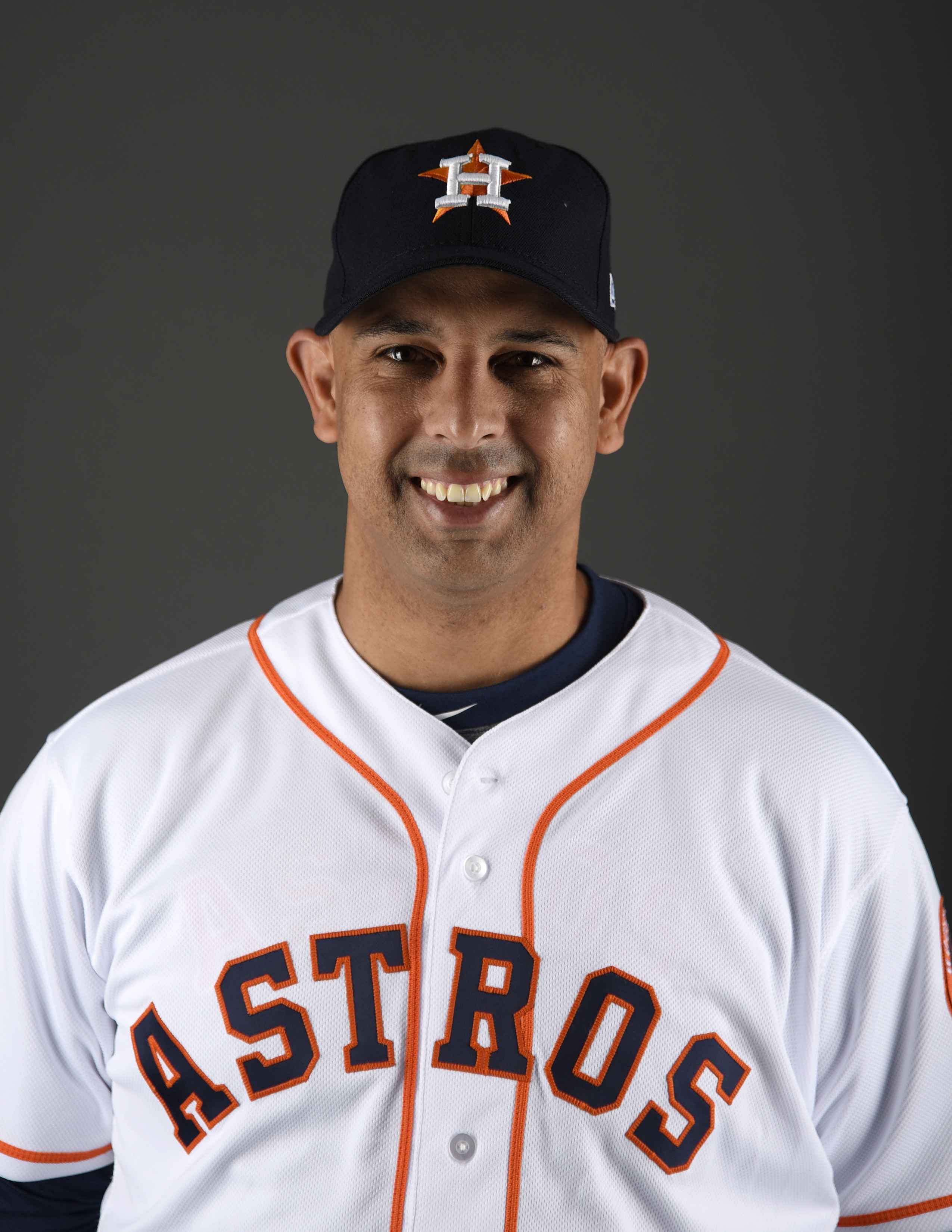
It’s no surprise that the Red Sox chose the 42-year-old Cora, who quickly emerged as the favorite to take over for previous skipper John Farrell after his firing on Oct. 11. Newly named Tigers manager Ron Gardenhire and Detroit predecessor Brad Ausmus also drew consideration for the job.
Unlike Gardenhire and Ausmus, Cora doesn’t bring any major league managerial experience to the table, and this will go down as his only year on A.J. Hinch’s coaching staff in Houston. Nevertheless, it seemed inevitable he’d get an opportunity somewhere this offseason. The Tigers showed interest in Cora before going with Gardenhire, while the Phillies, Mets and Nationals also eyed him for their openings.
From a talent standpoint, Cora will enter an enviable situation in Boston, which won its second straight AL East title in 2017 before falling to Cora’s Astros in a four-game American League Division Series. The Red Sox’s array of quality players, not to mention their big-spending ways, should help Cora’s cause, though he’ll also enter a pressure-packed position that comes with high expectations from fans and media alike. Farrell can attest to that, given that he wasn’t particularly popular during his five-year Boston tenure despite being in the dugout for three seasons of at least 93 wins – all of which included division championships – and a World Series title in 2013.
Cora is the first managerial hire in Boston for Red Sox president of baseball operations Dave Dombrowski, who inherited Farrell when he took over the franchise’s front office in 2015. In the Puerto Rican-born Cora, Dombrowski will get a bilingual manager who’s known to value analytics. Cora’s also already familiar with the Boston organization, having been an infielder with the Red Sox from 2005-08 during a major league playing career that lasted from 1998-2011.
Jon Heyman of FanRag first reported that Boston offered the job to Cora. Ken Rosenthal of The Athletic reported the length of Cora’s contract. Ian Browne of MLB.com reported that the Red Sox could announce the hiring Sunday. Pete Abraham of the Boston Globe reported that the Sox would indeed hire Cora. Photo courtesy of USA Today Sports Images.
AL Notes: Astros, Sabathia, Rays, Odorizzi, Orioles
Yankees hitters looked helpless against Astros pitchers Charlie Morton and Lance McCullers in Game 7 of the American League Championship Series on Saturday, and part of the credit for that goes to Houston’s reliance on analytics, Ken Rosenthal of The Athletic explains (subscription required and recommended). New York’s fastball-hitting offense had its way at times during a three-game home romp over Houston in the middle of the series, prompting the Astros’ analytics department to suggest the team’s pitchers throw more breaking balls. Morton and McCullers did just that in a 4-0 victory on Saturday, combining for 62 curveballs on 108 pitches. Incredibly, McCullers finished the game with 24 curves in a row to cap off four dominant innings. Afterward, pitching coach Brent Strom told Rosenthal: “I’ve got to hand this to our analytics people. “They said, ‘Listen, this is where we’re making our mistakes. We need to throw as many curveballs as possible. This is a good fastball-hitting team.'”
-
Left-hander CC Sabathia, the losing pitcher in Game 7 of the ALCS, made it clear to reporters on Saturday that his preference is to continue with the Yankees – not depart in free agency – per Brendan Kuty of NJ.com. “This is where I want to play,” said the 37-year-old Sabathia, who has revived his career over the past couple seasons and is fresh off a four-start playoff run in which he pitched to a 2.37 ERA across 19 innings. The 2017 season was the ninth with the Yankees for Sabathia, who just wrapped up the five-year, $142MM extension he signed in 2011.
- The Rays should be open to trading right-hander Jake Odorizzi, closer Alex Colome, outfielder/designated hitter Corey Dickerson and second baseman Brad Miller during the offseason, Marc Topkin of the Tampa Bay Times opines. All four players will go through arbitration in the winter, with Odorizzi projected to end up with the highest salary ($6.5MM). He’s also the player the Rays are most likely to trade, according to Topkin. Odorizzi, 27, is coming off a down season, but his impressive track record and two remaining years of affordable team control could lead to plenty of interest from starter-needy clubs.
- Adding more left-handed hitters to balance out a righty-heavy lineup will be one of the Orioles’ most important offseason challenges, Eduardo A. Encina of the Baltimore Sun writes. The O’s projected lineup for 2018 includes just two lefty-swingers, first baseman Chris Davis and catcher Chance Sisco. Another could come in the form of an outfielder, suggests Encina, who names Carlos Gonzalez, Jay Bruce and Curtis Granderson as a few of several potential targets in free agency.
Yankees Notes: Girardi, Holliday, Frazier
Yankees manager Joe Girardi is entering the offseason without a contract, but it appears he’ll continue in his current post. After the Yankees’ season-ending loss to the Astros in Game 7 of the American League Championship Series on Saturday, Girardi “left no question” that he wants to return, Bob Nightengale of USA Today tweets. The Yankees, for their part, would like Girardi back, Nightengale adds. This year was the Yankees’ 10th under Girardi, who has helped them to six playoff berths – including a World Series championship in 2009 – and a 910-710 regular-season record.
More on New York:
- Although designated hitter Matt Holliday endured a disappointing season, he told Scott Miller of Bleacher Report on Saturday that he intends to play in 2018 (Twitter link). Set to turn 38 in January, Holliday will be a free agent for the second straight offseason, though his next contract surely won’t approach the guaranteed $13MM the Yankees gave him last winter. The highly respected veteran appeared in just one of the Yankees’ 13 playoff games after ending the regular season on a second-half cold streak. Holliday was an effective cog in the Bombers’ offense until a viral infection forced him the disabled list in late June, and he never returned to form after that (he also missed most of August with a back injury). All told, Holliday hit .231/.316/.432 line with 19 home runs and a .201 ISO in 427 plate appearances.
- Third baseman Todd Frazier, another of the Yankees’ impending free agents, told reporters after Saturday’s game that he “would love to be back” with the club in 2018, adding that he has “never been more excited to play the game of baseball than in a Yankee uniform with these guys” (via Steve Politi of NJ.com). The boisterous Frazier, 31, performed well with the Yankees after they acquired him from the White Sox in July, but the New Jersey native’s desire for a multiyear deal could bring an end to his Bombers tenure, Politi writes. The Yankees already have another starting-caliber third baseman on hand in Chase Headley, who has a year left on his contract, with touted prospects in Gleyber Torres and Miguel Andujar waiting in the wings. It’s also worth noting that superstar third basemen Manny Machado and Josh Donaldson are scheduled to hit free agency a year from now.
Quick Hits: C. Seager, Cubs, Rangers, Red Sox
Dodgers manager Dave Roberts is optimistic shortstop Corey Seager will be able to return for the World Series, Ken Gurnick of MLB.com was among those to report (Twitter link). “Corey doesn’t want to be denied,” Roberts said of Seager, who missed the Dodgers’ five-game National League Championship Series triumph over the Cubs with a lower back sprain. Reserve Charlie Culberson provided surprisingly excellent production at shortstop against the Cubs, hitting .455/.417/.818 in 13 plate appearances, but he’s obviously not in Seager’s stratosphere. Seager has opened his career with two superstar-caliber seasons and is arguably the Dodgers’ top position player.
More from around the game:
- The Cubs’ firing of pitching coach Chris Bosio on Saturday was manager Joe Maddon’s decision, Paul Sullivan and Mark Gonzales of the Chicago Tribune report. Maddon’s relationship with Bosio deteriorated as the season progressed, per Sullivan and Gonzales, who add that Mike Maddux and the previously reported Jim Hickey are candidates to serve as the Cubs’ next pitching coach. Maddux was the Nationals’ pitching coach over the past two years, but his time with the club ended with manager Dusty Baker’s exit. Hickey, meanwhile, is also on the Cardinals’ radar, according to Sullivan and Gonzales.
- Rangers general manager Jon Daniels will enter a contract year in 2018, but he told Jeff Wilson of the Star-Telegram and other reporters on Friday that he has “no desire to go anywhere.” Daniels’ hope is to land an extension, though neither he nor members of the Rangers’ ownership group commented on whether a new deal is in the works. The 40-year-old has been in his post since October 2005, making him the second-longest tenured GM in the game behind the Yankees’ Brian Cashman, and has helped construct five playoff teams and two pennant winners (2010 and ’11). The 2017 season wasn’t a success for the Daniels-led Rangers, however, as they finished 78-84. Daniels is still optimistic, though, saying: “This was not a fun year, just the variety of things that we dealt with, but what it illuminated was getting back to the things that are fun. Being creative, finding new ways to compete, finding different competitive advantages, circling the wagons and building with our people.”
- The Red Sox are an “obvious” fit for Tony La Russa, Nick Cafardo of the Boston Globe observes. La Russa, who’s set to exit the Diamondbacks’ front office at the end of the month, has a longstanding relationship with Red Sox president of baseball operations Dave Dombrowski, Cafardo points out. La Russa spoke glowingly of Boston’s front office leader, telling Cafardo, “There’s nobody in baseball I respect more than Dave Dombrowski.” Both La Russa’s friendship with Dombrowski and his vast experience in baseball could make him a candidate for an advisory role with the Sox. When asked about the possibility, Dombrowski said, “We’ll see.”
Baseball Blogs Weigh In: Otani, Mariners, Jays, Cards, Brewers, Tigers
This week in baseball blogs:
- Hardball Via Hardcore sees Seattle as a logical landing spot for Shohei Otani.
- Jays From the Couch believes Toronto should explore a trade for Cardinals outfielder Randal Grichuk.
- Reviewing The Brew tries to find out what Ryan Braun‘s trade market could look like this offseason.
- Blessyouboys names Tigers who likely won’t be back with the team in 2018.
- Clubhouse Corner shares potential offseason strategies for the Indians and Diamondbacks.
- LegendsOnDeck compares the seasons of AL MVP contenders Jose Altuve and Aaron Judge.
- The Sports Tank expects Jake Arrieta‘s big-game track record to help his cause in free agency.
- Pop Culture Abstract evaluates the Cardinals’ offense.
- MetsMind asks if Matt Harvey‘s fastball command will ever return.
- Motor City Bengals regards the Tigers and Nationals as logical trading partners.
- Pirates Breakdown chats with with one of the Bucs’ top prospects, left-hander Taylor Hearn.
- Sports Talk Philly talks with Hall of Fame voters Jayson Stark, Andrew Baggarly, Kevin Cooney and Danny Knobler about Jimmy Rollins‘ Cooperstown chances.
- Mets Daddy calls the team’s managerial opening “a dead-end job.”
- Boston Sports Extra recaps Drew Pomeranz‘s season.
- Jays Journal lists free agent bullpen targets for Toronto.
- The Point of Pittsburgh examines if Ivan Nova‘s arm slot was the culprit for his second-half decline.
- Call to the Pen (links: 1, 2) analyzes the Phillies’ 40-man roster.
- BP Toronto has a post-mortem on the Blue Jays’ season.
- The Runner Sports (links: 1, 2) previews Game 7 of the ALCS and profiles Astros outfield prospect Juan Ramirez, who was part of the Justin Verlander trade.
- The Loop Sports is optimistic about the White Sox’s future behind the plate.
- Pinstriped Prospects highlights the best hitting performances by Yankees prospects in 2017.
- Everything Bluebirds wonders where Dalton Pompey fits on the Blue Jays.
- Ladodgerreport writes about the club’s NLCS-clinching win over the Cubs.
Please send submissions to ZachBBWI @gmail.com.
NL Notes: Marlins, Stanton, Phillies, Giants, Cubs
If the payroll-cutting Marlins only trade one of center fielder Christian Yelich or left fielder Marcell Ozuna this offseason, it’s more likely to be the former, Nick Cafardo of the Boston Globe writes. Parting with Yelich instead of Ozuna would save the Marlins less money in the near term, but they value Ozuna’s on- and off-field contributions so much that they’re inclined to keep him, per Cafardo. Ozuna is a Scott Boras client with just two years of control remaining and a projected $10.9MM coming his way in 2018. Yelich, on the other hand, will make $7MM next year – the third season of a long-term deal that looks like one of the most team-friendly contracts in baseball. The soon-to-be 26-year-old is controllable for five more seasons, including a 2022 club option for $15MM, at a combined $58.25MM.
Of course, the highest-profile Marlins outfielder is Giancarlo Stanton, who also has the biggest contract ($295MM through 2028, unless he opts out after 2020). While Stanton will be popular in the rumor mill over the next several months, there was “buzz” late in the season that he’d use his full no-trade clause to reject a deal to the Phillies, who are interested in him and Yelich, Cafardo relays. Stanton has made it clear that he’s tired of losing, something the Phillies have done plenty of in recent years, though they’re seemingly trending upward and figure to return to their high-payroll ways in the near future.
More from the National League:
- The Giants are interested in hiring Jim Hickey as their next pitching coach, Jerry Crasnick of ESPN reports (on Twitter). The position opened up Saturday when San Francisco shifted longtime pitching coach Dave Righetti to its front office. Like Righetti, the well-regarded Hickey brings vast experience working with hurlers, having served as the Rays’ pitching coach from 2006-17.
- Hickey is also drawing serious interest from the Cubs, according to Sahadev Sharma of The Athletic (subscription required and recommended). He’d take over for Chris Bosio, whom the Cubs fired Saturday, and would reunite in Chicago with former Rays manager Joe Maddon. Letting go of Bosio may have been a front office-driven move, posits Sharma, who notes that president of baseball operations Theo Epsein was particularly disappointed in the bullpen’s last-ranked walk rate in 2017. The struggles of midseason acquisition Justin Wilson, who was terrific out of Detroit’s bullpen but undependable as part of Chicago’s, likely helped lead to Bosio’s ouster, Sharma suggests. Across 17 2/3 innings with the Cubs, Wilson walked 19 (compared to 16 in 40 1/3 innings as a Tiger) and logged a 5.09 ERA. Consequently, he appeared in only one of the Cubs’ 10 playoff games.
East Notes: Yankees, Sox, Nats, Orioles
With the Yankees intent on getting under the $197MM luxury tax threshold in 2018, Joel Sherman of the New York Post wonders if they’ll shop relievers Dellin Betances and Adam Warren in the offseason. While the two, especially Betances, are high-end bullpen options, the Yankees may not want to spend the projected $7.5MM on the pair given that their relief corps would still be loaded without one or both. Aroldis Chapman, David Robertson, Chad Green and Tommy Kahnle will stick around next season, and all four of them are currently ahead of Betances and Warren in the Yankees’ late-game pecking order. Both Betances and Warren are likely to file for larger arbitration requests than their projected figures, Sherman notes, which could be especially interesting in the former’s case. After all, the relationship between Betances and the Yankees took a sour turn during the arbitration process last winter.
- Landing a big bat, adding depth in their rotation and middle infield, and finding another setup man could be on the Red Sox‘s offseason to-do list, Chad Jennings of the Boston Herald writes. Regarding Boston’s power-needy offense, which we touched on earlier today, Jennings lists impending free agents J.D. Martinez, Justin Upton, Eric Hosmer, Mike Moustakas and Jay Bruce as possible fits.
- The Nationals’ playoff trip this year ended in more disappointment for the franchise, but manager Dusty Baker’s return still looks likely, Chelsea Janes of the Washington Post. The future of Baker, who doesn’t have a contract for next year, is one of the biggest offseason questions facing the Nationals, opines Janes. In terms of their roster, the Nats will have to make decisions on whether to re-sign impending free agent outfielder Jayson Werth, whether to upgrade behind the plate and in the rotation, and how to assemble their bench, Janes adds.
- The Orioles’ coaches will see their contracts run out at the end of the month, but the team still hasn’t made a final decision on Buck Showalter’s staff for next season, according to Roch Kubatko of MASNsports.com. If Showalter has his way, all of his assistants – including beleaguered pitching coach Roger McDowell – will return, per Kubatko. However, general manager Dan Duquette didn’t rule out changes when speaking to reporters on the final day of the season. “All those things with the coaches and the staffing, all those things need to be addressed, and I think you have to look carefully at them when you don’t have a strong year and see if there are some adjustments that you can make,” Duquette said.
Free Agent Stock Watch: Carlos Santana
The Indians’ ALDS loss to the Yankees may well go down as Carlos Santana‘s last hurrah in Cleveland, an organization he has been a member of since 2008. The soon-to-be 32-year-old is slated to reach free agency next month and has the credentials to rake in one of the richest paydays of the offseason. It’s possible Santana’s next contract will come from the Tribe, of course, but the small-market club is only a year removed from handing fellow first baseman/designated hitter Edwin Encarnacion a substantial deal. The Indians could opt for a cheaper free agent to replace Santana, then, or perhaps they’ll turn to someone already on their talent-rich roster for aid.
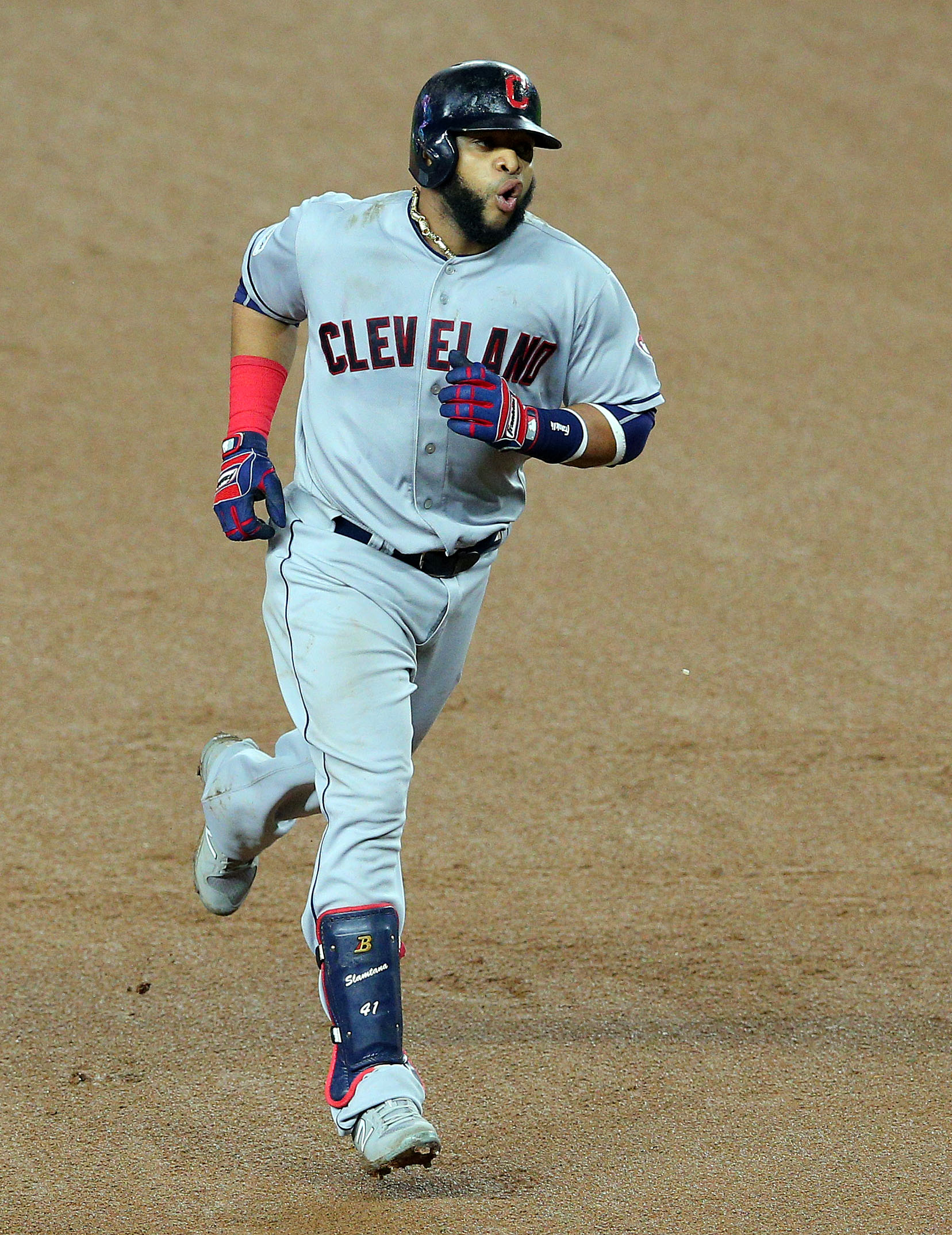
If Santana has played his last game as an Indian, the Octagon client’s void will be a difficult one for the team to fill. Not only is he a switch-hitter who has consistently provided above-average offensive production from both sides of the plate dating back to his 2010 debut, but Santana has also been quite durable. Since 2011, his first full season, Santana has appeared in no fewer than 143 games in any individual campaign. He played in 154 games this year, giving him six seasons with at least 150 appearances.
The 2017 season, in which he earned $12MM to close out a bargain contract (six years, $33MM-plus), didn’t begin in ideal fashion for Santana. His production was down through June, somewhat mirroring his team’s win-loss output. The Indians sat a mildly disappointing 42-36 through the season’s first three months before going on a 60-24 tear to wind up as the AL’s top seed.
Santana played a key role in the Tribe’s memorable second-half run, as he posted a wRC+ of 169 in July, 161 in August and 119 in September. For the year, he put up a 117 mark and slashed .259/.363/.455 with 23 home runs and a .196 ISO across 667 plate appearances. Santana continued to show off his signature plate discipline along way, walking in 13.2 percent of trips and striking out only 14.1 percent of the time. It was the second straight year in which Santana struck out in under 15 percent of PAs, making him one of the few hitters trending in the right direction in a league with skyrocketing K totals.
Including his most recent output, Santana has batted .249/.365/.445 with a .196 ISO, to go with a 15.2 percent strikeout rate against a 17 percent walk mark, in his 4,782-PA career. And while Santana’s not known for his glove work, the former catcher excelled at first this season, setting career highs in games (140), Defensive Runs Saved (10) and Ultimate Zone Rating (4.8). Between his work at the plate and in the field, Santana was worth 3.0 or more fWAR for the second straight year and the fourth time in his career. He has never registered a worse fWAR than 2.1 during a full season and has accrued 23.0 in Cleveland.
To this point, Santana’s numbers look rather similar to the production former teammate Nick Swisher logged before signing a four-year, $56MM contract with the Indians as a 32-year-old in January 2013. In 5,013 PAs from 2004-12, the switch-hitting Swisher racked up 25.0 fWAR and hit a Santana-like .256/.361/.467, adding a .211 ISO and solid walk and strikeout rates (13.3 percent and 21.1 percent, respectively). Of course, the Swisher experiment failed miserably in Cleveland, which is a reminder that even free agents with seemingly safe skillsets can rapidly decline.
Although the Swisher signing came almost a half-decade ago, something in the vicinity of his contract still looks like a fair benchmark for Santana’s next deal. While the Indians, Red Sox, Mariners and Angels are among a few potential fits, it’s worth noting that most teams were averse to spending big on first base/DH types a year ago. The leaguewide reluctance to splurge on those positions played a part in the Indians unexpectedly reeling in Encarnacion for a three-year, $65MM guarantee, and if it carries into this winter, it might enable them to re-up Santana at a reasonable rate. Further, it probably won’t help Santana’s cause that fellow first base options Eric Hosmer, Logan Morrison, Yonder Alonso, Lucas Duda and teammate Jay Bruce will join him in free agency after quality seasons of their own.
Hosmer and Santana are the class of the group and the only two who figure to garner qualifying offers, which could also drive down their appeal on the market. But if Santana rejects a $17.4MM qualifying offer from the Tribe and manages to land a guarantee of at least $50MM from another team, the Indians would be entitled to a compensatory pick after the first round because they’re a revenue-sharing recipient. So, while losing Santana would be a tough blow for Cleveland, at least there’s a chance the franchise would get a nice consolation prize in return.
Photo courtesy of USA Today Sports Images.
Offseason Outlook: Oakland Athletics
MLBTR is publishing Offseason Outlooks for all 30 teams. Click here for the other entries in this series.
The Athletics posted their third straight last-place finish in the American League West in 2017, but for the first time since their fateful Josh Donaldson trade in November 2014, the franchise has a clear direction. Not only did the A’s commit to a full rebuild in the middle of the season, but a couple of their prospective long-term core pieces – first baseman Matt Olson and third baseman Matt Chapman – burst on the scene to provide immediate hope and contribute to a roster that closed the season on a 17-7 run. Led by executive vice president of baseball operations Billy Beane and general manager David Forst, the A’s will continue with a mostly youth-oriented approach in 2018, which means a fairly quiet winter could be in the offing.
Guaranteed Contracts
- Matt Joyce, OF: $6MM through 2018
- Santiago Casilla, RP: $5.5MM through 2018
Contract Options
- Jed Lowrie, IF: $6MM club option or $1MM buyout
Arbitration-Eligible Players (service time in parentheses; projections via Matt Swartz)
- Chris Hatcher (4.146) – $2.2MM
- Khris Davis (4.104) – $11.1MM
- Liam Hendriks (4.038) – $1.9MM
- Marcus Semien (3.118) – $3.2MM
- Josh Phegley (3.114) – $1.1MM
- Blake Treinen (3.065) – $2.3MM
- Jake Smolinski (3.016) – $700K
- Kendall Graveman (3.014) – $2.6MM
- Non-tender candidates: Phegley, Smolinski
Free Agents
- None
Athletics Depth Chart; Athletics Payroll Information
Evidenced by its handful of veteran signings in free agency last offseason, Oakland’s hope was to piece together a roster capable of pushing for a wild-card spot in 2017. But the A’s ended up well out of contention by summertime, paving the way for them to cut ties with several established players, most of whom were on expiring contracts. The primary exceptions were relievers Sean Doolittle and Ryan Madson and starter Sonny Gray, a trio of controllable players whose trades brought back returns which could benefit Oakland for years to come.
Of the A’s top 15 prospects, five came from those deals, per MLBPipeline.com. Doolittle and Madson netted left-hander Jesus Luzardo (No. 5) and third baseman Sheldon Neuse (No. 14) from the Nationals (plus major league reliever Blake Treinen), while Gray’s two-plus years of team control garnered outfielder Dustin Fowler (No. 3), infielder/outfielder Jorge Mateo (No. 4) and righty James Kaprielian (No. 10) from the Yankees.
The Gray deal was especially notable not just for the prospect haul the A’s picked up, but because it was the end result of multiple years of trade rumors centering on the hurler. The A’s orchestrated a weekslong bidding war for Gray before moving him at the non-waiver trade deadline on July 31, and though two of the farmhands they acquired for him are on the mend from significant injuries, they still made out well in the swap. Fowler’s recovering from a ruptured patellar tendon, but the soon-to-be 23-year-old will have a legitimate chance to serve as the A’s starting center fielder from the get-go in 2018, according to Susan Slusser of the San Francisco Chronicle. And Kaprielian, who’s working back from the Tommy John procedure he underwent in April, could enter Oakland’s rotation sometime next year.
The aforementioned prospects are each important pieces of an ascending farm system, one the A’s could further bolster by selling well-performing veterans such as slugger Khris Davis and infielder Jed Lowrie in the coming months. However, they seem inclined to keep the pair. Fresh off his second 40-home run season in a row, Davis has only two years of arbitration control remaining and is projected to earn upward of $11MM in 2018. Despite Davis’ declining control and increasing price tag, A’s brass wants him in the fold.
“He fits in perfectly here,” Beane said after the season, while Forst brushed off concerns about Davis’ rising salary.
“If it is, it is,” Forst said of Davis’ arbitration case potentially being difficult. “I don’t think you could overstate the impact he has on the rest of the lineup.”
Lowrie, meanwhile, is down to his last year of control, but the A’s will pick up his affordable option and write him in as their starting second baseman for 2018. Doing so will allow them to give top prospect Franklin Barreto further seasoning at Triple-A after a rough 2017 debut in the majors, albeit over just 76 plate appearances.
With Davis and Lowrie seemingly returning next year, the majority of the A’s lineup already looks set. The infield will typically feature Olson, Chapman, Lowrie and shortstop Marcus Semien, while Fowler, Davis, Matt Joyce, Boog Powell and Chad Pinder will divvy up most of the reps in the outfield. For now, the designated hitter slot looks as if it’ll primarily belong to corner infielder Ryon Healy, but the A’s could attempt to move him to strengthen their bullpen, according to Slusser. The 25-year-old Healy isn’t even scheduled to reach arbitration until after the 2019 season, which could certainly appeal to teams searching for a long-term offensive piece, though he’s coming off a so-so year at the plate. While Healy belted 25 homers for a team that finished fourth in the majors in long balls (234), his .271/.302/.451 line across 605 PAs hovered around league average, thanks in part to a bottom-of-the-barrel walk rate (3.8). Healy wasn’t much better in that category in his 283-PA rookie year, 2016, when he logged a 4.2 percent mark that a .305/.337/.524 line helped mask.
Regardless of whether Healy sticks around, the A’s will have a chance to build on an offense that placed seventh in the league in wRC+ (102) this year, particularly if they get better production from behind the plate. The A’s catchers, primarily Bruce Maxwell, now-Brewer Stephen Vogt and Josh Phegley, combined to hit just .217/.298/.334 this year. The lefty-swinging Maxwell was the best of the three in 2017 and is likely to collect most of the playing time at catcher next season, but the A’s could at least stand to improve over the righty-hitting Phegley. The 29-year-old non-tender candidate batted a meek .201/.255/.336 in 161 trips to the plate and, like Maxwell, ranked among Baseball Prospectus’ worst pitch framers. Fortunately for Oakland, there will be a few reasonably priced upgrades over Phegley available in free agency, including Chris Iannetta, Nick Hundley and Rene Rivera.
It’s fair to expect the A’s to add a catcher via the open market, but taking that path to find a starting pitcher may not be in the cards.
“The preferred route is to create the pitching staff organically. That’s where we’ve had the most success,” Beane said.
A’s starters ranked 20th in the game in ERA (4.74) and 21st in fWAR (7.9) in 2017, and much of that production came from the departed Gray. Despite that subpar performance, though, the A’s still have a mishmash of 20-something rotation candidates they may prefer to go forward with, including two somewhat established options – Sean Manaea and Kendall Graveman – as well as Jharel Cotton, Andrew Triggs (recovering from hip surgery), Daniel Mengden, Jesse Hahn, Paul Blackburn and Daniel Gossett, among others. There’s also Kaprielian and lefty A.J. Puk, the sixth overall pick in 2016, knocking on the door. But even though Beane isn’t gung-ho on free agency, the A’s could still reel in one of the many soon-to-be available veteran stopgaps capable of eating innings. Notably, only three A’s surpassed 100 frames in 2017.
Oakland’s rotation clearly had problems this season, but the bullpen didn’t help the club’s cause. A’s relievers registered the majors’ sixth-highest ERA (4.57) and ranked just 19th in strikeout percentage (22.0). And remember, that was with Doolittle and Madson around for a large portion of the campaign. Treinen, who came over in that trade, was outstanding for Oakland, though he’s the only returning standout in its relief corps. Santiago Casilla, Ryan Dull, Liam Hendriks, Chris Hatcher and Daniel Coulombe remain controllable for 2018, but nobody from that group was a world-beater this year. So, whether it’s via trade or free agency, it would behoove the A’s to upgrade their bullpen. Beane hasn’t been hesitant to use the market to pick up relievers recently, having added Madson, Casilla and John Axford over the previous two offseasons, and could do so again. Free agency will overflow with possibilities, many of them appealing and affordable. Speculatively, with Coulombe as their only semi-established lefty option, the A’s could look to a southpaw like San Jose native Jake McGee, Brian Duensing, Tony Watson or Fernando Abad for late-game improvement.
Given their new course, any players the A’s go after in free agency during the coming months are likely to be modestly priced Band-Aids, meaning there won’t be another Edwin Encarnacion-type pursuit this winter. Beane noted at his season-ending press conference that the A’s are aiming to take a “disciplined” course in the early stages of their rebuild, revealing that their primary concern is to identify which youngsters are bona fide linchpins worth locking up for the long haul. As such, any lengthy deals the A’s hand out prior to next season are likely to go to players who are already in their organization.