
Free Agent Profile: Luis Valbuena
Luis Valbuena entered free agency as arguably the second-best third baseman available, trailing only Justin Turner (by a significant margin, granted). Turner came off the board a couple weeks ago when he unsurprisingly re-signed with the Dodgers, but Valbuena remains without a deal. What’s more, there haven’t been many rumblings connecting the 31-year-old to potential employers this offseason.
Pros/Strengths
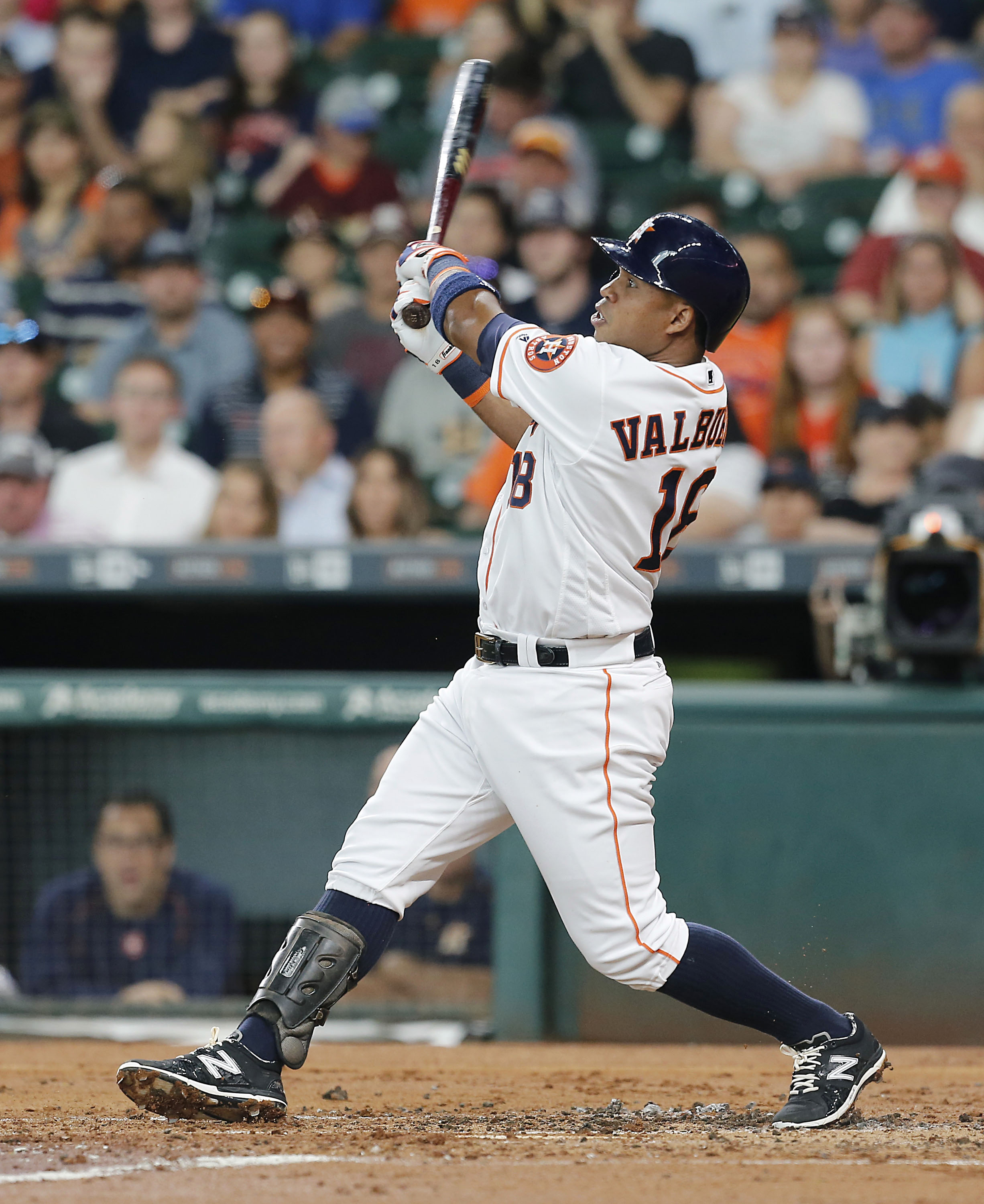
It took a few seasons for Valbuena to turn into a quality major leaguer, but he’s now coming off a four-year stretch (divided between the Cubs and Astros) in which he batted a respectable .237/.333/.428 and accounted for 8.4 fWAR in 1,773 plate appearances. Since 2014, his breakout offensive season, the lefty-swinging Valbuena has handled right-handed pitchers with a .253/.344/.473 line in 1,068 trips to the plate.
Before undergoing season-ending hamstring surgery last August, Valbuena was on track for a career year with a .260/.357/.459 line in 342 PAs. He was also amid his third straight season with an above-average isolated power number (.186 – the league mean in 2016 was .162). Valbuena’s patient, too, having posted double-digit walk rates in each season since 2012. He helped his cause last year in collecting free passes at career-high 12.9 percent clip, which ranked 19th in the majors among those with at least 300 PAs and well above the 8.2 percent average. Further, Valbuena swung at pitches outside the zone a personal-best 23.1 percent of the time, which was good for 21st in the league.
Cons/Weaknesses
While Valbuena has been terrific against righties, his bat has been virtually unplayable at times versus same-handed pitchers. In 530 career PAs, he has hit a meager .221/.310/.356 against lefties – including a lackluster .206/.299/.335 over the past three seasons. Along with his platoon issues at the plate, Valbuena isn’t a threat on the bases, which is particularly unfortunate when considering his high-OBP ways against righties. It also helps explain his history of recording low batting averages despite avoiding egregious strikeout totals. Better, faster baserunners take advantage of reaching, but Valbuena has never swiped more than two bags in a year, and he hasn’t exceeded the one-steal plateau since 2009.
Defensively, Valbuena isn’t a major liability at third, but he hasn’t been able to approach the effectiveness he showed there from 2012-13. That 1,700-plus-inning sample saw Valbuena rack up 11 Defensive Runs Saved and combine for a 21.6 Ultimate Zone Rating. He has registered minus-12 DRS to go with a minus-11.7 UZR in almost 2,500 innings since, though most of the DRS damage (minus-10) came in 2014.
Valbuena’s aforementioned hamstring surgery could also qualify as a negative, but there’s no word on whether that’s affecting his market.
Background
A native of Venezuela, Valbuena joined the Mariners organization back in 2002 as an undrafted free agent. The former middle infielder ended up debuting in the majors in 2008 with Seattle, which traded him to the Indians during the ensuing offseason. That deal also involved the Mets and included 11 other players (to name a few, Jason Vargas, Franklin Gutierrez and Joe Smith). Cleveland eventually sent Valbuena to Toronto for cash considerations in November 2011, but the Blue Jays lost him on waivers to the Cubs in advance of the 2012 season. That proved fruitful for the Cubs, who got a couple good years from Valbuena before shipping him and righty Dan Straily to the Astros in January 2015 for center fielder and 2016 World Series champion Dexter Fowler.
In his major league career, Valbuena has raked in $14,275,200 in earnings, according to Baseball Reference. He’s a client of Elite Sports Group.
Market
“Several” teams have expressed interest in Valbuena this offseason, his agent, Scott Schneider, said last month. The only reported suitors are the Yankees and Rays. Neither team looks like an obvious fit, though, given the options they have on hand at third, first (Valbuena’s occasional position since 2015) and designated hitter.
Clubs that could still stand to upgrade in the corner infield include the Braves, Red Sox, Athletics and Rangers. Atlanta might be the best choice, as Valbuena and right-handed-hitting third baseman Adonis Garcia would have the potential to make for a formidable offensive platoon. Boston has the luxury tax threshold to consider, meanwhile, and has already picked up first baseman Mitch Moreland in free agency. The Sox also seem content to roll with Pablo Sandoval and Brock Holt at third. Oakland is focused on adding a righty bat, which would rule out Valbuena, and Texas is set at third with the great Adrian Beltre. The Rangers still need first base help, but they’re zeroing in on Mike Napoli.
Expected Contract
MLBTR’s Tim Dierkes forecast a two-year, $14MM deal for Valbuena entering the offseason. That still looks reasonable, but settling for less might be in the cards because so few teams look like clear matches for Valbuena.
Photo courtesy of USA Today Sports Images.
Pirates, Jordy Mercer Have Discussed Extension
The Pirates and shortstop Jordy Mercer have discussed a contract extension, though an agreement isn’t imminent, as Rum Bunter first reported and Rob Biertempfel of the Pittsburgh Tribune-Review confirmed. The two sides have had “a little, but not a lot of talk,” a source told Biertempfel.
Mercer, a client of the Legacy Agency, is coming off a season in which he tied a career high in games played (149) and logged a personal-best 584 plate appearances. The 30-year-old wasn’t particularly effective, though, having hit a modest .256/.328/.374 (closely in line with his .257/.313/.377 lifetime mark) with 11 home runs and one stolen base. Mercer also didn’t rate well in the field, which was abnormal relative to the previous two years, as he finished toward the bottom of the majors at his position in Defensive Runs Saved (minus-9) and Ultimate Zone Rating (minus-8.4).
Mercer, who’s under control through the 2018 campaign, is scheduled to make his second trip through arbitration later this winter. MLBTR contributor Matt Swartz projects a $4MM arbitration award for Mercer, but it might not come to that. Pittsburgh doled out three extensions to regulars last year and could hand Mercer what should be an inexpensive deal early in 2017.
Arbitration Breakdown: Nolan Arenado
Over the next few days, I will be discussing some of the higher profile upcoming arbitration cases. I will rely partly on my arbitration model developed exclusively for MLB Trade Rumors, but will also break out some interesting comparables and determine where the model might be wrong
Rockies third baseman Nolan Arenado earned $5MM last year, but after belting 41 home runs, knocking in 133 runs and hitting .294 in 696 plate appearances, he is due for a hefty raise. The record raise for a second-time-eligible position player on a one-year deal is Chris Davis’ $7.1MM increase in 2014. My model actually projects for an $8.4MM raise in Arenado’s case; however, the “Kimbrel Rule” – which states that no player gets projected for an increase over $1MM higher than the record raise for his service class – moves Arenado down to an $8.1MM raise (a $13.1MM salary).
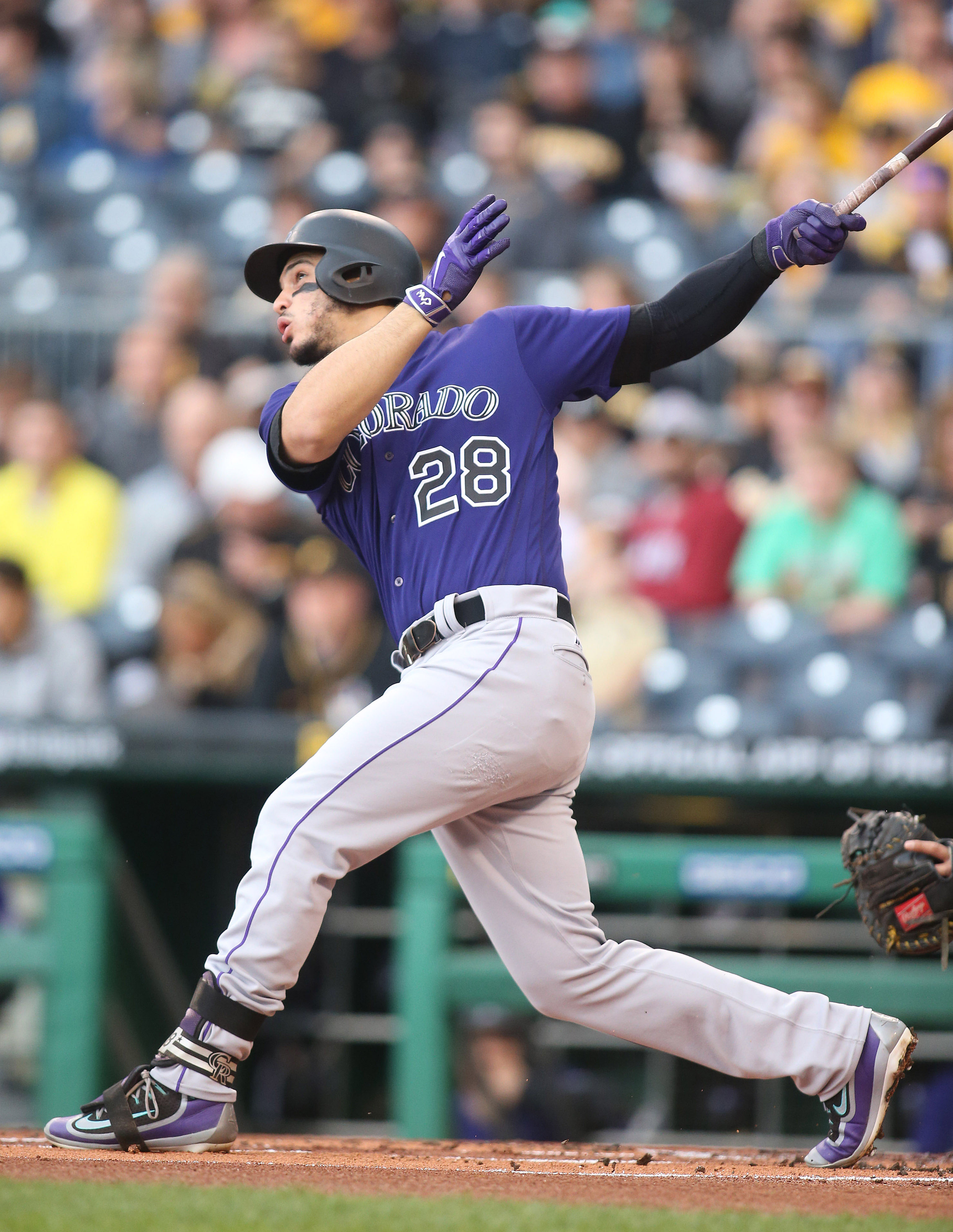
Davis’ 2014 case is by far the most applicable to Arenado’s. Aside from those two, no other player eligible for his second year of arbitration has led his league in home runs and RBIs. Davis hit .286 with 53 homers and 138 RBIs the prior year, so his numbers are similar except for clearly having more HRs. However, Arenado does play a harder defensive position than Davis, a first baseman, and the former actually won a Gold Glove last year. So there is a good reason to think that Arenado could earn more, especially three years later. But the 12 fewer home runs signify that it is less than a sure thing.
Finding another comparable is extremely difficult. No other third basemen since 2009 have even hit 20 home runs and received one-year deals in their second year of arbitration eligibility. No other position players have hit at least 35 home runs and received one-year deals in their second year of arbitration eligibility.
Using players receiving multi-year deals is generally not customary in these cases, but can be done in some unique circumstances. Often when both the player and the team exchange numbers, the club’s offer can be seen as a potential comparable case. Josh Donaldson’s case last year could be one such scenario. Donaldson hit the exact 41 home runs that Arenado did this past year, and knocked in 123 runs (just 10 shy of Arenado’s total). He also hit .297, which is almost exactly where Arenado landed. Donaldson ultimately received a multi-year deal, but he first exchanged figures with the Blue Jays, who offered a $7.05MM raise. Donaldson’s two-year deal gave him a $7.35mM raise. He did win the MVP in his platform year, so that could be a better case, but the multi-year deal probably makes it a weaker comparable. On the other hand, Donaldson only requested a $7.5MM raise, so it would be hard to see why Arenado would get more without an MVP award.
I would guess that Arenado ultimately receives closer to a $7MM raise than the $8.1MM he is projected to land. Davis’ extra home runs and Donaldson’s MVP award help their cases look stronger than Arenado’s, and even though Donaldson got a multi-year deal, his exchange of salary figures with the Jays fit into a pretty tight window. Arenado may argue that Donaldson’s case is not applicable, and that Davis’ extra home runs came with less defense, but it might not work. Although fielding is certainly considered in arbitration cases, I have not found any statistically significant impact of defense on earnings and the overall effect is limiting. Arenado may yet earn his lofty projection, but I would take the under.
Photo courtesy of USA Today Sports Images.
Orioles, Mariners Swap Yovani Gallardo For Seth Smith
SUNDAY: The Orioles’ $4MM in savings will be spread over the next three seasons, per Roch Kubatko of MASNsports.com (Twitter link).
FRIDAY, 12:30pm: Eduardo A. Encina of the Baltimore Sun tweets that the Orioles will save about $4MM in total on the deal. That would suggest that about $2MM is headed to Seattle alongside Gallardo, who is guaranteed $13MM ($11MM salary + $2MM option buyout) to Smith’s $7MM.
12:11pm: The Mariners have acquired right-hander Yovani Gallardo and cash from the Orioles in exchange for corner outfielder Seth Smith, the teams announced today. The move fills an on-paper need for both clubs, as the Mariners have been seeking a starter to fill out their rotation, while Baltimore has been in search of a left-handed-hitting corner outfielder.
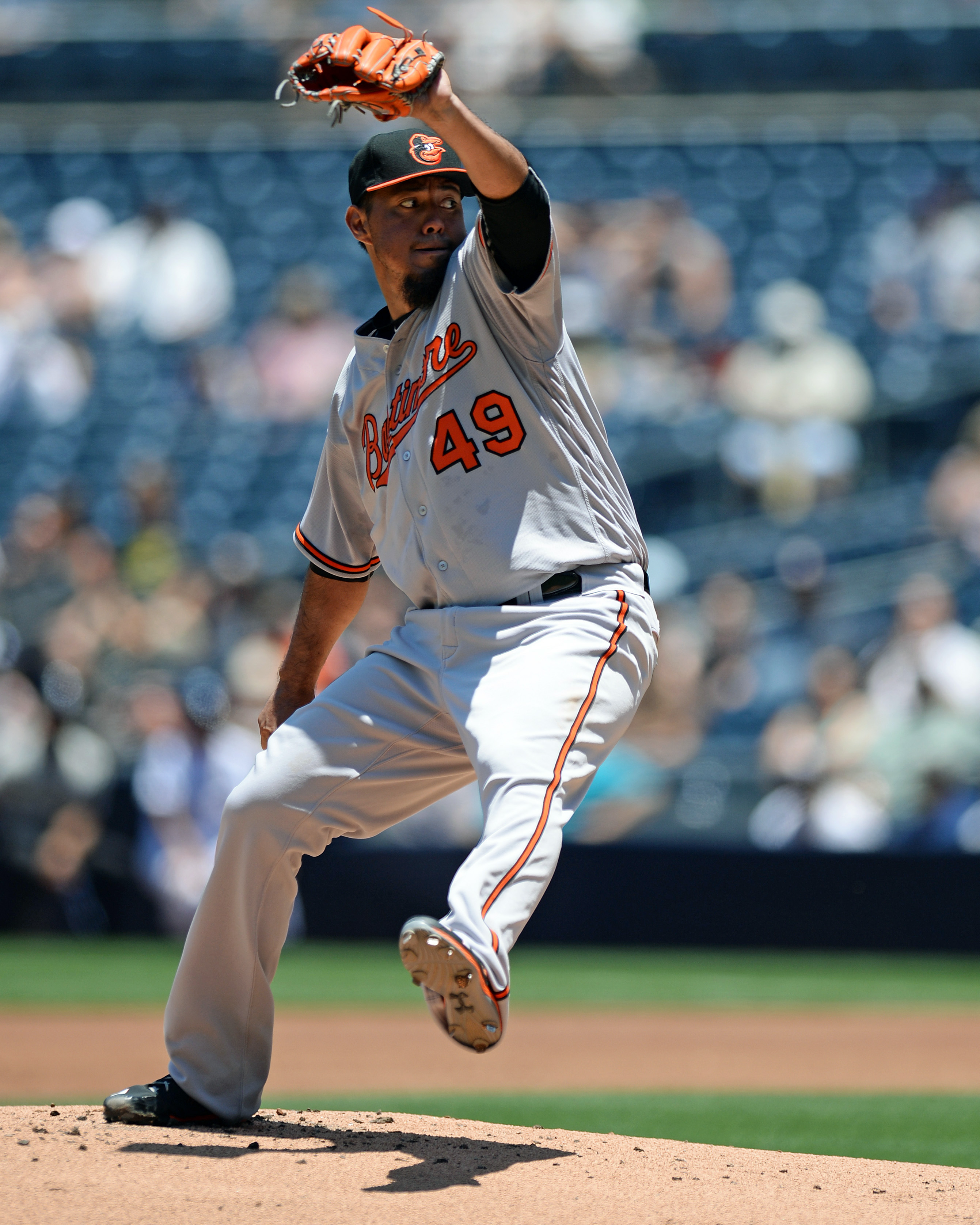
From the Orioles’ standpoint, that they were able to jettison Gallardo in exchange for a fairly useful role player comes as a surprise on the heels of a dismal, injury-plagued season for Gallardo. Set to turn 31 next month, Gallardo missed roughly two months of the 2016 season with shoulder injuries. While that’s concerning in and of itself, his contract with the Orioles was dropped from a three-year agreement to a restructured two-year pact following his physical due to shoulder concerns, so there’s perhaps elevated cause for concern.
[Related: Updated Seattle Mariners Depth Chart and Baltimore Orioles Depth Chart]
When on the field, Gallardo limped to a 5.42 ERA with 6.5 K/9 against a career-worst 4.7 BB/9 and a 43.2 percent ground-ball rate in 118 innings. Though Gallardo was able to make 23 starts despite the time he missed, he’s now showed a diminished ability to work deep into games in each of the past two seasons, averaging under 5 2/3 innings per start in 2015 with the Rangers and less than 5 1/3 innings per start last year in Baltimore. Gallardo has a guaranteed $13MM remaining on his contract, although $1MM of that sum is deferred without interest.
It should, of course, be noted that prior to his woeful season in Baltimore, Gallardo was long a steadying presence in the rotation for the Brewers and Rangers. Though he displayed plenty of red flags in his lone season with Texas — diminished strikeout rate and velocity, increased walk rate — Gallardo averaged 32 starts per year from 2009-15, totaling 1339 1/3 innings of 3.69 ERA ball with 8.2 K/9 against 3.3 BB/9. His heater has dipped about three miles per hour from its 92.7 mph peak, but he does bring a track record of useful results to the table. Clearly, the Mariners are hoping that a move to a larger park will help to quell some of the home-run problems that plagued Gallardo in 2016, when he posted a 1.2 HR/9 rate that dwarfed the 0.9 mark he carried into the season.
If Gallardo is able to rebound in 2017, he comes with an affordable $13MM option for the 2018 campaign ($3MM of that sum would be deferred, without interest, as well). If not, they’ll pay him a $2MM buyout on top of his $11MM salary for the upcoming season. He’ll slot into a rotation that also includes Felix Hernandez, Hisashi Iwakuma, James Paxton and Nate Karns, with Ariel Miranda representing an additional southpaw option for manager Scott Servais.
The Mariners have been shopping Smith since at least early December, so it’s not entirely surprising to see them move on from the 34-year-old. Swapping him out for a starter that struggled to Gallardo’s level last year, however, is somewhat of surprise, as Smith is coming off a characteristically solid season at the plate. Last year’s .249/.342/.415 is more or less in line with the cumulative .258/.343/.435 triple slash he’s posted dating back to the 2011 season.
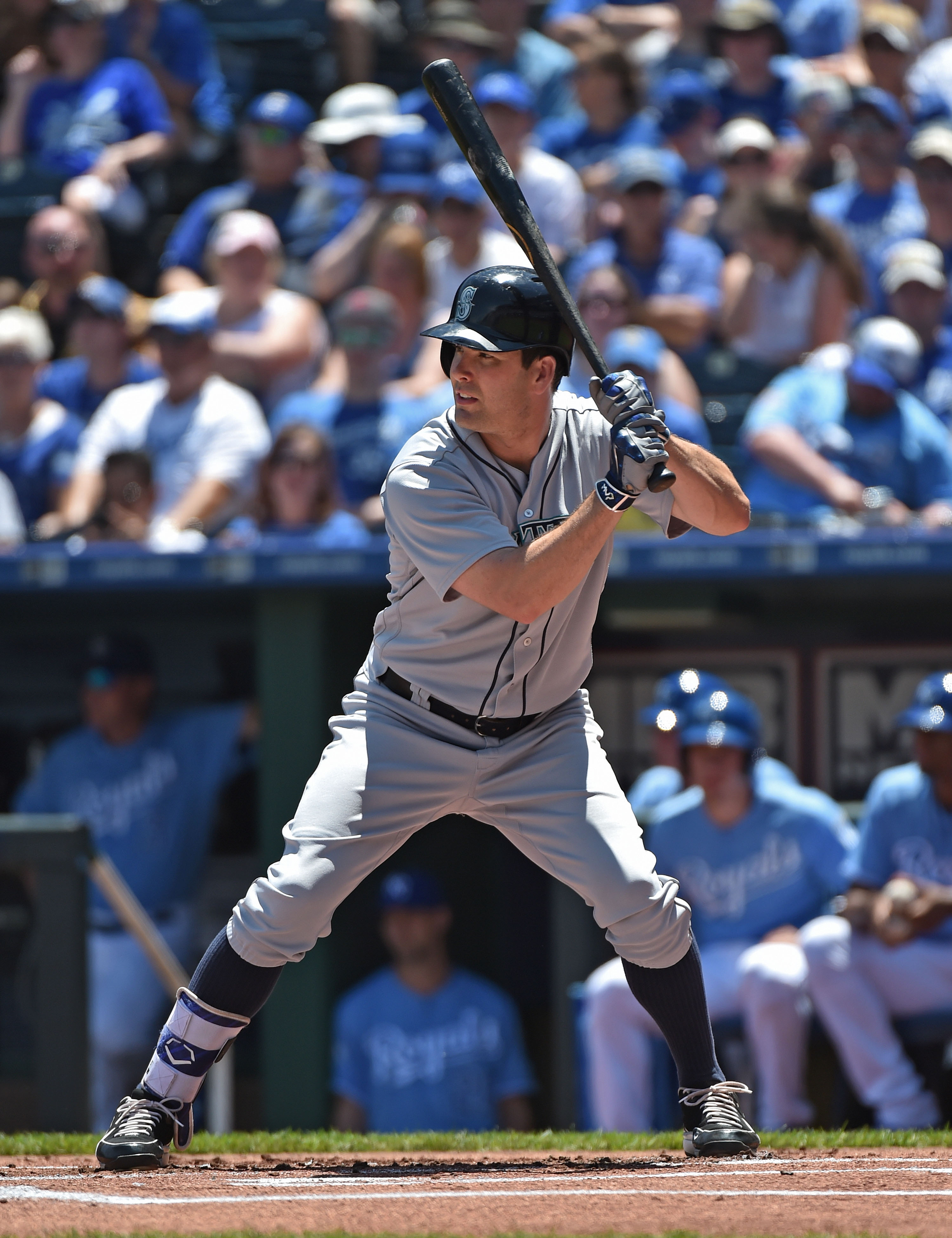
The Mariners, though, have placed a premium on outfield defense, and Smith’s previously average defensive ratings took a notable tumble in 2016. Smith is limited to the outfield corners, and Defensive Runs Saved pegged him at an unsightly -8 in just 257 2/3 innings in left field last year, while Ultimate Zone Rating pegged him at -6.3. (His work in right field drew more typically neutral ratings.)
Smith has long been limited from an offensive standpoint as well. Though he’s handled right-handed pitchers with aplomb throughout his Major League tenure (.272/.355/.472), his perennial struggles against left-handed pitching have resulted in a paltry .202/.282/.312 output.
Unlike Gallardo, Smith is controllable only through the 2017 season, so he’s a short-term option that will still require the Orioles to pick up a platoon partner. However, he’ll bring a quality on-base presence and a needed left-handed bat to a lineup that was heavy on right-handed hitters (Jonathan Schoop, J.J. Hardy, Manny Machado, Adam Jones, Welington Castillo) and light on lefties (Chris Davis, Hyun Soo Kim).
In the rotation, the Orioles still have five starters upon which to rely in Chris Tillman, Kevin Gausman, Dylan Bundy, Wade Miley and Ubaldo Jimenez, although the latter two on that list struggled every bit as much as the now-departed Gallardo in 2016.
From a bigger-picture standpoint, the addition of Smith has to lessen the likelihood of a reunion with Mark Trumbo and the Orioles, although it shouldn’t close the door entirely, as the O’s could still find plenty of at-bats between the outfield and designated hitter. It does, however, look to definitively eliminate the Orioles as a potential landing spot for Jay Bruce, to whom the O’s had been linked in trade rumors for much of the winter.
As for the Mariners, while they may now feel set in the rotation following the addition of a veteran starter, the outfield now looks to have even more uncertainty. Seattle will again deploy fleet-footed Leonys Martin as its primary center fielder, but the corners are currently occupied by a combination of unproven names like Ben Gamel and Mitch Haniger, with veteran Danny Valencia on hand to platoon with Gamel. (Though Valencia has limited outfield experience after spending most of his career at third base.) Nelson Cruz, too, can see occasional time in the outfield, but he’ll be the primary DH in Seattle next year and has long been considered a negative asset with the glove. As such, a further outfield addition for the Mariners — one with fewer platoon issues and/or one with superior defensive acumen — seems like a reasonable expectation as Spring Training nears.
Photos courtesy of USA Today Sports Images.
Free Agency Notes: Moss, Orioles, Gee, Royals
Free agent slugger Brandon Moss “has been linked to the Orioles,” writes Roch Kubatko of MASNsports.com. The 33-year-old possesses plenty of experience in the corner outfield – where general manager Dan Duquette is still looking for help even after acquiring Seth Smith on Friday – and could fit as a designated hitter in Baltimore. While re-signing Mark Trumbo would help fill those vacancies, Duquette didn’t sound optimistic about that Sunday. Moss should cost far less than Trumbo, largely because the former is coming off back-to-back mediocre seasons. As a member of the Cardinals last year, Moss swatted an impressive 28 home runs, but he nevertheless posted an unspectacular .225/.300/.484 line in 464 plate appearances. The lefty-swinger would at least add more power and variety to a mostly right-handed lineup, however.
More notes on the free agent market:
- Right-hander Dillon Gee received medical clearance Thursday after undergoing surgery for thoracic outlet syndrome in October, according to Chris Cotillo of SB Nation (Twitter links). Gee, who should be ready for spring training, has garnered interest from multiple teams, per Cotillo (the Marlins contacted him earlier this offseason). The 30-year-old has been on the open market since November, when he cleared outright waivers and elected free agency. Gee spent 2016 in Kansas City, where he recorded a 4.68 ERA, 6.41 K/9 and 2.66 BB/9 in 125 innings and 33 appearances (14 starts).
- Speaking of the Royals, the budget-conscious club will continue to monitor the market for potential bargains as the spring approaches, GM Dayton Moore told Rustin Dodd of the Kansas City Star. “When the music stops, there’s always going to be a few guys without chairs,” Moore said. “And unfortunately, for those players, the options dwindle. For the clubs that stay aggressive and keep their pulse on everything, you can get some potential deals.” The Royals spent on several free agents – including Edinson Volquez, Kendrys Morales, Alex Gordon, Ian Kennedy and Joakim Soria – over the previous couple winters, but they’ve taken a much less aggressive approach this offseason. So far, backup catcher Drew Butera is the only free agent Kansas City has given a major league deal.
NL Notes: CarGo, Phillies, Stearns, Brewers, Ross
The Rockies still want to extend Carlos Gonzalez‘s contract, GM Jeff Bridich tells ESPN.com’s Jim Bowden. The two sides “are still far apart on a deal but they’re working on it,” Bowden writes, and Gonzalez is also believed to have interest in staying in Colorado. This isn’t the first time we’ve heard rumblings about an extension between Gonzalez and the Rockies this winter, though as of last month, the club hadn’t yet extended a formal offer. Here’s more from around the National League…
- In an interview with Bowden and Jim Duquette on MLB Network Radio on SiriusXM (Twitter link), Phillies president Andy MacPhail said his team’s next move is to try and add a left-handed hitter. The Phils are known to be looking for another bat, with such lefty swingers as Brandon Moss, Michael Saunders and Jay Bruce mentioned as potential candidates.
- The Brewers are still looking for relief pitching, GM David Stearns tells Tom Haudricourt of the Milwaukee Journal Sentinel, exploring trade opportunities and both major league or minor league signings. When asked if Milwaukee was favoring trades over signings (or vice versa), Stearns said “I don’t know that we have a firm preference. We have to explore all avenues.” Stearns also noted that the Brewers are “active on a number of fronts” in regards to adding position players, though he also felt generally comfortable with the team’s pre-existing mix of everyday players and relievers.
- Recent reports have cited the Nationals as one of the teams in pursuit of Tyson Ross, and they may have a recruiter on hand in Joe Ross, Tyson’s younger brother. “I’ve been trying to get him over here,” Joe tells Jorge Castillo of the Washington Post, joking that Tyson “can come here as long as he doesn’t take my job.” As Castillo notes, the younger Ross doesn’t appear to be in any danger of losing his rotation job following two solid seasons in the bigs, and Ross said he is feeling healthy after missing time last year due to shoulder soreness.
Dan Duquette On Trumbo, Hammel, Bautista
Orioles executive VP of baseball operations Dan Duquette joined Jim Bowden and Jim Duquette of MLB Network Radio on SiriusXM to discuss his team’s offseason plans. Here’s a partial audio link to the interview, as well as other details from Jim Duquette’s Twitter account (links here). Highlights included…
- Duquette hinted that the Orioles could be moving on from Mark Trumbo, saying “we like some of the other options, some of the shorter-term options on the market that look to be a little bit more cost-effective for the club.” Since Trumbo rejected a qualifying offer, the O’s will receive a first round draft pick if Trumbo signs elsewhere, which is no small consideration for the Orioles given how the qualifying offer system has been altered for future seasons. “The value of that draft pick has been enhanced with the negotiations of the new basic agreement,” Duquette said. “In other words, that’s about the last time you can acquire that level of pick for a compensation free agent.”
- The Orioles still are looking for outfield help as well as pitching depth in the form of “another veteran pitcher.” Duquette didn’t rule out a reunion with Jason Hammel, noting that the O’s liked Hammel and how he performed for Baltimore in the 2012-13 seasons. The Rangers, Yankees, Mariners and Marlins have all been linked to Hammel at different points this offseason.
- Earlier this winter, Duquette commented that Jose Bautista wasn’t an Orioles target due to the long-time Blue Jays slugger’s unpopularity amongst Baltimore fans. Duquette clarified those comments today and while he feels his words “kind of got blown out of proportion,” he didn’t walk them back. “I was trying to make it clear to [Bautista’s] agent that I didn’t want the Orioles in that conversation because I didn’t want the fans being upset that we were out there trying to bring Jose Bautista here after we’d competed against him…for the last 6-7 years,” Duquette said. In my view, this is an unusual public stance for an executive to take, especially since Bautista (as a veteran slugger who could be available at something of a discount price) fits the model of past late-winter Duquette signings.
NL West Notes: Turner, Rockies, Melancon, Jenkins
How intent was Justin Turner on re-signing with the Dodgers? According to ESPN’s Buster Olney (subscription required), Turner didn’t clean out his locker at the end of the season and continued to go through his winter workouts at Dodger Stadium. There was very little buzz on the rumor mill linking Turner to any club besides Los Angeles, and sure enough, the two sides continued their relationship when Turner inked a four-year, $64MM deal. Here’s more from around the National League West…
- The Rockies could still add a reliever this winter but their big transactions could already be over, MLB.com’s Thomas Harding opines (Twitter link). Since the Ian Desmond signing, Colorado has been rumored to be exploring such moves as signing Mark Trumbo and trading an outfielder, though Harding doesn’t see either scenario happening.
- The specifics of Mark Melancon‘s $20MM signing bonus with the Giants were broken down by FanRag Sports’ Jon Heyman (Twitter link) earlier this week. The closer received $6MM on December 30 and will get another $6MM payment on January 15. The remaining $8MM will be deferred until after Melancon’s four-year deal is up; he will be paid $1MM every January 15 from 2021 through 2028.
- Thanks to a trade and two waiver claims, right-hander Tyrell Jenkins has been a member of four different organizations within the last month, a tumultuous stretch for any player, let alone a 24-year-old entering his second MLB season. Jenkins spoke to David O’Brien of the Atlanta Journal-Constitution about his busy winter, including how he was already feeling some hometown pressure during his brief stint with the Rangers (Jenkins hails from Henderson, Texas) and how his latest move (being claimed by the Padres) caught Jenkins by surprise, though he’s looking forward to getting an opportunity in San Diego.
Arbitration Breakdown: Jake Arrieta
Over the next few days, I will be discussing some of the higher profile upcoming arbitration cases. I will rely partly on my arbitration model developed exclusively for MLB Trade Rumors, but will also break out some interesting comparables and determine where the model might be wrong.
Jake Arrieta enters his third and final year of arbitration this winter with a hefty $10.7MM base salary following his 2015 Cy Young Award season. While his 2016 campaign was less stellar, Arrieta still posted a very respectable 3.10 ERA in 197.1 innings, along with an 18-8 record and 190 strikeouts. As a result, my model projects him to get a $6.1MM raise and earn $16.8MM for 2017.
Finding comparable pitchers to Arrieta’s platform season is tricky. His $6.1MM raise would be the second-highest ever for a third-year eligible starting pitcher — Max Scherzer got an $8.8MM raise after his Cy Young Award-winning season three years ago. Scherzer’s 21-3 record, 2.90 ERA, 214.1 innings and 240 strikeouts (plus the Cy Young Award itself) combine to put an obvious ceiling above Arrieta. There is no way Arrieta is going to get anywhere near Scherzer’s $8.8MM raise, but where the Cubs ace falls below that number is difficult to discern.
Aside from Scherzer, the next highest raise in this service class (excluding the anomalous and stale case of Carlos Zambrano in 2007) belongs to Jeff Samardzija, who got a $4.46MM raise in 2015. Samardzija posted just a 7-13 record that season, but with a 2.99 ERA in 219.2 innings to go along with 202 strikeouts. While Arrieta’s 2016 season fell twenty innings short of Samardzija’s 2014, Arrieta’s 11 extra wins suggest he should easily top Samardzija’s raise.
Doug Fister in the 2014-15 offseason could be an interesting comparable because his win total is more applicable to Arrieta’s case. Fister received a $4.2MM raise after winning 16 games in 2014. Fister’s 2.41 ERA bested Arrieta’s mark from this past season, though Arrieta significantly outpaced Fister in innings (197.1 to 164) and strikeouts (190 to 98). Alfredo Simon got a $4.05MM raise that same year with 15 wins and 196.1 innings, but his 3.44 ERA is less impressive than Arrieta’s, and his 127 strikeouts are far weaker too.
One plausible comparable could be Justin Masterson, who got a $4.07MM raise after a strong 2013 campaign — 14-10 record, 3.45 ERA, and 195 strikeouts in 193 IP. While the innings and strikeouts are a reasonable comparison, the record and ERA are clearly a step behind Arrieta.
Overall, we see a very obvious ceiling at $8.8MM with Scherzer way above Arrieta, and a series of pitchers in the low $4MM-raise range that clearly represent a floor. Where Arrieta lands is a mystery, but it would surprise me if he achieved the $6.1MM raise as projected by the model. I think a $5MM raise makes a lot of sense based on these comparables, and maybe $5.5MM since he clearly has a much better case than all of the $4MM-raise pitchers, though $6.1 million seems a little too high. Look for Arrieta to land somewhere closer to $16MM in 2017 than the nearly $17MM the model expects.
MLBTR Originals
Here is the MLBTR staff’s original content from the first week of 2017…
- Contributor Matt Swartz began his “Arbitration Breakdown” series, exploring some of this winter’s more interesting arb cases. Manny Machado (link) and Addison Reed (link) both received solo spotlights, while Swartz also examined groupings of players with similar arbitration projections — Todd Frazier and Eric Hosmer (link), Jacob deGrom and Carlos Martinez (link) and the starting pitching quartet of Gerrit Cole, Mike Fiers, Collin McHugh and Jake Odorizzi.
- Speaking of Todd Frazier, the third baseman’s name has been mentioned as a possible trade candidate since the White Sox are in a rebuilding mode. Jeff Todd broke down the market to see which teams could have a need for Frazier at the hot corner.
- With a number of big names still on the open market, Jeff and Charlie Wilmoth looked at notable January free agent signings from the last six years.
- Chris Carter and Neftali Feliz are two of the more notable players available in free agency. Connor Byrne looked at Carter’s free agent profile, while Charlie did the same for Feliz.
- Connor analyzed how much each division has thus far spent to sign players on MLBTR’s list of the top 50 free agents available this offseason, with the NL West far and away leading the pack
- With the Tigers known to be looking for affordable center field help, Steve Adams looked at some of the potential free agent names that could fit in the Motor City.
- Over 65% of MLBTR readers polled by Connor believe the Astros still need to add another top-of-the-rotation arm to be serious contenders in 2017.
- In another poll from Connor, Greg Holland was the overwhelming choice as the best reliever still on the open market, with the former Royals closer collecting over 53.5% of the vote.
- The “3 Remaining Needs” series took a division-by-division look at what each team still has to address before Opening Day. Jeff, Connor and Charlie respectively covered the AL West, AL Central and NL Central.