
Pending FA Hitters Who Have Hurt Their Stock In 2018
Earlier Saturday, we ran down pending free-agent hitters who have enjoyed good to great years with trips to the open market around the corner. We’ll do the opposite with this list, which admittedly could consist of several more players, as evidenced by the cavalcade of underwhelming hitters set to hit the open market. However, in the interest of keeping this piece at a reasonable length, we’ll stick with prominent soon-to-be free agents who have hurt themselves with disappointing performances in 2018. As was the case before, we’ll focus on players who have accrued at least 150 plate appearances this season.
Catchers:
Jonathan Lucroy, Athletics: Long one of the majors’ elite all-around catchers, Lucroy is now in the throes of his second consecutive subpar season. The 32-year-old Lucroy, who sat on the open market for all of last winter until finally signing in mid-March, has limped to a career-worst .240/.296/.326 line (72 wRC+) with two home runs and a meek .086 ISO in 335 plate appearances in Oakland. Defensively, Lucroy’s slide from a tremendous pitch framer to a below-average one has continued.
Brian McCann, Astros: As is the case with Lucroy, McCann looks like a respected backstop whose best days are long gone. Before undergoing knee surgery in early July, McCann slashed an unappealing .206/.283/.323 (71 wRC+) with five homers and a career-low .116 ISO over 173 PAs. At the same time, the 34-year-old struggled in the pitch-framing department. Expectations are that McCann will return in 2018, but it’s doubtful the seven-time All-Star will be able to rebuild his stock to a meaningful extent leading up to free agency.
Matt Wieters, Nationals: Yet another catcher who garnered plenty of hype earlier in his career, Wieters may not even be in line for a major league contract in the offseason. The 32-year-old has been a downright terrible hitter since last season, as his 63 wRC+ across 618 PAs indicates, and Baseball Prospectus doesn’t regard Wieters as a particularly valuable pitch-framing backstop.
First basemen:
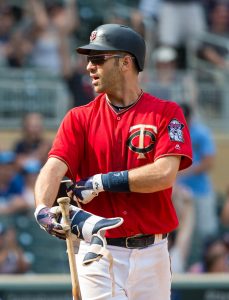
Joe Mauer, Twins: Mauer can still get on base, evidenced by his .346 OBP, but the ex-superstar’s power looks to be completely gone. The 35-year-old (36 next April) has only recorded an .087 ISO and three homers in 365 PAs this season. That’s not going to cut it for a first baseman, nor is Mauer’s overall line of .267/.346/.354 (93 wRC+). Mauer’s only a year removed from serving as a decent regular for the Twins, though, so perhaps there’s hope that the former catcher will be able to bounce back if he continues his career in 2019.
Logan Morrison, Twins: Morrison isn’t a true free agent-to-be yet, as he has an $8MM club option for 2019. But the Twins are likely inclined to buy that out for $1MM, considering Morrison has been a massive disappointment this year. On the heels of what seemed like a breakout season with the Rays in 2017, I implored someone to sign Morrison as a free agent when he remained on the market in February. In hindsight, that wasn’t the best call (excuse the colorful language here), as the 30-year-old Morrison has batted a horrid .186/.276/.368 (74 wRC+) with merely OK power numbers (15 homers, .182 ISO) during his 359 PAs with the Twins. Statcast has liked Morrison better than his actual results, per the enormous distance between his wOBA (.284) and his expected wOBA (.355), but that’s probably not of much consolation to the Twins.
Lucas Duda, Royals: Duda was a good hitter for the majority of his Mets tenure, which ran from 2010-17, but the Royals haven’t benefited from his presence in 2018. Since signing a one-year, $3.5MM contract with the Royals last winter, the 32-year-old Duda has scuffled to a .239/.309/.400 line (91 wRC+) and a replacement-level fWAR over 285 PAs. Along the way, the powerful Duda has posted a career-worst ISO (.161) and only 10 HRs. If it was hard for Duda to land a deal to his liking last winter, it should be all the more difficult for him during the upcoming offseason.
Second basemen:
Brian Dozier, Dodgers: At times, including his 42-home run season in 2016, Dozier has been one of the greatest power-hitting second basemen ever. Now, the 31-year-old’s a roughly league-average hitter (.228/.313/.421 with a 98 wRC+ in 498 PAs), albeit one who has still shown some pop in 2018 (19 HRs, .194 ISO). I took an in-depth look at Dozier’s middling season in June, and it hasn’t really gotten much better since then. Although, since the Twins traded Dozier to the Dodgers last month, he has raked in a limited sample of work.
DJ LeMahieu, Rockies: LeMahieu has been on the disabled list three times this season and hasn’t performed that well when healthy. A .300-plus hitter in each of the previous three seasons, LeMahieu has batted a toothless .271/.319/.419 (82 wRC+) in 371 PAs this year. However, the 30-year-old LeMahieu has deserved better in the eyes of Statcast, which credits him with a .349 xwOBA that far outpaces his .318 wOBA.
Logan Forsythe, Twins: Forsythe, who joined the Twins as part of the package they received from the Dodgers for Dozier, has mimicked Dozier in performing much better for his new team. The sample size is tiny, though, and overall, the 31-year-old has hit an ugly .234/.296/.315 (73 wRC+) in 243 PAs. Forsythe, who was one of the game’s steadiest second basemen with the Rays from 2015-16, has chipped in a meager two homers and an unimposing .081 ISO in 2018.
Neil Walker, Yankees: Even though he was a solid offensive second baseman with the Pirates, Mets and Brewers from 2010-17, the 32-year-old Walker had an awful time trying to find a contract last winter. He finally signed with the Yankees on a one-year, $4MM pact in March, but it hasn’t worked out as hoped for either party. The switch-hitting Walker has batted a weak .227/.300/.340 (74 wRC+) with six HRs and a .113 ISO in 277 PAs in pinstripes.
Shortstop:
Alcides Escobar, Royals: Escobar has never been much of a threat at the plate, but he’s now borderline unplayable. Among qualified hitters, the 31-year-old Escobar ranks last in wRC+ (41), having hit .202/.253/.273 in 413 PAs.
Third basemen:
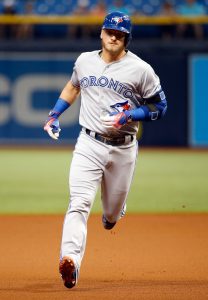
Josh Donaldson, Blue Jays: One of the biggest names on this list and its most recent MVP winner (2015), Donaldson hasn’t played since May 28 on account of an injured calf. When he has taken the field this year, Donaldson has produced more like a mediocre hitter than the elite player he was from 2013-17, as he has slashed .234/.333/.423 (104 wRC+) with five homers and a .190 ISO in 159 PAs. If Donaldson makes it back this season, the soon-to-be 33-year-old will attempt to rebuild his stock in advance of free agency, but neither his age nor the injury issues he has endured will help his cause.
Adrian Beltre, Rangers: Indications are that Beltre will only play for the Rangers if he returns at all in 2019, which would be his age-40 season. Based on Beltre’s apparent unwillingness to explore the market and his meager production this season, he’s seemingly not in line to receive a large payday over the winter. The future Hall of Famer has finally looked mortal at the plate this season, having compiled a .278/.333/.398 line (94 wRC+) with seven long balls and a .120 ISO in 345 PAs.
Outfielders:
Marwin Gonzalez, Astros: Gonzalez’s performance in 2017 was among many tremendous showings for the World Series-winning Astros in 2017, though the utilityman has taken sizable steps backward this season. While the 29-year-old (30 next March) has been more average than bad, as his 99 wRC+ (.242/.326/.389) in 406 PAs proves, he’s not the 4.0-fWAR star he was a year ago. Bad timing for Gonzalez with free agency around the corner.
Carlos Gomez, Rays: When the Rays added Gomez on a one-year, $4MM guarantee last March, it looked like a steal for the club. Eight months later, it’s fair to say the minimal gamble hasn’t worked out for Tampa, for which Gomez has offered a .218/.309/.354 slash (88 wRC+) with a .136 ISO (down 73 points from 2017) in 350 PAs. It wasn’t easy for Gomez to find a deal last winter, and given that he’ll turn 33 in March and will probably be coming off an unimpressive season, the upcoming winter could be even colder for the former standout.
Hunter Pence, Giants: A three-time All-Star and a two-time world champion, Pence has had an outstanding career, but we’ve perhaps reached the point where the 35-year-old should walk away. He’s .215/.252/.289 hitter (46 wRC+) with a single homer and a .074 ISO in 159 PAs so far this season.
Matt Joyce, Athletics: Joyce was a 25-HR hitter and 2.6-fWAR player for the Athletics in 2017, the first season of a two-year, $11MM contract. This season, even though the A’s are serious contenders, he hasn’t been part of the solution. Joyce, 34, has posted a .203/.311/.359 line (87 wRC+) with only seven homers across 226 PAs, though the seismic gap between his wOBA (.297) and xwOBA (.346) suggests that he hasn’t been close to as bad as his results say.
Photos courtesy of USA Today Sports Images.
Pending FA Hitters Who Have Helped Themselves In 2018
With Major League Baseball’s regular season winding down, we’re drawing closer to the playoffs and the opening of the free-agent market soon after that. There are plenty of hitters scheduled to reach free agency in a few months, including a pair of in-their-prime superstars, and here we’ll identify which members of the group have helped their causes during platform seasons. Each of these players has racked up at least 150 plate appearances this year, so we’ll use that number as an arbitrary cutoff…
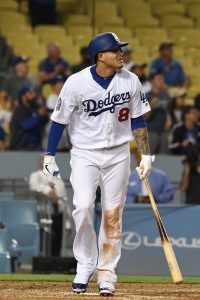
Manny Machado, SS/3B, Dodgers: Entering 2018, Machado was a soon-to-be 26-year-old with three seasons of at least 5.0 fWAR under his belt since his first full campaign in 2013. Machado’s stock was already sky high with a trip to free agency looming, then, yet he has managed to raise it in the season’s first four-plus months. A .279/.329/.476 hitter (115 wRC+) in 3,365 PAs from 2012-17, Machado is on pace for his top offensive year with a .308/.383/.547 line (147 wRC+), a personal-high walk rate (11.0 percent, up from 6.7 between 2012-17) and a career-best-tying ISO (.239). Moreover, with 26 home runs, he’s set to eclipse the 30-HR mark for the fourth straight year, and he has also reached double-digit steals (10 on 11 tries) for the second time.
If there’s one criticism of Machado, it’s that he has been brutal at shortstop, his preferred position, with minus-17 Defensive Runs Saved and a minus-6.6 Ultimate Zone Rating. An all-world defender at third base with the Orioles from 2012-17, Machado has spent some time at the hot corner since the Dodgers acquired him last month and has once again thrived at the position. It may be better for Machado’s earning power if he’s willing to move back to third on a full-time basis, but regardless, he’s in for a massive payday.
Bryce Harper, OF, Nationals: Admittedly, whether Harper has upped his stock this year to a noticeable degree is debatable. After all, the lefty-swinger hasn’t come close to rivaling his otherworldly offensive seasons of 2015 and ’17. But a .235/.379/.500 showing (130 wRC+) isn’t to be taken lightly, nor are 28 homers, a .265 ISO and an 18 percent walk rate. And it’s worth noting that Harper has appeared in nearly all of the Nationals games’ (113 of 116) after missing 51 contests with injuries a year ago. Set to turn 26 in October, Harper – like Machado – is a Hall of Fame-type talent on a collision course with an enormous contract.
Yasmani Grandal, C, Dodgers: Grandal has been generally outstanding since 2015, his first year with the Dodgers, but it did look as if backup Austin Barnes was beginning to take hold of the starting catcher job in LA last season. During the NL pennant winners’ run through the playoffs in 2017, Barnes picked up 52 PAs to Grandal’s 11. That trend hasn’t continued into this year, though, with Grandal having nearly doubled Barnes’ playing time to this point (379 PAs to 190). Along the way, Grandal has put up a personal-best wRC+ (131) on the strength of a .252/.354/.492 line and 20 homers, giving him three straight seasons with at least that many. The 29-year-old switch-hitter also leads qualified catchers in ISO (.240) and has seen his expected weighted on-base average rise from .299 in 2017 to .373 this year. Adding to Grandal’s immense appeal, he has been the game’s second-best pitch-framing backstop in 2018, according to Baseball Prospectus.
A.J. Pollock, CF, Diamondbacks: Pollock was one of baseball’s rising stars before missing nearly the entire 2016 campaign on account of fractured right elbow. Two years later, he looks back to form, though a fractured thumb did cost the soon-to-be 31-year-old significant time earlier this season. As a result of that injury, Pollock has only appeared in 71 games thus far, but he has made a major impact in the process. Pollock has been worth 2.3 fWAR on the strength of a .283/.344/.539 (133 wRC+) slash at the plate, and has added 15 homers, 10 steals on 12 tries and a .256 ISO.
Eduardo Escobar, 3B/SS, Diamondbacks: Escobar’s numbers have dipped since he went from the Twins to the D-backs in a trade last month, but the overall production is still worthy of praise. Thanks in large part to a .278/.338/.505 line (121 wRC+) in 456 PAs, Escobar has already logged 2.6 fWAR, matching the career-high figure he totaled in 2014. The switch-hitting 29-year-old also has 15 homers, putting him on pace for his second straight 20-HR season, to go with a personal-best .227 ISO (notably, Escobar began hitting more fly balls in 2017 and has continued that trend this year). As left-side infielders go, Escobar’s no Machado, but it still seems he’ll do well for himself in free agency.
Nelson Cruz, DH, Mariners: Two important factors that will hamper Cruz’s value in free agency: 1. He’s 38. 2. He can’t play defense. If a team needs an offensive boost at DH, though, you won’t find many hitters who are more imposing. Cruz has essentially been as excellent as ever this year, having slashed .268/.353/.556 (148 wRC+) with 30 long balls in 416 PAs. He’s also a Statcast favorite, ranking second in the majors in average exit velocity (94.4 mph), sixth in xwOBA (.422, which blows away his real-world .383 wOBA) and 10th in barrels per plate appearance (9.6 percent).
Nick Markakis, OF, Braves: As with Cruz, Markakis’ age (35 in November) will work against him on the market. Fortunately for Markakis, though, he has found another gear at the plate in 2018. After serving as a league-average or slightly worse hitter over the previous several seasons, Markakis has batted .326/.390/.505 (138 wRC+, tying his career-high mark from 2008) with 14 homers and a .179 ISO (his highest since ’08) in 500 PAs. Signs it’s not a fluke: Markakis has amassed roughly as many walks (50) as strikeouts (54), and his xwOBA (.383) and actual wOBA (.378) nearly match. He’a also defying the aging curve in the outfield, having accounted for five DRS, three Outs Above Average and a 2.1 UZR.
Steve Pearce, 1B/OF, Red Sox: Some of the names at the absolute top of the xwOBA leaderboard include – to no one’s surprise – Mookie Betts, J.D. Martinez, Mike Trout, Matt Carpenter, Joey Votto … and Pearce, who has outdone all of them except Betts. Granted, Pearce’s ridiculous .465 xwOBA has come over a mere 164 PAs, though both his Statcast numbers and his .301/.384/.566 line (156 wRC+) continue a recent history of quality offense from the late-blooming journeyman – one who has played for every AL East team since 2012. Considering Pearce will turn 36 next April and has never even accumulated 400 PAs in an individual season, it’s fair to say he’s not going to break the bank over the winter. Nevertheless, the right-handed hitter has emerged as an important piece for the seemingly unstoppable Red Sox and will continue to make his case for a nice payday into the fall.
Jed Lowrie, 2B, Athletics: Lowrie will turn 35 next April, making him yet another player on this list whose age will damage his financial aspirations. Still, the switch-hitter’s in the second straight season of a late-career resurgence and has been among the A’s premier players this year in a shockingly great campaign for the club. Injuries have held back Lowrie for the majority of his time in the majors, but not lately – he appeared in 153 of the A’s games in 2017 and has taken the field 113 times out a possible 116 this year. Lowrie’s now amid a season in which he has smacked a career-high 17 HRs and hit .265/.344/.451 (120 wRC+) in 485 PAs.
Matt Adams, 1B, Nationals: The Nats’ signing of Adams to a one-year, $4MM deal last winter didn’t elicit much excitement at the time, but it now looks like one of the best buys of last offseason. While the lefty-hitting Adams, 29, has continued to struggle against same-handed pitchers, he has mashed righties en route to an overall line of .270/.347/.536 (134 wRC+) with 18 dingers and a .266 ISO in 265 PAs. Statcast suggests the production hasn’t been smoke and mirrors, evidenced by the minuscule gap between Adams’ wOBA (.374) and xwOBA (.375). And for what it’s worth, Adams has continued to show off a solid glove at first, where DRS has graded him as a plus defender in all but one season since debuting in 2012.
Mark Reynolds, 1B, Nationals: Like Adams, Reynolds has been a steal for Washington, which added him on a minor league pact in early April. Since then, all the 35-year-old Reynolds has done is record a .272/.361/.537 line (137 wRC+) with 11 homers and a .265 ISO through 158 PAs. As Jeff Todd noted earlier this week, defensive and baserunning limitations detract from Reynolds’ value. However, after settling for minors deals in 2017 and ’18, perhaps the well-traveled power hitter has impressed enough as a part-time player for the Nationals to earn a major league contract during the upcoming winter.
Asdrubal Cabrera, INF, Phillies: The switch-hitting Cabrera, 32, has been a respectable offensive player throughout his career, and he hasn’t fallen off at all in 2018. This has been among Cabrera’s most productive years yet, in fact, as he has batted .272/.324/.480 (118 wRC+) with 20 homers and a .208 ISO in 454 PAs. That’s terrific output from someone who can line up around the infield, though with a disastrous minus-16 DRS, Cabrera has been a butcher at second base – his primary position.
Daniel Descalso, 2B/3B, Diamondbacks: The third D-back on this list, the 31-year-old Descalso has saved his best offensive season for the right time as free agency awaits. A below-average offensive producer in each season from 2010-17, Descalso has registered an appealing 123 wRC+ this year while hitting .256/.377/.450 with nine homers, a .195 ISO and a 16.4 percent walk rate. And with a .362 xwOBA, that production hasn’t been a fluke. On the other hand, Descalso hasn’t been nearly that effective as a defender at third, where he has notched minus-seven DRS in 240 innings.
Honorable mention: Indians outfielder Michael Brantley, who has finally stayed healthy this year after missing a combined 223 games from 2016-17. Through 103 games/454 PAs in 2018, Brantley has hit .293/.345/.455 (116 wRC+) with 12 HRs and almost as many walks (32) as strikeouts (38). However, the 31-year-old’s Brantley’s numbers have gone downhill to a substantial degree since a red-hot first two months, and his work in left field has drawn poor reviews (minus-nine DRS, minus-six Outs Above Average, minus-4.4 UZR).
Photo courtesy of USA Today Sports Images.
The Best Minor League Signings Of 2018: Starting Pitchers
We just performed this exercise for position players; now, we’ll look at the best-performing starters who inked minor-league pacts last winter. With a helpful head start from many of the commenters in the above post, I’ve identified the rotation pieces that couldn’t get 40-man spots in the offseason but have nevertheless emerged as useful big league performers in 2018.
Unlike the group of hitters, many of the names that will appear below also showed up on our early-season glance at minor-league signees from the starting pitching ranks. Indeed, every member of the original list warrants some mention here.
Without further ado …
- Dereck Rodriguez, Giants: The bonanza of the 2017-18 minor-league class, Rodriguez has been one of the most impressive rookie starters in all of baseball despite being allowed to reach minor-league free agency last fall by the Twins. It’s unlikely he’s a true-talent 2.34 ERA pitcher — in particular, it seems doubtful he’ll continue to hold opposing hitters to a .264 BABIP and 5.7% home run rate — but he’s certainly producing quality peripherals (3.14 FIP / 4.01 xFIP / 4.08 SIERA). In any event, warning about regression for Rodriguez is like somewhat akin to raising concerns with the futures market for gold after your neighbor discovers a lode in her backyard. The Giants can count their found fortune later; for now, it’s enough that they’ve already received a huge contribution from Rodriguez and control him for six more seasons to come.
- Wade LeBlanc, Mariners: Though he signed a MLB deal with Seattle just before the start of the season, that was a minimal commitment ($650K) that was only handed out after LeBlanc had been released from his minors pact with the Yankees. Accordingly, we’ll consider him a part of the field. LeBlanc pitched so well in the first half of the year that he landed a rare mid-season extension. The results haven’t been as good since, but LeBlanc still owns a strong 3.81 ERA through 113 1/3 innings with 7.1 K/9 against just 1.8 BB/9.
- Derek Holland, Giants: Though he hasn’t produced bottom-line results as impressive as those maintained by Rodriguez or some others on the list, Holland is filling up innings with solid overall outcomes for San Francisco. He’s now through 124 2/3 frames of 3.97 ERA ball; this is already his most productive season since way back in 2013. This still isn’t the pre-injury version of Holland. He once threw about two miles an hour harder, after all. But he’s carrying a career-high 10.7% swinging-strike rate this year and now seems in line for a major-league contract next winter.
- Jeremy Hellickson, Nationals: It’s sobering to think about how an already-tough Nats season would look without Hellickson. He’s carrying a 3.54 ERA through 84 innings, with 6.6 K/9 and 1.8 BB/9 along with a 46.2% groundball rate. Unsurprisingly, ERA estimators value him more as a low-4’s type of pitcher, but that’s still a useful back-of-the-rotation piece.
- Anibal Sanchez, Braves: Given the depth and duration of his struggles in recent seasons, it’s all the more surprising to see Sanchez performing so well. He has finally gotten a hold on the homer problems that plagued him. Though he’s certainly benefiting from an unsustainable .243 BABIP-against in producing his sparkling 2.83 ERA over 86 frames, Sanchez’s contributions to date are valued in the high-3 ERA-equivalent range by estimators. He has been exactly what the Braves needed for a youthful staff.
- Clay Buchholz, Diamondbacks: Long a talented pitcher when things are clicking, Buchholz has been on since heading to Arizona. He’s through 64 frames with a 2.67 ERA. Though regression seems in store, and his velocity is well off his peak levels, Buchholz is getting whiffs at nearly a career-high rate.
- Edwin Jackson, Athletics: It’s only eight starts, but they’ve been awfully useful ones. The veteran hurler has given the A’s 47 frames of 2.87 ERA pitching since finding his way to the organization in the middle of the season. ERA estimators don’t really think he has pitched that well, as he’s sporting a 4.01 FIP, 4.45 xFIP, and 4.57 SIERA. The Oakland ballclub, too, surely knows that Jackson — like some of its other veteran hurlers — can’t be relied upon to keep up his current level of production, which helps explain the recent addition of Mike Fiers and a slew of relief pitchers. Still, Jackson has already made a nice contribution since joining his record-tying 13th MLB team.
- Tyson Ross, Padres/Cardinals: When last we looked, Ross had a 3.28 ERA in 35 2/3 innings. He has faded since, but still gave the Padres 22 starts and 123 1/3 frames of 4.45 ERA ball on the whole. Ross has shown some hints of his vintage skillset at times this year, but hasn’t sustained it over full outings or a full season as a starter. Now, it seems, he’ll be viewed as some kind of hybrid reliever in St. Louis, perhaps offering an opportunity to unlock some hidden value for the 31-year-old.
- Honorable Mention: There are a few more hurlers who’ll surely come to mind for some, but who I felt didn’t deserve full features. Wade Miley has a 2.10 ERA for the Brewers, but it’s only over 34 1/3 innings and the peripherals aren’t very appealing. Brett Anderson (Athletics), Yovani Gallardo and Austin Bibens-Dirkx (Rangers) have given some innings, but not enough or good enough to warrant inclusion. The age-defying Bartolo Colon has certainly reached some notable milestones and compiled some frames, filling up 130 1/3 for the Rangers, but really has not been very effective. Trevor Cahill quite likely would have ended up on this list, but he waited things out and landed an MLB deal late in Spring Training. As Jeff Sullivan wrote recently, that has panned out quite nicely for the Athletics.
So, who’d I miss? Let me know in the comments!
MLB Daily Roster Roundup: Correa, Jansen, Rodney, Trout
ROSTER MOVES BY TEAM
(August 10th)
NATIONAL LEAGUE
- ATLANTA BRAVES | Depth Chart
- Promoted: RP Chad Bell, RP Chad Sobotka (contract purchased)
- Optioned: RP Adam McCreery, RP Wes Parsons
- CHICAGO CUBS | Depth Chart
- Acquired: RP Jorge De La Rosa (signed to MLB contract)
- Optioned: RP Randy Rosario
- Transferred to 60-Day DL: SP Yu Darvish
- LOS ANGELES DODGERS | Depth Chart
- Placed on 10-Day DL: RP Kenley Jansen (irregular heartbeat)
- Jansen is expected to miss around 1 month.
- Scott Alexander is the leading candidate for save chances but the team expects to utilize a closer committee.
- Promoted: RP Pat Venditte
- Placed on 10-Day DL: RP Kenley Jansen (irregular heartbeat)
- MIAMI MARLINS | Depth Chart
- Placed on 10-Day DL: RP Kyle Barraclough (lower back tightness)
- Activated from 10-Day DL: RP Drew Rucinski
- Promoted: OF Rafael Ortega (contract purchased)
- Ortega played LF and batted 7th on Friday.
- MILWAUKEE BREWERS | Depth Chart
- Placed on 10-Day DL: RP Joakim Soria (strained adductor)
- Promoted: RP Adrian Houser
- PHILADELPHIA PHILLIES | Depth Chart
- Acquired: 1B Justin Bour (acquired from Marlins)
- Activated from 10-Day DL: INF J.P. Crawford
- Optioned: RP Enyel De Los Santos
- Designated for assignment: P Jake Thompson
- PITTSBURGH PIRATES | Depth Chart
- Promoted: SP Clay Holmes
- Holmes made his 1st MLB start on Friday.
- Optioned: RP Dovydas Neverauskas
- Promoted: SP Clay Holmes
- SAN DIEGO PADRES | Depth Chart
- Promoted: SP Jacob Nix (contract purchased)
- Nix made his MLB debut on Friday.
- Designated for assignment: RP Phil Hughes
- Promoted: SP Jacob Nix (contract purchased)
- SAN FRANCISCO GIANTS | Depth Chart
- Promoted: RP Casey Kelly (contract purchased)
- Optioned: RP Derek Law
- Transferred to 60-Day DL: SP Johnny Cueto
- ST. LOUIS CARDINALS | Depth Chart
- Placed on 10-Day DL: RP John Brebbia (strained forearm)
- Brebbia was optioned to Triple-A on August 6th, but that option was rescinded.
- Placed on 10-Day DL: RP John Brebbia (strained forearm)
—
AMERICAN LEAGUE
- BALTIMORE ORIOLES | Depth Chart
- Promoted: OF Cedric Mullins (contract purchased)
- Mullins played CF and batted 9th in his MLB debut on Friday.
- Adam Jones will play RF for the remainder of the season.
- Designated for assignment: INF/OF Danny Valencia
- Promoted: OF Cedric Mullins (contract purchased)
- DETROIT TIGERS | Depth Chart
- Acquired: RP Zach McAllister (signed to MLB contract)
- Designated for assignment: SP Jacob Turner
- HOUSTON ASTROS | Depth Chart
- Activated from 10-Day DL: SS Carlos Correa
- Correa played SS and batted 3rd on Friday.
- Optioned: INF/OF J.D. Davis
- Activated from 10-Day DL: SS Carlos Correa
- LOS ANGELES ANGELS | Depth Chart
- Placed on 10-Day DL: OF Mike Trout (wrist inflammation, retro to August 6th)
- Eric Young Jr. has been playing CF in Trout’s absence.
- Trout is expected to return when eligible.
- Promoted: RP Akeel Morris
- Placed on 10-Day DL: OF Mike Trout (wrist inflammation, retro to August 6th)
- MINNESOTA TWINS | Depth Chart
- Placed on 10-Day DL: SP Adalberto Mejia (strained wrist)
- Promoted: 1B/OF Tyler Austin, RP Tyler Duffey
- Role change: The Twins will use a closer-by-committee with Addison Reed, Trevor Hildenberger, Taylor Rogers and Trevor May all in the mix for save chances.
- OAKLAND ATHLETICS | Depth Chart
- Added to 25-man roster: RP Fernando Rodney (acquired from Twins)
- Designated for assignment: RP Chris Hatcher
- SEATTLE MARINERS | Depth Chart
- Role change: P Felix Hernandez moved to bullpen.
—
FUTURE EXPECTED MOVES
- ATL: SP Touki Toussaint will likely start Game 1 or 2 of Monday’s double-header, according to Mark Bowman of MLB.com. Toussaint must be added to the 40-man roster.
- BAL: SP Jimmy Yacabonis will be recalled to start Game 1 of Saturday’s double-header, according to Brittany Ghiroli of MLB.com.
- BOS: SP William Cuevas will be recalled from Triple-A on Saturday and is likely to start Game 2 of the double-header, according to Pete Abraham of the Boston Globe.
- BOS: SP Chris Sale will be activated from the 10-Day DL on Sunday August 12th, also according to Abraham.
- LAA: SP Tyler Skaggs will return from the 10-Day DL on Saturday August 11th, according to Maria I. Guardado of MLB.com.
- MIN: SP Kohl Stewart will make his MLB debut on Sunday August 12th, according to LaVelle E. Neal III of the Star Tribune. Stewart must be added to the 40-man roster.
MLB Daily Roster Roundup: Devers, Happ, Herrera, Stripling
ROSTER MOVES BY TEAM
(August 8th-August 9th)
NATIONAL LEAGUE
- ATLANTA BRAVES | Depth Chart
- Outrighted: RP Jason Hursh
- CINCINNATI REDS | Depth Chart
- Promoted: SP Robert Stephenson
- Stephenson made his 2018 debut on Wednesday (4 IP, 3 ER, L).
- Optioned: RP Jesus Reyes
- Promoted: SP Robert Stephenson
- COLORADO ROCKIES | Depth Chart
- Activated from 10-Day DL: RP Chris Rusin
- Optioned: RP Yency Almonte
- LOS ANGELES DODGERS | Depth Chart
- Activated from 10-Day DL: SP Ross Stripling
- Optioned: RP Pat Venditte
- PITTSBURGH PIRATES | Depth Chart
- Activated from 10-Day DL: 1B Josh Bell
- Bell played 1B and batted 7th/6th on Wednesday/Thursday.
- Optioned: 1B/OF Jose Osuna
- Activated from 10-Day DL: 1B Josh Bell
- WASHINGTON NATIONALS | Depth Chart
- Placed on 10-Day DL: RP Kelvin Herrera (rotator cuff impingement)
- Ryan Madson will take over as the team’s primary closer.
- Promoted: RP Koda Glover
- Placed on 10-Day DL: RP Kelvin Herrera (rotator cuff impingement)
—
AMERICAN LEAGUE
- BOSTON RED SOX | Depth Chart
- Activated from 10-Day DL: 3B Rafael Devers
- Optioned: INF/OF Tony Renda
- Role change: P Drew Pomeranz has been moved to the bullpen.
- CLEVELAND INDIANS | Depth Chart
- Placed on 10-Day DL: OF Leonys Martin (illness)
- Promoted: OF Greg Allen
- Allen played CF and batted 9th on Thursday.
- DETROIT TIGERS | Depth Chart
- Placed on 10-Day DL: C/1B John Hicks (strained groin)
- Promoted: C Grayson Greiner, RP Artie Lewicki
- Optioned: RP Daniel Stumpf
- MINNESOTA TWINS | Depth Chart
- Role change: Addison Reed will likely take over as the team’s closer. Trevor Hildenberger and Trevor May could also be in the mix for save chances.
- NEW YORK YANKEES | Depth Chart
- Activated from 10-Day DL: SP J.A. Happ
- Optioned: SP Chance Adams
- OAKLAND ATHLETICS | Depth Chart
- Acquired: RP Fernando Rodney (acquired from Twins)
-
- Rodney will likely serve in a setup role with the A’s.
-
- Acquired: RP Fernando Rodney (acquired from Twins)
- SEATTLE MARINERS | Depth Chart
- Acquired: RP Sam Tuivailala (strained Achilles’ tendon)
- Promoted: RP Casey Lawrence, RP Nick Rumbelow
- Optioned: RP Chasen Bradford
- TORONTO BLUE JAYS | Depth Chart
- Promoted: RP Thomas Pannone
- Optioned: SP Mike Hauschild
—
FUTURE EXPECTED MOVES
- BOS: SP Chris Sale will be activated from the 10-Day DL on Sunday August 12th, according to Pete Abraham of the Boston Globe.
- HOU: SS Carlos Correa will likely be activated from the 10-Day DL on Friday August 10th, according to Jake Kaplan of the Athletic.
- PIT: SP Clay Holmes will be recalled from Triple-A and will start on Friday August 10th, according to Rob Biertempfel of the Athletic.
- SDP: SP Jacob Nix will make his MLB debut on Friday August 10th, according to AJ Cassavell of MLB.com. Nix will need to be added to the 40-man roster.
The Best Minor League Signings Of 2018: Position Players
Early this season, we checked in on the players that were playing notable MLB roles after settling for minor-league deals over the winter. (Position players; starting pitchers; relievers.) It was small samples galore.
Unsurprisingly, many of the names that featured in the initial look have faded, while other minor-league signees have emerged. Accordingly, we’ll reexamine this year’s crop of budget acquisitions to see which players have provided real utility over the course of the season to date.
We’ll begin, as we did the last time around, with position players. Frankly, as is typical, there haven’t been many significant contributors from among the MiLB contract ranks. But these five are all worthy of note:
- Alen Hanson, Giants: Once a notable prospect, Hanson has made the most of his first extended MLB opportunity this year in San Francisco. Driven by a surprising .194 isolated slugging mark, the out-of-options 25-year-old owns a .276/.301/.469 slash with six home runs and five stolen bases through 208 plate appearances. While defensive metrics aren’t in love with the glove, Hanson’s versatility has been of use and he adds value on the bases, too. He seems like a keeper for the Giants, who control him through the 2022 season.
- Mark Reynolds, Nationals: The 35-year-old languished on the market before landing with the Nationals, but has proven he can still draw a walk and hit for power. On the year, he carries a .269/.359/.537 slash with 11 home runs in 156 plate appearances. That certainly helped keep the Nats afloat as injuries derailed the team’s original plans, though certainly Reynolds remains severely limited by his defensive limitations and poor baserunning.
- A.J. Ellis, Padres: Long a respected presence behind the dish, the 37-year-old Ellis has contributed with the bat as well in 2018. As usual, his most notable offensive skill is his plate discipline — his 15.0% walk rate even exceeds his peak levels — but Ellis has also hit for more average than usual thus far. While the .370 BABIP gives cause for skepticism as to sustainability, Ellis has been one of the game’s biggest on-base threats this year among players with at least 100 plate appearances.
- Max Muncy, Dodgers: Okay, this is cheating a bit. Muncy signed with the Dodgers in 2017, after all. But he did not appear with the organization at the MLB level until the present campaign, and the results have been too good not to warrant mention. True, Muncy has come back to earth of late, slumping out of the All-Star break, but he still owns a stunning .253/.380/558 slash line with 24 home runs on the season. Better still, he has not only received good marks on the basepaths, but has mostly drawn average marks for his fielding while lining up at five different positions.
- Jose Bautista, Mets: Yup, I’m bending the rules here again. Joey Bats signed onto the MLB roster with New York, but he squeezes onto the list because he initially inked a minors pact with the Braves. You also have to put up some blinders on his early showing in Atlanta. Since going to the Mets, though, Bautista has contributed a .208/.360/.372 slash. The once-prodigious power just isn’t there, and he’s striking out at twice his mid-prime rate, but a 17.5% walk rate has allowed Bautista to rate as an above-average offensive player despite a sub-Mendoza batting average for the season.
- Niko Goodrum, Tigers: With a hat tip to MLBTR commenter JosephofMichigan for the suggestion, we’ll add the 26-year-old switch-hitter here as well. Goodrum is swinging and missing too much and only has a .294 on-base percentage through 340 plate appearances, but he’s showing good pop (.188 ISO, ten home runs) and adding value on the bases (3.1 BsR, eight steals). As with Hanson, the metrics are somewhat bearish on Goodrum’s glovework, but he has been asked to play all over the infield along with both corner outfield spots.
Did I miss a worthy player? Let me know in the comments.
Top 20 August Trade Candidates
Those that need a refresher on how August trades work should read our recent post on the subject. You’ll also find some notable examples of revocable waiver swaps in that post.
We’ve already seen a few of the top August trade candidates change uniforms this year. Shortstop Adeiny Hechavarria and pitchers Mike Fiers, Tyson Ross, Jordan Lyles, and Shawn Kelley have all been on the move in the first week of the month.
That doesn’t mean we’ve seen the end of the action, however. We’ll run through the most notable remaining candidates here. As always, the ranking is based upon a combination of trade likelihood and trade value. (Last year, for example, Justin Verlander barely cracked the back end of our final August ranking, because his contract situation made a deal hard to structure even though he otherwise profiled as a significant trade candidate. He ended up being traded in memorable fashion.) After the list, we’ve also rounded up some other potential candidates who are worth keeping an eye on as things develop over the course of the month.
Here goes:
1. Sergio Romo, RP, Rays: He’s carrying a 3.35 ERA on the year, with 10.1 K/9 and 2.8 BB/9 over 51 frames, while working as a late-inning reliever, an “opener,” and even (quite briefly) a third baseman. Romo’s generally stellar swinging-strike rate is down a bit (to a still-strong 12.9%), but he’s still getting the job done and doing so in a manner that ERA estimators believe in (3.50 FIP / 3.75 xFIP / 3.25 SIERA). The veteran is an affordable rental player ($2.5MM salary), though that also means he’s easy to hold onto for a Rays club that may have designs on a reunion next season.
2. Jose Iglesias, SS, Tigers (cleared waivers): Though he’s not much with the bat, Iglesias has been better this year than in recent campaigns. In particular, he has destroyed lefties to the tune of a .931 OPS. And, of course, he remains an exquisite defender. We recently saw that there was a market for a similar, arguably lesser player in Hechavarria. Iglesias, who’s also a pending free agent and comes with a $6.275MM salary, seems reasonably likely to land somewhere before the calendar flips to September.
3. Jim Johnson, RP, Angels: With a 3.27 ERA and 7.2 K/9 against 3.1 BB/9 through 44 innings, Johnson has certainly been worth his $4.5MM salary. He’s no longer a dominant groundball pitcher, but still gets them on about half of the balls put in play against him. While there’s not much reason to think that any team will give up significant value to get Johnson, he would at least be a useful depth piece for a contender. Since the Halos have relatively little motivation to keep the pending free agent, other than to fill up innings, it’s easy to imagine him moving in some way this month.
4. Francisco Liriano, SP/RP, Tigers (cleared waivers): The Astros targeted Liriano last summer, so perhaps it shouldn’t surprise if he’s again viewed as an intriguing piece to add to a staff. Liriano could function as a matchup lefty in the bullpen while also providing some length, since he has worked as a starter this year. He’s currently sporting a 4.37 ERA over 90 2/3 innings, though he’s carrying only a 73:51 K/BB ratio and ERA estimators aren’t enamored with his work this year. It’s worth noting, however, that Liriano has been quite stingy against lefties this year, holding 72 same-handed hitters to a meager .125/.222/.219 slash.
5. Jerry Blevins, RP, Mets: Blevins has lowered his ERA to 4.08 since it sat at 5.30 in late June. His peripherals still aren’t quite as intriguing as they have been in the recent past, he’s struggling against lefties, and he’s generating swinging strikes at only an 8.5% rate on the year. But Blevins has a long history of success against same-handed hitters and is an obvious August trade candidate given that he’s earning a $7MM salary before returning to the open market.
6. Matt Harvey, SP, Reds: With Fiers and Ross already out the door, Harvey is arguably the most appealing rotation piece that’s obviously available. Frankly, though, that isn’t saying much. Harvey hasn’t really impressed of late. Harvey hasn’t lasted six innings in an outing since the beginning of July and has been knocked around in two of his last three starts. In 15 starts with the Reds, he carries a 4.79 ERA with 6.7 K/9 and 2.2 BB/9.
7. Fernando Rodney, RP, Twins: It came as a mild surprise when the journeying closer wasn’t dealt at the deadline, but it’s also no surprise that the Minnesota organization values its $4.25MM option over Rodney for 2019. He’s earning at the same, amply manageable rate this year. It’s all but certain that the ageless hurler will be claimed, as he owns a 3.09 ERA with 10.3 K/9 and 3.9 BB/9 on the year. The question is whether the claim will go to a truly motivated team that can convince the Twins to make a deal.
8. Marco Estrada, SP, Blue Jays: Coming off of an excellent start in which he allowed just one earned run on one hit, Estrada could perhaps still turn into an intriguing trade candidate if he can get on a roll. He is still carrying only a 4.65 ERA on the year and just came back from a long layoff. His $13MM salary is certain to clear waivers, so the Jays will have plenty of options to consider.
9. Devin Mesoraco, C, Mets: Much like the man he was traded for earlier this year (Harvey), Mesoraco rates as an obvious trade candidate who perhaps simply hasn’t generated enough interest yet. Mesoraco hasn’t sustained a hot start at the plate since moving to New York, but still carries a nearly league-average .228/.301/.407 output in 186 plate appearances with the Mets. He could make sense for the right organization, particularly if an injury situation arises.
10. Tyler Clippard, RP, Blue Jays: Despite producing strong bottom-line results for much of the season, the veteran reliever has seen his earned-run average cross the 4.00 barrier after some rough recent outings. Still, he’s getting swinging strikes at a healthy 14.1% rate, has a ton of experience in high-leverage situations, and is earning just $1.5MM this season. It’s not hard to imagine a contending team deciding that it’d be nice to have him around down the stretch, much as the Astros did last year.
11. Freddy Galvis, SS, Padres: There’s a split of opinion from UZR and DRS on Galvis’s glovework this year at short, with the former grading him as average and the latter viewing him as an outstanding performer. No matter, the track record shows that Galvis is at least capable of holding his own at short. He also has experience at other infield spots. The switch-hitter has been better this year against lefties, but that’s counter to his career numbers.
12. Josh Donaldson, 3B, Blue Jays: He’s the obvious number one name on this list — if and when he gets back to full health. Still, he warrants mention even though that hasn’t yet occurred. It’s not impossible, after all, that he’ll be dealt even before he’s back in action. That’s especially true if the Toronto org tries to put him through waivers at the outset of his rehab assignment. Click here for a recent breakdown of the potential maneuvering this month involving Donaldson.
13. Jose Bautista, OF, Mets: With a .193/.309/.325 batting line in the month of July, Bautista hasn’t exactly been on fire of late. And there’s no evidence that he’s the feared slugger of yore. Plus, Bautista is striking out in nearly thirty percent of his plate appearances, quite a bit more than ever before. That said, he can still put the ball over the fence and he’s as disciplined at the plate as anyone in the game, with an outstanding 17.1% walk rate. The Mets are said to like the idea of having him around next year, even if they trade him. With Bautista earning only the league minimum salary, the club may want at least some kind of an interesting return to do a deal for a player they’d evidently prefer to keep on their roster. Whether or not that’ll come to pass remains to be seen.
14. Curtis Granderson, OF, Blue Jays: Much like Joey Bats, the Grandy Man has seemed for most of the season like an interesting bench bat target. But he turned in a dreadful month of July (.192/.268/.301). Granderson has been limited almost exclusively to facing right-handed pitching; he owns a respectable but hardly outstanding .243/.338/.433 slash against them for the season. Of course, some clubs may value his veteran presence down the stretch, too, and it shouldn’t be too hard to sort out the remainder of his $5MM salary.
15. Ervin Santana, SP, Twins: He’s only three starts into his return from a long injury layoff and hasn’t been in vintage form. Still, the veteran hurler has some time to show he can still be effective. His hefty $13.5MM salary makes it quite likely he’ll clear waivers; there’s also a $1MM buyout on a $14MM club option for 2019. If the Twins decide they aren’t going to pick that up, then perhaps they’ll seek to get what they can (cost savings and/or prospects) at some point this month.
16. Shin-Soo Choo, OF/DH, Rangers: Choo has been very productive at the plate, but he’s also mostly limited to functioning as a designated hitter, is already 36 years of age, and is not only owed the balance of his $20MM annual salary this year but $42MM more for the coming two seasons. He’d mostly appeal to American League teams, but it’s not clear that any of the current contenders is really positioned to add him.
17. Starlin Castro, 2B, Marlins: A strong run at the plate of late increases Castro’s appeal somewhat, though teams generally know what to expect. He’s a solidly average player earning a bit more than he’d likely command on the open market, with a $10MM salary this year, $11MM owed for 2019, and a $1MM buyout due thereafter. Still, if a sudden infield need arises, he’d be an immediate fill-in option. And the Marlins would surely be open to striking a deal.
18. Logan Morrison, 1B/DH, Twins: Hear me out. True, Morrison has been poor at the plate for most of the season. His $6.5MM salary feels steep given the output, and there’s still a $1MM buyout on a 2019 option. Plus, there are a few other lefty sluggers that could still be added. But none of those other players was as good as Morrison last year and Statcast suggests he’s been a victim of poor fortune in 2018 (.290 wOBA vs. .355 xwOBA). The Twins ought to be motivated to save some cash, and Morrison might be an intriguing bench/platoon bat for the right contender.
19-20. Elvis Andrus, SS & Adrian Beltre, 3B, Rangers: Andrus is hitting again and could be a free agent at season’s end. But his opt-out situation — he can choose to hit the open market this year or next, or play for at least four more years and $58MM — greatly complicates things. That said, the Tigers managed to deal Justin Upton last year in a generally similar situation, so perhaps a swap can’t be ruled out. As for Beltre, there was interest heading into the deadline. Unlike Adam Jones of the Orioles — another high-priced, highly respected player with full no-trade rights — Beltre never (so far as is publicly known) fully ruled out a deal. While both he and the team are seemingly happy to continue their relationship for the rest of the year, if not beyond, perhaps there’s still a chance that he’s dealt.
Injured
Dexter Fowler, OF, Cardinals; Doug Fister, SP, Rangers; Tony Barnette, RP, Rangers; Jay Bruce, Mets
Also Considered
Starting Pitchers: Bartolo Colon, Rangers; Jaime Garcia, Blue Jays; Andrew Cashner & Alex Cobb, Orioles; Jordan Zimmermann, Tigers; James Shields, White Sox; Yovani Gallardo, Rangers
Relievers: Addison Reed, Twins; Anthony Swarzak, Mets; Jake Petricka, Blue Jays; Luis Avilan, Xavier Cedeno & Hector Santiago, White Sox; Chris Martin, Rangers
Infielders: Martin Prado, Marlins; Todd Frazier, Mets; Kendrys Morales, Blue Jays; Danny Valencia, Orioles; Todd Frazier, Mets; Lucas Duda, Royals; A.J. Ellis, Padres; Logan Forsythe, Twins
Outfielders: Carlos Gomez, Rays; Mark Trumbo & Adam Jones, Orioles; Eric Young & Kole Calhoun, Angels; Billy Hamilton, Reds
Teams To Watch
The American League field has been narrowed substantially, with just six teams battling for five postseason spots. Unless one of those clubs goes through a terrible run over the next few weeks, the divide between buyers and sellers will remain fixed on that side.
It’s quite different in the National League, however. There’s still loads of uncertainty and many possibilities for change in the coming weeks. The Nationals, Cardinals, and Giants all entered the season with expectations of contention, but could still pivot if they fall further back. Likewise, the Pirates could still decide to seek some savings on veterans if things go south. That could make for some fascinating, late-emerging trade candidates. For now, the picture remains unclear.
MLB Daily Roster Roundup: Bettis, Drury, Holland, O’Neill, Springer
ROSTER MOVES BY TEAM
(August 6th-August 7th)
NATIONAL LEAGUE
- ARIZONA DIAMONDBACKS | Depth Chart
- Activated from 10-Day DL: INF Deven Marrero
- Marrero was designated for assignment.
- Activated from 10-Day DL: INF Deven Marrero
- ATLANTA BRAVES | Depth Chart
- Placed on 10-Day DL: SP Max Fried (strained groin), RP Shane Carle (shoulder inflammation)
- Promoted: RP Kolby Allard, RP Adam McCreery, RP Wes Parsons
- Allard was the 26th man for Tuesday’s double-header.
- COLORADO ROCKIES | Depth Chart
- Activated from 10-Day DL: SP Chad Bettis
- Optioned: C Tom Murphy
- LOS ANGELES DODGERS | Depth Chart
- Placed on 10-Day DL: RP Daniel Hudson (forearm tightness)
- Promoted: RP Pat Venditte
- MIAMI MARLINS | Depth Chart
- Role Change: RP Kyle Barraclough was removed from the closer’s role.
- Drew Steckenrider is the leading candidate for save chances, although the team is expected to use a committee. Adam Conley, Tayron Guerrero and Javy Guerra could all be in the mix.
- Role Change: RP Kyle Barraclough was removed from the closer’s role.
- MILWAUKEE BREWERS | Depth Chart
- Added to 25-man roster: P Jordan Lyles (claimed off waivers from Padres)
- Placed on 10-Day DL: RP Matt Albers (strained hamstring)
- Acquired: RP Ariel Hernandez (claimed off waivers from Dodgers)
- Hernandez was optioned to Triple-A.
- PHILADELPHIA PHILLIES | Depth Chart
- Promoted: RP Enyel De Los Santos
- Optioned: OF Dylan Cozens
- PITTSBURGH PIRATES | Depth Chart
- Acquired: INF Adeiny Hechavarria (acquired from Rays), RP Buddy Boshers (claimed off waivers from Astros)
- Hechavarria was added to the 25-man roster on Tuesday.
- Boshers was optioned to Triple-A.
- Placed on 10-Day DL: INF/OF Sean Rodriguez (strained abdomen)
- Designated for assignment: INF/OF Christopher Bostick
- Acquired: INF Adeiny Hechavarria (acquired from Rays), RP Buddy Boshers (claimed off waivers from Astros)
- SAN DIEGO PADRES | Depth Chart
- Promoted: SP Brett Kennedy (contract purchased)
- Kennedy will make his MLB debut on Wednesday.
- Promoted: SP Brett Kennedy (contract purchased)
- ST. LOUIS CARDINALS | Depth Chart
- Added to 25-man roster: P Tyson Ross (claimed off waivers from Padres)
- Ross will work out of the bullpen for now.
- Placed on 10-Day DL: OF Tyler O’Neill (groin inflammation)
- Promoted: OF Adolis Garcia (contract purchased)
- Optioned: RP John Brebbia
- Added to 25-man roster: P Tyson Ross (claimed off waivers from Padres)
- WASHINGTON NATIONALS | Depth Chart
- Acquired: RP Greg Holland (Signed to MLB contract)
- Holland pitched a scoreless inning in his Nationals debut on Tuesday (3 K, BB)
- Promoted: SP Jefry Rodriguez
- Rodriguez started Game 1 of Tuesday’s double-header. He was the 26th man for the double-header.
- Optioned: RP Jimmy Cordero
- Acquired: RP Greg Holland (Signed to MLB contract)
—
AMERICAN LEAGUE
- CHICAGO WHITE SOX | Depth Chart
- Placed on 10-Day DL: OF/INF Leury Garcia (strained hamstring)
- Promoted: OF Ryan LaMarre
- Reinstated from Paternity List: C Kevan Smith
- Optioned: C Dustin Garneau
- DETROIT TIGERS | Depth Chart
- Promoted: SP Jacob Turner (contract purchased)
- HOUSTON ASTROS | Depth Chart
- Placed on 10-Day DL: OF George Springer (sprained thumb)
- Promoted: OF Derek Fisher
- LOS ANGELES ANGELS | Depth Chart
- Placed on 10-Day DL: SP Nick Tropeano (shoulder inflammation)
- Promoted: INF Jose Miguel Fernandez, RP Williams Jerez
- Optioned: SP Deck McGuire
- MINNESOTA TWINS | Depth Chart
- Placed on 10-Day DL: OF Robbie Grossman (strained hamstring), RP Matt Belisle (knee chondromalacia)
- Reinstated from Paternity List: RP Matt Magill
- Promoted: OF Johnny Field
- OAKLAND ATHLETICS | Depth Chart
- Acquired: SP Mike Fiers (acquired from Tigers)
- Fiers will make his A’s debut on Wednesday.
- Added 25-man roster: RP Shawn Kelley (acquired from Nationals)
- Activated from 10-Day DL: INF/OF Chad Pinder
- Pinder played LF and batted 8th on Tuesday (vs LHP).
- Optioned: INF Franklin Barreto, RP Ryan Dull, RP J.B. Wendelken
- Designated for assignment: RP Jeremy Bleich
- Acquired: SP Mike Fiers (acquired from Tigers)
- TEXAS RANGERS | Depth Chart
- Acquired: RP Zac Curtis (claimed off waivers from Phillies)
- Curtis was optioned to Triple-A.
- Designated for assignment: RP Brandon Mann
- Acquired: RP Zac Curtis (claimed off waivers from Phillies)
- TORONTO BLUE JAYS | Depth Chart
- Placed on 10-Day DL: INF Brandon Drury (fractured hand)
- Promoted: INF Richard Urena
—
FUTURE EXPECTED MOVES
- BOS: 3B Rafael Devers will return from the 10-Day DL on Wednesday August 8th, according to Pete Abraham of the Boston Globe.
- BOS: SP Chris Sale will be activated from the 10-Day DL on Sunday August 12th, also according to Abraham.
- CIN: SP Robert Stephenson will be recalled from Triple-A on Wednesday August 8th, according to C. Trent Rosecrans of the Athletic.
- LAD: SP Ross Stripling will likely return from the 10-Day DL on Thursday August 9th, according to Bill Plunkett of the Orange County Register.
- NYY: SP J.A. Happ will likely be activated from the 10-Day DL on Thursday August 9th, according to Erik Boland of Newsday.
- PIT: 1B Josh Bell could return from the 10-Day DL as early as Wednesday August 8th, according to Bill Brink of the Pittsburgh Post-Gazette.
A Layman Attempts To Calculate WAR: An Introduction
In 2018, WAR is everywhere. Love it or hate it, the wins above replacement metric has changed the way we evaluate Major League Baseball players. WAR is an attempt to encapsulate all tangible aspects of a player’s value into one number. It allows for all players throughout MLB history to be compared on a single scale. It’s a grand idea that has firmly taken root.
Whether it’s fans, baseball writers, agents, or executives, just about everyone citing WAR understands the general idea. But I’ve long wondered how many of us are capable of pulling open a spreadsheet and accurately calculating WAR, with a reasonable understanding of each component. Furthermore, how many can explain the limitations of the current WAR calculation? And do we understand which subjective choices were made to get to the current formula?
For a long time, I’ve wanted to write this series. I’m a reasonable candidate: I’m not bad with numbers, nor am I especially talented. I know my way around Excel, but I’m not an expert. If I run into roadblocks as I try to understand WAR, perhaps you will too. If not, hopefully you can help educate me in the comments section. Let’s crack open the hood and attempt to understand WAR from a layman’s perspective.
As you might imagine, the WAR calculation differs for position players and pitchers. Plus, major sites like FanGraphs, Baseball Reference, and Baseball Prospectus have different formulas. For this exercise, I’m going to dig into FanGraphs WAR. That’s the version we use here at MLBTR. I don’t have any evidence of this, but I feel that FanGraphs WAR might be the most commonly cited version. Otherwise, I don’t have any justification as to why MLBTR should cite FanGraphs WAR and not someone else’s. By the end of this project I hope to have a clear understanding of the differences.
For simplicity’s sake, we’ll begin this exercise by examining position players. From what I understand, there is a little more room for subjectivity in the pitching formula, so we’ll leave that discussion for later. I’ll approach the subject by utilizing a case study, as that will keep us grounded in reality. I’ll attempt to see how if I can reasonably arrive at the known WAR figure that was compiled, examining lessons that arise along the way.
So, here’s a quick preview of what’s coming. Our preliminary subject will be the 2017 season of Chris Taylor of the Dodgers. It’s an interesting year to look at, as he racked up an impressive 4.8 WAR while making defensive contributions at five different positions. It’s easy to see that Taylor made positive contributions in offense, defense, and baserunning. We’ll examine each of the three components in separate installments, beginning next time with Taylor’s work at the plate.
I hope that this exercise will offer plenty of opportunities for dialogue on a notable, sometimes misunderstood subject. I’m looking forward to plenty of respectful debate along the way.
MLB Weekend Roster Roundup: Fowler, McCullers, Myers, Osuna, Snell
ROSTER MOVES BY TEAM
(August 4th-August 5th)
NATIONAL LEAGUE
- CINCINNATI REDS | Depth Chart
-
- Promoted: RP Austin Brice
- Brice was the 26th man for Saturday’s double-header.
- Promoted: RP Austin Brice
-
- COLORADO ROCKIES | Depth Chart
- Placed on 10-Day DL: SP Antonio Senzatela (shoulder inflammation)
- Promoted: OF David Dahl
- LOS ANGELES DODGERS | Depth Chart
- Placed on 10-Day DL: SP Alex Wood (adductor tendonitis)
- Activated from 10-Day DL: RP Zac Rosscup
- MILWAUKEE BREWERS | Depth Chart
- Acquired: P Jordan Lyles (claimed off waivers from Padres)
- Lyles will be added to the 25-man roster before the team’s upcoming series beginning on Tuesday.
- Placed on 10-Day DL: RP Taylor Williams (elbow discomfort)
- Promoted: RP Jacob Barnes
- Acquired: P Jordan Lyles (claimed off waivers from Padres)
- NEW YORK METS | Depth Chart
- Placed on 10-Day DL: RP Anthony Swarzak (shoulder inflammation)
- Promoted: RP Jacob Rhame
- PITTSBURGH PIRATES | Depth Chart
- Activated from 10-Day DL: OF Corey Dickerson
- Dickerson played LF and batted 1st on Sunday.
- Promoted: RP Casey Sadler
- Optioned: INF/OF Christopher Bostick, RP Alex McRae
- Activated from 10-Day DL: OF Corey Dickerson
- SAN DIEGO PADRES | Depth Chart
- Placed on 10-Day DL: OF Wil Myers (foot contusion/bone bruise)
- Promoted: OF Franmil Reyes, RP Trey Wingenter (contract purchased)
- Reyes played RF and batted 7th on Friday.
- SAN FRANCISCO GIANTS | Depth Chart
- Promoted: RP Pierce Johnson, RP Derek Law
- Optioned: INF Kelby Tomlinson, SP Chris Stratton
- ST. LOUIS CARDINALS | Depth Chart
- Placed on 10-Day DL: OF Dexter Fowler (fractured foot)
- Activated from 10-Day DL: 2B Kolten Wong
- Wong played 2B and batted 7th/6th on Saturday/Sunday.
- Acquired: SP Tyson Ross (claimed off waivers from Padres)
- Ross is expected to step into the rotation on Wednesday or Friday.
- WASHINGTON NATIONALS | Depth Chart
- Promoted: RP Austin Voth
- Voth was the 26th man for Saturday’s double-header.
- Promoted: RP Austin Voth
—
AMERICAN LEAGUE
- BOSTON RED SOX | Depth Chart
- Placed on 10-Day DL: 2B Ian Kinsler (strained hamstring)
- Promoted: INF/OF Tony Renda (contract purchased)
- Transferred to 60-Day DL: 2B Dustin Pedroia
- HOUSTON ASTROS | Depth Chart
- Placed on 10-Day DL: SP Lance McCullers Jr./strong>. (elbow discomfort)
- Reinstated from Restricted List: RP Roberto Osuna
- LOS ANGELES ANGELS | Depth Chart
- Placed on 10-Day DL: SP Tyler Skaggs (strained adductor)
- Promoted: SP Deck McGuire, RP Taylor Cole
- Designated for assignment: 1B/3B Luis Valbuena
- MINNESOTA TWINS | Depth Chart
- Added to 25-man roster: RP Oliver Drake (claimed off waivers from Blue Jays)
- Placed on Paternity List: RP Matt Magill
- NEW YORK YANKEES | Depth Chart
- Promoted: SP Chance Adams (contract purchased)
- Adams made his MLB debut on Saturday (5 IP, 3 ER, L).
- Optioned: RP Tommy Kahnle
- Promoted: SP Chance Adams (contract purchased)
- OAKLAND ATHLETICS | Depth Chart
- Acquired: RP Shawn Kelley (acquired from Nationals)
- Kelley will likely be added to the 25-man roster before Tuesday’s game.
- Placed on 60-Day DL: OF Jake Smolinski (blood clot in leg)
- Acquired: RP Shawn Kelley (acquired from Nationals)
- TAMPA BAY RAYS | Depth Chart
- Activated from 10-Day DL: SP Blake Snell
- Placed on 10-Day DL: INF/OF Daniel Robertson (sprained thumb)
- Expected to undergo surgery that will likely end his season.
- Promoted: 2B/OF Brandon Lowe (contract purchased)
- Lowe played LF and batted 7th in his MLB debut on Sunday.
- Optioned: RP Austin Pruitt
- TEXAS RANGERS | Depth Chart
- Acquired: SP Drew Hutchison (MLB contract)
- Hutchison made his Rangers debut on Sunday.
- Placed on 7-Day DL: OF Delino DeShields Jr. (concussion)
- Promoted: OF/INF Drew Robinson
- Robinson played CF and batted 9th on Sunday.
- Optioned: RP Austin Bibens-Dirkx
- Acquired: SP Drew Hutchison (MLB contract)
- TORONTO BLUE JAYS | Depth Chart
- Activated from 10-Day DL: OF Kevin Pillar
- Pillar played CF and batted 9th on Friday.
- Optioned: RP Brandon Cumpton
- Activated from 10-Day DL: OF Kevin Pillar
—
FUTURE EXPECTED MOVES
- LAD: SP Ross Stripling is expected to return from the DL on Thursday August 9th or Friday August 10th, according to Ken Gurnick of MLB.com.
- NYY: SP J.A. Happ will likely be activated from the DL on Thursday August 9th, according to Erik Boland of Newsday.
- SDP: SP Brett Kennedy will make his MLB debut during the team’s upcoming series versus the Brewers (Tuesday August 7th-Thursday August 9th), according to Dennis Lin of the Athletic.