
Braves Notes: Ozuna, Harris, Hilliard
Marcell Ozuna has been one of the worst hitters in Major League Baseball this season, batting just .073/.192/.200 in 63 trips to the plate this year. The Braves, however, don’t appear set to make a change of any kind, writes Justin Toscano of the Atlanta Journal-Constitution. Toscano spoke with hitting coach Kevin Seitzer, manager Brian Snitker and Ozuna himself about the former slugger’s struggles. Seitzer praised Ozuna’s spring training form and opined that he’s placing too much pressure on himself. “[Ozuna] works so hard and cares so much and tries so hard, started caring too much and trying too hard, and that’s what’s leading to where he’s at right now,” Seitzer tells Toscano.
Perhaps there’s something to that, but Seitzer didn’t address the fact that Ozuna’s struggles aren’t exactly contained to 2023 alone. While he swatted 23 home runs a season ago, he did so with the fourth-worst on-base percentage among all qualified hitters (.274). Dating back to 2021, Ozuna has come to the plate 778 times and posted an anemic .210/.271/.381 batting line, and his strikeout rate has worsened each year along the way. He’s currently hitting the ball on the ground at a career-high 51.4%, which doesn’t bode well for a hitter whose once well above-average sprint speed now sits in just the 20th percentile of MLB hitters, per Statcast.
The Braves, of course, still have Ozuna signed through the end of the 2024 season. He’s being paid $18MM this season and next, with a $1MM buyout on an option for the 2025 season. He’s served a 20-game suspension for violating MLB’s joint domestic violence, sexual assault and child abuse policy and also been arrested on a a DUI charge while playing out his current four-year, $65MM deal.
That contract surely plays a role in the team’s unwillingness to move on from a player whose past 800 big league plate appearances simply haven’t been productive. Injuries have also thinned out the roster, leaving Ozuna with more playing time than he might be afforded if the lineup were at full strength. The Braves will seemingly take some steps toward that fully healthy lineup in the near future, however. The team announced this morning that Michael Harris II is heading out on a minor league rehab assignment. The team hasn’t provided a formal timetable for when the reigning National League Rookie of the Year, but getting Harris going in a minor league setting is a positive encouragement all the same.
Harris’ looming return will crowd the outfield mix a bit, but David O’Brien of The Athletic writes that Sam Hilliard‘s hot start to the season figures to keep him in the mix even after Harris is back. That’ll likely mean a steady dose of left field playing time for Hilliard, who’s out to a .327/.400/.592 start with three home runs and four doubles in 55 plate appearances.
That Herculean production from Hilliard, however, is propped up by a sky-high .520 average on balls in play and comes in spite of a 38.2% strikeout rate. He’s still making hard contact when he does put bat to ball and showing good speed, but Hilliard’s contact woes and good fortune on balls in play point to clear regression.
Hall of Famer Chipper Jones, who’s working with the Braves’ coaching staff as a hitting consultant, spoke highly of Hilliard to O’Brien, suggesting that if the team can get Hilliard to cut back on his massive strikeout rate, there’s a good bit of upside in his bat. That’s surely true, but strikeouts have been an issue the 29-year-old has been unable to correct at any point in his career. Hilliard has a 33.2% strikeout rate in 694 plate appearances dating back to his days with the Rockies, and he’s punched out in 28.4% of his 930 Triple-A plate appearances and 31.1% of his 484 Double-A plate appearances.
List Of Players On Track For 10-And-5 Rights
In baseball parlance, players are often said to have “10-and-5 rights” or the player might be described as a “10-and-5 guy.” Any player who has 10 or more years of service time and has been with his current club for five or more consecutive years gets veto power over any trade involving them. This essentially functions the same as a no-trade clause, which players can negotiate into their contracts. But with 10-and-5 rights, the right is gained automatically once the conditions are met. There is often overlap, as players that have no-trade clauses will eventually earn 10-and-5 rights as well, which makes it a moot point in those cases.
A player’s status as a 10-and-5 player can impact trade negotiations, as players like Adam Jones and Brandon Phillips have used it blocked trades in the past. Also, a team may sometimes trade a player on the cusp of reaching 10-and-5 status, since it becomes harder to line up a deal once the player has that veto power. The Rays traded Evan Longoria to the Giants in the 2017-2018 offseason, when his service time was at nine years and 170 days, meaning he would have earned 10-and-5 rights just two days into the 2018 campaign.
Listed below are the players who currently have 10-and-5 rights, as well as those who are approaching that mark. For instances where service time is mentioned, keep in mind that an MLB season has 187 days but a player’s service time “year” flips over at 172.
Currently Have 10-and-5 Rights
- Jose Altuve, Astros
Altuve has over 11 years of service time and has spent it all with the Astros. It’s a fairly moot point as his current deal, which runs through 2024, contains a full no-trade clause. The club is also more likely to give him another extension than trade him.
- Charlie Blackmon, Rockies
Blackmon has over 10 years of service time and all of it with the Rockies. He triggered a player option for 2023, after which he will be a free agent.
- Miguel Cabrera, Tigers
Cabrera will reach 20 years of service this year and has been with the Tigers since 2008. He is in the final guaranteed year of his contract, with a couple of vesting options that aren’t a factor since he needs to finish in the top 10 in MVP voting the year prior in order to trigger them. He’s been fairly open about how he’s quite likely to retire at the end of the current season.
- Brandon Crawford, Giants
Crawford has over 11 years of service, all of it with the Giants. He’s slated for free agency at the end of this season.
- Clayton Kershaw, Dodgers
Kershaw has over 14 years of experience at this point, all of it with the Dodgers. A trade wouldn’t seem plausible anyway, as he and the club seem to have a nice relationship with each other. He’s re-signed on one-year deals in each of the past two offseasons, seemingly keeping the door open to retirement whenever he decides it’s time.
- Salvador Perez, Royals
Perez has spent his entire career with the Royals, which has pushed him past the 11-year mark in terms of service time. His current deal runs through 2025 with a club option for 2026.
- Chris Sale, Red Sox
Sale has gone beyond the 12-year service time mark and is now in his sixth season with the Red Sox. The extension he signed with the club in March of 2019 gave him a full no-trade clause in the middle of the 2020 campaign. He’s been floated as a speculative trade candidate if the Sox fall out of contention this year, though Sale would have to approve such a deal. His current contract runs through 2024 with a club option for 2025.
- Giancarlo Stanton, Yankees
Stanton has over 12 years in the big leagues now and is in his sixth campaign as a Yankee. His deal runs through 2027 with a club option for 2028.
- Stephen Strasburg, Nationals
Strasburg has beyond 12 years of service right now, all of it with the Nationals. The club’s deal with the right-hander after their 2019 World Series victory went south immediately, as he’s tossed just over 30 innings since then and doesn’t seem near any kind of return. That contract has a full no-trade clause and runs through 2026.
- Mike Trout, Angels
Trout has more than 11 years of service and all of it with the Angels. He already had full no-trade protection from his current contract, which runs through 2030. Some have speculated that the club could look to move Trout and do a full rebuild if Shohei Ohtani departs in free agency after this year. If the Angels ever did consider such a plan, Trout would have to be okay with the destination.
- Joey Votto, Reds
Votto is over 15 years of service at this point, all of it with the Reds. He’s had full no-trade protection since signing his ten-year extension in April of 2012. That deal is now in its final guaranteed year, with the club having a $20MM option for 2024 that comes with a $7MM buyout.
- Adam Wainwright, Cardinals
Wainwright has over 17 years of major league service time, all of that with the Cardinals. He re-signed with the club for 2023 and has full no-trade protection from that deal. He is planning to retire after this season.
Will Gain 10-and-5 Rights This Year
- Patrick Corbin, Nationals
Corbin already has over 10 years of service time and is currently in his fifth season with the Nationals. His six-year deal, which runs through 2024, contains partial no-trade protection but he will have 10-and-5 rights at the end of the 2023 campaign. The Nats would probably love to move him but he’s been getting worse in each year of the deal, with his ERA climbing from 3.25 in the first season to 4.66, 5.82 and 6.31, with his 2023 mark currently at 7.71. The backloaded deal will pay him $24MM this year and $35MM next year, meaning he would need a spectacular turnaround in order to have any trade appeal at all.
- Paul Goldschmidt, Cardinals
Goldschmidt has over 11 years of service time but only came over to the Cardinals for the 2019 season, making this his fifth year with the club. It’s a moot point since Goldy got a full no-trade in his most recent extension, which runs through 2024.
- Bryce Harper, Phillies
Harper has over 10 years of service already and is in his fifth season with the Phillies. His 13-year deal comes with full no-trade protection anyway, and it’s not like the Phils have any interest in trading him. The deal goes through 2031.
- Aaron Hicks, Yankees
Hicks has been with the Yankees since 2016 and came into this season with his service time at 9.041. That means he’s slated to have 10-and-5 rights in August, just after the trade deadline. The extension he signed with the club in 2019 did not have any no-trade protection, though Hicks would get a $1MM assignment bonus if he were traded. He’s perhaps the most notable player on this list, given that he actually seemed like a viable trade candidate in the most recent offseason, though no deal has come together as of yet. His contract pays him $10.5MM this year and then $9.5MM in the next two years with a $12.5MM club option for 2026 with a $1MM buyout. If the Yanks want to get this deal off the books, they should probably do it in the next few months. Then again, Hicks has been pretty open about his frustrations with his reduced role of late, speaking to Brendan Kuty of The Athletic about it recently. Perhaps he wouldn’t mind a change of scenery that results in more playing time.
- DJ LeMahieu, Yankees
LeMahieu has already surpassed the 10-year service time mark and is in his fifth campaign as a Yankee. His current deal, which runs through 2026, affords him full no-trade protection already.
- Manny Machado, Padres
Machado has over 10 years of service and is in his fifth campaign as a Padre. He already has full no-trade via his contract, which runs through 2033.
- Ryan Pressly, Astros
Pressly has been with the Astros since July of 2018, meaning he’ll reach five years with the club this summer. He also came into the year with his service time at 9.039, meaning he’ll get to 10 years in August. Pressly has emerged as one of the best relievers in baseball during his time in Houston and has twice agreed to an extension with the club, so a trade doesn’t seem especially likely. His current deal goes through 2024 with a vesting option for 2025.
- Christian Yelich, Brewers
Yelich is in his sixth season as a Brewer and will get to 10 years of service this season, but it’s a moot point since he has a full no-trade clause in his extension, which runs through 2028 with a mutual option for 2029.
Could Gain 10-and-5 Under Current Contract
- Ronald Acuña Jr., Braves
Acuna came into this season with just under five years of service time, meaning he won’t get to the 10-year mark until early in the 2028 season. His extension runs through 2026 with two club options. He’s one of the best players in the league and is underpaid on his deal, so Atlanta won’t be looking to deal him unless they fall way out of contention between now and then.
- Ozzie Albies, Braves
Albies has over five years of service and will get to 10 years in 2027. His extension goes through 2025 with a pair of club options. Similar to Acuna, he’s an excellent player who is on a club-friendly deal, meaning he won’t be a trade candidate unless something horrible happens to the team’s long-term fortunes.
- Nolan Arenado, Cardinals
Arenado will cross ten years of service here in 2023 but it’s only his third season as a Cardinal, meaning he’ll have 10-and-5 status after the 2025 season. That’s mostly just a footnote though, since Arenado’s extension with the Rockies came will full no-trade protection, which he waived to become a Cardinal. He seems quite content in St. Louis and chose not to opt-out of his deal at the end of 2022, even though he could have likely got more money on the open market.
- Javier Báez, Tigers
Báez came into this season with his service at 7.089, meaning he’ll get to 10 years about halfway into the 2025 season. This is just his second year as a Tiger, meaning he’ll get to 10-and-5 status after 2026, when he will have one year left on his six-year deal. That contract affords Báez limited no-trade protection, which allows him to block trades to 10 teams each year, per Evan Petzold of the Detroit Free Press. Báez can also opt out after this year, though that doesn’t seem to be a strong possibility based on his performance as a Tiger thus far.
- José Berríos, Blue Jays
Berríos comes into this season with his service time at 6.044, which puts him in line to get to 10 years late in the 2026 season. He’ll also get to five years with the Blue Jays at the end of July in that year, since he was acquired from the Twins at the deadline in 2021. His extension, which runs through 2028, affords him an opt-out after that 2026 season and gives him an eight-team no-trade list, per Gregor Chisholm of The Toronto Star.
- Mookie Betts, Dodgers
Betts has a service count of 8.070, meaning he’ll get to 10 years in the middle parts of next year. He’s been with the Dodgers since 2020, meaning he’ll get to 10-and-5 at the end of the 2024 season. Given his excellent production on a consistent competitor like the Dodgers, he doesn’t stand out as a trade candidate anyway, unless something changes drastically. His extension runs through 2032.
- Xander Bogaerts, Padres
Bogaerts only just joined the Padres, but his 11-year deal means he’ll be a 10-and-5 guy after 2027. That doesn’t really matter since he has a full no-trade clause on his deal anyway, making it likely he’s a Padre through 2033.
- Kris Bryant, Rockies
Bryant is in just his second campaign as a Rockie but will be a 10-and-5 guy after 2026. He already has a full no-trade clause in his contract, which runs through 2028.
- Byron Buxton, Twins
Buxton already has a full no-trade clause on the extension he and the Twins signed in November of 2021. He has between six and seven years of service time and will pass 10 years in 2026, with his deal running through 2028.
- Luis Castillo, Mariners
Castillo came into this season with his service time at 5.101, putting him in line to get to 10 years a couple of months into 2027. He’ll also get to the five-year mark with the Mariners midway through that season, having been acquired in July of 2022. His contract runs through 2027 with a vesting/club option for 2028. He has full no-trade protection on that deal but only for the first three years, which starts this year. That means his ability to block a trade will be gone at the end of the 2025 season but return in late July 2027.
- Gerrit Cole, Yankees
Cole will get to 10 years of service here in 2023 but won’t have five years as a Yankee until the end of 2024. It’s a moot point anyway since his contract, which runs through 2028, gives him full no-trade protection. He can opt out after 2024 but the team can void that by triggering a club option for 2029.
- Willson Contreras, Cardinals
Contreras has over six years of service time and will pass the 10-year mark in 2026. Since he just signed with the Cardinals, he won’t have five years with the club until the end of 2027. That will be the last guaranteed season of the five-year deal, though there’s a club option for 2028.
- Carlos Correa, Twins
Correa will get to 10 years of service in 2025 but won’t have five years as a Twin until after 2026. His 10-and-5 status is a footnote anyway, since he has a full no-trade clause already.
- Jake Cronenworth, Padres
Cronenworth has been with the Padres since the start of 2020, meaning he came into this year with exactly three years of service time. He won’t get to 10 years until the end of the 2029 campaign but he just signed an extension with the club that runs through 2030. He has an eight-team no-trade clause on that deal.
- Yu Darvish, Padres
Darvish has over 11 years of service time now but won’t have five years as a Padre until after 2025. He recently signed an extension that runs through 2028, which affords him full no-trade protection.
- Jacob deGrom, Rangers
deGrom only just joined the Rangers on a five-year deal, though there’s a conditional option for 2028. It’s a moot point anyway since he already has a full no-trade clause in the deal.
- Rafael Devers, Red Sox
Devers came into this season with his service clock at 5.070, meaning he’ll get to the 10-year mark midway through 2027. His extension, which runs through 2033, does not give him any no-trade rights. It seems unlikely that the Sox would try to move Devers, since he seemed to be the one superstar they were intent on keeping while trading Betts and letting Bogaerts get away. But if something changes years down the road and they start considering a Devers deal, it would get harder after his 10-and-5 rights kick in.
- Edwin Díaz, Mets
Despite being on the injured list and likely to miss all of 2023, this will be the fifth season as a Met for Diaz. He’ll get to 10 years of service in 2026 but has full no-trade protection on his deal, which runs through 2027 with an option for 2028. He can opt out after 2025.
- Wilmer Flores, Giants
Flores will get to 10 years of service here in 2023 but won’t have five years as a Giant until after 2024. That’s the last guaranteed year of his extension, but there’s a dual option for 2025. Flores will have a $3.5MM player option and, if he declines, the club will have a $8.5MM option.
- Kyle Freeland, Rockies
Freeland came into this year with a service count of 5.144, meaning he’ll get to 10 years early in 2027. His extension is only guaranteed through 2026, though there’s a $17MM player option for 2027, which is contingent on Freeland tossing 170 innings in 2026. The Rockies rarely trade their core players even when it’s fairly logical to do so, but it’s possible this could become noteworthy as the contract winds down.
- Freddie Freeman, Dodgers
Freeman already has over 12 years of service time but is in just his second season as a Dodger. He’ll have 10-and-5 rights after 2026, when his deal will have one year and $27MM remaining on it.
- Wander Franco, Rays
Franco came into 2023 with his service time at just 1.104, meaning he won’t get to 10 years until midway through 2031. His deal goes through 2032 with a club option for 2023. Most teams wouldn’t give much thought to trading a face-of-the-franchise player like Franco, but the Rays are always frugal and already went down this road once. As mentioned up top, they dealt Longoria just as his 10-and-5 rights were about to kick in. Franco doesn’t have any no-trade protection but would get an extra $3MM if he’s ever dealt.
- Andrés Giménez, Guardians
Gimenez has just 2.106 as a service time count, but he just signed an extension that runs through 2029 with a club option for 2030. He’ll cross the 10-year service mark during that 2030 campaign.
- Michael Harris II, Braves
Harris didn’t even play a full season last year but was awarded a full year of service time anyway by winning Rookie of the Year. He signed an eight-year extension with the club that runs through 2030 with a couple of club options after that. He’ll be a 10-and-5 guy at the end of the 2031 campaign if the first of those options is triggered.
- Ke’Bryan Hayes, Pirates
Hayes comes into 2023 with his service clock at 2.075, putting him on a path to reach 10 years during the 2030 campaign. His deal with the Pirates is only guaranteed through 2029 but there’s a club option for 2030.
- Kyle Hendricks, Cubs
Hendricks had a service time count of 8.081 at the start of this season, meaning he’ll get to 10 years midway through 2024. This is the last guaranteed year of his extension, with a $16MM club option for 2024 with a $1.5MM buyout. Hendricks has struggled in the past two seasons and hasn’t yet pitched this year after suffering a capsular tear in his throwing shoulder last year. It seems unlikely that option gets picked up unless he gets healthy and has a tremendous showing in the second half of this year.
- Aaron Judge, Yankees
Judge has a full no-trade clause in his mega-deal with the Yankees, and it’s hard to fathom the club wanting to deal him anyway. He will get to 10 years of service time in 2026.
- Francisco Lindor, Mets
Lindor started this year with a service count of 7.113, meaning he will get to 10 years of service in 2025. That will also be his fifth year as a Met. He currently has a 15-team no-trade clause as part of his extension, which runs through 2031.
- Ketel Marte, Diamondbacks
Marte has been with the Diamondbacks since 2017 and will surpass the 10-year service mark in 2026, with his service clock at 6.162 coming into this year. His extension runs through 2027 with a club option for 2028.
- Lance McCullers Jr., Astros
McCullers has spent his entire career as an Astro and will cross the 10-year threshold in 2025, coming into this year with a service tally of 7.140. The extension he signed with the club in 2021 runs through 2026 and has limited no-trade protection.
- Ryan McMahon, Rockies
McMahon has been with the Rockies for his entire career with a service tally of 5.006 coming into this year. That puts him on pace to get to 10 years of service in 2027, the final year of the extension he recently signed with the club. He could potentially earn opt-out opportunities after 2025 and 2026 based on MVP voting.
- Sean Murphy, Braves
Murphy came into this year with his service time at 3.029, meaning he won’t get to 10 years until 2029. His recent extension with Atlanta goes through 2028 with a club option for 2029.
- Joe Musgrove, Padres
Musgrove will get to 10 years of service time in 2026, which will be his sixth as a Padre. His extension, which runs through 2027, gives him a full no-trade clause through 2026. He only has limited no-trade protection in 2027 but he’ll be a 10-and-5 guy by then.
- Brandon Nimmo, Mets
Nimmo has been a Met for his entire career and will get to the 10-year service mark in 2026, but he has a full no-trade clause on his contract anyway.
- Matt Olson, Braves
Olson has a service tally of just 5.103 and isn’t slated to cross the 10-year mark until 2027. His extension with Atlanta runs through 2029 with a club option for 2030.
- Marcell Ozuna, Braves
Ozuna came into this season with his service clock at 9.124, meaning he’ll be at 10 years in May. However, this is just his fourth year with Atlanta, meaning he won’t be a 10-and-5 guy until after 2024. That’s the final guaranteed year of his deal, though there is a $16MM club option for 2025. It’s highly unlikely he’s still with the club at that time, since this deal is generally considered to be underwater both due to his poor performance and off-field issues. It’s already been speculated that the club may release him before the deal is finished, making it hard to envision a trade or the option eventually being picked up.
- José Ramírez, Guardians
Ramírez has spent his entire career with Cleveland and will get to 10 years of service in 2024. It’s a moot point as his extension, which runs through 2028, has a full no-trade clause.
- J.T. Realmuto, Phillies
Realmuto is currently in his fifth year with the Phillies and had a service count of 8.038 coming into the year. That puts him on pace for 10-and-5 status towards the end of next year. His deal doesn’t have any no-trade protection, but he does get a $1MM bonus every time he’s dealt. He’s under contract through 2025, which will be his age-34 season.
- Anthony Rendon, Angels
Rendon will get to 10 years of service here in 2023 but it’s just his fourth season as an Angel. He’ll get to 10-and-5 status after 2024 but already has full no-trade protection on his contract, which runs through 2026.
- Austin Riley, Braves
Riley came into 2023 with a service count of 3.138, which puts him on track to pass 10 years early in 2029. His deal runs through 2032 with a club option for 2033.
- Carlos Rodón, Yankees
Rodón will get to 10 years of service in 2025 and then have five years as a Yankee after 2027, when he’ll have one year left on his six-year deal. The 10-and-5 status will be irrelevant, however, as he already has full no-trade protection.
- Julio Rodríguez, Mariners
J-Rod has just the one year of service time so far but recently signed a convoluted mega-extension that could potentially end up lasting 18 years. He has full no-trade protection as part of that, making his eventual 10-and-5 status moot.
- Keibert Ruiz, Nationals
Ruiz had just 1.064 as a service count coming into this year but recently agreed to a lengthy extension with the Nats that runs through 2030 with two club options after that. He’s currently on pace for 10-and-5 rights in 2031.
- Corey Seager, Rangers
Seager will get to 10 years of service in 2025 but won’t have five years as a Ranger until the end of 2026. He has limited no-trade protection on his deal, which runs through 2031.
- Marcus Semien, Rangers
Semien will get to 10 years of service in 2024 but won’t have five years in Texas until after 2026. He doesn’t have any no-trade protection on his deal, which runs through 2028.
- Antonio Senzatela, Rockies
Senzatela came into this year with a service tally of 5.106, putting him on pace to get to 10 years a few months into 2027. His extension with the Rockies is only guaranteed through 2026, but there’s a $14MM club option for 2027.
- George Springer, Blue Jays
Springer will get to 10 years of service early in 2024 but is in just his third season as a Blue Jay right now. His six-year deal runs through 2026 and he’ll get 10-and-5 status after 2025. He currently has an eight-team no-trade clause.
- Trevor Story, Red Sox
Story will get to 10 years of service after 2025 but won’t have five years with Boston until after 2026. His deal, which runs through 2027, does not have any no-trade protection. He can opt out after 2025, but the team can void that by preemptively exercising an option for 2028.
- Dansby Swanson, Cubs
Swanson only just joined the Cubs on a seven-year deal. By the end of 2027, he’ll have five years with the club and be well beyond 10 years of service, though it’s a moot point since he already has full no-trade protection.
- Fernando Tatis Jr., Padres
Tatis has between three and four years of service, putting him on track for 10-and-5 in 2029, but he already has full no-trade protection on his extension which runs through 2034.
- Chris Taylor, Dodgers
Taylor came into this year with a service count of 7.037, putting him on pace to get to 10 years late in the 2025 season. He’s already been with the Dodgers since partway through the 2016 campaign. His contract is guaranteed through 2025 with a club option for 2026. He doesn’t currently have any no-trade protection, but he does get a $2MM assignment bonus each time he’s dealt, and a trade would also increase the value of his option.
- Trea Turner, Phillies
Turner just joined the Phillies but will get to 10-and-5 status after 2027. Like many others on the list, that designation doesn’t really matter for him, since his 11-year deal already affords him full no-trade protection.
NL East Notes: Braves, Mets, Phillies
Braves manager Brian Snitker provided updates to reporters (including The Athletic’s David O’Brien) on outfielder Michael Harris II and right-hander Collin McHugh, both of whom went on the injured-list recently. Harris, who is struggling with back tightness, is steadily improving, though he wouldn’t be back in games yet even if he was on the active roster. Harris won the NL Rookie of the Year award in 2022 after slashing an excellent .297/.339/.514 in 114 games while playing excellent defense in center field, but was injured seven games into the season when he banged his back against the outfield wall making a catch against the Padres last week. The club has relied on Sam Hilliard in center while Harris is on the shelf.
Meanwhile, McHugh went on the injured list with shoulder inflammation on Thursday, but has resumed throwing and expects to be back with the Braves after a minimum 15-day stint on the IL. After a long stint as a swingman for the Astros, McHugh opted out of the shortened 2020 campaign before re-emerging as a dominant reliever for the Rays in 2021. His dominance continued in 2022 with the Braves as he posted a combined 2.09 ERA in 133 1/3 innings of work across those two seasons. When McHugh returns from the IL, he figures to key piece in the back of the Braves’ bullpen alongside A.J. Minter.
More from around the NL East…
- Joel Sherman of the New York Post reports that the Mets could explore the market for additional catching options following a Omar Narvaez‘s recent injury. Top prospect Francisco Alvarez was called up to replace Narvaez on the roster, and the club has expressed confidence in his ability to fill in for the next two months while Narvaez is expected to be out. Nonetheless, Sherman notes that the club is keeping an eye out for upgrades over their current depth options at catcher, Michael Perez and Nick Meyer. Robinson Chirinos and Austin Romine are among the catchers currently unsigned on the free agent market, though the Mets could certainly also explore the trade market if they’re interested in adding catching depth.
- Despite previous indications that Kody Clemens would take most of the reps at first base following Darick Hall‘s thumb surgery, it would appear that the Phillies are now planning on shifting third baseman Alec Bohm over to first base in order to give utilityman Edmundo Sosa a run as the everyday third baseman. As noted by Scott Lauber of The Philadelphia Inquirer, manager Rob Thomson seems interested in what Sosa can do with an everyday opportunity, telling reporters that “we’re going to see what he’s going to do against right-handed pitching.” Sosa got his first extended playing time with the Cardinals in 2021, posting a solid wRC+ of 104 while covering shortstop in addition to second base, third base, and even center field. He struggled mightily in 2022, however, posting just a 49 wRC+ in 53 games with St. Louis prior to being traded to Philadelphia, where he excelled down the stretch in 59 plate appearances that came primarily against southpaws.
Braves Place Michael Harris II On IL With Back Strain
4:31pm: Snitker indicated the Braves aren’t concerned about the issue. Speaking with reporters this evening, the skipper implied Harris could be back after a minimal stint (via Justin Toscano of the Atlanta Journal Constitution). According to Snitker, the injury was expected to sideline the center fielder for four or five days and the club didn’t want to play a man short.
2:45pm: The Braves announced that outfielder Michael Harris II has been placed on the 10-day injured list due to a lower back strain. Fellow outfielder Eli White was recalled in a corresponding move.
Harris, 22, departed last night’s game with back tightness. After the game, manager Brian Snitker told reporters, including Jeff Schultz of The Athletic, that Harris banged his back on the wall while making a catch. Snitker said that Harris was day-to-day but it seems that the injury may have been a bit more serious than initially thought, given that the club has now decided to give him a breather for at least 10 days.
At this point, it’s unclear how much time the club expect Harris to miss. Given that he was initially described as day-to-day, it would be reasonable to expect a minimum absence, though that’s just a guess. Whatever the timeframe, they will be proceeding without a player who proved last year to be exceptionally talented. He got called up from Double-A straight to the majors, skipping over Triple-A entirely. The jump didn’t seem to phase him, as he hit 19 home runs and stole 20 bases in 114 games. His .297/.339/.514 batting line amounted to a wRC+ of 136. He was also graded as an excellent defender in center, leading to a tally of 4.8 wins above replacement from FanGraphs and a Rookie of the Year award.
With Harris out of action today, the club has put Sam Hilliard in center. He has 88 previous career games at that position, with advanced defensive metrics grading him as slightly below average there. Now that White has been recalled to the roster, he could see some time there as well. He’s considered an excellent defender but hasn’t hit much in the big leagues yet, currently sporting a .185/.260/.296 career batting line. Kevin Pillar has plenty of experience in center but has been spending more time in the corners as he’s aged into his mid-30s.
Michael Harris II Wins National League Rookie Of The Year Award
Braves center fielder Michael Harris II has won the National League Rookie of the Year award, the Baseball Writers Association of America announced. He was followed by teammate Spencer Strider and Cardinals infielder Brendan Donovan in second and third place, respectively.
This has long been viewed as a two-horse race, with the pair of Atlanta players separating themselves from the pack. Harris, a third-round pick in 2019, emerged as one of the game’s more interesting prospects with a breakout 2021 showing in High-A. He began this year in Double-A but quickly proved too advanced for the level, tearing apart opposing pitchers through 43 games. The Braves made the bold decision to skip him over Triple-A entirely, installing him as the everyday center fielder upon calling him to the big leagues in late May.
Harris stepped in excellently for the defending World Series winners. The left-handed hitter posted a .297/.339/.514 line through his first 441 big league plate appearances. He didn’t draw many walks, but Harris hit nearly .300 while connecting on 19 home runs and swiping 20 bases. He also played excellent center field defense, with Defensive Runs Saved pegging him as eight runs above average with the glove. Statcast estimated he was six runs above par, and the 21-year-old now looks like one of the most promising two-way position players in the game.
Strider, meanwhile, looks like one of the sport’s top young arms. A fourth-round draftee in 2020, he immediately outperformed that fairly modest selection. The right-hander earned a brief big league audition late last season and began this year in the MLB bullpen. By mid-May, he’d been moved to the rotation, and his excellent fastball-slider combination continued to befuddle big league hitters. The 24-year-old combined for 131 2/3 innings of 2.67 ERA ball between the bullpen and the starting staff, striking out an incredible 38.3% of opponents along the way.
A top-two finish in Rookie of the Year balloting takes on significance beyond its mere prestige value now, thanks to provisions in the new collective bargaining agreement. The CBA contained measures designed to counteract service time manipulation through the so-called “prospect promotion incentive.” Top-two Rookie of the Year finishers who were Top 100 prospects on at least two preseason lists at Baseball America, ESPN and MLB Pipeline are automatically credited with a full service year.
Harris meets all three criteria and will thus earn a full service year, although he inked an eight-year contract extension midseason that negates any chance he’ll ever proceed through arbitration and pushed back his path to free agency. The full service year will have a small move in Harris’ eventual push for 10 years in the majors and its associated pension and possible no-trade benefits. Strider earned a full service year by playing 172-plus days on the MLB roster regardless, although he also later signed an extension.
The second element of the PPI won’t come into play in the National League. A player who meets the aforementioned prospect criteria, entered the year with less than 60 days of service and spent enough time on the MLB roster to earn a full service year independent of the awards finish would net their team a bonus draft choice with a top-two finish. Harris qualified for the prospect criteria but was not on the MLB roster long enough for a full service year without the award bonus. Strider did accrue the service time element but did not appear on a preseason Top 100 at any of MLB Pipeline, BA or ESPN. Unlike the Mariners, who received an extra selection based on Julio Rodríguez’s AL ROY win, the Braves will not accrue a bonus pick.
Harris picked up 22 of 30 first-place nods, with Strider collecting the other eight votes. Harris and Strider were 1-2 in some order on 29 of 30 ballots, with Reds closer Alexis Díaz earning the other second-place vote. Donovan earned a third-place finish with a .281/.394/.379 showing over 468 plate appearances in a utility capacity for St. Louis; he grabbed 22 third-place votes. Arizona outfielder Jake McCarthy, Cincinnati starter Nick Lodolo and Pittsburgh shortstop Oneil Cruz joined Díaz in picking up stray support.
Full vote breakdown available here.
Poll: National League Rookie Of The Year
This year’s National League Rookie of the Year voting will be a particularly fun one because the two front-runners happen to be teammates. Braves right-hander Spencer Strider and center fielder Michael Harris II both burst onto the scene in 2022 and both cemented themselves as building blocks in Atlanta. Wins above replacement is far, far from the be-all and end-all in ascertaining player value, but it’s still telling that Strider and Harris are both north of four WAR on the season (per both Baseball-Reference and FanGraphs), while no other NL rookie has even three wins above replacement per either version of the metric.
Harris and Strider have both played at an All-Star level this season, though neither actually made the All-Star team this summer. That’s due largely to the fact that Strider began the season in the bullpen and Harris didn’t make his debut until late May. Given their play in 2022, that could change as early as next summer.
There’s still a bit of time for the bottom line to change, although with Strider on the 15-day injured list due to an oblique strain, his regular season is likely over. Harris will have another nine games to build his case, pending any off-days or an untimely injury of his own. Let’s take a quick look at each player’s candidacy.
A Quick Case for Strider
Dominant this season as both a reliever (2.22 ERA in 24 1/3 innings) and a starter (2.77 ERA, 107 1/3 innings), Strider leads all National League rookies with 131 2/3 innings pitched. Cincinnati’s Hunter Greene, a popular ROY pick prior to the season, is a distant second place at 113 2/3 innings. Strider’s gaudy 38.3% strikeout rate isn’t just the best among rookie pitchers in 2022 — it’s the best among all Major League pitchers who have thrown at least 100 innings. Shane McClanahan is the only pitcher in Major League Baseball (again, min. 100 innings pitched) who has induced swinging strikes at a higher clip than Strider’s 15.5%.
Strider’s overall numbers — 131 2/3 innings, 2.67 ERA, 38.3% strikeout rate, 8.5% walk rate — are so dominant that if he had a few more innings on his resume, he’d be in the mix for some down-ballot Cy Young votes. (He may still get a handful, but he’s not going to stack up alongside the current leaders.)
A common argument against Strider is that he shouldn’t be favored because he plays less often than an everyday player (e.g. Harris). Firstly, unlike most of even the fringe ROY candidates, Strider broke camp with the Braves this year. He’s been on the roster since Opening Day, which Harris and others can’t claim.
Secondly, Strider has faced 528 batters this season and, were it not for the oblique injury, would’ve pushed that number close to 600. Even that 528 mark is greater than the total number of plate appearances for any National League rookie hitter. Strider (and pitchers in general) may appear in a fewer number of their team’s overall games, but as a pitcher, he has more direct influence on the outcome of every single plate appearance than any of the defenders behind him. On average, he faced 21.7 hitters per start. That’s nearly a week’s worth of plate appearances for a position player.
Put more succinctly, the counter-argument to that common knock on Strider is that hitters play a smaller role in determining the outcome of a large number of their team’s games; pitchers play a larger role in determining the outcome of a small number of their team’s games.
A Quick Case for Harris
In terms of wins above replacement, Harris trails only Julio Rodriguez for the rookie lead, per FanGraphs (4.8), and only Rodriguez and Cleveland’ Steven Kwan, per Baseball-Reference (5.1). He’s a dynamic player in all facets of the game, hitting .305/.346/.535 with 19 home runs and 19 steals apiece. Harris doesn’t walk much (4.7%) and strikes out a bit more than average (23.8%), but that hasn’t stopped him from being 43% better than the average hitter, by measure of wRC+ (or 42%, per OPS+).
Defensively, Harris looks like a future Gold Glover. He might not win one this season, as his cumulative defensive contributions are impacted by the fact that he spent nearly two months in the minors, but every publicly available metric is in agreement that he’s a plus, if not elite defender. In 949 innings of center field work, Harris has received standout marks from Defensive Runs Saved (7), Ultimate Zone Rating (3.9) and Statcast (6 Outs Above Average, 5 Runs Above Average), to name a few. Harris ranks in the 92nd percentile of Statcast’s Outs Above Average, the 87th percentile for his jumps on balls hit to the outfield, and in 94th percentile for pure sprint speed.
It’s true that Strider has more batters faced than Harris has plate appearances, but Harris has fielded far more balls in play in center field than Strider has on the mound. His value as a defensive player is far superior, particularly given his elite results in 2022. Harris also provides baserunning value that Strider doesn’t have the ability (or even the opportunity) to match. Despite appearing in just 106 games so far, Harris ranks 17th among all big leaguers in baserunning runs above average, per FanGraphs’ — a cumulative stat that incorporates more than just his impressive 19-for-21 showing in stolen bases.
—
There’s really no wrong answer; both players have had sensational starts to their career and both have been absolutely vital pieces of a Braves team that trails the Mets by 1.5 games for the National League East lead. Still, only one of the two is going to take home Rookie of the Year honors in November. Who should it be?
Who should win National League Rookie of the Year honors?
-
Spencer Strider 50% (4,563)
-
Michael Harris II 44% (3,954)
-
Someone else (specify in comments) 6% (547)
Total votes: 9,064
Braves, Michael Harris II Agree To Eight-Year Extension
The Braves have moved swiftly to lock up yet another budding star on a contract extension, announcing on Tuesday night that they’ve signed rookie center fielder Michael Harris II to an eight-year, $72MM contract spanning the 2023-30 seasons. The contract contains club options for the 2031 and 2032 seasons as well.
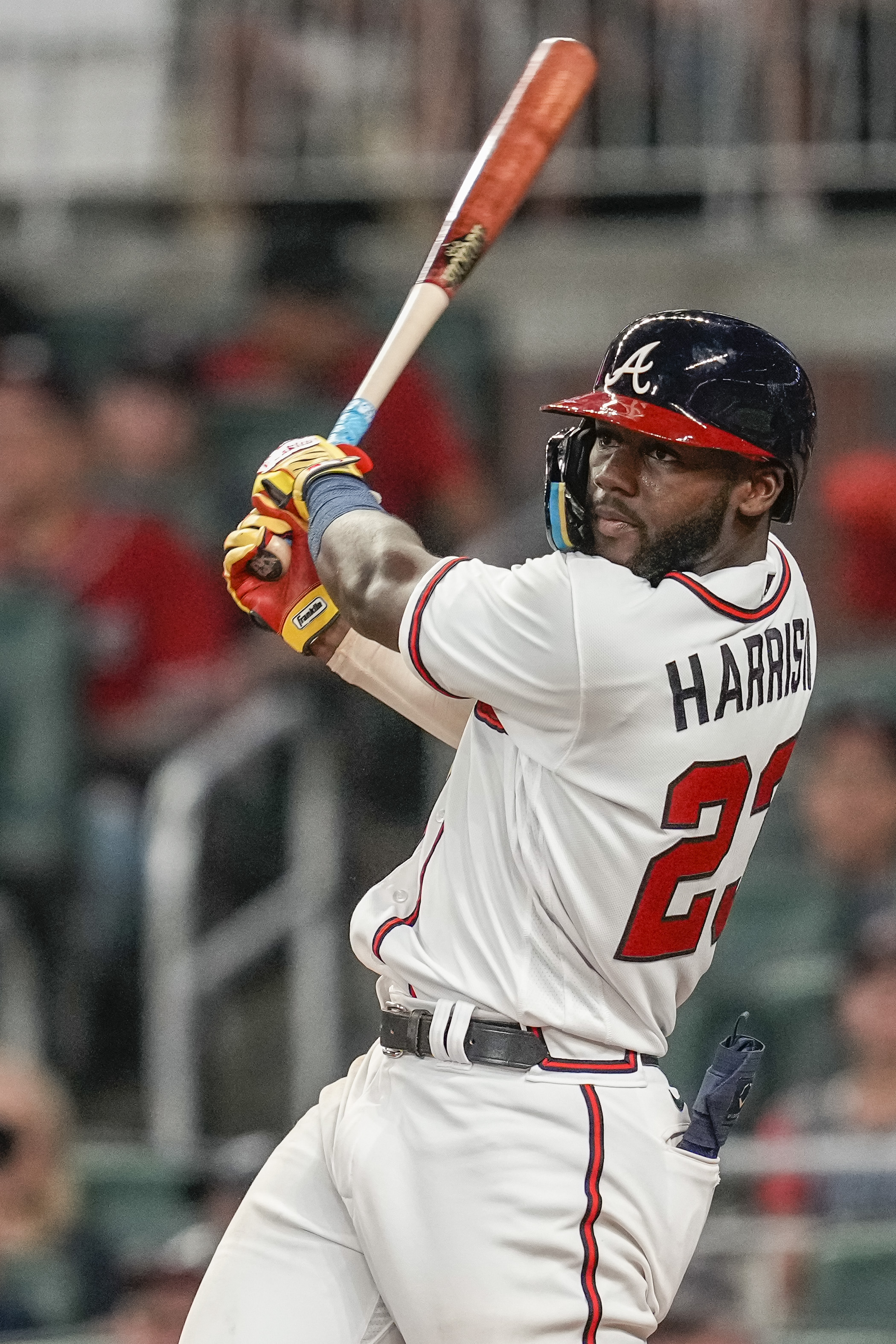
The Braves, one of the few Major League teams to publicly disclose terms of their contracts, added that Harris will earn $5MM per season in 2023-24, $8MM annually in 2025-26, $9MM in 2027, $10MM annually from 2028-29, and $12MM in 2030. The 2031 option is valued at $15MM, and the 2032 option is valued at $20MM. Both come with $5MM buyouts.
Harris, a frontrunner to finish in the top two of National League Rookie of the Year voting — perhaps alongside teammate Spencer Strider — would’ve been a free agent after either the 2027 (with a top-two Rookie of the Year finish) or after the 2028 season but will instead forgo a trip to the open market in his mid-20s to sign a long-term pact with his hometown team.
The eight-year pact continues an aggressive trend from an Atlanta front office that has been unafraid to pay sizable sums to its young stars early in their careers. Outfielder Ronald Acuna Jr. (eight years, $100MM) and second baseman Ozzie Albies (seven years, $35MM) both signed early, very club-friendly extensions that included a pair of club options beyond their guaranteed years. Acuna’s deal, like the one being discussed with Harris, was agreed upon before he even had a full year of Major League service time.
More recently, the Braves inked Matt Olson to an eight-year, $168MM extension the day after acquiring him in a five-player blockbuster with the A’s. And, this past summer, while so many teams were focused on the trade deadline in late July, the Braves hammered out a ten-year, $212MM extension for third baseman Austin Riley (before also making a handful of trades themselves, of course).
Harris, 21, was the No. 98 overall pick in the 2019 draft and bolstered his prospect stock with a torrid race through the minors that culminated in him skipping Triple-A entirely earlier this year. Despite being promoted right from Double-A, Harris hasn’t missed a beat in the Majors. He’s logged 268 plate appearances in the Majors, tonight’s performance included, and turned in a robust .287/.325/.500 batting line with a dozen homers, 14 doubles, two triples and 13 steals (in 13 tries). Couple that production with plus center field defense (5 Defensive Runs Saved and Outs Above Average alike), and it’s easy to see how the Braves have quickly become enamored of the dynamic young outfielder.
As with any extension for a young player, there’s certainly some risk to both sides. Harris has but 71 games of big league experience under his belt with no Triple-A seasoning of which to speak. In fact, he played only 43 games in Double-A prior to his promotion. And, as good as he’s been thus far in his big league career, the Braves would surely like to see him improve upon a dismal 3.7% walk rate. He’s currently sporting a .345 average on balls in play that’ll likely drop a bit, although players with Harris’ type of speed (94th percentile sprint speed, per Statcast) can often sustain BABIP numbers higher than the league average.
The risk for Harris, meanwhile, is the same that teammates such as Acuna and Albies took when inking their own deals. He’s locking in a life-changing sum of money, to be sure, but a top-two finish in Rookie of the Year voting would have put Harris on track for arbitration following the 2024 season (or, absent that top-two finish, after the 2025 campaign). As things stand, he could’ve either been a free agent following the 2027 season, heading into his age-27 season, or following the 2028 campaign (when he’d be heading into his age-28 season). Free agents who are that young are the sorts who tend to land decade-long contracts north of $200MM or even $300MM.
Certainly, we can’t know whether Harris will sustain his current pace for a full six years. We see players debut with great fanfare and fade from the spotlight somewhat regularly, and injuries can always impact a player’s development and open-market earning power. Harris is surely aware that any early-career extension like this has the potential to turn into an unmitigated bargain for the team, just as the Braves are aware that Harris isn’t necessarily a lock to cement himself among the game’s elite young outfielders. That’s the balance all teams and players strive to strike in early extensions like this, and it appears that in this instance, the Braves and Harris found a sweet spot that’ll clock in a ways short of the Acuna deal but line up nicely with the recent eight-year, $70MM extension signed by Pirates third baseman Ke’Bryan Hayes.
While these contracts tend to be bargains of significant nature when they hit — as they’ve done near universally for the Braves to this point — it’s also worth pointing out that they do inflate a team’s luxury-tax ledger earlier than might otherwise be the case. A $72MM contract for Harris will give him an immediate $9MM luxury hit (the contract’s average annual value) when he’d otherwise have counted for less than $1MM against the tax line.
Atlanta has a $207MM luxury payroll this year and $128MM already counting against next year’s ledger, and that’s before including a Harris contract or arbitration raises for any of Max Fried, A.J. Minter, Mike Soroka or Tyler Matzek (plus any free-agent or trade additions this winter). The extensions are still likely to be cost-effective moves for the team in the long run, but the Braves will have about $50MM of luxury commitments to Acuna, Albies, Riley and Harris alone next season if this deal indeed goes through.
None of that should serve as a deterrent, of course. Harris looks the part of a budding young star, and pairing him alongside Acuna in the outfield and alongside Acuna, Riley and Albies in the lineup for the foreseeable future gives the Braves the upside of an explosive quartet being controlled at a mere fraction of market value. The reduced nature of their salaries — relative to market pricing — ought to allow the team to continue to invest in free agents to supplement the core, keeping the Braves well positioned to contend in the National League East for the foreseeable future. That Harris grew up in the Atlanta area and attended high school just 37 miles south of Truist Park only makes him all the more marketable to the fan base, and surely only makes tonight’s deal sweeter for the latest homegrown, hometown star in Atlanta.
FanSided’s Robert Murray first reported that the two sides were “deep” in talks on an eight-year deal. Jon Heyman of the New York Post reported that the contract would contain at least one option and would be valued at $72MM (Twitter links).
Big Hype Prospects: Henderson, Harris, De La Cruz, Brash, Valera
This week, we (mostly) delve deeper into the minors to examine some fast-rising future stars.
Five Big Hype Prospects
Gunnar Henderson, 20, 3B/SS, BAL (AAA)
(AA) 208 PA, 8 HR, 12 SB, .312/.452/.573
Few prospects have done more to improve their stock than Henderson. Coming off a passable but unspectacular 2021 season, Henderson has torched minor league pitching. Since earning a promotion to Triple-A, he’s continued to punish opposing pitchers to the tune of .286/.500/.536 with two home runs in 40 plate appearances. He also has 12 walks against just five strikeouts. In Double-A, he posted 19.7 percent walk and 18.3 percent strikeout rates.
His outlandish performance to date is backed by scouting observations. I spoke with Orioles Director of Player Development Matt Blood prior to the season, and he specifically highlighted Henderson as someone who has turned the corner mentally. Last year, Henderson had some of the markers of passivity – namely a high walk rate, high strikeout rate, and a modest swinging strike rate. This season, he’s reportedly improved upon his selectivity, punishing pitches in the zone while continuing to spit on those outside the zone.
Henderson currently ranks 45th on the MLB Pipeline Top Prospects List. At this rate, he’ll soon join the Top 10 – unless he races to the Majors before the listmakers have time to adjust. The folks who curate your favorite prospect list tend to be quite conservative about upgrading guys based on a partial-season breakout, and with reason! We’ve seen many players post astronomical half-seasons only to later resume a more ordinary development path.
Michael Harris II, 21, OF, ATL (MLB)
70 PA, 2 HR, 2 SB, .328/.357/.537
To the best of my knowledge, Harris was the third position player to be promoted straight from Double-A to a Major League starting lineup this season. The first, C.J. Abrams, was overexposed in the Majors. Cubs utilityman Christopher Morel looks right at home in the big leagues. So too does Harris.
Harris makes low-angle contact with an all-fields approach. He’s also making frequent hard and barreled contact. Both rates are above league average as measured by Statcast. Taken together, he has the traits of a high batting average hitter. Where he seemingly lags is plate discipline. He’s taken a swing-happy approach in his first exposure to the Majors. He’s especially prone to offering at pitches outside of the zone. His in-zone swing rate is only a hair above league average. His contact rate is roughly league average too. In other words, his aggression hasn’t proven costly. Yet.
It’s not uncommon for physically gifted prospects to reach the Majors, perform surprisingly well, then slump once scouting reports adjust. In Harris’ case, scouts are going to advise a bevy of breaking balls out of the zone. If he plunges into a slump, he might get a belated taste of Triple-A. If he adjusts quickly or otherwise holds his own, then he’s probably here to stay.
Harris is the midst of an eight-game hitting streak over which he’s batting .433/.469/.800 with both of his home runs and steals.
Elly De La Cruz, 20, 3B/SS, (A+)
222 PA, 12 HR, 17 SB, .304/.351/.594
If you haven’t already heard about De La Cruz, expect to see his name appearing in more and more articles. Scouts love his build – he has light-tower power, near-elite speed, and a cannon of an arm. He already makes some of the loudest contact in the minors. While he’s mostly worked at shortstop, there’s an expectation he’ll eventually move to third base or perhaps even center field.
A prospect of De La Cruz’s ilk always comes with caveats. His plate discipline can be (generously) described as questionable. His current 6.3 percent walk rate is a marked improvement over the 4.8 percent rate he posted last season. Meanwhile, his 30.6 percent strikeout rate is right in line with his previous performance.
Given his current contact profile, he could fall into a Javier Baez-like mold. Or perhaps Oneil Cruz is the better comp. After all, they’re both physical mutants who might stick at shortstop. Cruz happened to post similar numbers as a 20-year-old in High-A, then held his own in Double-A later that year. Cruz even had questions about his plate discipline. The Reds have no incentive to rush De La Cruz, but he should sniff the upper minors in the coming months.
Matt Brash, 24, SP/RP, SEA (AAA)
19 IP, 3.32 ERA, 15.16 K/9, 5.21 BB/9
Brash entered the season in the Mariners rotation, dazzled in his debut, then proceeded to walk the world. I recall watching that first outing and worrying what would happen when hitters stopped swinging at his breaking balls out of the zone. He didn’t show any sign of being able to command anything within the strike zone. Sure enough, it quickly became a problem. The Mariners made the decision to demote him from the Major League rotation straight to the Triple-A bullpen. A relief role offers a more direct path for pitchers with Brash’s combination of filthy stuff and poor command.
Signs are pointing in the right direction. After some initial command-related struggles, Brash has shoved over his last 10 appearances. His 10-inning scoreless streak dating back to May 25 includes just five hits and two walks compared to 16 strikeouts. He once again appears to be ready for prime time. Unfortunately for him, the Seattle bullpen is fairly robust and will soon need to make way for Ken Giles (who happens to be flailing in his rehab assignment). Brash may need to await a couple injuries to reclaim a role.
George Valera, 21, OF, CLE (AA)
236 PA, 10 HR, 2 SB, .291/.398/.513
Expectations for Valera vary greatly depending on the source. I’ve seen Cleveland fans compare him to Mike Trout. I’ve also seen open skepticism about his hit tool. His performance this season hasn’t exactly supported either of these extreme interpretations. Instead, he seems to be trending as a steady regular outfielder.
Statistically, Valera works counts and runs a tolerable 11.6 percent swinging strike rate. That’s helped him to around a 23 percent strikeout rate any time he’s settled into a level. His strikeout rate tends to spike above 30 percent when he moves up a level. He’s seemingly nearing a promotion to Triple-A. We should probably expect another temporary surge in strikeouts when it happens. His pattern of struggling then dominating each rung of the minor league ladder is reminiscent of Jo Adell. Valera’s discipline should serve to ensure some kind of big league role.
Five More
Zack Gelof, OAK (22): A 2021 draftee, the Athletics promoted Gelof straight from Low-A to Triple-A last season where he held his own in a 13-plate appearance trial. They assigned him to Double-A this season. He’s hit .315/.372/.458. Gelof recently tore the labrum of his non-throwing shoulder and could miss the bulk of this season depending on the treatment plan.
Jackson Chourio, MIL (18): Every season, there’s one teenaged prospect who catches the imagination of every prospect watcher. Last year, it was De La Cruz. This season, it’s Chourio. Scouting reports abound with praise for the young outfielder. He’s currently swatting .347/.394/.599 with six home runs and five steals in 160 plate appearances. It’s uncommon for well-rounded athletes to show this much power as an 18-year-old. Chourio is a long way from the Majors, but his path is already paved. He just has to stay on it, and walk the remaining miles.
Andrew Painter, PHI (19): Painter made a mockery of the complex league, posting a 1.40 ERA with 16.06 K/9 and 3.72 BB/9. He’s shown advanced feel for a pitcher his age. FanGraphs’ Eric Longenhagen notes how well he combines a high, arm-side fastball with a biting slider. He also throws a curve and changeup, both of which lag behind his two primary offerings. He’ll need to develop those in order to stick in the rotation. Painter was recently promoted to High-A.
Bobby Miller, LAD (23): A flamethrowing right-hander, Miller has experienced mixed results in Double-A. He’s posted a 4.60 ERA with 9.57 K/9 and 3.26 BB/9. There’s a Hunter Greene-ish feel to Miller. His fastball runs over 100-mph with regularity, but certain characteristics cause it to play down. There’s relief risk here, especially if the Dodgers don’t trade him. They have the resources to use him in whichever role provides the most instant gratification.
Noelvi Marte, SEA (20): Last week, I observed that a sliver of the shine has come off Marte. A prominent writer reached out for my sources, and I realized I’d misplaced the relevant comment. I’ll do a better job sourcing my material going forward. Presently Marte is putting up slightly better than average production as one of the youngest players in High-A. He remains an exciting prospect.
Braves Promote Michael Harris II
The Braves have selected the contract of top outfield prospect Michael Harris II, Justin Toscano of The Atlanta Journal-Constitution reports. Harris will be taking the place of outfielder Travis Demeritte, who was optioned to Triple-A after last night’s game.
It’s an aggressive and somewhat surprising promotion on the Braves’ part, as the 21-year-old Harris has yet to play even in Triple-A ball. However, Harris could be seen as a center field upgrade immediately, as Adam Duvall has hit only .191/.263/.274 over 175 plate appearances. At the very least, the switch-hitting Harris will be sharing time with the right-handed hitting Duvall, though it seems likely that the Braves wouldn’t have called Harris up if they weren’t planning on playing the youngster every day.
Atlanta’s outfield has largely struggled all season, with the notable exception of Ronald Acuna Jr. since his return from the injured list. However, Acuna has missed time with a quad strain over the last few days, and while Acuna was able to pinch-hit last night, the Braves figure to be cautious with their superstar until he is closer to 100 percent.
This provides an opportunity for Harris to give the outfield mix a shot in the arm, and it represents the latest step in what has been a rather quick rise to prominence. A local product born in DeKalb, Georgia, Harris was a third-round pick for the Braves in the 2019 draft, and he had only an okay rookie season before sitting out in 2020 due to the canceled minor league season.
Upon returning to the field, Harris suddenly blossomed, hitting .294/.362/.436 over 420 PA for the Braves’ High-A affiliate, and also hitting seven homers and stealing 27 bases out of 31 chances. This breakout put him on the radar of prospect evaluators, with Baseball America listing Harris as the 46th-best prospect in baseball in their preseason rankings (Baseball Prospectus ranked him 58th, The Athletic’s Keith Law ranked him 61st, and MLB Pipeline ranked him 65st).
Defensively, Harris has played mostly as a center fielder, and received plus grades for his glovework and his throwing arm. (The latter is no surprise, as Harris was also a highly-touted pitcher in high school.) As per Pipeline’s scouting report, Harris was voted the best defensive outfielder in the High-A East league by rival managers.
At the plate, Harris hit exclusively as a left-handed batter in 2021 before returning to switch-hitting this season in Double-A. Harris has been prone to chasing pitches, but improved on that problem as the 2021 season went on, cutting back on his strikeouts while improving his on-base numbers. While Harris has posted big BABIP numbers over the last two seasons, those totals speak to both some good fortune and his plus speed, which allows him to beat out grounders.
Harris hit .305/.372/.506 with five homers and 11 steals (in 14 chances) over 196 PA at the Double-A level, leaving no doubt that his 2021 performance was for real. It was enough to convince Atlanta that Harris is ready for The Show, and yet as always with prospects, it shouldn’t be assumed that Harris will immediately play well in his first taste of the majors.
It could be that the Braves might eventually send Harris down to Triple-A if he struggles, which would halt his MLB service clock. If Harris does stay up, he likely won’t bank enough service time to make him a Super Two candidate (and thus earn a fourth year of arbitration eligibility). Players like Seiya Suzuki and MacKenzie Gore have an early lead in the race to be NL Rookie Of The Year, though there’s plenty of time for Harris to make a late charge, which would benefit both Harris and the Braves via the new Prospect Promotion Incentive plan.
East Notes: Casas, Armstrong, Harris
Triston Casas had a busy year in 2021, bouncing between Double-A, the Team USA Olympic squad and Triple-A. “I was bouncing all over the place,” Casas said to Pete Abraham of the Boston Globe. “I did my best to take it one day at a time and I’m happy with the way I handled it. But hopefully I’ll be a little more settled this year.” All of that bouncing around did nothing to slow Casas down, as the Red Sox first base prospect hit .279/.394/.484 for a wRC+ of 141 in 86 games, between Double-A and Triple-A. That showing has him on the cusp of making his major league debut, though he doesn’t yet have a spot on the roster. That means he’ll have the extra challenge of having to earn that roster spot before getting called up, but also comes with the positive of Casas not being locked out and thus eligible to participate in Spring Training. “I absolutely appreciate what they’re doing,” Casas said of the MLBPA’s efforts in the lockout. “I know they’re working diligently to make sure baseball is a fair game. I don’t know all the information, but they’re making a sacrifice to help younger players.” As for what comes next for the 22-year-old, “My goal is to make the major league team.” The Sox currently project to have Bobby Dalbec at first base and J.D. Martinez in the DH slot most of the time. However, Martinez is a free agent after 2022, meaning that, even if Casas struggles to force his way into the lineup this year, his chances of doing so will be much greater one year from now.
Elsewhere in the East…
- Though Shawn Armstrong is a minor league free agent, the rules specifying which players are locked out have kept the right-hander on the open market and unable to sign even a minor league deal, according to The Tampa Bay Times’ Marc Topkin. It’s a tough blow for the 31-year-old, especially since Armstrong said he heard from over 20 teams in November prior to the lockout, with the Rays (Armstrong’s former club) and roughly a dozen other teams offering minor league or split contracts. Armstrong opted to wait for a guaranteed offer, but now finds himself stuck waiting to determine the next step in his career. “I know, it’s going to be very, very quick when the lockout ends versus being able to talk and communicate and counteroffer and those types of things,” Armstrong said. “But it is what it is. Nothing I can do about it. Just got to stay ready.”
- Braves outfield prospect Michael Harris II had a solid year in 2021, playing 101 High-A games and hitting .294/.362/.436, wRC+ of 114. But he might just be scratching the surface of what he’s capable of, at least according to fellow Braves prospect Braden Shewmake. “I think (Harris) could help (the big club). I definitely do,” Shewmake tells Justin Toscano of the Atlanta Journal-Constitution. “When he gets his chance, I think he’s going to stick. I don’t think he’s going to be a guy that bounces back and forth.” Despite his promise, Harris is aware that he still has to make strides, telling Toscano that “There’s always somewhere to improve, so I don’t really focus on one specific area.” Harris doesn’t yet have a roster spot, meaning other outfielders like Drew Waters and Cristian Pache have a clearer path to playing time than he does. But unlike them, Harris has the advantage of not being locked out, and thus able to participate in team activities and access team facilities.