
2018 Non-Tender Candidates
More than 200 players are eligible for salary arbitration this offseason, and the deadline to tender each of these players a contract for the 2019 season is November 30th. That also represents the deadline to inform arbitration eligible players whether they will receive a (non-guaranteed) contract, or else become free agents. The two parties will have another roughly two months to work out salaries before arbitration hearings (if necessary) kick off in February.
As we do each year at MLBTR, we’re providing a list of players whose teams could potentially elect not to tender them a contract, thus sending them into the free-agent pool earlier than expected. It should be emphasized that we’re not indicating that each of these players is likely to be non-tendered (though that’s certainly the case with some of them). Typically, we list any player for which we can envision at least atr ar 10-20 percent chance of a non-tender.
It should be noted that many of the borderline non-tender candidates below will be traded this month rather than simply cut loose. Other borderline candidates may be presented with an offer that is notably lower than their projections and could accept the “take it or leave it” ultimatum rather than being non-tendered.
For a full list of each team’s arb-eligible players, you can check out Matt Swartz’s team-by-team arbitration salary projections.
Position Players
Ehire Adrianza (Twins, $1.8MM)
Aaron Altherr (Phillies, $1.6MM)
Tim Beckham (Orioles, $4.3MM)
Justin Bour (Phillies, $5.2MM)
Cheslor Cuthbert (Royals, $1.1MM)
Travis d’Arnaud (Mets, $3.7MM)
Delino DeShields Jr. (Rangers, $1.9MM)
Adam Duvall (Braves, $3.1MM)
Wilmer Flores (Mets, $4.7MM)
Avisail Garcia (White Sox, $8.0MM)
Leury Garcia (White Sox, $1.9MM)
Greg Garcia (Padres, $900K)
Robbie Grossman (Twins, $4.0MM)
Gorkys Hernandez (Giants, $1.6MM)
Chris Herrmann (Astros, $1.5MM)
Caleb Joseph (Orioles, $1.7MM)
Erik Kratz (Brewers, $1.7MM)
Sandy Leon (Red Sox, $2.3MM)
Jake Marisnick (Astros, $2.4MM)
James McCann (Tigers, $3.5MM)
John Ryan Murphy (Diamondbacks, $1.1MM)
Chris Owings (Diamondbacks, $3.6MM)
Hernan Perez (Brewers, $2.7MM)
Josh Phegley (Athletics, $1.2MM)
Miguel Rojas (Marlins, $2.6MM)
Addison Russell (Cubs, $4.3MM)
Tyler Saladino (Brewers, $1.0MM)
Jonathan Schoop (Brewers, $10.1MM)
Yangervis Solarte (Blue Jays, $5.9MM)
Cory Spangenberg (Padres, $2.3MM)
Devon Travis (Blue Jays, $2.4MM)
Tony Wolters (Rockies, $1.1MM)
Pitchers
Matt Andriese (Diamondbacks, $1.1MM)
Chad Bettis (Rockies, $3.2M)
Eddie Butler (Rangers, $900K)
Brian Flynn (Royals, $1.0MM)
Sam Freeman (Braves, $1.5M)
Luis Garcia (Phillies, $1.7MM)
Yimi Garcia (Dodgers, $900K)
Jesse Hahn (Royals, $1.7MM)
Tom Koehler (Dodgers, $2.0MM)
Shelby Miller (Diamondbacks, $4.9MM)
Bryan Mitchell (Padres, $1.2MM)
Neil Ramirez (Indians, $1.3MM)
Tanner Roark (Nationals, $9.8MM)
Zac Rosscup (Dodgers, $800K)
Chris Rusin (Rockies, $1.7MM)
Chasen Shreve (Cardinals, $1.2MM)
Sammy Solis (Nationals, $900K)
Tyler Thornburg (Red Sox, $2.3MM)
Jonny Venters (Braves, $1.5M)
Offseason Outlook: Pittsburgh Pirates
The Bucs’ bid to compete in 2018 fell flat, but the team’s mid-season acquisitions were also designed to keep the window open for the two ensuing seasons. As ever, building out the roster will likely mean a search for cost-efficiency for the Pittsburgh front office.
Guaranteed Contracts
- Gregory Polanco, OF: $28.5MM through 2021 (includes buyouts on 2022 & 2023 club options)
- Felipe Vazquez, RP: $18MM through 2021 (inclues buyouts on 2022 & 2023 club options)
- Starling Marte, OF: $13MM through 2019 (includes buyouts on 2020 & 2021 club options)
- Francisco Cervelli, C: $11.5MM through 2019
- Chris Archer, SP: $9.5MM through 2019 (includes buyouts on 2020 & 2021 club options)
- Ivan Nova, SP: $8.5MM through 2019
- Jung Ho Kang, INF: $3MM through 2019 (re-signed)
Arbitration-Eligible Players (projections via MLBTR contributor Matt Swartz)
- Corey Dickerson – $8.4MM
- Keone Kela – $3.2MM
- Michael Feliz – $900K
Free Agents
- Josh Harrison ($1MM buyout of $10.5MM club option), Ryan Lavarnway, Jordy Mercer
[Pittsburgh Pirates Depth Chart | Pittsburgh Pirates Payroll Outlook]
It’s easy to overlook the Pirates, particularly given the developments elsewhere in the National League Central. The Brewers proved a shocking rival to the Cubs, who still have designs on the top spot. Meanwhile, the Cardinals still have plenty of talent and ample motivation. And the Reds see themselves as prepared to begin climbing the ladder.
It could all end up being quite the rumble, particularly if Pirates GM Neal Huntington proves able to sniff out some buried treasure on the player market this winter. There’s no reason to think he’ll have substantially more payroll capacity to work with than in past seasons, after all, though it’s possible there’ll be some leftover coin to spread around. With all their arb-eligible players included, the Pirates have around $65MM in salary committed to ten players. That only leaves about $20MM of daylight, as against last year’s ~$86MM Opening Day payroll, and of course the club will also need to account for salaries to league-minimum members of the roster. That said, the organization has pushed right up to (but not yet past) the $100MM line in Opening Day payroll in the not-so-distant past, which could suggest there’s a bit more wiggle room to work with.
Supposing the Pirates do see a way to fit some more salaries into the budget, it’s still questionable whether they’ll show much interest in the kind of lengthy commitments that are generally required to land the top-available free-agent talent. The Pirates have focused instead on aggressively pursuing contract extensions with existing young players while pursuing quality veterans on more limited pacts that don’t go past three seasons in duration. (Don’t believe me? Check out this list of Pittsburgh free agent deals of at least three guaranteed years.)
Dipping into the prospect pool to facilitate a trade remains a possibility. Top prospect Mitch Keller is one of the best-regarded pre-MLB hurlers in baseball, and there are enough quality chips surrounding him to enable the club to make a run at about just about any trade target it might like. There’s quite a lot of infield talent, in particular, much of which is at or near the MLB level. Of course, it’s arguable that the 2018 deadline moves reduce the appeal of further sacrificing farm assets. And those infielders, especially, figure to come in handy right now.
There’s a line change underway at the 4-5-6 positions on the diamond. Veterans Jordy Mercer, Josh Harrison, David Freese, Sean Rodriguez, and Adeiny Hechavarria are no longer on the roster, leaving plenty of playing time up for grabs. Bringing back Kang indicates that the Pirates feel he’s likely to bounce back, at least to some extent. He figures to represent a right-handed-hitting complement to Colin Moran at third and perhaps also Adam Frazier at second. Meanwhile, the club recently graduated well-regarded middle infielders Kevin Newman and Kevin Kramer, though each struggled at the plate in limited MLB action. With Pablo Reyes and Max Moroff representing other youthful options who have reached the majors, and intriguing prospects Ke’Bryan Hayes and Cole Tucker steadily marching north (both spent all of 2018 at Double-A, at third base and shortstop respectively), there’s an abundance of possibility.
It’s possible in theory that the Pirates will simply roll with that group of talent into Spring Training, then see how the chips fall. But they may also choose to pursue a veteran piece to supplement the mix. In particular, adding a trustworthy player capable of handling shortstop would seem to make good sense. Beyond Mercer and Hechavarria, open-market options include Jose Iglesias and Freddy Galvis. The Pirates could also hang back and see if any intriguing value propositions present themselves.
To an extent, of course, the infield situation blends into that in the outfield. That’s due in no small part to the clear organizational preference for having a few players on the roster who can transition from dirt to grass. Frazier has done so quite a bit, as has Reyes in the minors, and Jose Osuna is a corner option in either area. Josh Bell will presumably continue to hold down the first base position, while Starling Marte is entrenched as the everyday man in center, so the real focus is on the corner outfield.
Corey Dickerson turned in a quality campaign and seems likely to see most of the action in left field. He’s most productive against right-handed pitching, though he was certainly plenty playable against lefties last year. The same can be said of Gregory Polanco, who was polishing off a breakout campaign before he was felled by an unfortunate injury. It’s possible he’ll recover steadily and be at full health for much of the 2019 campaign. But given the significance of the surgery he required and the uncertainty of his rehab timeline, it’s impossible to assume that’ll be the case.
The optimal solution, it seems, would be to find a quality right-handed-hitting outfielder who can cover for Polanco and then integrate with the lefty corner pieces once the club is at full health. It’s certainly possible the Bucs would like such a player also to feature as an infield option. Steve Pearce could in theory be a match, though at this stage of his career he’s a better fit for a team that can offer him ABs at first base and DH. There’s an argument to be made that a short-term veteran — Adam Jones, Cameron Maybin, or even old friend Jose Bautista are among the open-market options — would be the most sensible addition. Avisail Garcia of the White Sox could be a target as well, though perhaps it’s likelier he’d be pursued on a cheaper deal if non-tendered.
Most intriguingly, though, is the idea that the Pirates should consider a piece that would be around for years to come, helping to cover for the impending departure of Dickerson via free agency and bridge to players being developed. Tempting though it may be to draw a line back to former franchise cornerstone Andrew McCutchen, the best righty-hitting corner outfielder available, that feels unlikely. There are quite a few more possibilities via trade. Controllable players such as Steven Souza, Domingo Santana, Keon Broxton, Michael Taylor, Aaron Altherr, Hunter Renfroe, Franmil Reyes, Manuel Margot, Albert Almora, and Kevin Pillar could conceivably be made available. Whether any would truly pique the interest of the Pirates, or come at a palatable price, remains to be seen. Osuna and Jordan Luplow each share some characteristics with the aforementioned players and are pre-arb options already on hand. Of course, neither has hit much in early MLB chances. It’s possible that the right acquisition could check several boxes in one fell swoop.
That brings us to the battery, where two of the team’s most interesting possible trade chips lie. As with Dickerson, the Bucs owe significant but manageable sums to catcher Francisco Cervelli and starter Ivan Nova. Each of these players would draw outside interest and could certainly be shopped around. With the team’s buy-side 2018 trade deadline moves, it’d be surprising to see an important veteran shipped out for a pure prospect haul (at least, without corresponding additions). But perhaps there could be an opportunity to move an established, short-term asset in a way that doesn’t hurt too much in the near term, clears some payroll space, and improves the long-term outlook.
Doing so with Dickerson or (especially) Cervelli, though, would mean opening holes that can’t easily be filled. Of that trio, Nova seems the likeliest to move. Of course, he’s also not a particularly exciting hurler so much as he is a steadily valuable back-of-the-rotation presence. Nova has not sustained the breakout he showed upon moving to the Pirates in the middle of the 2016 season, but has given the organization sixty starts of low-4 ERA ball over the past two campaigns. He’d help shore up quite a few rotations around the game if the Pirates decide to move him, but he also continues to fit on a Pittsburgh staff that will go without Tommy John patient Chad Kuhl for the 2019 season.
It’s arguable, really, that the Pirates are best suited simply holding pat in all respects with regard to the rotation. Picking up Chris Archer in late July hasn’t yet paid dividends, but the hope remains that he’ll find his form and represent a tremendous bargain at the top of the staff alongside excellent youngster Jameson Taillon. If he can sustain his eye-opening 2018 effort, Trevor Williams would round out a strong top trio of starters. The hope is that Joe Musgrove will recover from a recent procedure and be ready to contribute more solid frames alongside Nova in 2019. Out-of-options right-hander Nick Kingham could yet emerge as a rotation piece despite a poor debut showing, while southpaw Steven Brault is a depth piece who can also contribute from the pen. The 40-man roster also currently features a pair of righties in Clay Holmes and Alex McRae who’ll present possibilities. There’s probably room for some tweaking here if desired — if, say, the club prefers a cheaper free-agent veteran and finds a taker for Nova, or sees an opportunity to buy or sell high on an unexpected hurler — but “need” doesn’t appear to be a driving force.
That’s largely also the case in the relief unit, though there’s probably more room to add here. Leftover rotation candidates can round out a group that is led by closer Felipe Vazquez and setup man Keone Kela (who was acquired, like Archer, in July of 2018). Otherwise, losing Edgar Santana to a TJ procedure hurts, but emergent hurlers Richard Rodriguez and Kyle Crick both look to be strong assets. Michael Feliz and Nick Burdi each reputedly possess eye-popping stuff but haven’t yet established themselves in the majors. It’s possible to imagine the pen being made up of internal options, but an addition or two would also make sense. In particular, the club could have its eye on a quality lefty option. Brault could work as a lefty specialist, as he was much more successful against opposing southpaws, but the team certainly could wade into free agency as well. Top options such as Zach Britton and Andrew Miller are likely out of reach, but there are loads of other candidates on this winter’s market.
The broad takeaway from the foregoing analysis seems to be that the Pirates may have greater flexibility than is popularly supposed. From a financial perspective, even $20MM of availability could go a long way. That’s especially so given the significant versatility on the existing roster, which will allow the team to target specific players and/or chase value, adapting as it goes. The unwelcome uncertainty surrounding Polanco certainly puts a damper on things, and it’s undeniably a tough division to tackle, but the Pirates have every chance of fielding a highly competitive club in 2019 — if they make smart choices this winter and have a few things break for them in the season to come.
Offseason Outlook: Boston Red Sox
MLBTR is publishing Offseason Outlooks for all 30 teams. Click here to read the other entries in this series.
After celebrating their fourth World Series in 15 years, the Red Sox now have some significant holes to fill in the starting rotation and bullpen. They’ll also need to think about whether and how to keep their championship core together for the long term.
Guaranteed Contracts
- David Price, SP: $127MM through 2022 (Price chose not to exercise his opt-out clause)
- J.D. Martinez, DH/OF: $86.25MM through 2022 (Martinez can opt out after each of the next three seasons; Red Sox can potentially convert fourth and fifth seasons into mutual options)
- Dustin Pedroia, 2B: $40MM through 2021
- Rick Porcello, SP: $21MM through 2019
- Chris Sale, SP: $15MM through 2019 (club option exercised)
- Christian Vazquez, C: $13.55MM through 2021 (includes $250K buyout of $7MM club option for 2022)
- Mitch Moreland, 1B: $6.5MM through 2019
- Eduardo Nunez, IF: $5MM through 2019 (exercised player option)
Obligations To Former Players
- Pablo Sandoval, 3B: $23MM through 2019 (includes $5MM buyout of 2020 club option), minus prorated MLB minimum salary earned by Sandoval next season
Arbitration Eligible Players (service time in brackets; projections via MLBTR contributor Matt Swartz)
- Mookie Betts (4.070) – $18.7MM
- Xander Bogaerts (5.042) – $11.9MM
- Jackie Bradley Jr. (4.150) – $7.9MM
- Eduardo Rodriguez (3.130) – $4.8MM
- Brock Holt (5.052) – $3.4MM
- Tyler Thornburg (5.057) – $2.3MM
- Sandy Leon (4.149) – $2.3MM
- Matt Barnes (3.110) – $1.5MM
- Brandon Workman (4.051) – $1.4MM
- Steven Wright (4.087) – $1.4MM
- Heath Hembree (3.106) – $1.2MM
- Blake Swihart (2.164) – $1.1MM
- Non-tender candidates: Thornburg
Free Agents
- Craig Kimbrel, Nathan Eovaldi, Joe Kelly, Steve Pearce, Ian Kinsler, Drew Pomeranz, Brandon Phillips, Carson Smith
[Boston Red Sox offseason page][Boston Red Sox payroll information]
The Red Sox won 108 regular season games and then lost just three postseason contests en route to the Commissioner’s Trophy. The good news doesn’t end there for Boston fans, as the window is still wide open for another title. Potential AL MVP Mookie Betts and Hank Aaron Award-winning slugger J.D. Martinez are the cornerstones of a dynamic lineup that will also have Xander Bogaerts, Andrew Benintendi, and Jackie Bradley Jr. as Opening Day locks. Chris Sale, David Price, and Rick Porcello sit atop the rotation, with bullpen workhorses Matt Barnes, Heath Hembree, Ryan Brasier, and Hector Velazquez all returning.
That’s an awfully strong nucleus to start from, particularly for a team that can still account for less-stable positions with players already on the roster, and isn’t shy about making big trades or signings if external help is required. The Red Sox soared over the luxury tax threshold last season and are projected to be well over the line again in 2019, though they’ll get some help in that area by the fact that the luxury tax limit will rise from $197MM to $206MM. Hanley Ramirez‘s salary is also now completely off the books; the $22MM he had earned annually will be needed to cover projected arbitration raises.
So, what will president of baseball operations Dave Dombrowski do for an encore? His most immediate question is the bullpen, as closer Craig Kimbrel and setup man Joe Kelly are both headed for free agency. The hard-throwing Kelly has had his ups and downs in Boston, with a 4.33 ERA over 359 1/3 innings for the team and persistent control issues. When Kelly was on, however, he was hard to touch — over 11 1/3 IP during Boston’s World Series run, the right-hander allowed just one earned run while recording 13 strikeouts and no walks. It’s easy to see how a rival team could take a chance on Kelly as a closer or top setup option, and offer him a contract beyond what the Sox are willing to pay. Then again, there’s still a fit on paper in Boston, so it’s possible he’ll return.
Meanwhile, Boston may only have limited interest in bringing Kimbrel back.After Aroldis Chapman and Kenley Jansen raised the bar on contracts for top closers, it could be that the Red Sox simply aren’t keen on spending the big money it will likely take to retain Kimbrel (MLBTR projects him for a four-year, $70MM contract). The Red Sox also stand to recoup a compensatory draft pick via the qualifying offer if Kimbrel signs elsewhere. Kimbral had another strong regular season — 2.74 ERA, 3.10 K/BB rate, 13.9 K/9 over 62 1/3 innings — yet didn’t quite hit elite levels, and he struggled mightily throughout the postseason.
If Kimbrel does leave, the Sox don’t have an obvious in-house saves candidate ready to step up to the unique pressure of Fenway Park in the ninth inning. Free agents like David Robertson, Zach Britton, or Andrew Miller could all be targets, or Boston could pursue trade options. This is assuming, of course, that the Red Sox will take a traditional approach to the closer role, as the club could prefer to add a versatile multi-inning arm (like a Miller) or two and then give manager Alex Cora a chance to mix and match his late-game options based on matchups.
Beyond the top three in the rotation, the combination of Eduardo Rodriguez, Brian Johnson, swingman Velazquez, and (health permitting) Steven Wright should be capable of accounting for at least one of the other rotation spots. This depth also comes in handy should Sale again run into any health issues, as Boston put a priority on keeping their ace as fit as possible for October. The Red Sox will likely add to this mix with at least one more starting arm. The team has the resources to check in on any of the top pitchers available on the free agent or trade markets, with a pursuit of Nathan Eovaldi standing out as a logical option. Eovaldi will still just be 29 on Opening Day, and looked as good during his two-plus months with the Red Sox as he has at any point in his career, both results-wise and in terms of his 97.2mph average fastball speed.
If not Eovaldi, Boston could look at other pitchers that could be longer-term answers for the rotation since both Sale and Porcello are entering the last year of their contracts. As good as the present looks for the Red Sox, Dombrowski will have to turn an eye to the future this offseason as several important players are approaching free agency. Sale, Porcello, and Bogaerts are all only controlled through 2019; Betts and Bradley will reach the open market after 2020; and Martinez can opt out of his contract after any of the next three seasons.
There have already been indications that Bogaerts and Martinez will test free agency, though the team will likely at least consider broaching extension talks with all of these parties. It will be interesting to see which players the Red Sox prioritize in negotiations, as it will provide significant information about their approach for the future. Bogaerts, Martinez, and Bradley are all represented by Scott Boras, whose clients tend to reach the open market rather than sign extensions. Sale has been nothing short of outstanding during his nine-year career, though with his lingering injury concerns, are the Red Sox prepared to make an expensive commitment to the southpaw as he enters his 30s? Could Boston also look to a different type of extension, and lock up a controllable player like Benintendi (scheduled for free agency after 2022) to a even longer-term deal?
Betts has preferred to take a year-to-year approach rather than sign an extension, a gamble that has thus far handsomely paid off for the superstar outfielder. Could his stance change if the Red Sox were to approach him with one of the biggest contracts in baseball history? The argument can certainly be made that Betts is deserving of such a pact based on what he has done through his age-25 season, and the Sox could get some obvious contact comps this winter in whatever record-breaking deals Bryce Harper and Manny Machado (both of whom are 26 themselves) find in the free agent market this winter.
The Sox are set in the outfield, DH, and shortstop, and we can pretty safely pencil Rafael Devers at third base and Mitch Moreland for a timeshare at first base next season. Despite below-average overall hitting numbers and a shaky glove in 2018, Devers is still only 22, and the former top prospect will certainly be given plenty of opportunity to break out. Moreland will continue to provide his solid defense and bat from the left side of the plate, though the Sox will need to find another right-handed first base as a platoon partner.
World Series MVP Steve Pearce filled that role in spectacular fashion after coming to Boston in midseason, and while his price tag may go up, the free agent market has been unfriendly enough to veteran first basemen in recent years that a re-signing is certainly feasible from Boston’s end. For Pearce, he may also welcome another crack at a ring rather than aim for a few extra dollars in free agency.
Could the Red Sox make a bigger splash at first base? That’s what we thought could be in store last winter before the team re-signed Moreland to a two-year contract, so Boston seems content for now to just stick with a platoon situation rather than deal Moreland and then pursue a bigger name in free agency or on the trade market. There’s also the possibility that the Sox might not want to block the position in the event that Devers needs to be moved to first base, as star prospect Michael Chavis is knocking on the door as a potential third baseman of the future. (Chavis himself has also seen some time at first base, plus young first baseman Sam Travis is still in the picture, albeit in need of a rebound from a lackluster Triple-A season.) All that said, there are some intriguing potential options and a move can’t be ruled out.
Catcher is another position where the team could theoretically stand pat with in-house options, as the duo of Christian Vazquez and Sandy Leon each posted outstanding framing numbers and were widely praised for their game-calling abilities. The Sox have enough big bats in the lineup that they could afford to devote one position entirely to defense, yet the near-total lack of offense generated by both Vazquez (42 wRC+) and Leon (33 wRC+) begs to be addressed in some fashion. Blake Swihart also contributed little at the plate while seeing some action at catcher as part of his super-utility duties.
The boldest move would be a trade for J.T. Realmuto, who will be targeted by every team in need of catching upgrades this winter. Vazquez or Swihart could go back to the Marlins as part of a trade package, though obviously Boston would need much more to pry Realmuto out of Miami. If the Red Sox aren’t willing or able to meet the Marlins’ price, they could aim lower by signing a free agent backstop like Kurt Suzuki or Robinson Chirinos or by taking over part of the contract of a pricey veteran such as Russell Martin. This would allow Vazquez to stay in the mix. The Sox have committed to him to some extent as their catcher of the future via their three-year contract extension, and Vazquez did post decent hitting numbers just in 2017. It remains to be seen exactly what the Sox will do with Swihart, who was kept despite a flurry of trade rumors last season, and whose stock has dropped even further after a forgettable 2018 season.
The experiment with Swihart as a utilityman led him to appear as one of the nine Red Sox players who played at least one game at second base last season, as the position became a revolving door thanks to Dustin Pedroia‘s recurring knee problems. The longtime face of the Boston franchise was limited to just three games last season, leading the Sox to rotate several players through the keystone before Ian Kinsler was acquired at the deadline to solidify the position, though Kinsler didn’t play particularly well.
It’s an open question as to how much Pedroia will be able to contribute next season, especially since Dombrowski isn’t yet certain if the veteran infielder will be ready for Spring Training. Given Pedroia’s status within the organization (and the $40MM still owed to him through 2021), the Sox may have to hold off on any moves to address second base until they get more clarity on Pedroia’s health. If Pedroia isn’t an option, another in-season trade is likely, unless incumbent options Eduardo Nunez, Brock Holt, or maybe even longer-shot candidates like Chavis or even Swihart can all combine to handle the position.
A reasonably healthy and productive Pedroia, a step forward from Devers, and Vazquez returning to even his 2017 form would go a long way towards firming up three positions that were rather glaringly weak links last season. Even while receiving sub-replacement level production at second base, third base, and catcher all season, the 2018 Red Sox were still one of the best teams in recent baseball history. It’s a tribute to Cora’s work in the dugout and Dombrowski’s roster-building that Boston achieved what it did even with some notable flaws, and with another winter to address these areas and others, the possibility exists that next year’s Red Sox could be even better.
Poll: The Rookie Of The Year Awards
The results of the AL and NL Rookie Of The Year Award balloting will be announced tomorrow, capping off a season that saw one of the more distinguished rookie classes in recent history make some immediate impacts in the big leagues.
Put it this way — Walker Buehler, Brad Keller, Jaime Barria, Dereck Rodriguez, Ramon Laureano, Lou Trivino, Seranthony Dominguez, Jack Flaherty, and Harrison Bader all had strong-to-outstanding rookie campaigns in 2018, yet none of this group is expected to crack the top two in balloting in their respective leagues. (The AL rookies might not even reach the top four.) The races in both leagues have been dominated by some major names and eyebrow-raising statistics, leaving voters with a tough choice as the regular season ended. As a reminder, the Rookie Of The Award doesn’t cover the postseason, so Buehler’s performance during the Dodgers’ NL pennant run has to be ignored.
Let’s sort though the big six options and then let the MLBTR readers decide on their preferred choices…
National League
This has been a two-horse race between the Braves’ Ronald Acuna and the Nationals’ Juan Soto for months. While a quick breakout wouldn’t have been surprising for either player (Acuna was heralded as baseball’s top prospect prior to the season, while Soto was also ranked in the 20-60 range of preseason top-100 prospect lists), it was still rather stunning to see both post numbers that will net them some MVP votes, let alone Rookie Of The Year consideration. Making it an even more difficult choice for voters, both players had remarkably identical numbers:
Acuna: .293/.366/.552 over 487 PA, 26 homers, 78 runs, 143 wRC+, 144 OPS+, 3.7 fWAR
Soto: .292/.406/.517 over 494 PA, 22 homers, 77 runs, 146 wRC+, 142 OPS+, 3.7 fWAR
Adding to the similarities, both posted slightly below-average defensive numbers (Defensive Runs Saved, UZR/150) as left fielders, though Acuna boosted his overall DRS and UZR/150 totals with 96 2/3 solid innings in center field and right field. The two also had similar amounts of batted-ball luck — both had a .366 xwOBA, indicating that each was moderately fortunate with their real-world weighted on-base averages (Soto .392, Acuna .388).
Soto supporters can point to their man’s OBP edge, plus the fact that Soto did all of this during his age-19 season, setting several Major League single-season records for a teenage player along the way (such as highest OBP, highest OPS, and most walks). Acuna fans can counter with the argument that the Braves outfielder was only 20 years old, accomplished his feats in the heat of a pennant race, and could’ve outpaced Soto in numbers had Acuna not missed a month on the disabled list with a sprained ACL.
American League
All eyes were on Angels right-hander Shohei Ohtani in his attempt to become the first two-way player in the modern era, and the results were astounding. As a hitter, Ohtani posted a 152 wRC+, 22 homers, and a .285/.361/.564 slash line over 367 plate appearances. As a pitcher, Ohtani had a 3.31 ERA, 11.0 K/9, and 2.86 K/BB rate over 51 2/3 innings, before arm problems that eventually required postseason Tommy John surgery derailed his time on the mound.
After Aaron Judge was the unanimous AL Rookie Of The Year pick in 2017, the Yankees’ youth movement continued as Gleyber Torres and Miguel Andujar quickly stepped into everyday roles at second and third base, respectively. Torres was the centerpiece of the prospect package New York received from the Cubs in the 2016 Aroldis Chapman trade, and the infielder lived up to the hype by hitting .271/.340/.480 with 24 homers over 484 PA. Andujar swung an even mightier stick, with 27 homers and a .297/.328/.527 slash over 606 plate appearances.
While none of the five rookies featured were contributors on defense, the Rays’ Joey Wendle‘s excellent glovework at multiple positions fueled his value. This combination of solid defense and a strong bat (.300/.354/.435 over 545 PA) resulted in Wendle posting a 3.7 position player fWAR that tied both Acuna and Soto in the category among all rookies in baseball. Wendle was in many ways the manifestation of the Rays as a whole in 2018 — an unheralded player who surprised many by emerging as a versatile and productive threat.
With these choices in mind, who would be your ROY choice if you had a ballot? (NL poll link for app users)(AL poll link for app users)
Who Is Your Pick As NL Rookie Of The Year?
-
Ronald Acuna 76% (13,971)
-
Juan Soto 24% (4,514)
Total votes: 18,485
Who Is Your Pick As AL Rookie Of The Year?
-
Shohei Ohtani 45% (9,642)
-
Miguel Andujar 38% (8,027)
-
Gleyber Torres 11% (2,316)
-
Joey Wendle 6% (1,369)
Total votes: 21,354
Offseason Outlook: Seattle Mariners
MLBTR is publishing Offseason Outlooks for all 30 teams. Click here to read the other entries in this series.
The Mariners are coming off a season in which they posted their highest win total (89) since 2003. And yet Seattle still didn’t come close to earning a playoff berth in the American League, which featured five teams with at least 97 victories, and has now gone 17 straight years without making the postseason. No North American professional sports franchise owns a longer playoff drought than the Mariners, who want to “re-imagine” their roster this winter, according to general manager Jerry Dipoto. The trade-minded executive got right to work Wednesday, just over a week after the offseason began, making a headline-grabbing deal with the Rays.
Guaranteed Contracts
- Robinson Cano, 2B: $120MM through 2023
- Jean Segura, SS: $57MM through 2022 (includes buyout of 2023 club option)
- Kyle Seager, 3B: $56MM through 2021
- Mike Leake, SP: $27MM through 2020 (includes buyout of 2021 mutual option)
- Dee Gordon, 2B/OF: $27.5MM through 2020 (includes buyout of 2021 club option)
- Felix Hernandez, SP: $27MM through 2019
- Juan Nicasio, RP: $9MM through 2019
- Wade LeBlanc, SP: $3.35MM through 2019 (includes buyouts of 2020-22 club options)
Arbitration Eligible Players (projections via MLBTR contributor Matt Swartz)
- James Paxton – $9.0MM
- Alex Colome – $7.3MM
- Roenis Elias – $1.0MM
Contract Options
- Denard Span, OF: Declined $12MM mutual option in favor of $4MM buyout
Free Agents
- Span, Nelson Cruz, David Phelps, Adam Warren, Erasmo Ramirez, Nick Vincent, Justin Grimm, Ryan Cook, Cameron Maybin, Andrew Romine, Gordon Beckham
[Mariners Depth Chart | Mariners Payroll Information]
The Mariners put up a quality record in 2018, but they did so while allowing 34 more runs than they scored – a sign the team may not have been as close to contention as it appeared. The six AL teams that finished ahead of Seattle – including Houston and Oakland, both of which are in the Mariners’ division – posted run differentials ranging from plus-70 to plus-263, perhaps leading Dipoto to say this week that the clubs ahead of his “are not ahead of us by a little.” As a result, the Mariners entered the offseason weighing some significant roster changes. However, indications are that the M’s will neither fully rebuild nor go all in toward breaking their playoff drought, which would require a noteworthy increase over their franchise-record Opening Day payroll from last season ($157.9MM-plus).
Factoring in projected arbitration salaries, Seattle already has upward of $151.5MM going toward next year’s roster, Jason Martinez of MLBTR and Roster Resource estimates. The team may be primed to shave some of that cash prior to next season, as it did when it declined outfielder Denard Span‘s option for 2019 and made its deal with the Rays. The swap included five players but featured three experienced major leaguers, with catcher Mike Zunino and outfielder Guillermo Heredia going to Tampa Bay and center fielder Mallex Smith heading to Seattle.
In landing Smith, the Mariners took care of one need but created another, leaving catcher as a position they must address. Compared to the typical offensive player, Zunino registered a less-than-stellar offensive season in 2018, but his wRC+ (84) was exactly average for his position, and he continued to provide plus defense. With that in mind, it’ll be tough for the M’s to find a similarly priced, similarly effective replacement for Zunino in free agency or via trade.
Considering how weak their farm system is, the Mariners won’t be able to swing a deal for Marlins backstop J.T. Realmuto, who’s easily the premier trade candidate at the position. But Greg Johns of MLB.com noted Friday that Dipoto could look to acquire a more attainable major league backstop such as Jorge Alfaro, Yan Gomes, Roberto Perez, Kevin Plawecki, James McCann or Blake Swihart. With the exception of McCann, who’s only arbitration eligible for two more years, all of those players are controllable for the foreseeable future. Any of those non-McCann catchers could be better fits for the Mariners than Realmuto when taking the team’s timeline into account, though needless to say, Realmuto’s vastly superior to each of them.
Looking at the free-agent market, Yasmani Grandal and Wilson Ramos are miles better than their competition, and both should command expensive deals of at least three years. If the Mariners are going to make a splash in free agency, it might be for one of them (though, because Grandal’s a qualifying offer recipient, signing him would also cost a draft pick). Otherwise, Kurt Suzuki, Robinson Chirinos, Martin Maldonado, Jonathan Lucroy, Devin Mesoraco, Matt Wieters and Brian McCann represent free-agent starting options who are candidates to sign as stopgap starters.
The Zunino-less Mariners clearly have a gaping hole behind the plate, but they did save money and gain at least one potential long-term piece when they said goodbye to him. Zunino’s projected to earn $4.3MM via arbitration in 2019, his second-last year of control, while Smith still has another pre-arb season left and won’t be eligible for free agency until after 2022. For Seattle, the hope is that the breakout the fleet-of-foot Smith experienced in 2018 will carry over. If so, he and star right fielder Mitch Haniger will make for an enviable tandem for the foreseeable future. Left field looks less settled as of now, but the lefty-swinging Ben Gamel did notch adequate production in an 843-plate appearance run from 2017-18. Considering Gamel’s output thus far, Seattle may roll with him as a cheap starter next year, though it could at least a seek a right-handed hitter to platoon with him now that Heredia’s gone.
Click to continue reading…
Offseason Outlook: New York Mets
MLBTR is publishing Offseason Outlooks for all 30 teams. Click here to read the other entries in this series.
The Mets suffered through their second straight disastrous season in 2018, leading to major changes atop their baseball department. General manager Sandy Alderson stepped away in June to battle a recurrence of cancer, which proved to be the end of a tenure that was occasionally fruitful but recently disappointing.
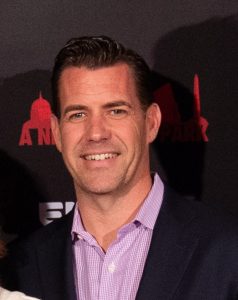
Seeking a replacement for Alderson, the Mets mostly interviewed candidates who were already executives at the major league level. In the end, though, they made the unexpected decision to name longtime player agent Brodie Van Wagenen as their GM.
Mets owners Fred Wilpon and Jeff Wilpon were already plenty familiar with Van Wagenen, who counted big-name Mets Jacob deGrom, Noah Syndergaard and Yoenis Cespedes among his clients when he was with CAA Sports. Now that Van Wagenen is on the Mets’ side, Fred Wilpon believes his “high character, blend of analytics, scouting and development ideas” will help the franchise escape the doldrums.
Guaranteed Contracts
- Yoenis Cespedes, OF: $58.5MM through 2020
- David Wright, 3B: $27MM through 2020 (insurance covers all but $6.75MM)
- Jay Bruce, OF/1B: $26MM through 2020
- Jason Vargas, LHP: $10MM through 2020 (includes $2MM buyout of 2020 club option)
- Juan Lagares, OF: $9.5MM through 2020 (includes $500K buyout of 2020 club option)
- Todd Frazier, 3B: $9MM through 2019
- Anthony Swarzak, RP: $8MM through 2019
Arbitration-Eligible Players (projected salary via MLBTR contributor Matt Swartz)
- Jacob deGrom – $12.9MM
- Noah Syndergaard – $5.9MM
- Zack Wheeler – $5.3MM
- Wilmer Flores – $4.7MM
- Michael Conforto – $4.4MM
- Travis d’Arnaud – $3.7MM
- Steven Matz – $3.0MM
- Kevin Plawecki – $1.3MM
- Non-tender candidates: Flores, d’Arnaud
Free Agents
- AJ Ramos, Devin Mesoraco, Jerry Blevins, Jose Reyes, Austin Jackson, Jose Lobaton, Rafael Montero, Phillip Evans, Jamie Callahan
[New York Mets depth chart | New York Mets payroll outlook]
The Mets started 2018 a red-hot 11-1, but they began an epic nosedive soon after and sat 16 games under .500 at the All-Star break. By then, New York’s chances of contending were out the window, and the question was whether it was going to retain the deGrom/Syndergaard duo past the July 31 non-waiver trade deadline. That same month, the outspoken Van Wagenen proclaimed the Mets should trade deGrom if they weren’t going to extend him. Ultimately, the Mets didn’t reach an extension with deGrom or deal him or Syndergaard. Depending on the Mets’ GM hire, both deGrom and Syndergaard could have been trade candidates this offseason. But with Van Wagenen now calling the shots, the team’s not primed to kickstart a rebuild by parting with either of its superstar hurlers. Rather, according to Van Wagenen, the Mets “will win now,” and they “expect to be in on every free agent.”
In light of Van Wagenen’s free-agent declaration, visions of Bryce Harper and Manny Machado may have been dancing in the heads of the most optimistic of Mets fans. However, even though the Mets play in the majors’ biggest market and have zero dollars on their books past 2020, it’s hard to imagine them reeling in either. For one, there’s no word on how much the Mets are willing to increase their payroll over last year’s $150MM-plus Opening Day sum. Landing Harper or Machado would require a sizable jump over that figure, as the Mets’ payroll is already nearing $135MM heading into 2019. Secondly, the Mets have never even doled out a $150MM guarantee, yet both Harper and Machado could push or exceed $400MM on their next deals.
While Harper and Machado seem likely to be out of New York’s price range, the club could still come away from free agency having made significant improvements. There are more realistic targets out there, including for the Mets’ bullpen, which is a focal point for the team this offseason. Per Van Wagenen, the Mets are seeking “multiple” relievers to upgrade over last year’s bullpen – a unit that was among the majors’ worst. As things stand, right-handers Seth Lugo, Robert Gsellman and Drew Smith are the only current Mets relievers who were remotely effective over a fair amount innings in 2018 (lefty Daniel Zamora also impressed, but he did so over a mere nine frames). There’s a lot of work ahead as a result, though there are also several proven relievers available on the open market.
Click to continue reading…
Looking For A Match In A James Paxton Trade
Earlier this week, the Mariners and Rays made the offseason’s first major trade, a five-player swap in which catcher Mike Zunino and outfielder Mallex Smith changed teams. That may prove to be the first of multiple noteworthy deals Mariners trade-happy GM Jerry Dipoto orchestrates this winter, especially considering his intention to “re-imagine” his team’s roster. The majority of that roster is available for trade, Jon Heyman of Fancred reported prior to the Zunino deal, though he added that outfielder Mitch Haniger, closer Edwin Diaz and left-handed Marco Gonzales appear safe.
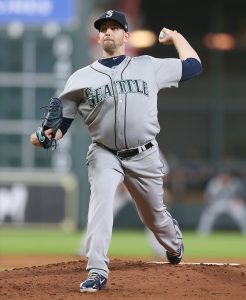
The most interesting name missing from Heyman’s list is Gonzalez’s fellow southpaw starter James Paxton, who’s Seattle’s closest thing to an ace. With the 30-year-old Paxton down to his final two seasons of team control, Ryan Divish of the Seattle Times has heard that the Mariners will trade him this winter.
While Paxton does have a checkered injury history and has only exceeded 160 innings in a year once (last season, when he tallied 160 1/3), the fireballer is still one of the majors’ premier lefties. Paxton has averaged just 24 starts and 139 innings a season since 2016, his breakout campaign, but the Big Maple nonetheless racked up 11.9 fWAR during that three-year span. In that regard, only 12 starters bettered Paxton, who’s sandwiched between Noah Syndergaard and Luis Severino. And since 2017, Paxton ranks fourth among starters in K/9 (11.06), fifth in FIP (2.95), 11th in K/BB ratio (4.61) and tied for 21st in ERA (3.40).
Paxton’s projected to earn $9MM in 2019, a far lighter commitment than the best free-agent starters will rake in this winter, which only adds to his appeal. Acquiring Paxton would still sting a team to a degree, of course, as that club would presumably need to part with a big-time haul to land him. In shipping Paxton out, perhaps Seattle would significantly boost a farm system which has long languished at the bottom of the majors.
Here’s a look at potential suitors for Paxton, going from best to worst record in 2018:
Offseason Outlook: Houston Astros
MLBTR is publishing Offseason Outlooks for all 30 teams. Click here to read the other entries in this series.
The Astros fell just shy of their second straight World Series berth in 2018. Now, with the offseason underway, they’re facing multiple key departures in free agency.
Guaranteed Contracts
- Jose Altuve, 2B: $136.5MM through 2024
- Justin Verlander, RHP: $28MM through 2019
- Josh Reddick, OF: $26MM through 2020
- Yuli Gurriel, INF: $18MM through 2020
- George Springer, OF: $12MM through 2019
- Joe Smith, RP: $8MM through 2019
- Hector Rondon, RP: $4.5MM through 2019
Arbitration-Eligible Players (projections via MLBTR contributor Matt Swartz)
- Gerrit Cole – $13.1MM
- Roberto Osuna – $6.5MM
- Collin McHugh – $5.4MM
- Carlos Correa – $5.1MM
- Lance McCullers – $4.6MM
- Will Harris – $3.6MM
- Ryan Pressly – $3.1MM
- Brad Peacock – $2.9MM
- Jake Marisnick – $2.4MM
- Chris Herrmann – $1.5MM
- Chris Devenski – $1.4MM
- Non-tender candidates: Marisnick, Herrmann
Free Agents
- Dallas Keuchel, Charlie Morton, Marwin Gonzalez, Brian McCann, Evan Gattis, Tony Sipp, Martin Maldonado
[Astros Depth Chart | Astros Payroll Information]
Elite starting pitching was a hallmark of the Astros from 2017-18, but at the outset of the offseason, their rotation has lost quite a bit of luster. The terrific tandem of Dallas Keuchel and Charlie Morton may exit in free agency, while Lance McCullers Jr. will miss all of 2019 after undergoing Tommy John surgery earlier this month. Fortunately for Houston, it still boasts a tremendous one-two punch in ace right-handers Justin Verlander and Gerrit Cole. The team’s starting mix is murkier thereafter, though president and general manager Jeff Luhnow suggested when McCullers went under the knife that the Astros would turn back to Collin McHugh as a starter after he worked exclusively out of their bullpen in 2018.
The 31-year-old McHugh was quietly one of the majors’ most effective relievers last season, so deploying him as a starter would obviously weaken Houston’s bullpen. At the same time, it would give the Astros another viable starter, something McHugh served as from 2014-17. He relieved last season because Houston had incredible starting depth, which isn’t quite the case right now. That’s not to say the cupboard is empty after McHugh, though, as the Astros still possess arguably the game’s No. 1 pitching prospect – towering righty Forrest Whitley, 21 – not to mention fellow top-100 prospect Josh James and swingman Brad Peacock. But Whitley seems likely to open 2019 at Triple-A, a level he hasn’t yet reached, and Peacock could stay in a relief role after totaling just one start in 61 appearances last season. James may have the most realistic chance of the three to begin 2019 in the Astros’ rotation, and the 25-year-old flamethrower did stand out late last season in the majors – albeit over just 23 1/3 innings divided between the rotation and bullpen.
Beyond Whitley, James and Peacock, there are a slew of starting options in the minors who either carry limited track records in the majors or no experience at the game’s highest level, as Jake Kaplan of The Athletic recently detailed (subscription required). With that in mind, it seems clear that restocking their rotation will be a priority for the Astros this winter.
There hasn’t been any word on whether the Astros will make an earnest attempt to re-sign Keuchel, a Scott Boras client who’s on a collision course with a substantial payday. On the other hand, Morton has made it known he’d welcome a return to Houston in 2019. Morton’s on the market unfettered after the Astros surprisingly decided against issuing him a one-year, $17.9MM qualifying offer at the beginning of the offseason. It’s fair to surmise Morton’s age (35 next week) and lengthy injury history played a role in that call, and those factors will also tamp down his earning power on the open market. Regardless, Morton was stellar as an Astro over the past two years – including during a 167-inning, 3.13 ERA showing in 2018 – and would be difficult to replace.
With the futures of Keuchel and Morton in question, the Astros figure to be in on some of the top available starting pitchers in the coming weeks – especially considering Verlander, Cole and McHugh are each signed for just one more season. Luhnow swung blockbuster trades in the past to acquire Verlander and Cole, and he may again go that route to bolster his rotation. It helps that the Astros happen to have one of the game’s most impressive farm systems, which could give them a legitimate chance to win a bidding war for the Indians’ Corey Kluber, Carlos Carrasco or Trevor Bauer (though the latter has had it out with Houston in the past), three front-line starters who each come with two or more years of control. The Indians will at least consider offers on that trio, while another high-caliber arm – James Paxton of the Mariners – may also find himself on the move.
Whether the Mariners would send Paxton to Houston, one of their AL West rivals, is anyone’s guess. The same concerns wouldn’t exist with Zack Greinke, whom the Diamondbacks could part with in a payroll-cutting measure. Even though he’s 35, Greinke remains an outstanding starter. However, he’s owed another $95.5MM through 2021, which not only limits his trade value but could scare off potential suitors (including Houston, though the club could likely afford to take on his contract). More reasonably priced targets may include hard-throwing lefty Robbie Ray, one of Greinke’s Arizona teammates, as well as the Blue Jays’ Marcus Stroman, the Orioles’ Dylan Bundy and the Yankees’ Sonny Gray. Aside from Gray, who’s slated to become a free agent in a year, all of those hurlers come with at least two controllable seasons. And while Stroman, Bundy and Gray struggled in 2018, it’s worth noting each were above average in terms of spin rate, in which the Astros are big believers.
Houston would likely be buying at least somewhat low on Stroman, Bundy or Gray, given the down years they had. Free agent Garrett Richards, another spin rate darling, also stands out as an intriguing buy-low candidate. Having undergone Tommy John surgery last July, Richards probably wouldn’t contribute in 2019. Although, if he inks a two-year deal, he’d be able to help Houston come 2020, when some or all of Verlander, Cole and McHugh could be off the team.
As far as healthy free-agent starters go, perhaps the Astros will explore the top of the market, where Patrick Corbin, Keuchel and Nathan Eovaldi are the headliners. The next tier includes J.A. Happ, Japanese lefty Yusei Kikuchi (if his team posts him), Morton and Hyun-Jin Ryu. It wouldn’t be a surprise to see the Astros come away with any of those starters, barring a trade(s).
A trade may be the Astros’ preferred way to upgrade behind the plate, which seems inevitable. With Brian McCann, Martin Maldonado and DH/onetime catcher Evan Gattis now unsigned, Houston’s down to Max Stassi and recent waiver claim Chris Herrmann as its backstops. Stassi was effective in 2018, especially as a defender, but his offensive production cratered after May. That could help point the Astros back to the Marlins’ J.T. Realmuto, the sport’s premier catcher in 2018. The Astros were in on Realmuto last winter, when they reportedly considered offering coveted young outfielder Kyle Tucker for him, but Miami ultimately retained its franchise player. However, now that Realmuto’s a year closer to free agency and still refuses to sign an extension with the Marlins, a trade’s probably coming sometime soon.
Houston’s certainly a logical fit for Realmuto, though it’ll have some alternatives in free agency if it’s unable to swing a deal with Miami. The leading member of the free-agent group, Yasmani Grandal, has already landed on the Astros’ radar. The 30-year-old Grandal’s the only catcher in the game who was a better pitch framer than Stassi in 2018, and he also brings a track record of quality hitting to the table.
While catcher looks like the Astros’ focus with respect to their position player cast, there are other concerns, including at DH. As excellent as the Astros were from 2017-18, their primary DHs – Carlos Beltran two years ago, Gattis last season – underwhelmed during that span. Sure, Gattis smacked 25 home runs in 2018, but he was a mediocre hitter overall (101 OPS+, 99 wRC+). Meanwhile, even though he was playing his age-38 season, the Mariners’ Nelson Cruz continued to serve as an offensive force. Cruz is now one of the foremost hitters available in free agency, and has drawn the Astros’ interest since the market opened.
Speculatively, the Astros may have other sluggers on their radar, including Diamondbacks first baseman Paul Goldschmidt, Cardinals first baseman/outfielder Jose Martinez, Rays first baseman C.J. Cron and Blue Jays first baseman Justin Smoak. It’s true that Houston already has a starting first baseman in Yuli Gurriel, but he was mediocre in 2018 and may be better served as a utility player. Taking on such a role would enable Gurriel to at least partially replace free-agent Swiss Army knife Marwin Gonzalez, who appears to be on his way to landing a raise outside of Houston.
Gonzalez saw more left field action in 2018 than any other Astro, which could put them in the market for help there if the 21-year-old Tucker’s not ready to assume the reins. If next season began today, Houston would possibly be looking at a Tony Kemp/Jake Marisnick platoon in left. Needless to say, that’s not the most confidence-inspiring duo. If the Astros really want to swing for the fences (no pun intended), they could go after free agent Bryce Harper, whom they nearly acquired from Washington at last summer’s non-waiver trade deadline. On paper, Harper’s projected annual salary ($30MM-plus) would push the Astros’ 2019 payroll to around $165MM – roughly a $5MM boost over last year’s franchise-record Opening Day outlay, and that’s without any improvements at other positions. However, the Astros only have $50MM-plus tied up in their 2020 roster and just $29MM locked in from 2020-24. A Harper pursuit may not be wholly out of the question, then, though the Astros could deem it infeasible with no proven starting pitchers under control past next season and three core players (Bregman, Correa and Springer) possibly due for massive extensions in the coming years.
Should a Harper-Astros union prove to be a flight of fancy, the club could still better its outfield mix in free agency with someone like center fielder A.J. Pollock, who’d enable Springer to move back to a corner on a full-time basis, or a high-profile corner bat such as Michael Brantley or Andrew McCutchen. For the most part, corner outfield trade possibilities don’t look as enticing.
As is the case with every team, the Astros figure to dedicate at least some offseason attention to their bullpen. The unit may lose McHugh to the rotation and lefty Tony Sipp to free agency, after all. Still, with Peacock, Ryan Pressly, Roberto Osuna, Hector Rondon, Will Harris, Chris Devenski and Joe Smith slated to return, the Astros’ relief corps is in enviable shape. If Houston’s bullpen needs anything, it’s a southpaw to complement its septet of accomplished righties. It’s unclear whether the Astros are interested in re-signing Sipp, who bounced back in 2018 after two dreadful seasons. In the event Sipp’s on his way out, Houston may consider fellow free agents Zach Britton, Andrew Miller, Justin Wilson, Oliver Perez and Jerry Blevins to replace him. It’s worth noting the Astros already have connections to four of those players. They unsuccessfully chased Britton and Wilson on the trade market in recent years, traded for Perez in 2015 (it didn’t go well), and made a generous offer to Miller during his previous trip to free agency in 2014.
It’s evident the Astros have an array of plausible paths they could take this winter in order to up their chances of winning a third straight AL West title in 2019 and recapturing World Series glory. Luhnow believes the Astros “have a championship-caliber roster already in place,” but don’t expect him to rest on his laurels in the coming months. With Keuchel, Morton and Gonzalez potentially leaving Houston, inactivity isn’t an option.
Offseason Outlook: Toronto Blue Jays
MLBTR is publishing Offseason Outlooks for all 30 teams. Click here to read the other entries in this series.
The youth movement is on in Toronto, as the Blue Jays will look to continue trading veterans and picking up controllable pieces for the future.
Guaranteed Contracts
- Troy Tulowitzki, SS: $38MM through 2020 (includes $4MM buyout of $15MM club option for 2021)
- Russell Martin, C: $20MM through 2019
- Lourdes Gurriel Jr., IF/OF: $17.4MM through 2023
- Kendrys Morales, DH: $12MM through 2019
- Justin Smoak, 1B: $8MM through 2019 (Jays exercised club option)
Arbitration Eligible Players (projections via MLBTR contributor Matt Swartz)
- Marcus Stroman – $7.2MM
- Ken Giles – $6.6MM
- Yangervis Solarte – $5.9MM (Jays retain control even through Solarte’s $5.5MM club option wasn’t exercised)
- Kevin Pillar – $5.3MM
- Randal Grichuk – $4.8MM
- Aaron Sanchez – $3.8MM
- Devon Travis – $2.4MM
- Ryan Tepera – $1.7MM
- Brandon Drury – $1.4MM
- Joe Biagini – $1.0MM
- Non-tender candidates: Solarte, Pillar
Free Agents
[Toronto Blue Jays Depth Chart; Blue Jays Payroll Overview]
It’s pretty unlikely that any player the Blue Jays acquire this winter will have as much impact on the franchise as Vladimir Guerrero Jr., who is expected to make his long-awaited MLB debut sometime early in 2019. The precise timing isn’t yet known, but there’s no question the club will wait until it is no longer possible for Guerrero to achieve a full year of MLB service time. The consensus top prospect in the sport, Guerrero represents the next generation of Jays baseball, when he and a host of other intriguing youngsters from Toronto’s farm system will theoretically become the core of the Jays’ next contending team.
Until those prospects arrive and develop, however, the Jays will spend their time (perhaps the next two seasons, as per GM Ross Atkins’ rough timeframe) figuring out who will be playing alongside them. The club already began dealing some of its veterans once it faded out of contention last season, and it’s safe to assume the Blue Jays will be open to moving any and all remaining established names to make way for younger talent.
Since the Jays currently have a lot of options for both the infield and outfield spots, Atkins has already said that the team will prioritize moving some of its excess position players to add pitching. The rotation is perhaps the biggest concern heading into 2019, as the Jays are poised to deploy a highly uncertain starting five. Marcus Stroman and Aaron Sanchez are still in the mix. Otherwise, the unit is slated to be made up of largely untested hurlers — Ryan Borucki, and then some combination of Sean Reid-Foley, Sam Gaviglio, Thomas Pannone, and perhaps Jon Harris or Jacob Waguespack.
Stroman received trade interest last summer, even while in the midst of a down year that saw the right-hander post a 5.54 ERA over 102 1/3 IP while battling shoulder and blister issues. The Jays would be selling low on Stroman if they dealt him this offseason, and are perhaps more likely to explore a trade (if at all) during the season, provided the righty is healthy and showing some of his 2017 form. Sanchez is an even greater longshot to be moved, as his stock has fallen after pitching only 141 innings total in 2017-18 due to persistent finger, nail, and blister problems.
Given that even the veteran names in the rotation aren’t certainties, Toronto will look at adding at least one experienced arm on a short-term contract, similar to their signing of Jaime Garcia last winter (obviously with better results, the team hopes). Ervin Santana, Josh Tomlin, Drew Pomeranz, or Martin Perez are a few bounce-back candidates that could conceivably fit as targets on one-year deals, not to mention a familiar face like Marco Estrada, though Estrada’s own struggles in 2018 may lead the Blue Jays to pursue someone with more upside.
If the Jays looked at pitchers beyond one-year commitments, another old friend like J.A. Happ could be a possibility, should Happ value a familiar environment over a chance to compete for the playoffs in 2019. Pitchers like Anibal Sanchez, Gio Gonzalez, or Lance Lynn could fit. Looking to the future a bit, the Jays could consider Garrett Richards, who will miss 2019 recovering from Tommy John surgery but should be ready for 2020 when Toronto is a step closer to contention. Getting even more creative with their starters, the Jays could potentially even use an “opener” for one of the rotation spots, though that is far from a certainty.
Any veteran starter the Jays acquire, of course, could also become a trade candidate at the deadline, and the same goes for any reliever the team might pick up. The Blue Jays have signed and then flipped a number of inexpensive free agent relievers over the last two offseasons (Seunghwan Oh, Joe Smith, John Axford), so expect them to target similar bullpen arms this winter. In terms of in-house relievers that could be traded, incumbent closer Ken Giles is the biggest name, though he might be another player who the Jays wait to properly shop until he improves his value during the season. Giles posted a 4.65 ERA over 50 1/3 total innings with the Astros and Blue Jays in 2018, with some excellent peripherals (9.5 K/9, 7.57 K/BB rate) but also very poor numbers when not pitching in save situations.
The question of “when should an asset be traded?” will certainly linger over Toronto’s offseason, particularly in the wake of the relative lack of return the Jays received for Josh Donaldson last summer, when the former MVP could’ve netted much more prior to his injury-riddled 2018 season. The Jays obviously aren’t going to rush to move a player purely as a reaction to Donaldson’s situation, though selling high on a few players now would make sense given the Blue Jays’ projected timeframe for contention.
Randal Grichuk, for instance, played quite well in his first year in Toronto, though he might not be part of the team’s future since he is eligible for free agency after the 2020 season. Justin Smoak is only under contract through 2019, so it might make sense for the Jays to deal him this winter and create room to give Rowdy Tellez a longer look at first base. Teoscar Hernandez offers five years of control and a lot of power, though his high strikeout totals and near-unplayable outfield glove could make him someone the Jays see as less of a long-term roster piece and more as someone to be dealt in a package for a true long-term asset.
Of course, the Jays would undoubtedly be much more open to dealing Troy Tulowitzki, Kendrys Morales, or Russell Martin, though these high-priced veterans are each more or less immovable. Morales rebounded from a poor 2017 to post above-average hitting numbers (112 OPS+, 108 wRC+) last year, but it would take more than decent numbers to drum up much trade interest in a DH-only player with a $12MM salary.
Martin has at least a little theoretical trade value, perhaps in a swap of bad contracts with a team that needs a catcher, though even that scenario could be hampered by a larger-than-usual number of decent veteran catchers available in free agency. Danny Jansen is slated for the bulk of catching duties for the Jays next season, leaving Martin as a well-paid backup and veteran mentor to Jansen, Luke Maile, and Reese McGuire (plus maybe some backup infield duty).
After missing all of the 2018 season due to heel injuries, Tulowitzki has no trade value whatsoever, and it remains to be seen exactly what the Jays will do with Tulowitzki if he is able to take the field come Opening Day. The shortstop doesn’t appear open to a position switch, and while Lourdes Gurriel Jr. can play several positions around the diamond, the Jays are obviously interested in giving Gurriel more time at shortstop given his status as a franchise building block. One answer could be to deploy Gurriel at third base until Guerrero is promoted, giving the Jays a few weeks to see if Tulowitzki can still contribute, but there is simply so much uncertainty around Tulowitzki’s health that the Blue Jays will consider anything they can get from him in 2019 as a bonus.
With Gurriel penciled in at shortstop, Aledmys Diaz or Brandon Drury are the favorites to be the pre-Guerrero third baseman, and both players should also vie for playing time with Devon Travis at second base. Travis stayed healthy in 2018 but wasn’t very productive, while Drury only played 26 MLB games last season. The Jays would be selling low on either, and could just keep everyone around to compete for the job in the short-term while keeping second base warm for prospects Bo Bichette or Cavan Biggio (or maybe even Gurriel, depending on who ends up playing where in the future). Toronto already declined a club option on Yangervis Solarte and will likely part ways with him, given their other infield options.
More trade possibilities abound in the outfield, as any of Grichuk, Hernandez, or Kevin Pillar could be playing elsewhere on Opening Day. Pillar’s elite center field glove showed some decline last season, dropping to a negative value (-2) in Defensive Runs Saved with only slightly positive grades from UZR/150 (+2.5) and Statcast’s Outs Above Average (+1). Pillar has never been a productive hitter, so if he isn’t offering excellent defense, he doesn’t bring much to the table as an everyday player. At a projected $5.3MM arbitration salary, a case can be made for Pillar as a non-tender candidate, with some combination of Grichuk, Anthony Alford or Billy McKinney then handling center field. That said, it’s also quite possible that another club would like to take a shot on Pillar at that price, particularly since he has another season of arb eligibility remaining. He’s also a candidate to stay and play in hopes that he’ll be of interest at the trade deadline.
Though the Jays have just under $113MM in payroll commitments in 2019, that number drops to under $21MM the following year, and Gurriel is the only player under contract beyond the 2020 season. This opens up more trade possibilities for the team, as Toronto could absorb a large salary from another team in order to also acquire some prospects or MLB-ready talents.
There’s really no shortage of what the Blue Jays “could” do this winter now that the rebuild is fully on, though it’s probably safer to expect a few deals and modest free agent signings (like last offseason) rather than a huge overhaul. As noted, the Jays have so many possible trade candidates still looking to rebuild value (Stroman, Sanchez, Giles, Travis, Pillar) that much of the real heavy lifting on the trade front might not take place until the middle of the 2019 season.
The Jays have already made one intriguing move this winter, however, in hiring Charlie Montoyo as the team’s new manager. Montoyo is a well-respected baseball man with 22 years of experience in the Rays organization as a minor league manager and a coach on the Major League staff, though he has no prior ties to either the Jays, Atkins, or team president Mark Shapiro. This makes Montoyo a completely fresh voice within the dugout, and thus perhaps a fitting choice to steward the Blue Jays into their new era.
Offseason Outlook: Chicago White Sox
MLBTR is publishing Offseason Outlooks for all 30 teams. Click here to read the other entries in this series.
The White Sox will make pitching additions as they begin to see the light at the end of the rebuilding tunnel, and have the payroll flexibility to pursue the biggest names in free agency if they so choose.
Guaranteed Contracts
- Welington Castillo, C: $7.75MM through 2019. Includes club option for 2020.
- Nate Jones, RP: $4.65MM through 2019. Includes club options for 2020 and ’21.
- Tim Anderson, SS: $23.15MM through 2022. Includes club options for 2023 and ’24.
Arbitration-Eligible Players (projections via MLBTR contributor Matt Swartz)
- Jose Abreu, 1B – $16MM
- Avisail Garcia, RF – $8.0MM
- Yolmer Sanchez, 3B – $4.7MM
- Carlos Rodon, SP – $3.7MM
- Matt Davidson, DH/1B/3B – $2.4MM
- Leury Garcia, OF – $1.9MM
- Non-tender candidates: Avisail Garcia, Leury Garcia, Davidson
Free Agents
[Chicago White Sox Depth Chart; Chicago White Sox Payroll Overview]
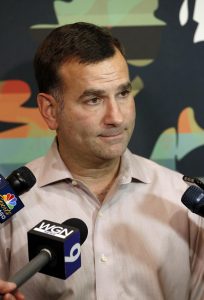
With two rebuilding years in the books, the White Sox figure to make a push toward opening their next competitive window this winter. 2019 might serve as a transitional year, with higher expectations and at least some small chance of reaching the playoffs. GM Rick Hahn explained in September, “We’ve made no secret that when the time comes for as we’ve described adding more finishing pieces that we knew those were going to have to come via free agency. While we are not yet in a position realistically to be adding so called finishing pieces, we are in a position where we need to be opportunistic with regards to the free agent market.”
Let’s take a look at the White Sox payroll situation. With only Castillo, Jones, and Anderson under contract for a total of $13.3MM in 2019, it’s wide open. We project the team’s six arbitration eligible players to total around $36.7MM, though the team could easily jettison Avisail Garcia, Leury Garcia, and Davidson if they feel they have better options. So the team’s likely commitments are in the $38-50MM range. An Opening Day 25-man roster payroll in the range of $110-120MM is plausible, based on the team’s historical spending. Bottom line: this team can afford just about any contract.
In 2018, catching duties were handled by Omar Narvaez, Kevan Smith, and Welington Castillo. Smith has already been lost to the Angels on a waiver claim. Narvaez, 27 in February, has shown himself to be a capable hitter over the last two years. He’s also been one of the game’s worst pitch framers and isn’t adept at throwing out attempted thieves. Castillo was signed a year ago to take on primary catching duties, but he was popped in late May with an 80-game suspension for PED use. The team is set to roll in 2019 with a Castillo-Narvaez tandem, with top catching prospect Zack Collins waiting in the wings.
Jose Abreu just finished his fifth season as Chicago’s first baseman. Abreu, 32 in January, has offered a stabilizing veteran presence for the White Sox. GM Rick Hahn has surely fielded offers over the years, but Abreu’s skillset isn’t one that would likely draw a large return on the trade market. Now, he has only one year remaining until free agency and an ever-growing salary. There’s no reason to push for an upgrade or trade this winter, but any contract extension would have to be fairly modest in nature.
Yoan Moncada, just 23 years old, put in his first full season as the White Sox second baseman. The results were a mixed bag, with about league average offense and the third-highest strikeout rate in baseball. It was still a decent season. The idea of trying Moncada at third base or even center field has been broached, but may not be necessary for 2019. Similarly, shortstop Tim Anderson, 25, put in a useful campaign but still has room to grow. One of the two, more likely Moncada, may be pushed soon by 2018 first-rounder Nick Madrigal. The Sox deployed Yolmer Sanchez at the hot corner this year, and the 26-year-old did acceptable work holding down the fort defensively and bringing energy to the team. He may be best served back in a utility role.
Clearly, there is room for improvement in the team’s infield. The name on everyone’s mind: Manny Machado. Hahn made a trade offer for Machado in December, despite the shortstop’s impending free agency. Perhaps the idea was to help sell Machado on Chicago in an attempt to sign him before he hit the open market. The 26-year-old would easily plug in on the left side of the infield for the White Sox, though I’m guessing the team would have a slight preference to put Machado at third base rather than his preferred shortstop. Still, I don’t think Anderson’s presence will be a major impediment to a possible pursuit. The White Sox check all the boxes for Machado: they have the interest, need, and payroll space.
Though the franchise has never even done a $70MM contract, let alone one that could be more than five times that, there is precedent from almost 20 years ago. Back in 1996, the White Sox signed slugger Albert Belle to a five-year, $55MM deal that was the largest in baseball history at the time. The deal even included a clause that required Belle to remain one of the “top three salaried players for the life of the deal,” as Claire Smith wrote in the New York Times, or else become eligible for free agency. “We’re not being fiscally irresponsible because we can afford it,” said owner Jerry Reinsdorf at the time. On the other hand, baseball salaries have grown well beyond inflation since 1996. $55MM in 1996 is the same as $88MM now – not $350-400MM.
Beyond that, a push for Machado would be slightly wasted if the team wasn’t otherwise built up to contend in 2019 with major pitching additions. Rebuilding teams have certainly signed star players “early” in the past, but getting a five-plus win season from Machado in 2019 is a key part of signing him. So the work wouldn’t be done with just Machado. The Sox could, of course, also look to upgrade at third base with someone other than Machado. They could attempt to trade for Maikel Franco, Kyle Seager, or Jake Lamb or sign Josh Donaldson or Mike Moustakas, for example.
Avisail Garcia is the incumbent in right field. Garcia had multiple DL stints for a hamstring injury this year and was scheduled for knee surgery in October. He’s been a replacement level player for his entire career outside of 2017, and he projects for an $8MM salary in his final season before free agency. Keeping him and hoping for a rebound is a reasonable gamble given the team’s payroll space, but the White Sox could also trade or non-tender Garcia if they are thinking bigger. Like maybe Bryce Harper bigger? The rationale for Harper is much the same as Machado. That said, the White Sox have a long and often contentious history with Harper’s agent, Scott Boras. I don’t know whether Reinsdorf has an appetite for tangling with him on a record-setting contract for Harper, but it’s not out of the realm of possibility.
Left field was manned by many different players for the White Sox in 2018, mainly Nicky Delmonico, Charlie Tilson, Leury Garcia, and Daniel Palka. The team received little production from these players, though Palka showed big power against right-handed pitching. Generally, everyone was just keeping the seat warm for Eloy Jimenez, who is MLB-ready and currently rates as the third-best prospect in baseball. Jimenez figures to finally get the call in late April, allowing the White Sox to control him for the better part of the next seven seasons. Even as a rookie, he might be the team’s best player. Jimenez could be an option at either outfield corner, and he’ll surely be a regular once he’s promoted.
Palka, 27, was a nice waiver claim for the White Sox a year ago. He hit 27 home runs in 449 plate appearances for the Sox this year, and even with a lot of strikeouts and scarce walks, his power plays against right-handed pitching. His defense needs work, and he’s yet to show that he can hit lefties in the Majors. He’s an option to replace or platoon with Garcia in right field, but may be better served in a DH platoon with Matt Davidson. Depending on whether the Sox want to keep Garcia and how they feel about Palka’s defense, they could turn to the market for a better outfielder to pair with Jimenez. Michael Brantley, Andrew McCutchen, and Marwin Gonzalez are the best non-Harper options in free agency. Hahn could also go down a tier to the likes of Adam Jones or Nick Markakis, though neither projects as a difference-maker on the field next year. The trade market has a few decent options, perhaps including David Peralta, Nicholas Castellanos, Jose Martinez, Yasiel Puig, Kyle Schwarber, and Wil Myers.
The White Sox gave most of their center field playing time to Adam Engel, who got the job done defensively but served as one of the worst hitters in baseball. A.J. Pollock is the only real free agent option. He’d be a good fit for the Sox, except that they’d have to forfeit their second-highest draft pick and have their international signing bonus pool reduced by $500K since Pollock received a qualifying offer from the Diamondbacks. There’s a price at which that makes sense. The Sox could also hit the trade market, perhaps for someone semi-interesting like Michael A. Taylor or Odubel Herrera.
The team also must weigh the considerable number of outfield prospects who could arrive in the Majors about a year after Jimenez: Luis Robert, Blake Rutherford, Luis Alexander Basabe, Micker Adolfo, and Luis Gonzalez. There’s an argument for simply adding a stopgap veteran to improve depth in 2019, and then evaluating which prospects are MLB ready for the following season.
The White Sox gave most of their DH time to Davidson and Palka this year. The pair can make for an effective platoon. Still, if the White Sox don’t mind tying up the spot with one player, Nelson Cruz would give an excellent boost to the offense without a long-term commitment or loss of a draft pick.
With James Shields hitting free agency, the White Sox are poised to lose their 2018 innings leader in the rotation. They also lost top young pitcher Michael Kopech to Tommy John surgery in September. Reynaldo Lopez, 25 in January, authored a dominant finish (five runs in his last 40 innings) to push his ERA under 4.00 for the year. The Sox surely hope he’ll be a rotation fixture for the next five years or more. Carlos Rodon, 26 in December, is under team control for three more seasons. He limped to the finish line, allowing 28 earned runs over his last 27 1/3 frames. Both pitchers are locked in for 2019, despite middling peripheral stats that should temper enthusiasm.
It’s difficult to find the bright spots in Lucas Giolito‘s season. The 24-year-old righty put up a 6.13 ERA, 6.5 K/9, 4.7 BB/9, 1.40 HR/9, and a 44.4% groundball rate in 32 starts. Nonetheless, it sounds like Giolito is penciled in for 2019. I imagine he won’t get another 32 starts if he doesn’t take a step forward. Dylan Covey, a 27-year-old former first rounder, had a few flashes of brilliance and should be in the rotation mix. Top White Sox pitching prospect Dylan Cease moved up to Double-A in June and dominated, suggesting a 2019 MLB debut. Dane Dunning should arrive in 2019, as could Jordan Stephens. The team’s 2015 first-round pick, Carson Fulmer, struggled mightily at both Triple-A and the Majors, and will have to pitch his way back into the picture.
Some kind of addition makes sense for this rotation. Again, there’s really no one the White Sox can’t afford. They can throw big money at Patrick Corbin, Dallas Keuchel, or Nathan Eovaldi, or look at more affordable options, including Hyun-Jin Ryu, Gio Gonzalez, Anibal Sanchez, Matt Harvey, Trevor Cahill, Lance Lynn, Wade Miley, or even Shields. If he can be sold on Chicago, 27-year-old lefty Yusei Kikuchi would fit better into the team’s likely window of contention. Garrett Richards would be another forward-looking pickup, since he should return from Tommy John surgery in 2020. The trade market could include Tanner Roark, Sonny Gray, Marcus Stroman, Alex Cobb, Robbie Ray, Dylan Bundy, and Julio Teheran.
Hahn spoke recently of the need to “augment the rotation and the bullpen” this winter, and picked up former top prospect Manny Banuelos as a possible bullpen option. Holdovers in the bullpen will likely include Nate Jones, Jace Fry, Aaron Bummer, and Juan Minaya. DH/first baseman Matt Davidson could contribute more as a mop-up man, which would be a fun story. The Sox also have interesting options who reached the Majors this year in Ian Hamilton, Jose Ruiz, Thyago Vieira, Ryan Burr, and Caleb Frare. Tommy John recipient Zack Burdi could join the mix. I wouldn’t expect the White Sox to spring for Craig Kimbrel, but there’s a slew of solid options they can go after in free agency depending on their willingness to spend.
The White Sox payroll situation cannot be stressed enough: they could theoretically add Machado ($30MM projected annual salary), Corbin ($21.5MM), Pollock ($15MM), and Jeurys Familia ($10MM) and still have a payroll within their historical norms. Most likely, though, the White Sox are a year too early to go nuts in the offseason. If the team falls short on or ignores Machado and other big names, fans can still dream on a strong 2019-20 free agent class.
Photo courtesy of USA Today Sports Images.