
Quick Hits: Rangers, Slater, Groshans, Cabrera
The start of spring training always brings plenty of reports of players experiencing ‘tightness’ or ‘discomfort’, and while many of those wind up being rather minor, the Rangers in particular are dealing with plenty of seemingly minor ailments this spring, as Levi Weaver of The Athletic reports.
Star winter signing Jacob deGrom was experiencing left-side tightness early in camp, but is scheduled to now throw his first live bullpen session on Wednesday, as Evan Grant of the Dallas Morning News reports. Fellow off-season recruit Nathan Eovaldi is also experiencing some left-side tightness, and is taking a few days off. Jon Gray was a late scratch from Friday’s spring game with back tightness, while Jake Odorizzi is dealing with arm fatigue and is a bit behind in his schedule. It doesn’t stop there, as Jose LeClerc and Owen White are both feeling neck tightness.
There doesn’t appear to be a great deal of concern within the Rangers, and instead it seems the team is just being extra cautious so early in the spring. “When we started spring, in addressing the pitchers especially, we said, ‘Hey, in the early part here, let us know. Anything going on, we don’t want any major setbacks. We can back off at this time.’ Spring training can be pretty long, so in the early part, you’re going to be a little bit more cautious,” manager Bruce Bochy said Friday.
Here’s some more bits and pieces from around baseball:
- Austin Slater had an MRI on his elbow but it came back clear, according to Susan Slusser of the San Francisco Chronicle. The Giants announced during the week that Slater would rest for a week with elbow neuritis. The news that the MRI is clear is certainly a positive one for Slater, and it seems it won’t be long before he’s able to make his spring debut for the team. Slater hit .242/.337/.392 with seven home runs across 259 plate appearances for San Francisco last season, and looks set to serve as a bench bat for the Giants with Joc Pederson, Mitch Haniger, Michael Conforto and Mike Yastrzemski to get the bulk of the outfield reps.
- The Marlins are giving youngster Jordan Groshans time at first base this spring, as Jordan McPherson of the Miami Herald reports. Groshans typically handled the other infield spots coming up through the minors, and spent just 40 previous innings at first. Groshans is on the fringes of cracking Miami’s opening day roster, but if he can show he can handle first adequately it would certainly provide a boost to his chances. A first round pick by the Blue Jays in 2018, Groshans came over to the Marlins in the Anthony Bass deal last year. He got a brief cup of coffee in the big leagues, hitting .262/.308/.311 across 65 plate appearances. With Garrett Cooper, Joey Wendle, Luis Arraez and Jean Segura fairly well locked in as Miami’s infield starters, there’s no obvious path to a starting job there but the Marlins bench is a lot less certain, providing Groshans with a solid chance to stick on the active roster to begin the season.
- Speaking of positional changes, the Yankees are planning to give Oswaldo Cabrera some time in center field this spring, Aaron Boone told the YES Network’s broadcast during today’s game against the Rays. Cabrera impressed during his rookie year, posting a respectable .247/.312/.429 line with six home runs across 171 plate appearances. Yet it was his defense that really stood out, as Cabrera, an infielder for almost all of his career, took to the outfield extremely well, earning nine Defensive Runs Saved for his work on the grass. That’s put him firmly in the race with Aaron Hicks, Estevan Florial and Rafael Ortega to be the Yankees’ opening day left fielder. It does seem more likely he winds up in a utility role though, covering the infield, corner outfield spots, and now, perhaps, center field.
Dodgers Weighing Depth Possibilities In Response To Gavin Lux Injury
The Dodgers were dealt a significant blow to their position player group this week. Shortstop Gavin Lux tore his ACL in exhibition play and will miss the entire season. That pushes veteran Miguel Rojas from his expected utility capacity into a regular shortstop role and thins out the overall depth behind Miguel Vargas and Max Muncy at second and third base, respectively.
President of baseball operations Andrew Friedman chatted with reporters this afternoon and left open the possibility the club could go outside the organization to bolster their position player group (link via Bill Plunkett of the Orange County Register). The L.A. baseball ops leader didn’t hint at any urgency to make a move but implied they could look into ways to fortify the offensive group.
“Depth is always something that we talk about,” Friedman told reporters. “It was a big driver for us to go out and get Miguel Rojas and we feel like between him and (Chris Taylor) that we’re in a good spot. … So for us, if we are going to add from the outside it’s going to be something that fits us differently or is a more impactful player in our mind.”
Friedman noted the club wasn’t limiting themselves solely to exploring the market for shortstop-capable players. That’s tied to Taylor’s versatility, in particular, as he’s capable of lining up essentially anywhere on the diamond. Acquiring a corner outfielder, for instance, could indirectly add to the infield depth by freeing Taylor up for more work on the dirt.
Plunkett writes that any addition, if one comes to fruition, is likelier to come via trade than free agency. Jurickson Profar is the top unsigned position player, while José Iglesias leads the market of remaining free agent shortstops. Identifying viable trade targets is quite difficult at this stage of the offseason. The trade market has been quiet all winter and particularly frigid in recent weeks. The majority of teams have more or less set the core of their season-opening rosters, and there are only a handful of clubs going into the year without any real designs on being competitive.
“It’s difficult. It’s not the most natural time to make a trade,” Friedman acknowledged. “So we’ll spend more time figuring out what’s possible. We’re not sure at this point and we’re trying to wrap our arms around the various profiles of a player and how it would fit. … It just depends on what’s available. Just because of spring training and the nature of it and typically, it’s a slower trade market and more centered around guys without (minor league) options. Now, there could be players like that who fit as well, or it could be someone internal.”
Baltimore’s Jorge Mateo, Kansas City’s Nicky Lopez, the Cubs’ Nick Madrigal and the Yankees’ Isiah Kiner-Falefa are among the players whose names have been floated as candidates to change uniforms this offseason — either in publicly reported trade discussions or loose speculation based on those clubs’ infield situations. Buster Olney of ESPN reported this morning the Dodgers had checked in with the Yankees regarding Kiner-Falefa early in the offseason. That was before L.A. acquired Rojas, an acquisition that would’ve almost assuredly ruled Kiner-Falefa out of the plans until Lux’s injury.
There’s no indication the Dodgers and Yankees have revisited those discussions in the past few days or have any plans to do so. It stands to reason the Yankees would welcome talks if the Dodgers were to circle back to him as a possible target. Kiner-Falefa is playing this season on a $6MM arbitration salary; he’s on hand as a possible utility option but could lose the starting shortstop job in the Bronx to top prospect Oswald Peraza. New York is reportedly reluctant to exceed the $293MM final luxury tax barrier — which they’d do with any kind of notable acquisition — and Kiner-Falefa is perhaps the most straightforward candidate on the roster for a trade that could free up some spending capacity.
The Dodgers themselves were flirting with the possibility of dipping below a luxury tax tier, in their case the $233MM base threshold. The Rojas acquisition put that to bed, however, and Friedman has subsequently affirmed they have no plans to shed money and get under the CBT marker at this point. That doesn’t provide much insight into how much room they have for further additions, however. Roster Resource currently projects their luxury tax number around $245MM, which puts them approximately $8MM shy of the second penalization tier.
If they don’t go outside the organization, the Dodgers would run with a regular infield of Freddie Freeman, Vargas, Rojas and Muncy across the diamond. Taylor could step in at times but would presumably spend more time in left and center field, while right fielder Mookie Betts could see some action at second base.
Yankees Interested In Adding Catching Depth
The Yankees are looking to bring in some extra catching depth, according to Erik Boland of Newsday (Twitter links).
The club’s primary backstops last year were Jose Trevino and Kyle Higashioka. Both of those players are still with the team this year and both are healthy. However, the depth options below that tandem have been banged up recently.
Ben Rortvedt recently required shoulder surgery and will be shut down for at least a month. It was reported yesterday that Austin Wells has a broken rib and will be out of action for six to eight weeks, per Marly Rivera of ESPN and Chris Kirshner of The Athletic. Today, Josh Breaux was added to the pile with reports that he has an elbow injury and won’t throw for a few weeks, per Kirshner and Bryan Hoch of MLB.com.
Given all those injuries, it’s not surprising that the club is looking to bring in a fresh body, especially for Spring Training. There are often many split squad games, side sessions, intersquad games, live bullpens and so on, in order for the entire pitching staff to get up to speed for the season. In addition to the injuries, Higashioka is set to depart soon to participate in the World Baseball Classic for Team USA.
The idea of the Yankees pursuing a catcher might have some fans dreaming of a reunion with Gary Sánchez as the former Yankee is clearly the top catcher still available in free agency. However, Boland throws cold water on that, suggesting the addition would be someone more like Rob Brantly, who was with the Yanks last year. Brantly is in camp with the Blue Jays on a minor league deal, but that veteran journeyman is more the kind of player the Yankees are looking to bring in.
Aside from Sanchez, there are still a few catchers that remain unsigned, such as Robinson Chirinos, Chris Okey, Beau Taylor, Deivy Grullón, Joseph Odom and Ryan Lavarnway, though Lavarnway is slated to play for Team Israel in the WBC and is presumably less available than the others.
AL Notes: Alvarez, Torres, Flexen
Astros GM Dana Brown discussed star slugger Yordan Alvarez‘s health during an appearance on an ESPN game broadcast today, telling ESPN broadcasters that “He should definitely be back for Opening Day. His hands were a little sore. He had some of that last year, but we feel totally confident that he’ll be in games somewhere midway through (Spring Training). But he’s already feeling a lot better.”
The news that Alvarez should be ready for opening day is surely a relief for Astros fans, as the slugger is among the most important players in the star-studded Astros lineup that took home a World Series championship in 2022. Alvarez hit an astonishing .306/.406/.613 with 37 home runs in just 135 games last season. By measure of wRC+, Alvarez was 85% better than the league average hitter in 2022, a fantastic figure only topped by reigning AL MVP Aaron Judge last year.
As Brown mentioned, Alvarez dealt with hand issues throughout the 2022 season, going on the injured list in July and missing time with the issue occasionally throughout the season. Those issues clearly did not hamper his production in 2022, so the fact that Alvarez is not expected to miss time to open the regular season is an encouraging development as he looks to follow up on a season that cemented him among the best hitters in the entire sport and the Astros look to hold off the Mariners, Angels, and Rangers in an AL West that should see all four clubs vying for playoff spots this season. That being said, the situation will remain one to keep an eye on until Alvarez returns to game action, as he’s currently slated to do next month.
More from around the American League…
- Yankees second baseman Gleyber Torres did a Q&A with The Athletic’s Chris Kirschner today, where the pair discussed an area of topics, including the recent trade rumors that have swirled around Torres. In the interview, Torres notes that he loves playing in New York and would like to spend the rest of his career with the Yankees, though he did note that hearing about the trade rumors was “really hard”, particularly around the trade deadline last season, and that though his representatives have spoken to the front office about a possible extension, he hasn’t had any conversations with GM Brian Cashman or Manager Aaron Boone on the subject personally. Torres, who slashed .257/.310/.451 (115 wRC+) last year, is set to hit free agency following the 2024 campaign.
- Another player who found himself in the rumor mill this offseason was Mariners right-hander Chris Flexen. As Flexen told Ryan Divish of The Seattle Times and other reporters, the experience of expecting a trade was a harrowing one for him, as well. “It wasn’t the best, but I’m still wearing ‘Mariners’ across my chest. I’m happy to be here.” Flexen was pushed to the bullpen down the stretch last season following Seattle’s acquisition of ace Luis Castillo, and there doesn’t appear to be a clearer path to the rotation entering 2023, though the Mariners are currently stretching him out in case of injury. Still, Flexen excelled out of the bullpen in 2022, posting a 1.62 ERA in 16 2/3 innings as a reliever last year, so a return to the bullpen could still see Flexen impact the club in a major way headed into the regular season.
Read The Transcript Of Our Live Chat With Former MLB Outfielder Billy Sample
Of our ever-growing list of current and former MLB players to hold live chats here, Billy Sample is the first to have played in the 1970s.
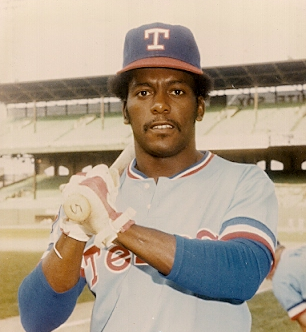
The Texas Rangers came to be in 1972, and the following year they drafted Sample, a three-sport star, out of Virginia’s Andrew Lewis high school. He did not sign at that point, instead attending Madison College (now James Madison University). Sample boosted his stock and became a 10th round pick of the Rangers in 1976.
Billy was a September call-up for the Rangers in 1978, leading off a game against the Brewers and singling to right field on his first Major League pitch. In 1979, Sample served as the Rangers’ primary left fielder. He posted a fine .292/.365/.415 line at the plate, striking out only 7.4% of the time.
In 1981, Sample enjoyed a 19-game hitting streak, and in 1983 he ranked fifth in the American League with 44 stolen bases. He had an excellent 84.6% success rate on swipes that year.
In February of 1985, the Rangers traded Sample to the Yankees with a player to be named later for Toby Harrah. After one season in New York, Sample was traded again to the Braves.
Though more of a speedster than a home run hitter, Sample left the yard 46 times in his nine-year MLB career. The list of pitchers he took deep include Hall of Famer Dennis Eckersley, Mark Langston, Dennis Martinez, and Cy Young winners Vida Blue, Mike Flanagan, Mike Scott, and LaMarr Hoyt. One of Sample’s many memorable moments included a walk-off home run against the Angels’ Don Aase in 1982.
Sample played during an interesting time in MLB history, being drafted months after free agency came to the sport. He was part of the 1981 strike, in which 713 games were cancelled, and can count many legendary players as former teammates.
According to his Wikipedia entry, which Billy suggested I reference for his post-playing career, “Sample has broadcast for the Braves, Seattle Mariners, and California Angels, as well as contributing to NPR, CBS Radio, ESPN, and MLB.com. As a writer, Sample has been published in Sports Illustrated and The New York Times, and was one of the columnists at the inception of USA Today’s Baseball Weekly (now Sports Weekly).” Billy has also written and produced a movie and self-published a book.
Billy graciously lent his time to chat with MLBTR readers today, spending over four hours discussing his career on the field, what life was like for players off the field in his time, the collusion of the ’80s, broadcasting and so much more! Click here to read the transcript!
Are you a current or former MLB player? We’d love to have you on for a one-hour chat. Click here to contact us.
AL East Notes: Manoah, Shapiro, Rortvedt, Bautista
“I don’t think there’s been any talks about anything” involving a long-term extension between Alek Manoah and the Blue Jays, the right-hander told Sportsnet’s Shi Davidi. Noting that he is under team control through 2027, Manoah didn’t seem to expect any negotiations in the near future, saying “I don’t think I’m a priority right now.” The right-hander did state that “there’s no hard feelings, it’s just the business part of it” in regards to both the lack of talks, and Manoah’s decision to again take a salary renewal from the Jays rather than officially agree to their offered salary for his pre-arbitration season. Manoah will earn $745,650 in 2023, and he might become eligible for arbitration as early as next winter if he gains Super Two status.
Extending Manoah would give the Jays come cost certainty over what might be some increasingly pricey arbitration years, given how impressive he has looked in his first two MLB seasons. After a strong rookie campaign, Manoah took things a step further in his first full season, posting a 2.24 ERA over 196 2/3 innings and finishing third in AL Cy Young Award voting. If an extension didn’t come, Manoah said “I’m completely happy riding out that [arbitration] process and allowing the team to go spend money on other guys and me continuing to earn my value and earn what I hope to get one day,” though he also stated that “I want to play in Toronto for a long time.”
More from around the AL East…
- Sticking with the Blue Jays, there was some surprise that the team surpassed the luxury tax threshold for the first time this winter, and bumped its real-dollars payroll from $175MM (already a club high) in 2022 to a projected $211.7MM heading into Spring Training. But, team president Mark Shapiro told The Toronto Star’s Gregor Chisholm that “on the expense side, this is the way we envisioned it” after going through their rebuilding phase. “Once we have that mass of talent, we want to put it in a position to sustainably be a championship-calibre team. So we need to surround it with talent, where we have gaps,” Shapiro said. “But not build the team solely through free agency, supplement a team through free agency….The thought was we’d always have to ramp up payroll as we went.” The Jays have some regular shoppers in the higher-end free agent market over the last four offseasons, signing such players as George Springer, Hyun Jin Ryu, Kevin Gausman, and (most recently) Chris Bassitt to expensive long-term deals, while also investing in some pricier trade targets and contract extensions.
- The Yankees announced earlier this week that catcher Ben Rortvedt underwent surgery to remove an aneurysm in the posterior artery near his left shoulder, and that he’ll miss at least a month before resuming baseball activities. The injury was “really shocking” to Rortvedt, as he told The Athletic’s Brendan Kuty, since he first assumed that the soreness in the pointer finger of his glove hand was a normal side effect of catching. But, after he noticed his finger was starting to turn blue, Rortvedt went for further examination, and apparently not a moment too soon. According to orthopedic surgeon Dr. Armin Tehrany, such a circulation problem created “the risk of permanent soft tissue damage,” and Rortvedt “might [have needed] to get something amputated.” Fortunately, it looks like Rortvedt won’t miss all that much time, and the catcher will finally get to start his Yankees career after missing the 2022 season due to oblique and knee injuries.
- Felix Bautista threw another bullpen session today, MASNsports.com’s Roch Kubatko writes, as the Orioles closer was aiming to ramp up to 80-85 percent readiness. Bautista is still recovering from left knee problems that cropped up at the end of last season, as well as an offseason problem for strengthening his throwing shoulder. Today’s work marked Bautista’s sixth throwing session overall, so he appears to be on pace to reach his stated goal of making the Opening Day roster. Bautista’s first MLB season was a thorough success, as he posted a 2.19 ERA and an elite 34.8% strikeout rate (albeit with a below-average 9.1% walk rate) over 65 1/3 innings, becoming one of many breakout players for the surprising Orioles.
Yankees’ Ben Rortvedt, Frankie Montas Undergo Surgery
Yankees catcher Ben Rortvedt and right-hander Frankie Montas both underwent surgery Wednesday, manager Aaron Boone announced to reporters (Twitter links via Bryan Hoch of MLB.com). Montas was already known to require arthroscopic surgery on his shoulder, and today’s procedure is now being classified as a cleanup of his labrum. His rotator cuff did not require repair. Montas will be cleared to resume throwing in approximately 12 weeks and could still return this season.
Rortvedt, meanwhile, has been bothered by a finger ailment that doctors had been unable to pinpoint in recent days. He met with a specialist yesterday. The operation addressed an aneurysm near the posterior in his left shoulder, which had impacted the circulation in his hand and finger. He’ll be shut down from all baseball activity for at least the next month.
The injury to Montas is an obvious blow for a Yankees club that hoped for a healthy Montas in 2023 — one that resembled his standout form with the Athletics more than the diminished version of Montas they saw following last summer’s trade. The right-hander had dealt with shoulder troubles shortly before the trade deadline, but the Yankees were clearly convinced that the issue was minor and that they’d be getting something close to the pitcher who’d posted a 3.30 ERA with strong strikeout and walk rates from Opening Day 2021 through the 2022 trade deadline.
Instead, the Yankees received eight rough outings from Montas down the stretch and will now be without him for the majority of the 2023 campaign, after which he’s slated to become a free agent. New York also picked up righty reliever Lou Trivino in that swap, and he delivered 21 2/3 innings of 1.94 ERA ball down the stretch. He’s controlled through the 2024 season, but the trade with the A’s will still feel rather steep, given that the Yankees sent prospects Ken Waldichuk, JP Sears, Luis Medina and Cooper Bowman to Oakland in return for Montas and Trivino. The Yankees reportedly do not plan to pursue a trade to replenish the pitching depth lost with Montas’ injury.
As for Rortvedt, he came over to the Yankees alongside Josh Donaldson and Isiah Kiner-Falefa in the trade that sent Gio Urshela and Gary Sanchez to the Twins last offseason. A former second-round pick who’s regarded as a glove-first option behind the dish, the 25-year-old Rortvedt played in only 48 minor league games in 2022. He spent most of the season on the Major League injured list due to a severe oblique strain and was optioned upon activation. He spent six games in the low minors before heading to Triple-A Scranton/Wilkes-Barre, where he turned in a .221/.307/.396 batting line with six home runs and a 10.2% walk rate but also a troubling 32.2% strikeout rate in 177 plate appearances.
Rortvedt has appeared in 39 big league games, all with the Twins, and posted a .169/.229/.281 batting line with a 29.6% strikeout rate in 98 trips to the plate. He has a minor league option year remaining — which is crucial, given that Jose Trevino and Kyle Higashioka are lined up as the primary catchers to begin the season — and can be controlled for at least five more years.
AL Notes: Judge, Brash, Tigers, White Sox
After spending most of his career in right field and spending much of 2022 in center, it’s possible the reigning AL MVP will be taking reps in left field this spring. Yankees manager Aaron Boone tells reporters, including MLB.com’s Bryan Hoch, that Judge playing some left field is “on the table” for this spring.
Joel Sherman of the New York Post reported yesterday that this was a consideration, with the goal being to allow slugger Giancarlo Stanton, who figures to be the team’s primary designated hitter, to play right on his days in the outfield due to Yankee Stadium’s outfield being far more spacious in left than in right. For his part, Judge told reporters, including ESPN’s Marly Rivera, that he wouldn’t mind Stanton playing more right field and taking reps in left if needed.
Stanton struggled with durability early on in his Yankees career, including just 41 games played in the 2019 and 2020 seasons combined. Since then, his transition to primarily playing DH has seemingly helped him stay on the field, as he played 249 games combined across the past two seasons, with just 64 of those games including an appearance in the outfield. In 2022, 34 of Stanton’s 38 games in the outfield took place in right, as Judge spent most of his time in center field. This year, 2022 trade deadline acquisition Harrison Bader figures to get most of the reps in center field, leaving Judge to spend more time in left if Stanton is to continue to make most his outfield starts in right.
More from the American League…
- The Athletic’s Corey Brock discussed yesterday the role of Mariners right-hander Matt Brash, who is set to begin the 2023 season as a member of the bullpen. Brash made the 2022 Opening Day roster as a starter but struggled mightily, posting a 7.65 ERA across five starts before being demoted to Triple-A. Brash returned later in the season as a reliever and dominated, posting a 2.35 ERA in 30 2/3 innings of work out of the bullpen down the stretch. Brock notes that Brash hopes to get another shot at starting in the future, and though he isn’t being stretched out this spring, the Mariners remain open to the possibility down the line.
- Tigers president of baseball operations Scott Harris spoke to the media, including Chris McCosky of The Detroit News, yesterday about the relatively quiet offseason in Detroit. Harris made note that, follow a disappointing 96-loss season, it didn’t make sense to acquire short term veterans who would take up what he called valuable at-bats that could go to young players who would be part of the next core. Detroit acquired a few such players, particularly in the trade that sent reliever Gregory Soto to the Phillies. That deal brought back Matt Vierling, Nick Maton, and Donny Sands, all of whom figure to get playing time in the big leagues with Detroit in 2023.
- Staying in the AL Central, White Sox GM Rick Hahn discussed how Chicago’s offseason had gone with reporters yesterday, including James Fegan of The Athletic. The White Sox made three key additions to their roster following a disappointing 81-81 campaign, signing righty Mike Clevinger, outfielder Andrew Benintendi, and most recently infielder Elvis Andrus to big league deals, with Benintendi’s five-year, $75MM contract being the only multiyear pact of the group. Hahn, referring back to his comments earlier in the offseason that he expected the club to be active on the trade market, noted the discrepancy between that expectation and what came to pass, saying “I did expect there to be more trades… You go into the offseason with needs and potential fits, and over the course of the offseason, you adjust based on what’s viable, both in free agency and via trade. Sometimes teams are pricing guys differently than expected.” As Fegan notes, a quiet offseason on the south side is somewhat unsurprising giving the club’s stated expectation that payroll would stay largely static headed into 2023.
Big Hype Prospects: Volpe, Wesneski, O’Hoppe, Harrison, Brujan
This week on Big Hype Prospects, we continue our offseason tradition of focusing on players tangentially linked to news and rumors.
Five BHPs In The News
Anthony Volpe, 21, SS, NYY (AAA)
(AA) 497 PA, 18 HR, 44 SB, .251/.348/.472
True to their word, the Yankees never got around to solving their left field opening with an external addition. Nor did they upgrade Josh Donaldson after the veteran turned in his worst-hitting performance since 2012. The club has opted to go with internal depth like Aaron Hicks, Oswaldo Cabrera, Oswald Peraza, and Isiah Kiner-Falefa. Also factoring into the calculus is the imminent arrival of Volpe.
The 21-year-old slugger has only 99 plate appearances of experience at Triple-A and posted a modest 91 wRC+ at the level. While minor league data isn’t comprehensive, there’s evidence Volpe was too patient with pitches inside the strike zone. A repeat at the level makes sense given the personnel already on hand in the Majors. It would require an incredible Spring Training for Volpe to crack the Opening Day lineup. In the interim, with Gleyber Torres participating in the World Baseball Classic, Volpe should have more opportunities for middle infield game reps.
Hayden Wesneski, 25, SP, CHC (MLB)
(AAA) 110.1 IP, 8.6 K/9, 2.9 BB/9, 3.92 ERA
With Kyle Hendricks expected to begin the season on the injured list, the Cubs have a battle for the fifth rotation slot. The most intriguing entrant is Wesneski, a right-hander who showed a knack for avoiding hard contact in a brief 33-inning trial last season. Wesneski features a five-pitch repertoire including three distinct fastballs, a slider, and a changeup. While he doesn’t project to run rampant strikeout totals in the Majors, Wesneski is stingy about allowing hits and walks. It’s a Jameson Taillon-like profile, and it’s probably no accident the Cubs acquired both players in the last calendar year.
Logan O’Hoppe, 23, C, LAA (MLB)
(AA) 447 PA, 26 HR, 7 SB, .283/.416/.544
Acquired at the previous trade deadline for formerly hyped prospect Brandon Marsh, O’Hoppe will compete with Max Stassi for a starting role on the thirsty Angels. Although the right-handed hitter has yet to play in Triple-A, the Angels gave him a vote of confidence in the form of 16 Major League plate appearances last fall. O’Hoppe took advantage of hitter-friendly conditions to torch Double-A pitching. His 2022 breakout included improved plate discipline without sacrificing aggression against pitches in the heart of the zone. This is a relatively rare adjustment. Should he seize the Opening Day job, keep an eye on his plate discipline metrics. If he retains his selective aggression, O’Hoppe could emerge as one of the top catchers in the league.
Kyle Harrison, 21, SP, SFG (AA)
(AA) 84 IP, 13.61 K/9, 4.18 BB/9, 3.11 ERA
Including High-A, Harrison threw a total of 113 innings. He should approach a full complement of 30 starts this season – perhaps with a mix of longer and shorter outings to manage his workload. The Giants put together a deep pool of Major League starters. In addition to the presumed starting five of Logan Webb, Alex Cobb, Sean Manaea, Ross Stripling, and Alex Wood, Jakob Junis and Anthony Desclafani await in the bullpen.
While Harrison finds himself behind a number of very qualified starters, the pool of viable minor leaguer replacements is relatively thin. This is also a group of veterans who (mostly) have familiarity with major injuries. This apparent depth could evaporate at a moment’s notice, offering a temporary opportunity for Harrison to audition. As of last look, command is Harrison’s greatest weakness. Most scouts think he’ll develop in this regard. If not, his stuff is sufficient to support him in short-burst starter or elite fireman roles.
Vidal Brujan, 25, 2B/OF, TBR (MLB)
(MLB) 162 PA, 3 HR, 5 SB, .163/.228/.259
Although technically no longer a prospect, Brujan still fits a looser definition of an “unestablished, young player.” He’s also received plenty of hype over the years. Brujan doesn’t fit cleanly on this iteration of the Rays roster, leading MLBTR staffer Anthony Franco to consider him a trade candidate. The switch-hitter has struggled to make impactful contact at the top level, though he has posted an above-average batting line at every minor league level – aside from nine plate appearances at Low-A in 2016. At one point, prospect watchers secretly hoped Brujan would flip a power switch like similarly-built infielder Jose Ramirez. Now it’s looking likelier Brujan settles as a defense-first regular with a contact-forward hitting approach.
Three More
Thad Ward, WSH (26): Although I’ve yet to hear of the Nationals planning to use Ward as a starter this season, the absence of Stephen Strasburg creates a tempting opportunity. Ward has served as a starter throughout his minor league career and profiles as a potential rotation regular. The Nationals are in a state of internal evaluation and have little reason to withhold starts from their Rule 5 pick.
James Outman, LAD (25): After spending much of the offseason with a clear path to a starting role, Outman now finds himself locked behind David Peralta. As a fellow left-handed hitter, Outman faces an uphill battle for regular reps.
DL Hall, BAL (24): Hall is currently behind schedule due to lower back discomfort. The oft-injured southpaw already looked questionable to make the Opening Day rotation. This setback only increases the risk of a minor league assignment. While Hall undoubtedly could play as a Major League reliever, the club is still assessing his potential as a starter.
AL Notes: Twins, LeMahieu, Means
Twins president of baseball operations Derek Falvey told reporters, including Dan Hayes of The Athletic, that right-handed prospect Jordan Balazovic will miss the start of Spring Training due to a broken jaw stemming from “an altercation away from the field.” A source with the team indicated to Hayes that Balazovic suffered the injury following a verbal altercation last Saturday, though Balazovic did not retaliate physically. Balazovic underwent surgery and is currently unavailable, though he could begin to play catch in seven to 10 days.
Balazovic came into the 2022 season viewed as a consensus top 100 prospect but struggled mightily with injuries and ineffectiveness last year. He was out until May 1 last year with a knee injury and then struggled to a 7.68 ERA in 72 2/3 minor league innings last year while pitching almost exclusively at the Triple-A level. Now it appears his 2023 is off to a rocky start of its own. Fortunately for Minnesota, the club has an impressive amount of starting pitching depth, with Pablo Lopez, Tyler Mahle, Sonny Gray, Joe Ryan, Kenta Maeda, and Bailey Ober all capable big league starters even with Chris Paddack set to spend most of the 2023 season on the injured list.
Elsewhere around the AL…
- Sticking with the Twins, center fielder Byron Buxton and first baseman Alex Kirilloff are both in places the club is comfortable with health-wise at this point in the spring, according to Hayes. Buxton is fully recovered from last year’s knee surgery and is playing without limitations, while Kirilloff, Falvey notes, is behind most other hitters as the organization plans on taking things slowly with him following his second wrist surgery, which Hayes notes was particularly intensive. Both figure to be part of the Twins Opening Day lineup if healthy, though the Twins acquired Michael A. Taylor earlier this offseason in part as insurance in center if Buxton continues to struggle to stay healthy, while rumors of the clubs interest in a veteran, right-handed complement to Kirilloff at first base have percolated throughout the offseason.
- Yankees infielder DJ LeMahieu talked with reporters this morning, including Erik Boland of Newsday Sports and Bryan Hoch of MLB.com. LeMahieu noted that he is at “100 percent” as he enters camp this spring, able to play with no limitations. In addition, LeMahieu says he’s excited to play in a utility role for the Yankees this season. With Anthony Rizzo at first base and Gleyber Torres at second, while Oswald Peraza, Oswaldo Cabrera, and Isiah Kiner-Falefa all expected to mix and match at shortstop and with Josh Donaldson at third base, at least until top prospect Anthony Volpe is ready to contribute, LeMahieu figures to pick up playing time at each of first base, second base, and third base this season. LeMahieu played second base almost exclusively prior to signing with the Yankees ahead of the 2019 season, but since then has moved around the infield more often, racking up 872 innings of work at first base and 1,171 innings at third base in a Yankees uniform.
- While Orioles left-hander John Means won’t factor into the Baltimore Opening Day rotation, he certainly seems to be on the right track to have an impact on the club at some point this season. Orioles manager Brandon Hyde told reporters, including Roch Kubatko of MASN, that means will begin throwing off a half mound sometime in the coming week. Means has had the look of a solid mid-rotation starter since taking on a full-time role in 2019, pitching to a 3.72 ERA (124 ERA+) in 353 1/3 innings over that time while earning an All Star appearance and finishing second in AL Rookie of the Year voting for his 2019 season, where he posted a 3.60 ERA (131 ERA+) in 155 innings of work. Whenever Means is ready to return, he’ll be a welcome addition to a rotation that saw Kyle Gibson replace outgoing veteran righty Jordan Lyles and added lefty Cole Irvin in a trade with Oakland this offseason.