
The 14 Likeliest Trade Candidates After The Lockout
We saw robust free agent activity prior to the December 1st lockout, with 30 of our top 50 free agents signing contracts. Over $2 billion was committed to 62 players on Major League contracts, by our count.
With all the focus on free agency, the trade market was relatively quiet. Position players Tucker Barnhart, Adam Frazier, Jacob Stallings, Joey Wendle, Jorge Alfaro, Hunter Renfroe, and Jackie Bradley Jr. were the biggest names on the move.
Though the lockout does not appear close to an end, we can assume it will conclude at some point. Once that happens, a scramble roughly four-to-six weeks in length seems likely to commence, in which both Spring Training and all remaining offseason transactions will take place. Aside from the expected free agent frenzy for the top remaining names, the trade market figures to kick heavily into gear.
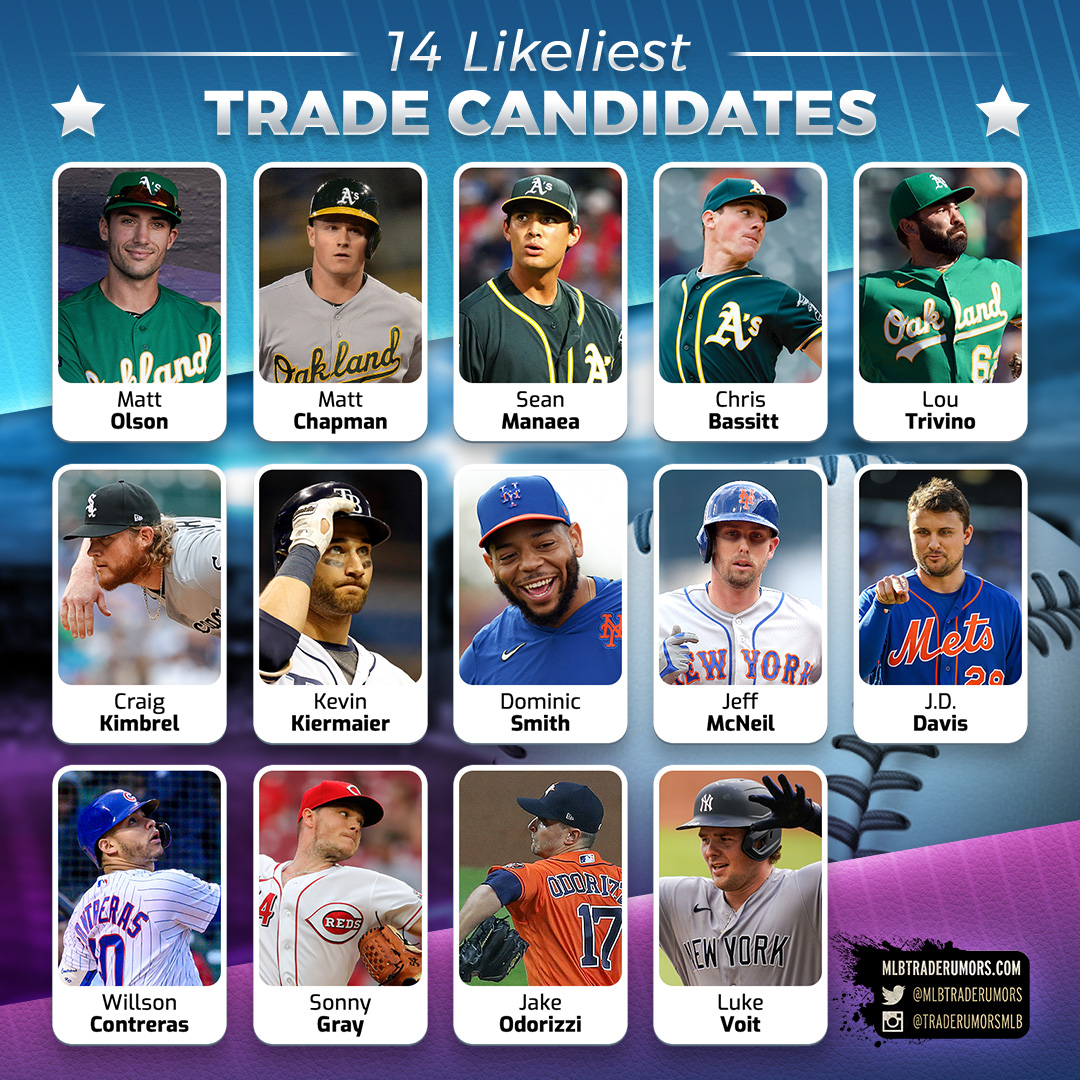
Recently, I got together with Steve Adams and Anthony Franco to assess the potential trade market. We wound up putting trade candidates into several buckets. The first bucket, covered in this post, is simply players we feel are likely to be traded, whether stars or regulars. One caveat: many of these trade candidates are interconnected. For example, the A’s are almost certain to trade at least one of Sean Manaea, Chris Bassitt, and Frankie Montas, but we don’t expect them to trade all three. Without further ado, we present MLBTR’s 14 Likeliest Trade Candidates:
1. Matt Olson / 1B / Athletics
The A’s are widely expected to hold a fire sale as a means of reducing their payroll. Olson, who we project to earn $12MM in 2022 through arbitration, seems highly likely to be dealt. Olson is controlled for two more years through arbitration. He provides huge power from the left side and is set to turn 28 in March. Olson’s 39 home runs were tied for fifth in the AL last year, as was his 146 wRC+. Olson is not only known for his bat; his defense at first base ranked second in the game in the 2021 Fielding Bible Awards. It’s simply quite rare to find a 5-WAR player with two years of control like Olson available on the trade market; the last decent offseason comparable we can find is when the Marlins traded J.T. Realmuto to the Phillies three years ago.
There aren’t too many teams that couldn’t find a spot for Olson. He’s probably the one reasonable replacement for Freddie Freeman that Braves fans might find palatable. The Yankees, Dodgers, Rays, Rockies, Marlins, Brewers, Phillies, Padres, and Giants are other speculative fits, especially if the DH comes to the NL as expected. The Realmuto trade was led by Sixto Sanchez, considered a 65-grade prospect by Baseball America at the time of the deal. Teams these days are extremely reluctant to part with prospects of that caliber, who generally fall within the top 30 in the game. The A’s are in the driver’s seat as they look for the best overall offer.
2. Matt Chapman / 3B / Athletics
The Matts have been teaming up at the infield corners for the A’s since 2018. It’s quite possible both could be traded once the lockout ends. Chapman has consistently been an above average hitter in every year of his MLB career, though in 2021 he was only a tick above average with a 101 wRC+. In the three seasons prior, Chapman posted a 130 mark, hitting a career-best 36 home runs in 2019. Combine that level of offense with Chapman’s Gold Glove defense at the hot corner, and he was an MVP candidate in 2018-19. He’ll turn 29 in April.
Chapman’s stellar defense – ranked second in the game at third base in the ’21 Fielding Bible Awards – gives him a high floor even if his bat slips like it did in 2021. Chapman is so good defensively at third base that ESPN’s Buster Olney has reported that the Yankees talked internally about the possibility of acquiring him to play shortstop, which he has done for all of ten innings in the Majors. The result is a player who is worth more than 3 WAR with an average bat, and 6+ when he’s mashing. A new team would look to solve Chapman’s recent slide in contact and line drives at the plate, but the A’s aren’t selling Chapman quite at his peak.
Like Olson, Chapman is an arbitration eligible player with two more years of control remaining. We project him to earn $9.5MM in 2022. The Mariners, Blue Jays, Phillies, Yankees, Rays, Rockies, and Dodgers could be possible landing spots.
3. Sean Manaea / SP / Athletics
The A’s also have multiple strong trade candidates in their starting rotation. We’ll start with Manaea, who has only one year of control remaining and is projected to earn $10.2MM through arbitration. Manaea, a southpaw who recently celebrated his 30th birthday, made 32 starts in 2021 with a 3.91 ERA. While Manaea has a mid-rotation profile, he did show career-best velocity and his best swinging strike rate in ’21, with his customary excellent control.
After a July 28th gem in San Diego, Manaea had his ERA down at 3.01. He then posted a brutal 9.90 ERA in August before returning to form in September. Manaea’s Statcast indicators are not particularly impressive, whether you’re looking at exit velocity or spin rate.
Aside from Carlos Rodon and Clayton Kershaw, Manaea is still better than just about every starting pitcher still available in free agency. He’d benefit many teams’ rotations, including the Tigers, Angels, Twins, Orioles, Yankees, Mariners, Rangers, Braves, Cubs, Rockies, Dodgers, Mets, Giants, and Nationals.
4. Chris Bassitt / SP / Athletics
Bassitt, projected to earn $8.8MM in 2022, is yet another A’s trade candidate. It’s unclear whether the A’s would deal multiple starting pitchers, but again, we wouldn’t rule it out. Manaea and Bassitt make particular sense because both are headed for free agency after the ’22 season.
Bassitt, a righty, is approaching his 33rd birthday. Since 2020, he sports a 2.90 ERA in 220 1/3 innings – seventh in all of baseball for those with at least 200 innings in that time. In 2021, Bassitt’s 18.8 K-BB% was a career best. Unlike Manaea, Bassitt also boasts above average Statcast indicators, especially an 88th percentile hard-hit percentage. Whether that’s enough for Bassitt to continue outpitching his SIERA as he has is unknown, but you can’t argue with the results so far.
Bassitt suffered a scary injury in August when a Brian Goodwin line drive struck his face, but fortunately he was able to return for a pair of outings in September. He should command a higher price on the trade market than Manaea, although the two pitchers are not that far apart in projections for 2022.
Wondering about Frankie Montas? He’s a trade candidate as well, but we’ve put him into more of a “plausible” bucket than “likely,” and he’ll be covered in an upcoming post by Steve Adams.
5. Lou Trivino / RP / Athletics
Trivino makes it a quintet of A’s to lead off this post. The 30-year-old righty is a decent reliever projected to earn $2.9MM in 2022. He still has three years of control remaining and he’s not making a lot of money yet, but there’s also not a compelling reason for the A’s to hang on to him this offseason.
Trivino posted a 3.18 ERA in 2021, along with a 95.8 mile per hour average fastball velocity and 85th percentile hard-hit rate. Still, his K-BB% was only 10.6. After picking up his 21st save against the Giants on August 20th, Trivino’s ERA stood at 1.72. Then he went through a rough five-outing patch in which he allowed 13 earned runs in only 3 2/3 innings. After that, Trivino recovered and pitched well in his final 11 outings.
Trivino doesn’t have great control, and he hasn’t always been a strikeout artist either. So it’s not an amazing profile, but he’s had success at times and is affordable and controllable. He can fit in somewhere as a seventh or eighth inning reliever.
6. Craig Kimbrel / RP / White Sox
The Cubs’ June 2019 signing of Kimbrel was going poorly until the 2021 season, when he put up a dominant 0.49 ERA and 46.7 K% in 36 2/3 innings. The Cubs sold high and shipped Kimbrel across town to the White Sox for Nick Madrigal and Codi Heuer. Kimbrel struggled with the Sox, posting a 5.09 ERA while being done in by the longball. The White Sox still chose to pick up Kimbrel’s hefty $16MM club option instead of taking a $1MM buyout. They’ve already got Liam Hendriks in the closer role, and signed Kendall Graveman to a $24MM contract.
As I wrote in December, White Sox GM Rick Hahn spoke openly about trading Kimbrel, saying, “We’ve had conversations with other clubs and have a sense of what is potentially available.” Hahn added, “It’s easy to make the assessment that if you put him back in the closer’s role, it’s what he’s accustomed to and he’s more likely to have success.” I don’t find that to be a particularly reliable assessment: put Kimbrel back in a closer role, and he’ll be good again. That didn’t prove true for the Cubs in 2019 or 2020.
I think the White Sox would very much like to trade Kimbrel, but they may have overestimated his popularity in the market at his salary. Perhaps they’ll need to kick in a few million or take a decent-sized contract back to make it more palatable. I’m not sure if an intra-division trade could be worked out, but the Royals have spoken of trying to upgrade their bullpen. The Rays, Rangers, Blue Jays, Marlins, Mets, and Phillies could make some sense, but only if the money can be worked out and if the White Sox finds a team that actually believes Kimbrel will succeed in ’22.
7. Kevin Kiermaier / CF / Rays
Kiermaier, 32 in April, has been the Rays’ primary center fielder for the past seven seasons. He’s picked up three Gold Gloves in that time, and ranked third in the game in the ’21 Fielding Bible Awards. With the bat, a league average season is generally the best case scenario. Kiermaier signed a six-year deal with the Rays back in 2017. He’s owed $12MM this year plus a $2.5MM buyout on a $13MM club option for ’23.
Kiermaier has been involved in trade rumors for years, but this may be the point where the Rays finally pull the trigger. Baseball America ranks Rays prospect Josh Lowe 44th overall in the game, noting that he plays a plus center field. Lowe also posted a 142 wRC+ at Triple-A, so he appears ready to take over. The club can also give center field innings to Manuel Margot, Brett Phillips, and Vidal Brujan.
Teams like the Phillies, Yankees, Braves, Cubs, Rockies, Marlins, Giants, and Nationals could be potential fits for Kiermaier.
8. Dominic Smith / LF-1B-DH / Mets
And now we enter the Mets portion of the list. Smith was the Mets’ primary left fielder in 2021, but they added Mark Canha in free agency. They’ve also got Pete Alonso locked in at first base and Robinson Cano set to DH. A Smith-Canha platoon isn’t in the cards, since the Mets aren’t paying Canha $12MM this year to be the short side of one and Smith oddly hit lefties better than righties this year anyway.
There are certainly scenarios where Smith stays put, especially if the club decides they’d rather give him a good share of DH at-bats than Cano. But, Smith doesn’t really have a spot right now and he posted an 86 wRC+ in 2021. It’s possible the Mets are ready to move on.
Why would anyone be interested? Keep in mind that Smith was drafted 11th overall out of high school back in 2013, and prior to the ’17 season was considered a top-70 prospect in the game. After struggling early in his career, he posted a 150 wRC+ over 396 plate appearances from 2019-20 and crushed both lefties and righties. He seemed primed for a 30 home run season in ’21. Instead, Smith spent about three months as a regular in 2021 – May through July. He had a 111 wRC+ in that time, but around August began sitting against lefties in favor of Kevin Pillar.
Smith is still only 26 years old. He’s projected to earn $4MM this year and has three years of control remaining. I think many teams will be interested in giving him regular playing time at left field, first base, or DH. The Guardians, Rays, Rangers, Cubs, Rockies, Phillies, Pirates, and Padres are a few that come to mind.
9. J.D. Davis / 3B-LF / Mets
Davis is another Mets player who doesn’t seem to have a spot in 2022. He split time between left field and third base in 2019 and served as the club’s primary third baseman in 2020. This year, Davis began as the Mets’ Opening Day third baseman, but spent significant time on the DL for a hand contusion and sprain, which ultimately led to surgery in October. By August, Davis had fallen behind Jonathan Villar on the team’s third base depth chart. While Villar is now a free agent, the Mets brought Eduardo Escobar in and he’s penciled in at the hot corner for ’22. As we mentioned before, the team also imported Canha for left field and may choose to give a lot of DH time to Robinson Cano.
Since Davis came to the Mets in a January 2019 trade with the Astros, all he’s done is hit. Davis has a 130 wRC+ in 893 plate appearances from 2019-21. A right-handed hitter, he’s gotten to face lefties a disproportionate amount in that time (34% of his plate appearances), but Davis has handled both lefties and righties well. It’s worth pointing out that since 2019, Davis’ wRC+ ranks fifth among third basemen, and his work is only a hair behind Vladimir Guerrero Jr. and Jose Ramirez.
Aside from health, however, Davis’ defense at both third base and left field has been below-average. It’s possible he shouldn’t be logging 1,000 innings per year at either position. On the other hand, we’re likely headed toward a game with 30 DH jobs. While it’s true that teams generally prefer to use that spot to rotate players these days, the NL DH is undeniably of benefit to a player like Davis. I’m not sure a contender would install him as a regular third baseman, but the bat certainly plays.
Davis, 29 in April, is projected to earn $2.7MM this year and has three years of control remaining.
10. Jeff McNeil / 2B-LF-3B-RF / Mets
As the only one who has played second base or right field, McNeil is the most versatile of the three Mets trade candidates listed here. As such, he’s the least likely to be traded. In fact, McNeil may end up as the team’s primary starter at second base in 2022.
Still, the Mets felt the need to trade for Javy Baez and play him at second base last summer, and Cano got most of their second base innings in 2019 and ’20. Escobar is also capable of playing second base. McNeil could serve in a utility role, but the club does have Luis Guillorme on the roster as well. It’s not too difficult to picture McNeil being traded, nor would it be surprising if he stays. Since there is overlap in positions, all three Mets listed here are interconnected. A trade of one may mean the others are safe.
McNeil started off his Mets career on fire, with a 140 wRC+ in 1,024 plate appearances over 2018-20. Though that didn’t constitute everyday playing time, he did rank 13th in all of baseball in wRC+ during that period. A left-handed hitter, McNeil has always beat up on right-handed pitching, but he’s plenty good against southpaws as well. McNeil is a high-contact hitter, with the game’s tenth-lowest strikeout rate from 2019-21.
Similar to Dominic Smith, McNeil’s bat dropped off late in 2021. McNeil was placed on the IL in May with a hamstring strain, knocking him out over a month. He raked in July with a 155 wRC+, but fell to a 68 mark in the season’s final two months.
McNeil doesn’t have a ton of defensive innings at any one position, but his work at second base has been solid and there’s a lot of value in his versatility and bat. 30 in April, McNeil is projected to earn $2.8MM this year and has three years of control remaining.
11. Willson Contreras / C / Cubs
Contreras wasn’t a heralded prospect until 2016, when he generated buzz before the season and took over the Cubs’ starting catching job. As a rookie, he was athletic enough to log 180 2/3 innings in left field as well. Contreras has been an above-average hitter in each of his six seasons, which is especially impressive for a catcher. Over the last three seasons, his 115 wRC+ ranks second in baseball among all catchers, even ahead of J.T. Realmuto.
Contreras ranked eighth among catchers in the 2021 Fielding Bible Awards, and his pitch framing has improved from earlier in his career. WAR is always tricky with catchers. FanGraphs sees Contreras more in the 2-3 WAR range per year, while Baseball-Reference has more 3-4 WAR type seasons on his ledger.
The 29-year-old Contreras is one of the last remaining players from the Cubs’ 2016 championship club, along with Kyle Hendricks, Jason Heyward, and manager David Ross. The Cubs have been unable or unwilling to extend Contreras, who is set to make around $8.7MM this year before hitting free agency. Before the lockout, the Cubs signed Yan Gomes to a two-year, $13MM deal, giving the club insurance in the event they decide to trade Contreras. At least, Contreras seemed to take it that way.
On the other hand, the Cubs struggled last year to find a decent backup catcher, and Gomes could help reduce Contreras’ workload. The Cubs have also supplemented the 2021 club with the pickups of Marcus Stroman and Wade Miley, so the team has at least some aim on contending. A Contreras trade is not guaranteed, although it will be a seller’s market for catchers when the lockout ends. A midseason trade is a possibility as well. The Yankees, Guardians, Mariners, Rangers, and Giants could be potential suitors.
12. Sonny Gray / SP / Reds
Gray, 32, was able to increase his strikeout rate significantly after coming over to the Reds from the Yankees in a January 2019 trade. He made the All-Star team and finished seventh in the NL Cy Young voting in ’19. His underlying skills haven’t changed a ton since then, but his batting average on balls in play returned to normal and in 2021, more home runs left the yard.
Gray tossed 135 1/3 innings in 2021, spending time on the IL for back spasms, a groin strain, and a rib cage strain. Still, after a fine July 7th start in Kansas City, Gray had his ERA down to 3.19. He put up a 5.03 ERA in his final 14 starts to finish the season at 4.19, his worst mark in a Reds uniform.
Gray is under contract for $10MM this year, with a $12MM club option for 2023 that will likely merit consideration. He seems to represent the clearest path for the Reds to cut payroll; we’ll be addressing rotation-mates Luis Castillo and Tyler Mahle in a separate post.
The Reds have shown recently with the Raisel Iglesias trade and Wade Miley waiver claim that under pressure to slash salary, they can give up good players for little to no return. Quite a few teams are likely eyeing up Gray with this in mind.
13. Jake Odorizzi / SP / Astros
Last March, with Framber Valdez fracturing a finger on his throwing hand, the Astros made a late deal for Odorizzi. After signing late, Odorizzi made his Astros debut on April 13th. Weeks later, he hit the IL with a right pronator muscle strain that knocked him out for over a month. In September, Odorizzi expressed frustration after being pulled from a start after only 66 pitches. In the following start, he exited early with a foot injury. Though he did return in the regular season, Odorizzi was left off the Astros’ ALDS roster.
Heading into 2022, the Astros have seven healthy starting pitchers, and Odorizzi probably ranks last on that depth chart. 32 in March, Odorizzi is owed only $5MM this year. He has a $6.5MM player option for 2023 with a $3.25MM buyout.
Odorizzi has significant contract incentives for 2022: $500K for 100 innings pitched, and then $1MM each at the 110, 120, 130, 140, and 150 inning marks plus $1.25MM at 160 innings. You can imagine he won’t be excited to serve as the Astros’ long man to open the season. The Astros might need to kick in some money or take back a contract, but Odorizzi can still help quite a few teams in the middle or back of their rotation.
14. Luke Voit / 1B-DH / Yankees
Voit is currently projected to start at first base for the Yankees. However, there’s a decent chance they’ll seek an upgrade, whether that’s bringing Anthony Rizzo back, trading for Matt Olson, or even signing Freddie Freeman.
Though Voit hasn’t been able to maintain the dizzying heights of 2018 (188 wRC+ in 161 PA) or 2020 (153 wRC+ in 234 PA), the problem has been more health than production. This year, Voit appeared in only 68 games due to knee surgery, an oblique strain, and a bone bruise and inflammation in his knee. He had four separate IL stints, but he’s expected to be ready for spring training.
With Giancarlo Stanton signed through 2027, the Yankees might not be a good home for Voit, who might have an easier time staying healthy with regular DH time. We project Voit to earn $5.4MM this year. He fits with Dominic Smith and J.D. Davis on the trade market: an interesting bat without an ideal defensive home.
If you’re wondering where a certain player was on this list, don’t worry! We’ve got all sorts of additional trade candidate posts on the way.
This Date In Transactions History: January 30
Let’s take a look back at some notable moves taking place on this day in years past…
- 2021: The Blue Jays officially announced their one-year, $18MM deal with Marcus Semien, as the two sides agreed to the contract a few days prior. In the aftermath of a disappointing 2020 season with the A’s, Semien opted for the one-year pact with Toronto in order to rebuild his free agent value with a better performance in 2021. This plan worked to perfection, as Semien finished third in AL MVP voting after hitting .265/.334/.538 with 45 home runs (a new single-season record for a second baseman). Semien then cashed in during his most recent trip to the open market, signing a seven-year, $175MM contract with the Rangers signed prior to the lockout.
- 2021: In another notable move completed one year ago, the Athletics acquired Cole Irvin from the Phillies in exchange for cash considerations. Irvin hadn’t done much over 45 1/3 career innings with Philadelphia, but the southpaw emerged as a valuable member of Oakland’s rotation last year, posting a 4.24 ERA over 178 1/3 innings. While the Statcast metrics weren’t kind to Irvin and questions remain as to whether or not he can stick as a reliable starting pitcher, and yet for the cost of just a minor cash outlay, the trade was already a win for the A’s. It is possible Irvin wouldn’t have broken out without a change of scenery, and yet the deal doesn’t look great in hindsight for the Phillies, especially considering the Phils spent much of the season looking for consistency at the back of their rotation.
- 2016: Jean Segura was traded for the second of four times in his career, as the Diamondbacks acquired Segura and right-hander Tyler Wagner from the Brewers for a package of Chase Anderson, Isan Diaz, Aaron Hill, and $5.5MM to cover part of Hill’s remaining salary. Segura’s lone season in Arizona was the best of his career (.319/.368/.499 with 20 homers as part of a 5.0 fWAR campaign), but it wasn’t enough to keep the D’Backs from a 93-loss season. With Mike Hazen taking over as Arizona’s GM in the aftermath of that rough season, Segura found himself on the move again in November 2016, traded to the Mariners in another notable swap that brought Ketel Marte to the desert. From Milwaukee’s perspective, their Segura trade ended up being a nice win. Anderson became a solid member of the rotation for four seasons, while Diaz was part of the prospect package the Brewers sent to the Marlins to land Christian Yelich.
- 2006: Hey, remember when Mike Piazza played for the Padres? The Hall-of-Famer spent only one season in a Friars uniform, but it was a memorable one, sparked when Piazza signed a one-year, $2MM deal (with an $8MM mutual option for 2007). Getting the bulk of playing time as San Diego’s starting catcher, Piazza still plenty left in the tank at age 37, hitting .283/.342/.501 with 22 home runs over 439 PA. Piazza’s big year helped the Padres win the NL West, but the team declined their end of the mutual option after the season.
- 1954: Bobby Thomson‘s legendary home run helped THE GIANTS WIN THE PENNANT in 1951, but it can be argued that trading Thomson helped the Giants win the World Series in 1954. On this day 68 years ago, the then-New York Giants picked up left-handers Johnny Antonelli and Don Liddle, backup catcher Ebba St. Claire, infielder Billy Klaus and $50K in cash from the then-Milwaukee Braves in exchange for Thomson and catcher Sam Calderone. Antonelli became a fixture of the Giants rotation for the next seven seasons, reaching six All-Star games and posting a league-best 2.30 ERA in 1954. Liddle was also a solid arm for New York in 1954, and might be best remembered for allowing the long Vic Wertz fly ball that required Willie Mays to make “The Catch” in Game 1 of the 1954 World Series. Brought into the game specifically to face Wertz, Liddle was removed after facing his one batter — according to legend, Liddle then wisecracked “well, I got my man” in mock-bragging fashion after leaving the game.
- 1923: It’s not quite the most famous example of the Red Sox trading a future Hall-of-Famer to the Yankees, since it’s not like Boston fans bemoaned “The Curse Of Herb Pennock.” Still, the Yankees never won a World Series before Pennock came to the Bronx, dealt from Boston for $50K and three players who were all gone from the Sox roster by 1925. Pennock was already a 10-year veteran with a solid career behind him at the time of the trade, but after a couple of relative down years in 1921 and 1922, the Sox were ready to move on. Pennock went on to pitch 11 seasons with the Yankees, posting a 3.54 ERA over 2203 1/3 innings and helping New York win four Series championships. The southpaw was at his best in October, with a 1.95 ERA over 55 1/3 career innings in World Series play.
Mariners Rumors: Chapman, Marte, Trammell, Rotation
The Mariners’ interest in division-rival third baseman (and noted trade candidate) Matt Chapman isn’t exactly a new revelation, but even as the Athletics prepare for what looks to be a significant sell-off/payroll reduction, they’re still aiming high in trade talks. Ryan Divish of the Seattle Times cites multiple sources who believe the A’s would ask that the Mariners include top infield prospect Noelvi Marte as a headline piece in any deal involving Chapman, who is controlled another two years via arbitration.
Baseball America ranked Marte as the sport’s No. 18 prospect earlier this week, and it’s not hard to see why; Marte played the 2021 season as a 19-year-old against much older competition but nevertheless slashed a combined .273/.366/.460 with 17 home runs and 24 stolen bases between two Class-A levels. Drawing praise for his blend of raw power and speed, Marte has played exclusively at shortstop thus far in his pro career, though he’s been error-prone (6o in 1402 innings) and some scouting reports question whether he might eventually move to third base. The Athletics and other clubs would surely target him in a number of trade scenarios, but it seems unlikely Marte would actually change hands.
Mariners president of baseball operations Jerry Dipoto has already gone on record this offseason to indicate there’s “no scenario” where he’d move the very top names in his farm system. Marte trails uber-prospect Julio Rodriguez on most rankings, he certainly falls under the umbrella alluded to by Dipoto. The A’s could, of course, try to work out a deal centering on another headliner, but if Dipoto was being earnest in his reluctance to trade his system’s very best, an agreement could be hard to piece together.
Some more Mariners notes…
- In a second piece, Divish looks at three Mariners whose long-term positions with the team aren’t assured: outfielder Taylor Trammell, catcher Luis Torrens and outfielder Jake Fraley. Despite Trammell’s status as a former high draft pick and top prospect, last season’s poor big league debut has dimmed his stock in the eyes of rival scouts. Divish cites one “optimistic” scout from another club who believes Trammell can still be more than a fourth outfielder — but others are more bearish based on his approach at the plate and some poor defensive reads. Similarly, while the Mariners believe Torrens can be a passable or better defender behind the plate, other teams are more skeptical of his glovework. Any of the trio would still have some value on the trade market, but probably not as headline pieces for notable upgrades. Mariners fans, in particular, will want to check out both Divish columns for some scouting quotes and opinions of several of Seattle’s young players.
- In his latest mailbag column, The Athletic’s Corey Brock tackles a number of pertinent Mariners topics — including the team’s rotation. Brock suggests that Seattle, needing pitchers who can make an impact out of the gate, was never going to come close to matching the $10MM offer James Paxton received from the Red Sox. Still, the Mariners appear likely to target another arm to add to the rotation — ideally someone who’s more than just a fifth starter to round out the group. The free-agent market has, of course, been largely picked over by this point — with Seattle playing a key part in the pre-lockout signing rush (Robbie Ray). Carlos Rodon stands out as one potential difference-maker who remains in play, though he has not been prominently linked to the Mariners. The trade market figures to have plenty of options, with Cincinnati (Luis Castillo, Sonny Gray, Tyler Mahle) and Oakland (Frankie Montas, Sean Manaea, Chris Bassitt) standing as the two most obvious partners for any team seeking rotation help on the trade market.
Braves, A’s Discussed Matt Olson Prior To Lockout
When — or whether — the Braves will re-sign Freddie Freeman has been one of the most pressing issues on the minds of the Atlanta fan base for the better part of a year, but the 2020 NL MVP entered the current MLB lockout as a free agent with no real indication of progress toward a return to Truist Park on the horizon. The Athletic’s Ken Rosenthal writes this morning that there’s obvious incentive for either Freeman or the Braves to act quickly, one way or another, once the lockout finally ends. Most notably, Rosenthal reports that the Braves indeed spoke to the A’s about a potential Matt Olson deal prior to the lockout (as had been previously suggested), adding that the talks should not be written off as simple due diligence.
An early strike by the Braves to acquire Olson would register as nothing short of a stunner. The longstanding belief has been that despite the ostensible lack of traction in talks, Freeman will eventually reach a deal to return to the same team for which he’s played the first dozen seasons of a potential Hall-of-Fame career. It’s been even more widely expected that the A’s will trade Olson, particularly in the wake of comments from GM David Forst that the team will listen to offers on all of its top players (in preparation for a payroll reduction). However, Freeman’s legacy in Atlanta has made the Braves feel like a long shot, at best.
The 27-year-old Olson (28 in March) has been most prominently linked to the Yankees thus far in the offseason, though a good portion of the ink dedicated to that fit has been speculative in nature. The Rangers are among the other clubs to have been tied to Olson on the heels of a career year in Oakland.
Olson, the No. 47 overall draft pick back in 2012, dramatically reduced his strikeout rate this past season without conceding anything in terms of power or walk rate. He’d fanned in 26.1% of his career plate appearances heading into 2021, including a career-worst 31.4% clip in 2020, but slashed that mark to 16.8% this past season. Meanwhile, he walked at a 13.1% clip and slugged a career-best 39 home runs and 35 doubles — all while playing standout defense at first base. He’s controlled for another two seasons before free agency and projected by MLBTR contributor Matt Swartz to earn $12MM this coming year in the first of those two campaigns.
If the Braves were to make the unpopular decision to move on from Freeman, Olson would represent the best option — at least among plausibly available targets in free agency and on the trade market. Alternatives such as free agent Anthony Rizzo or trade candidate Luke Voit would be less impactful. That said, the $12MM projection on Olson’s 2021 salary is more than twice as much as this past season’s $5MM salary, and he’d be in line for a similarly massive raise for the 2023 campaign before hitting free agency in arguably an even better position than Freeman currently occupies.
While Freeman, of course, has the lengthier track record, Olson stands to reach the open market in advance of his age-30 season. Freeman will play the bulk of the upcoming season at 32 before turning 33 in September. Should Olson continue at his 2021 pace — or anything close to it — he could viably seek a contract of even greater length and/or greater total value than Freeman is currently seeking; an extension for Olson wouldn’t figure to be much cheaper, given his blend of youth, recent track record and relative proximity to the open market.
Also vital to consider is the enormous asking price that’s sure to be placed on Olson. MLB Network’s Jon Heyman tweeted a couple months back that the Athletics were “shooting for the moon” in any talks regarding Olson — understandably so. It’s increasingly rare in MLB to see a player of this caliber, with this much club control remaining, actually change hands on the trade market. Using FanGraphs’ wins above replacement as a loose barometer, Olson would be the third-best player (based on 2019-21 WAR) with multiple years of control remaining to be traded over the past three years. One of the two names ahead of him, Nolan Arenado, isn’t really a comparable given that he’d already been signed to a massive extension that impacted the nature of trade talks between the Rockies and Cardinals.
The other name ahead of Olson in those WAR rankings is perhaps the best and most direct recent comparable: Phillies catcher J.T. Realmuto. The Phils surrendered one of baseball’s 15 best overall prospects (Sixto Sanchez), plus an immediate MLB-ready replacement (Jorge Alfaro, who’d recently ranked as a top prospect himself) and a solid mid-tier organizational arm in lefty Will Stewart. Starling Marte was traded from Pittsburgh to Arizona when he had two years remaining on his contract, netting the Bucs now-top-100 prospect Liover Peguero and pitching prospect Brennan Malone. However, Marte was 31 at the time of that trade and wasn’t coming off nearly as strong a season as Olson’s 2021 showing.
Simply put, a package to acquire Olson should considerably outpace what the Bucs received for Marte, and he arguably ought to fetch more than Realmuto did. That’s not to suggest that an Olson package would be a direct, apples-to-apples comparison with the Realmuto swap — but rather to illustrate the sizable value that a player of this caliber carries when he has multiple years of control remaining. Certainly, the packages would differ. For instance, Atlanta doesn’t have a prospect who’s currently as well-regarded as Sanchez was at the time that deal. The A’s could well have different priorities than the Marlins did, too; they’d surely require a premium headliner but have also been known to pursue volume-based approaches of MLB-ready talent rather than packages strictly composed of far-off, but high-upside minor leaguers. (See their return packages for Josh Donaldson, Jeff Samardzija, Sonny Gray, Rich Hill/Josh Reddick, Ryan Madson/Sean Doolittle and more.)
If the Braves’ primary trepidation regarding a Freeman deal is the length of the contract, as has been oft-suggested, then an Olson acquisition may only be a slightly more palatable road to traverse — unless the front office is content to ship out heaps of young talent in exchange for a two-year rental and a subsequent draft pick (if the qualifying offer system even remains in place following the collective bargaining talks). Broadly speaking, the sorts of contracts currently being sought by Freeman and likely to be sought by Olson in the near future are the very types that Atlanta president of baseball operations Alex Anthopoulos has eschewed since being hired in Nov. 2017.
While the Braves slightly broke from their aversion to long-term commitments in last winter’s ill-fated re-signing of Marcell Ozuna (four years, $65MM), even that contract only materialized after Ozuna was unable to secure the fifth year he originally sought. Outside of that four-year pact, the Braves have shown a strong preference for shorter-term deals, often at premium annual values — a similar philosophy to that of the Dodgers, where Anthopoulos served as senior vice president of baseball ops prior to being hired in Atlanta. Will Smith‘s three-year, $39MM deal is the next-largest free agent deal given out under Anthopoulos in Atlanta. The only times he’s gone to five years or more have been on wildly team-friendly deals for young stars Ronald Acuna Jr. and Ozzie Albies.
Whether the Braves are willing to break that mold for Freeman can’t be known, but it’s nevertheless notable that they’ve had talks with the A’s about a potential replacement. It’s perhaps even more telling that, as Rosenthal suggests, either Freeman or the Braves could move quickly in a new direction post-lockout after spending the past 12 months in a staring contest.
Oakland Ballpark Proposal Clears Key Hurdle
The A’s moved a step closer to securing a new ballpark in downtown Oakland on Wednesday when the six-member Oakland Planning Commission voted unanimously to recommend the certification of the Howard Terminal environmental impact review following conclusion of public comment (Casey Pratt of ABC7 reported the results of the vote). The decision, which could be put to a vote by the City Council as soon as next month, moves the $12 billion waterfront development project — which would include a roughly 34,000-seat ballpark on land currently owned by the Port of Oakland in the Jack London Square neighborhood — a step closer to fruition.
Oakland mayor Libby Schaaf celebrated the vote, calling the decision “a huge win for our entire region” that “puts Oakland one step closer to building a landmark waterfront ballpark district with the highest environmental standards.” Per reporting from Sarah Ravani of the San Francisco Chronicle, opponents of the certification cited issues surrounding affordable housing (an increasingly prominent issue in a rapidly changing city), traffic congestion, air pollution, the project’s compatibility with seaport operations, and inadequate measures to deal with toxic substances known to be present on the site.
In addition to the new ballpark, the development plan for the 55-acre plot includes 3,000 housing units, a mid-sized performance venue, 270,000 square feet of retail space, 1.5 million square feet of office space, and up to 400 hotel rooms and 8,900 parking spaces. In accordance with city law, either 15% of the 3,000 housing units (450 in this case) must be designated as ‘affordable’ (defined as housing that is “restricted to occupancy at an affordable rent or an affordable housing cost to moderate-income households, low- income households or very low-income households”) or the A’s will need to pay an impact fee to the city for the construction of affordable housing units elsewhere. Per a 2019 report from Sam Carp of SportsPro Media, stadium plans include a $123MM gondola system that would ferry fans between downtown Oakland and the waterfront.
Should the broader proposal move forward as planned, it would bring to an end one of the longest running stadium dramas in baseball history. The A’s have played in the multi-purpose Oakland Coliseum since moving to Oakland to from Kansas City in 1968, sharing the facilities with the NFL’s Oakland Raiders (who moved to Los Angeles in 1981, returned to Oakland in 1995, and left again for Las Vegas in 2020) for the majority of their tenure. Considered innovative and cost-efficient in the 1960s and ’70s, multi-sport ‘cookie-cutter’ stadiums such as the Coliseum have fallen out of favor, and the A’s are the last major league team to play its home games in a multi-sport facility from that era (the Rogers Centre, home of the Blue Jays, has hosted the CFL’s Toronto Argonauts and the NBA’s Raptors but was opened in 1989 and is qualitatively different from its earlier counterparts).
Though still sometimes celebrated for its relative affordability, a small but dedicated cadre of die-hard fans, and a baseball-first atmosphere that stands in stark contrast to the amusement-laden parks recently in vogue (season ticket-holder Jack Nicas memorably called it “baseball’s last dive bar” in a 2019 essay in the New York Times), the Coliseum has long been cited as one of baseball’s worst ballparks. In 1996, late Raiders’ owner Al Davis controversially secured $220MM in public funding from Oakland and Alameda County to build more than 10,000 additional seats in the upper deck. The structure — dubbed “Mount Davis” by A’s fans — blocked views of the nearby Oakland hills and made non-playoff sellouts all but impossible, detracting from the ballpark’s intimacy and leading to a 2006 decision to cover more than 20,000 seats in the upper deck with a tarpaulin.
In recent years, the stadium’s dilapidation has become more apparent. In June 2013, an overtaxed sewage system flooded both clubhouses with raw sewage, forcing the A’s and the visiting Mariners to share the Raiders’ locker room on a higher floor, and a September 2013 walk-off win against the Angels was marred by reports of an aberrant stench emanating from the clubhouse toilets into the dugouts as a result of overflowing toilets. In May 2019, a malfunctioning bank of lights led to a 98-minute delay in a game with the Reds, and two dead mice were reportedly found in stadium soda machine during a Raiders-Steelers game in December 2018. Former owner Lew Wolff also admitted that on at least one occasion, the Coliseum’s food service had to be halted as a result of sewage leaking into stadium kitchens.
Attempts by A’s ownership to secure a new ballpark date back to at least 2005, when Wolff made an initial proposal to build a new stadium on land near the Coliseum. Those plans fell through when the owners of the land chose not to sell, but new plans to build a park in nearby Fremont were announced in 2006. Following substantial opposition, Wolff changed tack in 2009, attempting to a secure a site in downtown San Jose. The Giants, the club’s Bay-area rivals, objected that San Jose fell within their exclusive territory, however, and in 2015 the Supreme Court declined to hear the A’s objection to Major League Baseball’s decision to honor the Giants’ objection. The A’s began (since aborted) talks to construct a new stadium at the Coliseum site in 2014 and briefly engaged in negotiations for a site near Oakland’s Laney College in 2017 before focusing its efforts on the Howard Terminal site in 2018.
Several obstacles remain to the waterfront project’s ultimate consummation, of course, but the commission’s vote does represent progress in one of two long-running stadium dramas (along with a similar situation in Tampa) cited by commissioner Rob Manfred as obstacles to potential expansion. Manfred had previously urged the A’s to explore relocation. Whether his public remarks on the matter were intended sincerely or as a means of exerting pressure on the city of Oakland, the A’s did explore the possibility of relocation to Las Vegas, even submitting a bid on the site of the Tropicana hotel and casino complex, per a report from CNBC’s Contessa Brewer. Should both cities’ issues be resolved, in addition to Las Vegas, frequently noted markets as possible expansion targets include Nashville, Montreal, Portland, Charlotte, and Vancouver, though the commissioner’s office won’t want to green-light any serious expansion talks until the league has confidence that owners won’t be better served by relocating a team unable to secure a new stadium.
Minor MLB Transactions: 1/14/22
A few more minor league signings to supplement the recent flurry of minor league deals around the league…
- The Tigers are bringing back right-handed pitcher Ricardo Pinto after he spent all of the 2021 season in Detroit’s minor league ranks. Pinto was previously a prospect of some note, pitching in the 2016 Futures Game in the Phillies organization before making his Major League debut a year later. A tough debut season has resulted in a whirlwind few years, as Pinto has since been stashed on various teams’ Triple-A rosters and made a tour through the KBO League in 2020. Between Double-A and Triple-A last year the right-hander pitched to a 4.29 ERA in 123 innings (23 starts), with solid peripherals dipping upon reaching Triple-A.
- The Braves have re-signed infielder Ryan Goins to a minor league pact. The 33-year-old Goins saw a good chunk of big league action from 2013-2017, serving as an oft-used utility player in Toronto. He’s bounced between a trio of teams since then, last suiting up at the major league level for the White Sox in 2020. The left-handed hitter will bring his versatile glove back to the Atlanta organization, where he spent all of his time last year in Triple-A.
- Drew Jackson and Christian Bethancourt are joining the A’s for the first time. Both players are incredibly versatile, as Jackson appeared everywhere but the catcher position for the Mets’ Triple-A affiliate last year. The 28-year-old Jackson sported a patient .251/.397/.424 line across 85 games, chipping in nine home runs and 24 stolen bases (in 27 tries). The 30-year-old Bethancourt was once a frequenter of top prospect lists as a catcher in Atlanta’s talent pipeline, but has recently bounced around trying to cut it as a two-way player. The pitching project didn’t gain much traction last year but the rest of the catcher’s play was encouraging, as he fielded four positions and slashed a solid .281/.339/.468 with 14 home runs across 92 games for the Pirates’ Triple-A team.
Athletics Finalize Coaching Staff
A few weeks after naming Mark Kotsay manager, the A’s announced their 2022 coaching staff this afternoon. As previously reported, former Tigers and Angels skipper Brad Ausmus steps in as Kotsay’s bench coach. Meanwhile, last season’s hitting coach — Darren Bush — transitions to third base/run prevention coach. Third base coach had belonged to Kotsay before he was promoted to succeed Bob Melvin in the manager’s office.
Replacing Bush as the top hitting instructor is Tommy Everidge, who’s been promoted from the same role at Triple-A Las Vegas. It’ll be the first big league coaching job for the 38-year-old, who briefly appeared in the big leagues with the A’s back in 2009. He spent the bulk of the last decade coaching his way up the Oakland system.
Pairing with Everidge is Chris Cron, who’ll join the staff as assistant hitting coach. The father of Rockies first baseman C.J. Cron, Chris Cron logged some big league time in the early 1990’s and joins the A’s after a long run working with prospects in the Diamondbacks system. Previous assistant hitting coach Eric Martins will slide over to first base coach, with Mike Aldrete vacating that post to serve as quality control coach.
The pitching instruction tandem will remain in place. Pitching coach Scott Emerson is back for his fifth full season in the role. Marcus Jensen, who (along with Bush) drew some consideration in the A’s managerial search this winter, returns to last season’s position as bullpen coach.
Jon Lester Announces Retirement
After a 16-year major league career, Jon Lester tells Jesse Rogers of ESPN he’s made the decision to retire. “It’s kind of run its course,” the 38-year-old said of his career. “It’s getting harder for me physically. The little things that come up throughout the year turned into bigger things that hinder your performance. I’d like to think I’m a halfway decent self-evaluator. I don’t want someone else telling me I can’t do this anymore. I want to be able to hand my jersey over and say, ‘thank you, it’s been fun.’ That’s probably the biggest deciding factor.”
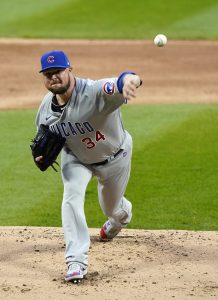
A second-round pick of the Red Sox out of a Washington high school in 2002, Lester entered pro ball as one of the more promising pitching prospects in the Boston system. Within a few years, the left-hander was ranked among the top farmhands in baseball and he made his big league debut at age 22 in June 2006. Lester was faced with incredible adversity just a few months into that run. He was diagnosed with anaplastic large cell lymphoma late in his rookie season, cutting that year short and requiring chemotherapy treatments.
Lester beat the disease and made an inspiring return to the mound in 2007. He made 12 regular season appearances that year, then pitched in three playoff games during the Red Sox’s run to a championship. Making his first career postseason start in Game 4 of the World Series against the Rockies, Lester tossed 5 2/3 innings of scoreless ball. He wound up getting the win in what proved to be the title-clinching game, as the Sox wrapped up a sweep.
Entering 2008, Lester was cemented as a key rotation member on Terry Francona’s staff. Incredibly durable, he’d make at least 31 starts over each of his next six seasons in Boston. While Lester only had two seasons (2009-10) with excellent strikeout numbers, he consistently demonstrated strong control and proved one of the game’s hardest pitchers to square up. A pillar of high-end consistency, Lester posted an ERA between 3.21 and 3.75 in five of six years from 2008-13.
Lester’s run in Boston was littered with accomplishments. He tossed a no-hitter in May 2008, earned back-to-back All-Star selections in 2010-11 and finished fourth in AL Cy Young award balloting during a 2010 season in which he tossed 208 innings of 3.25 ERA ball. Perhaps of most importance, Lester was excellent during the Red Sox’s surprising run to another championship in 2013. He pitched to a 1.55 ERA over 34 2/3 postseason innings that year, including 15 1/3 frames of one-run ball to earn two wins as part of a World Series triumph over the Cardinals.
Ticketed for free agency after the 2014 season, Lester began the year stellar as ever. He tossed 143 innings with a 2.52 ERA for the Red Sox, earning his third career All-Star nod in the process. Yet with free agency looming and the Red Sox on their way to a last place finish, they traded him to the A’s at the deadline. Lester continued to excel over his final few months in Oakland, eventually getting the nod in the AL Wild Card game. The A’s were knocked off by the Royals in one of the more thrilling back-and-forth contests in recent memory, and Lester hit the open market for the first time shortly thereafter.
Ranked by MLBTR as that offseason’s #2 free agent, Lester commanded a six-year, $155MM deal with a Cubs team looking to emerge from a massive rebuild. That’ll go down as one of the best free agent investments in franchise history, as he picked up right where he’d left off upon switching to the National League.
Lester worked 205 innings of 3.34 ERA ball his first season, helping Chicago to the NLCS. The following year, he compiled a 2.44 mark across 202 2/3 frames. He finished second in NL Cy Young voting, earned a fourth All-Star nod, and was arguably the top pitcher on a 103-win team. As he had so often in Boston, Lester shined in the playoffs yet again. He was tabbed that year’s NLCS MVP after tossing 13 innings of two-run ball to knock off the Dodgers. Lester made three outings with a 3.68 ERA during the World Series, in which the Cubs erased a 3-1 deficit against the Indians to end the franchise’s legendary 108-year title drought.
The third World Series title of Lester’s career proved to be his final one, as the Cubs never had quite the same level of success from that point forward. That wasn’t much fault of the veteran southpaw’s, though, as he remained effective for the next few seasons. He paced the NL with 18 wins in 2018, earning another All-Star nod in the process. As he entered his late-30s, Lester’s production finally began to tail off, although he remained remarkably durable and took the ball every fifth day through the expiration of his contract after 2020.
Last winter, Lester hooked on with the Nationals on a one-year, $5MM deal. He made 16 starts with Washington before being flipped to the Cardinals at the trade deadline. Despite lackluster strikeout and walk numbers, he managed a decent 4.36 ERA over 12 starts in St. Louis, proving to be a much-needed stabilizing force for a Cardinals rotation that had been hit hard by injuries. St. Louis made a miraculous September run to a playoff spot, but they fell to the Dodgers in the Wild Card game. Lester didn’t appear in what’ll go down as the final contest of his career.
One of the league’s most reliable hurlers for more than a decade, Lester leaves a fantastic legacy in the game. He tossed 2,740 innings over parts of 16 MLB seasons. He pitched to a 3.66 ERA, won exactly 200 games and struck out just under 2,500 batters. The five-time All-Star was a key contributor to three World Series teams with two separate franchises, and he’ll be remembered by both Red Sox’s and Cubs’ fans as one of the more impactful players in each organization’s recent histories. Lester’s career was valued at between 44 and 46 wins above replacement by FanGraphs and Baseball Reference, before accounting for an incredible 2.51 ERA over 154 playoff innings. According to B-Ref, he earned just over $188MM.
Lester will likely garner some Hall of Fame support five years from now. Whether or not he’s ultimately enshrined in Cooperstown, there’s no question he had a long run of excellence and reliability. MLBTR congratulates Lester on his fantastic career and wishes him all the best in his post-playing days.
Which Teams Are Most Likely To Acquire Matt Olson?
The A’s are generally expected to make a few marquee players available after the lockout in an effort to trim payroll. If Oakland does embark on something of an organizational reboot, Matt Olson seems one of the likelier players to wind up elsewhere. Projected by MLBTR contributor Matt Swartz for a $12MM salary in his penultimate arbitration season, Olson might be the costliest player on the A’s books.
Trading Olson is the most straightforward way to reduce payroll, but he’d still be in plenty of demand around the league. A $12MM salary is well below market value for a two-time Gold Glove winning first baseman coming off a .271/.371/.540 showing that earned him an eighth-place finish in AL MVP balloting. And with another season of below-market club control remaining thereafter (barring changes to the service structure in the next collective bargaining agreement), landing Olson would probably require sending multiple highly-regarded young players back to Oakland.
Which teams are in the best position to pull off the blockbuster if the A’s make Olson available? Before looking at the best fits, we can remove a few teams from consideration. The Pirates, Orioles and Diamondbacks aren’t in the competitive window to trade for a player with two years of control. The same is probably true of the Nationals and Cubs, barring an unexpected post-lockout push for immediate contention. The Rays’ projected 2022 payroll is already $18MM higher than last year’s season-opening mark. They’re probably not taking on a $12MM salary this winter; the Reds have spent all offseason signaling a desire to cut spending.
Which teams seem to be the most plausible landing spots?
Best Fits For A Deal
- Braves — Are the Braves finally going to end their stalemate with Freddie Freeman after the lockout? If he signs somewhere else, they’ll need a first baseman. Olson is reportedly on their radar as a possible replacement.
- Brewers — The Brewers have a championship-caliber pitching staff, but the offense has been middle-of-the-pack. Rowdy Tellez was alright after coming over from the Blue Jays in a midseason trade, but his career track record is mixed. Olson would be a definitive upgrade, and Tellez could stick around as a possible designated hitter option if the universal DH is included in the next CBA. The question is whether Milwaukee — currently projected for a payroll around $20MM north of last season’s Opening Day mark — would take on a salary in this range, but he’s a perfect fit for the roster.
- Giants — The Giants are only a strong fit in the event of a universal DH. Otherwise, first base belongs to Brandon Belt. If there’s an NL DH, acquiring Olson from their crosstown rivals and giving Belt more time at DH would be a boon to an already excellent offense, and it might help the 33-year-old Belt stay healthy all season.
- Mariners — The Mariners are known to be looking for another bat. Acquiring Olson and pushing Ty France to DH would fill that void, and Seattle has the payroll space to accommodate such a move. The potential holdup? Seattle’s loath to part with their top prospects, and that might be especially true in an intra-divisional trade.
- Rangers — The Rangers have looked into the possibility of an Olson deal. They’ve been ultra-aggressive this winter but still look to be shy of 2022 contention. Landing Olson and pushing Nathaniel Lowe to DH would complete perhaps the sport’s top infield, although there’d still be major question marks about the pitching staff. As with Seattle, there are possible intra-divisional trade complications to consider.
- Twins — The Twins have been quieter than expected this winter. They should have payroll flexibility, though, and Miguel Sanó isn’t coming off a great season. Upgrading the rotation seems like the priority in Minnesota, but the free agent starting pitching market has been largely picked clean. Might they pivot and add to an already-strong offense to try to compensate for the lackluster starting staff?
- Yankees — The Yankees have been speculated upon as a potential landing spot for much of the winter, with good reason. Luke Voit dealt with a series of injuries last season, and the Yankees seemed sufficiently discouraged with his health outlook to land Anthony Rizzo at the trade deadline. Rizzo’s now a free agent, and while New York could opt to roll with Voit again, there’s little question Olson would at least be a marked defensive upgrade.
Plausible But Longer Odds
- Dodgers — One can seemingly never rule the Dodgers out on stars. But this probably requires an NL designated hitter to pull off, given the presences of Max Muncy, Chris Taylor and Gavin Lux between first and second base.
- Guardians — A $12MM salary might wind up being too hefty for the Guardians. Yet they only have $11MM in guaranteed money on the books this year, with an estimated $49MM in commitments after accounting for arbitration projections. This is a franchise that has exceeded nine figures in the past, and incumbent first baseman Bobby Bradley struck out in 35.5% of his plate appearances last year.
- Marlins — The Marlins could supplant Jesús Aguilar at first, and Olson would be a massive upgrade to a lineup that struggled in 2021. Miami has plenty of young pitching that might appeal to Oakland. The Fish seem more focused on outfield help, but an Olson trade makes some sense if they pivot back to the dirt.
- Padres — The Padres tend to act boldly, and they could stand to upgrade over Eric Hosmer. With a projected payroll approaching $200MM, it’s not clear how much further ownership’s willing to spend. Landing Olson might require first shedding the bulk of Hosmer’s contract in a separate trade, but that’d require parting with some prospect talent even before considering the package of young players San Diego would need to send to Oakland.
- Phillies — An NL DH could theoretically bring Olson into play, with Rhys Hoskins assuming the bat-only role. Shortstop, third base, two outfield spots and the bullpen are all arguably bigger concerns for Philadelphia though.
- Red Sox — The Red Sox could supplant Bobby Dalbec at first base this year. With J.D. Martinez slated to hit free agency next winter, top prospect Triston Casas could break in as a DH in 2023. Yet with clearer needs in the bullpen and either at second base or in the outfield, Olson to Boston feels like a longshot.
Teams With More Pressing Needs
- Angels — Jared Walsh broke out with an All-Star campaign in 2021 and should have first base accounted for. Designated hitter? That’s occupied by the reigning AL MVP.
- Astros — Yuli Gurriel is back at first base after winning the batting title. Yordan Álvarez is locked in at DH.
- Blue Jays — The Blue Jays have the reigning MVP runner-up, Vladimir Guerrero Jr., at first base. It’s unlikely they’d want Guerrero to become a full-time DH this early in his career. One could argue for Toronto acquiring Olson and kicking Guerrero back to third base, but it’s probably best to leave the young star at first and try to upgrade the other infield spots more directly.
- Cardinals — The Cardinals have Paul Goldschmidt at first base and some young options (Lars Nootbaar, Juan Yepez) for the possible DH spot.
- Mets — The Mets have Pete Alonso at first and a number of offense-minded players already on the roster who could step into a DH role if needed.
- Rockies — The Rockies just extended C.J. Cron. If the new CBA contains a universal DH, could they acquire Olson and take Cron off defense? That seems far-fetched, even for a Colorado team that views itself closer to contention than most outside observers would.
- Royals — The Royals seem to be prioritizing bullpen help. They’d probably like to move Carlos Santana, but top prospect Nick Pratto could step in at first base in the unlikely event they find a Santana suitor.
- Tigers — Miguel Cabrera is still around for two more years at DH, and top prospect Spencer Torkelson is on the doorstep of taking over first base.
- White Sox — The White Sox are already at a franchise-record projected payroll and have José Abreu and Andrew Vaughn to cover first base/DH.
Payroll projections courtesy of Jason Martinez of Roster Resource
What does the MLBTR readership think?
(poll link for app users)
Which Team Will Trade For Matt Olson After The Lockout?
-
Yankees 33% (2,347)
-
No one; A's aren't trading Olson this winter. 15% (1,047)
-
Braves 10% (724)
-
Brewers 9% (639)
-
Rangers 5% (337)
-
Mariners 5% (333)
-
Padres 4% (293)
-
Giants 4% (268)
-
Red Sox 4% (262)
-
Dodgers 3% (245)
-
Guardians 2% (134)
-
Other (specify in comments) 2% (133)
-
Phillies 2% (129)
-
Marlins 2% (120)
-
Twins 1% (93)
Total votes: 7,104
Quick Hits: Camden Yards, Blue Jays, Nationals, A’s, Valentine
The Orioles have called Oriole Park at Camden Yards home for the last 30 seasons, and the team continues to negotiate with the Maryland Stadium Authority about the ballpark’s future and a lease extension. “The good news is both the Orioles and the stadium authority feel very strongly that we want to renew this partnership and that it’s been beneficial for all parties — the state, the city, the team,” Orioles senior VP of administration and experience Greg Bader told The Baltimore Sun’s Jeff Barker. The Orioles’ lease at Camden Yards is up in December 2023, though the club can decide by February 1, 2023 whether or not it wants to exercise a one-time, five-year extension that would run through 2028.
Given the mutual interest between the two sides, there doesn’t appear to be any concern that the Orioles would actually leave Baltimore, despite the uncertainty that often surrounds discussions of ballpark leases or renovations. Bader said the team is looking to upgrade OPACY to match “what a lot of newer or renovated ballparks have in terms of those social spaces, those areas for people to engage with baseball the way that people do today.” This could include loge seating, outdoor seating or concession areas, or a sportsbook, as “the Orioles are quite interested in finding the right sports gaming partner.” That said, Bader also stressed that old-school experience of watching a game at Camden Yards (the modern stadium that started the trend towards more retro, baseball-only venues) wouldn’t be significantly altered. “We’re not looking to upend the traditional side of a baseball park. We’re very confident that what makes Camden Yards so special would be able to be retained with whatever we do,” Bader said.
More from around the baseball world…
- Yimi Garcia‘s two-year contract represents the Blue Jays‘ biggest investment in their bullpen this offseason, and The Toronto Star’s Gregor Chisholm thinks the club might not spend big on any further new relievers. While relief pitching was a big weakness for much of the Jays’ 2021 campaign, the in-season acquisitions of Adam Cimber and Trevor Richards helped shore up a core group that also includes incumbent closer Jordan Romano and southpaw Tim Mayza. With other needs yet to be addressed, Chisholm figure the Blue Jays will spend bigger on the lineup and rotation: “keeping the stakes low [in the bullpen] is a logical approach so the larger bets can be saved for other areas.”
- In the latest edition of the Rates & Barrels podcast, The Athletic’s Derek VanRiper, Britt Ghiroli, and Eno Sarris discuss a variety of topics, including the Nationals‘ struggles in player development, some hypothetical trade fits involving the Athletics, Blue Jays, and Mets, and the concept of Matt Chapman moving from third base to shortstop.
- Former Mets manager Bobby Valentine has received some consideration as a special assistant within the front office, according to The New York Post’s Mike Puma. It isn’t known whether Valentine is himself interested in such a role, as Valentine hasn’t been officially involved with a big league club since the Red Sox fired him as manager following the 2012 season. Valentine both played with the Mets in 1977-78 and then posted a 536-467 record while managing the club from 1996-2002, leading the Mets to the National League pennant in 2000.