
Forecasting The 2022-23 Qualifying Offers: Position Players
The qualifying offer has impacted the free agent market for the last 10 offseasons, but it wasn’t clear if there would be an eleventh as Major League Baseball and the MLB Players Association engaged in labor talks last winter. When the lockout was over and the new collective bargaining agreement was finally settled, one sticking point remained — the implementation of an international player draft. If the union agreed to this draft, the league would have agreed to scrap the qualifying offer system altogether.
However, July’s deadline for a decision on an international draft came and went without any new agreement, and thus the status quo of the QO will remain for the 2022-23 free agent class. As such, we can now look ahead and predict which players will or could receive qualifying offers from their teams at the end of the season.
A quick refresher on the QO rules. The qualifying offer is a one-year contract with a salary figure determined by averaging the top 125 salaries of all MLB players. Last year’s figure was $18.4MM, and it’s safe to estimate that this winter’s QO will be worth somewhere in the range of $18-19MM. Any free agent is eligible to be issued a qualifying offer unless a) they have received one in past trips to free agency, or b) they haven’t spent the entire 2022 season with their current organization. For instance, the Padres can’t issue Josh Bell a qualifying offer because Bell was only acquired at the trade deadline.
If a player accepts the qualifying offer, he returns to his current team on that one-year deal in the $18MM-$19MM range. (The player can also negotiate a longer-term extension with his team after accepting that QO, as Jose Abreu did with the White Sox in November 2019.) While some free agents have indeed taken the qualifying offer, the large majority reject the deal in search of a richer and lengthier contract. If a player rejects a QO and signs elsewhere, their new team must give up at least one draft pick and possibly some international draft pool money, while their former team will get a compensatory draft pick in return.
With several prominent names in this year’s free agent market eligible for the QO, let’s look at some of the candidates, starting with position players.
Easy Calls: Nolan Arenado (Cardinals), Xander Bogaerts (Red Sox), Willson Contreras (Cubs), Aaron Judge (Yankees), Brandon Nimmo (Mets), Dansby Swanson (Braves), Trea Turner (Dodgers)
There isn’t much drama in any of these decisions, as these players are all obvious candidates to be issued qualifying offers that will be rejected. Nimmo is perhaps the only name on this list that rates as a bit of a surprise, yet he has quietly posted strong numbers over his seven seasons in New York, including a quality 2022 campaign. Most importantly, Nimmo has also stayed healthy, playing in 104 of the Mets’ 113 games — this is already the second-most games played for Nimmo in any season of what has been an injury-plagued career.
Arenado and Bogaerts aren’t guaranteed to be free agents, as either could pass on exercising opt-out clauses in their current deals. However, Bogaerts is a virtual lock to opt out, and Arenado is having such a great season that he should be able to comfortably top the $144MM he is owed through from 2023-27. Since Arenado has been vocal about how much he likes playing for the Cardinals, an extension is certainly possible before Arenado even hits the open market, with the Cards perhaps tacking another guaranteed year and more money onto the deal to prevent the third baseman from opting out.
Easy Contract-Option Calls: Tim Anderson (White Sox)
The White Sox hold club options on Anderson’s services for both the 2023 and 2024 seasons, with next year’s option being worth $12.5MM (with a $1MM buyout). Though he could technically be a free agent, there is zero doubt the Sox will exercise Anderson’s 2023 option, so a qualifying offer is a moot point.
Borderline Cases: Mitch Haniger (Mariners), J.D. Martinez (Red Sox), Jurickson Profar (Padres), Anthony Rizzo (Yankees)
Rizzo’s two-year, $32MM free agent deal with the Yankees includes an opt-out clause after this season, and it would seem like the first baseman (who just turned 33 earlier this week) will indeed test the open market again. Rizzo’s first full season in the Bronx has seen him hit .224/.342/.504 with 27 home runs, with the fifth-best wRC+ (139) of his distinguished career. Rizzo’s age, home/road splits, and first base-only status will limit his market to some extent, and draft-pick compensation via the qualifying offer will also make other teams wary. But, Rizzo was still able to land a multi-year pact last winter coming off a lesser platform year, so he should be able to match or better that pact again. Rizzo has quickly become a clubhouse and fan favorite in New York, so this could be another situation where a player is convinced to pass on an opt-out due to a contract extension.
Haniger has appeared in only 15 games this season, due to both a high ankle sprain that required a trip to the 60-day injured list, as well as a two-week stint on the COVID-related injury list in April. He has been on a tear since returning to action last week, but if his numbers settle down, then it seems likely that Seattle won’t issue a qualifying offer. However, if Haniger continues to mash over the remainder of the season and returns to his 2021 form, the Mariners face an interesting decision.
A late-season hot streak could do enough for Haniger’s market that he might reject a qualifying offer, as since Haniger turns 32 in December, this could be his best shot at a lucrative multi-year deal. On the flip side, he could still choose to accept the QO, knowing that his checkered injury history could work against him in free agency — Haniger can bank the one-year QO payday and then hope for a full and healthy 2023 season as a better platform for that longer-term deal. From the Mariners’ perspective, paying around $19MM for Haniger could be seen as a worthwhile investment, especially since the team doesn’t know what to expect from Kyle Lewis and Jarred Kelenic heading into 2023.
Martinez turns 35 on August 21 and is still posting above-average (120 wRC+) numbers, hitting .281/.346/.443 with nine home runs over 422 plate appearances. That still represents a significant power dropoff from Martinez’s norms, and he has been a DH-only player this season. Even with the looming threat of losing Bogaerts from the Red Sox lineup, Boston might still pass on issuing a QO to Martinez out a concern that he might accept, since chief baseball officer Chaim Bloom seems to be looking for more flexibility with both the roster and the payroll.
Profar is another less-likely candidate to receive a qualifying offer, even if he is also playing well. Between good offensive (119 wRC+, 12 homers, .254/.345/.416 over 467 PA) and defensive (+5 Defensive Runs Saved, +1.8 UZR/150 in left field) numbers, Profar has been a 2.8 fWAR player in 107 games with San Diego this season, a nice bounce-back from an underwhelming 2021. With a player option attached to his 2023 services, Profar can either earn $7.5MM next season or take the $1MM buyout and test the open market.
At the very least, it would seem like Profar will indeed opt out and try to secure a longer-term contract, but it would seem like a reach if the Padres issued a qualifying offer. Profar will only be 30 on Opening Day, so he could accept the QO to lock in that one-year payday, and then be on track to test the market again at age 31. Considering the Padres might exceed the luxury tax threshold for the second straight year and will face a lot of free agent decisions this winter, they probably won’t want to risk Profar being bumped into the $19MM salary range. Profar could be another extension candidate, given president of baseball operations A.J. Preller’s belief in Profar’s ability dating back to their days in the Rangers organization.
2022-23 MLB Free Agent Power Rankings: August Edition
A lot has changed since the last edition of MLBTR’s Free Agent Power Rankings. Joe Musgrove, formerly the No. 5 entrant on the list, has since signed a five-year extension with his hometown Padres, keeping him from reaching the market. Willson Contreras, the No. 9 entrant on that edition of the list, was somewhat stunningly not traded at the deadline, meaning he’ll be subject to draft-pick compensation. Jacob deGrom had yet to pitch at that point in the season but has now made a dominant pair of outings in his 2022 debut. More broadly, several players on the list or on the “honorable mention” portion of the list have altered their stock with strong play or faded.
Here’s a look at where things stand, with a reminder that this list is based on what the MLBTR team believes to be each player’s earning power in free agency — not necessarily a ranking of the “best” free agents or who’ll hold up the best over the life of a major free-agent contract.
1. Aaron Judge, OF, Yankees (Last ranked: 1): While plenty has changed since the May 25 version of these rankings, it’s business as usual for Judge, who boldly turned down a seven-year, $213.5MM extension offer back in Spring Training and now looks prescient for doing so. Judge was hitting .314/.386/.692 at the time of our last rankings and has followed that with a remarkably consistent .292/.390/.654 line in 64 games since. Judge is on pace to top Roger Maris’ 61 home runs from the 1961 season, leading the Majors not only in long balls (44) but also runs scored (93), RBIs (98), slugging percentage (.677), OPS (1.068) and wRC+ (196). He’s leading the AL with 122 hits and has even stolen a career-high 11 bases (without being caught).
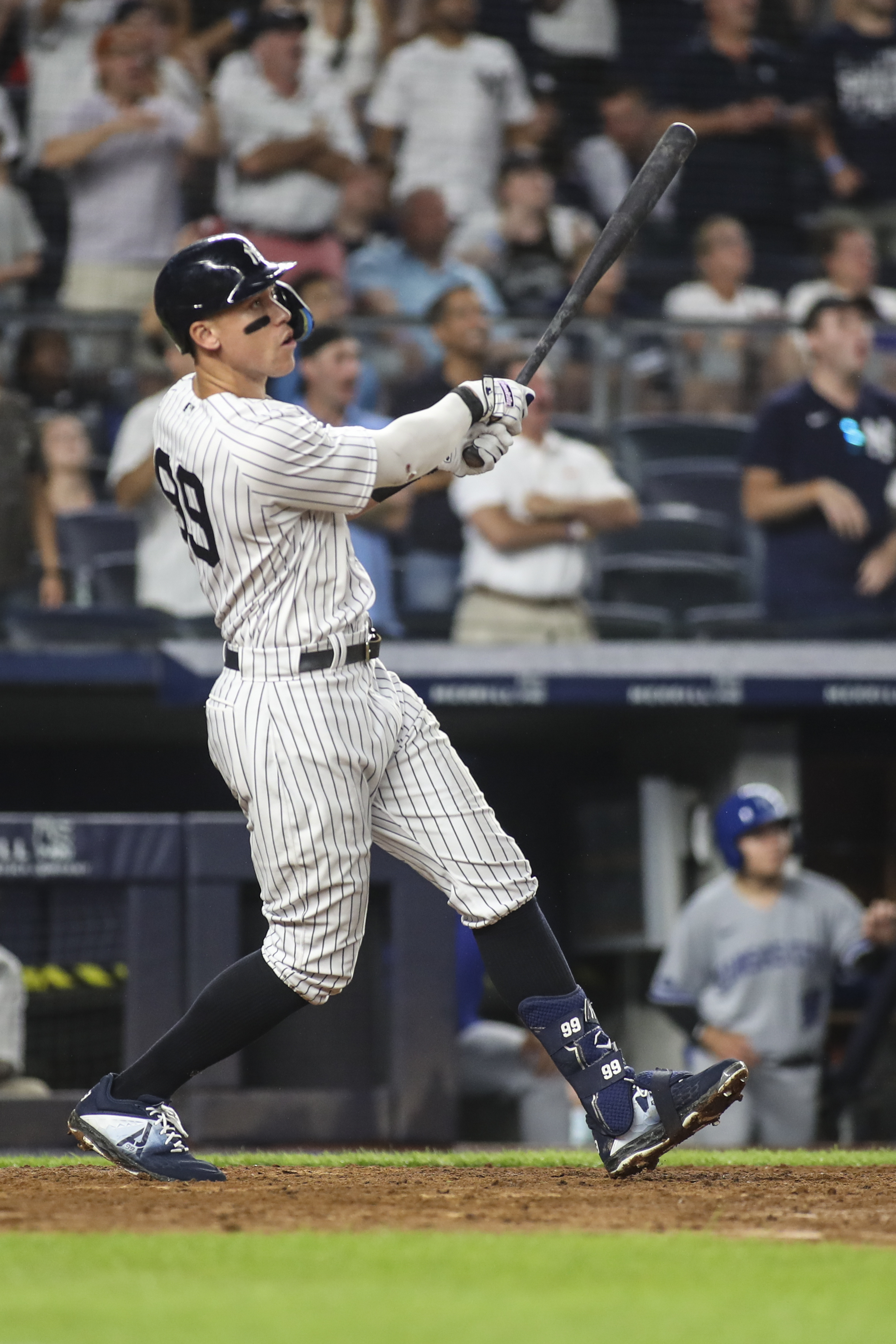
Judge has been the best hitter on the planet since Opening Day, and as things currently stand, the only person who could conceivably stand in his way of winning his first AL MVP trophy would be Angels sensation Shohei Ohtani. However, great as Ohtani has been again in 2022, his offense isn’t quite what it was last year (and isn’t anywhere close to Judge’s league-leading dominance). From a pure WAR perspective, Judge has been so good this year that his value with the bat has eclipsed Ohtani’s combined value at the plate and on the mound.
Regardless, Judge is now poised to reach free agency on the heels of the finest season of his already brilliant big league career. He’ll play the 2023 season at age 31, which is about the only strike against him in free agency. Judge will receive and reject a qualifying offer from the Yankees, and even though he’d be 38 by the end of an eight-year deal, that seems plenty plausible. He could very well command the largest annual salary any position player has ever received, too, and a $300MM overall contract doesn’t seem out of the question. This is what it looks like to bet on yourself and win — in resounding, overwhelming fashion, no less.
2. Trea Turner, SS, Dodgers (LR: 3): There’s not much on the baseball field that Turner doesn’t do well. The 29-year-old is the sport’s fastest player, by measure of Statcast’s Average Sprint Speed, and he’s hitting .305/.345/.499 as of this writing. The 28 home runs he popped in 2021 might very well go down as a career-high, but Turner should finish this year around 25 dingers and has twice in the past hit 19 long balls (including in a 2019 season where he played in just 122 games).
That injury shortened ’19 campaign was the only one in the past half decade in which Turner spent significant time on the shelf. Over the past five years, he’s a .303/.358/.493 hitter who’s made a pair of All-Star teams, won a batting title and taken home a World Series ring.
By the end of a long-term deal, Turner will probably move off shortstop, but he’s a solid option there for now who’d be plenty capable of sliding over to second base at some point. Over the past three seasons, he’s been 43% better than league-average with the bat, by measure of wRC+, and this will be his fourth season of at least four wins above replacement in the past five years — with the 60-game 2020 season, when he boasted 2.8 fWAR and bWAR alike, being the lone exception.
If Turner had been born a day later, next year would technically be considered his age-29 season, but he’ll be 30 on June 30, and the July 1 cutoff is (for whatever reason) generally seen as the arbitrary turning point for a player’s age in a given year. A seven-year deal for Turner would run through age-37, and an eight-year deal through age-38. He’ll have to contend with a qualifying offer and another deep class of shortstops, but Turner is one of baseball’s most well-rounded players and figures to be compensated in line with the game’s 10 to 20 best position players.
3. Nolan Arenado, 3B, Cardinals (LR: 6): It’s difficult to directly compare Arenado’s 2022 season and the 2019 season that propelled Anthony Rendon to a seven-year, $245MM contract, given that Rendon’s Herculean ’19 effort came during the juiced-ball season. Offense is down league-wide now, yet Arenado stacks up favorably in terms of batting average, on-base percentage and slugging percentage. Metrics like wRC+ and OPS+, which weight for both home park and league environment, feel that Arenado’s 2022 production at the plate has actually been slightly better.
Defensively, Arenado is nearly peerless at his position. Since making his MLB debut in 2013, Arenado ranks second among all players, regardless of position, with 151 Defensive Runs Saved, trailing only Andrelton Simmons. He’s third to Francisco Lindor and Nick Ahmed in Statcast’s Outs Above Average, which tracks defensive data dating back to 2016. Arenado’s numbers aren’t inflated by early-career marks, either. He remains elite this season, ranking third in all of MLB in DRS and second in OAA. Defensive metrics and the eye test agree, as Arenado has been a human highlight reel at the hot corner for his decade-long career.
The age gap between 2022 Arenado (31) and 2019 Rendon (29) can’t be ignored. However, that should be more reflected in the length of a theoretical Arenado contract than in the annual value. It’s also, of course, worth noting that Arenado is technically under contract through 2027. He’s guaranteed $144MM in that time but has the right to opt out of the contract after the current season. Arenado forwent an opt-out clause after the 2021 season, but his 2022 campaign is the best of his career.
Even if he’s capped at a five-year deal in free agency, he should be able to trounce the current $28.8MM annual value remaining on his deal by as much as $5-7MM — and a six-year deal doesn’t seem impossible to imagine coming off such a brilliant effort. (Freddie Freeman scored a six-year deal beginning with his age-32 season, so there’s recent precedent.) Perhaps Arenado and the Cardinals will work out a compromise, and it’s always possible he decides he’s happy in St. Louis and just passes on the opt-out entirely. If he does want to test the market again, however, there could be another $20-60MM in earning power for him on top of his current deal.
4. Carlos Correa, SS, Twins (LR: 2): The 2022 season might not have gone quite as well as either Correa or the Twins hoped, but he’s still enjoying a sound all-around year, hitting .265/.343/.433 (22% better than league average, by measure of wRC+). He got out to a slow start in April and has slumped following the All-Star break, but for a three-month stretch from late April to late July, Correa hit .308/.375/.509. Provided the current slump doesn’t last too long, Correa stands a decent chance to be around 30% better than average at the plate for the second straight season and third time in four years.
Last year’s all-world defensive ratings have taken a dip thus far in 2022 — surprising for a player who has generally been a consistent source of elite glovework. He’s made five throwing errors this season, tied for his most since 2016, but Correa has been plenty sure-handed, booting just two balls hit to him. He’s spent the year throwing to Miguel Sano and a pair of makeshift first baseman who’ve converted from other positions (Luis Arraez, Jose Miranda), so perhaps some of the throwing miscues can be forgiven by a team with a better defensive outlook at first base.
If those first couple paragraphs feel like they’re filled with caveats — well, they are. The simple fact is that Correa hasn’t had as strong a season as he did in 2021 and probably shouldn’t be expected to command the type of contract many (MLBTR included) thought to be possible last offseason. That said, Correa still hasn’t even turned 28 — the age at which he’ll play nearly all of the 2023 season. His youth alone gives him the chance to command the longest contract of any free agent this winter; even a 10-year deal would run through age-37.
That type of contract may not be on the table without a huge finish, but Correa is still a plus defender and well above-average hitter with age on his side. It’s perhaps narrowly more plausible that he could opt into a second year with the Twins, take another $35.1MM salary and hope to hit free agency on the heels of a stronger platform in 2023, but his current earning power is still among the best in this year’s free-agent class.
5. Xander Bogaerts, SS, Red Sox (LR: 4): When the last version of our list was published, Bogaerts had homered just four times in 174 plate appearances while posting a below-average .135 ISO (slugging minus batting average). It was easy enough to overlook as little more than small-sample noise at the time, but Bogaerts has hit just five home runs in 267 plate appearances since that time and now has nine long balls and a tepid .141 ISO in 441 trips to the plate. That’s the worst power output we’ve seen from Bogaerts since 2017 by an overwhelming margin. From 2018-21, he belted 90 homers in 2106 plate appearances while turning in a stout .224 ISO.
Bogaerts is still hitting .311/.383/.452 on the season, but he’s also sporting a career-high .382 average on balls in play that he’s not going to sustain — particularly not when his average exit velocity, barrel rate and hard-hit rate are at their lowest or near-lowest levels since 2017.
There’s still no doubt that Bogaerts will opt out of the remaining three years and $60MM on his contract, but he’d be higher on this list if not for his power stroke going MIA. Couple that with ongoing questions about his defense — some teams are surely going to see Bogaerts as a player who needs to move off shortstop, perhaps as soon as 2023 — and the current free-agent outlook is a bit murkier than expected.
Nevertheless, Bogaerts has a long track record of excellent offense and well above-average power output. With a strong finish to the season, particularly in the power department, he should have no problem commanding a notable nine-figure deal — and something in excess of $200MM can’t be ruled out.
6. Jacob deGrom, RHP, Mets (LR: 7): The No. 6 ranking here for deGrom factors in something of a best-case scenario, but this list is based on earning power, after all. If deGrom gets hurt again or struggles down the stretch, it’s possible he’ll drop off the list entirely. The latter of those two scenarios seems unlikely, though, as deGrom hasn’t “struggled” since 2017. He’s been dominant through his first two starts of the 2022 season, averaging 99.2 mph with his fastball and holding opponents to three runs on four hits and a walk with 18 punchouts through 10 2/3 innings.
Dating back to 2018, deGrom has a comical 1.95 ERA in 591 2/3 innings with a 34.9% strikeout rate against a 5.3% walk rate. When healthy, deGrom is simply unmatched in terms of starting pitching dominance over that period. He ranks second among all Major League pitchers with 24 wins above replacement dating back to 2018, per FanGraphs, despite the fact that he’s made only 93 starts in that time. Max Scherzer tops the list but has started 24 more games and logged 143 2/3 more innings — about an extra 75% of a season’s worth of work.
If deGrom finishes the season with no red flags, the bidding should be furious. He’ll turn 35 next June, making him nearly three full years younger than Scherzer was when he secured his record-setting three-year, $130MM deal from the Mets. DeGrom could justifiably look to top that AAV on a multi-year deal, and he’s too good for the bidding to stop at two years. The biggest question surrounding deGrom is just how many years someone will be willing to guarantee. A three-year pact in excess of Scherzer’s seems doable, and a fourth year ought to be on the table as well.
7. Dansby Swanson, SS, Braves (LR: Not Ranked): Long a plus defender at shortstop, Swanson is having another strong year with the glove and a career year with the bat. He’s followed up a career-high 27 home runs in 2021 with a .292/.348/.461 showing through 463 trips to the plate. He’s been the beneficiary of a .375 average on balls in play that he surely won’t sustain over a larger sample, but Swanson is also making hard contact at a career-best 44.7% clip and elevating the ball more than he has in years past.
A greater walk rate than his current 7.3% clip or lower strikeout rate than his 26.3% mark would raise Swanson’s floor, but his glove alone will make him an above-average regular and he’s well on his way to his second straight 25-homer season. Add in that Swanson will play all of next season at 29 years old, and a nine-figure deal seems likely. Both Trevor Story and Javier Baez landed six-year, $140MM pacts last winter at the same age. Swanson will have to contend with a qualifying offer and with some more decorated shortstop options ahead of him on the market, but he’ll be in high demand all the same.
8. Carlos Rodon, LHP, Giants (LR: 8): Rodon was the best pitcher in baseball through late July in 2021, but he was capped to five innings per appearance (at most) down the stretch as he battled shoulder fatigue and diminished velocity. For a pitcher with Rodon’s injury history, that limited interest in him to the point that he took a two-year, $44MM deal with a chance to opt out following the 2022 season — provided he reached 110 frames.
Rodon has not only reached 110 innings — he’s shot past it with career-best velocity (95.8 mph average fastball) and another sub-3.00 ERA (2.95 through 128 1/3 frames thus far). Rodon is averaging just shy of six innings per outing and boasts a 31.2% strikeout rate against a 7.6% walk rate. He’s reached double-digit strikeouts in six of his 22 starts and held opponents to three or fewer runs in 18 of 22 tries.
Rodon’s fastball in his past eight starts is down about one mile per hour over his average from his first 14 starts, but it’s still been a healthy 95.1 mph in that stretch. That said, he threw a complete game on July 9, worked seven shutout innings on July 31, and averaged a resurgent 96 mph with his heater in his most recent outing. At least so far, Rodon doesn’t appear to be fading at all. If he can avoid the type of late swoon he experienced in 2021, he ought to find four- and five-year offers at superior annual values to this contract’s $22MM AAV. He’ll receive a qualifying offer and surely reject it, which isn’t ideal, but he has the best combination of age (30 all of next season) and 2022 performance of any starter on this year’s market.
9. Justin Verlander, RHP, Astros (LR: Not Ranked): Simply returning to make a full season’s worth of starts would’ve been a feat for a 39-year-old who had pitched just six innings since the end of the 2019 season due to Tommy John surgery. Verlander, of course, is no ordinary 39-year-old, and he’s not only returned but positioned himself as a front-runner for the AL Cy Young Award.
It’s a jaw-dropping feat, even for one of this generation’s best. Verlander has a 1.73 ERA with a 25.5% strikeout rate against a minuscule 4.6% walk rate. He’s averaging nearly 6 2/3 innings per start, sitting 95.1 mph with his heater — his second-best mark since way back in 2011 — and has thrown a quality start in 16 of his 20 appearances this year. Verlander hasn’t yielded more than one earned run in a start since June 18 and has held opponents to one or zero earned runs in a stunning 15 of 20 starts.
He’ll turn 40 in February, but Verlander has a legitimate case to break Max Scherzer’s $43.33MM AAV, particularly if he’s looking at a two-year deal. He’s said he wants to pitch into his mid-40s and looks as good as ever, though, so we shouldn’t discount the possibility that a team shrugs and goes to three guaranteed years for this generation’s most prolific workhorse. Verlander unlocked a $25MM player option when he reached 130 innings pitched, but he should be able to crush that in free agency even if he prefers to work out an extension with Houston.
10. Edwin Diaz, RHP, Mets (LR: Not Ranked): It’s been six years since Mark Melancon (four years, $62MM), Kenley Jansen (five years, $80MM) and Aroldis Chapman (five years, $85MM) each set new records for relief contracts in the same offseason. Diaz, the most dominant reliever in baseball this season, will have a chance to topple that Chapman record when he heads into free agency in advance of his age-29 season.
After a nightmarish first season in Queens, Diaz has righted the ship and become a spectacle in the best kind of way. He’s averaging 99.1 mph on his heater this season, has punched out 52.9% of his opponents and has an entrance more befitting of a professional wrestler than a Major League closer.
Diaz’s Baseball Savant profile looks like a video game cheat code. He’s leading the Majors in expected ERA, expected wOBA, expected batting average, expected slugging percentage, strikeout rate, whiff rate and ranks in the 99th percentile in average exit velocity, opponents’ chase rate, opponents’ barrel rate and fastball velocity. Diaz last allowed an earned run on June 18, and in 18 innings since that time he’s posted a 38-to-1 K/BB ratio while yielding just seven hits.
The 2022 version of Edwin Diaz might be the best reliever we’ve seen since Mariano Rivera. He’ll be hit with a qualifying offer, but it’s doubtful the teams pursuing him are going to even care about that. It’d be a surprise if Diaz doesn’t set a new contract record for relief pitchers this winter, and he could be baseball’s first nine-figure reliever.
Honorable Mentions: Brandon Nimmo, Willson Contreras, Jose Abreu, Josh Bell, Chris Bassitt, Nathan Eovaldi, Andrew Benintendi
Cardinals To Place Goldschmidt, Arenado, Romine On Restricted List; Matz Placed On 15-Day Injured List
3:56PM: Matz has a torn MCL in his left knee, MLB.com’s John Denton reports (via Twitter). Based similar injuries to other players, this will likely mean at least a 4-6 week absence for Matz, though it isn’t yet known if he’ll require surgery.
3:38PM: The Cardinals announced some roster moves today, one in regards to today’s game and three others in advance of their upcoming two-game series in Toronto. Most immediately, left-hander Steven Matz was placed on the 15-day injured list due to a left knee sprain, and righty James Naile was called up from Triple-A Memphis.
Before Tuesday’s game against the Blue Jays, the Cards will place Paul Goldschmidt, Nolan Arenado, and Austin Romine on the restricted list. The trio aren’t vaccinated, and thus become the latest players ineligible to cross the border due to Canadian federal vaccine mandates. Goldschmidt, Arenado, and Romine will forfeit two games’ worth of salary for the missed time. Catcher Ivan Herrera, utilityman Cory Spangenberg, and outfielder Conner Capel are expected to be added to the roster as replacements.
Most teams traveling to Toronto this season have had to work around at least a couple of vaccine-related absences, with the Royals (who had 10 players on their restricted list) representing the extreme end of the scale. While St. Louis is missing “only” three players, however, losing superstars like Goldschmidt and Arenado for even two games certainly isn’t an ideal situation. Losing Romine also thins out a catching depth chart that is still missing the injured Yadier Molina.
Johan Oviedo‘s status for the Blue Jays series is also in question, as the Cards reliever and Cuba native has an expired passport. Manager Oliver Marmol told reporters (including MLB.com’s John Denton) that Oviedo might still be able to make it if he is able to obtain a special temporary waiver from the Canadian consulate in Miami.
While Matz wouldn’t have pitched in the series since he just started yesterday, he’ll also miss a chance to return to Toronto after pitching for the Jays in 2021. Matz was only activated from the 15-day IL earlier this week, after missing two months due to a shoulder impingement. Unfortunately, the southpaw then hurt his knee in his very first start back, as Matz took an awkward step while trying to field a grounder in the sixth inning of Saturday’s 6-3 victory over the Reds. Matz still earned the win, allowing two runs on three hits and a walk in his 5 1/3 innings of work while striking out seven.
It was a solid outing in what has been an otherwise tough season for Matz, between his earlier injury and his inconsistent work over his first nine outings. Even with Saturday’s game factored in, Matz still has a 5.70 ERA over 42 2/3 innings in his first season in a Cardinals uniform. However, a 3.13 SIERA and strong strikeout and walk rates indicate that Matz has also been pretty unlucky, as he isn’t getting much good fortune on the BABIP (.336) and strand rate (66.2%) fronts.
Saturday’s start was a step in the right direction, and yet it will now be some time before Matz can follow up on that performance. The lefty will undergo more tests and imaging, and a clearer timeline could soon be known about when Matz might be able to get back on a mound.
The Cardinals were already rumored to be looking into rotation help at the deadline, so Matz’s IL status will likely only deepen the team’s needs. In the short term, however, St. Louis only has five games over the next eight days, so all of these off-days can allow the Cards to get by with less than five starters. Dakota Hudson is tentatively slated to be activated from his own 15-day IL stint next weekend, after hitting the IL on July 15 due to a neck strain.
List Of All-Star Roster Replacements
7:25PM: Freddie Freeman is also joining the NL roster, as the league announced that the Dodgers first baseman is replacing Starling Marte.
4:04PM: The league announced that the Cardinals’ Miles Mikolas has now been added to the NL roster, taking the spot of Brewers righty Corbin Burnes.
July 17, 1:15PM: The Mariners have announced that Ty France will be joining the festivities as well. MLB later announced the addition as well, noting that he is replacing Mike Trout. With Trout not taking part, Byron Buxton will move into the starting center fielder role for the American League.
10:05AM: MLB has announced three more additions, with one of them being the previously reported addition of Williams. The other two are closers: Liam Hendriks of the White Sox and Jordan Romano of the Blue Jays. Those three will replace Gerrit Cole, Justin Verlander and Max Fried.
July 16, 11:01PM: Brewers reliever Devin Williams has also been named to the NL roster, ESPN’s Jeff Passan reports (Twitter link).
7:11:PM: Four replacements were announced to the All-Star rosters, taking the spots of four other players who won’t be part of the Midsummer Classic. Dodgers left-hander Tyler Anderson, Padres infielder Jake Cronenworth, and Braves third baseman Austin Riley will be joining the National League’s team, while Blue Jays second baseman Santiago Espinal has been named to the American League’s roster.
Espinal is replacing Jose Altuve, who was hit in the knee by a pitch on Thursday. Altuve sat out Friday’s action and is back in the Astros lineup tonight as the DH, but even though he is well enough to play, Altuve and the Astros will use the All-Star break to get the second baseman fully back to 100 percent. Altuve had been voted in as the AL’s starter at second baseman, but now the Guardians’ Andres Gimenez take over as the starter for Tuesday’s game.
Jazz Chisholm was voted as the NL’s starting second baseman, but the Marlins standout will also be missing the game due to his lower back injury. Chisholm has been on the 10-day injured list since June 28, but he has been working out at the Marlins’ spring camp, and taking part in baseball activities. There isn’t a set timeline for Chisholm’s return, but the team is hopeful Chisholm can be activated for the start of the second half. With Chisholm out, Jeff McNeil becomes the NL’s new starter at the keystone, while Cronenworth will take over the backup infield role.
Giants lefty Carlos Rodon is also battling injury, opening the door for Anderson to receive the first All-Star nod of his seven-year career. Rodon has both a blister and a split nail on the middle finger of his throwing hand, and told Henry Schulman and other reporters that he is skipping the ASG in order to give the injury time to properly heal. There isn’t yet any indication that Rodon might require a visit to the injured list, and since Rodon last pitched on Thursday, he’ll receive at least a full week off between starts.
Riley was perhaps the most prominent omission from the original All-Star roster, given how the Braves slugger has posted some huge numbers over the first half. However, as it often the case with “snubs,” the situation sorted itself out once other players started to drop out. Riley will be taking the place of Nolan Arenado, as the Cardinals third baseman will use the break to rest a lingering back problem.
Quick Hits: Musgrove, Alford, Kreidler, Arenado
The Padres and Joe Musgrove remain far apart in their potential extension talks. The latest offer from San Diego was reportedly in the ballpark of an eight-year deal with an $11MM AAV, per The Athletic’s Dennis Lin and Ken Rosenthal. The length of the deal is somewhat surprising for the 29-year-old Musgrove, though the overall value is probably south of what the righty is seeking. Musgrove was arguably the Friars’ most reliable starter last season, tossing 181 1/3 innings with a 3.18 ERA/3.70 FIP, 27.1% strikeout rate, 7.2% walk rate, and 43.5% groundball rate. He is a free agent at the end of the year.
- Outfielder Anthony Alford has cleared waivers and joined the Pirates Triple-A affiliate in Indianapolis, per Jason Mackey of PG Sports Now (via Twitter). Alford has appeared in the Majors in each season going back to 2017, including this one. The 27-year-old went 1-4 in two games. He made 148 plate appearances last season, a career high, slashing .233/.311/.406, good for a 93 wRC+. Alford’s ability to man all three outfield spots could be a factor in finding his way back to the bigs, either for the Pirates or elsewhere later in the season.
- Tigers prospect Ryan Kreidler suffered a right hand fracture that will knock the Triple-A infielder out indefinitely, per Evan Petzold of the Detroit Free Press. The 24-year-old had yet to make his Major League debut, though with a .246/.346/.462 line through 78 plate appearances in Triple-A, he was on his way.
- Nolan Arenado was able to cut his suspension from two games down to one, per The Athletic’s Katie Woo (via Twitter). He will serve the suspension today, per MLB.com’s John Denton (via Twitter). The Cardinals third baseman was suspended for his part in a bench-clearing brawl with the Mets. The tiff was sparked by a high-and-tight fastball on Arenado from Yoan Lopez.
MLB Suspends Arenado, Cabrera For Role In Bench-Clearing Incident
6:27pm: Jeff Jones of the Belleville News-Democrat tweets that Arenado is continuing with his pre-game routine, indicating he’s appealing his suspension. The Cards announced that Cabrera has accepted his suspension and will serve it tonight; he’d likely not have been available anyhow after throwing 29 pitches yesterday.
6:15pm: Major League Baseball announced this evening that Cardinals star third baseman Nolan Arenado and reliever Génesis Cabrera have each been suspended for their roles in yesterday’s bench-clearing incident with the Mets at Busch Stadium. Arenado was suspended for two games, while Cabrera received a one-game ban. Arenado and Cabrera are set to serve their suspensions beginning with tonight’s game against the D-Backs, although each player could delay that by appealing. It isn’t yet clear whether either plans to do so.
Arenado took exception to a first-pitch fastball from Mets’ reliever Yoan López that sailed up-and-in. He and López began jawing and the dugouts and bullpens emptied, with the teams coming together at home plate. That came a half-inning after Cabrera hit J.D. Davis on the foot with an offering. Arenado and St. Louis first base coach Stubby Clapp were ejected for their roles in the scrum. (Cabrera was suspended “for his actions during the incident,” not because the league determined he’d thrown at Davis intentionally).
No Mets were ejected or suspended. López was handed an undisclosed fine for contributing to the benches clearing. St. Louis starter Jack Flaherty and Mets starter Taijuan Walker were each hit with fines for participating in the argument while on the injured list.
2021 Gold Glove Winners Announced
The 2021 Gold Glove winners were announced tonight, with plenty of Cardinal Red to be found amidst the gold. The Cardinals became the first team to ever have five players capture Gold Gloves, underlining the tremendous all-around defensive effort that helped St. Louis reach the postseason. Ironically, the only nominated Cardinals player who didn’t win was the most decorated name of the group — nine-time winner Yadier Molina.
The A’s, Royals, Astros, and the World Series champion Braves also had multiple winners, with each club boasting two Gold Glovers. Ten of the 18 winners captured their first Gold Gloves, though some veteran winners continued to shine. The most notable of the multiple-time winners is Nolan Arenado, who becomes the 23rd player to ever win nine or more Gold Gloves in his career. Arenado still has plenty of time to continue his climb up the all-time list, yet catching 16-time winner Brooks Robinson for the all-time third base record may be a tall order even for Arenado.
Here is the full list of winners, as well as the other two nominated finalists at each position….
NL Catcher: Jacob Stallings, Pirates (1st career Gold Glove)
Yadier Molina/Cardinals, J.T. Realmuto/Phillies
NL First Base: Paul Goldschmidt, Cardinals (4th)
Freddie Freeman/Braves, Max Muncy/Dodgers
NL Second Base: Tommy Edman, Cardinals (1st)
Ozzie Albies/Braves, Kolten Wong/Brewers
NL Third Base: Nolan Arenado, Cardinals (9th)
Manny Machado/Padres, Ryan McMahon/Rockies
NL Shortstop: Brandon Crawford, Giants (4th)
Francisco Lindor/Mets, Kevin Newman/Pirates
NL Left Field: Tyler O’Neill, Cardinals (2nd)
David Peralta/Diamondbacks, AJ Pollock/Dodgers
NL Center Field: Harrison Bader, Cardinals (1st)
Jackie Bradley Jr./Brewers, Bryan Reynolds/Pirates
NL Right Field: Adam Duvall, Braves/Marlins (1st)
Mookie Betts/Dodgers, Mike Yastrzemski/Giants
NL Pitcher: Max Fried/Braves (2nd)
Zach Davies/Cubs, Zack Wheeler/Phillies
AL Catcher: Sean Murphy, Athletics (1st)
Martin Maldonado/Astros, Salvador Perez/Royals
AL First Base: Yuli Gurriel, Astros (1st)
Matt Olson/Athletics, Jared Walsh/Angels
AL Second Base: Marcus Semien, Blue Jays (1st)
David Fletcher/Angels, Whit Merrifield/Royals
AL Third Base: Matt Chapman, Athletics (3rd)
Jose Ramirez/Guardians, Joey Wendle/Rays
AL Shortstop: Carlos Correa, Astros (1st)
J.P. Crawford/Mariners, Andrelton Simmons/Twins
AL Left Field: Andrew Benintendi, Royals (1st)
Randy Arozarena/Rays, Lourdes Gurriel Jr./Blue Jays
AL Center Field: Michael A. Taylor, Royals (1st)
Kevin Kiermaier/Rays, Myles Straw/Guardians
AL Right Field: Joey Gallo, Yankees/Rangers (2nd)
Hunter Renfroe/Red Sox, Kyle Tucker/Astros
AL Pitcher: Dallas Keuchel, White Sox (5th)
Jose Berrios/Blue Jays and Twins, Zack Greinke/Astros
Nolan Arenado Won’t Exercise Opt-Out Clause This Offseason
Nolan Arenado had previously suggested on a few occasions that he was unlikely to opt out of his current contract with the Cardinals. This afternoon, he officially put any notion about exercising the opt-out to bed.
“I’m not opting out,” Arenado told Derrick Goold of the St. Louis Post-Dispatch. “We can put that out there. I will not be opting out. I will be coming back. That was always the plan. I’m absolutely coming back. I feel like this year has been special in a lot of senses.”
Arenado will return to St. Louis on a $35MM salary ($6MM of which will be deferred) next season. He’ll have another opportunity to opt out and test the open market over the 2022-23 offseason. His initial extension with the Rockies contained only the post-2021 opt-out provision which Arenado is electing to forgo. However, the Cardinals added the second opt-out as part of a restructuring to convince Arenado to waive his no-trade clause and facilitate St. Louis’ deal with Colorado last winter.
As part of that trade-off, the Cards also added an additional year and $15MM in guaranteed money to Arenado’s contract. Were he to forgo next year’s opt-out as well, he’d be guaranteed another $144MM between 2023-27. All told, his deal contains another six years and $179MM beyond this season.
The Cardinals’ acquisition of Arenado was one of the most important moves of last offseason. St. Louis surrendered a five-player package — Austin Gomber, Elehuris Montero, Tony Locey, Mateo Gil and Jake Sommers — to bring in the eight-time Gold Glover. He’s continued to perform well, albeit not quite at his peak level, over his first season in Cardinal red. Through 642 plate appearances, Arenado is hitting .256/.313/.499 with 34 home runs. That’s solidly above-average offensive production, and Arenado has again rated as one of the game’s preeminent defenders at the hot corner.
Arenado’s work is a key reason the Cards are playoff-bound for the third straight season. St. Louis entered the month a bit behind the pack in the postseason picture, but they’re currently amidst an incredible 17-game win streak that has officially clinched them a berth in next week’s NL Wild Card game.
As part of last offseason’s trade, Colorado agreed to cover $51MM of Arenado’s contract (assuming he doesn’t trigger either opt-out) — including his entire $35MM salary for 2021. $15MM of that was paid this year, with the rest of those payments deferred over the next few seasons. Arenado has suggested in the past he’s not anxious to exercise next season’s opt-out, either, but he’ll have another year to gauge the organization’s progress and determine whether he wants to explore his options. Free agents next offseason will have the added bonus of a little more certainty about the market structure, since this winter’s free agency is clouded by the impending expiration of the current collective bargaining agreement on December 1.
2021-22 Qualifying Offer Candidates
With the trade deadline in the rearview mirror and a little more than six weeks remaining in the regular season, plenty of front offices are turning their attention towards the upcoming offseason. The first notable decision for many clubs will be to decide whether to tag one or more of their top impending free agents with a qualifying offer.
As a reminder, the qualifying offer is a one-year contract offer teams can make to certain impending free agents. The precise value of the QO has yet to be calculated, but it’s determined as the average salary of the game’s 125 highest-paid players. Last season, the QO value was set at $18.9MM. If the player accepts the offer, he returns to his current team on that one-year deal. If he rejects, his previous team would receive draft pick compensation should he sign elsewhere.
Last season, six players (George Springer, Trevor Bauer, J.T. Realmuto, DJ LeMahieu, Kevin Gausman and Marcus Stroman) received qualifying offers. Gausman and Stroman accepted the QO, while Realmuto and LeMahieu re-signed with their current clubs as free agents. The Reds and Astros received compensatory picks (used on Jay Allen and Chayce McDermott, respectively) when Bauer and Springer departed.
The collective bargaining agreement prohibits a player from being tagged with a qualifying offer multiple times in his career. (A list of every active big leaguer who has previously received a QO is available here). Similarly, in order to be eligible, the player must have spent the entire preceding season on the same team. Players traded midseason cannot be tagged with a QO.
With the majority of the 2021 season in the books, we can take a look at the upcoming free agent class to predict which players might wind up receiving qualifying offer this winter.
Locks
- Carlos Correa, Freddie Freeman, Clayton Kershaw, Robbie Ray, Carlos Rodón, Corey Seager, Marcus Semien, Trevor Story
This group is fairly straightforward, as there’s very little chance any of these players would accept a qualifying offer. Correa, Seager and Freeman all have MVP-caliber upside and are locks to pull in long-term deals this winter. Semien didn’t receive a QO from the A’s after a down year in 2020, took a pillow contract with the Jays for almost the value of the QO ($18MM), and has essentially replicated his 2019 form that earned him a third place finish in AL MVP voting. He should find a big multi-year deal this time around.
Story is having a bit of a down year, but there’s no doubt the Rockies will make him a qualifying offer after not trading him at the deadline. Nick Groke of the Athletic wrote this week that Colorado hasn’t given up hope of convincing him to sign a long-term extension, but that seems unlikely given Story’s own bewilderment he wasn’t moved to a contender this summer. Whether Story is willing to return to Denver or not, he’ll receive a QO.
Kershaw, Ray and Rodón will be among the top pitchers on the market. Kershaw has spent the past couple months on the injured list due to forearm soreness, but he’s expected back in September and is in the midst of another fantastic season. So long as he’s healthy, he’s a lock for a QO. Ray and Rodón both had to settle for one-year deals after poor 2020 seasons, but they’ve each been among the best pitchers in the American League this year.
Likely
- Michael Conforto, Jon Gray, Yusei Kikuchi, Eduardo Rodríguez, Noah Syndergaard, Chris Taylor, Justin Verlander
Over the past two seasons, Taylor has somewhat quietly been one of the game’s top 25 qualified hitters by measure of wRC+ and he’s versatile enough to cover any non-catcher position on the diamond. He’s not a true everyday player at any one spot and he’s making contact at a career-worst rate this season, so he falls just short of being an absolute lock for a QO. But the Dodgers would be as willing as any team to shoulder a significant one-year salary were Taylor to accept, and his body of work should be sufficient to warrant a multi-year deal regardless.
The Mets’ players in this group are two of the more interesting free agents in the class. Conforto entered the season looking like a lock for a QO and seemingly having a chance at landing nine figures with a strong platform year. He missed a month with injury, though, and hasn’t made anywhere near his typical level of impact at the plate. He’s shown some life over the past few weeks, and between his track record and age (28), Conforto still seems a good bet to land a long-term deal.
Syndergaard was a top-of-the-rotation starter at his peak, but he hasn’t pitched since 2019 because of Tommy John surgery. He’s eyeing a September return — likely in relief, given his dwindling time to build up arm strength — and his late-season form will obviously be critical to his market. The Mets should run one of the higher payrolls in the league, and Syndergaard has the upside to be an ace if healthy, so New York still seems more likely than not to make the offer.
Similarly, Verlander has essentially missed two full seasons because of his own Tommy John procedure. That’s a scary development for a pitcher who’ll be 39 on Opening Day 2022, but he was still every bit an ace when we last saw him in 2018-19. The Astros are a win-now club that runs high payrolls, so Verlander accepting a QO wouldn’t be the worst thing in the world. If he declines and signs elsewhere, Houston would recoup some much-needed draft compensation after losing their past two first-round picks as punishment for the sign-stealing scandal.
Colorado reportedly showed even less interest in trading Gray than they did with Story at the deadline. There’s apparently mutual interest about working out a multi-year extension, and the QO could serve as a temporary measure to keep Gray in Denver while the Rockies and Gray’s representatives work on a long-term deal.
Rodríguez has bounced back to take the ball every fifth day this year after a scary bout with myocarditis cost him all of 2020. His ERA’s pushing 5.00, but his peripherals are far better than that bottom line run prevention and the southpaw has an established track record of mid-rotation production.
The Mariners are facing a difficult decision regarding Kikuchi, as MLBTR’s Steve Adams explored last month. Seattle must decide whether to exercise a package deal of four successive club options at $16.5MM apiece (essentially a four-year, $66MM extension) this winter. If the Mariners don’t exercise their four-year option, Kikuchi has a $13MM player option to return to Seattle for 2022. If both parties decline their ends, the 30-year-old would hit free agency this offseason, although the M’s could then tag Kikuchi with a qualifying offer.
Given that Kikuchi will only be a free agent if he passes on a $13MM player option, the Mariners would likely make him a QO worth a few million dollars more if it comes to that — either with the expectation he’ll decline in search of a longer-term deal, or with the hope he accepts and Seattle can keep him in the fold next season without committing themselves to the additional three years of guaranteed money.
Possible
The Giants have plenty of payroll space this offseason and seem likely to try to keep most of this season’s core together. Belt has been one of the sport’s most productive offensive players on a rate basis over the past two years. But he’s also 33 years old, has a long injury history and is striking out at the highest rate of his career.
San Francisco bought low on DeSclafani over the winter after he had a tough 2020 season with the Reds. He’s bounced back to post a very strong 3.26 ERA, although his peripherals are closer to average and he’s benefitted from opponents’ .257 batting average on balls in play. The Giants will likely see 4/5 of their starting rotation hit free agency this winter, so they could be eager to bring DeSclafani back, even if that comes via a lofty 2022 salary.
Morton has had another productive season in his first year as a Brave, but his previous two teams (the Astros in 2018 and the Rays in 2020) let him reach free agency without making a qualifying offer despite his consistently strong track record. That’s presumably due to concerns about his past injury history and age. He’ll turn 38 this winter and might check his potential earning power by limiting himself to teams in the Southeastern part of the country — as he reportedly did last offseason. That could inspire the Braves to pass on a QO, but Morton continually reels off above-average performances, and this is an Atlanta front office that has been eager to dole out hefty single-year salaries for key veteran upgrades in recent years.
Iglesias looks like the top impending free agent reliever (assuming the White Sox exercise their option over Craig Kimbrel). He’s sporting an ERA under 3.00 for the fifth time in his six seasons since moving to the bullpen, and he’s never had a single-season SIERA above 3.55. Home runs have been an issue, but Iglesias gets above-average results year in and year out and has some of the best strikeout and walk numbers in the game in 2021.
Long Shots
The Giants hold a $22MM club option (with a $3MM buyout) over Posey’s services for next season. If the front office is willing to commit him a significant salary, they’ll just exercise the option rather than going the QO route. Indeed, they’re reportedly planning to do exactly that (or to potentially pursue a multi-year extension with the franchise icon). Either way, there’s no real reason to involve the qualifying offer here.
Canha would be a very plausible qualifying offer candidate on many teams. He’s been a well above-average hitter and overall performer three years running and is generally one of the game’s more underrated players. The A’s, though, didn’t make a QO to either of Semien or Liam Hendriks last season. Canha’s a Bay Area native, and his age (33 in February) will cap the length of offers he receives from other clubs. Given that, it’s not hard to envision him accepting a QO if offered. The A’s, who perennially run low payrolls and will have a loaded class of arbitration-eligible players this winter, don’t seem likely to take that risk.
Wainwright has had a fantastic 2021 season, and the Cardinals figure to be motivated to keep the franchise icon in St. Louis in some capacity. But that also looked to be true after his strong 2020 campaign, and Wainwright only wound up landing a one-year, $8MM deal. He’d be well-deserved in demanding a raise over that sum to return next season, but it remains to be seen if the Cardinals would be willing to chance more than doubling his salary — particularly if they feel Wainwright’s motivated to remain in St. Louis rather than pursue the highest possible offers in free agency.
Kluber signed an $11MM deal with the Yankees last offseason after back-to-back seasons wrecked by injury. He pitched well through ten starts but has been out since late May with a shoulder strain. Kluber’s nearing a return to action, but his missing nearly three months only adds to prior concerns about his ability to handle a significant workload at this stage of his career.
Kim, García and Wood are all having strong 2021 seasons and could plausibly land solid multi-year deals this winter. Each has enough question marks that their teams don’t seem especially likely to offer a salary in the range of the qualifying offer, though. Kim doesn’t miss many bats; García has had extreme highs and lows throughout his career; Wood has a checkered injury history. García’s contract contains a $12MM club option that vests into a mutual option if he reaches 492 plate appearances this season. If that option doesn’t vest, the Brewers would obviously have no incentive to decline the option only to make a qualifying offer at a higher price point.
Opt-Out Clauses
Each of Arenado (six years, $179MM), Castellanos (two years, $34MM) and Martinez (one year, $19.35MM) has significant guaranteed money remaining on their contracts but can opt out of those deals this winter. Arenado and Castellanos would be locks to reject qualifying offers if they trigger their opt-out provisions, since they’d be foregoing bigger guarantees to test the market.
Martinez’s player option is of similar enough value to the projected value of the qualifying offer that he could plausibly trigger the opt-out but then accept a QO. Even if that proved to be the case, the Red Sox would probably be happy to keep him in the middle of the lineup for another season.
Ineligible
- Javier Báez (midseason trade), Kris Bryant (midseason trade), Alex Cobb (previous QO), Nelson Cruz (previous QO/midseason trade), Danny Duffy (midseason trade), Eduardo Escobar (midseason trade), Kevin Gausman (previous QO), Kendall Graveman (midseason trade), Zack Greinke (previous QO), Kenley Jansen (previous QO), Starling Marte (midseason trade), Anthony Rizzo (midseason trade), Max Scherzer (previous QO/midseason trade), Kyle Schwarber (midseason trade), Marcus Stroman (previous QO)
MLB Announces All-Star Starters
Major League Baseball announced the starting lineups for the 2021 All-Star Game this evening. The starting lineups are determined by fan vote. This year’s All-Star Game will take place in Coors Field on Tuesday, July 13. The starting pitchers and reserves will be announced at a later date.
National League
- Catcher: Buster Posey, Giants (7th selection)
- First Base: Freddie Freeman, Braves (5th selection)
- Second Base: Adam Frazier, Pirates (1st selection)
- Third Base: Nolan Arenado, Cardinals (6th selection)
- Shortstop: Fernando Tatís Jr., Padres (1st selection)
- Outfield: Ronald Acuña Jr., Braves (2nd selection)
- Outfield: Nick Castellanos, Reds (1st selection)
- Outfield: Jesse Winker, Reds (1st selection)
American League
- Catcher: Salvador Pérez, Royals (7th selection)
- First Base: Vladimir Guerrero Jr., Blue Jays (1st selection)
- Second Base: Marcus Semien, Blue Jays (1st selection)
- Third Base: Rafael Devers, Red Sox (1st selection)
- Shortstop: Xander Bogaerts, Red Sox (3rd selection)
- Outfield: Mike Trout, Angels (9th selection)*
- Outfield: Aaron Judge, Yankees (3rd selection)
- Outfield: Teoscar Hernández, Blue Jays (1st selection)
- Designated Hitter: Shohei Ohtani, Angels (1st selection)
*On the 60-day injured list