
Remaining Needs: NL Central
We’re nearly halfway through what has been a vastly more active offseason than we saw in either of the past two winters. We’ve already checked in on the NL East, AL West, and AL Central. Next up: the National League Central.
Chicago Cubs
Welp … it’s hard to know what to say here. If the baseball operations department is as hard up for cash as reports indicate, then it’s difficult to pinpoint opportunities that ought to be pursued. To this point, the Cubs have made only the cheapest of additions — Hernan Perez, Ryan Tepera, Brandon Morrow, Trevor Megill — while exploring significant trades — Kyle Schwarber? Willson Contreras? Yu Darvish? Kris Bryant?! Anthony Rizzo?!?! — that could set the stage for greater roster maneuverability. We don’t know where talks stand, but there’s no indication that a blockbuster is close to happening.
If and when the Cubs are able to free some resources, then they’ve certainly got holes to be filled. The team ought to bolster the back of the rotation, add one or more pieces to a highly uncertain bullpen mix, improve in center field, and figure out a way to put another big bat in the lineup. No doubt such a swap would accomplish one or more of those goals. Trouble is, any deal involving a highly paid, core player would create another opening — or, at least, inject some new uncertainty. It’s a tight balancing act that will put president of baseball ops Theo Epstein and co. to the test.
Cincinnati Reds
Sensing some vulnerability at the top of the division and tired of bringing up the rear, the Reds are pressing hard to win now. The club has done all it can in the rotation and filled its second base opening by signing Mike Moustakas. But it rather clearly hasn’t reached a stopping point if it really wants to maximize its chances at a 2020 postseason bid.
The Reds have irons in quite a few fires. They’ve already shown they can pull off a significant swap, having added Trevor Bauer at over the summer. But that cost a top prospect in Taylor Trammell, so it may be hard for the club to give up more significant young talent in trades. Trouble is, what’s left in free agency may not perfectly suit the Reds’ needs. Adding Nicholas Castellanos, Marcell Ozuna, or Corey Dickerson could make some sense, but the club has options in the corner outfield mix and may not see enough marginal gain to justify the cost.
What this team needs most is star-level performers up the middle. Nick Senzel is a valuable asset but may be mis-cast as a center fielder. Tucker Barnhart has a sterling defensive reputation behind the dish but doesn’t do much with the bat. And shortstop Freddy Galvis is better suited to utility work for a team with designs on winning a division. It’s possible to imagine marginal improvements in these areas through the addition of quality, semi-regular players — Shogo Akiyama, Jason Castro, Jose Iglesias — but that will also mean pushing other useful players off of the roster. Swinging a blockbuster may prove tricky, but will surely be the focus of the rest of the winter. It also wouldn’t hurt to add a veteran setup arm.
Milwaukee Brewers
Roster churn is all part of the plan for GM David Stearns. The value-hunting Milwaukee baseball operations department didn’t chase the market on several departing free agents, preferring instead to seek the next buy-low opportunities while also swinging a pair of notable asset-shifting trades. The initial additions look solid from a value perspective. And they’ve been so voluminous that it’s fair to wonder how much work is really left to be done.
The Brewers aren’t overly focused on pitching roles, but could probably still stand to add arms. Hurlers such as Corbin Burnes, Brent Suter, Eric Lauer, Freddy Peralta, and Jake Faria could operate as short-outing starters, long-inning relievers, or as typical one-inning bullpen arms. That’s a fine strategy, but it’s one that depends upon digging up as many cost-efficient assets as possible. And it’s arguable the club ought to punctuate the unit by finding a way to add another premium pitcher to go with top starter Brandon Woodruff and ace reliever Josh Hader.
The Brewers currently project to come in well under last year’s $120MM+ payroll level. But you can bet they won’t spend money just to use up their budget. Stearns may at this point largely sit back, building out trade scenarios and scanning the bargain bin for finds.
Pittsburgh Pirates
Incoming GM Ben Cherington finds himself in a position not so different from the one that Stearns inherited a few years ago in Milwaukee. The Bucs don’t spend much, but they do have legitimate talent at the MLB level and in the upper levels of the pipeline, much like the pre-2016 Brew Crew. Cherington may follow the paths of Stearns and (former Cherington understudy) Mike Hazen of the Diamondbacks, both of whom have to this point found success — if not postseason glory — by eschewing both dramatic rebuilding and wild spending phases in favor of diligent, value-oriented roster maneuvering.
Presuming that sort of conceptual approach … well, we still don’t know what to expect. Cherington may not blow things up, per se, but he also surely won’t hesitate to move high-quality veteran players when it makes sense. Center fielder Starling Marte, reliever Kone Kela, and starter Chris Archer are the most obvious candidates; utilityman Adam Frazier and righty Joe Musgrove have reportedly drawn interest. If the trade offers meet or exceed the prices being paid in free agency, maybe Cherington will unleash an early-2020 onslaught of deals. But he really doesn’t have any veterans that he absolutely must move this winter.
As for additions, the team needs a long-term catcher first and foremost. It hasn’t settled on players at the 4-5-6 positions, but has plenty of internal options at or near the majors. Improving the rotation and bolstering the bullpen are theoretically desirable, but the focus will be on achieving value coming off of a rough 2019 campaign. Other buy-low desires will be dictated by which (if any) players are moved out via trade.
St. Louis Cardinals
At the moment, the Cards look exactly as they did when the 2019 season wrapped up, except without outfielder Marcell Ozuna and with lefty Kwang-Hyun Kim stepping into the shoes of Michael Wacha. There are, as always, a dozen or so outfield possibilities on hand. Perhaps it’s not unreasonable to expect some number of them — including, eventually, top prospect Dylan Carlson — to fill in adequately for Ozuna. This mix worked to the tune of a division title in 2019, so there’s no particular reason to think it can’t succeed again.
It’s a bit difficult to pick out a remaining free agent (Josh Donaldson aside, anyway) and say that the St. Louis roster would be improved drastically through that player’s addition. Sure, the team would rather have Nicholas Castellanos than not, but at what price would it make sense over the existing pieces? If there’s a specific position that feels unresolved, it’s probably center field and its questionable combination of Harrison Bader, Randy Arozarena, and Lane Thomas. But that’s precisely the wrong area to add this winter, with the aforementioned Marte leading a meager list of good possibilities.
What the Cards could use more than anything, it seems, is something we’ve mentioned previously with regard to this roster: to consolidate some of their solid MLB assets into really good ones. As it stands, only Paul DeJong finished the 2019 season with 4 or more fWAR (in his case, driven by glovework). Getting quality for volume is a tricky thing to pull off; it’s more or less what the team attempted, with still-questionable results, in last year’s Paul Goldschmidt deal. But it’s what president of baseball ops John Mozeliak ought to be seeking to swing — at more or less any area of the roster — over the next two months.
MLBTR Poll: How Good Are The Angels?
Coming off their fifth straight non-playoff season and their fourth consecutive sub-.500 campaign, the Angels were expected to be one of the majors’ most active teams this winter. They haven’t disappointed.
Not only did the Angels sign free agency’s No. 1 position player – former Nationals third baseman Anthony Rendon – to a seven-year, $245MM contract, but they’ve also strengthened their much-maligned starting rotation. Granted, the Angels’ acquisitions of ex-Oriole Dylan Bundy and former Brave Julio Teheran haven’t bowled anyone over, but at least the two of them have shown themselves to be durable, major league-caliber starters in recent years. That’s more than can be said for the majority of starters the Angels have run out over the past couple seasons.
With Rendon in the mix, an Angels position player group that finished 2019 middle of the pack in fWAR (16th) and runs scored (17th) suddenly looks imposing. Rendon and three-time AL MVP-winning center fielder Mike Trout could be the best one-two punch in baseball. Beyond them, there’s shortstop Andrelton Simmons, designated hitter Shohei Ohtani, left fielder Justin Upton and second baseman David Fletcher. Brian Goodwin‘s the team’s starting right fielder for the moment, but his days at the top could be numbered with super-prospect Jo Adell not far from making an impact in the bigs.
While the Angels clearly have a legitimate offensive core, there are concerns, namely at catcher – which they need to address before the offseason’s out – as well as at first base. Unfortunately for the Angels, they could be stuck with a deteriorating Albert Pujols (he of the bloated $29MM salary) playing a key first base role.
Meanwhile, even with Bundy and Teheran in the mix, the Angels’ rotation still appears to need work. Neither one of those right-handers is a world-beater. Ohtani, a fellow righty, has front-end ability, but he only threw about 50 innings in 2018 before Tommy John surgery kept him off a mound last season. Like Ohtani, Andrew Heaney, Griffin Canning and Patrick Sandoval – although promising – haven’t really established themselves so far. Another problem for the Angels: They don’t seem likely to land a bona fide front-end type before the season, as Gerrit Cole, Stephen Strasburg and Zack Wheeler are gone from free agency, and nobody’s aggressively shopping a No. 1 or 2 starter via trade.
Elsewhere, there’s a case the Angels need to better their bullpen, which finished last season in mediocre territory. Aside from claiming righty Mike Mayers from the Cardinals last month, they haven’t done much to address that area. Hansel Robles, Ty Buttrey, Noe Ramirez and Cam Bedrosian will all be back, however, and the Halos should get a full year from Keynan Middleton after he missed most of 2019 while recovering from Tommy John surgery.
It’s hard to argue that the Angels haven’t taken significant steps forward this offseason. Plus, the two front-runners in the AL West – the Astros and Athletics – have been pretty quiet since last season ended. That said, after going 72-90 and finishing 35 games back of the Astros and 25 behind the A’s in 2019, the Halos still look as if they have more ground to make up if they’re going to be any better than a third-place team in 2020. With $20-some million left in spending room before they reach the first level of the luxury tax, the Angels just might make another splash or two before the offseason’s out. Right now, though, how many games do you expect the Joe Maddon-led club to win next year?
(Poll link for app users)
As of now, how many games do you expect Angels to win?
-
80-84 37% (6,782)
-
85-89 34% (6,077)
-
76-79 12% (2,125)
-
90-94 11% (1,988)
-
75 or fewer 4% (706)
-
95 or more 3% (460)
Total votes: 18,138
Trade Candidate: Matthew Boyd
Left-hander Matthew Boyd has been one of the most talked-about trade candidates in baseball dating back to last season, yet the Tigers haven’t been willing to part with him thus far. Boyd seemed to come up on MLBTR’s pages every day last July leading up to the trade deadline, though rumors centering on him have been few and far between this offseason. As of a few weeks ago, Tigers general manager Al Avila wasn’t “actively” looking to move Boyd, one of the most valuable players on a Detroit team that has little chance to push for contention in the near term.
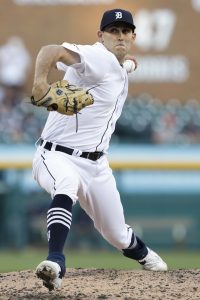
Since that report on Boyd broke, the upper end of the free-agent class for starting pitchers has emptied out. Gerrit Cole, Stephen Strasburg, Zack Wheeler, Madison Bumgarner, Hyun-Jin Ryu, Dallas Keuchel and Cole Hamels, among others, have come off the board in recent weeks. That leaves … Alex Wood (?) as the best starter left in free agency. Needless to say, if you didn’t sign any of the top starters on the open market but still need help in your rotation, a trade’s likely your best bet at this point. So, there should be plenty of teams clamoring for Boyd.
As MLBTR’s Jeff Todd explained earlier this week, when combining trade value and trade probability, Boyd may be the likeliest starter in the game to wind up on the move before the season. As was mentioned before, the Tigers figure to stay close to the bottom of the league for at least a little while longer, which is one reason it makes sense to give up Boyd now. Likewise, the lack of better starters on the open market ought to help Detroit’s cause if it tries to deal him. The soon-to-be 29-year-old Boyd does have three seasons’ arbitration eligibility left, so the Tigers could be content to keep him. However, Boyd’s getting more expensive (he’s due a projected $6.4MM in 2020) and might be difficult to extend with Scott Boras as his agent.
All things considered, the next several weeks look like an opportune time for the Tigers to cash in Boyd. Keep in mind this is the same club that held once-coveted righty Michael Fulmer when several teams were interested in him, and after undergoing Tommy John surgery last March, his trade value’s almost nil right now. If the Tigers go the other way with Boyd, there should be plenty of teams willing to offer enticing packages. To name several examples, the Angels, Astros, Phillies, Padres, Dodgers and Braves were all reported to have expressed interest in Boyd over the summer. All of those clubs could still stand to add someone of his ilk to their starting staffs right now.
So, if you’re going to trade for Boyd, what would you be getting? Well, there’s nothing particularly impressive about his career 4.92 ERA/4.66 FIP across 645 1/3 innings. Similarly, neither Boyd’s lifetime 91.4 mph average fastball velocity nor his 92 mph mean from 2019 will scare anyone. But Boyd did find another gear last season in terms of generating swinging strikes, racking up strikeouts and limiting walks. Hitters whiffed on 14 percent of his pitches, up from the 9 to 10 percent range during prior seasons. Moreover, Boyd took down 11.56 batters per nine via the K and handed out free passes at a personal-best 2.43 per nine. In all, his 4.76 K/BB ratio ranked 10th in the majors, barely trailing NL Cy Young winner Jacob deGrom and placing him just above the likes of Bumgarner and Clayton Kershaw.
Despite his K/BB brilliance, Boyd still concluded last season with an unspectacular 4.56 ERA/4.32 FIP over 185 1/3 innings. One problem? A lack of ground balls. Boyd induced grounders at a subpar 35.6 percent clip, which rivaled his lifetime mark (34.5) but also helped lead to an unpalatable home run tally. He surrendered long balls on 18.2 percent of flies, up from the 10 to 11 range over the previous two seasons. Of course, teams that are especially sanguine about Boyd could attribute those struggles to a leaguewide increase in HRs. As such, it may not have a negative effect on their interest in swinging a deal for him.
All told, 2019 was a tale of two halves for Boyd. He recorded a terrific 3.57 ERA/3.38 FIP in advance of the All-Star break, which helped fuel one trade rumor after another, before plummeting to a 5.35 ERA/4.57 FIP thereafter. In retrospect, maybe the Tigers should’ve sold high on Boyd in July, but it still seems likely he’d bring back a quality return for the rebuilding club in the coming weeks.
Photo courtesy of USA Today Sports Images.
Taking Stock Of The First Base Market
We’ve seen a few teams plug needs at the first base position thus far. But others have unfilled openings — or, alternatively, could pursue upgrades as a means of plugging in some desired offense. On the supply side … well, if you just glance at the list of free agents, you may be disappointed. But a closer look shows quite a few more possibilities.
If you want an established bat coming off of a good season, you’ll have to head onto the trade market. Josh Bell of the Pirates and Trey Mancini of the Orioles are each 27-year-old, first-time arb-eligible sluggers. They’re the cream of the crop … unless the Cubs are open to listening to offers on Anthony Rizzo. There’s no clear indication of that, but the club has said it’s willing to consider anything and spurned Rizzo’s interest in pursuing an extension.
Prefer a rental? It’s not clear where the dealing will end for the Indians, but Carlos Santana and his $20MM salary could well be available (even if the Mariners are covering a piece of it already). He had quite a nice season last year, marrying typically exceptional plate discipline with a power rebound.
There are also a few other, subtler possible targets that aren’t true first basemen but could be seen as options there. Kyle Schwarber of the Cubs and free agent Nicholas Castellanos are each somewhat awkward in the corner outfield. But with their backgrounds coming in more challenging infield spots (catcher and third base, respectively), it stands to reason they’d be capable of wielding the leather at first.
Outside of Castellanos, free agency is a bit limited. Left-handed hitters Eric Thames and Mitch Moreland were each productive in 2019 and look like good options, particularly for clubs that have platoon partners in mind. Yonder Alonso and Matt Adams have had their moments in recent years but will each be looking to bounce back. Ditto Adams teammate Ryan Zimmerman, who’ll either re-sign with the Nationals or retire. Wilmer Flores is a bit of an under-the-radar possibility. He had a nice season with the bat last year but hasn’t been terribly valuable elsewhere in the infield. Perhaps he’d be seen as an option at first by some clubs.
If a team would rather land a younger, longer-term option, the Mets have a pair of possibilities on offer. Dominic Smith doesn’t appear to have anywhere to play in New York with Peter Alonso hogging all the action at first. While J.D. Davis is capable of playing third base or the corner outfield, which boosts his appeal, some teams would surely rather stash his bat (if they believe in it) at first base rather than exposing him to the more difficult defensive positions.
There are some other relatively youthful possibilities out there. The Mariners’ Daniel Vogelbach and Marlins’ Garrett Cooper have shown intriguing skills at times and ought to be available. The Rays have a loaded deck of lefty sluggers after signing Yoshitomo Tsutsugo. Indications are he’ll be used in the outfield and at third base, but it’s hypothetically possible the club could consider offers on Ji-Man Choi and Nate Lowe. Bounceback targets include Ronald Guzman of the Rangers and free agent Greg Bird.
Teams that would rather a veteran bat and aren’t afraid of talking big dollar signs have a few other candidates to consider. The Padres (Wil Myers), Giants (Brandon Belt), and Cardinals (Matt Carpenter, Jose Martinez) could all have interest in structuring deals. If the preference is for veteran depth without any commitment, then Mark Reynolds, Kendrys Morales, and Lucas Duda should all be available for little more than a non-roster invite.
Remaining Needs: AL Central
We’re nearly halfway through what has been a vastly more active offseason than we saw in either of the past two winters. We’ve already checked in on what’s left to do for the five clubs in the NL East and the five in the AL West. Let’s turn the focus to the AL Central as we continue moving through the game’s six divisions…
Minnesota Twins [Offseason Outlook]
Baseball’s most-improved team from 2018 to 2019 entered the offseason in need of a rotation upgrade, and nothing has changed on that front. Several months after broadcasting an intent to pursue “impact” pitching, Minnesota’s rotation is led by a familiar trio: Jose Berrios, Jake Odorizzi and Michael Pineda. Kyle Gibson has departed for the Rangers. Martin Perez signed with the Red Sox. The Twins’ rotation, at present, is thinner than it was for much of the 2019 season, and the top free agents are all off the board to other teams. The Twins will have to get creative in order to make good on that promise of adding an impact arm — particularly since few look to be clearly available on the trade market.
The other question facing the Twins is whether they’ll succeed in their ongoing pursuit of former AL MVP Josh Donaldson. Third base isn’t a “need” for the Twins, but penciling in Donaldson at the hot corner and shifting Miguel Sano to first base deepens the lineup while simultaneously improving the infield defense. And the Twins still have ample funds to spend, even after signing Odorizzi, Pineda, Sergio Romo, Tyler Clippard and Alex Avila. If they miss out on Donaldson, too, president of baseball operations Derek Falvey and GM Thad Levine could be all the more motivated to line up an impact trade.
Cleveland Indians [Offseason Outlook]
The Indians might already have succeeded in their primary goal, as ownership looks intent on further paring back payroll after spending at club-record level in the wake of 2016’s World Series run. Gone is Corey Kluber, and the fact that Cleveland moved him for what is widely regarded as a light return (rather than hanging onto him and exploring the midseason market) suggests that clearing his salary was a key piece of the deal.
The Indians reallocated a bit of the money earmarked for Kluber when they agreed to terms with Cesar Hernandez to serve as the new second baseman. But it’s been radio silence from the Cleveland front office otherwise, despite the team’s reported desire for an outfield upgrade. (Delino DeShields, acquired in the Kluber deal, does not fit that description.) It’s tough to see the Indians ponying up for one of Nicholas Castellanos or Marcell Ozuna, but they could still try to play for someone like Corey Dickerson or perhaps explore a Yasiel Puig reunion. The trade market may be the likelier path.
One would expect that the main narrative around the Indians would be “how can they return to the top of the division,” but it’s instead on whether they’ll trade anyone else after clearing Kluber’s salary. Francisco Lindor‘s name is dominating the rumor mill in recent weeks, and even Mike Clevinger has seen his name pop up. A deal of either player might not be likely but could bring back some MLB-ready talent (while creating another enormous hole to fill). At this point, Cleveland could stand to add an outfielder, a bullpen arm or another starting pitcher, but it’s not clear how much they’re willing to spend to do so.
Chicago White Sox [Offseason Outlook]
Far and away the most active club in the division — if not in all of baseball — the White Sox have overhauled a roster that now includes Yasmani Grandal, Edwin Encarnacion, Dallas Keuchel, Gio Gonzalez and Nomar Mazara (all after agreeing to an extension with Jose Abreu). You can debate the extent to which those moves have improved the roster, but there’s no denying that the South Siders will enter 2020 with a markedly better club (especially when considering the looming promotions of center fielder Luis Robert and second baseman Nick Madrigal).
Frankly, the heavy lifting is mostly complete for GM Rick Hahn and his staff — but don’t expect them to just sit back and wait for Opening Day. The Sox could still look to add a low-cost veteran in center or at second to bridge the gap to those aforementioned top prospects (and to serve as insurance, should they sustain an injury or struggle to adapt to the Majors). The team’s bench looks quite thin at the moment as well. In the bullpen, there’s little certainty beyond the top two names (Alex Colome and Aaron Bummer), so it’s only sensible to add a reliever or two to the fray as they look to build a deeper club capable of postseason contention. It’ll be worth keeping an eye out for some Spring Training extensions for younger players as well.
Kansas City Royals [Offseason Outlook]
The Royals have hired a new manager (Mike Matheny) and bought low on some former top prospects (Maikel Franco, Chance Adams). The signing of Franco and acquisition of Adams are both perfectly sensible moves for a rebuilding club to make, and a few more pickups along those lines wouldn’t be a surprise. But the Royals never figured to be aggressive in free agency this winter, as they’re clearly more focused on winning in 2021-22 than they are in 2020. There’s clearly room to add to the rotation or bullpen later in the offseason, should a good value present itself, but the Royals are also hopeful that several of their best pitching prospects will surface in the Majors in 2020.
Given the team’s current long-term approach, it’s surprising that the soon-to-turn-31 Whit Merrifield isn’t more available on the trade market. However, general manager Dayton Moore has steadfastly maintained that he expects Merrifield to be a part of the Royals’ next competitive club and has resisted all offers dating back to last offseason. The Royals locked Merrifield up to a very affordable extension last winter, and the club could conceivably explore long-term arrangements with the likes of Adalberto Mondesi or Jorge Soler this spring.
Detroit Tigers [Offseason Outlook]
Rebuilding or not, the Tigers opted to add some thump to their lineup earlier this month when they signed both C.J. Cron and Jonathan Schoop to matching one-year deals. Scooping up the Twins’ right-side infield tandem gives the Tigers some lineup depth and a pair of potential trade chips to flip this summer; a few other short-term moves along those lines could very well play out.
The pitching staff, in particular, looks ripe for short-term upgrades (both in the ‘pen and in the rotation). A one-year flier on an Alex Wood or Jimmy Nelson type could pay dividends. Last year’s attempts at turning Tyson Ross and Matt Moore into coveted trade pieces didn’t pan out, but those results shouldn’t push the club away from trying what was a sound strategy once again.
The biggest question surrounding the Tigers is whether Matthew Boyd will be with the club to open the season. Boyd is widely known to be available and has drawn interest from plenty of clubs dating back to the July trade deadline. He’s controlled for another three seasons and emerged as one of the game’s premier strikeout pitchers in 2019, though home runs inflated his ERA. Some teams are surely hopeful, though, that if there’s a correction to last season’s juiced ball, Boyd can take another step forward and cement himself as a high-end rotation cog. There’s no urgency to trade him, but the Tigers will continue to explore the market to see if someone will overwhelm them.
MLBTR Poll: How Good Are The White Sox?
With the holiday season in full swing, this has been a fairly quiet week around Major League Baseball. If you’re a White Sox fan who happens to read MLBTR, though, we’ve had plenty of items relating to your favorite team over the past couple days. There has been Chicago’s one-year, $12MM agreement with first baseman/designated hitter Edwin Encarnacion, its reported interest (or lack thereof) in free-agent outfielder Yasiel Puig and Mark Polishuk’s piece on the extension candidacy of stud center field prospect Luis Robert.
Even before the White Sox committed to Encarnacion, the majority of voters MLBTR polled Tuesday declared they were having the best offseason of all AL teams that finished below .500 in 2019. The White Sox defeated the Angels, Blue Jays and Rangers – teams that are also enjoying impressive offseasons – for that honor. Before Encarnacion jumped aboard, the White Sox added catcher Yasmani Grandal and left-handers Dallas Keuchel and Gio Gonzalez in free agency, re-signed 1B/DH/franchise favorite Jose Abreu and acquired outfielder Nomar Mazara in a trade with the Rangers.
Now, with the bulk of the White Sox’s winter work likely done, it’s worth asking how good this team looks on paper. Undoubtedly, Chicago had a high hill to climb coming into the offseason. The club was then fresh off a 72-victory campaign, its 11th in a row without a playoff berth and the seventh straight season in which it lost more games than it won. Maybe the White Sox aren’t quite playoff-caliber now, but considering the moves general manager Rick Hahn & Co. have made in the past month and a half, they should at least push the .500 mark next year.
With Encarnacion, Grandal, Abreu, Mazara, third baseman Yoan Moncada, shortstop/reigning AL batting champion Tim Anderson and left fielder Eloy Jimenez comprising the majority of their offense, the White Sox should be a bear to deal with for opposing pitchers. That’s without considering the forthcoming promotions of Robert and second base prospect Nick Madrigal, who could emerge as regulars in the early going next season.
Likewise, there’s no shortage of promise in Chicago’s rotation. If all goes according to plan, Keuchel and Gonzalez will act as sturdy veterans, Lucas Giolito will continue blossoming into one of the game’s premier starters, Reynaldo Lopez, Michael Kopech and Dylan Cease will quickly realize their vast promise, and Carlos Rodon will return to form after Tommy John surgery. Odds are that everything won’t go right, but that’s still a lot of talent crammed into one starting staff.
If there’s one area Chicago hasn’t really addressed this winter, it’s the team’s bullpen. The White Sox did claim flamethrowing righty Tayron Guerrero off waivers from the Marlins, but they’re otherwise in line to return a familiar cast of characters at the end of games. That isn’t quite cause for panic, though, as their Aaron Bummer-led relief corps largely earned middle-of-the-pack marks last season.
Although we still have several weeks before pitchers and catchers report, this already looks like a much-improved White Sox roster. In an AL Central division with multiple teams in full rebuilds (the Royals and Tigers) and two quality clubs that could take steps back (the Twins and Indians), perhaps Chicago can break through as one of the majors’ surprise playoff contenders in 2020. What do you think?
(Poll link for app users)
As of now, how good are the White Sox?
-
They'll finish .500 or better 85% (16,854)
-
They'll finish below .500 15% (3,082)
Total votes: 19,936
Remaining Needs: AL West
With the offseason almost two months old, MLBTR is going through all 30 teams’ remaining needs by division. We started with the NL East. Now let’s move to the AL West, a division the Astros have won three years in a row. This has been a somewhat rocky offseason for the reigning pennant winners, which could create opportunities for at least one or two of the other teams in their division…
Houston Astros [Offseason Outlook]
The Astros’ nigh-invincible rotation has taken a couple serious hits since free agency opened, as all-world right-hander Gerrit Cole left to sign a record-high contract with the rival Yankees and back-end southpaw Wade Miley departed for the Reds. With Justin Verlander and Zack Greinke returning to man the top two spots, the front end of the Astros’ starting staff remains in better shape than most teams’. They’ll also get Lance McCullers Jr. back from Tommy John surgery, though the remainder of their rotation is decidedly less proven.
Jose Urquidy, Forrest Whitley, Rogelio Armenteros, Cionel Perez and Josh James are just a few in-house options who could start for Astros sometime in 2020, but there’s nothing resembling an established option after the Verlander-Greinke-McCullers trio. So, it would make sense for the Astros to seek a veteran from outside, though their desire to avoid the second level of the luxury tax ($228MM) could limit their options. As things stand, the Astros’ tax payroll’s already projected to check in at $237MM-plus, per Jason Martinez of Roster Resource. From that standpoint, the good news is that there’s no free agent remaining who’d cost an exorbitant amount to sign. However, that also means there’s no sure bet left on the open market. What about upgrading via trade? Two lefties – the Tigers’ Matthew Boyd and the Diamondbacks’ Robbie Ray – are among those who could be available, and both hurlers have drawn the Astros’ interest in the not-so-distant past.
Aside from the back end of its rotation, most of Houston’s roster looks as if it’ll once again enter next season in enviable shape. An exception could be at catcher, where the Astros probably won’t get much offense from Martin Maldonado, Dustin Garneau and Garrett Stubbs. Nevertheless, having re-signed the defensive specialist Maldonado for a two-year, $7MM guarantee, it wouldn’t be a surprise to see the Astros go into 2020 with their current behind-the-plate cast.
For Houston, the biggest question of all is whether it’ll face discipline in the near future for a scandal centering on alleged sign-stealing during its World Series-winning campaign in 2017. That’ll continue to be a major story to watch going forward, as it could have negative effects on president of baseball operations Jeff Luhnow, manager A.J. Hinch and the organization as a whole.
Oakland Athletics [Offseason Outlook]
There may be no greater need in Oakland that at second base, a position Jurickson Profar failed to solidify last season (the A’s dealt him to the Padres earlier this winter as a result). For now, the A’s have several fairly untested in-house possibilities in Franklin Barreto, Sheldon Neuse, Chad Pinder and Jorge Mateo, but they’ve shown interest in addressing the spot from elsewhere. Former Athletic Jed Lowrie, now a Met, has come up as a potential trade acquisition. If healthy (no sure thing after an injury-ruined 2019), the switch-hitting Lowrie would at least offer some variety to a righty-heavy lineup. But if the A’s don’t pick up Lowrie or someone else via trade, they can still choose from several free agents, including Starlin Castro, Brock Holt, Jason Kipnis, Asdrubal Cabrera, Scooter Gennett and ex-A Ben Zobrist, to name some players left on the market.
Elsewhere, the Athletics have at least considered adding a veteran backup catcher and more relief help. Matt Wieters has been on the radar as a possible reserve behind highly promising young backstop Sean Murphy. In the bullpen, the A’s had interest in a reunion with Blake Treinen before he signed a one-year, $10MM deal with the Dodgers. They also eyed Sergio Romo prior to his re-signing with the Twins, and have looked at Royals lefty Tim Hill.
Texas Rangers [Offseason Outlook]
Credit to the Rangers for remaking their rotation this winter. What was previously a weakness now looks like a strength with new faces Corey Kluber, Kyle Gibson and Jordan Lyles following the terrific Mike Minor–Lance Lynn tandem. But where are the offensive reinforcements? The Rangers came into the offseason at least expected to take steps forward at third base, where Anthony Rendon was available and Josh Donaldson is still without a deal. They watched Rendon sign with the Angels for seven years and $245MM,however, and it doesn’t seem they’re serious players for Donaldson. Therefore, barring a trade for someone like Kris Bryant of the Cubs or Nolan Arenado of the Rockies, it doesn’t appear the Rangers will be making a blockbuster addition at the hot corner. Other than Donaldson, free-agent options (Todd Frazier?) don’t inspire a great deal of confidence.
Meanwhile, the Rangers’ offensive production from the catcher position was catastrophically low last season. Jeff Mathis put up a wRC+ of 2 (yes, you read that correctly), while Jose Trevino wasn’t a world-beater in his own right. But the Rangers are currently poised to enter next year with those two as their primary backstops yet again. Robinson Chirinos, a former Ranger they’ve shown interest in re-signing, is still out there. So is Jason Castro. On paper, either would give the team a much more credible starting catcher than it has at the moment.
Not to be forgotten, the Rangers aren’t in the best shape at first base, where Ronald Guzman fell flat for the second straight year. The 25-year-old Guzman still has a minor league option remaining, so the Rangers could sign a veteran (Eric Thames? Old friend Mitch Moreland?), demote Guzman and still keep him in the org.
Los Angeles Angels [Offseason Outlook]
As mentioned above, the Angels made one of the offseason’s most noteworthy splashes when they signed Rendon. Many expected the Angels to hand out a $200MM-plus contract this winter, but the popular belief was that money would go to a pitcher (Cole or Stephen Strasburg). The Angels struck out on Cole, Strasburg and $100MM-plus man Zack Wheeler (now a Phillie), but with Rendon in tow, they boast arguably baseball’s premier one-two punch of position players in him and the transcendent Mike Trout. The supporting cast behind those two isn’t bad, either, with DH Shohei Ohtani, shortstop Andrelton Simmons, second baseman David Fletcher and left fielder Justin Upton as quality complements. Furthermore, star outfield prospect Jo Adell gaining on a major league spot.
If there’s one serious issue among the Angels’ cast of hitters, it’s behind the plate. The only catchers on the Angels’ 40-man roster are Max Stassi and Anthony Bemboom, and that probably isn’t going to cut it. They have, however, shown interest in boosting their cause from outside. Either Chirinos or Castro (or, although it’s less likely, a trade for the Cubs’ Willson Contreras) would go a long way toward giving them one of the most formidable groups of position players in baseball.
Of course, as was the case when the offseason began, the Angels still need front-of-the-rotation help. Sure, they’ve done well to land Dylan Bundy and Julio Teheran as competent innings eaters, and Ohtani will factor in again after missing all of 2019 (as a pitcher) while recovering from Tommy John surgery. Andrew Heaney and Griffin Canning are still in the mix, which is a plus, but there’s no proven ace in the fold. Problem is that it may be too late to find one. Boyd, Ray, Chris Archer (whom new manager Joe Maddon knows from their time in Tampa Bay) and David Price (who still has three years and $96MM left on his contract) are among the top options on the trade market, but all come with question marks.
Fortunately for the Angels, they’re still more than $20MM under the luxury tax, so there’s room for them to make further upgrades even after grabbing Rendon, Bundy and Teheran.
Seattle Mariners [Offseason Outlook]
Unlike the other teams in their division, the rebuilding Mariners have very little chance to vie for a playoff spot next season. As such, one of their only real “needs” is to find a way to jettison more veterans and keep building for the future. The Mariners already got rid of one prominent player in catcher Omar Narvaez, whom they traded to the Brewers earlier this month, and third baseman Kyle Seager, outfielder Mitch Haniger and second baseman Dee Gordon are among those who could also find themselves on the outs in the coming months.
Meantime, general manager Jerry Dipoto has said the Mariners won’t be adding to their position player group before next season, but it would at least make sense to buy low on a pitcher or two, hope for a rebound(s) and try to flip him or them by the July trade deadline. Old pal Taijuan Walker has come up as a possible starting addition via free agency, and would join free-agent signing Kendall Graveman as a bounce-back candidate for the Mariners. Those are the type of arms they should be on the hunt for right now.
Extension Candidate: Luis Robert
Is there any prospect quite as exciting as a blue chip center fielder? White Sox fans have been eagerly awaiting the arrival of Luis Robert ever since he signed for a $26MM bonus with the team back in May 2017. It was a contract that put the Sox in the proverbial “penalty box” under the old international signing rules, yet the splurge seemed more than worthwhile given the Cuban outfielder’s potential.
Robert’s early progress was hampered by ankle and knee injuries, as well as a thumb sprain. But, with a clean bill of health in 2019, Robert set upon tearing up the minor leagues, hitting a cumulative .328/.376/.624 with 32 homers and 36 stolen bases (out of 47 steal attempts) over 551 plate appearances for three different White Sox affiliates. Robert moved from high-A Winston-Salem to Triple-A Charlotte by season’s end, and though he only has 47 games and 223 PA at the Triple-A level, his .974 OPS in Charlotte left little doubt that the 22-year-old Robert is ready for the majors.
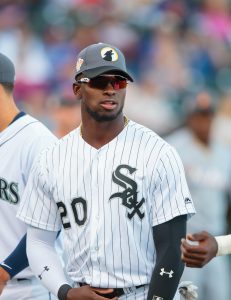 White Sox GM Rick Hahn feels the same way, telling reporters in his end-of-year press conference that the Chicago front office didn’t see center field as an area of need this winter since Robert was slated to handle the position for much of the 2020 season. As to when Robert could make his debut, however, is still up in the air, leaving open the possibility that the Sox could erase all service-time concerns and lock him into the Opening Day outfield by simply inking Robert to an extension.
If this scenario sounds familiar, the White Sox did the exact same thing with another star prospect in Eloy Jimenez last spring. Before even appearing in a Major League game, Jimenez signed a six-year extension worth $43MM in guaranteed money, and could end up earning $75MM over an eight-year span if the contract’s two club options are exercised. The deal far exceeded the previous record extension for a player without any MLB experience, which was a six-year/$24MM guarantee for Scott Kingery from the Phillies prior to the 2018 season. (The Mariners and first base prospect Evan White also agreed to a six-year pact for $24MM in guaranteed salary this past November.)
Robert’s representatives are obviously likely to aim for an extension that will surpass Jimenez’s deal, with the argument that their client offers more future value. Like Jimenez, Robert is a top-five prospect in the eyes of MLB.com and Baseball America — which rank him third on their top-100 prospect rankings — while Baseball Prospectus’ midseason top 50 ranking placed him fourth. While Jimenez’s batting ability is renowned, however, evaluators aren’t certain if he’ll be able to offer much defensively as a corner outfielder, and a move to first base could be necessary even within a few seasons.
In Robert’s case, while there is some question as to whether he’ll stick as a center fielder over the long term, he certainly projects to play up the middle for at least the opening portion of his career, which only adds to his five-tool potential. His 30-30 season across the minors in 2019 indicated his power and speed, and BA and MLB.com rank his throwing arm in the 55-60 range on the 20-80 scouting scale. Robert’s plate discipline is perhaps still a work in progress since he only posted 28 walks against 129 strikeouts last season, though it isn’t unusual for any young player to deal with a lot of swing-and-miss early in his career. MLB.com’s scouting report cites Yoan Moncada as a possible comp, and Moncada significantly reduced his own strikeout problems (a league-high 217 in 2018 to 154 in 2019) with the help of Chicago’s hitting coaches.
Beyond the argument that Robert has the higher ceiling than Jimenez, Robert can also seek the higher deal since he has less incentive to sign an extension. Robert already has that $26MM, remember, so he has already banked one life-changing fortune from his baseball career. (Jimenez, by contrast, had “only” his initial $2.8MM signing bonus from the Cubs.) Unless the White Sox were to offer Robert something far above and beyond Jimenez’s contract, Robert might prefer to just bet on himself and see how his initial season or seasons progress before considering long-term deals.
Without an extension in place, the White Sox could keep Robert in the minors for at least the first few weeks of the season, or at least long enough to ensure that they’ll get a seventh year of control over his services. This would be the latest instance of a team manipulating a top prospect’s service time, and this entire practice has been put under the microscope this offseason now that Kris Bryant‘s service time grievance is currently being examined by an arbitrator. While the arbitrator is widely expected to rule in the Cubs’ favor, a decision reducing Bryant’s remaining team control from two years to one would send many shockwaves around the baseball world, and impact how every club handles promoting its best minor leaguers in the future. As such, the White Sox might wait until the arbitrator’s ruling before fully diving into extension negotiations with Robert.
Beyond Jimenez, Hahn has extended several other promising White Sox players (i.e. Tim Anderson, Adam Eaton, Jose Quintana, Chris Sale) early in their careers over his seven-plus years as general manager. A potential Robert contract could be the most unique and, in fact, most expensive of the bunch, though it would mark the latest aggressive move in a winter that has already seen Yasmani Grandal, Edwin Encarnacion, Dallas Keuchel, and Gio Gonzalez come to the South Side in free agency. Since the club’s rebuild is clearly over, making Chicago’s center fielder of the future into part of the present could be the next step in the lead-up to the most anticipated White Sox Opening Day in years.
Photo courtesy of USA Today Sports Images
Remaining Needs: NL East
Quite a few of MLBTR’s top 50 free agents have already signed, though there are still a host of players available on the open market. We’ve seen somewhat less action on the trade market, which still features a number of stars and other useful targets.
Those links provide lots of info on the supply side. But what about demand? We’ll run through each division to identify the biggest-remaining needs of each team.
Atlanta Braves [Offseason Outlook]
As they did last time around, the Braves sprinted out of the gates to address multiple key needs. But the club’s biggest question entering the winter — what to do about the departure of star third baseman Josh Donaldson — remains unanswered. It’s a good roster as-is, but the lineup would look a whole lot better with another big bat in the middle of it. If Donaldson can’t be retained, the Braves could look to the trade market at third base or pursue one of the remaining corner outfielders and re-shuffle their internal deck accordingly. The club seems quite settled otherwise but could still explore opportunistic rotation additions.
Miami Marlins [Offseason Outlook]
The Fish have spent the winter plugging in one-year veterans and jettisoning unwanted relievers. The idea was to create a mix that will improve the results a bit in the near term while simultaneously aiding the development of and avoiding undue pressure on young players. Much of that work is already done, but the team is reportedly still looking to add a power-hitting corner outfielder who’d supplement (or supplant?) recent minor-league signee Matt Kemp. Perusing the roster, it seems there’s also room to pick up a veteran pitcher or two to join the bullpen or perhaps the rotation. That’d become a clear priority in the event of a trade involving Caleb Smith, Jose Urena, or some other pitcher. Presumably, the club will continue to explore trade opportunities involving those and other players while keeping an eye on the waiver wire.
New York Mets [Offseason Outlook]
Aided by a renegotiation of the Yoenis Cespedes contract, the Mets have placed a series of expensive (a combined $25MM+) single-season bets on high-variance veteran pitchers. Having picked up two new starting-capable hurlers, a pair of bullpen pieces, and a part-time center fielder in Jake Marisnick, the New York org has already ticked the boxes it needed to.
So … why doesn’t it feel like GM Brodie Van Wagenen is finished? With a forthcoming ownership transition underscoring the need to win now, the club’s top baseball exec can’t afford to leave any stones unturned in his sophomore offseason. Installing a top-flight center fielder — Starling Marte looks like the best bet — would be at the top of the list, but the club can also explore blockbuster scenarios at other positions. It’s possible to imagine further improvements to the bench and bullpen mix, too. The Mets will be most keen to utilize blocked first baseman Dominic Smith as a trade chip — whether to bring back prospects, shed the Jed Lowrie contract, or deliver a different MLB piece — but younger big leaguers J.D. Davis and Steven Matz could also conceivably be dangled.
Philadelphia Phillies [Offseason Outlook]
The Phils landed two of MLBTR’s top dozen free agents, and they did so for lesser commitments than were necessary to secure quite a few other top players. That’s a nice start, but hardly sufficient to stand out from the other three contending teams in this division. Improving the bullpen remains an unfulfilled priority. While the rotation no longer stands out as a problem, it’s susceptible of being bettered. And the position-player mix doesn’t feel quite finished. The Phillies could choose to utilize Adam Haseley in center field and Scott Kingery at third base. But the lineup would look better with a newly installed regular for at least one of those positions, freeing Kingery to function as a super-sub and reducing the team’s reliance upon the still-unproven Haseley. It’s a tough scene in free agency unless the club reimposes itself in the market for Josh Donaldson. Creative trade exploration seems advisable. The Phils also still must figure out what to do with Odubel Herrera, who’ll be returning from a suspension.
Washington Nationals [Offseason Outlook]
Having finally completed a summit attempt, the Nats face new challenges in a repeat bid. Not unlike the Braves and Phillies, the D.C. roster would look much better with Josh Donaldson added in at the hot corner. If they miss on Donaldson, the Nats could be forced into some difficult and high-stakes trade talks. There’s an opening at second base as well — especially if the club intends to utilize the recently re-signed Howie Kendrick at first base, which is partially dependent upon its decision with regard to Ryan Zimmerman — which creates both need and opportunity.
Youngster Carter Kieboom could be cast into a big role, but the organization probably prefers to see him force his way up rather than relying on him out of the gates. It’s possible to imagine the addition of multiple veteran infielders from a large remaining pool, with a plan to mix and match and adapt over the course of the season. Any of the team’s internally developed reserve players could be supplanted over the next few months. Ditto the holdover fifth-starter and middle-relief options. Another rotation piece (if only for camp competition) and one or more relievers (preferably including a legit setup option) also remain on the list of needs for president of baseball operations Mike Rizzo, who’s overseeing a huge amount of roster turnover while trying to recover from a (literal and figurative) championship hangover.
Poll: Should The D-Backs Trade Robbie Ray?
Diamondbacks GM Mike Hazen has splashed far more cash in free agency this winter than in his prior offseasons at the helm. Most notably, he pulled off a surprise strike for star hurler Madison Bumgarner, who’s now in town for a five-year term.
The addition of MadBum seemed to be spurred largely by the already legendary lefty’s own interest in playing in Arizona. While the team proved amenable to working out a mutually agreeable contract, it was in large part an opportunistic strike for an organization that had signaled satisfaction with its pitching depth when it non-tendered Taijuan Walker at the outset of the offseason.
So … what about the team’s preexisting star southpaw? Hazen has denied that the big new addition would push Robbie Ray out of the organization’s plans, but word was at the outset of the winter — i.e., before the Bumgarner pursuit even began — that the team was open to dealing Ray. With Ray set to earn a projected $10.8MM via arbitration before reaching the open market, the club could cash him in and re-distribute the salary to account for its recent additions or support further signings.
Perhaps it’s now a rather simple proposition: put Ray on the auction block and get what you can in trade value. The Snakes already added Mike Leake and Zac Gallen via trade in the summer. Merrill Kelly is a Leake-like sturdy presence while Luke Weaver will look to resume his impressive initial showing after resting and rehabbing. That makes five without Ray. And the D-Backs have a host of upper-level depth on the 40-man, including Jon Duplantier, Taylor Clarke, and Taylor Widener.
On the other hand … maybe now’s the time and this is the team to hang onto the upside-laden Ray. The southpaw has rare strikeout ability and is a rather affordable asset for a pitcher of his ability. Bumgarner’s deal features a notably light 2020 salary, perhaps leaving payroll space to fit both of these quality lefties. Keeping Ray would make the Arizona staff one of the better units in the National League. The D-Backs could deploy some of their extra arms in relief capacities, comforted by the extra depth. Or they might deal away a now-unnecessary starting piece, prioritizing near-term upside over pure cost-efficiency.
While the Dodgers still look like a strong favorite in the NL West, the L.A. org hasn’t yet converted on its bids to improve this winter and does have a few potential weak spots. If the Diamondbacks are to make a real bid at breaking the stranglehold on the division, keeping Ray in hopes he can perform to his ceiling would make an awful lot of sense. Even if the Dodgers respond to the pressure by acquiring a star-level player, that could redound to the long-term benefit of the Diamondbacks and other division pursuers.
As always, it depends in no small part upon the return that could actually be achieved. But in this case, perhaps, it’s more a question of organizational direction than the specifics of trade value. Picking up more prospect capital arguably isn’t as important to the D-Backs as maximizing their 2020 chances. And there’s always the fall-back option of a summer trade or qualifying offer at season’s end.
How do you think Hazen and co. should proceed? (Poll link for app users)
What Should The D-Backs Do With Robbie Ray?
-
Deal him 53% (5,967)
-
Keep him 47% (5,326)
Total votes: 11,293