
Sorting The Relievers Of The 2017-18 Free Agent Class
Earlier this week I looked at the 2017-18 crop of free agent starters and sorted the lot by a number of different useful metrics when determining and attempting to predict a pitcher’s effectiveness. There are hundreds of other metrics to explore for deeper dives into any given pitcher (or group of pitchers), and this is by no means intended to be any sort of definitive ranking of the “best” available free-agent relievers. Nonetheless, the general premise of missing bats, limiting walks and avoiding hard contact is a recipe for success on the mound.
With that in mind, I turned to Fangraphs for help once again, creating a custom list of the 49 free-agent relievers that tossed at least 20 innings out of the bullpen this season to see which of the arms in question excelled in these areas. Players like Jesse Chavez, Dillon Gee and others that both worked as a starter and a reliever in 2017 had only their relief work factored into these lists. I’ve also left off Craig Kimbrel and Jerry Blevins, as each will have his 2018 club option exercised.
Hardest Throwers (Fangraphs leaderboard)
League average = 93.7 mph
- Brandon Morrow: 97.7 mph average fastball
- Tommy Hunter: 96.3 mph
- Neftali Feliz: 96.2 mph
- Juan Nicasio: 95.4 mph
- Tom Wilhelmsen: 95.3 mph
- John Axford: 95.0 mph
- Jake McGee: 94.9 mph
- Joaquin Benoit: 94.8 mph
- Anthony Swarzak: 94.7 mph
- Fernando Rodney: 94.6 mph
Top Strikeout Arms (Fangraphs leaderboard)
League average = 23.3 K%, 8.95 K/9
- Joe Smith: 33.0 K%, 11.8 K/9
- Jesse Chavez: 32.4 K%, 12.0 K/9
- Wade Davis: 32.1 K%, 11.9 K/9
- Boone Logan: 30.8 K%, 12.0 K/9
- Anthony Swarzak: 30.5 K%, 10.7 K/9
- Brandon Morrow: 30.1 K%, 10.6 K/9
- Greg Holland: 29.9 K%, 11.0 K/9
- Pat Neshek: 29.4 K%, 10.0 K/9
- Tommy Hunter: 28.7 K%, 10.0 K/9
- Bud Norris: 28.6 K%, 11.2 K/9
Fewest Walks (Fangraphs leaderboard)
League average = 9.2 BB%, 3.54 BB/9
- Pat Neshek: 2.6 BB%, 0.9 BB/9
- Addison Reed: 4.0 BB%, 1.5 BB/9
- David Hernandez: 4.3 BB%, 1.5 BB/9
- Brandon Morrow & Joe Smith: 4.8 BB%, 1.7 BB/9 (tie)
- Jesse Chavez: 4.9 BB%, 1.82 BB/9
- Dillon Gee: 5.3 BB%, 1.93 BB/9
- Brandon Kintzler: 5.3 BB%, 1.91 BB/9
- Yusmeiro Petit: 5.4 BB%, 1.9 BB/9
- Seung-hwan Oh: 5.7 BB%, 2.28 BB/9
- Tommy Hunter: 5.8 BB%, 2.o BB/9
Highest Ground-Ball Rates (Fangraphs leaderboard)
League average = 44.3 percent
- Peter Moylan: 61.9 percent
- Bryan Shaw & Brandon Kintzler: 55.9 percent (tie)
- Steve Cishek: 55.5 percent
- Craig Stammen: 51.8 percent
- Fernando Rodney: 51.5 percent
- Matt Albers: 51.4 percent
- Jeanmar Gomez: 50.7 percent
- Dustin McGowan: 50.4 percent
- Luke Gregerson: 50.3 percent
- John Axford, Boone Logan, Joe Smith: 50.0 percent (three-way tie)
Least Hard Contact Allowed (Fangraphs leaderboard)
League average = 31.0 percent
- Matt Albers: 21.9 percent
- Steve Cishek: 22.3 percent
- Tony Watson: 22.9 percent
- Bryan Shaw: 23.3 percent
- Dillon Gee: 23.7 percent
- Pat Neshek: 24.4 percent
- Brandon Kintzler & Tommy Hunter: 25.5 percent (tie)
- Peter Moylan (26.2 percent)
- Joe Smith: 26.4 percent
- Neftali Feliz: 26.7 percent
As noted on Monday when looking at the starters, this is obviously a rather high-level look at the overall relief market, as there are myriad different means of breaking down the class. Age, handedness, target contract length, total innings pitched and injury history weren’t even factored into these quick rankings, for example, and each will factor prominently into these pitchers’ offseason negotiations.
That said, there are some perhaps under-the-radar names that continually surface when looking at these elements of a pitchers’ skill set. It’s easy for the excellent seasons for Morrow and Hunter to get lost in the shuffle, for instance, but they both fit near the top of the leaderboard in a number of categories. Albers, like each of those players, parlayed a minor league pact into a significant late-inning role and is ranked favorably here as well. Smith has quietly been a K%-BB% juggernaut this season, and Chavez has even more quietly posted terrific secondary numbers out of the bullpen despite a dismal 5.84 ERA.
Moreover, the frequent appearances of Morrow, Hunter, Swarzak, Petit, Albers, Moylan and Gee serve as a reminder that often times, less-heralded minor league signings can still pay significant dividends in free agency. Each of those players should be poised for a more favorable run in free agency this offseason than last.
Three Needs: Los Angeles Angels
Click here to read previous entries in MLBTR’s Three Needs series.
Meaningful baseball in 2017 came to an end Wednesday for the Angels, whose loss to the White Sox eliminated them from American League wild-card contention. On one hand, given the multitude of injuries to their pitching staff and Mike Trout‘s absence from late May through mid-July, it’s commendable that the Angels hung in the race until the final week of the season. On the other, Trout is now another year closer to free agency and, by no real fault of his own, still hasn’t won a playoff game in his remarkable career.
With only three years remaining on Trout’s contract, time could be running out for the Angels to capitalize on having the best player on the planet on their roster. General manager Billy Eppler will have to augment the talent around Trout during the upcoming offseason, then, in hopes of snapping a three-year playoff drought in 2018 and contending for a title with the perennial MVP candidate in the fold. These areas figure to garner Eppler’s attention over the next few months…
1.) Get an answer from Justin Upton:
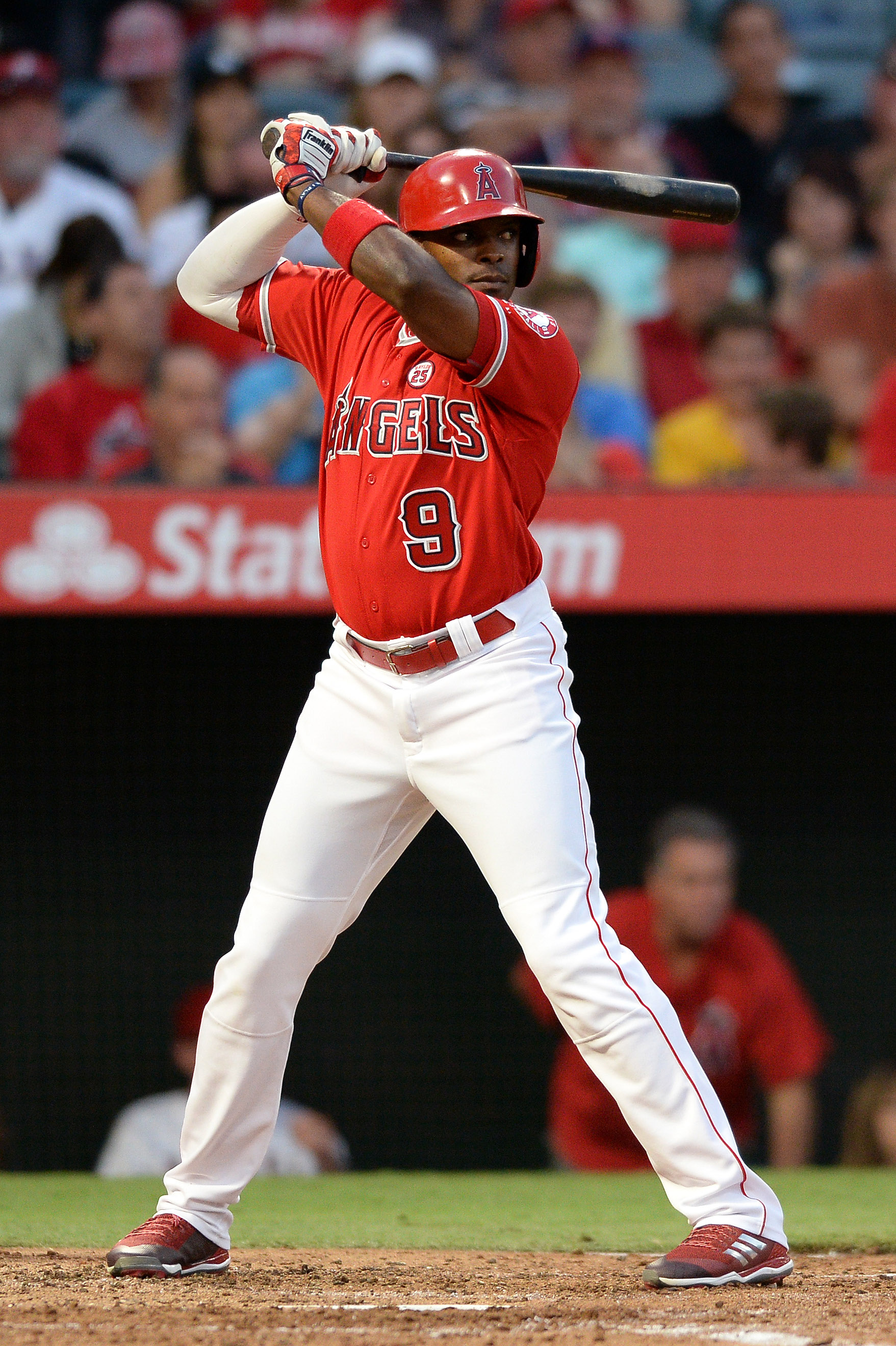
The Angels stunningly acquired the left fielder from the Tigers on Aug. 31, knowing full well it could either be a long-term marriage or a one-month stand. Upton will enter the offseason with four years and $88.5MM left on his contract, but he’ll have a chance to opt out of the deal after the World Series.
As a .274/.361/.544 hitter with 35 home runs in 624 plate appearances – including a .247/.356/.551, seven-HR showing in 104 PAs as an Angel – the 30-year-old looks like a strong candidate to vacate his pact and revisit free agency. Perhaps the Angels could prevent that from happening by tacking a couple more big-money years on the arrangement. Otherwise, losing Upton would leave the team scrambling for a capable complement to Trout.
If that’s not Upton in 2018, the best option in free agency will be one of his ex-Tigers teammates, Diamondbacks outfielder J.D. Martinez who has absolutely terrorized opposing pitchers since his 2014 breakout and is amid a career offensive season. Others in the class of impending free agent corner outfielders aren’t nearly as appealing as Upton or Martinez, but one of those lesser players (or a trade acquisition) could patrol left for the Angels in 2018 if they don’t reel in either of the big fish. Regardless, improving an offense that ranks 23rd in FanGraphs’ wRC+ metric and 24th in runs is the Angels’ No. 1 priority heading into the offseason.
“The obvious talking point this winter is going to be our offense,” manager Mike Scioscia said Wednesday (via Pedro Moura of the Los Angeles Times).
At .228/.306/.337, the Angels have posted a major league-worst line against left-handed pitching this year, making a star-caliber righty-swinger like Upton or Martinez that much more of a fit for the club going forward.
2.) The infield: Andrelton Simmons and …?
The Angels are set at shortstop with Simmons, but their infield is otherwise rife with questions. Third baseman Yunel Escobar is an impending free agent and probably won’t be back, according to Moura, while second baseman Brandon Phillips‘ deal is also up. Over at first base, the Angels rank 27th in fWAR (0.3) and have batted a weak .211/.290/.413, though they have gotten quality second-half production there from C.J. Cron. They’ll also have first baseman/third baseman Luis Valbuena on the books for $8MM in 2018, so even though he hasn’t performed well this year, he still seems likely to factor in next season.
While it’s possible the Angels will stick with Cron and Valbuena at first base, second and third are begging for upgrades. A wild card at either position may be the Reds’ Zack Cozart, who could improve his market over the winter if he shows a willingness to move off shortstop. In terms of conventional second basemen, Eduardo Nunez, old friend Howie Kendrick and Neil Walker, whom the Angels tried to acquire via trade a couple years ago, represent the best soon-to-be free agents, while Ian Kinsler, Dee Gordon, Jed Lowrie, Josh Harrison and Yangervis Solarte are among potential trade candidates.
Any of Nunez, Lowrie, Harrison or Solarte could also offer a solution at the hot corner, where Mike Moustakas and Todd Frazier are the top free agents-to-be. Moustakas is a Los Angeles native, which might help the Angels in a potential pursuit, but he’s also a Scott Boras client who figures to pull in one of the richest contracts of the offseason.
3.) Improve the rotation:
The good news here is that No. 1 starter Garrett Richards fared well in his September return from a right biceps issue that limited him to 27 2/3 innings this year. Barring another injury, he’s primed to sit atop the Angels’ rotation in 2018. Richards isn’t the only Angels starter who has endured an injury-shortened season (two years in his case), of course, as availability has also been an issue with J.C. Ramirez, Matt Shoemaker, Tyler Skaggs, Alex Meyer and Andrew Heaney. With the exception of Meyer, who’s likely to miss 2018 after undergoing surgery this month on a torn shoulder labrum, all of those hurlers (and Parker Bridwell) could be factors in the Angels’ rotation next year. Still, considering the alarming history of injuries to Richards, Skaggs and Heaney, it would behoove Eppler to seek at least one dependable starter in the offseason.
Given the thinness of the Angels’ farm system, it’s unlikely they’ll put together a trade for a big-time starter, but they could turn to free agency for someone like Lance Lynn or Alex Cobb, to name a pair of second-tier options, if they don’t land any of the more high-profile hurlers (Jake Arrieta, Yu Darvish or possibly Masahiro Tanaka, whom Eppler knows from his time in the Yankees’ front office). While every GM with a pulse figures to at least kick the tires on Japanese ace/slugger Shohei Otani if he immigrates to the majors in the offseason, a lack of available at-bats in Anaheim is one factor that could work against a successful Angels pursuit. The Halos are stuck with a severely declining Albert Pujols at designated hitter, so they wouldn’t be able to guarantee many ABs to Otani.
Photo courtesy of USA Today Sports Images.
Three Needs: Baltimore Orioles
This is the latest edition in MLBTR’s Three Needs series. Click to read entries on the Phillies, Braves, Tigers, Reds, Pirates, Giants, Mets, Blue Jays, Athletics, White Sox and Mariners.
For the first time since 2011 (Buck Showalter’s first full season managing the club), the Orioles will post a losing record. While much of the offseason focus will be upgrading Baltimore’s lackluster rotation, the O’s also have some other holes to fill if they hope to return to contention in 2018.
1. Add some starting pitching. You could argue that the need for rotation help could account for all three entries on this list, given how long starting pitching has been a weak spot for the Orioles. The team already has plans to acquire at least two new arms to join Dylan Bundy and Kevin Gausman in next year’s rotation, though some creativity may be required in getting those new pitchers given that the Orioles are likely hesitant to deal any top youngsters from what is already a pretty thin farm system.
The O’s aren’t traditionally big spenders on free agent pitching, and Dan Connolly of BaltimoreBaseball.com recently observed that the failure of the Ubaldo Jimenez signing may have entirely hardened ownership against making any more long-term commitments to free agent starters. The Orioles’ notoriously stringent medical standards will also be an obstacle, given that several of the mid-tier names in this winter’s free agent pitching market (Lance Lynn, Alex Cobb, Jason Vargas, Tyler Chatwood, Jaime Garcia) have undergone Tommy John surgery.
Since trading prospects or making major signings could be difficult, the Orioles could instead add pitching by making a trade off the MLB roster. Brad Brach and Zach Britton will each become more expensive in their final years of arbitration eligibility, though Brach has the much lower price tag and more immediate value given Britton’s injury problems in 2017. Dealing a position player could be more difficult — Mark Trumbo is the only regular that seems expendable, though trade partners won’t be lining up for a player coming off a sub-replacement level season who is still owed $26MM through the end of 2019. Chris Davis‘ big contract makes him immovable, and it seems doubtful that the O’s would move franchise stalwart Adam Jones or second baseman Jonathan Schoop, especially in the wake of Schoop’s best season yet.
2. Upgrade the defense. Baltimore was a below-average defensive unit in 2017 as per both the UZR/150 and Defensive Runs Saved metrics, so if obtaining top-ticket pitching help will be difficult, the Orioles could help their run prevention by improving the glovework.
Jones has graded out as one of the league’s worst defensive center fielders over the last two seasons, and it may be time for him to shift into a corner outfield role. Right field will be open if Seth Smith isn’t re-signed, which leaves center open for a new face. Lorenzo Cain stands out as the biggest name in free agency, with Carlos Gomez as an interesting Plan B-type of option if the Orioles didn’t want make a long-term commit to center field with top prospect Austin Hays on the cusp of regular duty. You could argue that Hays might be the best choice now, though since he has yet to play at the Triple-A level, it’s more likely he’ll start 2018 in the minors.
3. Figure out a future with or without Manny Machado. The star third baseman’s future is the biggest long-term question facing the Orioles, and it’s a given that the club will again discuss an extension with Machado as he enters his final season under contract. If the O’s feel Machado can be kept in the fold, that will have a big impact on the rest of the team’s spending this winter, since suddenly the Orioles will have at least $300MM in future commitments coming for Machado’s new deal.
According to recent reports, the O’s aren’t planning to trade Machado before next season, so that scenario seems to be off the table. That leaves the club in the rather precarious spot of risking seeing its best asset leave in free agency for nothing more than a compensatory draft pick after the first round in return, rather than the haul they could receive for even one year of Machado’s services in a trade. A Machado deal could be explored at the trade deadline, of course, though the Orioles obviously don’t plan on being deadline sellers next year. The worst-case scenario would be a repeat of 2017, as the O’s weren’t entirely out of the race and felt obligated to add at the deadline, only to see their chances fade in August and September. If the same occurs next year, the Orioles will have missed their window for moving Machado and other key impending free agents like Jones, Britton and Brach.
Tendering A Contract To Matt Harvey
As part of our ongoing MLBTR Mailbag series, we’ve decided to begin branching off frequent topics of interest and expanding upon them at greater length than we’d normally spend in one post that answers four to six separate questions. This will be the first of several such posts to follow in the new format, and you can submit questions for consideration here via email: mlbtrmailbag@gmail.com.
Why would the Mets not non-tender Matt Harvey? Are 7.00-ERA pitchers with upside really that hard to find? Or is there an emotional/attachment thing going on? — Josh M.
Josh isn’t the only person with this sentiment — especially based on the comments in the wake of GM Sandy Alderson’s suggestion that the Mets will indeed tender a contract to Harvey this winter.
The frustration that Mets fans feel with the performance of the former “Dark Knight” and Harvey’s own frustration (which he’s voiced on multiple occasions) are understandable. To borrow from Harvey’s own blunt self-evaluation, he’s been “terrible all the way around” in 2017 — his first season back from surgery to alleviate thoracic outlet syndrome last summer. That operation was the second major surgery in Harvey’s career, as he also had Tommy John surgery following the 2013 campaign.
The attrition rate following TOS surgery seems to be greater than after Tommy John surgery, and Harvey is one of the only pitchers in recent memory to have both operations in such close proximity. Viewed through that lens, this season’s 6.60 ERA through 88 2/3 innings perhaps shouldn’t be all that surprising. Harvey has been working with diminished velocity (though it’s been trending up lately) and has posted career-worst K/9 (6.5) and BB/9 (4.5) marks while averaging 2.03 HR/9. It has not, to put it mildly, been a very good season.
That said, it’s been just two years since Harvey came back from TJS to throw 189 1/3 innings in the regular season with a 2.71 ERA, 8.9 K/9, 1.8 BB/9 and a 46 percent ground-ball rate. Harvey further rose to the occasion with 26 2/3 innings of 3.04 ERA ball in the postseason (though Mets fans will forever debate Terry Collins’ decision to leave him in for the ninth inning of a Game 5 against the Royals). Simply put, from 2012-15, Harvey was one of the best young pitchers on the planet. Even his 2016 season, which ended with a disappointing 4.86 ERA and his eventual TOS procedure, featured solid K/BB numbers and a 3.47 FIP.
To the greater point here, it is indeed possible to find passable arms at bargain one-year rates in free agency. However, Harvey is in for at best a modest raise on this season’s $5.125MM salary. Looking back over the past few offseasons, the free agent starters that have signed one-year deals worth less than $6MM include: Clayton Richard, Jhoulys Chacin, Jered Weaver, Trevor Cahill, Tommy Milone, Jesse Chavez, Mat Latos, Tim Lincecum (mid-season in 2016), Henderson Alvarez, Brandon Beachy, Bud Norris and Aaron Harang. Weaver was 34 when he signed his deal (and retired partway through the 2017 season). One could argue that Lincecum or perhaps Beachy carried significant upside, but both were returning from serious injuries, were older than Harvey and were further removed from success than Harvey is now.
Last offseason, Derek Holland signed a one-year, $6MM contract with the White Sox after throwing a combined 203 innings from 2013-16. With all due respect to Holland, his upside isn’t on par with that of Harvey. Meanwhile, Tyson Ross also signed for one year and $6MM after undergoing his own TOS surgery. If Ross was able to find $6MM on the heels of a season he spent entirely on the DL — his lone appearance in 2016 came on Opening Day — that should be an indication that paying a younger Harvey at a roughly comparable rate isn’t exactly an overpay by market standards.
Moreover, if the 2017 season proved anything, it’s that the Mets need to stockpile as many reasonably priced arms and rotation depth options as possible. With injuries to Harvey, Steven Matz, Noah Syndergaard, Seth Lugo, Zack Wheeler and Robert Gsellman impacting the staff at various points throughout the season, it doesn’t seem prudent to be cutting ties with a fairly inexpensive young arm. If anything, the Mets will probably aim to bring in some low-cost veterans on minor league deals that could be stashed at Triple-A and emerge as big league options in 2018 should their injury issues persist.
Sorting The Starting Pitchers Of The 2017-18 Free Agent Class
With the playoff picture largely taking shape and the majority of clubs around the league eliminated (or virtually eliminated) from postseason play, a number of teams and fans are looking to the offseason and the 2018 campaign and envisioning how best to augment their 2018 rosters.
The 2017-18 free agent class has a stronger group of starting pitching than the 2016-17 class (though that was a low bar to clear), and while there are a limitless factors that go into evaluating pitchers and determining their worth, there are plenty of surface-level indicators that can be helpful in identifying potential upgrades. For the purposes of this post, I’ve used Fangraphs’ customizable leaderboards to make a list of all of the starters likely to hit the open market this winter (excluding those with no-brainer club options like Chris Sale and Madison Bumgarner as well as players that’ll obviously forgo opt-out clauses such as Wei-Yin Chen and Ian Kennedy). It’s not yet a given that Masahiro Tanaka will opt out of the remaining three years and $67MM on his contract, but given his strong strikeout, walk and ground-ball rates (leading to a 3.61 xFIP and 3.67 SIERA), I’ve included him on these lists as well.
Though there are dozens of ways to evaluate, here’s a look at the top arms on the market (min. 20 innings as a starter) in terms of velocity, missing bats, limiting walks and inducing favorable contact. (And thanks to the folks over at Fangraphs for being an always invaluable source of info.)
Hardest Throwers (Fangraphs leaderboard)
League average = 92.4 mph
- Tyler Chatwood*: 94.6 mph average fastball
- Yu Darvish: 94.2 mph
- Andrew Cashner: 93.3 mph
- Francisco Liriano*: 92.6 mph
- Yovani Gallardo: 92.3 mph
- Masahiro Tanaka: 92.2 mph
- Jake Arrieta: 92.1 mph
- Matt Garza**: 91.9 mph
- Jesse Chavez/Lance Lynn: 91.8 mph
- Alex Cobb: 91.7 mph
*Bullpen work for Chatwood and Liriano was not included.
**The Brewers hold a $5MM club option over Garza, which is a modest price even considering his recent struggles. It’s certainly possible that his option is exercised, which would push Jhoulys Chacin (91.4 mph) up a spot.
Top Strikeout Arms (Fangraphs leaderboard)
League average = 20.6 K%, 7.96 K/9
- Yu Darvish: 27.0 K%, 10.02 K/9
- Masahiro Tanaka: 24.6 K%, 9.40 K/9
- Trevor Cahill*: 24.3 K%, 9.75 K/9
- Jake Arrieta: 23.0 K%, 8.66 K/9
- Doug Fister: 21.8 K%, 8.47 K/9
- Anibal Sanchez: 21.4 K%, 8.59 K/9
- John Lackey: 20.6 K%, 7.97 K/9
- Ubaldo Jimenez: 20.5 K%, 8.50 K/9
- Jhoulys Chacin: 19.9 K%, 7.59 K/9
- Francisco Liriano*: 19.7 K%, 8.06 K/9
*Bullpen work from Cahill and Liriano following their respective trades to the Padres and Astros was not included.
Fewest Walks (Fangraphs leaderboard)
League average = 8.1 BB%, 3.13 BB/9
- Anibal Sanchez: 5.2 BB%, 2.09 BB/9
- Bartolo Colon: 5.5 BB%, 2.26 BB/9
- Masahiro Tanaka: 5.6 BB%, 2.15 BB/9
- Alex Cobb: 5.9 BB%, 2.21 BB/9
- Jeremy Hellickson: 6.8 BB%, 2.58 BB/9
- John Lackey: 7.2 BB%, 2.80 BB/9
- Jason Vargas: 7.4 BB%, 2.81 BB/9
- Scott Feldman: 7.4 BB%, 2.83 BB/9
- Ricky Nolasco: 7.6 BB%, 2.95 BB/9
- Jake Arrieta: 7.8 BB%, 2.94 BB/9
Best Ground-Ball Rates (Fangraphs leaderboard)
League average = 44.0 percent
- Tyler Chatwood: 57.1 percent
- Trevor Cahill: 55.4 percent
- Jaime Garcia: 54.8 percent
- Doug Fister: 51.8 percent
- CC Sabathia: 51.2 percent
- Wade Miley: 50.9 percent
- Masahiro Tanaka: 49.2 percent
- Jhoulys Chacin: 49.0 percent
- Andrew Cashner: 48.5 percent
- Alex Cobb: 47.8 percent
Least Hard Contact (Fangraphs leaderboard)
League average = 32.3 percent
- CC Sabathia: 27.3 percent
- Jhoulys Chacin: 28.3 percent
- Jake Arrieta: 28.9 percent
- Trevor Cahill**: 29.0 percent
- Andrew Cashner: 29.0 percent
- Lance Lynn: 29.1 percent
- Tyler Chatwood: 29.5 percent
- Francisco Liriano**: 30.1 percent
- Jaime Garcia: 30.5 percent
- Masahiro Tanaka: 31.3 percent
*Bullpen work from Cahill and Liriano following their respective trades to the Padres and Astros was not included.
Obviously, this is a high-level look at the starting pitching market, though it’s of some note that a few under-the-radar names continually surface in multiple categories. While pitchers like Chatwood and Chacin may not be Plan A for any club looking to bolster its rotation, they’ve somewhat quietly displayed secondary numbers that are generally more impressive than their ERA. Sanchez has had a dismal year with the Tigers thanks to a major penchant for surrendering home runs, but he’s posted a solid 16.2 K%-BB% (league average is 12.5 percent). Fister, meanwhile, has rediscovered his ability to miss bats and has his velocity back up to an average of 89.8 mph, so while his control isn’t as sharp as it once was, he could draw more interest than many would’ve initially thought when the Red Sox claimed him off release waivers from the Angels.
MLBTR Originals
Here’s a look back at MLBTR’s original content from the past week.
- MLBTR’s Three Needs series continued with entries on the Braves, Blue Jays, Athletics, White Sox, Phillies and Mariners.
- In the latest edition of the MLBTR Mailbag, Steve Adams addressed whether the Diamondbacks can re-sign J.D. Martinez, which pitchers the Orioles might pursue this winter, whether the Cardinals will retain Juan Nicasio and what kind of offseason there might be for Cameron Rupp of the Phillies.
- Jeff Todd asked MLBTR readers whether the Braves should exercise their option on R.A. Dickey, with just under 70% of you indicating that they should.
Three Needs: Seattle Mariners
This is the latest edition in MLBTR’s Three Needs series. Click to read entries on the Phillies, Braves, Tigers, Reds, Pirates, Giants, Mets, Blue Jays, Athletics and White Sox.
The Mariners entered the 2017 campaign with the realistic goal of ending their major league-worst 15-year playoff drought, but they’re on the verge of adding another season to that ignominious streak. Thanks in part to a rash of injuries to key contributors in James Paxton, Jean Segura, Mitch Haniger, Jarrod Dyson, Felix Hernandez, Drew Smyly and Hisashi Iwakuma, the Mariners have stumbled to a 75-80 mark with a week left in the season. While 2017 hasn’t gone according to plan, the club’s outlook heading into the offseason isn’t all that bleak. With a productive winter from general manager Jerry Dipoto, who’s never shy about making moves, and better health in 2018, Seattle should find itself in the thick of the American League playoff race a year from now.
1.) Bolster the rotation:
How bad and injury laden has the Mariners’ rotation been this year? Right-hander Mike Leake, whom they acquired from the Cardinals not even four weeks ago and has only thrown 25 1/3 innings since the trade, is already second among M’s starters in fWAR (1.2). Leake is one of 17 hurlers to log at least one start this year for the Mariners, whose rotation sits 20th in ERA and tied for 22nd in fWAR. A reliable innings eater, Leake should be a quality full-season piece for the Mariners in 2018, but the team doesn’t seem to have any rotation locks for next year aside from him, Paxton and Hernandez.
Given the structural damage in his shoulder, the Mariners are highly likely to cut ties with the once-terrific Iwakuma, who has a $10MM club option or a $1MM buyout for next season. They’ll also move on from Yovani Gallardo‘s $13MM option in favor of a $2MM buyout and non-tender Smyly, a touted trade acquisition last offseason who didn’t pitch at all this year and will miss 2018 after undergoing Tommy John surgery in June.
The Mariners have several other in-house rotation candidates – including Erasmo Ramirez, Andrew Moore, Andrew Albers, Ariel Miranda and Marco Gonzales – but they’d be hard pressed to guarantee starting spots to any of them. Ramirez and Gonzales figure to at least be part of the Mariners’ bullpen next season, though, as both will be out of minor league options. Even if one of them opens 2018 as a starter, the club would be wise to add another established starter to its staff.
Seattle probably doesn’t have a deep enough farm system to make a run at a high-end, controllable arm (Michael Fulmer, for example), but it still wouldn’t be surprising to see the trade-happy Dipoto swing a deal for a starter. Alternatively, the Mariners could delve into free agency, where there will be no shortage of second-tier starters who shouldn’t have much trouble bettering the subpar production they’ve received from the replacement-level duo of Miranda and Gallardo. Of course, one would be remiss not to mention Japanese star Shohei Otani as a potential option for the Mariners. While international spending limitations in the new collective bargaining agreement will tamp down Otani’s earning power, he’s still expected to immigrate to the majors in the offseason.
It’s anyone’s guess where the right-handed ace/left-handed slugger might sign, but it could help the Mariners’ cause that they’ve had plenty of luck reeling in Japanese-born players in the past (Ichiro Suzuki, Kazuhiro Sasaki and Iwakuma, to name a few). They figure to join the rest of the league in trying for the 23-year-old Otani, who could immediately join Paxton as a second ace-caliber starter in Seattle. The chance to garner at-bats might heavily factor into where Otani goes, but the Mariners probably won’t be able to guarantee him anything more than occasional pinch-hitting duties next season with Nelson Cruz holding down the DH spot. Cruz isn’t under contract past 2018, though, so the club could perhaps offer Otani long-term ABs at DH if it does submit a proposal to him.
2.) Upgrade at first base:
The Mariners planned to platoon the left-handed Dan Vogelbach and the righty-swinging Danny Valencia this year, but they optioned the former to the minors before the season and have barely used him in the bigs. Valencia, meanwhile, has failed to transfer the success he had in Oakland over the previous two years to Seattle. The Mariners seemed to find a solid platoon partner for Valencia in August when they traded for another ex-Athletic, lefty Yonder Alonso, though he has come back to earth after looking like a breakout star early in 2017. Alonso has batted an uninspiring .243/.336/.365 as a Mariner and reverted to the groundball-hitting ways that have sapped him of power and production throughout his career. He and Valencia are scheduled to become free agents at season’s end, and neither look like strong bets to return to Seattle in 2018.
At this point, there’s little reason to expect the Mariners to go into another season counting on Vogelbach, so it seems probable they’ll enter the market searching for an established first baseman. Eric Hosmer and Carlos Santana will receive the lion’s share of attention around the majors over the winter, but Lucas Duda, ex-Mariner Logan Morrison and Mitch Moreland will offer more affordable choices in free agency. Should Dipoto look for a trade, the Braves’ Matt Adams and the Yankees’ Chase Headley could end up on his radar.
While most of those names aren’t particularly exciting, it shouldn’t be tough for the Mariners to find someone capable of outdoing the production they’ve gotten from first this year. The club’s first baggers have posted easily the worst fWAR in the majors (minus-1.4) and have hit a terrible .241/.308/.378.
3.) Decide on multiple outfield spots:
Aside from Haniger, who has more than held his own this year, the Mariners will head into the offseason lacking set starters in the outfield. Dyson has continued his effective speed-and-defense ways this season, his first in Seattle, but he’s set to hit free agency, while rookie Ben Gamel has tailed off badly in the second half after a highly productive, BABIP-fueled few months.
It’s possible the Mariners could stay the course next season, which would mean re-signing the 33-year-old Dyson and continuing to give Gamel and Guillermo Heredia significant playing time. It would be hard to argue against bringing back Dyson, one of the premier defensive center fielders and baserunners in the game who – unlike, say, Lorenzo Cain – shouldn’t exactly break the bank on his next contract.
As for the corner, while the M’s haven’t gotten great production from Gamel and Heredia this year, free agency won’t brim with overly appealing options (aside from J.D. Martinez and, if he opts out of his contract, Justin Upton). Jay Bruce, Curtis Granderson, Carlos Gonzalez and Melky Cabrera are among several soon-to-be free agent outfielders who have had good careers but come with obvious flaws (including age and defensive shortcomings). A trade can’t be ruled out, then, but anyone the Mariners might acquire that way would likely have his fair share of warts. As such, whether to stick with the status quo in the outfield in 2018 or go outside the organization will be among Dipoto’s most intriguing offseason calls.
Three Needs: Philadelphia Phillies
This is the latest edition in MLBTR’s Three Needs series. Click to read entries on the Braves, Tigers, Reds, Pirates, Giants, Mets, Blue Jays, Athletics and White Sox.
It’s been another tough year on the field for the Phillies, and though the team looks to have added some very notable building blocks in their rebuild, there are still plenty of holes to fill. The Phils won’t be making a push to contend until 2019 at the earliest, so this winter will likely look much the same as last — adding veterans on short-term deals with an eye towards flipping those players at the trade deadline. Here are a few needs that will be at the top of the Phillies’ list this offseason…
1. Add starting pitching. Aaron Nola and Jerad Eickhoff are penciled into next year’s rotation, and Vince Velasquez will get first dibs on a spot if healthy. A variety of young arms (Nick Pivetta, Ben Lively, Jake Thompson, Zach Eflin) could be in the mix for the fifth starter’s job or as rotation depth, particularly given Velasquez’s multiple injury issues.
That leaves room for at least one or possibly two veteran starters to join the starting staff. The Phillies obviously won’t be shopping at the top of the free agent market, instead targeting mid-range starters that could be had on a one-year deal. Such pitchers could also be pursued in trades, akin to how the Phillies acquired Clay Buchholz from the Red Sox last offseason in the hopes that he would stay healthy and add rotation stability. Citizens Bank Park isn’t the most pitcher-friendly environment for a hurler looking to perhaps rebuild his value for a more lucrative contract in the 2018-19 offseason, though the Phillies can certainly offer innings and opportunity.
2. Use short-term payroll space on both young and old talent. The Phillies have less than $7MM on the books for 2018, so there’s plenty of room for creativity with so much payroll space to work with. Some of that money will be spent on veterans added in signings or trades, though for the latter, the Phillies have the flexibility to take on quite a bit of money.
For instance, GM Matt Klentak could approach a team burdened by a pricey contract and offer to take that deal off the rival club’s hands, as long as a promising young player was also included in the trade. This “buy a prospect” strategy would likely only be deployed in order to take on a starter or reliever’s bad contract since the Phillies are pretty set around the diamond in terms of players who have either earned everyday jobs or players the team wants to see more of — it would make little sense to block Nick Williams from regular duty by acquiring a pricey outfielder, for instance.
The exception to this would be if the Phils were to acquire a bigger-name talent who offered enough years of control that he could be part of the next contending Philadelphia team. Last summer, the Phillies expressed interest in the Marlins’ Christian Yelich (who is under contract through 2021 with a club option for 2022) and were also reportedly open to eating some of the Marlins’ other bad contracts in order to make a Yelich deal happen. If the Phillies were to make such a deal for Yelich or a similar player, you could see someone like Williams moved as part of the trade package.
The argument could be made that the Phillies could go after a big-ticket free agent this winter as sort of a harbinger of larger spending, akin to how the Nationals’ signing of Jayson Werth in the 2010-11 offseason served as an announcement that the team was looking ahead to being a contender in the near future. Since it has been largely rumored that the Phils will be players in the star-studded 2018-19 free agent class, I’d argue that any “coming attractions” signing Philadelphia might make will come next offseason rather than this winter, since there are still too many question marks for the team (or a free agent looking to win) to assume that a guaranteed contender in 2019.
3. Identify and extend some cornerstone players. Odubel Herrera was signed to a five-year extension last winter that will keep him in Philly until at least 2021, making him the first player clearly marked as a key part of the team’s future plans. Herrera was signed when he was a season away from becoming eligible for salary arbitration, which is the same situation that Nola and Aaron Altherr are in this winter.
The situations aren’t identical, of course, though there’s reason that signing an extension would make sense for Nola and Altherr at this junction. Altherr, who turns 27 in January and only rose to prominence as a prospect within the last couple of years, would likely to be open to his first big payday. Nola already made his first fortune in the sport when he collected a $3.3MM bonus as the seventh overall pick in the 2014 draft, though since he already went through a UCL/flexor scare last year, Nola might also be eager to lock down some guaranteed money early in his career.
Cesar Hernandez is arb-eligible for the first time last winter, and he has three more trips through the arbitration process coming due to his Super Two status. He’s due for a nice raise on his $2.55MM salary in 2017, and the Phillies could gain cost certainty on the second baseman via an extension. On the flip side, Hernandez could also be a potential trade chip, with the Phillies using Freddy Galvis and, eventually, prospect Scott Kingery at second. With Maikel Franco coming off a brutal year and top prospect J.P. Crawford coming off a pair of underwhelming minor league seasons, however, the Phillies might not want to lose Hernandez with that much uncertainty on the left side of the infield. The team isn’t in any rush to make a decision either way, and the best course could be to just give Hernandez his arb raise and then see how things develop with their other infielders.
Three Needs: Chicago White Sox
The White Sox have made a staggering amount of progress on the rebuild of their franchise in less than a year’s time. It’s almost incredible to think that last year, when doing a “Three Needs” look at the Sox, one need that Tim Dierkes listed was to make a decision on whether they should embark on a fire sale or take one more shot with a group led by Chris Sale, Jose Quintana, Jose Abreu, Adam Eaton, David Robertson, Carlos Rodon, Tim Anderson and Todd Frazier.
The Sox have traded almost everything that isn’t nailed down over the past year, bringing in high-profile talent like Yoan Moncada, Lucas Giolito, Reynaldo Lopez, Michael Kopech, Eloy Jimenez, Blake Rutherford and roughly a dozen other prospects of varying levels of upside. Certainly, though, there’s still work for the team to do. We’ll take a longer look at their offseason in next month’s Offseason Outlook series, but here’s a higher-level overview of the Sox’ remaining needs.
1. Make a decision on Jose Abreu and Avisail Garcia.
Abreu has been one of the best hitters in the American League over his four Major League campaigns, and he’s enjoying his best year since his rookie season in 2017. Thus far, he’s hitting .303/.356/.549 with 31 homers and a career-low 17.5 percent strikeout rate. His 40.1 percent hard-hit rate is easily a career-high, while his 6.9 percent infield-fly rate is the lowest of his career. Abreu is due a raise on this year’s $10.8MM salary, and he’s controllable only through 2019, so the end of his contract will coincide with the arrival of much of the team’s young talent.
 Garcia, 26, is in somewhat of a similar position (which is not something that anyone really expected to be the case this time last year). While his deeper track record is unsightly, the right fielder/designated hitter has long been seen as having a healthy offensive ceiling, and this year he’s come through and delivered on that hype. In 524 plate appearances, he’s hitting .333/.382/.502 with new career-bests in home runs (17), doubles (23), triples (four) and strikeout rate (19.8 percent). There’s no way Garcia can sustain a .396 BABIP, and his exit velocity is actually down from the 2016 season, but some of the strides he’s made appear legitimate. Like Abreu, though, he’s controlled only through 2019 and could be viewed by the organization as either an extension or a trade candidate.
The White Sox don’t technically have to make a call on either this winter, but the more time that goes by, the less team control they can shop to interested suitors and the closer each gets to free agency (thus reducing some of Chicago’s leverage in talks). Chicago also doesn’t have much else in the way of marketable veteran pieces to shop this winter, making a trade of at least one of the two the most realistic avenue to accruing more prospect capital. Garcia’s breakout has some potential red flags, but his price tag is lower than that of Abreu and he’s four years younger.
2. Add some veteran arms to support/mentor the kids (and to flip in summer trades).
White Sox fans can dream on a rotation consisting of Michael Kopech, Lucas Giolito, Reynaldo Lopez and Carlos Rodon as soon as late 2018 or early 2019, but there are a lot of innings to be covered while Kopech finishes his development in Triple-A and the team monitors the workloads of the other three (Giolito and Lopez due to youth, Rodon due to 2017 injuries and durability concerns). Adding Derek Holland for the 2017 season may not have netted a trade piece for the Sox — Holland was released in August after struggling for most of the season — but he soaked up plenty of innings for an inexperienced staff.
Grabbing at least one veteran, if not two, to step into a similar role next season would be prudent. There should be no shortage of names available for the Sox to pursue, with hurlers such as Jeremy Hellickson, Scott Feldman, Tyson Ross, Anibal Sanchez and old friend Hector Santiago among the free agents likely looking at one-year rebound scenarios. Pitching coach Don Cooper’s reputation will likely be a point in the team’s favor in luring such veterans, as will be an easier promise to guaranteed innings than most contending clubs would be willing to offer.
Also on the docket, of course, should be a veteran reliever or two. Just as the Sox can offer guaranteed innings to rebound candidates, the team can also offer high-leverage roles to relievers looking for rebound seasons. Huston Street, Tyler Clippard, Fernando Salas and Neftali Feliz are among the bounceback candidates on the free-agent bullpen market.
3. Take advantage of a nearly blank payroll slate.
The fact that the Sox don’t have much in the way of marketable veterans to pitch to other teams doesn’t mean that they simply can’t acquire further talent this offseason. The White Sox only have about $15MM committed to next year’s payroll: the $10MM portion of James Shields‘ salary they must pay, $3.95MM for Nate Jones and $1MM for Tim Anderson. Beyond that, the only notable arbitration raises they’ll face belong to Abreu, Rodon and Yolmer Sanchez. As it stands, the White Sox could easily field a team for under $40MM in player salaries next season, though they’ll surely spend more to fill out the roster and invest in some potential trade chips.
But, the Sox are also extremely well positioned to take on some or all of a veteran player’s contract in order to persuade a rival club to part with some meaningful young talent. When teams like the Braves (Matt Kemp and Nick Markakis), Diamondbacks (Yasmany Tomas), Yankees (Jacoby Ellsbury), Marlins (Wei-Yin Chen) and others are looking to shed some unfavorable contracts, the White Sox will no doubt be involved in exploring scenarios that allow them effectively to purchase the rights to prospects — while also filling out the MLB roster with players that can perhaps be flipped again later, as occurred with Clippard this summer.
As recently as 2016, the White Sox opened the year with a near-$115MM payroll, and they opened with payrolls north of $118MM in 2015 and 2013 as well. The team can afford to spend — especially on players with only a year or two remaining on their contracts — and taking on those burdensome commitments could allow them to pry another few prospects away from rival clubs. As a bonus, the lack of veteran commitments on the current White Sox roster should also allow the Pale Hose to nab at least one player (if not multiple players) in this year’s Rule 5 Draft.
Photo courtesy of USA Today Sports Images.
Three Needs: Oakland Athletics
This is the latest edition in MLBTR’s Three Needs series. Click to read entries on the Braves, Tigers, Reds, Pirates, Giants, Mets, and Blue Jays.
Oakland entered the 2017 season with a plan to compete, but there was always an alternative course available. With some intriguing young players pushing for MLB time and a few quality veterans on short-term deals, the A’s pivoted to a youth-first strategy over the summer. That shapes the club’s needs entering the offseason.
1. Make a call on Jed Lowrie.
The one obvious veteran trade chip that wasn’t moved this summer was Lowrie, who is controllable next year by way of a $6MM club option ($1MM buyout). It seems all but a foregone conclusion that the option will be picked up; Lowrie has rewarded the A’s faith in his ability by slashing .276/.358/.450 over 597 plate appearances this year. The question remains, though, where he’ll play.
If he stays in Oakland, Lowrie would surely retain a hold on regular second base duties, at least to open the season. That would mean less infield time for Chad Pinder as well as a return to the upper minors for Franklin Barreto (who could certainly stand to continue working on reducing his swings), recent acquisition Jorge Mateo (who has yet to reach Triple-A), and Joey Wendle (who came over in the Brandon Moss deal).
While there’s an avenue to keeping Lowrie around, at least until next summer’s trade deadline, it’s fair to wonder whether the A’s ought instead to cut the cord. The veteran infielder is a versatile asset, with the ability to hit from both sides of the plate and plenty of experience up the middle, so he ought to draw real interest. Even if he won’t command a huge return, the A’s might reasonably expect to get something intriguing back while also opening the door wide open for the younger options to sink or swim.
Either way, it would likely behoove the A’s to make this call fairly early on. Lowrie might hold more appeal at the outset of free agency, when he’d represent a cheaper alternative for teams considering open-market veterans. And if he’s going to go off the books, the A’s would be well-served to have a full offseason to pursue interesting ways of utilizing the extra roster spot.
But he’s not the only possible trade piece. The team also ought to …
2. Dangle Khris Davis.
There’s less of a rush here, but the A’s ought to push to get a read on Davis’s market even as competitors weigh moves for slugging free agents. Davis is closing in on a second-straight forty-dinger campaign, which’ll boost his current $5MM arbitration salary yet higher in his final two years of control. Still, he’ll cost a pittance compared to, say, J.D. Martinez.
While Davis doesn’t have that kind of bat, and has graded terribly on defense this year, he has produced offense at more than twenty percent above league average in each of the past three campaigns in spite of his contact problems. The case of Chris Carter shows that teams won’t go wild for a player with this profile, though Mark Trumbo did score $37.5MM over three years from the Orioles last winter.
Oakland would likely be better off sending Davis on to another organization while his value is at a relative high-point. With so many young players looking to find their way in the majors, it would take quite a few good breaks for this roster to spring into contention in the next two years. Continuing to employ Davis, especially at his skyrocketing rate of pay, doesn’t seem to serve the team’s long-term interests.
That’s especially true since there may be an opportunity to …
3. Take advantage of other teams’ outfield surpluses.
The A’s already have young players lined up all over the roster. Few are sure things, but the club will want to get extended looks at its most intriguing assets in the infield and rotation. That’s even true to some extent in the bullpen, where the club has a few interesting pitchers and can also stash those hurlers that don’t crack the starting five. While the pitching remains a long-term concern, there isn’t exactly a ton of room to add new arms; as importantly, other clubs won’t be anxious to allow the A’s to get ahold of their most interesting youngsters.
It’s a somewhat different situation in the outfield, though. There, veterans — the aforementioned Davis, Matt Joyce, and Rajai Davis — have seen the most extensive time this year. And there are only a few younger players — Pinder, Boog Powell, Jaycob Brugman, Mark Canha — that seem to be plausible options to roam the major-league grass for the A’s in 2018. Meanwhile, quite a few other clubs could face difficult choices with their own outfield situations. The Cardinals and Brewers have perhaps the most notable forthcoming surpluses, but it’s possible to imagine some intriguing outfield talent shaking loose from a fair number of other organizations as well as they seek to manage 40-man roster pressure and improve their chances at contention.
The A’s can afford to have patience that other teams can’t. Acquiring some new outfield talent for little cost — through minor trades, claims, the Rule 5 draft, and other means — would create an opportunity for the team to capture the upside of low-service-time talent. The A’s came into 2017 paying at least $5MM apiece to three outfielders (the Davises and Joyce) along with a host of other players (Lowrie, Trevor Plouffe, and a few relievers). For 2018, the club should keep the money in its pocket and see if it can find a few diamonds in the rough for the outfield.