
2026-27 MLB Free Agent Power Rankings: June Update
We’re more than one third of the way through the 2026 MLB season, and what looked like a weak free agent class heading into the year only looks thinner following injuries and poor performances from many of the top names. It’s not hyperbole to call this the thinnest crop of free agents in recent memory. That doesn’t mean there aren’t solid contributors to be signed, but there’s only one true marquee free agent — he recently had elbow surgery — and there are charitably only four or five players who might command a nine-figure deal. (Realistically, it’s more like two or three.)
Of course, there’s plenty of time for things to turn around. As we’ll get into in the full breakdowns of our top 10, several players on this list stumbled through poor March/April showings before finding their form in May. If that continues through season’s end, then a poor April performance will be a mere footnote that teams pay little heed. That cuts both ways, however. An impending free agent who’s out to a strong start right now could suffer an injury of note or tank his stock with a poor four-month finish to the season. Power rankings are subjective and inherently fluid — perhaps more so than ever with this class.
As a reminder, our rankings at MLBTR are based on earning power. We’re not ranking these free agents based on potential impact in 2027 or 2028. Sonny Gray is having a nice season, but he’ll be 37 in November and probably isn’t going to command more than two years in free agency, for instance. Despite the fact that he’d be a big boost to a team’s 2027 chances, he’s not likely to land on any installments of this year’s power rankings (unless the class really tanks as a whole over the next few months).
With that preamble stated, let’s dive into the rankings…
1. Tarik Skubal, LHP, Tigers
Skubal’s recent elbow surgery rules out a third consecutive American League Cy Young Award, but it doesn’t do much to alter his broader free agent stock. He’s on a fast track to recovery after undergoing a cutting-edge “NanoNeedle” arthroscopic procedure to remove a loose body from his pitching elbow. Skubal had surgery one month ago, was throwing two weeks later, and threw a five-inning rehab start yesterday. A return later this week isn’t out of the question.
In seven starts pre-surgery, Skubal looked as good as ever. He pitched 43 1/3 innings with a 2.70 earned run average, a 27.1% strikeout rate and a 3.6% walk rate that would register as a career-best mark over a full season. The left-hander’s velocity was down a mile per hour relative to 2025 but right in line with his overall career mark. His 13.7% swinging-strike rate is great but not up to his previously elite 16-17% levels. Then again, Skubal clearly wasn’t pitching at 100%. Posting the marks he did with an elbow issue that eventually required an elbow scope is impressive.

If Skubal comes back strong, teams aren’t going to pay much mind to the elbow procedure. He’s been the best pitcher in baseball since 2024 and won’t turn 30 years old until November. The expectation entering the season was that Skubal would reach free agency and set a new record for the largest contract ever signed by a pitcher, eclipsing Yoshinbou Yamamoto’s $325MM guarantee. That’s still firmly in play, barring diminished performance during his return.
And, if the Tigers can’t pull themselves back into contention and ultimately have to trade Skubal, he’ll come with the added benefit of being ineligible for a qualifying offer, meaning he won’t cost his new team a draft pick. Even if the Tigers hold Skubal, however, his status is so high that no team is going to balk at the draft cost to sign him. Pitchers like this just don’t come around often, and when they hit the open market, a bidding war should be expected.
2. Freddy Peralta, RHP, Mets
Peralta isn’t having his best season, but he’s having a very good one and getting better as it progresses. Peralta, who turned 30 last week, celebrated his birthday a day early with six innings of one-run ball in a win over the red-hot Mariners. He’s posted a 2.98 ERA, 23.4% strikeout rate, 10.2% walk rate and 43.1% grounder rate in 45 1/3 innings across his past eight trips to the mound. Overall, Peralta touts a 3.38 ERA, 23.9% strikeout rate, 9.7% walk rate and 42% ground-ball rate in 13 starts — all while averaging about 5 2/3 innings per appearance.
One of baseball’s most consistent starters since establishing himself, Peralta pitched to a 3.30 ERA from 2021-25. His ERA each season was between 2.70 and 3.86. His strikeout rate sat between 27.1% and 33.6% each season along the way, and his walk rate fell between 7.9% and 9.7%. Peralta hasn’t had a hiccup or a true down season. He’s a playoff-caliber starter year-in, year-out. Peralta turns 31 next June, which is still young enough to command five, six or even seven years in free agency.
The quality of his finish will play a significant role in which of those lengths ultimately comes to fruition, but Peralta is a clear candidate for a contract north of $100MM. A look at MLBTR’s Contract Tracker shows Max Fried (eight years, $218MM), Blake Snell (five years, $182MM), Aaron Nola (seven years, $172MM), Jacob deGrom (five years, $185MM) and Kevin Gausman (five years, $110MM) as the starting pitchers who’ve reached free agency ahead of their age-31 season (if not older) over the past half decade and commanded nine-figure deals. Peralta isn’t likely to reach the very top end of that spectrum, but he has a better track record than Gausman did when he signed his deal five years ago.
Like Skubal, Peralta is pitching for a losing club that entered the season firmly expecting to contend. If the Mets bite the bullet and decide to sell some veteran pieces this summer, Peralta will be among the most sought-after names on the trade market. A trade would render him ineligible for a qualifying offer, which would only enhance his appeal on the open market.
3. Jazz Chisholm Jr., 2B, Yankees
Chisholm had a 30-30 season in 2025 and went 24 homers/40 steals in 2024. Speed/power packages of this caliber are rare and often locked up on early-career extensions. That’s not the case with Chisholm, who’ll reach free agency at 28 and play all of his first free-agent year at 29. Entering the season, it seemed like a compelling package with a $100MM+ deal on the horizon.
A couple months into the ’26 campaign, and things aren’t so rosy. Chisholm had one of the worst months to begin the year. Through April 30, he was hitting .202/.281/.330 — 26% worse than league average, by measure of wRC+. He looked more like a candidate to sign an opt-out-laden bounceback deal than a long-term contract.
Chisholm turned a corner in early May, and since the calendar flipped beyond April, he’s looked like his typical self. Dating back to May 1, he carries a .265/.331/.460 batting line with five homers and seven steals. That’s a 120 wRC+ (20% better than league-average production), which is right in line with last year’s season long 126 mark. Chisholm has walked at a 9.4% rate and fanned at a 29.1% clip since May — again, not far off last year’s season-long numbers.
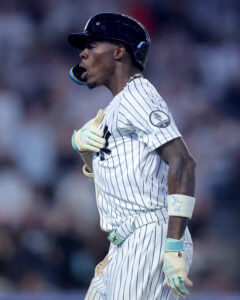
If Jazz is back to being Jazz, his poor April probably won’t matter much. He’s a clear candidate to receive and reject a qualifying offer in that scenario, and the associated draft pick cost might cause some teams to shy away. The market generally doesn’t pay second basemen, but Chisholm would likely be valued based on his overall offensive prowess rather than his defensive home. That he can at least claim the ability to play on the left side of the infield or in the outfield helps his cause, even if he’s clearly best-suited for work at second base.
In most seasons, Chisholm would be closer to the No. 8-10 spots on this list, but it’s a grim class and he offers a blend of youth, offensive upside and track record not present elsewhere in this class. A big finish will make him the consensus top position player in the class. A poor or only slightly above-average showing over the next four months will leave him in a difficult spot — likely weighing disappointing long-term offers versus higher-risk, short-term deals with opt-outs.
4. Michael King, RHP, Padres
King isn’t technically a free agent yet, but he can opt out of the final two seasons of his three-year, $75MM contract at season’s end. Based on the way things have been going thus far, that seems likely to happen. The right-hander’s 2025 season was derailed by injury, but King has averaged just over 5 2/3 innings over his first 13 starts, turning in a 3.41 ERA over 74 innings. His 23.3% strikeout rate is down from the 27.7% mark he logged in a career-best 2024 season but is still better than average. His 9.8% walk rate is a career-worst mark — the first time he’s been worse than average in that regard — but he’s kept 47% of batted balls against him on the ground (about five percentage points north of average).
King’s 94.1 mph average fastball is up slightly from the past couple seasons. His 10.9% swinging-strike rate is close to average, sitting between last year’s 10.4% mark and 2024’s 12% mark. He doesn’t have age on his side, as he’ll turn 32 next May, but King rejected a qualifying offer from the Padres last November and is accordingly ineligible to receive a second one.
King’s age probably caps him at a four-year deal. Blake Snell and Jacob deGrom are the only two pitchers in the past decade to score a contract of five or more years on the open market ahead of their age-32 season. It’s possible King is again limited to three-year offers with a hearty annual value, but he pulled a guaranteed $75MM on the back of an injury-ruined season, so him topping that guarantee after a healthy season — even when he’s a year older — seems plenty possible.
5. Randy Arozarena, OF, Mariners
Arozarena has been quite consistent since becoming established as a big leaguer. From 2021 to 2025, he hit between 20 and 27 home runs each year and stole 20 to 32 bases. His wRC+ finished in the 114 to 127 range. FanGraphs credited him with two to four wins above replacement in each campaign. In short, he has been a solidly above-average corner outfielder with some power and speed.
His 2026 season has largely been more of the same. He only has six home runs, which is a bit shy of his usual pace. However, some batted ball luck has actually made his overall offense a bit better than usual. He has a .285/.376/.442 line and 138 wRC+ on the year. That is due in part to his .358 batting average on balls in play but some regression in that category would nudge him into his usual range.
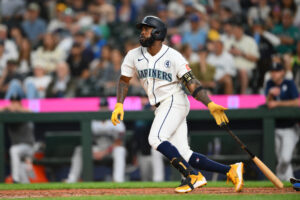
He already has 18 stolen bases in less than half the season, putting him on pace to set a new career high. His defensive numbers are trending up slightly. Outs Above Average has always disliked him in the field, giving him minus-6 grade in 2024 and 2025. This year’s minus-1 isn’t great but is a relative improvement. Defensive Runs Saved has wobbled for Arozarena but had him below average in 2024 and 2025. This year, he’s at +3 DRS so far. Put it all together and Arozarena is at 2.2 fWAR already, on pace to beat his previous best of 3.9.
Though he is generally having a good season, Arozarena’s earning power is capped by a few factors. He was a late bloomer and is getting to free agency at a relatively older age, as he’ll turn 32 before next year. As a corner-only guy, that’s a profile that doesn’t lead to major long-term deals.
A look at MLBTR’s Contract Tracker shows that the biggest deal for an outfielder that age or older in recent years was the four-year, $78MM deal the Mets gave to Starling Marte, who was still a viable center fielder. Next on the list is the three-year, $66MM pact the Dodgers gave to Teoscar Hernández, a deal which contained notable deferrals. Mitch Haniger, Jorge Soler and Jurickson Profar signed three-year deals in the $42-43.5MM range. Those deals give a vague approximation of what Arozarena could reasonably expect, though he’s probably closer to Hernández territory than the latter trio.
6. Brandon Lowe, 2B, Pirates
Like Arozarena, Lowe is a 32-year-old who plays a position that the market doesn’t tend to value all that highly. As MLBTR’s Contract Tracker shows, the only second basemen to land deals of three or more years in free agency over the past half decade have been foreign players coming over from the Korea Baseball Organization. Hyeseong Kim and Sung-Mun Song, however, signed for modest annual values that reflected the uncertainty surrounding whether their offensive output could be sustained against major league pitching.
Marcus Semien is the last pure second baseman to land a notable multi-year free agent deal, but his seven-year, $175MM isn’t a clean comp for Lowe, either. Semien was 31 in the first year of that contract and was coming off a Gold Glove-winning season at second base after years spent as a shortstop. Most clubs viewed him as a viable option at shortstop. The Rangers only kept him at second base because they also signed Corey Seager that winter. Semien was also coming off a 6-WAR season. Good as Lowe has been, he’s not going to get to that point.
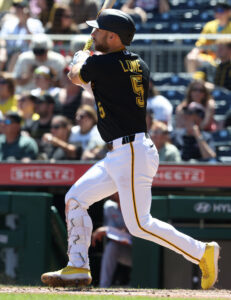
Be that as it may, there’s reason to believe Lowe can buck the trend of 32-year-olds and second basemen being shrugged off by the market. He has a long track record of hitting for power and is doing so at a level we haven’t seen from him since 2020-21. Lowe has already belted 15 homers in 60 games. His .270 ISO (slugging minus batting average) is his best since a 39-homer campaign back in 2021. His 10.7% walk rate is a nice rebound after a couple down seasons in that regard, and his 25.2% strikeout rate — while still higher than league average — is the second-best mark of his career. Most encouraging is that Lowe’s 82% in-zone contact rate is the second-best mark of his career as well.
Lowe can credibly claim that he’s the second-best offensive second baseman in the sport behind Brice Turang this year. His oft-maligned defense has improved, too. Whether it’s sustainable or a one-year blip is an open question that scouts will have to weigh heavily, but he’s been credited with positive marks from both Defensive Runs Saved (2) and Outs Above Average (5) in 2026 after drawing cumulatively negative grades the over the five preceding seasons (including career-worst marks of -14 DRS and -14 OAA in 2025).
Lowe has some experience in left field and at first base, even if he’s spent the vast majority of his playing time at second base. He also has more than enough bat to be an above-average designated hitter. Even though second basemen are rarely paid well, we saw Jorge Polanco get a two-year, $40MM deal for his age-32 and age-33 seasons last year. Lowe’s performance has been steadier over the years, and his production right now is outpacing what Polanco did last year in a rebound season after an awful 2024 campaign.
There are probably some teams that would prefer Lowe’s left-handed bat at second base to Arozarena’s right-handed bat in left field. A deal north of $60MM seems plausible if he can continue his blistering start to the season.
7. Casey Mize, RHP, Tigers
For a former first overall pick, it is perhaps underwhelming to some that Mize hasn’t turned into an ace. But expectations aside, Mize has developed into a valuable mid-rotation starter. In 2021, he took the ball 30 times for the Tigers and posted a 3.71 earned run average. His 19.3% strikeout rate was low but he only walked 6.7% of batters faced and induced grounders on 48.1% of balls in play.
Tommy John surgery wiped out most of his 2022 and 2023 seasons. In 2024 and 2025, he was back to his previous form. He posted a 4.12 ERA over 251 1/3 innings across those two campaigns. His 20.1% strikeout rate was again below par but with an excellent 6% walk rate and solid 43.2% ground ball rate. He made two postseason starts last year with a flat ERA of 3.00 in those.
Here in 2026, he has twice gone on the injured list due to an adductor issue, but the results have been encouraging around that. In his nine starts, Mize has thrown 47 2/3 innings with a 2.27 ERA. His 35.2% ground ball rate is a drop for him but he has increased his strikeout rate to 26.5% while keeping his walks at a 6.5% level. He has thrown his slider way more at the expense of his slurve. He went to the slider 16.3% of the time last year but that’s up to 25.1%, while his slurve usage has gone from 13.3% to 4.7%.
A reliable mid-rotation starter going into his age-30 season can land a healthy contract, even for pitchers who haven’t shown Cy Young upside. In recent years, Eduardo Rodriguez, Taijuan Walker, Marcus Stroman, Jameson Taillon and Luis Severino have signed deals of three or four years in the range of $67-80MM while in their early 30s. Just below that are guys like Jon Gray, Nick Pivetta and Steven Matz (Cardinals deal), who signed in the $44-56MM range.
8. Luis Arraez, 2B, Giants
Luis Arraez the hitter is well known. He doesn’t have a ton of power and doesn’t draw many walks but is the game’s preeminent contact hitter. In an age where the league average strikeout rate is around 22%, Arraez is usually somewhere about a third of that. He won three straight batting titles from 2022 to 2024.
He had a bit of a dip in 2025. As he battled a thumb injury, his batting average dipped to .292, a strong number for most but low for him. Since that’s his main asset, that reduced his overall output. He hit just eight home runs on the year and only walked in 5% of his plate appearances. That left him with a .292/.327/.392 line and 104 wRC+, barely above league average. Since his defense has generally been poor in his big league career, he went into free agency last winter without a ton of juice. He settled for a one-year, $12MM deal with the Giants.
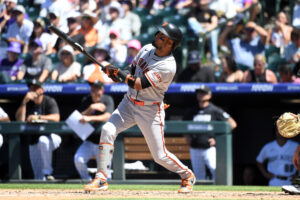
Here in 2026, the offense is back. He has only two homers and just a 5.4% walk rate but the batting average is up to .323, much more normal for him. His .323/.359/.431 line leads to a 120 wRC+, a nice improvement relative to last year.
What might be more interesting is the improvement he has shown in the field. The Giants plugged Arraez in as their regular second baseman, which seemed like a recipe for disaster. He came into this year with almost 3,000 innings at the keystone and had graded at minus-6 Defensive Runs Saved and a shocking minus-36 Outs Above Average in that time. The Twins started giving him more time at first base back in 2022. The Marlins tried moving him back to second in 2023 but the Padres acquired him in 2024 and mostly had him back at first. He only had 82 innings at second in 2025.
The idea of Arraez suddenly becoming a strong second baseman in his age-29 season wasn’t on most people’s radar but that seems to be happening. In over 500 innings this year, DRS has put Arraez at league average. OAA, which was so remarkably down on Arraez, has him at +9 this year. JJ Wetherholt is the only second baseman ahead of Arraez on the OAA leaderboard.
Defensive metrics can be wonky in small samples, so some of this is to be taken with a grain of salt. Nico Hoerner has +8 OAA on the year, for instance, and most people probably don’t think Arraez is suddenly better than Hoerner on the dirt.
Still, the fact that Arraez seems playable at the keystone should open up his market. Second basemen don’t usually get big paychecks in free agency but being passable there is better than being viable at first base only. Jeimer Candelario and Jorge Polanco recently signed deals in the $40-45MM range as solid bats with questionable defense but the capacity to at least play a couple of infield positions.
9. Adrian Morejon, LHP, Padres
The only reliever in the top 10, Morejon has some of the best stuff of any southpaw in the game. His 99.4 mph average sinker speed is tops among left-handed fastballs and eighth overall. He has a plus slider and an excellent changeup, which he uses almost exclusively against righty hitters.
Morejon is among the top 10 relievers in swinging strikes and has the third-highest opponents chase rate (minimum 20 innings). He’s top five in ground-ball percentage at 61.6% while posting plus strikeout (28.2%) and walk (5.3%) marks. His 2.34 FIP and 2.08 SIERA are among the best in MLB.
It’s all the ingredients of a wipeout back-end arm. Morejon was just that between 2024-25, combining for a 2.42 ERA while striking out more than a quarter of opponents in 137 1/3 innings. His ERA has spiked to an ugly 4.60 mark this season, though that comes mostly from a handful of bad early-season outings. Morejon allowed runs in four of his first six appearances but carries a 2.92 ERA dating back to April 14. He has reeled off 11 scoreless appearances in his past 12 around a three-run clunker against Philadelphia last week.
Morejon only has six career saves, as he has been a setup arm in front of Robert Suarez and Mason Miller for the past few seasons. It’s admittedly an indictment of the overall free agent class that a setup arm with a near-5.00 ERA nabs a spot on the top 10, but it’s also a testament to Morejon’s ceiling. There are probably teams that feel he’s one of the three to five best left-handed relievers in MLB right now. He’s squarely in the prime of his career, turning 28 next February. Tanner Scott commanded a four-year deal with a lesser track record at age 30. Devin Williams secured a three-year, $51MM deal at 31 with a similar gap between his ERA and much stronger underlying marks.
It’s also worth considering the possibility another team targets Morejon as an upside play for the rotation. He already has the changeup and plus command that clubs prefer in a starter. Morejon was a high-end rotation prospect in the minor leagues who only moved to the bullpen because of a series of early-career arm injuries (2019 shoulder impingement and Tommy John surgery in ’21). Morejon continued to battle injuries through 2023 but has been fully healthy for the past two and a half seasons.
Morejon will be eligible for a qualifying offer. The Padres have shied away from making the QO to borderline candidates in recent years as they navigate short-term payroll concerns. The franchise’s forthcoming sale to José E. Feliciano and Kwanza Jones could change that, but Morejon still seems a longer shot qualifying offer candidate.
10. Ian Happ, OF, Cubs
Happ and Arozarena have been bucketed pretty similarly on previews of the class. They’re both left fielders who’ll turn 32 before Opening Day 2027. Both players have been consistently above-average but shy of elite offensive players. They’re having similarly productive ’26 campaigns.
The main separator is a spike in Happ’s strikeout rate. The former #9 overall pick has fanned at a 32.1% clip on the season, easily his highest rate since 2018. Happ has never had great pure hitting ability but had trimmed his strikeouts to a slightly higher than average 23.4% mark between 2022-25.
Despite the increased swing-and-miss, Happ has some of the best numbers of his career. He’s walking at a typically excellent 13.9% rate while hitting for power. Happ has 14 home runs through the team’s first 66 games, putting him on pace to eclipse 30 for the first time in his career. Even if he doesn’t quite maintain this kind of power production, he’s essentially a lock for his fifth 20-plus homer season in the past six years (and sixth of his career).
Happ has done a disproportionate amount of this year’s damage versus right-handed pitching. He has been better from the left side of the dish throughout his career, though he’s generally close to average versus lefties and well above against right-handers. This year, he’s mashing righties at a .267/.395/.559 clip while limping to a .153/.228/.319 mark versus southpaws. It might just be a blip but is something interested suitors will need to weigh if it continues all season.
Although he’s limited to a corner, Happ has a reputation as one of the top defensive left fielders in the game. He has won the NL Gold Glove in four straight seasons. Outs Above Average has typically rated him right around par. Happ has traditionally fared better by Defensive Runs Saved but also has an essentially neutral grade (+1) in 521 1/3 frames this season. Assuming they remain in contention and avoid a deadline sale, the Cubs will need to weigh qualifying offers for Happ and Seiya Suzuki.
Note: While players with opt-out clauses are eligible, MLBTR currently projects Bo Bichette, Tatsuya Imai and Corbin Burnes not to test free agency.
Honorable Mentions (listed alphabetically): David Bednar, Kris Bubic, J.P. Crawford, Kevin Gausman, Sonny Gray, Trent Grisham, Clay Holmes, Shota Imanaga, Ryan Jeffers, Nick Martinez, Michael Soroka, Seiya Suzuki, Gleyber Torres, Daulton Varsho, Taylor Ward, Brandon Woodruff
Images courtesy of Imagn Images.
Astros GM: “Zero Discussions” About Trading Alvarez, Peña
The Astros came back from a ninth-inning deficit to take an extra-inning win tonight over the Angels. That improves their record to 31-37. They’ve evened out after an 8-18 April but haven’t really cut into the early-season hole they dug, playing slightly above .500 since the beginning of May.
That would ordinarily point toward a likely deadline seller. However, a mediocre American League playoff picture has kept every team aside from the Angels within range of a postseason spot. With almost two months to go until the trade deadline, front offices aren’t going to be eager to sell. That’s certainly true in Houston, where general manager Dana Brown said the team hasn’t even considered the possibility of trading its two best position players.
“We’ve had zero discussions about trading (Jeremy Peña or Yordan Alvarez) internally,” Brown told Matt Kawahara of The Houston Chronicle. “We’ve had zero conversations. So we can’t go trading two pillars. Both those guys hit at the top of our lineup.”
It’s not surprising given the playoff picture and Houston’s general win-now posture. No one would’ve expected the Astros to seriously entertain trading either of those players in June. Alvarez has been the best hitter in MLB this year and is signed for two seasons beyond this one at $26MM annually. Peña is making $9.475MM and will likely land around $15MM for his final season of arbitration in 2027.
Both players would have immense appeal on the trade market. They’re also crucial to Houston’s hope of returning to the postseason after a narrow miss in 2025. Owner Jim Crane has operated with a win-now mentality for more than a decade. Brown, who is in his fourth season as GM, is in the final year of his contract. He’ll surely be motivated to add if the Astros are around the playoff mix.
“To be sellers, for me, it would be like we failed,” the GM told Kawahara. “So I don’t think this team is a team that’s going to be sellers at the deadline. I think we’re good enough. I think the division is wide open. We’ve gone through some injuries; I think other teams are starting to experience some injuries as well. The division is wide open, the postseason is wide open. So, I don’t foresee us being sellers.”
The Mariners, generally viewed as the preseason division favorites, are 35-32 and have the second-best run differential in the American League (+32). They’re two games up on the Rangers, three up on the A’s, and 4.5 clear of Houston. The Astros have a better path in the Wild Card, where a 32-33 Texas team currently holds the last playoff spot. Toronto, the A’s, and Baltimore sit between the Rangers and the Astros.
Alvarez, Peña, and Hunter Brown (eligible for arbitration through 2028) would be impact trade chips if Houston reversed course. It stands to reason the Astros haven’t given any thought to dealing their ace either. Christian Walker and Isaac Paredes were much discussed over the offseason. Walker, signed for $20MM annually through next season, has rebounded from a middling ’25 campaign to hit .252/.324/.500 with 16 homers through 278 plate appearances. Paredes is hitting a slightly disappointing .241/.331/.415 in 257 trips, though his bat has picked up over the past couple weeks.
Houston’s injury-riddled pitching staff was the biggest issue during their ugly first month. That has been better of late, particularly a bullpen that has the fifth-lowest ERA (2.88) over the past 30 days. They recently welcomed Josh Hader back in the ninth inning and could see Hunter Brown return from a shoulder strain next week. A lineup that was among MLB’s best early in the season has gone cold as the arms have come around, however. Houston hitters own a .221/.293/.375 slash line in the last month.
Injuries to Carlos Correa and Yainer Diaz have exposed preexisting concerns about the lineup depth. Walker has cooled after a blistering start to the season. Second-year right fielder Cam Smith has been inconsistent. Center fielder Jake Meyers hasn’t hit since coming back from an oblique injury. Left field has been a revolving door. Diaz’s own oblique issue has left them with Christian Vázquez as their starter behind the dish.
Adding to the outfield feels like a must if they’re in position to buy. They unsuccessfully tried to acquire a proven lefty-hitting outfield bat over the offseason, reportedly by floating Paredes in trade conversations. That was motivated by a perceived infield surplus that no longer exists with Correa out for the season, but Houston’s thin farm system and lack of margin under the luxury tax limit their flexibility on the trade front.
Diamondbacks Sign Max Kepler
June 8th: Per the Associated Press, Kepler’s salary will be a prorated $780K, the league minimum. He can earn an extra $500K in roster bonuses. He would get $100K for spending 35 days on the roster, then $200K at 55 days and 75 days.
June 7th: The Diamondbacks announced a one-year deal with outfielder Max Kepler. The signing won’t yet impact Arizona’s 40-man roster or active roster, as Kepler is still on the restricted list while serving an 80-game PED suspension.
News broke last January about Kepler’s positive test for the PED known as Epitrenbolone, and with Kepler still on the free agent market, his camp and Major League Baseball worked out an agreement for Kepler to serve his 80-game suspension even if he didn’t land a new contract. Since Kepler didn’t sign until now, he has been serving his 80-game suspension as if he was still a member of the Phillies (his former team).
Philadelphia played its 65th game of the season today, so the final 15 games of Kepler’s suspension presumably now adhere to the Diamondbacks’ schedule. This makes June 25 the first day Kepler is eligible to take part in the 2026 season, so he’ll get a couple of weeks of ramp-up time in the minor leagues before making his D’Backs debut.
Financial terms of the signing weren’t revealed, but it can be assumed Kepler will be receiving a pretty small guaranteed salary prorated over the remainder of the 2026 campaign. Even before the suspension, Kepler was likely facing a tough market given his lack of production with the Phillies last year. He hit .216/.300/.391 with 18 home runs over 474 plate appearances, and even those modest numbers now come under the cloud of the PED suspension.
Kepler has provided almost exactly league-average offense over his 11 MLB seasons, as he had a 101 wRC+ from a career slash line of .235/.316/.425 over 1199 PA with the Twins and Phillies. Kepler posted a 122 wRC+ in both 2019 and 2023 and a 109 wRC+ during the shortened 2020 season, but he has otherwise been a subpar hitter in his other eight seasons.
The left-handed hitter has struggled against southpaw pitching for much of his career, limiting Kepler’s effectiveness as a true everyday player. Kepler has expressed some frustration over a platoon role in the past, such as last June when he said “I signed here [in Philadelphia] being told that I was going to be the starting everyday left fielder” after he wasn’t in the lineup for three straight games when the Phils faced left-handed starters.
While naturally more productive against right-handed pitching, Kepler hasn’t really been a righty-masher, as he has hit a respectable but uninspiring .240/.324/.446 over his career with the platoon advantage. Most of Kepler’s success against righties came earlier in his career, as he has batted just .237/.315/.408 in 1436 PA against righties since Opening Day 2022.
Beyond the offense, Kepler also contributed outstanding right field defense during his prime years as a regular in the Twins lineup. His defensive metrics, however, have dipped as he has battled knee problems in recent years, and the move to the seemingly easier left field position in Philadelphia resulted in +2 Defensive Runs Saved and 0 Outs Above Average over 773 1/3 innings (which represented the first time Kepler had ever played left in his career).
Corbin Carroll obviously has right field covered in Arizona, so Kepler will likely act as a left fielder and DH against right-handed pitching. The Diamondbacks were known to be looking for left-handed hitting help, given that outfielders Lourdes Gurriel Jr., Jordan Lawlar, Ryan Waldschmidt, and Tommy Troy are all right-handed hitters. By the time Kepler is eligible for reinstatement, Gurriel should be back from the hamstring strain that has sidelined him for last couple of weeks, and Lawlar (currently on a Triple-A rehab assignment) should be back from the broken wrist that has kept him on the IL for over two months.
It should be noted that Kepler’s salary is likely small enough that the D’Backs would feel comfortable releasing Kepler (or designating him for assignment) if he doesn’t produce. This seems like purely a depth move for the Snakes as they continue to try and figure out two-thirds of their outfield picture, and a bit of a flier to see what Kepler might have in the tank in his age-33 season. However Kepler might contribute to Arizona’s postseason chase, he is ineligible to participate in this year’s playoffs, as per the terms of PED suspensions.
Ramón Laureano Likely Out For Season
The Padres are likely to be without left fielder Ramón Laureano for the remainder of the season. He underwent labrum surgery on his right hip on Friday, relays Annie Heilbrunn of the San Diego Union-Tribune. The team hasn’t officially ruled him out for the year but noted that this injury typically requires a 4-5 month recovery. San Diego transferred him to the 60-day injured list this evening.
Laureano first had an issue with his right hip five years ago. He missed a few weeks in June 2021 with a hip strain while still playing in Oakland. Laureano had managed to play through any subsequent discomfort but evidently found the current issue too serious to avoid surgery.
There’s a decent chance this will mark the end of his Padres tenure. San Diego acquired Laureano and Ryan O’Hearn in a package deal from the Orioles at last summer’s trade deadline. O’Hearn was a rental, while the Padres had a $6.5MM club option on Laureano that looked like a bargain. He was one of the team’s best hitters after the trade, batting .269/.323/.489 over 50 games until a broken right index finger ended his season.
[Related: The Padres’ Problems Are Mounting]
It remained an easy call for San Diego to exercise the option and plug Laureano into the Opening Day lineup as their left fielder. He got out to a quick start, batting .288 with four homers and nine extra-base knocks through his first 19 games. It seems the hip became increasingly problematic in the back half of April. Laureano would hit .147 with three homers over his next 34 contests before going on the injured list on Tuesday.
Left field now becomes yet another issue for an already woeful offense. The Padres have been the lowest-scoring team in MLB. Over the past month, they have an unfathomably poor .191/.270/.325 team batting line. A diminished version of Laureano was a big part of that, but nearly the entire lineup has struggled. Ty France, Gavin Sheets and Fernando Tatis Jr. have been above-average hitters in the last 30 days. Everyone else who is still on the roster has been at least 34 percent worse than league average, by measure of wRC+, over that stretch.
That includes fourth outfielder Bryce Johnson, who’s in the starting lineup for the second straight night. The 30-year-old Johnson ran an inflated batting average on balls in play to some small sample success last season. That hasn’t carried over this year. The Padres called up 25-year-old Jase Bowen earlier in the week; he’s 1-8 with five strikeouts in his first three career games.
Manager Craig Stammen said left field will feature a combination of Sheets, Johnson, Bowen and light-hitting utility player Samad Taylor (link via Kevin Acee of The Union-Tribune). Sheets is already an everyday player between the corner outfield, first base, and designated hitter. He probably shouldn’t play the outfield, but the Padres have no choice but to keep him and France in the lineup to get any kind of offense.
Jackson Merrill is locked in as the everyday center fielder and hopefully beginning to break out of his season-long rut. Tatis is moving between right field and second base. If the Padres remain in the hunt for a Wild Card spot into July, they’ll need to find a way to add multiple bats. Left field will probably be the priority in that search. Mickey Moniak, Trevor Larnach, Matt Wallner, Taylor Ward, Jo Adell and Jacob Young are speculative outfield trade candidates who could be available closer to the deadline.
Laureano will hit free agency at the end of the season. He’ll almost certainly be looking at a one-year reclamation contract for his age-32 campaign. He’d have been well positioned for two or three years if he’d stayed healthy and hit at anything close to last season’s level, making this a particularly frustrating injury for him personally.
Tarik Skubal To Begin Rehab Assignment, Could Be Reinstated After One Start
Tigers manager A.J. Hinch provided reporters with some updates on injured players today. Most notably, Hinch says that ace Tarik Skubal will make a rehab appearance on Sunday. That will take place with High-A West Michigan instead of Triple-A due to the weather forecast. If all goes well, he could rejoin the big league club after that. Hinch also said that infielder Trey Sweeney underwent season-ending arthroscopic right shoulder surgery. Evan Woodbery of MLive Media Group and Cody Stavenhagen of The Athletic were among those to pass along the info.
It’s a remarkable turnaround timeline for Skubal, who just underwent surgery to remove a loose body in his elbow a month ago. A procedure like that would normally come with a timeline about three months, if not more.
Skubal was the first MLB player to have surgery performed with a tool called a NanoNeedle, which some are now calling a SkubalScope. Basically, it’s like other arthroscopes but smaller. The reduced size and smaller incision theoretically leads to less pain and swelling, which hopefully leads to a quicker recovery time.
Based on how things have gone for Skubal, the theory appears to be holding true, at least so far. He began throwing less just over a week after going the procedure. Less than three weeks after going under the knife, he threw a three-inning sim game. If the next steps go smoothly, he could be back with the Tigers less than six weeks from the operation.
Though it’s a great development for Skubal, the impacts are potentially broader than that. Cutting the recovery time in half for a common injury could have all kinds of positive ramifications for the pitchers and the sport. Though of course, it still remains to be seen if all will go according to plan in the next few weeks. It’s also unclear if all pitchers will be this lucky. Blake Snell underwent surgery in the middle of May, using the NanoNeedle, to remove multiple loose bodies from his elbow. The Dodgers quickly put him on the 60-day injured list, so that club expects Snell’s timeline to be at least two months.
Time will tell on whether the medical aspect is a game-changer or not. For now, it’s huge for baseball and the 2026 season. The Tigers were 18-17 and tied with the Guardians atop the American League Central when news of Skubal’s surgery was revealed. Since then, they have gone into a bad slump and fallen to 25-38, with the Angels the only A.L. club with a worse record.
Thanks to widespread struggles among A.L. clubs, the playoff race is still wide open. The Tigers are only 5.5 games back of the Athletics and Rangers, who are tied for the last Wild Card spot with records of 30-32. Getting Skubal back into the rotation so quickly will be a big boost to the Tigers as they try to climb back into the mix.
If Detroit can’t gain ground in that race, then Skubal will be the most talked-about player ahead of the trade deadline. There have already been whispers about Skubal trade possibilities for a long time, since he is an impending free agent and doesn’t seem likely to sign an extension. An offseason trade never made much sense from the team’s perspective since they have been in win-now mode for a few years, though their recent skid has made the possibility seem much more realistic.
Combine all those factors and Skubal should be in the spotlight in the coming weeks and months. Him coming back healthy and pitching like his old self will obviously be important. The club’s record will also be closely watched by fans in Detroit and elsewhere.
Given the magnitude of the decision, the front office will presumably try to delay picking a lane as long as possible. If Detroit gets into playoff position or falls further back, the choice will become easier. If they stay a few games out of a playoff spot, that’s a much tougher call. The Tigers know well that a lot can happen in a short amount of time. In 2024, Detroit was 10 games out of a playoff spot in the middle of August but got red hot to make it in. Last year, the Tigers had a 15.5-game lead on the Guardians in July but saw Cleveland storm back to take the division.
In addition to Skubal, the Tigers have Casey Mize, Justin Verlander, Jackson Jobe and Reese Olson on the IL. Olson is done for the season due to shoulder surgery. Jobe had Tommy John surgery a year ago and could perhaps be a factor in a few months. Verlander is dealing with hip inflammation and Mize a groin strain. Verlander made a five-inning rehab start on Tuesday, so he and Skubal could both be back soon. Mize could be a bit behind them, potentially starting a rehab assignment soon.
The Tigers are currently running a four-man rotation consisting of Framber Valdez, Keider Montero, Jack Flaherty and Troy Melton, with Ty Madden and Enmanuel De Jesus in multi-inning relief roles.
If everyone stays healthy while Skubal, Verlander and Mize get back in the mix, it could lead to some tricky decisions about that group. Flaherty has the highest earned run average of the bunch at 5.31. He hasn’t been helped by a .333 batting average on balls in play and 64.1% strand rate, so his 4.40 FIP and 4.18 SIERA are much more encouraging. Given his veteran status and hefty salary, it might be tough to move him to the bullpen. Montero, Melton, Madden and De Jesus all have options and could be sent to the minors, if that’s what the club decides.
Sweeney began the season on the 10-day IL due to a shoulder strain. He was moved to the 60-day IL in the second week of April, suggesting the Tigers didn’t expect him back soon. Presumably, he and the club were exploring non-surgical options but hit a wall with those pursuits and 2026 will go down as an entirely lost season for him. He’ll continue to collect big league pay and service time while on the IL.
The Tigers are without Sweeney and Javier Báez in their middle infield group at the moment. Kevin McGonigle is playing both shortstop and third base, with Zack Short covering short when McGonigle is at the hot corner. Gleyber Torres was also on the IL for a while but recently returned to take over second base. Jace Jung, Hao-Yu Lee, Trei Cruz and Gage Workman are on the 40-man but currently on optional assignment. Torres is a free agent at season’s end, so the second base job is up for grabs in 2027.
Photo courtesy of Mark J. Rebilas,Imagn Images
Aaron Judge Diagnosed With Rib Stress Fracture, Will Be Reevaluated In 4-6 Weeks
June 5: Judge has been officially placed on the 10-day IL, retroactive to June 2nd, with Jones recalled as the corresponding move. Jack Curry of the YES Network first reported the Jones move earlier today.
June 4: The Yankees will be without the game’s most feared slugger for a couple months. New York announced that Aaron Judge has been diagnosed with a stress fracture in the first rib on his right side. He’ll go for follow-up imaging in four to six weeks to gauge his healing and rehab process.
New York announced that Judge is expected back at some point before the end of the season. It’ll almost certainly not be until August at the earliest. He’ll be placed on the 10-day injured list before tomorrow’s series opener with the Red Sox and seems likely to wind up on the 60-day IL at some point.
Judge sat out this week’s series against the Guardians. The Yankees announced he was going for testing on a ribcage injury despite feeling the pain mostly in his right shoulder. Fans had some concern when the team sent Judge to a doctor who specializes in treating thoracic outlet syndrome this afternoon. It seems that was to rule out the nerve condition.
Thoracic outlet syndrome would have been the nightmare outcome. A rib fracture seems unlikely to be a career-altering injury. While it’s not a worst case scenario, it’s clearly not good news. It’ll take until around the All-Star Break for the team to even check into the rib’s healing. He’d need to build up baseball activities and live batting practice sessions from there. An absence of this length is also going to require a rehab assignment to get accustomed to game speed.
Judge has felt an increasing amount of discomfort while hitting over the past few weeks. There was no single play this season that caused the injury. Bryan Hoch of MLB.com notes that Judge actually suffered a stress fracture of the same rib and a partially collapsed lung on a diving catch attempt back in 2019. That wasn’t diagnosed until the following March. The pandemic then shut down the sport for a few months, so that injury didn’t cost him any game time.
This injury has clearly weighed on Judge’s performance. He hit .243/.368/.437 with five home runs in May. That’d be a good few weeks for most hitters but was Judge’s lowest OPS in a month since April 2024. He had an OPS north of 1.000 this April, slugging 12 homers through the season’s first five weeks.
The Yankees are also without Giancarlo Stanton and Jasson Domínguez. Utility players José Caballero and Max Schuemann have started the last three games in right field. They’ll probably bring Spencer Jones back up from Triple-A Scranton/Wilkes-Barre now that a Judge IL stay is confirmed. Domínguez is taking batting practice and could begin a rehab assignment this week. Stanton told Jon Heyman of The New York Post that he’s hoping to be back from a calf strain in about two weeks.
New York led MLB in scoring in May even without a herculean month from the three-time MVP. Ben Rice and Cody Bellinger are having fantastic seasons. Jazz Chisholm Jr. has picked things up after a bad start. Paul Goldschmidt, back in the everyday lineup thanks to the Stanton and Domínguez injuries, is having a resurgent year. The bottom third of the order has been an issue, especially Austin Wells behind the plate, but this should still be an above-average lineup.
It’s clearly not going to be as potent without Judge as the anchor though. It’s unlikely this will dramatically change their deadline trajectory, as Domínguez should be back before too long to hold an outfield spot until Judge returns. It could certainly impact a tight division race, with New York holding a half-game advantage over Tampa Bay in the AL East.
Blue Jays Acquire Simeon Woods Richardson From Twins
The Blue Jays announced they’ve acquired right-hander Simeon Woods Richardson from the Twins for cash considerations. Toronto transferred lefty reliever Joe Mantiply from the 15-day to the 60-day injured list to open a 40-man roster spot. Mantiply recently underwent arthroscopic surgery on his left knee.
It’s the second time the Toronto front office has acquired Woods Richardson. The first came as a prospect back in 2019, when the Jays landed him from the Mets as part of the Marcus Stroman deal. Woods Richardson was one of the better pitching prospects in MLB and found himself in another notable deadline trade two years later. Toronto packaged him and then-top prospect Austin Martin to Minnesota in ’21 for José Berríos.
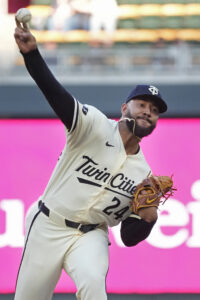
Woods Richardson debuted the following year with one start. He also made one appearance the following season. The former second-round pick held a rotation spot for the better part of the next two years. Woods Richardson was a decent mid-rotation arm, posting a low-4.00s earned run average in consecutive seasons. He combined for a 4.11 ERA with a league average strikeout and walk profile across 245 innings from 2024-25.
That included a strong September last year that added optimism about Woods Richardson’s form going into 2026. Things have gone completely off the rails this year instead. Woods Richardson made two strong starts to open the season. He was knocked around over his next seven appearances, allowing almost 10 earned runs per nine innings. Minnesota pushed him to the bullpen for two scoreless outings. He drew back in as a spot starter on May 28 and was blitzed for five runs in 2 2/3 innings by the White Sox.
Minnesota pulled the plug at that point. Woods Richardson is out of options and can’t be sent to the minors, so the Twins designated him for assignment on Saturday. That gave them five days to see if they could line up a trade before exposing him to waivers. They were able to find a trade partner but only for cash.
Woods Richardson is averaging 92.7 mph on his fastball. That’s down marginally from last year’s 93.2 mark but not a dramatic drop. He has scaled up the usage of his splitter while abandoning his changeup and cutting back on his curveball. Nothing has worked this year, but his splitter and slider were both effective offerings last season.
Toronto’s rotation has been decimated by injuries. Berríos and Cody Ponce are done for the year. Shane Bieber remains weeks away from his season debut. Dylan Cease and Max Scherzer are both out of action but on rehab assignments, so they’ll be back soon. Woods Richardson could make a spot start or two in the interim or work out of the bullpen. The Jays are using Kevin Gausman, Trey Yesavage and Patrick Corbin as traditional starters and have Rule 5 pick Spencer Miles working mostly in 3-4 inning stints behind an opener.
Woods Richardson is playing for around the league minimum salary. He’ll qualify for arbitration as a Super Two player this winter if he holds his roster spot. He’s under club control for four seasons beyond this one.
Mitch Bannon of The Athletic first reported the trade. Image courtesy of Bruce Kluckhohn, Imagn Images.
Corbin Burnes Suffers Teres Major Strain, Likely Out Until September
Diamondbacks right-hander Corbin Burnes has suffered a teres major strain and will be shut down from his throwing progression. Manager Torey Lovullo says Burnes probably won’t be back until September with this setback. Nick Piecoro of The Arizona Republic was among those to relay the news.
The righty underwent Tommy John surgery in June of last year. That procedure normally comes with a recovery period of 14 months or longer, which would have put Burnes in line for a return in August. He was optimistic about beating that, telling reporters in February that he expected he could return around the All-Star break in July. He faced live hitters last week, per Piecoro, but any hope of a July return is now dashed.
It’s an unfortunate development for Burnes and the Diamondbacks, as both parties were hoping he could be a late-season factor. Lovullo didn’t rule him out for the season but he now has an even tighter window to make an impact on the 2026 season.
Arizona will continue with a starting five of Merrill Kelly, Zac Gallen, Michael Soroka, Eduardo Rodriguez and Ryne Nelson. It hasn’t been a great group overall but has been one of the better rotations in the National League over the past month. All aside from Gallen have pitched well of late, but Soroka is the only one missing bats at an average or better rate. Nelson has also worked around one of the highest home run rates in MLB.
It feels fairly tenuous and there’s very little in terms of rotation depth. Prospects Mitch Bratt, Kohl Drake and Dylan Ray are all on the 40-man roster and at Triple-A Reno. None of those three have pitched in MLB, and only Drake (who has an ERA above 8.00) is currently healthy. There’s not much to be done right now beyond hoping the rest of the rotation stays healthy. Arizona is four games above .500 and currently holds the NL’s final Wild Card spot. If they can hang in the postseason picture, adding a starter at the deadline feels like a must.
This also all but ensures what already looked like an obvious call for Burnes not to opt out of the remaining four years and $140MM on his six-year free agent deal. There was an outside chance Burnes could’ve considered that if he made a seamless return from the elbow surgery and dominated in the second half — especially with a dismal free agent class after Tarik Skubal. That’s not going to happen anymore. Gallen and Soroka are impending free agents (the latter after his mutual option is bought out), so the D-Backs will need a healthy Burnes in 2027.
Padres Designate Nick Castellanos For Assignment
The Padres announced that first baseman/outfielder Nick Castellanos has been designated for assignment. Infielder/outfielder Samad Taylor has been selected to take his place on the active and 40-man rosters.
Castellanos, 34, spent many years as a middle-of-the-order threat. Ahead of the 2022 season, the Phillies signed him to a five-year deal worth $100MM. Before that deal had run its course, Castellanos wore out his welcome in Philly. In the 2025 season, he slashed .250/.294/.400 for a wRC+ of 90. Since he’s a poor outfield defender, he was considered to be below replacement level for the year. He also clashed with then-manager Rob Thomson, which didn’t seem to help matters.
He was still signed through 2026, with a $20MM salary. It was well known throughout the winter that the Phils were looking to move on. In the end, they weren’t able to line up a trade, so Castellanos was released just as camps were opening in February. That left the Phils on the hook for the money. Any other club could sign Castellanos and would only owe him the prorated league minimum for any time spent on the roster. That amount would be subtracted from what the Phillies paid.
The Padres quickly volunteered, signing Castellanos within a few days of his release. It was a low-risk move from a financial perspective but it hasn’t worked out. Castellanos has a .191/.221/.339 line through 122 plate appearances this year. His .228 batting average on balls in play isn’t doing him any favors but his 4.1% walk rate and 27.9% strikeout rate are both a few ticks worse than average, in addition to being worse than his own career numbers. He has good career numbers with the platoon advantage but isn’t hitting pitchers of either handedness this year, with a .182/.206/.303 line against southpaws.
San Diego rolled with Castellanos long enough for him to return to Philadelphia in a new uniform. The Padres kicked off a series at Citizens Bank Park last night, though Castellanos wasn’t put into the game. They have now decided it’s time to move on. He will likely be released again in the coming days.
Time will tell if any other club is willing to give Castellanos a shot. As mentioned, he is having a poor season and was struggling last year as well, though he has been a force at the plate at times. As recently as 2024, he was able to hit 23 home runs and slash .254/.311/.431 for a 104 wRC+. That included a .269/.324/.506 line and 124 wRC+ against lefties. If any club thinks he can get back to that level, he will be cheap.
The Padres will instead turn to Taylor, who they signed to a minor league deal in the winter. He is hitting .319/.406/.500 in Triple-A, leading to a 122 wRC+. That line is buoyed by a .371 batting average on balls in play but Taylor’s 11.7% walk rate and 17.6% strikeout rate are both solid clips.
Taylor has often put up big numbers in the minors but hasn’t yet clicked in very limited big league looks. He has been sent to the plate 83 times over three separate seasons with the Royals and Mariners, hitting just .205/.272/.260 in that time.
Ideally, he can produce some offense resembling his minor league numbers. Even if he can’t, he should be able to provide value in other ways. He is a threat on the bases, for instance. He has nine steals already this year and has been in the 40 to 50 range in many of his minor league seasons. He can also provide a bit of defensive versatility, as he has been playing second base and all three outfield spots this year. In previous seasons, he has played shortstop and third base as well.
The Friars currently have Jake Cronenworth on the injured list, so there’s a hole at second base. They have been using Sung-Mun Song and Fernando Tatis Jr. to cover that spot. They also lost Ramón Laureano to the IL this week, so perhaps they want Tatis to go back to being a regular in the outfield. Song has a .154/.290/.192 line on the year, so perhaps Taylor can take some second base playing time from him. If that pans out, then Tatis can remain in the outfield with Jackson Merrill, Gavin Sheets, Jase Bowen and Bryce Johnson.
Even if Taylor doesn’t work his way into a regular role, he should be a useful as a bench player who can do some pinch-running and defensive replacement work. If he gets squeezed when Cronenworth and Laureano come back, he is out of options.
Photo courtesy of David Frerker, Imagn Images
Astros Activate Josh Hader
2:25pm: The Astros have now officially announced Hader’s reinstatement. Correa was indeed moved to the 60-day IL to open a 40-man spot. They also placed infielder Braden Shewmake on the 10-day IL, retroactive to May 31st, with a right adductor strain. Outfielder Zach Cole was recalled to replace Shewmake.
12:56pm: The Astros announced yesterday that righty Logan VanWey was being optioned to Triple-A Sugar Land. The team didn’t specify a corresponding move, noting that a transaction would be announced Tuesday. Manager Joe Espada now tells SportsTalk 790’s Matt Thomas that closer Josh Hader will be reinstated from the injured list and active for tonight’s game. Hader is on the 60-day IL, so in addition to VanWey’s option, Houston will need to open a 40-man roster spot. That can be achieved simply by transferring Carlos Correa to the 60-day IL following his season-ending ankle surgery, however.
Hader’s 2025 season ended in mid-August due to a capsule strain in his left shoulder. He didn’t end up requiring surgery and was even hopeful of being able to return at some point during a potential postseason run. The Astros wound up falling shy of the playoffs, so we never found out whether he’d have been able to do so.
The plan for Hader was a mostly normal offseason. General manager Dana Brown said in mid-November that his closer had already thrown off a mound three times. The organization hoped to have the multi-time All-Star back in the Opening Day mix. That might well have been the case based on Hader’s shoulder alone, but he began experiencing biceps pain early in spring training. He was eventually diagnosed with tendinitis, ruled out for Opening Day, and has now missed more than two months of the season.
Hader has pitched well for most of his minor league rehab stint. The 32-year-old breezed through his first seven appearances, allowing just one run on four hits and a walk with 11 punchouts in seven frames. He was roughed up a bit in his final two outings, yielding five runs (three earned) on four hits and a pair of walks without a strikeout. That nudged his minor league ERA up to 4.15, but the bulk of his work between Double-A and Triple-A is reason for encouragement.
It’s worth noting that Hader’s sinker has averaged 93.9 mph in Triple-A — well shy of last year’s 95.5 mph, which was already his lowest mark since 2020. He’s very likely still building up velocity after a long layoff and a pair of fairly notable arm issues, so it’s not a major warning light, but it’ll still be worth keeping an eye on his velocity in the early stages of his return. Hader had no problem missing bats even back in 2017-18, when his sinker was sitting 94.4 mph, but he pushed that average up to 96.4 mph over a four-year period from ’21-’24.
Hader’s return should be a substantial boon for an Astros bullpen that has been pieced together for much of the season. Bryan Abreu was a natural fill-in for Hader in the ninth inning after last year’s dominant performance in a setup role — or so it seemed. Abreu, however, has lost about three miles per hour off his heater this year, dropping from an average of 97.3 mph to 94.8 mph. He stumbled through an abysmal April before getting better results in May, but Abreu’s velocity isn’t any better now than it was in March — and he’s walked nearly 24% of his opponents this season. He doesn’t look close to his former self.
Houston has also seen at least modest steps back from key relievers like Steven Okert and Bryan King. Both have comparable ERAs to last season but with diminished rate stats. Lefty Bennett Sousa, who posted a 2.84 ERA in 50 2/3 frames last year, has pitched 3 1/3 innings this season and is on the injured list due to elbow inflammation.
All of that has conspired to leave Houston relievers with a major league-worst 5.16 ERA on the season. The Astros’ bullpen is tied for the sixth-lowest strikeout rate in baseball (20.5%) and has the third-highest walk rate (12.4%). It’s a major reason the team finds itself seven games under .500. Getting Hader back in the fold should help protect late leads, but he’s only one of several high-end contributors whose absence has helped dig a brutal hole for the ‘Stros to try to escape in the two months leading up to this year’s Aug. 3 trade deadline.