
JJ Wetherholt To Make Cardinals’ Opening Day Roster
Infield prospect JJ Wetherholt has made the Cardinals’ Opening Day roster. President of baseball operations Chaim Bloom passed the news along to reporters, including Jeff Jones of the Belleville News-Democrat. Infielders Thomas Saggese and José Fermín as well as outfielder Nathan Church will also break camp with the club, though outfielder Nelson Velázquez will be assigned to Triple-A Memphis. A corresponding move will be necessary to open a spot for Wetherholt.
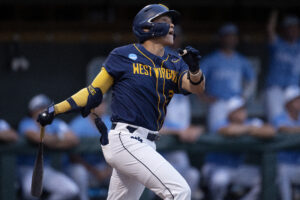
The news on Wetherholt is notable but not surprising. It has seemed all winter long as though the Cards had planned for him to get a shot in the big leagues. They cleared out their roster this winter by trading guys like Willson Contreras, Nolan Arenado and Brendan Donovan. Those trade were partly for cost savings but also to open some playing time for younger players as the Cards are rebuilding and need to assess their young guys in a major league environment.
Wetherholt was one of the main guys who needed some room. The seventh overall pick of the 2024 draft, he climbed to the cusp of the majors last year. He split his time between Double-A and Triple-A, making 496 plate appearances in total. His 14.5% walk rate was excellent and almost as high as his 14.7% strikeout rate. He produced a combined .306/.421/.510 batting line, which translated to a 154 wRC+. He stole 23 bases on the year. His defense at shortstop was considered good enough for him to stay there as a big leaguer but he also played some second and third base.
As the 2026 season drew closer and the annual top 100 lists came out, Wetherholt was in the top 10 of most of them. But at the beginning of the season, the Cards had a fairly crowded infield. Masyn Winn is one of the best defensive shortstops on the majors and is controlled for another four seasons. They had Arenado at third. Donovan could bounce around the diamond but played second base more than any other spot.
As mentioned, the Cards clarified their roster picture over the winter and opened a spot for Wetherholt, though Wynn’s glovework is so strong that he never seemed at risk of being unseated at short. It felt likely that Nolan Gorman would take over at third, with Wetherholt the favorite for the second base gig. In camp, Wetherholt hit two home runs and also drew walks in 20.5% of his 44 plate appearances. Though he was held back by a .200 batting average on balls in play, he still produced a .212/.386/.394 line and 115 wRC+.
That performance was enough to solidify the expected plan, so the Cards will indeed open the season with Wetherholt on the roster. By giving him an Opening Day spot, they will keep the Prospect Promotion Incentive on the table. Since Wetherholt is a consensus top 100 guy, if he spends enough time on the big league roster to earn a full service year this season, he could net the Cards an extra draft pick by winning Rookie of the Year or finishing top three in MVP voting during his pre-arbitration seasons.
That will be a secondary concern. For the Cards, the focus is on putting together a core that can get them back to contention. Ideally, Wetherholt will be a big part of that in the long run, though sometimes even the best prospects don’t find immediate success. The Cards are in a position to let him get a lot of reps in order to maximize the chances of him getting acclimated to the big leagues.
As for the other moves, the Velázquez decision is perhaps the most surprising. In the offseason, the Cards had been looking to add a right-handed complement for their outfield, as Lars Nootbaar and Victor Scott II are both lefties. They didn’t sign any such player to a major league deal but brought Velázquez into camp as a non-roster invitee. As of a week ago, it seemed likely that Velázquez would be getting a spot, especially with Nootbaar slated to start the season on the injured list.
Velázquez put up a monster .357/.449/.667 line in spring training but that evidently wasn’t enough. Perhaps that’s due to roster concerns. As mentioned, the Cards need to open one 40-man spot for Wetherholt. Nootbaar is going to start the season on the 10-day IL but there hasn’t been anything to suggest he will need a move to the 60-day IL. Hunter Dobbins is still rehabbing a torn ACL from last year. It’s unclear how much longer it will take for him to be game ready.
Unless Dobbins ends up on the 60-day IL, the Cards will have to remove someone to make room for Wetherholt, whether that’s a trade or designating someone for assignment. Adding Velázquez would have meant another such move. It doesn’t appear Velázquez has any kind of opt-out in his deal, so the Cards will send him to the minors and keep him around without using a roster spot.
Photo courtesy of Reinhold Matay, Jeffrey Camarati, Imagn Images
T.J. McFarland Announces Retirement
After over a decade in the big leagues, T.J. McFarland is hanging up his spikes. The left-hander announced his retirement on Instagram today, thanking his wife, parents, family, friends, teammates and the clubs who employed him for all their support throughout his time as a professional ballplayer.
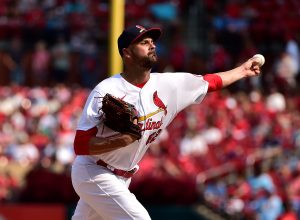
McFarland wraps up a career of more than a decade. A relative soft tosser by today’s standards, his velocity topped out in the low 90s and he didn’t strike many guys out. But he had great control and was one of the best arms in the league when it came to inducing ground balls. His earned run average wobbled from year to year, as ground balls are less reliable than strikeouts since they need to be hit towards fielders who can regularly convert them into outs. McFarland had three seasons with an ERA under 3.00 and five above 5.00, but he was generally effective on the whole.
His professional career began when he was a fourth-round pick of Cleveland in 2007, taken out of Amos Alonzo Stagg High School in Palos Hills, Illinois. He worked his way up the minor leagues as a starter. He was left unprotected in the 2012 Rule 5 draft. The Orioles took him and plugged him into their bullpen. He stuck on the roster all season long in 2013, throwing 74 2/3 innings over 38 appearances with a 4.22 ERA. His 17.5% strikeout rate was well shy of league average but he generated grounders on 57.8% of balls in play. He stuck with the Orioles in 2014 and dropped his ERA to 2.76 with fairly similar rate stats. But that ERA ticked up to 4.91 in 2015 and then 6.93 the year after.
He was released ahead of the 2017 season and landed with the Diamondbacks. His 5.33 ERA that year wasn’t especially impressive but he was back with the Snakes in 2018 and posted a flat 2.00 ERA over 72 innings. The seesaw nature of his career then flung him in the other direction, as he had a 4.82 ERA in 2019. That may have been related to the juiced balls in that season, as McFarland’s 17.1% home run to fly ball ratio was the highest of his career.
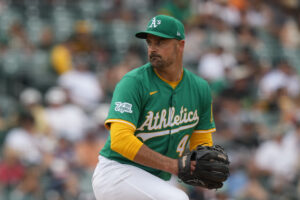
He was put on waivers after that campaign, getting claimed by the Athletics. He posted a 4.35 ERA for the A’s in that shortened season as the club won the American League West. He got to make his postseason debut, tossing two scoreless innings, though the A’s were knocked out by the Astros in the Division Series.
He became a free agent going into 2021. He was with the Nationals on a minor league deal for a while but then got back to the majors with the Cardinals. He gave them 38 2/3 innings with a 2.56 ERA. The Cards snagged a Wild Card spot, which meant a single-game playoff at that time.
Facing the Dodgers, the Cards would eventually fall with McFarland given the tough-luck loss. He was sent into a tied game in the bottom of the ninth. He got Albert Pujols and Steven Souza Jr. to line out then walked Cody Bellinger. Alex Reyes was brought in to face the right-handed Chris Taylor, who hit a walk-off home run. Since Bellinger was technically the winning run, the L went next to McFarland’s name in the boxscore.
Despite that bitter ending, the Cards clearly liked what McFarland gave them. They brought him back for 2022 via a $2.5MM deal, the largest of McFarland’s career. Unfortunately, he was dragged by one of his patented ERA swings. He was released in August with a 6.61 ERA and then re-signed with the Cards on a minor league deal. In 2023, he was mostly stuck in the minors, making just three appearances for the Mets midsummer.
Another bounceback came in 2024. He signed a minor league deal with the Dodgers but was traded to the A’s just before Opening Day and given a roster spot. He made 79 appearances for that club’s final season in Oakland with a 3.81 ERA. He re-signed with that club, a one-year deal worth $1.8MM, going into 2025. His ERA jumped up once more, getting to 6.89 that year, before he was released in July.
Overall, McFarland appeared in 460 major league games and logged 546 1/3 innings with a 4.18 ERA. His 13.7% strikeout rate was well below average but his 7.3% walk rate was quite good and his 61.7% ground ball rate was elite. Among pitchers with at least 500 innings pitched from 2013 to 2025, only Clay Holmes and Framber Valdez induced grounders at a higher rate than McFarland. He had a 26-20 record and earned one save and 68 holds. Baseball Reference pegs his career earnings a bit north of $12MM. We at MLB Trade Rumors salute McFarland on his fine career and wish him the best with whatever comes next.
Photos courtesy of Mark J. Rebilas, Jeff Curry, Darren Yamashita, Imagn Images
Cardinals Notes: Pushard, Graceffo, Soriano
The Cardinals finalized their 13-man pitching staff today by filling out their last few bullpen spots. Per Derrick Goold of the St. Louis Post-Dispatch, relievers Chris Roycroft, George Soriano, and Matt Pushard have all been informed that they’ve made the team.
The selection of Pushard is arguably the most notable of the three. St. Louis selected him out of the Marlins organization in the Rule 5 Draft back in December. In order to keep Pushard’s rights, the Cardinals would need to keep him on the active roster or major-league injured list for the entire 2026 season, without optioning him to the minors. Otherwise, he would need to be placed on waivers and potentially offered back to the Marlins.
Pushard was originally signed by the Marlins as an undrafted free agent in 2022. He reached the Double-A level in 2023, then Triple-A in 2024 as a 26-year-old. In 62 1/3 innings at that level in 2025, Pushard carried a 3.61 ERA along with a 28.5% strikeout rate and a 9.0% walk rate. He has always kept the ball in the yard and allowed just 0.43 home runs per nine innings last year. The strikeouts and walks were mostly there during his seven Spring Training appearances, although he allowed two home runs in 6 2/3 innings.
Ultimately, Pushard’s minor league track record and intriguing pitch mix were enough for the Cardinals to take a flier on him. The 6’4″ righty added a mile and a half to his four-seam fastball in 2025, averaging 95.0 MPH with the pitch. He also added velocity to his slider and curveball and increased his usage of both pitches, throwing them a combined 51.1% of the time.
Pushard will be slotting into the multi-inning role previously held by Gordon Graceffo. The righty was optioned to Triple-A following Saturday’s spring game. “[We want Graceffo to] continue to build up,” manager Oli Marmol told reporters, including Bill Ladson of MLB.com. “If he is going to help us, he is going [to pitch multiple innings]. Being able to do that is going to be important.”
Graceffo briefly debuted with the Cardinals in 2024. He was up and down with the club this past season, ultimately compiling 43 innings across 26 appearances. Graceffo struggled to a 6.28 ERA, though a .353 BABIP was likely to blame. The right-hander had a sub-4.00 xFIP and SIERA. Graceffo struck out nearly a batter per inning while posting a tidy 6.7% walk rate. He was one of nine Cardinals’ relievers to earn a save in 2025.
Soriano was acquired from the Nationals straight up for fellow reliever Andre Granillo. St. Louis is his fourth organization of the offseason. The right-hander bounced between the Marlins, Braves, and Nats after a series of waiver claims and designations. He’s now found a home on the Cardinals, where he’ll look to improve on his 5.95 ERA in the big leagues.
A dazzling Spring Training likely played a role in Soriano earning a job. The fact that he’s out of options might’ve also helped. The soon-to-be 27-year-old tossed seven scoreless innings with a 34.6% strikeout rate this spring. “The stuff coming out of the hand is impressive,” Marmol said. “He did a lot of things well.”
Roycroft made his debut in 2024. He contributed 34 1/3 innings of a 4.19 ERA that season. The righty spent another partial season in St. Louis this past year, though the results waned. Roycroft’s ERA ballooned to 7.84 in 20 games. He posted his second straight season with a walk rate above 11%, while taking a step back in the strikeout department. Roycroft punched out hitters at a 14.9% clip in 2025, after notching a 21.3% mark in his first MLB campaign.
Goold relayed that Roycroft spent time this offseason working on recovering the arm slot and pitch movement that he had as a rookie. The spring results suggest the time in the lab paid off. Roycroft tossed seven scoreless frames, walking just one.
Photo courtesy of Sam Navarro, Imagn Images
Cardinals Option Richard Fitts
The Cardinals optioned Richard Fitts on Wednesday, seemingly finalizing their season-opening rotation. Fitts was trying to win a spot at the back end over Michael McGreevy or Andre Pallante.
The latter two righties seem set to round out a rotation led by Matthew Liberatore, Dustin May and Kyle Leahy. The Cardinals announced Wednesday that Liberatore will take the ball for the season opener opposite Drew Rasmussen and the Rays. It’ll be the 26-year-old southpaw’s first Opening Day assignment.
Fitts landed with St. Louis in the November trade that sent Sonny Gray to Boston. The Cards acquired A-ball pitching prospect Brandon Clarke as the headliner. Fitts was more of a secondary piece but is a controllable starter with good velocity and a pair of minor league options who should factor in over the course of the season.
A 26-year-old righty, Fitts made 15 MLB appearances for the Red Sox between 2024-25. He managed a 3.97 earned run average but only struck out 17.5% of opponents while struggling with the home run ball. He took the ball three times this spring, giving up six runs on nine hits and three walks across 9 1/3 frames. He struck out nine of 39 batters faced while working with an impressive 97 mph fastball on average.
He’ll head back to Triple-A, where he has a 4.13 ERA over 143 2/3 innings. There’s a good chance Fitts is the first man up if an injury or extended stretch of the schedule opens a rotation spot. He’s the only depth starter on the 40-man roster who has any MLB experience.
Liberatore and May were assured of rotation spots. The Cardinals intended to give Leahy a chance to start after he tossed 88 innings of 3.07 ERA ball in a long relief role last season. He has been a little homer-prone this spring but leads the team with 20 strikeouts over 17 2/3 innings to solidify his starting job. It’ll be his first rotation work since he was in Double-A four years ago.
Pallante and McGreevy seemed on shakier ground at the start of camp. Pallante took 31 starts and logged 162 2/3 innings a year ago, but he mustered only a 5.31 ERA. McGreevy allowed 4.42 earned runs per nine over 95 2/3 innings. Both pitchers ranked near the bottom of the league in strikeout rate. They’ve each managed a sub-3.00 ERA despite modest strikeout totals this spring.
Offseason In Review: St. Louis Cardinals
The Cardinals leaned more heavily into the rebuild they should have begun during the previous offseason. They made four significant future focused trades in Chaim Bloom’s first season running baseball operations.
Major League Signings
- RHP Dustin May: One year, $12.5MM (including buyout of ’27 mutual option)
- RHP Ryne Stanek: One year, $3.5MM (deal includes ’27 club option)
- 3B Ramón Urías: One year, $2MM (including buyout of ’27 mutual option)
- C Yohel Pozo: One year split contract
2026 spending: $17MM
Total future spending: $18MM
Trades and Claims
- Traded 2B Brendan Donovan to Mariners in three-team deal (also involving Rays) for minor league RHP Jurrangelo Cijntje, minor league OF Tai Peete, minor league OF Colton Ledbetter, and two Competitive Balance Round B draft choices (#68 and 72 overall)
- Traded RHP Sonny Gray and $20MM to Red Sox for RHP Richard Fitts, minor league LHP Brandon Clarke and a player to be named later or cash
- Traded 1B Willson Contreras and $8MM to Red Sox for RHP Hunter Dobbins, minor league RHP Yhoiker Fajardo and minor league RHP Blake Aita
- Traded 3B Nolan Arenado and $31MM to Diamondbacks for minor league RHP Jack Martinez
- Acquired LHP Justin Bruihl from Guardians for cash
- Acquired RHP George Soriano from Nationals for RHP Andre Granillo
- Selected RHP Matt Pushard from Marlins organization in Rule 5 draft
- Claimed RHP Zak Kent off waivers from Guardians (later lost on waivers to Texas, re-claimed, then lost on waivers again to Minnesota)
- Claimed 3B Bryan Ramos off waivers from Orioles (later lost back to Baltimore on waivers)
Option Decisions
- None
Notable Minor League Signings
Extensions
- None
Notable Losses
- Brendan Donovan, Sonny Gray, Willson Contreras, Nolan Arenado, Miles Mikolas, John King (non-tender), Michael Siani (lost via waivers), Andre Granillo, Jorge Alcala (non-tender), Roddery Muñoz (lost via waivers), Anthony Veneziano (outrighted)
The Cardinals officially entered the Chaim Bloom era as soon as the 2025 regular season concluded. The team had announced a year in advance that Bloom would take over baseball operations from the retiring John Mozeliak. They felt their new front office leader would benefit from a year to familiarize himself with the organization, but the atypical arrangement contributed to an inert 2024-25 offseason that squandered trade value on veterans who should have been moved (e.g. Ryan Helsley, Erick Fedde).
St. Louis was reasonably competitive last year and finished within a few games of .500. At the same time, it was clear ownership was pulling back payroll as their local broadcast deal teetered on the brink of collapse — which finally happened this winter after Main Street Sports defaulted on a rights payment. If they weren’t going to invest to fix the pitching staff, they needed to more proactively strip things down.
That’d be the focus of the 2025-26 offseason. Bloom may never have used the term “rebuild,” but it was obvious between the lines. He said that adding a long-term influx of talent to the organization took priority over immediate upgrades to the big league club. Bloom also made the direction clear to a trio of veteran players who had say over their fate in the form of no-trade clauses.
Sonny Gray, Nolan Arenado and Willson Contreras had all previously been very choosy about whether or where to accept a trade. Gray and Arenado said that’d change this winter, considering more possibilities to play for a contender on the back ends of their respective careers. Contreras was a little more reticent early on, but he’d also approve a trade once the time came.
In all three cases, the primary motivations for the Cardinals were in shedding money and opening playing time for younger players. Gray, Contreras and Arenado all remain solid or better players, but none of them had immense trade value. Gray’s and Arenado’s respective contracts were above market value, in fact, while the remaining two years and $41.5MM on the Contreras deal felt about right for what he’d earn if he were a free agent.
That left Brendan Donovan as the Cardinals’ biggest trade chip. He’s controllable for two seasons via arbitration and was set for a salary in the $6MM range. Of the players that St. Louis would realistically consider trading (i.e. not Masyn Winn or top prospect JJ Wetherholt), Donovan was the only one who’d fetch a significant prospect haul.
St. Louis focused on the more expensive players first. The field for those veterans was smaller given the money involved and their no-trade protection, so it made sense to prioritize them while teams had more budgetary flexibility. There’d surely be a market for Donovan at any point of the offseason.
Gray was the first one to go. The Cardinals sent the three-time All-Star to the Red Sox just before Thanksgiving. Gray’s heavily backloaded free agent contract essentially meant he was playing on a one-year, $40MM deal ($35MM salary plus a $5MM option buyout to be paid at season’s end). That kind of salary is reserved for aces, while Gray is more of a #2 or high-end #3 starter. The Cards would need to kick in some money.
Ownership signed off on paying down half the contract. They’re sending the Red Sox $20MM as part of the trade, which also involved a minor restructure to Gray’s contract. An additional $5MM was pushed back to year’s end in the buyout, while Gray received an extra $1MM and a guaranteed buyout in exchange for waiving the no-trade clause.
The trade netted the Cardinals a pair of controllable pitchers, which would be a theme of their offseason. Richard Fitts has made 15 MLB appearances over the past two seasons, compiling a near-4.00 ERA with middling strikeout and walk numbers. It’s the statistical profile of a fifth or sixth starter, but Fitts has a 96 mph fastball and a pair of power breaking balls. He’ll start games over the course of the season.
St. Louis also landed a higher-upside arm in the form of A-ball pitching prospect Brandon Clarke. He’s a 6’4″ lefty with upper-90s velocity and massive strikeout rates in the low minors. Clarke’s command will need to improve significantly if he’s to be a high-leverage reliever, much less a starter, but he’s clearly an intriguing arm for the player development department.
One month later, Contreras followed Gray to Fenway. The Red Sox were looking for a power bat and needed to upgrade at first base, making Contreras a logical target once Pete Alonso and Kyle Schwarber signed elsewhere. The Cardinals again chipped in a little bit of money, though the cash was much more modest than in the Gray trade. St. Louis paid $8MM over two years on the Contreras deal (including an extra $1MM the slugger received for waiving the no-trade clause).
It was a lesser return than the Gray trade but one that followed a similar path: a near-MLB depth starter and a pair of pitching prospects. The former, Hunter Dobbins, is rehabbing a torn ACL and won’t be available on Opening Day. He managed a 4.13 ERA across 13 appearances as a rookie, albeit with a modest 18% strikeout rate. Dobbins hasn’t missed many bats but also has a mid-90s heater and a pair of breaking balls that make him an intriguing swing option. The prospects, Yhoiker Fajardo and Blake Aita, are low minors development fliers who slot into the middle of the farm system.
The eventual Arenado trade was purely about a change of scenery. His declining offensive numbers made him a less appealing target for other teams than Gray or Contreras had been. The Cardinals reportedly had the framework of a trade in place with the Athletics, but the 10-time Gold Glove winner preferred to approve a move to the Diamondbacks.
The Cardinals paid all but $11MM of the remaining $42MM and two years on Arenado’s contract. The only player they received in return, Jack Martinez, is a 2025 eighth-round pick who hasn’t thrown a minor league pitch. Aside from the marginal cash savings, this was about getting younger in the infield.
Nolan Gorman will get what’ll probably be his last shot to cement himself as a key piece of the organization’s future. Gorman slugged 27 homers a couple seasons ago but hasn’t hit over the past two years. He has immense raw power from the left side but figures to rank among the league leaders in strikeouts if he gets a full season of playing time.
At the other infield corner, Alec Burleson will replace Contreras as the primary first baseman. Burleson has played more outfield in his career, but he doesn’t run well and has never covered much ground on the grass. He fits better as a primary first baseman/designated hitter who’ll slot somewhere in the middle of the lineup.
Winn is locked in as the franchise shortstop. Wetherholt’s impending arrival at second base meant this was the right time for the Cardinals to trade Donovan. They’d seemingly not shown much interest in extending the All-Star utilityman. His trade value wasn’t going to get any higher within the next two seasons.
Donovan’s high-contact bat and defensive versatility made him an ideal fit for a number of teams. The Royals, Diamondbacks, Pirates, Red Sox, Astros and Guardians were among the clubs that checked in over the offseason. He’d been a target of the Yankees and Dodgers at the 2025 deadline. Yet this winter’s bidding seemingly came down to the Giants and Mariners.
Seattle ultimately pulled ahead by building a prospect package around 2024 first-rounder Jurrangelo Cijntje. He’s another touted minor league pitcher who adds ceiling to a pipeline that hasn’t graduated enough pitchers with swing-and-miss stuff. Cijntje is most famous for being a switch-pitcher, though his stuff as a righty is much more impressive. Even if he settles in as “only” a right-handed pitcher, he has a chance to be a mid-rotation arm. Cijntje fanned 26% of opponents with an ERA around 4.00 between High-A and Double-A last season. A 2027 debut seems likely.
The Cardinals also landed a former supplemental first-rounder with plus tools but significant whiff concerns in A-ball center fielder Tai Peete. Double-A outfielder Colton Ledbetter came over from the Rays in the three-team deal. He has a lower ceiling but could be a factor by the end of this season if he makes enough contact in Triple-A.
St. Louis also netted two Competitive Balance Round B draft picks — one apiece from the Mariners and Rays — that’ll become a pair of mid-level prospects this summer. Those selections add more than $2.5MM to their draft bonus pool. It sets the Cardinals up well to take an upside swing on a solid high school prospect to whom they can float an overslot bonus in the middle rounds.
The Donovan trade more or less ensures that Wetherholt will begin the season on the Opening Day roster. The seventh overall pick in 2024, Wetherholt is coming off a .306/.421/.510 season between the top two minor league levels. Even though he’s only hitting .240 this spring, he has a pair of home runs and an excellent eight walks against five strikeouts. Wetherholt could be an adequate shortstop but will surely slide to second base in deference to Winn, one of the sport’s premier defensive infielders.
Carrying Wetherholt on the Opening Day roster starts his six-year service clock in a rebuilding year. However, it could set the Cardinals up for another draft choice down the line via the Prospect Promotion Incentive — as soon as 2027 if he wins the NL Rookie of the Year award. If the Cards waited until midseason to call him up, they’d lose the potential for a PPI pick while still running the risk that Wetherholt earns a full year of service with a top two Rookie of the Year finish.
St. Louis added veteran utility player Ramón Urías on a $2MM deal late in the offseason. He plays second and third base and will be a righty-hitting complement to lefty swingers Wetherholt and Gorman. The Cardinals also wanted to add a complementary right-handed bat in the outfield, but that search didn’t bear fruit. Reported targets Austin Hays and Miguel Andujar found better paths to everyday playing time elsewhere (White Sox and Padres, respectively). A multi-year deal for Harrison Bader’s age 32-33 seasons doesn’t really fit the timeline.
Lars Nootbaar is opening the season on the injured list after undergoing surgeries on both heels. That more or less took him off the trade market despite loose ties to teams like the Pirates, Mets and Rangers. The Cardinals control Nootbaar for two seasons in arbitration and didn’t need to force a sell-low trade. They can move him at the deadline or next offseason.
That leaves a wide open opportunity in left field to begin the season. Minor league signee Nelson Velázquez has had an excellent camp to take advantage. He’ll probably make the team as the righty bat in a platoon, likely with lefty-hitting Nathan Church. The Cards have also gotten righty-hitting infielders Thomas Saggese and José Fermín work in the outfield this spring.
Victor Scott II and Jordan Walker will play center and right field, respectively. It’s approaching make-or-break time for Walker, a former top prospect who simply hasn’t performed over two and a half seasons in the big leagues.
Walker is still young, turning 24 in May, but he’s over 1000 plate appearances into his career and has been well below replacement level. The reemergence of former second-round pick Joshua Baez as a legitimate prospect gives the Cardinals a potential right field alternative by 2027. Nootbaar will be traded at some point, so Walker and Baez could coexist on the same roster, but the former is running out of time to continue warranting regular playing time.
They’ll run things back with the same catching group as they had in 2025. It’s technically a three-catcher setup, but they’ve never been keen on Iván Herrera defensively. He’ll be the primary designated hitter/third catcher behind Pedro Pages and Yohel Pozo.
Prospects Jimmy Crooks, Leonardo Bernal and (much further off) Rainiel Rodriguez are in the pipeline. This is an area of organizational depth even if Herrera moves off the position entirely. It’s easy to envision them swapping someone for pitching, but they have the luxury of waiting to see how the minor leaguers develop. Pages and Pozo would have modest trade value — the latter was non-tendered and re-signed to a split deal — so Herrera or one of the prospects would have the better chance of netting a significant return.
Strengthening the pitching pipeline was a clear goal. The Cardinals had previously relied on an excellent infield defense to compensate for lacking swing-and-miss arms. They’re moving away from that approach after ranking 23rd in runs allowed and 29th in strikeout rate (ahead of only the Rockies) over the last three seasons.
It’ll take time for that to translate into MLB success. Their only big league rotation move this winter was to sign Dustin May to a one-year, $12.5MM free agent deal. It’s a decent sized bet on a pitcher with his injury history who is coming off a near-5.00 ERA. May has mid-90s velocity and found success early in his career with the Dodgers, but he struggled to get hitters to chase or miss bats last year.
The Cardinals will hope to coax better results that could turn him into a midseason trade chip. He’s also young enough (28) that he could be a candidate for a two- or three-year extension if he’s healthy and pitching well as the deadline approaches. The Cardinals don’t have much in the way of long-term certainty in the rotation.
Matthew Liberatore should probably be in line for his career Opening Day start. May is going to be in the rotation, and it seems safe to pencil reliever convert Kyle Leahy in there as well. Andre Pallante, Michael McGreevy and Fitts are vying for the final couple spots. It’s probably a bottom five rotation in MLB right now. They’re awaiting the arrivals of Cijntje, Clarke and last year’s fifth overall pick Liam Doyle — plus a hopeful rebound season from Quinn Mathews — to improve the long-term outlook.
There wasn’t much turnover in the bullpen, where they’ll use a committee approach in the ninth inning after trading Ryan Helsley last summer. The Cardinals opted not to move left-hander JoJo Romero, who is coming off a career-low 2.07 ERA but had a mediocre strikeout and walk profile that seemingly limited trade interest. Romero is an impending free agent and one of the safer bets to be traded midseason, but the Cardinals evidently feel they can do a little better at the deadline than whatever was on the table over the offseason.
St. Louis took a rebound flier on Ryne Stanek on a $3.5MM free agent deal. Stanek is coming off a bad year but has plus-plus velocity and late-game experience that the bullpen was lacking in general. Riley O’Brien will work in leverage spots and could close games after a solid ’25 campaign.
The Cards sent cash to the Guardians to add lefty Justin Bruihl to the middle innings. They flipped Andre Granillo for righty George Soriano, who is out of options and has presumably nailed down a roster spot by striking out seven over five scoreless innings this spring. Soriano rode the DFA carousel all winter but never made it as far as the Cardinals (who ranked middle of the pack in waiver priority after a 78-84 season). After multiple unsuccessful efforts to claim him, they jumped the line with a trade. Matt Pushard, a Rule 5 pick out of the Miami system, is also vying for a middle relief job.
St. Louis rounded out the offseason with an extension for their fifth-year skipper. Despite the front office change, they evidently believe Oli Marmol is well positioned to oversee the rebuild. Bloom preemptively shut down any speculation about a managerial change early in the offseason. Marmol is entering the final year of his previous deal and signed an extension running through 2028.
They’re new times in St. Louis. Most of the previous core is either gone or likely to be traded within a year. At the same time, a nucleus of Winn, Herrera, and Wetherholt means they’re unlikely to bottom out the way teams like the Rockies or White Sox have. There’s a path back to contention within two or three seasons — one that’ll largely be determined by how well they develop the pitchers who are now the focal point of the rebuild.
How would you grade the Cardinals' offseason?
Cardinals Notes: Velázquez, Church, Gorman
The Cardinals spent much of the offseason looking for a right-handed bat to add to their outfield group. Interest in Austin Hays, Miguel Andujar and old friend Harrison Bader did not lead to a deal, however. Jeff Jones of the Belleville News-Democrat writes that the Cardinals had a tough time selling the opportunity to veterans seeking big league deals, as someone like Hays or Andujar would only be assured playing time while Lars Nootbaar mended from his dual heel surgery. Once healthy, Nootbaar will rejoin an outfield also expected to include defensive standout Victor Scott II in center field and former top prospect Jordan Walker in right field.
The looming return of Nootbaar would be a sensible deterrent for any veteran looking to maximize playing time in order to secure a multi-year deal in the future (e.g. Hays, Andujar) or one who was seeking a multi-year opportunity this winter (e.g. Bader). That wasn’t as big a factor for players simply looking for non-roster opportunities, however, and Jones writes that one such player is now all but guaranteed a spot on the Opening Day roster: Nelson Velázquez.
The 27-year-old Velázquez has had a monster spring, clubbing four homers in 39 plate appearances with an overall .333/.436/.727 slash and six walks against only three strikeouts. He also had a nice showing in the Puerto Rican Winter League, hitting .277/.377/.423 with 22 walks against 29 strikeouts in 159 turns at the plate.
Velázquez has played in parts of three major league seasons between the Cubs and Royals, combining for a .212/.286/.433 batting line and 31 home runs in 615 plate appearances. There’s little doubting his power potential, but a 28.8% strikeout rate has held him back. Velázquez’s approach isn’t particularly poor; he walks at a slightly better-than-average 8.5% rate, and his chase rate on balls off the plate is several percentage points shy of average. Rather, his sub-par hit tool has been the primary deterrent. Velázquez’s 76.2% contact rate on pitches over the plate is nearly nine percentage points shy of average, however, and his 43% contact rate when he does chase off the plate is 14 percentage points lower than average.
That said, Velázquez has made some gains in terms of cutting his strikeout rate and upping his walk rate both in winter ball and in his past couple runs at the Triple-A level. He’s certainly not going to continue his preposterous spring training production, but even some modest gains in his contact ability could help him break through as a power-over-hit corner bat. Assuming he indeed makes the roster, he’ll have the opportunity to carve out some staying power even after Nootbaar returns. Velázquez is out of minor league options, so he can’t be sent down without passing through waivers, but he’s also controllable for five more seasons via arbitration. At the very least, he’s put himself in strong position to earn another big league opportunity after spending 2025 in Triple-A (between the Pirates and Royals).
Also in strong position is outfielder Nathan Church, writes Bill Ladson of MLB.com. The lefty-swinging 25-year-old has hit .286/.412/.429 in 34 turns at the plate this spring. He could find himself in something of a platoon situation in left field (with Velázquez) or fill a more traditional fourth outfielder role. He’s capable of playing all three spots and was credited with four Outs Above Average (per Statcast) and five Defensive Runs Saved in just 164 big league innings last year.
Church hit just .179/.254/.250 in a cup of coffee that spanned 65 plate appearances last year. His work in the minors, however, was far more impressive. In 385 plate appearances between Double-A and Triple-A, he slashed .329/.386/.524 with 13 homers, 16 steals, an 8.6% walk rate and just a 9.6% strikeout rate.
“His demeanor has been different, overall confidence is better,” manager Oli Marmol tells Ladson in discussing the difference between what he saw in Church last summer and what he’s seen this spring. “Mechanically, he has made some changes to be more consistent.”
Teammate Nolan Gorman has also been seeking consistency — in his case, for the past several years. The former first-rounder and top prospect has shown flashes of enormous power potential in the past but still hasn’t solidified himself as a productive regular. Part of that has been scattershot opportunities with Nolan Arenado at third base and Brendan Donovan seeing lots of time at second base; neither is on the roster anymore. Significant strikeout issues have been a more alarming factor. Gorman has gone down on strikes in 34% of his 1581 career plate appearances.
As Lynn Worthy of the St. Louis Post-Dispatch writes, Gorman met with a private hitting instructor early this offseason at Arenado’s recommendation. A two-week regimen led to some mechanical changes with his setup (specifically his back elbow) and has helped him to find a more consistency with getting his front foot down during his swing.
Spring stats provide a small sample that ought to be taken with a major grain of salt, but Gorman has taken 37 plate appearances and given some reason for optimism, hitting .250/.351/.625 with three homers, five walks (13.5%) and just six strikeouts (16.2%) in 37 plate appearances.
MLBTR’s Anthony Franco previewed what looks like a make-or-break year for Gorman back in late January. With no real roadblock to playing time at third base, Gorman should be in the lineup more days than not have a bit more of a set position than in the past, when he’s bounced between third base, second base, first base and designated hitter. He’s now north of three years of major league service time as well, so if Gorman’s egregious strikeout rate resurfaces and continues to weigh down his overall production, he’d be a non-tender candidate following the season.
Hunter Dobbins To Open Season On Injured List
Cardinals manager Oli Marmol told reporters (including Dan Guerrero of the St. Louis Post-Dispatch) today that right-hander Hunter Dobbins will begin the season on the injured list. Dobbins is still rehabbing from the ACL tear he suffered back in July as a member of the Red Sox. That was always likely to be the case given the typical recovery timeline that comes with injuries of that sort.
There is good news to report regarding Dobbins’s progress, however. Guerrero notes that Dobbins has been able to build up his arm strength throughout Spring Training but is not yet fully built up in terms of fielding. He spent most of spring throwing live bullpens but appeared in a backfields game yesterday, his first in-game action of camp. Guerrero adds that Dobbins was held back from covering first base during the game but will continue his fielding progression moving forward.
The 26-year-old made his big league debut with Boston last year. An eighth-round pick back in 2021, he made 13 appearances (11 starts) in the majors, with a 4.13 ERA in 61 innings of work. That was good for an exactly league average ERA+ of 100, though his FIP was a more impressive 3.87. Dobbins did not strike out many batters (17.6%) but kept his walk rate down to just 6.6% and generated grounders at a strong 48.4% clip. It was a solid debut overall that offered some reason for optimism that Dobbins could be a quality #4 starter in the majors, though with Tommy John surgery and two ACL tears on his resume the biggest challenge for the righty might be simply staying healthy.
As for 2026, Dobbins’s timeline for return isn’t known just yet, though the fact that St. Louis has not felt the need to put him on the 60-day injured list to this point in the spring is certainly at least somewhat encouraging. The Cardinals are surely hoping to get Dobbins onto the roster sooner rather than later. The righty was a key piece of the return in the Willson Contreras trade this offseason and was brought in to help fill out a rather thin pitching staff.
With Dobbins sidelined, there’s relatively little intrigue in the team’s upcoming rotation decisions. Veteran free agent addition Dustin May figures to join Matthew Liberatore, Andre Pallante, and Michael McGreevy in four of the five spots in the Cards’ rotation to open the year. That leaves one spot available in the rotation that figures to come down to either Richard Fitts or Kyle Leahy with Dobbins starting the year on the injured list. Top prospect Tink Hence doesn’t appear ready for a big league debut quite yet with zero Triple-A starts on his resume, so the team’s starting depth will be rather limited after that group of six for as long as Dobbins is on the shelf.
Which Top Prospects Could Be On 2026 Opening Day Rosters?
In the not-too-distant past, it was relatively rare for organizations to break camp with their very best prospects on the roster. It still happened at times, but MLB's service time structure was set up such that keeping a top prospect in the minors for even two weeks to begin the season effectively ensured that he'd be controllable for seven years rather than the standard six. There were obvious exceptions to this thinking -- Atlanta fans surely remember Jason Heyward breaking camp as a 20-year-old and belting a three-run homer on Opening Day -- but there were far more cases of keeping a player in the minors to buy the extra year. Kris Bryant, Vladimir Guerrero Jr., George Springer and others were all called to the majors just when they'd spent enough time in the minors to give their clubs an extra year of control. There was nothing inherently nefarious about the gambit; teams were operating within the collectively bargained rules and making business decisions.
The 2022-26 collective bargaining agreement sought to implement some real incentives for teams to bring their best players north to begin the season, however, and by and large they've been effective. With the Prospect Promotion Incentives (PPI), any prospect who appears on two recognized top-100 lists and is called up early enough to earn a full service year can net his team a bonus draft pick, either in that season's Rookie of the Year voting or in MVP/Cy Young voting over the next three seasons.
There's also a disincentive to holding a player down. For those same qualified top prospects, a top-two finish in either league's Rookie of the Year voting will net a full year of major league service time, regardless of when they were called up. Said prospects still have around 90% of a season in such instances, which is more than enough time to turn in a ROY-worthy performance.
Teams now know that holding a player down for 15 days or so might lead to him getting a full year of service anyhow and comes with the disadvantage of rendering that player ineligible for future PPI picks. As such, it's become increasingly common for touted prospects to break camp on their teams' rosters.
With that in mind, and with fewer than two weeks to go until Opening Day, it seems worth running through a slate of top prospects who could factor into their teams' Opening Day plans.

Unlock Subscriber-Exclusive Articles Like This One With a Trade Rumors Front Office Subscription
- Access weekly subscriber-only articles by Tim Dierkes, Steve Adams, and Anthony Franco.
- Join exclusive weekly live chats with Anthony.
- Remove ads and support our writers.
- Access GM-caliber tools like our MLB Contract Tracker
Cardinals Notes: Nootbaar, Baez, Catcher
Lars Nootbaar still hasn’t played this spring as he works back from heel surgeries. Jeff Jones of The Belleville News-Democrat noted yesterday that the left fielder is trending towards beginning the season on the injured list. There’s no clear timetable for his season debut.
An injured list stint has been a possibility since the Cardinals announced that Nootbaar had surgery to address Haglund’s deformities on both heels in early October. The health uncertainty seemingly took the outfielder off the trade block over the winter. Nootbaar was loosely tied to the Rangers, Mets and Pirates at points throughout the offseason. There was too much uncertainty in his health outlook for the Cardinals to net a strong enough return to move him.
The Cardinals have two years of arbitration control over Nootbaar. The lefty hitter posted above-average offensive numbers over his first three and a half MLB seasons. He had a career-worst .234/.325/.361 showing across 583 plate appearances last year. Nootbaar is making $5.35MM this season and seems likely to be available at the deadline as long as he’s healthy.
Nootbaar’s injury leaves the Opening Day left field job available. The Cardinals were in the market for a right-handed hitting outfielder late in the offseason but didn’t come away with any MLB additions. They signed Nelson Velázquez to a minor league deal. He’s mashing at a .333/.440/.524 clip with four walks and two strikeouts in 25 plate appearances this spring. They’re also getting utility infielders Thomas Saggese and José Fermín outfield work in camp. One of those players could split time with lefty-hitting Nathan Church as a stopgap left field platoon.
One idea not under consideration: carrying highly-regarded outfield prospect Joshua Báez on the Opening Day roster. The Cardinals optioned the 22-year-old to Triple-A Memphis yesterday. Báez had an excellent camp, slugging three homers while going 7-21 in 10 games. Báez has no Triple-A experience, though, so it’s hardly a surprise that he’ll begin the season in the minors.
A former second-round pick, Báez floundered early in his minor league career. He firmly put himself back on the prospect radar last season. Báez combined for a .287/.384/.500 slash with 20 homers between High-A and Double-A. Even more impressively, he cut his strikeout rate to a league average 21.4% clip after fanning in more than 34% of his plate appearances in his first three professional seasons. He’ll look to follow up his impressive Spring Training by maintaining that improved contact rate in his first look at Triple-A pitching.
St. Louis also optioned catching prospects Jimmy Crooks and Leonardo Bernal over the weekend. That leaves Ivan Herrera, Pedro Pages and Yohel Pozo as the three catchers on the 40-man roster who remain in camp. Derrick Goold of The St. Louis Post-Dispatch writes that the team intends to carry all three on the Opening Day roster. Pages will be the primary option behind the dish, while Pozo will work in a traditional backup role. Herrera will continue seeing more time as a designated hitter than at catcher, though the Cardinals aren’t moving him off the position entirely.
Cardinals Extend Oli Marmol
The Cardinals and manager Oli Marmol have agreed to a two-year contract extension, according to a report from Derrick Goold of the St. Louis Post-Dispatch. Marmol was entering the final year of his contract but is now set to remain in St. Louis for the 2027 and ’28 seasons, with a club option for 2029. The Cardinals have subsequently announced Marmol’s new deal.
It’s the second extension Marmol has signed with the Cardinals. The 39-year-old initially took over as manager in St. Louis following Mike Shildt’s dismissal in October of 2021. Marmol’s first season as manager saw the Cardinals romp to a division title with a 93-win season thanks primarily to MVP-caliber performances from both Paul Goldschmidt (who won the award in the NL) and Nolan Arenado (who finished third). Unfortunately, the Cardinals were delivered a quick exit by the Phillies in the Wild Card round that year and went home that October without winning a single playoff game.
The end of the 2022 campaign also marked the end of longtime franchise face Yadier Molina‘s playing career, and Molina’s departure ushered in a transitory period in Cardinals baseball. While the club added an impactful bat behind the plate in Willson Contreras, pitchers in St. Louis struggled to adapt to life after getting so used to working with the nine-time Gold Glover. Meanwhile, both Goldschmidt and Arenado regressed in a big way, and injuries to key players like Brendan Donovan and Tyler O’Neill left the Cardinals tumbling from the top of the NL Central all the way to the bottom with a 91-loss campaign. 2024 saw the franchise get just barely back over .500 with an 83-79 record that left them tied for second place in the NL Central standings, but the team fell right back below .500 in 2025.
Difficult as Marmol’s tenure in St. Louis has been, management and ownership clearly do not lay the organization’s struggles at his feet. They signed him to a two-year extension prior to the 2024 campaign, and even after John Mozeliak retired and new president of baseball operations Chaim Bloom took over, both Bloom and team ownership have expressed confidence in Marmol in the run-up to today’s extension.
It’s understandable why the team would choose to stick with Marmol despite a lack of on-field success. The Cardinals have saddled Marmol with a stagnant and aging roster for the majority of his time with the organization. Outside of deals for Contreras and Sonny Gray (both traded to the Red Sox this offseason), St. Louis has made relatively minimal efforts to improve the roster via trades and free agency in recent years, instead banking on internal developments that haven’t come to fruition. That lack of internal development has been attributed to the organization by the team’s decision to reallocate funds that once were used for player development into fortifying the big league payroll, and over the past two years the team has started to move towards a rebuilding phase where they plan to scale back spending and return their focus to building from within.
Given the current state of the organization, it’s understandable that the Cardinals would look to keep someone they had enough confidence in to install as MLB’s youngest manager at the time of his hire. Now headed into his fifth season as a big league manager (with a decade of coaching experience prior to that), Marmol has plenty of experience handling young players and veterans alike. His work with last year’s Cardinals team, which lacked the win-now expectations of most seasons in St. Louis, will surely prove informative for the difficult task of rebuilding into a contender that the organization now faces.