
AL East Notes: Faucher, Bader, Orioles
The Rays have been dealing with various injuries to their rotation this season, forcing them to do a bit of improvising. Tyler Glasnow has been dealing with an oblique strain and has yet to make his season debut. Zach Eflin was placed on the injured list last week due to back tightness and it was reported this week that Jeffrey Springs is expected to require Tommy John surgery. Those injuries have led to prospect Taj Bradley coming up to join the rotation and now right-hander Calvin Faucher will move in from the bullpen. Marc Topkin of the Tampa Bay Times reports that Faucher will start tomorrow’s game, with the plan being to stretch him out to four innings.
Faucher, 27, was a Twins draftee who came over to the Rays alongside Nelson Cruz in the deal that sent Joe Ryan and Drew Strotman to Minnesota. Faucher didn’t make any starts while a Twins’ prospect but has made a few since switching teams, though they’ve all been of the “opener” variety, none of them longer than three innings. He has 30 major league innings under his belt at this point between last year and this one, registering a 5.10 ERA with a 19.6% strikeout rate, 8.7% walk rate and 41.2% ground ball rate.
It’s not an especially impressive line, but the Rays have had success turning overlooked relievers into useful starters in recent years. Drew Rasmussen was once a first round draft talent but his stock faded due to injuries and he wound up in Milwaukee’s bullpen before the Rays acquired him and gave him a starting opportunity that he ran with. Springs was a 30th round pick with a middling résumé but broke out with the Rays. He parlayed his breakout last year into a four-year extension, though the aforementioned Tommy John has put a sour note on that story for now. Faucher has fared better in the minors, with a 2.98 ERA in 63 1/3 Triple-A innings.
Rasmussen, Bradley and Shane McClanahan have three rotation spots taken now, with Eflin likely to return this weekend to give them a fourth starter. The club is off today but won’t have another off-day until May 15th. They could continue using Faucher as a fifth starter if he fares well but could also use bullpen days with bulk guys like Josh Fleming and Yonny Chirinos to keep them going until Glasnow’s ready to return. He hasn’t started a rehab assignment yet but also hasn’t been placed on the 60-day IL, suggesting a return before the end of May is still on the table. If Faucher can turn into a useful piece for them in any capacity, it would help to somewhat salvage a rare trade dud from Tampa. Cruz struggled badly after the deal while Ryan has thrived since joining the Twins.
Some other notes from around the AL East…
- Yankees‘ manager Aaron Boone tells reporters, including Bryan Hoch of MLB.com, that center fielder Harrison Bader should begin a rehab assignment tomorrow with the Double-A Somerset Patriots. Bader has been a Yankee since being acquired from the Cardinals last year but has been limited to just 14 regular season games and nine postseason games so far. He had plantar fasciitis at the time of the deal last year and then suffered an oblique strain in spring this year. An elite defensive outfielder, Bader should take over as the primary center fielder once healthy, though he’ll need some time to get his swing back after missing most of Spring Training. Most of the starts in center have gone to Aaron Judge so far, with Isiah Kiner-Falefa and Aaron Hicks also getting some. Bader’s return should allow Judge to return to a less-demanding corner spot. With Giancarlo Stanton likely out for the next six weeks, the third outfield job could be juggled between Hicks, Franchy Cordero, Willie Calhoun and Oswaldo Cabrera, though one of them may need to be cut from the roster somehow to make way for Bader.
- Orioles‘ manager Brandon Hyde told reporters, including Jake Rill of MLB.com, that righties Mychal Givens and Dillon Tate could begin minor league rehab assignments next week. Neither pitcher has made their season debut yet, as Tate has been dealing with a flexor strain and Givens a knee injury. Tate has a 3.97 ERA over 179 career innings with the O’s, striking out just 19.4% of batters faced but getting grounders at a 58.1% clip. Givens, meanwhile, has a 3.40 ERA in his career, getting grounders on just 37.9% of balls in play but striking out 28.4% of batters faced. Once healthy, they should give a boost to the Baltimore relief corps. Tate is making $1.5MM this year in his first arbitration season, with the club able to retain him via arb twice more. Givens signed with the club on a one-year deal, though there’s a $6MM mutual option for 2024. If he declines his end, there’s a $1MM buyout, whereas the buyout will be $2MM if he triggers it but the O’s decline.
Jeffrey Springs Expected To Have Tommy John Surgery
Rays left-hander Jeffrey Springs is expected to have Tommy John surgery, reports Marc Topkin of the Tampa Bay Times. That will put an end to his 2023 campaign and cause him to miss the start of the 2024 season as well. Earlier today, the club had placed him on the 15-day injured list with right-hander Taj Bradley recalled to take his place on the roster.
The news comes as a devastating blow to what had previously been a feel-good story. Springs, 30, was a 30th round draft pick of the Rangers and didn’t draw a lot of fanfare as a prospect. He got to the big leagues with Texas in 2018 and 2019, but posted an uninspiring 4.90 ERA through his first 64 1/3 innings. He was traded to the Red Sox but then put up a 7.08 ERA in the shortened 2020 season.
A trade to the Rays seemed to turn things around for him. He made 43 appearances in 2021 with a 3.43 ERA, 35.2% strikeout rate, 7.8% walk rate and 34.3% ground ball rate. Last year, the club gradually stretched him out to a starter’s workload over the course of the season. He eventually posted a 2.46 ERA in 135 1/3 innings, striking out 26.2% of batters faced while walking just 5.6% and getting grounders on 40.9% of balls in play. The Rays believed in that breakout enough to give the southpaw a four-year extension with a $31MM guarantee and plenty of incentives.
He was looking to build off that breakout campaign and was off to a strong start here in 2023. He had already tossed 16 innings with a tiny 0.56 ERA, though that will now seemingly go down as the entirety of his work this year. Rehab from Tommy John surgery typically takes 14 months or longer, meaning Springs won’t be an option for the club until midway through 2024 at the earliest.
The Rays had started the season with a strong rotation, even though there were a few injuries of note. Shane Baz had his own Tommy John surgery late last year and will likely miss all of the 2023 season. Tyler Glasnow also suffered an oblique strain in the spring and has yet to make his season debut. But Springs, Shane McClanahan, Drew Rasmussen, Zach Eflin and Josh Fleming formed a solid front five, helping the Rays jump out to a 13-0 start and a current 14-3 record.
Now the club will have to navigate the rest of the season without Springs. Eflin is also on the injured list but is expected to be back this weekend after a minimum stay. Bradley made his MLB debut in a spot start for the club last week and will now seemingly get a longer audition to stick around.
Revisiting A Win-Win Trade Between The Brewers And Rays
It’s generally rare for a significant trade to happen in the first few months of a season. Teams have just finished a winter of assembling their rosters for the campaign and don’t give up and start selling so early. Some teams dealing with injuries might want upgrades, but it’s not the time of year to send out a top prospect just to patch a temporary hole in the lineup or rotation. Front offices these days seem to like to push whatever time limits they have, saving their moves until the last moments before the trade deadline, non-tender deadline or what have you.
But there are exceptions, including one prominent one that occurred just shy of two years ago. In May of 2021, the Rays sent shortstop Willy Adames and right-hander Trevor Richards to the Brewers in exchange for righties J.P. Feyereisen and Drew Rasmussen. The trade was rare not only because of the timing, but the significance. Three of the players involved were relief pitchers, but Adames was established as a solid everyday shortstop who still had three-plus years of control. Trades of such players are rare at any time and especially so at at that part of the season.
What’s also of note is that both teams were in contention. The Rays had made the postseason in the two previous years, going to the World Series in 2020. They were 27-19 when this deal was struck, just a game behind the Red Sox in the AL East. The Brewers had made the playoffs three straight years and were struggling a bit in early 2021, but their 21-23 record still had them in the mix, four games behind the Cardinals in the NL Central.
There were a few stars that aligned to make this happen. On the Rays’ end, they had a middle infield surplus that was inevitably going to lead to some kind of move. Wander Franco was the top prospect in the game and on a path to take that shortstop job from Adames. Franco was at High-A in 2019 but jumped to Triple-A in 2021 after the pandemic wiped out the minor leagues in between. At the time of the deal, Franco was hitting .283/.333/.533 for a wRC+ of 126. The Rays had other prospects of note, Taylor Walls and Vidal Bruján, in line for middle infield jobs. Walls actually got called up in the immediate aftermath of the Adames deal, but Franco was up a month later.
On the Brewers’ end, they were in a bit of a bind at shortstop. They had Orlando Arcia at the position for many years but decided it was time to move on. His defensive marks were okay but he had a career batting line of .244/.295/.366 at the end of 2020 for a wRC+ of 71. They opened the season by moving infielder Luis Urías to short, but that went sideways pretty quickly. He had already made nine errors in the first few weeks of the season and wasn’t hitting much either.
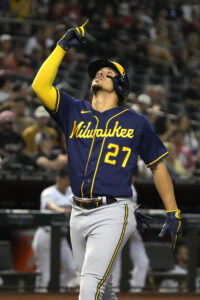
Those factors all contributed to bring this rare trade to fruition, which was since gone well for both clubs. Adames fortified the shortstop position immediately and has been a fixture there since. He was out to a slow start at the time of the trade, hitting .197/.254/.371 as a Ray, but he hit 20 home runs for the Brewers in the remainder of the 2021 campaign and produced a batting line of .285/.366/.521 in that time for a wRC+ of 136.
The Brewers ended up winning the division by finishing with a record of 95-67, five games up on the Cards. They just missed the playoffs last year, but that was no fault of Adames. He hit 31 home runs and slashed .238/.298/.458 for a wRC+ of 109. His speed and defense helped him tally 4.6 wins above replacement, per FanGraphs, tying Corbin Burnes for the team lead. He’s still with the club this year and can be retained via arbitration for 2024.
As for Richards, he was only with the club for about six weeks, getting flipped to the Blue Jays in July alongside Bowden Francis, with first baseman Rowdy Tellez coming the other way. Tellez has also been a key contributor for the Brewers, tallying 35 home runs last year and hitting .219/.306/.461 for a wRC+ of 110. Though that was very similar production to Adames at the plate, he doesn’t provide nearly as much in terms of speed or defense, leading to lesser tally of 0.8 fWAR on the year.
From the Rays’ point of view, they got more than just a few relievers, as they almost immediately started stretching Rasmussen out into a larger workload. Three of his first five outings as a Ray were of the single-inning variety, but he ramped up as the campaign went along. He eventually made 10 starts on the year, including eight to finish the season. And these weren’t just as an opener in the Tampa style. Those eight starts to end the year were all at least four innings long, with Rasmussen completing five innings in five of them.
This was a surprising development as it seemed like Rasmussen’s starting days were over, mainly due to health concerns. He had required Tommy John surgery in college in 2016, but was still drafted by the Rays in the first round, 31st overall, in 2017. They didn’t end up signing him due to concerns over that elbow, so he returned to Oregon State but needed a second TJS in August of 2017.
Despite those two surgeries, the Brewers grabbed him in the sixth round of the 2018 draft. He returned to the mound in the minors the following year, pitching mostly as a starter but logging just 74 1/3 innings. In 2020, with the minor leagues wiped out by the pandemic, Rasmussen was pitching out of the bullpen with the big league club. He tossed 15 1/3 innings over 12 appearances, posting a lackluster 5.87 ERA. He continued in that relief role early in 2021, logging 17 innings over 15 appearances with the Brewers with a 4.24 ERA.
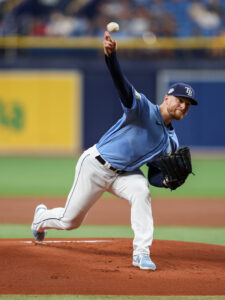
It seems the Rays hadn’t given up on the pitcher they liked so much that they used a first-round pick on just a few years prior. They nabbed him in the Adames deal and, as mentioned, stretched him out as the season wore on. With pitchers like Tyler Glasnow and Chris Archer on the injured list and alternatives like Michael Wacha, Josh Fleming and Ryan Yarbrough posting middling results, the rotation was in need of some help. Rasmussen eventually tossed 59 innings for Tampa that year over 10 starts and 10 relief appearances. He posted a 2.44 ERA, striking out 20.9% of batters faced, walking 5.7% and getting grounders at a 51.5% clip. The Rays finished 100-62 that year, eight games ahead of the Red Sox and Yankees for the division crown, though Boston would eliminate Tampa in the ALDS.
It would have been fair to wonder at that time if Rasmussen’s success with the Rays was sustainable. It was still a small sample and his total workload in the three years since his second Tommy John procedure was light, 177 innings between the majors and minors over the 2019-2021 period. But last year, he pushed those doubts aside, tossing 146 innings over 28 starts. His 2.84 ERA came with a 21.4% strikeout rate, 5.3% walk rate and 46.6% ground ball rate. He’s looked sharp through three starts here this year as well, currently sporting a 2.60 ERA with his strikeout rate up to 29.2% in the early going. He won’t reach arbitration until after this season and can be controlled for three more seasons beyond that.
Feyereisen was no slouch himself. He posted a 2.45 ERA for the Rays after the deal and then tossed 24 1/3 innings last year without allowing a single earned run. Unfortunately, he landed on the injured list in early June and wasn’t able to return, eventually undergoing shoulder surgery in December. The recovery from that procedure required a four-month shutdown period, which meant the club would be without him for the start of the 2023 campaign. He was still under club control through 2026, but the Rays were dealing with a roster crunch and designated Feyereisen for assignment shortly after that surgery, with a deal seemingly already in the works at that time. He was dealt to the Dodgers the next day in exchange for minor league lefty Jeff Belge, who posted a 3.66 ERA in High-A for the Dodgers last year. He’s started his Rays tenure with three scoreless outings in Double-A this year.
In the end, the Brewers shipped out some talented pitchers who weren’t the most essential arms on their roster. Even without Rasmussen and Feyereisen, they’ve still had excellent pitching from Burnes, Brandon Woodruff, Freddy Peralta, Devin Williams and others. In exchange, they received an excellent everyday shortstop and, indirectly, a potent bat in Tellez. The Rays parted with that excellent shortstop, but replaced him easily from within and were able to bolster their rotation and overall pitching depth.
Images courtesy of USA Today Sports.
Checking In On The Rays’ Left-Handed Bats
Back in October, just after the Rays had been bounced from the postseason, president of baseball operations Erik Neander gave a press conference and outlined some goals for the offseason. One area targeted for improvement was the club’s performance against right-handed pitching. As a whole, the team hit .234/.305/.373 against righties, leading to a 99 wRC+ that indicates they were just a hair below average.
“I don’t think it’s in us to just stand pat and assume things will get better,” Neander said at that time. Cut to April and the club apparently decided that the standing pat thing wasn’t such a bad idea after all. They made no moves this offseason to add to their lineup. In fact, they subtracted from it, as players like Kevin Kiermaier, Ji Man Choi and Miles Mastrobuoni are now on different teams. Aside from signing Zach Eflin, all the club’s offseason additions were minor leaguers, with most of those being pitchers.
The MLB offseason was generally considered to be on the robust side, with many contracts going well beyond predictions, especially for the top free agents. It’s possible that the low-spending Rays simply got priced out of whatever plans they initially drew up for the winter. Whatever the reasons, the club didn’t bring in anyone from outside the organization and is relying on internal options, at least for now. The season is still young but the early results are encouraging, as the club is 14-2 and hitting a collective .276/.364/.544 against righties for a 155 wRC+ so far. Let’s dig in on the players individually.
In the first few years of his career, Lowe had established himself as one of the key members of the Tampa lineup. He hit 14 home runs in the shortened 2020 season and added 39 more the next year. Over those two seasons combined, he hit .253/.346/.532 for a wRC+ of 141.
Unfortunately, he was hobbled in the health department last year. He made trips to the injured list due to lower back issues and a triceps contusion. He only got into 65 games and produced a diminished .221/.308/.383 slash line when on the field for a 104 wRC+. Early indications suggest that Lowe has put those injuries behind him, as he is off to a great start. He has five home runs in his first 14 games and is currently batting .310/.442/.690 for a 215 wRC+.
Franco’s arc is fairly similar to Lowe’s. His track record in the majors isn’t as long, but he was considered the top prospect in the sport for quite a while and then performed well in 2021 while only 20 years old. But the switch-hitter was also snakebitten in 2022, making trips to the IL due to a quad strain and wrist discomfort. He only got into 83 games and hit .277/.328/.417 for a wRC+ of 116, still above average but not elite. But like Lowe, he seems to be healthy and in a good groove here this year. He already has four long balls and is batting .318/.366/.621 for a wRC+ of 176.
The switch-hitting Walls has always hit well in the minors but hasn’t been able to translate it to the majors. Coming into this year, his career batting line was .182/.281/.288. He’s off to a strong start here in 2023 though, batting .281/.378/.469 through 37 plate appearances for a wRC+ of 144.
Mejía isn’t off to the same blazing start as some of his teammates. The switch-hitting catcher is batting just .167/.276/.208 through his first 29 plate appearances. He and Christian Bethancourt have been splitting the catching duties fairly evenly so far, but the right-handed-hitting Bethancourt is performing much better at the plate and could increase his share as the season goes along.
Acquired from the Dodgers in a trade just prior to the 2022 season, Raley got into 22 games with the Rays last year but hit just .197/.306/.279. He’s still striking out at a 31% clip in 2023 but has hit three homers in just 13 games, leading to a .222/.310/.528 slash line and 131 wRC+.
Lowe has long been one of the club’s highly-touted prospects, having been selected 13th overall in 2016 and performing well in the minors. He got a two-game cameo in the big leagues in 2021 but struggled in his first meaningful taste of the majors. He hit .221/.284/.343 last year and struck out in 33.3% of his trips to the plate. He’s been far superior this season, cutting that strikeout rate in half to 16.7% and hitting three home runs in just 12 games. His current batting line of .359/.405/.718 amounts to a wRC+ 213.
Long one of the club’s most significant prospects, Bruján has struggled badly against major league pitching. He had a batting line of .150/.207/.231 over 62 games coming into this year. The club was granted a fourth option for him, allowing them to send him to the minors on Opening Day, but he was called up when Jose Siri landed on the injured list. Bruján is hitting .333/.333/.333 through 15 plate appearances but has six strikeouts (a 40% rate) in that tiny sample.
Aranda got to make his MLB debut last year but didn’t crack the Opening Day roster here in 2023. He’s off to a nice start in Triple-A, hitting a couple of home runs for the Durham Bulls and drawing walks in a massive 24% of his 50 plate appearances. His current batting line is .250/.440/.444 for a 136 wRC+.
Manzardo isn’t yet on the 40-man roster but is one of the club’s top prospects and is playing in Triple-A, meaning a debut at some point this year is on the table. He has three home runs and a 10.4% walk rate for the Bulls so far this year, leading to a .262/.333/.548 batting line and 115 wRC+ through 12 games.
Jones is on the 40-man roster but he’s in Double-A and therefore not likely to be at the front of the line for a call-up. He’s also not forcing the issue right now, hitting .167/.189/.417 through eight games for the Montgomery Biscuits.
________________________________
All of these numbers come with small sample warnings, as the Rays have only played 16 games thus far. Also, the strength of their competition has been fairly weak, as their 13-game winning streak to start the season came against the Tigers, Nationals, Athletics and Red Sox. When they finally faced a team that’s generally considered to be a contender by squaring off against the Blue Jays this past weekend, they went 1-2.
The fact that they demolished the pitching of rebuilding clubs like the Nats and A’s doesn’t mean that we can declare the situation resolved, but it’s encouraging nonetheless. Franco and Brandon Lowe aren’t likely to sustain these torrid streaks, but it’s a good sign that they are healthy and are making the 2022 struggles seem like temporary injury setbacks. Walls can’t suddenly be declared a superstar, but he’s considered a strong defender and any offense he can provide is a nice bonus. We also can’t say that Raley and Josh Lowe have cemented themselves as successful big league hitters, but they’ve shown tremendous promise in the minors and could be getting acclimated to big league pitching. Lowe’s much-improved strikeout rate is especially positive.
As the season goes along and the Rays face stronger competition, it’s entirely possible that this picture looks less glowing. However, the games all count the same and they already have 14 wins in the bank, which makes it highly likely they stay in contention up until the trade deadline. If they need to upgrade on any of the hitters in this group, they have a very strong farm system and should be able to bolster their left-handed options by making a deal or two. But if even one or two of these early developments start to seem more real, their urgency to do so will be lessened.
Rays Select Cooper Criswell
The Rays have selected the contract of right-hander Cooper Criswell from Triple-A Durham, per a team announcement. In a pair of corresponding moves to accommodate his promotion, right-hander Trevor Kelley was optioned to Triple-A while righty Shawn Armstrong was moved from the 15-day injured list to the 60-day injured list. The Rays also announced that top prospect Taj Bradley is on today’s taxi squad. Marc Topkin of the Tampa Bay Times tweets that he’ll likely be added to the 26-man roster to start tomorrow’s game in Cincinnati.
Criswell, 26, made his big league debut with the Angels in 2021 but tossed just 1 1/3 innings, and he had a similarly brief run with the 2022 Rays, tossing 3 1/3 frames. He’s out to a fine start in Durham this year, with a 3.09 ERA and 10-to-1 K/BB ratio in 11 2/3 innings of work. The Rays are expected to use lefty Jalen Beeks as an opener in today’s contest, so Criswell will give Tampa Bay another fresh arm to help navigate the waters of this bullpen day. It could be a brief stay on the big league roster for Criswell, particularly if he throws multiple innings today, as the Rays will need to make another move to get Bradley on the roster for tomorrow’s contest.
Armstrong, 32, posted a 3.60 ERA with a 26% strikeout rate and 6% walk rate in 55 innings as a Ray in 2022. He’s missed the entire season so far due to a neck injury incurred in spring training. The shift to the 60-day injured list pushes his earliest possible return date back to May 29; it’s retroactive to his initial placement on the IL, not the move from the 15-day to the 60-day. Neil Solondz of Rays Radio tweets that Armstrong would’ve likely needed about that long to finish mending and build back up to game readiness anyhow, so the decision was likely a fairly straightforward one for the team.
AL Notes: Urias, Ortiz, Romano, Red Sox, Springs
Ramon Urias is in concussion protocol after a scary incident in the Orioles‘ 7-6 loss to the White Sox today. Urias was hit in the head by a Kendall Graveman fastball in the seventh inning of the game, but fortunately the infielder was able to leave the field under his own power. At the very least, Urias certainly doesn’t look like he’ll be playing in Sunday’ game, and it remains to be seen if a stint on the seven-day concussion-related injury list is necessary. Urias had a single and two walks prior to his HBP today, boosting the Gold Glover’s slash line to a productive .250./.388/.400 over his first 49 plate appearances of the season.
Infielder Joey Ortiz would be the roster replacement if Urias is sidelined, as MASNsports.com’s Roch Kubatko was among the reporters who noted that Ortiz was removed from the lineup for Triple-A Norfolk tonight. Since the Orioles don’t play on Monday, it’s possible the club might not make a roster move prior to Sunday’s game, in order to give Urias more time to recover and undergo further examination in the hopes that an IL stint could be avoided. Ortiz has yet to make his MLB debut, and is yet another talented youngster from Baltimore’s farm system — both MLB Pipeline and Baseball America included Ortiz near the end of their preseason top-100 prospect lists.
More from around the AL East…
- Jordan Romano earned a save in painful fashion today, as the Blue Jays closer was hit by a hard Wander Franco comebacker to the mound in the final out of a 5-2 win over the Rays. The Jays told reporters (including The Athletic’s Kaitlyn McGrath) that Romano suffered a right rib contusion on the play, though x-rays were negative. After pitching on three of the last four days, Romano was probably already going to be unavailable for Sunday’s game, but it remains to be seen if the closer will have to miss any more time. Romano has five saves and a 3.86 ERA over seven innings this season, with all three of his runs allowed during a disastrous outing against the Angels last Sunday.
- With the Red Sox shorthanded in the middle infield, assistant GM Brian O’Halloran told MassLive.com’s Chris Cotillo that the Sox are “comfortable with the group we have,” though the team is “always looking to find ways to improve the roster. Especially when you have injuries, and significant injuries. That’s even more heightened.” Enrique Hernandez has had to move from shortstop to center field to fill in for the injured Adam Duvall, subtracting from a middle infield mix that was already thin with Trevor Story and Adalberto Mondesi on the 60-day IL. Cotillo notes that it’s pretty early in the season for any significant trade to take place, though a lower-level swap or even a waiver claim could help the Red Sox fill some holes.
- Jeffrey Springs struggled to a 7.08 ERA over 20 1/3 innings with the Red Sox in 2020, and Springs told Peter Abraham of the Boston Globe that he regretting having “severely underperformed” during his lone season in a Sox uniform. “I think I put too much pressure on myself there,” Springs said. “I felt like I had to put up a zero every time and that made it harder on myself. That’s a bad mentality to have.” The Sox pivoted by dealing Springs to the Rays as part of a four-player trade during the 2020-21 offseason, yet now that deal is looking like a regret on Boston’s part, as Springs has become the latest pitcher to blossom in Tampa Bay. Springs has an outstanding 2.53 ERA in 196 innings in a Rays uniform, but his great start to the 2023 season has now been interrupted by ulnar neuritis in his left arm, resulting in what will be a lengthy IL visit.
Jeffrey Springs Expected To Miss Multiple Months With Arm Injury
Rays southpaw Jeffrey Springs left yesterday’s start with ulnar neuritis in his throwing arm. That indicated some degree of nerve inflammation in the area and the issue is apparently serious. Marc Topkin of the Tampa Bay Times reports that Springs is expected to miss two months at a minimum.
The club is still seeking further evaluation, but Topkin ominously adds that the issue extends beyond the nerve. It’s not out of the question that surgery could be required, which would obviously extend Springs’ recovery timetable. Even in a best case scenario, Tampa Bay will be without one of its top starters for an extended stretch.
Springs went for an MRI this morning. Specifics on imaging aren’t clear, though manager Kevin Cash acknowledged to reporters before tonight’s game that he’d miss time. Springs will surely land on the 15-day injured list and seems likely to find himself on the 60-day IL at some point.
It’s a brutal development for a Tampa Bay club that has been firing on all cylinders. Springs has played his part in the Rays’ 13-0 start with a brilliant start to the season. He’d allowed only one run in 16 innings, punching out 24 while walking just four. He’d looked on his way to backing up last year’s breakout showing, when he moved from long reliever to key rotation piece after pitching to a 2.46 ERA through 135 1/3 innings.
The Rays are now down another important starter. Tampa Bay will be without Shane Baz for most or all of the year after last summer’s Tommy John surgery. Tyler Glasnow went down with an oblique strain in Spring Training and isn’t expected to return at least until the middle of May. Offseason signee Zach Eflin hit the 15-day injured list with back tightness earlier in the week.
Shane McClanahan and Drew Rasmussen are locked into the rotation. Josh Fleming has operated at the back of the staff and figures to have a long leash given the injuries. The Rays called upon top prospect Taj Bradley for his MLB debut this week. Bradley was optioned back to Triple-A Durham after that start but can be recalled to replace Springs once he lands on the IL. Luis Patiño and Yonny Chirinos are on the 40-man roster as options for the back end.
A potentially serious injury to Springs would be a tough blow from a longer-term perspective as well. The Rays bet on Springs sustaining last year’s breakout, inking him to a $31MM extension over the offseason. He’s under contract through 2026 with a club option for the ’27 campaign.
List Of Players On Track For 10-And-5 Rights
In baseball parlance, players are often said to have “10-and-5 rights” or the player might be described as a “10-and-5 guy.” Any player who has 10 or more years of service time and has been with his current club for five or more consecutive years gets veto power over any trade involving them. This essentially functions the same as a no-trade clause, which players can negotiate into their contracts. But with 10-and-5 rights, the right is gained automatically once the conditions are met. There is often overlap, as players that have no-trade clauses will eventually earn 10-and-5 rights as well, which makes it a moot point in those cases.
A player’s status as a 10-and-5 player can impact trade negotiations, as players like Adam Jones and Brandon Phillips have used it blocked trades in the past. Also, a team may sometimes trade a player on the cusp of reaching 10-and-5 status, since it becomes harder to line up a deal once the player has that veto power. The Rays traded Evan Longoria to the Giants in the 2017-2018 offseason, when his service time was at nine years and 170 days, meaning he would have earned 10-and-5 rights just two days into the 2018 campaign.
Listed below are the players who currently have 10-and-5 rights, as well as those who are approaching that mark. For instances where service time is mentioned, keep in mind that an MLB season has 187 days but a player’s service time “year” flips over at 172.
Currently Have 10-and-5 Rights
- Jose Altuve, Astros
Altuve has over 11 years of service time and has spent it all with the Astros. It’s a fairly moot point as his current deal, which runs through 2024, contains a full no-trade clause. The club is also more likely to give him another extension than trade him.
- Charlie Blackmon, Rockies
Blackmon has over 10 years of service time and all of it with the Rockies. He triggered a player option for 2023, after which he will be a free agent.
- Miguel Cabrera, Tigers
Cabrera will reach 20 years of service this year and has been with the Tigers since 2008. He is in the final guaranteed year of his contract, with a couple of vesting options that aren’t a factor since he needs to finish in the top 10 in MVP voting the year prior in order to trigger them. He’s been fairly open about how he’s quite likely to retire at the end of the current season.
- Brandon Crawford, Giants
Crawford has over 11 years of service, all of it with the Giants. He’s slated for free agency at the end of this season.
- Clayton Kershaw, Dodgers
Kershaw has over 14 years of experience at this point, all of it with the Dodgers. A trade wouldn’t seem plausible anyway, as he and the club seem to have a nice relationship with each other. He’s re-signed on one-year deals in each of the past two offseasons, seemingly keeping the door open to retirement whenever he decides it’s time.
- Salvador Perez, Royals
Perez has spent his entire career with the Royals, which has pushed him past the 11-year mark in terms of service time. His current deal runs through 2025 with a club option for 2026.
- Chris Sale, Red Sox
Sale has gone beyond the 12-year service time mark and is now in his sixth season with the Red Sox. The extension he signed with the club in March of 2019 gave him a full no-trade clause in the middle of the 2020 campaign. He’s been floated as a speculative trade candidate if the Sox fall out of contention this year, though Sale would have to approve such a deal. His current contract runs through 2024 with a club option for 2025.
- Giancarlo Stanton, Yankees
Stanton has over 12 years in the big leagues now and is in his sixth campaign as a Yankee. His deal runs through 2027 with a club option for 2028.
- Stephen Strasburg, Nationals
Strasburg has beyond 12 years of service right now, all of it with the Nationals. The club’s deal with the right-hander after their 2019 World Series victory went south immediately, as he’s tossed just over 30 innings since then and doesn’t seem near any kind of return. That contract has a full no-trade clause and runs through 2026.
- Mike Trout, Angels
Trout has more than 11 years of service and all of it with the Angels. He already had full no-trade protection from his current contract, which runs through 2030. Some have speculated that the club could look to move Trout and do a full rebuild if Shohei Ohtani departs in free agency after this year. If the Angels ever did consider such a plan, Trout would have to be okay with the destination.
- Joey Votto, Reds
Votto is over 15 years of service at this point, all of it with the Reds. He’s had full no-trade protection since signing his ten-year extension in April of 2012. That deal is now in its final guaranteed year, with the club having a $20MM option for 2024 that comes with a $7MM buyout.
- Adam Wainwright, Cardinals
Wainwright has over 17 years of major league service time, all of that with the Cardinals. He re-signed with the club for 2023 and has full no-trade protection from that deal. He is planning to retire after this season.
Will Gain 10-and-5 Rights This Year
- Patrick Corbin, Nationals
Corbin already has over 10 years of service time and is currently in his fifth season with the Nationals. His six-year deal, which runs through 2024, contains partial no-trade protection but he will have 10-and-5 rights at the end of the 2023 campaign. The Nats would probably love to move him but he’s been getting worse in each year of the deal, with his ERA climbing from 3.25 in the first season to 4.66, 5.82 and 6.31, with his 2023 mark currently at 7.71. The backloaded deal will pay him $24MM this year and $35MM next year, meaning he would need a spectacular turnaround in order to have any trade appeal at all.
- Paul Goldschmidt, Cardinals
Goldschmidt has over 11 years of service time but only came over to the Cardinals for the 2019 season, making this his fifth year with the club. It’s a moot point since Goldy got a full no-trade in his most recent extension, which runs through 2024.
- Bryce Harper, Phillies
Harper has over 10 years of service already and is in his fifth season with the Phillies. His 13-year deal comes with full no-trade protection anyway, and it’s not like the Phils have any interest in trading him. The deal goes through 2031.
- Aaron Hicks, Yankees
Hicks has been with the Yankees since 2016 and came into this season with his service time at 9.041. That means he’s slated to have 10-and-5 rights in August, just after the trade deadline. The extension he signed with the club in 2019 did not have any no-trade protection, though Hicks would get a $1MM assignment bonus if he were traded. He’s perhaps the most notable player on this list, given that he actually seemed like a viable trade candidate in the most recent offseason, though no deal has come together as of yet. His contract pays him $10.5MM this year and then $9.5MM in the next two years with a $12.5MM club option for 2026 with a $1MM buyout. If the Yanks want to get this deal off the books, they should probably do it in the next few months. Then again, Hicks has been pretty open about his frustrations with his reduced role of late, speaking to Brendan Kuty of The Athletic about it recently. Perhaps he wouldn’t mind a change of scenery that results in more playing time.
- DJ LeMahieu, Yankees
LeMahieu has already surpassed the 10-year service time mark and is in his fifth campaign as a Yankee. His current deal, which runs through 2026, affords him full no-trade protection already.
- Manny Machado, Padres
Machado has over 10 years of service and is in his fifth campaign as a Padre. He already has full no-trade via his contract, which runs through 2033.
- Ryan Pressly, Astros
Pressly has been with the Astros since July of 2018, meaning he’ll reach five years with the club this summer. He also came into the year with his service time at 9.039, meaning he’ll get to 10 years in August. Pressly has emerged as one of the best relievers in baseball during his time in Houston and has twice agreed to an extension with the club, so a trade doesn’t seem especially likely. His current deal goes through 2024 with a vesting option for 2025.
- Christian Yelich, Brewers
Yelich is in his sixth season as a Brewer and will get to 10 years of service this season, but it’s a moot point since he has a full no-trade clause in his extension, which runs through 2028 with a mutual option for 2029.
Could Gain 10-and-5 Under Current Contract
- Ronald Acuña Jr., Braves
Acuna came into this season with just under five years of service time, meaning he won’t get to the 10-year mark until early in the 2028 season. His extension runs through 2026 with two club options. He’s one of the best players in the league and is underpaid on his deal, so Atlanta won’t be looking to deal him unless they fall way out of contention between now and then.
- Ozzie Albies, Braves
Albies has over five years of service and will get to 10 years in 2027. His extension goes through 2025 with a pair of club options. Similar to Acuna, he’s an excellent player who is on a club-friendly deal, meaning he won’t be a trade candidate unless something horrible happens to the team’s long-term fortunes.
- Nolan Arenado, Cardinals
Arenado will cross ten years of service here in 2023 but it’s only his third season as a Cardinal, meaning he’ll have 10-and-5 status after the 2025 season. That’s mostly just a footnote though, since Arenado’s extension with the Rockies came will full no-trade protection, which he waived to become a Cardinal. He seems quite content in St. Louis and chose not to opt-out of his deal at the end of 2022, even though he could have likely got more money on the open market.
- Javier Báez, Tigers
Báez came into this season with his service at 7.089, meaning he’ll get to 10 years about halfway into the 2025 season. This is just his second year as a Tiger, meaning he’ll get to 10-and-5 status after 2026, when he will have one year left on his six-year deal. That contract affords Báez limited no-trade protection, which allows him to block trades to 10 teams each year, per Evan Petzold of the Detroit Free Press. Báez can also opt out after this year, though that doesn’t seem to be a strong possibility based on his performance as a Tiger thus far.
- José Berríos, Blue Jays
Berríos comes into this season with his service time at 6.044, which puts him in line to get to 10 years late in the 2026 season. He’ll also get to five years with the Blue Jays at the end of July in that year, since he was acquired from the Twins at the deadline in 2021. His extension, which runs through 2028, affords him an opt-out after that 2026 season and gives him an eight-team no-trade list, per Gregor Chisholm of The Toronto Star.
- Mookie Betts, Dodgers
Betts has a service count of 8.070, meaning he’ll get to 10 years in the middle parts of next year. He’s been with the Dodgers since 2020, meaning he’ll get to 10-and-5 at the end of the 2024 season. Given his excellent production on a consistent competitor like the Dodgers, he doesn’t stand out as a trade candidate anyway, unless something changes drastically. His extension runs through 2032.
- Xander Bogaerts, Padres
Bogaerts only just joined the Padres, but his 11-year deal means he’ll be a 10-and-5 guy after 2027. That doesn’t really matter since he has a full no-trade clause on his deal anyway, making it likely he’s a Padre through 2033.
- Kris Bryant, Rockies
Bryant is in just his second campaign as a Rockie but will be a 10-and-5 guy after 2026. He already has a full no-trade clause in his contract, which runs through 2028.
- Byron Buxton, Twins
Buxton already has a full no-trade clause on the extension he and the Twins signed in November of 2021. He has between six and seven years of service time and will pass 10 years in 2026, with his deal running through 2028.
- Luis Castillo, Mariners
Castillo came into this season with his service time at 5.101, putting him in line to get to 10 years a couple of months into 2027. He’ll also get to the five-year mark with the Mariners midway through that season, having been acquired in July of 2022. His contract runs through 2027 with a vesting/club option for 2028. He has full no-trade protection on that deal but only for the first three years, which starts this year. That means his ability to block a trade will be gone at the end of the 2025 season but return in late July 2027.
- Gerrit Cole, Yankees
Cole will get to 10 years of service here in 2023 but won’t have five years as a Yankee until the end of 2024. It’s a moot point anyway since his contract, which runs through 2028, gives him full no-trade protection. He can opt out after 2024 but the team can void that by triggering a club option for 2029.
- Willson Contreras, Cardinals
Contreras has over six years of service time and will pass the 10-year mark in 2026. Since he just signed with the Cardinals, he won’t have five years with the club until the end of 2027. That will be the last guaranteed season of the five-year deal, though there’s a club option for 2028.
- Carlos Correa, Twins
Correa will get to 10 years of service in 2025 but won’t have five years as a Twin until after 2026. His 10-and-5 status is a footnote anyway, since he has a full no-trade clause already.
- Jake Cronenworth, Padres
Cronenworth has been with the Padres since the start of 2020, meaning he came into this year with exactly three years of service time. He won’t get to 10 years until the end of the 2029 campaign but he just signed an extension with the club that runs through 2030. He has an eight-team no-trade clause on that deal.
- Yu Darvish, Padres
Darvish has over 11 years of service time now but won’t have five years as a Padre until after 2025. He recently signed an extension that runs through 2028, which affords him full no-trade protection.
- Jacob deGrom, Rangers
deGrom only just joined the Rangers on a five-year deal, though there’s a conditional option for 2028. It’s a moot point anyway since he already has a full no-trade clause in the deal.
- Rafael Devers, Red Sox
Devers came into this season with his service clock at 5.070, meaning he’ll get to the 10-year mark midway through 2027. His extension, which runs through 2033, does not give him any no-trade rights. It seems unlikely that the Sox would try to move Devers, since he seemed to be the one superstar they were intent on keeping while trading Betts and letting Bogaerts get away. But if something changes years down the road and they start considering a Devers deal, it would get harder after his 10-and-5 rights kick in.
- Edwin Díaz, Mets
Despite being on the injured list and likely to miss all of 2023, this will be the fifth season as a Met for Diaz. He’ll get to 10 years of service in 2026 but has full no-trade protection on his deal, which runs through 2027 with an option for 2028. He can opt out after 2025.
- Wilmer Flores, Giants
Flores will get to 10 years of service here in 2023 but won’t have five years as a Giant until after 2024. That’s the last guaranteed year of his extension, but there’s a dual option for 2025. Flores will have a $3.5MM player option and, if he declines, the club will have a $8.5MM option.
- Kyle Freeland, Rockies
Freeland came into this year with a service count of 5.144, meaning he’ll get to 10 years early in 2027. His extension is only guaranteed through 2026, though there’s a $17MM player option for 2027, which is contingent on Freeland tossing 170 innings in 2026. The Rockies rarely trade their core players even when it’s fairly logical to do so, but it’s possible this could become noteworthy as the contract winds down.
- Freddie Freeman, Dodgers
Freeman already has over 12 years of service time but is in just his second season as a Dodger. He’ll have 10-and-5 rights after 2026, when his deal will have one year and $27MM remaining on it.
- Wander Franco, Rays
Franco came into 2023 with his service time at just 1.104, meaning he won’t get to 10 years until midway through 2031. His deal goes through 2032 with a club option for 2023. Most teams wouldn’t give much thought to trading a face-of-the-franchise player like Franco, but the Rays are always frugal and already went down this road once. As mentioned up top, they dealt Longoria just as his 10-and-5 rights were about to kick in. Franco doesn’t have any no-trade protection but would get an extra $3MM if he’s ever dealt.
- Andrés Giménez, Guardians
Gimenez has just 2.106 as a service time count, but he just signed an extension that runs through 2029 with a club option for 2030. He’ll cross the 10-year service mark during that 2030 campaign.
- Michael Harris II, Braves
Harris didn’t even play a full season last year but was awarded a full year of service time anyway by winning Rookie of the Year. He signed an eight-year extension with the club that runs through 2030 with a couple of club options after that. He’ll be a 10-and-5 guy at the end of the 2031 campaign if the first of those options is triggered.
- Ke’Bryan Hayes, Pirates
Hayes comes into 2023 with his service clock at 2.075, putting him on a path to reach 10 years during the 2030 campaign. His deal with the Pirates is only guaranteed through 2029 but there’s a club option for 2030.
- Kyle Hendricks, Cubs
Hendricks had a service time count of 8.081 at the start of this season, meaning he’ll get to 10 years midway through 2024. This is the last guaranteed year of his extension, with a $16MM club option for 2024 with a $1.5MM buyout. Hendricks has struggled in the past two seasons and hasn’t yet pitched this year after suffering a capsular tear in his throwing shoulder last year. It seems unlikely that option gets picked up unless he gets healthy and has a tremendous showing in the second half of this year.
- Aaron Judge, Yankees
Judge has a full no-trade clause in his mega-deal with the Yankees, and it’s hard to fathom the club wanting to deal him anyway. He will get to 10 years of service time in 2026.
- Francisco Lindor, Mets
Lindor started this year with a service count of 7.113, meaning he will get to 10 years of service in 2025. That will also be his fifth year as a Met. He currently has a 15-team no-trade clause as part of his extension, which runs through 2031.
- Ketel Marte, Diamondbacks
Marte has been with the Diamondbacks since 2017 and will surpass the 10-year service mark in 2026, with his service clock at 6.162 coming into this year. His extension runs through 2027 with a club option for 2028.
- Lance McCullers Jr., Astros
McCullers has spent his entire career as an Astro and will cross the 10-year threshold in 2025, coming into this year with a service tally of 7.140. The extension he signed with the club in 2021 runs through 2026 and has limited no-trade protection.
- Ryan McMahon, Rockies
McMahon has been with the Rockies for his entire career with a service tally of 5.006 coming into this year. That puts him on pace to get to 10 years of service in 2027, the final year of the extension he recently signed with the club. He could potentially earn opt-out opportunities after 2025 and 2026 based on MVP voting.
- Sean Murphy, Braves
Murphy came into this year with his service time at 3.029, meaning he won’t get to 10 years until 2029. His recent extension with Atlanta goes through 2028 with a club option for 2029.
- Joe Musgrove, Padres
Musgrove will get to 10 years of service time in 2026, which will be his sixth as a Padre. His extension, which runs through 2027, gives him a full no-trade clause through 2026. He only has limited no-trade protection in 2027 but he’ll be a 10-and-5 guy by then.
- Brandon Nimmo, Mets
Nimmo has been a Met for his entire career and will get to the 10-year service mark in 2026, but he has a full no-trade clause on his contract anyway.
- Matt Olson, Braves
Olson has a service tally of just 5.103 and isn’t slated to cross the 10-year mark until 2027. His extension with Atlanta runs through 2029 with a club option for 2030.
- Marcell Ozuna, Braves
Ozuna came into this season with his service clock at 9.124, meaning he’ll be at 10 years in May. However, this is just his fourth year with Atlanta, meaning he won’t be a 10-and-5 guy until after 2024. That’s the final guaranteed year of his deal, though there is a $16MM club option for 2025. It’s highly unlikely he’s still with the club at that time, since this deal is generally considered to be underwater both due to his poor performance and off-field issues. It’s already been speculated that the club may release him before the deal is finished, making it hard to envision a trade or the option eventually being picked up.
- José Ramírez, Guardians
Ramírez has spent his entire career with Cleveland and will get to 10 years of service in 2024. It’s a moot point as his extension, which runs through 2028, has a full no-trade clause.
- J.T. Realmuto, Phillies
Realmuto is currently in his fifth year with the Phillies and had a service count of 8.038 coming into the year. That puts him on pace for 10-and-5 status towards the end of next year. His deal doesn’t have any no-trade protection, but he does get a $1MM bonus every time he’s dealt. He’s under contract through 2025, which will be his age-34 season.
- Anthony Rendon, Angels
Rendon will get to 10 years of service here in 2023 but it’s just his fourth season as an Angel. He’ll get to 10-and-5 status after 2024 but already has full no-trade protection on his contract, which runs through 2026.
- Austin Riley, Braves
Riley came into 2023 with a service count of 3.138, which puts him on track to pass 10 years early in 2029. His deal runs through 2032 with a club option for 2033.
- Carlos Rodón, Yankees
Rodón will get to 10 years of service in 2025 and then have five years as a Yankee after 2027, when he’ll have one year left on his six-year deal. The 10-and-5 status will be irrelevant, however, as he already has full no-trade protection.
- Julio Rodríguez, Mariners
J-Rod has just the one year of service time so far but recently signed a convoluted mega-extension that could potentially end up lasting 18 years. He has full no-trade protection as part of that, making his eventual 10-and-5 status moot.
- Keibert Ruiz, Nationals
Ruiz had just 1.064 as a service count coming into this year but recently agreed to a lengthy extension with the Nats that runs through 2030 with two club options after that. He’s currently on pace for 10-and-5 rights in 2031.
- Corey Seager, Rangers
Seager will get to 10 years of service in 2025 but won’t have five years as a Ranger until the end of 2026. He has limited no-trade protection on his deal, which runs through 2031.
- Marcus Semien, Rangers
Semien will get to 10 years of service in 2024 but won’t have five years in Texas until after 2026. He doesn’t have any no-trade protection on his deal, which runs through 2028.
- Antonio Senzatela, Rockies
Senzatela came into this year with a service tally of 5.106, putting him on pace to get to 10 years a few months into 2027. His extension with the Rockies is only guaranteed through 2026, but there’s a $14MM club option for 2027.
- George Springer, Blue Jays
Springer will get to 10 years of service early in 2024 but is in just his third season as a Blue Jay right now. His six-year deal runs through 2026 and he’ll get 10-and-5 status after 2025. He currently has an eight-team no-trade clause.
- Trevor Story, Red Sox
Story will get to 10 years of service after 2025 but won’t have five years with Boston until after 2026. His deal, which runs through 2027, does not have any no-trade protection. He can opt out after 2025, but the team can void that by preemptively exercising an option for 2028.
- Dansby Swanson, Cubs
Swanson only just joined the Cubs on a seven-year deal. By the end of 2027, he’ll have five years with the club and be well beyond 10 years of service, though it’s a moot point since he already has full no-trade protection.
- Fernando Tatis Jr., Padres
Tatis has between three and four years of service, putting him on track for 10-and-5 in 2029, but he already has full no-trade protection on his extension which runs through 2034.
- Chris Taylor, Dodgers
Taylor came into this year with a service count of 7.037, putting him on pace to get to 10 years late in the 2025 season. He’s already been with the Dodgers since partway through the 2016 campaign. His contract is guaranteed through 2025 with a club option for 2026. He doesn’t currently have any no-trade protection, but he does get a $2MM assignment bonus each time he’s dealt, and a trade would also increase the value of his option.
- Trea Turner, Phillies
Turner just joined the Phillies but will get to 10-and-5 status after 2027. Like many others on the list, that designation doesn’t really matter for him, since his 11-year deal already affords him full no-trade protection.
Rule 5 Draft Update: April 2023
Fifteen players were selected in the 2022 Rule 5 Draft — an annual avenue for teams to potentially acquire talent from other organizations whose decision-makers did not place them on the 40-man roster. For those unfamiliar, in order to be eligible for the Rule 5 Draft, a player must not be on his team’s 40-man roster and must have played in either parts of five professional seasons (if they signed at 18 or younger) or four professional seasons (if they signed at 19 or older). The deadline to protect players from the Rule 5 by selecting their contracts to the 40-man roster typically falls in mid-November and spurs a good deal of player movement as teams jettison borderline players and non-tender candidates from their roster in order to protect younger prospects.
A player who is selected in the Rule 5 Draft must spend the entire subsequent season on his new club’s Major League roster and cannot be optioned to the minors. The player can technically spend time on the injured list as well, but at least 90 days must be spent on the active roster. If not, the player’s Rule 5 status rolls into the following season until 90 days on the active roster have been accrued. If a team at any point decides it can no longer carry a Rule 5 selection, that player must be passed through waivers and subsequently offered back to his original organization. Any other club can claim the player via waivers, but the same Rule 5 restrictions will apply to the claiming team.
Broadly speaking, the Rule 5 Draft rarely produces impact players. There are plenty of exceptions over the years, though, with names like Johan Santana, Dan Uggla, Shane Victorino, Joakim Soria, Josh Hamilton and, more recently, Garrett Whitlock and Trevor Stephan thriving in new organizations. The Rule 5 Draft dates back more than a century and has even produced a handful of Hall of Famers: Roberto Clemente, Hack Wilson and Christy Mathewson.
It’s unlikely we’ll see any Cooperstown-bound players come from this year’s crop, but the teams who opted to select a player will be content if any of these names become a viable reliever or role player for the next several seasons. Here’s a look at this year’s group of 15 Rule 5 players and where they stand a couple of weeks into the 2023 season. We’ll do a few of these throughout the season, keeping tabs on which players survive the season and formally have their long-term rights transferred to their new clubs.
Currently on a Major League Roster
- Thaddeus Ward, RHP (Nationals, from the Red Sox): Ward was one of Boston’s best prospects a few years back but went the better part of two years without pitching due to the canceled 2020 minor league season and Tommy John surgery in 2021. He impressed in 51 minor league frames in his 2022 return, and many Red Sox fans were irked not to see him protected last November. The Nats selected him with the top pick in the Rule 5, and after a solid spring he’s tossed 5 2/3 innings and allowed three runs on four hits and a couple of walks. Ward is averaging 94.3 mph with his heater and has fanned seven of his 23 opponents (30.4%). The Nats are the exact type of rebuilding team that can afford to carry a player all season even if he struggles, so it’s quite likely that Ward will spend the year in their bullpen — and potentially get a look in the rotation sometime down the road.
- Ryan Noda, 1B/OF (Athletics, from the Dodgers): Like the Nats, the A’s aren’t going anywhere this season, so there’s every incentive for them to give Noda a long audition. The 27-year-old slugger hit .259/.395/.474 in Triple-A last season, and while he fanned in 28.2% of his plate appearances he also walked at a gaudy 16% clip. It’s been more of the same with the A’s. He walked 11 times but fanned on 26 occasions in 69 spring plate appearances. So far in the regular season, he’s belted a pair of homers, drawn seven walks and whiffed a dozen times in 37 A’s plate appearances. The A’s aren’t ones to shy away from a three-true-outcomes skill set, and they’ll see if Noda can do the Jack Cust dance for them moving forward.
- Jose Hernandez, LHP (Pirates, from the Dodgers): A rocky spring didn’t dissuade the Pirates from carrying Hernandez on their Opening Day roster, and so far it seems wise that they looked past that 8.18 Grapefruit League ERA. In 5 1/3 frames, Hernandez has held opponents to one run on five hits and a walk with four strikeouts. He’s averaged 96 mph on his heater. The 25-year-old Hernandez used that power fastball and a sharp slider to fan nearly 30% of his opponents in Double-A last year, and the Bucs are currently trusting him as one of two lefties in Derek Shelton’s bullpen. He’s already picked up his first big league hold.
- Blake Sabol, C/OF (Giants, from the Pirates): Sabol was technically selected by the Reds with the fourth pick in the draft, but Cincinnati and San Francisco had an agreed-upon deal sending Sabol to the Giants for a player to be named later. (Such swaps are common in the Rule 5 Draft.) The 25-year-old Sabol split the 2022 season between Double-A and Triple-A in Pittsburgh, batting a combined .284/.363/.497 with 66 games behind the dish and another 22 in the outfield. A monster spring showing (.348/.475/.630) and an injury to Mitch Haniger set the stage for Sabol to open the season in left field for the Giants. He’s hitting just .194/.265/.290 through his first 10 games and has split time between catcher and outfield pretty evenly. If the Giants feel he can legitimately play both spots, that’s just the type of versatility they crave when constructing their roster.
- Mason Englert, RHP (Tigers, from the Rangers): Englert isn’t a power arm but had a strong showing in the Rangers’ High-A and (briefly) Double-A rotations in 2022, when he pitched to a combined 3.64 ERA in 118 2/3 innings. The Tigers have used him out of the bullpen so far, and the results haven’t been great. He’s surrendered six runs in just 7 1/3 innings, including a trio of long balls. Englert was a 2018 fourth-rounder who’s generally regarded as a potential back-of-the-rotation starter. It’s feasible Detroit could get him a look in a starting role at some point. Englert entered the 2023 season with just 15 1/3 innings above A-ball, so some struggles aren’t exactly surprising.
- Kevin Kelly, RHP (Rays, from the Guardians): In a shocking and unprecedented development, the Rays look like they’ve plucked a pitcher from obscurity and perhaps found a keeper. Small sample caveats abound this time of season, but Kelly has now made four relief appearances of at least two innings (including today’s game) and yielded three runs on eight hits and no walks with seven punchouts. That comes on the heels of a 3.38 ERA and 21-to-6 K/BB ratio in 13 1/3 spring innings. The Guardians have a deep farm system and perennial 40-man crunch, which can lead to players like this going unprotected; Kelly posted a 2.04 ERA, 29.9% strikeout rate and 8.8% walk rate in 57 1/3 frames between Double-A and Triple-A last year.
- Gus Varland, RHP (Brewers, from the Dodgers): The Brewers looked past Varland’s woeful 5.98 ERA in Double-A across the past two seasons, betting on the right-hander’s raw stuff rather than his results. So far, so good. Varland obliterated opposing hitters in spring training, whiffing a comical 17 of the 35 batters he faced (48.6%). So far during the regular season, he’s allowed a pair of runs on eight hits and two walks with four strikeouts through six innings out of the bullpen. Varland is averaging 95.9 mph on his fastball and has kept 11 of the 22 balls in play against him on the ground.
On the Major League Injured List
- Nic Enright, RHP (Marlins, from the Guardians): Enright announced in February that just weeks after being selected in the Rule 5 Draft, doctors diagnosed him with Hodgkin’s lymphoma. He’s undergoing treatment and has said he hopes to “use his platform to provide hope and inspiration to others who fight their battle with cancer.” Enright is currently on Miami’s 60-day injured list, but baseball of course takes a back seat in this type of instance. We at MLBTR join fans of the Marlins, Guardians and every other organization in pulling for the 26-year-old Enright and wishing him a full recovery.
- Noah Song, RHP (Phillies, from the Red Sox): Ranked as the No. 65 prospect in the 2019 draft by Baseball America, Song slid to the Red Sox in the fourth round due to his military commitments as a Naval Academy cadet. His professional experience is limited to 17 Low-A innings in 2019 while spending the past three seasons in the Navy but was transferred from active duty to selective reserves earlier this year, allowing him to play baseball. He’s on the Phillies’ 15-day injured list with a back strain, and it’s tough to imagine him just diving into a Major League bullpen after spending three years away from the game. Still, Phillies president of baseball operations Dave Dombrowski held that same title in Boston when the Red Sox drafted Song and has said since the Rule 5 Draft that he feels Song’s pure talent is worth the risk.
- Wilking Rodriguez, RHP (Cardinals, from the Yankees): The 33-year-old Rodriguez is a remarkable story. It’s been eight years since he last pitched in affiliated ball and nine years since his lone MLB cup of coffee with the Royals. Since then, he’s been a staple in the Venezuelan Winter League and the Mexican League. During his past two seasons in Mexico, he hurled 73 innings with a 2.71 ERA — including 44 2/3 innings of 2.01 ERA ball with a 43.2% strikeout rate there in 2022. The Yankees signed him to a minor league deal in August, but because of his prior minor league experience from 2007-15, he was Rule 5-eligible and selected by the Cardinals. A right shoulder issue has Rodriguez on the 15-day IL right now. He’s yet to pitch for the Cardinals this year.
Already Returned to their Former Club
- Nick Avila, RHP: Avila allowed eight runs in ten spring innings with the White Sox and was returned to the Giants, for whom he posted an electric 1.14 ERA in 55 1/3 innings between High-A and Double-A last season.
- Andrew Politi, RHP: Politi was tagged for six runs on nine hits and three walks in 8 2/3 spring innings with the Orioles, who returned him to the Red Sox late in camp.
- Jose Lopez, LHP: Lopez walked five batters in six frames with the Padres this spring, and the Friars returned him to the Rays on March 27.
- Chris Clarke, RHP: The towering 6’7″ Clarke faced the tough task of cracking a deep Mariners bullpen and was returned to the Cubs late in spring training after allowing four runs on eight hits and a pair of walks in 6 2/3 innings.
- Zach Greene, RHP: The Mets plucked Greene out of the Yankees’ system, but in 4 2/3 innings during spring training he yielded seven runs with more walks (six) than strikeouts (five). The Mets returned him to the Yankees on March 14.
Jeffrey Springs Removed From Game With Ulnar Neuritis
Rays left-hander Jeffrey Springs was removed from today’s game after a visit from manager Kevin Cash as well as the club’s trainer. The club later announced his injury to reporters, including Marc Topkin of the Tampa Bay Times, describing it as left arm ulnar neuritis. He will undergo further evaluation tomorrow.
Until more testing is done, it will be unclear what kind of an absence Springs is facing. The ulnar nerve is commonly known as the “funny bone” due to the tingling sensation it can create in one’s arm when struck. “Neuritis” means that the nerve is inflamed. Having the diagnosis doesn’t necessarily pinpoint a timeline, as there’s still a range of possible outcomes. On the positive end, the Blue Jays placed Jordan Romano on the injured list in April of 2021 with ulnar neuritis, but he was back after just a 10-day absence.
On the other end of the spectrum, Jacob deGrom had surgery to address ulnar neuritis in September of 2016. That ended his season, which isn’t surprising as it was late in the schedule, but the Mets announced the recovery time as three months. It was a similar situation for Michael Fulmer when he was with the Tigers in 2017. He had surgery to address ulnar neuritis late in that season with the club announcing a recovery timeline of three to four months. Clearly, there’s a wide range of outcomes with this issue. The Rays and Springs will have to examine the severity of his ailment and determine the next steps before even a rough timeline can be mapped out.
However it ultimately plays out, it figures to be a blow to the Rays, as Springs has surprisingly emerged as an excellent starter recently. He had spent most of his career working out of the bullpen until the Rays stretched him out last year. He ultimately tossed 135 1/3 innings over 25 starts and eight relief appearances with a 2.46 ERA. He struck out 26.2% of batters faced against a 5.6% walk rate and 40.9% ground ball rate. The club had enough belief in those results to sign Springs to a four-year, $31MM extension this winter, though he could bump his earnings as high as $65.75MM over five years via a club option and incentives. He had looked strong so far here in 2023, not allowing an earned run over his first two starts, then letting one run cross the plate today before his exit.
The Rays have a strong starting staff, which has helped them jump out to an incredible 13-0 start to their season, as they eventually won today’s contest despite the loss of Springs. But if the lefty has to miss some time, it will further handcuff a rotation that started the season without Shane Baz or Tyler Glasnow and recently placed Zach Eflin on the injured list as well. If Springs joins that group on the IL, they will be down to two strong starters in Shane McClanahan and Drew Rasmussen, while Josh Fleming has had mixed results so far this year. Eflin is expecting a minimum stay on the IL but still has another 10 days before he’s eligible to return, even if that’s true.
The Rays have often used bullpen games in the past but they would be challenged to get through their upcoming schedule with just three starters in McClanahan, Rasmussen and Fleming. They don’t have an off-day until April 20 and then won’t have another until May 15. That means they will likely have to lean on their depth at some point. Prospect Taj Bradley made his major league debut yesterday but was then optioned to Triple-A this morning. He isn’t eligible to return until 15 days from that optioning, though an exception is made when another player is going on the injured list. Luis Patiño and Yonny Chirinos are other options on the 40-man roster.