
12 Players Decline Qualifying Offers
Twelve of the 13 qualified free agents have declined the QO, tweets Mark Feinsand of MLB.com. The exception was Nick Martinez, who accepted the $21.05MM offer from the Reds over the weekend.
The players who rejected the offer:
- Willy Adames (Brewers)
- Pete Alonso (Mets)
- Alex Bregman (Astros)
- Corbin Burnes (Orioles)
- Max Fried (Braves)
- Teoscar Hernández (Dodgers)
- Sean Manaea (Mets) — full post
- Nick Pivetta (Red Sox) — full post
- Anthony Santander (Orioles)
- Luis Severino (Mets) — full post
- Juan Soto (Yankees)
- Christian Walker (Diamondbacks)
There wasn’t much intrigue by the time this afternoon’s deadline officially rolled around. Martinez, Pivetta and perhaps Severino were the only players who seemed like they’d consider the QO. All three made their decisions fairly early in the 15-day window that they had to weigh the offer.
All 12 players who declined the QO have a case for at least a three-year contract. Soto is looking at the biggest deal (in terms of net present value) in MLB history. Burnes, Fried, Adames, Bregman, Alonso and potentially Santander could land nine figures. Severino, Manaea, Hernández and Pivetta look like they’ll land three- or four-year deals. Walker could get to three years as well, though it wouldn’t be a huge surprise if his age limits him to a two-year pact at a high average annual value.
A team that signs these players will take a hit to its draft stock and potentially its bonus pool slot for international amateurs. The penalties vary depending on the team’s revenue sharing status and whether they exceeded the luxury tax threshold in 2024. MLBTR’s Mark Polishuk covered the forfeitures for every team last month. A team would not forfeit a pick to re-sign its own qualified free agent, though it would lose the right to collect any kind of compensation.
If these players walk, their former teams will receive an extra draft pick. The Brewers, Orioles and Diamondbacks are in line for the highest compensation as revenue sharing recipients. If their players sign elsewhere for at least $50MM (a virtual lock in the cases of Burnes, Santander and Adames), the compensation pick would fall after the first round of next year’s draft. If the player signs for less than $50MM — which could be the case if Walker is limited to two years — the compensation pick would land before the start of the third round (roughly 70th overall).
The Red Sox neither received revenue sharing nor paid the competitive balance tax. They’ll get a pick before the third round if Pivetta walks regardless of the value of his contract. The Mets, Yankees, Dodgers, Braves and Astros all paid the tax in 2024. They’ll get a pick after the fourth round if any of their players depart — potentially three picks, in the Mets’ case. The prospects selected by that point — usually around 130th overall — tend not to be highly touted, but each extra selection could carry a slot value north of $500K to devote to next year’s draft bonus pool.
Blue Jays, Orioles, Red Sox Interested In Max Fried
Left-hander Max Fried is one of the top pitchers available in free agency this offseason. The Blue Jays are one of the clubs with interest, per Ben Nicholson-Smith of Sportsnet. Fried is also connected to the Jays by Jon Heyman of The New York Post, alongside the Orioles and Red Sox. Heyman also mentions that Yankees have checked in with Fried, as well as guys like Corbin Burnes, Blake Snell, Sean Manaea, Anthony Santander and Pete Alonso, but all of those are framed as secondary to their goal of bringing Juan Soto back to the Bronx. For Boston, they have interest in another lefty starter, with Sean McAdam of MassLive reporting they are involved with Garrett Crochet of the White Sox. On the Fenway Rundown podcast (X link), McAdam also identifies the Orioles, Padres and Dodgers as key contenders for Crochet.
Fried, 31 in January, has tossed 884 1/3 innings for Atlanta in his career. In that time, he allowed 3.07 earned runs per nine. His 23.9% career strikeout rate and 6.8% walk rate are both a bit better than average while his 54.4% ground ball rate is quite strong. Among pitchers with at least 850 innings tossed from 2017 to 2024, only Framber Valdez, Logan Webb and Marcus Stroman had a higher ground ball rate than Fried. Of those four, Fried had the highest strikeout rate in that stretch while only Webb had a lower walk rate.
The lefty has also been fairly durable in that time. From 2019 to 2024, he made 11 starts in the shortened 2020 campaign and tossed at least 165 innings in each full season of that stretch except for 2023. Fried has also added another 67 postseason innings as Atlanta has been a fixture of the playoffs during his career. A forearm strain did limited him to 14 starts in 2023, which is perhaps a concern. An inflamed nerve in that same forearm caused him to miss a few starts in 2024 as well, but he was still able to take the ball 29 times and log 174 1/3 innings with a 3.25 ERA.
Atlanta gave Fried a qualifying offer that he is sure to reject while looking for a notable long-term pact. MLBTR’s recent Top 50 Free Agents post predicted Fried for a $156MM deal over six years, the third pitcher on the list behind Burnes and Snell.
Given his track record of success, he’s sure to be popular in the coming weeks and months. It was reported earlier this week that the Jays are planning to pursue starting pitching. They have three established veterans in their rotation, with José Berríos, Kevin Gausman and Chris Bassitt all under contract for next year. Bowden Francis has seemingly earned a gig as well after he posted a 1.80 ERA over his final 11 appearances in 2024.
They have Yariel Rodríguez and Jake Bloss as options for the #5 spot but there’s sense in adding depth. Rodríguez also pitched out of the bullpen at times in 2024 and could be pushed there to begin next year. Bloss only has three big league starts and hasn’t pitched much in the minors either, so having him on optional assignment would make sense. Alek Manoah could theoretically be back in the mix but likely not until late in the year, as he underwent UCL surgery in June.
RosterResource estimates the Jays are about $20MM shy of last year’s payroll, though they could non-tender some of their nine arbitration-eligible players to give themselves more room. Team president Mark Shapiro has indicated that he doesn’t expect the club’s spending to deviate significantly from last year. Giving Fried $26MM per year or something close to it would seemingly use up a decent chunk of their spending power. They also have needs on the infield, in the outfield and in the bullpen. The trade market could help in some of those areas but they will have to assess how to direct their resources in addressing multiple parts of the roster.
The Baltimore rotation just took a big hit as Burnes became a free agent, leaving them with Zach Eflin, Grayson Rodriguez and Dean Kremer as their front three. Kyle Bradish had Tommy John surgery in June and can’t be counted on for a while. Guys like Trevor Rogers or Albert Suárez could fill out the back but there’s sense in pursuing upgrades. Rogers struggled after being acquired from the Marlins while Suárez is a 35-year-old journeyman. Prospects like Chayce McDermott and Cade Povich haven’t yet been established in the major leagues.
The major question for the Orioles this offseason is what their true spending power is. It has now been over six years since they have given a multi-year deal to any free agent. Their four-year deal for Alex Cobb in March of 2018 was the last time they went beyond a one-year pact on the open market, as shown on MLBTR’s Contract Tracker.
Now that their rebuild is long done and David Rubenstein’s purchase of the club has become official, the general expectation is that the O’s will break that streak. But that could come in various forms, such as a two-year deal for someone like Nathan Eovaldi or a three- or four-year pact for someone like Manaea. It’s difficult to say right now whether they plan to be aggressive enough to land someone like Fried or perhaps re-sign Burnes.
For the Red Sox, chief baseball officer Craig Breslow recently said that the club plans to “raise the ceiling” in the rotation. They have a core group of Tanner Houck, Brayan Bello and Kutter Crawford at the moment. Lucas Giolito will be back at some point after undergoing internal brace surgery on his elbow in the middle of March last year. Nick Pivetta is now a free agent but is currently deciding whether or not to accept the qualifying offer that the Sox gave him. Garrett Whitlock could be in the mix but he could also wind up in the bullpen. Quinn Priester, Cooper Criswell and Richard Fitts are possibilities but could also wind up in the minors or in the ‘pen.
It appears that the Sox are setting their sights high in pursuing upgrades of that group, with Fried and Crochet both being quality pitchers. Crochet’s move from the bullpen to the rotation in 2024 could hardly have gone better, as he ultimately tossed 146 innings with a 3.58 ERA, 35.1% strikeout rate, 5.5% walk rate and 45.1% ground ball rate.
The rebuilding White Sox have little reason to hold onto him, as Crochet is now just two years away from free agency. Since the White Sox just wrapped up the worst season of the modern baseball era, they probably won’t return to contention in that time. There’s been little to indicate that a contract extension is likely, so Crochet is seen as one of the top trade candidates of this offseason. He is projected by MLBTR contributor Matt Swartz for a salary of just $2.9MM next year, meaning he could fit into the budget of any club.
White Sox general manager Chris Getz says the the club is targeting position players in their Crochet trade talks. That could allow them and Boston to line up on a deal, as the Red Sox have a group of prospects known as the “Big Four”. Each of Roman Anthony, Kristian Campbell, Marcelo Mayer and Kyle Teel are nearing their major league debuts, meaning Boston either needs to find space for them on the big league roster or perhaps make them available in trades. McAdam suggests Anthony is untouchable but is less certain about the others in that group.
The White Sox will naturally have to assess what the Red Sox are willing to give up, as well as the other clubs. The Orioles have had one of the best farms in baseball in recent years, though it’s probably not as strong as it was. Many of the top names are now on the big league roster or have been used in trades as the club has pivoted into win-now mode.
The Padres’ interest in Crochet is logical both because they seem to be interested in everybody and also because they have budgetary concerns. Last winter’s Soto trade was largely about cutting payroll and getting the club under the competitive balance tax in the wake of their TV deal falling apart. Per RosterResource, their projected 2025 spending is already slated to blow past last year’s levels and they are right around the CBT line before the offseason has really even begun in earnest. Their rotation took a big hit when Joe Musgrove required Tommy John surgery, so replacing him with someone cheap like Crochet is obviously appealing.
The Dodgers pursued Crochet at the deadline a few months ago but no deal came together. They eventually won the World Series despite their rotation being essentially whittled down to a trio of Jack Flaherty, Yoshinobu Yamamoto and Walker Buehler. Both Flaherty and Buehler are now free agents. The Dodgers will get other guys back in the mix as they heal from injuries, such as Tyler Glasnow and Tony Gonsolin, but they could definitely find space for Crochet.
They have also been repeat CBT payors and therefore face high penalties. Per RosterResource, they are already slated to have a CBT number of $272MM next year, not far from the third tier of penalization with still plenty of offseason left to go.
As for the Yankees, the entire baseball world knows that their top priority is bringing back Soto, which will likely cost something close to $50MM per year for over a decade. If they don’t end up succeeding in bringing Soto back, they will have lots of options for redirecting that money to other parts of the roster. First base is open with Anthony Rizzo becoming a free agent. Soto’s departure would also make it viable to go after another outfielder. The club seemingly considered acquiring Flaherty at the deadline and then dealing Nestor Cortes, so some version of that could be in play again this offseason.
Theoretically, that makes Fried, Alonso, Santander or many other players viable fallback options, but it seems like those will only get real consideration after there’s more clarity with Soto. At this early stage of the offseason, there are infinite possibilities and each development will have domino effects. If some club lands Crochet, the clubs that miss out will have to pivot to other options. The clubs that don’t land Fried will have to adapt as well, as the various pieces of the free agent market and trade market are all interconnected.
13 Players Receive Qualifying Offers
Today is the deadline for teams to decide whether or not to issue qualifying offers to eligible players. Per Jeff Passan of ESPN on X, 13 players have received the QO and they are:
- Juan Soto (Yankees)
- Corbin Burnes (Orioles)
- Alex Bregman (Astros)
- Max Fried (Braves)
- Willy Adames (Brewers)
- Pete Alonso (Mets)
- Anthony Santander (Orioles)
- Teoscar Hernández (Dodgers)
- Nick Pivetta (Red Sox)
- Christian Walker (Diamondbacks)
- Sean Manaea (Mets)
- Luis Severino (Mets)
- Nick Martinez (Reds)
As a recap, the qualifying offer system was created in the name of competitive balance, allowing clubs to receive compensation if key players depart via free agency. The value changes from year to year as it is the average of the salaries of the 125 highest-paid players in the league. This year’s QO is valued at $21.05MM.
If the player rejects the QO and signs elsewhere, his previous team receives draft compensation while his new club is subject to draft pick forfeiture and sometimes international bonus penalties as well. MLBTR has previously covered what each team’s compensation and penalties would be.
Players have until 3pm Central on November 19 to decide whether to accept or not. In that time, they are free to negotiate with other clubs just like all other free agents, assessing their options before making a decision.
Most of the players on this list are not surprising. Many of them have enough earning power where it was obvious that they would receive a QO and they have an easy decision to reject it while going on to pursue larger guarantees on multi-year deals. Some of the decisions were a bit more borderline and MLBTR took closer looks at those in separate posts, including Martinez, Pivetta and Severino/Manaea.
There were also some notable players who were candidates to receive a QO but ultimately didn’t. MLBTR recently took a look at the pitchers and position players with a chance at receiving a QO. Michael Wacha was listed as a possibility but that came off the table when he and the Royals agreed to a new deal yesterday. Shane Bieber of the Guardians, Jeff Hoffman of the Phillies, Paul Goldschmidt of the Cardinals, Tyler O’Neill of the Red Sox, Gleyber Torres of the Yankees, as well as Ha-Seong Kim and Jurickson Profar of the Padres were all identified as long shots to receive a QO and ultimately none of them did.
Clubs generally don’t want to lose draft picks or be subject to the other associated penalties. As such, receiving a QO can sometimes have a negative impact on a player’s prospects in free agency, though it won’t be a significant factor for the top guys.
Corbin Burnes Named Starting Pitcher For American League All-Star Team
Orioles right-hander Corbin Burnes has been named the starting pitching for the American League side in this year’s All-Star game, per announcements from Major League Baseball and the O’s. This will be his fourth All-Star selection but his first time starting.
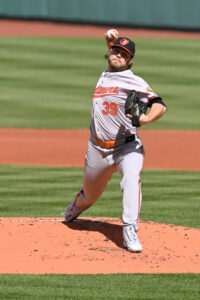 Burnes, 29, has been one of the best pitchers in the majors in recent years. He spent most of his career with the Brewers but came to the O’s via an offseason trade. From 2020 to 2023, Burnes logged over 600 innings with Milwaukee, posting a 2.86 ERA in that time. He struck out 30.9% of batters faced, limited walks to a 7.1% clip and kept balls in play on the ground at a rate of 46.4%. He made the All-Star team in three straight years from 2021 to 2023 and won the National League Cy Young in the first season of that stretch.
Since coming over to the American League, he has largely continued in the same manner. Through 19 starts as an Oriole, he has a 2.43 ERA in 118 2/3 innings. His 23.3% strikeout rate is down relative to his past work but he’s also lowered his walk rate to 5.3% and increased his ground ball rate to 49.4%.
It was a bit questionable as to whether Burnes would be able to participate in the game as his wife recently gave birth to twins, but she apparently signed off on him appearing in the game, per Britt Ghiroli of The Athletic on X. Rangers manager Bruce Bochy is the skipper for the American League and mentioned the success of the O’s as well as the track record of Burnes as factors leading to his decision, per Jake Rill of MLB.com on X.
Burnes is in his final season of arbitration and will be a free agent at season’s end. He placed second on the most recent edition of the MLBTR Free Agent Power Rankings, trailing only Juan Soto of the Yankees.
2024-25 MLB Free Agent Power Rankings
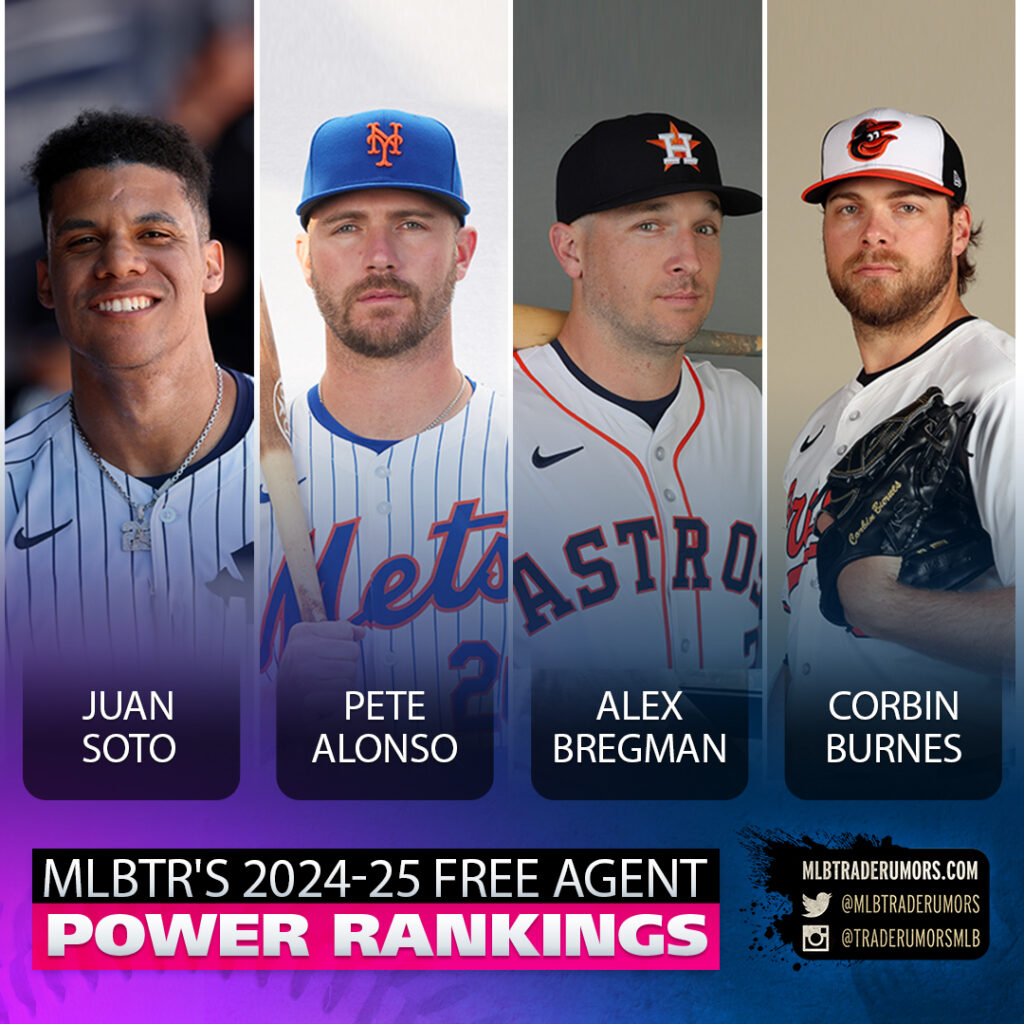
The season is underway, which makes this a good time to look ahead to next winter with the first installment of the 2024-25 MLB Free Agent Power Rankings! It’s an annual series here at MLBTR, wherein we try to rank the upcoming class of free agents by measure of their estimated earning power.
MLBTR will take periodic looks at the top of the class from now through the remainder of the season. Season performance will start to influence these rankings, but two to three weeks into the season, it’s not a huge factor. By the end time the season draws to a close, however, 2024 results will weigh heavily into the rankings. A strong platform year can elevate any player’s status in free agency, just as a poor walk year can tank their stock.
Our power rankings are compiled collaboratively. I worked with colleagues Anthony Franco and Darragh McDonald as well as MLBTR founder and owner Tim Dierkes for the first installment of this year’s rankings. Players with opt-out clauses and player options are included, even if they’ve previously given indications they may forgo the opportunity to return to the market.
Statistics are up-to-date through April 12.
* denotes players who are ineligible for a qualifying offer
1. Juan Soto, OF, Yankees
Were it not for Shohei Ohtani reaching the open market a year sooner, Soto might have a claim to the most coveted free agent ever. Because he skyrocketed through the minor leagues and took MLB by storm beginning at age 19, Soto’s final year of arbitration eligibility comes in just his age-25 campaign. He’ll play the entirety of his first free agent season at 26 years of age. For some context, Aaron Judge — who re-signed on a nine-year, $360MM contract with the Yankees upon reaching free agency — debuted at 24 and had 773 big league plate appearances heading into his own age-26 season.
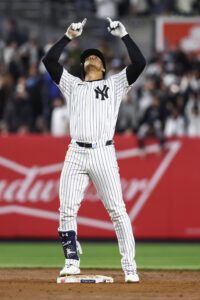
Soto is a freak of nature who was one of MLB’s best hitters at an age when most top prospects are still in college or just entering the low minors. He hit .292/.406/.517 as a teenage rookie in 2018, and his preternatural plate discipline, bat-to-ball skills and raw power have only improved since. Through more than 3400 career plate appearances, Soto has walked at a staggering 18.9% clip and struck out in just 17% of his plate appearances. He entered the current season with 160 home runs, and while he’s never had a 40-homer campaign before, a move to Yankee Stadium and its notorious short porch in right field could help him get to 200 long balls before he turns 26.
Since his 2018 debut, Soto leads qualified big leaguers with a mammoth .422 on-base percentage. Mike Trout‘s .415 mark ranks second, and Freddie Freeman (.402) is the only other hitter north of .400. Soto is “only” 16th in home runs in that time, but his 154 wRC+ — which indicates he’s been 54% better than an average hitter after weighting for home park and league run-scoring environment — is tied with Mookie Betts for fourth-best in baseball, trailing only Trout, Yordan Alvarez and Judge.
If there’s one wart to Soto’s game, it’s that he’s limited to the outfield corners and isn’t regarded as an especially strong defender. He’s had seasons with positive grades from both Defensive Runs Saved and Outs Above Average, but on the whole he has negative marks from both in his career — both in left field and in right field. That said, he’s also only had two truly *bad* seasons per both of those metrics, and taken in totality, he sits around -2 DRS and -4 OAA per season. Obviously, that’s not great, but it’s also not exactly egregious. And given the otherworldly contributions he makes at the plate, playing a slightly below-average left or right field is more than an even trade-off.
Soto famously rejected a 14-year, $440MM extension offer from the Nationals before being traded to the Padres. Rejecting an offer of that magnitude led to plenty of jaws dropping, but when considering that it included his three final arbitration seasons and 11 free agent years, it’s not as jarring as it seems at first blush. Soto wound up earning $71.1MM over those three seasons, meaning he really “only” needs to earn $370MM or so in free agency to come out ahead. There’s already talk of a potential $500MM free-agent deal for Soto. Barring a catastrophic injury, he’ll likely come out ahead in that bet on himself. He’s the clear No. 1 free agent on next year’s market and will be one of the most sought-after free agents not only in baseball history but in all of professional sports.
2. Corbin Burnes, RHP, Orioles
Since his 2020 breakout, Burnes ranks fifth in the majors in innings pitched, eighth in strikeout rate, fourth in K-BB%, second in opponents’ batting average, fifth in ERA, second in FIP and third in SIERA. Put another way — regardless of which metric you prefer to judge pitchers, Burnes ranks in the top-eight in just about any metric. He’s a bona fide No. 1 starter — very arguably one of the five best pitchers the sport has to offer at the moment.
Detractors might point to Burnes’ 2023 numbers as the potential beginning of a decline. His 3.39 ERA, 25.5% strikeout rate and 8.4% walk rate were all more “very good” than elite. Through three starts in Baltimore, he’s trending back in the other direction. Small sample caveats obviously apply, but Burnes has opened his first season with his new club on a tear, tossing 18 2/3 innings of 1.93 ERA ball with a 28.6% strikeout rate and superlative 2.9% walk rate. His velocity is as strong as ever; his devastating cutter is averaging 95.1 mph — an exact match for his career-best mark, set back in 2021 when he won the National League Cy Young Award.
Burnes won’t turn 30 until October. He’s never been on the injured list due to an arm issue. His only IL stints were due to an oblique strain and Covid. Burnes might not be quite as dominant as he was when he was striking out more than 35% of his opponents from 2020-21, but he’s a workhorse ace and former Cy Young winner who still ranks among the game’s elite arms. Gerrit Cole‘s nine-year deal with the Yankees began in his age-29 season. Teams have generally been wary of committing to long-term deals for pitchers that span beyond their age-37 season (though there are exceptions, as evidenced by Jacob deGrom‘s current five-year deal).
Burnes is dominant enough that he could prove to be an exception, but even if he’s limited to eight-year terms, he’ll have a chance at surpassing a $250MM guarantee. With a big enough year, nine years and/or $300MM+ could be on the table.
3. Alex Bregman, 3B, Astros
Bregman would’ve hit free agency in the 2022-23 offseason were it not for a five-year, $100MM extension he signed upon first reaching arbitration. That locked in his first — but very likely not his last — nine-figure contract and still allowed him to hit the open market at a fairly standard point, heading into his age-31 season.
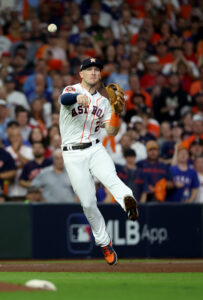
There’s perhaps a perception that Bregman is declining or trending in the wrong direction, as his production has dipped from the MVP-caliber levels he displayed in 2018-19. He also doesn’t have the most appealing batted-ball profile, which we saw work to Cody Bellinger‘s detriment in free agency this offseason. Bregman’s 88.6 mph average exit velocity and 38.2% hard-hit rate in 2023 were both pretty pedestrian marks.
One key difference between Bregman and Bellinger, however, is that Bregman has never had gaudy Statcast numbers — even when he was putting up the type of numbers that led to consecutive All-Star nods and top-five MVP finishes in 2018-19. Bellinger, on the other hand, previously had top-of-the-scale exit velo and hard-hit numbers, leading to more questions about whether his resurgent 2023 showing was truly sustainable.
Bregman has always possessed sensational contact skills. He’s never fanned at higher than a 15.5% clip in a full season. The former No. 2 overall draft pick legitimately possesses one of the best hit tools in all of baseball. He couples that with elite plate discipline, too; Bregman has walked at a 12.6% clip in his career and a 13.7% rate dating back to 2018. He’s walked more than he’s struck out in four individual seasons and in the aggregate from 2018-24. His 41-homer campaign from 2019 looks like a clear outlier in what’s now known as the juiced-ball season, but Bregman still popped 48 homers from 2022-23.
Some may question how much power he can manufacture following a potential change of scenery. Minute Maid Park’s short porch in left field — the Crawford Boxes — seems practically tailor-made for Bregman’s fly-ball heavy, pull-side approach. (Or, perhaps alternatively, he reworked his swing to take advantage of that quirk in his home park.)
There’s little doubting that he’s had some home runs that are Crawford Box specials over the years, but a look at Bregman’s career splits don’t paint the picture of someone who is a product of his hitter-friendly home environment. Bregman’s a career .273/.377/.473 hitter in Houston and a .275/.368/.498 hitter on the road. He’s actually hit nine more homers on the road in his career despite having only 64 more plate appearances away from Minute Maid Park than at home.
Defensively, Bregman isn’t an elite third baseman, but he’s posted average or better marks in DRS and OAA nearly every season of his career. There’s no reason to expect a position change in the near future, but if he does need to move off the hot corner at some point, a shift to second base, left field or first base seems feasible for the former shortstop. And as someone who’s been 36% better than average at the plate in his career — and 25% better dating back to 2020 — he has more than enough bat to profile as a regular anywhere on the diamond.
A seven- or eight-year deal seems plausible in free agency, and there’s always the chance that a luxury-paying team will gauge his interest in a longer-term deal with a non-premium AAV in order to tamp down the CBT hit. A deal north of $200MM seems plausible for Bregman. The Astros have said at multiple points in the past they’ll make an extension offer at some point, but there haven’t been serious talks on that front yet and Bregman can justifiably seek the type of long-term pact that owner Jim Crane has completely avoided over the years.
4. Pete Alonso, 1B, Mets
The Polar Bear is raw personified, bashing 40-plus homers on the regular since his 2019 debut. Alonso has not only established himself as one of baseball’s premier sluggers — he’s done so while maintaining a strikeout rate that’s lower than the league average. At a time when many prodigious sluggers are comfortable selling out for power, Alonso has the type of easy, plus-plus power that doesn’t require him to do so. He’s fanned in just 20.7% of his plate appearances dating back to 2021 and popped the fifth-most long balls in baseball along the way. He trails only Aaron Judge, Matt Olson, Kyle Schwarber and Shohei Ohtani in that span. All four of those sluggers have whiffed at higher rates than Alonso.
Alonso’s extreme fly-ball approach does lead to a glut of pop-ups and some low BABIPs — though last year’s bottom-of-the-barrel .205 average on balls in play (and .217 average overall) were likely outliers. He’s a career .250 hitter who walks at around a 10% clip — enough to boost his OBP into the .340 range most seasons. Paired with his prodigious power, that’s plenty to make Alonso one of the most feared hitters in the National League.
After debuting as a 24-year-old back in 2019, Alonso is on pace to hit the open market heading into his age-30 season. He’s not unusually young like Soto but is reaching free agency at the same point that’s seen plenty of sluggers get paid. He’ll be two years younger than Freddie Freeman and Paul Goldschmidt were when signing their current contracts (Freeman’s in free agency, Goldschmidt’s as an extension). That pair of contracts pays those star first basemen $26-27MM annually.
Alonso isn’t as good a pure hitter as either Freeman or Goldschmidt, nor is he the same defensively. He’s consistently graded out as a sub-par defender, per OAA, and a roughly average first baseman by measure of DRS. But Alonso is younger, has more power than either of those two former MVPs, and has the benefit of Mets owner Steve Cohen likely being extra-motivated to keep his franchise slugger. It wouldn’t be at all surprising to see Alonso follow a similar path to Judge. That’s not to say he’ll sign a $360MM deal — he won’t — but he could reject a qualifying offer, explore what the market has to offer, and then take the top offer back to the Mets and effectively ask that they match it.
A six-year deal would run through Alonso’s age-35 season. Seven years would take him through age-36. Either of those terms feels plausible, as does an AAV in the vicinity of — or even slightly in excess of — the Freeman and Goldschmidt deals.
5. Blake Snell, LHP, Giants*
Will the second time prove to be a charm for Snell? The $200MM+ contract he sought in free agency this past winter never materialized, likely due to a confluence of factors. Beyond the sheer scope of his ask, Snell hit free agency at a time when roughly half the league was experiencing uncertainty regarding its long-term television status. We’re also slated for a record number of CBT payors, including several big spenders — Yankees, Dodgers, Mets — currently paying a 110% tax that made a long-term deal for Snell wholly unpalatable. Further yet, recent high-profile spenders like the Padres, Rangers, Red Sox, Blue Jays and Mets all took steps back in terms of their aggression.
None of that even touches on Snell’s command troubles, though his penchant for issuing free passes hasn’t stopped him from dominating opposing lineups over the past several seasons. Snell is now a two-time Cy Young winner — one of just 22 in MLB history — who’ll spend the 2024 season pitching in an even more spacious home park than he enjoyed in San Diego.
Snell will turn 32 in the coming offseason, so he won’t have age on his side. But he already rejected a qualifying offer from the Padres, meaning he’s ineligible to receive another one at any point in his career. That lack of draft pick compensation will be a bonus, and it’s possible next offseason’s market will bear more favorable circumstances. If the Mets, Red Sox, Rangers or Padres begin spending again and if even a couple of CBT payors are suddenly in position to dip back under the threshold, Snell could find more suitors this time around.
He’s not a lock to hit the market, of course. Snell’s two-year $62MM deal with the Giants allows him to opt out at season’s end, leaving a $30MM player option on the table. So long as he remains healthy and effective, he’ll be a lock to do so. The left-hander ranks 11th in ERA (3.05) and seventh in strikeout rate (31.7%) among qualified big league starters dating back to the 2018 season. He’s had a couple rough seasons along the way, but the broader body of work is genuinely excellent.
As previously mentioned, teams are typically wary of committing beyond a starting pitcher’s age-37 season. For Snell, hitting the market at 32, that’d make it tough to secure a contract lengthier than six years. A six-year deal checking in at $28MM or more would allow Snell to still claim that he topped $200MM in free agent earnings (when combined with his current $32MM in earnings). That type of offer seemingly wasn’t there this time around, but if Snell turns in a third straight dominant season — he had a 2.72 ERA and 31.7% strikeout rate in 2022-23 — someone’s likely going to pony up with a big offer.
6. Max Fried, LHP, Braves
Few starters in baseball have been as consistent as Fried on a year-to-year basis. The former No. 7 overall draft pick has turned in a sub-3.00 ERA in three of the past four seasons, with the lone exception being a 3.04 mark in 2021. Fried’s strikeout rate has fallen between 22.3% and 25.7% for five straight seasons. His walk rates in that time have landed between 4.4% and 8.5% (though that 8.5% came in 2020’s short season and is something of an outlier, he’s been under 7% in every other full season). His ground-ball rate sits between 51.2% and 57.7% each year.
Fried isn’t an overpowering ace in the sense that he hits triple digits with his heater and strikes out a third of his opponents. He has above-average but not elite velocity, leading to average or slightly better strikeout rates. However, Fried has plus command and ground-ball tendencies, and he dodges hard contact at consistently excellent levels.
Prior to the 2023 season, Fried was also quite durable, ranking 19th in the majors in innings pitched and 21st in games started. That doesn’t include his 10 postseason starts (and four relief outings) — a total of 58 2/3 additional innings. A forearm strain suffered in early May last year, however, knocked Fried out of action for about three months. Though he was characteristically excellent when health — 2.55 ERA, 3.14 FIP, 3.38 SIERA — Fried was limited to 14 starts and 77 2/3 innings.
Proving that forearm strain is behind him will be paramount to his free agent platform. Another 30-plus starts won’t completely eliminate any trepidation stemming from last year’s injury, but another season with considerable missed time — particularly due to an arm injury of any nature — would create cause for clear concern.
Fried has been more durable than Carlos Rodon (six years, $162MM with the Yankees) and has a far lengthier track record of success. He and his reps will likely take aim at toppling that mark in free agency. Braves fans would surely like to see an extension, but it hasn’t happened in the past, and Fried is plenty justified in asking for the type of long-term deal and semi-premium AAV that the Braves have steered clear of in recent years. He seems likelier to follow Freddie Freeman and Dansby Swanson out the door than he does to receive an extension offer that’s commensurate with his market value.
7. Cody Bellinger, OF/1B, Cubs*
Bellinger didn’t get the mega-deal he sought this past offseason. Excellent as his 2023 campaign was, there were surely teams wary of his woeful 2021-22 showing on the heels of shoulder surgery. Beyond that, his exit velocity, hard-hit rate and other batted-ball metrics were decidedly pedestrian.
Agent Scott Boras has pointed to Bellinger’s massive decline in strikeout rate as a factor, painting his client as a hitter who adopted a two-strike approach more focused on putting the ball in play than on doing massive damage. There’s surely a blend of truth and garden-variety agent spin woven into that defense.
A repeat of his 2023 production — or anything close to it — would strengthen Bellinger’s case immensely. It’d further distance him from that awful 2021-22 showing, lending further credence to the notion that injuries played a significant role in his perceived decline. And whether Bellinger replicates his numbers by returning to his maximum-damage approach or simply proves that his newer brand of more well-rounded, low-strikeout offense is sustainable, either approach should prove lucrative.
Even though an opt-out would trigger Bellinger’s third trip to free agency, he’ll still be heading into just his age-29 season next year. He can still play a fine center field (or corner outfield, presumably) and remains a good option at first base as well. There’s plenty of defensive and baserunning value to supplement his bat.
Bellinger will pocket $30MM in the first season of his three-year, $80MM deal with the Cubs, meaning he’ll be opting out from two years and $50MM. That seems likely, barring a 2021-22-esque collapse or a massive injury. Because of his age, that immense long-term deal that eluded him this past offseason still feels plausible. That he can no longer be saddled with a qualifying offer — players can only receive one in their career, and he rejected one last offseason — only strengthens his case.
8. Willy Adames, SS, Brewers
Adames joins Javier Baez, Trevor Story and Dansby Swanson as the latest in a line of high-end shortstops to reach free agency heading into his age-29 season. That trio signed for respective guarantees of $140MM (Tigers), $140MM (Red Sox) and $177MM (Cubs). Adames doesn’t have the individual accolades that group possesses. He’s never been an All-Star like each of that trio has. He hasn’t won Gold Gloves like Swanson and Baez. He hasn’t won the Silver Sluggers that Story has.
Yet despite the lack of hardware, Adames has a strong claim to be valued in similar fashion. It’s true that he had a down year at the plate in 2023, but that was in part driven by a career-low .250 average on balls in play. Since 2020, Adames is a .240/.316/.450 hitter. He’s been 8% better than average overall, by measure of wRC+, and he peaked with a 121 wRC+ (21% better than average) from 2020-21. Adames fanned at a sky-high 36.1% back in 2020 but has reduced that mark considerably; over his past 1300 plate appearances he’s punched out at a worse-than-average but far more manageable 26.2% rate. He struggled badly against lefties early in his career (despite being a right-handed hitter) but has improved against them in recent seasons.
From 2021-23, Adames averaged 26.67 homers per season — topping out at 31 round-trippers in 2022. He’s walked at an above-average but not elite 9.4% rate in his career — including a personal-best 11.1% in 2023. Adames has long been touted as having plus defensive tools, but his execution and consistency were lackluster early on, leading to some middling grades. Over the past two seasons he’s been outstanding, tallying 17 DRS and a flat-out elite 26 OAA.
If Adames can bounce back from last year’s .217/.310/.407 line and turn in something closer to the .251/.319/.471 slash he logged from 2020-22, he’ll have an easy case to be paid comparably to Story, Baez and Swanson. He’s likely to hit the market on the heels of four straight 20-homer campaigns. He’s a plus defender. He’s relatively young. He’s not the most consistent hitter on a year-over-year basis, but that was true of Baez, Story and Swanson. They all got paid. Adames will also draw bonus points for his gregarious personality and leadership skills. Both the Rays and Brewers have lauded him in that regard, and the primary reason Tampa Bay traded him — Wander Franco‘s looming emergence — now looks regrettable (even if getting Drew Rasmussen in return for him has yielded plenty of value).
9. Ha-Seong Kim, SS/2B, Padres
Kim came to MLB with great fanfare as a 25-year-old KBO superstar who’d been posted by the Kiwoom Heroes. He signed a four-year, $28MM deal with San Diego that contains a mutual option for a fifth season. Mutual options are generally accounting measures and are almost never exercised by both parties. In Kim’s instance, it’s a no-brainer to decline his end of the option and hit free agency in search of a deal that could pay him three to four times his original MLB guarantee.
While Kim’s rookie season didn’t live up to the hype, he’s since acclimated to MLB quite nicely. Now 28, he posted a .256/.338/.391 batting line (109 wRC+) from 2022-23. His power has increased in each MLB season, resulting in a career-high 17 homers last year, and he swiped a hefty 38 bases in 47 tries for the Friars last season. Kim’s walk rate has climbed every MLB season as well, topping out at a robust 12% in 2023, and after fanning in 23.8% of his plate appearances as a rookie he’s dropped that mark to 18.5% in 2022-23.
Decent power, strong on-base skills and plus speed give Kim plenty of appeal, but his glove is perhaps his greatest selling point. Kim is an elite defensive infielder capable of handling any of second base, shortstop or third base. He won his first Gold Glove for his play at second base last season, though that’s unlikely to be his last. (He also won a Gold Glove in his final three seasons of KBO play.)
There’s no defensive metric that pegs Kim below average at any of those three positions. He’s logged more than 1000 innings at second base, nearly 600 at third base and more than 1600 at shortstop. Defensive Runs Saved, Outs Above Average and Ultimate Zone Rating agree that he’s excellent at all three. The Padres signed Xander Bogaerts to an 11-year contract and moved him to second base just one year later despite Bogaerts posting decent numbers at short in 2023. Kim has racked up 23 DRS and 10 OAA in his 1600+ innings at shortstop. He has fluid infield actions, sure hands and is a regular source of highlight-reel defense.
Kim doesn’t have a strong batted-ball profile, but it’s not out of the question that he could crack 20 homers, walk in more than 10% of his plate appearances, swipe 40 bags and play Gold Glove defense this season. He’ll play all of the 2025 season at 29 years old. A nine-figure contract isn’t out of the question.
10. Jordan Montgomery, LHP, Diamondbacks
As the old adage goes, if at first you don’t succeed — hire a new agent and try again. Montgomery languished in free agency all winter, never landing the six- or seven-year contract he was seeking. He took a one-year, $25MM deal with the D-backs that’ll afford him a player option at $20-25MM basically just for staying healthy. The contract wasn’t finalized before Opening Day, meaning Montgomery can’t receive a qualifying offer this winter. Barring a major injury, he’ll likely decline that player option and return to the market.
Montgomery, 31, has made at least 30 starts in each of the past three seasons. In that time, he’s pitched 524 1/3 innings of 3.48 ERA ball with a 22.5% strikeout rate, a 6.2% walk rate, a 44.5% ground-ball rate and just 1.00 HR/9. His 2023 campaign was the finest of his career, featuring a personal-best 188 2/3 innings of 3.20 ERA ball, plus another 31 innings of 2.90 ERA ball in the postseason — a strong performance that helped push the Rangers to their first-ever World Series title.
Though he doesn’t miss bats at an elite level, Montgomery is better than average in just about every meaningful category for starting pitchers and has been a workhorse since his 2020 return from Tommy John surgery. We at MLBTR erred in thinking a six-year deal was attainable heading into the 2023-24 offseason. Another typical Montgomery season could put him in position for a strong four-year or perhaps a five-year deal at a lighter AAV than we predicted last offseason. He should be able to top teammate Eduardo Rodriguez‘s four-year, $80MM contract — and a deal in the $100-110MM range over five years doesn’t feel out of reach if Monty continues at his recent trajectory.
Honorable Mentions (listed alphabetically): Walker Buehler, Matt Chapman*, Gerrit Cole^, Jack Flaherty, Paul Goldschmidt, Teoscar Hernandez, Rhys Hoskins, Frankie Montas, Tyler O’Neill, Luis Severino, Max Scherzer*, Gleyber Torres, Justin Verlander*, Christian Walker
^=Cole is currently on the 60-day IL and expected to be out into June. He can opt out of the remaining four years and $144MM on his contract at season’s end, though if he signals his intent to do so, the Yankees can override his opt-out by tacking on a tenth year at another $36MM. Because Cole is currently injured and because the Yankees can effectively veto his opt-out, we’re not including him on the initial version of our rankings. If, as the season wears on, he’s pitching well enough to trigger that opt-out and there’s talk of the Yankees allowing him to walk, he could land on future installments of the list.
Quick Hits: Roster Sizes, Phillies, Yankees, Burnes
Each offseason veteran players with experience at the upper levels of the minor leagues and in the majors routinely qualify for minor league free agency and test the open market in search of fresh minor league agreements with clubs willing to offer them an invite to major league Spring Training. Such arrangements have been increasingly difficult to come by this winter, however, and Baseball America’s J.J. Cooper recently explored a significant reason why.
As noted by Cooper, the new collective bargaining agreement between MLB and minor league players gave the league the right to limit the total number of domestic minor league players to just 165 ahead of the 2024 season, with a limit of 175 players during the offseason. Cooper notes that reduced figure slashes a total of 450 roster spots around the league or 15 per club. That limited roster flexibility gives clubs far less opportunity to offer minor league free agents deals that have long been considered “no-risk fliers,” as now clubs will often times be forced with potentially cutting a younger minor league player early in their professional career to make room for an interesting veteran journeyman.
While minor league deals are typically regarded as low-risk signings that are relatively unlikely to result in a given player making an impact at the big league level, one needn’t look very hard to find examples of players heading to camp on minor league deals only to provide considerable value to that club throughout the year. Dodgers outfielder Jason Heyward and Rangers outfielder Travis Jankowski are two examples of veteran hitters who came into camp on minor league deals last year, earned a spot on the Opening Day roster, and played well enough to earn a big-league deal with their respective clubs after returning to the open market this winter.
More from around Major League Baseball…
- The Phillies have long been known to be on the hunt for another relief arm after losing veteran closer Craig Kimbrel in free agency this past winter, with the likes of Phil Maton and Jakob Junis reportedly on the club’s radar prior to the pair signing with the Rays and Brewers, respectively. That being said, Scott Lauber of the Philadelphia Inquirer indicated this afternoon that the club is unlikely to pursue further bullpen additions this winter after adding depth starter Spencer Turnbull on a big league deal earlier today. While Turnbull has options remaining, he has enough service time at this point in his career to a refuse a minor league assignment. That leaves Philadelphia with minimal flexibility in their bullpen which would only be further reduced by the addition of another veteran arm. According to Lauber, six arms are all but locked into the club’s relief mix already, leaving just two spots for a group that includes non-optionable hurlers Turnbull, Connor Brogdon, Dylan Covey as well as optionable pieces like Yunior Marte, Kolby Allard, and Michael Rucker.
- USA Today’s Bob Nightengale this morning indicated that the Yankees discussed right-hander Corbin Burnes with the Brewers prior to the ace being traded to their division rival in Baltimore, though the club “rebuffed” Milwaukee in talks once the club requested outfield prospect Spencer Jones in return for Burnes’s services. The 22-year-old Jones was the club’s first-round pick in the 2022 draft and has generally impressed to this point in his minor league career, though he struggled with a .261/.333/.406 in a 17-game stint at the Double-A level last year. Previous reporting indicated that New York was unwilling to include Jones in a package for White Sox right-hander Dylan Cease, so it’s not necessarily a surprise that the club also passed on parting with the youngster for a rental arm like Burnes.
MLBTR Podcast: The Sale of the Orioles, Corbin Burnes Traded and Bobby Witt Jr. Extended
The latest episode of the MLB Trade Rumors Podcast is now live on Spotify, Apple Podcasts, and wherever you get your podcasts! Make sure you subscribe as well! You can also use the player at this link to listen, if you don’t use Spotify or Apple for podcasts.
This week, host Darragh McDonald is joined by Steve Adams of MLB Trade Rumors to discuss…
- The sale of the Orioles (2:50)
- The Orioles acquire Corbin Burnes from the Brewers (12:05)
- The Royals give Bobby Witt Jr. an 11-year extension (26:50)
Check out our past episodes!
- The Jorge Polanco Trade, Rhys Hoskins and the Blue Jays’ Plans – listen here
- The Broadcasting Landscape, Josh Hader and the Relief Market – listen here
- The Cubs’ Activity, Marcus Stroman And Jordan Hicks – listen here
The podcast intro and outro song “So Long” is provided courtesy of the band Showoff. Check out their Facebook page here!
Orioles Notes: Burnes, Cease, Hicks
The Orioles completed one of the offseason’s biggest trades in landing Corbin Burnes from the Brewers earlier this week, and it was a move that GM Mike Elias said the organization had been “talking about…since when the World Series ended.” It was heavily expected that the O’s would be looking for significant rotation help during the winter, and Elias shared some details on the search when speaking with reporters (including MASNsports.com’s Roch Kubatko and MLB.com’s Jake Rill) on a conference call in the aftermath of the trade.
“Corbin Burnes is exactly what we needed. We were in a dogged pursuit of him the entire offseason,” Elias said. “Obviously, there were other starting pitchers who we pursued, but it’s harder to have somebody higher than Corbin Burnes on your wish list. It’s a tremendous impact.”
Milwaukee’s side of the deal involved two big league-ready young players (Joey Ortiz and DL Hall) with top-100 prospect pedigrees, as well as the Orioles’ Competitive Balance Round draft pick (currently 34th overall in the 2024 draft order). It was a noteworthy amount to give up even for a team as rich in minor league depth as the O’s, but Elias felt it was worth the plunge.
“We’re giving up a lot of long-term talent and also a couple of players that were going to contribute to the 2024 Orioles,” Elias said. “So I mean, this is a risky move, but it lined up for both sides. We weren’t going to force it necessarily, but our wish list was a rotation upgrade and I certainly think that the Cy Young winner and with his body of work qualifies as that. We couldn’t have found a better upgrade and now we just have to go play the games.”
While the Orioles’ offer was enough to sway the Brewers, it apparently wasn’t enough to get the White Sox to move Dylan Cease, another pitcher known to be on Baltimore’s list of potential targets. USA Today’s Bob Nightengale reports that the O’s “offered basically the same package” to White Sox, as well as an unknown additional player. The larger size of the offer probably reflects the fact that Cease is arbitration-controlled through the 2025 season while Burnes is only controlled through 2024, yet it still wasn’t enough to meet Chicago’s asking price for Cease’s services.
Past reports have suggested that the Sox have a particular interest in Jordan Westburg, Heston Kjerstad and Colton Cowser, among many of Baltimore’s top prospects. It can be assumed that none of these blue-chippers weren’t the mystery fourth part of the Orioles’ offer to Chicago, so speculatively, it could be that the White Sox asked for one of the trio as the top position-player piece instead of Ortiz. Considering that the Sox have reportedly been looking for additional pitching in other Cease-related trade talks with the Mariners and Reds, it could also be that the White Sox wanted a better pitcher included than Hall, or perhaps a pitcher as the fourth element if the Orioles had offered a position player.
These talks are again indicative of the very large price tag that the White Sox are demanding for Cease, which isn’t really surprising given how he is their biggest trade asset apart from Luis Robert. It also understandable why the Orioles ultimately pivoted from these talks with Chicago to closing the deal on Burnes, as Burnes provides a higher ceiling as a more consistent ace-level pitcher even if he comes with one less year of control than Cease.
Obviously some of this discussion is just conjecture since we don’t know exactly what the Orioles put on the table for Cease, yet it also speaks to the interesting juggling act Elias has been facing in determining how to put the best “final touch” on the AL East-winning roster. It can be assumed that pretty much every rival team has been asking about the top tier of names in Baltimore’s farm system in any trade talks, so Elias technically has the minor league depth to complete just about any deal, he naturally isn’t going to deplete that depth for just any pitcher.
Speaking of Kjerstad and Cowser, it wouldn’t be surprising to see either youngster play big roles in whatever success awaits the 2024 Orioles, though they’re part of a crowded outfield, first base, and DH picture that also includes Cedric Mullins, Anthony Santander, Austin Hays, Ryan Mountcastle, Ryan O’Hearn, and even more up-and-coming prospects in Coby Mayo and Kyle Stowers, among others. Even with all these options on hand, Nightengale reports that the O’s still had interest in bringing back Aaron Hicks before the veteran outfielder signed with the Angels earlier this week.
After an injury-plagued stint with the Yankees, Hicks revived his career after joining the Orioles last season, hitting .275/.381/.425 over 236 PA and acting as a veteran leader within the young clubhouse. Since the Yankees are still covering Hicks’ previous contract through the 2025 season, the outfielder was available on only a minimum MLB salary to any team this winter, giving him presumably a pretty wide range of suitors.
Though the Orioles are in a better position to contend than the Angels in 2024, it could be that Hicks simply felt he wouldn’t get as much playing time in Baltimore than he would in Los Angeles. Though the Angels have a fair amount of outfield options themselves, Mike Trout‘s injury history and the unproven big league track records of Mickey Moniak and Jo Adell leave more room for Hicks to become a lineup regular.
Orioles Acquire Corbin Burnes
The Orioles got their ace. Baltimore announced the acquisition of 2021 NL Cy Young winner Corbin Burnes from the Brewers for rookie infielder Joey Ortiz, left-hander DL Hall, and their 2024 Competitive Balance Round A draft pick (#34 overall). Milwaukee designated lefty Ethan Small for assignment to clear the necessary 40-man roster spot.
There’d been speculation as far back as last offseason about the possibility of the Orioles acquiring a top-end starting pitcher. Baltimore has a loaded farm system that has graduated plenty of young talent over the past two seasons. Most of that has been concentrated on the position player side, making it a natural fit for them to leverage that farm depth to bring in an impact starter.
Burnes certainly qualifies. He established himself in the Milwaukee rotation during the shortened 2020 campaign. The righty has finished in the top 10 in NL Cy Young balloting in each of the past four seasons. He won the award in ’21 thanks to an MLB-best 2.43 ERA across 167 innings. Burnes followed up with a National League-leading 243 strikeouts and a 2.94 ERA across 202 frames the following season.
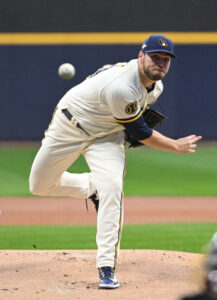
Last season was perhaps his least impressive showing since his 2020 breakout. Yet it could only be classified as a “down” year by Burnes’ immense standards. He remained a top-of-the-rotation pitcher, turning in a 3.39 ERA while logging 193 2/3 innings across 32 starts. His 25.5% strikeout rate was still a few points better than league average, as was his 12.2% swinging strike percentage. He finished eighth in Cy Young voting.
It wasn’t the same level of dominance that Burnes had shown in the preceding three years. He had fanned more than 30% of opponents with a swinging strike rate above 14% in every year from 2020-22. Burnes looked more like his old self down the stretch, however. He carried a 3.94 ERA and a 23.1% strikeout rate into the All-Star Break. In the second half, he fanned 28.6% of opponents while allowing only 2.71 earned runs per nine. Opposing hitters had a pitiful .187/.259/.294 slash line after the Midsummer Classic.
Going back to the start of 2020, Burnes has a 2.86 ERA over 105 appearances. He has punched out nearly 31% of batters faced against a modest 7.1% walk rate. Batters are hitting .197/.262/.308 in nearly 2500 trips to the plate. Neither left-handed nor righty-hitting opponents have had success against him. Outside of a two-week injured list stint early in 2021 because of a finger contusion, he hasn’t missed any time within the last three years.
Burnes is a true ace, one of the 5-10 best pitchers in baseball. He jumps to the top of a rotation that has suddenly gone from Baltimore’s biggest question to one of the higher-upside staffs in the league. Kyle Bradish slots in as the #2 arm after a breakout 2023 campaign in which he worked to a 2.83 ERA over 30 starts. Grayson Rodriguez looks to have turned a corner in the second half. The former top pitching prospect worked to a 4.35 ERA in his rookie season. After being tagged for a 7.35 ERA in his first 10 MLB outings, he turned in a 2.58 mark in his final 13 regular season starts (although he was hit hard in his lone playoff appearance).
That’s a potentially elite top three. Former All-Star John Means returned from Tommy John surgery late last season. Some residual elbow soreness kept him off the club’s playoff roster, but he’s expected to be fully healthy for 2024. If that’s true, he slots in well as the #4 starter. Dean Kremer would likely occupy the final spot, with Tyler Wells and Cole Irvin pushed into season-opening relief roles.
While the O’s could perhaps benefit from another depth addition or two, they’ve landed the true #1 that should represent the finishing move on an already great roster. Baltimore’s loaded young lineup and excellent relief corps led the team to 101 wins and an AL East title a year ago. The O’s lost star closer Félix Bautista to Tommy John surgery at year’s end but moved early in the offseason to sign Craig Kimbrel as a replacement.
It’s likely a one-year acquisition. Burnes will hit free agency next offseason shortly after his 30th birthday. With anything like his typical levels of production, he’ll be in line for a massive contract that could top eight years and $200-250MM. Burnes has been clear about his desire to test his value on the open market. Asked in December about the possibility of signing an extension if he were traded this winter, he said such an offer “would have to be something that would just absolutely blow you away to get you away from testing the free agent market.”
As recently as last week, O’s fans wouldn’t have been able to dream about the organization putting that kind of proposal on the table. Baltimore has dramatically scaled back spending since John Angelos assumed control of the franchise. On Tuesday, the Angelos family agreed to sell the organization to private equity mogul David Rubenstein. How that’ll impact the long-term payroll outlook remains to be seen, but Baltimore fans can be more optimistic about the chances of making significant investments once Rubenstein takes control of the franchise after the sale is approved by MLB in the coming months.
In any case, the primary focus is installing Burnes atop next year’s rotation. The three-time All-Star had settled on a $15.637MM contract with Milwaukee to avoid arbitration in his final season of eligibility. That makes him the highest-paid player on Baltimore’s roster and pushes their 2024 payroll projection to roughly $96MM, as calculated by Roster Resource. It’ll be their highest season-opening payroll since 2018 and is a marked increase over last year’s approximate $60MM mark.
Still, they’re in the bottom third of the league in projected spending. They’re making a push to defend a title in what is annually one of the sport’s most competitive divisions. Their only commitments beyond this season are a $1MM salary for Bautista and a handful of inexpensive option buyouts. Even if this takes them near their spending limit this offseason, they should have flexibility to further bolster the roster near the deadline.
That Baltimore did so without surrendering any of their true top-tier prospects reflects both the strength of their talent pipeline and the value ceiling for any player who is only one year from free agency. Ortiz and Hall are each highly-regarded young players but placed in the back half of Baltimore’s top 10 prospects at Baseball America.
Ortiz, 25, was a fourth-round pick in 2019 out of New Mexico State. He’d drawn praise for his defensive acumen dating back to his time in college. The right-handed hitter has been more productive at the plate than many amateur scouts anticipated. He owns a .286/.357/.449 slash in his minor league career. Ortiz posted even better numbers between the top two levels of the minors a year ago.
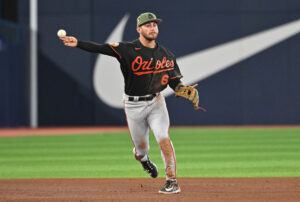
In 389 plate appearances in Norfolk, he hit .321/.378/.507 with nine homers and 30 doubles. Ortiz spent most of his time at shortstop while logging some action at both second and third base. Baltimore promoted him for the first time at the end of April. He nevertheless spent most of the season on optional assignment, appearing in only 15 big league contests. With Jackson Holliday and Gunnar Henderson as the projected left side infield for the foreseeable future, Ortiz would have had a hard time finding much playing time.
Baseball America’s scouting report rates Ortiz as a potential 70-grade (plus-plus) defensive shortstop. Assuming he’s not traded in the next six weeks, Willy Adames will open the season at shortstop. Milwaukee is likely to lose Adames to free agency next winter at the latest, though, leaving a clear path for Ortiz to emerge as the long-term answer. In the short term, he should battle Andruw Monasterio and Owen Miller for playing time at third base. If Monasterio or Miller warrant extended run at the hot corner, Ortiz is an alternative to Brice Turang at second. Turang is a gifted defender but struggled at the plate during his rookie year.
Hall, also 25, was a first-round pick out of a Georgia high school seven years ago. The 6’2″ southpaw has had the same general profile for his entire professional career: huge stuff with worrying control issues. Hall made his MLB debut in 2022 and has logged 33 big league innings over the past two seasons. He owns a 4.36 ERA with a 29% strikeout rate while working almost exclusively in relief.
His 7.6% walk percentage at the MLB level isn’t out of the ordinary. Hall has been a lot less consistent at throwing strikes in the minors, however. He handed out free passes to over 13% of batters faced in 49 innings at Norfolk a year ago, which is right in line with the 13.4% walk rate he owns in his minor league career.
That he also punched out nearly a third of batters faced in Triple-A hints at the excellent arsenal he owns. His fastball averaged nearly 96 MPH in his big league relief work. Hall also worked with a mid-80s slider and changeup while occasionally mixing in a curveball. BA’s scouting report notes that all four of those offerings could be plus or better.
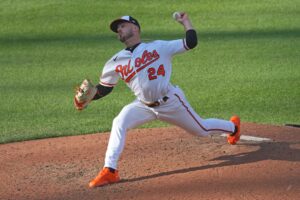
It’s top-of-the-rotation caliber stuff, but Hall’s strike-throwing has led many evaluators to project him as a high-octane reliever. Milwaukee could use him in either capacity. The Brewers have ample opportunity in the rotation behind new staff ace Freddy Peralta. Veteran lefty Wade Miley is a steadying presence. After that, Milwaukee could lean on any of Colin Rea, injury returnees Joe Ross and Aaron Ashby and prospects like Hall and Robert Gasser in the rotation.
Neither Ortiz nor Hall has reached one year of major league service. They’re each under club control for at least six seasons and three years away from arbitration. They’re the kind of high minors players that Milwaukee frequently targets. Their organizational philosophy, much like that of other small-market franchises like the Rays and Guardians, is to eschew traditional competitive windows while building the farm system by trading veterans as they get close to free agency.
GM Matt Arnold stated that trading Burnes isn’t the signal of a traditional rebuild (relayed by Curt Hogg of the Milwaukee Journal-Sentinel). Last week’s signing of Rhys Hoskins to a $34MM free agent deal that allows him to opt out after next season makes clear they’re not giving up on contending in a wide open NL Central. They’ve shown time and again they’ve nevertheless open to offers on most players to try to remain consistently competitive. After trading Josh Hader at the 2022 deadline led to discontent within the clubhouse, the front office suggested they were less inclined to make those kinds of trades during the season.
Between the shoulder injury that led Milwaukee to non-tender Brandon Woodruff and tonight’s move, the Brewers have subtracted their top two starters this offseason. Milwaukee’s payroll projection drops to around $102MM, per Roster Resource. That’s well below last year’s $118MM season-opening mark. That leaves open the possibility of Milwaukee backfilling the rotation in free agency. Arnold was noncommittal as to whether the team planned to reinvest their payroll savings (via Hogg).
Milwaukee should add a third notable young player with the draft choice they acquired. Milwaukee would have received a compensatory pick had they let Burnes depart in free agency — he’ll surely reject a qualifying offer — but that wouldn’t have been until 2025. Baltimore can make Burnes a QO next offseason (and will, unless he suffers a serious injury). As a revenue sharing recipient, they’d land a compensation pick after the first round in 2025 if he signs elsewhere for at least $50MM.
Ken Rosenthal of the Athletic first reported the Orioles were nearing a deal to acquire Burnes. Jon Heyman of the New York Post indicated the deal was agreed upon. ESPN’s Jeff Passan reported that Ortiz and Hall were among the pieces headed to the Brewers. Mark Feinsand of MLB.com reported the inclusion of the draft pick to complete the deal.
Images courtesy of USA Today Sports.
Latest On Red Sox Pitching, Trade Discussions
Craig Breslow‘s first offseason as Boston’s chief baseball officer has been marked by one notable free agent signing (Lucas Giolito‘s two-year, $38.5MM deal) and several significant trades, with the likes of Tyler O’Neill and Vaughn Grissom joining the roster and Chris Sale, Alex Verdugo, and Luis Urias all leaving Fenway Park. With more work on the pitching staff still to be done, the Boston Globe’s Alex Speier writes that the Red Sox could again turn to the trade market, though with some limitations on the scope of their talks.
Rather than pursue pitchers who are just under team control through the 2024 season (i.e. Corbin Burnes or Shane Bieber), Speier reports that the Sox are trying to acquire pitchers who have multiple years of control. Naturally, such hurler come at a high asking price in trade talks, yet Boston is unsurprisingly wary about parting ways with its top prospects. It doesn’t appear that any of Marcelo Mayer, Roman Anthony, or Kyle Teel are available in talks, though it isn’t clear if the Red Sox might be more open to dealing from the next tier down on their list of minor leaguers. Speier cites outfielder Miguel Bleis and second baseman Nick Yorke as among the several other Sox prospects who have drawn trade interest from rival clubs.
Between these relatively lesser prospects and other potential younger trade chips on the big league roster, the Red Sox might be able to swing some kind of deal for a more proven upgrade, whether in the rotation or perhaps even somewhere else on the roster. However, as Speier writes, “there’s little sense they’ll push in the chips to land an established top-of-the-rotation starter either via trade or free agency. Further additions appear more likely in the middle or back of the rotation to improve depth and reliability.”
This isn’t markedly different from past reports about Boston’s offseason plans, though the Sox were at least somewhat engaged on enough big-ticket names (Yoshinobu Yamamoto, Jordan Montgomery, Blake Snell) to create the impression that the team was willing to splurge in the right circumstance. Even with Montgomery and Snell still unsigned, it doesn’t look like the Red Sox will emerge as a real suitor unless either starter drops his asking price — though in that situation, one would imagine a lot of other clubs might also step up their pursuits.
One of the lingering questions of Boston’s offseason is how much Breslow has been authorized to spend, considering that some level of payroll limitation appears to be in place. The Sox currently have approximately $177.5MM on the books for 2024 according to Roster Resource, so they’re pretty close to matching their $181.2MM Opening Day payroll from 2023. That figure from last year ranked 12th in all of baseball, the first time in the 21st century that the Red Sox weren’t at least in the top ten in Opening Day spending.
This relative hesitation towards larger spending has manifested itself not only in the lack of movement on Montgomery or Snell, but also in Boston’s pursuit of Shota Imanaga. Granted, it appears as though the league as a whole perhaps had some concerns over Imanaga’s viability as a Major League starter, given that his four-year, $53MM deal with the Cubs fell below industry expectations. However, Imanaga’s contract could become a five-year, $80MM pact if the Cubs exercise a club option for 2028, and they’ll have to make that decision following the 2025 season and 2026 seasons or else Imanaga can trigger an opt-out clause.
The Red Sox also had interest in a more creative deal for Imanaga, but Speier reports that their offer included only two guaranteed years “with the potential for two additional vesting years.” Imanaga will earn $23MM ($22MM in salary and a $1MM signing bonus) over his first two seasons in with the Cubs and Speier writes that Boston’s offer paid him more than that $23MM amount through 2025, though it isn’t surprising to see why Imanaga decided to take the Cubs’ offer.
There’s still plenty of offseason left for Breslow to make more moves, and an argument could be that made that the Red Sox roster is already looking better than it did in 2023. That said, simply being better doesn’t necessarily translate to a team capable of contending for a championship or even a playoff berth, and patience is running thin amongst the fanbase after consecutive last-place finishes in the AL East.