
Poll: Who Will Sign Jake Arrieta?
Jake Arrieta is one of four major free agent starting pitchers who seems destined to sign in the new year. Arrieta’s agent, Scott Boras, has a long history of waiting out the market. Here’s a list of free agent contracts signed by Boras clients in the last decade in January, February, or March:
- Prince Fielder – $214MM (Jan 2012)
- Max Scherzer – $210MM (Jan 2015)
- Mark Teixeira – $180MM (Jan 2009)
- Chris Davis – $161MM (Jan 2016)
- Matt Holliday – $120MM (Jan 2010)
- Wei-Yin Chen – $80MM (Jan 2016)
- Adrian Beltre – $80MM (Jan 2011)
- J.D. Drew – $70MM (Feb 2007)
- Derek Lowe – $60MM (Jan 2009)
- Michael Bourn – $48MM (Feb 2013)
- Manny Ramirez – $45MM (Mar 2009)
- Oliver Perez – $36MM (Feb 2009)
- Rafael Soriano – $35MM (Jan 2011)
- Kyle Lohse – $33MM (Mar 2013)
- Denard Span – $31MM (Jan 2016)
Keep in mind, however, that not all of these contracts met expectations. We ranked Arrieta fourth on our list, with a prediction of four years, $100MM that I’m guessing Boras would have said was way low. I think Arrieta can still get a contract in that range. But from which team?
The Cubs seem more interested in Yu Darvish than in bringing Arrieta back, but it’s reasonable to keep them in the mix for Jake. Jon Heyman of FanRag Sports has linked the Nationals to Arrieta, and that’s certainly a team that was involved on many of the above-listed Boras free agents. A source speaking to Chelsea Janes of the Washington Post called the team’s interest in Arrieta “tepid.” Heyman has also named the Phillies, though Inquirer beat writer Matt Gelb doesn’t see that as likely either. The Astros, Blue Jays, Rockies, Rangers, Brewers, Twins, and Cardinals have been linked as well. Keep in mind that teams that might have shied away from huge November/December demands for Arrieta could re-enter the picture if the price gets more realistic in the new year. Another factor is draft pick compensation. For more info on that, check out my post about which draft picks each team would lose by signing a qualified free agent like Arrieta.
With that, I throw it out to you:
Which team will sign Jake Arrieta?
-
Cubs 15% (3,926)
-
The Field 14% (3,506)
-
Rangers 12% (3,158)
-
Brewers 11% (2,745)
-
Cardinals 10% (2,687)
-
Phillies 10% (2,613)
-
Nationals 9% (2,300)
-
Astros 6% (1,537)
-
Twins 5% (1,414)
-
Blue Jays 5% (1,269)
-
Rockies 2% (593)
Total votes: 25,748
When Bad Teams Sign Big Free Agent Deals
The Phillies recently beat the market for first baseman Carlos Santana with a three-year, $60MM deal. This is a team that won 66 games in 2017, and despite also adding a pair of veteran relievers, doesn’t seem like they’re making a full push to contend in 2018. The Santana signing got me thinking about other recent free agent deals given out by teams that had been in a clear rebuild. Here’s a look at how five recent examples turned out. Note that this excludes something like the Red Sox signing Pablo Sandoval, since the team wasn’t tanking prior to that contract.
- Coming off a 73-win season, the Cubs signed pitcher Jon Lester to a six-year, $155MM deal, the second-largest of the 2014-15 offseason. While the 2014 Cubs were clearly tanking, it was the third year of that effort under the Theo Epstein regime. The Lester signing, which took some convincing on the Cubs’ part, was the signature move of an offseason that also included the additions of Joe Maddon, Dexter Fowler, Miguel Montero, and Jason Hammel. The timing of the Lester signing made sense, and the 2015 Cubs won 97 games and made it to the NLCS.
- Coming off a 51-win season, the Astros signed pitcher Scott Feldman to a three-year, $30MM deal, the 14th-largest of the 2013-14 offseason. The Astros made this move despite having a year left in their tanking process. This was the offseason in which the Astros also acquired Dexter Fowler and several veteran relievers. The Feldman signing was one of those “respectability” type deals for a team not quite yet ready to win. While it may have been unnecessary, it’s also the smallest on this list and didn’t end up hampering the Astros.
- Coming off a 61-win season, the Cubs signed pitcher Edwin Jackson to a four-year, $52MM deal, the sixth-largest of the 2012-13 offseason. The Cubs were entering the second year of their rebuild, and they settled for Jackson after missing out on Anibal Sanchez. It didn’t take long for regret to set in on this one, as Jackson was terrible for the Cubs from the get-go. The Cubs likely saw Jackson as a high-floor pitcher who could take the ball 30 times and bring stability to their rotation, but do clearly rebuilding teams need to spend good money on that?
- Coming off a 69-win season, the Nationals signed right fielder Jayson Werth to a seven-year, $126MM deal, the second-largest of the 2009-10 offseason. The Nationals would win 72 games in 2010, but then jumped to 80 wins in 2011 and 98 in 2012. The team made the playoffs in 2012, ’14, ’16, and ’17, and Werth was a big factor in the team’s success in ’14. Werth was good for just 3.0 WAR from 2011-12, but performed as a star-caliber player from 2013-14 with 9.7 WAR. The Werth contract was widely panned at the time it was signed. Though Werth concentrated most of his value into two of the seven seasons, the Nats didn’t come out that poorly overall.
- Coming off a 62-win season, the Royals signed pitcher Gil Meche to a five-year, $55MM deal, the sixth-largest of the 2006-07 offseason. The Meche contract was a real eyebrow-raiser at the time, but the righty was actually quite good for the first two years of the deal before injuries became a problem. Meche is now best known for his stunning decision to walk away from the final year of that deal, forfeiting $12MM. Though the case can be made that Meche was “worth” the money in his two good years, the team never contended during his tenure. Would it have mattered if the 2008 Royals won 68 games instead of 72?
With the Santana signing, the Phillies can at least make the argument that they have a shot at contention in 2018. The club currently projects for about 78 wins, but with a few more moves they can push into the range of the second Wild Card. Teams like the Rockies, Giants, Pirates, Diamondbacks, and Mets aren’t too far ahead of them (this assumes the Cardinals are the favorite for the first Wild Card). On the other hand, the Padres currently project for about 73 wins, which is why their flirtation with Eric Hosmer makes little sense. The club would likely waste the first year of a Hosmer deal on a losing season, plus Hosmer simply isn’t as good as Werth was. I think, for the most part, teams don’t need to sign large free agent deals until they’re actually ready to contend.
The 20 Largest Contracts Signed By Pitchers After Tommy John Surgery
If you match up unsigned pitchers in our MLB free agent tracker with Jon Roegele’s excellent running list of those who had Tommy John surgery, it appears that 33 of the 92 hurlers on the market have that famous elbow procedure in their history:
Al Alburquerque
Brett Anderson
John Axford
Alex Cobb
Yu Darvish
Jorge de la Rosa
Jumbo Diaz
Brian Duensing
Scott Feldman
Neftali Feliz
Jaime Garcia
Miguel Gonzalez
A.J. Griffin
Jason Grilli
David Hernandez
Greg Holland
Drew Hutchison
John Lackey
Francisco Liriano
Lance Lynn
Dustin McGowan
Jason Motte
Peter Moylan
Eric O’Flaherty
Seung-hwan Oh
Zach Putnam
Bruce Rondon
Trevor Rosenthal
Anibal Sanchez
Shae Simmons
Drew Storen
Jason Vargas
Edinson Volquez
Meanwhile, a look at the 51 pitchers who have signed free agent contracts shows that 11 of them are Tommy John surgery survivors. Tyler Chatwood, Jake McGee, and Pat Neshek all signed healthy contracts, with their procedures many years in the rearview. In addition, Drew Smyly and Michael Pineda, who both had the surgery last July, set a new precedent by signing $10MM deals. Smyly and Pineda have basically been written off for 2018, but the Cubs and Twins found a $10MM guarantee to be a worthy gamble in the hopes of full, effective 2019 seasons.
Of the 27 pitchers on our Top 50 MLB Free Agents list, 10 have had Tommy John surgery. That includes four of the top 11 free agents of any type: Darvish, Lynn, Holland, and Cobb. Oddly enough, each member of that quartet had Tommy John in 2015 within an eight-month span. MLBTR ranked Darvish as the best available free agent this winter, and he’s vying to land the largest free agent contract in MLB history for a pitcher who previously had Tommy John surgery. Here’s my attempt at the all-time top 20 contracts pitchers received post-TJS:
1. Stephen Strasburg – $175MM (extension with Nationals May 2016)
2. Jordan Zimmermann – $110MM (free agent contract with Tigers Nov 2015)
3. Adam Wainwright – $97.5MM (extension with Cardinals Mar 2013)
4. A.J. Burnett – $82.5MM (free agent contract with Yankees Dec 2008)
T-5. Anibal Sanchez – $80MM (free agent contract with Tigers Dec 2012)
T-5. Wei-Yin Chen – $80MM (free agent contract with Marlins Jan 2016)
7. C.J. Wilson – $77.5MM (free agent contract with Angels Dec 2011)
8. Danny Duffy – $65MM (extension with Royals Jan 2017)
9. Mark Melancon – $62MM (free agent contract with Giants Dec 2016)
10. A.J. Burnett – $55MM (free agent contract with Blue Jays Dec 2005)
11. Ryan Dempster – $52MM (free agent contract with the Cubs Nov 2008)
12. Rich Hill – $48MM (free agent contract with Dodgers Dec 2016)
T-13. Francisco Liriano – $39MM (free agent contract with Pirates Dec 2014)
T-13. Josh Johnson – $39MM (extension with Marlins Jan 2010)
15. Tyler Chatwood – $38MM (free agent contract with Cubs Dec 2017)
16. Hyun-Jin Ryu – $36MM (contract with Dodgers involving posting system Dec 2012)
17. Rafael Soriano – $35M (free agent contract with Yankees Jan 2011)
18. Kerry Wood – $32.5MM (extension with Cubs Jan 2004)
19. John Lackey – $32MM (free agent contract with Cubs Dec 2015)
T-20. Scott Feldman – $30MM (free agent contract with Astros Jan 2014)
T-20. John Smoltz – $30MM (free agent contract with Braves Dec 2001)
If you notice any errors or omissions, please contact us.
Transaction Retrospective: The First Aroldis Chapman Swap
Tomorrow is the two-year anniversary of the trade that sent Aroldis Chapman from the Reds to the Yankees. While Chapman is currently ensconced as New York’s closer, just as he was in the wake of the swap, the intervening period has seen quite a few twists and turns.
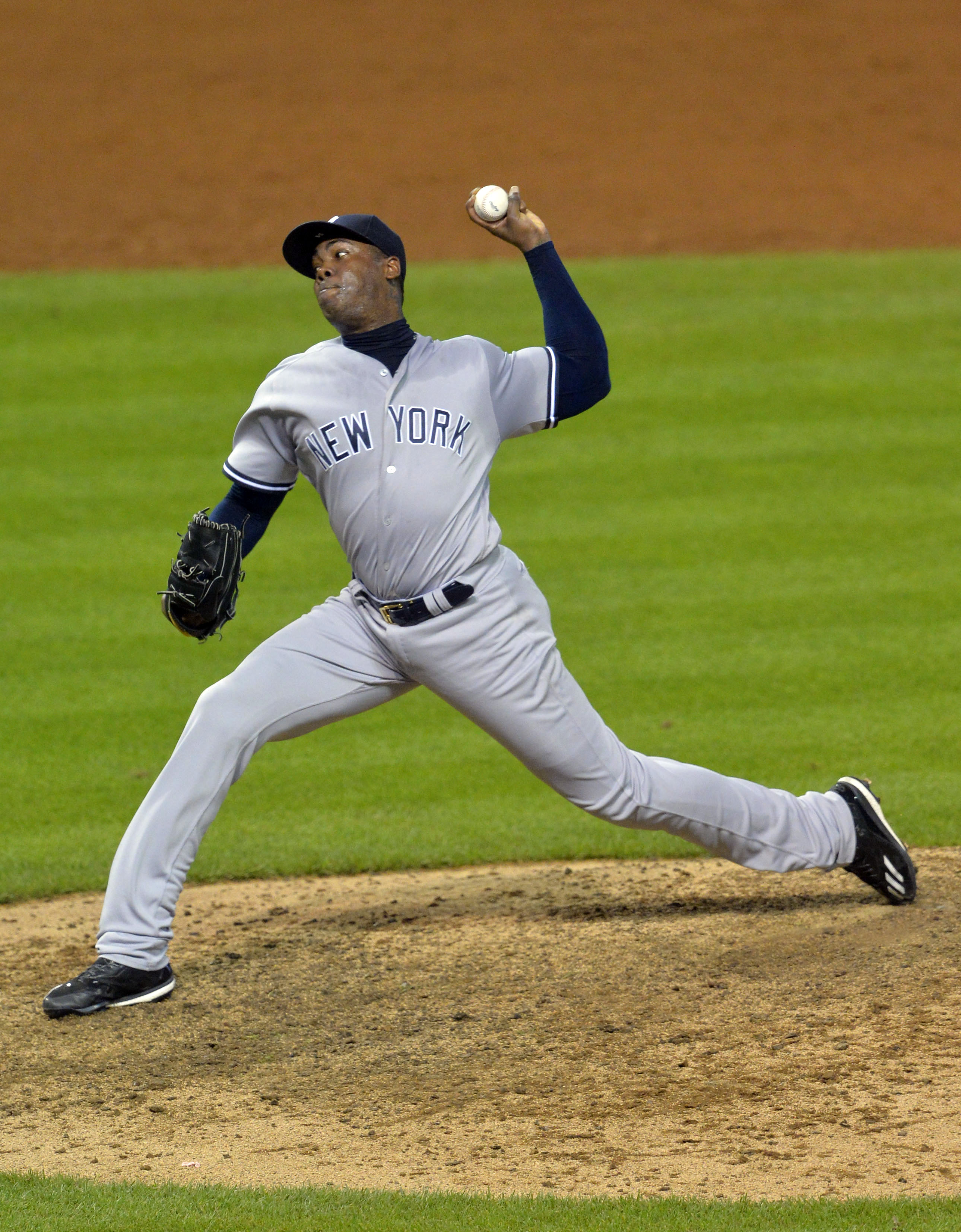
Six years before the trade, the Reds had landed Chapman as a free agent, staking a hefty $30.25MM bet on the power pitcher from Cuba. He proved the team wise, providing 319 innings of 2.17 ERA pitching and racking up 146 saves.
Entering the 2015-16 offseason, though, it seemed clear that it was time for both sides to move on. Chapman had just one year of control remaining, after all, and the Reds were coming off of a 64-win season. While the team struggled, Chapman was his typically dominant self, and seemed positioned to draw a big return.
In early December, it seemed Chapman was destined to join Kenley Jansen to form a terrifying one-two punch in Los Angeles. Precise details of the proposed Dodgers swap were never clear, though reportedly the Reds would not have added then-top L.A. prospects Julio Urias, Corey Seager, or Jose De Leon.
Just when it seemed a deal was imminent, though, a stunning off-field development intervened, as reports emerged that Chapman had been arrested earlier in the offseason for a troubling domestic incident. With Chapman’s reputation tarnished and a possible suspension looming, the Dodgers backed away and the market dried up.
Thus it was that the Yankees stepped into the void and placed a somewhat controversial bet on the game’s most intimidating reliever. Despite already carrying a fantastic late-inning duo of Andrew Miller and Dellin Betances, the Yanks saw an opportunity to create a three-headed bullpen monster. They shipped four prospects — third baseman Eric Jagielo, second baseman Tony Renda, and right-handers Rookie Davis and Caleb Cotham — to Cincinnati to acquire Chapman.
The risk, really, was never on the field or even in the course of the investigation: Chapman was one of the surest relievers in baseball and had he received a sufficiently lengthy suspension, he’d have been eligible for another season of arbitration. Rather, the Yanks were gambling that Chapman would be valuable enough to warrant absorbing a significant public relations hit.
While he was never arrested or charged with a crime, Chapman was rightly criticized and ultimately suspended for what commissioner Rob Manfred determined to be violent actions directed toward his girlfriend. He eventually acknowledged he “should have exercised better judgment” but insisted he “did not in any way harm [his] girlfriend that evening.”
At the same time, it is hard to escape the conclusion that the Yankees benefited greatly from taking him on. After returning from a thirty-game ban, Chapman picked up right where he left off, throwing 31 1/3 innings of 2.01 ERA pitching leading into the trade deadline. With the Yanks in a less-than-promising postseason position, the organization decided to market Chapman in the summer trade market, finding interest far more robust than had existed just months earlier.
Thus it was that the Yankees ended up with a foursome of players immensely more valuable than that which it had shipped to Cincinnati. New York sold the rights to rent Chapman for the remainder of 2016 to the Cubs, who obviously saw him as the final piece needed on a World Series-caliber roster.
Infielder Gleyber Torres was the undeniable headliner; he’s now seen as one of the game’s very best prospects. Though Rashad Crawford has yet to show much since coming to New York, outfielder Billy McKinney is now fresh off of a promising season in which he restored some of his former prospect luster. And the Yanks even came away with right-hander Adam Warren, who has provided 87 2/3 productive relief innings since the swap and is still under team control via arbitration for one more season.
Then, of course, there’s the fact that Chapman ended up returning to the Bronx after his brief stint with the Cubs. In the first year of his record-setting $86MM contract, the now-29-year-old Chapman wasn’t quite as devastating as usual — his 3.22 ERA was the second-highest mark of his career, and he has never before ended a season with a lower strikeout rate than his 12.3 K/9 — but he still averaged a triple-digit heater. While there are some signs of concern, including a plummeting swinging-strike rate, Chapman generally figures to remain one of baseball’s better closers for some time.
As for the Reds? Only Davis and Jagielo remain in the organization. As for the former, there’s certainly hope he’ll be a MLB contributor. Davis did make it up to the majors in 2017, though he struggled quite a bit and was less than dominant at the highest level of the minors. Jagielo, 25, struggled in his first attempt at Triple-A in 2017 and does not rate among the organization’s top thirty prospects, per MLB.com.
It remains a major disappointment for the Reds that they were unable to fully capitalize on Chapman. While some argued that the organization was foolish not to have carried him into the 2016 season rather than accepting a discounted return, that action would have come with its own significant risks. If there’s a silver lining, perhaps it’s that the Reds have since come to realize another successful investment in a high-powered Cuban reliever. Raisel Iglesias has now established himself as one of the game’s best young closers. For the time being, at least, it seems he’s staying put as the anchor of the Cincinnati bullpen.
Photo courtesy of USA Today Sports Images.
Poll: “Pillow” Contracts
It’s nearly January, and the ten best players on this winter’s free agent market according to MLBTR haven’t been signed (Masahiro Tanaka opted in to the remaining three years on his contract with the Yankees, so he never reached free agency). With teams being incredibly patient this year, some in the industry have suggested that one or more of these players could be willing to sign one-year “pillow contracts” at high average annual values, if they can’t find a long-term deal close enough to their current asking prices.
The idea of a pillow contract isn’t altogether farfetched. It’s not uncommon for smaller name free agents to accept one year deals in order to reestablish value after an injury-plagued (or otherwise subpar) season. Though it’s a bit less common for prominent healthy players to do this, there’s some precedent. Yoenis Cespedes‘ three-year, $75MM deal with the Mets back during the 2015-2016 offseason was in some sense a pillow contract; the deal paid him $27.5MM over the first year, with an opt out the following offseason. It worked out well for Cespedes; he ultimately exercised the opt-out and agreed to a more lucrative four-year, $110MM pact (again with the Mets) the following winter.
Such contracts could also act as a failsafe should the top free agents find themselves unable to achieve their desired guarantees by the time February draws to a close. After all, one need not look any further than Stephen Drew and Kendrys Morales for a cautionary tale about players overestimating the market for their services; both players remained unsigned well into the 2014 season and ultimately lost out on significant money. Of course, it should be noted that their markets were significantly affected by the old qualifying offer system.
On the other hand, a pillow contract carries its own type of risk. Injuries, stark drop-offs in performance, and a number other factors could hurt a player’s earning potential when he reaches free agency again. What’s more, the free agent market next year boasts some incredibly high-end talent; the 2018-2019 crop will probably include the likes of Bryce Harper, Clayton Kershaw, Manny Machado and Josh Donaldson. Should any of this year’s free agents opt to settle for high-value one-year contract, they could end up struggling for attention in a crowded market next winter, with the added downside of being a year older.
Obviously, no player will agree to a pillow contract except as a last resort prior to spring training. If they can’t get the guarantees they’re seeking now, it’s far more likely that these players would accept a smaller (but still hefty) multi-year guarantee rather than take a one-year deal and risk losing out on tens of millions of dollars. But the agents of these players have a greater agenda, and if the best offers their clients are getting would set a poor precedent for future contracts, it’s conceivable that the agents could become proponents of pillow contracts for their clients.
There are clear pros and cons to these deals, but I’ll open the conversation up to our reader base at this point. What do you think? (Poll link for app users)
Will Any Of The Top 10 2017-2018 Free Agents Take A Pillow Contract?
-
Yes, more than one 58% (5,168)
-
No 23% (2,013)
-
Yes, but only one 20% (1,748)
Total votes: 8,929
Taking Inventory: Chicago White Sox
The White Sox haven’t been shy about blowing up their major league team lately. Within the past 13 months, GM Rick Hahn has shipped out nearly half the players who were on the club’s 25-man roster at the end of the 2016 season. Most notably, Chicaco was able to land killer hauls for Chris Sale, Adam Eaton and Jose Quintana.
The teardown has resulted in a tidal wave of incredible young talent. Yoan Moncada, Carson Fulmer, Lucas Giolito and Reynaldo Lopez are already playing at the MLB level, and the club has three top 25 overall prospects still waiting in the wings. However, as one might imagine, the club is still not ready to contend. Player development isn’t always linear, and it will take at least a couple of years for the newfound cavalry to arrive from the farm system, let alone find success in the majors. As such, the White Sox are likely to continue trading away major league pieces with limited team control in order to add talent they can count on during their next window of contention.
Here’s a list of remaining assets that the South Siders might consider moving in the coming months…
Two Years of Control
Jose Abreu, 1B ($17.9MM projected arb salary): Since coming to Chicago from Cuba, Abreu has been an offensive force for the White Sox, evidenced by his .301/.359/.524 batting line and 139 wRC+ with the organization. He’s averaged 31 homers and 665 plate appearances across his four major league seasons, making him one of the most reliable offensive players in the game. MLBTR’s Mark Polishuk recently profiled his trade market, listing the Red Sox, Rangers and Rockies among his potential suitors. Abreu’s expensive salary (which will likely get another hefty boost in 2019) limits his trade value, but there’s still a clear surplus here. A crowded first base market complicates things a bit, but he could still draw plenty of interest from other clubs.
Avisail Garcia, OF ($6.7MM projected arb salary): Garcia enjoyed the best season of his career in 2017 after shedding some weight during the 2016-2017 offseason. The right-handed-hitting outfielder was in contention for the AL batting title for most of the year (thanks in part to a .392 BABIP), and was worth 4.2 fWAR overall. A while back, I broke down his hypothetical trade market, listing the Indians, Rockies and Diamondbacks as potential landing spots.
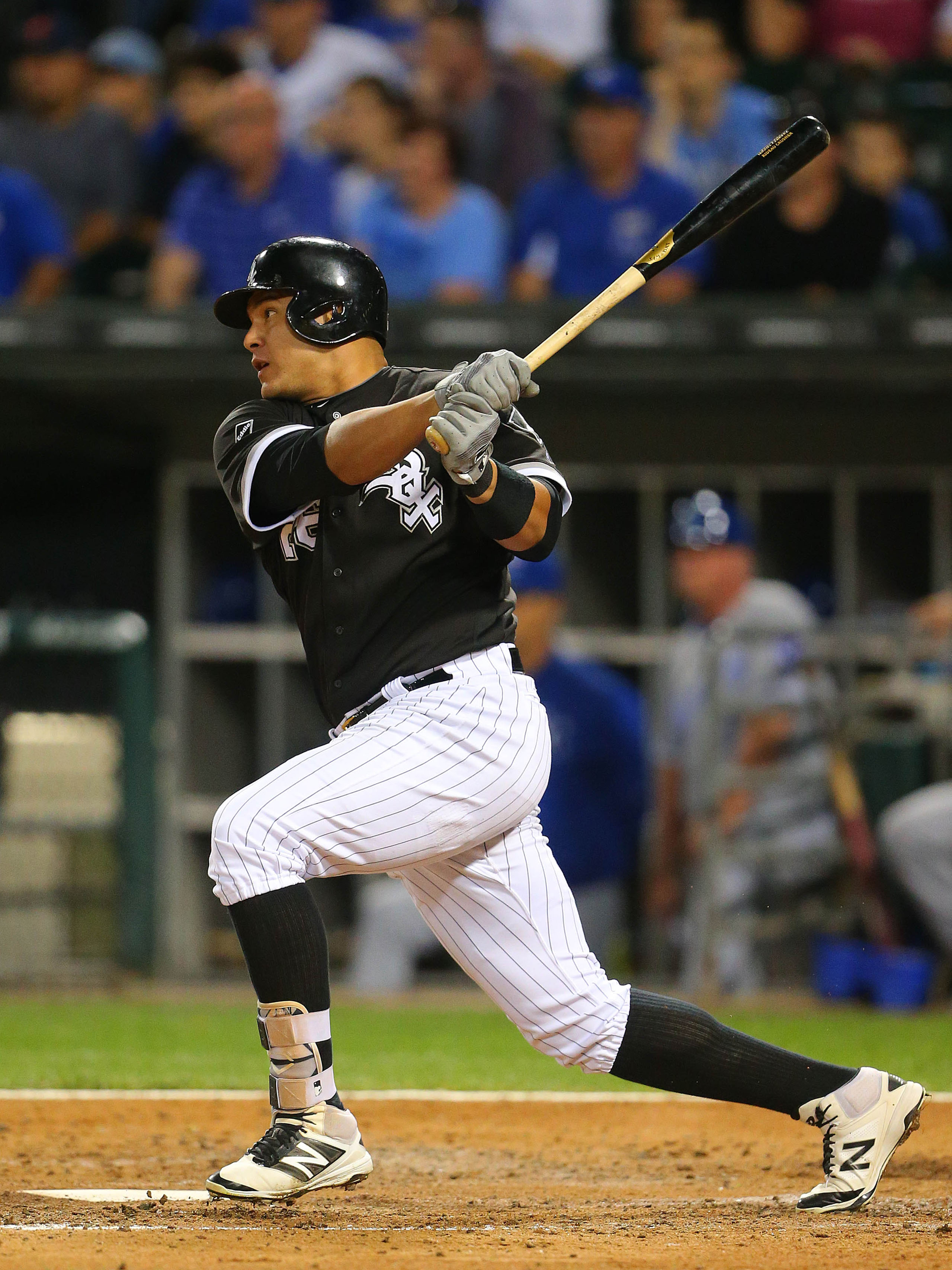
Rival organizations will obviously be skeptical about Garcia’s ability to repeat this performance considering his career 90 wRC+ prior to last season. Oddly, his hard hit rate and average exit velocity were basically in line with his 2016 figures. Still, it would be irresponsible for teams to write his 2017 season as entirely a fluke; Garcia did trade a few ground balls for fly balls and improve his contact rate, after all.
Longer-Term Assets
Nate Jones, RHP ($3.95MM salary for 2018, $545K club option for 2019, $3.75MM club option for 2020, $4.25MM club option for 2021. $1.25MM buyout on 2020-2021 options): A quick look at Jones’ numbers since his return from Tommy John surgery makes his contract look like a steal, particularly considering the lucrative deals given out to relievers so far this offseason. However, the righty reliever is highly unlikely to be traded this offseason after missing most of 2017 due to nerve repositioning surgery. He’ll likely need to reestablish his value before the White Sox can move him. A return to his 2016 form, however, would put Jones in the upper echelon of MLB relievers, and send his trade value through the roof.
Yolmer Sanchez, 2B ($2.1 projected arb salary for 2018): Formerly known as Carlos Sanchez, the switch-hitting second baseman rebranded himself in 2017. While it may have created moments of confusion for more casual White Sox fans, they’re just fine it that considering his improvements on the field. This past season, Sanchez hit .267/.319/.413 while playing excellent defense at the keystone. The 25-year-old Venezuela native was worth 8 defensive runs saved in 620 innings and ranked second in UZR/150 among MLB second baseman (minimum 500 innings). With four years of team control remaining, it’s certainly possible that Sanchez could be around for the next competitive White Sox team. However, he could yield plenty of value in a trade.
Carlos Rodon, LHP ($2MM projected arb salary for 2018): In all seriousness, Rodon probably won’t be traded any time soon. After an injury-plagued 2017 season that ended with shoulder surgery, no team will likely be willing to give up the prospects it would take to pry him out of Chicago’s hands. However, he’s on this list simply for the possibility that he could reestablish value prior to the coming season’s trade deadline. While the former number three overall pick might miss a portion of 2018, he comes with enormous upside. With the market for pitching being what it is, trading Rodon could provide an enormous boost to an already-strong farm system. Of course, the White Sox would need to be overwhelmed by an offer in order to consider moving him, as they can still retain him through 2021. Still, the club was content to move Jose Quintana at last year’s deadline, so Rodon is at least worth a mention on this list.
Salary Dump Candidates
James Shields, RHP ($21MM salary for 2018, $16MM club option for 2019 with a $2MM buyout): Any trade involving Shields would probably involve the White Sox sending some money along with him. The right-hander has an ERA well over 5.00 since coming to Chicago, and has walked over four batters per nine innings pitched during that time. His numbers in five September starts this past season were more palatable, however, and it’s worth noting that the White Sox are only on the hook for about half of Shields’ 2018 salary. Perhaps some team will be willing to take a chance on him as a back-of-the-rotation innings eater. Either way, he’s a one-year piece; his 2019 club option is highly unlikely to be exercised.
Photo courtesy of USA Today Sports Images.
Managers And Top Front Office Executives On Expiring Contracts
There are quite a few notable managers and top front office executives (general managers or heads of baseball operations who have different titles) entering their last guaranteed year under contract in 2018, creating even more pressure than usual to have a good season. Thanks to Cot’s Baseball Contracts for providing many of these contract details.
As always with this list, it should be noted that contract length is far from an absolute measure of job security. Teams with seemingly stable management could be one disastrous season away from a shakeup in the dugout or front office, while some of the managers or executives listed here could have “stay as long as you want” handshake deals in place. Some teams also don’t publicize contract details for front office executives, so some of the names on the list could have already quietly signed extensions, or there could be other execs entering their last year under contract.
Here are some of the names who could be facing a hotter seat than usual in 2018 (alphabetical order by organization) …
Angels: Long-time manager Mike Scioscia is in an interesting situation as he wraps up an unusually massive contract — ten years at a guaranteed $50MM. After a few disappointing campaigns, there’s definitely pressure to win. And expectations are on the rise as GM Billy Eppler continues to add significant pieces in what has been a highly productive offseason. Just what the future holds really isn’t clear from the outside, but it’ll be fascinating to see how things shake out for Scioscia, who is easily the longest-tenured skipper in the game.
Braves: The Atlanta organization was hit by surprise front office upheaval, perhaps nudging the team to seek stability in the dugout. Thus it was that manager Brian Snitker had his option exercised despite a disappointing second half of the 2017 season. It’s hard to know whether Snitker will have a legitimate shot at maintaining his job into the future, though perhaps he can force the hand of new GM Alex Anthopoulos with a strong performance.
Dodgers: Dave Roberts is almost certainly not going anywhere after managing the Dodgers to the World Series in 2017. But this is the final guaranteed season of his rookie managerial deal, with the club also possessing a 2019 option. It wouldn’t be surprising at all if longer-term negotiations take place at some point over the current offseason.
Indians: Similarly, Cleveland skipper Terry Francona seems to be rather embedded in his organization’s fabric. He is not promised anything past 2018, though the team does possess consecutive options over the ensuing two campaigns. Barring a surprising turn of events, it seems likely Francona will continue running the clubhouse through the end of the potential term contemplated in his deal.
Nationals: It’s hard to know what Nats ownership will do, but president of baseball operations/GM Mike Rizzo has indicated he’s happy either to fulfill his duties as a lame duck or to discuss a new deal if approached. Despite wild success in the regular season — the second-most wins in the majors since 2012, with four NL East titles — the club has fizzled out repeatedly in the postseason. That led to the surprising departure of manager Dusty Baker after the ’17 campaign. All that said, it’d be quite a surprise for the organization to let go of Rizzo, who has steadily produced results throughout his tenure.
Orioles: Things are even more interesting on the north side of the beltway, as O’s executive VP of baseball ops Dan Duquette and manager Buck Showalter are each entering contract years. There are persistent rumors of discord between those two figures, who’ll also be looking to navigate some tricky roster limitations after a disappointing 2017 season in which the club posted a losing record for the first time since 2011.
Rangers: Indications are that president of baseball ops/GM Jon Daniels is going to lock up a new deal with the organization, though at this point — so far as is known — he’s only under contract through the coming campaign. Meanwhile, manager Jeff Banister may be on shakier ground if he can’t help engineer a turnaround. He’s in a contract year, too, though the club can also simply decide at some point to pick up his 2019 option.
Reds: One of the hottest managerial seats in the game is likely the one in Cincinnati. Current leader Bryan Price was given another chance to work with a still-transitioning roster in 2018, though the club did not pursue any additional future security. Just what the expectations are — further development? real movement in the standings? — isn’t immediately clear, but Price will need to state his case to retain his job.
Royals: Having led the K.C. club to a stunning World Series win, skipper Ned Yost likely isn’t in any risk. But he is entering the final year of the two-year extension he signed after the 2015 season. The Royals are readying for a new phase after losing several core players to free agency, creating some uncertainty. Yost says he doesn’t expect still to be at the helm when the club is again cresting, but has indicated he hopes “to get a firm footing and a firm foundation on the ground” to hand off to a successor. Just how long he and the team will want to continue the current arrangement isn’t known.
Taking Inventory: Detroit Tigers
The Tigers have already dealt with a significant portion of their offseason business, dealing their most obvious trade candidate, Ian Kinsler, to the Angels during this month’s Winter Meetings. They’ve also filled some holes with affordable veterans, picking up Mike Fiers for the fifth spot in the rotation and adding Leonys Martin on a low-cost, one-year deal to fill center field.
Still, the Detroit front office is hardly set to merely call it an offseason. The Tigers made clear with their trade of Kinsler and their summer trades of Justin Verlander, J.D. Martinez, Justin Upton, Justin Wilson and Alex Avila that they’re embarking on a full-scale teardown of the organization. Although those trades have strengthened a thin Tigers farm system, the team still has work to do as it builds up toward a top-of-the-line minor league system and a generally more sustainable avenue to contention than perennially shelling out $200MM+ payrolls.
With Kinsler out of the picture, here’s a look at the remaining assets the Tigers could realistically market this winter…
One-Year Rentals
Jose Iglesias, SS ($5.6MM projected arbitration salary): A superlative defender at shortstop, Iglesias delivered solid offensive output in 2013-15 before his bat deteriorated in 2016-17. He’s batted just .255/.297/.353 across the past two seasons, but for a team in need of a defensive upgrade in the infield or on the bench, Iglesias would be a reasonably low-priced upgrade.
Two Years of Control
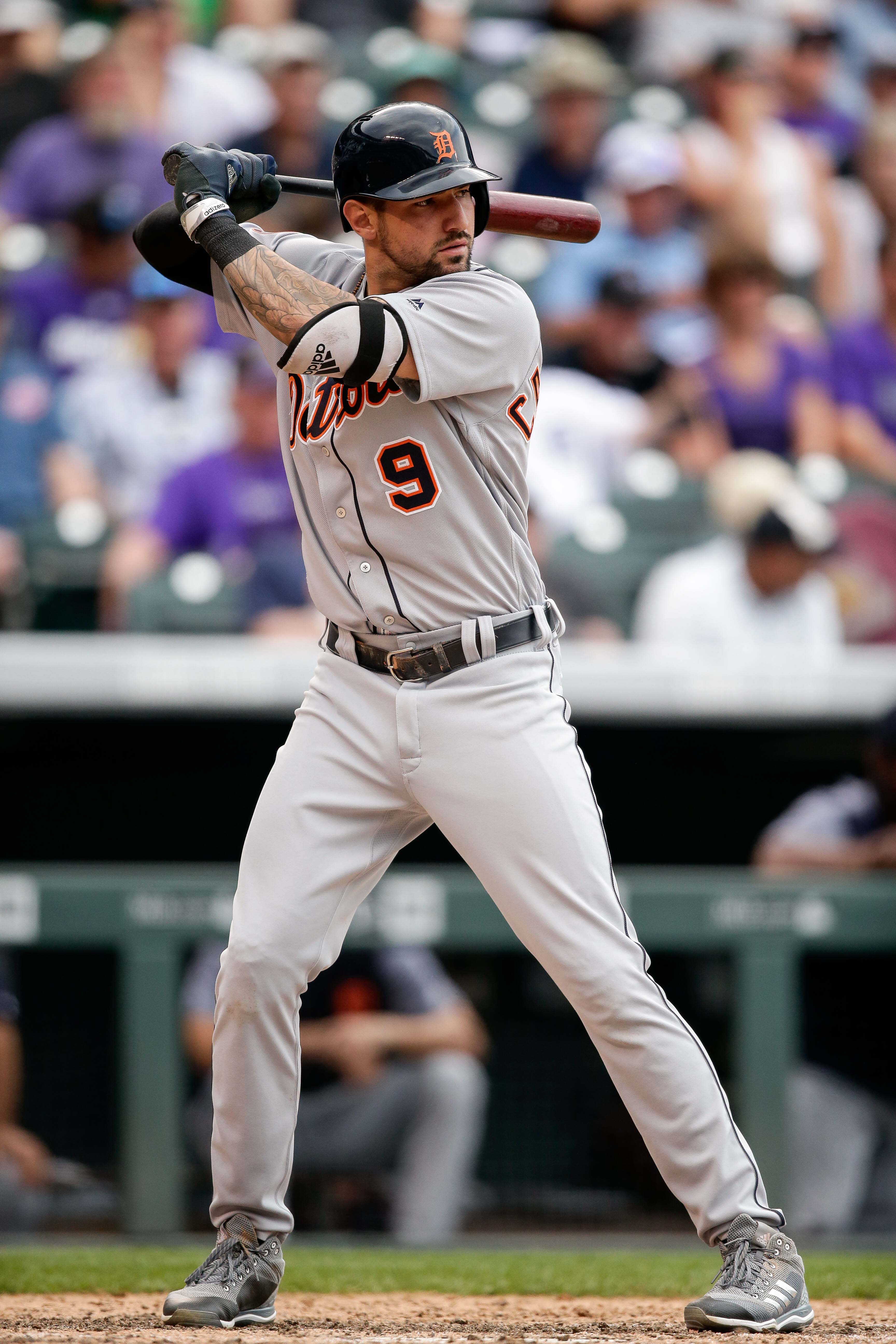
Nicholas Castellanos, OF/3B ($7.6MM projected arb salary): Castellanos’ overall .272/.320/.490 was above-average but not outstanding. However, the former top prospect ranked fifth in the Majors in hard-contact rate (among qualified hitters), and Statcast credited him for the 10th-highest number of barreled balls in all of Major League Baseball.
Castellanos comes with significant defensive questions, as he’s been a staggering 64 runs below average in 4400 innings at third base (per Defensive Runs Saved) and eight runs below average in just 211 innings in the outfield. He’s not exactly cheap, but the batted-ball profile could make him intriguing to a team that believes he could improve with additional reps in the outfield.
Alex Wilson, RHRP ($2.1MM projected arb salary): The 31-year-old righty is coming off the worst season of his career (4.50 ERA, 6.3 K/9, 2.3 BB/9, 1.05 HR/9, 41.6 percent ground-ball rate), but he was a quality bullpen piece for the Red Sox and Tigers from 2014-16. During that time, Wilson logged a 2.47 ERA in 171 1/3 innings of work, albeit with a pedestrian 5.6 K/9 mark against a more encouraging 1.9 BB/9 clip. He’s no stranger to working multi-inning stints and represents an affordable middle relief option.
Longer-Term Assets
Michael Fulmer, SP (pre-arbitration): Fulmer, obviously, would command the largest return of anyone the Tigers could make available. The 2016 AL Rookie of the Year is controlled for another five full seasons and won’t reach arbitration until next winter, when he qualifies for Super Two status. Fulmer was carrying a 3.06 ERA and 3.24 FIP with 6.3 K/9, 2.0 BB/9, 0.51 HR/9 and a 50.4 percent ground-ball rate through his first 123 2/3 innings this season before his production fell off a cliff. He ultimately underwent surgery to repair the ulnar nerve in his right arm in mid-September, bringing his sophomore season to a close.
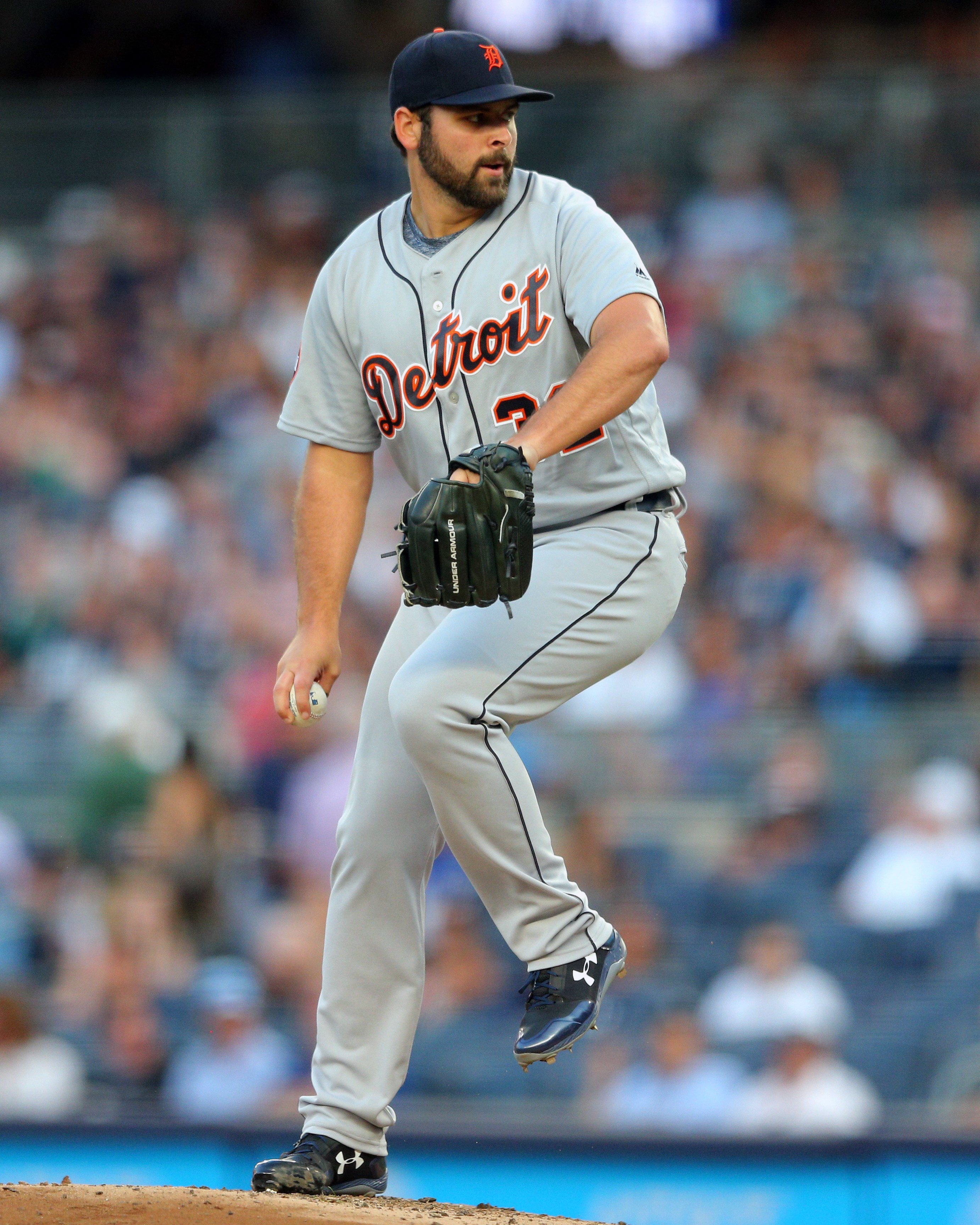
The Tigers could extract a king’s ransom for Fulmer, though some teams may be wary of paying top dollar (in terms of prospects) for a pitcher coming off elbow surgery without first seeing that he’s rebounded to an extent. There’s little urgency to trade Fulmer when he can be controlled for the next half decade, but the dearth of high-quality arms available on the trade market could motivate a club to put together a massive offer.
Shane Greene, RHRP ($1.7MM projected arb salary, controlled through 2020): Greene showed plenty to like in his first full season as a reliever, averaging 9.7 K/9 with a 47.4 percent ground-ball rate and a heater that averaged 95 mph en route to a 2.66 ERA through 67 2/3 innings. However, he also posted just an 8.6 percent swinging-strike rate, averaged 4.5 walks per nine and allowed a huge 41.3 percent hard-contact rate. That’s not ideal for a late-inning reliever, of course, though Greene’s strong spin rate on his slider (which ranked 20th of 173 relievers who threw the pitch at least 100 times) could give teams optimism that there’s some untapped potential.
James McCann, C ($2.3MM rojected arb salary, controlled through 2020): McCann won’t turn 28 until next summer, and he’s coming off the best offensive season of his career, having slashed .253/.318/.415 with a career-best 13 homers. He’s long had his share of struggles against righties, but the right-handed-hitting McCann has absolutely obliterated left-handed pitching in his career, as evidenced by a .287/.346/.538 batting line (including .298/.371/.558 in 2017). McCann has thrown out 37 percent of would-be base thieves in his career, though he drew poor marks from Baseball Prospectus for his pitch framing and blocking in 2017. (He was solid in both regards in 2016.) A contender in need of an upgrade behind the dish (e.g. the Nationals) could try to pry McCann away from the Tigers, as he almost certainly won’t be a part of the next competitive Detroit club.
Mikie Mahtook, OF (pre-arbitration): The Tigers have only had Mahtook for one year, having successfully bought low on the former first-rounder last February in a trade with the Rays. The 28-year-old batted .276/.330/.457 through 379 trips to the plate with Detroit. Mahtook has played all three outfield spots, and while most metrics aren’t kind to him in center field, he’s drawn solid UZR marks in the corners (DRS doesn’t care for his glovework anywhere, while Statcast pegged him as a neutral defender in 2017). Detroit can hang onto him for another four years, so there’s no rush to move him. The return, at present, would probably be fairly minimal. However, another solid year — perhaps with greater playing time — could bolster intrigue.
Miguel Cabrera, 1B/DH (six years, $192MM remaining): It’s almost unfathomable to envision a Cabrera trade on the heels of a .249/.329/.399 (92 OPS+) season when he’s owed a staggering average of $32MM over the next six seasons. The former MVP was diagnosed with a pair of herniated disks in his back in September and will play next season at the age of 35. If Cabrera were a free agent right now, he’d earn a mere fraction of that remaining commitment. No one would take on his contract — all of which may be moot, as he also has full no-trade protection.
Salary Dump Candidates
Jordan Zimmermann (three years, $74MM remaining; full no-trade clause), Victor Martinez (one year, $18MM remaining; full no-trade clause)
The Tigers would love to shed either of these contracts, but it’s difficult to see any takers lining up — especially for Zimmermann. Detroit can hold out some hope that Zimmermann will rebound in 2018, which would position him as a more plausible trade candidate after the 2018 season, when his no-trade provision drops from all 29 other teams to a limited 10-team clause. That’s a lot to expect, though, considering his diminished velocity, strikeout rate and ground-ball rate (to say nothing of a skyrocketing home run rate).
Martinez, meanwhile, just turned 39 years old and is coming off a season in which he hit just .255/.324/.372 and was limited to 435 plate appearances, in part due to a pair of DL stints for an irregular heartbeat. His value is at an all-time low, and he’s been mentioned as a speculative release candidate more than a potential trade piece.
Free Agent Faceoff: Yu Darvish vs. Jake Arrieta
While the relief market has been highly active over the past month, there’s been little activity at the top end of the market for free agent starters. Heading into the winter, Yu Darvish and Jake Arrieta stood as the top two available starters, and neither has come to terms on a new contract for the 2018 campaign. Both seem like candidates to pull in nine-figure deals, even with fairly quiet market to date, though opinions vary as to which is the better investment.
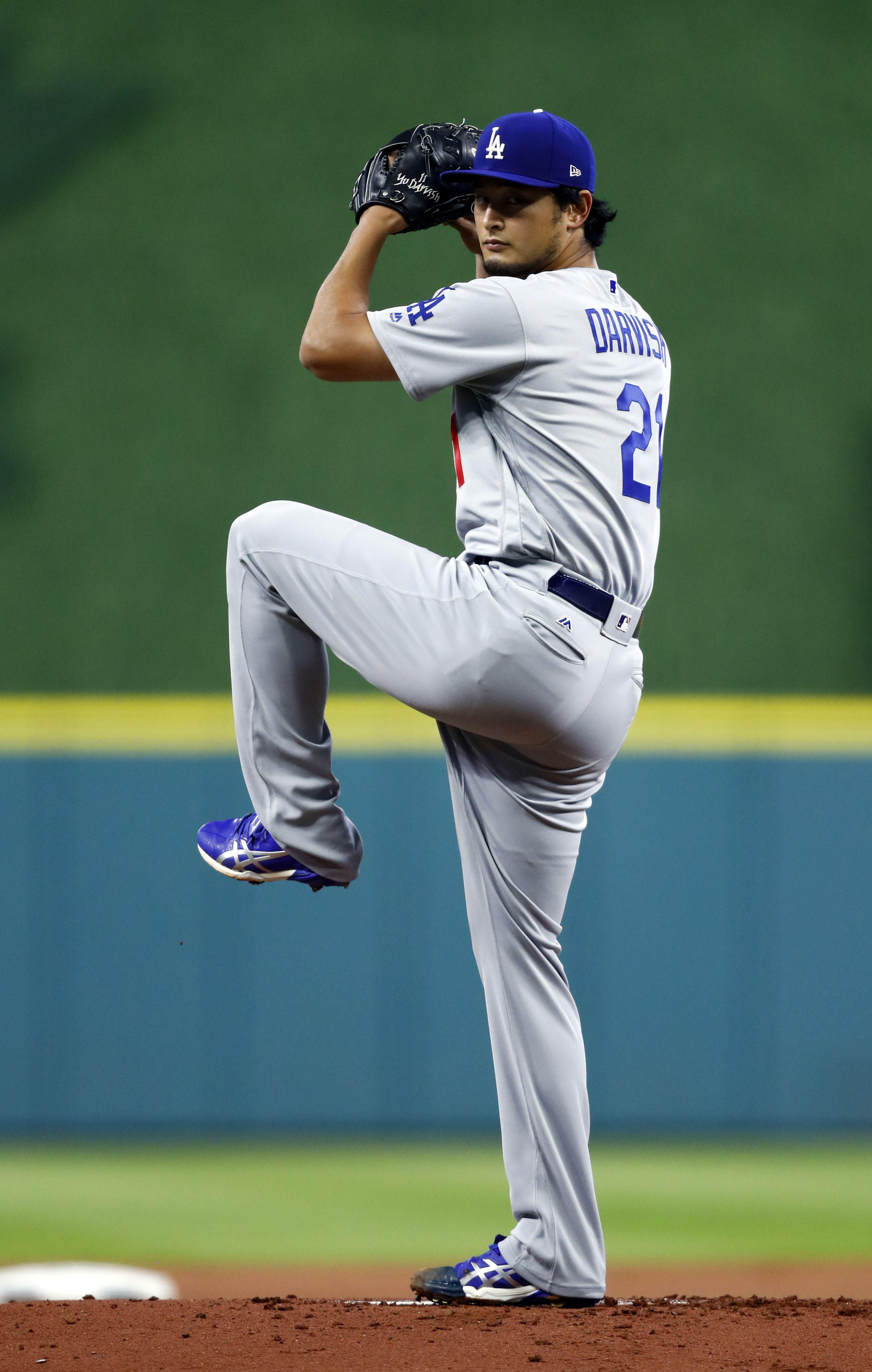
Both Darvish and Arrieta are 31 years of age, though Arrieta will pitch all of the 2018 season at the age of 32, while Darvish won’t turn 32 until next August. Arrieta, though, doesn’t have a major arm injury on his recent track record, whereas Darvish missed all of the 2015 season and part of the 2016 campaign due to Tommy John surgery.
Darvish, of course, left a poor final impression on fans when he was tattooed by the Astros in a pair of postseason outings, though SI’s Tom Verducci was told by an anonymous Astros player that Darvish was tipping his pitches in both of those outings. Prior to that ugly finish, Darvish was trending up, pitching to a 3.10 ERA with a 75-to-14 K/BB ratio in 11 starts as a Dodger (between the regular season and the first two rounds of postseason play). Overall, he finished out the year with a 3.86 ERA, 10.1 K/9, 2.8 BB/9, 1.3 HR/9 and a 40.9 percent ground-ball rate.
Despite the recent Tommy John operation, Darvish averaged 94.2 mph on his heater — his best mark to date in the Majors — and cleared 200 innings when factoring in postseason play. Darvish has been an All-Star in each of his four full healthy MLB seasons, and he owns a 3.27 ERA with more than 11 strikeouts per nine innings over dating back to his second big league season. In 832 1/3 Major League innings, Darvish has been worth roughly 19 WAR per both Baseball Reference and Fangraphs.

Arrieta, meanwhile, had one of the great hot streaks in MLB history in 2015 when he rode a staggeringly dominant second half to National League Cy Young honors. In Arrieta’s final 147 innings of that 2015 campaign, Arrieta pitched to an unthinkable 0.86 ERA with 147 strikeouts against 27 walks issued. Darvish cannot lay claim to a run nearly that dominant at any point in his career. (Few pitchers can, of course.)
Certainly, though, Arrieta’s dominance has not been limited to that stretch of 20 starts. In parts of five seasons with the Cubs — a total of 803 big league innings — Arrieta logged a 2.73 ERA with 8.9 K/9, 2.7 BB/9 and considerably above-average ground-ball tendencies. His innings total has declined in consecutive seasons, though, and Arrieta’s 92.1 mph average fastball in 2017 was the lowest of his career. Arrieta’s home-run and ground-ball rates trended in the wrong direction this past season, as was the case with his velocity.
Arrieta does come with more postseason experience and success than Darvish, though that may not carry as much weight with the game’s increasingly analytically-inclined front offices. He’ll also cost his new team a draft pick in 2018, whereas Darvish isn’t tied to compensation due to the fact that he was traded midseason.
MLBTR projected nine-figure commitments for each of the two in free agency this offseason, though Darvish topped our 2017-18 MLB free agent rankings, which were based on earning potential. There have been reports suggesting that Arrieta and agent Scott Boras are seeking upwards of $200MM, while others have suggested Stephen Strasburg‘s seven-year, $175MM deal as a target for Darvish and his reps at Wasserman. Of course, all agents are going to aim high early in negotiations, and those early targets don’t necessarily line up with the dollar figures that the two stars will ultimately command.
Each pitcher has his merits, and there are various cases to be made in favor of one over the other. With all of that said, I’ll open this up to MLBTR readers to voice their opinions (link to poll for Trade Rumors app users)…
Which free agent starter would you rather sign?
-
Yu Darvish 60% (10,426)
-
Jake Arrieta 40% (6,895)
Total votes: 17,321
Photos courtesy of USA Today Sports Images.
Recent Christmas Day Transactions
Happy Holidays, MLBTR readers! We hope you’re all enjoying the season of giving. December 25th is typically a quiet day for transactional news, but it’s not altogether uncommon for teams to make small moves. Since the turn of the millenium, there have been a few players to receive Christmas presents in the form of minor league contracts, and even one who earned a major league deal. Here’s a quick recap of the Christmas Day signings since the year 2000…
2016
- The Tigers signed left-fielder Quincy Latimore to a minor league deal.
- The Red Sox inked third baseman Heiker Meneses and left fielder Brian Bogusevic to minors pacts, the latter of whom was extended an invitation to spring training camp.
2013
- The Yankees reached a deal with right-hander Yoshinori Tateyama on a minor league contract that included a spring training invite.
2012
- The Cubs signed right-hander Jaye Chapman to a minor league deal with an invitation to spring training.
2007
- The Giants signed right-hander Keiichi Yabu to a minors pact with a spring training invite.
2004
- The Cardinals signed Abraham Nunez, a utility infield type, to a minor league contract and invited him to spring training.
- The Royals signed right-hander Jose Lima to a major league contract. The club also added infielder Luis Ugueto on a minor league deal with a spring training invite.