
MLBTR Originals
Here’s a look back at MLBTR’s original analysis and reporting over the past seven days:
- Charlie Wilmoth spoke at length with Randy Mobley, the president of the Triple-A International League. Mobley addressed the path he took to his current position, how he feels about September call-ups, the rising values of Triple-A franchises, and the impact of implementing pitch clocks, among other topics.
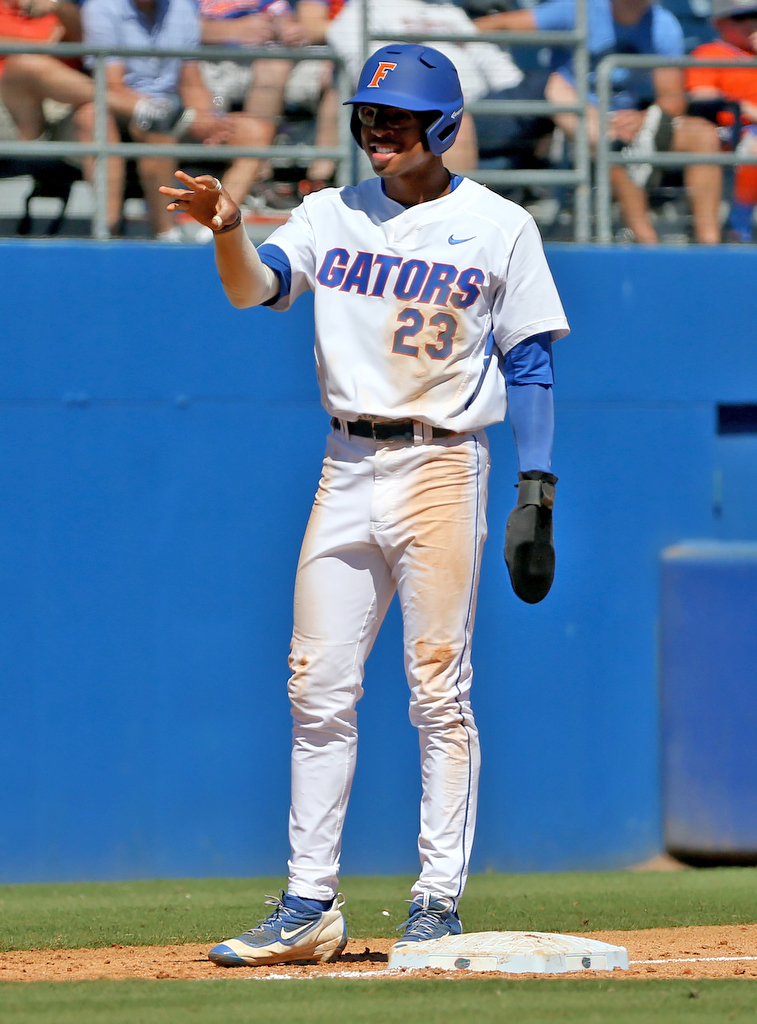
- Continuing MLBTR’s Draft Prospect Q&A Series, Chuck Wasserstrom interviewed University of Florida center fielder Buddy Reed, a potential first-round pick next month. Reed evaluated his baseball skills, touched on his past as a hockey player and explained why he chose to attend Florida instead of sign with the Rangers, who took him in the 35th round of the 2013 draft.
- Mark Polishuk polled readers on whether the Angels should consider trading superstar center fielder Mike Trout. The results are fairly close as of now, with over 52 percent of voters supporting the notion. Given that the Angels are highly unlikely to contend this year and might have baseball’s worst farm system, the idea of the team dealing Trout for a massive haul has gained steam lately. It’s unsurprisingly a polarizing issue, however.
Q+A: International League President Randy Mobley
Last week at the International League offices in suburban Columbus, league president Randy Mobley spoke to MLBTR about the opportunities and challenges of Triple-A baseball. This transcript has been edited for length.
What is your background? How did you get into this kind of work?
Grew up loving the game, played through the Division III college level. About halfway through that experience, [I] realized that was going to be the end of it, and started looking at ways to stay involved in the game. This was the late seventies, and schools were just starting to have masters degree programs in sports administration. There were only three of those programs in the entire country. Ohio State was one of the three schools that had a sports management program. So I went to Ohio State for my masters, interned with the [Columbus] Clippers at the time, and they hired me full-time after the internship. The league office at that point was in Grove City, on the south end of town. The president was Harold Cooper, who the [Clippers’] old ballpark was named after. Mr. Cooper hired me as his assistant. He then retired in 1990, and I was fortunate enough to follow him at that point in time.
Who else works here, and what are their roles?
We have two others here. Chris Sprague is my assistant and has the title of League Administrator. Chris has been with us for a little over ten years and handles a lot of the day-to-day activities — monitors rosters for the teams, puts together our league’s record book / media guide, oversees some of our league’s official scorers, things of that nature. And then we have an office manager who’s been with us for about ten years also. So just the three of us.
What’s a basic overview of what you do here?
It would be like a college league office — you know, a Big Ten office, or like the [MLB] commissioner’s office in New York. We have three basic agreements that we’re involved with. First, as a league, you have a constitution and bylaws, so we have rules that govern how the clubs interact with each other, how the league is going to be run. As a member of Minor League Baseball as a whole, we [also] have an agreement that we have to abide by as a league. So there’s that document that governs the relationship between the leagues. And then there’s a third set of rules that governs our relationship with Major League Baseball. So those three relationships — most everything branches out of those. We also are responsible for the umpires. So we’ve got 27 umpires, and whether it be situations on the field, or whether it be their transportation — all those things come through here as well.Read more
Buddy Reed (University of Florida) Interview: Draft Prospect Q&A
MLBTR continues its Draft Prospect Q&A series in order to give our readers a look at some of the top names on the board in this year’s draft. MLBTR will be chatting with some of the draft’s most well-regarded prospects as they prepare for the 2016 draft on June 9-11; we’ve already spoken with prep outfielder Blake Rutherford, Mercer’s Kyle Lewis, Oklahoma’s Alec Hansen and Louisville’s Corey Ray.
Center fielder Buddy Reed is one of the more intriguing names in this year’s draft. The 6’4”, 207-pound University of Florida junior ranks as one of the top all-around players in college thanks to his speed and defensive ability, but the big question is how teams look at the switch-hitter’s bat.
Reed grew up just outside of Baltimore, where he was a well-regarded hockey player. He went to boarding school nearly seven hours from home at St. George’s School in Middletown, R.I. – a tiny school with a vast array of recognizable alums (the Bush family, the Vanderbilts, as well as many politicians and journalists). Reed went there on a hockey scholarship, where his coach was former Washington Capitals center Ryan Mulhern.
Reed, a 35th-round selection of the Texas Rangers in the 2013 draft, figures to be selected considerably higher this time around. Last week, Baseball America listed him No. 21 on its Top 100 Draft Prospects chart, and he’s currently 16th on the Top 100 at MLB.com. He leads Florida in runs scored (41) and stolen bases (22-for-24), including a straight steal of home April 22 against Georgia.
Reed and his No. 1-ranked Gators squad have a big SEC showdown series this weekend against No. 7 Vanderbilt. He talked with MLBTR earlier this week:
Chuck Wasserstrom: Hi Buddy, thanks for taking the time to talk with me. I’ll start out by saying there haven’t been a whole lot of Buddy Reed stories out there, but it looks like you have a pretty fascinating background. I’m going to start off with a couple baseball questions, then get into your story. There are some talented college outfielders out there right now. What makes you different?
Buddy Reed: “I haven’t been playing baseball as long or as seriously as other people in the SEC and other conferences around the country.”
I want to hear about Buddy Reed the player. Describe your game for me. I don’t want a scouting report that I can read on the internet. I want to hear you tell me about your game.
“I would describe myself as a streaky guy. I’m a tall guy who can bunt. I can get on base. I can steal second, third, and even home. I’m a threat on the base paths. I’m a threat from the outfield with my arm and my speed; I can track down a lot of balls. And I can hit.”
[Full interview after the page break]
MLBTR Originals
Here’s a look back at MLBTR’s original analysis and reporting over the past seven days:
- With the season’s first month in the books, Tim Dierkes updated his free agent power rankings for next offseason, listing the 10 players who appear poised to earn the most money if they hit the open market over the winter. Tim also included two honorable mentions who could crack the top 10 if their current performances continue.
- Mark Polishuk examined four low- to mid-tier players who improved their respective stocks with strong first months in their contract years. The group is headlined by Cubs center fielder Dexter Fowler, who has been among the majors’ top players in the early going.
- Steve Adams countered Mark by detailing eight contract-year players who dug themselves early holes in April. Steve focused on players who entered the campaign looking primed to land deals of at least three years in length during free agency next winter.
- On this week’s edition of the MLBTR Podcast, Steve joined host Jeff Todd to discuss the hype surrounding Tim Lincecum‘s showcase, the outstanding performance the Phillies’ young pitching staff has delivered so far, and the upswing in financial mechanisms (particularly Fantex) that players may be able to use to secure guaranteed money while retaining future earning upside. A new episode of the podcast is released every Thursday and can be accessed on iTunes, SoundCloud and Stitcher.
Pending Free Agents That Dug An Early Hole In April
Last night, MLBTR’s Mark Polishuk looked at a number of free agents that bolstered their stock with a huge April performance (with the help of some Fangraphs leaderboards that he made for free-agent position players and pitchers). While Mark elected to look at some second- and third-tier free agents that are currently ascending the free agent power rankings, it’s also worth taking a look at the inverse; that is, players that may have had fairly strong free agent cases but have put themselves behind the eight ball. There are, of course, a number of pending free agents that struggled in the season’s first month, but rather than focusing on players that were candidates for shorter, smaller-scale deals in the first place, it seems worthwhile to identify some potentially significant earners that have gotten off on the wrong foot. It should be noted, of course, that a poor month or two isn’t a nail in the coffin to a player’s free agent hopes. Ian Kennedy, for instance, had a 7.15 ERA on June 1 last season and still pulled in $70MM and an opt-out clause this winter. However, there were others that struggled — most notably, perhaps, being Ian Desmond — and never fully recovered.
For the purposes of this post, I’m highlighting players that entered the season with legitimate cases for earning a deal of three years or more on the open market this coming offseason but have a long ways to go to now make that a reality…
Matt Wieters: I was among the crowd that was surprised to see Wieters accept Baltimore’s qualifying offer last November. Despite the fact that he was eased back into catching and hadn’t shown that he could consistently catch on consecutive days, Wieters slashed .267/.319/.422 — a batting line that was precisely league average in the eyes of both OPS+ and wRC+. A catcher that can put up league-average numbers at the plate is a hugely valuable commodity, and Wieters was still reasonably young and had a notable pedigree. Now, however, he’s batting .214/.290/.304 through his first 16 contests, and he’s caught on back-to-back days just once. Nineteen strikeouts in 62 plate appearances doesn’t help his cause whatsoever.
Carlos Gomez: Some will scoff at this notion, but if Gomez had come out the gates blazing and finished with numbers that closely resembled his 2013-14 production, he’d have had a case for a $200MM contract. Jacoby Ellsbury‘s seven-year, $153MM contract would have been looked at as a floor for agent Scott Boras, if it was even on his radar at all. Players that can deliver elite center field defense, 20+ homer power and all-around batting lines that are 25 to 30 percent above the league average are of the utmost rarity, and Gomez would’ve been entering his age-31 season. That’s a year older than Ellsbury was when he signed, but Gomez has had more offensive success, and Shin-Soo Choo can speak to the fact that it’s possible to take home seven years entering an age-31 season. Gomez, though, is hitting just .213/.241/.275 with 24 strikeouts and two walks in 83 PAs. The enormous ceiling still has him rated fifth on Tim Dierkes’ free-agent power rankings, but another month like April and Gomez will continue his slide down the list.
Edwin Encarnacion: At .240/.287/.380, Encarnacion’s bat hasn’t been completely nonexistent, but it certainly hasn’t lived up to his standards. I’d be less concerned about his production than any hitter on this list, as he’s curbed a brief strikeout binge to some extent while being plagued by a BABIP south of .180 over his past 12 games and also struggled through a poor April last season before coming to life in May. Encarnacion missed most of Spring Training as well, which could further explain the early rust. Nonetheless, he can’t undo the poor month of production he endured, and he’ll need to offset that lack of pop and those Ks with some heightened productions in the season’s warmer months. He’s currently seventh on Tim’s power rankings.
Erick Aybar: Aybar’s earning power was never going to match that of Wieters or Gomez, but with a strong season and a paper-thin crop of shortstops on the horizon, he had an easy case for a multi-year deal if he could get back to his 2014 form. However, Aybar is hitting just .163/.180/.198, and his glove at shortstop has been so poor that the Braves are already giving him some time at second base. Aybar has cost the Braves three runs at shortstop according to both Ultimate Zone Rating and Defensive Runs Saved, and his results at the plate are among the worst in baseball. That’s a terrible way to start any contract year, but it’s especially troubling for a player that will turn 33 next January.
Austin Jackson: We’re coming up on three years now since Jackson enjoyed an above-average offensive season, and with half of his games coming at the hitter-friendly U.S. Cellular Field this season, it’ll be difficult to make the claim that his home park played any role in his woes. Defensive metrics are down on his glove in center field as well. If his numbers since 2014 are indicative of Jackson’s true skills now, he’s a player that can handle center but perhaps not excel there with a bat that’s 10 to 15 percent below the league average. A .229/.273/.337 start through his first 90 plate appearances doesn’t do much to help his cause.
Doug Fister: Fister looked to be poised for a significant multi-year deal at the time of his trade to the Nationals, and while his first season carried some red flags, a one-year deal worth $7MM was still an implausible outcome heading into the 2015 season. Fister, though, lost his hold on a rotation spot thanks in large part to the fact that he struggled to scrape 87 mph for much of last season. The diminished velocity led to the second-worst strikeout rate of his career, and his control took a step backward as well. This season, Fister’s velocity is again in the mid-80s, and the collective result of his work is a 4.60 ERA with a 16-to-12 K/BB ratio in 29 1/3 innings. There’s some hope for the 32-year-old, though, as his sinker’s velocity has indeed steadily crept upward, topping out at an average of 88.2 mph in his most recent start (6.2 IP, 7 H, 1 ER, 0 BB, 5 K). Fister was a fine pitcher when he last averaged 88-89 mph, and if he can maintain the most recent gains or even see a bit more of an increase, the rest of the season could look much brighter than his ominous April.
Drew Storen: A trade to the homer-friendly Rogers Centre is never particularly good for a pitcher, but Storen’s struggles to begin the 2016 campaign go beyond his early proneness to the long ball. Storen has surrendered three homers with the Jays after yielding just four in 2015 and two in 2014, and his home park isn’t the only issue. Storen’s fastball velocity is hovering around 92 mph this season — a noted step down from his previous levels of 93-94.5 mph. A look at his velocity charts shows that this isn’t simply a case where he’s yet to build up to a midseason peak, either; he’s never started out a season with velocity this low, and his swinging-strike rate is at its lowest point since a difficult 2013 season. All of these data points are small samples, and that’s doubly true with a reliever, so it should be stressed that we’re looking at eight innings worth of work here. However, the decreases in velocity and swings/misses are notable even if Storen’s 30 percent homer-to-flyball ratio is all but certain to regress.
Andrew Cashner: While there’s more to like about Cashner’s start than the starts of Fister and Storen — he’s averaging eight strikeouts per nine innings with a 3.91 FIP — Cashner’s 4.94 ERA leaves plenty to be desired. The results have never really lined up with the raw stuff and pedigree that Cashner brings to the table, sometimes due to underperformance and other times due to injury. Teams are more willing to look past ERA than ever before, but Cashner’s walk rate is up after a notable increase in 2015, and his early ground-ball rate hasn’t measured up to his previously strong marks.
There’s plenty of early-season noise every season, and many of these slow starts will prove to be just that. However, it’s also worth monitoring each of the listed players over the next month or two, as it becomes increasingly difficult to climb out of these holes as the season wears on. Desmond, Alexei Ramirez and two of the players on this very list (Wieters and Fister) all provide testament to that.
Thanks to MLBTR’s Mark Polishuk for creating the free agent leaderboards and of course to Fangraphs for providing the indispensable means to do so.
2017 MLB Free Agent Power Rankings
The first month of the 2016 MLB season is in the books, and we’ve got movement in our 2017 MLB Free Agent Power Rankings. These rankings apply to players projected to reach free agency after this season, and the players are ranked based on earning power. In the middle of April, the Rangers unsurprisingly extended Adrian Beltre, so he’s off the list. To see the full list of 2016-17 MLB Free Agents, click here.
1. Stephen Strasburg. Strasburg was dominant in the season’s first month, carrying over his success from last year. By measure of wins above replacement, only Clayton Kershaw and Noah Syndergaard have been better. With a full season of good health, agent Scott Boras could look to push a seven-year deal for Strasburg past $240MM. An opt-out clause or two will surely figure in as well. Strasburg doesn’t turn 28 until July.
2. Yoenis Cespedes. Cespedes jumps up a spot after a huge April. In addition to seven home runs, he even managed to draw a few extra walks. A less streaky campaign than 2015, perhaps ending with around 35 home runs again, could net Cespedes the six-year deal that eluded him last winter. To take a shot at it, he’ll have to opt out of the remaining two years and $47.5MM on his current contract with the Mets.
3. Jose Bautista. Bautista continues to do his thing, hitting for power and drawing lots of walks. Last week, Jon Heyman tweeted that he believes Bautista will take less than his five-year, $150MM asking price but not less than $100MM. Something a bit north of $100MM on a four-year deal does seem plausible for Bautista, who told Nick Cafardo of the Boston Globe last month that he is willing to negotiate in-season with the Blue Jays.
4. Josh Reddick. Nothing out of the ordinary from Reddick in April. As a solid player who doesn’t turn 30 until February, Reddick could be a sneaky candidate for a five-year deal this winter. He told MLB.com’s Jon Paul Morosi that he’s not aware of any substantive extension talks with the A’s. In that column, Morosi had some interesting speculation about whether the Cubs could trade for Reddick this summer.
5. Carlos Gomez. Gomez is hitting .245/.303/.364 since June of last year, and I’ve dropped him three spots since our last rankings. The Astros’ center fielder is currently battling rib cage soreness and is trying to avoid the DL. For the Astros, Gomez just hasn’t looked like the player he was with the Brewers. Even if he performs to projections from here on out, which is a total unknown, Gomez could be limited to a four-year deal in the range of Alex Gordon‘s $72MM. He carries further downside risk if this becomes a lost season.
6. Kenley Jansen. Business as usual for Jansen, who has allowed one run in his first ten appearances. If the save opportunities continue coming as they did in April, perhaps the Dodgers’ closer can top his career high of 44 saves. It would be interesting to see a reliever earn the second-largest pitching contract of the offseason. Jansen could make that happen with a precedent-shattering five-year deal.
7. Edwin Encarnacion. Like last year, it was a rough April for Encarnacion. The Blue Jays’ designated hitter has shown many times he’s capable of going on a tear. Still, my confidence in a four-year deal for Encarnacion is wavering a bit. He’ll turn 34 in January.
8. Aroldis Chapman. Chapman’s 30-game suspension for a domestic violence incident ends a week from today, and he’ll presumably jump right into the Yankees’ closer role. He’s been working out at the Yankees’ minor league complex, taking some time last week to become a U.S. citizen. I expect Jansen to do better than Chapman in free agency, but Chapman should still land a huge contract if he stays incident-free until free agency.
9. Francisco Cervelli. Cervelli makes his first appearance in our top ten. The Pirates’ backstop has stepped it up a notch after a stellar 2015, and ranks fifth in the NL with a .438 on-base percentage. As it stands now I could see a four-year deal worth $60MM, and I think he could have a shot at five years if his offensive success continues. Quite the transformation for Cervelli, who will turn 31 shortly before the 2017 season.
10. Dexter Fowler. Like Cespedes, Fowler could find the contract that eluded him after another year back with his old team. So far in 2016, Fowler has been the best player in baseball. The Cubs’ center fielder boasts an MLB-best .470 OBP. Though he’s never approached four wins above replacement, Fowler already has two in the books after one month. If he stays healthy and productive, Fowler should be able to get a four-year deal in free agency.
Neil Walker and Michael Saunders are both pushing for a spot in our top ten after stellar starts to their seasons. Walker has already crushed nine home runs, and could reach 30 this year. Saunders is healthy and hitting after a lost 2015. Typically weaker against left-handed pitching, Saunders smacked three home runs off southpaws in April, including two off Drew Smyly. Colby Rasmus, Mark Trumbo, Martin Prado, and Rich Hill are a few others off to hot starts in 2016. Andrew Cashner drops out of our top ten after a lackluster April.
MLBTR Originals
Here’s a look back at MLBTR’s original analysis and reporting over the past seven days:
- In the latest edition of the MLBTR College Series, Chuck Wasserstrom spoke with Twins vice president and assistant general manager Rob Antony about his college days at the University of Minnesota. Antony started off hoping for a career as a sportswriter, landed an internship in the Twins’ media relations department in 1987, and worked his way up to become one of their most prominent executives.
- Chuck’s second interview of the week, with Chaminade College Preparatory School center fielder Blake Rutherford, continued MLBTR’s Draft Prospect Q&A Series. The native of California is one of the highest-rated high school players entering June’s amateur draft, with ESPN prospect aficionado Keith Law saying he has “the most advanced pure bat in the class, college or high school.” Rutherford, who will attend UCLA if he goes to college, touches on what makes him a special player and which future Hall of Famer he patterns his game after, among other interesting subjects.
- Continuing a Chuck-centric week, the former member of the Cubs’ front office joined host Jeff Todd on the MLBTR Podcast. Chuck spent 25 years with the Cubs – 16 in media relations and nine in baseball operations – and that lengthy tenure helped lead to his accomplished writing career. A new episode of the podcast is released every Thursday and can be accessed on iTunes, SoundCloud, and Stitcher.
- Major League Baseball has doled out 80-game suspensions for performance-enhancing drugs to Blue Jays first baseman Chris Colabello and Marlins second baseman Dee Gordon since last week. With that in mind, Jeff revisited an article from November 2013 that focuses on whether the current system does enough to disincentivize the use of PEDs. In the highly recommended piece, Jeff offers some possible improvements over the anti-PED measures MLB has in place.
PED Incentives And The Next JDA
The following article originally appeared at MLBTradeRumors.com on November 29, 2013. With the recent suspensions of Dee Gordon and Chris Colabello, the subject of PED incentives has once again entered the spotlight. Although the post initially addresses the situation of a player reaching the free agent market after a positive PED test, it represents an effort to consider functional punishments for a variety of scenarios by attempting to distinguish between players in different situations in setting PED disincentives.
Gordon, of course, is in the first season of a five-year extension. The general rule framework proposed below would result in a much greater financial loss than his actual suspension will cause him, which arguably provides a stronger disincentive — all while limiting the skewing of team incentives and market function to the extent possible. Read the full post below:
—
We’ve all seen the range of responses to the four-year, $53MM deal that Jhonny Peralta inked with the Cardinals right on the heels of serving a fifty game suspension for violating the performance enhancing substances prohibitions contained in the league’s Joint Drug Prevention and Treatment Program (JDA). Rather than rehash them here, or take a moral stand in one way or another, I’d like to look at things from a practical perspective.
By guaranteeing four years at over $13MM per, the contract went well beyond the biggest multi-year deals given to other players recently hit with a suspension just before hitting free agency. That doesn’t change the moral calculus, but it does highlight that — as MLBTR’s Steve Adams has explained — teams may not be substantially reducing their valuation of a player based on his past usage of PEDs. Though clubs may factor in some negative PR value, discount past performance during periods of use, or add in a bit of an additional risk adjustment, the net just isn’t that great.
Peralta may well have landed his deal because of his steady production and defense at a position in great demand on the present market, rather than his PED use. But he just as surely did not lose his deal because of the banned substances that he took.
This matters most, it seems to me, because of what it says about incentives. Teams’ market-driven decision-making is apparently not going to provide a significant disincentive on its own. And the fact is, as Cards’ GM John Mozeliak correctly points out, “at this point in the game, there’s nothing that says [Peralta] can’t go play or isn’t free to go sign with another club.”
And, arguably, neither is the JDA itself doing enough to shift the PED equation. Like all punitive systems, the JDA sets up upon negatives incentives to outweigh positive incentives to engage in the behavior it wishes to prohibit. As Diamondbacks reliever and union rep Brad Ziegler said on Twitter: “We thought 50 games would be a deterrent. Obviously it’s not.”
This may be somewhat overstated: the shaming effect (especially given the shift in player sentiment) and suspension process seem to be having at least some effect, as most observers acknowledge that PED usage is not nearly as rampant as it once was. On the other hand, Ziegler is definitely on to something. At least for some players, in some situations, the benefits to using PEDs outweigh the drawbacks — even, perhaps, if they are caught. The meager weight of the current suspension system, I think, is the most worrying lesson from the Peralta deal.
Viewed in its worst light, the suspension system creates a mental process much like the kitchen table scene in Office Space. Playing the devil on the shoulder of his would-be co-conspirators, Peter Gibbons seals their agreement to skim cash from their hated employer by dismissing the downside: “This isn’t Riyadh. … The worst they would ever do is they would put you for a couple of months into a white-collar, minimum-security resort!”
But is it really the case that the use of banned substances could, in some cases, present only de minimus downside for a player? Is Ziegler right that Peralta shows that “it pays to cheat”?
In some ways, that certainly could be the case. Players who get caught with their hand in the cookie jar often claim they used PEDs to help recover from injury, not to artificially boost performance. Now that we’re past the era of cartoonishly outsized sluggers, that may even be the most common and impactful use of PEDs. You know, just getting back to a player’s regular level of production and giving him a chance to demonstrate his value at an opportune time. Sure, he may pay for it later by giving up fifty games worth of salary. But the chance to, say, highlight performance before hitting free agency, or jump at an early-career MLB opportunity, can often be invaluable to a ballplayer.
So, assuming that a blanket ban on the list of disallowed PEDs is in fact the goal — putting aside, in other words, the debate on their use in injury rehab — it seems to me that a more thoughtful disincentive system is plainly needed. As a baseline, it is important to recognize that PED prohibition is an agreed-upon rule of the game, and its enforcement is as much about fairness to clean players (and to fans) as it is about keeping dirty players from using to their own long-term health detriment.
Click below to see my conceptual proposal for some methods that might be employed, individually or in concert, to arrive at a more effective system of PED disincentives. These include: eliminating suspensions altogether; varying punishment based upon service time and/or contract status; and utilizing financial disincentives while minimizing impact on competition and the market.
Blake Rutherford (Chaminade Prep) Interview: Draft Prospect Q&A
MLBTR continues its Draft Prospect Q&A series in order to give our readers a look at some of the top names on the board in this year’s draft. MLBTR will be chatting with some of the draft’s most well-regarded prospects as they prepare for the 2016 draft on June 9-11; we’ve already spoken with Mercer’s Kyle Lewis, Oklahoma’s Alec Hansen and Louisville’s Corey Ray.
It’s wait-and-see time for Blake Rutherford. The left-handed-hitting centerfielder has been at the top of the prospect ranking charts all year – and figures to be among the first high school players selected in the June draft.
Rutherford, who attends Chaminade College Preparatory School in West Hills, CA, has been known in scout circles for years. In fact, he committed to UCLA as a freshman and played on the international stage last summer – earning a Gold Medal as a member of USA Baseball’s 18U world championship-winning team in Japan.
The 6’2 ½”, 195-pound Rutherford was recently called “the most advanced pure bat in the class, college or high school” by ESPN.com’s Keith Law – who ranks him as the draft’s No. 4 prospect. Rutherford began the spring as Baseball America’s No. 3 prospect, while MLB.com’s Jonathan Mayo has him coming in at No. 6. Rutherford took some time out to talk with MLBTR:
Chuck Wasserstrom: Your brother, Cole is a first baseman at Cornell University. What have you been learning about college from your brother?
Blake Rutherford: “He’s told me that college is a great experience. Obviously, it’s hard sometimes to juggle both school and baseball, and he’s at a real prestigious school in Cornell. But he’s having a great time … he loves it. He just said it’s a really good experience for him, and he’s happy that he went across the country to go play baseball so that he could get a whole other perspective on life.”
How much of that is going to play in your decision as to whether you’re going to go to UCLA?
“It probably won’t. I’m going to have to make my own decision as to what’s best for me. He made the decision what’s best for him. He got into a good school like Cornell to play baseball. UCLA is another amazing school where you can get a great education. But I’m going to have to wait and see what happens with the draft. I’ll talk to him about it. We’ll talk about everything. When it comes down to it, I’m going to sit down with my family and make a decision that’s best for me – like he did when he made the decision to go to Cornell.”
I want you to describe your game for me. I don’t want a scouting report that I can read online. I want to hear you tell me about your game. So, Blake, how would you describe Blake?
“I would describe my game as someone who can do all things on a baseball field. I truly believe I’m a five-tool player who has a very overall strong game. I feel like the main thing people have always talked about is my hitting, but I really feel like my fielding, my running and my throwing have all taken a huge step this year. I’m also someone who’s super competitive, and I’m not going to stop until I get what I want – which is winning. I’m just someone who’s passionate and loves to play the game, but stays calm and cool during all situations.”
For most readers not in California, you’re a name. What do you do on the field that makes you unique, or at least makes you stand out?
“The thing that makes me stand out is I can try to change the game with my bat, on the base paths or in the field. I can make a diving catch that can save runs or save a game. I can steal bases consecutively; I’ve stolen home a couple times. I have the ability to hit a home run, hit a ball in the gap or get the base hit to get a rally started.”
Your high school was selected to the play in the National High School Invitational last month in North Carolina – where you went 9-for-14 facing some of the elite high school pitchers in this country. What was that experience like?
“That experience was unbelievable. USA Baseball did an amazing job putting us up and getting us around and getting the fields ready. But the competition out there was crazy. Every team had a couple guys on the mound that could deal. A lot of teams had hitters 1-through-9 that could absolutely mash. We knew going into it that we were going to have to play our best games. We did for three games, but in the fourth game we kind of ran out of energy and a couple things went the other way. I was really happy with how we did as a team. My performance individually … I was pretty happy with it because it helped my team win a couple of those games.
Baseball-wise, you’ve played on some pretty big stages already and done some pretty neat things like playing overseas. What stands out for you?
“This last summer, going to Japan (with the 18U USA Baseball national team) – I think that really stands out. We faced some adversity. We lost a couple exhibition games. We lost an earlier game to Japan. So we were kind of down a little bit. Then we came together as a team and bonded. We really got super close and we were able to pull it off. We came from behind in three or four of those games. And then to be able to defeat Japan in their big stadium in front of all their fans for the Gold Medal – that’s something I’ll probably never forget.”
To get there, you needed a 9th-inning rally against South Korea in the tournament opener – and you hit a clutch go-ahead three-run homer.
“We started the inning with a Will Benson walk. And then Hagen Danner had a pinch-hit double to set it up. Second-and-third, no outs … I knew somehow I had to get one run in. Their pitcher had thrown me all fastballs. I fouled a couple off. It got to 3-and-2, and I just got the barrel to the ball and it took off. At first, I didn’t know if it was gone; it’s kind of hard to hit the ball out of the park there. I never saw it go over. I just heard the crowd go crazy. And I saw the runners stop running – so I knew it must have gone out. I remember that I felt happy because we were now winning, but I wasn’t out of control or too excited because I knew South Korea still had to come up to hit – and they had a couple good hitters. Luckily, we were able to get a couple more insurance runs.”
You won the Gold Medal there, and as a result – your team was honored prior to Game Four of the World Series last fall (at Citi Field in New York). How amazing was that?
“That was so exciting. Not only were we at the World Series, but it was the first time the USA players had gotten together (since Japan). So we were just hanging out and loving every second of it. But just going on the field and meeting a lot of the guys and seeing the atmosphere of the World Series. It made all of us want to make it that much more.”
Growing up in Southern California, what are your favorite things to do?
“Obviously, going to the beach … Hanging out with my friends … Anything competitive. We might go hit on the local baseball field or go laser tagging. Me and my brother always grew up super competitive. We have a lot of friends who are competitive. So we ended up playing baseball or football. There was always some activity going on outside.”
Read on for more after the break …
Rob Antony Discusses University Of Minnesota: MLBTR College Series
MLBTR continues a series where we interview top baseball executives about their college years. We’ll ask about why those chose their school, memorable moments, their favorite professor, important connections made, college learnings they still use today, their path to a big league front office and more.
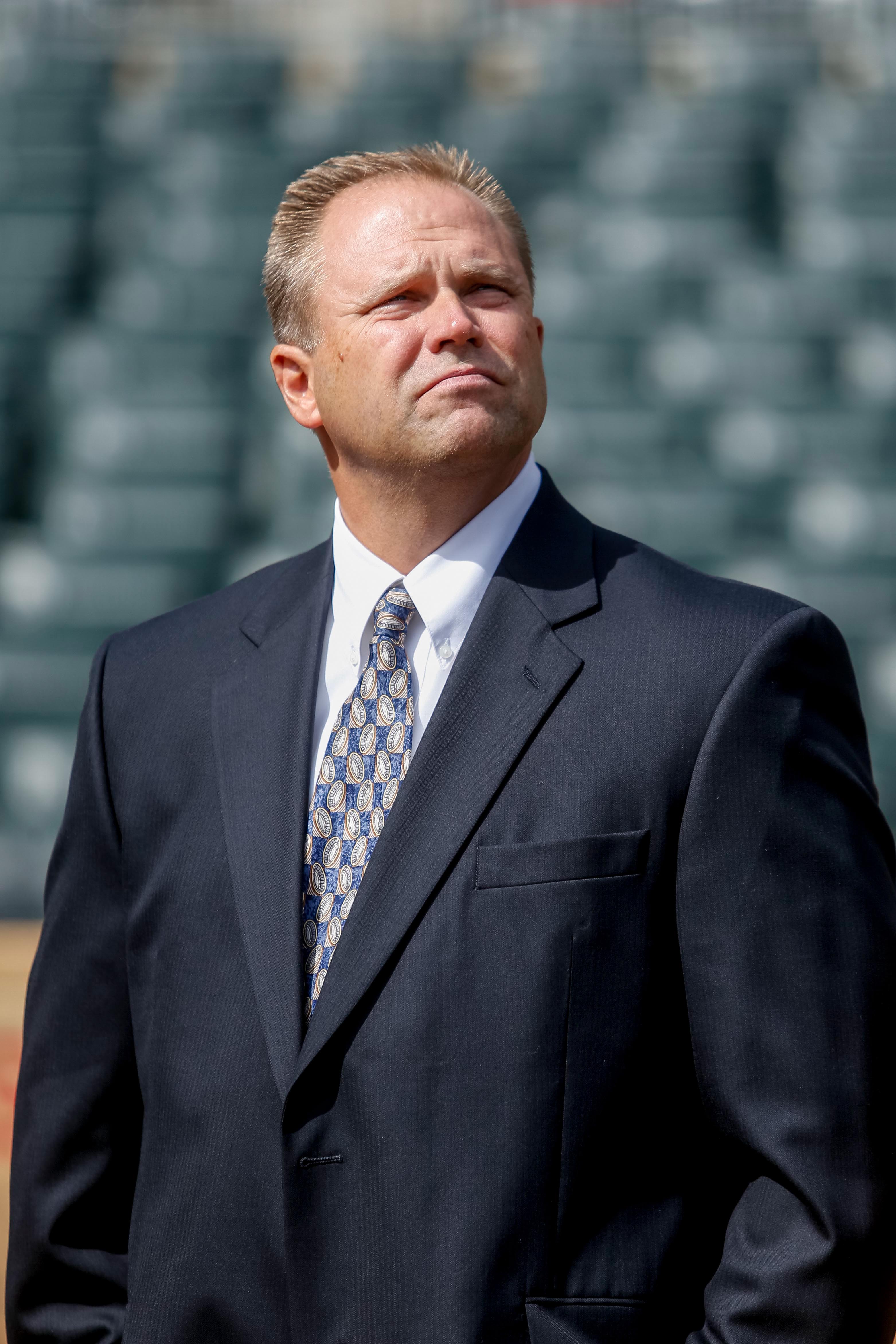
Thus far, we’ve already chatted with Tigers GM Al Avila, Cubs GM Jed Hoyer, Phillies GM Matt Klentak and Reds GM Dick Williams. Next up in our question-and-answer series is Minnesota Twins Vice President and Assistant General Manager Rob Antony – a graduate of the University of Minnesota.
* * * * *
Hi Rob! Thanks for talking to MLBTR. Just like me, you began your baseball career in media relations before moving into baseball operations. Tell me about your start.
“I grew up in Minneapolis, about 15 minutes from the Metrodome. I went to high school in Minneapolis. When I graduated, I was all set to go play baseball at Minnesota Morris, which was 2 ½ hours away – and I was excited. I wasn’t a Division I player by any stretch of the imagination, but I was looking forward to being able to keep playing while getting a good education. Of course, the summer before I went there, I got a call from the head coach – and he told me he just got fired, and a new guy was taking over and that he’d be in touch. Well, he did get in touch, and he let me know he was going to recruit his own people. It was understandable, but at the time, it was disheartening. Now, as you get into the business and you see everything, you understand how that goes. I just opted to stay home and go to the University of Minnesota. I was done playing. I didn’t play college ball. I focused my sights on becoming a sports journalist. I just wanted a career in sports, whether it be writing about hockey or baseball – which were my two preferences. When I went to the University, I started on the journalism path. After about a year, when they started telling me I needed to take magazine layout and editorial classes and all these different things, I started thinking to myself – ‘I just want to write.’ I wanted to cover the Twins or the North Stars. So I shifted gears into speech communications and broadcasting. And that was a good move for me. The journalism classes have helped me throughout my career. But I just felt more comfortable in communications. It ended up leading to an internship with an NBC affiliate here in Minneapolis – KARE TV – in the sports department.”
And that led you to the Twins, correct?
“I got a large break in 1987. They recommended me to the Twins; they needed somebody in the media relations department. The guy who was their intern in the summer had to go back to school in August. At the U. of M., we were on a trimester system and didn’t start until the end of September. I was available to come in and work all day every day. And the Twins of ’87 were marching their way towards the playoffs – which was an unbelievable experience. I was then fortunate enough to intern in media relations all of 1988. There was some movement, and I was hired after I graduated … My time in media relations was great. Some of the things I learned were the continued development of communications – which is so important in our business. I think that’s the case in any business. And the ability to write, and to speak to people, and in front of people has been invaluable as my career has progressed.”
Let’s talk about your time at the University of Minnesota, which is a big commuter school. Did you live at home, or were you able to live on campus?
‘“I lived at home, and I did not have that ‘great’ college experience. A lot of my friends from high school went there as well and lived at home, too. It was an economic thing as much as anything. We could drive 20 minutes. We carpooled together. But we didn’t have a lot of money and we couldn’t afford to just live on campus. I have two kids now that are in college, and one of the things I told them was, ‘You pick where you want to go. You decide what you want to do. But whatever you do, you’re going to go and live on campus and get the entire college experience. That’s something I wish I could have had that I wasn’t able to do, and I want you guys to have that.’ For me, it was a different deal. It was about getting the degree and learning as much as I could – and then moving on to a professional life.”
But there must have been college learnings that have become part of your day-to-day work life, correct?
“Most definitely. Some of that just comes from going to a major university the size of the University of Minnesota. There were 60,000 students. When you had to register for classes, you’d get up there and say you’d want this class, and you’d get ‘Sorry, full.’ You’re now at the front of the line, so you’d get ‘What’s your next choice?’ and you’d have to react on the fly. You needed to know exactly what you needed to take and everything else to make adjustments. Some of the logistics of dealing with those things … I had to learn how to study. I had to learn how to organize and manage my time – especially when I was interning, when I was working 30-4o hours as well as going to class, trying to get my homework done. As it turned out, it probably couldn’t have worked out better with me staying home. I probably wouldn’t have had the opportunity with KARE TV, which wouldn’t have led to my opportunity here. So it’s funny how things can work out for you. I met a lot of good people at school. You do some things with them, but it’s altogether different when people can live on campus. That’s just a whole different lifestyle.”
Did you have favorite professors or influential classes that really helped prepare you?
“Even though I moved out of journalism, I think some of the introductory journalism classes really set the tone for me to know that communication is an important part of things. It became a strength because, during the rest of my college career, I really leaned toward writing-intensive classes. In your article on Jed (Hoyer), he mentioned that he got his degree in American History. I guess if I had to do it all over again, I would have taken more statistics classes and some other things that might have helped me out. I know I would have focused on Spanish; I would have taken Spanish for four years and done everything I could to become well-spoken and bilingual. In this game, it would be such an advantage – and it is for those people who are.”
That sounds like something you tell students who are seeking college advice.
“I give advice to a lot of kids who call and write letters – asking for advice how to get into the game. What are the best ways to get into the game? It’s not an easy thing to do. But there are so many different avenues. My recommendation is – go to college and get your degree in what you have the most interest in. If you put all your eggs in one basket and you go for sports management, there’s a chance that will work out quite well for you. For some clubs, that’s a big separator – and you might get the nod over somebody else.”
On your transcript, what does it say? Bachelor of …
“Speech communication, with a minor in English.
Growing up, were you a Twins fan?
“Absolutely. And I’ve always been a Gopher fan. I continue to cheer for them.”
If you had the choice to do it all over again, would you have stayed at home and gone to the University of Minnesota – or would you have left the area?
“I don’t have any regrets about staying in the area. Minnesota is home for me. Not a lot of people get to grow up cheering for a team and then work for that team. So many people in baseball work where they can – because there’s an opportunity. I was just fortunate to have the opportunity here. If I wouldn’t have stayed at home, I don’t think it would have all fallen in line the way that it did. I don’t know anything other than Minnesota. I don’t know anything other than the Twins. I’ve been fortunate enough to be with them since 1987. I like talking with people from other organizations to see how they do things and get other ideas. I don’t regret staying at home; I’m a Minnesota guy. I’m very appreciative of everything I’ve gotten from the Twins – and I’ve been able to stay home and be where I want to be and do what I want to do. And with this organization, we’ve had so much continuity. There’s always been a definite structure in the hierarchy. Everybody gets their voice heard.”
* * * * *
Chuck Wasserstrom spent 25 years in the Chicago Cubs’ front office – 16 in Media Relations and nine in Baseball Operations. Now a freelance writer, his behind-the-scenes stories of his time in a big league front office can be found on www.chuckblogerstrom.com.
Photo courtesy of USA Today Sports Images.