
The Inner Monologue of @DimTillard Springed
It’s 7:01am in Pheonix, Arizona. Saturday March 31st, 2018. My name is Tim Dillard. The name may sound familiar, but you’d be wrong. Right now though, I’m a nervous professional baseball player in the final decision making days of Minor League Spring Training Camp. Actually, at this EXACT moment, I’m waiting for my clothes to finish washing in the hotel laundry room. I figured if I make a Triple-A team, a Double-A team, or get sent home… I need to at least smell like a success.
7:05am Like I said my name is Tim Dillard, a (off and on) player in the Milwaukee Brewers Organization for the last sixteen seasons, and sometimes I write things like this for MLB Trade Rumors. In fact, MLBTR did a nationwide talent search for veteran Minor League side-arm pitchers who sport great beards, struggle with grammer, and have a knack for avoiding the Big Leagues… and I was crowned the winner! So here we are.
7:07am The Major Leaguers Spring Training Camp has apparently ended with Thursday’s Opening Day… which explains the unusually short lines at the Louis Vuitton Backpack store. And also means that Minor League team rosters will be revealed soon!
7:08am Oddly enough, my previous fifteen seasons in professional baseball have actually NOT prepared me for that giant life-altering moment when informed if I made a team or not. It can be a very stressful time of year for Minor Leaguers like myself. Players in the farm system are anticipating their April fate… all the while juggling potential flights, apartment leases, equipment shipping, roommates, and which direction to point their car.
7:11am Talking about roster cuts with a couple of guys last night, we agreed the hardest part of spring training is probably: looking back at all the months of hard offseason work, and all the long spring days that were put in… and having that mean basically nothing in the end.
7:14am It’s difficult to get and keep a job in baseball. For me, I try not to focus on the things I can’t control. Instead, I focus solely on being the best well-rounded pitcher I can be, and doing whatever I can to impress the coaching staff and the decision makers… but also setting aside time every day to guilt trip them with pictures of my three kids.
7:22am As I was just putting my clothes in the dryer, it occurs to me that most of my baseball season wardrobe is actually older than my kids. I have two pearl button-up shirts I bought my first season in 2003, three pairs of Brewers issued Russell Athletic mesh shorts from 2004-2006, a discount G by Guess zip hoodie I got in 2008 spring training, a Hot Topic Star Wars t-shirt from 2009, a Buckle sweatshirt from 2010, and a short-sleeve collared shirt LaTroy Hawkins gave me in 2011. (thank God for my wonderful wife… who finally convinced me to to get rid of my seven Affliction shirts two seasons ago)
7:27am Anyway, perhaps this means I struggle with change or maybe have a hard time letting go of things. (I wasn’t a psych major in college… but I did ace Baseball Theory)
7:28am Obviously one of the hot topics this spring has been the new rule changes. Of course the Minor Leagues still has the ever important “shot clock” for pitchers, but now there’s a limit to mound visits. However, the biggest change this season is with extra innings. Starting in the tenth inning of every Minor League game, the visiting team will began with a runner on second base. This was put in place in an attempt to prevent super long games. And even though this is a seemingly huge change to the entity of baseball, it actually doesn’t bother me that much… as long as all the players get Goldfish crackers and Caprisuns after the game.
7:38am Oh yeah I almost forgot, the other day I saw my former catcher from 2006 J.C. Boscan who’s now a coordinator for the Kansas City Royals. He said he enjoys reading my Inner Monologues, and asked me why he hasn’t been mentioned in any of them. So this is me mentioning him. J.C. also wanted me to mention the RBI double he hit off me in 2015… but I told him there’s no chance I’d share that!
7:43am You know that’s probably the thing I look forward to the most every spring is catching up with old friends, former teammates, and coaches. And just the people around the game that spring training brings together. Like a few weeks ago when I met Ron Shelton the writer and director of Bull Durham! The classic baseball movie that younger teammates quote to me constantly… “You’ve been in the Majors?”.
7:48am Or this past week when I also met for the first time (and got three bro-hugs from) 5X All-Star and 2015 World Series MVP Salvador Pérez! Pérez told me he follows me on Instagram and wanted my autograph! Actually that’s not true. Salvy didn’t want my autograph. But yeah that’s right… I call him Salvy now.
7:54am Minor League spring trainings are memorable. And I’m thankful to have yet another one, but I assure you, every player is ready to trade in the morning practices and lunchtime games, for a chance to sleep in and battle opponents under some lights!
7:58am Spring training is like watching one of Michael Bay’s Transformers movies… it looks cool and starts out exciting, but toward the end your clawing your eyes out.
8:01am That buzz means my old weathered clothes… are ready for another season.
To Be Concluded…
Remaining Free Agents Of Note
Greg Holland‘s reported agreement with the Cardinals took the remaining top-tier free agent off the market, somewhat fittingly prolonging the most drawn-out free agent market in recent history to a wire-to-wire affair. With the season now underway, and all of our top fifty free agents under contract, we thought it’d be interesting to look at the most notable names still remaining. It’s not certain that all of the below-listed players are still intent on continuing their playing careers, but surely many of them hope to do so — or, at least, did when the offseason got underway.
Catchers
Ryan Hanigan, Chris Herrmann, Derek Norris, Carlos Ruiz, Cameron Rupp, Geovany Soto
Rupp is probably the most notable name on the list, as he’s just 29 years of age and is coming off of a three-year run over which he compiled a .236/.301/.417 batting line with 39 home runs in 1,049 plate appearances. Herrmann opened eyes in 2016 but came back to earth last year; he and the others mostly look to be depth options at this point.
Utility Infielders
Erick Aybar, Darwin Barney, Stephen Drew, Yunel Escobar, J.J. Hardy, Brandon Phillips
There are some notable players here, many of whom have enjoyed lengthy runs as regulars. Both Escobar and Phillips have maintained solid offensive output over the past several years, though neither is capable of playing shortstop. J.J. Hardy certainly still is capable of handling the glove at short, but his bat has collapsed.
Fourth Outfielders
Both of these veterans are capable of playing center, so they could find themselves in some demand if a need for a versatile bench outfielder arises. Of course, neither has distinguished himself offensively in recent seasons.
Corner Bats
Jose Bautista, Melky Cabrera, Andre Ethier, Franklin Gutierrez, Matt Holliday, Adam Lind, Brandon Moss, Jhonny Peralta, Ryan Raburn, Mark Reynolds, Michael Saunders, Seth Smith
It’s rather remarkable to see such a long list of recognizable sluggers out of work, though that certainly dovetails with the widely observed recent market developments. There’s good reason to believe that many of these players can still handle the bat at the game’s highest level, but at this point it seems some of them may end up moving on to other pursuits.
Starting Pitchers
R.A. Dickey, Scott Feldman, Yovani Gallardo, Matt Garza, Ubaldo Jimenez, Scott Kazmir, John Lackey, Jeff Locke, Ricky Nolasco, Jake Peavy, Chris Young
Many teams are also betting on young starters rather than handing off rotation spots to innings eaters. In some seasons in the past, we’d have expected to see a few make-good, low-guarantee MLB deals — or minors pacts with real shots at making the majors — given out to some of these hurlers. Instead, there’s a lot of experience waiting by the telephone. (It’s worth noting that Dickey rather clearly would have commanded a solid guarantee after his productive 2017 season, but has a strict geographic interest area and may not have been interested in pursuing contracts at all.)
Relievers
Antonio Bastardo*, Joe Blanton, Josh Collmenter, Gallardo, Jason Grilli, Daniel Hudson, Eric O’Flaherty*, Dustin McGowan, Jason Motte, Chad Qualls, Young
This list is short on lefties (*), proving yet again that it pays to be a southpaw. Hudson, a hard-throwing 31-year-old released at the tail end of camp, is sure to draw plenty of interest. The outlook is decidedly less optimistic for the others, though in most cases minor-league deals ought to be available.
Offseason In Review: Tampa Bay Rays
This is the latest entry in MLBTR’s 2017-18 Offseason In Review series. Click here to read the other completed reviews from around the league.
A major roster overhaul didn’t entirely signal a new direction for the franchise, as the Rays stopped just short of a rebuild and are hoping to take an unconventional approach to competing in the AL East.
Major League Signings
- Carlos Gomez, OF: One year, $4MM
- Sergio Romo, RP: One year, $2.5MM
- Total spend: $6.5MM
Trades And Claims
- Acquired OF Denard Span, IF Christian Arroyo, LHP Matt Krook, and RHP Stephen Woods from the Giants for 3B Evan Longoria and $14.5MM
- Acquired SP Anthony Banda and two players to be named later from the Diamondbacks for outfielder Steven Souza, plus 2B Nick Solak from the Yankees (the three-team trade also saw the Yankees acquire IF Brandon Drury from the D’Backs for right-hander Taylor Widener)
- Acquired 1B C.J. Cron from the Angels for IF Luis Rengifo
- Acquired RP Daniel Hudson, IF Tristan Gray, and $1MM from the Pirates for OF Corey Dickerson
- Acquired SS Jermaine Palacios from the Twins for SP Jake Odorizzi
- Acquired RHP Curtis Taylor from the Diamondbacks for RP Brad Boxberger
- Acquired 2B Joey Wendle from the Athletics for C Jonah Heim
- Acquired IF/OF Rob Refsnyder from the Indians for cash considerations
- Acquired IF Ryan Schimpf from the Padres for IF Deion Tansel
- Acquired a player to be named later/cash considerations from the Braves for Schimpf
- Acquired $1MM in international bonus pool funds from the Mariners for LHP Anthony Misiewicz
- Claimed IF Micah Johnson off waivers from the Giants
Notable Minor League Signings
- Vidal Nuno, Curt Casali, Ryan Weber, Adam Moore, Jonny Venters, Brandon Snyder, Johnny Monell, Colton Murray, Adam Kolarek, J.D. Martin, Cody Hall, Jelfry Marte (international signing, $800K bonus)
Notable Losses
- Longoria, Souza, Dickerson, Odorizzi, Boxberger, Alex Cobb, Logan Morrison, Lucas Duda, Tommy Hunter, Steve Cishek, Xavier Cedeno, Dan Jennings, Chase Whitley, Peter Bourjos, Trevor Plouffe, Colby Rasmus, Taylor Guerrieri, Shawn Tolleson
Rays 25-Man Roster & Minor League Depth Chart; Rays Payroll Overview
Needs Addressed
For the last couple of years, the conventional wisdom surrounding the Rays has been that they wouldn’t pursue a rebuild until Chris Archer and Evan Longoria were traded. Archer is still here, as no team was willing to meet Tampa Bay’s enormous asking price for the ace, but Longoria’s days as the face of the franchise came to an end when the longtime third baseman was moved to the Giants as the centerpiece of a five-player blockbuster.
The Longoria trade more or less opened the floodgates on the Rays dealing several of their most notable players. It was known that the team was preparing to trim payroll this winter, and with a large and increasingly expensive arbitration class on the books, many of those names now find themselves in different uniforms. Gone is Jake Odorizzi, traded to the Twins for a low-level prospect in what was essentially a dump of his $6.3MM salary. Gone are 30-homer man Steven Souza and former closer Brad Boxberger to the Diamondbacks in separate trades. Gone is 2017 All-Star Corey Dickerson, sent to the Pirates for a reliever in Daniel Hudson who has since been released.
Combined with a significant list of free agent departures (i.e. Alex Cobb, Tommy Hunter, Logan Morrison) and a few more arb-eligibles that were just let go for no return (Dan Jennings, Chase Whitley, Xavier Cedeno) and it makes for a pretty stark roster exodus for Tampa Bay. The fire sale would’ve been even more pronounced if the Rays had found takers for Brad Miller or Alex Colome, the latter of whom at least drew some significant trade interest.
Still, there is a glass half-full way to look at the Rays’ moves. Firstly, the team hadn’t had a winning season since 2013, so it isn’t like the Rays are breaking up a dynasty. Secondly, the moves are perhaps more palatable to Tampa fans if you look past the names of the players and instead just look at their recent production.
Longoria, for instance, is a franchise icon, but also a 32-year-old coming off his worst offensive season (96 wRC+) and owed $86MM through his age-36 season. Odorizzi was a replacement-level pitcher last season, posting the highest hard-hit ball and homer rates of his career. Dickerson’s numbers cratered badly over the last three months of 2017, while injuries limited Boxberger to just 53 2/3 innings total over the last two seasons. The Souza trade is a bit of a tougher swallow given his breakout performance and affordable remaining control, but as Rays senior VP of baseball operations Chaim Bloom recently explained, the club felt it too good an offer to pass up. (Indeed, newly-acquired southpaw Anthony Banda may end up playing a significant role in Tampa’s rotation in this very season, as we’ll explore more in depth later, while Nick Solak is an interesting prospect in his own right.)
Aside from Banda, Denard Span and Christian Arroyo look to have the most potential2018 impact of any of the players acquired in these trades. Span’s inclusion was in the Longoria deal was mostly about offsetting the salaries involved. Since the Rays were unable to flip him in another deal, the veteran will open the season as the team’s first choice left fielder. Beyond Span being reinvigorated by playing in his hometown, the move from center field to left should help Span regain some defensive value, and his consistently-good numbers against righty pitching make him a productive member of a platoon.
Arroyo showed little over his first 135 plate appearances as a big leaguer, though a pair of hand injuries kept him from ever establishing any sort of a rhythm. The infielder is still just 22 years old and has been a fixture of top-100 prospect lists over the last few seasons (MLB.com still ranks Arroyo 81st on their current listing), so Arroyo still shows a lot of promise as a potential third or second baseman of the future in Tampa Bay. He could find himself at the hot corner this year should Matt Duffy run into any more injury issues or simply fail to produce.
With all of these holes opening up on the roster, the Rays made a number of low-cost trades and signings to create a number of platoon possibilities. Second base could see the Rays use Daniel Robertson against lefties and newly-acquired Joey Wendle against righties, with Arroyo or top prospect Willy Adames also potentially factoring into the keystone picture at some point. Utilityman Rob Refsnyder can also play second base , though it’s more likely that he’ll be used as a right-handed hitting complement for Span in left field.
C.J. Cron could technically share time at first base with Brad Miller, though the likelier scenario is that Cron gets the bulk of everyday at-bats while Miller is the DH, with other players rotating into the DH spot to spell Miller against left-handers. Cron was the odd man out of a crowded first base/DH picture with the Angels, paving the way for the Rays to land him at a low prospect cost and add a career 107 wRC+ player to their regular lineup.
The other big everyday addition was Carlos Gomez, signed as Souza’s replacement for right field on a one-year, $4MM contract. Gomez may have been one of several players harmed by the free agent signing lull this offseason, as a .255/.340/.462 slash line over 426 PA with the Rangers last season seemingly could’ve or should’ve earned him a larger deal (MLBTR projected Gomez for two years and $22MM). Gomez is an injury risk, though the move to right field should help his defensive numbers and he already showed some revival on the basepaths last year, with 13 steals and a +2.1 mark in Fangraphs’ Baserunning metric. With the possibility of some DH time and Mallex Smith on hand to spell Gomez against some right-handers, Tampa may have scored a bargain in a valuable regular for just $4MM. For perspective, Gomez posted 2.3 fWAR in 426 PA while Dickerson managed 2.6 fWAR but in 629 PA.
Several veteran relievers departed the Rays’ bullpen this winter, though Sergio Romo will stick around after signing a $2.5MM deal for 2018. Romo looked like a new man after joining the Rays in a midseason trade from the Dodgers, rebounding from a rough performance in L.A. and posting a 1.47 ERA, 8.2 K/9 and a 4.00 K/BB rate over 30 2/3 innings in a Tampa uniform. Romo will slot in as Colome’s setup man and be one of the few traditional relievers in a bullpen that will be loaded with swingmen.
Questions Remaining
With more and more teams choosing to adopt the wholesale rebuild model recently used to great success by the Astros and Cubs, the old idea of “rebuilding on the fly” has come to be seen as a half-measure at best and a fool’s errand at worst. One can’t fault the team’s braintrust (owner Stuart Sternberg, president Matt Silverman, GM Erik Neander, and Bloom) for wanting to remain competitive rather than bottom out entirely, though without even a .500 record to show from the last four seasons, the Rays are in the dreaded treading-water area of not actively tanking but also not actually contending.
 Had the Rays decided earlier that a rebuild was necessary, they would’ve had much more to show from their trades of veteran talent. It could be argued that they sold high on Souza, though Tampa would’ve landed a much higher return on Odorizzi last winter before his rough 2017 season cratered his value. It was surely painful to part ways with Longoria even when they did, though trading him a year earlier, when Longoria was coming off an outstanding 2016 season, could’ve netted the Rays the type of prospect package that immediately set the table for a new contention window.
In fairness, however, it surely didn’t help the Rays that they were shopping these trade chips in a market already flooded with talent due to a stalled free agent market. Moving Dickerson for a decent return, for instance, proved to be impossible since so many other power bats were available at bargain prices. (Of course, it’s a bit odd that they took the deal they did, as they could have saved quite a bit more money by simply releasing Dickerson. Perhaps the club believes in prospect Tristan Gray.) Still, that just adds to the argument that Tampa Bay was too late rather than too early in dealing some of these players. Trading higher-priced players is a way of life for a small-market team, though failing to get much back from those trades when they do happen is a major setback.
The Rays didn’t provide much on offense last season apart from hitting home runs, and in theory a heavier usage of platoons and the addition of more athletic baserunners can help add dimensions to the lineup. Still, the power shortage is hard to ignore — as Marc Topkin of the Tampa Bay Times recently observed, 171 of the 228 home runs hit by Rays players in 2017 were provided by players no longer on the roster.
The likes of Cron, Gomez, or Span aren’t known for providing a lot of pop, so runs could still be hard to come by unless Kevin Kiermaier takes another step forward as a hitter or Brad Miller returns to his 2016 form. The Rays were known to be looking for a right-handed hitting outfielder to share time with Span in left field or Miller at DH, and despite several prominent bats still available on the market, the team seemed to settle for Refsnyder, who has yet to exhibit any hitting prowess as a big leaguer.
The losses of Cobb and Odorizzi left the Rays short on proven pitchers, and while the team had young arms to help pick up the slack, the Rays are planning to address the rotation in rather curious way. Inspired by the additional off-days in this year’s MLB schedule and the number of multi-inning arms available in the bullpen and upper minors, Tampa planned to deploy a four-man rotation of Archer, Jake Faria, Blake Snell, and Nathan Eovaldi. The traditional fifth spot in the rotation would be accounted for by bullpen days where several pitchers combine for one, two, or three innings apiece. Three rookies (Ryan Yarbrough, Yonny Chirinos, Andrew Kittredge) were kept on the roster with intentions of filling large roles in this plan as multi-inning relief options.
It’s a bold plan to say the least — potentially quite an innovative one given the increased use of relief pitching in baseball over the last few years and the analytic advantage shown to exist by not letting batters get multiple looks at a pitcher’s arsenal. Unfortunately for the Rays, however, the cracks in the idea have already started to show due to a raft of pitching injuries afflicting the team. Two of Tampa’s top pitching prospects (Brent Honeywell and Jose De Leon) are lost until 2019 due to Tommy John surgery, while Eovaldi will also start the year on the DL and is himself headed for another elbow surgery (albeit one that’s not as momentous as the two TJ procedures he has already undergone).
With Eovaldi gone, the Rays will try to get by with a three-man rotation for as long as possible. It remains to be seen if the Rays could simply elevate someone like Banda or Matt Andriese into the rotation in Eovaldi’s place, or if the team could eventually settle into a more traditional five-starter alignment as the season progresses. Regardless, Tampa Bay is putting a lot of faith in a lot of untested arms, and any further injuries will only further thin out the heavy number of pitchers necessary on the Major League and minor league rosters to properly execute such an idea. It’s an experiment that, frankly, would make more sense for a team that was in a complete rebuild and could afford to lose games while tinkering with the mechanics of how a four-man rotation would work. Facing the heavy lineups of the AL East is difficult enough for any pitching staff, let alone one in a constant state of managing innings. Nevertheless, it’ll be interesting to see how things unfold.
The Rays’ current payroll of roughly $79.5MM actually sits a bit higher than their $76MM figure at the end of last season, though they gained far more future flexibility by getting so many of the arbitration-eligibles off the books and by unloading Longoria’s contract. The fact that a payroll approaching even $80MM is a major obstacle for the Rays, however, hasn’t escaped the attention of the players’ union, as the Rays were one of four teams named in an MLBPA grievance about how those clubs were spending money received under the league’s revenue-sharing plan. While the results of the grievance remain to be seen, it doesn’t seem that the Rays’ financial situation is likely to change until the team finally gets a new ballpark.
Overview
Neander insists that tanking isn’t in the Rays’ vocabulary, and that the team’s moves will help build a bridge to the arrival of Adames, Honeywell, Arroyo, Jake Bauers, Brendan McKay, and others as the young core of a future contender. With a push for a new ballpark underway, it certainly makes added sense not to pare things back too severely. Between the veteran additions, full seasons for Kiermaier and Wilson Ramos, and the potential upside of the pitching plan, there is some reason for optimism, though quite a bit would have to go right for a run at playoff contention.
What’s your take on the Rays’ winter? (Link for app users)
How Would You Grade The Rays' Offseason?
-
D 34% (931)
-
C 26% (702)
-
F 25% (673)
-
B 12% (319)
-
A 3% (88)
Total votes: 2,713
Photos courtesy of USA Today Sports Images
Offseason In Review: Pittsburgh Pirates
This piece is part of MLBTR’s 2017-18 Offseason In Review series. Click here to read the other completed reviews from around the league.
The Pirates moved two key veterans and dropped their payroll this winter, but did not embark upon a full rebuilding course.
Major League Signings
- None
- Acquired RHP Joe Musgrove, RHP Michael Feliz, 3B Colin Moran & OF Jason Martin from Astros in exchange for SP Gerrit Cole
- Acquired RHP Kyle Crick, OF Bryan Reynolds & $500K international pool space from Giants in exchange for OF Andrew McCutchen & $2.5MM
- Acquired OF Corey Dickerson from Rays in exchange for RHP Daniel Hudson, INF Tristan Gray & $1MM
- Acquired LHP Josh Smoker from Mets in exchange for LHP Daniel Zamora & cash
- Claimed LHP Nik Turley off waivers from Twins
- Claimed LHP Sam Moll off waivers from Athletics (later lost on waivers)
- Claimed INF Engelb Vielma off waivers from Phillies (later lost on waivers)
- Claimed RHP Shane Carle off waivers from Rockies (later traded to Braves for PTBNL)
- Selected RHP Jordan Milbrath in Rule 5 draft from Indians (later placed on waivers)
- Acquired Rule 5 rights to RHP Nick Burdi from Phillies for international pool space
- Exercised $14.5MM club option over OF Andrew McCutchen
- Signed LHP Felipe Rivero to four-year, $22MM extension (plus two club options)
- Ryan Lavarnway, Daniel Nava, Michael Saunders (since released), Bo Schultz, Kevin Siegrist
- McCutchen, Cole, Hudson, Johnny Barbato, Joaquin Benoit, John Jaso, Wade LeBlanc, Chris Stewart
Pirates Depth Chart; Pirates Payroll Information
Needs Addressed
Need is certainly a term that’s subject to being defined, even in the baseball context. For the Pirates, it seems, this offseason was focused on tweaking the overall roster mix to infuse some youth and draw down payroll. The Pirates’ sparse payroll has long been a source of consternation for the team’s fans. But complaints against owner Bob Nutting reached a new high this winter after a pair of trades sent away two core players.
Spending on MLB players had ramped up steadily from 2011 to 2015 — the season in which the Bucs peaked at 98 wins but also fell for the second consecutive season in the Wild Card play-in game. In the ensuing campaign, the Pittsburgh organization moved up to just under $100MM to open the season and expanded its spending to just shy of $110MM by the end of the year. But many felt that the team missed a chance to make further investments around a strong core.
Then, last season, the Pirates saw a reduction in their Opening Day payroll and did not expand past the $110MM line by the end of a disappointing campaign. As the 2018 season draws near, it’s clear that the Pirates will be taking a big step back in spending, with around $85MM on the books.
Getting there meant structuring two key swaps. First, the Bucs agreed to send staff ace Gerrit Cole — the former first overall draft pick — to the Astros in exchange for a four-player package. Favoring a spread of useful MLB-ready talent over a big-name headliner, the Pirates brought in three players who’ll likely step right onto the active roster.
Colin Moran will help account for the fact that Jung Ho Kang likely won’t ever play for the Pirates again. The former sixth overall draft pick will try to make good on his own promise after a strong 2017 campaign at Triple-A. Joe Musgrove will give the team a useful and affordable rotation piece or swingman who helps fill in for the loss of Cole. And the high-powered Michael Feliz will be inserted right into a setup role, where he’ll try to harness his big-time stuff — as is reflected in his 96.6 mph average fastball and 14.2% swinging-strike rate in 2017. Feliz could function in the high-leverage role that Juan Nicasio held for much of 2017, before a controversial September move that allowed Nicasio to land with the division-rival Cardinals.
The Cole swap, then, helped fill quite a few openings that had been facing the team entering the winter. Moran will join Jordy Mercer on the left side of the infield, after the Pirates decided to hang onto their long-time shortstop. I had suggested in assessing the team’s outlook last fall that Mercer could be jettisoned, but the Bucs decided he was worth a $6.75MM arbitration tab.
Moving Cole made it all but certain that long-time franchise face Andrew McCutchen would also be dealt. The eventual move brought in one MLB-ready asset in righty Kyle Crick, along with prospect Bryan Reynolds, but it was mostly about trimming salary. The Giants took on all but $2.5MM of the cash owed to McCutchen, who will be eligible for free agency following the season.
All in all, the trade was something of an anti-climactic way for Cutch’s storied tenure in Pittsburgh to come to a close. He is, at least in part, still within his prime years, so this wasn’t just a fond goodbye to a broken-down veteran. At the same time, recent struggles (and a glut of outfielders in free agency) left McCutchen without much of a market, so there wasn’t a major haul of talent coming back in return.
Though Crick will factor into the depth in 2018, he won’t make the Opening Day roster. One new addition will, though: lefty Josh Smoker. The former first-round pick, who has been resurgent as a reliever, is the only one of several low-cost pick-ups who stuck on the 40-man roster all winter and spring long. (Rule 5er Nick Burdi is also still around, though his fate won’t begin to be decided until he’s back from Tommy John surgery.)
Had the offseason ended there, we might’ve seen riots at the gates of PNC Park. But the Bucs front office went on to strike a deal for outfielder Corey Dickerson — who had been designated for assignment by the Rays — that was at least a win in terms of public relations. Dickerson, after all, was an All-Star in 2017 and only required the addition of $1.45MM in salary since the Bucs shed Daniel Hudson (whom the Rays later released) in the deal. While it had seemed the team would utilize a platoon involving the lefty hitting Daniel Nava to replace McCutchen, they’ll instead plan to utilize Dickerson as the primary left fielder. He’ll need to bounce back from a dreadful second half in 2017, but there’s little denying that he gives the Pirates’ lineup a significant boost at a minimal cost.
Questions Remaining
In the aggregate, the offseason decisions left the Pirates with a roster mix that includes quite a few young players as well as some veteran holdovers. The Bucs will use the coming season to see whether they can make out a new slate of core performers while trying to contend in a tough NL Central. If the team can’t keep pace, some mid-season trades and promotions could well result.
In the rotation, Ivan Nova will serve as the veteran leader of an otherwise youthful group. He could well end up as trade fodder if there’s a summer sell-off. Musgrove will join a unit that’s expected to feature Jameson Taillon, Trevor Williams, and Chad Kuhl to open the season. The top 40-man depth options are Nick Kingham and Clay Holmes, though it certainly seems possible that the Pirates will look into adding some veteran pieces as players come available.
If the young guns perform as hoped, this could be a solid, cost-efficient unit. But there’s also quite a bit of uncertainty and the group isn’t exactly teeming with upside. If there’s a front-of-the-rotation breakout candidate on hand, it may be long-time top prospect Tyler Glasnow, but his near- and long-term outlooks remain unclear. Glasnow dominated last year at Triple-A but scuffled in the bigs. He got plenty of swings and misses in camp but will begin the year in the bullpen after allowing 13 earned runs in his 16 innings of Grapefruit League action.
Otherwise, the relief unit will again be led by Felipe Rivero, who inked a long-term deal with the club over the winter (as discussed further below). The aforementioned Feliz will join veteran George Kontos in the late-inning unit. The remainder of the pen is loaded with affordable, controllable but largely unestablished pitchers, including Smoker, Edgar Santana, Dovydas Neverauskas, and Steven Brault. Depth comes in the form of Crick, minor-league signees Kevin Siegrist and Bo Schultz, and a group of others that aren’t on the 40-man roster. Not unlike the rotation, the Pirates are staking wagers on quite a few inexperienced arms in their relief corps.
In terms of position players, the Bucs will hope that their outfield unit is able to morph back into a strength. Starling Marte and Gregory Polanco are both talented players signed to affordable long-term deals. Whether or not they can turn in full and productive seasons will go a long way toward deciding the team’s immediate fate. Dickerson could be a nice addition to this unit, though the 28-year-old will need to bounce back from a .232/.273/.397 slash and 28.4 percent strikeout rate from July 1 through season’s end. With one more year of arbitration eligibility remaining, Dickerson could potentially end up as a trade candidate at some point in the relatively near future.
Potential trade candidates also populate the infield. Backstop Francisco Cervelli is earning $10.5MM this season and $11.5MM for 2019. If he can stay healthy, he could still be a quality asset. The versatile Josh Harrison, who’s slated to be the regular second baseman, came up in talks all winter long after a strong 2017 season. Though he’s plenty useful to Pittsburgh and remains controlled for two more seasons beyond 2018, he also isn’t all that cheap with option values of $10.5MM and $11MM. Then, there’s Mercer, who’ll again command near-everyday time at short but is entering a walk year.
It’ll surely be interesting to see how the middle-infield situation plays out over the coming season. Well-regarded prospects Kevin Newman, Cole Tucker, and Kevin Kramer are pressing up from within; it’s not inconceivable that any of the bunch could warrant a first MLB promotion during the coming season.
The first base job will be left to Josh Bell after his strong 2017 campaign, but third base offers more possibility for intrigue. Colin Moran is going to get a shot to show his swing changes can sustain a power increase in the majors, with veteran David Freese there to face tough lefties. Recent first-round pick Ke’Bryan Hayes is still a ways off, and Freese isn’t considered a regular option at this stage of his carer, so the odds are that Moran will receive a long look.
In addition to the promising youngsters noted above, there are loads of depth pieces on hand in the event that trades, injuries, or stumbles intervene to create a need. Adam Frazier and Sean Rodriguez will be the Bucs’ lefty and righty Swiss Army knives, serving as substitute options in both the infield and outfield. Max Moroff and Chris Bostick are alternative 40-man utility choices, while Jose Osuna is likely the first man up in the outfield after a nice spring. Other outfield possibilities on the 40-man are Jordan Luplow and Austin Meadows, the long-time top prospect who is aiming for a bounceback campaign.
Deal of Note
It became something of a gag that the Pirates inked Rivero not long after dealing away Cole and Cutch — as if that relatively limited financial commitment could make up for parting with the team’s most talented pitcher and long-time superstar. But the Rivero pact was a legitimately notable extension that should move the needle in the long run.
The 26-year-old lefty, who was acquired from the Nationals for half a year of Mark Melancon, harnessed his premium stuff to become one of the game’s best relievers in 2017. He pitched to a 1.67 ERA in 75 1/3 innings with 10.5 K/9 and 2.4 BB/9 while also accumulating 21 saves after taking over the closer’s role partway through the season.
So long as he continues to handle the ninth, Rivero is likely keep aggregating the kinds of numbers that would lead to hefty arbitration earnings. The four seasons of arb control, beginning in 2018, quite likely would have cost a good bit more than the $22MM that Rivero will actually earn. Plus, the two years of $10MM options could be of quite some value, given the cost of premium relievers on the open market.
This sort of agreement just won’t be as momentous as earlier Bucs extensions — McCutchen, Marte, Polanco — have been (or could be). But it’s a move that improves the value of an already high-quality, existing asset. If the organization’s payroll is going to remain as tightly controlled as it has been, then this type of deal could one day free the Pirates to make one more addition to a hopeful contending roster.
Overview
It’s not difficult to imagine the MLB roster looking quite a bit different by year end than it does now. There are plenty of mid-season trade possibilities, though this roster shouldn’t be counted out entirely from contention. Regardless, the number of inexperienced pitchers in the majors and upper-level position prospects who’ll open in the minors could be a recipe for turnover. It’s tough to get excited over the moves, in the aggregate, but the reasoning behind the approach becomes a bit more apparent when one considers how many potentially worthwhile, cost-efficient 40-man pieces will be tested for the future. Of course, things would probably look a lot more compelling with a few more talented players on the roster and a few more dollars on the payroll.
What are your thoughts on Pittsburgh’s offseason? (Link for app users)
How Would You Grade The Pirates' Offseason?
-
C 33% (735)
-
D 31% (696)
-
F 19% (428)
-
B 15% (331)
-
A 3% (65)
Total votes: 2,255
Photos courtesy of USA Today Sports Images.
Offseason In Review: Toronto Blue Jays
This is the latest entry in MLBTR’s 2017-18 Offseason In Review series. Click here to read the other completed reviews from around the league.
The Blue Jays made depth a major priority this winter, making a variety of low-cost/solid-upside acquisitions to fill roster holes and (theoretically) help the club return to postseason contention.
Major League Signings
- Jaime Garcia, SP: One year, $10MM (includes $2MM buyout of $10MM club option for 2019)
- Curtis Granderson, OF: One year, $5MM
- Seung-hwan Oh, RP: One year, $2MM (includes $250K buyout of $2MM option for 2019; option vests if Oh makes 70 appearances)
- Total spend: $17MM
Trades And Claims
- Acquired OF Randal Grichuk from the Cardinals for RP Dominic Leone and SP Conner Greene
- Acquired IF Yangervis Solarte from the Padres for OF Edward Olivares and RP Jared Carkuff
- Acquired SS Aledmys Diaz from the Cardinals for OF J.B. Woodman
- Acquired IF Gift Ngoepe from the Pirates for cash considerations or a player to be named later
- Acquired SP Sam Gaviglio from the Royals for cash considerations or a player to be named later
- Claimed SP Taylor Guerrieri off waivers from the Rays
- Claimed RP Sam Moll off waivers from the Mariners
Notable Minor League Signings
- Tyler Clippard, John Axford, Danny Espinosa, Craig Breslow, Al Alburquerque, Jake Petricka, Nick Tepesch, Luis Santos, Deck McGuire, Rhiner Cruz, Matt Tracy
Notable Losses
- Jose Bautista, Darwin Barney (both still free agents), Ezequiel Carrera, Ryan Goins, Miguel Montero, Michael Saunders, Tom Koehler, Rafael Lopez, Rob Refsnyder, Leone
Blue Jays 25-Man Roster & Minor League Depth Chart; Blue Jays Payroll Overview
Needs Addressed
While injuries were a big problem for the 2017 Jays, the larger issue may have been that the club received virtually no help from the injury replacements. Of the 60 players who saw action for the Jays in 2017, only 11 of them generated more than 1.0 rWAR. Combine that overall lack of production with sub-replacement level years from regulars like Jose Bautista and Kendrys Morales, and it was no surprise that the Blue Jays sputtered to a mediocre 76-86 record. With this in mind, the Jays engaged in a near-total overhaul of the bench while also saying farewell to franchise icon Bautista and several other players (Ryan Goins, Darwin Barney, Ezequiel Carrera) who saw a lot of playing time last season.
Of course, Goins and Barney weren’t supposed to get nearly the 821 combined plate appearances they received last year, but the two light-hitting infielders were pressed into regular duty thanks to extended injury absences from Troy Tulowitzki and Devon Travis. With those two players still big question marks health-wise this season (and Tulowitzki already sidelined to begin the season), Toronto loaded up on infield help, acquiring Yangervis Solarte, Aledmys Diaz, and Gift Ngoepe in separate trades with the Padres, Cardinals, and Pirates, respectively. Danny Espinosa was also signed to a minor league deal for further depth at shortstop and second base.
 Diaz looks to be the starting shortstop with Tulowitzki out, and there’s certainly upside to be found in a player who was an All-Star as recently as 2016. After his rookie breakout season, however, Diaz slumped to just a .259/.290/.392 slash line last year, both losing his starting shortstop job to Paul DeJong and also getting a demotion to Triple-A. At worst, Diaz looks to be a solid bench piece for Toronto, and he could potentially be a steal if his 2017 proves to be just a sophomore slump.
Solarte’s trade value took a bit of a hit after a below-average (93 wRC+) offensive year with the Padres last season that saw him hit .255/.314/.416 with 18 homers over 512 PA. Still, the Jays didn’t have to give up much in the way of prospect capital in the trade, and Solarte is only owed $4MM this season before a pair of pricier club options ($5.5MM in 2019, $8MM in 2020) must be addressed. He can play all over the infield and could even handle left field in a pinch, plus the switch-hitting Solarte has solid numbers against right-handed pitching, which will help balance out a very right-handed Toronto lineup.
With Bautista gone and Steve Pearce best suited for part-time duty, the Jays had holes in both corner outfield spots that they addressed with both short-term and longer-term options. Veteran Curtis Granderson signed a one-year, $5MM deal, and his left-handed bat is a natural complement to play alongside the southpaw-mashing Pearce in left field. Granderson has posted above-average offensive numbers against all pitching over the last three seasons, and with Pearce spelling him against southpaws, Granderson could become even more of a force in the hitter-friendly Rogers Centre. Though his on-base numbers have dropped off over the last couple of years, Granderson still projects to be Toronto’s leadoff hitter when facing a righty starter.
Another deal with the Cardinals saw the Jays acquire Randal Grichuk to step into the everyday right field role, though Grichuk is capable of playing all three outfield positions in a pinch. Like Diaz, Grichuk was also seemingly on his way to becoming a regular in St. Louis after posting a nice breakout season (.276/.329/.548 with 17 homers over 350 PA in 2015) but has since trailed off, still displaying some solid power but subpar batting averages and on-base numbers. Grichuk arguably isn’t the best fit for a team that already had lots of trouble with strikeouts and lack of contact in 2017, though at age 26 and under control for three more years, he could still blossom after a change of scenery.
Joe Biagini‘s struggles last season left a vacancy in the fifth starter spot, as the Jays will instead use Biagini as Triple-A depth after signing veteran Jaime Garcia to eat innings and generate ground balls. Toronto’s solid infield defense should mesh well with Garcia’s grounder-heavy style, and a good season could see him remain for 2019 via a $10MM club option.
The Blue Jays also turned to veteran arms to bolster their bullpen, inking several notable names to minor league contracts. Tyler Clippard and John Axford are favored to make the Opening Day roster over the likes of Jake Petricka, Al Alburquerque, and Craig Breslow, and if enough of these pitchers opt to remain in the organization, it will give Toronto quite a bit of extra bullpen depth. Beyond the minors deals, the Jays also brought in yet another ex-Cardinal in Seung-hwan Oh on a Major League contract to add to the setup mix behind closer Roberto Osuna.
Questions Remaining
While Grichuk, Solarte, and Diaz all underachieved in 2017, they don’t need to produce much in 2018 to improve on what Bautista, Goins, and Barney did (or didn’t do, to be more accurate) last season. Between the new trio and Granderson, the Jays acquired much more positional and matchup flexibility than they had on last year’s roster, and they were able to bring in these reinforcements for a relatively small cost in cash and prospects.
The biggest question still facing the Blue Jays, however, is whether more than just mid-tier acquisitions were needed to keep the team afloat in a very competitive AL East. In an offseason that saw the Yankees land Giancarlo Stanton and the Red Sox sign J.D. Martinez, Toronto’s more modest adds don’t quite seem enough to close the gap with the two division powerhouses. If the Jays’ best path to the postseason is through the second AL wild card spot, it isn’t clear if they’ll have enough to battle the Twins or Angels, to name two clubs who made bigger splashes on the transaction front.
This isn’t to say that the Blue Jays didn’t at least explore some higher-profile moves, as the team was linked to the likes of Martinez, Christian Yelich, Lorenzo Cain, Andrew McCutchen, and Alex Cobb on the rumor mill. Instead, in settling for a group of players that aren’t guaranteed beyond the 2018 season, the Mark Shapiro/Ross Atkins front office gave itself some flexibility in deciding if this current talent core is really a contender, which is an open question in the wake of the mediocre 2017 campaign. Even if the newcomers all perform as expected, it won’t lead to much progress in the standings if the rest of the team can’t stay healthy or rebound from what was almost a team-wide (save for Josh Donaldson, Marcus Stroman and Justin Smoak) set of disappointing seasons.
Reports from Spring Training about Devon Travis’s knee issues and Aaron Sanchez‘s recovery from blister and finger problems are promising, though the Jays won’t really feel comfortable about either player until they get some solid playing time under their belts. As noted earlier, Tulowitzki is already facing another DL stint and the veteran shortstop isn’t certain when he’ll be back on the field. The Jays didn’t make any upgrades at backup catcher, so they’ll be hoping that Russell Martin far surpasses his 91-game total from 2017, lest Luke Maile or rookie prospect Danny Jansen be pressed into regular work.
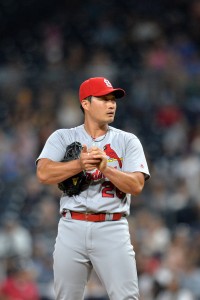
Garcia gives the Jays five solid starting pitchers in a rotation that could be quite good if Sanchez, J.A. Happ and Marco Estrada all bounce back to their past form. Beyond those five, however, Biagini leads a very inexperienced crop of starters at Triple-A, and there aren’t any obvious swingman-types on the 40-man roster aside from Biagini himself to easily step in for spot duty.
Problems in the rotation will lead to more work for the bullpen, coming off a season that saw the Blue Jays post the third-most relief innings of any team in baseball. While the veteran signings represent fresh arms, none of them are coming off particularly good seasons (hence their availability on minors contracts), so it remains to be seen if they’ll be able to contribute properly. Oh, for instance, saw his contact and homer rates increase from 2016, and he represents something of a wild card as he enters his age-35 season and his third year in North American baseball.
Finally, Donaldson’s future has been a notable subplot of the Jays’ offseason, though the team was adamant all along that it wasn’t looking to trade its star third baseman. (The Cardinals were one team known to be interested, and it’s quite possible the Grichuk and Diaz trades might have branched out of any inquiries St. Louis made about Donaldson.) As of February, extension talks between Donaldson and the Jays didn’t seem to be progressing, and the former MVP was already putting negotiations aside to focus on the season.
Donaldson has been hampered by some nagging injuries throughout the spring, including some calf soreness that stands out as particularly troubling given that a calf strain cost him a decent chunk of last season. The Jays absolutely need Donaldson at full strength, firstly to help them contend and (in a worst-case scenario) so Donaldson could become a midseason trade chip in the event of another sub-.500 season.
Overview
The Blue Jays’ long-term plan is to ride an oncoming wave of prospects into regular contention in the AL East, with top minor leaguers Vladimir Guerrero Jr., Bo Bichette, Anthony Alford, Ryan Borucki, and Jansen all expected to reach the majors by 2019 at the latest. The question is whether these youngsters will be reinforcing a team that’s already vying for the postseason, or one that has taken a step back to rebuild for 2020 or 2021.
Based on the Jays’ maneuvers this offseason, they’re hedging their bets about either scenario. If last season really was just an injury-riddled fluke, Toronto could take a lot of teams by surprise in 2018. Raising a talent floor is a much more cost-effective strategy than raising a talent ceiling, particularly for a Jays club that has so much money already tied up in players (i.e. Tulowitzki, Morales) who might not be very productive. Then again, the Jays could improve by 10 wins and that still might not be enough in the wild card race, leaving the team wondering if they should’ve made a bolder acquisition or two for what could be the final seasons in Toronto for pending free agents like Donaldson, Estrada, Happ, Granderson, and Pearce.
What’s your take on the Blue Jays’ winter? (Link for app users)
How Would You Grade The Blue Jays' Offseason?
-
B 38% (1,432)
-
C 38% (1,431)
-
D 14% (515)
-
F 6% (234)
-
A 5% (202)
Total votes: 3,814
Photos courtesy of USA Today Sports Images
Tracking Non-Roster Invitees With Big League Experience
More than 600 non-roster players were invited to MLB Spring Training with a chance to win an Opening Day roster spot. Nearly half of them have MLB experience and are hoping for a return to the Majors, following the path of close to 40 former big leaguers who made their team’s respective Opening Day roster last April after signing a Minor League deal during the offseason.
Here’s this year’s list of non-roster invitees with MLB experience, including reported salary in the Majors and opt-out dates. This post will be updated as necessary through the end of Spring Training.
Last updated: 3/27/18
*Players currently projected by Roster Resource to make an Opening Day Roster are in bold/italics.
NATIONAL LEAGUE
- ARIZONA DIAMONDBACKS | Depth Chart
- Anthony Recker, C REASSIGNED
- Josh Thole, C RELEASED
- Kristopher Negron, INF/OF REASSIGNED
- Ramon Flores, OF REASSIGNED
- Rey Fuentes, OF REASSIGNED
- Cesar Puello, OF REASSIGNED
- Jake Buchanan, SP/RP REASSIGNED
- Kris Medlen, SP/RP $1.1MM salary in Majors; opt-out 3/27
- Antonio Bastardo, RP RELEASED
- Michael Blazek, RP/SP REASSIGNED
- Jorge De La Rosa, RP $2.25MM salary in Majors
- Neftali Feliz, RP REASSIGNED
- Fernando Salas, RP $1.5MM salary in Majors
- ATLANTA BRAVES | Depth Chart
- Rob Brantly, C REASSIGNED
- Christian Colon, INF REASSIGNED
- Sean Kazmar, INF REASSIGNED
- Danny Santana, INF/OF
- Ezequiel Carrera, OF $650K salary in Majors
- Jaff Decker, OF REASSIGNED
- Anibal Sanchez, SP/RP $1MM salary in Majors
- Luke Jackson, RP REASSIGNED
- Miguel Socolovich, RP REASSIGNED
- CHICAGO CUBS | Depth Chart
- Chris Gimenez, C REASSIGNED
- Taylor Davis, C
- Efren Navarro, 1B/OF
- Mike Freeman, INF/OF
- Peter Bourjos, OF RELEASED/Signed MLB contract with ATL
- Anthony Bass, SP/RP
- Kyle Ryan, RP
- CINCINNATI REDS | Depth Chart
- Tony Cruz, C REASSIGNED
- Cliff Pennington, INF $1.5MM salary in Majors
- Phil Gosselin, INF/OF
- Patrick Kivlehan, INF/OF REASSIGNED
- Darnell Sweeney, INF/OF REASSIGNED
- Ben Revere, OF REASSIGNED
- Mason Williams, OF REASSIGNED
- Vance Worley, SP/RP $1.5MM salary in Majors; opt-out at end of camp
- Barrett Astin, RP REASSIGNED
- Kyle Crockett, RP REASSIGNED
- Dylan Floro, RP REASSIGNED
- Joe Mantiply, RP (Injured) REASSIGNED
- Kevin Quackenbush, RP
- Oliver Perez, RP RELEASED
- Ben Rowen, RP REASSIGNED
- COLORADO ROCKIES | Depth Chart
- Daniel Castro, INF REASSIGNED
- Shawn O’Malley, INF/OF (Injured)
- Brooks Pounders, RP/SP REASSIGNED
- LOS ANGELES DODGERS | Depth Chart
- Rocky Gale, C REASSIGNED
- Max Muncy, INF/OF REASSIGNED
- Travis Taijeron, OF REASSIGNED
- Daniel Corcino, RP REASSIGNED
- C.C. Lee, RP REASSIGNED
- Mark Lowe, RP RELEASED
- Pat Venditte, RP REASSIGNED
- Zach Neal, SP/RP REASSIGNED
- MIAMI MARLINS | Depth Chart
- Bryan Holaday, C
- Scott Van Slyke, 1B/OF
- Cristhian Adames, INF
- Johnny Giavotella, INF REASSIGNED
- Yadiel Rivera, INF
- Eric Campbell, INF/OF
- J.B. Shuck, OF
- Tyler Cloyd, SP/RP REASSIGNED
- Jacob Turner, SP/RP
- Jumbo Diaz, RP
- Javy Guerra, RP
- Drew Rucinski, RP REASSIGNED
- Alex Wimmers, RP REASSIGNED
- MILWAUKEE BREWERS | Depth Chart
- Christian Bethancourt, C
- Ji-Man Choi, 1B
- Nick Franklin, INF/OF
- Wade Miley, SP $2.5MM salary in Majors (Injured)
- Michael Brady, RP REASSIGNED
- Erik Davis, RP REASSIGNED
- Ernesto Frieri, RP RELEASED
- J.J. Hoover, RP $1.1MM salary in Majors
- Radhames Liz, RP/SP
- NEW YORK METS | Depth Chart
- Jose Lobaton, C REASSIGNED
- Phillip Evans, INF
- Ty Kelly, INF/OF REASSIGNED
- Matt den Dekker, OF REASSIGNED
- A.J. Griffin, SP REASSIGNED
- Matt Purke, RP REASSIGNED
- PHILADELPHIA PHILLIES | Depth Chart
- Matt McBride, C/1B/OF REASSIGNED
- Will Middlebrooks, 3B/1B $1.2MM salary in Majors (Injured)
- Adam Rosales, INF RELEASED
- Ryan Flaherty, INF/OF RELEASED/Signed MLB deal with ATL
- Pedro Florimon Jr., INF/OF $600K salary in Majors
- Collin Cowgill, OF REASSIGNED
- Danny Ortiz, OF REASSIGNED
- Drew Hutchison, SP
- Fernando Abad, RP RELEASED
- Pedro Beato, RP REASSIGNED
- Francisco Rodriguez, RP RELEASED
- PITTSBURGH PIRATES | Depth Chart
- Ryan Lavarnway, C REASSIGNED
- Jackson Williams, C REASSIGNED
- Todd Cunningham, OF REASSIGNED
- Daniel Nava, OF/1B RELEASED/RE-SIGNED
- Casey Sadler, SP/RP REASSIGNED
- Damien Magnifico, RP REASSIGNED
- Richard Rodriguez, RP REASSIGNED
- Bo Schultz, RP REASSIGNED
- Kevin Siegrist, RP REASSIGNED
- SAN DIEGO PADRES | Depth Chart
- A.J. Ellis, C $1.25MM salary in Majors
- Raffy Lopez, C
- Allen Craig, 1B REASSIGNED
- Dusty Coleman, INF
- Shane Peterson, OF REASSIGNED
- Kyle Lloyd, SP REASSIGNED
- Tyson Ross, SP $1.75MM salary in Majors; opt-0ut 5/15, 6/15
- Chris Young, SP/RP RELEASED
- Jonathan Aro, RP
- Michael Mariot, RP REASSIGNED
- Tom Wilhelmsen, RP RELEASED
- SAN FRANCISCO GIANTS | Depth Chart
- Trevor Brown, C REASSIGNED
- Hector Sanchez, C REASSIGNED
- Kyle Jensen, 1B/OF REASSIGNED
- Andres Blanco, INF RELEASED
- Chase d’Arnaud, INF REASSIGNED
- Josh Rutledge, INF
- Orlando Calixte, INF/OF REASSIGNED
- Alen Hanson, INF/OF REASSIGNED
- Gregor Blanco, OF $1MM salary in Majors
- Derek Holland, SP $1.75MM salary in Majors
- Manny Parra, RP
- Madison Younginer, RP REASSIGNED
- Jose Valdez, RP REASSIGNED
- ST. LOUIS CARDINALS | Depth Chart
- Francisco Peña, C
- Alex Mejia, INF REASSIGNED
- Wilfredo Tovar, INF REASSIGNED
- Jordan Schafer, OF/RP RELEASED
- Sean Gilmartin, SP/RP REASSIGNED
- Jason Motte, RP RELEASED
- Preston Guilmet, RP REASSIGNED
- WASHINGTON NATIONALS | Depth Chart
- Miguel Montero, C $1.3MM salary in Majors
- Jhonatan Solano, C REASSIGNED
- Reid Brignac, INF RELEASED
- Chris Dominguez, INF/OF REASSIGNED
- Ryan Raburn, OF RELEASED
- Moises Sierra, OF REASSIGNED
- Jeremy Hellickson, SP RELEASED/RE-SIGNED
- Edwin Jackson, SP REASSIGNED
- Tommy Milone, SP REASSIGNED
- Cesar Vargas, SP REASSIGNED
- Tim Collins, RP REASSIGNED
- David Goforth, RP REASSIGNED
- Roman Mendez, RP REASSIGNED
- Chris Smith, RP REASSIGNED
—
AMERICAN LEAGUE
- BALTIMORE ORIOLES | Depth Chart
- Pedro Alvarez, DH $1MM salary in Majors
- Luis Sardiñas, INF REASSIGNED
- Ruben Tejada, INF REASSIGNED
- Danny Valencia, INF/OF $1.2MM salary in Majors
- Jaycob Brugman, OF REASSIGNED
- Craig Gentry, OF $900K salary in Majors
- Alex Presley, OF REASSIGNED
- Colby Rasmus, OF $3MM salary in Majors
- Jayson Aquino, SP/RP REASSIGNED
- Eddie Gamboa, SP/RP REASSIGNED
- Tim Melville, SP REASSIGNED
- Asher Wojciechowski, SP/RP REASSIGNED
- Josh Edgin, RP REASSIGNED
- Andrew Faulkner, RP REASSIGNED
- Jeff Ferrell, RP REASSIGNED
- Perci Garner, RP REASSIGNED
- Jason Gurka, RP REASSIGNED
- Jhan Mariñez, RP REASSIGNED
- Joely Rodriguez, RP REASSIGNED
- BOSTON RED SOX | Depth Chart
- Dan Butler, C REASSIGNED
- Oscar Hernandez, C SUSPENDED
- Ivan De Jesus Jr., INF REASSIGNED
- Rusney Castillo, OF REASSIGNED
- Steve Selsky, OF REASSIGNED
- Justin Haley, SP/RP REASSIGNED
- Kyle Martin, RP REASSIGNED
- Fernando Rodriguez, RP REASSIGNED
- CHICAGO WHITE SOX | Depth Chart
- Jake Elmore, OF/INF REASSIGNED
- Jacob May, OF REASSIGNED
- Hector Santiago, SP/RP $2MM salary in Majors
- Xavier Cedeño, RP REASSIGNED
- Jeanmar Gomez, RP REASSIGNED
- TJ House, RP/SP REASSIGNED
- Bruce Rondon, RP REASSIGNED
- Robbie Ross Jr., RP REASSIGNED
- Rob Scahill, RP REASSIGNED
- Chris Volstad, RP/SP REASSIGNED
- Michael Ynoa, RP RELEASED
- CLEVELAND INDIANS | Depth Chart
- Ryan Hanigan, C RELEASED
- Mike Napoli, 1B RELEASED/RE-SIGNED
- Michael Martinez, INF/OF (Injured)
- Richie Shaffer, INF/OF REASSIGNED
- Brandon Barnes, OF REASSIGNED
- Rajai Davis, OF $1.75MM salary in Majors; opt-out 3/22
- Melvin Upton Jr., OF RELEASED
- Stephen Fife, SP REASSIGNED
- Adam Wilk, SP/RP REASSIGNED
- Matt Belisle, RP $1.5MM salary in Majors
- Jeff Beliveau, RP REASSIGNED
- Preston Claiborne, RP REASSIGNED
- Evan Marshall, RP REASSIGNED
- Alexi Ogando, RP/SP REASSIGNED
- Neil Ramirez, RP REASSIGNED
- Carlos Torres, RP RELEASED
- DETROIT TIGERS | Depth Chart
- Derek Norris, C REASSIGNED
- Jarrod Saltalamacchia, C REASSIGNED
- Brayan Peña, C REASSIGNED
- Alexi Amarista, INF/OF RELEASED
- Pete Kozma, INF REASSIGNED
- Jim Adduci, OF/1B REASSIGNED
- Niko Goodrum, OF/INF
- Chad Huffman, OF/1B REASSIGNED
- Victor Alcantara, RP REASSIGNED
- Enrique Burgos, RP REASSIGNED
- Travis Wood, RP/SP RELEASED
- HOUSTON ASTROS | Depth Chart
- Tim Federowicz, C REASSIGNED
- Mike Hauschild, SP/RP REASSIGNED
- KANSAS CITY ROYALS | Depth Chart
- Ryan Goins, INF $1MM salary in Majors
- Cody Asche, OF/3B REASSIGNED
- Tyler Collins, OF REASSIGNED
- Terrance Gore, OF REASSIGNED
- Michael Saunders, OF RELEASED
- Clay Buchholz, SP REASSIGNED
- Ricky Nolasco, SP RELEASED
- Blaine Boyer, RP
- Mike Broadway, RP REASSIGNED
- Seth Maness, RP REASSIGNED
- LOS ANGELES ANGELS | Depth Chart
- Chris Carter, 1B $1.75MM salary in Majors
- Colin Walsh, INF/OF REASSIGNED
- Rymer Liriano, OF REASSIGNED
- Eric Young Jr., OF REASSIGNED
- Vicente Campos, SP REASSIGNED
- John Lamb, SP REASSIGNED
- Ian Krol, RP REASSIGNED
- Branden Pinder, RP REASSIGNED
- MINNESOTA TWINS | Depth Chart
- Bobby Wilson, C REASSIGNED
- Jordan Pacheco, C/INF REASSIGNED
- Brock Stassi, 1B REASSIGNED
- Erick Aybar, INF RELEASED
- Taylor Featherston, INF
- Gregorio Petit, INF
- Nick Buss, OF REASSIGNED
- Chris Heisey, OF RELEASED
- Ryan LaMarre, OF
- Myles Jaye, SP/RP REASSIGNED
- Michael Kohn, RP (Injured)
- NEW YORK YANKEES | Depth Chart
- Erik Kratz, C
- Adam Lind, 1B/OF RELEASED
- Jace Peterson, INF/OF $900K salary in Majors
- Shane Robinson, OF $950K salary in Majors
- David Hale, SP/RP
- Wade LeBlanc, SP/RP RELEASED/Signed MLB contract with SEA
- OAKLAND ATHLETICS | Depth Chart
- Steve Lombardozzi, INF REASSIGNED
- Nick Noonan, INF REASSIGNED
- Slade Heathcott, OF REASSIGNED
- Eric Jokisch, SP/RP REASSIGNED
- Simon Castro, RP
- Bobby Wahl, RP REASSIGNED
- SEATTLE MARINERS | Depth Chart
- Tuffy Gosewisch, C REASSIGNED
- Matt Hague, 1B/3B REASSIGNED
- Gordon Beckham, INF RELEASED/RE-SIGNED
- Rey Navarro, INF REASSIGNED
- Zach Vincej, INF REASSIGNED
- Junior Lake, OF REASSIGNED
- Kirk Nieuwenhuis, OF
- Christian Bergman, SP/RP REASSIGNED
- Hisashi Iwakuma, SP $2.5MM salary in Majors (Injured)
- Casey Lawrence, SP/RP
- Ryan Cook, RP REASSIGNED
- Ryan Garton, RP REASSIGNED
- TAMPA BAY RAYS | Depth Chart
- Curt Casali, C REASSIGNED
- Johnny Monell, C REASSIGNED
- Adam Moore, C REASSIGNED
- Micah Johnson, 2B/OF REASSIGNED
- Brandon Snyder, INF/OF
- Jason Coats, OF REASSIGNED
- Ryan Weber, SP/RP REASSIGNED
- Cody Hall, RP REASSIGNED
- Adam Kolarek, RP REASSIGNED
- Vidal Nuño, RP REASSIGNED
- Dustin McGowan, RP RELEASED
- Colton Murray, RP REASSIGNED
- Dan Runzler, RP RELEASED
- Evan Scribner, RP RELEASED
- Jonny Venters, RP REASSIGNED
- TEXAS RANGERS | Depth Chart
- Curt Casali, C RELEASED/SIGNED with TB
- Mike Ohlman, C REASSIGNED/TRADED to BOS
- Trevor Plouffe, 3B/1B RELEASED/RE-SIGNED
- Hanser Alberto, INF REASSIGNED
- Darwin Barney, INF RELEASED
- Destin Hood, OF REASSIGNED
- Bartolo Colon, SP RELEASED/RE-SIGNED
- Paolo Espino, SP/RP REASSIGNED
- Jon Niese, SP/RP RELEASED
- Adrian Sampson, SP REASSIGNED
- Edinson Volquez, SP 2-yr contract; $2MM salary in Majors in ’19 (Injured)
- Austin Bibens-Dirkx, RP/SP REASSIGNED
- Steve Delabar, RP REASSIGNED
- Erik Goeddel, RP RELEASED/Signed with SEA
- Deolis Guerra, RP REASSIGNED
- Kevin Jepsen, RP
- Shawn Tolleson, RP (Injured)
- TORONTO BLUE JAYS | Depth Chart
- Danny Espinosa, INF
- Deck McGuire, SP/RP REASSIGNED
- Chris Rowley, SP/RP REASSIGNED
- Luis Santos, SP/RP REASSIGNED
- Al Alburquerque, RP REASSIGNED
- John Axford, RP
- Craig Breslow, RP REASSIGNED/RE-SIGNED
- Tyler Clippard, RP
- Rhiner Cruz, RP REASSIGNED
- Chad Girodo, RP REASSIGNED
- Jake Petricka, RP $1.3MM salary in Majors (Injured)
—
Offseason In Review: Cleveland Indians
This piece is part of MLBTR’s 2017-18 Offseason In Review series. Click here to read the other completed reviews from around the league.
A 102-win Indians ballclub let all seven of its free agents depart this winter, and gave out just one guaranteed contract. The Tribe will bank on a sustained breakout from Yonder Alonso and some reinforcements from the farm to supplement a core that’s won the division two years in a row, in hopes that they can end MLB’s longest championship drought.
Major League Signings
- Yonder Alonso, 1B: Two years, $16MM
- Total Spend: $16MM
Trades and Claims
- Claimed RHP Ben Taylor from the Red Sox
- Claimed INF Rob Refsnyder from the Yankees
Option Decisions
- Exercised Michael Brantley‘s one-year, $11MM option
- Exercised Josh Tomlin‘s one-year, $3MM option
Notable Minor League Signings
- Mike Napoli, Rajai Davis, Matt Belisle, Carlos Torres, Ryan Hanigan, Stephen Fife, Melvin Upton Jr., Michael Martinez, Brandon Barnes
Notable Losses
Indians Depth Chart; Indians Payroll Information
Needs Addressed
One of the Indians’ most important decisions came right at the end of the 2017 season, as they elected to pick up their $11MM option over outfielder Michael Brantley. That call long seemed an easy one in the affirmative, but ongoing shoulder and ankle problems have added quite a lot of uncertainty to the 30-year-old’s outlook. It’s something of a risk for the Cleveland organization, but it seems Brantley is progressing well and he could still represent a significant value if he can make it back to full health and come anywhere near his peak level of production.
Otherwise, the Cleveland brass entered the offseason with a simple to-do list: re-sign or replace their outgoing free agents in order to keep last year’s team as intact as possible. After a 102-win season in which the club won an AL record 22 consecutive games, there wasn’t any need for a significant overhaul. Most of the core was under control headed into 2018, so the organization’s tapestry of talent would likely require only minor patches to be successful in the coming season.
It soon became evident that rival clubs valued the Tribe’s outgoing free agents far more than the team itself. Santana and Shaw both exceeded MLBTR’s expectations in terms of earning power, and departed for Philadelphia and Colorado, respectively. As each of their other five free agents found new homes, the Indians were forced to opt for the “replace” route.
The club signed Alonso to fill Santana’s shoes, added Davis and Upton Jr. to battle for Jackson’s role, and snatched up Belisle and Torres out of the late-winter reliever bargain bin. Mission accomplished, right? Well, sort of. While each of those moves serves the purpose of patching a hole left by a free-agent departure, each serves as the equivalent of purchasing a $200 laptop because you can’t afford a Macbook. They’ll do the same job, but they don’t come with the same kind of reliability. That leaves some questions as to whether the club will be able to enjoy the same success; if one of their replacement options collapses, they’ll suddenly have a problematic hole on the roster.
Alonso, for instance, is coming off a rare age-30 breakout season in which he became something of a poster boy for the fly ball revolution. Between the A’s and Mariners, he posted a strong .266/.365/.501 batting line with a career-high 28 home runs. That homer total far exceeded anything he’d ever done in the majors or minors, so there’s some understandable skepticism about whether or not he’ll be able to repeat such numbers as he enters an age in which baseball players typically begin to decline.
Still, perhaps that’s not giving enough credit to Alonso. He did, after all, make some clear changes to his swing that we can point to as evidence for his breakout. And he also altered his approach at the plate; those changes were mentioned far less by both the media and respected baseball statistic outlets, but contributed just as much to his breakout campaign. As Alonso himself put it in an interview with MLB.com’s Jordan Bastian, “For me, it’s about driving the baseball, using my legs, doing things that I do. My pitch sequence. My pitch location. What pitches I can handle. What pitches I can’t. And then after that, just going and compete.” Focusing on the pitches he could handle worked out well for his on-base ability, as his walk rate spiked to a 13.1% clip that far exceeded his previous career high of 10.4%. The resulting .365 on-base percentage falls exactly in line with Santana’s career average, meaning that he’d actually prove a suitable replacement for the long-time Tribe slugger as long as he can continue a seemingly repeatable improvement in patience and pitch selection.
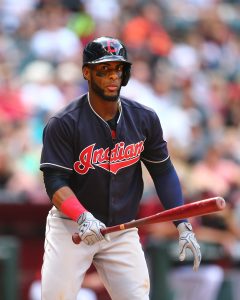 Additionally, it’s worth noting that even if Alonso doesn’t end up producing to his 2017 levels, the Indians have some reasonable backup solutions. It’s feasible that Edwin Encarnacion could shift out of the DH spot (though he certainly wouldn’t provide much value defensively), allowing someone like on-base machine Yandy Diaz to get at-bats as the team’s designated hitter. The club also has Bobby Bradley waiting in the wings, who ranks among the top first base prospects in baseball. Point being, if Alonso regresses significantly, the Indians can probably reshape their roster to accommodate without taking a sizeable hit to their run-scoring ability.
As far as the outfield goes, it’s difficult to imagine Davis, who was recently added to the 25-man roster, producing to the level that Jackson did last season. (Of course, Jackson himself was acquired on a minor-league deal.) The 37-year-old Davis brings with him the nostalgia of a memorable game-tying homer in Game 7 of the 2016 World Series. But after he hit just .235/.293/.348 last season between the A’s and Red Sox, he probably won’t provide any real offensive value with his bat. His biggest asset to the team will be his stolen base ability, which continues to inexplicably persevere even as the outfielder approaches the age of 40.
Speaking of 37-year-old players, Belisle was also recently informed that he’s made the team. Though he’s not necessarily an exciting addition, he ‘s a reliable presence for quality innings. Across the past three campaigns, the right-hander has posted a 2.96 ERA and has typically managed to out-pitch his peripheral statistics. Again, he’s not Shaw or Smith, but he’s certainly not a pushover. Considering the bullpen will still be led by Cody Allen and Andrew Miller, there’s not much to worry about, anyway. With an embarrassment of riches in the starting pitcher department, the Tribe will likely consider flamethrower Danny Salazar for a bullpen role if he continues to struggle in the rotation.
Questions Remaining
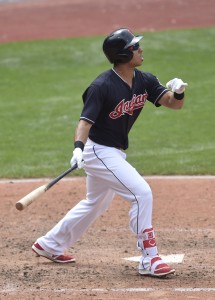 The club’s outfield crew isn’t likely to intimidate other contenders. While Lonnie Chisenhall and Brantley are terrific when they’re able to take the field, neither can seem to do so on a consistent basis. Bradley Zimmer and Tyler Naquin have both shown great upside, but they’ve also had their weaknesses exposed; neither is a sure bet to find sustained success throughout the 2018 season. The even bigger overarching issue is that each of those four players bats from the left side of the plate. The Tribe’s only righty-hitting outfielders are Davis (see above) and Brandon Guyer, who was recently named to the Opening Day roster but struggled mightily last year and comes with injury concerns. While the team has some right-handed bats and switch-hitters elsewhere in the lineup, one has to imagine that such a severely lefty-heavy outfield puts them at a disadvantage against opposing southpaws.
The organization’s dearth of vertical depth in the bullpen department is no small matter, either. The club has seven solid relievers on the active roster, but the relief corps at Triple-A is a gaggle of waiver claims and offseason minor league signees. Though they’ve lucked out in the past with waiver claims like Tyler Olson, it’s statistically unlikely that they’ll continue to win the lottery with players that other teams let go. Of course, it’s fair to note too that the rotation depth could filter down to the pen if and when more of the team’s starters are at full health.
The health and production of second baseman Jason Kipnis is certainly up in the air after an injury-plagued age-30 season that ended up being one of the worst offensive showings of his career. His poor play resulted in a swirl of offseason trade rumors and uncertainty about his future in Cleveland, but he’s found his swing in training camp as evidenced by his six homers and .375 batting average in Cactus League play. It’s tough to know what to expect from Kipnis, but he’s an interesting bounce back candidate to watch.
The Tribe’s catching tandem of Yan Gomes and Roberto Perez isn’t what you’d call an offensive juggernaut, but they both provide plenty of defensive value and are likely to combine for another above-average performance in relation to the rest of the league. Beyond them, super-prospect Francisco Mejia is waiting in the wings, itching to prove himself in the event of an injury to one the aforementioned duo. Mejia’s more of a bat-first backstop, and his hit tool is one of the best in the minors. Indeed, the organization is even considering utilizing him in the outfield as a means of moving up his timeline to contribute in the majors (potentially offering another means of giving a boost to the uncertain outfield mix). While none of these three players is without his flaws, it’s hard to imagine catcher being a significant area of weakness for the Indians.
It’s more likely than not that we’ll see some kind of offensive decline from Encarnacion as the slugger enters his age-35 season. What that will look like isn’t easy to predict. Some sluggers like Paul Konerko only experienced a modest power drop-off at 35, while others such as Mark Teixeira seemed to have the rug pulled out from under them entirely at that age. As one of the few intimidating right-handed hitters in the Tribe’s lineup, they’ll be counting on him to offer at least something close to his usual power output.
Outside of that, the Indians appear well-poised to make another run at a championship. A rotation that produced the best fWAR of all time is back in its entirety, with reasonable depth options at Triple-A and a couple of impressive prospects in Triston McKenzie and Shane Bieber not far off. The left side of their infield sports two MVP candidates in Francisco Lindor and Jose Ramirez, and it wouldn’t be a surprise to once again see those two combine to top 60 homers while providing stellar defense. All in all, questions about this team’s composition are little else but nit-picking.
Overview
The front office didn’t do much this offseason, and as such this iteration of the Indians doesn’t look quite as strong as the one that finished the season with 102 wins last year. But if they did get weaker, it certainly isn’t by much. The most important pieces remain on hand, and they have some intriguing depth in the form of high-upside prospects. That likely means a third consecutive AL Central championship and a return to the postseason.
How would you grade the Indians’ offseason work? (Poll link for app users)
How Would You Grade The Indians' Offseason?
-
C 46% (1,485)
-
B 27% (888)
-
D 16% (529)
-
F 5% (169)
-
A 5% (167)
Total votes: 3,238
Photos courtesy of USA Today Sports Images
Offseason In Review: Los Angeles Dodgers
This is the latest entry in MLBTR’s 2017-18 Offseason In Review series. Click here to read the other completed reviews from around the league.
While the Dodgers will again look to contend for another pennant, their primary offseason moves focused on setting the team up for the future.
Major League Signings
- Chase Utley, 2B: Two years, $2MM
- Tom Koehler, SP/RP: One year, $2MM
- Total spend: $4MM
Trades And Claims
- Acquired OF Matt Kemp from the Braves for 1B Adrian Gonzalez, SP Brandon McCarthy, SP Scott Kazmir, IF Charlie Culberson, and $4.5MM in cash considerations
- Acquired RP Scott Alexander from the Royals and IF Jake Peter from the White Sox for SP Trevor Oaks, and IF Erick Mejia (to the Royals), RP Luis Avilan and $2MM in cash considerations (to the White Sox). Also as part of the trade, the White Sox acquired RP Joakim Soria and $1MM from the Royals.
- Acquired cash considerations from the Braves for RP Josh Ravin
- Acquired RP Dylan Baker from the Brewers for cash considerations or a player to be named later
- Claimed RP Henry Owens off waivers from the Diamondbacks
- Claimed RP J.T. Chargois off waivers from the Twins
Notable Minor League Signings
- Pat Venditte, Cesar Ramos, Zach Neal, Rocky Gale, Travis Taijeron, Jesen Therrien, Justin De Fratus, Donovan Solano, Tyler Colvin, Manny Banuelos, Brian Schlitter, Guillermo Zuniga (international signing, $205K bonus)
Notable Losses
- Yu Darvish, Brandon Morrow, Curtis Granderson, Tony Watson, Grant Dayton, Gonzalez, McCarthy, Kazmir, Culberson, Avilan, Ravin, Andre Ethier, Franklin Gutierrez (note: Ethier and Gutierrez are still free agents)
Dodgers 25-Man Roster & Minor League Depth Chart; Dodgers Payroll Overview
Needs Addressed
Even while still boasting the league’s largest payroll over the last five seasons, Dodgers executives often spoke of their desire to manage spending in a more efficient manner. This winter, the opportunity finally struck for the club to achieve that goal, via a fascinating five-player trade with the Braves that allowed the Dodgers to duck under the $197MM luxury tax threshold.
A reminder: each team’s payroll in terms of pure dollars is different from their payroll as calculated for the purposes of the competitive balance tax. The latter is generated by the average annual value of contracts, and thus while Matt Kemp by himself was owed roughly as much the Brandon McCarthy/Adrian Gonzalez/Scott Kazmir/Charlie Culberson quartet, the Dodgers’ tax number was lowered because Kemp’s money is spread out over both 2018 and 2019, whereas the other four players were under contract only through 2018.
 The upshot is that, after paying almost $150MM over the last five seasons in tax penalties, the Dodgers have reset their tax counter and will only be charged at the first-time offender rate should they surpass the threshold next offseason. It is safe to assume that L.A. is indeed preparing itself to soar over the tax line once more, as the team has now positioned itself to be players in the star-studded 2018-19 free agent market. Beyond just dreams of, say, Bryce Harper wearing Dodger blue, the club also has some in-house players hitting the market, chief among them Clayton Kershaw (via an opt-out clause in the ace’s current contract). All signs are currently pointing to Kershaw continuing his relationship with the team, even if a formal extension might not be worked out until after the season is over.
The Braves trade has much more import in terms of finances than did in on-field impact for the Dodgers. Gonzalez and Kazmir were complete non-factors due to given their recent injury problems, McCarthy was a useful arm last season but was himself limited by injury to just 155 2/3 IP over three years in Los Angeles, and Culberson was expendable given the Dodgers’ other infield depth.
As for Kemp, the Dodgers spent much of the offseason unsuccessfully trying to find a trade partner for the veteran outfielder, and thus Kemp now looks to be part of the team’s left field mix on Opening Day. Kemp, for his part, lost almost 40 pounds over the offseason and hit well in Spring Training. While L.A. would surely still prefer to leave left field to just Joc Pederson, Enrique Hernandez, and Trayce Thompson, Kemp may still have something left in the tank — he was still a league-average bat last year, despite an unusual reverse-splits performance that saw him struggle against left-handed pitching. With some judicious platooning and late-inning defensive removals, Kemp could still be a productive player in 2018.
The Dodgers’ other big trade of the offseason saw them respond to the losses of Tony Watson and Grant Dayton by acquiring a new left-handed reliever in Scott Alexander, via a three-team swap with the White Sox and Royals. Alexander posted a 2.48 ERA and a sky-high 73.8% grounder rate over 69 innings for Kansas City last season, and with five years of control remaining, Alexander projects as a long-term piece within the Dodgers’ bullpen. The team did have to give up a quality reliever in Luis Avilan in the trade, though the Dodgers are hopeful that other right-handed options (waiver claim J.T. Chargois or rookie Wilmer Font) can help pick up the slack.
In a move geared as much towards clubhouse chemistry as on-field performance, Los Angeles re-signed Chase Utley to a two-year, $2MM contract. Utley will resume his role as a left-handed bench bat, part-time second baseman and behind-the-scenes leader as he looks to cap off his career with one more World Series ring.
Questions Remaining
In a way, the Dodgers’ winter was a microcosm for all of Major League Baseball during the quiet 2017-18 offseason — rather than spend big on splashy trades or free agent signings, the Dodgers were all about belt-tightening. An estimated $30MM per season in competitive balance tax overages is no small matter even for a big-market team like the Dodgers, and one can’t fault the club for seeking out a creative route to finally solve its tax problems. As noted earlier, it wasn’t as if Los Angeles was counting on Gonzalez or Kazmir to be prime contributors in 2018, and McCarthy carries as many question marks as Kemp going into the season, so the baseball impact of the move was pretty negligible.
Of course, there was a version of this deal that would’ve been much more impactful for the Dodgers, as they reportedly floated an offer to the Marlins that involved sending Gonzalez, Kazmir, and McCarthy to Miami to help offset costs in a Giancarlo Stanton trade. The Dodgers had some wariness about acquiring such a pricey player who would have to be deployed as an outfielder into his late 30’s, though certainly the Dodgers felt obligated to at least check on the slugger, particularly since Stanton (who was born in Los Angeles) listed the Dodgers as one of four teams he’d approve a deal to join, via waiving his no-trade protection. Instead, the Marlins balked at the Dodgers’ offer and instead dealt Stanton to the Yankees.
After being a “finalist” of sorts for Stanton and missing out, the Dodgers also fell short on their pursuit of Shohei Ohtani, despite being one of the seven teams selected for the final stage of in-person presentations to the Japanese star. This led to some hard feelings on Kershaw’s part, as the southpaw criticized Ohtani’s representation for allegedly misrepresenting the Dodgers’ chances at a deal (Kershaw felt no NL teams had a realistic shot since Ohtani was intent on regular at-bats, and thus needed a DH position). The Dodgers’ West Coast location and history with Japanese talent made him one of the big favorites for Ohtani’s services, though it was the local rival Angels who ultimately landed the two-way star, which must’ve been an added sting for Los Angeles’ blue team.
With no Stanton, no Ohtani, and no other truly high-profile moves, the relatively quiet nature of the Dodgers’ offseason has left some fans and pundits grumbling that the team did little to actually improve itself. In fairness, the Dodgers did finish just one game away from a world championship in 2017, so the argument can certainly be made that not much needed to be done to an already successful core group of talent.
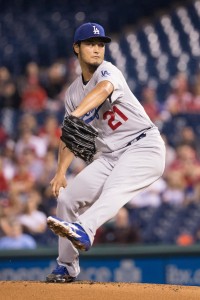 Quite a bit had to go right for L.A. last season, however, to make that postseason run. The Dodgers were one of baseball’s best teams despite a league-high 38 separate DL stints for players in 2017, and while some of the most injury-prone members of that list are no longer on the roster, all five members of the projected starting rotation (Kershaw, Alex Wood, Rich Hill, Kenta Maeda, Hyun-Jin Ryu) missed time due to injury. This will leave Los Angeles short on proven replacements in the event of more injuries, as McCarthy is now in Atlanta, top prospect Julio Urias is possibly out for the season recovering from shoulder surgery, and, most notably, Yu Darvish is now a Chicago Cub.
The Dodgers kept their eye on Darvish for much of the offseason and even floated a six-year offer to the right-hander, though that deal only worth around $100MM, rather than the $126MM Darvish eventually landed from the Cubs. The Darvish offer was also dependent on the team being able to unload some other salary to stay under the tax threshold, so this was an instance where the Dodgers’ sudden lack of payroll flexibility may have cost them a top-tier player.
Font, Brock Stewart, Ross Stripling, and top prospect Walker Buehler now represent the Dodgers’ first line of starting pitching depth. It’s not a bad group to have on paper, though the case could be made than even more depth is necessary given the starting five’s significant injury histories. Veteran Tom Koehler was signed to provide innings as a swingman, though he may be facing a lengthy absence after suffering a mild AC strain. With Stripling and Font potentially needed in the bullpen (which lost two workhorses in Avilan and Brandon Morrow), Los Angeles could look into picking up another veteran starter on a minor league deal. One possibility could even be a reunion with Kazmir, who was just released by the Braves.
Speaking of depth, Justin Turner‘s broken wrist leaves the Dodgers without their star third baseman until probably May. Turner’s injury will see Logan Forsythe take over third base, leaving second base to a platoon of Utley against right-handed pitching and either Hernandez or Austin Barnes against southpaws. In a bigger-picture sense, Turner’s absence leaves the Dodgers without a key player for at least the first part of the season, and wrist injuries can sometimes linger long after a player returns to the lineup. Turner’s proven bat was a necessary component of the starting nine, given that it isn’t out of the question that Cody Bellinger experiences a sophomore slump, Chris Taylor declines after his breakout season, or Yasiel Puig reverts to his past inconsistency.
Overview
As more big contracts from the pre-Andrew Friedman/Farhan Zaidi era come off the books and more controllable younger players (i.e. Corey Seager, Bellinger, Taylor) emerge into larger roles, you can see how the Dodgers are positioning themselves for a more cost-effective future that still keeps them among baseball’s elite. While critics could wonder why the team didn’t specifically bolster itself for another run in 2018, the Dodgers obviously don’t see their contention window closing anytime soon. More moves could also come at the trade deadline, though a bit more creativity will be required by the front office to both keep payroll under $197MM while still adding reinforcements for another pennant drive.
What’s your take on the Dodgers’ winter? (Link for app users.)
How Would You Grade The Dodgers' Offseason?
-
C 35% (1,421)
-
B 33% (1,317)
-
D 13% (537)
-
A 11% (449)
-
F 7% (279)
Total votes: 4,003
Photos courtesy of USA Today Sports Images
Offseason In Review: New York Mets
This is the latest entry in MLBTR’s 2017-18 Offseason In Review series. Click here to read the other completed reviews from around the league.
After the Mets endured a Murphy’s Law season in 2017, general manager Sandy Alderson replaced their skipper and brought in several familiar names in free agency over the winter.
Major League Signings
- Jay Bruce, OF: three years, $39MM
- Todd Frazier, 3B: two years, $17MM
- Jason Vargas, LHP: two years, $16MM
- Anthony Swarzak, RP: two years, $14MM
- Jose Reyes, INF: one year, $2MM
- Adrian Gonzalez, 1B: one year, $545K
- Total spend: $88.545MM
Options Exercised
- Asdrubal Cabrera, IF: $8.5MM
- Jerry Blevins, RP: $7MM
Trades and Claims
- Acquired LHP Daniel Zamora and cash from the Pirates for RP Josh Smoker
- Acquired cash from the Nationals for UTIL Matt Reynolds
- Selected RHP Burch Smith in the Rule 5 draft (later traded to Kansas City for a player to be named later or cash)
Notable Minor League Signings
- Fernando Abad, A.J. Griffin, Matt den Dekker, Jose Lobaton, Zach Borenstein, Matt Purke, Phillip Evans, Ty Kelly
Notable Losses
[Mets Depth Chart; Mets Payroll Information]
Needs Addressed
The Mets posted back-to-back playoff seasons from 2015-16 – the first of which included a National League pennant – and there was optimism they’d remain a formidable club last year. Instead, a spate of injuries to key players and disappointing performances from others sunk New York, which never recovered from a 10-14 April. Expectations throughout the Mets’ dismal season were that they’d replace manager Terry Collins afterward, and that’s exactly what happened. The 68-year-old Collins remains in the organization in a front office role, while the much younger Mickey Callaway, 42, is now overseeing the team’s dugout and clubhouse. Although Callaway never managed at any level before the Mets hired him, he did develop a sterling reputation in Cleveland, where he worked to great success as Terry Francona’s pitching coach from 2013-17.
Among the hurlers now at Callaway’s disposal are left-handed starter Jason Vargas and righty reliever Anthony Swarzak, two of the team’s free-agent pickups. The Mets guaranteed Vargas two years and $16MM with the hope that he’d deliver adequate innings as part of a starting staff that didn’t amass nearly enough of those a year ago. Vargas has a handful of high-inning, acceptable ERA seasons under his belt, including his 179 2/3-frame, 4.16 ERA showing with the Royals in 2017. That’s somewhat similar to the production Bartolo Colon offered the Mets from 2014-16, and they missed that during a horrid 2017 in which Jacob deGrom was their only starter to both escape the injury bug and perform to his potential. Unfortunately for the Mets, an injury has already come for Vargas, who suffered a fracture to his non-pitching hand in mid-March. He’s now set to begin 2018 on the disabled list, thereby creating a temporary starting spot for Seth Lugo.
Swarzak is healthy, meanwhile, and surely looking to replicate the age-31 season he enjoyed with the White Sox and Brewers in 2017. After a fairly up-and-down career from 2009-16, Swarzak broke out with a 2.33 ERA/2.74 FIP and 10.59 K/9 against 2.56 BB/9 last year. Only 11 other relievers outdid Swarzak’s 77 1/3 innings, and even fewer (seven) bettered his 2.2 fWAR. The latter figure placed him in similar company to Andrew Miller, Chad Green, Felipe Rivero and Archie Bradley, among other star relievers. That top-notch production led to a two-year, $14MM payday for Swarzak, who had to settle for a minor league contract the previous winter.
Along with Swarzak, the Mets’ bullpen will heavily feature lefty Jerry Blevins, whose $7MM option was an easy one for the Mets to pick up. Blevins was outstanding in New York from 2016-17, a 91-inning stretch in which he logged a 2.87 ERA/3.09 FIP with 11.97 K/9 and 3.86 BB/9. Although, it’s alarming that right-handed hitters crushed him to the tune of .288/.447/.545 in 2017 – an enormous departure from the .172/.266/.345 line they compiled against him the prior year. Historically, the 34-year-old has ended up somewhere in the middle of those lines versus righties, who’ve slashed .242/.343/.400 off Blevins since he debuted in 2007.
The rest of the Mets’ offseason attention went to its position player group, which actually wasn’t that bad last year (tied for ninth in wRC+, 11th in fWAR, 18th in runs). The most productive member of that faction was outfielder Michael Conforto, who was either elite or close to it before suffering a season-ending shoulder injury in late August. Conforto, 25, had to undergo surgery as a result, which will lead to a DL stint to begin 2018.
The Mets now know Conforto is on track to return soon, but they had to plan for a worst-case scenario in the offseason. To help protect against a potential long-term Conforto absence, they brought back outfielder Jay Bruce – a Met for parts of the previous two seasons – on a three-year, $39MM pact. Bruce got the exact contract MLBTR predicted back in November, but it still feels as if he did extremely well when considering the odd way in which free agency unfolded.
The 30-year-old Bruce landed his payday after enjoying one of his best seasons in 2017, which he divided between New York and Cleveland and hit .254/.324/.508 with 36 home runs and 2.7 fWAR across 617 plate appearances. In his second stint with the Mets, Bruce will work in right field (where the long-scrutinized defender quietly earned solid marks last year) and maybe even at first base, depending on what the Mets get from the combination of Adrian Gonzalez, Wilmer Flores and Dominic Smith.
Gonzalez will play with the Mets on a minimum salary after getting his release from the Braves, who acquired him from the Dodgers in a financially motivated trade. Atlanta, one of the Mets’ division rivals, will pay the rest of the $21.5MM Gonzalez was owed on the megadeal he signed with the Red Sox back in 2011. Gonzalez was among the premier sluggers in the game then, but he’s now a soon-to-be 36-year-old coming off a terrible season in which back problems limited him to 71 games, 252 PAs and an unsightly .242/.287/.355 line (69 wRC+). The lefty-swinger has been particularly poor against southpaws in three of the past four seasons (2014, 2016 and 2017), which could set him up to platoon with the righty-hitting Flores. Smith, a top 100 prospect prior to his ugly debut with the Mets last year, has been battling a strained quad for weeks. It’s unclear when he’ll return to action, but between his injury and the presences of Gonzalez, Flores and even Bruce, Smith seems likely to see a lot more time at Triple-A than in the majors this season.
Elsewhere in the infield, the Mets made one of the most impressive-looking signings of the offseason when they reeled in New Jersey native and ex-Yankee Todd Frazier on a two-year, $17MM accord in early February. Frazier was long on the radar of the Mets, who ended up with him instead of fellow targets Eduardo Nunez and Neil Walker (an ex-Met), Jason Kipnis (Indians, who nearly sent him to the Mets) Ian Kinsler (a former Tiger who’s now an Angel) and Josh Harrison (Pirates). The Mets understandably balked at dealing young outfielder Brandon Nimmo for Harrison after the former recorded a .379 OBP over 215 PAs in 2017. That was the first extensive big league action for the 24-year-old Nimmo, a 2011 first-round pick. Now, because he took last season’s audition and ran with it, Nimmo may play an even more prominent role this year.
Back to Frazier, who, unlike Bruce, didn’t make out nearly as well as expected in free agency. The 32-year-old was unable to parlay a consistently above-average career into a contract commensurate to it. Also a former member of the Reds and White Sox, Frazier has been worth between 2.5 and 4.8 fWAR in every season since 2012 (including an even 3.0 last year). He looks grossly underpaid relative to what he brings to the table, then, and should give the Mets a credible third bagger as pessimism continues to increase over the status of franchise icon David Wright. Back, neck and spine injuries limited Wright to 75 games from 2015-16, and he wasn’t able to take the field at all last year. Unfortunately, that may be the case again this season for the 35-year-old.
The signing of Frazier will kick Asdrubal Cabrera to second, his preferred position. Months before the Mets brought in Frazier, they exercised Cabrera’s $8.5MM option in early November. The 32-year-old isn’t going to wow anyone, but he has provided decent offensive production in both of his seasons as a Met.
The re-signed Jose Reyes will offer depth behind Cabrera and elsewhere around the infield, where he played everywhere but first base last season. The switch-hitting Reyes, 34, was effective along the way in totaling 2.0 fWAR and batting .246/.315/.413 with 15 home runs and a team-high 24 steals over 561 PAs. For a meager $2MM, it’s tough to argue with retaining Reyes from a baseball standpoint, though a past domestic violence suspension will always hang over his head.
Offseason In Review: Oakland Athletics
This is the latest entry in MLBTR’s 2017-18 Offseason In Review series. Click here to read the other completed reviews from around the league.
After posting their third straight sub-.500 campaign in 2017, which they opened with a paltry $81MM-plus payroll, the Athletics will start the new season with an even lower outlay. They’re set to check in at around $70MM, the cheapest total in the majors and the franchise’s lowest since 2013, and the MLBPA has taken notice. The union filed a grievance against the A’s and three other small-spending, revenue sharing recipients last month, though nothing has come of it to this point. Having been atop the A’s baseball department since 1998, executive vice president Billy Beane has grown accustomed to Oakland’s relative lack of financial resources. And in spite of the A’s inability to throw money around, the on-field product seems to be on the upswing, thanks in part to the winter efforts of Beane and general manager David Forst.
Major League Signings
- Yusmeiro Petit, RP: two years, $10MM
- Jonathan Lucroy, C: one year, $6.5MM
- Trevor Cahill, RHP: one year, $1.5MM
- Total spend: $18MM
Trades And Claims
- Acquired OF Stephen Piscotty from the Cardinals for IFs Yairo Munoz and Max Schrock
- Acquired RP Ryan Buchter, 1B/DH Brandon Moss (since released) and $3.25MM in cash for RHPs Jesse Hahn and Heath Fillmyer
- Acquired RP Emilio Pagan and IF Alexander Campos from the Mariners for 1B Ryon Healy
- Acquired C Jonah Heim from the Rays for IF Joey Wendle
- Acquired RHP Jake Bray from the Orioles for OF Jaycob Brugman
- Acquired OF Ramon Laureano from the Astros for RHP Brandon Bailey
- Claimed LHP Jairo Labourt from the Reds (the A’s later released Labourt)
Option Decisions
- Exercised IF Jed Lowrie‘s one-year, $6MM option
Notable Minor League Signings
- Brett Anderson, Slade Heathcott, Simon Castro, Steve Lombardozzi, Eric Jokisch, Jarret Martin, Anthony Garcia, Nick Martini
Notable Losses
- Hahn, Healy, Wendle, Josh Smith, Michael Brady, Chris Smith
Athletics Depth Chart; Athletics Payroll Information
Needs Addressed
At a combined $11.5MM, three free-agent signings will take up a decent chunk of Oakland’s season-opening payroll. The most noteworthy member of the group, catcher Jonathan Lucroy, didn’t ink a deal until March 12, making him one of the prominent victims of a famously slow-developing free-agent market. MLBTR predicted a two-year, $24MM contract for Lucroy at the outset of the offseason, but interest in the two-time All-Star was scarce after he he underwhelmed between Texas and Colorado in 2017.
The 31-year-old Lucroy is coming off the worst offensive season of his accomplished career, having hit .265/.345/.371 (82 wRC+) in 481 plate appearances, even though he racked up nearly as many unintentional walks (46) as strikeouts (51). He experienced a power outage that overshadowed his impressive strikeout-avoiding abilities, largely because while others around the game have worked to hit more fly balls, Lucroy went in the opposite direction. Lucroy hit grounders at a 53.5 percent rate (the 10th-highest mark in the sport), a massive increase over the 41.1 percent figure he put up from 2010-16. Moreover, the once-pristine pitch-framing grades he used to earn on the defensive side continued to drop off to an alarming extent, as this table from FanGraphs’ Jeff Sullivan indicates.
When you add those factors up, it’s no wonder Lucroy went four-plus months without a job. At the same time, though, he’s not far removed from a 2016 campaign in which he accounted for an excellent 4.6 fWAR, and Steamer is projecting 2.9 fWAR in 2018. ZiPS offers a far less enthusiastic forecast (1.9), meanwhile, but that would still be a palatable outcome for an A’s team that paid relatively little for Lucroy and isn’t tied to him for the long haul. And with the Bruce Maxwell–Josh Phegley tandem not inspiring much confidence, Oakland looked like a logical fit for Lucroy in the months before it signed him – especially given that Maxwell is in legal trouble as a result of an early offseason arrest for a gun charge.
Shortly after they reeled in Lucroy, the A’s reunited with someone who figures to pitch to him this year, righty Trevor Cahill, whose signing came in response to starter Jharel Cotton‘s season-ending injury. The 30-year-old Cahill had some of the top years of his career as a full-time starter in Oakland from 2009-11, but he has since shifted between teams’ rotations and bullpens to mixed results.
Most recently, Cahill struggled across 21 appearances (14 starts) with the Padres and Royals last year, when he pitched to a 4.93 ERA/5.28 FIP with an untenable walk rate (4.82 BB/9). Injuries were a major problem in 2017 for Cahill, who went on the disabled list three times because of shoulder and back issues. It’s hard to expect much from Cahill in 2018 (judging by his salary, the A’s agree). Because Cahill’s not stretched out enough to begin the year as a major league starter, he’ll open as depth – something the A’s need in the wake of the Cotton news, not to mention top prospect A.J. Puk‘s biceps soreness and Paul Blackburn‘s forearm strain.
Months before the Lucroy and Cahill signings, the A’s struck early in free agency when they committed a two-year, $10MM guarantee to workhorse reliever Yusmeiro Petit, who stood out with the division-rival Angels last season. Petit has been quietly superb at times since breaking out with the Giants in 2013, and that was especially true in 2017. The 33-year-old led all relievers in innings (87 1/3, excluding the four he picked up as a starter) and registered 1.9 fWAR out of the bullpen (tied with ex-Athletic Ryan Madson for 13th best in the league). Along the way, he managed a 2.76 ERA/2.85 FIP and appealing strikeout and walk rates (9.95 K/9, 1.77 BB/9).
Going forward, it would be overly optimistic to expect the soft-tossing Petit to be nearly that good again. He was subpar as recently as 2016, after all, and isn’t the darling of projection systems heading into the new year. As is the case with the Lucroy and Cahill additions, though, the price tag is low enough that Petit won’t exactly have to turn in an elite-caliber season to justify the signing. The hope is that he’ll be at least perform with reasonable effectiveness while continuing to eat innings, thus aiding an unspectacular-looking starting staff.
Joining Cahill and Petit in the A’s new-look bullpen will be two trade acquisitions, righty Emilio Pagan and lefty Ryan Buchter. The A’s got Pagan from the division-rival Mariners as part of a deal involving first baseman/former third baseman Ryon Healy, who shouldn’t be all that tough for Oakland to replace. Healy is young (26), cheap and had a memorable debut in 2016, but a lack of walks (4.1 percent) and a high batting average on balls in play (.352) made the .305/.337/.524 line he enjoyed in 283 PAs as a rookie hard to fully buy into. It wasn’t surprising that Healy came back to earth over 605 PAs last year (he batted a league-average .271/.302/.451), when his walk problem got even worse (3.8 percent) and his BABIP was a more normal-looking .319.
With third baseman Matt Chapman and first baseman Matt Olson having exploded on the scene in 2017, not to mention the presence of big-hitting DH Khris Davis, there was no clear path to at-bats in Oakland anymore for Healy. Consequently, Beane and Forst turned him into Pagan (also 26), who experienced his first MLB action last season and opened eyes in the process. After compiling consistently good numbers in the minors from 2013-17, Pagan came up and gave the Mariners quality production (3.22 ERA/3.28 FIP, 10.01 K/9, 1.43 BB/9 in 50 1/3 innings). Like Petit, Pagan seems to be capable of working more than your typical reliever, having gotten three or more outs in 13 of 34 appearances in 2017.
Buchter is also a reliable source of frames, as the 31-year-old collected 63 or more in each of his first two seasons. The former Padre and Royal has been steady overall, evidenced by a 2.85 ERA/3.82 FIP and 10.02 K/9 against 4.04 BB/9. Buchter has also been roughly as effective versus same-sided hitters (.249 wOBA against) and righties (.271), meaning he’s not just a lefty specialist. So, at the cost of the now-gone Brandon Moss (whom the A’s are paying $5MM through next season to not play for them), the up-and-down Jesse Hahn and decent pitching prospect Heath Fillmyer, the A’s seemingly did well to land Buchter’s four years of affordable control.
On the negative side, it’s worth noting that Buchter managed a horrid grounder percentage in 2017 (32.9), as did Petit (32.9) and Pagan (22.3). It’s anyone’s guess whether they’ll be able to continue limiting home runs this year, then, after they each allowed HRs at rates of 11 percent or less last season. If there’s an obvious reason for hope on that front, it’s that all three have helped cancel out their lack of grounders by inducing lots of infield pop-ups. Buchter has a 16.5 percent infield fly rate for his career, while Petit was at 18.6 last season and Pagan 12.2.
Buchter, Petit and Pagan will hope to keep tamping down dingers in 2018, but it’s the opposite for right fielder Stephen Piscotty, whom the A’s acquired from the Cardinals for infield prospects Max Schrock and Yairo Munoz in December. That came after the A’s flirted with acquiring the likes of Marcell Ozuna, Christian Yelich, Steven Souza Jr. and Adam Duvall. In the end, they emerged with Piscotty, who did cost them a couple interesting young players. Schrock is the Cardinals’ 10th-ranked prospect at MLB.com, and Munoz has already earned a roster spot in St. Louis.
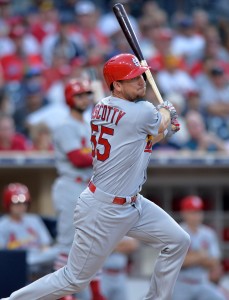
It’s not hard to see why the A’s are bullish on Piscotty, who held his own from 2015-16 – a 905-PA span in which he slashed .282/.348/.467 (121 wRC+). Piscotty stumbled to .235/.342/.367 line (92 wRC+) in 401 PAs last season, but the 27-year-old was going through a hellish off-field situation in St. Louis, as his mother has been battling ALS back in Northern California. Now Piscotty – a Pleasanton, Calif., native – will be closer to her and have an opportunity to bounce back in a familiar setting. It should help his cause that the A’s park, the Oakland-Alameda Coliseum, was roughly middle of the pack in terms of HR friendless for right-handed hitters a year ago, whereas St. Louis’ Busch Stadium ranked among the most difficult venues for RH batters.
If Piscotty does revisit his 2015-16 form in his return home, he’ll be an absolute bargain on the extension the Cardinals gave him a year ago (he’s guaranteed roughly $30MM through 2023). At the very least, he should be a marked upgrade defensively over the right fielders Oakland trotted out last year. The A’s group was among the worst at the position then; meantime, Piscotty collected eight Defensive Runs Saved and paired that with a 1.7 Ultimate Zone Rating. All said, he has accounted for 12 DRS and a 4.1 UZR in 2,588 innings in right field since debuting in 2015.