
Offseason In Review: Atlanta Braves
This is the latest entry in MLBTR’s 2017-18 Offseason In Review series. Click here to read the other completed reviews from around the league.
A much-anticipated offseason started off with unexpected front office turnover and ended up focusing squarely on the future.
Major League Signings
- Peter Moylan, RHP: One year, $575K (non-guaranteed)
- Chris Stewart, C: One year, $575K (non-guaranteed)
Trades And Claims
- Acquired Brandon McCarthy, Scott Kazmir, Adrian Gonzalez, Charlie Culberson & $4.5MM from Dodgers in exchange for Matt Kemp
- Acquired LHP Justin Kelly from Angels in exchange for RHP Jim Johnson & international bonus pool money
- Acquired INF Ryan Schimpf from Rays in exchange for cash/PTBNL
- Acquired RHP Shane Carle from Pirates in exchange for cash/PTBNL
- Acquired OF Preston Tucker from Astros in exchange for cash/PTBNL
- Acquired RHP Josh Ravin from Dodgers in exchange for cash
- Claimed RHP Chase Whitley off waivers from Rays
- Claimed LHP Grant Dayton off waivers from Dodgers
- Selected RHP Anyelo Gomez from Yankees in Rule 5 draft (since returned)
Option Decisions
- Exercised one-year, $4MM option over C Tyler Flowers
- Declined one-year, $8MM option ($500K buyout) over SP R.A. Dickey
Notable Minor League Signings
Notable Losses
- Matt Adams, Adonis Garcia, Jim Johnson, Micah Johnson, Matt Kemp, Ian Krol, Jason Motte, Jace Peterson
Braves 25-Man Roster & Minor League Depth Chart; Braves Payroll Overview
Needs Addressed
Whatever the Braves’ plans may have been heading into the offseason, they were jolted with the sudden and stunning downfall of former GM John Coppolella and eventual move of president of baseball operations John Hart out of his role atop the baseball hierarchy.
The former regime was toppled by a scandal arising out of the organization’s international signing practices. In addition to the front-office upheaval, the violations of MLB rules cost the organization its rights to several notable previously signed prospects and left it facing reduced international spending capabilities for several seasons as well as the loss of a third-round pick in the upcoming draft.
After dabbling in a move for former executive Dayton Moore, who instead remained with the Royals, the Atlanta organization struck a deal to bring in former Blue Jays GM and recent Dodgers exec Alex Anthopoulos. He’s now the top baseball decisionmaker in the Braves hierarchy.
Whether that shake-up changed the Braves’ plans for the 2017-18 winter will never really be known. But the organization certainly did not end up acting as many anticipated. Having opened Sun Trust Park last season and with an abundance of young talent reaching the majors, many anticipated that the organization would announce the beginning of the end of its rebuilding period by pursuing some significant additions via trade and/or free agency.
As it turned out, the Braves’ arguable on-field needs — including potential improvements at third base, the corner outfield, and the bullpen, along with veteran rotation help — were never really addressed, at least not in the manner of an organization that’s readying for contention. While the division-rival Phillies made two significant splashes and spent some real cash on their bullpen, the Braves pursued a course designed to clear future payroll capacity and support the ongoing development of internal talent.
The biggest need identified by Anthopoulos was not, say, finding a high-quality regular at the hot corner. Rather, it was figuring a way to move Matt Kemp and his significant remaining contractual obligations in an advantageous manner. After moving the remaining dollars owed to reliever Jim Johnson, Anthopoulos arrived at a fascinating money-shifting swap involving Kemp with none other than the organization he had just worked for. In a deal full of notable veteran names, the Braves shipped Kemp to the Dodgers in exchange for high-priced veterans Brandon McCarthy, Scott Kazmir, and Adrian Gonzalez — along with $4.5MM to make the deal entirely cash-neutral. Atlanta also landed versatile bench candidate Charlie Culberson.
The roster-clearing benefits for the Atlanta organization were clear. Moving Kemp out of the picture left the club free to try some other options in left field. The Braves claimed Preston Tucker and later signed Ezequiel Carrera; those two left-handed hitters could pair with the righty swinging Lane Adams. Of course, the real occupant of left is not going to open the 2018 campaign in the majors. All-world prospect Ronald Acuna ran roughshod over the Grapefruit League but will not make his MLB debut until later in the coming season. While Anthopoulos has insisted the decision was based purely on Acuna’s development, and he did race through the minors last year, there’s also little doubt that service-time considerations also played a role.
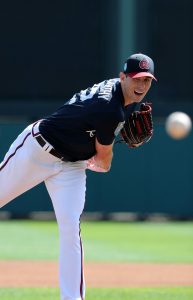
Of course, that could have been accomplished simply by cutting Kemp loose. Picking up the veteran trio was of greater utility, however, even with Gonzalez being cut loose. Kazmir and especially McCarthy will represent 2018 rotation candidates for the Braves, thus obviating the need to spend more on veteran pitching to build out the rotation. Having already declined an option over knuckler R.A. Dickey, the Braves needed some innings to avoid putting too much pressure on their young arms.
Additionally, the swap shifted the payroll hit from Kemp forward. The Dodgers preferred to consolidate the money they owed to free them from the luxury tax this year. For the Braves, though, the move allowed the team to spend down its obligations now while clearing the books for 2019. Now, only Freddie Freeman, Julio Teheran, and Ender Inciarte are promised money for the future.
It seems, though, that the financial shift also tamped down the likelihood of any significant outlays for the 2018 season, as the immediate payroll ballooned. That left the Braves seeking low-commitment additions throughout the winter. In addition to picking up Tucker and Carrera in the outfield, Anthopoulos added a variety of infielders, including Culberson, Danny Santana, Christian Colon, and Ryan Schimpf. Having already extended Kurt Suzuki to reunite with Tyler Flowers behind the dish, the club added Chris Stewart on a non-guaranteed MLB deal and Rob Brantly on a minors pact to round out the catching depth. After losing Luiz Gohara to injury, the club picked up Anibal Sanchez on a minors pact to deepen the rotation mix. And Anthopoulos added a variety of low-risk relievers, including Chase Whitley, Shane Carle, Josh Ravin, and Tommy John patient Grant Dayton. None of those players cost the Braves more than a de minimus amount of cash, 40-man spot, and/or a non-roster invitation.
Questions Remaining
The club’s approach hardly seems to set the stage for a 2018 postseason berth, though a run can never be ruled out. There is, after all, quite a lot of intriguing talent spread across the Braves’ MLB roster and top minor-league affiliates. But there are also loads of questions, the answers to which will help chart the future for the organization.
We already touched upon the outfield situation. Ender Inciarte is firmly ensconced in center, while Nick Markakis will presumably handle the bulk of the time in right during the final season of his contract. That leaves left field open to examination as the season progresses. Unless Acuna is injured or unexpectedly stumbles at Gwinnett, odds are the pressure will steadily mount for him to be handed the reins — particularly if the Braves get off to a decent start and/or the platoon players don’t pan out.
The right side of the infield is set with star first baseman Freddie Freeman and young second bagger Ozzie Albies, who has earned a long leash after a strong, 57-game debut showing last year. Likewise, the catching situation is largely settled to open the season, as the Flowers/Suzuki pairing will handle the duties.
There’s more potential intrigue, though, in the remaining two spots on the dirt. Dansby Swanson‘s sophomore swoon tamped down excitement about his future, though there’s still good reason to believe he’ll be a quality regular and ample cause for the Braves to exercise patience. Third base is largely wide open. It seems the organization will give Johan Camargo a shot at proving he’s no flash in the pan, though he’s expected to open the year on the DL. Schimpf perhaps could have received a shot but turned in a rather unbelievable 0-for-30 performance this spring. Rio Ruiz has not exactly seized his limited opportunities to date but has perhaps shown enough at Triple-A to warrant a chance. Otherwise, the club would likely be left with a mix of Culberson and Santana to hold down the fort. Well-regarded prospect Austin Riley could force his way into the picture if he keeps mashing; no doubt the hope is he’ll earn the job in the long run. It’s perhaps still possible that the Braves could end up finding another option from outside the organization over the next few weeks.
The pitching staff, meanwhile, is chock full of wild cards. The top four members of the rotation are clear, but each comes with as much uncertainty as talent. Julio Teheran is looking to bounce back from a mediocre 2017 season, Mike Foltynewicz will try to turn the corner, McCarthy has made just 25 starts over the past two seasons, and power lefty Sean Newcomb needs to show that he can limit the free passes. A rotation slot had been intended for youngster Luiz Gohara, who impressed at all levels (including a five-start MLB debut) last year. But he suffered a few injuries in camp and now looks to be ticketed for a reasonably lengthy layoff, leaving the door open behind him. While Atlanta may not need a fifth starter to open the year, the club will eventually need to fill out the starting staff. Kazmir and Sanchez are the notable names here, with both looking to rebound from unproductive recent seasons. Otherwise, Matt Wisler, Aaron Blair, or Lucas Sims could again be given opportunities despite failing to capitalize on their prior chances.
No matter how that situation sorts itself out, the Braves will be weighing all season long whether and when to make some further promotions. Touted young hurlers such as Kolby Allard, Mike Soroka, Max Fried, and Kyle Wright are expected to knock on the door in the near term. With another wave of talent coming up behind them, the front office surely won’t hesitate to take a look at those arms against the game’s best hitters when they’re deemed ready. After all, it could soon be necessary to make some tough calls on which pitchers to keep and which to dangle in trades.
If Anthopoulos focused anywhere in particular this winter, it seems to have been the bullpen, where the club added new arms and outrighted Mauricio Cabrera and Luke Jackson. There are loads of options stacked up for trials and patches as the situation dictates. Arodys Vizcaino will be looking for some elusive consistency after a strong 2017 effort, with Jose Ramirez and lefty A.J. Minter primed to join him at the back of the pen. Veterans Peter Moylan and Sam Freeman figure to provide some stability. Dan Winkler, whose Rule 5 status is still not fully determined, will hope to remain healthy and effective.
That likely leaves two spots still open to some debate, with Whitley, Ravin, Carle, Wisler, and Blair perhaps the chief candidates to open the season on the active roster now that Rule 5er Anyelo Gomez has been returned. Lefty Rex Brothers has struggled this spring after agreeing to a non-guaranteed arb deal. Reclamation projects Jesse Biddle and Jacob Lindgren could represent interesting southpaw candidates at some point but aren’t immediate options (with the former already having been optioned and the latter dealing with elbow issues). Righties Jason Hursh and Akeel Morris won’t make the active roster but are still on the 40-man, as are young southpaws Adam McCreery and Ricardo Sanchez. Needless to say, it’s likely there’ll be quite a lot of turnover in the relief unit as the season goes on. With 26 pitchers on the 40-man roster at present, it’s all but certain that a few hurlers will end up being traded or placed on outright waivers at some point.
Overview
Outside of those roster spots that were locked down entering the winter, the strategy was obviously to build out depth, seek some diamonds in the rough, and create competition. That process is likely to carry on throughout the season as needs arise and players sink or swim. The Braves will surely prioritize protecting their future talent pool over maximizing immediate MLB performance, but plenty of difficult decisions will begin to be made as camp draws to a close. While the organization doesn’t really have loads of veterans that figure to profile as mid-season trade candidates, it’s certainly possible that deals will be considered at some point for Teheran, McCarthy, Markakis, and certain veteran relievers or bench pieces. Expectations are tempered for the coming season, but fans and the front office alike will surely be watching closely at how things are shaping up for 2019 and beyond.
How would you grade the organization’s offseason efforts? (Link for app users.)
How Would You Grade The Braves' Offseason?
-
C 40% (1,554)
-
B 27% (1,046)
-
D 17% (663)
-
F 8% (308)
-
A 7% (274)
Total votes: 3,845
Photo courtesy of USA Today Sports Images.
Offseason In Review: Chicago Cubs
This is the latest entry in MLBTR’s 2017-18 Offseason In Review series. Click here to read the other completed reviews from around the league.
The Cubs landed the biggest prize of the 2017-18 free agent class, and stayed entirely within free agency for pitching staff upgrades.
Major League Signings
- Yu Darvish, SP: six years, $126MM. Includes opt-out after 2019 season.
- Tyler Chatwood, SP: three years, $38MM
- Brandon Morrow, RP: two years, $21MM. Includes $12MM vesting option for 2020 with a $3MM buyout.
- Steve Cishek, RP: two years, $13MM. May earn up to $1MM more based on appearances.
- Drew Smyly, SP: two years, $10MM. May earn up to $6MM more as a starter or $1MM more as a reliever in 2019.
- Brian Duensing, RP: two years, $7MM. May earn up to $1.25MM more based on appearances in 2019.
- Shae Simmons, RP: one year, $750K
- Dario Alvarez, RP: one year, $545K (later claimed by Mariners)
- Total spend: $216.295MM.
Trades and Claims
- Claimed SP Luke Farrell off waivers from Reds
- Claimed OF Jacob Hannemann off waivers from Mariners
- Claimed RP Randy Rosario off waivers from Twins
- Claimed RP Cory Mazzoni off waivers from Padres
Notable Minor League Signings
- Chris Gimenez, Peter Bourjos, Efren Navarro, Mike Freeman, Taylor Davis, Anthony Bass, Kyle Ryan, Michael Roth, Danny Hultzen, Allen Webster
Notable Losses
- Jake Arrieta, Wade Davis, John Lackey, Jon Jay, Hector Rondon, Justin Grimm, Alex Avila, Koji Uehara, Felix Pena, Rene Rivera, Leonys Martin
Cubs 25-Man Roster & Minor League Depth Chart; Cubs Payroll Overview
Needs Addressed
After the Dodgers denied the Cubs’ bid to return to the World Series, a coaching staff shake-up was the first order of business for Chicago. Longtime pitching coach Chris Bosio was the first casualty, with hitting coach John Mallee being fired shortly thereafter. Jim Hickey, with his history of serving as Joe Maddon’s pitching coach with the Rays, replaced Bosio. Chili Davis takes over for Mallee. The Cubs also lost Dave Martinez, who was hired to serve as the Nationals’ manager.
The Cubs spent much of November and early December courting Japanese phenom Shohei Ohtani. While they were one of seven finalists, the Cubs were a long shot as a National League club located in the Midwest. Once Ohtani chose the Angels, focus turned to the Cubs’ more likely free agent pursuits, which centered entirely on pitching. Starters Jake Arrieta and John Lackey became free agents after making 60 starts for the 2017 club, and the Cubs sought to replace them from outside of the organization. After coming up short on a very different pitcher out of Japan, returning expat Miles Mikolas, the Cubs signed former Rockie Tyler Chatwood to a surprisingly large contract for a pitcher coming off a 4.69 ERA. Cubs president Theo Epstein later explained to Jon Greenberg of The Athletic in late January, “He was really popular. A lot of teams saw beyond his basic performance stats and looked deeper into his ability. He was at the right price point and had a ton of suitors, so that drove the price up.” Now that he’s out of Colorado, Chatwood has several things going for him: his age (28), his ability to induce groundballs, and a fastball approaching 95 miles per hour. Though it was surprising to see Chatwood land at nearly $13MM a year, he’s a solid upside choice to replace Lackey.
Throughout the offseason, the Cubs declined to close the door on former ace Arrieta, though they didn’t make much effort to bring him back, either. Though the Joe Maddon/Jim Hickey connection to free agent Alex Cobb led many to predict a match with the Cubs, the team instead aimed higher for their other rotation addition with a run at Yu Darvish. At the same time, the Cubs quietly made a different free agent signing with a Maddon/Hickey connection, lefty Drew Smyly. Smyly had undergone Tommy John surgery in June of 2017, and was signed with an eye toward the 2019 rotation. If Smyly returns to full health and ability for 2019, the Cubs will have a good kind of problem on their hands in that they’ll have six established starting pitchers under control for that season.
According to Epstein, it was around the December Winter Meetings that the Cubs realized “we might be in a position to end up at least being a contender for Darvish with a contract that we could tolerate,” reported Gordon Wittenmyer of the Chicago Sun-Times. Cubs brass met with Darvish in Texas, and it seemed possible the two sides could hammer out a megadeal before the end of the year. Instead, the Cubs’ December dealings, aside from Smyly, were the bullpen additions of Brandon Morrow and Steve Cishek. Morrow, 33, will serve as the Cubs’ closer. While his contract is reasonable, the risk comes in the Cubs’ reliance upon a pitcher with Morrow’s lengthy injury history and heavy 2017 postseason workload. Given the volatility of relievers, the contract itself is no riskier than those given to Wade Davis, Mike Minor, Jake McGee, Bryan Shaw, Tommy Hunter, Juan Nicasio, and others.
January came and went without a Darvish deal, part of one of the strangest offseasons in this website’s history. Instead, the Cubs spent that month coming to terms with star third baseman Kris Bryant on a record arbitration deal, and also completing their bullpen additions by bringing lefty Brian Duensing back on a mild discount. The Cubs’ bullpen holdovers are Duensing, Carl Edwards Jr., Mike Montgomery, and Pedro Strop. Replacing Wade Davis, Hector Rondon, Justin Grimm, and Koji Uehara are Morrow, Cishek, a full season of Justin Wilson, and perhaps Eddie Butler and a less-established arm. It feels like the Cubs could have added one more late-inning piece to the pen.
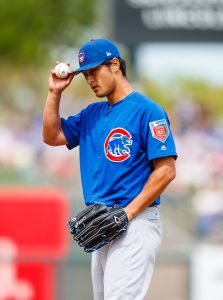
The Cubs saved their biggest splash for February, when they agreed to a six-year, $126MM deal with Darvish. The Dodgers, Twins, and Brewers were among the teams the Cubs beat out for the righty. Darvish’s $21MM average annual value was surprisingly low. We had expected an AAV in the $25-27MM range, given previous contracts signed by David Price, Max Scherzer, Zack Greinke, Stephen Strasburg, and the Cubs’ own Jon Lester. Like other big market teams, the Cubs are intent on staying below the $197MM competitive balance tax threshold, and the sixth year given to Darvish helped accomplish that. From Darvish’s point of view, the opt-out after 2019 has significant value: about $20MM, estimates MLBTR contributor Matt Swartz. Darvish will be 33 when the clause comes due, and he’ll have to decide whether he can top four years and $81MM on the 2019-20 free agent market.
Questions Remaining
The Cubs appear to have $13MM or less for trade deadline acquisitions. Regarding his trade deadline payroll flexibility, Epstein said, “We do have some, not a ton.” Epstein admitted, “One of our goals was to put the team together this year in a way that would maybe allow us to reset under the CBT threshold.” This is not actually a reset, since the Cubs were not over the CBT threshold in 2017. Regardless, it’s possible the luxury tax threshold stopped the Cubs from assembling a super bullpen despite their relief pitching problems in the playoffs. Aside from the health of Morrow, much depends on southpaw Justin Wilson, who flopped after joining the Cubs last year at the trade deadline. It’s difficult to say exactly why the Cubs didn’t acquire additional relievers – it may be that they’re completely satisfied with their bullpen as it stands, or don’t mind waiting until July to re-evaluate. But since the CBT threshold may have been a factor in their bullpen budgeting, let’s explore it further.
The Cubs may be willing to exceed next year’s $206MM CBT threshold, but aim to be considered a “first-time CBT payor.” Second-time payors pay 30% on the overage, while first-time payors pay 20%. Avoiding the CBT threshold in 2018 also affects what the Cubs would have to surrender next year upon signing a qualified free agent. They’d give up their second-highest draft pick regardless, but avoiding the threshold allows them to keep their fifth-highest pick and also have their international signing bonus pool reduced by $500K instead of $1MM. I have to ask of the Cubs, Yankees, and Dodgers: why does this difference in penalties matter so much?
Say the Cubs had gone all out and also signed Addison Reed and Mike Minor this winter, adding $17.7MM to the 2018 payroll. That would put the team’s 2018 payroll at $202MM for luxury tax purposes. Say they spend another $12MM on midseason acquisitions and end at $214MM for 2018. That means they’d pay a tax of…$3.4MM. Basically a rounding error for this franchise. Paying the tax for a potential 2018 overage is irrelevant at this spending level.
Therefore, this has to be all about being a first-time payor in 2019 rather than a second-time payor. If you’ll indulge me, let’s play that out for a team with a massive $275MM payroll in 2019. On a $275MM payroll, a first-time CBT payor is penalized $28.525MM, while a second-time payor is penalized $36.15MM. If a team is conceding being a first-time payor in 2019 (as the Cubs seem to be), being a second-time payor only results in less than $8MM in additional tax, even at a very high payroll level. Carrying that hypothetical payroll level forward for yet another season would result in a larger hit, but it would still be less than $14MM, and from that point forward the tax rate would be the same for an organization that stayed over the luxury line. Ah, but what about the draft pick penalty for exceeding the 2019 second surcharge threshold of $246MM? That’ll knock your 2020 draft pick back a full ten spots. Meaning, a good team has to pick at #37 instead of #27, something like that. Compared to the previous CBA, where draft picks as high as 11th overall were surrendered for signing certain free agents, dropping ten spots doesn’t seem that bad.
Large market teams are treating the CBT thresholds as lines they absolutely cannot cross. Or at least that they cannot cross for consecutive years. Rather than take that at face value, we need to ask whether the CBT thresholds are being used as a convenient excuse to spend less. The tax can be hefty, no doubt, and it is understandable that organizations already facing max penalties — particularly those that often spend well over the threshold — would look for an opportunity to reset. But the timing of entering CBT payor status does not appear to be a particularly compelling limitation on spending in and of itself.
My payroll tangent aside, the Cubs also have the question of a possible position player logjam. On his decision not to trade anyone, Epstein told Greenberg, “We explored a lot of a different possibilities, but in the end there just wasn’t a deal available that would give us a fair return back. We didn’t want to take less talent or control just to add a pitching prospect. Balancing the roster wasn’t that fundamental to make a bad deal happen.” The Cubs can’t be faulted for declining to sell low on Kyle Schwarber, who dedicated himself to an offseason conditioning program in the meantime. If all of the Cubs’ many outfield and second base candidates stay healthy at once, which is unlikely, Maddon may need to make the tough decision to bench his two underperforming veterans, Jason Heyward and Ben Zobrist. Even if that comes to pass, it’s likely preferable to taking less than fair value for a controllable young player or finding the depth lacking if is tested.
Overview
The Cubs were able to use an opt-out clause for Darvish to lower the AAV on his contract, helping the team stay below the competitive balance tax threshold. They were able to accomplish this because other big market teams had even less space under that threshold, and small market teams couldn’t match the Cubs’ bid. They also brought in an intriguing and relatively young fifth starter in Chatwood, resulting in what looks to be the best starting rotation of the Epstein regime. While fresh faces in the bullpen were a given, the volatility of relief pitching makes it unclear whether the Cubs did enough in that area. Otherwise, the team remains stacked with high quality position players. The Cubs will likely tangle with the Nationals and Dodgers for the NL pennant once again.
How would you grade the efforts of Epstein and company? (Link for app users.)
How Would You Grade The Cubs' Offseason?
-
A 42% (2,594)
-
B 40% (2,504)
-
C 12% (720)
-
F 4% (263)
-
D 3% (169)
Total votes: 6,250
Photo courtesy of USA Today Sports Images.
Offseason In Review: Los Angeles Angels
This is the latest entry in MLBTR’s 2017-18 Offseason In Review series. Click here to read the other completed reviews from around the league.
Few teams generated more offseason headlines than the Angels, as the team reloaded in a major fashion for another run at playoff contention.
Major League Signings
- Zack Cozart, 3B/SS: Three years, $38MM
- Rene Rivera, C: One year, $2.8MM
- Chris Young, OF: One year, $2MM
- Total spend: $42.8MM
Trades And Claims
- Acquired 2B Ian Kinsler from the Tigers for minor league RHP Wilkel Hernandez and OF Troy Montgomery
- Acquired RP Jim Johnson and $1.21MM in international bonus pool money from the Braves for minor league RP Justin Kelly
- Acquired a player to be named later from the Rays for 1B C.J. Cron
- Acquired OF Jabari Blash from the Yankees for cash considerations or a player to be named later
- Acquired $1MM in international bonus pool money from the Twins for minor league OF Jacob Pearson
- Selected RP Luke Bard from the Twins in the Rule 5 Draft
Notable Minor League Signings
- Chris Carter, Eric Young, Ian Krol, Curt Casali, Emmanuel Burriss, Rymer Liriano, Colin Walsh, John Lamb, Jose Miguel Fernandez, Kevin Maitan, Livan Soto
International Signings
- Shohei Ohtani, SP/DH: $2.315MM signing bonus (Angels paid $20MM posting fee to Hokkaido Nippon-Ham Fighters)
Extensions
- Justin Upton, OF: One year, $17.5MM (total represents new money added via extension, as Upton signed a five-year deal that overwrote the four years remaining on his pre-existing contract. Upton had the option of opting out of his contract and becoming a free agent after the 2017 season.)
Notable Losses
- Cron, Ricky Nolasco, Huston Street, Yunel Escobar, Brandon Phillips, Yusmeiro Petit, Bud Norris, Jesse Chavez, Ben Revere, Cliff Pennington, Andrew Bailey
Angels 25-Man Roster & Minor League Depth Chart; Angels Payroll Overview
Needs Addressed
One of Anaheim’s biggest moves was completed before the offseason even began, as Justin Upton agreed to forego opting out of his contract in exchange for a new five-year agreement. The newly-crafted deal essentially acted as a one-year extension that added $17.5MM in new money to the $88.5MM that Upton was already owed from 2018-21, guaranteeing him a total of $106MM over the five-year span.
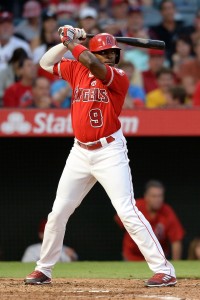 Upton hit .273/.361/.540 with 35 homers over 635 PA last season, seemingly confirming that his slow start with the Tigers in 2016 was perhaps just an adjustment to the American League. A full season of Upton’s bat is a huge boost to an Angels lineup that (apart from Mike Trout) didn’t deliver much offense in 2017, and the combination of Upton, Trout, and Kole Calhoun is arguably baseball’s best outfield. Both Upton’s enjoyment of his time in L.A. and his misgivings about the free agent market factored into his decision to stay, and he surely he must feel even better about his choice after watching his team thoroughly bolster its roster.
The most-discussed addition, of course, was Shohei Ohtani. The 23-year-old Japanese star’s plans to jump to Major League Baseball led to months of speculation, particularly since Ohtani and his camp gave little hint about what he was particularly looking for in a North American club. (Money wasn’t a prime factor, as Ohtani’s age made him subject to international signing bonus rules, and thus he could only receive a signing bonus for whatever his new team had available in its remaining bonus pool.) After virtually every MLB team submitted a detailed explanation of their plans for deploying Ohtani’s unique two-way skillset, the field was then narrowed to seven teams, five of which were on the West Coast. While geography certainly seemed give the Angels an initial boost, their in-person meeting seemed to clinch matters, as Ohtani said he “just felt something click” when after talking with team officials.
For just a $2.315MM signing bonus, the Angels now have at least six years of control over a talent who has intrigued scouts and executives like almost no other international prospect in recent memory. Not only will Ohtani step into the Angels’ DH mix (after hitting .286/.358/.500 over 1170 career plate appearances in Japan), he’ll also become the team’s projected number two starter, after Garrett Richards. Of course, it hasn’t exactly been smooth sailing for the phenom this spring, as discussed further below.
While it remains to be seen what Ohtani can contribute against MLB pitching, the Halos also augmented their lineup with a pair of proven veterans. Second and third base were both areas of need with Yunel Escobar and Brandon Phillips headed for free agency, and after looking around at various trade and free agent options at both positions, Los Angeles used both avenues to create what could be the game’s best defensive infield.
Only 16 players in baseball surpassed Zack Cozart’s 5.0 fWAR in 2017, as the veteran Reds shortstop augmented his always-impressive defense with a breakout year at the plate, hitting .297/.385/.548 with 24 homers over 507 PA. That performed earned him a three-year, $38MM deal from the Angels, though with a lack of teams in the market for shortstop help, Cozart had to agree to switch over to third base for the third time in his professional career. It’s hard to imagine much, if any, of a fielding dropoff for Cozart at his new position given his prowess at shortstop, and if his hitting come anywhere close to last year’s numbers, the Halos will have landed a star at a near-bargain price.
Several teams tried to benefit from the Tigers’ ongoing fire sale by making offers for Ian Kinsler, though it was the Angels who finally landed the veteran second baseman for the moderate price of two decently-regarded prospects. Moreso than the prospect return, the Halos’ willingness to absorb the $11MM owed to Kinsler in 2018 and Kinsler’s own interest in coming to Anaheim (he waived his partial no-trade clause to approve the deal to the Angels, who had been on his 10-team no-trade list for tax reasons) made the deal happen.
The 36-year-old isn’t a long-term answer to Anaheim’s longstanding second base hole, and Kinsler is coming off the worst offensive season (91 wRC+, .236/.313/.412 over 613 PA) of his 12 years in the big leagues. Still, even if Kinsler duplicates that slash line, he’d still represent a marked upgrade over what the Angels got from their second basemen in 2017. Kinsler’s glovework was still as good as ever last season, and between Kinsler, Andrelton Simmons at shortstop, and Cozart at third, opposing batters will have a hard time sneaking grounders through the Halos’ infield.
Beyond the big-ticket additions, L.A. also added quite a bit of veteran depth at the Major and minor league levels. Chris Young and Rene Rivera will respectively handle the backup outfielder and catching duties, while such notable figures as 2016 NL home run leader Chris Carter are in camp as non-roster invitees.
As well as the experienced names, the Angels also obtained some much-needed young talent for their thin farm system as a result of the Braves’ loss of 12 international prospects due to signing violations. With Ohtani’s bonus accounting for their remaining 2017-18 international pool funds, Anaheim dipped into its 2018-19 pool, which was allowed via MLB’s rules for how teams could pay for this sudden influx of international talent on the market. Shortstop Livan Soto was inked for an $850K deal, but the bigger prize was 18-year-old Venezuelan shortstop Kevin Maitan. At the cost of a $2.2MM bonus, the Angels added a player who was the most highly-touted name from the 2016-17 int’l class, even if Maitan’s stock has dipped after a disappointing 2017 season.
Questions Remaining
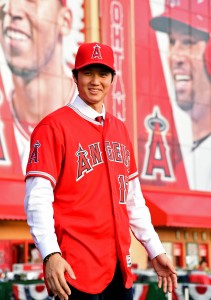 For all of the hype and promise surrounding Ohtani, there’s also an equal amount of doubt as to whether he’ll be able to legitimately perform as a two-way player in the big leagues, simply because such a feat hasn’t really been accomplished since the days of Babe Ruth. It may be years before we can fully weigh in on Ohtani’s two-way potential, though his Spring Training struggles both on the mound and at the plate have led to some speculation about whether he’ll be able to provide immediate help to the Angels in 2018. Spring numbers for any player, of course, should be taken with a grain of salt, though the controversy that Ohtani’s slow start has already generated is an early sign of the unique scrutiny he’ll face in his MLB rookie season.
Ohtani’s presence has led to a ripple effect on the Angels’ roster. Since he is slated to receive at least a couple of DH days per week, Albert Pujols will now be getting more time at first base, a position the future Hall-of-Famer has been increasingly unable to play over the last two seasons due to foot injuries. Pujols is hopeful that his injury-free offseason will help him handle more time in the field and help him rebound from a mediocre year at the plate, and it’s worth noting that Pujols was still posting above-average run-creation numbers (as per wRC+) in every season prior to 2017. The Angels would happily take Pujols returning to even his modest 2016 stats, though at age 38, it’s also possible that the slugger may have declined for good.
Luis Valbuena also suffered through a tough 2017 season, leaving the Angels with a pretty shaky pair of first base options for the coming season. Due to the first base/DH roster crunch, C.J. Cron was dealt to the Rays, leaving L.A. with even less depth at first. The Angels will be lacking at two key spots in the lineup should Pujols and Valbuena continue to struggle and if Ohtani needs time to adjust to Major League pitching. Carter can’t be seen as anything more than a wild card given his own disastrous 2017.
The Angels will be deploying a six-man rotation, in a nod to both Ohtani (given his part-time hitting status and to somewhat emulate his longer rest periods between starts in Japan) and to the other five projected starters, all of whom have been plagued by injuries in recent years. Richards, Matt Shoemaker, Andrew Heaney, Tyler Skaggs, and J.C. Ramirez combined for just 359 1/3 innings last season, and Parker Bridwell and Nick Tropeano are also on hand as less-than-reliable minor league depth options. Ricky Nolasco wasn’t re-signed, leaving the Angels without a reliable innings-eater to help anchor a rotation with a lot of uncertainty.
Speaking of eating innings, the Angels lost a pair of bullpen workhorses when Yusmeiro Petit and Bud Norris left in free agency to respectively sign with the A’s and Cardinals. The club is hopeful that Cam Bedrosian, Blake Parker, and Keynan Middleton can all continue to build on their impressive performances last year, and some veteran help was added in the form of Jim Johnson. That trade with the Braves was more about acquiring international bonus money for the Ohtani chase than it was specifically about adding Johnson given his rough 2017 season, though his advanced metrics indicate that his 5.56 ERA last year could’ve been due to some bad luck. The pen is also short on left-handers, as Jose Alvarez is the only southpaw reliever on Anaheim’s 40-man roster.
With potential needs in both the rotation and bullpen, it strikes me that the Angels could be one of the better fits for Alex Cobb or Greg Holland, who are both still available in free agency. Signing either qualifying offer-rejecting player would cost the Angels $500K in international pool money and their second-round draft pick (57th overall), but it could be a price the club is eventually willing to pay if Cobb or Holland were willing to accept a bargain-rate one-year contract. The rotation seems like more of a need than the bullpen given the lack of room for error with a six-man rotation, though L.A. didn’t dabble much in the free agent pitching market (aside from Ohtani’s singular situation) and is seemingly content to see what it has as the in-house arms get healthy. If not Cobb or more of a pure innings-eater, the Angels could look to add starting pitching if they’re in contention and have a need at the trade deadline.
Overview
With more losing seasons (three) than playoff appearances (one) in the Trout era, the Angels are undoubtedly eager to strike while the superstar center fielder is still in his prime. 2018 isn’t a must-win year since Trout and most of the other key pieces are locked up beyond the season, though Richards and Kinsler are both free agents next winter and longtime manager Mike Scioscia is also entering his final year under contract. There hasn’t been much talk about a Scioscia extension, and while it wouldn’t be surprising to see a new deal worked out for the game’s longest-tenured manager, it does create the possibility that the organization could embark in a fresh direction in 2019. In an era when the Red Sox, Nationals, and Yankees all parted ways with veteran managers despite making the playoffs, it seems like Scioscia may require a significant on-field improvement if he wants to keep his job.
Fortunately for Scioscia, he’ll have more to work with this season. Despite all the injuries and the below-average offense, the Halos flirted with wild card contention for a good chunk of 2017, and could potentially make a much stronger run at the postseason this year with Cozart and Kinsler in the fold, plus a full season of Upton. Anaheim has been hurt in the past when acquiring veterans just before they start to decline, though the Ohtani signing represents a much-needed influx of young star talent into the roster, given the farm system’s lack of prospect depth in recent years. Avoiding the injury bug remains a major concern, but the Angels made some bold moves to correct the flaws in last year’s roster.
What’s your take on the Angels’ winter? (Link for app users)
How Would You Grade The Angels' Offseason?
-
A 42% (1,702)
-
B 39% (1,593)
-
C 14% (552)
-
F 3% (115)
-
D 3% (104)
Total votes: 4,066
Photos courtesy of USA Today Sports Images
Offseason In Review: Houston Astros
This is the latest entry in MLBTR’s 2017-18 Offseason In Review series. Click here to read the other completed reviews from around the league.
Fresh off the Astros’ first-ever World Series-winning campaign, general manager Jeff Luhnow spent the winter supplementing an already strong pitching staff.
Major League Signings
- Joe Smith, RP: Two years, $15MM
- Hector Rondon, RP: Two years, $8.5MM
- Total spend: $23.5MM
Trades And Claims
- Acquired RHP Gerrit Cole from the Pirates for RHP Joe Musgrove, RHP Michael Feliz, 3B Colin Moran and OF Jason Martin
- Acquired RHP Brandon Bailey from the Athletics for OF Ramon Laureano
- Claimed LHP Buddy Boshers off waivers from the Twins
Extensions
Notable Minor League Signings
Notable Losses
- Musgrove, Feliz, Moran, Carlos Beltran, Mike Fiers, Luke Gregerson, Francisco Liriano, Cameron Maybin, Tyler Clippard
Astros 25-Man Roster & Minor League Depth Chart; Astros Payroll Overview
Needs Addressed
The Astros were one of the majors’ elite teams from the start of the regular season until the end in 2017, but they may not have been in position to hoist the trophy in November if not for a late-August trade with Detroit. In that deal, Luhnow shipped out multiple prospects for longtime Tigers ace Justin Verlander, who was utterly dominant in his first action as an Astro, with whom he combined for 36 2/3 innings of nine-run ball in playoff series wins over the Red Sox, Yankees and Dodgers.
With Verlander, Dallas Keuchel, Lance McCullers, Charlie Morton, Brad Peacock and Collin McHugh among Houston’s in-house starting options entering the offseason, Luhnow could have passed on adding any established starters during recent months. Instead, he revisited the trade route to pick up yet another high-profile option, Gerrit Cole, whom he acquired from the Pirates in January.
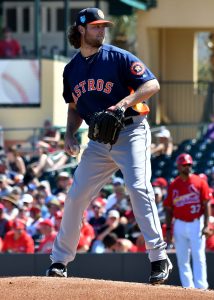 In order to reel in the 27-year-old Cole and his two remaining seasons of affordable team control, the Astros surrendered a respectable package of young talent headlined by righty Joe Musgrove, who was a promising starter for them back in 2016 and a key part of their bullpen down the stretch in 2017. While it’s possible the Astros will come to miss Musgrove and the other players they parted with (righty Michael Feliz, third baseman Colin Moran and outfielder Jason Martin), they’re well positioned to move on without them.
As mentioned earlier, there were several legitimate starting options on hand even before the Cole trade, so netting him should allow the Astros to maintain a deep staff in the near term even without Musgrove and Feliz. As opposed to earning starting jobs, Peacock (who was outstanding as both a starter and a reliever in 2017) and McHugh will be part of a righty-heavy relief corps that’s also set to include Ken Giles, Chris Devenski, newcomers Joe Smith and Hector Rondon, and Will Harris in prominent roles.
Cole has been somewhat inconsistent since debuting with the Pirates in 2013, but the talent is immense, evidenced by both his draft pedigree (No. 1 in 2011) and overall production to date (3.50 ERA/3.27 FIP across 782 1/3 innings). At his best in Pittsburgh, the 2015 version of Cole pitched to a 2.60 ERA/2.66 FIP with 8.74 K/9 against 1.9 BB/9 over 208 frames. Cole hasn’t been nearly that effective lately, though the flamethrower was still a mid-rotation workhorse in 2017. Cole logged career-worst numbers in the ERA (4.26) and FIP (4.08) departments a year ago, but he also ate 203 innings with strong strikeout (8.69 K/9) and walk (2.44) rates en route to 3.1 fWAR. That’s quality production, clearly.
Now, as former FanGraphs writer Eno Sarris explained in January, Cole could be in the right place to harness his vast potential. Cole leaned too much on his fastball and wasn’t reliant enough on his breaking pitches during his Pirates tenure, Sarris observed. In Houston, though, he’s with a team that recorded the fourth-lowest fastball percentage and the fifth-highest slider/curveball rate in the league last season.
No doubt, the Astros are banking on Cole at least delivering similar results as last year. Before they ended up with him, they considered the likes of Yu Darvish, Chris Archer and Shohei Ohtani. Darvish would’ve created a far bigger dent in the Astros’ payroll than Cole, though, having inked a six-year, $126MM deal with the Cubs; Archer remains with the Rays, because they understandably want a major haul for him; and you can’t fault the Astros for losing the Ohtani lottery, given that it featured just about every other major league team at one point. So, in Cole, the Astros have an affordable, arbitration-controlled piece who should help their cause for at least two years. Come 2019, the Astros could be without both Keuchel and Morton, two players who are slated to become free agents next winter. Cole’s presence should help protect against their possible departures.
Joining Cole as new additions to Houston’s staff are Smith and Rondon, who each bring terrific major league track records on reasonable salaries. One could quibble with the fact that neither is a lefty, which the Astros could seemingly use. Houston was devoid of a shutdown southpaw throughout last season (neither holdover Tony Sipp nor the now-gone Francisco Liriano fit the bill), yet that didn’t stop the club from winning 101 games during the regular campaign before charging to a title in the fall. It helps when you’re righty relievers are capable of holding their own against left-handed hitters, as the Astros’ are. Their bullpen pieces held lefty-swingers to a .302 wOBA in 2017, and even though they’re righties, both Smith and Rondon could help in that regard. The 33-year-old Smith has held opposite-handed hitters to a .307 mark during his career, while Rondon, 30, has been even better at .287 (that figure ballooned to .346 last year, however).
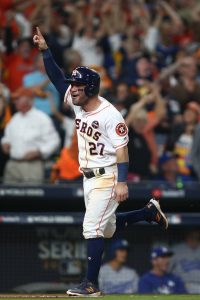
Long after he bolstered his team’s pitching staff, Luhnow secured arguably the Astros’ best player, second baseman Jose Altuve, to a franchise-record contract extension. Prior to last Friday, when he agreed to his new pact, Altuve was controllable through next season via the club-friendly extension he signed as a youthful, run-of-the-mill player in 2013. The 27-year-old Altuve has since blossomed into a bona fide superstar, having taken home the AL MVP in 2017 (a 7.5-fWAR showing), and will earn at a rate commensurate to that for the long haul.
Altuve will be due a guaranteed $151MM over a five-year period beginning in 2020. He’s just the sixth player in league history to receive a deal worth $30MM per year, making his meteoric rise since he signed for just $15K in 2007 as a diminutive, anonymous Venezuelan prospect all the more incredible.
Questions Remaining
The Astros’ offense is the envy of the league, which it led in wRC+ (121) and runs (896) last season. That came without a full season from all-world shortstop Carlos Correa, whom a thumb injury limited to 109 games. He’s back, as are Altuve, Springer and Alex Bregman, to headline a seemingly relentless Houston attack. Still, the Astros at least showed some interest in upgrading their lineup over the winter. They considered making a run at then-Marlins slugger Giancarlo Stanton, who’d have given the Astros two reigning MVPs on one team, before the Yankees landed him and the majority of his $295MM contract. Additionally, Houston was in on Carlos Gonzalez, who ultimately re-signed with Colorado for $8MM.
Either Stanton or CarGo would have given the Astros another starting outfielder to join Springer in center and Josh Reddick in right. Instead, once first baseman Yuli Gurriel returns from February hamate surgery, they’ll primarily turn to Marwin Gonzalez, who stunningly broke out with a 144 wRC+ last year. But Gonzalez is no sure thing to continue at anything resembling that pace, judging by both his league-average output (101 wRC+) from 2014-16 and Statcast data from 2017. Although Gonzalez managed a superb .387 wOBA in 2017, his xwOBA (.320) fell way short. Meanwhile, Gurriel wasn’t quite that fortunate, but his xwOBA (.327) still didn’t come close to his solid wOBA (.351).
Both Gonzalez and Gurriel are candidates to take steps back offensively this year, then, while the Astros also seem to lack a high-end hitter at the DH spot. They’re in position to turn to backup catcher Evan Gattis, who was mediocre at the plate (105 wRC+) last year. The good news is that even that type of unspectacular production would easily outpace the now-retired Carlos Beltran’s output from last year. The revered Beltran was an important behind-the-scenes presence in Houston, but at the same time, he was one of the game’s worst DHs from a statistical standpoint.
While Gattis isn’t a terrible choice to DH, there’s a case to be made that the Astros should have non-tendered him (he’s making $6.7MM) and sought an upgrade. A free agent like Logan Morrison may have made sense, for example, especially considering the Twins handed him a $6.5MM guarantee that’s lower than Gattis’ salary. Morrison would have helped balance out the Astros’ lineup a bit more, giving them four lefty-capable regulars instead of the three they’ll run out in 2018. Admittedly, though, the way free agency unfolded over the winter isn’t something anyone saw coming, so it came as a surprise that Morrison (and Mike Moustakas and Todd Frazier, among others) signed such an affordable deal. If the Astros need a bat at the trade deadline, there ought to be some quality options at palatable prices.
It’s fair to say that even if Gonzalez, Gurriel and Gattis are far from great this year, Houston will thrive at the plate because of its top-end talent. The Astros’ position players may not offer that type of brilliance defensively, though, as they’re returning largely the same group that ranked toward the bottom of the majors in the advanced metrics a season ago. The Astros are projected to be similarly woeful in the field this year, but they proved they could overcome that last season with a punishing offense and terrific pitching – both of which are again in place.
Houston’s hurlers could have been throwing to a different primary catcher this year had the club signed free agent Jonathan Lucroy, whom it showed interest in over the winter (he went on to join the division-rival Athletics), or made the higher-impact move of acquiring the Marlins’ J.T. Realmuto. The Astros and Marlins discussed Realmuto, who’s under control through 2020, and the former reportedly didn’t close the door on giving up premier outfield prospect Kyle Tucker for the backstop. Luhnow doesn’t sound like someone who’s going to trade Tucker, however, instead believing he could be a factor for the Astros as early as this year (and if Gonzalez and Derek Fisher are unsatisfactory in left, that could indeed happen). Regardless, Realmuto’s status will be worth monitoring during the season if the Astros’ combination of Brian McCann, Gattis and Max Stassi doesn’t suffice. McCann and Gattis will be free agents in a year, so acquiring Realmuto during the summer would give the Astros an immediate boost and obviate a need for next offseason in one fell swoop.
As for the Astros’ pitching staff, which we’ve established is a deep and talented group, health is likely the main concern. Keuchel, McCullers and Morton haven’t been all that durable of late, McHugh missed most of last season and Cole is only two years removed from going to the disabled multiple times on account of elbow problems. All of that considered, it’s easy to see why Luhnow kept McHugh around as depth. Just about every team in the league would sign up for having the accomplished McHugh in its rotation, let alone as a sixth or seventh starter, which explains why he drew trade interest during the winter.
Overview
Thanks in part to Luhnow’s offseason maneuverings, the Astros will enter the new campaign as baseball’s best team, though that may have been true even if the GM didn’t make any notable winter moves. Talent-rich Houston is poised at least to win its second straight AL West title after lapping the field a year ago, and despite the offseason efforts of the majors’ other super-teams, the Astros should be seen as the favorites to end up again as the last club standing in the fall.
What’s your take on the Astros’ winter? (link for app users)
How would you grade the Astros' offseason?
-
A 52% (2,120)
-
B 37% (1,497)
-
C 8% (317)
-
F 2% (93)
-
D 1% (38)
Total votes: 4,065
Photos courtesy of USA Today Sports Images.
MLBTR Originals
Rounding up of the last two weeks’ worth of original content from the MLB Trade Rumors writing team…
- Tim Dierkes compiled MLBTR’s annual list of out-of-options players, several of whom could be facing a roster crunch prior to Opening Day.
- MLBTR began our annual “Offseason In Review” series, recapping and analyzing every team’s winter moves. The first teams up were the Tigers (by Steve Adams), Marlins (by Jeff Todd), Giants, and Red Sox (both by Mark Polishuk).
- Steve Adams and Jeff Todd provided an update on the 18 players selected in last winter’s Rule 5 Draft, and how many of those names are on pace to win 25-man roster spots with their new teams.
- Spring is the time for long-term extensions, with teams looking to lock up both soon-to-be free agents, players entering their arbitration years, or even some less-conventional extension candidates. To this last point, Jeff Todd examines the case for the Royals to explore an extension with late bloomer Whit Merrifield, who looks to be an important piece for the team in the near future even as K.C. goes into a rebuilding phase.
- Speaking of extensions, the Astros made headlines this week when they agreed to add five years and $151MM to Jose Altuve‘s deal, ensuring that the star second baseman will remain the face of the Houston franchise. Kyle Downing submitted a pair of polls about the extension to the MLBTR readership, asking them to grade the deal both from the Astros’ perspective and from Altuve’s perspective.
Poll: Grading the Jose Altuve Extension
Yesterday, it was reported that the Astros have agreed to a five-year, $151MM extension with Jose Altuve that’ll keep him in Houston through his age-34 season. As MLBTR’s Jeff Todd mentioned yesterday, the deal will be by far the largest extension ever given to a second baseman, handily topping the $110MM given to Dustin Pedroia by the Red Sox in 2013.
It’s also just the sixth deal in MLB history that comes with an average annual value greater than $30MM. A win above replacement is widely believed to be worth around $8MM, so it seems likely that Altuve could still provide the 4-ish WAR per year necessary to provide the Astros with surplus value on this new deal. Indeed, the reigning AL MVP and three-time batting champ has been worth 14.3 fWAR across the past two seasons alone.
Of course, it’s not a given that Houston’s star second baseman can maintain that level of production through the age of 34. Although his strongest and most notable skill is his penchant for making good contact (with an astonishingly low swinging strike rate) and racking up hits, a large part of his value is tied up in his baserunning. Though last season Altuve stole 32 bases and managed a .339 BABIP on grounders, history says that his speed isn’t likely to stick around past age 30, at least not to that level.
Even as his speed starts to go, however, contact ability and plate discipline (Altuve carries an incredible 10.7% career strikeout rate) are skills that typically tend to age well. And there’s something to be said for the Astros keeping the face of their franchise around through 2024.
It’s not unreasonable to think that Altuve could have earned a larger guarantee if he’d waited to hit the free agent market following the 2019 season. But as with his first extension with the Astros, he’ll essentially sacrifice earnings upside for added financial security… and a whole lot of it, too. The contract ranks as the 31st-largest guarantee in MLB history. He’s now guaranteed life-changing money, with a chance to earn even more when he hits the free agent market again six and a half years from now.
At this point, we want to know your opinion. What do you think of the second Altuve deal from the Astros’ perspective? (Poll link for app users)
Grade the Altuve Extension From The Astros' Perspective
-
A 50% (5,385)
-
B 31% (3,357)
-
C 12% (1,293)
-
D 4% (409)
-
F 3% (284)
Total votes: 10,728
What about from Altuve’s perspective? (Poll link for app users)
Grade The Altuve Extension From Altuve's Perspective
-
A 75% (6,299)
-
B 18% (1,491)
-
C 4% (373)
-
F 1% (111)
-
D 1% (86)
Total votes: 8,360
Offseason In Review: Miami Marlins
This is the latest entry in MLBTR’s 2017-18 Offseason In Review series. Click here to read the other completed reviews from around the league.
It’s a new era in Miami, but there are sure to be growing pains after a winter of upheaval.
Major League Signings
- Cameron Maybin, OF: One year, $3.25MM
Trades And Claims
- Acquired OF Lewis Brinson, OF Monte Harrison, IF Isan Diaz, RHP Jordan Yamamoto from Brewers in exchange for OF Christian Yelich
- Acquired RHP Sandy Alcantara, OF Magneuris Sierra, RHP Zac Gallen & LHP Daniel Castano from Cardinals in exchange for OF Marcell Ozuna
- Acquired 2B Starlin Castro, RHP Jorge Guzman, IF Jose Devers from Yankees in exchange for OF Giancarlo Stanton
- Acquired RHP Nick Neidert, RHP Robert Dugger & IF Christopher Torres from Mariners in exchange for 2B/CF Dee Gordon
- Acquired 1B Garrett Cooper & LHP Caleb Smith from Yankees in exchange for RHP Michael King & $250K international pool money
- Claimed C Chad Wallach off waivers from Reds
- Selected RHP Elieser Hernandez from Astros in Rule 5 Draft
- Selected RHP Brett Graves from Athletics in Rule 5 Draft
Options
- Declined $2MM option over OF Ichiro Suzuki
Notable Minor League Signings
- Cristhian Adames, Eric Campbell, Tyler Cloyd, Jumbo Diaz, Johnny Giavotella, Bryan Holaday, Javy Guerra, Rafael Ortega, Yadiel Rivera, J.B. Shuck, Jacob Turner, Scott Van Slyke
Notable Losses
- Stanton, Ozuna, Yelich, Gordon, Suzuki, A.J. Ellis, Dustin McGowan, Tyler Moore, Edinson Volquez, Vance Worley
Marlins 25-Man Roster & Minor League Depth Chart; Marlins Payroll Overview
Needs Addressed
The sale of the Marlins to a group led by control person Bruce Sherman was not formally consummated until the end of the 2017 season, so the ensuing winter represented the launching of an entire new era in Marlins baseball. Though the Fish retained baseball operations president Michael Hill and skipper Don Mattingly, the entire organization is now marching to the beat of rookie CEO Derek Jeter.
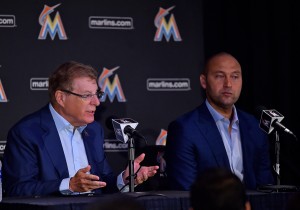
Even as Jeter launched a series of new initiatives on the business side, he and Hill oversaw a major sell-off of MLB assets. That decision drew plenty of indignation, to be sure, but certainly was understandable in many ways. Miami had finished the prior season with just 77 wins and was clearly a few good arms away from being a plausible challenger in a top-loaded National League. The new ownership group’s business plan, meanwhile, required a significant drop in payroll. Skeptics would point out that the spending cut was necessitated by the hefty purchase price, which chiefly benefited much-reviled former owner Jeffrey Loria.
No matter one’s perspective, the bottom line was plain as could be: the Marlins had to strike multiple trades involving key veterans. With no prospect of saving money on a slate of underperforming contracts to players such as Wei-Yin Chen, Martin Prado, Edinson Volquez, Brad Ziegler, and Junichi Tazawa, attention turned to a superstar slate of outfielders that made up the core of the team.
The focus, from the get-go, was on superhuman slugger — and reigning NL MVP — Giancarlo Stanton. But the first outfielder the Marlins traded didn’t even play that position in Miami. Second bagger Dee Gordon was shipped to the Mariners to become their new center fielder. As had been expected, Gordon’s fairly significant contract did not allow the Marlins to reap a significant haul in talent.
While not a pure salary dump, the Gordon trade made it clear beyond any question that the team was open for business and ready to move dollars. A steady progression of trade talks ensued.
The Stanton sweepstakes occupied headlines for the first portion of the offseason — so much so that (at the time, at least) many believed his ongoing availability was slowing the rest of the winter business. A no-trade clause left significant power in Stanton’s court and surely didn’t make things easy for Hill. He had lined up deals with the Giants and Cardinals, but meetings between Stanton and those organizations did not facilitate swaps. The Yankees stepped into that void, sending Starlin Castro to fill in for Gordon and help offset a portion of Stanton’s monster contract. While the two prospects in the deal aren’t household names, they’re considered intriguing talents and are certainly known well to Marlins exec Gary Denbo, who came over from the Yankees only months earlier as Jeter’s hand-picked addition to the baseball ops department.
It came as little surprise when, a few days later, the Fish wound up completing a deal with the Cards. Having already talked over quite a few prospects, the teams quickly came together on Marcell Ozuna, who isn’t Stanton’s equal as a player but had a breakout 2017 season and appealing contract situation. With two years of arbitration left, it was clear he’d have to be cashed in now.
It’s no accident that those three players went first. The Marlins’ methodical march down the line was designed to bring some order to the process of auctioning players. It started with those who most clearly needed to be moved to get the salary back in line.
The remainder of the team’s trade chips, though, were not in such black-and-white circumstances. As the calendar flipped to 2018, there were still quite a few trade candidates — some of whom expressed their consternation with the team’s direction publicly. Eventually, in one last major move, the Marlins completed the dismantling of their once-great outfield by sending Christian Yelich to the Brewers — a deal we’ll cover in full below.
The above-described trades, which delivered Castro and a variety of young outfielders at or near major-league readiness, filled some of the gaps they created. Otherwise, Miami has utilized the means familiar to all rebuilding teams to fill out its roster.
The Marlins have thus far completed just one MLB signing, a modest one-year pact with veteran outfielder Cameron Maybin. Given the payroll plan, it’s not surprising that the organization has not been interested in spending on one-year veterans who could prop things up and turn into trade chips. Other than Maybin, the Fish have been content competing jobs among untested rookies and the players who were added through low-risk means over the offseason. As things stand, the Opening Day roster could conceivably include three or four position players who were picked up in minor trades or on minor-league deals, especially with infielders Martin Prado and J.T. Riddle both nursing injuries.
Questions Remaining
Frankly, the Marlins’ future likely won’t be impacted much by the final roster decisions they make coming out of camp. Even if they perform, players like Scott Van Slyke and Jacob Turner are unlikely to be around for very long. At the same time, they won’t be allowed to stand in the way of the development of young talent (or, perhaps, the opportunity to pick up any interesting players who shake loose from other organizations late in camp). We’ll focus here, then, on the longer-term matters that will be impacted by the season to come.
Drastic though the changes have been, the cuts could’ve gone deeper. And they may yet. It’s still a bit surprising that catcher J.T. Realmuto has not been traded with just three years of control remaining (particularly after he requested he be dealt). If he continues to perform, he could be a hotly pursued talent at the trade deadline or next winter. Likewise, righty Dan Straily is a solid and affordable rotation piece who could make quite a lot of sense for other organizations. And though his contract is an obstacle, Castro is a productive and still-youthful player. The latter two players are also both controlled for three campaigns.
True, dealing either of those players would mean opening a rather significant hole on the roster. At the right price, though, the Marlins have to be willing to make a move. Odds are, after all, that the rebuilding process will still be ongoing as these three quality performers are nearing the open market.
Those aren’t the only trade candidates whose performances will be watched in 2018. First baseman Justin Bour could hold appeal, though there’s also not much reason to think demand will be robust given the collapse of the market for similar sluggers. Brad Ziegler will function as the closer in Miami and will be a clear trade candidate if he can engineer a bounceback campaign. Reliever Junichi Tazawa is also seeking to make good in the second year of his free-agent deal. Veteran infielder Martin Prado and lefty Wei-Yin Chen are owed far more than their market value at present, though perhaps the Fish could save some future salary obligations if things break right.
Of course, money isn’t the only factor in the rebuild. The young talent brought back in the team’s various winter swaps will also be looked upon to develop a new core that can generate fan excitement and ultimately spur a return to contention. In some cases, perhaps, the organization will be able to see the future right from the get-go. Righty Sandy Alcantara and outfielder Magneuris Sierra, both acquired in the Ozuna deal, could well contribute in 2018. But most eyes will be on the players recouped in the club’s most interesting winter trade …
Deal of Note
Sure, the Stanton deal created the most intrigue. But it was nearly inevitable that his huge contract would be moved when the organization determined it couldn’t support a payroll increase to build around the existing core. Failed signings that had been intended to build around the team’s three exciting young outfielders largely sealed the fate of Stanton and Ozuna.
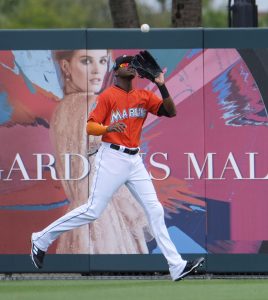
But Yelich’s situation was somewhat different. Unlike Ozuna, he accepted an early-career extension. And it worked out swimmingly. The 26-year-old Yelich has been steadily productive and has even shown some promise of improving further. And the price, of course, is quite appealing — so much so that he did not necessarily have to be traded. Yelich is owed just $7MM for the coming season, with future salaries that never top $15MM through 2022 (the last year via option).
Those same factors also made Yelich plenty marketable, though, and the Marlins were obviously able to generate enough interest to pull the trigger on a move. Giving up five affordable seasons of a quality young regular is a tough thing to do. This trade, more than the others, has the potential to sting if the players acquired don’t live up to expectations.
The Marlins no doubt hope that Lewis Brinson will be an exciting, high-value performer right out of the gates. He’s likely to step right into Yelich’s shoes in center. After all, Brinson has nothing more to prove at Triple-A and has enjoyed a productive spring thus far. While he’s expected to be a productive defender, though, there are divergent views on his likely outcome as a hitter, so there’s still some risk here.
If the Fish really hit it big, they’ll end up with two new outfielders out of this deal, as they were also able to pry Monte Harrison from the Brewers. The 22-year-old ripped up High-A pitching last year and may not be too far from the big leagues if he can show similarly in the upper minors. Like Brinson, Harrison has tools aplenty, though he has more developmental hurdles still left to clear.
Both of the other players acquired in this deal, infielder Isan Diaz and righty Jordan Yamamoto, are graded among the Marlins’ top 25 or so prospects. They’re joined by a host of other players who came to the organization in this winter’s trading frenzy.
Overview
By and large, the coming season will be focused on development and weighing transactional opportunities — including both trades of existing veterans and perhaps also keeping an eye out for talented players who can be had for a low acquisition cost from other teams. The Marlins will be evaluating players such as Brian Anderson, J.T. Riddle, and Justin Nicolino, in addition to some of those listed above, while hoping that righty Jose Urena can show that his solid 2017 results weren’t a fluke.
While the new ownership group has already taken the brunt of fan frustration over the selloff, though, that doesn’t mean it’s time to coast. The baseball ops department still has some very tough potential decisions ahead of it on talented and popular players.
How would you grade the Marlins’ efforts this winter? (Link for app users.)
How Would You Grade The Marlins' Offseason?
-
F 42% (1,482)
-
D 21% (741)
-
C 17% (592)
-
B 13% (463)
-
A 6% (212)
Total votes: 3,490
Photos courtesy of USA Today Sports Images.
Spring Training Rule 5 Update
There were 18 players selected in the 2017 Rule 5 Draft — which is to say that 18 players who were left off their organizations’ respective 40-man rosters were selected by a new team and given a chance to break camp on a 25-man roster.
Eligibility for the Rule 5 Draft is dependent on age and minor league service time, but the Rule 5 is generally an opportunity for potential big leaguers who aren’t in their clubs’ immediate plans to break through elsewhere, so long as they can remain on their new club’s roster/disabled list for the entire season — including at least 90 days of active roster time. (A player who falls shy of those 90 days of active service due to DL time retains his Rule 5 status in following seasons until he has accumulated 90 active days on the 25-man roster.) Rule 5 players cannot be optioned to the minors without first being passed through outright waivers and, if they clear, then offered back to their original club for $50K (half of the $100K cost of making a Rule 5 pick in the first place).
Here’s a look at the spring standing of the current slate of Rule 5 picks:
- Victor Reyes, OF, Tigers (selected out of D-backs organization): The 23-year-old Reyes is hitting just .200/.243/.229 through 37 plate appearances after being selected with the No. 1 pick in this year’s Rule 5 Draft. Obviously that’s not the performance Detroit was hoping to receive, though that hasn’t ruled him out for a roster spot on a rebuilding club. Manager Ron Gardenhire recently called it a “really big” decision when chatting with the Detroit Free Press’ Anthony Fenech, who examines the decision at greater length in his column.
- Julian Fernandez, RHP, Giants (from Rockies): The 22-year-old Fernandez has yet to pitch above A-ball since debuting as a 17-year-old back in 2013, and he’s been hammered for 10 runs on six hits and four walks with six strikeouts in 3 1/3 innings with the Giants this spring. It’s tough to see him sticking, even if he can top 102 mph with his heater (as Baseball America’s J.J. Cooper noted on Twitter at the time of the draft).
- Nick Burdi, RHP, Pirates (from Twins via trade with Phillies): Burdi, recovering from Tommy John surgery, has yet to pitch this spring and will be on the disabled list to open the season.
- Carlos Tocci, OF, Rangers (from Phillies, via trade with White Sox): Tocci has swiped six bags and reportedly shown good leatherwork in the outfield, making him a plausible reserve outfield candidate if the Rangers decide to prioritize those attributes in rounding out their bench. On the other hand, he’s struggling at the plate this spring and does not exactly have a lengthy track record of hitting in the upper minors.
- Brad Keller, RHP, Royals (from D-backs, via trade with Reds): Though he managed only a 4.68 ERA at the Double-A level last year, Keller is being looked at as a reliever by a Kansas City organization that is in need of pitching depth. He has recorded seven strikeouts in six spring innings and seems to have a solid shot at taking a job.
- Burch Smith, RHP, Royals (from Rays, via trade with Mets): Once a well-regarded prospect whose career was derailed by injury, Smith put up some interesting numbers in the Arizona Fall League (including 29 strikeouts in 20 1/3 innings). He has been a bit wild this spring, handing out eight free passes in eight frames, but could join Keller in the K.C. pen.
- Anyelo Gomez, RHP, Braves (from Yankees): Yet another interesting player in a Yankees system that is producing too much talent for the team’s 40-man roster, Gomez ran up the ladder in a strong 2017 season, briefly reaching Triple-A and ending with a cumulative output of 70 1/3 innings of 1.92 ERA pitching with 11.1 K/9 and 2.7 BB/9. He hasn’t dominated this spring, but the Braves obviously like his arm and have plenty of reason to try to hang onto him in a year in which they do not expect to compete for the postseason.
- Nestor Cortes, LHP, Orioles (from Yankees): What’s that we were saying about the Yankees? Ah yes, another such player. The 23-year-old just ran up over a hundred innings of 2.06 ERA ball in the upper minors, with 9.0 K/9 and 2.8 BB/9. He has held his own as a starter this spring, too. With the O’s in need of both lefty relievers and rotation depth, he seems to be on track for a job.
- Jordan Milbrath, RHP, Pirates (from Indians): An intriguing side-arm reliever, Milbrath certainly came into camp with a shot at cracking the Pittsburgh pen. But it’s fair to wonder if that’s still possible now that he has struggled through six outings, coughing up eight earned runs on eight hits and seven walks in 5 1/3 innings.
- Elieser Hernandez, RHP, Marlins (from Astros): The pitching-needy Marlins snagged Hernandez after he showed well at the High-A level and in the Venezuelan Winter League. He has impressed this spring with nine strikeouts and no walks over ten innings, so the Marlins have every reason to stash him in the bullpen.
- Mike Ford, 1B, Mariners (from Yankees): An injury to Ryon Healy initially looked like it could help to open a door for Ford, but it’s a fairly short-term issue for Healy, and Ford is hitting just .150/.292/.325 through 48 PAs this spring. With Daniel Vogelbach on hand as another lefty swinging first base/designated hitter option, Ford could have a tough time sticking in Seattle.
- Luke Bard, RHP, Angels (from Twins): Bard was shelled for five runs in one-third of an inning in one of his outing but has otherwise impressed the Halos this spring, as Mike DiGiovanna of the L.A. Times recently wrote. Manager Mike Scioscia, in particular, sounded encouraged by Bard’s ability to throw multiple innings per outing. At present, he seems to have a decet chance of making the Angels’ roster.
- Tyler Kinley, RHP, Twins (from Marlins): The hard-throwing Kinley has allowed just two runs in seven innings with the Twins, but while he’s whiffed seven hitters in that time he’s also walked five. The Twins signed three free-agent relievers this winter and are aiming to contend in 2018, making it tough to see Kinley sticking on the roster all season (or even breaking camp with the club).
- Albert Suarez, RHP, D-backs (from Giants): Suarez has a 3.72 ERA with an 8-to-2 K/BB ratio in 10 2/3 innings for the D-backs this spring. His chances of landing a bullpen spot improved somewhat with an oblique injury to Randall Delgado. As Nick Piecoro of the Arizona Republic recently pointed out, because Suarez has been previously outrighted off the Giants’ 40-man roster, he would not need to be offered back to the Giants if he clears waivers and could instead elect free agency.
- Anthony Gose, LHP, Astros (from Rangers): Gose was already placed on waivers by the Astros and returned to the Rangers after clearing.
- Pedro Araujo, RHP, Orioles (from Cubs): The Baltimore organization certainly seems to be impressed with Araujo. He generated plenty of swings and misses in 2017 and has carried that over into camp, with seven Ks and just one walk in his five innings.
- Brett Graves, RHP, Marlins (from A’s): Though he produced tepid results in his first effort at the Double-A level last year, Graves maintained a solid K/BB ratio and obviously caught the Marlins’ eye. But he has had a messy spring and is now slowed by an oblique strain, so the odds are against him going north with the MLB team.
- Jose Mesa, RHP, Orioles (from Yankees): Indications are that Mesa is not quite keeping pace with his two fellow Rule 5 hurlers. Indeed, he has surrendered five walks and five earned runs in his 5 2/3 innings of Grapefruit League action.
Offseason In Review: Detroit Tigers
This is the latest entry in MLBTR’s 2017-18 Offseason In Review series. Click here to read the other completed reviews from around the league.
The rebuilding Tigers did much of their heavy lifting on the trade front last summer, when they shipped out Justin Upton, Justin Verlander, Justin Wilson and J.D. Martinez, leading to a relatively quiet winter for the team that holds the No. 1 overall pick in the 2018 draft. GM Al Avila and his staff made a handful of small-scale free-agent pickups and one notable trade as they continue to look toward the future.
Major League Signings
- Mike Fiers, RHP: One year, $6MM (Controlled through 2019 via arbitration)
- Francisco Liriano, LHP: One year, $4MM
- Leonys Martin, OF: One year, $1.75MM (Controlled through 2019 via arbitration)
- Ryan Carpenter, LHP: One year, league minimum
- Total spend: $12.295MM
Notable Minor League Signings
- Derek Norris, Jarrod Saltalamacchia, Brayan Pena, Alexi Amarista, Travis Wood (suffered ACL tear in spring; since released), Louis Coleman, Niko Goodrum, Pete Kozma, John Lamb, James Russell, Enrique Burgos, Jim Adduci
Trades and Claims
- Traded 2B Ian Kinsler to the Angels in exchange for RHP Wikel Hernandez and OF Troy Montgomery
- Claimed RHP Johnny Barbato off waivers from the Pirates
- Selected OF Victor Reyes out of the Diamondbacks organization in the Rule 5 Draft
Notable Losses
- Kinsler, Anibal Sanchez (option declined), Bruce Rondon (non-tendered), Andrew Romine (waivers), Jairo Labourt (waivers)
Needs Addressed
The primary need for the Tigers over the past year-plus has simply been to build up a farm system that was depleted by years of aggressive “win-now” moves that left the minor league ranks perilously thin. In that same vein, paring back the big league payroll to clear room for future commitments has been paramount.
With that in mind, the Tigers surprised no one when they moved their top remaining trade chip: Ian Kinsler. A saturated market for second basemen and a sub-par 2017 season at the plate held down Kinsler’s value on the trade market, and his limited no-trade protection tied Avila’s hands. Detroit ultimately landed outfielder Troy Montgomery (ranked 26th among Tigers farmhands by MLB.com) and righty Wikel Hernandez in exchange for the veteran, shedding $12MM in 2018 payroll in the process.
Turning to the 2018 roster, while it certainly wouldn’t behoove the Tigers to spend heavily on rotation upgrades in a season where they’re likely to be one of the league’s worst teams, Detroit unquestionably lacked starting depth. Jordan Zimmermann has struggled enormously in his first two seasons with the Tigers. Michael Fulmer was coming off ulnar nerve transposition surgery. Matt Boyd and Daniel Norris have displayed flashes of potential but have not yet solidified themselves as long-term rotation cogs. Beyond that, the team’s options were thin.
Affordable deals for Mike Fiers and Francisco Liriano give the Tigers a pair of veteran stopgaps who could potentially become trade assets themselves this summer. In Fiers’ case, if he thrives in Detroit, he’s also controllable for the 2019 season via arbitration, making him all the more logical a piece. It’s cliche to call Liriano mercurial at this point, but the lefty has long shown a wide variance of outcomes on a season to season basis, and if the Tigers can get him to harness his control, he could net a semi-interesting piece this summer. Adding that pair could mean that Norris begins the year in Triple-A, whereas the out-of-options Boyd is a lock to make the roster.
The Tigers faced a similar dearth of outfield options and, accordingly, made a similarly low-cost stopgap acquisition in signing Leonys Martin to a one-year pact. Like Fiers, he’s controllable through the 2019 season via arbitration and could either emerge as a trade piece this summer or an affordable option over a two-year term. The fleet-footed veteran gives the Tigers an above-average defender in center field who can provide value on the bases even if his bat doesn’t bounce back to its 2013-14 and 2016 levels.
Detroit was undoubtedly pleased with the contributions of John Hicks at backup catcher last year, but given his lack of a track record in the Majors they brought in veterans such as Derek Norris, Brayan Pena and Jarrod Saltalamacchia as minor league depth options. The need for a utility infielder led to a comparable blend of minor league signings in Alexi Amarista, Pete Kozma and Niko Goodrum.
Questions Remaining
The list of remaining questions for the Tigers, as one would expect in the early stages of a rebuild, is plentiful. At present, the team lacks clear long-term options at both middle-infield positions and all around the outfield. Detroit’s system, at least, is stacked with outfield prospects, including Daz Cameron, Derek Hill and Christin Stewart, among many others. The infield, however, is murkier. While there’s some hope that Dawel Lugo (acquired in the J.D. Martinez trade) and Isaac Paredes (Justin Wilson/Alex Avila trade) could hold down infield spots in the long term, neither is considered a elite prospect by national outlets. That, of course, hardly means they won’t establish themselves as regulars, but it’s worth noting that the vast majority of Detroit’s top-ranked prospects are pitchers and outfielders.
That’s all the more problematic with Jose Iglesias in his final year of control and likely to be traded this summer. Dixon Machado has yet to prove his mettle in the Majors but will be handed the keys at second base. The lack of infield depth made the Tigers a logical suitor for someone like Neil Walker from my vantage point, as he’d have pushed Machado to a utility role (until Iglesias was traded at the very least) and could’ve emerged as a trade chip himself. Perhaps Walker wasn’t interested in signing with a rebuilding club, or perhaps the Tigers simply felt it better to give Machado everyday at-bats sooner rather than later. Regardless, their lack of infield depth seems fairly glaring.
Perhaps, then, that’ll be a potential area of focus as the Tigers look to do some further summer shopping on the trade market. Offseason pickups such as Fiers, Liriano and Martin all figure to be widely available, as do Iglesias and corner outfielder Nicholas Castellanos, both of whom were shopped this offseason but ultimately remained with the club. (The Tigers also reportedly explored extension talks with Castellanos, but it doesn’t seem as if the sides gained much traction.)
The larger question facing Detroit this summer will no doubt be whether the time is right to cash in on larger chips such as presumptive closer Shane Greene and, much more significantly, ace Michael Fulmer. While Fulmer in particular could be viewed as a building block, he’ll also likely be considered a difference-maker to contenders looking to bolster their rotations leading up to a postseason push.
The Tigers will be marketing a whopping four and a half years of control over Fulmer, which could lead to franchise-altering offers of young talent for the 2016 Rookie of the Year. Detroit, no doubt, would only move him for an otherworldly return given the lack of urgency to market him, but teams figure to line up with enticing offers. Scoring a big return in what feels like an increasingly likely trade of Fulmer — be it this summer or at some later point in the next 18 months — could rapidly accelerate the rebuild for Al Avila & Co.
Beyond that, this is largely a season where the Tigers will need to find out what they have in some key young pieces. Can Daniel Norris and Boyd cement themselves as big league starters? (And, if so, could they also be marketed this July or next winter? Norris actually has less team control remaining than Fulmer.) Can Jeimer Candelario establish himself as a starting-caliber third baseman? Is JaCoby Jones an everyday option in the outfield or more of a utility piece? It’s a critical year for several young pieces around the roster as the Tigers evaluate who will comprise the core of their next contending roster.
Overview
The Tigers brought in several stopgap options, as one would typically expect from a rebuilding club, but they held off on cashing in on some of their more appealing chips in Michael Fulmer and Shane Greene. Both could find themselves on the market again this winter, along with a host of other names, as Detroit still looks to be years away from once again emerging as a perennial threat. While last year’s deadline deals were as much about shedding salary as they were acquiring talent, their July maneuverings will take a different tone this summer, as they’ll be marketing more affordable and (in some cases) controllable assets.
Those deals, paired with the expiration of Victor Martinez‘s contract following the 2018 season, should help push the Tigers’ rebuild to the next stage, though the ultimate progress of that rebuilding effort will be largely dependent on whether their young assets that’ve already reached the Majors can break out in 2018. The Tigers have done quite a bit of maintenance on their long-term payroll since embarking on this rebuild, and their farm is in much better shape, but there’s still a lot of work to be done.
How do you grade the Tigers’ offseason efforts? (Link for app users.)
How Would You Grade The Tigers' Offseason?
-
C 35% (1,134)
-
D 28% (894)
-
B 17% (561)
-
F 17% (543)
-
A 3% (107)
Total votes: 3,239
Offseason In Review: Boston Red Sox
This is the latest entry in MLBTR’s 2017-18 Offseason In Review series. Click here to read the other completed reviews from around the league.
With the big exception of a prominent new slugger, the Red Sox will head into 2018 with largely the same roster that won them the AL East last season.
Major League Signings
- J.D. Martinez, OF/DH: Five years, $110MM (deal contains player opt-out clauses after the second, third, and fourth seasons; Red Sox can potentially convert fourth and fifth seasons into mutual options)
- Mitch Moreland, 1B: Two years, $13MM
- Eduardo Nunez, IF: Two years, $8MM (Nunez can exercise $2MM buyout and opt out of contract after 2018)
- Total spend: $131MM
Trades And Claims
- Acquired cash considerations from the Pirates for outfielder Bryce Brentz
Notable Minor League Signings
Notable Losses
- Addison Reed, Chris Young, Rajai Davis, Doug Fister, Blaine Boyer, Fernando Abad, Robbie Ross, Josh Rutledge, Henry Owens, Ben Taylor
Red Sox 25-Man Roster & Minor League Depth Chart; Red Sox Payroll Overview
Needs Addressed
It isn’t a stretch to say that Boston’s entire offseason revolved around a single player. While the Red Sox did their due diligence by checking in on some other big free agent bats (such as Carlos Santana, Eric Hosmer, and Logan Morrison), J.D. Martinez had long seemed like a natural fit, particularly given his past association with Dave Dombrowski. As well, Martinez’s numbers over the last four seasons — .300/.362/.574 with 128 homers — set him apart as the consistent, elite bat that the Sox were lacking last season in the wake of David Ortiz‘s retirement.
It did take a while for the deal to be struck, both because agent Scott Boras was surely trying to find at least one more big-money suitor for his client and because the Red Sox saw no reason to offer anything close to Boras’s initial $200MM asking price for Martinez given the lack of competition. The Diamondbacks were the only other team that seemed like a serious consideration for Martinez, but even they were a longshot due to a lack of payroll flexibility.
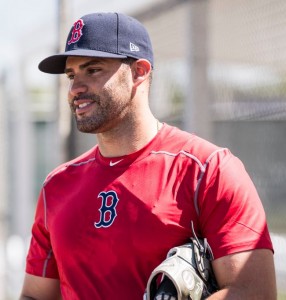 Even once a deal was struck, it still took another week for contractual terms to be fully worked out, resulting in quite a bit of flexibility for both sides. Martinez can opt out of the deal after the 2019, 2020, and 2021 seasons, while the Red Sox can turn the contract’s final two years into mutual options should Martinez spend significant time on the DL due to injuries related to the Lisfranc foot problem that sidelined him for part of the 2017 campaign. These terms reflect some extra caution for a franchise that has been burned on several expensive free agent signings in recent years, and if Martinez plays well enough to opt out at the first opportunity, the Red Sox would have to feel pretty satisfied at getting elite production on what would become a two-year, $50MM commitment without having to worry about a decline on the contract’s back end.
Martinez will spend most of his time as a designated hitter, occasionally stepping into some corner outfield duty to spell Andrew Benintendi or Jackie Bradley Jr. against left-handed pitching. Bradley was himself the subject of some trade speculation this winter, though the Sox never seemed particularly keen on the idea of moving a controllable player who offers outstanding baserunning and defense, plus some above-average hitting numbers in the past. With Martinez willing to accept a role as the primary DH (but also eager to improve upon his recent poor showing as a defender), the Red Sox were able to both upgrade their lineup while also keeping their elite defensive outfield formation of Benintendi/Bradley/Mookie Betts intact.
While Boston had been linked to several first base names earlier in the offseason, the team made the somewhat surprising move (two months before signing Martinez) of bringing Mitch Moreland back into the fold on a two-year deal. Moreland provides solid numbers against right-handed pitching and a very good glove at first base, but his contract landed a fair sight higher than other, similarly productive first basemen. In any event, he’ll now participate in some sort of timeshare with Hanley Ramirez at first, with Ramirez also seeing time at DH when Martinez is in the field.
Also returning to the infield mix is Eduardo Nunez, who will eventually settle into a utilityman role but will suit up as Boston’s starting second baseman for at least the first few weeks of the regular season. Dustin Pedroia is hopeful that his recovery from knee surgery will allow him to return a bit earlier than the originally-projected seven-month timeframe, but if not, the Sox now have a very solid replacement at the keystone in Nunez. With Marco Hernandez out until May due to shoulder surgery, Nunez will provide the Sox with some valuable infield depth, including at third base should Rafael Devers have a sophomore slump.
Questions Remaining
Dombrowski has spoken in the past about how Boston’s established pitching staff makes it hard for the club to attract notable veterans as minor league depth, as those pitchers prefer to join teams that provide clearer opportunities to win big league jobs. This particular issue could become an early problem for the Sox given that two members of their projected starting five could now begin the season on the disabled list. Drew Pomeranz‘s spring work was delayed by a mild flexor strain, and it isn’t known if he’ll be ready by Opening Day. Meanwhile Eduardo Rodriguez and sixth starter Steven Wright were already expected to start the year on the DL as they continue to recover from knee and shoulder surgeries, respectively.
While none of these seem like terribly long-term problems, it isn’t a good sign given that Pomeranz and Rodriguez have both dealt with multiple injury concerns in the past. David Price is also looking to return to health (and effectiveness) after a 2017 season marred by elbow problems. With Brian Johnson and Hector Velazquez currently representing Boston’s top starting pitching depth options, it wouldn’t be surprising to see the Sox make a signing later this spring or even into April — especially should Pomeranz, Rodriguez or even Wright experience a setback. Some pretty significant names still remain in the free agent pitching market at this late stage. It’s also possible that starting pitching could be targeted as needed at the trade deadline.
Turning to the relief corps, Robby Scott is the only left-hander currently projected as a member of Boston’s Opening Day bullpen, with Roenis Elias and rookie Williams Jerez also representing southpaw options on the 40-man roster. Beyond that pair, 25-year-old Bobby Poyner has opened some eyes in camp, per MLB.com’s Ian Browne (via Twitter). The Sox didn’t make a particular push to add any relief help this winter given that they already have several pen options on hand, and while Elias could re-emerge after an injury-plagued 2017, left-handed relief could be another area to watch come the July trade deadline.
Between Moreland at first base and Martinez at DH, it remains to be seen how big a factor Ramirez will be this season, and the playing-time arrangement could make it difficult for Ramirez to reach the 497 plate appearances he requires for his $22MM option for 2019 to vest. Ramirez’s three years in Boston have seen him sandwich an excellent 2016 season in between disappointing performances in 2015 and 2017, so it’s hard to know what to really expect from the veteran slugger this season. New manager Alex Cora still sees Ramirez as a major part of the team’s lineup, and since Ramirez underwent shoulder surgery last October, it could be that his bat will reawaken now that he’s healthy. The odds are good, though, that the organization will not allow his option to vest even if he’s healthy and productive.
While many big-market teams looked to get under the $197MM luxury tax threshold this offseason, as the Red Sox did last year, Boston will once more sail over the tax line with just over $237MM in projected salary for 2018. Quite a bit of money will come off the books after the season (Ramirez if his option doesn’t vest, plus Pomeranz and Craig Kimbrel will be free agents), though several key players on the roster will absorb a lot of that freed-up money in the form of arbitration raises. While the Sox clearly have an internal budget, they haven’t shown much hesitation in spending heavily to remain competitive. Having recently re-set their tax rate, the Red Sox likely won’t weigh CBT considerations too heavily, though they are close to pushing their payroll high enough to trigger some additional penalties.
Overview
It was a pretty quiet winter overall for the Red Sox, as they didn’t really have too many glaring needs to fill on an already-deep roster. Cora’s hiring, a renewed focus on analytics, and better luck avoiding the injury bug could be all Boston needs to revive a lineup that had trouble hitting the ball out of the park last year, though obviously Martinez’s addition will greatly help in the thunder department. The other question is if the Sox did enough to keep pace in the division, as the back-to-back AL East champs now find themselves as underdogs against a Yankees team that became even more fearsome this winter.
What’s your take on Boston’s offseason moves? (Link for app users)
How Would You Grade The Red Sox Offseason?
-
B 49% (3,247)
-
C 27% (1,807)
-
A 13% (867)
-
F 6% (375)
-
D 5% (350)
Total votes: 6,646
Photos courtesy of USA Today Sports Images