
MLB Daily Roster Roundup: Andrus, Donaldson, Gurriel, Plawecki
ROSTER MOVES BY TEAM
(April 13th)
NATIONAL LEAGUE
- CINCINNATI REDS | Depth Chart
- Promoted: RP Dylan Floro (contract purchased)
- Optioned: RP Tanner Rainey
- Designated for assignment: RP Ariel Hernandez
- MIAMI MARLINS | Depth Chart
- Promoted: OF J.B. Shuck (contract purchased)
- Shuck played RF and batted 6th in Friday’s game.
- Optioned: OF Braxton Lee
- Transferred to 60-Day DL: 1B/OF Garrett Cooper
- Promoted: OF J.B. Shuck (contract purchased)
- NEW YORK METS | Depth Chart
- Placed on 10-Day DL: C Kevin Plawecki (fractured hand)
- Promoted: C Jose Lobaton (contract purchased), OF Brandon Nimmo
- Lobaton played C and batted 8th in Friday’s game.
- Optioned: RP Jacob Rhame
- Transferred to 60-Day DL: C Travis d’Arnaud
- d’Arnaud will undergo season-ending Tommy John surgery
- PITTSBURGH PIRATES | Depth Chart
- Promoted: RPÂ Kyle Crick, RP Richard Rodriguez (contract purchased)
- Optioned: RP Clay Holmes, RP Josh Smoker
- SAN DIEGO PADRES | Depth Chart
- Promoted: RP Kyle McGrath
- Optioned: RP Colten Brewer
- Injury news: SP Dinelson Lamet will undergo season-ending Tommy John surgery.
—
AMERICAN LEAGUE
- BALTIMORE ORIOLES | Depth Chart
- Promoted: RP Donnie Hart
- Optioned: RP Yefry Ramirez
- Rule 5 Return: RP Nestor Cortes Jr. was returned to the Yankees.
- HOUSTON ASTROS | Depth Chart
- Activated from 10-Day DL: 1B Yuli Gurriel
- Gurriel played 1B and batted 5th in Friday’s game.
- Optioned: INF/OF J.D. Davis
- Activated from 10-Day DL: 1B Yuli Gurriel
- KANSAS CITY ROYALS | Depth Chart
- Promoted: RP Kevin McCarthy
- Optioned: RP Brandon Maurer
- LOS ANGELES ANGELS | Depth Chart
- Activated from 10-Day DL: SP Andrew Heaney
- Optioned: RP Felix Pena
- Injury news: SP J.C. Ramirez will undergo season-ending Tommy John surgery.
- TAMPA BAY RAYS | Depth Chart
- Promoted: OF Johnny Field (contract purchased)
- Designated for assignment: RP Ryan Weber
- TEXAS RANGERS | Depth Chart
- Placed on 10-Day DL: SS Elvis Andrus (fractured elbow)
- Promoted: 1B Ronald Guzman
- Guzman played 1B and batted 6th in Friday’s game. It was his MLB debut.
- Acquisition: SP Yovani Gallardo (MiLB contract)
- TORONTO BLUE JAYS | Depth Chart
- Placed on 10-Day DL: 3B Josh Donaldson (shoulder inflammation)
- Yangervis Solarte played 3B on Friday.
- Promoted: OF Teoscar Hernandez
- Hernandez played LF and batted 2nd in Friday’s game.
- Placed on 10-Day DL: 3B Josh Donaldson (shoulder inflammation)
—
FUTURE EXPECTED MOVES
- BAL: SP Alex Cobb will be recalled from the minors on Saturday April 14th to make his Orioles’ debut, according to Roch Kubatko of MASN.
- MIL: OF Christian Yelich is hoping to return from the DL on Sunday April 15th, according to Adam McCalvy of MLB.com.
- NYY: SP CC Sabathia is expected to be activated from the DL on Tuesday April 17th, according to Erik Boland of Newsday.
- SEA: DH Nelson Cruz could be activated from the DL on Saturday April 14th or Sunday April 15th, according to Greg Johns of MLB.com. Ben Gamel could also return this weekend. Johns also tweeted that Ariel Miranda is in line to pitch on Tuesday April 17th.
MLB Daily Roster Roundup: Hicks, Kinsler, Mahtook, Tropeano
ROSTER MOVES BY TEAM
(April 12th)
NATIONAL LEAGUE
- SAN DIEGO PADRES |Depth Chart
- Promoted: RP Colten Brewer
- Optioned: RP Buddy Baumann
- SAN FRANCISCO GIANTS | Depth Chart
- Promoted: RP Derek Law
- Optioned: SP Andrew Suarez
- ST. LOUIS CARDINALS | Depth Chart
- Placed on 10-Day DL: RP Sam Tuivailala (strained knee)
- Promoted: RP Mike Mayers
- WASHINGTON NATIONALS | Depth Chart
- Acquisition: 1B Mark Reynolds (MiLB contract)
—
AMERICAN LEAGUE
- BOSTON RED SOX | Depth Chart
- Placed on 10-Day DL: RP Bobby Poyner (strained hamstring)
- Promoted: RP Marcus Walden
- CHICAGO WHITE SOX | Depth Chart
- Promoted: RP Chris Volstad (contract purchased)
- Transferred to 60-Day DL: SP Carlos Rodon
- Rodon is eligible to return on May 28th.
- DETROIT TIGERS | Depth Chart
- Promoted: RP Chad Bell
- Optioned: OF Mikie Mahtook
- JaCoby Jones played LF and batted 7th in Thursday’s game.
- LOS ANGELES ANGELS | Depth Chart
- Activated from 10-Day DL: 2B Ian Kinsler
- Kinsler played 2B and batted 1st in Thursday’s game.
- Promoted: SP Nick Tropeano
- Tropeano made his first MLB start since undergoing Tommy John surgery in August 2016.
- Optioned: INF/OF Ryan Schimpf, SP Jaime Barria
- Activated from 10-Day DL: 2B Ian Kinsler
- NEW YORK YANKEES | Depth Chart
- Activated from 10-Day DL: OF Aaron Hicks
- Hicks was the DH and batted 6th in Thursday’s game.
- Designated for assignment: OF Shane Robinson
- Activated from 10-Day DL: OF Aaron Hicks
—
FUTURE EXPECTED MOVES
- BAL: SP Alex Cobb will be recalled from the minors on Saturday April 14th to make his Orioles’ debut, according to Roch Kubatko of MASN. RP Donnie Hart will be recalled from the minors on Friday April 13th, also according to Kubatko.
- HOU: 1B Yuli Gurriel is expected to be activated from the 10-Day DL on Friday April 13th, according to Brian McTaggart of MLB.com. INF J.D. Davis will be optioned to Triple-A, according to Jake Kaplan of The Athletic.
- LAA: SP Andrew Heaney will be activated from the 10-Day DL on Friday April 13th, according to Jeff Fletcher of the Orange County Register..
- SEA: DH Nelson Cruz and OF Ben Gamel could both be activated from the DL as early as Friday April 13th, according to Greg Johns of MLB.com.
- TB: OF Johnny Field will have his contract purchased from the minors on Friday April 13th, according to Marc Topkin of the Tampa Bay Times. Ryan Weber will be optioned to Triple-A.
- TEX: SS Elvis Andrus will be placed on the 10-Day DL. He’s expected to miss 6-8 weeks. 1B Ronald Guzman will be recalled from Triple-A, according to T.R. Sullivan of MLB.com.
Offseason In Review: Texas Rangers
After a 78-84 finish to their 2017 season, the Rangers came out of the gates in aggressive fashion but ultimately wound up with a series of low-risk, buy-low pickups that leave the club in limbo.
Major League Signings
- Mike Minor, LHP: Three years, $28MM
- Chris Martin, RHP: Two years, $4MM
- Doug Fister, RHP: One year, $4MM plus club option
- Tony Barnette, RHP: One year, $1.5MM
- Tim Lincecum, RHP: One year, $1MM
- Jesse Chavez, RHP: One year, $1MM
- Total spend: $39.5MM
Trades and Claims
- Acquired LHP Matt Moore and $750K international bonus allotments for minor league RHPs Sam Wolff and Israel Cruz
- Acquired RHP Ronald Herrera from the Yankees in exchange for minor league RHP Reiver Sanmartin
- Acquired Rule 5 OF Carlos Tocci from the White Sox in exchange for cash (Tocci was selected out of the Phillies organization)
- Acquired INF Eliezer Alvarez from Phillies in exchange for cash
- Claimed C Juan Centeno off waivers from the Astros
- Claimed 1B Tommy Joseph off waivers from the Phillies (since outrighted to AAA)
Notable Minor League Signings
- Bartolo Colon, Kevin Jepsen, Edinson Volquez (two-year minor league deal) Trevor Plouffe (released), Zeke Spruill, Chi Chi Gonzalez (re-signed), Hanser Alberto (re-signed), Austin Bibens-Dirkx (re-signed), Shawn Tolleson, Deolis Guerra
Notable Losses
Needs Addressed
The Rangers entered the 2017-18 offseason with holes up and down their roster –particularly on the pitching staff — and a sizable gap between their overall talent level and that of the division-winning, World Series champion Astros. Rather than spend aggressively in what could largely have been a futile effort to return to the top of the AL West, Texas instead spread out a modest array of investments across multiple budget-friendly assets.
Mike Minor was the lone big-ticket item signed by GM Jon Daniels & Co. — if one can refer to a $28MM guarantee as “big ticket.” (Although, certainly this offseason, that was no small amount as clubs veered away from free agency at unprecedented rates.) Minor shined as a dominant reliever in the Kansas City bullpen last season, but the Rangers are plugging him into their rotation to see if he can sustain some of that magic in the larger role that originally got him to the Majors with Atlanta. If the experiment doesn’t pan out, then the three-year, $28MM term isn’t exactly a bargain for a reliever, but it’s also more or less commensurate with the going rate for top-notch setup men in 2018.
Doug Fister and Matt Moore were the other primary additions to the starting mix, as the Rangers will be paying that duo a combined $13MM in hopes of receiving something resembling 25 to 33 serviceable starts out of each. Moore is coming off far and away the worst season of his career, while Fister posted an ugly 2017 ERA but more intriguing secondary metrics thanks in large part to some restored velocity. They’ll be part of a patchwork rotation in Arlington that is fronted by 34-year-old Cole Hamels and also includes southpaw Martin Perez. The addition of veterans like Colon and Chavez were made in the name of creating some depth, but it was clear to see even before a tough start to the season that this piecemeal approach to the staff could be problematic.
Of course, that’s not to say that the Rangers didn’t pursue more meaningful rotation upgrades. Texas was one of seven finalists in the Shohei Ohtani sweepstakes. They not only came up short, though, but also had to suffer the additional frustration of watching the 23-year-old sensation sign with the division-rival Angels. Texas also remained on the periphery of the Yu Darvish market all offseason long, though it seemed clear for the bulk of his free agency that the Rangers would only bring him back at a discounted rate as they sought to scale back the payroll.
Texas has had good success in the past in tapping into the NPB market, and their signing of righty Chris Martin to a two-year big league deal was the latest attempt to strike gold. Martin didn’t distinguish himself in his first few attempts at the big league level, but he was a dominant late-inning arm overseas. At a $2MM annual rate, if he’s even a serviceable middle reliever, the Rangers will come out ahead. If he’s anything more, it’s a massive bargain, and if not, there’s little fiscal risk at play here. The reunion with Barnette and the roll of the dice on Lincecum give skipper Jeff Banister another pair of arms to shuffle around the late-inning mix, provided Lincecum builds up strength and overcomes the blister issue he’s currently facing.
Questions Remaining
As alluded to above, the pitching staff looked shaky, at best, heading into the 2018 season. Hamels’ velocity is down early in the year, while Fister is on the DL with what the club hopes will be a short-term injury. Even if all of Hamels, Perez, Fister, Minor and Moore were healthy, the Rangers would’ve needed some significant rebounds to field a competitive starting unit.
The fact that they’re being backed by a bullpen which cycled through four closers last season and struggled for much of the 2017 season doesn’t create much additional optimism. Granted, the Ranger relief corps will be significantly better in 2018 if Jake Diekman and Keone Kela can stay healthy, but Texas added nothing in the way of established bullpen help this winter. The Rangers will have to lean heavily on Kela, Diekman, Matt Bush and Alex Claudio. If any of that bunch falters and/or Martin can’t approach his NPB success to some extent, it could be a long year for the Texas bullpen.
The catcher position was also a question for Texas for much of the offseason and remains as such. Robinson Chirinos undeniably had a nice season last year when he hit .255/.350/.506 with a career-high 17 home runs, but he’s never tallied more than 338 plate appearances in a season. The 33-year-old has dealt with concussion, shoulder and forearm issues in previous seasons. Backup Juan Centeno has never reached 200 PAs in a season and has only logged more than 10 MLB games in a season twice. Texas seemed like a logical fit for a backstop like Alex Avila or Chris Iannetta, who each signed for about $4MM annually, but they passed to stick with in-house options and dealt away one minor league depth piece (Brett Nicholas) shortly after Opening Day.
With Joey Gallo, Rougned Odor, Elvis Andrus and Adrian Beltre lined up around the infield and Jurickson Profar on hand as a utility option, the Rangers looked to be set there. (The depth will now be tested after early-season injuries to Odor and Andrus.) The outfield, though, was perhaps a different story, but the Rangers elected to primarily stick with in-house options. Nomar Mazara, Delino DeShields, Shin-Soo Choo, Ryan Rua and Willie Calhoun were expected to be leaned upon heavily in the outfield/DH carousel, with Drew Robinson and the aforementioned Rule 5 pickup, Tocci, serving as additional depth. Mazara’s ceiling is enormous, but there again seemed to be an opportunity to capitalize on a stagnant market for outfielders which the Rangers forewent. Choosing not to break the bank is understandable, but it was a bit of a surprise to see players such as Jon Jay and Carlos Gomez come off the board for just $3MM and $4MM, respectively, when so many teams, the Rangers included, seemed like clear fits.
That’s perhaps the most glaring oddity of the entire offseason for the Rangers. While they elected to patch together a pitching staff of buy-low candidates and spare-part depth options, Texas decision-makers wholly avoided making any meaningful additions on the position-player side of the equation despite some fairly evident openings to do so behind the plate and in the outfield.
It’d be one thing to see the Rangers sit out in terms of additions if they were among the league’s many tanking teams, but they still spent nearly $40MM on the pitching staff. If the goal was to try to piece together a team with a chance at contending in a stacked division, then why not take advantage of a buyers’ market for position players? And if the 2018 season is to be more of a transitional campaign in which the club aims to pare back its payroll, was a $28MM investment in Minor a shrewd move? It’s possible that Minor could lead a surprising pitching staff in Arlington or turn into an appealing trade asset if things go south for the rest of the roster, but the manner in which the Rangers approached the construction of their pitching staff and their lineup/bench seem to be somewhat contradictory in nature.
Texas looked like a plausible midseason seller even before the season began, but with a 4-10 start and several key injuries already having unfolded, those rumblings will only intensify. Any of the shorter-term pickups they made this offseason could become available if the Rangers are out of contention. The same is true of Hamels, though they may have a hard time acquiring much in return given his age, the $22MM he’s owed this season (plus at least the $6MM buyout he’s owed on next year’s $20MM option). The more interesting question, if Texas is out of the race, will be whether they send franchise icon and future Hall of Famer Adrian Beltre to another organization.
Overview
The Rangers came out of the gates in fairly aggressive fashion this offseason. Before the Winter Meetings had even kicked off, Texas had added some depth to the rotation by acquiring Herrera from the Yankees and quickly signing both Fister and Minor by Dec. 4. All of that, of course, coincided with a spirited pursuit of Ohtani that ultimately fell short, and the Rangers curbed their activity from that point forth.
Perhaps the offseason would’ve played out differently had Texas been able to add Ohtani to the mix, but in retrospect, the maneuverings add up to a fairly puzzling half-measure. Texas doesn’t look like a team that’s built to contend, but they also didn’t place an emphasis on restocking the farm this offseason. At a time when teams seem increasingly reluctant to be caught in the middle, the Rangers find themselves precisely there.
How would you rate their offseason? (Link to poll for Trade Rumors app users)
How would you grade the Rangers' offseason?
-
D 38% (676)
-
C 29% (515)
-
F 25% (457)
-
B 7% (120)
-
A 1% (25)
Total votes: 1,793
MLB Daily Roster Roundup: Eaton, Margot, Wheeler, Wieters
ROSTER MOVES BY TEAM
(April 11th)
NATIONAL LEAGUE
- MILWAUKEE BREWERS | Depth Chart
- Promoted: SP Junior Guerra, RP Jorge Lopez
- Guerra made his ’18 debut on Wednesday (5.1 IP, ER, 4 H, 2 BB, 4 K, W)
- Optioned: OF Brett Phillips
- Designated for assignment: RP J.J. Hoover
- Promoted: SP Junior Guerra, RP Jorge Lopez
- NEW YORK METS | Depth Chart
- Promoted: SP Zack Wheeler, C Tomas Nido
- Placed on 10-Day DL: C Travis d’Arnaud (partially torn elbow ligament)
- d’Arnaud could require season-ending Tommy John surgery
- Optioned: RP Corey Oswalt
- SAN DIEGO PADRES | Depth Chart
- Placed on 10-Day DL: CF Manuel Margot (bruised ribs)
- Activated from 10-Day DL: OF Franchy Cordero
- Cordero played CF and batted 1st in Wednesday’s game (1-for-4, HR)
- SAN FRANCISCO GIANTS | Depth Chart
- Promoted: SP Andrew Suarez (contract purchased)
- Suarez made his MLB debut in Wednesday’s game (5.1 IP, 4 ER, 4 H, 0 BB, 7 K, L)
- Optioned: RP Steven Okert
- Transferred to 60-Day DL: SP Madison Bumgarner
- Bumgarner is eligible to return on May 25th
- Promoted: SP Andrew Suarez (contract purchased)
- ST. LOUIS CARDINALS | Depth Chart
- Suspended: C Yadier Molina (1-game suspension)
- Molina served the suspension on Wednesday.
- Suspended: C Yadier Molina (1-game suspension)
- WASHINGTON NATIONALS | Depth Chart
- Placed on 10-Day DL: OF Adam Eaton (bone bruise in ankle)
- Brian Goodwin played LF and batted 1st in Wednesday’s game (0-for-2, BB)
- Activated from 10-Day DL: C Matt Wieters
- Wieters did not play on Wednesday
- Promoted: OF Moises Sierra (contract purchased)
- Designated for assignment: C Miguel Montero
- Placed on 10-Day DL: OF Adam Eaton (bone bruise in ankle)
—
AMERICAN LEAGUE
- BALTIMORE ORIOLES | Depth Chart
- Promoted: INF Engelb Vielma
- Optioned: RP Hunter Harvey, RP Yefry Ramirez
- Corresponding move for Ramirez will be announced Thursday.
- CHICAGO WHITE SOX | Depth Chart
- Optioned: RP Gregory Infante
- Corresponding move will be announced Thursday.
- Optioned: RP Gregory Infante
- LOS ANGELES ANGELS | Depth Chart
- Promoted: SP Jaime Barria
- Barria made his MLB debut on Wednesday (5 IP, ER, H, 3 BB, 3 K).
- Optioned: RP Eduardo Paredes
- Promoted: SP Jaime Barria
—
FUTURE EXPECTED MOVES
- BAL: SP Alex Cobb will be recalled from the minors on Saturday April 14th to make his Orioles’ debut, according to Roch Kubatko of MASN.
- HOU: 1B Yuli Gurriel is expected to be activated from the 10-Day DL on Friday April 13th, according to Brian McTaggart of MLB.com.
- LAA: 2B Ian Kinsler expects to be activated from the DL on Thursday April 12th, according to Jeff Fletcher of the Southern California News Group.
- LAA: SPs Nick Tropeano and Andrew Heaney as candidates to start on Thursday and Friday, also according to Fletcher.
- NYY: OF Aaron Hicks could be activated from the 10-Day DL as early as Thursday April 12th, according to Pete Caldera of the Bergen Record.
- SEA: DH Nelson Cruz and OF Ben Gamel could both be activated from the DL as early as Friday April 13th, according to Greg Johns of MLB.com.
- TB: OF Johnny Field will have his contract purchased from the minors on Friday April 13th, according to Marc Topkin of the Tampa Bay Times. Ryan Weber will be optioned to Triple-A.
MLB Daily Roster Roundup: Cueto, Morales, Odor, Rizzo
ROSTER MOVES BY TEAM
(April 10th)
NATIONAL LEAGUE
- CHICAGO CUBS | Depth Chart
- Placed on 10-Day DL: 1B Anthony Rizzo (lower back tightness; retro to 4/6)
- Ben Zobrist played 1B and batted 3rd in Tuesday’s game.
- Promoted: 1B/OF Efren Navarro (contract purchased)
- Placed on 10-Day DL: 1B Anthony Rizzo (lower back tightness; retro to 4/6)
- CINCINNATI REDS | Depth Chart
- Promoted: RP Tanner Rainey (contract purchased)
- Designated for assignment: RP Yovani Gallardo
- NEW YORK METS | Depth Chart
- Promoted: RP Corey Oswalt
- Optioned: OF Brandon Nimmo
- SAN FRANCISCO GIANTS | Depth Chart
- Placed on 10-Day DL: SP Johnny Cueto (sprained ankle)
- Promoted: SP Tyler Beede, RP Steven Okert
- Beede made his MLB debut in Tuesday’s game.
- Optioned: RP Roberto Gomez
- WASHINGTON NATIONALS | Depth Chart
- Reinstated from Paternity List: C Miguel Montero
- Placed on 10-Day DL: C Jhonatan Solano (bone spurs in elbow)
—
AMERICAN LEAGUE
- BALTIMORE ORIOLES | Depth Chart
- Promoted: RP Yefry Ramirez
- Designated for assignment: RP Nestor Cortes Jr.
- HOUSTON ASTROS | Depth Chart
- Placed on 10-Day DL: RP Tony Sipp (strained oblique)
- Promoted: RP James Hoyt
- KANSAS CITY ROYALS | Depth Chart
- Placed on 10-Day DL: OF Alex Gordon (hip labral tear)
- Paulo Orlando played CF and batted 7th in Tuesday’s game.
- Promoted: OF Abraham Almonte
- Placed on 10-Day DL: OF Alex Gordon (hip labral tear)
- LOS ANGELES ANGELS | Depth Chart
- Promoted: SP Jaime Barria
- Barria will make his MLB and start Wednesday’s game.
- Optioned: RP Eduardo Paredes
- Promoted: SP Jaime Barria
- NEW YORK YANKEES | Depth Chart
- Promoted: OF Shane Robinson (contract purchased)
- Robinson played CF and batted 9th in Tuesday’s game.
- Designated for assignment: INF/OF Jace Peterson
- Promoted: OF Shane Robinson (contract purchased)
- TAMPA BAY RAYS | Depth Chart
- Acquired: OF Jeremy Hazelbaker (acquired from Diamondbacks for cash considerations)
- Hazelbaker was optioned to Triple-A.
- Transferred to 60-Day DL: SP Jose De Leon
- Acquired: OF Jeremy Hazelbaker (acquired from Diamondbacks for cash considerations)
- TEXAS RANGERS | Depth Chart
- Placed on 10-Day DL: 2B Rougned Odor (strained hamstring), SP Doug Fister (strained hip)
- Jurickson Profar started at 2B and batted 2nd in Tuesday’s game.
- Bartolo Colon is expected to take Fister’s rotation spot on Sunday.
- Activated from 10-Day DL: RP Tony Barnette
- Promoted: INF/C Isiah Kiner-Falefa
- Placed on 10-Day DL: 2B Rougned Odor (strained hamstring), SP Doug Fister (strained hip)
- TORONTO BLUE JAYS | Depth Chart
- Placed on 10-Day DL: DH Kendrys Morales (strained hamstring)
- Yangervis Solarte started at DH and batted 4th in Tuesday’s game.
- Promoted: RP Tim Mayza
- Placed on 10-Day DL: DH Kendrys Morales (strained hamstring)
—
FUTURE EXPECTED MOVES
- BAL: SP Alex Cobb will be recalled from the minors on Saturday April 14th to make his Orioles’ debut, according to Roch Kubatko of MASN.
- LAA: 2B Ian Kinsler expects to be activated from the DL on Thursday April 12th, according to Jeff Fletcher of the Southern California News Group.
- LAA: SPs Nick Tropeano and Andrew Heaney as candidates to start on Thursday and Friday, also according to Fletcher.
- MIL: SP Junior Guerra will be recalled from the minors to make a start on Wednesday April 11th, according to Tom Haudricourt of the Milwaukee Journal Sentinel.
- NYM: SP Zack Wheeler will be recalled from the minors to make a start on Wednesday April 11th, according to Anthony DiComo of MLB.com.
- SFG: SP Andrew Suarez is expected to have his contract purchased from the minors to start on Wednesday April 11th, according to Alex Pavlovic of NBC Sports Bay Area. He would be making his MLB debut in place of Cueto.
- SEA: DH Nelson Cruz and OF Ben Gamel could both be activated from the DL as early as Friday April 13th, according to Greg Johns of MLB.com.
MLB Daily Roster Roundup: Bogaerts, Holland, Miller, Suarez
ROSTER MOVES BY TEAM
(April 9th)
NATIONAL LEAGUE
- CINCINNATI REDS | Depth Chart
- Placed on 10-Day DL: 3B Eugenio Suarez (fractured thumb), OF Scott Schebler (ulnar nerve contusion)
- Cliff Pennington played 3B and batted 7th on Monday. Phillip Ervin played RF and batted 6th, although Jesse Winker and Adam Duvall are expected to start most games at the corner outfield spots.
- Promoted: INF Alex Blandino, RP Zack Weiss
- Placed on 10-Day DL: 3B Eugenio Suarez (fractured thumb), OF Scott Schebler (ulnar nerve contusion)
- MILWAUKEE BREWERS | Depth Chart
- Promoted: OF Brett Phillips
- Optioned: RP Adrian Houser
- SAN DIEGO PADRES | Depth Chart
- Placed on 10-Day DL: RP Kirby Yates (ankle tendinitis)
- Craig Stammen will take over Yates’ role as the team’s primary setup man.
- Promoted: RP Buddy Baumann
- Placed on 10-Day DL: RP Kirby Yates (ankle tendinitis)
- ST. LOUIS CARDINALS | Depth Chart
- Promoted: RP Greg Holland
- After a disastrous debut on Monday (0.1 IP, ER, 4 BB, L; entered in the 10th inning of a 4-4 game), Holland will likely have to prove himself in a non-closer role before being handed the closer’s job.
- Optioned: RP Mike Mayers
- Promoted: RP Greg Holland
—
AMERICAN LEAGUE
- BALTIMORE ORIOLES | Depth Chart
- Promoted: RP Hunter Harvey
- Optioned: RP Tanner Scott
- BOSTON RED SOX | Depth Chart
- Placed on 10-Day DL: SS Xander Bogaerts (small crack in talus bone)
- Eduardo Nunez could shift over to SS with Brock Holt filling in at 2B.
- Promoted: INF/OF Tzu-Wei Lin
- Placed on 10-Day DL: SS Xander Bogaerts (small crack in talus bone)
- SEATTLE MARINERS | Depth Chart
-
- Placed on 10-Day DL: 1B Ryon Healy (sprained ankle)
- Daniel Vogelbach will play 1B while Healy is out.
- Promoted: RP Chasen Bradford
- Placed on 10-Day DL: 1B Ryon Healy (sprained ankle)
-
- TAMPA BAY RAYS | Depth Chart
-
- Placed on 10-Day DL: INF Brad Miller (strained groin)
- C.J. Cron is expected to play 1B regularly while Miller is out. He had been playing primarily against left-handed starters.
- Promoted: RP Ryan Weber (contract purchased)
- Placed on 10-Day DL: INF Brad Miller (strained groin)
-
—
FUTURE EXPECTED MOVES
- BAL: SP Alex Cobb will be recalled from the minors on Saturday April 14th to make his Orioles’ debut, according to Roch Kubatko of MASN.
- CHC: 1B Anthony Rizzo (lower back discomfort) will be placed on the 10-Day DL, according to Gordon Wittenmyer of the Chicago Sun Times. Backup catcher Victor Caratini has played 1B in Rizzo’s absence for the past three games.
- LAA: SP Jaime Barria will be recalled from the minors on Wednesday April 11th to make his MLB debut, according to Jeff Fletcher of the Southern California News Group. Later in the thread, Fletcher names Nick Tropeano and Andrew Heaney as candidates to start on Thursday and Friday.
- NYM: SP Zack Wheeler will be recalled from the minors to make a start on Wednesday April 11th, according to Anthony DiComo of MLB.com.
- SFG: SP Tyler Beede will be recalled from the minors to start on Tuesday April 10th, according to Alex Pavlovic of NBC Sports Bay Area. It will be his MLB debut.
- SEA: DH Nelson Cruz and OF Ben Gamel could both be activated from the DL as early as Friday April 13th, according to Greg Johns of MLB.com.
- TEX: 2B Rougned Odor (strained hamstring) will likely be placed on the 10-Day DL, according to Jeff Wilson of the Fort Worth Star Telegram. Jurickson Profar would fill in at 2B while Odor is out.
MLBTR Chat Transcript: Senzel, White Sox, Breakouts, And More
Click here to read the transcript of today’s chat with MLBTR owner Tim Dierkes.
MLB Weekend Roster Roundup: Arrieta, Knebel, Sabathia, Yelich
ROSTER MOVES BY TEAM
(April 6th thru April 8th)
NATIONAL LEAGUE
- ARIZONA DIAMONDBACKS | Depth Chart
- Promoted: 1B Christian Walker
- Optioned: RP Matt Koch
- Acquired: SP Troy Scribner (claimed off waivers from Angels)
- Designated for assignment: OF Jeremy Hazelbaker
- LOS ANGELES DODGERS | Depth Chart
- Reinstated from Paternity List: RP Josh Fields
- Designated for assignment: RP Zach Neal (outrighted to minors)
- MIAMI MARLINS | Depth Chart
- Promoted: RP Tyler Cloyd (contract purchased)
- Designated for assignment: RP Jacob Turner
- MILWAUKEE BREWERS | Depth Chart
- Placed on 10-Day DL: OF Christian Yelich (strained oblique), RP Corey Knebel (strained hamstring)
- Promoted: RP J.J. Hoover (contract purchased), RP Adrian Houser, RP Taylor Williams
- Optioned: SP Brandon Woodruff
- Designated for assignment: RP Tyler Webb
- PHILADELPHIA PHILLIES | Depth Chart
- Promoted: SP Jake Arrieta
- Arrieta made his ’18 debut on Sunday (4 IP, 2 ER, 3 H, 2 BB, 5 K)
- Optioned: RP Jake Thompson
- Promoted: SP Jake Arrieta
- ST. LOUIS CARDINALS | Depth Chart
- Placed on 10-Day DL: RP Ryan Sherriff (fractured toe)
- Promoted: RP John Brebbia
- WASHINGTON NATIONALS | Depth Chart
- Placed on Paternity List: C Miguel Montero
- Promoted: C Jhonatan Solano (contract purchased), INF/OF Matt Reynolds
- Designated for assignment: RP Enny Romero
—
AMERICAN LEAGUE
- BALTIMORE ORIOLES | Depth Chart
- Placed on 10-Day DL: OF Colby Rasmus (strained hip flexor)
- Promoted: RP Jimmy Yacabonis, RP Tanner Scott
- Optioned: RP Jimmy Yacabonis
- BOSTON RED SOX | Depth Chart
- Activated from 10-Day DL: SP Eduardo Rodriguez
- Rodriguez made his ’18 debut on Sunday (3.2 IP, 3 ER, 5 H, 2 BB, 7 K).
- Brian Johnson and Hector Velazquez have been moved to the bullpen.
- Optioned: RP Marcus Walden
- Activated from 10-Day DL: SP Eduardo Rodriguez
- CHICAGO WHITE SOX | Depth Chart
- Promoted: RP Bruce Rondon (contract purchased)
- Optioned: RP Juan Minaya
- CLEVELAND INDIANS | Depth Chart
- Activated from 10-Day DL: OF Michael Brantley
- Brantley played LF and batted 5th in his ’18 debut.
- Optioned: OF Tyler Naquin (4/6)
- Placed on 10-Day DL: OF Lonnie Chisenhall (strained calf)
- Promoted: OF Tyler Naquin (4/8)
- Naquin started in RF and batted 8th on Sunday.
- Activated from 10-Day DL: OF Michael Brantley
- DETROIT TIGERS | Depth Chart
- Activated from 10-Day DL: SP Mike Fiers
- Fiers made his ’18 debut on Sunday (6 IP, 0 R, 3 H, BB, 6 K, W)
- Optioned: RP Warwick Saupold
- Activated from 10-Day DL: SP Mike Fiers
- HOUSTON ASTROS | Depth Chart
- Activated from 10-Day DL: RP James Hoyt
- Hoyt was optioned to Triple-A.
- Activated from 10-Day DL: RP James Hoyt
- LOS ANGELES ANGELS | Depth Chart
- Placed on 10-Day DL: SP JC Ramirez (strained elbow)
- Angels are expected to add at least two starters to the rotation this week (Andrew Heaney and Nick Tropeano are the leading candidates).
- Promoted: INF Ryan Schimpf, RP Akeel Morris (4/7), RP Eduardo Paredes, RP Felix Pena
- Optioned: INF Nolan Fontana, SP Parker Bridwell, RP Akeel Morris (4/8)
- Placed on 10-Day DL: SP JC Ramirez (strained elbow)
- NEW YORK YANKEES | Depth Chart
- Placed on 10-Day DL: INF Brandon Drury (migraines), SP CC Sabathia (strained hip)
- Promoted: INF/OF Jace Peterson (contract purchased), RP Luis Cessa, RP Domingo German
- Optioned: RP Jonathan Holder
- OAKLAND ATHLETICS | Depth Chart
- Placed on 10-Day DL: INF/OF Chad Pinder (hyperextended knee), OF Boog Powell (sprained knee)
- Jake Smolinski played CF and batted 9th in Powell’s place on Saturday and Sunday.
- Trayce Thompson is expected to take Pinder’s lineup spot versus left-handed starters.
- Promoted: INF Franklin Barreto, OF/1B Mark Canha
- Optioned: SP Daniel Gossett
- Placed on 10-Day DL: INF/OF Chad Pinder (hyperextended knee), OF Boog Powell (sprained knee)
—
FUTURE EXPECTED MOVES
- CIN: 3B Eugenio Suarez (fractured thumb) will be placed on the 10-Day DL, according to Mark Sheldon of MLB.com.
- NYM: SP Zack Wheeler will be recalled from the minors to make a start on Wednesday April 11th, according to Anthony DiComo of MLB.com.
- SEA: 1B Ryon Healy (sprained ankle) could be placed on the 10-Day DL, according to Ryan Divish of the Seattle Times.
- STL: RP Greg Holland will be recalled from the minors on Monday April 9th as long as he feels good on Sunday, according to Joe Trezza of MLB.com.
- TB: 1B Brad Miller (strained hamstring) will be placed on the 10-Day DL, according to Marc Topkin of the Tampa Bay Times. RP Ryan Weber will have his contract purchased from the minors on Monday April 9th.
Offseason In Review: Washington Nationals
This is the latest entry in MLBTR’s 2017-18 Offseason In Review series. Click here to read the other completed reviews from around the league.
Major League Signings
- Brandon Kintzler, RHP: two years, $10MM
- Howie Kendrick, UTIL: two years, $7MM
- Matt Adams, 1B: one year, $4MM
- Joaquin Benoit, RP: one year, $1MM
Trades & Claims
- Acquired Matt Reynolds from Mets for cash considerations
Option Decisions
- C Matt Wieters exercised $10.5MM player option
- Declined $5MM mutual option ($500K buyout) over 1B Adam Lind
Notable Minor League Signings
- Alejandro De Aza, Reid Brignac, Tim Collins, Jeremy Hellickson, Edwin Jackson, Tommy Milone, Miguel Montero, Carlos Torres, Cesar Vargas
Notable Losses
Nationals 25-Man Roster & Minor League Depth Chart; Nationals Payroll Overview
Needs Addressed
Another great regular season, another postseason disappointment. The refrain is familiar at this point for the Nationals, though it’s also far from clear that there was any reason to waver from an approach that has delivered a steady stream of MLB talent since the organization’s breakout 2012 season.
The latest NLDS calamity did not lead to a roster shake-up, unsurprisingly, but it did result in wholesale change in the field leadership. A largely unexpected decision not to pursue a new contract with skipper Dusty Baker left the organization searching for a new manager and coaching staff. The Nationals ultimately settled on Davey Martinez — who, like several other recent hires, he has never before held that role. Among the rookie skippers, though, Martinez stands out for his ample experience on MLB coaching staffs — particularly, a long run alongside current Cubs and former Rays manager Joe Maddon.
Once Martinez was installed, the Nats did not have a lot of work to do over the winter. Veteran outfielder Jayson Werth wrapped up his contract, but there was no need to find a replacement with Adam Eaton returning from the knee injury that cost him most of the 2017 season, Michael Taylor and Brian Goodwin coming off of productive campaigns, and top prospect Victor Robles waiting in the wings after briefly ascending to the bigs late last year.
Otherwise, the club saw a few role players hit the open market. The resulting openings were steadily addressed by free agent signings throughout the course of the winter.
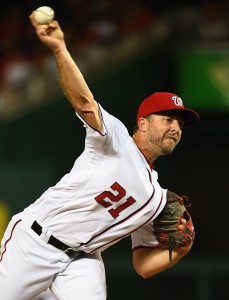
The two most significant players to depart — mid-season acquisitions Brandon Kintzler and Howie Kendrick — were both brought back, in fact, after successful showings in D.C. Kintzler, who makes up for his lack of strikeout prowess with loads of groundballs, will rejoin Sean Doolittle and Ryan Madson in a late-inning unit that the club lined up entirely via trade last summer. The price tag seems fairly appealing in comparison to the slightly loftier deals given to similarly useful relievers. Kendrick, too, was picked up for a low-AAV, two-year agreement. The sturdy veteran will help the team cover for the early-season absence of Daniel Murphy at second before sliding into a utility role.
Beyond those two spots, the most glaring holes were a lefty bench bat to replace Adam Lind and a second backstop to go with Matt Wieters, who exercised his player option after a poor first season in Washington.The club elected not to pursue a reunion with Lind, instead adding the younger Matt Adams. Much like his predecessor, Adams has never figured out left-handed pitching, but won’t be asked to do so in D.C. as he fulfills a supporting role to Ryan Zimmerman at first. Behind the dish, the Nationals picked up veteran Miguel Montero on a minors deal rather than striking a more significant acquisition.
Pitching depth was the last piece of the puzzle, with Matt Albers, Joe Blanton, and Oliver Perez all departing and the final rotation spot still up in the air. While there were whispers all along that the Nationals could use their remaining openings to fit a more significant acquisition — Jake Arrieta, Greg Holland, and any number of hypothetical trade candidates seemed intriguing — that never came to pass. Rather, the organization took something of a volume approach. Jeremy Hellickson signed a minors deal and will likely get a shot as the fifth starter if A.J. Cole stumbles. The aging but hard-throwing Joaquin Benoit got a small guarantee to fill out the pen, but will open the year on the DL. Plenty of other former MLB arms will populate the upper minors, including former Nats Edwin Jackson and Tom Milone along with Carlos Torres, Cesar Vargas, and Tim Collins.
But the Nats saved perhaps their most significant move for last. Just days into the 2018 season, the organization announced a long-anticipated new contract with president of baseball operations and GM Mike Rizzo. The agreement puts an end to any speculation that the ownership group might turn elsewhere. Despite Rizzo’s success in turning out a contending product, the organization’s handling of its managers had created a bit of uncertainty in Rizzo’s status. While it’s resolved for the time being, the deal only promises two more seasons, so questions could start up again sooner than later.
Questions Remaining
Ultimately, Rizzo took a fairly straightforward approach to filling out the roster this offseason. On the one hand, that’s largely to be expected given the state of affairs at its outset. On the other, perhaps it’s somewhat surprising that we weren’t surprised. Rizzo, after all, has engineered a string of moves over the years — including a variety of offseason signings (Werth, Jackson, Rafael Soriano, and Scherzer) and trades (Doug Fister, Trea Turner & Joe Ross, Eaton) — that were largely unanticipated before coming to fruition.
Given that history, and the run of playoff woes, a splash of some kind felt likely. While there’s still evidently no resolution to the team’s long-running TV rights fees dispute with the neighboring Orioles, that hasn’t stopped the organization from running one of the game’s highest payrolls. The Nationals are over the luxury tax line again (so there was no soft cap on spending) but are only slightly over the threshold at this point, so wouldn’t have incurred a huge tax bill with a major salary addition.
Though there’s ample talent on hand, the roster certainly isn’t without its question marks. Two key position players, Eaton and Murphy, are returning from significant leg surgeries. Zimmerman had a great bounceback 2017 effort but can’t be counted on to repeat it given that he’s now 33 and had struggled a fair bit (both with injuries and on the field) over the three prior campaigns. Turner wasn’t nearly as exciting in his sophomore effort, while some regression might be anticipated for Anthony Rendon after an MVP-caliber ’17 campaign. And it wouldn’t be terribly surprising to see Taylor and/or Goodwin stumble a bit — both have more than a little swing and miss in their games — though that’s the one place that there’s an obvious potential replacement (Robles) to be called upon.
That said, there really wasn’t much cause for the Nats to go out looking for upgrades in any of these situations. Behind the plate, though, it’s quite another matter. Matt Wieters struggled badly last year and ultimately opted in for another season at an unappealing rate of pay. Pedro Severino has long been considered ready defensively but has not made strides with the bat at Triple-A. While the organization brought in another veteran in Montero, there are obviously reasons — inability to control the running game and an awful second half at the plate — that he was available on a minors pact.
That unit seems unlikely to be terribly productive. While youngster Raudy Read touched the majors last year and might have become an option, he’s sitting out the first half of the year for a PED suspension. The Nats ultimately watched as a string of receivers — Welington Castillo, Chris Iannetta, Alex Avila, and Jonathan Lucroy among them — sign for less than they’re paying Wieters. There was an effort to acquire J.T. Realmuto from the Marlins, who made all kinds of sense for the Nats, though it seems the Fish held to their lofty asking price and nothing got done.
The result is sub-optimal and could set the stage for a mid-season acquisition. Of course, it also wouldn’t be surprising to see the Nats end up pursuing a relief arm over the summer, as that has become an annual rite in D.C. and is fairly common for any contending team. The Nationals pen doesn’t seem to be a particularly compelling group, though there is a fair amount of depth and the three-man high-leverage unit is at least settled to open the year. An argument could have been made to pursue further relief additions, though the team chose a defensible course. It’ll have a few months to evaluate some of the interesting but inconsistent or not-yet-established arms in the stable.
Speaking of evaluating arms, that’ll also be the team’s preferred method of dealing with its fifth starter’s slot. Cole is first up, and he’ll need to make real strides after a putrid first outing on the year. If he doesn’t show quite a lot in short order, Hellickson will take the helm once he’s at full speed. With prospect Erick Fedde and some veteran depth options still also in the mix, the Nats ought to be able to get by well enough.
The overall rotation mix is still strong, led by two outstanding starters in Max Scherzer and Stephen Strasburg. Then there’s Tanner Roark, who is a quality hurler. And let’s not look past Gio Gonzalez, whose volatile reputation is belied by his steady effectiveness. Last year’s 200-inning, sub-3.00 ERA output won’t likely be repeated, but Gonzalez has somewhat quietly been one of the game’s best starters for quite some time and is a solid bet to provide good innings.
Still, it feels as if there may have been an opportunity missed here. True, the Nats can still go get a premium starter at the deadline if they feel there’s a need. Like the catching position, though, the best time to find an upgrade might have been during the course of a strange free-agent market that left quite a few significant players earning less than had been anticipated. Waiting until the deadline is also something of a luxury reserved for teams that don’t face real competition within their division. After bringing in some veterans and enjoying good health all spring, the Mets seem to be revived and may well put up a greater fight than had been expected.
Overview
Adding quality veteran bench assets was both predictable and sensible. Those moves should help the Nats fill in for any major absences and help ensure that the team’s regulars get plenty of rest without a drop-off in play. But the winter effort somehow feels a bit incomplete.
After all, this is the club’s last season of control over star outfielder Bryce Harper. Unless there’s a well-guarded extension effort underway — as there was, successfully, for Strasburg — he’ll hit the open market at season’s end. While the Nats will be among the likeliest suitors for Harper, it’s far from certain he’ll be back.
It’s somewhat surprising, then, that the team didn’t find a way to make another big addition, whether in the rotation or, especially, behind the plate. Having already pushed past the luxury tax line, spending a big more wouldn’t have had any impact on future spending plans. And this organization has already shed a fair bit of young talent in recent years — pitchers, especially — while trying to build around its core. Spending cash seems generally preferable to coughing up trade capital over the summer, but the latter will be required if an impact move is needed.
How would you grade the Nationals’ offseason efforts? (Link for app users.)
How would you grade the Nationals' offseason?
-
C 41% (645)
-
B 36% (563)
-
D 11% (171)
-
F 7% (102)
-
A 5% (80)
Total votes: 1,561
Photo courtesy of USA Today Sports Images.
Offseason In Review: Minnesota Twins
This is the latest entry in MLBTR’s 2017-18 Offseason In Review series. Click hereto read the other completed reviews from around the league.
The Twins had a quiet winter in the 2016-17 offseason under newly hired chief baseball officer Derek Falvey and general manager Thad Levine, but Minnesota’s new executive duo was much more aggressive following last season’s surprise Wild Card berth.
Major League Signings
- Addison Reed, RHP: Two years, $16.75MM
- Lance Lynn, RHP: One year, $12MM
- Michael Pineda, RHP: Two years, $10MM
- Logan Morrison, 1B/DH: One year, $6.5MM (plus 2019 vesting option)
- Fernando Rodney, RHP: One year, $4.5MM
- Zach Duke, LHP: One year, $2.15MM
- Anibal Sanchez, RHP: One year, $2.5MM (Sanchez’s salary was not guaranteed. The Twins released him and paid him $419K in termination pay in Spring Training upon signing Lynn)
- Total spend: $52.3MM
Trades and Claims
- Acquired RHP Jake Odorizzi from the Rays in exchange for minor league SS Jermaine Palacios
- Acquired OF Jake Cave from the Yankees in exchange for minor league RHP Luis Gil
- Selected RHP Tyler Kinley from the Marlins organization in the Rule 5 Draft (Kinley made the Opening Day roster)
- Lost LHP Nik Turley to the Pirates via waivers
- Lost RHP J.T. Chargois to the Dodgers via waivers
- Lost LHP Buddy Boshers to the Astros via waivers
Notable Minor League Signings
- Ryan LaMarre (made Opening Day roster), Bobby Wilson, Erick Aybar (since released), Chris Heisey (since released), Taylor Featherston, Nick Buss, Matt Magill, James Ramsey, Brock Stassi, Gregorio Petit, Jordan Pacheco
Notable Losses
- Bartolo Colon, Glen Perkins (retired), Matt Belisle, Chris Gimenez, Niko Goodrum, Hector Santiago, Boshers, Chargois, Turley
[Minnesota Twins depth chart | Minnesota Twins payroll]
Needs Addressed
The Twins boast a homegrown core of position players, with Byron Buxton, Miguel Sano, Eddie Rosario, Max Kepler and Jorge Polanco all being drafted/signed and developed by the organization and all under control for another four-plus seasons. With that group in place, plus veterans Brian Dozier, Joe Mauer and Jason Castro penciled into the lineup, the emphasis for chief baseball officer Derek Falvey, general manager Thad Levine and the rest of the front office was understandably on pitching.
In 2017, Twins starters collectively ranked 19th in the Majors with a 4.73 ERA, 23rd with a 4.85 FIP and 27th with a 4.92 xFIP. Equally damning, the Twins ranked 24th in baseball with 869 2/3 innings from their rotation despite the fact that Ervin Santana was one of just 15 pitchers to top 200 innings (and one of only two in all of baseball to top 210 frames). In fact, if you subtract the contributions of Santana and Jose Berrios from the 2017 Twins, their starters logged a disastrous 5.55 ERA.
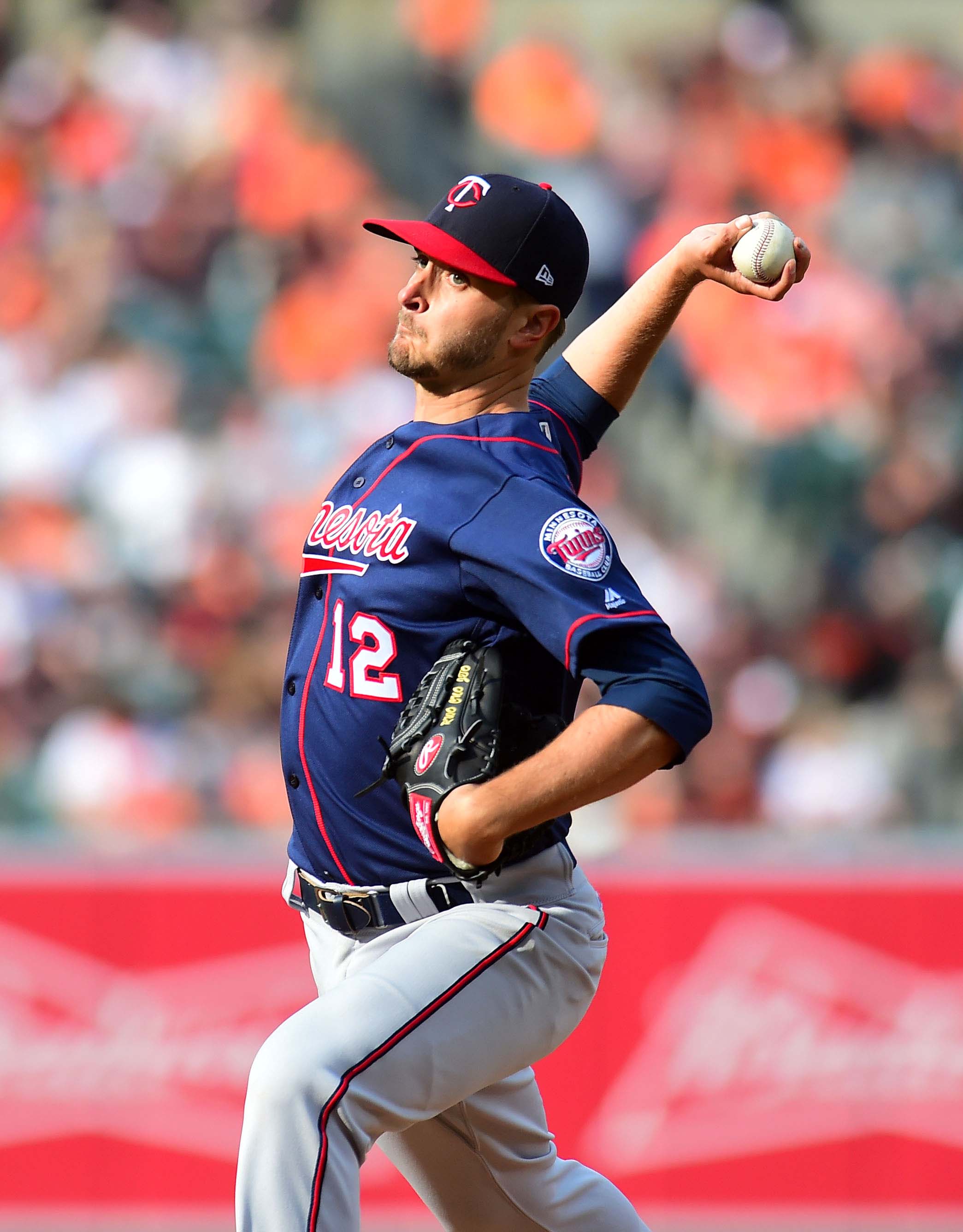
Minnesota has help on the near horizon in the form of top 100 prospects Stephen Gonsalves and Fernando Romero, but as a club with postseason aspirations, they never seemed likely to rely solely on in-house options. Minnesota made a strong run at Yu Darvish, reportedly offering him a contract worth $100MM+ before he ultimately signed a six-year deal with the Cubs. It was apparent back in November that the Twins were poised to spend at a much more aggressive rate than we’ve historically seen, but it nonetheless felt a bit unusual to see them in the mix for the market’s top free agent right until the close of bidding.
A finger injury to Ervin Santana, which required surgery and will shelve him for at least the month of April, only exacerbated the club’s need to add arms to the rotation. Minnesota capitalized on the Rays’ need to cut payroll and a stagnant free-agent market to acquire Jake Odorizzi on the cheap and to sign Lance Lynn to a one-year, $12MM deal that seemed unthinkable just four months prior.
While both Odorizzi and Lynn are likely mid-rotation arms, at best, they’ll play a critical role in stabilizing the starting staff — especially now that Santana’s injury may sideline him longer than initially had been hoped. Odorizzi is controllable through the 2019 season, and while Lynn will presumably depart after his lone season in Minneapolis, he can potentially be replaced by Michael Pineda, whom the Twins guaranteed $10MM with an eye toward their 2019 rotation.
The bullpen, too, was in dire need of augmentation. Minnesota relievers ranked 20th in the Majors with a 4.40 ERA last season and weren’t any better in terms of FIP (4.50, 23rd) or xFIP (4.49, 22nd). Beyond that, the departure of veteran Matt Belisle, who quietly rebounded from a dismal month of May to post terrific numbers down the stretch, only thinned out the relief unit.
Addison Reed looked poised to secure at least a three-year pact in free agency, but his market stalled a bit. While relievers were flying off the board and cashing in on significant annual paydays at the Winter Meetings — the relief market was the one facet of free agency that was mostly healthy this winter — Reed remained unsigned. Roughly a month later, he inked a surprising two-year deal with the Twins, though he’s openly acknowledged that geographic limitations impacted his market. Specifically, Reed had his sights set on signing with a team in the Midwest, he told the Boston Globe’s Alex Speier last month.
The Twins also brought in a pair of veterans on affordable one-year deals, inking Fernando Rodney to serve as the closer and Zach Duke to help counteract opposing lefties. While Rodney had a characteristic up-and-down season with the D-backs last year, his velocity and ability to miss bats held strong. Bringing him in to work the ninth inning frees up the Twins to use their best relievers — Reed and 2017 breakout rookie Trevor Hildenberger — more flexibly in high-leverage setup spots.
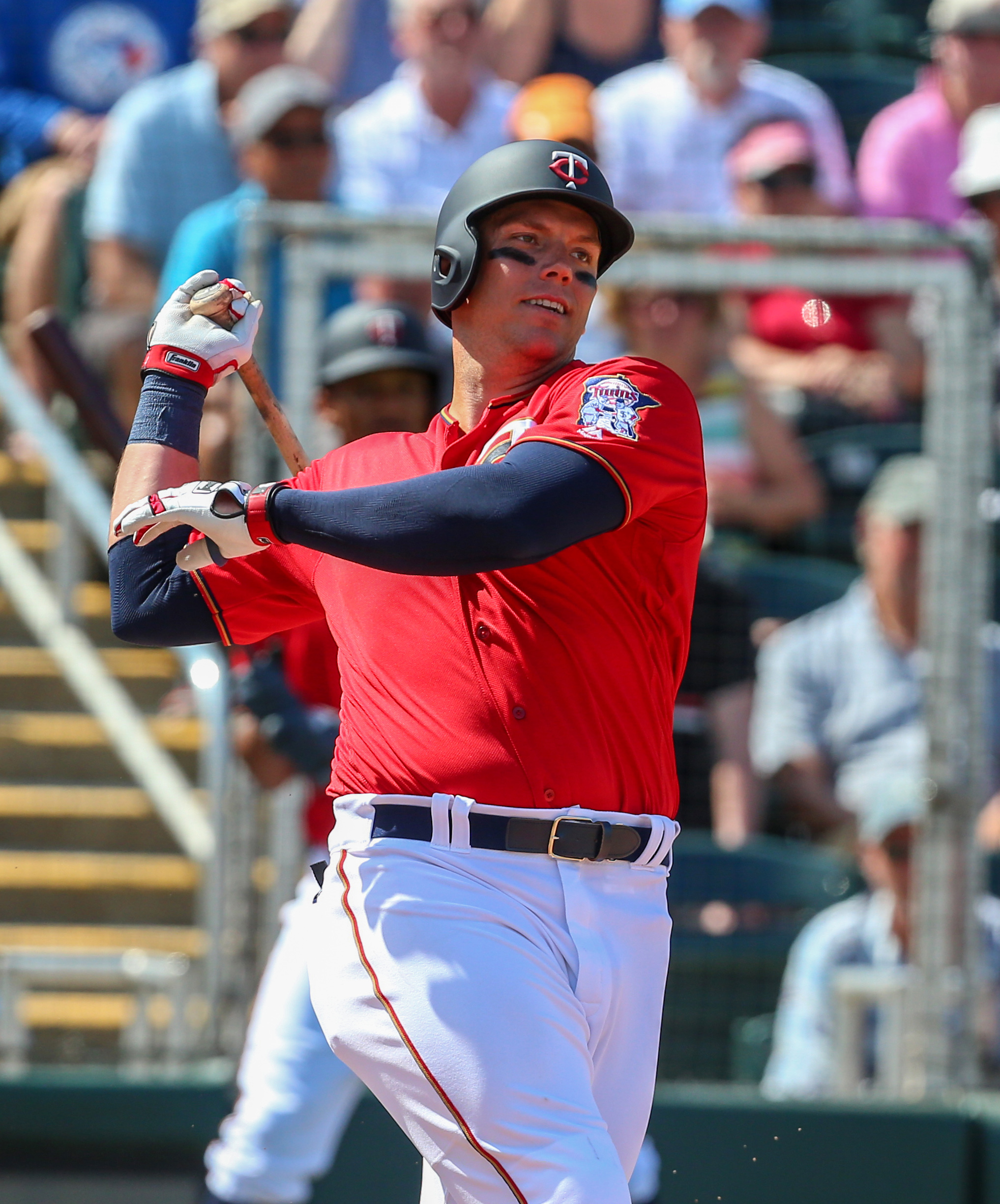
Despite a clear need for pitching, though, the Twins had one spot in their lineup that looked questionable. Minnesota designated hitters combined for just a .237/.328/.383 slash last season, and for much of the winter it looked as if OBP-challenged slugger Kennys Vargas and light-hitting on-base machine Robbie Grossman would receive the bulk of the duties there.
A match with Logan Morrison looked more and more like an on-paper fit as the slugger’s market failed to develop, though, and the Twins were able to scoop him up at a reasonable rate for the 2018 season. If Morrison can come anywhere close to last year’s .353 OBP and 38 homers, the Twins will be happy to see his $8MM option vest.
Questions Remaining
For as much as Minnesota accomplished this offseason, there are still plenty of questions surrounding the club. Odorizzi and Lynn are quality additions to the rotation at a reasonable price, but the starting unit as a whole still looks shaky — especially without Santana’s consistency. Jose Berrios tossed his first career shutout to kick off what the Twins hope will be a breakout season, but he’s the team’s best shot at having a true upper-echelon pitcher. If he takes only a small step forward (or worse), then the collection of Berrios, Odorizzi, Lynn, Kyle Gibson and (eventually) Santana looks more like a collection of fourth starters than a legitimately competitive playoff rotation.
Odorizzi and Lynn have been much more than that in the past, but both pitchers saw their walk and home-run rates spike last season. Fielding-independent pitching metrics pegged both Lynn and Odorizzi’s actual run-prevention skills more than a full run worse than their otherwise appealing ERA totals. The Twins have plenty of options in the upper minors, and perhaps Gonsalves, Romero or a sleeper prospect will burst onto the scene and strengthen the group. But as it stands, the rotation looks improved but hardly overpowering.
Minnesota also received a tough blow late in Spring Training with the news that starting shortstop Jorge Polanco tested positive for a PED and will miss the first half of the season while serving an 80-game suspension. The former top 100 prospect had a huge second half last season and was being counted on as a significant factor in the team’s lineup. Instead, utility man Eduardo Escobar will get the lion’s share of reps at short to begin the year. Escobar packs more punch than most utility options, but he’s struggled to remain consistent. Light-hitting defensive specialist Ehire Adrianza will receive more at-bats as well in Polanco’s absence.
Questions persist throughout the young core of position players as well, though that reportedly didn’t stop the team from trying (without success) to broker some extensions. Can Buxton hit like he did over the final four and a half months of the 2017 season and truly establish himself as one of the American League’s star players? Is Rosario capable of repeating his 2017 power surge? Will Kepler figure out how to hit left-handed pitching or is he primarily a platoon option with above-average glovework? There was a cloud hanging over Sano’s head all offseason in the wake of troubling assault allegations brought forth by a former Twins photographer, though MLB deemed that there wasn’t sufficient evidence to issue a suspension. He’ll now need to put that past him and remain healthy for a full season for the first time in his young big league career.
Perhaps the greatest question facing the Twins, though, is what will become of Brian Dozier and Joe Mauer following the ’18 season. Both are set to hit free agency, and Dozier in particular sounded frustrated by the team’s lack of engagement in extension talks. The former eighth-round pick has broken out as a legitimate star in recent seasons but somewhat bluntly told reporters that the team doesn’t seem especially interested in talking long-term. Whether that’s because of Dozier’s asking price or because Minnesota is wary of his age and prefers to turn the middle infield over to Polanco and top prospect Nick Gordon (and, eventually, 2017 No. 1 overall pick Royce Lewis) isn’t clear. But Dozier has very arguably become the face of this franchise, and the lack of extension talks already didn’t sit well with fans. He’ll assuredly receive a qualifying offer if he posts a typical season, which he’ll almost certainly reject. The question then will become if the Twins are willing to match the top open-market bid he receives.
The decision on Mauer, who quietly had a strong rebound season in 2017, is also difficult. The 35-year-old won’t break the bank in free agency considering the devaluation of corner bats, his age and his strong preference to remain in Minnesota — where he was born, raised and starred in high school before being drafted first overall in 2001. But the Twins have to weigh whether they’re better off retaining Mauer into his late 30s, even if it’s at a limited rate of pay, or instead turning things over to a younger player — be it Morrison or perhaps Sano, following a shift across the diamond.
Perhaps Mauer would sign on for a part-time role, but teams are increasingly reluctant to dedicate bench spots to players who can only fill one position on the diamond. Mauer has briefly dabbled in the outfield in the past, but he certainly won’t return to catching following the concussion issues that prompted his initial move to first base.
Overview
While their pursuit of the biggest fish in the free-agent pond didn’t prove fruitful, the Twins capitalized on the weak market for free agents as well or better than any team in the league and entered the 2018 campaign with a considerably deeper roster. They’ll play more than 50 games against the trio of the Tigers, Royals and White Sox as they chase the Indians for the AL Central crown. The weakness of the division alone should help the Twins to remain in the Wild Card race, but they’ll need some big steps forward from the likes of Berrios, Buxton, Rosario, Kepler and Sano to be a legitimate division threat.
That’s certainly possible, and if any of that group falters or falls to injury, the Twins will likely have the capacity to further stretch payroll and bolster the roster midseason. Taking on longer-term deals won’t be a major issue, as their long-term payroll ledger is among the cleanest in baseball (zero dollars guaranteed beyond 2019). Paired with a quality farm system and the aforementioned young core, the Twins look poised to be contenders in the Central for the foreseeable future as several of their rivals rebuild.
How do you think the offseason went for Minnesota? (Link to poll for Trade Rumors app users.)
How would you grade the Twins' offseason?
-
A 49% (1,297)
-
B 42% (1,133)
-
C 6% (152)
-
D 2% (42)
-
F 2% (42)
Total votes: 2,666
Photos courtesy of USA Today Sports Images.