
Forecasting The Free Agent Qualifying Offer Market
After five offseasons in existence, the qualifying offer system underwent a makeover in the latest collective bargaining agreement. (Click here for a rundown of the new QO rules.) It remains to be seen how teams will approach this 2.0 version of the qualifying offer, though the most obvious impact can be seen in the relatively short list of names mentioned in this post. Several of the winter’s top free agents aren’t eligible to receive the qualifying offer due to regulations both new and old: players who have been tendered a QO in the past can no long receive another, and players still cannot be issued QOs unless they have been on a single team’s roster for a full season. This means that Yu Darvish, J.D. Martinez, Jay Bruce, Neil Walker and other notable pending free agents who were traded in midseason deals will be able to hit the open market without any draft compensation attached to their services.
With so many notable names off the QO board, we certainly won’t see a replay of the 2015-16 offseason, when a record 20 players were issued qualifying offers. This winter’s free agent class could, however, potentially match or even top last offseason’s number of ten qualifying offer players, depending on how a few of the “borderline” cases play out.
This winter’s qualifying offer will reportedly be worth $18MM or $18.1MM on a one-year deal, as per ESPN.com’s Buster Olney. Teams have until 10 days after the World Series to issue these offers. If a free agent rejects the offer, his former team becomes eligible for some form of draft pick compensation (an extra pick just prior to the third round, in most cases) if the player signs elsewhere. Of the 64 qualifying offers issued in five previous offseasons, only five have been accepted — Colby Rasmus, Matt Wieters and Brett Anderson after the 2015 season, and Neil Walker and Jeremy Hellickson last winter.
Multiple factors can weigh into a player’s decision about whether or not to accept the QO. If a player is dealing with some injury questions or is coming off a good but not great walk year, the player and his representatives could choose to take the one-year guarantee ($18MM is no small chunk of change, after all) and look for a better and healthier performance in 2018 to better set the player up for a big multi-year contract next winter.
Two big factors may impact this thinking, however. The 2018-19 free agent class is loaded with superstars, so a player who takes the QO now would be entering a much more crowded marketplace next year. Also, players no longer have to worry as much about their markets being hampered by a first-round draft pick being attached their services, thanks to the new CBA’s lesser compensatory costs for teams who sign qualifying offer free agents. It seems likely that teams will be much more willing to give up their second- or third-highest draft picks (depending on the scenario) to sign a QO free agent than they would their first-rounder — we’ve already seen multiple examples of this willingness under the original QO rules, when some organizations added multiple pick-bound free agents in a single offseason (with each successive signing coming with a progressively less significant draft penalty).
Since we’ve seen that players will take a qualifying offer, obviously teams are prepared for such a scenario and wouldn’t issue a QO that they wouldn’t be comfortable seeing accepted. That’s why the lesser amount of compensation (in most cases) coming back to teams that lose a QO free agent probably won’t dramatically affect a club’s decision to tender or not tender a qualifying offer to a particular player. If anything, the lesser compensation has shown us that we could expect more trades of big free agents in future seasons, as non-contending clubs would obviously prefer to land a big return on a deadline trade than to collect merely a compensatory pick prior to the third round (in most cases) if that player rejected a QO and left for free agency. (This reasoning helps explain the Rangers’ decision to deal Darvish this summer, for example.)
With all of this preamble and explanation out of the way, let’s start making some projections about which players will receive the qualifying offer this winter. Quite a bit can still happen (performance-wise or health-wise) over the season’s final six weeks that could influence these rankings, though let’s see how things stand at the moment…
- The Easy Calls: Jake Arrieta, Lorenzo Cain, Wade Davis, Greg Holland (player option), Eric Hosmer, Lance Lynn, Mike Moustakas, Masahiro Tanaka (opt-out clause)
It looks like we’ll have at least seven QO free agents this winter, with an eighth if Tanaka exercises his opt-out. There also doesn’t appear to be much chance that any of the initial seven would accept a qualifying offer, as all are enjoying good-to-outstanding seasons that will deliver them lucrative multi-year contracts. Both Lynn and Holland missed all of 2016 recovering from Tommy John surgery, but both have looked healthy and effective enough in their return seasons that teams shouldn’t have any immediate concerns about their injury status. Lynn’s peripherals aren’t great, while Holland has shown some cracks of late, but on balance both are on track to receive and decline a QO as things stand.
It remains to be seen if Tanaka will opt out of the three years and $67MM remaining on his contract with the Yankees, since he has a career-worst 4.86 ERA over 140 2/3 innings. However, since he has pitched better over the last two months (3.98 ERA, 106-to-18 K/BB ratio since May 26), it seems more likely that he will indeed exercise his opt-out should this form continue through September. Tanaka doesn’t turn 29 years old until November, so even coming off an inconsistent year, he’s still likely to command a strong multi-year deal from someone. Regardless, there isn’t a plausible scenario where Tanaka opts out but then accepts the Yankees’ qualifying offer.
Under the new compensation rules, the Yankees (as a luxury tax payer) would only get a pick after the fourth round if Tanaka rejected the QO and signed elsewhere. The Cubs and Cardinals (as revenue-sharing contributors but not luxury tax payers) would receive a pick between Competitive Balance Round B and the third round if Arrieta, Davis or Lynn signed elsewhere. The Royals and Rockies are both revenue-sharing recipients, so their potential compensation pick(s) for Moustakas/Cain/Hosmer/Holland would fall after the first round for any of those players that end up signing for $50MM or more in guaranteed money.
For what it’s worth, there are several star players (e.g. Jose Altuve, Madison Bumgarner, Gio Gonzalez, Ian Kinsler, Andrew McCutchen, Chris Sale) who could theoretically become free agents and receive qualifying offers if their teams declined club options on their services for 2018. But it’s hard to imagine circumstances where that would really make sense, so we’ll assume these big names won’t be making a surprise entry into free agency.
- Borderline Cases: Zack Cozart, Carlos Santana
Based on pure all-around production, Cozart would seem like a lock; only 16 players in baseball have generated more than Cozart’s 4.1 fWAR. The longtime Reds infielder just turned 32, however, and he has battled a couple of quad injuries this season, on top of the knee injuries that hampered him in 2015-16. There’s at least a chance that Cozart would accept the QO, as Zach Buchanan of the Cincinnati Enquirer recently outlined, due to a lack of a shortstop market and the fact that Cozart may jump at the chance to lock in an $18MM+ payday, having earned just over $12.2MM total over seven big-league seasons. The rebuilding Reds have alternative options at short and surely aren’t keen to add $18MM in payroll. Plus, that price tag would make it harder for Cincy to trade Cozart (not to mention the fact that players who accept the QO can’t be dealt without their consent until June 15).
Cozart’s case is an interesting test run for the new free agent compensation rules. If the original rules still applied, the Reds might be more inclined to take the risk of extending the QO since they would’ve landed a draft pick after the first round if Cozart rejected the offer and signed elsewhere. Under the new rules, however, the Reds (a revenue-sharing recipient) can only recoup a pick after the first round if Cozart signs elsewhere for at least $50MM guaranteed. If his next deal is less than $50MM, which is a distinct possibility given the lack of teams looking for shortstops, Cincinnati would only get the standard compensation pick prior to the third round.
After a slow start to the season, a red-hot July and August has put Santana on pace for yet another year of above-average offensive production. He’ll be entering his age-32 season, however, and last season showed that the market for aging first base/DH types is increasingly cool. Cleveland may not want to take the risk that Santana accepts a qualifying offer, as that could mean that the Indians would have over $36MM committed to their first base/DH mix in Santana and Edwin Encarnacion next season — not exactly ideal payroll distribution for a smaller-market club. The lack of extension talks between the two sides could indicate that the Tribe is ready to move on from Santana. Still, if Santana keeps raking, he could be more assured that he could find a nice multi-year offer elsewhere, and Cleveland might feel more secure that Santana would reject a QO.
- Probably Not: Welington Castillo, Alex Cobb, Carlos Gomez, Logan Morrison
Morrison got a first-hand look at last winter’s crowded market for first base bats, having to settle for a one-year, $2.5MM deal to return to Tampa Bay. While Morrison is enjoying a career year, however, his lack of a strong track record prior to 2017 may lead to another relative lack of suitors, so he could be a candidate to accept a QO. (It’s also relevant that left-handed sluggers such as Yonder Alonso and Lucas Duda will also be on the market, and neither will be saddled with draft compensation.) Cobb has good but not great numbers in his first full season back from Tommy John surgery, and likely also would consider taking a qualifying offer in the hopes of really re-establishing himself as a frontline starter in 2018.
Since both LoMo and Cobb could potentially accept qualifying offers, the Rays aren’t likely to issue them. A team that only rarely edges over the $70MM payroll threshold simply can’t afford to have one (or two) players earning upwards of $18MM per season.
Castillo is posting good numbers in Baltimore and is therefore quite likely to opt out of his $7MM player option for 2018. As always, teams will be looking for catching help this winter, and they’ll be intrigued by a backstop who offered good production against both righties and lefties this season, plus some slightly above-average pitch framing totals behind the plate in the eye of Baseball Prospectus (StatCorner, it should be noted, has a much less positive view of Castillo’s framing performance this season). The Orioles have enough big salaries that they might not want to risk having an $18MM catcher on the books, especially with Caleb Joseph turning in a strong season and Chance Sisco nearing MLB readiness. If the season ended today, I doubt they’d issue Castillo a qualifying offer. That said, this could be a situation to keep an eye on if Castillo keeps hitting well through season’s end.
Gomez has played well enough this season in Texas that the memories of his nightmarish Astros tenure can be fully relegated to the past, though he has been limited to 86 games, largely due to a month-long DL stint recovering from a strained hamstring. Gomez has a 108 wRC+ and has been roughly average defensively in center field, so he could probably land a decent multi-year deal in free agency but would also have a sound case for accepting a qualifying offer. The Rangers likely don’t want to pay Gomez $18MM for one year, though it wouldn’t be surprising to see the team pass on issuing a QO but still try to re-sign him this winter.
10 Hitters Lining Up Big First-Time Arbitration Salaries
We took a look recently at the pitchers who have done the most this year to drive big first-time arbitration salaries this fall. Today, we’ll look at some position players that have done the same.
For hitters, the key factors — as MLBTR contributor Matt Swartz ascertained about six years ago — are playing time and power. The accumulation of plate appearances, home runs, and runs batted in are the biggest factors in driving earning power through arbitration, even if those are far from the only things that go into making for a productive baseball player.
While prior years’ performances certainly factor in, we’re focused here on which players have done the most in 2017 to boost their next salaries. We’ll assume that marginal Super Two candidates such as Carlos Correa, Eddie Rosario, and Tommy Pham will not sneak in and gain eligibility. Here’s the list:
Mookie Betts, Red Sox — Though he hasn’t been quite as exciting as he was last year and excels in some areas (contact, defense, baserunning) that don’t pay much in arbitration, Betts still easily cracks this list. Among the players listed here, he leads the way with 553 plate appearances and is second with 76 RBI. He also has swatted 18 long balls on the year, though obviously he won’t match last year’s tally of 31.
Justin Bour, Marlins — An injury has really hurt Bour’s case, but it’s tough to ignore what he did before going down. Over 339 plate appearances, the slugger swatted 21 home runs with 63 RBI. There’s no chance he’ll take home anything like the paydays of the players that sandwich him on this list, but Bour has earned a solid payday for 2018 while also locking down a starting role for the foreseeable future.
Kris Bryant, Cubs — The 25-year-old isn’t anywhere near to last year’s pace when it comes to the key counting stats, as he has only 23 home runs and 55 runs batted in through 511 plate appearances. But that’s only sparse in relative terms, and Bryant’s overall track record — including Rookie of the Year and MVP nods — will get him a huge and much-deserved payday as a Super Two.
Maikel Franco, Phillies — There’s no sugarcoating this season for Franco, who is reaching base at an anemic .277 clip and isn’t even playing at replacement level. Fortunately for him, an arbitral panel would likely largely look past the broader picture. Despite his broader struggles, Franco has still managed to leave the yard 17 times and drive in 59 runs over 494 plate appearances.
Jake Lamb, Diamondbacks — The third baseman has turned in a big season at the dish for Arizona. Through 503 plate appearances, he has smacked 27 round-trippers — just barely pacing the rest of the names on this list. Better still, he’s a shoo-in to reach triple-digits in the sabermetrically disfavored, arbitrationally relevant RBI statistic. With 95 already in the bag, Lamb is lapping the competition in this cohort.
David Peralta, Diamondbacks — Peralta’s case is weaker in every way than is his teammate’s. In fact, he just nudged out Kevin Pillar of the Blue Jays for inclusion. But with 13 dingers and 43 ribbies over 438 plate appearances — not to mention a .303 batting average — Peralta sneaks in amongst the top ten. (Pillar, for what it’s worth, has managed a dozen homers and has nearly reached 500 plate appearances, but has only driven in 32.)
Steven Souza, Rays — What makes this such an exciting season for Souza isn’t even what is going to get him paid. Right now, he’s running a walk rate that’s double what he carried in 2016. And the power has been there, too, with 26 bombs and 73 RBI over 494 plate appearances. Souza should earn well in his first trip through arbitration.
Eugenio Suarez, Reds — Speaking of exciting walk totals, Suarez has ramped up from a 4.3% rate in 2015 all the way to 14.0% this year. He’s also knocking the ball around the yard, with 21 homers and 64 runs batted in through an even 500 trips to the plate.
J.T. Realmuto, Marlins — The standout Marlins backstop doesn’t have gaudy numbers, but his solid output and heavy workload — only Buster Posey has more plate appearances among catchers — ought to play in his favor. Realmuto has 14 home runs and fifty RBI through 432 plate appearances; he’s also carrying a .287 batting average.
Mike Zunino, Mariners — Last but not least, we find another catcher who happens to be one of the game’s most extreme sluggers. Zunino has driven the ball out of the park 18 times in just 322 plate appearances … while recording a hefty 121 strikeouts to go with his 48 RBI and anemic .222 batting average. Zunino will also benefit from the fact that he would have been a Super Two last year if he had been on the active roster for enough days; as a result, he had already logged quite a few plate appearances (1,247) — and, yes, dingers (50) — entering the season. Honorable mention on the catching side of things goes to James McCann of the Tigers and Cameron Rupp of the Phillies, each of whom has nudged into double-digit home-run tallies.
MLBTR Originals
Here’s the list of original content from the MLB Trade Rumors writing staff over the last seven days…
- Just hours after Steve Adams published the latest edition of the Top 25 August Trade Candidates ranking, the list already needed revising thanks to the news that Curtis Granderson (#2 on Steve’s list) had been dealt to the Dodgers. This August has been more active than usual on the trade front, so it wouldn’t be surprising if several more top-25 names are moved before the month is out.
- If teams can’t work out a trade within the August waiver period, they could also add talent by making a waiver claim. Charlie Wilmoth lists eight players that could potentially be claimed and then allowed to leave by their current teams.
- The Astros are known to be looking for left-handed relief help, so Steve looked at 10 southpaws that could be available and of interest to the AL West leaders. Houston did make a significant bullpen acquisition this week, though it was for veteran right-hander Tyler Clippard.
- Looking ahead to the offseason, Steve checked in on eight notable names who can become free agents this winter due to opt-out clauses or player options in their current contracts.
- The qualifying offer will also have a big impact on this winter’s free agent movement. Since this will be the first offseason of the new QO rules established in the latest collective bargaining agreement, I published a refresher about how the new system will operate for teams that sign or lose players who will reject the one-year qualifying offer (estimated to be worth around $18MM this year).
- Jeff Todd examines ten pitchers who will be eligible for arbitration for the first time this winter, and have set themselves up for some very healthy salaries in the first of three (or four, for the Super Two players) trips through the process.
- Aaron Judge and Cody Bellinger look like shoo-ins for the Rookie Of The Year honors in their respective leagues, as Connor Byrne counts down the top 10 rookies of the 2017 season. I guess Judge’s slump in the second half might cost him some votes if the likes of Andrew Benintendi or Trey Mancini keep up their production, though heading into today’s action, Judge (6.0) had generated twice as much fWAR as Benintendi (2.0) and Mancini (1.0) combined.
Offseason Primer: The New Qualifying Offer Rules
Introduced as a more straightforward method of free agent compensation than the old Type A/Type B free agent designations, the qualifying offer has led to its own set of controversies over its five offseasons of existence. Some players and agents felt that the attachment of a first-round draft pick to the signings of players who turned down the QO had an undue influence on the markets for these free agents, so it wasn’t any surprise that the collective bargaining agreement agreed upon between Major League Baseball and the MLBPA last December contained significant changes to the qualifying offer system.
Since the new CBA wasn’t ratified quickly enough for the new rules to come into effect last winter, the coming offseason will be our first look at the new (and, in theory, improved) qualifying offer system and its impact on the free agent class. With fans of several non-contending teams already looking ahead to 2018, we’re due for a refresher on how the new QO process works and what it will mean for your favorite team’s efforts to retain players or pursue new ones on the open market.
At its heart, the qualifying offer remains the same — a one-year contract offered to an impending free agent who has been on that team’s roster for the entirety of the 2017 season. (So, pending free agents like Yu Darvish, J.D. Martinez or Jay Bruce cannot receive the QO since they were only acquired partway through the season.) The one-year deal is worth the mean salary of the game’s 125 highest-paid players, and MLBTR’s Tim Dierkes reported this year that the value will be $17.4MM. With such a notable dollar figure involved, teams are still likely only to issue qualifying offers to the upper tier of free agent players, especially given the new CBA’s stricter luxury tax penalties.
Our first major difference is that a player who has been issued a qualifying offer during a past free agent stint is no longer eligible to receive another one. For instance, the Tigers surrendered a draft pick when they signed Justin Upton two winters ago since Upton rejected the Padres’ qualifying offer. If Upton decides to exercise his opt-out clause this offseason and hit the open market again, he is no longer eligible for the QO, and thus Detroit won’t get any draft compensation if the star outfielder signs elsewhere. Upton is the most prominent player that will be impacted by this new rule, since of the past QO recipients who will or could be free agents this winter, Upton is the only one performing well enough to have been a lock for another qualifying offer this winter.
Teams have until five days after the conclusion of the World Series to issue qualifying offers to free agents, and these players will now have ten days to decide whether or not to accept (up from seven days in the previous CBA). This gives players and their agents a bit of extra time to access the market and see if a larger deal if out there, or if the best bet is to take that ~$18MM payday and test free agency again in the 2018-19 offseason, hopefully on the heels of a better season.
If a player rejects the QO and goes on to sign with another team, here’s where the new rules differ greatly from the 2012-17 CBA. In the last five years, a team with a player who rejected the QO would’ve received a compensatory draft pick between the first and second rounds of the following year’s amateur draft, while the team who signed the QO player would’ve given up their first-round pick (unless their selection fell within the top 10 picks in the draft, in which case the signing team would’ve surrendered their next-highest choice).
Now, however, the new rules factor in contract size and team situation. Here are the compensatory scenarios for a team that issued a qualifying offer to a player and saw him sign elsewhere…
- If the team was not a revenue sharing recipient or the free agent signed for less than $50MM guaranteed, the team will receive a compensatory pick after Competitive Balance Round B, which takes place just prior to the draft’s third round. (The Competitive Balance process itself underwent some changes in the new CBA.) This is essentially the “default” compensation for teams losing QO free agents, since most teams won’t meet either of the following two sets of criteria.
- If the team losing the player received revenue sharing in the previous season and the free agent signed a deal at least $50MM in guaranteed money, the team will receive a compensatory pick after the first round of the draft. According to MLB Network’s Jon Morosi (hat tip to MLB.com’s Anthony Castrovince), 16 teams are revenue-sharing recipients and could qualify for the higher pick — the Astros, Athletics, Braves, Brewers, Diamondbacks, Indians, Mariners, Marlins, Orioles, Padres, Pirates, Rays, Reds, Rockies, Royals and Twins. (It’s worth noting that the new CBA specifies that Oakland will be gradually phased out as a revenue-sharing recipient over the next two seasons.)
- If the team paid the luxury tax in the previous season, the team will receive a compensatory pick after the fourth round of the draft.
Furthermore, there are also new rules for a team that signs a free agent who declined a qualifying offer…
- If the signing team received revenue sharing and didn’t exceed the luxury tax threshold in the previous season, the team only has to surrender its third-highest pick in the next draft. If this team signed more than one QO free agent, it would give up its fourth-highest pick for the second signing, fifth-highest pick for a third signing, etc.
- If the signing team contributes to revenue sharing but didn’t exceed the luxury tax threshold in the previous season, the team gives up its second-highest draft pick and $500K of international bonus pool money in the next int’l signing period (which opens on July 2). If this team signed more than one QO free agent, it would give up its third-highest pick for the second signing and so forth, though it doesn’t appear as if that team would lose any additional international pool money would also be involved.
- If the signing team paid the luxury tax in the previous season, the team gives up its second-highest and fifth-highest draft picks and $1MM of international bonus pool money in the next int’l signing period (which opens on July 2). According to FOX Sports’ Ken Rosenthal, if this team signed more than one QO free agent, it would give its up third-highest and sixth-highest picks for the second signing, and so forth. Five teams look to be paying the luxury tax this season — the Dodgers, Yankees, Red Sox, Tigers and Nationals.
The old qualifying offer system’s effect on mid-tier free agents and how teams and players learned to adapt to the system evolved over all five offseasons of its existence, so it may be some years yet before we see how these new rules impact the free agent market. On the surface, the new rules look like a boon for players, as the new costs for signing a QO free agent aren’t as punitive as the loss of a first-round draft pick.
Likewise, teams are also likely to feel freer about making signings. The loss of international pool money isn’t likely to be too big a deterrent. (For a team like the Orioles that seemingly doesn’t care about int’l spending, it’ll basically be no deterrent at all.) It also seems as though teams that lose their bonus money to sign a QO free agent can recoup those funds in trades, since international bonus slots can be dealt. What happens to the international pool money forfeited by teams for signing a QO free agent, you might ask? It will actually go towards funding other teams’ international signings; the money will be evenly distributed among the bonus pools of the teams that didn’t give up that $500K-$1MM to land a qualifying offer free agent.
As we saw at the last trade deadline, however, the most interesting wrinkle to the new rules is that teams may now also be more open to dealing pending free agents that likely would’ve normally been retained and issued qualifying offers. The Rangers, for instance, are a team that contributes to revenue sharing but isn’t over the luxury tax limit, so they would’ve received only a pick after Compensatory Round B if Yu Darvish had turned down the QO and signed elsewhere this winter. Since the trade package the Dodgers offered for Darvish was much more valuable than just a single sandwich pick, it made sense for Texas to accept a deal. That might have been a closer call if they still had a first-round compensation pick coming their way.
Top 25 August Trade Candidates
Since last week’s iteration of this list ran, the Mets have traded Jay Bruce (No. 2) to the Indians and Neil Walker (No. 2o) to the Brewers. Meanwhile, the White Sox traded Tyler Clippard (No. 7) to the Astros, and Ian Kinsler (No. 12) was pulled off waivers by the Tigers following a claim from an unknown club. Marco Estrada (No. 1) also appears to have been pulled back, as it’s now been more than 48 hours since he was reportedly claimed, yet he remains with the Blue Jays.
Further mixing up the list of trade candidates is the fact that the Angels and Twins have gone on prolonged winning streaks, with Anaheim seizing a Wild Card spot and Minnesota sitting directly behind them. With both clubs looking like much more plausible playoff contenders, at least for now, their movable assets slide down the list or drop off entirely.
1. Asdrubal Cabrera, Mets: The Mets have been able to unload the vast majority of their short-term veterans and figure to continue exploring possibilities. Newsday’s Marc Carig reported last week that they’ll consider just picking up Cabrera’s affordable 2018 option — not a bad plan given the infield uncertainty they’ve faced in 2017 — but an affordable, versatile, reasonably productive switch-hitter could appeal to a contender before Aug. 31.
2. Curtis Granderson, Mets: The Grandy Man has four homers in the past week, and he’s raked at a .273/.395/.596 clip in his past 250 plate appearances. He’s earning $15MM this season, but he’s revered for his leadership and clubhouse presence. That bat should help a contender, and the Mets should be motivated to find a trading partner.
3. Brandon Phillips, Braves: Phillips has cleared waivers and has hit fairly well in 2017. He’s playing third base now, adding to his versatility, and the Reds are on the hook for $13MM of his $14MM salary, so he’ll be cheap for any contender. There aren’t many clubs looking at second base upgrades, though, and the Angels’ interest is reportedly “limited.” (Per FanRag’s Jon Heyman)
4. Zack Cozart, Reds: There just aren’t many contenders seeking shortstop upgrades, and the Reds could make Cozart a qualifying offer if no trade materializes. If the Blue Jays go on a winning streak to better position themselves for the Wild Card, they’d make sense on paper. The Rays and Royals make some sense, too, and injuries can always create new trade partners.
5. Jed Lowrie, Athletics: Lowrie can play anywhere in the infield, he’s hitting well, and he has a reasonable club option for the 2018 season. There’s likely a fair bit of overlap with his market and with Cabrera. I think he’d be a great fit for the Angels, but the Halos may not want to send minor league talent to a division rival.
6. Drew Storen, Reds: Storen was absolutely rocked by the Cubs earlier this week, so his numbers don’t look as sharp as they did when last week’s list was published. That said, he’s a veteran reliever that can miss a few bats and is earning a modest $3MM base salary. He’s the type of low-cost pickup that can help a fringe Wild Card contender without requiring much of a minor league sacrifice.
7. Jim Johnson, Braves: It’s not fully clear that Johnson is even available. There’s been no word on the result of his placement on waivers back on Aug. 2, so he might’ve been claimed and pulled back. But if he passed through waivers, he’s a veteran ‘pen arm with a 55-to-17 K/BB ratio and a 48.1 percent grounder rate in 48 innings. He’s signed through 2018 as well.
8. Rajai Davis, Athletics: Davis is hitting .333/.387/.536 in the second half and has knocked lefties around at a .270/.336/.420 pace. That productivity and his still-excellent speed can make him an ideal reserve/platoon outfielder for a contender’s bench. Speculatively speaking, a reunion with the Indians could make sense in light of Bradley Zimmer‘s struggles and Michael Brantley‘s injury.
9. Jhoulys Chacin, Padres: Chacin isn’t exciting, but he’s been a durable source of useful innings for a bad Padres team. San Diego GM A.J. Preller says he isn’t willing to move Chacin for a non-prospect just to shed a bit of salary, so it’ll take an offer of at least a mildly intriguing prospect to make something happen.
10. Brad Ziegler, Marlins: Ziegler has fired six scoreless innings with a 77.3 percent ground-ball rate since coming off the disabled list earlier this month. The Marlins would probably need to pay down next year’s $9MM salary a ways, but Ziegler’s track record is excellent and should lead to some interest.
11. Rene Rivera, Mets: A free agent at season’s end, Rivera could be an upgrade over the backup catcher on several contending clubs. He’s known as a strong defender, and he has a bit of power in his bat as well.
12. Matt Joyce, Athletics: Matt Joyce is doing Matt Joyce things this season. That is to say, he’s drawing tons of walks, hitting for power against right-handed pitching (.235/.338/.463, 16 homers) and playing unspectacular but passable defense in the outfield corners. He’s signed for $6MM next season, so he could be a bench piece/platoon piece beyond this year.
13. R.A. Dickey, Braves: Dickey has been an effective enough innings eater that the Braves are reportedly at least considering his 2018 option for $8MM. His peripheral stats don’t mesh with his 3.89 ERA, but he has a long history of outperforming ERA estimators.
14. Santiago Casilla, Athletics: Casilla’s velocity has held up even at age 37, and he’s still averaging 8.9 K/9. But, his walk rate has spiked as his ground-ball rate has plummeted. He’s also been homer-prone the past two seasons despite cavernous home parks, which, paired with next year’s $5.5MM salary, will likely give other clubs pause.
15. Clayton Richard, Padres: Richard is a ground-ball machine with an uninspiring 4.84 ERA but considerably better marks in the eyes of fielding-independent metrics. He won’t pitch in a playoff rotation but could be another lefty in a postseason ‘pen. And, there are several teams that could use cheap innings for the balance of the regular season. He’s only earning $1.75MM, so any club can afford him.
16. Miguel Gonzalez & Derek Holland, White Sox: Neither member of this duo has pitched well, but they’ve both cleared waivers and are on a team that is trading everything that isn’t nailed down. Gonzalez has been the better of the two, but Holland could potentially be a lefty piece in a contender’s bullpen. They’re earning nearly identical $5.9MM (Gonzalez) and $6MM (Holland) salaries.
18. Juan Nicasio, Joaquin Benoit & Daniel Hudson, Pirates: The Bucs are now 5.5 games out of the NL Central lead, and while it’s not realistic to expect them to put together an Andrew McCutchen trade in August, any of these veteran relievers could conceivably be moved if the Pirates slip further out of contention. Nicasio’s been the best of the bunch by a wide margin and would surely be claimed if the Bucs put him through waivers (which may already have happened).
21. Kurt Suzuki, Braves: The 33-year-old is hitting as well as he ever has, with a .258/.335/.500 slash and a dozen home runs in just 207 plate appearances. (His career high of 15 long balls came in 614 plate appearances way back in 2009.) Suzuki surely can’t keep up quite that power output and is not well-loved for his defensive game, but he’s an affordable, highly regarded clubhouse presence who has been targeted for stretch runs by contenders in the past.
22. Junichi Tazawa, Marlins: Frankly, it’s tough to see much interest in Tazawa, who has pitched poorly and is owed $7MM in 2018. If the Fish eat nearly all of that money, perhaps they could find some team willing to buy low. It’s not likely, but Miami would surely love to shed even a portion of this contract.
23. Jeff Samardzija, Giants: Shark’s contract would likely clear waivers (if it hasn’t already), but he was adamant about wanting to stay in San Francisco prior to the deadline. He has a no-trade clause that would allow him to block deals to 21 teams. It’s not likely, but one of the teams to which he cannot block a trade could conceivably make an effort.
24. Justin Verlander, Tigers: Talk about Verlander will persist into the offseason, but I can’t envision him moving anywhere this month. As is the case in previous weeks, he’s here because he’d be a difference-maker on a contender and is technically available, but there’s no real expectation that he moves.
25. Giancarlo Stanton, Marlins: Everything said about Verlander applies even more emphatically to Stanton. The Marlins may engage in trade talks this offseason, and he’s cleared waivers so they could get some offers in August, but Stanton is the face of the franchise and owed $295MM following this season. He also has a full no-trade clause. There are too many hurdles to realistically expect anything to happen this month, but the faint glimmer of a chance and the fact that there will no doubt be rumors lands him on the final spot of this list.
Injured
Scott Feldman (Reds), Daniel Nava (Phillies), Ian Krol (Braves), Johnny Cueto (Giants), Erick Aybar (Padres), Wade LeBlanc (Pirates)
Claimed, Pulled Back From Waivers
Ian Kinsler (Tigers), Marco Estrada (Blue Jays)
Also Considered
J.A. Happ & Jose Bautista (Blue Jays); Matt Kemp & Nick Markakis (Braves); Denard Span & Nick Hundley (Giants); A.J. Ellis & Dee Gordon (Marlins); Darren O’Day, Zach Britton & Seth Smith (Orioles); Yangervis Solarte & Craig Stammen (Padres), Hyun Soo Kim (Phillies); Andrew Cashner & Tyson Ross (Rangers); James Shields & Mike Pelfrey (White Sox)
The Top 10 Rookies Of 2017
With the 2017 Major League Baseball season three-quarters of the way over, we’ve seen no shortage of rookies* burst on the scene as potential long-term building blocks for their respective teams. Here, we’ll take a look at those who have enjoyed the finest introductions to the big leagues thus far.
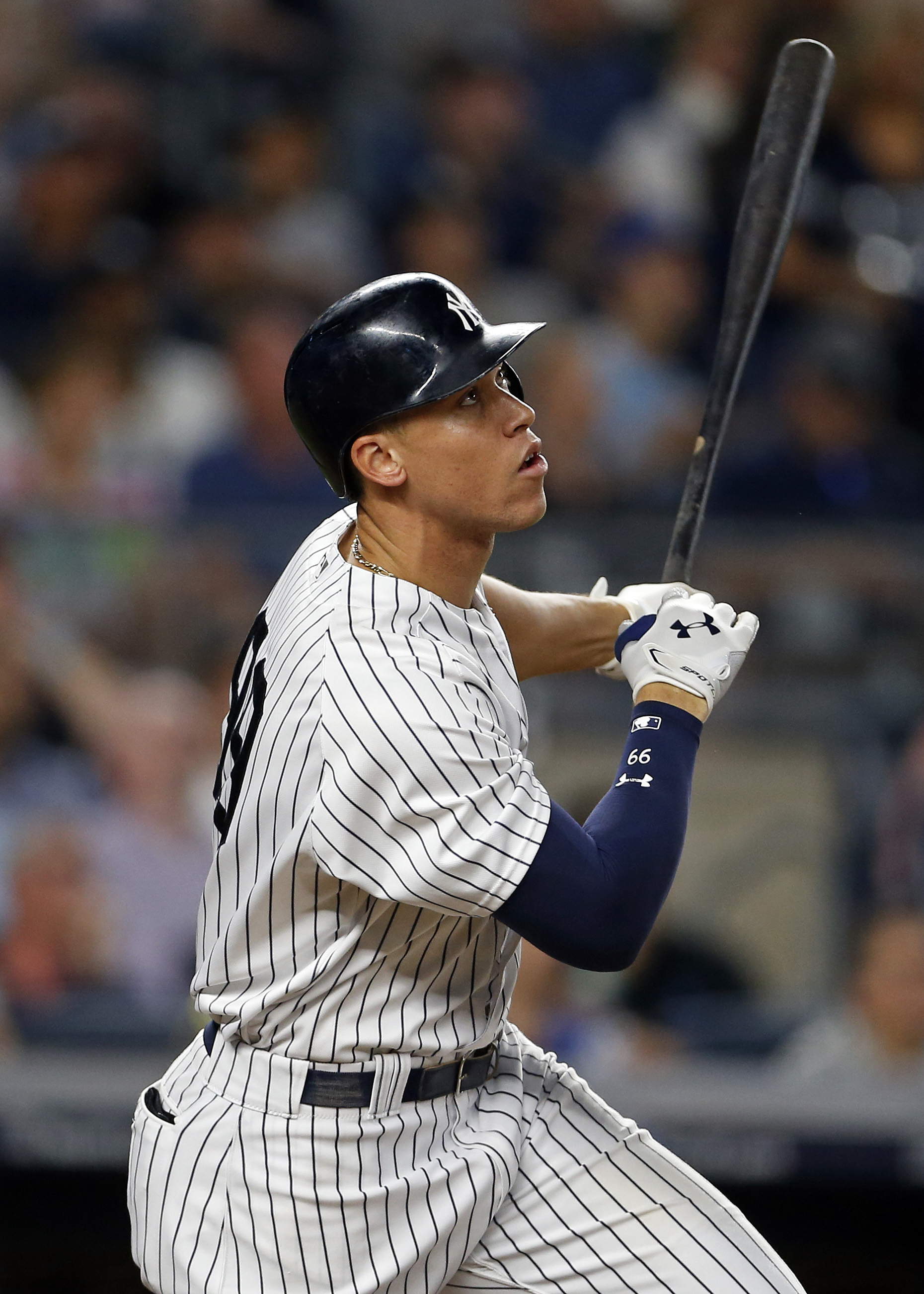
1.) Aaron Judge, RF, Yankees: All rise for the American League home run leader (37) and the shoo-in AL Rookie of the Year winner. While the 25-year-old Judge has batted just .185/.346/.398 since the All-Star break and done significant damage to his MVP hopes in the process, the overall production this season has been awe-inspiring. After a rough, strikeout-laden debut in 2016, Judge has rebounded this season to slash a magnificent .291/.420/.614 in 502 plate appearances. Strikeouts remain a problem, though his 31.5 percent rate isn’t crippling when you pair it with the majors’ second-best walk rate (17.5). When Judge has made contact, he has punished the ball. The 6-foot-7, 275-pound monster ranks fourth in the game in isolated power (.323), and his expected weighted on-base average (.432) is right in line with his actual wOBA (.437, via Statcast and Baseball Savant).
While offensive brilliance has put Judge on the map, the advanced defensive metrics have thought enough of his work in right field to help give him a 6.2 fWAR – which ties him with Jose Altuve for first among all position players. Judge, Altuve and others will spend the next month and a half continuing to vie for the AL MVP, but the newest face of the Yankees has top rookie honors sewn up.
2.) Cody Bellinger, 1B/OF, Dodgers: Just as Judge has lapped the AL rookie field, Bellinger has emerged as the Secretariat of the NL race. Bellinger hasn’t quite matched his AL counterpart’s production, but the numbers have still been absolutely remarkable – especially considering he just turned 22 last month and didn’t debut until the end of April. The lefty-swinging Dodger has belted nearly as many homers as Judge (34) in 90 fewer PAs (412), posted a .277/.357/.621 line and logged the majors’ third-best ISO (.343, behind only Joey Votto and Giancarlo Stanton). In the process, Bellinger has given the dream team known as the Dodgers yet another star to build around for the long haul. He’s a lock to follow teammate Corey Seager as the club’s second consecutive NL ROY winner.
3.) Paul DeJong, SS, Cardinals: This is the second straight year in which a Cardinals shortstop has served as one of baseball’s most productive rookies. It was Aledmys Diaz in 2016, but his breakout hasn’t stuck, and he’s currently amid a woeful Triple-A season after beginning the year poorly in the majors. DeJong, 24, may not follow that path in 2018 – he and the Cardinals hope not, anyway – but a 30.9 strikeout rate against a paltry 3.7 percent walk means he’s carrying the second-worst BB/K ratio (.12) among hitters with at least 200 PAs. That will have to change if DeJong’s going to be a viable major league regular for the long haul. In the meantime, give DeJong credit for a .300/.327/.576 batting line through 269 trips to the plate. And even though DeJong didn’t reach the majors until the end of May, he trails only Judge and Bellinger among rookies in homers (18). He also tops all league shortstops in ISO (.276).
Between the offensive output and his plus defense, DeJong has accounted for 2.1 fWAR – putting him just in front of a prominent fellow shortstop, Boston’s Xander Bogaerts, who has been worth 2.0 fWAR in 220 more PAs. Whether DeJong can keep this up is highly debatable, but it’s inarguable that the 24-year-old’s work this season has helped the Redbirds stay in the playoff hunt.
4.) Austin Barnes, C/2B, Dodgers: The Dodgers are 85-34, so it’s not particularly surprising that they’re loaded with outstanding players. Barnes has flown under the radar, though – perhaps because he’s a 27-year-old rookie who has only amassed 180 PAs this season (after logging 37 apiece in the prior two seasons). The former Marlins prospect has taken advantage of his limited playing time, however, having hit a marvelous .293/.411/.513 with six homers and a .220 ISO. Barnes has combined that quality power with elite-level plate discipline, evidenced primarily by the fact that he has nearly as many walks (27) as strikeouts (30). League-average walk and strikeout rates sit at 8.5 percent and 21.6 percent, respectively, and Barnes is comfortably above the mean in each category (15.0 and 16.7). He also happens to own an even higher xwOBA than Bellinger (.379 to .372). It’s worth pointing out, too, that Baseball Prospectus regards Barnes as one of the majors’ preeminent pitch-framing backstops. The hype may not be there for Barnes, yet he’s clearly among the reasons the Dodgers are able to form Voltron on what seems like a nightly basis.
5.) German Marquez, SP, Rockies: As we’ve seen time and again, pitching in Colorado is no easy task. The 22-year-old Marquez has handled Coors Field with aplomb, though, and managed a 4.13 ERA with 8.5 K/9, 2.94 BB/9 and a 41.6 percent ground-ball rate across 113 1/3 innings in his rookie campaign. The run prevention isn’t eye-popping, but the hard-throwing right-hander’s 3.79 FIP, .319 wOBA/.312 xwOBA allowed and 2.5 fWAR all jump off the page. In a year in which the potentially playoff-bound Rockies have seen three other rookie starters eat up innings (Kyle Freeland, Antonio Senzatela and Jeff Hoffman), Marquez has stood out the most among their new class of hurlers.
6.) Jordan Montgomery, SP, Yankees: The left-handed Montgomery has registered strikingly similar numbers to Marquez (3.94 ERA, 3.92 FIP, 8.55 K/9, 2.83 BB/9, 41.1 percent-grounder, .301 wOBA/.297 xwOBA against, 2.3 fWAR) through 121 frames. While extra credit goes to Marquez for surviving Colorado so far, Montgomery doesn’t exactly call a pitcher-friendly venue home.
7.) Trey Mancini, OF/1B, Orioles: In a season without Judge, it’s possible Mancini’s offensive output would make him the AL ROY front-runner. The 25-year-old has smashed 21 HRs, trailing only Judge, Bellinger and Matt Davidson among first-year pros, and has put together an appealing overall line (.290/.341/.517 in 411 PAs, with a .227 ISO). Granted, there are some red flags – including a subpar BB/K ratio (.25; league average is .39), a .342 batting average on balls in play that won’t hold and a decent-sized wOBA/xwOBA gap (.368 to .341).
8.) Andrew Benintendi, LF, Red Sox: Benintendi hasn’t been a force of nature this year like Judge or Bellinger, but it’s even more obvious than it was at the beginning of the season that he’s a long-term keeper for the Red Sox. Thanks in part to his three-homer series against Judge and the Yankees last weekend, the 23-year-old Benintendi has racked up 17 long balls, which ranks fourth among rookies. He also leads first-year men in stolen bases (14) and sits fourth in on-base percentage (.361).
9.) Matt Chapman, 3B, Athletics: Chapman, like Barnes, hasn’t seen a ton of big league action this year, having walked to the plate only 166 times. But the production is also very difficult to ignore in Chapman’s case. The 24-year-old has already been worth 1.4 fWAR since his mid-June promotion, thanks largely to otherworldly glove work. Chapman has recorded an extremely impressive 13 Defensive Runs Saved, which trails only Nolan Arenado and Jedd Gyorko among those manning the hot corner, to accompany a third basemen-leading UZR/150 (22.0). As Dave Cameron of FanGraphs wrote last week, that type of world-class defense plus Chapman’s brand of acceptable offense (.230/.301/.514) would make him a star-level contributor for the long term. Of course, whether Chapman can continue hitting at this type of clip is somewhat in question. Chapman’s strikeout rate (33.7 percent) drowns out a passable walk rate (9.0 percent), and his .301 xwOBA pales in comparison to his .343 wOBA.
10.) Chad Green, RP, Yankees: Rounding out the list is a third Yankee, Green, who may get lost in the shuffle as part of a bullpen that features Aroldis Chapman, Dellin Betances, David Robertson, Tommy Kahnle and Adam Warren. And yet the 26-year-old Green has stood on his own as one of the premier relievers in baseball this season. Through 48 2/3 innings out of the bullpen, the former starter places seventh among relievers in ERA (1.66), fifth in strikeout percentage (40.1) and fourth in strikeout-walk percentage (33.3). The only other relievers who rank top seven in each of those categories are Craig Kimbrel and Kenley Jansen. Decent company.
*For determining rookie status, we’re looking at players with less than 130 plate appearances or 50 innings pitched entering the season.
Photo courtesy of USA Today Sports Images.
8 Candidates To Be Acquired Via Waiver Claim
Following the July non-waiver trade deadline, revocable waivers present obstacles for teams wishing to trade players on their 40-man rosters. If a player clears waivers, his team can trade him anywhere. If he’s claimed on waivers, though, the player’s team can only trade him to the team that claims him.
Occasionally, though, when a player is claimed, his team will simply allow him to depart, in which case the player (and his contract) will head to the new team. Such moves are somewhat rare, perhaps for obvious reasons — the player must be good enough, and his salary favorable enough, for the new team to take on the contract, but he must not be a valuable enough asset for his old team to keep him or seek something in return. There has been one such move already this August — the Pirates claimed reliever George Kontos from the Giants, and the Giants simply let Kontos (and the remainder of his $1.75MM 2017 salary) depart. Higher-profile players also occasionally change teams in this manner. For example, Manny Ramirez went from the Dodgers to the White Sox via a waiver claim in August 2010, with the White Sox taking on $3.8MM in salary.
Here, we’ll speculate on players who could meet similar fates at some point this month. Before we begin, some caveats. First, these sorts of moves are hard to predict. If we’d written this list two weeks ago, for example, Kontos (who’s productive, has a reasonable salary, and is eligible for arbitration for two more seasons after this one) probably wouldn’t have been on it. Second, not all waiver activities make it into published reports, and it’s possible some of the players below have gone through the process already this month. Third, there are occasionally August trades that effectively function as waiver claims, in which a team claims a player, then pays only a nominal return for him. Such transactions officially are trades, but are very much like pure revocable waiver claims. The Pirates’ acquisition of Sean Rodriguez from the Braves earlier this month was one example.
With that in mind, here are a few players who could conceivably head from one team to another this month via a revocable waiver claim.
Rajai Davis and Santiago Casilla, Athletics. The 36-year-old Davis makes $6MM, is a free agent at the end of the season, and has not hit well this year, with a .236/.294/.358 line thus far. The Athletics might prefer to be rid of his salary, particularly since his departure would open opportunities for prospect Boog Powell. At the same time, a contender might value Davis’ experience and basestealing ability enough to claim him. Casilla would be a somewhat trickier proposition, since he’s owed about $6MM total through 2018 and is having a decent season (though he has hardly been flawless, as we saw last night). But the Athletics might decide to go in a different direction and shed salary, particularly since Casilla is 37. He could also potentially clear waivers, if he hasn’t already.
Carlos Gomez and Andrew Cashner, Rangers. Gomez’s comeback has continued this season, with 15 homers and a .251/.339/.455 line, but he’s making $11.5MM this year and is a free agent in the fall. Cashner also has a relatively hefty salary, at $10MM, and is also an impending free agent. It’s unclear how teams might value him, since his 3.32 ERA this season doesn’t match his poor 4.7 K/9 and 3.5 BB/9, but he did reportedly attract interest at the trade deadline.
Drew Storen, Reds. Storen is a former closer who’s making a not-insignificant salary ($3MM) and is a free agent after the season. Storen has been good enough this year to be useful to a contender (3.75 ERA, 7.9 K/9, 3.6 BB/9, 52.1 GB%) but not so good that the Reds would be able to seek much for him.
Lucas Duda and Steve Cishek, Rays. The Rays are still in the Wild Card race, but have lost four straight and are now behind five other teams in the densely packed AL field. Duda and Cishek are good players, but it seems possible the salary-conscious Rays could consider jettisoning the pending free agents if the team’s recent woes continue. Duda makes $7.25MM this season, while Cishek makes $6MM.
Dee Gordon, Marlins. This one seems like a longshot, but it’s worth at least noting here. Gordon is owed about $40MM through 2020. There was interest in him at the trade deadline, although his salary was a sticking point for some clubs. It’s unclear how the Marlins’ new owners might think about Gordon during a season in which he’s batting .299/.339/.361, and a team like the Angels might be inclined to claim him. There’s also precedent for a player with a contract as significant as Gordon’s changing teams via a revocable waiver claim — in 2009, the Blue Jays allowed Alex Rios and the $62MM remaining on his contract to depart for the White Sox. Of course, it would probably be terrible PR for Marlins ownership’s first significant move to be an enormous salary dump, and Gordon, despite his PED history and mediocre 2016 season, is still a useful player — and a fairly young one at 29.
10 Pitchers Lining Up Big First-Time Arbitration Salaries
No MLB team would evaluate a player based only upon his accumulation of traditional, outcome-oriented statistics. But one of the game’s primary mechanisms for determining compensation — the arbitration process — remains rooted in the kinds of numbers that once dominated the backs of baseball cards.
On occasion, that disconnect can boost a player’s arb earning power beyond the valuation of his actual value. Last winter, for instance, Chris Carter was non-tendered after leading the National League in home runs. More frequently, the good or bad fortune that can skew results simply means more or less money in the pocket of a given player who is good enough that his team will pay up regardless.
MLBTR continues to model arbitration salaries every fall. While there’s always some tweaking, the basic principles remain as they were when the arb projections began back in 2011. As contributor Matt Swartz wrote at the time, the touchstones for pitchers are innings, ERA, and accumulation of results — wins for starters and saves (or, to a lesser extent, holds) for relievers. Swartz also cites strikeouts as a factor for hurlers working from the pen.
In the cases of first-time arb-eligible players, past history plays a significant role; thereafter, raises from the first-year salary are assessed by looking back at the season prior. We’ll get a look at the overall expectations before long, once Matt has a full season of statistics to plug into the model. For now, though, I thought it would be interesting to look at those pitchers that have done the most to this point in the 2017 season to boost their earning potential — focusing on the accumulation of those key stats noted above.
Starters
With due respect to pitchers such as Kyle Hendricks and Eduardo Rodriguez, who have been good this year and ought to earn well in arbitration, they haven’t done as much as some other hurlers in the current season to boost their earning power this fall. While none of these five pitchers have stated a case like that of current first-year record holder Dallas Keuchel, all stand to bring home nice paydays if they can finish what they’ve started over the next six weeks:
Mike Foltynewicz, Braves — A certain Super Two, Folty leads the pack among this handful of hurlers with ten wins. He has already compiled 123 2/3 innings, too, and should top 170 or even 180 if he can stay healthy the rest of the way. While he owns the highest ERA (4.29) among the starters, that won’t tamp down his salary too much — and he still has time to improve down the stretch.
Lance McCullers, Astros — You could argue for or against including McCullers (a likely Super Two qualifier) in this group. He has only just passed one hundred frames and has only seven wins thus far, though he has every chance of reaching double digits by the end of the year. His 3.92 ERA doesn’t quite reflect his sparkling peripherals, though if he keeps up the good work — 10.1 K/9, 3.1 BB/9, 63.4% groundball rate — that number ought to go down over the rest of the season.
Jimmy Nelson, Brewers — Like McCullers, Nelson’s 3.72 ERA lands significantly higher than ERA estimators value his performance (3.13 FIP, 3.15 xFIP, 3.39 SIERA). But he has already tallied nine wins and, most importantly, is on pace to approach 200 frames with 145 1/3 already in the bank through 24 starts.
Robbie Ray, Diamondbacks — Ray stands out amongst this handful of hurlers with a shiny 3.11 ERA, a figure that likely overstates his true contributions but nevertheless will boost his earning power. With nine W’s on the ledger through 118 2/3 innings, Ray should command a solid first-year rate of pay.
Dan Straily, Marlins — Many viewed his breakout 2016 campaign as something of a mirage, but Straily has again outperformed his peripherals and carries a 3.74 ERA through 134 2/3 innings at present. He has only managed seven wins in 15 decisions, making him the only one of the pitchers on this list with a sub-.500 record, but it’s nevertheless a solid platform.
Relievers
As above, there’s little reason to expect any new records here. Jonathan Papelbon still holds the mark for first-time-arb-eligible relievers, with a $6.25MM salary back in 2009. With 113 saves on his stat sheet entering arbitration, Papelbon set a lofty standard. Still, these five relievers have set the stage for big jumps in their salaries, and one of them could find himself among the highest-paid first-time pen arms:
Alex Colome, Rays — It has in some ways been a disappointing season for Colome, who has only managed 7.3 K/9 against 3.7 BB/9 over his 51 2/3 innings thus far. But he paces this group with 34 saves and has managed to carry a 3.31 ERA despite the drop in his strikeout rate.
Ken Giles, Astros — With Houston posting quite a few blowout wins, Giles has only accumulated 23 saves thus far and has been limited to 44 innings, lowest among these hurlers. But he owns a solid 2.86 ERA and has managed 11.5 K/9 on the season; with 31 games already saved entering the year, he’ll get a big salary.
Tommy Kahnle, Yankees — To call this a breakout year would be something of an understatement. Kahnle owns a 2.35 ERA over 46 innings and leads all of these relievers with 74 strikeouts. He’ll be limited by a less-than-robust prior track record along with the fact that he has only ten holds thus far.
Roberto Osuna, Blue Jays — Osuna is the pitcher hinted at above. He ought to have the greatest earning power among these five, as he has racked up thirty saves on top of the 56 he already had at the start of the season. Osuna’s 3.24 ERA doesn’t reflect his outstanding peripherals, though he has padded his resume with 68 strikeouts. That won’t be enough to challenge Papelbon, though Osuna could look to Trevor Rosenthal as a comp. The Cardinals reliever took home $5.6MM with an overall record of 96 saves, 303 strikeouts, and a 2.66 ERA in 237 innings. With some more time to add saves and drop his earned run average, Osuna currently stands with 86 total saves, 225 strikeouts, and a 2.79 ERA through his 193 2/3 career frames.
Felipe Rivero, Pirates — The southpaw has turned into an absolute monster this year. He has 59 1/3 frames to date, pacing this set of five relievers, with a 1.21 ERA that easily paces the group. Rivero has compiled a dozen saves since taking over closing duties and also picked up 14 holds beforehand, to go with 70 strikeouts. The upside is limited, though, since Rivero will be a Super Two and just hasn’t run up the saves tallies of other pitchers. Last year, Dellin Betances took a far more compelling arbitration case to a hearing and lost, settling for a $3MM starting salary rather than the $5MM he sought.
Finding A Left-Handed Reliever For The Astros
Earlier today, MLB Network’s Ken Rosenthal reported that the Astros are still on the hunt for left-handed bullpen upgrades. That’s a logical target for a team that missed out on the likes of Zach Britton, Justin Wilson and Brad Hand prior to the non-waiver deadline, but bullpen upgrades won’t be easy to come by in Houston.
The Astros have their league’s best record, meaning any AL player that is placed on revocable trade waivers will have to go through the entire league unclaimed before Houston has a chance. And, any National League player placed on waivers will need to go unclaimed by every other MLB organization to make it to Houston. In other words: any clearly desirable left-hander isn’t going to make it to Jeff Luhnow and his staff.
Houston has had some success in turning scrap-heap arms into key contributors, though, as the presence of Collin McHugh and Will Harris on their roster indicates. They’ll need to hope for similarly good fortune in their 2017 efforts to add a southpaw, as there’s no longer a clear upgrade that Houston can easily acquire. With that said, here are a few speculative avenues for them to explore…
Struggling Left-Handed Starters
- Derek Holland, White Sox: Holland opened the season with impressive April/May ERAs that were backed by more dubious peripherals. He’s remained healthy but seen his results crater in recent months. But, he’s also held lefties to a dismal .216/.279/.333 line. A shift to a short-relief role would likely allow his 91 mph average fastball to trend upward, toward the 93-94 mph he used to average as a starter. Holland signed a one-year, $6MM deal this winter and is owed about $1.57MM of that sum.
- Wade Miley, Orioles: Miley was brilliant in his last start and has turned in three useful outings in a row, but the Orioles still may relish the chance to escape the money he’s owed. Miley is guaranteed $2.23MM through season’s end and has a $500K buyout on a $12MM option for 2018. He’s been rocked for a 5.17 ERA (5.09 FIP, 4.57 xFIP, 4.98 SIERA) but has limited lefties to a lowly .211/.326/.289 output.
Sizable Contracts
- Brett Cecil, Cardinals: Cecil’s first season of a four-year, $30.5MM deal has been a disappointment, as he’s averaging three fewer strikeouts per nine innings in 2017 than he has in any of the past three seasons and also has his highest BB/9 rate since 2014. Lefties have clobbered him in 2017, but Cecil has a solid track record and a contract that is extremely likely to clear waivers (if it hasn’t already). He does have a full no-trade clause, which adds to the potential complications, and it’s not at all clear that the Cards will be looking to make any such moves now that they have fully joined the NL Central hunt.
Bullpen Reclamation Projects
- J.P. Howell, Blue Jays: Howell has missed most of the season due to discomfort and tightness in his left shoulder, but returned earlier this month and has made three appearances in August. Despite a mostly solid four-year run with the Dodgers, Howell settled for a one-year deal worth $3MM this winter. He averaged just 85 mph on his fastball earlier this year but has added another mile or so to that total since returning. Howell thrived with just an 86-87 mph average heater in L.A., so he’s had success at this velo level before.
- Aaron Loup, Blue Jays: Loup is missing bats and has a ground-ball rate north of 55 percent, but his BB/9 rate is up from 2.5 in 2016 to 4.6 in 2017. He hasn’t had especially dominant numbers against lefties since an excellent 2012-14 run, but lefties that miss bats and have a chance to pass a decent ways through waivers are few and far between. Loup is earning $1.125MM in 2017 and can be controlled through 2018 via arbitration. Though he carries only a 4.62 ERA over the past three seasons, it’s at best questionable whether he’d make it to Houston on the wire.
- Ian Krol, Braves: Krol posted a 3.18 ERA with 9.9 K/9, 2.3 BB/9 and a 56 percent grounder rate as recently as 2016, but he’s had a disastrous 2017. Krol’s K/9 rate is down to 8.2, while his BB/9 rate has nearly doubled to 4.2. His gaudy ground-ball rate has plummeted to 40.2 percent as well. The 26-year-old has been clobbered by righties and lefties alike, but he can be controlled through 2020. His recent success and those years of control could lead a team to place a claim before he gets to Houston, though.
- Josh Edgin, Mets: Edgin was already outrighted off the 40-man roster, so he needn’t clear revocable waivers to move. The 30-year-old’s K/BB numbers took a nosedive in his first full season back from Tommy John surgery, though he did post a passable 3.65 ERA in 37 innings this year. However, even with that palatable earned run average, he still went unclaimed when placed on outright waivers in early August.
Solid Results, Limited Track Record
- Daniel Coulombe, Athletics: Coulombe has posted quality FIP marks in the past but has never gotten his bottom-line results to line up with those indicators until 2017. Soon to turn 28, Coulombe has a 3.63 ERA, 7.5 K/9, 3.2 BB/9 and a 53.9 percent ground-ball rate in 39 2/3 innings.
- Daniel Stumpf, Tigers: Stumpf turned in a nice performance in Triple-A, and while his strikeout totals haven’t carried over to the bigs, he’s been a useful ‘pen piece in small sample. Through 22 1/3 innings, the former Rule 5 pick has a 2.78 ERA, though his secondary stats don’t support that mark. Stumpf has averaged 7.9 K/9 and 4.0 BB/9 against a 42.2 percent ground-ball rate. He can be controlled through 2022, though he comes with an 80-game PED suspension on his record.
- Sam Freeman, Braves: It may not be all that likely that the 30-year-old Freeman would get anywhere close to the Astros on the waiver wire. He’s having a nice season, with a 3.43 ERA, 10.1 K/9, 4.3 BB/9 and a 59 percent ground-ball rate in 42 innings. He’s also controlled through the 2020 campaign. He’s bounced around the league via minor trades in recent years and signed a minor league deal this past winter, but his 2017 performance would almost certainly lead to more interest than he’s generated in the past.
2017 Opt-Out Clause Update
The last look we took at the handful of players with opt-out clauses following the 2017 season was more than a month ago, and a few of their situations may have changed since that early July check-in. Here’s an update on this group of potential free agents…
[Related: MLBTR Free Agent Power Rankings: August Edition]
Trending Up
- Justin Upton, Tigers ($88.5MM from 2018-21): There have been plenty of suggestions that there’s no way Upton will walk away from that contract, but we’re not really sold on that notion. Upton was terrible in his first three months with the Tigers but is hitting .274/.352/.542 (137 wRC+) with 45 homers dating back to July 1, 2016. Over the past calendar year, he’s hitting .281/.366/.571 (148 wRC+) with 40 homers in 631 PAs. He’s been seven to nine runs above average in left field, per UZR and DRS, as well. Upton will play next year at the age of 30 and needs only to feel he can top Hanley Ramirez‘s guarantee to opt out. Beyond that, he may simply like the idea of moving to a team that isn’t openly trying to pare back its payroll and retool for the future.
- Masahiro Tanaka, Yankees ($67MM from 2018-20): Tanaka’s home-run woes are an unequivocally troubling issue, but his numbers since the summer began are encouraging. Since May 26, Tanaka has a 3.99 ERA with 10.7 K/9, 1.9 BB/9 and a 47.6 percent ground-ball rate — good for a 3.12 xFIP and a 3.17 SIERA. The numbers are even better if you look at his past nine starts (3.00 ERA, 65 K, 12 BB, 57 innings). The health concerns are well known. Tanaka had a partial UCL tear in his rookie season but was able to avoid Tommy John, and he’s currently on the DL with what is reportedly some minor shoulder fatigue. The righty has averaged 2.2 HR/9 this year, but he’s also going to be just 29 years old next year. An opt-out looked highly unlikely two months ago but now looks entirely plausible, as long as this latest DL trip proves minor.
- Welington Castillo, Orioles ($7MM player option): Since last check, Castillo has absolutely raked. He’s batted .308/.345/.500 with four homers and three doubles in his past 84 PAs, and his overall batting line it up to .283/.319/.457 (103 wRC+). Castillo’s framing marks have improved from some of the worst in the league to roughly average (per Baseball Prospectus), and he’s halted an incredible 46 percent of stolen-base attempts against him in 2017. He should be able to top a one-year, $7MM deal with ease this winter.
Trending Down
- Greg Holland, Rockies ($15MM player option): Since our last check, Holland has reminded everyone that he is indeed mortal. In his past 11 2/3 frames, he’s coughed up eight runs on a dozen hits and six walks with 14 strikeouts. Six of those runs have come in his past two outings, but as long as that proves to be a blip on the radar, Holland still seems a safe bet to opt out. If he significantly fades in his first year back from Tommy John or lands on the disabled list, though, there’s at least a chance that he takes the option. Assuming he remains healthy, though, Holland will likely look to top Mark Melancon‘s four-year, $62MM deal this winter.
- Johnny Cueto, Giants ($84MM from 2018-21): It’s been almost a month since Cueto last set foot on a Major League mound, as he’s been sidelined with a forearm issue that has significantly clouded his chances of opting out. Reports earlier in the summer suggested that a slow start wasn’t going to deter Cueto from opting out, but a month-long injury scare and an ERA in the upper-4.00s certainly might. Cueto, 32 in February, has a 4.59 ERA with 8.0 K/9, 3.2 BB/9 and the second worst ground-ball rate of his career (39.2 percent). FIP, xFIP and SIERA all peg him at 4.41 or worse.
Unchanged Since Last Check
- Matt Wieters, Nationals ($10.5MM player option): Wieters wasn’t hitting in early July, and he’s hitting even less now. His defensive reputation limited him to a two-year, $21MM deal with a player option after year one on the 2016-17 open market, and that was coming off a much better offensive season. Wieters seems extremely likely to take the $10.5MM in 2018.
- Ian Kennedy, Royals ($49MM from 2018-20): Kennedy’s results have improved slightly since the last opt-out update, but it’s hardly enough to make it likely that he’ll opt out of that significant guarantee. Through 120 innings in 2017, Kennedy has averaged 1.65 HR/9, tying a career-worst mark, while both his strikeout and walk rates have gone the wrong direction. He’s also missed a couple of weeks with a hamstring injury, and he’ll turn 33 this December.
- Wei-Yin Chen, Marlins ($52MM from 2018-20): No change here. Chen has scarcely been able to pitch in 2017 due to a reported partial tear of his ulnar collateral ligament. He’s reportedly still aiming for a late comeback, but that won’t be enough to give him the earning power to top his remaining guarantee.