
Cubs Sign Dansby Swanson
December 21: The Cubs have officially announced the signing. Robert Murray of FanSided provides a detailed breakdown of Swanson’s salaries. He will get a $7MM signing bonus and a $13MM salary in 2023, followed by $25MM in 2024. He will then get a bump to $27MM for three straight years, followed by $26MM in 2028 and $25MM in 2029.
December 17: The Cubs have landed one of the offseason’s biggest free agents, as the team has agreed to a deal with shortstop Dansby Swanson. NBC Sports Chicago’s David Kaplan (via Twitter) was first to report that the two sides were “very close” to finalizing a deal, and ESPN’s Kiley McDaniel tweeted later that the agreement had been reached. The contract is a seven-year, $177MM deal that includes a full no-trade clause, according to Russell Dorsey of Bally Sports (Twitter link). Swanson is represented by Excel Sports Management.
It is the second-biggest free agent deal in Cubs history, second only to Jason Heyward‘s eight-year, $184MM pact from the 2015-16 offseason. After the Cubs had spent the last couple of seasons cutting payroll and largely moving into rebuild mode, it is safe to say that the franchise is firmly planning to compete again, given the signings of Swanson, Jameson Taillon, and Cody Bellinger this offseason, as well as the Seiya Suzuki and Marcus Stroman deals last winter.
Rumors have swirled since the summer that the Cubs were planning to sign one of the “big four” shortstops of the 2022-23 offseason — Swanson, Carlos Correa, Trea Turner, or Xander Bogaerts. Some reports even suggested that Chicago could sign two of the shortstops, with an eye towards moving one player to another position (a la the Rangers inking both Corey Seager and Marcus Semien last winter). Initial reports indicated that Correa and Bogaerts were the Cubs’ top options of the group, but during the Winter Meetings, Swanson began to emerge as “perhaps their most realistic target at shortstop,” in the words of The Athletic’s Ken Rosenthal.
 As it turned out, all of the big four shortstops ended up switching teams, with Swanson the last one to land his next contract. Turner signed with the Phillies, Bogaerts with the Padres, Correa with the Giants, and now Swanson will head to Wrigleyville to join the third different organization of his pro career. Drafted first overall by the Diamondbacks in 2015, Swanson’s Arizona was limited to 22 A-ball games, as he was dealt to the Braves that offseason as part of a blockbuster five-player swap.
The trade became infamous for Arizona fans, as Shelby Miller (the primary piece headed to the D’Backs) immediately struggled with his new team, while Georgia-born Swanson blossomed with his hometown Braves. Success wasn’t immediate for Swanson, who hit only .243/.314/.369 over his first 1229 Major League plate appearances from 2016-18. However, he gradually became more productive at the plate, culminating in a 2022 season that saw him hit .277/.329/.447 with 25 homers over 696 PA, translating to a 116 wRC+.
Swanson also hit 27 homers in 2021, bringing some solid power from the shortstop position. It could be that Swanson might still be entering his prime years as a hitter as he enters his age-29 season, making him an even more intriguing addition as an all-around player. Swanson is also an excellent baserunner and has a very strong defensive resume that includes a Gold Glove last season. The Outs Above Average metric grades Swanson with a +38 total over the last five seasons, and while his Defensive Runs Saved (+18) and UZR/150 (+0.4) numbers are a little more inconsistent, Swanson is certainly an above-average fielder at a key defensive position.
The Cubs already had a good defensive shortstop in Nico Hoerner, of course, and yet Hoerner’s versatility allowed Chicago to explore multiple options around the diamond. With Swanson now taking over at shortstop and Bellinger also signed as primarily the everyday center fielder, it looks like Hoerner will be spending most of his time at second base. Between Hoerner and Swanson, the Cubs now have one of the very best defensive middle infields in baseball, which will be particularly important in 2023 given the new rules limiting defensive shifts.
Between Swanson, Bellinger, Taillon, and Brad Boxberger, Chicago has spent a little over $265MM on guaranteed free agent deals this offseason. Even with a projected $181.1MM in payroll for 2023 and a luxury tax number (which is based on average annual values) of a little over $203.1MM, it seems possible that the Cubs and president of baseball operations Jed Hoyer might not be done yet.
The Cubs’ Opening Day payroll in 2019 cracked the $203MM mark, so Hoyer might have at least another $22MM to spend if that past record total does represent ownership’s upper limit. Since the Cubs crossed the luxury tax threshold in 2016, 2019, and 2020, it could be that ownership might even green-light more spending at least up to the current $233MM tax line. “Intelligent spending” has been one of Hoyer’s chief descriptions of the Cubs’ spending strategies over the last two winters, and club chairman Tom Ricketts said at the start of the offseason that the front office would have “the necessary resources available to substantially supplement our current roster.”
Swanson’s signing marks the first time in two offseasons that the Cubs signed a free agent who rejected a qualifying offer. This means Chicago will have to give up $500K in international spending money, and lose its second-highest pick in the 2023 draft. While losing a draft pick (currently 49th overall) is no small matter, the Cubs will also get a bonus pick back since Willson Contreras rejected his QO and signed with the Cardinals. This will net Chicago a compensatory pick that will fall between Competitive Balance Round B and the start of the third round, so roughly 70th overall.
Atlanta’s compensatory pick will also fall right alongside Chicago’s pick in the 70th-overall range. That draft selection will represent the last piece of Swanson’s tenure with the Braves, an overall very successful run highlighted by the team’s 2021 World Series championship. Since the Braves captured that title, the club has said goodbye to both Swanson and Freddie Freeman in free agency — a scenario that would’ve been unlikely 13 months ago, given how both seemed like cornerstone pieces.
President of baseball operations Alex Anthopoulos has spent much of that time building a new foundation, however. The Braves have been very aggressive in locking up several young players to contract extensions, and also swung separate trades with the Athletics to bring in two more star players in Matt Olson (essentially Freeman’s replacement at first base) and new catcher Sean Murphy. This left less focus on Swanson, as Atlanta reportedly made him an offer in the neighborhood of six years and $100MM before the offseason began, and ever since, MLB.com’s Mark Bowman wrote that the two sides “haven’t had any legit negotiations.”
The Braves reportedly had reservations about committing the kind of high average-annual value it would’ve taken to land Swanson, as the $25.286 AAV on his Cubs deal would’ve been easily the highest on Atlanta’s payroll (Austin Riley‘s $21.2MM is the current leader). While time will tell if the Braves made the right decision in moving on from Swanson, it’s hard to accuse the club of being tight-fisted, given how they’re already on pace for a team-record $196.5MM payroll and are close to the luxury tax threshold for the first time.
Atlanta might also feel like it has another young star ready to take the reins at shortstop, as Vaughn Grissom (who played his first 41 MLB games in 2022) now looks like the top choice at the position. Orlando Arcia is on hand as a veteran backup and you can never rule Anthopoulos out from another headline-grabbing move for another shortstop, but it appears as though the Braves are hoping Grissom can become the latest homegrown prospect to make an immediate impact at the big league level. Grissom already hit .291/.353/.440 in his first 156 career plate appearances.
Looking at both the shortstop market and the greater free agent market, Swanson is the latest player to cash in during what has been something of a spending free-for-all this winter. MLBTR projected Swanson for a seven-year, $154MM deal, so that prediction at least came closer to expectations than Bogaerts’ 11-year/$280MM deal with San Diego, Correa’s 13-year/$350MM pact with San Francisco, or even the 11 years and $300MM Turner got from the Phillies. While it was generally expected that Swanson would receive the smallest contract (relatively speaking) of the “big four” shortstops, the average annual values of the four players ended up all falling within a $2MM range, as the longer-term deals signed by Bogaerts, Correa, and Turner helped lessen the AAV and subsequent luxury tax hit.
Elvis Andrus and Jose Iglesias won’t command anywhere near those types of numbers, but the two veteran infielders are now the best shortstop options remaining on the open market. For other teams (like the Red Sox, Twins, Dodgers, and perhaps the Diamondbacks and Angels) that were looking for shortstop help and were at least on the periphery of the markets of the “big four,” Andrus or Iglesias might get some looks, or any needy teams might explore the trade market.
Photo courtesy of USA Today Sports Images
Orioles Unlikely To Sign Trey Mancini
As free agents are coming off the board, former Oriole Trey Mancini is one of the few players left on the open market that’s a viable everyday contributor. However, it doesn’t seem like a return to Baltimore is in the cards, according to report from Dan Connolly of The Athletic. He says that the club made some initial contact with him but that little progress was made.
Mancini has been with the Orioles for much of his career thus far, having been drafted by them in 2013 and sticking with the club until a deadline trade to the Astros in 2022. He debuted in 2016 but cemented himself as an everyday player at a time when the club’s fans had little to get excited about. From 2017 to 2021, the Orioles finished last in the American League East in all four full seasons and finished fourth in the shortened 2020 campaign. But in the first three of those years, Mancini hit at least 24 home runs and hit a combined .275/.334/.480 for a wRC+ of 114, indicating he was 14% better than league average over that stretch.
A battle with colon cancer wiped out his 2020 season, but Mancini provided a feel-good story in 2021, returning to play 147 games and hit another 21 home runs. He finished that season with a batting line of .255/.326/.432, 105 wRC+. He got out to a strong start in 2022, hitting .268/.347/.404 for a wRC+ of 116. He was then flipped to the Astros at the deadline and wilted down the stretch. He hit just .176/.258/.364 as an Astro in the regular season, and followed that up with a dreary .048/.125/.048 line over 24 postseason plate appearances. That wasn’t the best way for Mancini to enter free agency for the first time, but his larger track record is still solid. He has a career wRC+ of 111 and the ability to play above-average first base defense, in addition to the occasional trip to an outfield corner.
Though many fans in Baltimore would surely be excited by Mancini’s return, there are reasons for the club to not have too much interest. They already have a right-handed hitting first baseman in Ryan Mountcastle, who still is under club control for another four years. The roster is also crowded elsewhere, which likely means the club wants to keep the designated hitter slot open to be used based on how other situations play out. Mountcastle, Jorge Mateo, Gunnar Henderson, Ramón Urías and Adam Frazier are lined up to handle the infield positions in some combination, with Lewin Díaz and Terrin Vavra candidates for bench jobs. They also have infield prospects on the way in the form of Joey Ortiz, Jordan Westburg, Coby Mayo and Connor Norby. In the outfield, they have Cedric Mullins, Austin Hays, Anthony Santander and Kyle Stowers, with prospect Colton Cowser likely to debut at some point in 2023. Given all of those young options, it would be a bit tough to slot Mancini into the picture without blocking some of their up-and-coming players.
If he’s not back to Baltimore, then Mancini will have to look for his next opportunity elsewhere. He was connected to the Cubs about two weeks ago, with Jon Heyman of The New York Post reiterating that connection earlier today. For the Cubs or any other club looking for first base upgrades, José Abreu, Josh Bell and Anthony Rizzo are off the board, but Mancini, Yuli Gurriel, Brandon Belt, Luke Voit and others are still available.
Latest On Michael Conforto’s Market
The Rangers made Michael Conforto an offer over the summer and have maintained interest in the free-agent outfielder throughout the offseason, Evan Grant of the Dallas Morning News reports. That interest has led to recent talks with agent Scott Boras, who said earlier in the offseason that Conforto was eyeing a two-year contract with an opt-out opportunity after the first season.
Texas isn’t alone in courting Conforto. Ken Rosenthal of The Athletic reports that both the Blue Jays and Mets are still showing interest as well. (The Mets, of course, are the only team for which Conforto has ever played.) Patrick Saunders of the Denver Post adds (via Twitter) that the Rockies checked in but are not seen as a likely landing spot. Saunders lists the Cubs, Marlins and Rangers as teams more prominently involved in the Conforto bidding. Seattle and Houston were linked to Conforto earlier in the offseason, though the Astros’ reunion with Michael Brantley seemingly takes them out of the Conforto mix.
The Rangers are the most commonly cited suitor for Conforto, though that hardly ensures that he’ll be suiting up at Globe Life Field in 2023. Still, Texas has had a clear need for at least one outfielder all season but has thus far focused its free-agent and trade pursuits on pitchers. Conforto, 30 in March, would be a risky investment on a multi-year deal but would come with substantial upside; the former first-round pick posted a combined .265/.369/.495 batting line with 97 home runs, 86 doubles, three triples, a 12.7% walk rate and 24.4% strikeout rate in 1959 plate appearances from 2017-20.
Conforto’s platform year before reaching free agency, however, was disappointing. He followed that strong four-year run with a more pedestrian .232/.344/.384 batting line in his age-28 season in 2021. Conforto still rejected a qualifying offer from the Mets, banking on a team being willing to forfeit a draft pick based on the strength of his overall track record. That didn’t happen prior to last winter’s lockout, though, and Conforto went on to suffer an offseason shoulder injury that required surgery in the spring. Despite interest from the Astros and the apparent offer from the Rangers, Conforto did not sign over the summer, instead ostensibly preferring to wait for an offseason deal and a fully healthy return to baseball. (Had he played last summer, it’s believed he’d have been limited to designated hitter duties.)
Rosenthal suggests that some teams are concerned about Conforto’s throwing in the wake of that surgery, though he’s currently throwing from a distance of 150 feet. For the Rangers, Conforto could potentially slot into left field, given Adolis Garcia‘s presence in right field. That might help to mitigate some concerns about his arm strength — if Texas even has any at the moment. Rangers left fielders were far and away the worst in MLB last season, batting a combined .186/.253/.255. Every one of those rate stats ranked dead-last in the Majors, as did the resulting 47 wRC+. Texas, incredibly, gave 13 different players a look in left field last season.
While the Rangers stand as an obvious and perhaps the best fit for Conforto, his other reported suitors are all sensible landing spots, to varying degrees. The Blue Jays have a nearly all-right-handed lineup and have seen Lourdes Gurriel Jr.‘s offensive contributions wane in recent seasons; Gurriel still hit for a strong .291 average in 2022, but his power vanished and his defensive grades have never been particularly strong. GM Ross Atkins said just yesterday that his focus was shifting to upgrading the offense — ideally by adding a lefty bat who could slot into the outfield. Conforto checks a lot of boxes for them. As with the Rangers, Conforto could likely slot into left field with Toronto, lessening potential concerns about his throwing arm.
The Mets, meanwhile, already have a crowded roster and a bloated payroll, but owner Steve Cohen and GM Billy Eppler seem undeterred by either of those factors. Conforto could factor into Buck Showalter’s lineup as a left fielder and designated hitter, perhaps pushing Daniel Vogelbach into more of a bench role than the platoon DH role for which he’s currently set. It might not be an especially clean fit, but the Mets perhaps feel they’d be a deeper and better team by adding Conforto, which could well bump Darin Ruf (who struggled following his acquisition over the summer) or high-priced catcher James McCann from the roster.
The Cubs’ outfield is largely set, with Ian Happ, Cody Bellinger and Seiya Suzuki lined up from left to right, but there’s plenty of opportunity for Conforto to join the mix and rotate through the outfield corners and designated hitter. Neither the Rockies nor Marlins are ideal fits, but it’s nevertheless notable that both have looked into a potential match with Conforto. Both teams need center fielders more than a corner outfielder, however. Colorado could push Randal Grichuk to center, but he’s generally graded out as a better defender in right field. Miami, meanwhile, already has a pair of corner outfielders — Avisail Garcia, Jorge Soler — in search of a rebound, though the latter figures to spend the bulk of his time at designated hitter in 2023.
Between a fair number of teams with interest and this offseason’s rash of free-agent deals that allow players to opt back into the market as early as next offseason, Conforto’s chances of reaching that goal of a multi-year deal with an opt-out seems attainable.
Cubs Sign Jameson Taillon
Dec. 19: The Cubs have formally announced their four-year deal with Taillon. They now have 39 players on their 40-man roster, though that doesn’t yet include Dansby Swanson, who agreed to a seven-year deal with the Cubs over the weekend.
Dec. 7: The Cubs have agreed to a four-year, $68MM deal with right-handed starter Jameson Taillon, according to Jesse Rogers and Jeff Passan of ESPN. Taillon is represented by Excel Sports Management. Taillon was one of the top remaining options on the starting pitching market.
Carlos Rodón is the lone ace who’s still unsigned, while players like Kodai Senga, Chris Bassitt, Nathan Eovaldi and Noah Syndergaard join Taillon in the next tier. The Cubs have generally been expected to dip into free agency to address their rotation, and it appears they’ll indeed do so to snag a mid-rotation arm.
Once finalized, the deal will send Taillon back to the NL Central. He’s spent much of his career there, as he entered the professional ranks back in 2010 as the 2nd overall pick of the Pirates. He appeared among Baseball America’s top 30 overall prospects in each of the next five years, with his progression up the minor league ranks delayed by Tommy John surgery. By 2016, he got to the big leagues, breaking in with 18 starts of 3.38 ERA ball.
That kicked off a stretch of a few solid seasons in black and gold. Taillon combined for 57 starts over the next two years, posting a 3.71 ERA. He missed some time in 2017 battling testicular cancer but beat the disease quickly, remarkably missing only around one month. Taillon avoided the injured list through the end of the 2018 campaign thereafter, but his elbow blew out seven starts into the 2019 season. He underwent the second Tommy John surgery of his career that August, spending all of the following season rehabbing.

It proved an unwelcome end to his time in Pittsburgh, as the rebuilding Bucs flipped him to the Yankees over the 2020-21 offseason. New York surrendered four young players, including Roansy Contreras, to land Taillon. It was a bit of a gamble on him returning to health after the surgery, but he indeed came back as his previous mid-rotation self. Taillon’s two seasons in the Bronx were strikingly similar to his years in Pittsburgh.
Over his two-year run in pinstripes, he worked to a 4.08 ERA across 321 2/3 innings. The Texas native posted a 21.9% strikeout rate that’s right around league average and walked fewer than 6% of his opponents. His ground-ball and hard contact rates allowed were middle-of-the-pack, but he pounded the strike zone and handled hitters from both sides of the dish reasonably well. His stuff also returned to just under pre-surgery levels. Taillon’s fastball has checked in right around 94 MPH in each of the past two seasons, while he relies on a mid-80s slider and a low-80s curveball as his secondary pitches.
Taillon turned 31 last month, so he should still have a few prime seasons ahead of him. There’s certainly risk in investing in a pitcher with two Tommy John surgeries on his medical chart, but he’s avoided any arm issues the past two years. His only IL stint was a brief absence for a calf issue late in the ’21 campaign.
The Cubs find themselves in a middle ground between retooling and full-fledged contention. They’re coming off a second straight losing season, but president of baseball operations Jed Hoyer has suggested the front office planned to be active in bolstering the MLB roster. To that end, they’ve already agreed to terms with former MVP Cody Bellinger on a bounceback deal to play center field, and it appears Taillon will follow.
Starting pitching was one of the bigger questions on the roster. Chicago signed Marcus Stroman to a three-year guarantee last offseason. He’ll be in the starting five, although he can opt out at the end of next year. Kyle Hendricks is under contract for another season and would have a rotation spot if healthy, but he’s rehabbing from a capsule tear in his throwing shoulder. Justin Steele earned a rotation spot with a solid rookie season. The back end is completely up in the air, with players like Keegan Thompson, Adrian Sampson and rookies Hayden Wesneski, Javier Assad and Caleb Kilian all jockeying for work. Adding a stable mid-rotation pitcher like Taillon makes plenty of sense for a team without many certain innings.
That’s particularly true since signing Taillon won’t cost the Cubs any draft choices. New York somewhat curiously opted not to issue him a $19.65MM qualifying offer at the end of the season, allowing him to hit the market unencumbered.
MLBTR predicted a four-year, $56MM contract entering the offseason, so Taillon’s deal comes in a bit above that. The rotation market has generally been more robust than anticipated thus far. Zach Eflin and Tyler Anderson both landed three-year deals in the $40MM range, while Taijuan Walker agreed to terms with the Phillies on a surprising four-year, $72MM guarantee earlier this evening.
Ken Rosenthal and Stephen Nesbitt of The Athletic were first to report that the Cubs were making a strong push for Taillon (link). Mark Feinsand of MLB.com tweeted that the sides were nearing an agreement. Jesse Rogers and Jeff Passan of ESPN announced the deal was agreed to and added financial terms.
Image courtesy of USA Today Sports.
Latest On The Cubs’ Catching Targets: Casali, Barnhart, Pérez
The Chicago Cubs are looking for a “defense-first catcher,” reports Patrick Mooney of The Athletic, with Mooney linking the team to free agents Curt Casali, Tucker Barnhart, and Roberto Perez. Michael Cerami of Bleacher Nation has also recently connected the club to Barnhart in a platoon role with incumbent Yan Gomes.
The Cubs currently only have two catchers on their 40-man roster, prospect Miguel Amaya, who reached Double-A Tennessee in 2022 and is projected to debut during the 2023 season, and 11-year veteran Gomes. Gomes, who signed a two-year, $13MM deal during the 2021 offseason, with a $6MM player option for the 2024 season, hit .235/.260/.365 in a complementary role to All-Star Willson Contreras during his first season in Chicago. P.J. Higgins also saw time behind the dish during the 2022 season, hitting .229/.310/.383 in 229 plate appearances, and has the ability to plan all around the infield.
Nevertheless, the recent additions of Dansby Swanson, Jameson Taillon, Brad Boxberger, and Cody Bellinger, along with their reported re-signing of Drew Smyly, signal an intent to compete in 2023 after finishing third in their division last season. With the free agent catcher market rapidly shrinking, Casali, Barnhart, and Perez profile as veteran regulars that won’t command long-term contracts and delay Amaya’s promotion.
Casali was limited to only 57 games during the 2022 season, spending time on the injured list with a concussion and right oblique strain. Over 176 plate appearances, the 34-year-old hit a weak .203/.318/.331 with a high 28.4% strikeout rate but a strong 13.6% walk rate. Casali is a career .223/.316/.392 hitter over parts of nine seasons and is credited with 16 defensive runs saved since 2014, in addition to throwing out 32% of runners and drawing positive marks for his framing ability.
Barnhart joined the Tigers via trade after the 2021 season and struggled to a .221/.287/.267 slash line with a 24% strikeout rate and 8.1% walk rate in 2022. It’s a sharp drop off from his career numbers of .245/.320/.360, and his strong 2017 showing (.270/.347/.403) is slowly becoming a distant memory. Like Casali, Barnhart is typically viewed positively for his defensive ability, earning a total of 12 DRS over nine seasons, despite being credited -8 DRS during the 2022 season, while throwing out 32% of runners. Barnhart also ranks highly for his framing ability.
Perez suffered a left hamstring strain in early May and was forced to undergo season-ending surgery later in the month. It marks the second consecutive injury-ravaged year for Perez, who was limited to only 44 games with Cleveland during the 2021 season due to a pair of IL stints (a fractured right finger and shoulder inflammation). Like Casali and Barnhart, Perez is a glove-first catcher, with a meager career slash line of .207/.298/.360, but he has accumulated a whopping 79 DRS since 2014 while throwing out 39% of would-be runners and possesses a highly regarded framing ability.
The Cubs’ will likely struggle to fill Contreras’s offensive production from the catching position, but the franchise will hope that recent additions of Swanson and Bellinger, as well as prospects Brennen Davis and Matt Mervis settling in at the Major League level, will help fill the All-Star size hole behind the dish at Wrigley Field.
Cubs, Drew Smyly Close To A Deal
The Cubs and starter Drew Smyly are closing in on a deal for the 2023 season, reports Jesse Rogers of ESPN. Reports emerged in early October that the two parties were involved in extension talks, but nothing came of those discussions before Smyly opted out of his side of a mutual option in November.
Smyly initially joined the Cubs after the 2021 season on a one-year, $4.25MM contract with a $1MM buyout on a $10MM mutual contract for the 2023 season, which Smyly declined, and $2.5MM in potential incentives. He would go on to make 22 starts, pitching to a 3.47 ERA in 106 1/3 innings with a slightly below-average 2o.4% strikeout rate but paired with a low 5.8% walk rate. Interestingly, despite ranking poorly in fastball velocity (20th percentile), fastball spin (24th percentile), and curve spin (8th percentile), Smyly posted a chase rate in the 77th percentile and limited hard hits (69th percentile).
Since undergoing Tommy John surgery in 2017, Smyly has become a mercenary swingman, spending the 2019 season with the Rangers, joining the Brewers on a minor league deal in 2019 before finishing the season with the Phillies, spending the shortened 2020 year with the Giants, winning a World Series ring with the Braves during the 2021 season, and then joining the Cubs last winter. Over these four years, Smyly has made 71 starts (83 appearances) and pitched to a 4.65 ERA in 373 1/3 regular-season innings with a 22.9% strikeout rate and 8.1% walk rate.
The nine-year veteran will rejoin a rotation that includes Marcus Stroman, recent signee Jameson Taillon, and Justin Steele. Kyle Hendricks will likely have a spot on manager David Ross‘s staff, but the 30-year-old had yet to begin a throwing program as of late October after suffering a mid-season capsular tear.
The financial terms of the agreement are not yet clear. The Cubs presently have around $181MM in estimated commitments for 2023, not including Smyly, per Roster Resource. Their projected luxury tax ledger is around $203MM, leaving the possibility of adding with the base tax threshold set at $233MM.
Marlins, Rangers Interested In Michael Conforto
6:41pm: The Rangers are also involved in the Conforto market, reports Ken Rosenthal of the Athletic. Texas general manager Chris Young told reporters coming out of the Winter Meetings they were hoping to address left field, where rookies Bubba Thompson, Ezequiel Duran and Josh Smith look like the in-house favorites for playing time. That corner outfield vacancy makes Conforto a fairly obvious target, particularly with Andrew Benintendi’s five-year deal with the White Sox taking the top free agent left fielder off the board.
1:09pm: The Marlins have shown some interest in free agent outfielder Michael Conforto, reports Jon Heyman of the New York Post. Heyman also lists the Astros and Cubs, both of whom have been previously linked to the Boras Corporation client, as teams with interest.
Miami entered the offseason searching for offensive help. They’ve done essentially nothing thus far, with the only noteworthy move being the non-tender of Brian Anderson. The Marlins hit just .230/.294/.363 in 2022, finishing 27th in on-base percentage and 28th in slugging. Spacious Marlins Park hasn’t done their batters any favors, but Miami’s offense was one of the league’s worst even after accounting for home environment. By measure of wRC+, which adjusts for park, the Marlins were 12 percentage points worse than the average hitting team — the sixth-lowest mark in the league.
Most of the Miami offense underperformed, with second baseman Jazz Chisholm Jr. their only standout hitter. That gives general manager Kim Ng and her staff myriad positions they could look to address. The outfield, which Miami thought they’d fixed last offseason, posed particular problems. Avisaíl García fell flat with a career-worst .224/.266/.317 showing in the first season of a four-year free agent deal. Jorge Soler, inked to a three-year deal after a massive postseason showing in 2021, managed just a .207/.295/.400 mark with subpar defense in left field.
The Marlins gave extended auditions to young players Jesús Sánchez and Bryan De La Cruz. Neither ran away with an everyday job, with both reaching base at a sub-.300 clip. Sánchez and De La Cruz each showed interesting power potential, but they both struck out more often than average while walking at a subpar clip. Of that group, only Sánchez — who spent most of the season’s second half in Triple-A after being optioned — hits left-handed.
Bringing in a lefty-swinging outfielder makes plenty of sense, and Conforto’s one of the more interesting options available. The 29-year-old missed all of 2022 recovering from an offseason injury to his right shoulder that required surgery. He’s not expected to have any health limitations by next spring, but the lost year raises some questions about how he’ll respond after such a long layoff.
Conforto wasn’t even at his best before the surgery, as his 2021 campaign was his worst in a while. He hit .232/.344/.384 over 479 plate appearances for the division-rival Mets in 2021. That’d still be an upgrade over the production Miami received from any of their outfielders last season, but it’s well shy of the .265/.369/.495 cumulative line Conforto had posted from 2017-20.
With his value at a low ebb, Conforto is looking for a bounceback opportunity. Agent Scott Boras has suggested he expects Conforto land a multi-year guarantee this offseason, one that allows him to opt out and retest free agency at the end of the 2023 campaign. Boras reiterated that sentiment when speaking with Anthony DiComo of MLB.com yesterday (Twitter link). That’s a rather lofty goal for a player coming off a season lost to shoulder surgery, and it remains to be seen if a team is willing to guarantee him multiple years.
While Conforto’s bat would be a welcome addition to the Miami lineup, he’s not an ideal fit from a positional perspective. He hasn’t played a single inning of center field since 2019, and his early-career defensive metrics there were very poor. Conforto’s a solid defender in the corner outfield, but he’s even less likely to be an option up-the-middle after surgery on his throwing shoulder. Miami reportedly prefers to push Soler more fully into designated hitter work in 2023, so Conforto and García could take the corners. That’d require leaning on Sánchez, De La Cruz or JJ Bleday again in center field, where each player is probably miscast. Of course, with an already shallow center field market having been picked clean, the Marlins may no longer have a viable alternative to rolling out another mediocre defensive outfield.
The Astros have been tied to Conforto on a number of occasions this offseason, as they’re reportedly looking to install a left-handed bat into the corner outfield mix. The Cubs were previously linked to Conforto as well, although that was before they signed Cody Bellinger to play center field. That filled Chicago’s outfield, which already contained Seiya Suzuki and Ian Happ in the corners. The Cubs don’t have a great option at designated hitter, though, which is presumably where they’re eyeing Conforto at this point. Seattle and both New York franchises were also linked to the Oregon State product at points this offseason.
Miami’s facing some competition in the Conforto market, but he shouldn’t be unattainable from a financial perspective. Barry Jackson of the Miami Herald wrote in September that owner Bruce Sherman was willing to sign off on a fairly modest payroll bump, but they’ve yet to dip into free agency thus far. The Fish have reportedly put forth an offer to former Dodgers third baseman Justin Turner, who remains unsigned. Heyman writes Miami appears willing to make a two-year commitment to the 38-year-old, who’s coming off a .278/.350/.438 showing in Los Angeles.
Cubs Sign Brad Boxberger
5:03pm: The Cubs have officially announced the signing.
11:03am: Boxberger will be paid a $2MM salary for the 2023 season, and his contract contains a $5MM mutual option with an $800K buyout, MLBTR has learned.
10:31am: The Cubs have agreed to a one-year deal with free agent righty Brad Boxberger, reports ESPN’s Jeff Passan (Twitter thread). The Paragon Sports International client will be guaranteed $2.8MM on the deal.
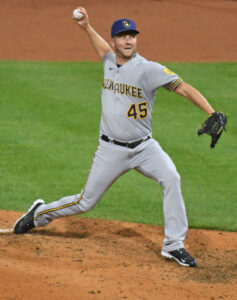
Boxberger, 34, spent the past two seasons with the Brewers, who paid a $750K buyout on the veteran reliever rather than exercise a $3MM club option. At a combined $3.55MM between that buyout and the new Cubs deal, Boxberger will come out ahead and wind up earning more than if the Brewers had simply picked up the option.
Boxberger’s career looked to have hit a snag following a tough stretch in 2018-19 when he posted a combined 4.73 ERA and walked 13.8% of his opponents between the D-backs and Royals. That led to a minor league deal with the Marlins for the 2020 season, and he’s righted the ship nicely in the three years since. In that time, Boxberger carries a combined 3.13 ERA in 146 2/3 innings, and he’s piled up 57 holds and five saves along the way.
For the Brewers, Boxberger made 70 and 71 appearances across the past two seasons, pitching in 64 and 64 2/3 innings. He doesn’t have an overpowering fastball (93.1 mph average) but nonetheless managed a 31.2% strikeout rate in 2021 — although that mark dipped to a 25.4% in 2022 (still better than the league average). Boxberger relied heavily on called strikes over missed bats, however, as his 21.2% called-strike rate was the third-highest among 152 qualified relievers, while his 9.5% swinging-strike rate ranked as the 14th-lowest.
Given those trends, it’s fair to wonder whether further regression in terms of strikeout rate could be on the horizon, but even if that’s the case, Boxberger has been strong in terms of limiting hard contact over the past several seasons — particularly in 2022. Last year’s 86.4 mph average exit velocity (90th percentile) and 33.9% hard-hit rate (81st percentile) both ranked quite well among MLB pitchers, per Statcast.
The Cubs will be Boxberger’s seventh big league franchise, and he’ll slot into what was otherwise a generally inexperienced bullpen. Prior to this deal right-hander Rowan Wick was the only reliever on the Cubs’ roster who has even three years of Major League service time. With that in mind, it wouldn’t be a surprise for the Cubs to further pursue veteran additions, though if this signing and the Cubs’ recent history tells us anything, such additions could fall into a similar price range.
Chicago’s deal with Boxberger continues the team’s recent trend of prioritizing low-cost, one-year bullpen pickups rather than committing significant money to the bullpen. In the past three years, the Cubs have eschewed more prominent bullpen targets and and signed Mychal Givens ($5MM), David Robertson ($3.5MM), Daniel Norris ($1.75MM), Chris Martin ($2.5MM), Ryan Tepera ($800K), Brandon Workman ($3MM), Trevor Williams ($2.5MM), Dan Winkler ($750K) and Jonathan Holder ($750K) to one-year contracts. To the team’s credit, they’ve had some rather notable successes (Robertson, Martin, Tepera in particular), and even the deals that have missed haven’t really stung, given the relatively minimal nature of the guarantees.
On the other side of the coin, relying on one-year deals of this nature creates an annual need to patch together a bullpen in piecemeal fashion while simultaneously shining a light on some of the team’s struggles in developing bullpen arms who can be affordably controlled for years at a time. Righty Scott Effross was a notable exception, and the Cubs can hardly be faulted for flipping five years of control over him to the Yankees in a deadline trade for well-regarded prospect Hayden Wesneski, but in an ideal setting the Cubs wouldn’t need to set out into free agency in search of a handful of one-year bullpen stopgaps each winter.
Identifying The Best Landing Spots For Dansby Swanson
Dansby Swanson is the last unsigned position player from MLBTR’s top ten free agents. He’ll be the final of the four top-tier shortstops to come off the board, and his destination will surely be influenced by how the market has already played out.
The Phillies and Giants entered the offseason widely regarded as potential landing spots for the top shortstops, particularly if San Francisco were to wind up missing on Aaron Judge. Few would’ve foreseen the Padres jumping into that mix for Xander Bogaerts, with San Diego taking one of the “big four” off the board and perhaps opening another landing spot for Swanson.
Let’s take a look at the most plausible remaining landing spots.
Best Fits
Cubs
The Cubs met with all four top shortstops at the outset of the offseason, but there’s no indication they’ve wanted to pay the enormous asking prices on any of the other three. Gordon Wittenmyer of NBC Sports Chicago wrote last night that discussions with Carlos Correa were limited to general outlines of possible financial parameters, with no formal offer being put on the table. Swanson figures to land the lowest deal of the group, perhaps making him a more palatable target for Chicago. Even if Swanson won’t push or exceed $300MM as Correa, Trea Turner and Bogaerts had, he’s likely to surpass $150MM. This would require the largest investment the Cubs have made since signing Jason Heyward seven years ago.
Is Chicago ownership willing to go to that level? They should have the payroll space to do so, as they’re around $157MM in projected 2023 commitments. That’s above where they’ve sat the last two seasons but nowhere near the $200MM+ franchise-record heights from a few years ago. The Cubs are coming off a second consecutive well below-average season, but they’ve continued to maintain they’re not in a rebuild. It’s hard to imagine acquisitions of Jameson Taillon and Cody Bellinger alone getting a 74-win team back to postseason contention, particularly since they also lost Willson Contreras to free agency. Even adding Swanson to the mix likely leaves them behind the Cardinals and Brewers, but he’s only entering his age-29 season and should still be productive in 2024 and beyond — when the Cubs have a more realistic path to competing. The presence of Nico Hoerner means the Cubs don’t need a shortstop. Second base looks as if it’ll be manned by Nick Madrigal or Christopher Morel, though, and adding Swanson and kicking Hoerner to the other side of the bag would solidify the middle infield.
Twins
The Twins missed on Correa, whose stay in Minneapolis lasted only one year. Their reported ten-year, $285MM bid came up well shy of the 13-year, $350MM contract he eventually received from the Giants. Minnesota finished 78-84 even with Correa, and while better health from their pitching staff should help in 2023, they’re behind the Guardians and White Sox in the AL Central as presently constructed. Pivoting to Swanson is a natural fallback, and Minnesota had already been in touch with his representatives even before officially losing out on Correa.
Minnesota has ample payroll room, as illustrated by their ultimately unsuccessful proposal to Correa. They’re not likely to present Swanson with anywhere near the same offer, but ownership and the front office could allocate much of their remaining space to plugging the shortstop vacancy. The Twins acquired Kyle Farmer from the Reds last month. He’s probably better suited for a utility role on a contender but presently projects as the starting shortstop. Former first overall pick Royce Lewis could factor in midseason. He won’t be ready for Opening Day after tearing the ACL in his right knee for the second time last June. It’s anyone’s guess how much of his athleticism and explosiveness he’ll retain after a second straight massive injury. Even if Lewis comes back strong yet again, he could bounce around the diamond in a multi-positional role if Minnesota were to add Swanson.
Braves
The Braves have publicly maintained they’d like to keep Swanson, who has been their everyday shortstop for the past six seasons. There’s certainly a fit on the roster. Atlanta looks as if they’d roll with Orlando Arcia and eventually top prospect Vaughn Grissom if Swanson walks. The Braves have had success trusting young players like Grissom in recent years, but he’s not without risk. Prospect evaluators have raised concerns about his defense, and he’s played all of 63 games above High-A. In a division with the Mets and Phillies, the Braves are facing sharp competition to put their best foot forward.
As has been the issue for months, the question about Atlanta is financial. They’re already at franchise-record heights for their player payroll, and their early offseason work has focused on the trade market. The Braves brought in Sean Murphy and Joe Jiménez, leveraging young talent but not taking on any notable salaries. Mark Bowman of MLB.com reported last week the Braves and Swanson had had minimal contact since the offseason began, writing their most recent offer would’ve come with an annual salary in the $16-17MM range over six or seven years. That looks extremely light, particularly given the strength of the rest of the shortstop market. The Braves could circle back, and Jon Heyman of the New York Post tweeted yesterday that Swanson — a Georgia native — would still like to return to Atlanta. At least as of last week, there was a huge gap to bridge in negotiations, though.
Viable But Longer Shots
Dodgers
The Dodgers have been loosely tied to Swanson this offseason after seemingly not showing significant interest in the other top shortstops. It’s been a relatively quiet offseason for L.A., perhaps in part due to a hope of resetting their luxury tax status by dipping below next year’s $233MM base threshold. That’s not clearly a mandate, but team officials have signaled a desire to integrate some of their highly-touted position player prospects into the mix. The Dodgers presently project for a $201MM competitive balance tax number, so they could squeeze Swanson in while staying below the line as things stand. As MLBTR’s Darragh McDonald wrote this week, however, they won’t have official clarity on their tax number until the Trevor Bauer suspension is litigated. Gavin Lux is on hand as a potential shortstop option, with Chris Taylor possibly sliding to second base in that scenario.
Red Sox
Like the Dodgers and Twins, the Red Sox lost their star shortstop in free agency. They’re now seeking up-the-middle help and a right-handed bat to balance the lineup. Swanson would knock off those goals in one swoop, and Boston has nearly $40MM in payroll room before hitting the base tax threshold. Like the Dodgers, they’ve been loosely tied to Swanson this offseason. It’d still come as a surprise if they pivot towards a full-fledged pursuit of Swanson after watching Bogaerts depart. They reportedly put forth a six-year, $162MM offer to their incumbent star shortstop. While they may have been willing to go a bit above that, they never seemed interested in matching the $280MM figure laid out by San Diego. That’s understandable, although Swanson’s contract could well beat what Boston had offered Bogaerts. Would the Red Sox make a stronger offer to Swanson than they had to a homegrown star whom they’d repeatedly called their top offseason priority?
Seemingly Unlikely
- Angels: The Halos have an uncertain middle infield mix and could look outside the organization to pair with David Fletcher, Luis Rengifo and perhaps Gio Urshela in that group. They’ve been fairly active early, taking on around $40MM in 2023 salary to add Urhsela, Hunter Renfroe, Tyler Anderson and Carlos Estévez. None of it has come with a longer commitment than the three years they guaranteed Anderson, though. Does owner Arte Moreno want to add a six-plus year deal to the books when he’s hoping to sell the franchise by Opening Day?
- Cardinals: The Cardinals were tied to Swanson earlier in the offseason. Derrick Goold of the St. Louis Post-Dispatch suggested that was likelier to happen only if the Cards landed the catcher they considered a top priority via trade. Instead, they signed the top free agent available, Contreras, for $87.5MM over five seasons. A franchise-record contract for Swanson on top of that feels uncharacteristic for an organization that usually does its hefty lifting via trade.
- Diamondbacks: The D-Backs could use a shortstop and were loosely linked to Bogaerts earlier in the offseason. They’ve occasionally come out of nowhere to make a major free agent investment (see: Zack Greinke), but they haven’t topped $100MM in Opening Day payroll in either of the last two years. Bringing back Swanson, whom the previous front office initially drafted with the first overall pick in 2015, would make a lot of sense from a roster perspective, but the money probably isn’t lining up.
- Giants: San Francisco could probably accommodate another notable signing, as they’re presently projected around $27MM below the base luxury tax threshold. They’d likely be able to fit Swanson in while avoiding tax payments, but it feels unlikely after they nabbed Correa. Brandon Crawford and Wilmer Flores give them other options at second and third base. First base, center field and the bullpen all look like greater areas of need.
- Mariners: At the start of the offseason, the Mariners expressed some willingness to pursue a shortstop with an eye towards kicking him over to second base in deference to J.P. Crawford. They subsequently traded for Kolten Wong instead, which looks as if it’ll rule them out.
- Mets: The Mets warrant cursory mention on every top free agent at this point given owner Steve Cohen’s aggressiveness. They reportedly at least considered a run at Correa with an eye towards moving him to third base. Swanson isn’t that caliber of hitter, though, and kicking him over to third while displacing Eduardo Escobar, Luis Guillorme and top prospect Brett Baty seems like a stretch.
- Orioles: The Orioles were reportedly poking around the shortstop market at the start of the offseason. They’ve not actually shown any signs they want to make a major investment this winter, though. With a number of top infield prospects at the MLB level or on the horizon (i.e. Gunnar Henderson, Jordan Westburg, Joey Ortiz), a Swanson pursuit doesn’t seem to in the cards.
- Padres: San Diego is in Mets territory of warranting a mention on every free agent given their boldness, but the infield is already overloaded after the Bogaerts deal.
- Yankees: For a second straight offseason, the Yankees haven’t seemed much interested in exploring the top of a loaded shortstop class. They’ve maintained faith in prospects Oswald Peraza and Anthony Volpe to eventually seize that mantle. If they’re going to make another big investment after re-signing Judge, it seems Carlos Rodón is the target.
Note: all salary projections courtesy of Roster Resource
Where does the MLBTR readership expect Swanson to wind up?
(poll link for app users)
Where Will Dansby Swanson Sign?
-
Cubs 34% (4,076)
-
Braves 24% (2,885)
-
Twins 15% (1,766)
-
Dodgers 11% (1,273)
-
Red Sox 9% (1,113)
-
Other (specify in comments) 7% (879)
Total votes: 11,992
Cubs Sign Cody Bellinger
December 14: The Cubs have officially announced the signing.
December 6: The Cubs are in agreement on a deal with outfielder Cody Bellinger. It will be a one-year deal with a $12.5MM salary and a $5MM buyout on a mutual option, bringing the guarantee to $17.5MM. Bellinger is represented by the Boras Corporation.
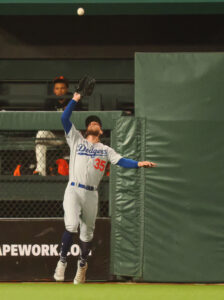
Bellinger, 27, has been one of the more interesting free agents this offseason, given that he has shown incredible upside in the past but has been in a dismal downturn in recent years. Over his first three seasons, 2017 to 2019, Bellinger hit 111 home runs and stole 39 bases. He walked in 12.4% of his plate appearances, leading to a batting line of .278/.368/.559 for a wRC+ of 140, indicating he was 40% better than league average during that time. That included a 2019 season where he hit 47 home runs, swiped 15 bags and produced a wRC+ of 161. He also provided excellent outfield defense, leading to a tally of 7.7 wins above replacement in the eyes of FanGraphs. He was awarded the National League Most Valuable Player award for that season.
Bellinger slid a bit from those heights in the shortened 2020 season. He hit .239/.333/.455, still above average with his wRC+ finishing at 112, but a significant drop-off from previous seasons. An ill-advised celebration in the postseason caused a shoulder injury that required surgery and he hasn’t seemed himself since. He hit just .165/.240/.302 in 2021 for a wRC+ of 47, then bounced back a bit in 2022 but still finished at .210/.265/.389, wRC+ of 83.
Despite those down years, Bellinger’s salary kept climbing for a few reasons. He reached arbitration for the first time going into 2020, on the heels of his MVP campaign, as a Super Two player. He quickly jumped up to $11.5MM in his first year of eligibility and then to $16.1MM for 2021 after having a diminished but still productive 2020. Since the arbitration system is designed to push salaries up, Bellinger jumped to $17MM for 2022 despite his poor performance in the prior season. MLBTR contributor Matt Swartz projected another jump to $18.1MM for 2023 but the Dodgers decided to cut bait and non-tendered Bellinger, sending him to free agency. With Bellinger now moving on to a new club, they will have to chart a new course in center field for 2023.
Despite the rough few years Bellinger has had, he still found robust interest as a free agent. At one point, Heyman reported that there were 11 teams at the table. That’s due to a couple of factors, one of them being that Bellinger was looking for a one-year deal so that he could potentially return to form and then go back to free agency in search of a better deal. That opened the door to many suitors who would normally be wary of a lengthy commitment but would happily take a short-term bet on a player with MVP upside. There’s also the fact that Bellinger provides a decent floor with his speed and excellent center field defense. Despite a subpar batting line in 2022, he still produced 1.7 fWAR by stealing 17 bases and producing six Outs Above Average in center field.
The Cubs were linked to Bellinger a few weeks ago and make plenty of sense as a landing spot for him. The rebuilding team had a rotating cast of characters playing center field for them this year, including Christopher Morel, Jason Heyward, Rafael Ortega, Nelson Velázquez and Michael Hermosillo. All of those players were subpar at the plate except for Morel, who is a natural infielder and produced poor defensive numbers on the grass. The Cubs have some intriguing outfield prospects that could fill this role in the long run, but Bellinger and Ian Happ are set to become free agents a year from now, meaning there’s plenty of long-term runway. Seiya Suzuki, who’s controlled through 2026, is the only outfielder penciled in for the long haul.
Financially, there’s no real impediment for the Cubs either. Bellinger’s contract pushes their commitments to just under $140MM for next year, according to Roster Resource. They had an Opening Day payroll of $143MM in 2022, per Cot’s Baseball Contracts, but have been over $203MM in recent seasons and should have plenty of space still to work with.
The Cubs have been rebuilding in recent years but could be aggressive this offseason in trying to return to contention in 2023. Whether they are successful or not, Bellinger could potentially be valuable to them. As mentioned, Bellinger can still be a useful ballplayer even if his bat doesn’t rebound to previous levels. If he and the team are both playing well, that’s a great outcome for all involved. If he’s playing well and the club is bad, his short-term deal means he should be able to be flipped at the deadline for prospects. As mentioned, even if Bellinger doesn’t truly bounce back, he can still be a useful player with his glovework and baserunning, meaning he could still be an interested trade chip regardless.
Jon Heyman of The New York Post was first with Bellinger going to the Cubs. Jeff Passan of ESPN first had the $17.5MM guarantee. Jorge Castillo of the Los Angeles Times first reported the structure of the $12.5MM salary with $5MM buyout on the mutual option.