
The Cardinals’ Blocked Prospects
The Cardinals haven’t had a losing record since 2007. Despite a recent playoff “drought” — a three-year stretch from 2016-18 that only qualifies as such by the St. Louis organization’s lofty standards — the Cards have run out a solid roster on an annual basis. Riding a blend of productive veterans, high-end prospects who emerge as key contributors and what seems like an out-of-nowhere success story or two every year (we see you, Tommy Edman), the Cardinals have established themselves among MLB’s more consistent franchises.
And while their strong track record in player development allows them to continually filter up quality young players to complement the veterans on the roster, it also inevitably leaves some talented players on the outside looking in. Because they’ve been able to develop so many quality youngsters, the Cards simply don’t have the space to play them all. (That’s a partial driver behind the outfield carousel they’ve experienced in recent years — though certainly not the only factor.)
Just look at some of the young players the Cardinals have traded away prior to 2019 while still managing to field competitive rosters:
- Carson Kelly, Luke Weaver — traded to D-backs in the Paul Goldschmidt deal
- Tommy Pham — traded to Rays in return for Genesis Cabrera, Justin Williams and Roel Ramirez
- Oscar Mercado — traded to the Indians in exchange for Conner Capel and Jhon Torres
- Luke Voit — traded to the Yankees in the deal that brought Giovanny Gallegos to St. Louis
- Sandy Alcantara, Zac Gallen — traded to the Marlins in the Marcell Ozuna deal
- Marco Gonzales — traded to the Mariners in return for Tyler O’Neill
- Randal Grichuk — traded to the Blue Jays in return for Dominic Leone and Conner Greene
That’s nine big league regulars/rotation pieces shipped out — in some cases, for disappointing returns — without causing the final on-field product to dip below .500. It’s a testament to the Cardinals’ amateur scouting and player development staffs that they’re so regularly deep with talent that they’re able to ship it off for veterans, potential areas of need or larger quantities of further-off talent. Certainly, not all of those swaps have worked out — Mercado or Pham would look nice in the outfield right now — but the Cardinals have rarely come up completely empty-handed on a deal.
Trades of this nature have become the norm for the Cards, and it’s likely that will continue to be the case. With Yadier Molina reportedly talking extension prior to the shutdown and Paul Goldschmidt signed five more years, for instance, the Cards look to have a pair of roadblocks to some more young talent. The outfield, too, has more names than playing time available. It seems likely that we’ll see more young players change hands as a result in the next calendar year, so let’s run through some possibilities.
Catcher
If a Molina extension does indeed come together, that doesn’t leave much of a path to regular playing time for 25-year-old Andrew Knizner — a fairly well-regarded backstop whose bat looks close to big league ready. In 83 games and 341 plate appearances in Triple-A, Knizner is a .283/.362/.453 hitter with an 8.2 percent walk rate and just a 13.1 percent strikeout rate. Scouting reports on Knizner question his receiving and framing skills, but he notched a 42 percent caught-stealing rate with Triple-A Memphis in 2019.
If Knizner does indeed change hands following a Molina extension — the Cards brought Matt Wieters back to serve as his backup again — then perhaps 19-year-old Ivan Herrera will emerge as the true heir-apparent to Molina and his Hall of Fame legacy.
First Base
Luken Baker isn’t an elite prospect — few first-base-only prospects are considered as such — but FanGraphs’ Eric Longenhagen put a 70 grade on his raw power in this year’s scouting report on the hulking 6’4″, 265-pound slugger in the making. Baker hasn’t tapped into that power just yet, though he spent the 2019 season in a pitcher-friendly Florida State League (Class-A Advanced). He’s managed his strikeouts to this point (21.6 percent) and also walked in 10.5 percent of his plate appearances. With Goldschmidt entrenched at first base through 2024, there’s no hope of Baker emerging as a regular in the near future, which seemingly puts him on a similar track to Voit.
Elsewhere on the roster, 27-year-old Rangel Ravelo (28 later this month) is out of minor league options and limited to a bench role. A career .293/.369/.452 hitter in 1652 Triple-A plate appearances who also slashed .310/.385/.473 in 649 Double-A plate appearances, Ravelo has done enough in the minors to suggest that he could hit in the big leagues. He’s played a little corner outfield, so perhaps the Cards view him as a replacement for the recently traded Jose Martinez. However, it’s possible that another club could view him as a potential late-blooming regular at first base.
The Outfield
The Dexter Fowler signing clearly hasn’t panned out as hoped, but the switch-hitting veteran’s five-year, $82.5MM deal runs through the 2021 season. Had the 2019 campaign been as much of a struggle as his 2018 season, he’d perhaps be a release candidate, but Fowler’s bat bounced back to roughly league-average levels last year (103 wRC+, 98 OPS+), and his contract should grant him a decent leash.
Harrison Bader was one of the game’s best defenders in center (14 Defensive Runs Saved, 12.9 Ultimate Zone Rating, 13 Outs Above Average), so he’s probably locked into center field despite a rough sophomore showing at the dish (.205/.314/.366).
Left field was to be determined in camp, with the likes of Dylan Carlson, Tyler O’Neill, Lane Thomas, Justin Williams and waiver claim Austin Dean vying for playing time. Carlson ranks among baseball’s elite overall prospects and should be installed as a regular at some point in 2020 (assuming a season is played). Even in the unlikely event that the club quickly moves on from Fowler, there’d be O’Neill, Thomas and Williams left to compete for that theoretical spot.
O’Neill was a ballyhooed prospect himself when acquired from Seattle, and though strikeouts have been an issue, he’s a passable corner defender with light-tower power and a history of drawing walks in the upper minors. Thomas can play a solid center field and owns a career .270/.342/.472 slash through 444 plate appearances in Triple-A. Williams is a corner bat who draws good marks for his raw power. He’s yet to show off that power in the minors, but FanGraphs points to his high-end exit velocity as a source of optimism if he can add more lift to his swing.
—
Most organizations would love to have the “more talent than playing time” issue on the big league roster — and you certainly won’t head president of baseball ops John Mozeliak or GM Mike Girsch complain about the reality. But that duo and the rest of the Cards’ front office figure to continue to find creative ways to deal with those surpluses, and it shouldn’t come as a big surprise if some of the above names finally get their chance at playing time in another organization,
Don’t Give Up On The Blue Jays’ Other Top Prospect After A Rough Rookie Year
With Bo Bichette, Vladimir Guerrero Jr. and Cavan Biggio bursting onto the scene in Toronto and right-hander Nate Pearson looming in Triple-A as a potential top-of-the-rotation arm, the Blue Jays have the makings of a strong young core. But the debuts of those three bats and the hype surrounding Pearson have overshadowed the arrival of another of Toronto’s top prospects: catcher Danny Jansen.
Jansen, 25 next week, didn’t exactly help his own cause with a tepid showing at the plate in his rookie season. The former 16th-round pick posted an ugly .207/.279/.360 batting line in 384 plate appearances — not exactly a scintillating followup to the .247/.347/.432 slash he compiled through 95 plate appearances as a late-season call-up in 2018. It’s understandable that such a forgettable performance would lead him to be overlooked, but there’s still reason to believe that Jansen can be an important piece of the Jays’ next contending club.
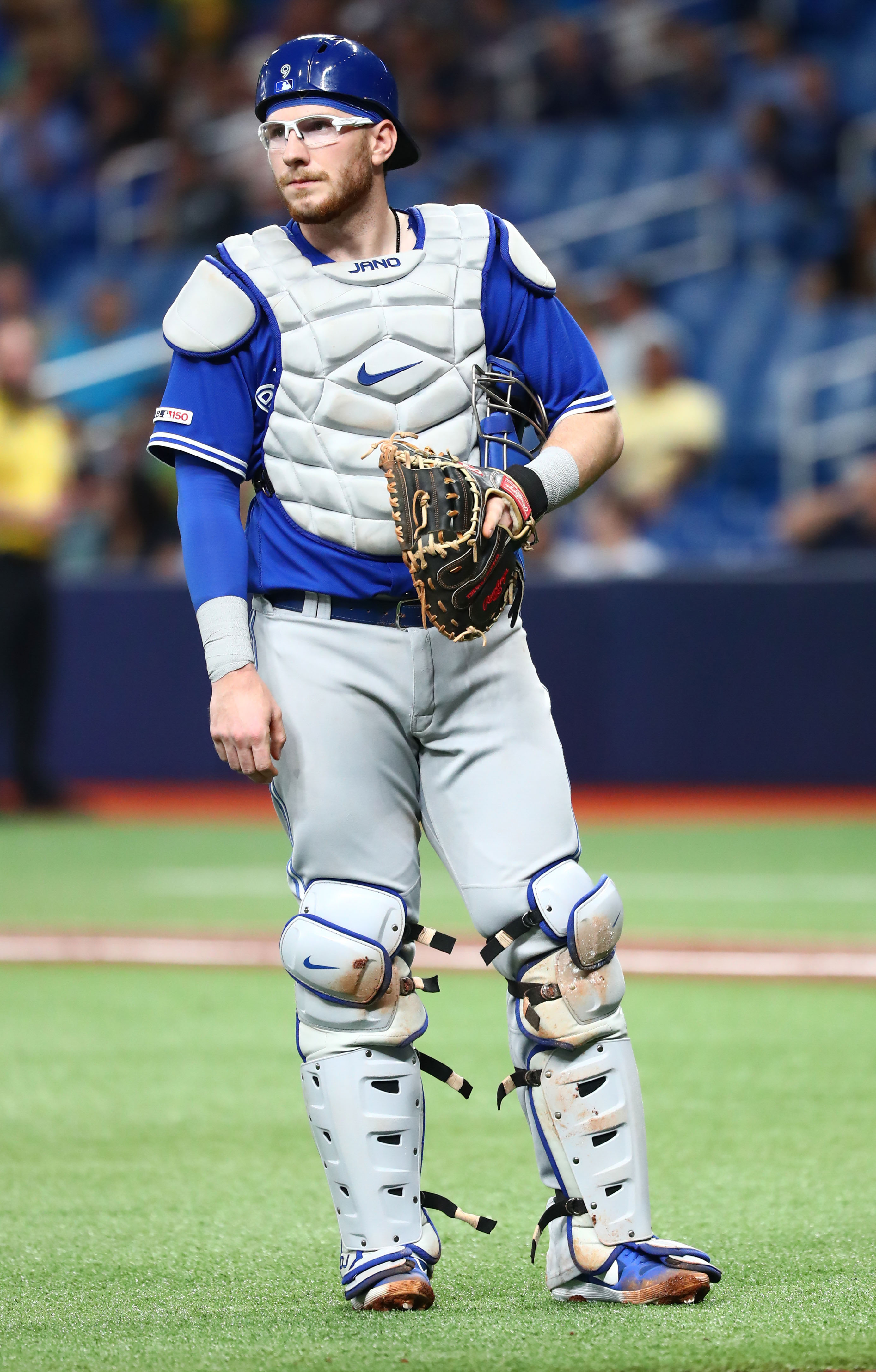
Firstly, it’s worth noting that despite his middling draft status, Jansen emerged as a prospect of considerable note. Prior to the 2019 campaign, Jansen ranked comfortably inside the game’s top 100 prospects according to each of Baseball America (No. 42), FanGraphs (No. 47), MLB.com (No. 65) and Baseball Prospectus (No. 89). He ranked just outside the top 100 (No. 107) on the ESPN’ rankings. During his final full season in Triple-A, Jansen hit .275/.390/.473 with a dozen homers and a 12.2 percent walk rate that only marginally trailed his 13.6 percent strikeout rate. There’s enough pedigree here to suggest improvement based on that alone.
But Jansen’s work at the plate likely wasn’t as bad as it would appear upon first glance. While he doesn’t run well enough to ever be likely to post a particularly high average on balls in play, Jansen’s .230 mark in 2019 still seems ripe for some positive regression. He’d only posted a mark lower than that once in his career — back in 2015 in a 46-game sample in Class-A. During Jansen’s final two seasons in the upper minors, his BABIP hovered around .300.
According to Statcast, Jansen made hard contact (95 mph or better in terms of exit velocity) at a 40 percent clip that, while not elite, was above the league average. Of the 406 hitters who put at least 100 balls into play last season, Jansen ranked 148th. His bottom-line results at the plate (.275 wOBA) were along the lines of what one might expect from a defensive specialist like Austin Hedges (.266 expected wOBA) or Jarrod Dyson (.273 xwOBA), but Jansen’s .314 xwOBA was markedly higher. The 39-point gap between his actual wOBA and expected wOBA was the fourth-largest of any player who underperformed his xwOBA in 2019, trailing only Marcell Ozuna, Justin Smoak and C.J. Cron.
Put another way: based on the quality of his contact and his K/BB tendencies, Statcast felt that Jansen should’ve been within striking distance of league average at the plate. Instead, he was one of the game’s least-productive hitters.
But even that generalization shrouds some positives that Jansen displayed. While he struggled through miserable months in April and May to begin the season, Jansen heated up with the weather and found himself as one of the game’s more productive catchers from June through August. In that stretch, he notched a respectable .243/.310/.459 batting line in 205 plate appearances — good for a 101 wRC+. League-average production out of a catcher is rare — catchers posted a collective 85 wRC+ in 2019 — so Jansen demonstrating that type of ability over a three-month stretch is heartening. And if he can drop his 20.9 percent strikeout rate such that it more closely mirrors his excellent marks in the upper minors, Jansen’s profile becomes all the more interesting.
Defensively, Jansen shined in 2019, which is a bit odd given that most scouting reports on him cast him as a bat-first catcher and a mediocre defender. His 2.05 second average pop time was well below average — 58th of 78 qualified catchers — but Jansen still threw out 31 percent of those who attempted to run on him. In terms of framing, Jansen ranked among the game’s best according to each of Statcast, FanGraphs and Baseball Prospectus. He was also strong in terms of blocking pitches in the dirt per Baseball Prospectus, which ranked Jansen seventh among all MLB catchers in terms of adjusted fielding runs above average.
Jansen might not possess the superstar upside of current teammates like Bichette and Guerrero or his soon-to-be battery-mate Pearson. But he clearly has the makings of an average or better hitter moving forward, and the 2019 season suggests that his defense might be far more valuable than many had hoped of him as a prospect. An above-average defensive catcher with a competent (or better) bat is the type of talent clubs spend years trying to get their hands on — there’s a reason Jansen drew trade interest early in the offseason — and Jansen could be just that for an increasingly interesting Blue Jays club. It’s easy for Jansen to get lost in the shuffle when looking at the Jays’ young core, but a breakout when play resumes shouldn’t surprise anyone.
Rockies Provide Timetable On Peter Lambert Injury
Rockies right-hander Peter Lambert, diagnosed with a forearm strain a month ago, is progressing through a rehab program but is still three to four weeks from being cleared to throw, pitching coach Steve Foster tells reporters (Twitter link via Kyle Newman of the Denver Post).
At the time of Lambert’s injury, Colorado declined to put a timetable on his recovery, with reports indicating that he was expected to miss “significant” time. Today’s news from Foster doesn’t provide an expected return to game readiness, but the fact that he’s close to a month from even beginning a throwing program suggests that he’s multiple months away from that point. Any early throwing Lambert does would of course be limited, and he’d need time to ramp up to long toss, throwing off a mound, facing live hitters, etc.
Lambert, 23 next week, is hardly a household name but is a young hurler of some note within the organization’s ranks. He was the club’s second-round pick (44th overall) back in 2015 and steadily rose through the minor league system, ultimately making his big league debut in 2019. He started 19 games for the Rox with woeful results (7.25 ERA, 5.97 FIP), but this time last year, Lambert was considered one of the organization’s best overall prospects. On a national scale, Eric Longenhagen and Kiley McDaniel ranked him as the game’s No. 120 overall prospect heading into the season. At that point, he was fresh off a 2018 season that saw him toss 148 innings of 3.28 ERA ball with a 106-to-27 K/BB ratio and a grounder rate just shy of 50 percent between Double-A and Triple-A.
Even a healthy Lambert wouldn’t have been a lock to begin the year in Colorado’s rotation. Jon Gray, German Marquez and Kyle Freeland seemed like locks, while out-of-options hurlers Antonio Senzatela and Jeff Hoffman were slated to vie for rotation spots along with Lambert, Chi Chi Gonzalez and others (including non-roster invitee Ubaldo Jimenez). The delayed start to the year could conceivably give Lambert enough time to reenter that mix, depending on when (or if) a second training camp is able to come together.
Wilmer’s Tears: The Butterfly Effects Of A Collapsed Trade
Wilmer Flores cried. It was the eighth inning, and the Mets were trailing the Padres by five runs. The non-waiver trade deadline was 36 hours away, and the only organization he’d ever known had agreed to trade him and teammate Zack Wheeler to the Brewers in exchange for two-time All-Star Carlos Gomez. The 23-year-old Flores learned of the reported agreement between innings … but he was left in the game to hit in the seventh inning … and to return to the field to play second base in the top half of the eighth.
In a whirlwind span of 15 to 30 minutes, Flores went from being traded to staying put among friends and teammates; the Mets had backed out of the reportedly agreed-upon trade once talks progressed to medical reviews. Tom Haudricourt of the Milwaukee Journal-Sentinel reported that an issue with Gomez’s hip and perhaps some hesitance over Wheeler, who was on the mend from Tommy John surgery at the time, had torpedoed the deal.
Two nights later, with the deadline behind him, Flores pumped his fist as he rounded first base and thumped the Mets logo across his chest as he approached home plate after hitting one of the most emotional walk-off home runs in recent memory. It was the last standing ovation in a day that saw Mets fans rise to their feet to embrace Flores on multiple other occasions. Flores went on to have a fine Mets career, calling Citi Field home up through the 2018 season. He’ll always hold a special place in the hearts of most Mets fans.
The memory of that unusual and emotional scene, however, is only the surface of a much more layered “what if” scenario. If the Mets had gone through with that trade, the ripple effects would’ve radically altered the future of several teams and — in a more roundabout way — perhaps the very fabric of the game.
How so? Let’s examine:
The Mets
Imagine a world where the Mets weren’t issuing statements to the press about their highest-paid position player being injured in a freak wild boar accident. If the Mets had gone through with the Brewers trade, it’s quite possible that Yoenis Cespedes never would’ve played a game for them. The deal bringing Cespedes to Queens was a buzzer-beater just seconds before the deadline — not 48 hours after Flores’ outpouring forever endeared him to the Mets’ fanbase.
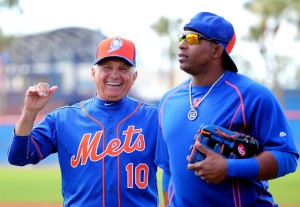
Cespedes was an absolute juggernaut for the Amazins down the stretch, fueling their torrid finish to the season with an outstanding .287/.337/.604 with 17 home runs in just 57 regular-season games. Mets fans clamored for the then-Sandy-Alderson-led front office to re-sign the slugger. While he initially looked to be outside their price range, Cespedes didn’t see his market develop the way he’d hoped and ultimately opted for a compromise deal that promised him $75MM over three years but came with opt-outs after years one and two. Following a terrific 2016 season, Cespedes indeed opted out, and the two sides brokered a more concrete four-year, $110MM pact covering the 2017-20 seasons.
But what if the club had acquired Gomez on July 30? Curtis Granderson was productive in right field. Juan Lagares was a world-beating defensive center fielder even if his bat was characteristically flimsy. Michael Cuddyer was still on the roster, and a top prospect named Michael Conforto had made his MLB debut just days earlier, on July 24. With Gomez added to that bunch, would the Mets have gone through with Cespedes trade? You can argue there was still room — put Gomez in center, Cespedes in left and use Lagares off the bench — but the urgency obviously would’ve been lessened and the Mets surely would’ve been more protective of their prospect assets. And without that magical stretch run erased from history and Gomez signed through 2016, the Mets’ motivation to sign Cespedes would’ve likely been wiped out.
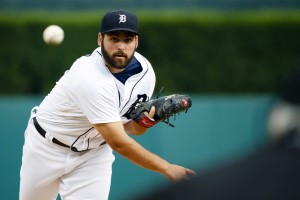
Furthermore, with Cespedes then sure to have been traded elsewhere, might the pitcher they traded to Detroit have instead won a Rookie of the Year Award in New York? It’s impossible to say, but dropping Michael Fulmer into the mix of quality Mets arms in place of Wheeler would’ve maintained their enviable stash of arms for a longer time. Fulmer, Jacob deGrom, Matt Harvey (prior to his regression), Noah Syndergaard and Steven Matz is clearly a talented enough group on which to build a contending staff. And the “what ifs” only continue if you stop to wonder what precise course Fulmer’s career would’ve taken a different setting.
The Tigers
Speaking of Fulmer, well, Tigers fans wouldn’t be left to wonder whether the club should’ve traded him prior to all of his injury troubles. Fulmer had a masterful rookie season but has since undergone an ulnar nerve transposition procedure, Tommy John surgery and knee surgery. They could’ve pulled the trigger on a trade for him early in his big league tenure, but doing so would’ve meant trading four-plus years of control over the right-hander. Tigers fans can voice frustration with the benefit of hindsight, but trades of quality, established starters with that much club control remaining are of the utmost rarity.
It’s likely that Cespedes would’ve been moved elsewhere. The Astros, Orioles, Giants and Pirates were among the teams on the hunt for outfield upgrades that trade deadline, and then-Detroit GM Dave Dombrowski was committed to a rare sell-off, evidenced not only by the Cespedes swap but the David Price blockbuster with the Blue Jays. If you want to get truly hypothetical, though, let’s say no Cespedes trade materializes. …Would late owner Mike Ilitch still have moved on from Dombrowski shortly after the trade deadline? Would Dombrowski ever have ended up in Boston?
The Brewers
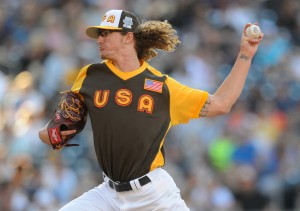
Sayonara, Josh Hader. In this hypothetical world, you were never a Brewer, because Gomez was traded for Wheeler and Flores. Corey Knebel and Jeremy Jeffress surely could’ve formed a potent back-of-the-pen duo while their peaks overlapped, but the three-headed monster that propelled the team to the 2018 NLCS would never have come to be. Hader would’ve been dominating in Houston or elsewhere, depending on whether the Astros traded him. Could a Wheeler-fronted rotation have made up for his absence?
The ripple effect doesn’t stop there. Also coming to Milwaukee in the Astros swap that did happen were Brett Phillips, Domingo Santana and Adrian Houser. Phillips was flipped for Mike Moustakas in 2018, so without his presence in Milwaukee, who knows whether Moose would’ve been acquired via trade or subsequently re-signed in the winter? Santana’s 30-dinger season in 2017 doesn’t happen, nor do the Brewers eventually trade him for Ben Gamel. Houser, meanwhile, doesn’t show promise of a late-blooming breakout with the ’19 Brewers, for whom he turned in 111 1/3 innings of 3.72 ERA/3.88 FIP ball with 9.5 K/9, 3.0 BB/9, 53.4% grounder rate. The Brewers’ 2020 rotation is short another arm in that instance, as Wheeler still would’ve been a free agent, barring an extension.
Of course, the Brew Crew would’ve enjoyed Wheeler’s renaissance since he reemerged from arm troubles. And that brings us to…
The Astros
The craziest part of this entire butterfly effect isn’t that Josh Hader might’ve been closing out games for Houston. In fact, it doesn’t involve Hader or Gomez at all. It’s that the other player traded to the Astros alongside Gomez in exchange for Hader, Phillips, Santana and Houser was none other than right-hander Mike Fiers. Fiers joined the Houston rotation, promptly threw a no-hitter in his fourth outing, made 67 starts for the ‘Stros over the next two and a half seasons … and ultimately proved to be the whistleblower who outed a sign-stealing scandal that led to the firing of manager A.J. Hinch and president of baseball operations Jeff Luhnow.
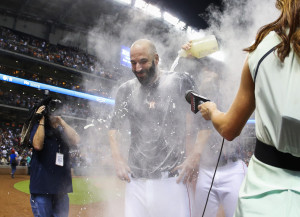
Perhaps the Astros were enamored of Fiers enough that they’d have found a way to acquire him from Milwaukee in a different swap. But it’s eminently plausible that had the Wheeler/Flores/Gomez trade between Milwaukee and New York gone through, we’d still have no firm knowledge of the Astros’ nefarious scheme. True, we might’ve had some inkling of wrongdoing; Jeff Passan, after all, reported for Yahoo back in 2017 that two players told him they believed Houston had banged on a trash can to convey signs. Athletics GM David Forst has acknowledged asking the league to investigate the Astros for improper use of technology. But without the smoking gun that was Fiers’ testimony, the league was either unable or unmotivated to bring the scandal to public light.
Peeling the onion back further — imagine if Hader had become every bit as dominant in Houston as he did in Milwaukee. Would the Astros have ever acquired Roberto Osuna to shut down games? Would since-fired assistant GM Brandon Taubman’s belligerent locker room taunting ever have led to his dismissal? Would the Astros have libeled Sports Illustrated’s Stephanie Apstein, calling her report of Taubman’s actions “misleading and completely irresponsible” before accusing her of attempting to “fabricate a story where one does not exist”?
To be clear: the Astros’ scandals reflect the indefensible choices of many individuals associated with the organization, for which they’re fully responsible collectively and individually. But the counter-factual scenarios do at least suggest that these matters might have occurred and/or been brought to light in quite different ways.
The Red Sox
Depending on the previous Dombrowski question I raised, who knows what state the front office would be in? We do know, definitively, that without the Astros’ sign-stealing scandal coming to light last fall, Alex Cora would not have been fired as the team’s manager. Ron Roenicke would still be his bench coach.
All that brings us back to…
The Mets
Carlos Beltran‘s debut as the Mets’ manager would’ve been delayed by the COVID-19 pandemic, but it wouldn’t have been outright wiped out of existence by virtue of his own involvement in the Astros scandal. Luis Rojas would be a quality control coach and not a big league manager.
Whether the Mets would’ve been better off in the long run with Gomez and Fulmer in the organization as opposed to Wheeler, Flores and Cespedes is debatable. Cespedes was again their best hitter in 2016 when the club secured a Wild Card postseason berth, but they were unable to advance beyond that initial round, falling to the Giants. The subsequent four-year deal has been a disaster. Cespedes has been extremely productive when on the field, but he of course hasn’t been on the field much. He’s played 119 games through the first three seasons of that deal and agreed to have his contract restructured this winter after the surreal wild boar injury.
Wheeler didn’t pitch again until 2017 and wasn’t very good that year. But his 2018-19 seasons were strong, as he posted a combined 3.65 ERA in 377 1/3 innings with a strikeout per frame and a total of roughly eight wins above replacement. The Mets didn’t make the postseason either year, though, and they’re left with a draft pick to show for their decision to hang onto him.
Flores hit .272/.317/.409 after the trade-that-wasn’t, taking another 1275 plate appearances as a Met before signing with the D-backs in free agency in the 2018-19 offseason and then inking a two-year deal with the Giant this past winter.
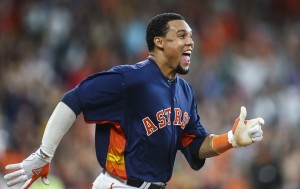
Adding Gomez in 2015 probably wouldn’t have cost the Mets the division — they won the NL East by seven games — but it’d have made things much closer. He’d already seen his 2013-14 All-Star form begin to fade, and his production worsened following his eventual trade to Houston. In 2016, Gomez played so poorly with the Astros that they simply released him in mid-August. A late surge with the Rangers served to remind that Gomez was still talented, so perhaps had he never gone to Houston in the first place, he could’ve remained a solid bat — but he was never going to hit at Cespedes’ level.
Fulmer, meanwhile, would still be controlled by the Mets through at least 2022 — if not 2023 (depending on when they promoted him). Virtually every prominent Mets starter has had Tommy John surgery in recent years (all of deGrom, Harvey, Wheeler, Matz and now Syndergaard), and it’s likely that Fulmer would’ve still eventually required his own surgery. But the other injuries that have dogged him and the timing of the procedure can’t be known. Marcus Stroman, acquired last July as an advance means of “replacing” Wheeler once it was clear an extension wasn’t happening, might not be a Met. Anthony Kay, traded in that deal, could be projected in the 2020 rotation.
The exact manner in which rosters would’ve been impacted can be speculated upon ad nauseam, but will never be known to any real degree of confidence. It doesn’t seem like the Mets cost themselves any playoff opportunities, but the effects of that near-trade were extremely broad reaching — and it seems certain that without Fiers being traded to Houston, we’d still be lauding the 2017 Astros as the most dominant team in recent history (at least until the shocking news emerged in some other manner).
Photos courtesy of USA Today Sports Images.
Trade History: Reds’ Dick Williams
Dick Williams has spent more than 15 years in the Reds organization, working in a variety of roles on both the business and baseball ops side of the club prior to being named assistant GM in 2014. A year later, Williams was promoted to general manager as former GM Walt Jocketty ascended to president of baseball operations. At the time of the promotions, though, Jocketty made clear that his days as the club’s top decision-maker were numbered, plainly stating that the much younger Williams was being “groomed” for that post.
[Related: Dick Williams discusses his path to a front office in MLBTR’s College Series]
A year later, in December 2016, that became official when Jocketty moved into an advisory role and formally handed baseball operations autonomy over to Williams, who was named president of baseball operations. Let’s take a look at his track record since that promotion…
2016-17 Offseason
- Acquired RHPs Luis Castillo and Austin Brice and OF Zeek White from the Marlins in exchange for RHP Dan Straily
- Acquired LHP Andrew McKirahan and RHP Carlos Portuondo from the Braves in exchange for 2B Brandon Phillips (Reds paid $13MM of Phillips’ $14MM salary)
2017 Season
- Acquired INF/OF Darnell Sweeney from the Dodgers in exchange for cash
- Acquired 1B Nick Longhi from the Red Sox in exchange for $2.75MM of international bonus pool space
- Acquired OF Scott Van Slyke and C Hendrik Clementina from the Dodgers in exchange for LHP Tony Cingrani
2017-18 Offseason
- Acquired RHP Miguel Medrano from the Rangers in exchange for $350K of international bonus pool space
2018 Season
- Acquired RHP Zach Neal and 1B Ibandel Isabel from the Dodgers in exchange for RHP Ariel Hernandez
- Acquired RHP Matt Harvey from the Mets in exchange for C Devin Mesoraco (Reds paid remainder of Mesoraco’s $13.125MM salary; Mets paid remainder of Harvey’s $5.6MM)
- Acquired C Curt Casali from the Rays in exchange for cash
- Acquired RHP Tommy Bergjans from the Phillies in exchange for cash
- Acquired OF Lorenzo Cedrola from the Red Sox in exchange for $1.5MM of international bonus pool space
- Acquired RHPs Aneurys Zabala and James Marinan from the Dodgers in exchange for RHPs Dylan Floro and Zach Neal and international bonus pool space
- Acquired RHPs Lucas Sims and Matt Wisler and OF Preston Tucker from the Braves in exchange for Adam Duvall
2018-19 Offseason
- Acquired RHP Ryan Lillie from the Marlins in exchange for $750K of international bonus pool space
- Acquired RHP Tanner Roark from the Nationals in exchange for RHP Tanner Rainey
- Acquired LHP Alex Wood, OFs Matt Kemp and Yasiel Puig, INF/OF Kyle Farmer and $7MM from the Dodgers in exchange for RHP Homer Bailey, SS Jeter Downs and RHP Josiah Gray
- Acquired RHP Sonny Gray and LHP Reiver Sanmartin from the Yankees in exchange for 2B Shed Long (immediately flipped to Mariners) and Competitive Balance Draft pick (Round A)
- Acquired RHP Jordan Johnson and cash from the Giants in exchange for 1B/3B/OF Connor Joe
2019 Season
- Acquired RHP Diomar Lopez from the Padres in exchange for RHP Matt Wisler
- Acquired INF/OF Rob Refsnyder from the D-backs in exchange for cash
- Acquired RHP Tristan Archer from the Brewers in exchange for cash
- Acquired LHP Tyler Jay from the Twins in exchange for cash
- Acquired RHP Justin Grimm from the Dodgers in exchange for cash
- Acquired RHP Trevor Bauer from the Indians in a three-team deal that sent OF Taylor Trammell to the Padres; Reds also sent OF Yasiel Puig and LHP Scott Moss to the Indians
2019-20 Offseason
- Acquired RHP Jose De Leon from the Rays in exchange for cash
- Acquired cash from the Rays in exchange for OF Brian O’Grady
- Acquired RHP Justin Shafer from the Blue Jays in exchange for cash
—
How do MLBTR readers feel about the work of Williams? (Link to poll for Trade Rumors mobile app users.)
Grade Dick Williams' trades with the Reds:
-
B 49% (1,858)
-
C 30% (1,140)
-
A 12% (470)
-
D 7% (286)
-
F 2% (70)
Total votes: 3,824
Curious to look back on additional GMs and their trade histories? We’ve already polled on Diamondbacks GM Mike Hazen, recently fired Astros president Jeff Luhnow, Brewers president of baseball ops David Stearns, Angels GM Billy Eppler, Rockies GM Jeff Bridich, Tigers GM Al Avila, Braves GM Alex Anthopoulos, Blue Jays GM Ross Atkins, Mariners GM Jerry Dipoto, Phillies GM Matt Klentak, Padres GM A.J. Preller, Dodgers president of baseball operations Andrew Friedman, Rays GM Erik Neander, ex-Red Sox front office leader Dave Dombrowski and Mets GM Brodie Van Wagenen.
Shohei Ohtani Close To Throwing Off Mound
Angels right-hander/slugger Shohei Ohtani has progressed to long tossing from a distance of 180 feet and is following those sessions up with higher-intensity throws from 60 feet, pitching coach Mickey Callaway told reporters on Tuesday (Twitter links via Bill Plunkett of the Orange County Register and Rhett Bollinger of MLB.com). The next step for the righty would be to throw off a mound, and while Callaway didn’t put a specific timetable on when that might happen, he noted that it should be “soon.”
Ohtani, 25, hasn’t pitched in a game since Sept. 2, 2018, due to Tommy John surgery that wiped out his entire 2019 campaign — at least on the mound. He, of course, was able to return as the team’s primary designated hitter for much of the season and turned in a generally excellent year, hitting .286/.343/.505 with 18 home runs and a dozen steals in 425 plate appearances.
To this point, it seems as though things are generally on track with expectations put forth just prior to camp. At the time, it was believed that the Angels had been targeting a mid-May return to the big league rotation for the two-way star, and a move to mound sessions in the near future seemingly keeps him on that timeline. With fellow righty Griffin Canning resuming a throwing program after a UCL scare of his own, the Angels are trending in the direction of a full-strength rotation featuring Ohtani, Canning, Andrew Heaney, Julio Teheran and Dylan Bundy to begin the year.
Ohtani has still started just 10 games in his MLB career, although the 51 2/3 innings he tossed were quite promising. During that time, he logged a 3.31 ERA with 11.0 K/9, 3.8 BB/9, 1.05 HR/9 and a 39.2 percent ground-ball rate. Ohtani also turned in a stellar 15.2 percent swinging-strike rate that trailed only Max Scherzer, Chris Sale and Patrick Corbin among starters with at least 50 innings pitched.
MLBTR Chat Transcript: Next Year’s Free Agents
Click here to read a transcript of this week’s chat with MLBTR’s Steve Adams.
AL West Notes: Astros, Angels, Rangers
Let’s check in on the latest notes from around the American League West …
- With or without baseball in 2020, the Astros will soon be faced with a gaping void in the outfield, Chandler Rome of the Houston Chronicle observes. Each of George Springer, Michael Brantley and Josh Reddick are slated to hit the open market at season’s end. And while top prospect Kyle Tucker can hopefully step up as an everyday option in their absence, the organization has little else waiting in the wings. Astros steal Yordan Alvarez is regarded as a part-time corner outfielder at best, while fleet-footed Myles Straw has looked like more of a reserve type than a regular. That trio’s potential departure does open up some payroll space, but the ‘Stros already have more than $134MM in luxury tax obligations — and that’s before arbitration raises to Carlos Correa, Roberto Osuna, Lance McCullers Jr., Chris Devenski, Aledmys Diaz and Joe Biagini.
- The Angels weren’t able to land any of their top rotation targets in free agency this winter, but general manager Billy Eppler and his staff hope that an emphasis on improved receiving from their catchers will contribute to better results on the pitching staff, writes Jeff Fletcher of the Orange County Register. Max Stassi and Jason Castro are considered to be two of the game’s best in terms of pitch framing, and the pair spoke about the fact that it’s not necessarily a coincidence that they’re considered as such. Both were with the Astros in 2013 when Astros analyst Mike Fast presented on the importance of the skill to Houston catchers during Spring Training. Both backstops provide their thoughts on the skill as a whole — Castro on why he feels “framing” is a misnomer and Stassi giving his thoughts on a potential automated strike zone. Framing has become an increased point of emphasis for the Angels in recent years, per Eppler: “…[I]f you have a catcher who you know can present a ball well and receive a ball well, that gives confidence to your pitchers and could potentially move a count from 2-1 to 1-2.”
- Rangers president of baseball operations Jon Daniels updated reporters on his organization, as Jeff Wilson of the Fort Worth Star-Telegram relays. Of note, three members of the organization – all minor leaguers – have shown coronavirus symptoms. Fortunately, those players seem to be recovering well. Meanwhile, after suffering a fractured jaw just under a month ago, outfielder Willie Calhoun continues to progress. Calhoun “has no limitations” at this point, Wilson writes. Assuming there is a season, Calhoun just might break out in 2020 after a promising showing last year.
Al Kaline Passes Away
Tigers legend Al Kaline passed away Monday at his home at the age of 85, a family friend confirmed to John Lowe of the Detroit Free Press. An 18-time All-Star, a 10-time Gold Glover in the outfield, the 1955 AL batting champ and a key contributor on Detroit’s 1968 World Series-winning roster, Kaline is among the very best to ever play the game and joins Ty Cobb among the top players to ever suit up for the Tigers organization.
The Baltimore native posted a career .297/.376/.480 batting line with 3007 hits, 399 home runs, 498 doubles, 75 triples, 137 steals, 1622 runs scored and 1582 RBIs, establishing himself as the face of a generation of Tigers baseball from his debut in 1953 to the time he retired in 1974. He is the Tigers’ all-time leader in games played, home runs and walks, and he trails only franchise greats and fellow Cooperstown inductees like Cobb, Hank Greenberg and Charlie Gehringer in virtually all key offensive categories. His No. 6 was retired by the club in 1980, making him the first recipient of that honor.
Kaline’s importance to the organization reaches immeasurably beyond his on-field accolades, however. Even after he retired as a player, the next generation of Tigers fans who didn’t have the good fortune to watch him play instead grew up listening to his insights, anecdotes and experience as one of the voices of Tigers baseball. He also served as a special assistant in the club’s front office and regularly appeared in Spring Training to work with upcoming waves of young Tiger talent.
Kaline will be remembered both as a one of the all-time greats and a revered gentleman off the field. He was named the 1970 Fred Hutchison Award winner, recognizing “character and competitive spirit” and also named the winner of the 1973 Roberto Clemente Award. Media members, former teammates and Tigers players alike have flocked to social media to express their sorrow over the loss of one of the game’s iconic figures.
Said Justin Verlander: “Such a kind and generous man who meant so much to so many. I hope you knew how much I enjoyed our conversations about baseball, life, or just giving each other a hard time. I am honored to have been able to call you my friend for all these years. R.I.P. Mr Tiger, Al Kaline.” James McCann, John Hicks, Niko Goodrum, Grayson Greiner and Jake Rogers are among the many recent Tigers players who have echoed similar sentiments on Twitter.
We at MLB Trade Rumors join those around baseball in expressing heartfelt condolences to the friends, family, loved ones and legions of fans whose lives have been touched by Kaline.
Revisiting Dave Dombrowski’s Red Sox Trades
Dave Dombrowski’s ousting as general manager of the Tigers back in 2015 was a stunner throughout the baseball world. Just days after orchestrating a rare deadline sell-off for the AL Central powerhouse — David Price and Yoenis Cespedes were both shipped out in deals that netted Matthew Boyd and Michael Fulmer, respectively — Dombrowski was cut loose.
Most expected that Dombrowski, one of MLB’s most respected front-office figures, would another job in short order… but probably not as quickly as he ultimately did. Barely two weeks after being dismissed in Detroit, Dombrowski was named president of baseball operations for the Red Sox — a move that prompted general manager Ben Cherington to step down less than two years after his club had won a World Series.
As it turned out, Dombrowski’s tenure in Boston would closely mirror that of Cherington’s; his time in charge was relatively brief, and he was gone not long after winning a World Series. Less than year after capturing a championship in 2018, Dombrowski got the boot.
Let’s take a look back at Dealin’ Dave’s trade history in Boston…
2015 Season
- Acquired LHP Luis Ysla from the Giants in exchange for OF Alejandro De Aza and cash
2015-16 Offseason
- Acquired RHP Craig Kimbrel from the Padres in exchange for SS Javy Guerra, OF Manuel Margot, LHP Logan Allen and 2B Carlos Asuaje
- Acquired RHP Carson Smith and LHP Roenis Elias from the Mariners in exchange for LHP Wade Miley and RHP Jonathan Aro
2016 Season
- Acquired 2B/3B Aaron Hill and cash from the Brewers in exchange for RHP Aaron Wilkerson and INF Wendell Rijo
- Acquired INF/OF Michael Martinez from the Indians in exchange for cash
- Acquired RHP Brad Ziegler from the D-backs in exchange for RHP Jose Almonte and OF Luis Alejandro Basabe
- Acquired LHP Drew Pomeranz from the Padres in exchange for RHP Anderson Espinoza
- Acquired LHP Fernando Abad from the Twins in exchange for RHP Pat Light
2016-17 Offseason
- Acquired RHP Tyler Thornburg from the Brewers in exchange for 3B Travis Shaw, 2B/SS Mauricio Dubon and RHP Josh Pennington
- Acquired LHP Chris Sale from the White Sox in exchange for 2B/3B Yoan Moncada, RHP Michael Kopech, OF Luis Alexander Basabe and RHP Victor Diaz
- Acquired 2B Josh Tobias from the Phillies in exchange for RHP Clay Buchholz
2017 Season
- Acquired INF Eduardo Nunez from the Giants in exchange for RHPs Shaun Anderson and Gregory Santos
- Acquired RHP Addison Reed from the Mets in exchange for RHPs Gerson Bautista, Jamie Callahan and Stephen Nogosek
- Acquired OF Rajai Davis from the Athletics in exchange for OF Rafael Rincones
2017-18 Offseason
- Acquired C Mike Ohlman from the Rangers in exchange for cash
- Acquired OF Ramon Flores from the D-backs in exchange for cash
2018 Season
- Acquired RHP Josh Taylor from the D-backs as PTBNL for SS Deven Marrero
- Acquired RHP Nathan Eovaldi from the Rays in exchange for LHP Jalen Beeks
- Acquired 2B Ian Kinsler from the Angels in exchange for RHP Ty Buttrey and LHP Williams Jerez
2018-19 Offseason
- Acquired RHP Colten Brewer from the Padres in exchange for 2B Esteban Quiroz
2019 Season
- Acquired OF Marcus Wilson from the D-backs in exchange for C/OF Blake Swihart and $500K international bonus slot
- Acquired RHP Andrew Cashner and cash from the Orioles in exchange for OF Elio Prado and INF Noelberth Romero
—
We’ll revisit Dombrowski’s trade histories with other clubs in separate posts, but the question for now: How do MLBTR readers grade Dombrowski’s work as the Red Sox’ baseball ops boss? (Link to poll for Trade Rumors mobile app users.)
Grade Dave Dombrowski's trade history as Red Sox president:
-
B 37% (2,957)
-
C 32% (2,577)
-
D 13% (1,029)
-
A 13% (1,012)
-
F 5% (409)
Total votes: 7,984
Interested in how other GMs hold up under this exercise? We’ve covered Diamondbacks GM Mike Hazen, recently fired Astros president Jeff Luhnow, Brewers president of baseball ops David Stearns, Angels GM Billy Eppler, Rockies GM Jeff Bridich, Tigers GM Al Avila, Braves GM Alex Anthopoulos, Blue Jays GM Ross Atkins, Mariners’ GM Jerry Dipoto, Phillies’ GM Matt Klentak, Dodgers’ president of baseball operations Andrew Friedman and Rays GM Erik Neander as well.