
Injury Notes: Reds, Wood, Rays, Duffy, Jays, Marlins
Reds left-hander Alex Wood, who’s on the injured list with lower back tightness, isn’t nearing a return. While Wood is progressing in his recovery, it may have been “a little aggressive” on the Reds’ part to expect a mid-April debut, manager David Bell said Sunday (via Bobby Nightengale of the Cincinnati Enquirer). Given that Wood has been battling back problems since late February, he’ll need to build up his innings before taking a major league mound again, Nightengale notes. Wood’s situation is undoubtedly a significant disappointment for the Reds. After all, Cincinnati acquired the ex-Dodger’s final year of team control with the hope that he’d slot in near the top of its made-over rotation for the entire season.
More injury updates from around the league…
- The back and hamstring issues that forced Rays third baseman Matt Duffy to open the season on the injured list will shelve him until at least mid-May, Rodney Page of the Tampa Bay Times writes. This is the latest unfortunate injury-related development for Duffy, who missed 71 games two years ago and sat out another 30 during what was still a productive campaign in 2018. Yandy Diaz and Daniel Robertson have occupied third in Duffy’s absence so far this season.
- The Blue Jays have shut down lefty Clayton Richard for two weeks on account of a right knee stress reaction, Scott Mitchell of TSN reports. Richard, acquired from the Padres in the offseason, had been slated to make his Blue Jays debut against Baltimore on Monday. That start will instead go to righty Sean Reid-Foley, whom the Jays will need to recall from Triple-A Buffalo. Meanwhile, southpaw Ryan Borucki, who’s on the IL with elbow discomfort, is making progress but will miss at least one more start, manager Charlie Montoyo revealed Sunday (per Shi Davidi of Sportsnet).
- The Marlins announced that they’ve placed right fielder Garrett Cooper on the IL with a left calf strain. Cooper said he’ll sit out a few weeks, Joe Frisaro of MLB.com tweets. It’s the second consecutive early season injury for Cooper, who began 2018 as the Marlins’ starting right fielder before going down for months with a partially torn wrist tendon sheath. His newest injury led the Marlins to recall power-hitting outfielder Peter O’Brien from Triple-A New Orleans.
Indians Re-Sign Ryan Flaherty
The Indians have brought back infielder Ryan Flaherty on a minor league contract and assigned him to Triple-A Columbus, per a team announcement. Flaherty opted out of his previous minor league pact with the Tribe on March 20.
The 32-year-old Flaherty spent the majority of 2018 in Atlanta, where he batted a meager .217/.298/.292 in 182 plate appearances and mostly lined up at third base. Also a former Oriole, Flaherty’s a lifetime .216/.286/.347 hitter in 1,452 attempts in the majors. His calling card is defensive versatility, as he has logged significant experience at third, second and short. Flaherty has also racked up double-digit appearances at first base and both corner outfield spots.
Now back with the Indians organization, Flaherty will give the banged-up club some infield depth. The Indians are without superstar shortstop Francisco Lindor and second baseman Jason Kipnis, both of whom are on the injured list. Their absences paved the way for current starting second baseman Brad Miller to sign with the Indians last week and helped lead to roster spots for Lindor fill-in Eric Stamets and middle infield reserve Max Moroff.
Offseason In Review: New York Mets
This is the latest post of MLBTR’s annual Offseason in Review series, in which we take stock of every team’s winter dealings.
Audacious general manager Brodie Van Wagenen hit the ground running in his first offseason atop the Mets. Now, after two straight down years, the revamped club has a realistic chance to compete for a playoff berth.
Major League Signings
- Jeurys Familia, RP: three years, $30MM
- Jed Lowrie, INF: two years, $20MM
- Wilson Ramos, C: two years, $19MM
- Justin Wilson, RP: two years, $10MM
- Total spend: $79MM
Trades And Claims
- Acquired 2B Robinson Cano, RP Edwin Diaz and $20MM from the Mariners for OFs Jay Bruce and Jarred Kelenic and RHPs Anthony Swarzak, Justin Dunn and Gerson Bautista
- Acquired OF Keon Broxton from the Brewers for RHPs Bobby Wahl and Adam Hill and 2B Felix Valerio
- Acquired INF/OF J.D. Davis and INF Cody Bohanek from the Astros for 2B Luis Santana, OF Ross Adolph and C Scott Manea.
- Acquired RHP Walker Lockett and INF Sam Haggerty from the Indians for C Kevin Plawecki
- Claimed OF/1B Jordan Patterson from the Rockies, then lost him on waivers to the Reds
- Selected RHP Kyle Dowdy from the Indians in the Rule 5 Draft, then lost him on waivers to the Rangers
Extensions
Notable Minor League Signings
- Rene Rivera, Rajai Davis, Adeiny Hechavarria, Hector Santiago, Devin Mesoraco, Carlos Gomez, Luis Avilan, Gregor Blanco, Dilson Herrera, Rymer Liriano, Ruben Tejada, Danny Espinosa, Arismendy Alcantara, Arquimedes Caminero, Zach Lee, Sean Burnett, Ryan O’Rourke, Casey Coleman
Notable Losses
- Bruce, Swarzak, Plawecki, David Wright, Wilmer Flores, Jose Reyes, AJ Ramos, Jerry Blevins, Austin Jackson, Jose Lobaton
[New York Mets depth chart | New York Mets payroll outlook]
Needs Addressed
Formerly one of baseball’s most accomplished agents, Van Wagenen took the reins in Queens with no prior front office experience. It was a controversial choice by the Mets to hand Van Wagenen the keys to their baseball department, though he never lacked for confidence upon landing the job.
“We will win now. We will win in the future. We will deliver a team this fanbase and this city can be proud of,” Van Wagenen declared at his introductory press conference on Oct. 30.
While there was plenty of skepticism over Van Wagenen five months ago, it’s hard to say he’s in over his head one winter into his pressure-packed new role. Van Wagenen reworked the Mets’ roster in impressive fashion over the past few months, turning a team that didn’t have enough support around core stars Jacob deGrom, Noah Syndergaard, Brandon Nimmo and Michael Conforto into a formidable unit.
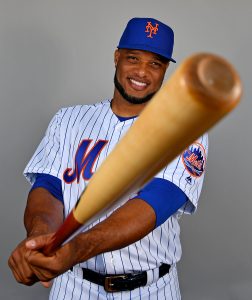
Much of Van Wagenen’s focus was on the Mets’ infield and bullpen, two areas he addressed in his first noteworthy move – a stunning, headline-stealing trade with the Mariners. Not only did the swap net the Mets Robinson Cano, one of the best second basemen in recent memory, but they also hauled in arguably baseball’s premier reliever in closer Edwin Diaz. The cost? Three capable prospects – including top 100 outfielder Jarred Kelenic (No. 56 at MLB.com) and right-hander Justin Dunn (No. 90) – a pair of expendable veterans (outfielder Jay Bruce and reliever Anthony Swarzak, both of whom struggled as Mets) and a willingness to take on $100MM of Cano’s remaining $120MM. Cano’s raking in that money thanks in part to his former agent, Van Wagenen, who scored the ex-Yankee a $240MM payday from the M’s in 2013.
There is an especially high amount of risk in welcoming the present-day version of Cano, as he’s a pricey 36-year-old coming off a season in which he sat 80 games because of a performance-enhancing drug suspension. At the same time, though, he stayed an excellent contributor in the 80 games he took the field, and the Mets are banking on the eight-time All-Star continuing to turn in Hall of Fame-caliber production for at least a bit longer. Whether that’s sensible on their part is debatable, but regardless, he’s slated to be on their books for the next half-decade. Meanwhile, they’re set to get four affordable years of Diaz (including one pre-arb campaign). The 25-year-old flamethrower was the less famous name in the return, but he could be the bigger prize for the Mets. Diaz has been nothing short of incredible since debuting in 2016, and should go a long way toward fixing what was an awful New York bullpen in 2018.
Diaz will have some imposing late-game company this year and beyond, in part because the Mets reunited with old friend Jeurys Familia and added Justin Wilson in free agency. Familia, whom the Mets traded to Oakland last July after a long initial run with the New York organization, went down as their most expensive free-agent signing at $30MM over three years. Committing large amounts of money to relievers is often risky, but the 29-year-old Familia’s contract looks fair when considering the numbers he has logged throughout his career. Likewise, the $10MM going to Wilson is hardly a crazy figure. Based on his output to date, he should give the Mets something the now-gone Jerry Blevins couldn’t provide last year: an effective left-handed reliever. With Diaz, Familia, Wilson and minor league signing Luis Avilan – who has been a solid lefty as well – joining holdovers Seth Lugo and Robert Gsellman, it’s easy to see the Mets’ relief corps transforming from weakness to strength.
Similarly, the Mets’ position player contingent has the makings of an above-average group. Along with Nimmo, Conforto and Cano, the Mets’ main offensive threats look to be top first base prospect Pete Alonso – who, in an era of rampant service-time manipulation, cracked their season-opening roster – as well as infielders Jed Lowrie and Jeff McNeil and catcher Wilson Ramos. Both Lowrie and Ramos came aboard via free agency on the heels of terrific seasons. Lowrie was among the majors’ most productive second basemen in Oakland from 2017-18, but Cano’s presence should push him to the hot corner in New York. Health and age (35 in April) are the primary concerns with Lowrie, who has missed substantial time in the past and, thanks to a sprained left knee, may be a ways from making his Mets debut.
Ramos has battled his own knee troubles, including two right ACL tears, though the 31-year-old has typically been an adept backstop when healthy. Still, if the Mets had their druthers, Ramos probably wouldn’t be on the roster. Not only did the Mets reportedly pursue trades for then-Indian Yan Gomes and then-Marlin J.T. Realmuto, both of whom ended up with division rivals, but they chased Yasmani Grandal in free agency. Realmuto and Grandal are superior to Ramos, but New York reportedly balked at giving up Nimmo, Conforto or shortstop Amed Rosario for Realmuto, and the team pivoted away from Grandal when the now-Brewer turned down its sizable offer. That left New York to fork over a reasonable sum for Ramos, who’s a far better player than 2018 Mets catchers Kevin Plawecki, Travis d’Arnaud, Devin Mesoraco, Tomas Nido and Jose Lobaton. Plawecki’s now off the Mets, having been traded to the Indians, as is Lobaton. D’Arnaud is occupying his usual spot on the injured list, leaving the No. 2 job to Nido, and Mesoraco could retire instead of playing for the Mets’ Triple-A affiliate.
Questions Remaining
While the Mets’ infielders appear to be a promising bunch, there’s room for some wariness. Lowrie’s health is worth monitoring, and the same applies to Todd Frazier. Although Frazier was quite durable with the Reds, White Sox and Yankees earlier in his career, he missed 47 games last year – his first as a Met – and began this season on the IL with a strained oblique. If healthy, though, the 33-year-old Frazier has the credentials to serve as a valuable corner infield reserve.
It’s questionable, on the other hand, how effective Alonso, McNeil, Rosario and Dominic Smith will be this year. Alonso was outstanding as a minor leaguer, but there’s no guarantee it will carry over. If it doesn’t, the Mets may turn to Smith, who, like Alonso, garnered top 100 hype as a prospect. Smith has been valueless as a major leaguer since he first came up in 2017, and he wasn’t any better in the minors last year. McNeil was a revelation in his 248-plate appearance debut last season, but he showed minimal power and an inflated .359 BABIP helped beget a .329 batting average. Rosario hasn’t hit since breaking into the bigs in 2017, nor has he fared well in the field, leaving one to wonder why the deep-pocketed Mets didn’t pursue Manny Machado in free agency.
For the most part, the Mets’ outfield is nicely equipped with Nimmo and Conforto occupying two everyday spots. Ideally, they’ll start in the corners, though Nimmo held down center in the team’s second game of the season on Saturday, giving left to McNeil and third to newcomer J.D. Davis. Nimmo wouldn’t need to play center if the Mets had a more surefire option there than Keon Broxton, whom they acquired in a January trade with the Brewers, or Juan Lagares. Broxton and Lagares are proven defenders, but offensive mediocrity abounds in both cases. That’s hardly the case for A.J. Pollock, a rumored offseason target of the Mets who ended up securing an appreciable raise to go from the Diamondbacks to the Dodgers. It didn’t seem as if the Mets fervently pursued Pollock before he came off the market, however, and they’re now down to Nimmo, Broxton, Lagares and a horde of center field minor league signings as a result.
Should Broxton and Lagares falter, we may see Nimmo take center on a regular basis if fellow corner outfielder Yoenis Cespedes returns from his heel surgeries during the season. It’s probably not worth holding your breath for that, though, considering the 33-year-old Cespedes endured back-to-back injury-ruined seasons prior to this one. For now, Cespedes looks like the franchise’s successor to David Wright – a once-fabulous player who turns into a forgotten man because of injuries.
Meantime, the pitching staff is no doubt among the Mets’ greatest strengths. DeGrom’s the reigning NL Cy Young winner, perhaps the game’s supreme ace, and the ex-Van Wagenen client will be with the franchise for a while longer after inking an extension last week. Syndergaaard, whom Van Wagenen also used to represent, is similarly imposing when healthy. However, whether the Mets can bank on his health is up in the air. Injuries held Syndergaard to 30 1/3 innings in 2017 and 154 1/3 last season, after which reports indicated they at least mulled trading the 26-year-old. Unlike deGrom, Syndergaard has not been an extension target for New York to this point. With that in mind, Syndergaard may continue to frequent trade rumors should no agreement come together between him and the team during his final three years of arbitration control.
Behind the enviable deGrom and Syndergaard duo, righty Zack Wheeler figures to further bolster the cause if his tremendous 2018 is any indication. Whether he can continue to stay healthy after missing nearly all of 2015-17 is in question, though. Injuries have also tormented southpaw Steven Matz, who did put forth an encouraging 2018 after a subpar 2017. Fellow lefty Jason Vargas was horrible last season, which gave the Mets room to upgrade their rotation over the winter. To that end, the club reportedly showed interest in Mike Minor, Gio Gonzalez, Martin Perez, Derek Holland, Josh Tomlin and even venerable Indians ace Corey Kluber. However, minor league pickup Hector Santiago is the sole battle-tested starter the Mets have reeled in since last season concluded.
2019 Season Outlook
This is not a team without concerns, but it would still be sane to expect the Mets to return to relevance in 2019. Van Wagenen, in his debut offseason at the controls, did a fine job enhancing the roster around the high-end talent that was already in place. The problem is that the NL East rival Phillies and Nationals also made their share of offseason splashes – and that’s to say nothing of a quality Braves team that reigned over the division last year. It wouldn’t be a surprise this season to see any of those clubs, including the Mets, win a wide-open division or miss the playoffs altogether.
How would you assess the Mets’ offseason? (Link for app users.)
How would you grade the Mets' offseason?
-
B 53% (1,801)
-
A 34% (1,160)
-
C 8% (288)
-
F 2% (76)
-
D 2% (69)
Total votes: 3,394
Photo courtesy of USA Today Sports Images.
Baseball Blogs Weigh In: Young Stars, Fowler, Brewers, A’s, Predictions
This week in baseball blogs…
- Musings Of A Baseball Addict ranks the top 25 players under the age of 25 for 2019.
- CardsOnDeck.net implores Cardinals fans to rally around Dexter Fowler.
- The First Out At Third projects the Brewers’ hitters.
- A’s Farm interviews Athletics special assistant Grady Fuson and gets the lowdown on some of the team’s top prospects.
- MLB & Fantasy Baseball Analyzed makes predictions for the new season.
- Chin Music Baseball highlights 10 players looking to get off to quicker starts this year.
- Chipalatta evaluates the AL West.
- East Village Times explains how the Padres’ farm system blossomed into an elite unit.
- The Dugout wonders if baseball’s newest mega-deals are wise investments.
- Mets Daddy and Mets Critic share reactions to Jacob deGrom‘s extension.
- Bronx to Bushville could see the Mets trying to extend deGrom’s teammate Pete Alonso.
- Baseball Prospect Journal profiles potential first-round pick Seth Johnson.
- Foul Territory believes the Brewers should sign Craig Kimbrel.
- Call to the Pen names the best offseason trade the Phillies didn’t make.
- The Runner Sports (links: 1, 2) ranks the members of the Twins’ Opening Day roster and pays tribute to ex-Astro Charlie Morton.
- Everything Bluebirds hopes for a bounce-back season from Joe Biagini.
- Baseball Rabbi (podcast) discusses pitch framing and previews the NL West.
- NatsGM.com (podcast) talks with Big Bear Bat Company’s Brad Sullivan, who details the process of making a wood bat.
Submissions: ZachBBWI @gmail.com
Quick Hits: Brewers, Kimbrel, Keuchel, Astros, Correa, A’s, Nats
The Brewers have reportedly engaged in “pretty serious” negotiations of late with closer Craig Kimbrel, who remains available even after the start of the season. Now, having lost closer Corey Knebel to season-ending Tommy John surgery, a union between the Brewers and Kimbrel looks even more plausible on paper. However, barring a massive drop in asking price, the Brewers aren’t in position to sign Kimbrel or the majors’ other big-ticket free agent, starter Dallas Keuchel, according to Tom Haudricourt of the Milwaukee Journal Sentinel. Both Kimbrel and Keuchel rejected a $17.9MM qualifying offer from their previous team at the outset of the offseason. But even if they wind up settling for one-year contracts, odds are those deals will approach or exceed the worth of the qualifying offer. The Brewers, for their part, probably don’t even have half the value of the QO left in their budget, Haudricourt relays, as they’re already sporting a franchise-record Opening Day payroll. As a result, Haudricourt posits they’re more likely to rely on in-house reinforcements such as injured reliever Jeremy Jeffress and on-the-mend starter Jimmy Nelson than splurge on one of the two star free agents sitting on the open market.
More from around the game…
- Astros shortstop Carlos Correa is likely to make his season debut Sunday, Chandler Rome of the Houston Chronicle suggests. Correa suffered a neck strain a week ago, which has left short to the error-prone Aledmys Diaz and elite third baseman Alex Bregman so far this season. Upon his return, the 24-year-old Correa will aim to rebound from a surprisingly pedestrian 2018 campaign, his second straight injury-limited season.
- Athletics catcher Chris Herrmann, who underwent arthroscopic surgery on his right knee toward the beginning of March, expects to miss eight to 10 weeks, Susan Slusser of the San Francisco Chronicle reports. The recipient of a $1MM guarantee over the winter, Herrmann had the inside track on a season-opening roster spot before going under the knife. His injury opened the door for minor league signing Nick Hundley to join holdover Josh Phegley as the Athletics’ top two catchers. Hundley and Phegley have gotten off to slow starts in the early going.
- Nationals left-hander Vidal Nuno III decided not to exercise his March 27 opt-out clause, Jesse Dougherty of the Washington Post tweets. Nuno, who did not make the Nats’ season-opening roster, will have another chance to exit his minor league deal June 15 if he’s still with the organization. In the meantime, the 31-year-old is set to begin the season at the Triple-A level, per Dougherty. Nuno spent most of 2018 in Triple-A with the Rays, but he did amass 33 innings in the majors and pitch to a stingy 1.64 ERA (alongside an unspectacular 4.46 FIP and a paltry 28.6 percent groundball rate) with 7.91 K/9 and 2.73 BB/9.
NL West Notes: Tatis Jr., D-backs, Pollock, Rockies
Padres veterans Manny Machado and Eric Hosmer received some credit for the team’s decision to include shortstop prospect Fernando Tatis Jr. on its season-opening roster, but it was more of a front office-driven call, Dennis Lin of The Athletic writes (subscription required). While a report suggested Machado and Hosmer lobbied for Tatis’ promotion over dinner with Padres owner Ron Fowler, that meeting never took place, according to Fowler. “There was no dinner,” Fowler told Lin. “There was no request for a dinner.” Rather, Fowler revealed he and general manager A.J. Preller had been discussing elevating the 20-year-old Tatis “for quite some time.” The move may cost the Padres a year of control over the standout prospect, though Preller was nevertheless insistent upon placing him in their season-opening lineup. “We talked about it, and frankly it was his decision,” Fowler said. “There are ramifications in terms of control and all those things, but based upon his input, based upon his feeling that that would be our strongest team, he made the recommendation to do it, and we agreed with it. So, it was totally coming from A.J., coming from baseball ops.” To this point, the Padres have not discussed a contract extension with Tatis, per Lin, who adds that could change if he acquits himself well early in his major league career. Tatis has done exactly that so far, having collected three hits and a walk in his first seven plate appearances.
The latest on a couple of San Diego’s division rivals…
- At the beginning of the offseason, the Diamondbacks issued center fielder A.J. Pollock a one-year, $17.9MM qualifying offer as he geared up for a trip to free agency. Although Pollock went on to reject the offer and sign with the NL West rival Dodgers for a four-year, $60MM guarantee, he told Nick Piecoro of the Arizona Republic this week that he nearly accepted the D-backs’ QO. “That was a really tough decision on my part,” Pollock said. “It seemed like a great option. I was 100 percent thinking about it.” Pollock added that he and the Diamondbacks didn’t engage in any substantive talks once he turned down the offer, paving the way for him to leave the franchise he had been a part of since it used a first-round pick on him in 2009. So far in his Dodgers tenure, Pollock has torched the Diamondbacks in a pair of head-to-head matchups, having gone 4-for-9 with a home run and two walks.
- Rockies first baseman Daniel Murphy, the team’s big-ticket offseason acquisition, suffered a left index finger injury Friday that required X-rays, Thomas Harding of MLB.com was among those to report. There’s no word yet on the severity of the issue, though it did keep Murphy out of the Rockies’ lineup for their game against the Marlins on Saturday. Ryan McMahon took the reins at first in his stead. Murphy, 33, climbed aboard the Rockies on a two-year, $24MM contract in free agency after a few strong seasons divided among the Mets, Nationals and Cubs.
- Back to the Diamondbacks, who don’t expect to return Jake Lamb to third base in the near future, Piecoro relays. The 28-year-old Lamb played third almost exclusively from 2014-18, but the departure of Paul Goldschmidt and the free-agent signing of Eduardo Escobar spurred the club to shift him to first. Regardless of where he lines up, this is a pivotal season for the 28-year-old Lamb, a valuable Diamondback from 2016-17 who fell to earth last season. The lefty-hitting Lamb’s now in his penultimate season of arbitration control.
Athletics Release Cliff Pennington
The Athletics have released infielder Cliff Pennington, Susan Slusser of the San Francisco Chronicle reports. Pennington had been with the Athletics since signing a minor league contract with the club on Feb. 15.
This release ends Pennington’s second stint as a member of the Athletics, with whom he initially spent time after they chose him 21st overall in the 2005 draft. Pennington saw major league action with the team from 2008-12, during which he hit .249/.313/.356 with 24 home runs and 69 stolen bases over 1,954 plate appearances. Pennington has since racked up another 1,188 PAs with the Diamondbacks, Blue Jays, Angels and Reds. In all, the switch-hitting 34-year-old has slashed .242/.309/.339 with 36 homers and 84 steals.
While Pennington’s offensive numbers are nothing to brag about, he has performed well defensively. Pennington has earned positive marks from Defensive Runs Saved and Ultimate Zone Rating in extensive action at second base and shortstop, and has been a playable option at third base. Pennington’s defensive versatility wasn’t enough to keep him with Oakland this year, though, and he’ll now seek a new employer after spending the majority of last season with the Rangers’ Triple-A affiliate.
Mariners Select David McKay, Place Hunter Strickland On IL
The Mariners have selected right-hander David McKay from Triple-A Tacoma, placed reliever Hunter Strickland on the 10-day injured list with a right lat strain and moved third baseman Kyle Seager to the 60-day IL, per a team announcement.
McKay, the Mariners’ 25th-ranked prospect at MLB.com, is set for his first major league action since the Royals chose him in the 14th round of the 2016 draft. He joined the Mariners in a March 2018 trade that didn’t net the Royals much of anything in return. Now 23 years old, McKay pitched to a sterling 2.49 ERA/2.90 FIP with 12.61 K/9 and 3.73 BB/9 in 50 2/3 innings at the Double-A level last season.
Strickland, 30, is just 2 1/3 innings into his tenure in Seattle, where he has already yielded three earned runs on three hits, with three strikeouts. The former Giant, who joined the Mariners for a guaranteed $1.3MM in the offseason, surrendered what proved to be the game-losing three-run homer in the ninth inning to the Red Sox’s Mitch Moreland on Friday. The M’s held a 6-4 lead at the time, only to fall 7-6 and drop to 3-1 on the season. It resulted in a blown save for Strickland, whom the M’s could replace with some combination of Matt Festa, Cory Gearrin and Zac Rosscup in the ninth inning. Seager, meanwhile, is out for the foreseeable future on account of a left hand injury.
Offseason In Review: Seattle Mariners
This is the latest post of MLBTR’s annual Offseason in Review series, in which we take stock of every team’s winter dealings.
An 89-win season in 2018 wasn’t enough to satisfy Mariners general manager Jerry Dipoto, who took the franchise on an aggressive re-imagining campaign over the winter. Dipoto’s plan is likely to lead to a short-term step back for the Mariners, already the owners of North American sports’ longest playoff drought (18 years), but his hope is that it’ll pave the way for perennial contention over the long haul.
Major League Signings
- Yusei Kikuchi, RHP: four years, $56MM
- Tim Beckham, INF: one year, $1.75MM
- Cory Gearrin, RP: one year, $1.5MM
- Hunter Strickland, RP: one year, $1.3MM
- Zac Rosscup, RP: one year, $610K
- Ruben Alaniz, RP: one year, $555K
- Dylan Moore, INF: one year, $555K
- Total spend: $62.3MM
Trades And Claims
- Acquired OFs Jay Bruce and Jarred Kelenic, RHP Justin Dunn and RPs Anthony Swarzak and Gerson Bautista from the Mets for 2B Robinson Cano, RP Edwin Diaz and $20MM
- Acquired LHP Justus Sheffield, RHP Erik Swanson and OF Dom Thompson-Williams from the Yankees for LHP James Paxton
- Acquired 1B Carlos Santana and INF J.P. Crawford from the Phillies for SS Jean Segura and RPs James Pazos and Juan Nicasio
- Acquired DH/1B Edwin Encarnacion, $5MM from the Rays and the Indians’ 2019 competitive balance pick in a three-team trade that sent Santana and $6MM to Cleveland
- Acquired OFs Mallex Smith and Jake Fraley from the Rays for C Mike Zunino, OF Guillermo Heredia and LHP Michael Plassmeyer
- Acquired C Omar Narvaez from the White Sox for RP Alex Colome
- Acquired OF Domingo Santana from the Brewers for OF Ben Gamel and RHP Noah Zavolas
- Acquired 2B Shed Long from the Yankees for OF Josh Stowers
- Acquired LHP Ricardo Sanchez from the Braves for cash considerations
- Claimed INF Kaleb Cowart from the Angels, then lost him on waivers to the Tigers
- Claimed OF John Andreoli from the Orioles, then lost him on waivers to the Rangers
Notable Minor League Signings
- Ichiro Suzuki (since retired), Eric Young Jr., Tommy Milone, Jose Lobaton, Dustin Ackley (since released), Aaron Northcraft, Tyler Danish, Orlando Calixte, Ryan Garton
Notable Losses
- Cano, Diaz, Paxton, Segura, Pazos, Nicasio, Zunino, Heredia, Colome, Gamel, Nelson Cruz, Denard Span, Adam Warren, Chris Herrmann, David Phelps, Erasmo Ramirez, Nick Vincent, Justin Grimm, Ryan Cook, Cameron Maybin, Andrew Romine, Gordon Beckham, Casey Lawrence, Christian Bergman
[Seattle Mariners Depth Chart | Seattle Mariners Payroll Outlook]
Needs Addressed
It was December 2013, fresh off four straight awful seasons, that Seattle made one of the biggest splashes in the history of free agency by signing ex-Yankees second baseman Robinson Cano to a 10-year, $240MM contract. At the time, then-GM Jack Zduriencik & Co. no doubt envisioned a Cano-led roster competing for World Series. Instead, with the Mariners continuing to disappoint during the first two years of the Cano era, Zduriencik lost his job in August 2015. His ouster led to the hiring of Dipoto, who, almost four years after taking the reins, cut the cord on Cano.
Aside from an 80-game suspension for performance-enhancing drugs last season, Cano largely lived up to his lofty pact in Seattle. It was the rest of the team that fell short, though, and Dipoto was apparently convinced it would have been more of the same in 2019 had he stayed the course. So, with a half-decade and $120MM still left on Cano’s contract, Dipoto set out this past offseason to clear the 36-year-old off the team’s books before age could truly takes its toll on the eight-time All-Star.
In early December, just over a month after the offseason began across the majors, Dipoto found a taker – the Mets – in a whopper of a trade. When the dust settled, seven players had moved between the two teams, and Seattle had saved $64MM. In the process, the Mariners hauled in three promising prospects – outfielder Jarred Kelenic and right-handers Justin Dunn and Gerson Bautista – for a farm system that has gone from pitiful to presentable in recent months. Additionally, they picked up a pair of veteran stopgaps in outfielder/first baseman Jay Bruce and reliever Anthony Swarzak to help offset money in the swap. Of course, the deal also saw Seattle wave goodbye to closer Edwin Diaz, one of the premier relievers in baseball. That’s going to hurt, especially considering the flamethrowing Diaz still has four years of control remaining, but the Mariners deemed it acceptable to lose him because it meant getting rid of a large portion of Cano’s money.
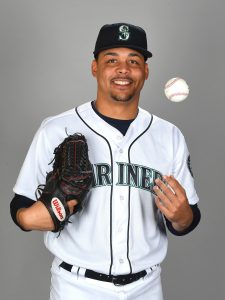
True to form, the aggressive, trade-happy Dipoto made several other noteworthy deals in the offseason. One sent No. 1 starter James Paxton and his two years of control to the Yankees for a trio of prospects, including lefty Justus Sheffield, who may be the Mariners’ top farmhand and figures to contribute as early as this season. In another, Dipoto packaged shortstop Jean Segura – who was the source of some clubhouse friction last season, and who had a guaranteed $58MM remaining on his pact – as well as relievers Juan Nicasio ($9MM) and James Pazos to the Phillies for infielder J.P. Crawford and first baseman Carlos Santana. While Santana’s the more proven major leaguer of the two, the real prize for Seattle was the 24-year-old Crawford, a former high-end prospect who the team hopes will emerge as Segura’s long-term successor.
Santana wasn’t long for the Mariners, who quickly dealt him to Cleveland in a three-team trade that also included Tampa Bay. The Mariners acquired first baseman/designated hitter Edwin Encarnacion in the deal, and though he has been one of the majors’ fiercest sluggers in recent years, it was more about saving a few million dollars and netting a competitive balance pick from the Tribe. That wasn’t the only trade the Mariners pulled off that included the Rays, whom Dipoto has consistently bartered with in his time with the M’s. The first trade he made of the offseason was a five-player deal which saw catcher Mike Zunino and outfielder Guillermo Heredia go to the Rays for center fielder Mallex Smith. Zunino was a competent regular for the Mariners, but he never blossomed into the star they wanted when they selected him third overall in the 2012 draft. Moreover, he has just two years of control left versus four for Smith, a breakout player in 2018 who could be the Mariners’ first mainstay in center since Mike Cameron‘s tenure.
In other trades that’ll have an immediate effect on the major league product, the Mariners nabbed Zunino’s replacement, Omar Narvaez, from the White Sox and got outfielder Domingo Santana from the Brewers. All they had to surrender for Narvaez was reliever Alex Colome. Just about any bullpen would be happy to have Colome, but he’s 30 years old, somewhat pricey ($7.325MM) and two seasons from free agency. He clearly wasn’t a must-have piece for the Mariners in their present state. Narvaez, on the other hand, has been a strong offensive catcher since debuting in 2016 and is under wraps through 2022. While Narvaez is nowhere near the defender Zunino is, it still looks like a worthwhile behind-the-plate switch for the Mariners.
Likewise, the Mariners were within reason to exchange Gamel for Santana in what came off as a floor-for-ceiling trade. Gamel was satisfactory from 2017-18, but he doesn’t carry the potential of Santana, who was a 30-home run, 3.3-fWAR player in 2017 before taking sizable steps backward last year. But Santana got lost in a crowded Milwaukee outfield in 2018, and he’ll have a chance to regain his footing in a regular role for the Mariners, who have his rights through 2021.
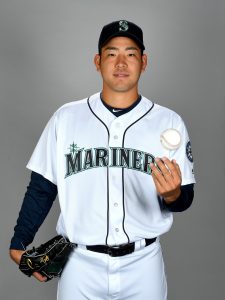
Understandably, trades tend to occupy the lion’s share of talk when it comes to Dipoto. However, he also did quite a bit of work in free agency this past offseason. His most important transaction was reeling in left-hander Yusei Kikuchi, who could emerge as the franchise’s latest Japanese-born cornerstone. The Mariners had to beat out a slew of teams for Kikuchi, a 27-year-old who fared pretty well in his first meaningful outing in the majors – a win over the Athletics last week in his homeland – and has the potential to serve as a solid starter in Seattle for a while.
Dipoto also landed Diaz’s immediate successor, Hunter Strickland, via the open market. The former Giant, 30, largely held his own with them, though he did struggle in 2018. Still, for just a $1.3MM guarantee, you can’t fault the Mariners for taking a shot on Strickland. The same logic applies to infielder Tim Beckham, their shortstop until the optioned Crawford shows up in the majors. Although Beckham was terrible as a member of the Orioles in 2018, he’s a former No. 1 overall pick (the Rays took him in 2008) who was a 3.4-fWAR player in 2017. Again, for just over $1MM, he’s worth a try. If nothing else, he’ll provide the Mariners a Band-Aid at short as they give Crawford further seasoning/manipulate his service time in the minors.
Questions Remaining
As you’d expect, there are more questions than answers with this roster. For one, who’s the next veteran Dipoto will trade? If he has his way, it may be Encarnacion, though the Mariners haven’t been able to find a match for the declining, expensive 36-year-old thus far. Bruce, Swarzak, second baseman Dee Gordon and righty Mike Leake also come to the fore as in-season trade candidates, but nobody from that group carries much value at the moment.
In terms of players who are sure bets to actually help the Mariners win games this year, only excellent right fielder Mitch Haniger truly sticks out. They don’t know what they’ll get from Smith, who wasn’t much of a hitter from 2016-17, or Santana or Beckham; Bruce was abysmal last year, and he’s likely just an average-at-best player nowadays; Encarnacion will have a hard time replacing the departed Nelson Cruz; Narvaez’s troubles behind the dish limit his upside, and it’s surprising the Mariners didn’t find a more credible backup to him than David Freitas (a proven defensive stalwart like Martin Maldonado or Sandy Leon would’ve made sense); Gordon was horrid in 2018; and third baseman Kyle Seager‘s both injured and coming off a poor season, temporarily leaving third to the underwhelming Ryon Healy.
The pitching staff’s best hopes are the untested Kikuchi and Sheffield and fellow lefty Marco Gonzalez, who wasn’t great at preventing runs last year (4.00 ERA) but turned in far more encouraging peripherals en route to 3.5 fWAR. Leake’s a decent, albeit unexciting, option in his own right, and Wade LeBlanc‘s a back-end type at best. Meanwhile, for the many who relished watching Felix Hernandez at the height of his powers, witnessing the former Cy Young winner, 32, turn into a replacement-level starter has been heartbreaking. He and the Mariners may divorce at the end of the season, if not sooner should his stark decline continue. For now, the man who earned the nickname King Felix in his halcyon days is due $27MM in the last guaranteed year of his deal, rendering him immovable.
The Mariners’ bullpen was an above-average unit in 2018, when it finished 10th in fWAR and ERA, but it basically derived all of its value from Diaz, Nicasio, Colome, Pazos and fellow departure Nick Vincent. Beyond Strickland, it now counts other free-agent pickups Cory Gearrin and Zac Rosscup among its most prominent choices. There are a few interesting young arms kicking around the Seattle roster, but there’ll likely be a fair bit of turnover in the relief unit as the season goes along.
2019 Season Outlook
Expect the Mariners to tack another year onto their playoff drought this season. Seattle’s roster isn’t devoid of talent, but so much has to go right that it’s difficult to imagine the M’s busting out as a Cinderella team in 2019. Realistically, if you’re a Mariners fan, hope for growth from the potential building blocks on hand and for as many nonessential vets as possible to increase their trade value.
How would you grade the Mariners’ offseason moves? (Link for app users.)
How would you grade the Mariners' offseason?
-
B 42% (1,648)
-
C 21% (831)
-
A 19% (761)
-
D 11% (446)
-
F 6% (246)
Total votes: 3,932
Photos courtesy of USA Today Sports Images.
Offseason In Review: Los Angeles Angels
This is the latest post of MLBTR’s annual Offseason in Review series, in which we take stock of every team’s winter dealings.
A frugal offseason has given way to a lavish, triumphant spring for the Angels, who no longer have to worry about losing Mike Trout. The inimitable center fielder is poised to spend his career in Anaheim after inking a decade-long extension last week.
Major League Signings
- Matt Harvey, RHP: one year, $11MM
- Trevor Cahill, RHP: one year, $9MM
- Cody Allen, RP: one year, $8.5MM
- Jonathan Lucroy, C: one year, $3.35MM
- Justin Bour, 1B: one year, $2.5MM
- Total spend: $34.35MM
Trades And Claims
- Acquired RHP Luis Garcia from the Phillies for LHP Jose Alvarez
- Acquired RHP Chris Stratton from the Giants for LHP Williams Jerez
- Acquired LHP Dillon Peters from the Marlins for RHP Tyler Stevens
- Acquired INF Tommy La Stella from the Cubs for LHP Connor Lillis-White
- Acquired RP John Curtiss from the Twins for IF Daniel Ozoria
- Claimed C Kevan Smith from the White Sox
- Claimed IF/RP Kaleb Cowart from the Tigers
- Claimed RHP Austin Brice from the Reds, then lost him on waivers to the Orioles
- Claimed RHP Luke Farrell from the Cubs, then lost him on waivers to the Rangers
Extensions
Minor League Signings
- Dan Jennings (since released), Daniel Hudson (since released), Jarrett Parker, Peter Bourjos, Luke Bard, Sam Freeman, Alex Meyer, Ty Kelly, Dustin Garneau, Forrest Snow, Cesar Puello, Wilfredo Tovar, Matt Ramsey
Notable Losses
- Garrett Richards, Jim Johnson, Chris Young, Eric Young Jr., Junichi Tazawa, Blake Wood, Blake Parker, Matt Shoemaker, Parker Bridwell, Jabari Blash, Jose Miguel Fernandez, John Lamb, Deck McGuire, Odrisamer Despaigne, Eduardo Paredes, Jefry Marte, Francisco Arcia
[Los Angeles Angels Depth Chart | Los Angeles Angels Payroll Information]
Needs Addressed
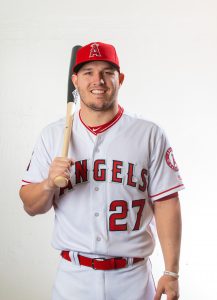
The Angels entered the offseason with only two years of control left over Trout, unquestionably the preeminent player in baseball since he exploded on the scene in 2012. Team success eluded the Angels during the remarkable first seven seasons of Trout’s career, though, as they made the postseason just once (in 2014) and didn’t even win a single playoff game. With that in mind, it would’ve been understandable for Trout to hold off on committing to the Angels for the long haul. On the other hand, it would have been unforgivable for the Halos to not put forth an earnest effort to lock up Trout, who, at 27 years old, is already one of the greatest players in the history of the sport.
To the Angels’ credit, not only did they make an attempt to keep Trout in the fold, but they persuaded him to stay. The 10-year, $360MM extension the Angels gave the seven-time All-Star and two-time MVP stands as the richest contract ever in North American sports, yet the gaudy dollar figure still looks eminently reasonable. The future Hall of Famer is now in line to spend the entirety of his 30s and all of the 2020s in Anaheim, which will give the club plenty of time to capitalize on his presence going forward.
Whether the Angels are in position to take advantage of Trout’s place on their roster this year is in question. Before the Angels locked up Trout, they journeyed through a fairly low-key offseason which included a few modest free-agent signings and no headline-stealing trades. Perhaps if general manager Billy Eppler had his druthers, it would have been a different story. Eppler reportedly targeted a collection of high-profile free agents, including pitchers Patrick Corbin, Nathan Eovaldi, J.A. Happ, Zack Britton, David Robertson, Joakim Soria and catchers Yasmani Grandal and Wilson Ramos, but fell short in each pursuit. Still, the majority of Eppler’s prominent offseason acquisitions came at those positions, as he brought in two starters (Matt Harvey and Trevor Cahill), a battle-tested closer seeking a rebound from a down season (Cody Allen) and an experienced catcher (Jonathan Lucroy). He also procured first baseman Justin Bour, who thrived in Miami as recently as 2017 but saw his production plummet between the Marlins and Phillies last season.
Before adding those five free agents, Eppler oversaw the Angels’ first managerial search since November 1999, when they hired Mike Scioscia. Trout was only eight years old at the outset of the Scioscia era, a run that included 1,650 regular-season wins and the franchise’s sole World Series title (2002). Scioscia, 60, stepped down after last season, paving the way for the Angels to hire another former major league catcher, Brad Ausmus, as their new skipper. Ausmus managed the Tigers to middling results from 2014-17, though the soon-to-be 50-year-old’s amenability toward analytics helped convince the Angels he merited a second chance atop a big league dugout.
Questions Remaining
The Ausmus-led Angels feature questions aplenty in their pitching staff, in part because of injury issues. Anaheim’s foremost starter, two-way sensation Shohei Ohtani, won’t factor in at all as a pitcher this year after undergoing Tommy John surgery in October. Likewise, J.C. Ramirez is recovering from TJ surgery, having undergone the procedure nearly a year ago, while Andrew Heaney (elbow inflammation) and Nick Tropeano (shoulder discomfort) are also on the shelf.
It’s paramount for Heaney to return sometime soon, as he turned in 180 respectable innings in 2018 and is likely the Ohtani-less Angels’ No. 1 starter. That’s less a compliment to Heaney — who is solid, granted — than an indictment on the Angels, whose current group of healthy starters doesn’t include anything resembling a front-line option. Harvey qualified as an ace during a stretch with the Mets from 2012-15, but the Dark Knight has since logged a 5.39 ERA/4.76 FIP in 340 1/3 innings and undergone thoracic outlet surgery (in 2016). In fairness to Harvey, who turns 30 today, he did post decent numbers with the Reds after they acquired him from the Mets last May. If he can replicate that performance in Anaheim, he’ll justify the investment.
The club spent a bit less on Cahill, another righty with a history of injuries and inconsistency. The 31-year-old was effective in Oakland last season, though (albeit over just 110 innings), and the Angels are banking on a repeat in 2019. Harvey, Cahill, Tyler Skaggs (who has also dealt with his share of injuries, including this spring), Felix Pena, the just-acquired Chris Stratton and the just-optioned Jaime Barria represent the Angels’ top healthy starters at this point.
If you’re underwhelmed by that group, it’s hard to blame you. If you think the Angels should be going after free agent Dallas Keuchel, who’s inexplicably still available, you’d also be within reason. But Eppler insists he’s bullish on the Angels’ present mix of starters, which seems to make a Keuchel signing unlikely, as does a possible lack of financial wiggle room. The Angels have always run high payrolls under owner Arte Moreno, and that’ll be the case again this season, as they’re at upward of $176MM going into Opening Day. Moreno may not want to go significantly higher than that franchise-record sum. Furthermore, adding Keuchel would either push the Angels into luxury-tax territory or leave them within close proximity of that mark, potentially limiting Moreno’s willingness to approve in-season additions on the trade market. The Halos are currently about $21MM shy of the luxury barrier.
While the Angels’ payroll does rank toward the top of the majors, they’re not spending much on their bullpen. The lone expensive reliever on the roster is Allen, the former Indians closer who joined the Angels on an $8.5MM guarantee in the offseason. Allen has been outstanding for the majority of his career, which began in 2012, though the 30-year-old no longer looks like a shoo-in to offer quality production. Not only was Allen subpar last year, when all of his numbers trended downward to concerning degrees, but he has followed that up with a shaky spring in which his velocity has dipped. The Angels will need the light bulb to go on again for Allen once the regular season begins, especially considering their bullpen lost Blake Parker, Jim Johnson and Jose Alvarez during the winter.
Parker, Johnson and Alvarez were among the Angels’ five leading relievers in terms of innings last year, and each managed passable to above-average run prevention numbers. Alvarez was particularly good, yet the Angels traded him to the Phillies for righty Luis Garcia, who “has the characteristics we gravitate to: strikeouts, ground balls and big stuff,” Eppler said after the deal. It’s anyone’s guess how the trade will pan out, but for now, the loss of Alvarez leaves the Angels devoid of a lefty reliever on their 40-man roster. Allen aside, their bullpen is also lacking a righty with a long track record of success, though 2018 acquisition Ty Buttrey may be on the verge of a breakout if the 16 1/3-inning debut he made last season is any indication. As with Keuchel, Anaheim looks like an on-paper fit for free agent Craig Kimbrel, a possible Hall of Fame closer who’s somehow still without a team. Whether Moreno would sign off on a pricey Kimbrel addition is another matter, but the righty would sure help the Angels’ cause.
A Kimbrel signing wouldn’t answer the questions in the Angels’ position player group, where there are several. Trout, Andrelton Simmons and Ohtani are marvelous, and Justin Upton‘s a valuable left fielder. Ohtani won’t return until at least May, however, and Upton’s going to the injured list with turf toe, leaving the Angels with just two guaranteed big-time producers in Trout and Simmons.
Potential Upton replacements in the just-selected Peter Bourjos, Jarrett Parker and Cesar Puello don’t inspire confidence, and unproven outfield prospect Michael Hermosillo (hernia surgery) could also open the season on the IL. Elsewhere in the outfield, while Kole Calhoun has been a better-than-average player for most of his career, he was a replacement-level performer last season.
Turning to the infield, third baseman Zack Cozart underwhelmed last season in the opening act of a three-year, $38MM contract. Lucroy has accounted for minus-0.9 fWAR dating back to 2017, while what remains of the once-amazing Albert Pujols totaled minus-2.1 in the same two-year span. Bour was little more than a league-average offensive first baseman in 2018. At second base, David Fletcher wasn’t much of an offensive threat during his 307-PA debut last season, but he starred as a minor league hitter earlier in the campaign and then stood out as a defender in his initial taste of the majors
The Angels still sought some insurance to help protect against another poor Cozart season and a sophomore slump from Fletcher, though, as they reportedly showed interest in Mike Moustakas, Josh Harrison and Troy Tulowitzki in free agency. In the end, they came away with a trade for the 30-year-old Tommy La Stella, who has been a playable bench piece with the Braves and Cubs over almost 1,000 PAs.
2019 Season Outlook
Trout and Simmons are something like five three-WAR players condensed into two, which raises the Angels’ floor to a considerable extent. Otherwise, there are so many performance- and injury-related concerns on Anaheim’s roster that it’s hard to consider the team a strong bet to break its four-year playoff drought. The good news is that the Angels could benefit from being in a league which lacks a surefire contender after the favored Red Sox, Yankees, Astros and Indians. The Angels should be part of a several-team jumble fighting for the AL’s last postseason spot, which may only require 80-some wins to secure. The club is entering 2019 off back-to-back seasons of 80 victories, a number PECOTA projects it to match this year.
How would you grade the Angels’ offseason moves? (Link to poll for Trade Rumors app users.)
How would you grade the Angels' offseason?
-
C 34% (1,106)
-
B 33% (1,084)
-
A 17% (573)
-
D 11% (348)
-
F 5% (170)
Total votes: 3,281
Photo courtesy of USA Today Sports Images.