Valuing 2016 Opt-Out Clauses
Back in January, I wrote an article in which I approximated the dollar value of the opt-out clauses in the contracts for David Price, Johnny Cueto, and Jason Heyward. Since then, five more contracts with opt-outs have been signed, so I have extended this analysis to put values on these opt-outs as well. These include contracts for Yoenis Cespedes, Justin Upton, Scott Kazmir, Ian Kennedy, and Wei-Yin Chen. Remember, these values are approximations of what these contracts would have cost without opt-outs. (Please reference the above-linked post for further explanation of the methodology.)
Too many people talk as though opt-outs are just bad decisions on the part of teams, without considering how much more expensive contracts would be without them. This logic would imply that no financial firm should ever sell a put—of course they should, but only at the right price.
The earlier three contracts were larger than almost all of the five more recent contracts. Other than Justin Upton, the other recent contracts were under $100 million, so the opt-out values are generally lower than the $17-22 million that I found for Price, Cueto, and Heyward. However, all five opt-out values all range between 10 and 15 percent of the full contract value, similar to the prior three deals.
The following table shows the assumptions surrounding the opt-outs, like the one in January’s article. (Mobile app users can click here to see it.)
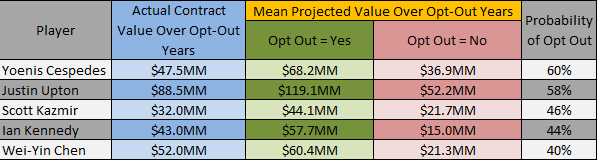
Yoenis Cespedes received a three-year contract for $75 million, but it is really a $27.5 million one-year contract with a player option of a two-year, $47.5 million deal. Few players actually sign one-year deals for that much money, but as we saw a decade ago with Roger Clemens, one-year deals for superstars have an AAV much higher than the AAV superstars receive on longer deals. In this case, Cespedes would probably have been worth about $31.7 million on a one-year deal. At this stage, a reasonable estimate of Cespedes’ value for 2017-18 would be around $55.1 million. However, like with all of these deals, we know that it is very likely that Cespedes’ market value will change significantly by next year. Chances are that if he is good enough to opt-out, then he will have had a strong 2016 campaign, and his market value will be higher. I estimate this would be around $68.2 million for 2017-18 in that case. If he does not opt-out, then he probably has disappointed in 2016 and probably has lowered his two-year value for 2017-18 down to $36.9 million. With an estimated 60% chance of opting out, that puts Cespedes’ opt-out at about $11.8 million. In other words, a regular three-year deal for Cespedes would be for $86.8 million instead of $75 million.
Justin Upton’s contract six-year, $132.5 million contract with the Tigers amounts to a two-year, $44.25 million deal with a four-year, $85 million player option. As a relatively young free agent, Upton has the potential to remain very valuable by the time he reaches his opt-out, but as a unique talent he is a risk to regress to the mean significantly—there is more room for him to fall than mediocre players. I estimate that if he has opted out after 2017, he has played well enough over 2016-17 that his market value will be about $119.1 million over 2018-21, and if he has not opted out then it stands to reason he has played poorly enough that his market value for 2018-21 would be about $52.2 million. Further, I estimate that he has a 58 percent chance to opt out. As a result, Upton’s opt-out is worth about $19.7 million, meaning that his value in a six-year deal without an opt-out would be $152.2 million.
Scott Kazmir had a relatively small deal for one that included an opt-out. His deal amounts to a $16 million one-year deal with $32 million two-year player option. I estimate that if he has opted out after this year, then he must have played well enough in 2016 that his market value for 2017-18 probably reached around $44.1 million. On the other hand, if he has played poorly enough that he does not opt out, then I estimate his market value for 2017-18 must have fallen to around $21.7 million. I think there is a 46 percent chance he opts out. As a result, his opt-out value is only worth $5 million—so a regular three-year deal without an opt-out would probably have been for about $53 million.
Ian Kennedy’s $70 million five-year contract is actually a $27 million two-year deal with a three-year, $43 million player option. His contract values him significantly higher than his Steamer or especially his ZiPS projection on FanGraphs would suggest, making it challenging to estimate his value. However, it is safe to assume that the Royals are placing more value on him than the projection systems and that they probably expect that his 2016 value is higher. Furthermore, there must have been at least some pressure for another team (real or imagined) that caused the Royals to believe they had to offer as much as they did. So we need to estimate the equivalent value of a contract based on the what the Royals paid, rather than what ZiPS or Steamer (and up to 28 other teams potentially) seem to think. Based on this, if he has opted out after 2017, then there is a good chance that the Royals (and potentially the other team they imagined themselves outbidding) were right about him, but if he does not then there is a good chance the projection systems were right. I estimate that his value over 2018-20 would only be $15 million conditional on not opting out, while it would be about $57.7 million if he played well enough to justify opting out. I think the Royals estimate a 44 percent chance that he will opt out (again, another team bidding presumably thought something similar), making his opt-out value about $7.1 million. A five-year deal without an opt-out would probably be worth about $77.1 million.
Wei-Yin Chen has a tricky deal. Nominally he has a 5 year deal worth $80 million, but it is really a $28 million deal over two years, with a player option for $52 million over the following three years. However, if he does not opt out, then the team has an option for 2021 that will actually vest if he pitches a sufficient number of innings and is healthy. Putting a value on a vesting option that is conditional on having a low value after 2017 is tricky, but I believe I have come up with a reasonable estimate. I think that if he does opt out, his value for 2018-20 is probably about $60.4 million, while his conditional value if he plays poorly enough to not opt out would be $21.3 million over 2018-20. His vesting option at the end is essentially worth under $2 million to the team. I think that on a normal five-year contract for 2016-20, Chen would have gotten about $82 million, which means his opt-out value was about $12 million.
As these deals become more common, it becomes more important to properly value these put options. I estimate that these five deals would each have cost about 10 to 15 percent more for teams if they did not provide the players with opt-out clauses. Players with more years post opt-out and higher talent levels will generally have a larger value to opting out, while the inverse is true for players with fewer years post opt-out who are less talented. While these opt-outs are risky, they definitely provide an opportunity for teams to save money relative to mutually guaranteed longer contracts.
MLBTR Originals
A look back at the original reporting and analysis found on MLBTR the last seven days:
- Just days ago, MLBTR’s Tim Dierkes unveiled his 2017 MLB Free Agent Power Rankings. Stephen Strasburg takes the No. 1 position on the list as he looks to break David Price’s record deal for starting pitchers.
- Chuck Wasserstrom sat down with Andy MacPhail to discuss the 25-year anniversary of the Twins’ 1991 World Series championship. One of the key moves in building the Twins’ championship roster came in July 1989 when they dealt fan favorite Frank Viola. MacPhail admits that trading the pitcher was difficult. “I remember just wanting to have to sit down for a moment and sort of collect myself. Independent of the market size, it clearly was not an easy decision,” MacPhail said. “It was not going to be popular, because you are trading a known for multiple unknowns to some degree. While I felt conviction that it was the right thing for us to make the trade … I wouldn’t say I was conflicted, but I recognized back then that of all the trades I had made in my career, this one was going to have the most riding on it. If it was not successful, it was going to come back and bite you personally – probably in a big way. You trade a potential 20-game winner to a New York club, you better be getting something back.”
- Diamondbacks GM Dave Stewart surprised everyone in baseball this winter with his moves. Recently, Brett Ballantini sat down with the agent-turned-GM to discuss his offseason overhaul in Arizona.
- Speaking of Stewart, MLBTR’s Steve Adams looked back on the Diamondbacks’ aggressive offseason. Arizona committed a whopping $206.5MM over six years to pitcher Zack Greinke while trading a sizable package to the Braves for right-hander Shelby Miller (and left-hander Gabe Speier). Now, the D’Backs are hoping to go from 79 wins to the top of the NL West.
- On the latest edition of the MLBTR Podcast, host Jeff Todd spoke with former big league catcher John Baker to discuss his role with the Cubs organization. Jeff also spoke with Tim about his power rankings for 2017. A new episode of the podcast is released every Thursday and can be accessed on iTunes, SoundCloud, and Stitcher.
- This winter, the Braves continued their build towards contending in 2017 in an effort to boost fan interest when their brand new ballpark opens up. Jeff looked back on Atlanta’s moves, including deals for Shelby Miller and Andrelton Simmons.
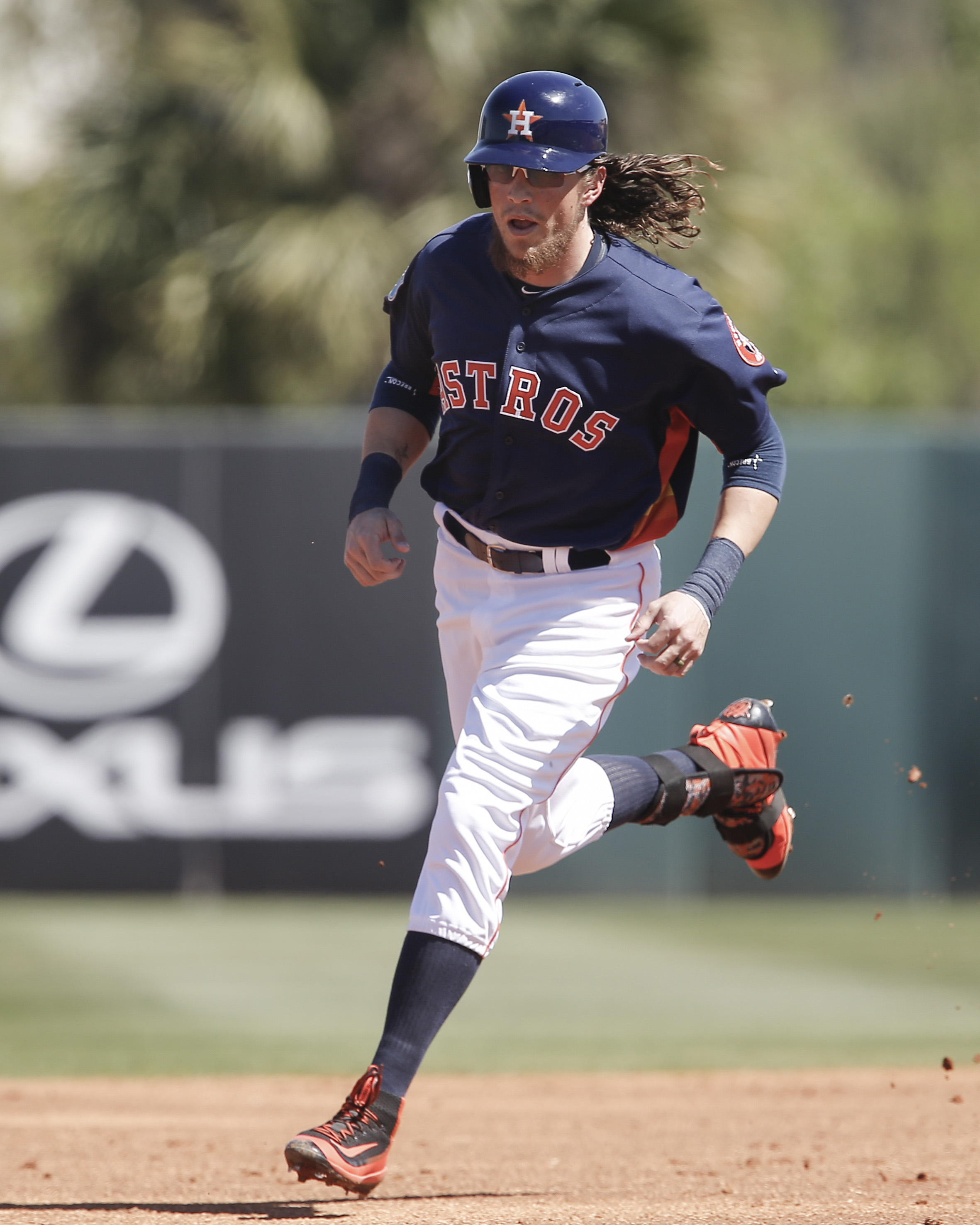
- The Astros’ success in 2015 was a pleasant surprise. In 2016, they’ll enter the season with some very real expectations for success. Steve reflected on Houston’s offseason dealings, including the acquisition of reliever Ken Giles.
- Faced with a payroll crunch, new GM Billy Eppler was somewhat limited in what he could do this past winter. Still, as MLBTR’s Mark Polishuk writes, the Halos made a couple of trades to improve their infield situation while making some other low-cost moves.
- The Rays needed offense this offseason and president of baseball operations Matthew Silverman wasted little time in getting that accomplished, as Mark writes in his Offseason In Review for Tampa Bay. While Tampa brought some new bats into the mix, however, there are plenty of questions remaining for the team in the wake of their winter dealings.
- The Orioles spent more than ever this winter in an effort to try and win the AL East. Mark looked back on all of the O’s moves, including headline-grabbers like Chris Davis‘ deal, the Darren O’Day re-signing, the addition of Yovani Gallardo, and the trade for Mark Trumbo.
- After adding David Price and Craig Kimbrel, the Red Sox are hoping to make David Ortiz‘s final season a memorable one, as Mark writes.
- The Pirates’ offseason wasn’t splashy, but there are still additions that are worth paying attention to, as MLBTR’s Charlie Wilmoth writes.
- The rebuild continues in Philly and Jeff looked at the deals made by the Phillies’ new forward-thinking regime.
Offseason In Review: Boston Red Sox
This is the latest entry in MLBTR’s Offseason In Review series. The full index of Offseason In Review posts can be found here.
Two major pitching additions have the Red Sox hoping for a return to contention in David Ortiz‘s final season.
Major League Signings
- David Price, SP: Seven years, $217MM
- Chris Young, OF: Two years, $13MM
- Sandy Leon, C: One year, $534K ($273K if he remains in the minors)
- Total spend: $230.273MM guaranteed
Trades And Claims
- Acquired RP Craig Kimbrel from Padres for OF Manuel Margot, SS Javier Guerra, IF Carlos Asuaje, and LHP Logan Allen
- Acquired RP Carson Smith and SP/RP Roenis Elias from Mariners for SP Wade Miley and RP Jonathan Aro
- Acquired cash considerations from Brewers for 3B/OF Garin Cecchini
Notable Minor League Signings
- David Murphy ($2MM if he makes the MLB roster), Sean O’Sullivan, Carlos Marmol, Brennan Boesch ($1MM if he makes the MLB roster), Anthony Varvaro, Dan Butler
Extensions
- None
Notable Losses
Needs Addressed
Basically from the moment Jon Lester was traded to Oakland in a 2014 deadline deal, Boston fans and media have been clamoring for the Red Sox to acquire a new ace. That box can be officially checked now that the Sox have landed one of the game’s best pitchers in David Price. There was little doubt headed into the winter that the Sox would pursue a front-of-the-rotation arm, with the real question being whether the team would trade for an ace or sign one. The latter option wasn’t a given considering how the organization had a well-publicized hesitation to signing pitchers to big contracts through their 30s.
Needless to say, that hesitation is no more since the Red Sox signed Price to the largest contract ever given to a pitcher. Price’s track record of durability undoubtedly factored into Boston’s willingness to make a deal, and it’s possible the team could avoid paying Price into his late 30s altogether if he exercises the opt-out clause in his deal after the 2018 season. An opt-out would turn the contract into “only” a three-year/$90MM commitment over Price’s age 30-32 seasons.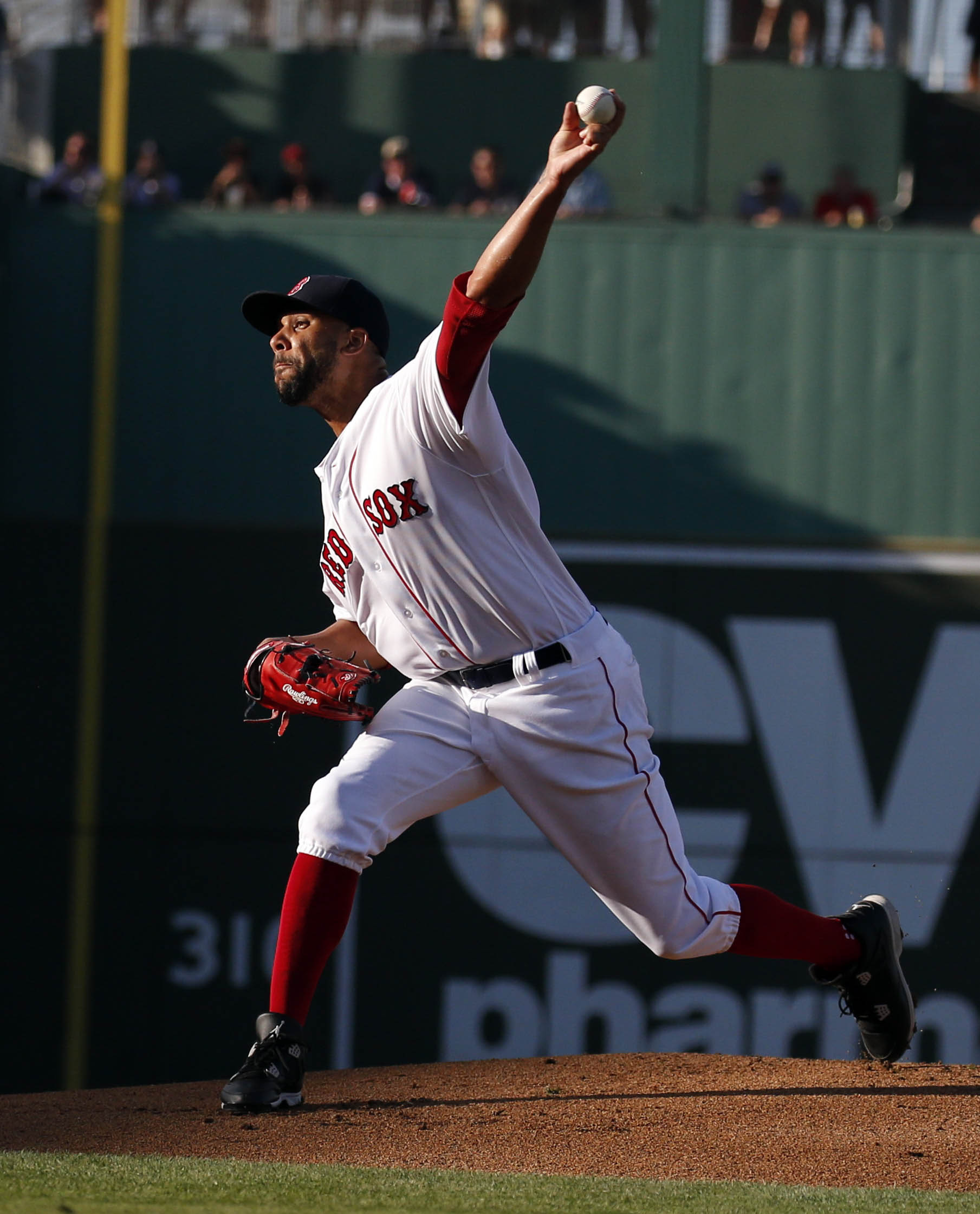
Price will headline a rotation that includes Clay Buchholz (whose $13MM club option for 2016 was unsurprisingly exercised by the team), Rick Porcello, Eduardo Rodriguez and Joe Kelly. Rodriguez will likely miss the first few weeks of the season recovering from a dislocated kneecap, so new acquisition Roenis Elias or knuckleballer Steven Wright will compete to be Rodriguez’s fill-in or even push Kelly for the fifth spot.
The Sox had something of a rotation surplus even before Price signed, so the team was comfortable letting late-season surprise Rich Hill leave in free agency. After Price joined the club, Boston made room by dealing Wade Miley to Seattle in exchange for Elias and righty reliever Carson Smith.
While the rotation took the brunt of the criticism last year, Boston’s bullpen was actually the worse (by far) of the two pitching units and perhaps even more in need of an overhaul. President of baseball operations Dave Dombrowski and GM Mike Hazen addressed this need in a major way early in the offseason by acquiring Craig Kimbrel from the Padres for a very significant prospect package.
It’s a sign of just how dominant Kimbrel has been over his career that 2015 was easily his worst overall season, despite posting a 2.58 ERA, 13.2 K/9 and 3.95 K/BB ratio. In adding arguably baseball’s best closer, the Red Sox now have a more stable answer in the ninth inning than Koji Uehara, who suffered a fractured wrist last season and turns 41 in April. This being said, Uehara did nothing performance-wise to merit the demotion, so he projects as a very dangerous setup man.
Kimbrel and Smith (if healthy, as we’ll address later) stand as huge upgrades to a relief corps that includes Uehara, Junichi Tazawa and lefties Robbie Ross and Tommy Layne, with Elias likely to figure in as additional southpaw depth. The wild card is Carlos Marmol, signed to a minor league deal so the Sox can see if they can solve Marmol’s long-standing control issues and revive his career.
Veteran Chris Young was signed to provide some outfield depth in left and center, and Young also provides a lefty-mashing bat that could make him a natural platoon partner with the left-handed hitting Jackie Bradley. Boston also landed more veteran depth in the form of David Murphy, who could be a bargain on a minor league contract provided that he doesn’t opt out at the end of Spring Training.
Offseason In Review: Pittsburgh Pirates
This is the latest entry in MLBTR’s Offseason In Review series. The full index of Offseason In Review posts can be found here.
The Pirates’ offseason didn’t feature the kinds of decisive signings or trades that might convince fans the Bucs are ready to follow up on their terrific 98-win 2015 season, but that’s par for the course for an organization whose recent successes have been built more on sly under-the-radar moves than on heavy spending.
Major League Signings
- 1B John Jaso: two years, $8MM
- P Neftali Feliz: one year, $3.9MM
- P Juan Nicasio: one year, $3MM
- IF David Freese: one year, $3MM
- UT Sean Rodriguez: one year, $2.5MM
- P Ryan Vogelsong: one year, $2MM
- P Trey Haley: Major League contract
- 1B/OF Jake Goebbert: Major League contract
Notable Minor League Signings
Trades And Claims
- Acquired P Jon Niese from Mets for 2B Neil Walker
- Acquired P David Whitehead from Phillies for P Charlie Morton
- Acquired IF Jason Rogers from Brewers for OF Keon Broxton and P Trey Supak
- Acquired P Trevor Williams from Marlins for P Richard Mitchell
- Acquired P Kyle Lobstein from Tigers for cash
Extensions
- Chris Stewart, C: two years, $3MM (plus 2018 option)
Notable Losses
- Walker, Morton, A.J. Burnett (retired), J.A. Happ, Pedro Alvarez, Antonio Bastardo, Joakim Soria, Joe Blanton, Aramis Ramirez (retired) Vance Worley, Travis Snider
Needs Addressed
Critiquing a Pirates offseason is intimidating, because you feel like the team is daring you to admit you don’t really know what you’re talking about. Many commentators greeted recent past Pirates offseasons with ambivalence or even derision for being built around seemingly off-brand additions of players like A.J. Burnett, Russell Martin, Francisco Liriano, Mark Melancon and Francisco Cervelli … who then turned out to be core members of excellent teams. Whoops.
So what to make of the Pirates’ past winter, which featured the departures of key players like Burnett, Neil Walker and J.A. Happ and additions of a slew of low-cost replacements like Ryan Vogelsong, Juan Nicasio and John Jaso? Your guess is as good as mine. On the surface, it doesn’t look like the Pirates did nearly enough. But then, that’s how previous offseasons have looked too, and the last several have mostly turned out brilliantly.
The 2016 Bucs will have a new-look infield, with Pedro Alvarez and Walker departing to make room for Jaso and Josh Harrison (who will take over for Walker at second). Alvarez hit 27 home runs in 2015, but the Pirates non-tendered him anyway, a move that was entirely justified — Alvarez struck out frequently and hit for low batting averages, and his defense was inexplicably awful after moving across the diamond to first base. He was unlikely to produce enough value to earn the $8.1MM he was set to make in arbitration, so he had no trade value, and it’s not surprising the Bucs opted to let him depart.
To replace him, they signed Jaso to a cheap two-year deal. Like Alvarez last year, Jaso will be new to first base, but most players’ efforts to move to first from another position go better than Alvarez’s did. Also, as FanGraphs’ Jeff Sullivan has pointed out, catchers have generally fared well in transitioning to first base — think of Scott Hatteberg, Jason Phillips or Joe Mauer. Jaso doesn’t have nearly the power Alvarez did, but he does have a career .361 on-base percentage that should play well at first, particularly at just $4MM per season. Jaso, a left-handed hitter, needs to be platooned, but the Pirates already had righty first baseman Michael Morse under contract and top prospect Josh Bell in the minors, and their acquisitions of David Freese and Jason Rogers this offseason give them plenty more righty first base depth should Morse falter.
The Bucs then sent Walker to the Mets for Jon Niese. At first glance, this move makes less sense than the Alvarez/Jaso swap did. Walker, unlike Alvarez, is a genuinely good player, a consistent hitter with a broad offensive skill set who will generally produce two to three wins per season. (As a Pittsburgh native, he was a fan favorite to boot.) Niese, meanwhile, is a competent but uninspiring lefty whose strikeout rate dropped to 5.8 batters per nine innings last season. Walker and Niese also have similar salaries, so the Pirates didn’t even really save money in the deal.
Walker, though, was a below-average defender, and was only one year from free agency. Niese, meanwhile, gets ground balls — a skill the Pirates love — and has two options at the end of his contract, potentially allowing the Bucs to keep him for two more years than they could have kept Walker. The Pirates’ acquisitions of starting pitchers have generally gone quite well in recent years, so if pitching coach Ray Searage and company are able to rejuvenate Niese, the Bucs will be able to keep him through 2018 — but also aren’t required to guarantee those seasons if it doesn’t work out.
The long-term plan in Walker’s absence is to use Harrison (who played five positions in 2015) as their regular second baseman and Jung-Ho Kang at third. That plan set them up well defensively, but reduced their depth and wouldn’t work in April, when Kang figured to be battling back from a knee injury he suffered late last season. And so, in a late-breaking move, the Bucs signed Freese to a cheap contract. He’ll man third base until Kang returns, and will likely occupy a variety of roles after that, perhaps eventually displacing Morse as Jaso’s platoon partner. Freese, who’s been an average or better player in five of the last six seasons, was a bargain at $3MM.
The same can’t necessarily be said of some of the Pirates’ other cheap contracts. Sean Rodriguez can, at least theoretically, play seven different positions, but he hits so poorly that his versatility is of limited use. It would have been easy to imagine him signing a minor-league deal this offseason, rather than a $2.5MM Major League contract. Perhaps Rodriguez has value in the clubhouse that isn’t easy for outsiders to see.
Ryan Vogelsong, too, was a questionable use of funds, even though he’ll only make $2MM this season. Vogelsong is 38, has been replacement-level or below in two of the last three seasons, and was demoted to the bullpen last year. He’s in competition for one of the Pirates’ last two rotation jobs, and perhaps with some attention from Searage, he can improve upon his 4.67 ERA last season. Given his age and recent history, however, his upside appears limited.
The Bucs also signed Neftali Feliz for $3.9MM, which seems like a lot to pay a reliever who flamed out badly last season, has persistent control issues and hasn’t had an unambiguously good season (with both good results and good peripherals) since 2010. Feliz is just 27, though, and has good velocity working for him (although he doesn’t throw quite as hard as he did in his first few seasons with the Rangers). He’s also done well in Spring Training thus far, so perhaps he can be a Pirates reclamation project.
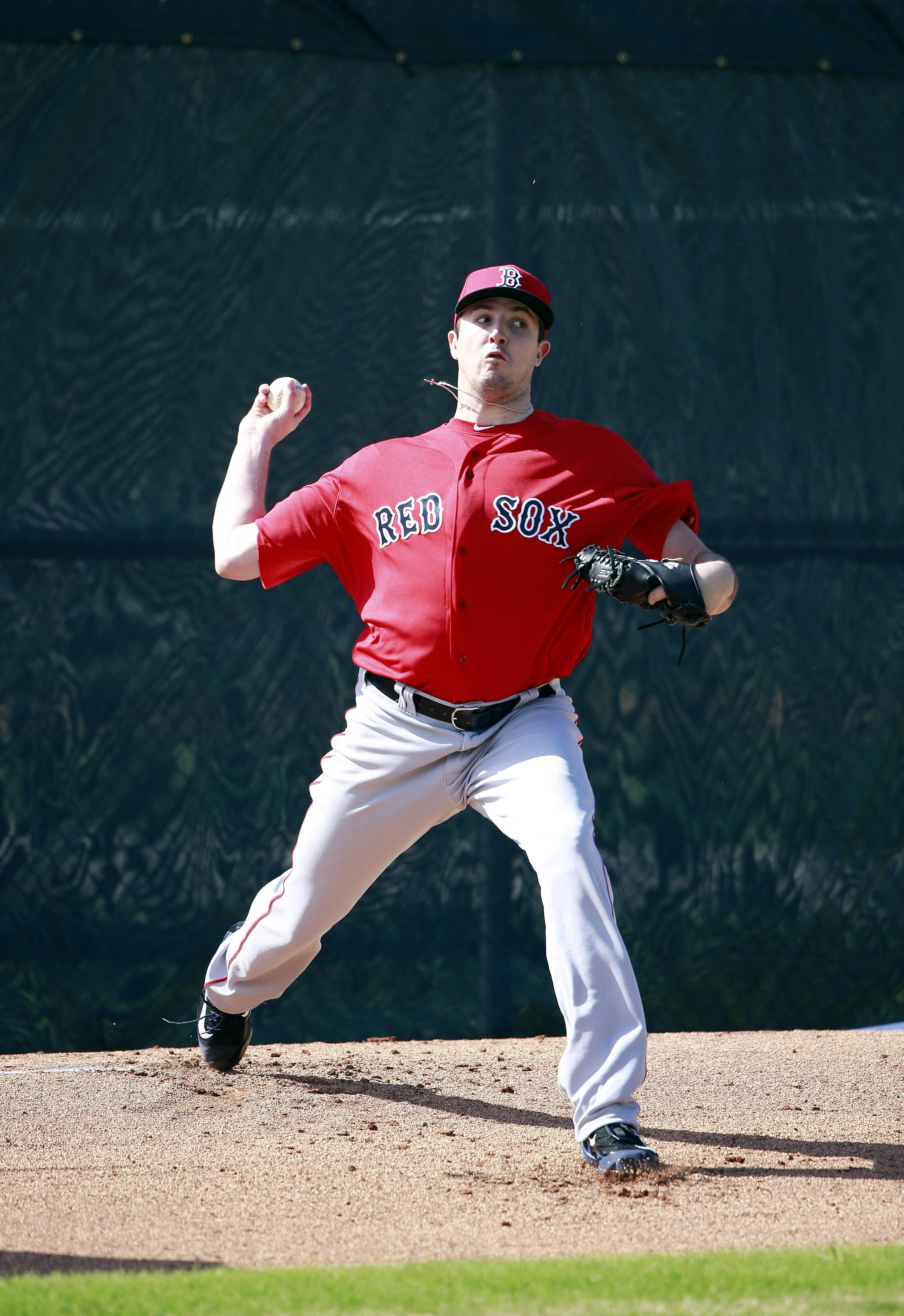
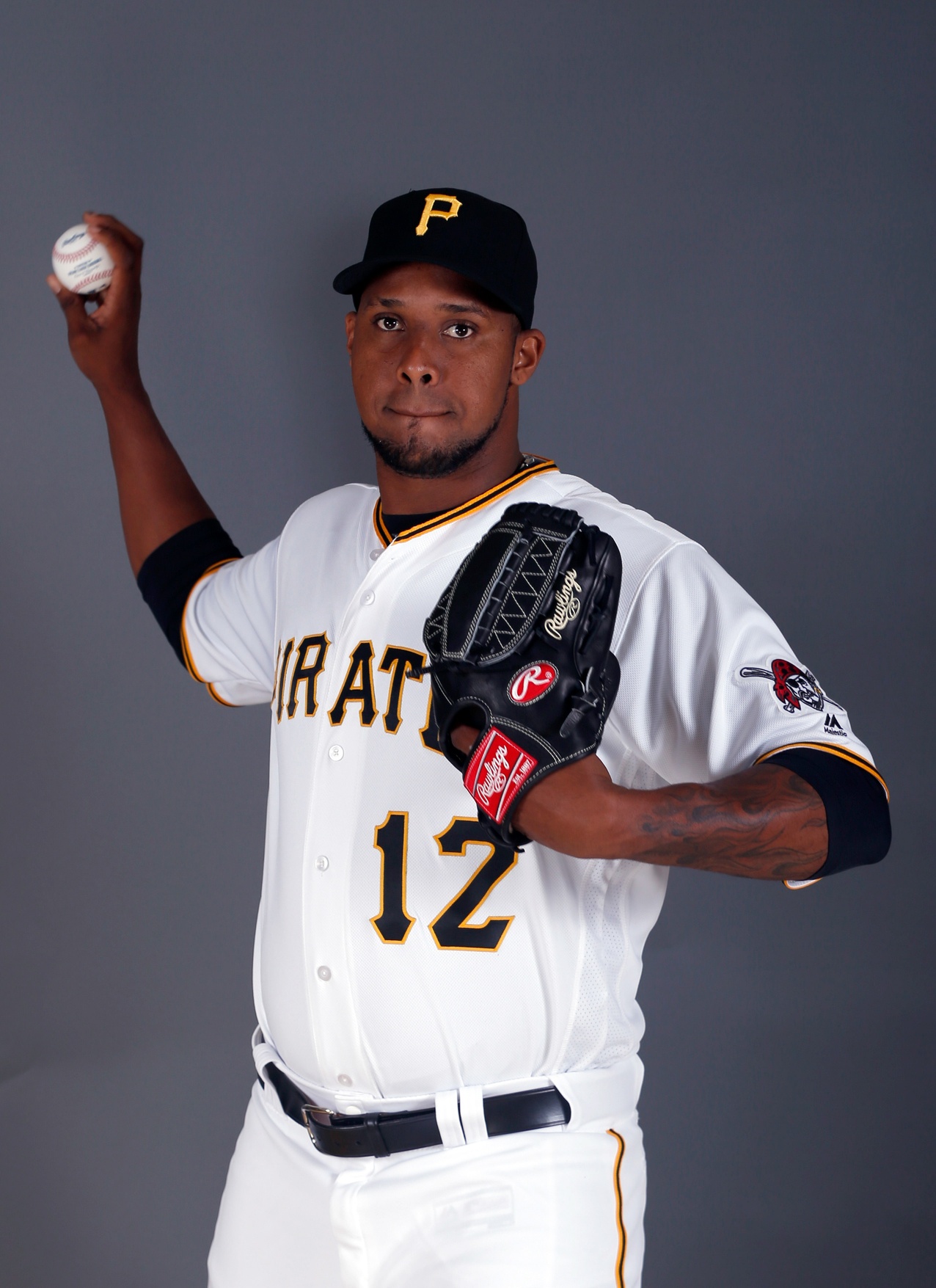 A more interesting cheap pitching deal was that of Juan Nicasio (pictured), who has a good fastball and slider (although not much of a changeup) and whiffed 10.0 batters per nine innings in the Dodgers’ bullpen last year. Given his stuff, age (29), service time (4.084 years, allowing the Pirates to control him for 2017 if they like) and ability to start, $3MM for Nicasio seemed like a reasonable gamble, and there are already signs it could pay off, with Nicasio whiffing 24 batters in 15 shutout innings so far in Spring Training. He’s still in competition for a job in the back of the rotation.
The Pirates also made a number of even less costly depth acquisitions. They got starting pitching prospect Trevor Williams in a lopsided, but minor, deal with the Marlins compensating the Bucs for the Marlins’ hires of Pirates executives Jim Benedict and Marc DelPiano. (In particular, the loss of Benedict, who was widely credited with helping many of the Bucs’ pitchers, could potentially be significant for the organization.) A reliever, Trey Haley, arrived from the Indians on a big-league deal but is likely to begin the season in the minors, where he’ll hone his mid-90s fastball, with the Pirates hoping he can improve his control enough to eventually contribute. There’s still some hope that Cory Luebke (who was signed to a minor league deal) can regain his former promise after a long battle with injuries. And fellow lefty Kyle Lobstein, acquired in a minor trade after the Tigers designated him for assignment, could serve as rotation depth or as a lefty out of the bullpen.
More analysis after the break …
Offseason In Review: Tampa Bay Rays
This is the latest entry in MLBTR’s Offseason In Review series. The full index of Offseason In Review posts can be found here.
The Rays used their bullpen and rotation depth to add some much-needed pop to the lineup. Do they now have enough offense to get back into the AL East race?
Major League Signings
- Steve Pearce, 1B/OF: One year, $4.75MM
- Ryan Webb, RP: One year, $1MM
- Total spend: $5.75MM
Notable Minor League Signings
Trades And Claims
- Acquired OF Corey Dickerson and 3B Kevin Padlo from Rockies for RP Jake McGee and SP German Marquez
- Acquired SS/OF Brad Miller, 1B Logan Morrison and RP Danny Farquhar from Mariners for SP Nathan Karns, RP C.J. Riefenhauser and OF Boog Powell
- Acquired C Hank Conger from Astros for cash considerations
- Acquired cash considerations from Indians for RP Kirby Yates
- Claimed SP Chase Whitley off waivers from Yankees
Extensions
- Logan Forsythe, 2B: Two years, $9.5MM (plus $8.5MM club option for 2018, with $1MM buyout)
Notable Losses
- Asdrubal Cabrera, John Jaso, Joey Butler, Brandon Gomes, Grady Sizemore, Daniel Nava, J.P. Arencibia, McGee, Karns, Riefenhauser, Tyler Goeddel (Rule 5 draft), Joey Rickard (Rule 5 draft)
Needs Addressed
Tampa scored the second-fewest runs of any American League team in 2015, so the natural offseason focus for president of baseball operations Matthew Silverman was finding a few big bats. It didn’t take long for Silverman to act on this need, as he swung a six-player deal with the Mariners just four days after the end of the World Series.
The Rays gave up a significant amount in the trade, most notably a 28-year-old righty in Karns who posted strong numbers for Tampa in 2015 and is controllable through the 2020 season. Minor league outfielder Boog Powell is also well-regarded for his speed and defense and is already ranked as one of Seattle’s top 10 prospects by both MLB.com and Baseball America. (The M’s already flipped Riefenhauser to the Orioles as part of the Mark Trumbo trade.) As valuable as Karns and Powell could’ve been to Tampa Bay, however, both were expendable since the Rays are already deep in rotation and outfield options.
The surplus went to good use as the Rays acquired a player they hope can become a regular shortstop in Brad Miller, though Miller’s defense has been unimpressive in spring play. Though he did start 125 games for Seattle last year, Miller’s troublesome glove kept him from breaking through as a true everyday player — the Mariners ended up using him as a super-utility man, starting him at short, third, second and all three outfield spots. He hasn’t shown much defensive aptitude at any position yet, though in fairness to Miller, he also hasn’t gotten an extended look at any spot besides shortstop.
If Miller can at least be adequate at short, the Rays will have the position settled for a year or two until prospects Willy Adames or Daniel Robertson are ready for the majors. If Miller again settles into being a utilityman, that’s not a bad worst-case scenario for the Rays given how they so value multi-positional versatility. The left-handed hitting Miller has a .256/.327/.429 career line against righty pitching and he’s been roughly a league-average hitter overall in his first three seasons.
Morrison also brings some left-handed thump to the Rays’ first base/DH mix, though the former blue-chip prospect is still trying to find consistency as he enters his seventh big league season. He’ll join James Loney, Steve Pearce and Richie Shaffer in the race for playing time at first and DH, though we’ll address that crowded situation later.
Speaking of Pearce, he’s another multi-position player coming to Tampa in the form of the Rays’ priciest offseason signing. Pearce’s unique career arc made him rather a tough player to evaluate from a free agent price standpoint (as our own Jeff Todd and Steve Adams noted in a Free Agent Stock Watch piece last September), and the one-year, $4.75MM deal Pearce received from the Rays fell well short of the two-year, $14MM projection from Tim Dierkes.
Even if Pearce maxes outs his playing-time incentives to up his contract to $6MM, that’s a price the Rays would happily pay if he produces anything close to the 21-homer/.930 OPS numbers he posted over 383 PA with Baltimore in 2014. Realistically, Pearce is more likely to deliver something closer to his career .756 OPS and he gives the Rays a right-handed hitting option at DH, first, second or either corner outfield spot.
The biggest move the Rays made to address their outfield, of course, was the acquisition of Corey Dickerson from the Rockies. There was a lot of trade speculation surrounding Jake McGee this winter, as the former closer was becoming more expensive in arbitration and the Rays had a younger and cheaper ninth-inning option on hand in Brad Boxberger. Both McGee and Boxberger drew a lot of trade interest, and in the end it was Colorado who obtained McGee at the price of a 26-year-old outfielder with four years of club control and an .879 OPS over his first 925 PA in the Show.
This isn’t necessarily a steal for the Rays given that Dickerson is far from a clear-cut star. He’s struggled against both lefties and away from Coors Field, he played only 65 games last season due to a broken rib and plantar fasciitis in his left foot, and he’s been a below-average left field defender over his brief career. It wouldn’t be a surprise to see Dickerson struggle as he moves from the game’s best hitters park to pitcher-friendly Tropicana Field. Still, obtaining a promising and controllable outfielder and getting $4.8MM in relief pitching salary off the book is a nice score for Silverman, notwithstanding how well McGee has pitched.
Silverman also may have found a decent replacement for McGee in righty Danny Farquhar, who was also part of the Mariners deal. Farquhar posted a 3.34 ERA, 11.4 K/9 and 3.64 K/BB rate over 126 2/3 innings in 2013-14 before his ERA ballooned to 5.12 last season. An increased and perhaps flukish home run rate may have been to blame, as ERA predictors were more forgiving (4.60 FIP, 4.02 xFIP, 3.60 SIERA) over Farquhar’s performance.
Off the field, perhaps the more noteworthy big-picture move for the Rays was a positive development in their search for a new stadium in the greater Tampa area, as the team was granted permission to explore potential sites for a new ballpark in neighboring counties rather than be limited to just St. Petersburg or stuck at Tropicana Field altogether.
Offseason In Review: Philadelphia Phillies
Check out all the published entries in our Offseason in Review series here.
The new Phillies front office continued the tear-down while adding a wide array of low-cost, low-risk assets in an offseason of continued change.
Major League Signings
- RP David Hernandez: One year, $3.9MM
Trades
- Acquired SP Vincent Velasquez, SP Brett Oberholtzer, SP Mark Appel, SP Thomas Eshelman, SP/RP Harold Arauz from Astros for RP Ken Giles, INF Jonathan Arauz
- Acquired SP Charlie Morton from Pirates for SP David Whitehead
- Acquired SP Jeremy Hellickson from Diamondbacks for SP Sam McWilliams
- Acquired RP Yoervis Medina from Pirates for SP Jesse Biddle
- Acquired 2B Taylor Featherston from Angels for cash/PTBNL
Claims
- Claimed OF Peter Bourjos off waivers from Cardinals
- Claimed RP Michael Mariot off waivers from Royals
- Claimed RP A.J. Achter off waivers from Twins; later claimed by Angels
- Claimed RP Dan Otero off waivers from Athletics; later traded to Indians for cash
- Claimed RP Bobby LaFromboise off waivers from Angels
- Claimed OF Tyler Goeddel from Rays in Rule 5 draft
- Claimed RP Daniel Stumpf from Royals in Rule 5 draft
Extensions
- None
Notable Minor League Signings
- J.P. Arencibia, Andrew Bailey, Emmanuel Burriss, Ernesto Frieri, Frank Herrmann, Cedric Hunter, Edgar Ibarra, Ryan Jackson, Chris Leroux, David Lough, Edward Mujica, James Russell, Anthony Vasquez
Notable Losses
- Biddle, Chad Billingsley, Brian Bogusevic, Domonic Brown, Jordan Danks, Chase d’Arnaud, Justin De Fratus, Kelly Dugan, Jeff Francoeur, Giles, Aaron Harang, Erik Kratz, Cliff Lee (declined option), Adam Loewen, Nefi Ogando, Jonathan Pettibone, Jerome Williams
Needs Addressed
If you’ve ever wondered what a modern-day expansion draft would look like, the Phillies’ offseason provides a decent proxy. The organization turned over huge swaths of its 40-man roster, re-stuffing it (and the non-roster invite rolls) with a mix of placeholders, interesting youngsters, and bounceback veterans.
Former GM Ruben Amaro Jr. had already sold off most of the team’s marketable veteran assets, leaving only Ryan Howard and Carlos Ruiz from the 2008 championship club. Truth be told, they’d probably be gone, too, but it’s not entirely clear that either warrants a guaranteed roster spot at this point — let alone anything close to the $35MM and $9MM they’re respectively owed.
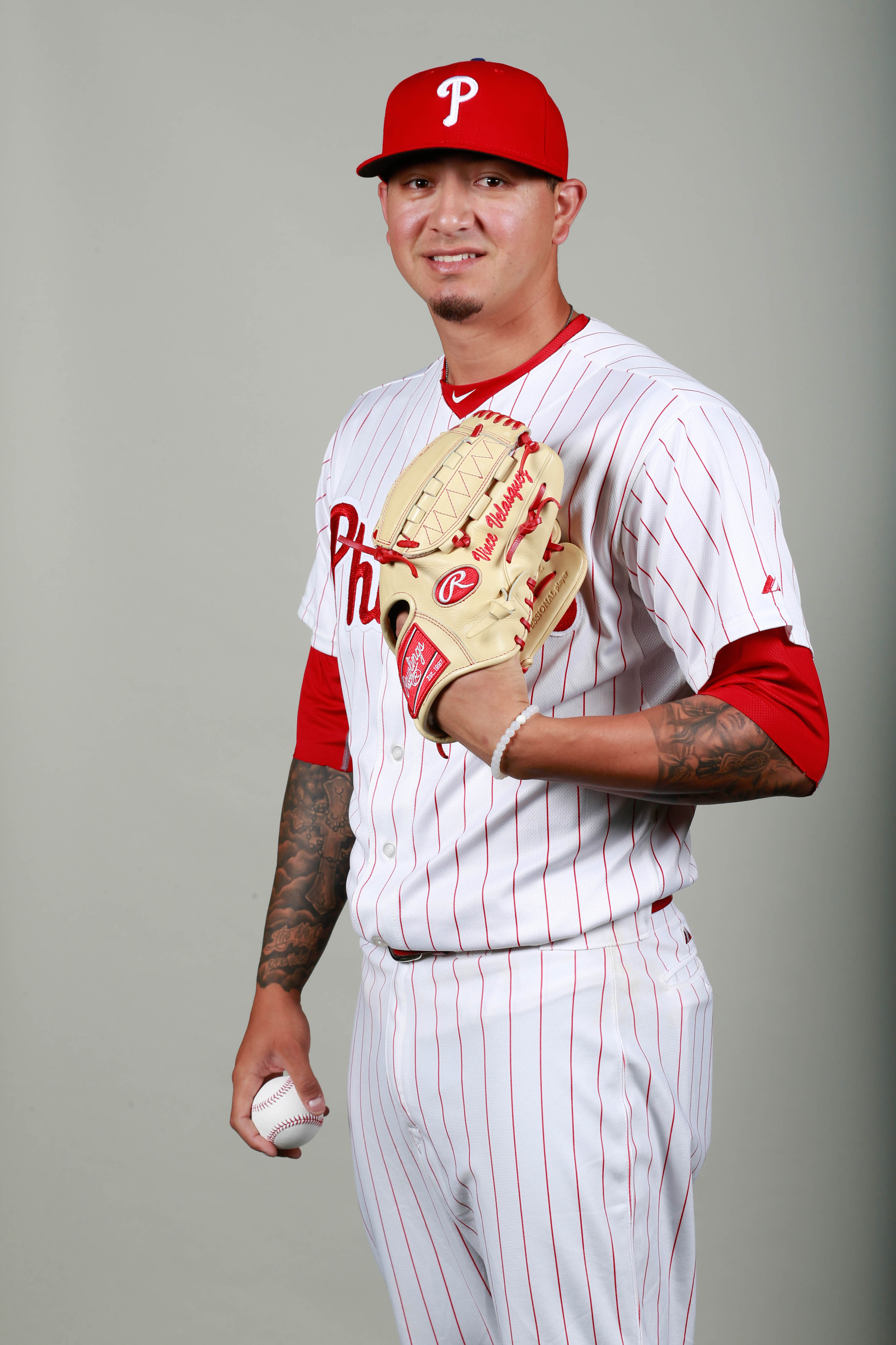
Incoming president Andy MacPhail and hand-picked GM Matt Klentak did have one major trade piece to market, however: young closer Ken Giles and his five remaining years of control. He might well have been retained had he played any other position, but the new Phillies brass was probably wise to cash in the fireballing righty while his value was high. There aren’t any sure things in the return, but Vincent Velasquez and Mark Appel have their share of upside, with late-inning relief potential if they can’t stick in the rotation. Harold Arauz represents a fun lottery ticket to track, while Brett Oberholtzer and, eventually, Thomas Eshelman could provide some cheap and solid innings.
Stocking future assets remains the unmistakable lodestar of the new front office, but there were near-term roster practicalities to be considered. And 25-man opportunities are their own kind of asset for rebuilding clubs, which can offer veterans a chance to receive playing time, rebuild value, pass on some lessons to the youngsters, and hopefully turn themselves into appealing summer trade pieces. The rotation, in particular, was ripe for would-be comeback tales, with several short-term veterans departing and the inimitable Cliff Lee cut loose, his $12.5MM buyout representing an easy decision given his elbow issues and questionable desire to pitch in 2016.
Convincing intriguing veterans to come to Philadelphia may not have been a fruitful task with the roster ripped down to the studs, so the Phils went after unwanted, mid-priced castaways. Charlie Morton and Jeremy Hellickson offer the promise of some stability and will help prevent the need to press younger arms for non-developmental reasons. At $9MM (including option buyout) and $7MM, respectively, they aren’t obvious values. And neither seems particularly likely to be worthy of a qualifying offer after the season. (Morton’s option turned into a mutual one with the deal, so he’ll likely decline it if he’s productive and healthy.) But the TV-rich Phillies have pared their payroll to levels not seen since 2003 even with those additions, neither pitcher required much in the way of player assets to acquire, and sturdy performances over the season’s first few months could turn the pair into trade chips.
Those two starter additions constituted the largest salary commitments of the winter, with the Phillies only making one major league signing. David Hernandez seemed penciled in as the team’s closer, and figures to have a chance at the role with a $3.9MM guarantee in hand, but he’s been taking it slow this camp given his history of arm injuries. He isn’t controllable past this season, so the bet is that his arm will stay healthy and that he’ll come close enough to his double-digit K/9 numbers of yore to anchor the pen and, perhaps, turn into prospects on or before August 1st.
Otherwise, the Phillies turned their spring home of Clearwater, Florida into a veritable island of misfit toys — while mixing a group of young but talented prospects — ultimately inviting 65 players to big league camp. The new front office plucked seven players from DFA limbo, whether by trade or claim, though it later lost two of those through the same process in the course of making yet more additions. It also added a host of minor-league free agents. We’ll walk through the more significant among them in tackling the team’s many areas of uncertainty.
Read on for more analysis …
Offseason In Review: Baltimore Orioles
This is the latest entry in MLBTR’s Offseason In Review series. The full index of Offseason In Review posts can be found here.
After years of modest-to-little offseason spending, the Orioles exploded for the biggest spending spree in club history. A lot of familiar faces are back for another AL East run, though the O’s still have some questions to answer in the rotation.
Major League Signings
- Chris Davis, 1B: Seven years, $161MM
- Darren O’Day, RP: Four years, $31MM
- Yovani Gallardo, SP: Two years, $22MM (includes $2MM buyout of $13MM club option for 2018)
- Hyun Soo Kim, OF: Two years, $7MM
- Matt Wieters, C: One year, $15.8MM (accepted qualifying offer)
- Pedro Alvarez, 1B: One year, $5.75MM
- Zach Phillips, RP: One year, $510K
- Total spend: $243.06MM
Notable Minor League Signings
- Dale Thayer, Steve Tolleson, Paul Janish, Julio Borbon, Hideki Okajima, Mike Carp, Jeff Beliveau, Alfredo Marte, Sam Deduno, Nathan Adcock, Todd Redmond, Cesar Cabral, Audry Perez, Pedro Beato
Trades And Claims
- Acquired 1B/OF Mark Trumbo and RP C.J. Riefenhauser from Mariners for C Steve Clevenger
- Acquired SP Odrisamer Despaigne from Padres for SP Jean Cosme
- Acquired OF L.J. Hoes from Astros for cash considerations
- Acquired C Francisco Pena from Royals for cash considerations
- Claimed P Vance Worley off waivers from Pirates
- Claimed IF/OF Joey Terdoslavich off waivers from Braves
- Claimed OF Joey Rickard from Rays in the Rule 5 draft
Extensions
- None
Notable Losses
- Wei-Yin Chen, Steve Pearce, Gerardo Parra, Junior Lake, David Lough, Rey Navarro, Steve Johnson, Ji-Man Choi (Rule 5 draft), Clevenger, Riefenhauser
Needs Addressed
If the theme of the Orioles’ offseason was unexpected spending, the tone was set early on when Matt Wieters accepted the team’s one-year, $15.8MM qualifying offer to return for the 2016 season. With Caleb Joseph and Steve Clevenger already lined up as the new catching tandem, Wieters’ return created a bit of a surplus, so Clevenger was dealt to Seattle as part of a trade that saw Mark Trumbo come to Baltimore.
Trumbo will see some time as the Orioles’ designated hitter against lefty starters, but he’ll probably spend most of his time in right field, where he has posted below-average (-10 defensive runs saved, -11.8 UZR/150) metrics. The O’s will live with that lack of glove work as long as the move to Camden Yards suits Trumbo’s power bat. Trumbo has 131 homers in 2760 career PA despite playing much of his career in pitcher-friendly ballparks in Seattle and Anaheim, though the challenge for him has always been getting on base.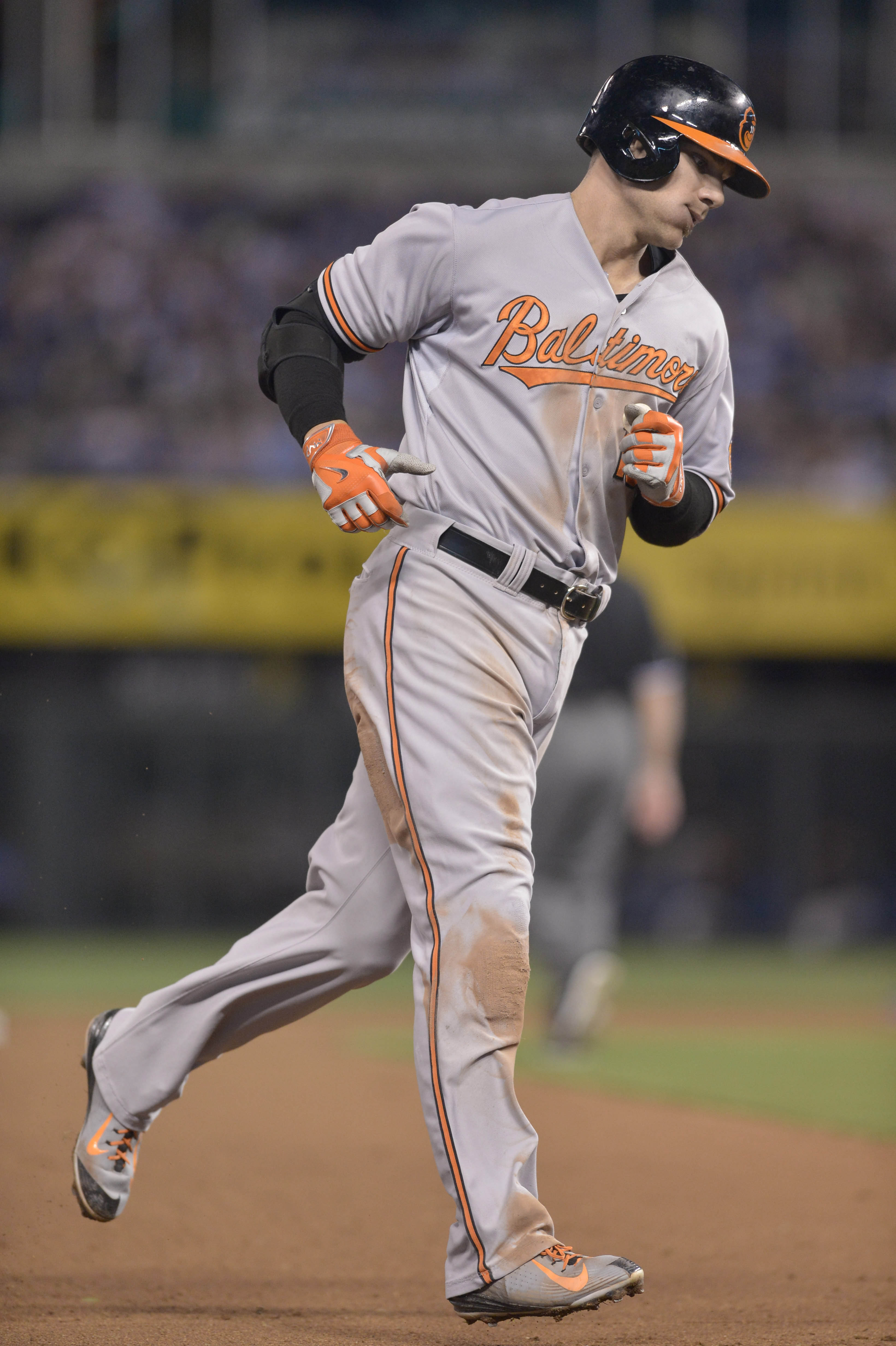
Through Trumbo was on hand as a possible first base replacement, the O’s were focused on Chris Davis as their top winter target and eventually re-signed the slugger on a team record seven-year/$161MM contract ($42MM of which is deferred). It was a stunning outlay, especially considering that talks between the two sides seemed to stall at one point over a $150MM offer, though that could have just been some negotiating gamesmanship on Baltimore’s part. Still, the $161MM figure topped expectations, especially considering that Davis’ market seemed rather quiet — the Tigers were the only other club known to have a clear interest in Davis (as a left fielder, rather curiously), with the Red Sox, Cardinals and Blue Jays also rumored to have at least explored a signing at some point.
Another Scott Boras client joined the Orioles in Pedro Alvarez, who will more or less be a full-time DH in his first stint in the American League. It’s possible that Alvarez’s one-year, $5.75MM deal could be one of the offseason’s biggest bargains given the move to Camden — like Trumbo, he has shown big power in a pitcher-friendly environment, launching 111 homers over the last four seasons despite playing home games at PNC Park. Perhaps more importantly for the defensively-challenged Alvarez, he can now focus exclusively on hitting in the DH role, and also be protected from tough lefty pitching due to Trumbo’s presence. Alvarez isn’t a flawless signing, of course, as we’ll explore in the “questions remaining” section.
Gerardo Parra left to join the Rockies, and while the Orioles explored some bigger names in the outfield (more on that later), they addressed their corner vacancies in the form of Trumbo and Korean signing Hyun Soo Kim. The O’s have been quite active in the international market under Dan Duquette (with Wei-Yin Chen standing out as the only real success story) and the club hopes Kim can be a solid option in left on at least a platoon basis. The 28-year-old Kim posted monster numbers over 10 seasons in the Korean Baseball Organization, and he’ll form the left-handed hitting side of a platoon with Nolan Reimold slated for time against opposing southpaws. Rule 5 draft pick Joey Rickard could also see some at-bats against left-handed pitching as the O’s endeavor to keep him on their 25-man roster.
With these new options in the outfield and at first base, the Orioles were comfortable letting Steve Pearce leave in free agency, although they did have some discussions about bringing back the veteran utility man. Pearce ended up staying in the AL East, signing a one-year deal with Tampa Bay.
On the bullpen front, the Orioles bought back a familiar face in Darren O’Day, inking the long-time setup man to a four-year, $31MM deal. The signing may have been extra sweet for the Orioles since their beltway rivals in Washington were reportedly O’Day’s second choice and he came very close to signing with the Nationals. O’Day and closer Zach Britton will again team up to headline what should continue to be a very solid Baltimore bullpen that also stands to benefit from full seasons out of Mychal Givens and oft-injured, out-of-options prospect Dylan Bundy.
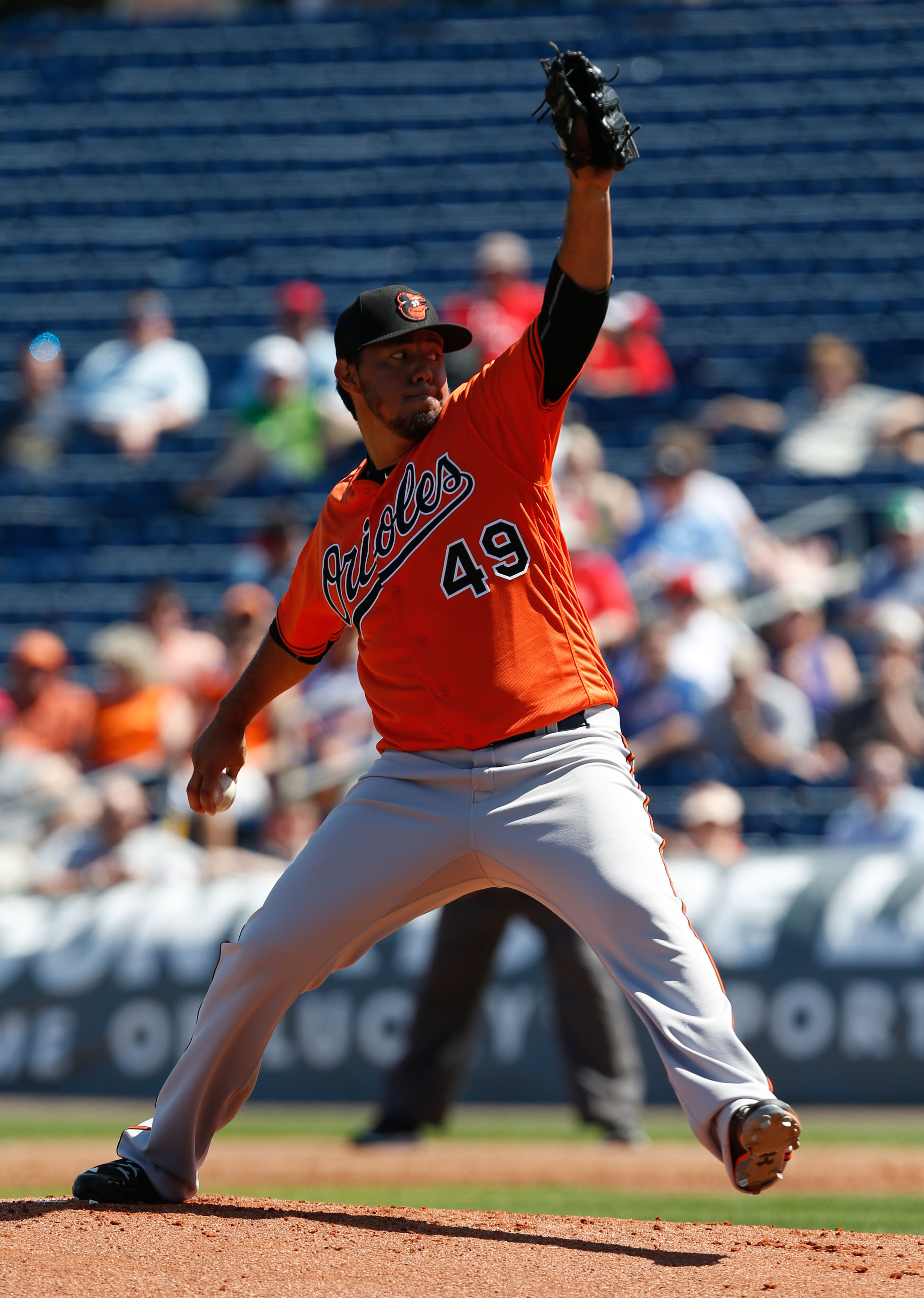 What’s an Orioles offseason without a medical controversy surrounding a signing? This time it was Yovani Gallardo who ran afoul of Baltimore’s notoriously stringent physicals, as the original three-year, $35MM agreement morphed into a two-year, $22MM contract with a $13MM club option for 2018 after the O’s discovered an issue with Gallardo’s shoulder.
Of course, durability is Gallardo’s chief calling card: the righty has averaged 32 starts and 191 innings per season since 2009. Though his strikeout rate has steadily dropped over the last three years and he posted just a 5.9 K/9 last season (against 3.3 BB/9), Gallardo has posted at least 2 fWAR in each of the last four seasons and proved last year in Texas that he could succeed against American League lineups.Read more
2017 MLB Free Agent Power Rankings
The 2015-16 MLB free agent class is winding down, and it’s time to turn our attention to the 2016-17 group. These players project to become free agents after the 2016 season, unless they sign contract extensions first. Extensions seem unlikely for the top names. Players may be reluctant to sign now, as the 2016-17 class appears weak. MLBTR’s full list of 2016-17 free agents can be found here.
What exactly are we ranking here? The simplest explanation would be earning power. These rankings represent expected contract size, assuming each player reaches the open market and goes to the highest bidder. Of course, nothing affects a free agent’s earning power more than his most recent season, so I’ll be updating these rankings monthly.
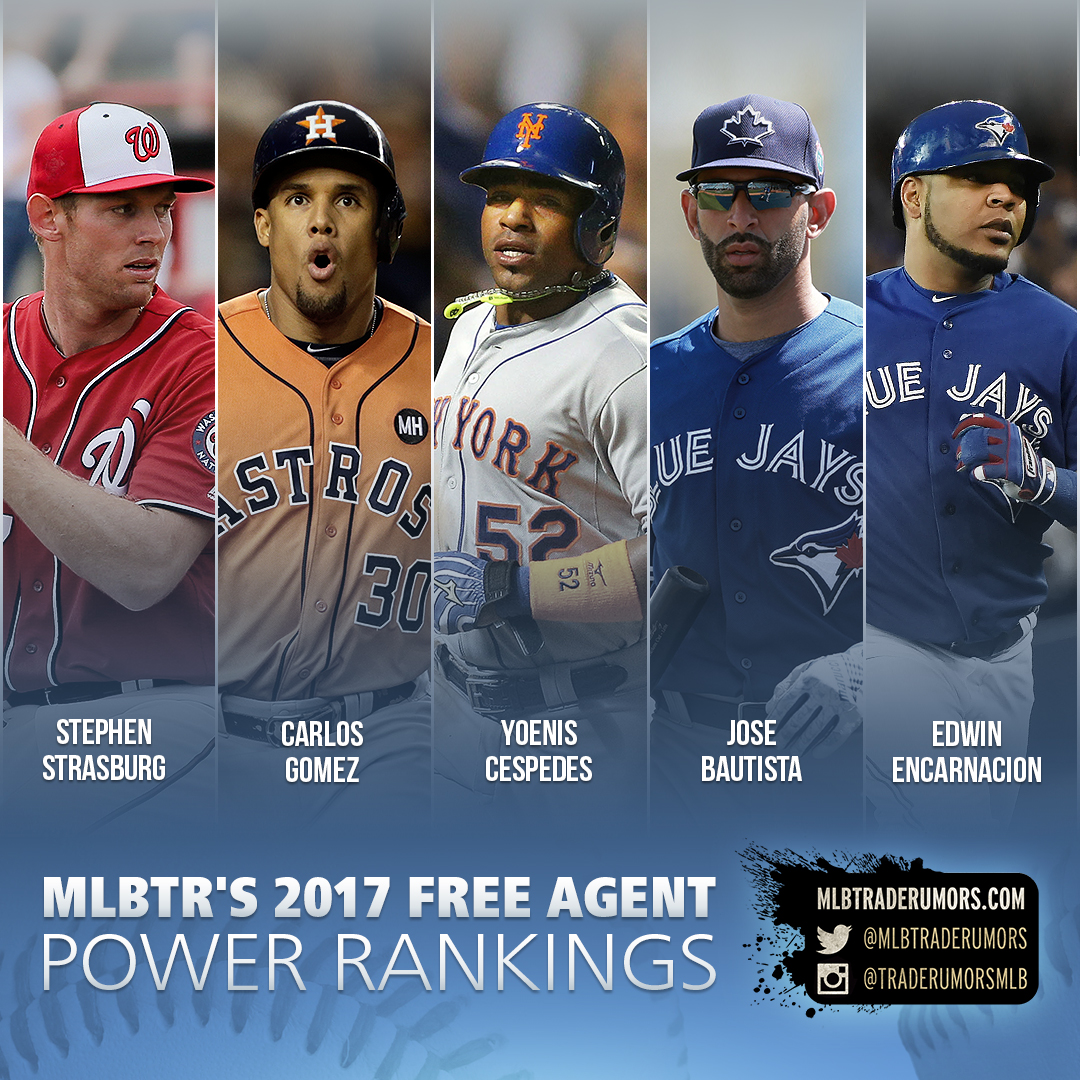
1. Stephen Strasburg. The first overall pick in the 2009 draft, Strasburg has been very good in his Nationals career but hasn’t quite lived up to expectations. One could draw a parallel with one of last winter’s top free agents, Justin Upton. Of course, it’s different with pitchers, and over the years Strasburg’s only limitation has been health. After tying for the NL lead in strikeouts in 2014, shoulder, neck, back, and oblique issues limited Strasburg to 23 big league starts in 2015. After the season, he had a “small, non-cancerous growth removed from his back,” wrote James Wagner of the Washington Post. Strasburg also has Tommy John surgery in his health history, with the procedure performed in September 2010. Strasburg’s agent, Scott Boras, enjoys a well-known cozy relationship with the Nationals. The team generated controversy in 2012 when Strasburg was shut down at 159 1/3 innings with the team headed to the playoffs, a decision unsurprisingly supported by Boras. Now, if Strasburg can muster up his second career 200-inning season along with his typical dominance, Boras will seek to shatter David Price‘s record contract for starting pitchers, which was for seven years and $217MM with the Red Sox. As with Price, opt-out clauses will factor heavily into the discussion. Strasburg doesn’t turn 28 until July, so he’ll be about two years younger than Price was.
2. Carlos Gomez. Gomez took big steps forward after being traded to the Brewers in November 2009, and posted a career-best 19 home runs in 2012. In the spring of 2013, with free agency looming after the season, Gomez signed a surprising three-year extension with Milwaukee. He went on to put up monster seasons in 2013 and ’14, but was derailed in 2015 with hamstring and hip issues. A near-trade to the Mets fell apart in July when New York backed out for various reasons, but he was successfully traded to the Astros the following day. Similar to Strasburg, a healthy season will go a long way for Gomez, who is also represented by Boras. The center fielder could land a deal north of $150MM if he returns to his 2014 level of health and production.
3. Yoenis Cespedes. I predicted a six-year, $140MM deal for Cespedes, who reached free agency after the 2015 season. Instead, the 30-year-old slugger turned down multiple five-year offers and returned to the Mets in late January on an interesting high-AAV contract. Cespedes signed a three-year, $75MM deal, with an opt out after 2016. If exercised, Cespedes will have earned a hefty $27.5MM for the ’16 season. If he does opt out, perhaps Cespedes will be coming off a season good enough to ease whatever concerns plagued him this winter, and he can snag that six-year deal in the end. It’s a weaker market for sluggers, as Bautista and Encarnacion are considerably older.
4. Jose Bautista. Bautista, 36 in October, crushed 75 home runs over the last two seasons for the Blue Jays. He’s a late bloomer, having broken out with the Jays in 2010 at age 29 with 54 home runs. While extension talks with Toronto have occurred, Bautista stated in February that he’s “not willing to negotiate” from his asking price, which reports suggest could be five or six years at around $30MM per season. Right now I’m penciling him in for four years and $120MM. Some teams will draw a hard line because of Bautista’s age, but it’s certainly possible for one to throw caution out the window.
5. Edwin Encarnacion. Bautista’s teammate has been prolific in his own right, with 151 bombs over the last four years. He’ll turn 34 prior to the 2017 season, so age is a big factor here as well. Talks with the Jays have stalled over contract length, and you have to think Encarnacion expects at least four years. I could see something like four years and $100MM, though he’d have a good argument for five years if Bautista gets that many first. Encarnacion is more limited in the field, as a DH/first baseman.
6. Josh Reddick. Reddick doesn’t carry the same health or age concerns as the other outfielders on this list. He recently turned 29, and he played in 149 games last year. Reddick has evolved as a hitter, dropping his strikeout rate to 11.2% last year. He’s got 20 home run pop and a good defensive reputation, if not the numbers to back up the latter in recent years. He could be a candidate for a surprising five-year deal approaching $100MM. The A’s are at least exploring an extension.
7. Andrew Cashner. You might be surprised to see Cashner this high on the list. Indeed, his position is tenuous. But in a free agent market starved for starting pitching, Cashner is the type you can dream on. A former 2008 first rounder, Cashner averaged a blazing 94.8 miles per hour on his fastball last year. That ranked sixth in baseball among those with 180 innings. On the other hand, it was Cashner’s first time reaching that innings plateau, and he served up a 4.34 ERA for San Diego. The team chose to hold onto him over the winter, perhaps sensing his value could rise in his contract year. If Ian Kennedy can get five years and $70MM plus an opt-out clause, Cashner could do well in a free agent market for starting pitching that looks much, much worse.
8. Kenley Jansen. Jansen, 29 in September, may be the game’s best reliever. The Dodgers’ closer boasts massive strikeout rates, and he added a career-best walk rate last year. Jansen is practically unhittable, and he doesn’t come with the off-field baggage Chapman does. Jonathan Papelbon‘s record four-year, $50MM contract for relievers could fall, as it’s possible Jansen could land a five-year deal.
9. Adrian Beltre. Though he’s represented by Boras, Beltre stands a fair chance of reaching an extension with the Rangers. The third baseman will turn 37 soon, but a three-year deal would be a fair request. I could see three years and $60MM or more. Though Beltre is winding down a potential Hall of Fame career, he remains a potent hitter and strong defender.
10. Aroldis Chapman. Chapman is right there with Jansen in terms of relief dominance, regularly punching out at least 42% of batters faced. The 28-year-old is the hardest-throwing pitcher alive, averaging 99.5 miles per hour on his fastball last year and over 100 the year before. However, his upcoming free agency is clouded by an incident that occurred at his home last October. In a police report uncovered by Tim Brown and Jeff Passan of Yahoo, Chapman reportedly pushed and choked his girlfriend and fired a gun repeatedly in his garage. Chapman denies harming his girlfriend, but chose not to appeal the 30-game suspension handed down by MLB as part of its domestic violence policy. Even if Chapman avoids further incidents as a member of the Yankees, this one will affect his free agency after the season. Every interested team will conduct due diligence, and perhaps several will emerge with enough comfort to offer Chapman a large four-year deal. At this point, it’s difficult to say.
In the 2015-16 offseason, ten free agents signed for at least $80MM, seven of whom were pitchers. This year, only Strasburg seems likely to reach $80MM, highlighting the lack of depth in starting pitching in the 2016-17 market. After Cashner, there’s names like Jesse Chavez, Jorge de la Rosa, Ivan Nova, Edinson Volquez, Kris Medlen, and Brett Anderson. James Shields and Scott Kazmir each have the ability to opt out of their current contracts and join the market, though it’s unclear whether either will find that worthwhile. On the relief side, Mark Melancon is a high quality arm likely to land in our top 20.
There are a few interesting position players who did not make my initial top ten: Justin Turner, Francisco Cervelli, Matt Wieters, and Neil Walker. Ian Desmond and Colby Rasmus will find themselves back on the market again, barring extensions.
It doesn’t seem likely that the Nippon Ham Fighters will post 21-year-old phenom pitcher Shohei Otani after this season, but if they do it would shake up the MLB free agent market.
Offseason In Review: Los Angeles Angels Of Anaheim
This is the latest entry in MLBTR’s Offseason In Review series. The full index of Offseason In Review posts can be found here.
The Angels made a couple of big trades to shore up the infield, but a payroll crunch led new GM Billy Eppler to address other roster holes in a more cost-conscious way.
Major League Signings
- Cliff Pennington, IF: Two years, $3.75MM
- Geovany Soto, C: One year, $2.8MM
- Daniel Nava, OF: One year, $1.375MM
- Al Alburquerque, RP: One year, $1.1MM base salary (only around $275K is guaranteed if Alburquerque is cut before Opening Day)
- Craig Gentry, OF: One year, $1MM (split contract, salary only guaranteed if Gentry makes the MLB roster)
- Rafael Ortega, OF: One year, $525K
- Total spend: $8.45MM guaranteed ($10.5MM with Alburquerque and Gentry on the MLB roster)
Notable Minor League Signings
- Javy Guerra, Gregorio Petit, Lucas Luetge, Ramon Ramirez, Quintin Berry, Andrew Brown, Yunesky Maya, Josh Roenicke, Lou Marson, Donavan Tate
Trades
- Acquired SS Andrelton Simmons and C Jose Briceno from Braves for SS Erick Aybar, SP Sean Newcomb, SP Chris Ellis and $2.5MM
- Acquired 3B/SS Yunel Escobar and $1.5MM from Nationals for RP Trevor Gott and SP/RP Michael Brady
- Acquired cash considerations from Indians for OF Collin Cowgill
- Acquired cash considerations from Orioles for 1B/OF Efren Navarro
- Acquired future considerations from Phillies for IF Taylor Featherston
- Acquired 1B/3B Jefry Marte from Tigers for 2B Kody Eaves
Claims
- Claimed IF Rey Navarro off waivers from Orioles
- Claimed RP A.J. Achter off waivers from Phillies
- Claimed RP Deolis Guerra and 1B Ji-Man Choi in Rule 5 Draft
- Claimed RP Rob Rasmussen off waivers from Mariners (Rasmussen has since retired)
Extensions
- None
Notable Losses
- Chris Iannetta, David Freese, David Murphy, Cesar Ramos, Shane Victorino, Matt Joyce, Mat Latos, Dan Robertson, Aybar, Gott, Cowgill, Navarro, Featherston
Needs Addressed
The offseason was only a couple of weeks old when Eppler made his first big splash, landing Andrelton Simmons in a deal that saw longtime shortstop Erick Aybar and top pitching prospects Sean Newcomb and Chris Ellis go to Atlanta. While the Halos were criticized for an overall lack of spending this winter, acquiring Simmons required a significant financial commitment given that he’s owed $53MM through the 2020 season.
At that price, the Angels now have not just baseball’s top defensive shortstop, but perhaps its top defender at any position — Simmons’ career 21.4 UZR/150 is the best of any player from 2002-15. While any team would benefit defensively by adding Simmons, he’s a particularly big upgrade for the Halos given that Aybar posted below-average defensive metrics over the last three seasons. Simmons has shown flashes of hitting potential over his career and he’s still only 26, though he’s so spectacular in the field that he’ll be a valuable asset even if he continues to be a subpar hitter.
 The acquisitions of Cliff Pennington and Rey Navarro added to the theme of defense up the middle. Pennington has shown some good glovework at second over his career, while Navarro (who made his MLB debut in 2015) has been regarded as an excellent defensive middle infielder over his nine-year pro career. They’ll be backup options in the middle infield or perhaps even platoon options for Johnny Giavotella at second, who struggled defensively in 2015 and didn’t show too much at the plate.
There’s a chance Yunel Escobar could end up at second if once-touted prospects Kaleb Cowart or Kyle Kubitza emerge, though in all likelihood, the Angels will stick with their plan of using Escobar as the everyday third baseman. After talks of a reunion with David Freese didn’t develop, Anaheim dealt hard-throwing ground ball specialist Trevor Gott to Washington for Escobar and $1.5MM to go towards covering part of the veteran infielder’s $7MM salary.
Escobar was a defensive liability at third last season, though it was his first time playing the hot corner since 2007. Having Simmons play next to him should help in that regard, though the Angels are mostly hoping Escobar can add some pop to the lineup. In his age 32-season, he hit .314/.375/.415 (his highest totals in all slash line categories since 2009) with nine homers over 591 plate appearances for the Nats. Escobar did benefit from a .347 BABIP, however, so it remains to be seen if he can come close to replicating that performance in pitcher-friendly Angel Stadium.
Losing Gott isn’t too big a blow to a fairly deep Angels bullpen, but the club did go on to acquire some low-cost depth in Al Albuquerque, Javy Guerra and a few other notable veteran names on minor league deals. Right-hander and Rule 5 Draft pick Deolis Guerra will also have to stay on the 25-man roster all season or else Los Angeles will lose him back to Pittsburgh.
With Chris Iannetta gone to the Mariners in free agency, the Angels signed Geovany Soto to handle most of the catching duties, though Carlos Perez could end up receiving as much as half the playing time behind the plate. Soto brings the type of defense (particularly in pitch-framing and throwing out baserunners) that manager Mike Scioscia always looks for in his catchers, so he could up being a very good value on his one-year, $2.8MM contract.
Speaking of value, veterans Craig Gentry and Daniel Nava are slated for a left field platoon at the combined price of $2.375MM. On paper, this combo could work quite well — Gentry is a career .274/.354/.366 hitter against lefties while Nava has a .281/.377/.409 slash line against righties. The problem is that neither player has hit much of anything over the last two seasons, so there’s plenty of room for the likes of newcomers Rafael Ortega, Todd Cunningham, Quintin Berry or Gary Brown to earn playing time.
Continue reading after the page break for more analysis …
Offseason In Review: Houston Astros
This is the latest entry in our Offseason in Review series. See a full index of the series here.
The Astros’ famed rebuilding process paid unexpectedly quick dividends in the form of a 2015 ALDS appearance, and they’ll enter the 2016 season with the loftiest expectations they’ve carried in years.
Major League Signings
- Tony Sipp, LHP: Three years, $18MM
- Colby Rasmus, OF: One year, $15.8MM (accepted qualifying offer)
- Doug Fister, RHP: One year, $7MM
- Total Spend: $40.8MM
Notable Minor League Signings
Trades and Claims
- Acquired RHP Ken Giles and IF Jonathan Arauz from the Phillies in exchange for RHP Mark Appel, RHP Vincent Velasquez, LHP Brett Oberholtzer, RHP Thomas Eshelman and RHP Harold Arauz
- Traded SS Jonathan Villar to the Brewers in exchange for minor league RHP Cy Sneed
- Traded SS Jed Lowrie to the Athletics in exchange for minor league RHP Brendan McCurry
- Traded C Hank Conger to the Rays in exchange for cash considerations
- Claimed RHP Danny Reynolds off waivers from the Dodgers
Extensions
- None
Notable Losses
- Scott Kazmir, Chris Carter, Chad Qualls, Oliver Perez, Brett Oberholtzer, Vincent Velazquez, Jonathan Villar, Hank Conger, Joe Thatcher, Roberto Hernandez, Samuel Deduno, L.J. Hoes, Robbie Grossman
Needs Addressed
The Astros spent a good bit of time looking at bullpen upgrades at the non-waiver trade deadline but ultimately didn’t pull the trigger on any of their rumored targets, which included Aroldis Chapman and Craig Kimbrel. GM Jeff Luhnow said in July that he sought a “flamethrower” to join a collection of relievers that already came with an eclectic collection of deliveries and velocities. Though the summer trade market didn’t see that desire come to fruition, Luhnow and his staff continued the pursuit into the offseason and were rewarded for their persistence. In acquiring Ken Giles, the Astros not only landed one of the game’s most intriguing young pen arms, but got him for the next five seasons.
That level of control, which includes two campaigns at scarcely more than the league minimum, also dictated a steep acquisition cost. Indeed, Houston parted with five young pitchers in order to land Giles and minor league infielder Jonathan Arauz. Two of the pitchers included in the deal — Vincent Velasquez and Brett Oberholtzer — could step directly onto the Phillies’ Major League roster. Another, Mark Appel, was selected with the first overall pick in the 2013 draft. While Appel has failed to live up to the lofty expectations that accompany that draft status, his raw stuff still gives scouts hope that his numbers will eventually catch up to his talent. Eshelman joins the Phillies as a starter with elite control but a lack of overpowering pitches. It’s possible that within a couple of years, the Phillies will have a pair of starters or at least one starter and a new power arm in the bullpen as a result of the trade. The deal certainly comes with the potential for the Phils to make out with a large quantity of big league arms, but the Astros had depth in their pitching ranks and felt the need for a high-quality, late-inning arm was pressing enough to part with a wide swath of pitching talent.
Joining Giles in the ‘pen will be a returning face for the Astros; Tony Sipp hit free agency but ultimately never changed jerseys, remaining with the team where he experienced a breakout by inking a new three-year, $18MM contract. That deal proved to be the top contract given out to a left-handed reliever this offseason by a wide margin, though Sipp’s excellence against both left- and right-handed opponents over the past two seasons made him a sensible candidate for a three-year commitment from the onset of free agency. (He did, however, top MLBTR’s prediction in terms of annual value.)
By trading both Velasquez and Oberholtzer, the Astros thinned out their Major League pitching depth, leaving them somewhat exposed in the event of rotation injuries. A one-year deal for rebound candidate Doug Fister restored some of that depth, even if the signing essentially pushed Scott Feldman into the role of an $8MM swingman. (Mike Fiers could also float between the rotation and the pen as need and performance dictate.) Fister’s velocity plummeted last season, and his strikeout rate went with it, so there’s very legitimate cause to be concerned that he might never rebound to the form he showed with the Tigers. However, considering the relatively modest price paid to bring the veteran into the fold, the Astros had every reason to take a chance on some degree of resurgence.
The acquisition of Fister may have been made possible by the fact that the Astros were able to jettison the remainder of Lowrie’s three-year contract in that trade with the Athletics. Houston may have been more financially limited than it had hoped entering the offseason due to Colby Rasmus’ acceptance of the qualifying offer, but shedding Lowrie’s $7.5MM salary for the 2016 season and the $6.5MM he’s owed in 2017 (plus a $1MM buyout on a 2018 option) was a well-executed move on Houston’s behalf; Carlos Correa immediately established himself as a superstar with Lowrie sidelined last year, and with Marwin Gonzalez and Luis Valbuena on the roster, the Astros had affordable infield depth that made Lowrie somewhat superfluous.
Continue reading after the page break for more analysis …