
Latest News & Notes On MLB & Coronavirus
There’s renewed hope in the struggle of Athletics minor-league coach Webster Garrison against COVID-19, as Susan Slusser of the San Francisco Chronicle relays via Twitter. Garrison required the support of a ventilator for over three weeks before finally being extubated today. You can read more on his story from the outset of his hospitalization here. While Garrison obviously still faces a tough road to a full recovery, it’s much-welcomed good news. MLBTR extends its best wishes to his family, friends, and colleagues.
More notes on the coronavirus crisis relating to the baseball world …
- The state of Arizona is at least open to considering hosting the 2020 MLB season, as Nick Piecoro of the Arizona Republic reports. Whether that’ll prove feasible or desirable from the league and union perspective remains to be seen, but state willingness would certainly be one of many preconditions to making out a workable plan. Governor Doug Ducey says that Arizona is “very open-minded to hosting whatever Major League Baseball would like from the state,” though only at such time as it is “appropriate for public health if Arizona were in a position to reopen.”
- Maury Brown of Forbes examines the difficulties that Major League Baseball faces — and some of the possible financial solutions it could pursue. In particular, Brown posits that lost revenues — the full scope of which aren’t yet known but which are sure to be massive — could spur MLB commissioner Rob Manfred to press forward with long-pondered plans for expansion. That could also dovetail with the minor-league realignment efforts the league had already launched. Kevin Reichard of Ballpark Digest wrote recently about the fact that new MLB clubs would need additional minor-league clubs. As Brown explains it, MLB could clean house on certain existing affiliates and then “quickly whip around and expand into markets where state-of-the-art ballpark facilities could be built,” while also collecting “some form of expansion fees.”
2020-21 MLB Free Agent Class: Center Fielders
In recent days, we’ve run through the most notable catchers, second basemen, shortstops, first basemen, and third basemen who are slated to reach the free-agent market once the offseason rolls around in several months. Next up: center fielders (players’ listed ages are for the 2021 campaign).
Top of the Class
- George Springer (31): After a relative down season in 2018, Springer bounced back to top form last year. He ended with a monster .292/.383/.591 batting line, 39 home runs, and strong grades on his glovework in center and right field. If teams feel they’ll be able to trust him up the middle for a few more campaigns, they’ll presumably be all the more motivated to bid.
- Starling Marte (32): Based upon performance to date, Marte is the only other potential star of the class. Trouble is, a high-end performance in 2020 would mean the Diamondbacks are sure to exercise his $12.5MM club option rather than paying a $1MM buyout. They gave value to get him this winter with just that scenario in mind. Marte is a career .287/.341/.452 (116 wRC+) hitter as well as a quality baserunner and defender (though metrics were less enthused with his work in the field in 2019).
Other Potential Regulars (based upon 2019 playing time)
- Jackie Bradley Jr. (31): Though he remains well-regarded as a fielder and baserunner, Bradley just hasn’t gotten it done offensively for some time now. He has settled in as a roughly ten percent below-average hitter over the past three seasons. If he can bounce back to his well-above-average form from 2015-16, he’d obviously stand to substantially boost his earning outlook.
- Brett Gardner (37): The grizzled veteran keeps grinding out useful seasons, filling in reliably when a need (seemingly inevitably) arises in the Yankees’ outfield. Whether the club will exercise a $10MM club option or instead pay him a $2.5MM buyout remains to be seen, but odds are the sides will work something out if Gardner remains productive and wants to go for a 14th campaign in the Bronx.
- Kevin Pillar (32): Pillar is to center field what Freddy Galvis is to shortstop. Neither has really performed to the typical standard of a year-in/year-out regular, but each has done just enough, stayed on the field, and landed in the right situations to gather up tons of playing time. That’s not to disparage Pillar’s value — like Galvis, he’s a gamer who’s worthy of a significant role on a big-league roster — so much as to say his future likely doesn’t lie in everyday duties. Pillar’s glove is no longer elite and he owns a lifetime .296 on-base percentage.
Top Timeshare Candidates
- Jarrod Dyson (36): Still a burner on the bases and in the field, Dyson’s bat has fallen off quite a bit over the past two seasons. Even as a very marginal MLB hitter he’s a useful player, but it’s tough to guess how much longer he’ll remain one.
- Enrique Hernandez (29): Though he couldn’t sustain a 2018 uptick with the bat, Hernandez remains a highly useful player. Much of the appeal lies in his versatility; last year, he appeared at every spot on the field except outside of the battery.
- Jake Marisnick (30): Outside of a career year in 2017, Marisnick has profiled as a speedy, glove-oriented part-time player. So long as he remains an elite defender who provides palatable offensive work, he’ll hold appeal.
- Cameron Maybin (34): The market didn’t buy fully into Maybin’s surprising showing last year with the Yankees (.285/.364/.494), as he rode a hefty .365 BABIP and benefited from a Statcast spread between results (.363 wOBA) and expectations (.337 xwOBA) based upon batted-ball quality. But the fact he trended up in hard contact shows that Maybin could yet have some more seasons in the tank.
- Michael A. Taylor (30): Tantalizing though his physical tools may be, Taylor just hasn’t consistently produced at the plate in the majors. He was buried in the minors for most of 2019 but ended up delivering when the Nats most needed it in the postseason. Taylor has had one roundly impressive MLB campaign (2017), so perhaps it’s not impossible to imagine him turning into an interesting open-market target with a strong showing in 2020.
The Awkward Tenure & Uncertain Future Of A Steady Dodgers Slugger
Any guesses as to which Dodgers player has hit the most total dingers since the start of the 2015 season? That’d be outfielder Joc Pederson, with a tally of 123.
Sure, he has since been bypassed in more recent seasons by younger slugger Cody Bellinger and the suddenly emergent Max Muncy. And several other excellent players have delivered more WAR to the L.A. franchise over the years. But Joc has been a consistent source of prodigious power for the Dodgers since he first emerged in the majors.
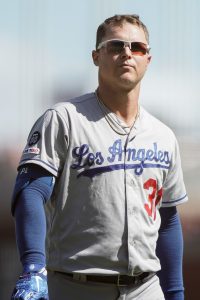
There’s a major caveat here, of course. Last year, all of Pederson’s 36 home runs came against right-handed pitching. He stepped into the box only fifty times against southpaws, managing only a putrid .224/.240/.265 batting line. That’s only marginally better than his .188/.263/.310 lifetime mark against same-handed hurlers. But against righties? Pederson owns a stellar 131 wRC+ in his MLB career.
That excellent output against righties is of obvious value to the Dodgers, but hardly assured Pederson’s place on the roster. He’s set to earn $7.75MM in his final season of arbitration eligibility — a bit spendy given the team’s other players and roster plans. The Dodgers worked hard to deal him this past offseason, reportedly holding talks with the White Sox before finally agreeing to a deal with the Angels … one that ultimately fell apart for other reasons (more details on that collapse here).
This wasn’t the first time we heard trade chatter on Joc … far from it, in fact. Pederson’s status in Los Angeles has never really been assured — even when he was flying up the prospect charts and emerging as a high-end young MLB talent. A former 11th-round draft pick, Pederson was batted around in trade talks long before he reached the majors and the chatter never stopped thereafter.
The Dodgers wouldn’t include Pederson in trade talks involving Jon Lester (link), Cole Hamels (link), David Price (link), and Shelby Miller (link). At one point Pederson was asked about in talks involving Marlins star Jose Fernandez. There was talk of a deal even after a rough 2017 season during which he was temporarily demoted. He was connected to the Braves last winter.
It seems now that the Dodgers might’ve been better served cashing in on Pederson’s trade value when it peaked. But it’s far from a total whiff. He has provided 10.9 rWAR and 13.1 fWAR to the Los Angeles club in 705 games. Strikeouts were the concern when he was younger, but they haven’t prevented him from achieving a lifetime 120 wRC+. The real issue has been the intense platoon needs, though that probably bothers this organization less than any other.
Throughout this lengthy run of success, the Dodgers have moved through quite a number of different players. They’ve leaned on some huge stars and many role players. One of the steadiest forces has been Pederson’s prodigious output against right-handed pitching. And he has risen to the occasion in the postseason, turning in a cumulative .239/.326/.487 slash with seven long balls in 133 plate appearances.
The waiting game that all teams are presently experiencing is even more awkward for Pederson and the Dodgers. It was already weird for him to return to camp after the collapsed trade. Now, as he closes in on his 28th birthday, it’s still possible the California native has already played his last game in a Dodgers uniform after a decade in the organization. If the 2020 season does indeed get underway, Pederson is sure to get plenty of plate appearances against right-handed pitching, but not much opportunity to prove to potential future suitors that he can be trusted to hit lefties.
Photo courtesy of USA Today Sports Images.
Union Chief Tony Clark On Returning To Play
MLBPA chief Tony Clark spoke with Bob Nightengale of USA Today about the union’s stance on returning to play in 2020. His comments focused primarily on the pervasive ongoing uncertainty, but Clark also says he’s remaining optimistic.
On the one hand, there’s nothing new here. As Clark acknowledges, the course of the scientific, social, and political response to the virus will dictate what baseball can do and when.
“We don’t have the answers, and we don’t expect those to come anytime soon,” Clark explains.
At the same time, it’s important to understand where the chief decisionmakers stand on these matters. Clark echoed MLB commissioner Rob Manfred regarding the need to consider first the broader public needs. Testing availability is critical, he said, but “it can’t be at the expense of public testing.” And it must be determined how the virus “can be mitigated in the public arena as much as the professional arena.”
While there’s a lot of overlap in league and union interests — everyone wants to be a positive force and to get revenue moving again — there are obviously quite a few differences in situation. Playing in empty stadiums won’t be a problem, Clark says. And the union side is willing to consider some experimental measures to make things interesting and accommodate a compressed schedule.
But what of the much bigger potential issues? There’s agreement in the near term on the rules regarding player contracts, but what will happen to long-term guarantees and upcoming free agent and arbitration cases? And will players be willing to live apart from families and accept other restrictions on their personal lives if that proves necessary to holding a season?
Clark says “it would be premature to have that discussion” and adds that he doesn’t intend “to negotiate through the media.” Ultimately, he says, the concepts that have been discussed to this point lack “depth” and feature “too many assumptions” to be addressed in detail.
“Once we find ourselves in discussions with the league in terms of options and variations, we in turn can present those ideas to the players, and the players can decide what makes most sense,” Clark explains.
One of the most interesting matters coming down the pike hasn’t yet been addressed by Clark or Manfred: the expiration of the collective bargaining agreement in 2021. There was prior chatter of an early initiation of negotiations, so the sides have already been thinking about things. The present crisis has obviously required difficult modifications to the present bargaining period. It will also change the parameters of the next one. As league and union make difficult tradeoffs now, they’ll surely be considering the impacts and perhaps even beginning negotiations regarding their next overarching agreement. At the same time, sudden and vast uncertainty will make it all the more challenging to think through the future.
The Next MLB Season: Time To Get Weird
When live Major League Baseball resumes, what kinds of experiments might we see? What will the offseason look like? How will the coronavirus affect the 2021 season? Today, I make my MLB Trade Rumors video debut in a discussion about these topics with Jeff Todd.
Seattle’s Struggling Center Fielder
Center fielder Mallex Smith was one of the majors’ breakout players in 2018, a year he spent with the Rays, but he was unable to build on that last season as a member of the Mariners. The two teams made a notable swap involving Smith heading into last season, though neither club has gotten much major league value out of it thus far. Smith fell flat in 2019, as did the Rays’ headlining acquisition, catcher Mike Zunino.
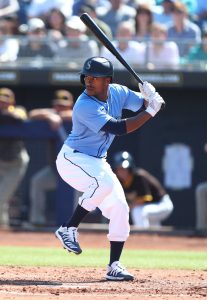
Just two years ago, Smith was a .296/.367/.406 hitter who, despite totaling only two home runs, posted an impressive 3.5 fWAR across 544 plate appearances. The Mariners were banking on Smith logging similar production when they acquired him, but it wasn’t to be last season. While the speedy Smith did steal a career-high 46 bases after swiping 40 bags in the prior year, his numbers with the bat cratered. He ended up with a .227/.300/.335 line over 566 trips to the plate, and even received a demotion to the minors early in the season. All said, Smith’s MLB output amounted to a nonthreatening 74 wRC+ (down from 118 in the prior year) and a replacement-level fWAR of 0.0.
With the Mariners still unlikely to contend in 2020, and with Smith still under cheap control (he’s not scheduled to become a free agent until after 2022), they can afford to take a patient approach with him. The question for now is whether there’s any hope for Smith to turn into a valuable M’s contributor. Based on what he did last season, it’s hard to be optimistic.
Compared to 2018, Smith’s strikeout rate climbed by almost 7 percent, his soft contact rate jumped by nearly 6 percent, his line drive rate fell by 6 percent and his fly ball rate increased by about 5 percent. Smith’s skill set indicates he should be hitting as few fly balls as possible because his power is just about nonexistent. With that in mind, it’s no surprise he was a Statcast disaster at the plate last year. Smith finished below the league’s fifth percentile in average exit velocity, hard-hit percentage, expected batting average, expected slugging percentage and expected weighted on-base average.
Smith may have been the worst hitter in the game last year – a far cry from his 2018 effort – but what of his defense? Well, it was a mixed bag. Smith earned good grades in terms of Defensive Runs Saved and Ultimate Zone Rating before 2019, but he fell off a cliff in both categories last year (minus-13 DRS, minus-9.5 UZR). On the other hand, Statcast’s Outs Above Average metric was high on Smith, giving him a plus-10 mark that ranked eighth among 133 qualified outfielders.
Even if we take OAA’s word for it, and even if we consider Smith’s elite speed, it looks highly questionable whether he’ll hit enough to turn back into a valuable contributor. Smith’s still just 26, so it’s too soon to give up on him, but this season (if it happens) could wind up as a make-or-break year for him.
Photo courtesy of USA Today Sports Images.
Why The Twins Could Trade A Slugger This Winter
While some clubs have struggled to find continuity in their outfield — the Cardinals, Padres and Blue Jays come to mind — the Twins have enjoyed a rather reliable trio in recent years. True, injuries to Byron Buxton have frequently held him out of the lineup, but the general expectation over the past three to four seasons has been that Buxton would be flanked by left fielder Eddie Rosario and right fielder Max Kepler. Since 2016, Rosario ranks fourth among MLB left fielders in innings. Kepler ranks seventh in right-field innings. Both would likely rank higher on those leaderboards were it not for occasional stints manning center field while Buxton mended from injuries.
And yet, as much of the team’s young core has been locked up on long-term deals — Kepler, Jorge Polanco and Miguel Sano are now all signed through at least 2023 — Rosario finds himself nearing free agency. The 27-year-old slugger agreed to a $7.75MM salary this winter and is controlled through 2021. There have reportedly been some talks between the two sides in recent years, but nothing has come together. Other key members of the Twins core remain unsigned (e.g. Buxton, Jose Berrios, Taylor Rogers) but are controlled an additional year beyond Rosario.
Moreover, the Twins now find themselves with a pair of corner prospects pushing for a spot in the big leagues sooner than later. Former first-round picks Alex Kirilloff (2016) and Trevor Larnach (2018) both rank comfortably among the game’s best overall prospects and both found success in Double-A in 2019. The former returned from a wrist injury to hit .283/.343/.413 (121 wRC+) through 411 plate appearances, while the latter hit .295/.387/.455 in 181 PAs — good for a 148 wRC+ that was an exact match for his mark through 361 PAs in Class-A Advanced.
Both Kirilloff (No. 9 overall on Keith Law’s prospect rankings at The Athletic) and Larnach (No. 45 at Baseball America) are 22-year-old corner outfielders with bats that have been deemed close to MLB-ready. Both would’ve likely advanced to Triple-A in 2020 had the season begun under normal circumstances, and it’d be reasonable to think that either could’ve made his MLB debut this year. Each notched an OPS north of 1.100 during brief Spring Training showings (30 PAs for Larnach, 22 for Kirilloff). Beyond that pairing, Brent Rooker posted a 139 wRC+ in Triple-A last year. He’s not as highly regarded and may be more of a first base or DH type in the long run, but Rooker’s been playing left field regularly since being drafted 35th overall in 2017.
It’s unlikely that any of those prospects would’ve been plugged directly into the Major League lineup to begin the season under any circumstance, but it’s nevertheless notable that Rosario’s name crept up in trade rumblings this winter. Had a deal come together, the Twins could’ve added a one-year stopgap, turned to Marwin Gonzalez as a primary outfielder and/or given Jake Cave an opportunity to establish himself. As it turned out, retaining Rosario only left the club with enhanced depth.
At some point in the near future, the Twins will have to ask whether they’re better off paying Rosario another raise in arbitration — though it remains to be seen how much of an increase he’ll get over his current salary next time — or whether some combination of Kirilloff, Larnach, Cave and Rooker can provide similar or greater value at a fraction of the price. Minnesota only has $55.5MM on the 2021 books as of this writing, so it’s not as if payroll is an immediate issue, but Rosario’s game isn’t without its flaws, either.
A former high-end prospect himself, Rosario has never demonstrated much plate discipline, but his swing-happy tendencies revved up to new levels last year. Jeff McNeil was the only qualified hitter in the Majors last year who swung at a higher percentage of pitches than Rosario’s 59.1 (although he didn’t chase out of the zone nearly as much as Rosario and had a markedly better contact rate on pitches in the zone). On top of that, only three qualified hitters chased balls out of the zone more than Rosario.
To his credit, Rosario has greatly improved his bat-to-ball skills, cutting his strikeout rate from 25.7 percent in 2016 to 14.6 percent in 2019. But Rosario’s penchant for swinging at pitches out of the zone leads to far more weak contact than one would expect from a player who hit 32 home runs in 2019. His 89.1 mph average exit velocity ranked 123rd of 250 qualified hitters, per Statcast, and his 36 percent hard-hit rate ranked 166th in that same grouping. Despite his clear power, Rosario hasn’t ranked higher than the 34th percentile of big league hitters in terms of hard-hit rate in any of the past four seasons. His expected weighted on-base average (xwOBA) has hovered around league average or a bit below.
This isn’t intended as a piece meant to disparage Rosario, who has proven himself to be a useful corner outfielder. He’s averaged 27.6 homers over the past three seasons, ranks seventh in the Majors in outfield assists in that time and, with the exception of a 2019 season during which he played through a notable ankle injury, he’s graded out as a reliable and at times well-above-average defender.
A rangy left fielder with a strong arm, consistently solid batting averages and 25- to 30-homer pop is a fine player — even if he comes with some on-base deficiencies. But when corner outfield options are typically plentiful in free agency and there are a pair of top-tier prospects looming in the upper minors, it’s easy to see the front office debating Rosario’s future. Rosario isn’t going to fetch a top-of-the-rotation arm in a trade given his rising price, questionable OBP and waning club control, but the Twins will still surely ponder whether their resources can be better allotted elsewhere soon — if they haven’t already.
Some may argue that Buxton or even Kepler are the better pieces for the Twins to consider moving from the current outfield group. But Buxton’s 80-grade glove and speed are harder to replace, and he’s controlled an additional year while currently earning less than half of Rosario’s salary. In terms of ceiling, he’s the highest of the bunch even in spite of his frequent injuries. Kepler’s extension, meanwhile, allows the Twins to control him for another five years and $38MM — the final season of which is a $10MM club option.
The alternative, of course, is to eventually look to package some of the aforementioned young talent to address other areas of need — likely high-end rotation help. The Twins’ offseason quest to bolster the starting staff ended up with more quantity-over-quality outcome than many expected, as the club missed on its top targets and instead pivoted to a surprising four-year deal with Josh Donaldson. Part of the reason they weren’t able to add an impact starter was the simple fact that virtually none were available in trade, but that could change down the road.
With three former top 40 picks thriving in the upper minors, two of them top 100 picks, and a long-entrenched mix of quality regulars at the MLB level, it seems inevitable that Minnesota’s outfield depth will undergo some form of reshaping in the near future. (None of this even mentions 2017 No. 1 overall pick Royce Lewis — a shortstop who some feel is destined to end up in center field instead.) Of course, this is the type of logjam that rebuilding clubs look forward to eventually trying to manage, and it serves as a reminder that despite their current lack of prototypical “ace,” the Twins are well-positioned for another run of competitive years in the American League Central.
Largest Contract In Franchise History For Each MLB Team
Here’s our list of the largest contract each of the 30 MLB teams has ever signed. Each contract is linked to its MLBTR post, with the exception of those that predate the site’s existence.
- Angels: Mike Trout – 10 years, 360MM. Signed 3-21-19.
- Astros: Jose Altuve – 5 years, $151MM. Signed 3-20-18.
- Athletics: Eric Chavez – 6 years, $66MM. Signed 3-18-04.
- Blue Jays: Vernon Wells – 7 years, $126MM. Signed 12-18-06.
- Braves: Freddie Freeman – 8 years, $135MM. Signed 2-4-14.
- Brewers: Christian Yelich – 7 years, $188.5MM. Signed 3-6-2020.
- Cardinals: Paul Goldschmidt – 5 years, $130MM. Signed 3-24-19.
- Cubs: Jason Heyward – 8 years, $184MM. Signed 12-15-15.
- Diamondbacks: Zack Greinke – 6 years, $206.5MM. Signed 12-8-15.
- Dodgers: Clayton Kershaw – 7 years, $215MM. Signed 1-17-14.
- Giants: Buster Posey – 8 years, $159MM. Signed 3-29-13.
- Indians: Edwin Encarnacion – 3 years, $60MM. Signed 1-7-17.
- Mariners: Robinson Cano – 10 years, $240MM. Signed 12-12-13.
- Marlins: Giancarlo Stanton – 13 years, $325MM. Signed 11-18-14.
- Mets: David Wright – 8 years, $138MM. Signed 12-4-12.
- Nationals: Stephen Strasburg – 7 years, $245MM. Signed 12-9-19.
- Orioles: Chris Davis – 7 years, $161MM. Signed 1-21-16.
- Padres: Manny Machado – 10 years, $300MM. Signed 2-19-19.
- Phillies: Bryce Harper – 13 years, $330MM. Signed 2-28-19.
- Pirates: Jason Kendall – 6 years, $60MM. Signed 11-18-00.
- Rangers: Alex Rodriguez – 10 years, $252MM. Signed 12-12-00.
- Rays: Evan Longoria – 6 years, $100MM (team also exercised three club options from previous contract, which had a total value of $30MM). Signed 11-26-12.
- Red Sox: David Price – 7 years, $217MM. Signed 12-4-15.
- Reds: Joey Votto – 10 years, $225MM. Signed 4-2-12.
- Rockies: Nolan Arenado – 7 years, $234MM. Signed 2-26-19.
- Royals: Alex Gordon – 4 years, $72MM. Signed 1-6-16.
- Tigers: Miguel Cabrera – 8 years, $248MM. Signed 3-31-14.
- Twins: Joe Mauer – 8 years, $184MM. Signed 3-21-10.
- White Sox: Yasmani Grandal – 4 years, $73MM. Signed 11-21-19.
- Yankees: Gerrit Cole – 9 years, $324MM. Signed 12-10-19.
The Battle Of Pennsylvania First Basemen
It’s no secret that the majors’ two Pennsylvania-based teams possess a couple of the most powerful first basemen in the game. In the Phillies’ corner, there’s Rhys Hoskins. Meanwhile, the Pirates are fortunate enough to have Josh Bell manning the position. Both players are 27 years old and under club control for the next few seasons. But which of the two would you prefer on your team?
Let’s start with Hoskins, a 2014 fifth-round pick who burst on the scene as a rookie in 2017, when he only played in 50 games but still managed to wallop 18 home runs. Although Hoskins has come back to earth since then, he has still been more productive than your typical hitter. The right-handed slugger mashed 29 homers last year, and though his batting average was alarmingly low, his overall slash line (.226/.364/.454) placed him 10 percent above the average hitter by measure of OPS+ and 13 percent above by wRC+. Furthermore, Hoskins has been rather durable – he played in 153 games two years ago and 160 in 2019. He’s also under control for four more years, including one final pre-arb campaign (that’s if a season even happens in 2020).
Bell still has three years left before becoming a free agent – he’ll make a reasonable $4.8MM this season – and has been a similarly productive batter to Hoskins throughout his career. But the switch-hitting Bell, a 2011 second-rounder, truly came into his own last year – he slashed .277/.367/.569 (143 OPS+, 135 wRC+) and racked up 37 HRs over 613 trips to the plate. Also, it was the third straight year of at least 140-some games played for Bell, so he joins Hoskins as someone you can regularly count on to pencil into your lineup.
While Bell was undoubtedly the superior offensive producer a season ago, Hoskins has doubled his lifetime fWAR output over almost 400 fewer plate appearances (Hoskins is at 7.1 in 1,577 PA; Bell has put up 3.8 in 1,968 attempts). Notably, Hoskins has performed far better at first base, having accounted for minus-1 Defensive Runs Saved and a 3.9 Ultimate Zone rating to Bell’s minus-31 DRS and minus-17 UZR. However, despite Bell’s defensive issues, many teams would gladly plug his big bat into their lineup. The same goes for Hoskins. For the sake of this exercise, though, you can only choose one (and remember to consider team control for the two Scott Boras clients). Who’s your pick?
(Poll link for app users)
Rhys Hoskins or Josh Bell?
-
Bell 61% (3,134)
-
Hoskins 39% (2,014)
Total votes: 5,148
2020-21 MLB Free Agent Class: Third Basemen
In recent days, we’ve run through the most notable catchers, second basemen, shortstops, and first basemen who are slated to reach the free-agent market once the winter rolls around in several months. We’ll continue our breakdown of the upcoming crop of free agents with a look at the third baseman who, barring extensions, will be freely available for clubs to sign. Players making the jump from professional leagues in Asia and others who are non-tendered will quite likely add to this list, but here’s how things are expected to look as of today…
Top of the Class

- Justin Turner: He’ll play the 2021 season at 36, but Turner remains an elite hitter who perhaps doesn’t get the credit he deserves because he’s surrounded by so many strong hitters. But over the past three seasons, Turner has raked at a .307/.397/.519 clip with 62 dingers in 1518 plate appearances — including a .290/.372/.509 mark in 2019. Turner has been at least 20 percent better than a league-average hitter each season since 2013, and while he’s not the defensive powerhouse he once was, Statcast still credited him with 4 Outs Above Average at the hot corner. Defensive Runs Saved (-3) and Ultimate Zone Rating (-6.7) were more bearish, but it’s unlikely that any team would consider him a major liability at the position. It’s also worth remembering that Turner was dogged by hamstring and ankle issues in 2019 even though he avoided an IL stint, so better health could lead to better ratings. Even if he’s an average or below-average glove at third base at this point, his offensive excellence is inarguable. Under normal circumstances he’d be a surefire qualifying offer candidate, but we don’t yet know how the shortened (or canceled) season will impact those decisions.
Other Potential Regulars
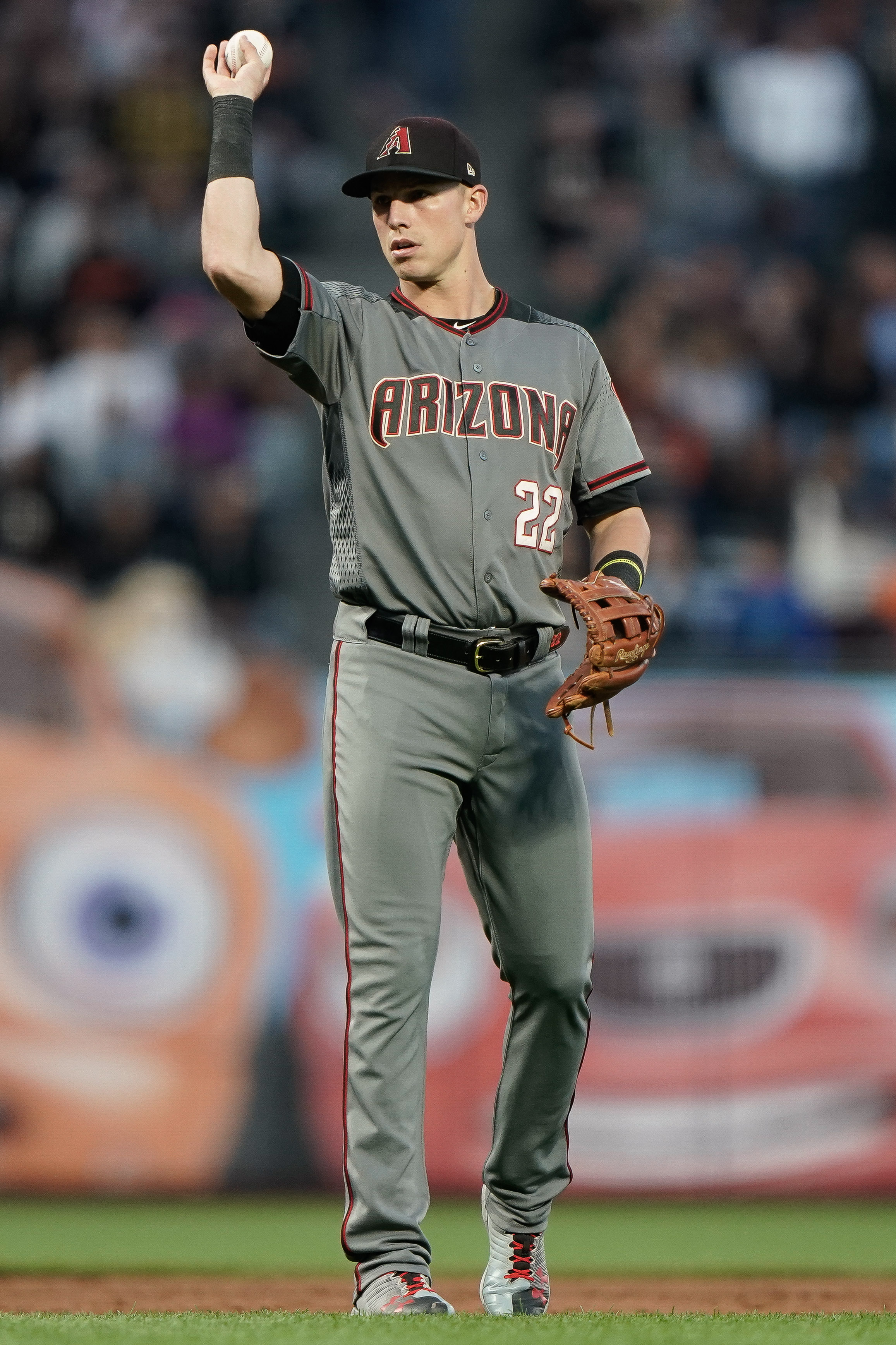
- Jake Lamb: Shoulder surgery torpedoed Lamb’s 2018 season, and he was hobbled by a quadriceps injury that cost him nearly half the season in 2019. However, Lamb clubbed 59 homers for the D-backs as their primary third baseman in 2016-17. He’ll be heading into his age-30 season when he hits the open market and won’t see much in the way of competition in terms of prime-aged third base candidates. His struggles against left-handed pitching make it tempting to label him platoon player — he’s a career .169/.275/.319 hitter against southpaws — but Lamb still has only 440 career PAs against lefties. His .259/.345/.468 line against right-handed opponents, meanwhile, is solid. And his 130 wRC+ against righties in that aforementioned two-year peak shows how good can be when he’s at his best.
- Asdrubal Cabrera: A late Herculean surge with the Nationals (145 wRC+ in 146 plate appearances) salvaged what was shaping up to be a dismal campaign for the veteran switch-hitter. No one is expecting that level of production, but Cabrera could be an average or slightly better bat with third-base defense that graded out well per both Defensive Runs Saved and Outs Above Average. He’ll be 35 by the time the 2021 campaign gets underway, so perhaps some teams will view him as a part-time option. Cabrera has tallied at least 514 plate appearances in each of the past nine seasons, though.
Second Basemen with Experience at Third Base
- DJ LeMahieu: It was no surprise to anyone that LeMahieu topped our list of next year’s second basemen after a monster Bronx debut season, but might another team in need of help at the hot corner consider playing him there? The Yankees trotted LeMahieu out for an even 400 innings of defense at third base — the first time in nearly five years that he’d slotted in there. Despite having tallied just 245 innings there previously, the results were solid (break-even in terms of Defensive Runs Saved and Ultimate Zone Rating; +2 Outs Above Average), which could create some optimism among his suitors. Sterling glovework at second base has long been one of the most compelling aspects (if not the most compelling aspect) of LeMahieu’s game, so some may be wary of moving him off the position. But if he’s able to recreate his 2019 thunder at the plate, then he’ll be providing ample value even if he’s not playing plus defense.
- Tommy La Stella: It’s perhaps easy to forget about La Stella’s budding breakout that was interrupted when he fractured his leg upon fouling a ball into his shin. But prior to that grisly, tough-luck injury, La Stella was mashing like never before: .295/.346/.486. Through 321 plate appearances, the former Cubs utilityman had swatted more dingers (16) than he had in his entire career (10 through 947 PAs in 2014-18). Like LeMahieu, La Stella has been primarily a second baseman but saw sparing action at the hot corner in ’19 (234 innings). La Stella has virtually even platoon splits in his career, though, and a team convinced of his ability to handle third base could look at him as a low-cost option. If nothing else, a familiar multi-position role with some occasional reps at third seems eminently reasonable.
Part-Time Veterans
- Adeiny Hechavarria: The defensive standout has never been much of a threat at the plate, but he’s a highly regarded defender at shortstop who has considerable experience at third base. He’s a nice utility option.
- Eric Sogard: Like Hechavarria, Sogard has more limited experience at third base but a solid defensive reputation at the middle infield spots. His surprising power output with the Blue Jays tapered off following a trade to the Rays, but the affable Sogard is popular among fans and teammates alike and should be considered a useful utility player.
- Brad Miller: The versatile Miller is something of a “jack of all trades, master of none,” but his 2019 campaign was a productive — albeit in a tiny sample of 170 plate appearances. He’s struggled to produce at a consistent level, but Miller keeps landing big league gigs as a bench piece.
- Zack Cozart: Injuries have decimated the former Reds All-Star over the past few years. The Angels traded away their 2019 first-round pick (Will Wilson) to rid themselves of the final season of Cozart’s deal. He hasn’t been a productive player since 2017, but he was worth five wins above replacement back in 2017.
- Jed Lowrie: The switch-hitting veteran has more than 1000 innings of experience at the hot corner, but he’s a total wild card after missing nearly the entire 2019 season. Even before the MLB shutdown, Lowrie was expected to miss Opening Day, and the Mets had no timetable for his return.
Club Options to Watch
- Both Todd Frazier ($5.75MM club option, $1.5MM buyout) and Jedd Gyorko ($4.5MM club option, $1MM buyout) have been infield regulars for much of their careers and have ample experience at third base (almost exclusively so in Frazier’s case). But both options are so affordable that there’s virtually no way either would hit free agency if he performed well enough to be considered a regular option at third base (or any other position). If either player’s option is bought out, it’s unlikely a new team would consider him for an everyday role in 2021.