
MLBTR Mailbag: Camargo, Ellsbury, Pirates, International Money
Thanks for sending your questions in this week. Remember, you can also throw inquiries at our writers in our weekly chats. I host mine at 2pm CST on Tuesdays, Jason Martinez goes at 6:30pm CST on Wednesdays, and you’ll find Jeff Todd at 2pm CST on Thursdays.
“Coming up through the Braves system Johan Camargo was primarily known solely for his defense. He carried with him the ability to hit for contact, but that was about it, from an offensive standpoint. Even taking into consideration the small sample size and all, is Camargo’s early success sustainable? And also, I’m just curious, but should the Braves consider trading Johan Camargo over the off-season?” — Richard C.
I don’t think it’s all that sustainable. Camargo’s sporting a .371 BABIP that is 30 points higher than his mark in a small sample at Triple-A this year and nearly 60 points higher than the .317 mark he had in a full season at Double-A in 2016. He’s doing so despite the fact that his 27.2 percent hard-contact rate is more than five percent worse than the league average. Camargo doesn’t make much hard contact — there are more than 200 players with a higher average exit velocity than his 87.3 mph — and he hasn’t shown much in the way of discipline. He’s posted a 4.4 percent walk rate and a 36 percent chase rate on pitches out of the strike (league average this year is 29.8 percent).
Maybe he’s a useful utility player moving forward, but I can’t imagine him displacing Swanson or Albies as a long-term piece in the middle infield. (Camargo is at .302/.331/.477 through 182 PAs to Swanson’s .273/.330/.406 through his first 183 career PAs at a younger age and without any Triple-A development.) I also can’t envision any team parting with a significant haul to get him based on roughly two months of largely BABIP-fueled production. His bat is already coming back down to earth; it’ll take signs of more sustainable improvement to buy into him as a future regular.
“How much salary would the Yankees need to eat if Jacoby Ellsbury were willing to accept a trade to the Giants and what type of return could the Yankees expect to get back for him? I figure if the Yankees make the Giants responsible for $5-7M annually they can probably get an organizational 10-20 prospect maybe?” — Stan L.
Lots and lots of Ellsbury questions in this mailbag, which isn’t surprising with the way Aaron Judge, Brett Gardner, Aaron Hicks and Clint Frazier have played.
To be blunt: I don’t think there’s any way the Yankees could get a respectable prospect from any system, even if they eat as much of the contract as you said. Ellsbury isn’t playing like he’s worth that sum at this point, hitting .187/.291/.240 through 87 plate appearances since returning from the disabled list. If he were coming back from a rolled ankle or a strained quad, perhaps that’d be easier to overlook, but he’s returning from a concussion that shelved him for about a month.
Getting a even a mid-range prospect from another organization would imply that the hypothetical trading partner feels there’s some level of surplus value in what they’re acquiring, thus justifying the exchange of an asset with modest value. But there’s just no surplus value even in a three-year commitment to Ellsbury (2018-20), even at the relatively modest levels you posit, when he’s set to turn 34 next month and is struggling to this extent following a concussion. Even if he were healthy, the asking price you laid out would be steep. Besides, the Giants are going to look to get younger in the outfield rather than adding another aging veteran to pair with Denard Span and Hunter Pence.
“Any chance the Pirates try to move Andrew McCutchen as an August waiver trade in order to avoid having to make the decision on whether to pick up his 2018 option? If so, what value do they likely get back in return?” — Scott K.
I can’t see any way that McCutchen would be traded in August, because he’d never make it through waivers. Even if the Pirates don’t want to pay him $14.5MM in 2018 — which would be a surprise, given how excellent he’s been over the past few months — they could just pick up the option and trade him anyhow. They got legitimate interest in him last year when he was expensive and coming off the worst year of his career. He’d draw similar or greater interest this winter following a rebound at the plate.
“Could you give a refresher on how the international pool money works? I saw that the Yankees acquired $1.5M from the A’s in International Pool Money, doesn’t seem like much (compared to contracts) but I’m sure I’m missing out on a key piece. Do teams not just bid for the right to negotiate now?” — Nathan C.
You’re probably thinking of the posting system for international professionals — players like Masahiro Tanaka, Yu Darvish, etc. The Yankees acquired $1.5MM that will go toward their league-allotted pool from which they can sign international amateurs — that is, players that are under the age of 25 and/or have fewer than five years of pro experience in a foreign league. Most international amateurs are signed as teenagers and come with little fanfare at the time, though the Yankees have strongly built up their system via aggressive spending on that front.
The newest collective bargaining agreement placed a hard cap on how much teams can spend on international amateurs, with allotted pools ranging from $4.75MM to $5.75MM. The Yankees, as a team that is not a part of the Competitive Balance Lottery (due to market size and revenue), began the current international signing period with a bonus pool of $4.75MM. The money they picked up from the A’s in the Sonny Gray trade and from the Orioles in the Yefry Ramirez trade will add to that pool. (Teams can acquire up to 75 percent of their original allotment.) Many are also wondering whether this cash could help the Yanks if they pursue Shohei Otani (should he attempt to move to the majors this winter); the answer is yes, although the extent to which bonus money availability will sway his decision isn’t yet known.
8 Impending Free Agent Hitters With Slipping Stock
Major League Baseball’s 2017 non-waiver trade deadline passed this week, which means we’re unlikely to see a significant amount of high-profile players change hands from now through season’s end. The current campaign is down to its final three months, though, so the offseason and its action-packed free agent period are on the horizon. Unfortunately for many impending free agents, 2017 has been a struggle. Here, we’ll highlight several established hitters who are in the midst of mediocre or worse platform seasons.
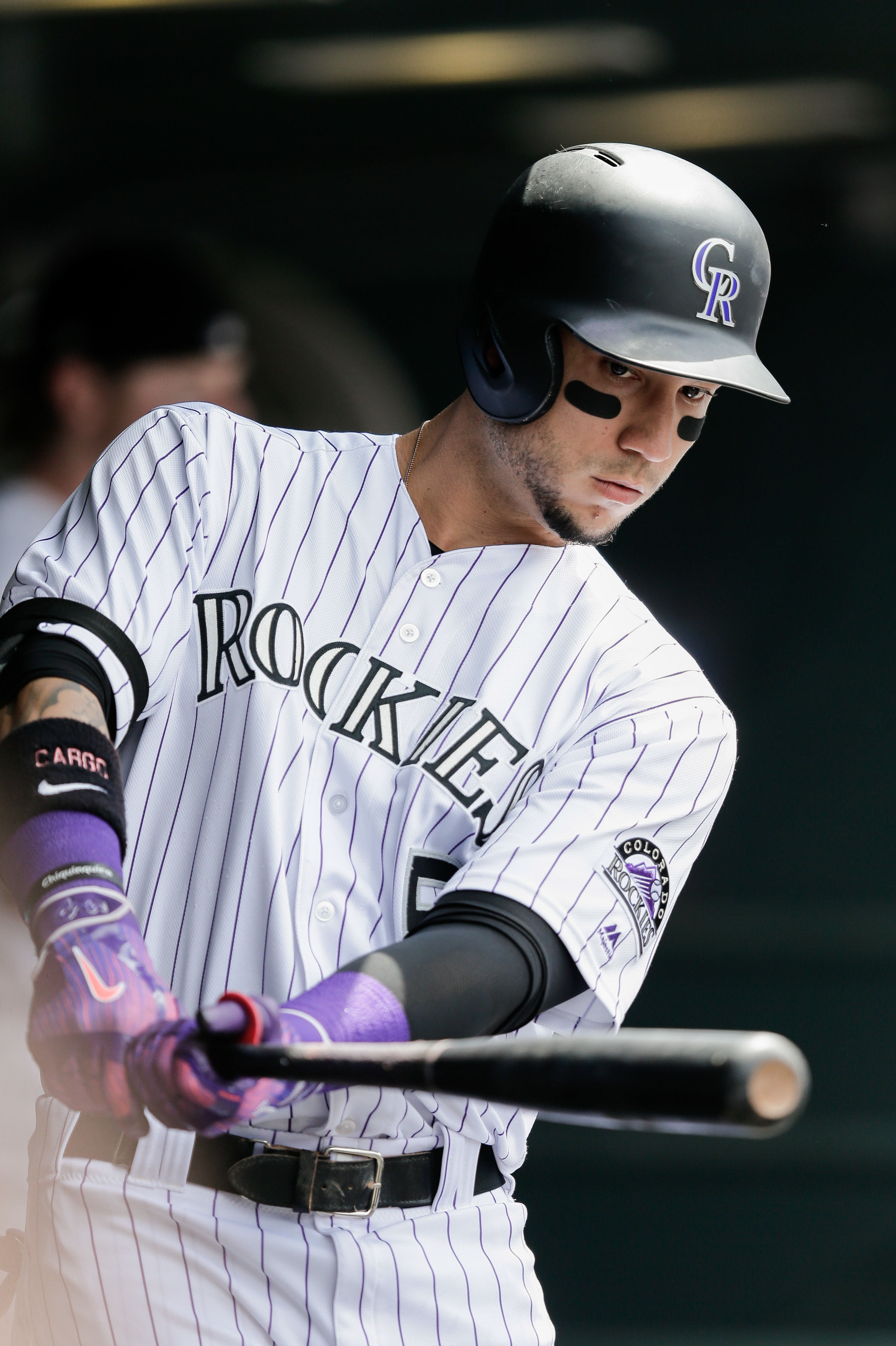
Carlos Gonzalez, RF, Rockies | Salary: $20MM
Raise your hand if you expected the well-regarded CarGo to rank last among position players in fWAR at the outset of August. It’s hard to believe, but at minus-1.8, no one has been less valuable than Gonzalez this season. A career .291/.347/.521 hitter entering 2017 (albeit with help from Coors Field), Gonzalez has slumped to an unfathomable .228/.301/.333 line through 349 plate appearances this year.
Gonzalez’s plate discipline numbers look normal, but his ground-ball rate is at a personal-worst 51.7 percent (up from a career 45.8 percent mark) and his power has abandoned him. The lefty-swinger has swatted between 22 and 40 home runs six times since 2010, his first full season, yet has left the yard on just six occasions this year and posted a horrid .109 ISO – representing nearly a 100-point drop-off from his 2016 figure (.207). Statcast data doesn’t paint an optimistic picture of the 31-year-old Gonzalez’s performance, either, as Baseball Savant shows his expected weighted on-base average (.282) aligns with his subpar wOBA (.287).
Jose Bautista, RF, Blue Jays | Salary: $18MM
Technically, Bautista isn’t an impending free agent, but he’ll reach the open market when – not if – the Blue Jays decline their half of his $17MM mutual option for 2018. Before re-signing with Toronto last January, Bautista surprisingly went without a team for two-plus months. The Jays legend’s offensive output went in the wrong direction in 2016, which somewhat explained his difficulty in free agency. However, Bautista was still an above-average producer at the plate, and as sabermetrician Tom Tango tweeted in January, there were reasons to expect a revival this year. Instead, though, Bautista has continued going backward during his age-36 campaign, closely resembling the lackluster form he showed prior to his stunning breakout in 2010.
An offensive marvel in his heyday, Bautista has batted a paltry .216/.326/.383 in 466 trips to the plate this season, thanks in part to increasing swing-and-miss tendencies. Bautista’s strikeout percentage (23.4) is the highest of his career, and both his contact and swinging-strike rates are at their lowest since his 96-PA debut in 2004. Bautista’s underwhelming offense, poor numbers in the outfield (minus-10 defensive runs saved, minus-2.2 Ultimate Zone Rating) and dreadful work on the base paths each represent serious red flags. All that considered, the former superstar looks like an over-the-hill player who’s in for a far less successful return trip to the market than even last winter’s tepid showing.
Carlos Beltran, DH, Astros | Salary: $16MM
The Astros have easily been the top team in the American League throughout the season, so Beltran’s woes have flown under the radar nationally. But the big-money offseason pickup and potential Hall of Famer has looked his age at the plate (40), having hit .244/.297/.423 in 367 PAs during his second stint with the Astros. Further, Beltran’s xwOBA sits at a measly .280 – one point above light-hitting Angels outfielder Ben Revere‘s, to cite one name in his company – which doesn’t indicate his results have been the product of unluckiness. While it’s unknown if Beltran will look to continue his career past 2017, another high-paying pact should be out of the question if he does.
Matt Holliday, DH, Yankees | Salary: $13MM
This is the second consecutive year in which Holliday has logged so-so offensive results, which is all the more concerning when you consider the ex-outfielder’s sole function nowadays is to help a team with his bat. Of course, it’s worth noting that the former Cardinal was a boon to the Yankees’ offense through the first few months of this year. Holliday then went on the disabled list June 28 with a viral infection and has recorded miserable numbers since returning in mid-July. Pre-illness, the 37-year-old gave the Yankees a stellar .262/.366/.511 line and was seemingly on pace to reel in another nice offseason contract. Holliday’s now at an unspectacular .235/.326/.441 in 353 PAs – though his .342 xwOBA (compared to a .329 wOBA) is encouraging – and looking like someone whose next payday won’t approach the one New York gave him last winter.
Carlos Santana, 1B, Indians | Salary: $12MM
After scuffling during the first few months of the season, the switch-hitting Santana has raked over the past several weeks and boosted his line to a respectable .249/.350/.442 in 443 PAs. One problem for his earning power, however, is that fellow soon-to-be free agent first basemen Eric Hosmer, Logan Morrison, Yonder Alonso and Lucas Duda have each enjoyed markedly better years than Santana. As such, those players could negatively affect Santana’s market as he seeks a multiyear contract in the offseason. A lack of demand for defensively limited sluggers might also prove to be a hindrance for him and others, as it was for Santana-esque players last winter. So, while Santana has been good and durable since he debuted in 2010, the 31-year-old may be in for a letdown when he gets to free agency.
Matt Wieters, C, Nationals | Salary: $10.5MM
Wieters and Bautista could have empathized with each other last winter during their drawn-out unemployment periods. Wieters’ lasted several weeks longer than Bautista’s, though, as the longtime Oriole didn’t land a contract until the end of February. Fortunately for Wieters, agent Scott Boras was able to secure a $10.5MM player option for 2018 in the deal, meaning the catcher can still rake in a sizable sum next season. Judging by the 31-year-old’s .242/.291/.369 line through 323 PAs, he’d be wise to exercise that option in lieu of pressing his luck again in free agency. This is the second straight uninspired season at the plate for the switch-hitting Wieters, whose bat has never really lived up to the immense hype it generated when he was a prospect. As a defender, Baseball Prospectus has pegged Wieters as a minus framer for the past several years, but he’s now suffering through his worst season in that facet. Considering he’s oversized for his position, the 6-foot-5 Wieters may have trouble turning it around in the framing department as he continues aging, as FanGraphs’ Travis Sawchik wrote last week.
Todd Frazier, 3B, Yankees | Salary: $7.5MM
Admittedly, whether Frazier’s stock has dipped much since the start of the season is up for debate. But if the hope was that he’d return to his prior form — from 2012-15, Frazier batted a combined .258/.322/.465 and averaged 3.7 fWAR per year for the Reds — then it surely qualifies. Frazier’s .208/.331/.413 line is exactly league average, per wRC+, and has not really deviated in bottom-line productivity from last year’s .225/.302/.464 (102 wRC+). With 17 homers and a .208 ISO, Frazier’s power has dropped since last season’s 40-HR, .239-ISO outburst. At the same time, he’s running what’s easily a career-high walk rate (13.9 percent), thanks to personal-best chase and swinging-strike rates, and has a ridiculously low batting average on balls in play (.218) that should increase. In the field, Frazier, 31, has combined for five DRS and a 1.0 UZR while manning the hot corner for the White Sox and Yankees. Frazier’s performance this season has been acceptable, then, though he’s clearly not as effective as he was during his days in Cincinnati.
Jonathan Lucroy, C, Rockies | Salary: $5.25MM
Lucroy, one of Gonzalez’s newest teammates, is also in the throes of a shocking and precipitous decline. At the 2016 non-waiver deadline, both the Rangers and Indians agreed that the then-Brewer was worth a major return. The Rangers ultimately emerged with Lucroy, who chose not to waive his no-trade clause for Cleveland, acquiring him as part of a deal that cost them highly touted outfield prospect Lewis Brinson. Giving up Brinson for more than a year of control over the multi-talented Lucroy was understandable at the time, and he kept hitting after the trade last year, but the gamble hasn’t paid off in 2017 for Texas general manager Jon Daniels.
Lucroy was among Texas’ worst regulars this season before the sub-.500 club shipped him to the Rockies last week for a player to be named later. All told, Lucroy batted a meager .242/.297/.338 in 308 PAs and saw his ISO plummet from .208 during his 24-homer 2016 to .096 during a four-HR year with the Rangers. Alarmingly, Lucroy’s ground-ball rate has spiked from 37.2 percent to 56.2 percent since 2016, while his line drive rate has fallen from 24.2 percent to 17.1 percent. The 31-year-old’s problems also extend beyond the offensive side: The once-celebrated pitch framer ranks last in that category this season, per Baseball Prospectus and StatCorner.
Photo courtesy of USA Today Sports Images.
Knocking Down The Door: Honeywell, Kemp, Lopez, McMahon, Smith
“Knocking Down the Door” is a regular feature that identifies minor leaguers who are making a case for a big league promotion.
Brent Honeywell, SP, Tampa Bay Rays (Triple-A Durham) | Rays Depth Chart
While the Rays were busy adding first baseman Lucas Duda and a trio of relief pitchers prior to the non-waiver trade deadline, they didn’t make the splash that they were probably capable of making based on the depth and quality of their prospect talent. The team’s likely unwillingness to include the 22-year-old Honeywell in a deal is probably among the top reasons.
Not only is Honeywell one of the top pitching prospects in baseball, there’s also a chance that he can help the Rays down the stretch in the same way that rookie David Price did in 2008 when he pitched 14 innings in September and another 5 2/3 frames in the playoffs for the AL Champs. Since being named the Futures Game MVP, the right-hander has continued to look more and more comfortable in Triple-A, allowing only three runs and 12 hits over his past 16 innings while striking out 22.
—
Tony Kemp, OF/2B, Houston Astros (Triple-A Fresno) | Astros Depth Chart
The window could close quickly depending on how quickly George Springer returns from the disabled list, but the recent trade of Nori Aoki could allow the Astros to give Kemp a rare chance for semi-regular playing time in the big leagues.
Kemp is doing his best Jose Altuve impersonation down in Triple-A, and it’s not just because he’s a 5’6″ second baseman. The 25-year-old is slashing .324/.376/.465 with 19 stolen bases, 31 walks and 32 strikeouts in 90 games. His ability to play left field—he started 24 games there for the Astros in 2016—and left-handed bat should give him plenty of value on the Astros’ roster down the road, even if he’s destined to be a bench player. But it’s probably a good time to find out if he can be more than that.
—
Reynaldo Lopez, SP, Chicago White Sox (Triple-A Charlotte) | White Sox Depth Chart
Somewhat surprisingly, the White Sox did not trade free agents-to-be Miguel Gonzalez and Derek Holland prior to the deadline, which would’ve cleared a path to the big league rotation for Lopez — one of several elite prospects that the team has acquired since the offseason.
The 23-year-old Lopez, who came to the ChiSox in the Adam Eaton trade, could be forcing the team’s hand anyhow, though. In his past six starts, he has a 1.97 ERA with 26 hits allowed, eight walks and 49 strikeouts over 36 2/3 innings. He hasn’t allowed more than two runs over that span and has three 10+ strikeout games. It will be a surprise if he makes more than two more starts in Triple-A.
—
Ryan McMahon, INF, Colorado Rockies (Triple-A Albuquerque) | Rockies Depth Chart
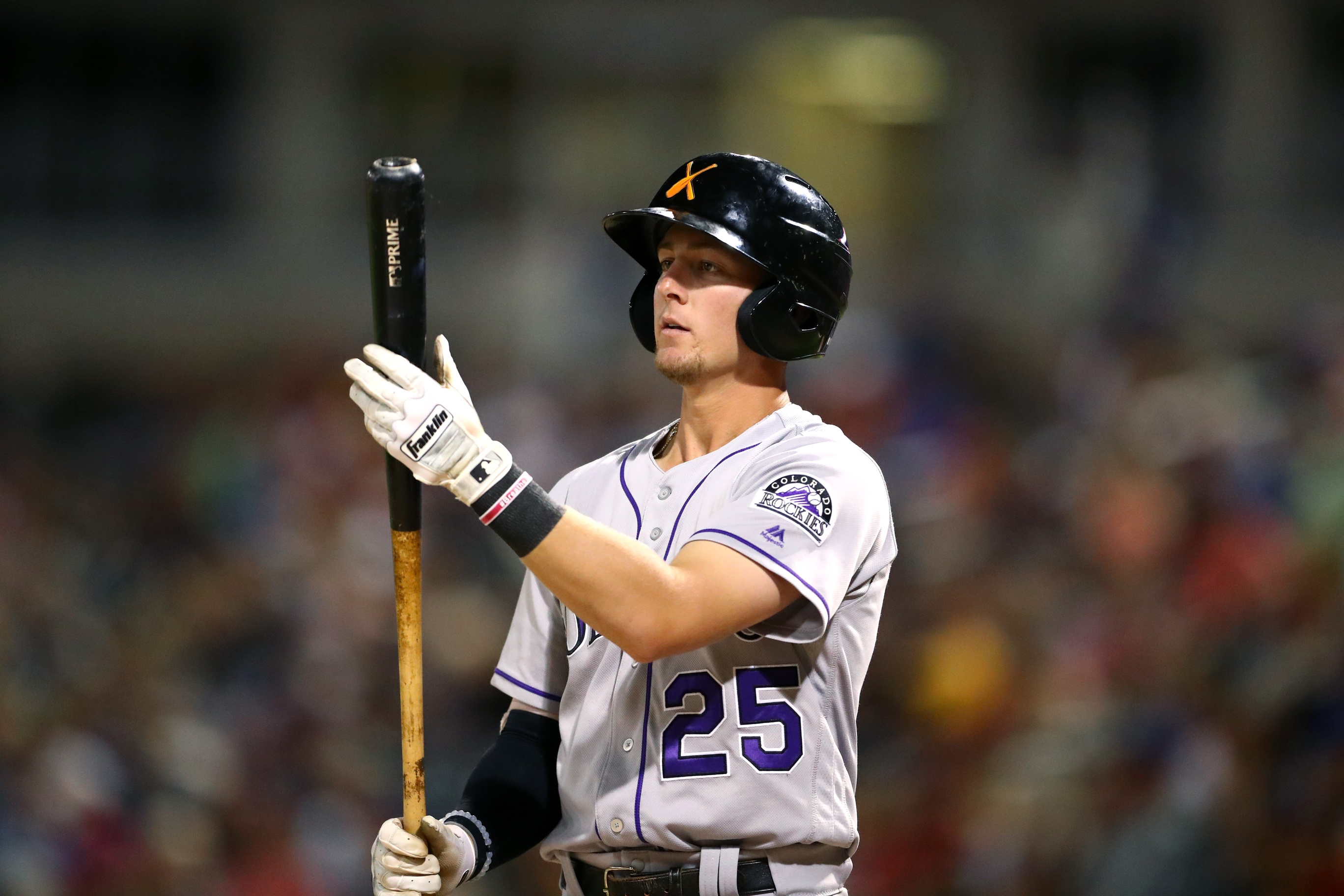
Mark Reynolds has been productive enough in 2017 that a less-than-stellar month of July (.229/.319/.410) won’t cause him to lose his starting job, especially to a rookie with zero Major League at-bats. But it’s getting to the point in the season where it makes sense for the Rockies to at least give the 22-year-old McMahon, the No. 1 ranked player in Roster Resource’s MiLB Power Rankings, some occasional starts at first base while utilizing him occasionally at other spots on the diamond.
McMahon, who has played a good amount of games at first base, second base and third base this season, is 19 for his last 34 to push his Triple-A batting average to .396 (86-for-217). Overall, he’s slashing .364/.406/.598 between Double-A and Triple-A with 36 doubles and 17 homers. It’s safe to say that he has very little left to prove in the minors.
—
Dominic Smith, 1B, New York Mets (Triple-A Las Vegas) | Mets Depth Chart
Despite hitting only 10 homers in the low minors over his first three professional seasons, Smith was a highly-touted prospect who many experts believed would develop power at some point. They were right. And it didn’t really take that long. Since reaching the upper minors as a 20-year-old in 2016, the left-handed hitting first baseman has 30 homers and 62 doubles while hitting over .300 and maintaining a disciplined approach at the plate.
Even after trading Duda, the Mets are holding off on calling up the 22-year-old Smith for some reason. That’s difficult to do after he slashed .385/.437/.725 in July, but this is the organization that called up Amed Rosario, arguably, two months after he was making it clear that he was ready for the Major Leagues. GM Sandy Alderson has suggested that they won’t wait much longer on Smith, though. He should settle in as the team’s first baseman before the end of the month.
Photos courtesy of USA Today Sports Images.
Top 25 Deadline Day Trade Candidates
We are now within 24 hours of the trade deadline. Many players have already been moved and most teams have figured out their deadline stances — though, as ever, late-breaking developments can still force a change of plans.
As we enter the home stretch, we thought it’d be interesting to take one final snapshot of the major trade candidates left on the market. As always, the list is compiled with a view to assessing both trade likelihood and trade value (in all its facets). (Note: “LR” = “last ranked.”)
*Note: this post was published at 6:47pm CST on July 30th.
1. Sonny Gray (Athletics) & Yu Darvish (Rangers), SP (LR: 1, 55): These are the top two starters on the market. The controllable Gray looks especially likely to find a new home prior to Monday’s non-waiver deadline, while the Rangers are reportedly telling teams they’re now planning to move Darvish as well. Darvish was shelled in his last outing, but one start is hardly going to torpedo his value. His fastball velocity is strong as ever, and he’s still averaging nearly 10 K’s per nine innings.
3. Addison Reed, RH Reliever, Mets (LR: 2): There’s no better rental asset on the relief market than Reed, who has been a bullpen juggernaut since joining the Mets in 2015 (2.11 ERA, 10.0 K/9, 1.5 BB/9 in 141 innings). He’s still owed about $2.75MM this season.
4. Justin Wilson, LH Reliever, Tigers (LR: 3): With the Nationals, Cubs, Indians, Astros, Dodgers, Yankees, Brewers, Rockies and Red Sox all prominently linked to Wilson in the past few days alone, it seems impossible to imagine that the Tigers won’t be able to secure a big return for soon-to-be 30-year-old Wilson, whose career year is coming at the perfect time for the Tigers. Detroit’s reportedly looking for an Aroldis Chapman-esque return, though Wilson doesn’t have that track record or historically great velocity.
5. Brandon Kintzler, RH Reliever, Twins (LR: NR): Minnesota’s trade-deadline about-face leaves the team shopping a few assets. None is more clearly a trade chip than Kintzler, a pending free agent who has performed admirably in a late-inning role over the past two years. The sinkerballer is not getting quite as many grounders this year (53.9%) as last (61.9%), and doesn’t get very many swings and misses, but has posted a 2.78 ERA and logged 28 saves this year.
6. Joe Smith, RH Reliever, Blue Jays (LR: NR): Smith made it back from the DL just in time to display that he’s healthy for interested teams. With an affordable $3MM salary and a career-best average of 13 strikeouts per nine innings, he should go to a contender in need of setup help.
7. Alex Avila (Tigers) & Jonathan Lucroy (Rangers), C (LR: 12, 42): There are more catchers available than there are teams looking for help. Avila has been the most productive backstop in the AL this year on a rate basis — we all saw that coming, right? — while Lucroy’s production has tanked. But both figure to be available, and Lucroy was an elite option as recently as last season, so some teams could hope a change of scenery and a new environment proves to be revitalizing. Both are free agents at season’s end.
9. Yonder Alonso, 1B, Athletics (LR: 6): Alonso’s bat has gone cold over the past month, and the number of teams looking for help at first base/DH is even more limited now that the Rays have added Lucas Duda. The Yankees reportedly still have some interest, but they also already picked up Todd Frazier, moving Chase Headley across the diamond.
10. Jed Lowrie, INF, Athletics (LR: 8): It’s been quiet on the Lowrie front, which is surprising since he’s a versatile and affordable player that has slashed .265/.339/.436 while calling spacious O.Co Coliseum home (112 wRC+). He’s also got a cheap club option for the 2018 season. It still seems reasonable to expect that he’ll end up on a contender in need of some bench help.
11. Brad Hand, LH Reliever, Padres (LR: 3): There are increasing indications that the Padres will not drop their high asking price, though Hand’s value is very arguably approaching its apex. There could be some posturing on the Padres’ behalf, but they’ll be able to market him to a wider audience this offseason if they do indeed hang onto him.
12. Zach Britton (LH Reliever) & Brad Brach (RH Reliever), Orioles (LR: 18): It’d be a leap of faith for a team to part with elite prospect to take on Britton when he’s missed most of the season with a forearm injury and hasn’t pitched on consecutive days since being activated. A healthy Britton is one of the best relievers on the planet, but teams won’t know if that’s who they’re getting. Brach, meanwhile, is as steady as ever and is one of the top right-handed options on the market. He seems likelier to move than his teammate, though we’ve yet to hear much chatter.
Click to continue reading the list …
Trade Market For Right-Handed Relievers
This is the final entry in MLBTR’s 2017 Trade Market Series. Prior entries cover left-handed relievers, starting pitchers, outfielders, shortstops, second basemen, first basemen, third basemen, and catchers.
Anthony Swarzak and Pat Neshek recently became the latest right-handed relievers to be dealt to contenders this July, while Steve Cishek and Erasmo Ramirez were just swapped for one another. Those pitchers won’t be the last of their kind to move via trade — far from it, in fact. Quite a few appealing trade candidates will likely go to the highest bidder, with others perhaps also available at the right price:
Rentals
Addison Reed, Mets | $7.75MM in 2017 ($2.75MM remaining)
The Mets’ closer is one of the most marketable arms out there, as he’s been an absolute buzzsaw since going from Arizona to Queens. Reed misses bats and has a minuscule walk rate, though there’s been at least one report suggesting that there could be concerns about his heavy workload with the Mets. All the same, he could very well be the most impactful right-handed rental on the relief market.
Brandon Kintzler, Twins | $2.95MM in 2017 ($1.05MM remaining)
The Twins’ hopes at a playoff berth are increasingly slim, and Minnesota is reportedly listening on short-term pieces after being passed up by the surging Royals and Indians. If they make him available, Kintlzer’s heavy sinker and strong control would make him an in-demand commodity. He’s cheap and effective and would make a nice setup piece in a contender’s bullpen.
Drew Storen, Reds | $3MM in 2017 ($1.07MM remaining)
He’s not the strikeout machine he was when closing for the Nats a few years ago, but Storen is averaging better than eight strikeouts per frame with a strong ground-ball rate. He’s also on a cheap one-year deal, which should make him attractive to teams that want to bolster their bullpen without taking on too much cash.
Craig Stammen, Padres | $900K in 2017 ($320K remaining)
Stammen entered the year with just four big league innings since the conclusion of the 2014 season, but he’s up to 53 2/3 frames now with a 4.02 ERA, 8.4 K/9, 2.9 BB/9 and a 51.9 percent ground-ball rate. He can go multiple innings and is on a bargain contract for a team that is selling anything that’s not nailed down.
Bud Norris, Yusmeiro Petit & David Hernandez, Angels | $1.75MM; $2.25MM; unknown salary in 2017
Tuesday’s poor outing notwithstanding, Norris has risen from reclamation project to shutdown reliever for most of the season, with 11.4 K/9, 4.0 BB/9 and a 48.4 percent ground-ball rate. His 3.12 ERA is backed up by FIP, xFIP and SIERA. Meanwhile, teams seeking multiple innings might not be able to better than Petit. The longtime Giant has totaled 56 2/3 frames in just 36 appearances while racking up a gaudy 59-to-12 K/BB ratio. Hernandez, like Norris, has missed bats and kept the ball on the ground, but he’s done so with fewer K’s and much better control (9.6 K/9, 2.1 BB/9). All three veterans are cheap and effective.
Juan Nicasio, Pirates | $3.65MM in 2017 ($1.3MM remaining)
As noted when looking at the trade market for lefty relievers, the Buccos may very well be buying, but they still flipped Mark Melancon at last year’s deadline with a Wild Card spot in arm’s reach. They’re closer to the division this time around, though, so perhaps flipping rentals isn’t in the cards. If they do, Nicasio has been terrific in 2017.
John Axford, Athletics | $5.5MM in 2017 ($1.95MM remaining)
The walks are back. Axford has issued 17 free passes in 21 innings (7.3 BB/9), and the resulting 6.30 ERA / 5.72 FIP is downright ugly. It’s tough to see anyone taking this contract following Axford’s recent DFA.
Seung-hwan Oh, Cardinals | $2.75MM in 2017 ($977K remaining)
The 35-year-old’s sophomore season in the Majors hasn’t gone as well as his brilliant rookie campaign. Oh’s strikeout rate is down, and he’s already allowed more homers in 2017 (eight) than he did in all of 2016 (five). His walk and ground-ball rates have also gone in the wrong direction.
Joaquin Benoit, Phillies | $7.5MM in 2017 ($2.66MM remaining)
Benoit hasn’t exactly lived up to his $7.5MM salary, but he’s still throwing hard (94.8 mph average fastball) and missing bats (9.1 K/9). His ground-ball rate is way down, though, and his control has been below average.
Joe Smith, Blue Jays | $3MM in 2017 ($1.07MM remaining)
Smith only just returned from the DL, but he’s racked up a ridiculous 50-to-8 K/BB ratio with a slightly above-average ground-ball rate in 33 2/3 innings. If teams are convinced that he’s healthy, they’ll want him. He’s arguably one of the more attractive rental options in the game, depending on one’s view of his health.
Click to continue reading for more trade candidates …
Looking For A Match In A Yonder Alonso Trade
Yonder Alonso turned himself from non-tender candidate last winter to the Athletics’ representative at the All-Star Game two weeks ago. Thanks in large part to an offseason swing change aimed to deliver more fly balls, Alonso is enjoying by far the best of his eight big league seasons. The first baseman is batting .263/.361/.527 with 21 homers over 346 plate appearances, and is producing 38% more runs than the average hitter as per the wRC+ metric. Beyond just putting the ball in the air more often, Alonso is also exhibiting more discipline at the plate, with a career-best 12.7% walk rate.
It all adds up to a nice platform year for Alonso as he heads into free agency this winter, and the A’s gain an extra trade chip they perhaps didn’t expect to have when they decided to bring Alonso back on a one-year, $4MM contract for 2017. With only about $1.31MM remaining on Alonso’s deal and his big numbers, he stands out among other remaining rental players as a particularly inexpensive lineup upgrade.
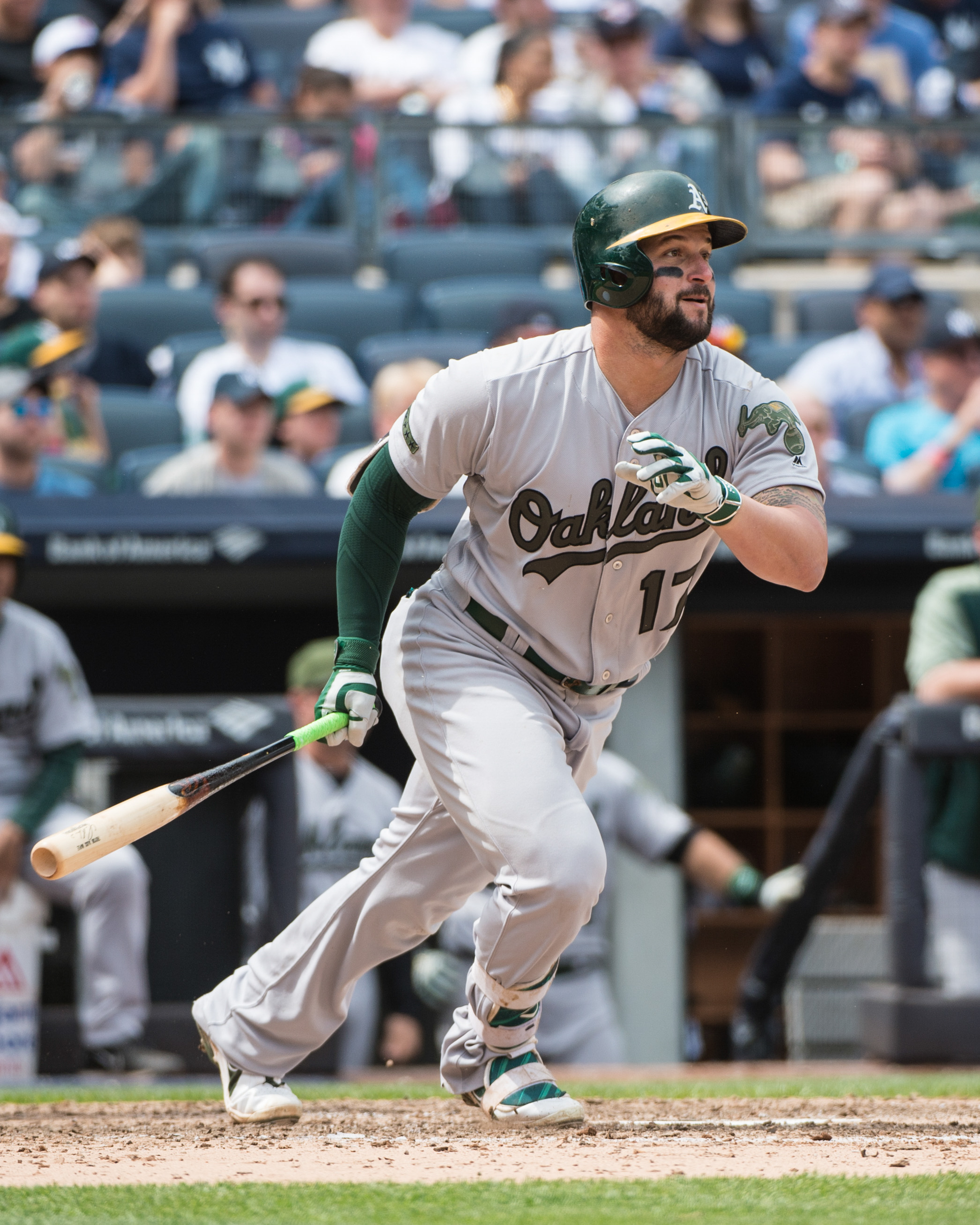 The counter-argument for Alonso as a prime deadline pickup is that his numbers significantly cooled off in June and July after a torrid start to the season. Since Alonso was little more than a league-average hitter from 2010-16, some teams could believe that he is simply a two-month wonder rather than a true breakout player. He also carries pronounced splits (a .950 OPS against right-handed pitching against just a .685 OPS against southpaws). When that’s combined with Alonso’s subpar defense and baserunning stats, he doesn’t bring much to the table unless he can keep punishing righties.
Another complication is the fact that most contenders are already set at first base or designated hitter, and that fairly thin list of potential Alonso suitors got a bit thinner when the Rays acquired Lucas Duda from the Mets. Alonso has played a bit of third base and left field in his career, but would hardly be a passable option at either position. With only one team reportedly showing legitimate interest in Alonso, Oakland might have to get a bit creative to find a trade partner and recoup a good prospect or two in return, unless an injury shakes up the market. Here are a few of the potential fits…
Yankees: This post really could be called “Looking For A Match In A Yonder Alonso Trade Besides The Yankees,” since the Bronx Bombers are Alonso’s only known suitors, and they’ve stood out for weeks as the most obvious candidates for his services. New York and Oakland have been engaged in talks about not just Alonso, but also ace righty Sonny Gray, with recent reports suggesting that the Yankees could be trying to land both in a package deal. First base has been a problem area all season long for the Yankees, with converted third baseman Chase Headley serving as the most recent option at first since Todd Frazier took over the everyday duties at the hot corner. (Headley, a switch-hitter, has actually hit quite well over the last two months.) Alonso’s left-handed bat and his newfound ability to put the ball in the air would seemingly make him a perfect fit for Yankee Stadium’s short porch in right field, so New York has to be considered the leaders in the Alonso sweepstakes until proven otherwise.
Mariners: Alonso would supplant Danny Valencia as the everyday first baseman, and the two in tandem would create quite a formidable platoon given that Valencia has always mashed left-handed pitching. These sluggers were teammates in Oakland last season before Valencia was dealt to the Mariners, so clearly the M’s and A’s are open to trading with each other. Seattle doesn’t have a particularly deep minor league system, though one can’t rule GM Jerry Dipoto out of any trade scenario.
Red Sox: Mitch Moreland‘s production has badly fallen off since suffering a broken toe, and Alonso could slot right into Moreland’s role as the regular first baseman (with Hanley Ramirez or perhaps rookie Sam Travis getting the odd start against lefty pitchers). The Red Sox have been looking for ways to jumpstart a slumping offense, so Alonso would boost a lineup that has posted below-average numbers against right-handed pitching.
Royals: Eric Hosmer is firmly entrenched at first base, so Kansas City might explore Alonso as an upgrade over left-handed hitting DH Brandon Moss, who has just a .696 overall OPS for the season and only a .623 OPS against righties. Moss has been red-hot in July, however, so this may no longer be quite as pressing a need as it was just a few weeks ago. The Royals have been mostly on the lookout for pitching help at the deadline, though they did have an interest in J.D. Martinez before he was dealt to Arizona.
Astros: It’s hard to imagine that Houston’s lineup could actually get scarier, though DH Carlos Beltran is hitting just .234/.288/.405 and is on pace for a sub-replacement level season. Alonso could add a left-handed hitting complement to righty bats Yuli Gurriel and Evan Gattis in the first base/DH mix. Houston already has such an embarrassment of offensive riches that it might not be willing to give up much of a prospect return for what would be a pure luxury, especially when that prospect or prospects would be going to an AL West rival. Then again, the Astros have also been linked to Sonny Gray, so they could also potentially look into a Gray/Alonso package deal. GM Jeff Luhnow recently stated that the team is already looking ahead to potential needs for October, so if Luhnow feels the Astros need more left-handed balance in their lineup, Alonso could come onto their radar.
Rockies: Despite a league-worst wRC+ (78) against right-handed pitching and an overall offense that ranks 24th of 30 teams in fWAR, Colorado is still solidly holding on an NL wild card slot. Without a designated hitter spot available, however, the Rockies don’t really have room for Alonso — they’re already shuttling Ian Desmond between first base and left field, with Mark Reynolds and Gerardo Parra handling whatever position Desmond isn’t occupying. Even if Carlos Gonzalez‘s nightmarish 2017 season results in a loss of his everyday job, the Rox might turn to internal options — such as top prospect Ryan McMahon — before looking at a player like Alonso to help the lineup.
Photo courtesy of USA Today Sports Images
Looking For A Match In A Justin Verlander Trade
In recent seasons, the veteran-laden Tigers have frequently headed into the summer as trade deadline buyers, but with a 45-55 record this year and J.D. Martinez already out the door, 2017 looks like a different story. One star who could be on the move is Justin Verlander, who joins a starting pitching market that also includes Sonny Gray and Yu Darvish. The Tigers have a variety of other players potentially available, including Ian Kinsler, Justin Wilson and Alex Avila, and they’ve reportedly discussed package deals, so if the Tigers trade Verlander, it could be along with one or more of his teammates.
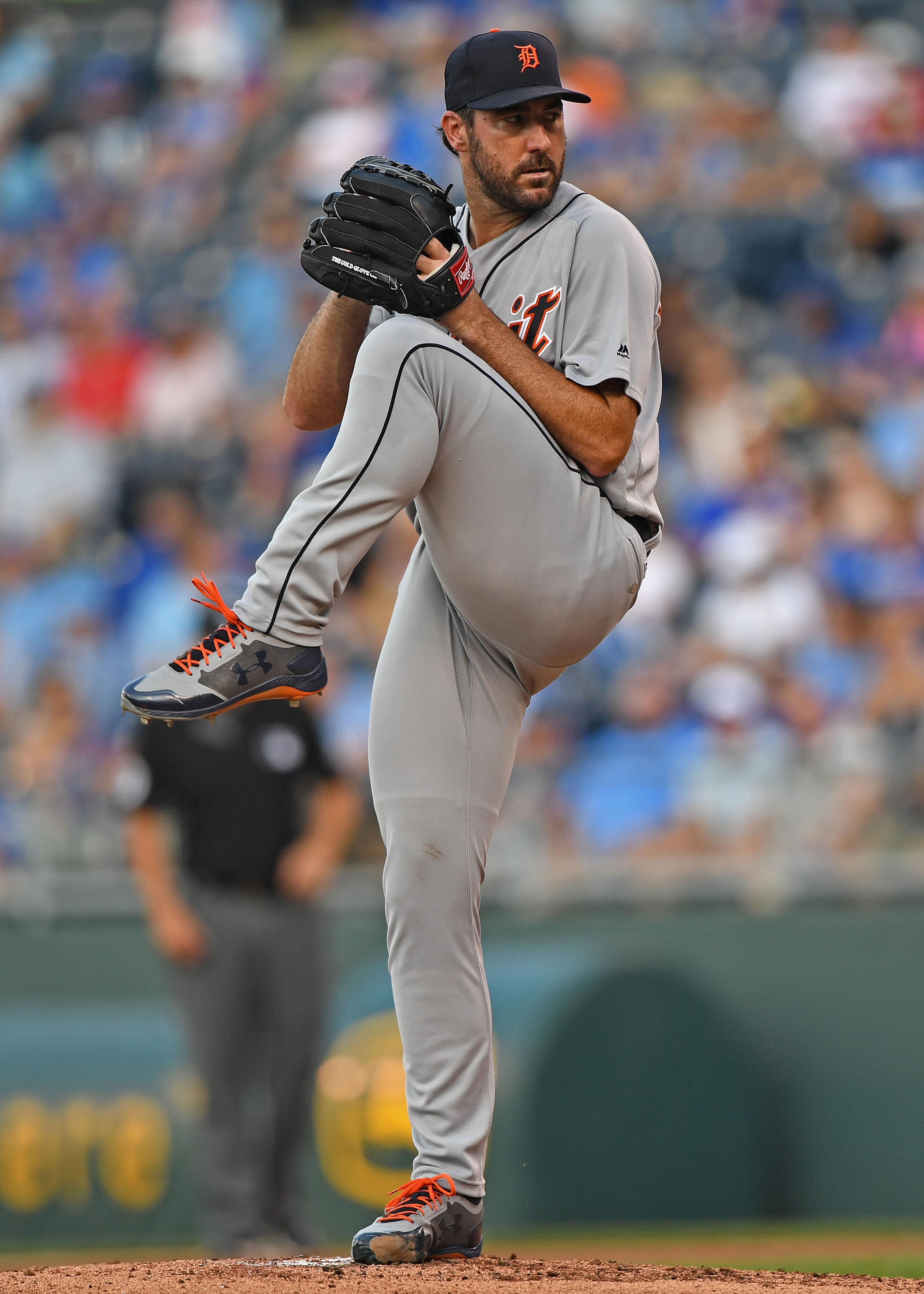 That’s not to say a Verlander trade would be easy. It’s impossible to discuss the righty’s potential market without noting his contract — he’s making $28MM per season through 2019, plus a $22MM vesting option for 2020. That option contains no buyout and only vests if Verlander finishes in the top five in Cy Young voting in 2019, but the $66MM or so remaining on Verlander’s contract is still a significant obstacle. At last check, the Tigers did not appear willing to take on a significant portion of Verlander’s deal, though they reportedly would pay the remainder of his 2017 salary. His full no-trade clause could present another potential problem.
And then there’s Verlander’s performance — he finished second in AL Cy Young balloting just last season but has taken a big step backwards this year, with a 4.50 ERA and 8.7 K/9 over 124 innings, plus a 4.1 BB/9 that’s almost twice as high as it was in 2016. At 34, that’s a serious concern, particularly when considered alongside his hefty contract. That means the Tigers might not get much if they trade him. Also, his star status in Detroit might not ordinarily be an impediment, but it might be in this case, since, as MLBTR’s Steve Adams recently pointed out, fans might react poorly to a Verlander deal for a limited return.
With all that in mind, here are a few potential landing spots for Verlander.
Cubs: Even after acquiring Jose Quintana, the Cubs are known to have interest in starting pitching, and Verlander would give them another veteran arm to help them manage the possible losses of Jake Arrieta and John Lackey to free agency next winter. They’ve reportedly scouted Verlander and have discussed him with the Tigers, and they’re one of only a handful of teams who clearly could afford him. They’re also reportedly interested in acquiring a catcher, so perhaps there could be a deal involving both Verlander and Avila, particularly since Avila makes a mere $2MM and has been productive this season. The intensity of the Cubs’ interest in Verlander is unclear, and as with all teams, his contract will be an obstacle.
Astros: Houston has been connected to Verlander, along with Wilson, although the Detroit Free Press’ Anthony Fenech characterized the Astros’ level of involvement in Verlander trade talks as “minimal.” The team’s recent return to health, with Collin McHugh returning from injury and Dallas Keuchel set to come back this week, might make the Astros more likely to pursue top-end starters rather than innings eaters, since they currently have enough reliable arms to fill out their rotation. Their interest in Verlander, then, might depend on whether they still see him as an ace-type pitcher. Verlander’s contract would of course be a factor as well, although the Astros do appear to have the payroll flexibility to add him, particularly if the Tigers are willing to pay what’s left of his 2017 salary.
Yankees: The Yankees have been connected to a variety of rotation possibilities and could potentially afford Verlander, although their luxury-tax bill is a concern. They haven’t recently been connected to Verlander in particular, though, and based on published reports, seem to have greater interest in Gray. They also have a clear need for another A’s veteran, Yonder Alonso, which might give them further incentive to continue talking with Oakland. Verlander could, however, represent an interesting alternative to Gray whose acquisition likely wouldn’t cost the Yankees top prospects.
Dodgers: L.A. has repeatedly been connected to Darvish, while there haven’t been many indications they’re seriously interested in Verlander. Still, they have an injured ace (Clayton Kershaw), and their seemingly wide-open wallet would give them a big advantage if they decided they had serious interest.
Nationals: The Nats haven’t been strongly connected to Verlander, and FOX Sports’ Ken Rosenthal recently indicated that they aren’t in on Gray or Darvish. Injuries to Stephen Strasburg and Joe Ross have left them with some rotation questions, however, and they generally aren’t shy about adding big-name players. They’ve also been connected to Wilson.
Brewers: Milwaukee has reportedly shown interest in Verlander, along with other rotation options. The Brewers have also been connected to Wilson and Kinsler, again raising the possibility the Tigers could strike some sort of package deal. And the Brewers under owner Mark Attanasio have never been shy about adding big-name pitching as they’ve prepared for past stretch runs, adding CC Sabathia and Zack Greinke in past seasons in which they contended. All that written, it seems especially unlikely that they would consummate a deal for Verlander. His age and salary could potentially pose big problems for a generally budget-conscious organization (although one with few long-term commitments at the moment). And the Brewers’ 2017 run at the NL Central title, while impressive, has if anything been a pleasant surprise from a team that seemed to be rebuilding. They recently fell into second place, behind the Cubs, and their fade might make them less likely to make a big move.
Rockies: Acquiring Verlander would be a break from the Rockies’ M.O., but they’ve shown interest in rotation upgrades and have limited payroll obligations beyond 2017, so Verlander could theoretically be a fit. They have enough interesting young arms to fill out their rotation, but could potentially benefit from a veteran anchor. Of course, it’s not clear that Verlander is the right veteran anchor for them, given his contract, fly-ball tendencies and sketchy 2017 performance thus far. It’s also unclear whether Verlander would accept a deal that would place him in Coors Field, a stadium that could potentially hurt his future earning power.
Diamondbacks: The Diamondbacks have already swung one big trade with the Tigers, and there have at least been whispers about the possibility they could look to improve their rotation. Most current rumors about the Snakes focus on other areas, however, and all five of their current starters have performed capably this year.
Red Sox: Sox president of baseball operations Dave Dombrowski is no stranger to headline-grabbing trades, and he was general manager of the Tigers when Detroit drafted Verlander in 2004. With Eduardo Rodriguez‘s recent return to health, though, the Red Sox five healthy starting pitchers who each could potentially pitch well for the remainder of the season, and most rumors about the team since their acquisition of infielder Eduardo Nunez have pertained to relievers, not starters.
Mariners: The M’s have been connected to Gray, and the odds that Jerry Dipoto will find a way to insert them into a significant trade can never fully be discounted. They are, however, below .500 at this point and already have big salaries for Felix Hernandez, Robinson Cano, Kyle Seager and Nelson Cruz on the books for 2018.
Royals: Kansas City has been on the lookout for starting pitching, although the Royals have mostly been connected to lower-tier options like Francisco Liriano, Marco Estrada and Jaime Garcia (plus Trevor Cahill, who they already acquired). It would seem extremely unlikely that they’d take on Verlander’s contract, given their uncertain future as an organization and the fact that their 2017 payroll is already the highest they’ve ever had.
Indians: The back of the Indians’ rotation has struggled, although Danny Salazar‘s recent return to health helps them in that regard, and trading for a pitcher with Verlander’s salary would be out of character for them.
Braves: The Braves look like longshots at best to acquire Verlander at the deadline, since they aren’t contending, and they recently traded a veteran arm in Garcia. It’s also unclear whether Verlander would be willing to accept a trade to a below-.500 team. If the Braves do acquire someone of Verlander’s ilk, that might be more likely to happen in the offseason. They’ve been connected to a variety of controllable veteran starters, however, and have enough money coming off the books next year that they could theoretically afford him.
Photo courtesy of USA Today Sports Images.
Looking For A Match In A Yu Darvish Trade
With next Monday’s 4 p.m. ET trade deadline looming, there’s a chance right-hander Yu Darvish‘s start on Wednesday will go down as his last in a Rangers uniform. If that 3 2/3-inning, 10-earned run disaster against Miami does represent the impending free agent’s swan song in Texas, it’ll be a shame for both parties. Darvish has generally been masterful since signing a six-year, $56MM contract in 2012 to emigrate from Japan. The 30-year-old has pitched to a 3.42 ERA and totaled upward of 18 wins above replacement across nearly 800 innings, making his deal well worth the investment for Texas, even when including the $51.7MM posting fee.
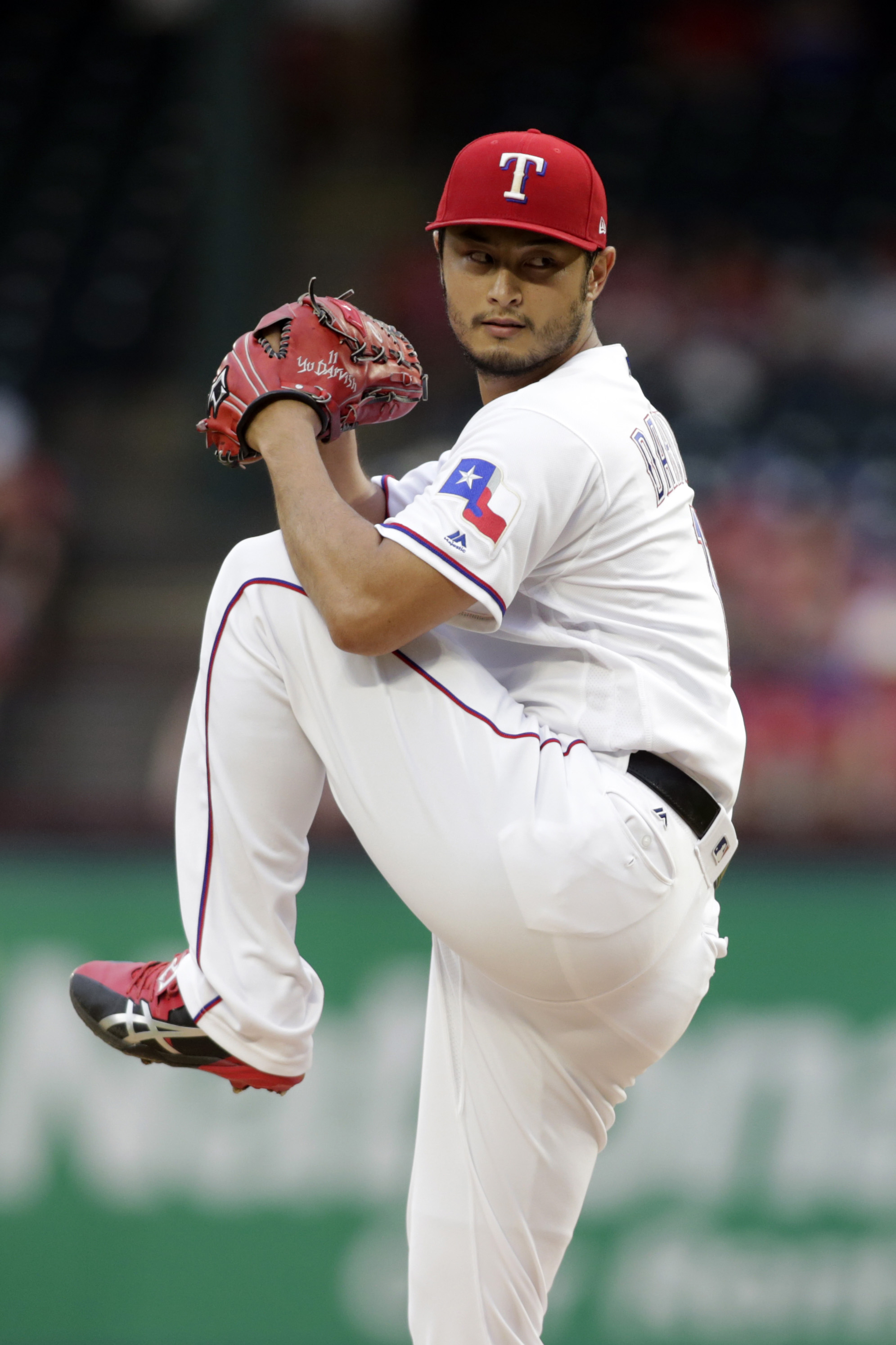
Darvish’s pact is now on the verge of expiring, while the Rangers are the owners of a 49-52 record after their 22-10 drubbing at the Marlins’ hands. That uninspiring mark has helped make the Rangers irrelevant in the American League West, which the 67-34 Astros ran away with long ago, but they’re still a manageable 4.5 games out in a parity-laden wild-card race.
With his team tenuously clutching to postseason hopes, Texas general manager Jon Daniels isn’t a lock to sell by Monday. Even if he does, Darvish might not go anywhere. Multiple reports this week have indicated that it would take a godfather offer for Daniels to part with Darvish, whom the Rangers would like to re-sign. And if the team keeps the four-time All-Star through season’s end but isn’t able to prevent him from testing free agency, it would surely make him a qualifying offer in order to receive compensation – a pick after the second round of next year’s draft – for his departure. That wouldn’t be much immediate consolation for the Rangers, but it’s among several factors that could influence them to retain Darvish past the deadline.
Although the Rangers may be content to ride it out with Darvish, pitcher-needy contenders have inquired about the Arlington ace in recent weeks and figure to continue doing so leading up to Monday. As such, there will be opportunities for clubs to pry Darvish away from the Rangers. The Cubs, Dodgers, Astros and Yankees come to the fore as potential landing spots, having already shown interest in Darvish.
In Chicago, Darvish would join Jon Lester, Jake Arrieta, Kyle Hendricks and the just-acquired Jose Quintana to comprise one of the Majors’ most proven rotations. That quintet would more than likely do enough to help the reigning World Series champions fend off the Brewers, Cardinals and Pirates in the National League Central. The Cubs aren’t exactly a flawless fit, though, given that they’re on Darvish’s limited no-trade list and also seem more inclined to chase a controllable starter (such as the Athletics’ Sonny Gray) than give up a prospect bounty for a rental.
As MLBTR’s Mark Polishuk pointed out last week, the Cubs are only a year removed from paying a heavy price for a free agent-to-be, closer Aroldis Chapman, whom they acquired from the Yankees in a deal that included standout infield prospect Gleyber Torres. Picking up Chapman helped the Cubs win their first championship in 108 years, but that doesn’t mean they should continue to deplete their farm system to acquire stopgaps. Further, should the Cubs reach the playoffs with their current rotation, they’d be in more-than-adequate shape, thereby lessening any need for Darvish. While all of Lester, Arrieta, Hendricks and Quintana have failed to replicate their 2016 numbers, that doesn’t make them weak links. The only significant disappointment has been John Lackey, who’s not going to factor into the Cubs’ rotation plans in the postseason.
Meanwhile, the Dodgers and Astros, who possess the two best records in baseball, aren’t hard up for starting help. Nevertheless, the Dodgers’ interest in Darvish was reportedly “serious” even before ace Clayton Kershaw suffered a back injury last Sunday that will keep him out until late August or early September. At an astounding 71-31, the Dodgers can cruise to the NL’s top seed even with Kershaw and Brandon McCarthy on the disabled list, and they still boast four decent to excellent healthy starters in Alex Wood, Rich Hill, Kenta Maeda and Hyun-Jin Ryu.
It’s true that there are durability concerns scattered throughout the Dodgers’ staff, yet Darvish still remains much more of a luxury than a need. Therefore, even with a World Series in their sights, it’s tough to imagine the Dodgers meeting the Rangers’ asking price for Darvish. Los Angeles would probably have to part with one of its most extolled prospects, whether it’s outfielder Alex Verdugo or a young righty in Walker Buehler or Yadier Alvarez, which doesn’t seem like something president Andrew Friedman and GM Farhan Zaidi would do in this instance.
The same applies to Astros GM Jeff Luhnow, who refused for months to budge in a standoff with the White Sox over Quintana. Unlike Darvish, Quintana is under team control at eminently affordable rates through 2020. Nevertheless, Luhnow wouldn’t deal a package including outfielder Kyle Tucker and righty Francis Martes for the southpaw over the winter. Keeping his team’s prospect pool together has worked out nicely for Luhnow, who has seen Houston establish itself as the premier unit in the AL this year.
The Astros have gotten ace-caliber performances along the way from Dallas Keuchel and Lance McCullers (the former has missed notable time with neck issues, though), while Charlie Morton, Brad Peacock and Mike Fiers have provided quality complementary work. The club also just welcomed back bona fide mid-rotation starter Collin McHugh from an elbow issue that kept him out for nearly the entire first four months of the season. All of that is to say there’s enough starting talent on hand to confidently rely on in a playoff series. Consequently, the Astros don’t seem like serious suitors for a couple months of Darvish, and Luhnow has indicated that he’s comfortable with his bevy of current options.
As for the Yankees, with Masahiro Tanaka in the midst of a mediocre to poor year and Michael Pineda having undergone season-ending Tommy John surgery this month, they do have obvious rotation issues. The problem for the Rangers, if you want to call it that, is New York’s eyes have been on Gray far more than Darvish. The only current Yankees starters who are surefire bets to be in their rotation next season are Luis Severino and Jordan Montgomery, as Tanaka could opt out of his deal (which looks improbable, granted) and CC Sabathia is set to become a free agent. Even though Darvish is arguably superior to Gray, then, the latter would perhaps be the more sensible acquisition for a Yankees team that needs to better their starting staff for both this year and the coming seasons.
Beyond those four squads, a match for Darvish is even more difficult to find. Most clubs either occupying wild-card spots or at least hanging around the league’s playoff races – the Royals, Rays, Mariners, Twins, Angels, Orioles, Diamondbacks, Rockies, Brewers, Cardinals and Pirates – don’t look like proper fits for various reasons (mainly weak farm systems and/or low playoff odds).
The Royals have been red hot and are in their last hurrah of contention with the core that helped deliver a championship in 2015, but their farm is lacking enough to impede a Darvish pursuit. Kansas City, which isn’t on Darvish’s no-trade list and has a flaw or two in its rotation, would otherwise be a logical destination.
The Rockies, who have a four-game lead on the NL’s second wild-card position, possess a middle-of-the-pack rotation that would certainly benefit from Darvish’s addition. However, even if Colorado were to make a serious run at Darvish, there’s a large roadblock in that it’s among the teams on his no-trade list. Whether he’d waive that right just to spend the stretch run of his contract year at Coors Field is questionable to say the least.
As first-place teams, the Red Sox, Nationals and Indians look like strong bets to earn playoff berths. They’re hardly clear-cut bedfellows for Darvish, though. Red Sox president Dave Dombrowski is never shy to make a daring move, but the club’s rotation is in fine shape as it is with Chris Sale, David Price, Rick Porcello, Drew Pomeranz and Eduardo Rodriguez in the equation.
Speculatively, the Nationals may have been been a big factor in the Darvish sweepstakes had Stephen Strasburg‘s nerve injury been serious. Strasburg’s OK, according to the club, which isn’t in on Darvish. It’s interesting to imagine Darvish teaming with Strasburg and the great Max Scherzer as the Nats’ top three starters come October, but there’s nothing to suggest it’s going to happen.
Cleveland, another place on Darvish’s no-trade list, has come up as a potential suitor for Gray. The Indians have been the beneficiaries of Mike Clevinger‘s breakout, but their rotation could still use a surer thing to complement Corey Kluber and Carlos Carrasco. Darvish would provide that, but again, it would mean waving goodbye to acclaimed farm talent for a Band-Aid. That’s something the Indians might not want to do 12 months after sending touted prospects Clint Frazier and Justus Sheffield to the Yankees for Andrew Miller.
Darvish’s next scheduled start is Aug. 1, the day after the deadline, and there’s a legitimate possibility that outing will come in a Rangers uniform. Barring an intrepid move from one of the imperfect fits highlighted above, it seems Darvish and the Rangers will continue their union for at least another two months. Regardless of whether that proves to be the case, the impending free agent will spend the rest of the year making an argument for a mega-deal. With a 4.01 ERA that looks pedestrian in comparison to his marvelous career production, it appears he has work to do on that front. Darvish remains a flamethrowing strikeout maven, though, which means some playoff-bound team could talk itself into paying a ransom for him in the coming days.
Photo courtesy of USA Today Sports Images.
Trade Market For Left-Handed Relievers
It’s a top-heavy market for left-handed relief help this summer, though there are still a few names of interest beyond the top available relievers. Sean Doolittle and Ryan Buchter are the biggest names to change hands thus far, though fellow lefties Tyler Webb and Travis Wood have also changed teams. Here’s a look at the rest of the market…
Rentals
Tony Watson, Pirates | Salary: $5.6MM ($2.05MM remaining through season’s end)
The Pirates have worked their way back into contention, but they showed last year that they’re willing to move rental assets even when in striking distance of a postseason berth by trading Mark Melancon to the Nationals. Watson doesn’t have the same value that Melancon carried, but the Bucs won’t consider making him a qualifying offer, so the alternative is to lose him for nothing at season’s end. Unlike last season, Pittsburgh has a shot at the division and not just a Wild Card spot, so perhaps they’ll be less willing to move a contributing asset this time around. Watson has a 3.63 ERA with 6.6 K/9, 2.6 BB/9 and a 43.8 percent ground-ball rate, though he’s been hit harder than those numbers might indicate (4.78 FIP, 4.62 xFIP).
Clayton Richard, Padres | $1.75MM ($641K remaining)
Richard got off to a solid start to the year in the Padres’ rotation but has been rocked since mid-June. He’s nonetheless an affordable arm with a recent track record of some bullpen success (2015 Cubs). Richard has struggled against lefties and righties alike, but the asking price here shouldn’t be prohibitive for any team looking to speculate.
Francisco Liriano, Blue Jays | $13MM ($4.76MM remaining)
Like Richard, Liriano has spent the season as a starter. He’s struggled all year, though, and while he doesn’t have considerable bullpen experience, he’s held left-handed opponents to a dreary .241/.267/.379 batting line with a 16-to-1 K/BB ratio and a 52.5 percent ground-ball rate. He may draw interest as a rotation option, but speculatively speaking, Liriano is an intriguing option as a situational lefty.
Controlled Through 2018
Justin Wilson, Tigers | $2.7MM salary in 2017, arbitration-eligible for 2018
One of the most desirable trade commodities in all of baseball, Wilson has turned in 39 1/3 frames with 12.6 K/9 against 3.7 BB/9 with a 36.1 percent grounder rate en route to a 2.75 ERA. His modest salary and success against both lefties and righties gives Wilson widespread appeal and makes him one of the likeliest players to be traded between now and Monday’s non-waiver deadline. The Tigers have reportedly discussed packaging him with larger contracts, though a standalone trade of Wilson would likely net them the best possible return.
Zach Britton, Orioles | $11.4MM in 2017, arbitration-eligible for 2018
Britton brings plenty of name value and one of the game’s most impressive track records to the table. However, he’s earning $11.4MM this year and has missed most of the season with a forearm injury. He’s also been somewhat unimpressive when healthy (3.50 ERA, 7.0 K/9, 4.0 BB/9, albeit with a typically brilliant 69.5 percent ground-ball rate). The O’s are said to be reluctant to move him anyhow, and given his 2017 health issues and results, it’s tough to see a team parting with elite prospects to land him.
Jerry Blevins, Mets | $5.5MM in 2017, $7MM club option for 2018 (with a $1MM buyout)
There hasn’t been much indication that the Mets plan to move Blevins, who has 44 strikeouts and 16 walks (two intentional) in 31 1/3 innings. The Mets seem intent on competing in 2018, and they hold an affordable option over Blevins, who has been excellent for them.
Aaron Loup, Blue Jays | $1.125MM in 2017, arbitration-eligible for 2018
The 29-year-old Loup hasn’t been all that tough on lefties since 2014 and has a 5.09 ERA with 9.2 K/9 against 4.6 BB/9 with a 55.8 percent ground-ball rate this season. He’s affordable, but his lack of results dating back to 2015 don’t exactly make him an appealing candidate. The Jays surely wouldn’t mind moving him, however, and Loup does miss bats and rack up grounders.
Extended Control Rights
Brad Hand, Padres | $1.4MM in 2017, arbitration-eligible through 2019
As is the case with Wilson, Hand is one of the most highly sought after assets in the game. He’s been lights-out since the Padres claimed him off waivers early last season, working to a combined 2.63 ERA with 11.4 K/9, 3.2 BB/9 and a 47 percent ground-ball rate through 140 1/3 innings out of the San Diego bullpen. Because he’s earning just $1.4MM this season and is controlled for another two years beyond the current campaign, Hand figures to come with one of the highest asking prices of any reliever on the market. The Friars could still wait to move him until the offseason if they don’t find an offer to their liking, as chairman Ron Fowler indicated earlier today, but it’s also natural for the team to suggest a willingness to wait until the offseason when marketing a controllable asset at the deadline.
Dan Jennings, White Sox | $1.4MM in 2017, arbitration-eligible through 2019
A hefty ground-ball rate has helped Jennings to turn in solid results over the past three seasons despite pedestrian K/BB numbers. Since joining the ChiSox in 2015, Jennings has a 3.12 ERA with 7.3 K/9, 4.0 BB/9 and a 59.1 percent ground-ball rate. He’s flat-out dominated left-handed hitters this season, holding them to a putrid .164/.286/.211 batting line. GM Rick Hahn is willing to listen on just about anyone, and Jennings should be no exception.
Kevin Siegrist/Tyler Lyons, Cardinals | $1.6375MM for Siegrist, arb-eligible through 2019; pre-arbitration for Lyons, arb-eligible through 2020
There’s no definitive word that the Cards will be open to moving either of this pairing, though newly minted president of baseball ops John Mozeliak has gone on record to suggest that he’s not afraid to make changes after his team hasn’t performed up to expectations. Both lefties are throwing reasonably well and are under 30 (Lyons is 29, Siegrist 28). Siegrist has been roughed up by lefties this season and has seen his control regress (4.8 BB/9) after making improvements in 2016. Lyons has been solid against lefties and righties alike in a smaller sample of innings and is currently sporting a career-high 10.1 K/9. The Cards also have Zach Duke and Brett Cecil in their ‘pen, but Duke is only just returning from Tommy John surgery while Cecil is just a few months into a massive four-year contract that no team is likely willing to absorb.
Tony Cingrani, Reds | $1.825MM in 2017, arbitration-eligible through 2019
Cingrani has a history of missing bats (career 9.2 K/9) but also has long displayed questionable control (4.5 BB/9). Durability is a concern with Cingrani, too, as he spent more than a month on the DL with an oblique strain this season and has three other MLB DL stints plus a pair of minor league DL stints in recent years. He’s also given up seven runs in his past four outings, ballooning his ERA from 2.55 to 4.98 in the process, and has surrendered a troubling five homers to lefties in 2017.
Josh Edgin, Mets | $675K in 2017, arbitration-eligible through 2019
The 30-year-old Edgin’s velocity and strikeout rate have yet to return to their pre-Tommy-John levels after the southpaw’s 2015 operation. Edgin’s 27-to-18 K/BB ratio doesn’t inspire much confidence, and he’s been hit fairly hard by both righties and lefties. Edgin did show promise in a three-year stretch with the Mets from 2012-14, but that was a long time ago now.
Sam Freeman, Braves | Pre-arbitration in 2017, arbitration-eligible through 2020
The 30-year-old Freeman doesn’t have much of a track record, but he’s whiffed 36 batters in 34 1/3 innings this season while posting a gaudy 60 percent ground-ball rate. He’s averaging nearly 95 mph on his heater as well. Lefties are hitting just .211/.286/.281 against him this year, and his 3.93 ERA is solid, if unspectacular. As for the bad news, Freeman has averaged 4.8 BB/9 this season and 5.1 BB/9 in his career. The Braves would no doubt move Ian Krol as well, but Krol has struggled more than any reliever on this list.
Trade Market For Starting Pitchers
With one week to go until the non-waiver trade deadline, we have seen the market move already. Jose Quintana is the best starter to change hands, and just yesterday Jaime Garcia and Trevor Cahill found new homes.
More will likely join them, as the list of teams on the lookout for rotation help is sizable. The Astros, Mariners, Yankees, Dodgers, Rockies, and Brewers are among the teams still weighing rotation additions. It may be that the Royals, Twins, and Cubs could look for more arms. And it’s conceivable that others could yet emerge. The Nationals, for instance, have already lost Joe Ross and saw Stephen Strasburg exit his most recent start with some forearm stiffness. Here’s a look at the names that could be available…
Rentals
Yu Darvish, Rangers | Salary: $11MM ($4.2MM remaining)
It’s not yet clear whether the Rangers will truly make Darvish available — especially after a weekend sweep of the Rays. The parity in the American League is staggering, as two teams are tied for the second Wild Card spot with another five clubs (including the Rangers) within 3.5 games of that second Wild Card position. It’d probably take a notable collapse for the Rangers to bite the bullet and move Darvish, and the asking price would be exorbitant. Darvish, though, would be far and away the most impactful arm on the rental market, and contenders would line up to insert him into a playoff rotation.
Andrew Cashner, Rangers | $10MM ($3.8MM remaining)
If the Rangers market Darvish, they’ll obviously be open to doing so with Cashner as well. The 30-year-old is sporting a nice-looking 3.64 ERA, but the numbers under the hood are ugly. Cashner has seen his K/9 plummet to 4.5, and he’s averaging 3.9 walks per nine innings as well. His velocity is down a bit, and he’s also working with a career-worst 6.2 percent swinging-strike rate. Add in the durability concerns, and Cashner wouldn’t figure to have a significant asking price. (Tyson Ross could in theory also be an option, but he is on the DL and has been ineffective when available.)
R.A. Dickey, Braves | $8MM ($3.1MM remaining)
Signed to eat innings, Dickey has done just that in Atlanta, racking up 117 1/3 frames with a 4.14 ERA. Dickey’s K/BB numbers aren’t anything to write home about, and while he’s a perfectly durable back-of-the-rotation option, he’s probably not that high on most teams’ wishlists given the limited upside he brings to the table at age 42.
Lance Lynn, Cardinals | $7.5MM ($2.9MM remaining)
Like Cashner, Lynn carries a strong ERA (3.30) and alarming peripherals. Lynn does average 7.9 strikeouts per nine innings against a passable 3.1 walks per nine, but he’s extremely homer-prone and is thriving largely due to a .225 BABIP (second-lowest in MLB) and an 82.4 percent strand rate (seventh-highest). He also missed the 2016 season due to Tommy John surgery, so some clubs might be wary about his innings total.
Jeremy Hellickson, Phillies | $17.2MM ($6.6MM remaining)
Hellickson’s strikeout rate vanished into thin air in his second season with the Phillies, but interested teams may at least be intrigued by the fact that he’s punched out 31 hitters against just seven walks in his past 35 1/3 innings (7.9 K/9). Still, the Phillies couldn’t drum up much of a market for him in 2016 when he was pitching better and making only about 40 percent of his current salary. It doesn’t seem likely that he’ll command much of a return, though the Phillies could offer to pay the bulk of his salary to try to enhance interest.
Jhoulys Chacin & Clayton Richard, Padres | $1.75MM each ($669K remaining)
The Padres signed each of this duo (as well as Cahill) to identical base salaries this offseason, and the results have been surprisingly solid. Chacin has been great over his past nine starts, though no one is going to expect him to continue the 2.72 ERA he’s logged in that span. Still, he’s averaged 7.5 K/9 in that time with passable control (3.2 BB/9) and a 52.3 percent ground-ball rate. Richard was solid through mid-June but has been clobbered for 27 runs on 48 hits in his past 25 innings.